

Airport at a Glance
| Field | Detail |
|---|---|
| Airport | Whitsunday Coast Airport (Proserpine) |
| IATA Code | PPP |
| Country | Australia |
| City | Proserpine, Queensland (Whitsunday Region) |
| Annual Passengers | Record 522,000 in the 12 months to July 2025, up from 507,000. Domestic only |
| Primary Audience | High-spend domestic leisure travellers, international reef and island tourists, resources and agribusiness workforce |
| Peak Advertising Season | June to October, plus December to January and Easter |
| Audience Tier | Tier 2 by scale, Tier 1 by discretionary spend |
| Best Fit Categories | Luxury travel and resorts, marine and superyacht, premium financial services, international real estate |
Whitsunday Coast Airport is a pure destination airport, and that is exactly what makes it commercially unusual. There is no transit traffic, no connecting crowd, and almost no passenger arriving for a reason other than the Whitsunday Islands, Airlie Beach, or the reef. Every arrival has already spent on flights, accommodation, and often a charter or reef excursion before they reach the terminal. Advertisers therefore intercept an audience with a confirmed discretionary budget and a defined spending window, not an audience of undifferentiated commuters.
The airport also sits at the meeting point of three wealth engines: reef and island tourism, the Bowen Basin resources corridor, and one of the Southern Hemisphere's most significant marine and superyacht clusters. That mix means the same terminal carries luxury leisure travellers, resources executives, and marine and property investors within the same week. With a record 522,000 passengers, a five-year low-cost carrier commitment adding roughly 117,000 seats a year, and larger A321 aircraft now operating, this is one of Australia's fastest-growing regional audiences. Masscom Global positions PPP as a rising-value buy that has not yet repriced to its traffic.
Advertising Value Snapshot
- Passenger scale: Record 522,000 passengers in the 12 months to July 2025, up from 507,000, with capacity lifted around 30 percent through larger aircraft and added frequency. Over half a million low-fare seats now available annually.
- Traveller type: Affluent domestic holidaymakers and honeymoon or milestone travellers, international reef tourists, and resources, agribusiness, and marine industry professionals.
- Airport classification: Tier 2 by volume, Tier 1 by spend intensity. Low passenger count, exceptionally high spend per passenger.
- Commercial positioning: Known as the mainland gateway to the Whitsunday Islands and the Great Barrier Reef, and as Australia's fastest-growing regional airport by capacity.
- Wealth corridor signal: Sits between the Whitsundays luxury marine and island economy and the Bowen Basin resources and Abbot Point export corridor.
- Advertising opportunity: Every passenger here is either committing significant leisure capital or working inside a high-wage resources and marine economy. Masscom Global structures PPP as a single-terminal dominance buy, where a brand can achieve near-total share of voice at a cost impossible in a capital city airport. Masscom's access allows brands to lock positions now, before the current capacity expansion is fully reflected in rate cards.
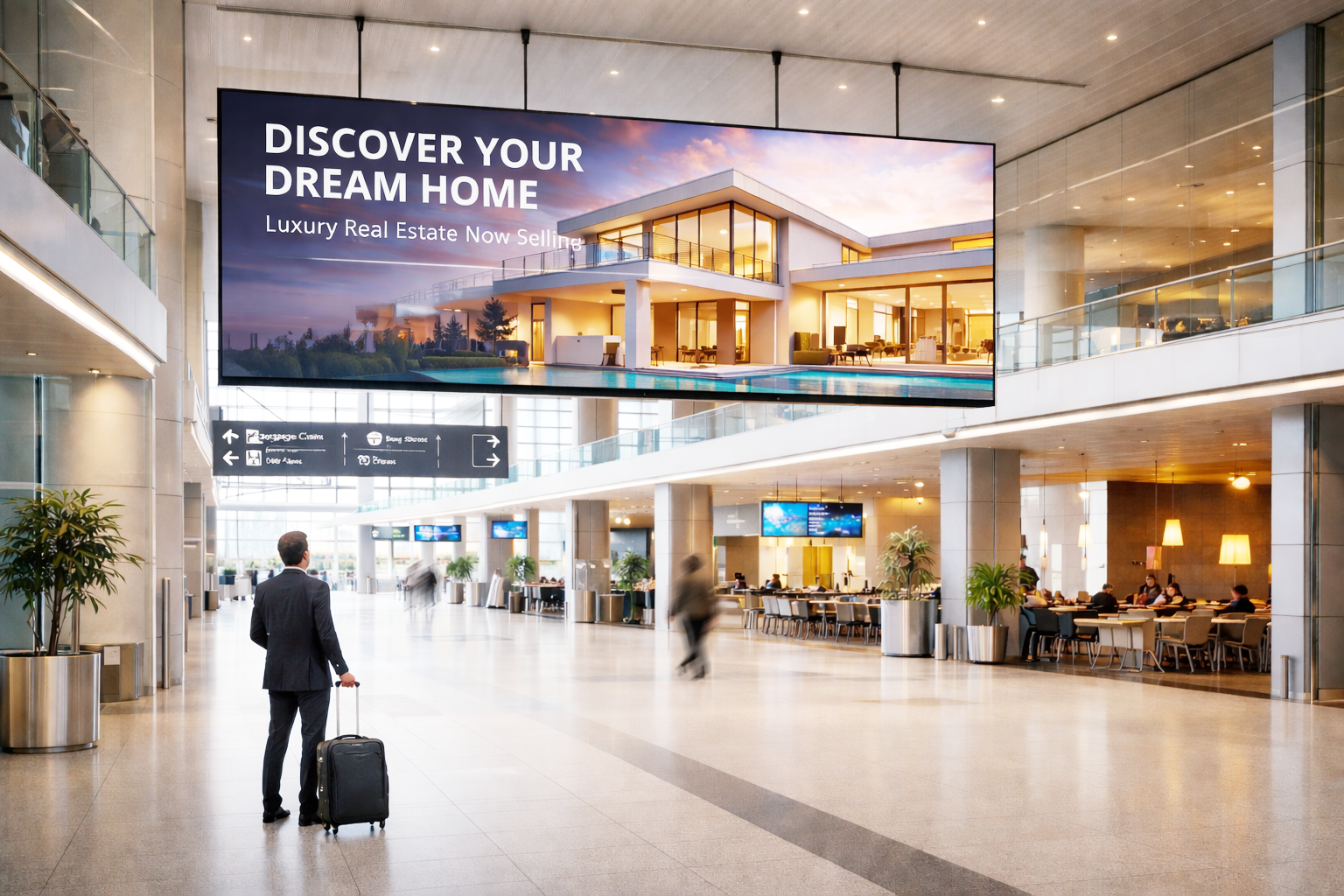
Airport Advertising is Complex to Get Right
We help you execute faster, with proven results and local insight most planners lack starting now.
Talk to an ExpertCatchment Area and Economic Drivers
Top 10 Cities within 150 km, Marketer Intelligence:
- Airlie Beach, QLD: The commercial heart of the visitor economy and the departure point for reef and island charter. Highest concentration of pre-committed high-spend travellers in the catchment, ideal for luxury travel, marine, and lifestyle advertisers.
- Cannonvale, QLD: The residential and retail base servicing Airlie Beach. Delivers a resident business-owner and hospitality operator audience relevant to commercial finance, insurance, and B2B services.
- Proserpine, QLD: Sugar milling and agricultural service town. Produces landholding families with substantial asset value and generational wealth transfer needs, strong for banking, equipment finance, and estate planning.
- Hamilton Island, QLD: Australia's flagship island resort market. Signals the presence of a genuine ultra-premium leisure segment, valuable to luxury hospitality, watches, and private aviation brands.
- Bowen, QLD: Horticulture plus the Abbot Point coal export corridor. Combines agribusiness owners with resources and logistics decision-makers, a rare dual-audience buy in one town.
- Collinsville, QLD: Coal and renewable energy generation hub. Delivers a high-wage technical workforce with strong appetite for vehicles, home upgrades, and short-cycle financial products.
- Mackay, QLD: The region's largest commercial centre and the services capital for the Bowen Basin. Highest density of mining-services company owners and executives within reach of this airport.
- Moranbah, QLD: Core Bowen Basin mining town. FIFO and residential mining incomes produce some of Australia's highest median household earnings, a high-liquidity, low-brand-loyalty audience.
- Sarina, QLD: Sugar, ethanol, and port-adjacent industry. Delivers industrial procurement and technical management audiences rather than luxury consumers.
- Marian and Mirani, QLD: Pioneer Valley agricultural belt. Established landholding households with high equity and predictable uptake of insurance, agri-finance, and succession planning services.
NRI and Diaspora Intelligence: There is no large single-nation diaspora corridor at PPP, and the airport operates domestic services only. The dominant wealth movement is Australian: high-income domestic travellers from Melbourne, Sydney, and Brisbane arriving for premium leisure, alongside resources-sector professionals moving between the coast and the Bowen Basin. A meaningful working-holiday and seasonal European workforce circulates through the hospitality and horticulture economy, relevant to telecom, remittance, and financial-inclusion advertisers rather than luxury categories. For premium brands, the addressable wealth here is domestic Australian capital plus international leisure spend, not diaspora remittance.
Economic Importance: Four sectors drive this catchment: reef and island tourism, sugar and horticulture, coal mining and export logistics, and marine services and charter. Each creates a distinct advertiser audience. Tourism produces the high-spend visitor with a short, intense decision window. Mining produces high-disposable-income households with fast purchase cycles. Agriculture produces asset-rich landholding families. Marine services produces the genuine HNWI contact point, because superyacht and charter activity concentrates real wealth into a small geography.
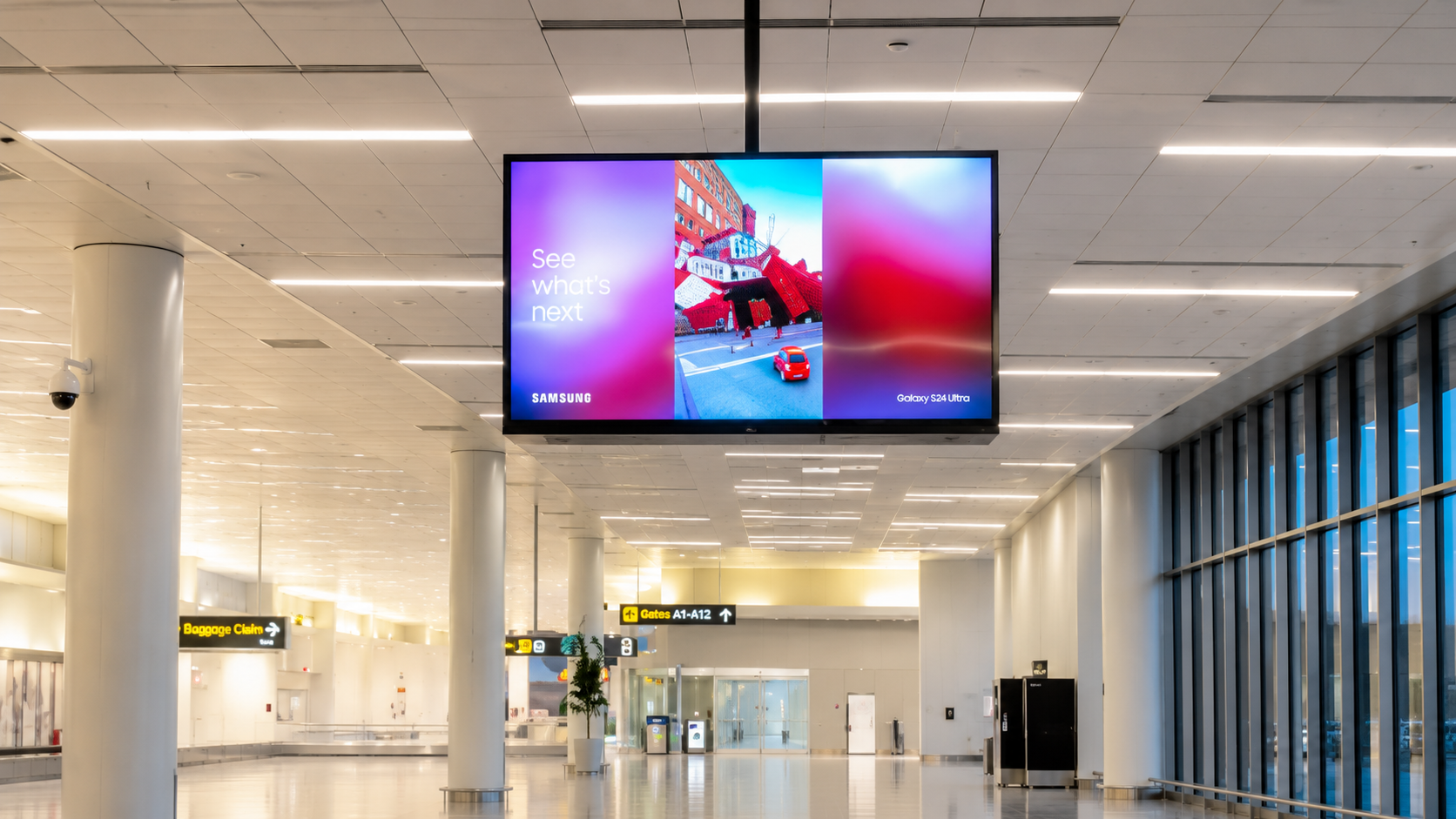
Business and Industrial Ecosystem
- Reef, island, and charter tourism: The region's primary employer and revenue engine, producing both a visiting high-spend audience and a large operator and business-owner base.
- Marine services, marinas, and superyacht refit: The Whitsundays is one of Australia's principal superyacht and bareboat charter centres, delivering direct exposure to vessel owners, brokers, and captains.
- Coal mining and Abbot Point export corridor: Bowen Basin extraction and port logistics generate executive, contractor, and FIFO movement with corporate travel budgets.
- Sugar, horticulture, and freight distribution: Long-established agricultural wealth with heavy capital equipment and land asset holdings, plus growing renewable energy investment inland.
Passenger Intent, Business Segment: Business travel here is not head-office travel. It is site, port, vessel, and operator travel: mining and energy contractors, marine and hospitality operators, agribusiness principals, and property and tourism investors. They fly frequently on repeat patterns, which builds high effective frequency against terminal placements. Categories that intercept them best are commercial and equipment finance, insurance, industrial services, premium automotive, and marine services.
Strategic Insight: The business audience at PPP is unusually asset-heavy relative to airport size. A single terminal here carries mining-services owners, cane landholders, and vessel owners in one flow, all of whom control capital directly rather than through procurement committees. In a capital city terminal these individuals are statistically invisible inside mass volume. At PPP they are a material share of every impression, which is why Masscom Global treats this as a B2B precision environment as well as a leisure one.
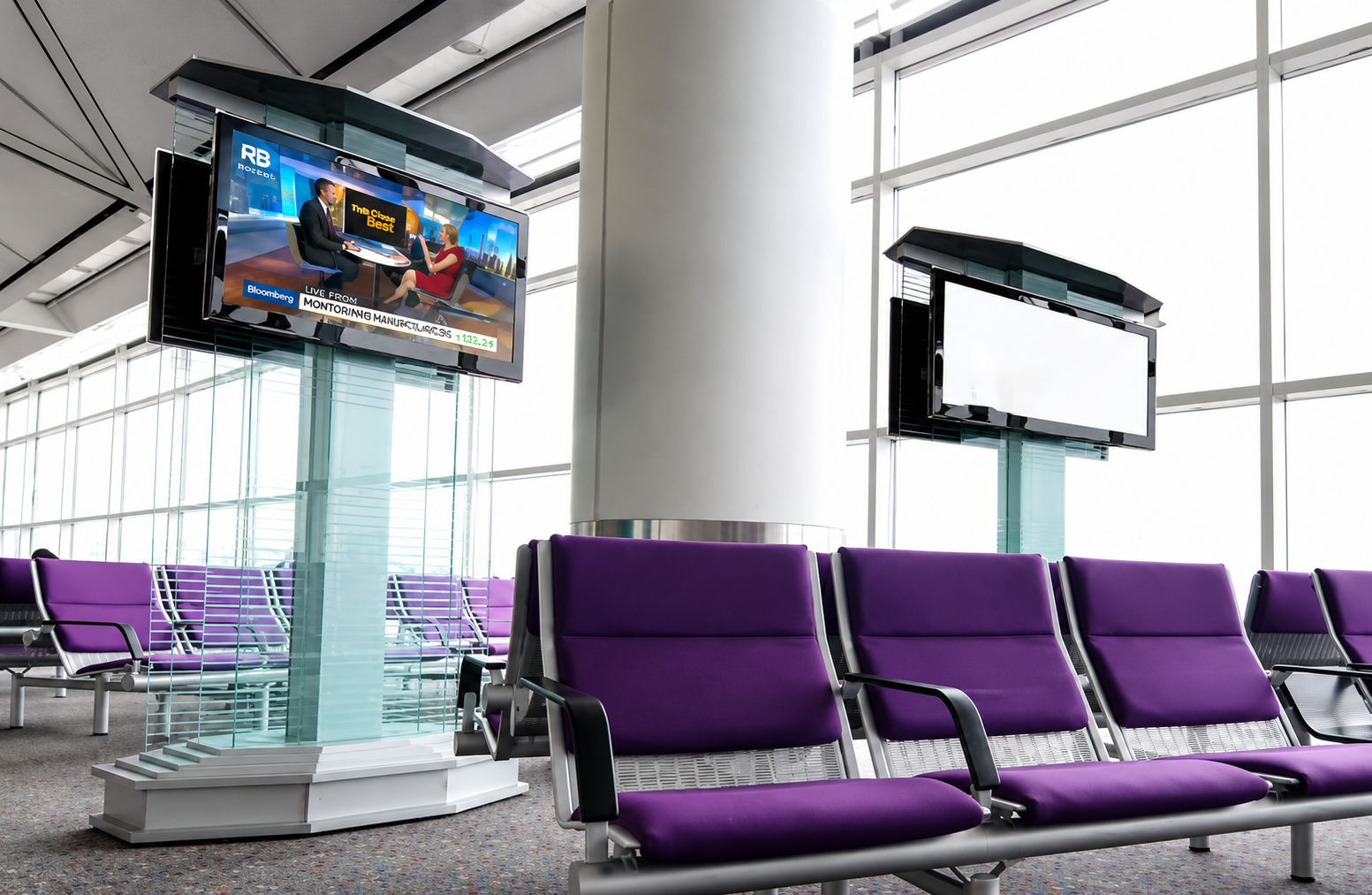
Tourism and Premium Travel Drivers
- Great Barrier Reef and Whitehaven Beach: A globally recognised bucket-list destination that draws travellers who have pre-budgeted for once-in-a-lifetime spend levels rather than value travel.
- Whitsunday Islands and island resorts: Multi-night premium resort stays concentrate affluent couples, honeymooners, and milestone celebrants, the highest-yield leisure segment in Australia.
- Sailing, bareboat charter, and superyacht cruising: Charter bookings run into five figures per party, confirming genuine discretionary wealth in the arrival stream.
- Airlie Beach as a hospitality and events hub: Sustains year-round visitation and creates the repeat-visit domestic audience that responds to loyalty and financial-services messaging.
Passenger Intent, Tourism Segment: Tourists arriving at PPP have already committed the largest portion of their trip budget before landing, which changes what they are receptive to. They are not price-shopping at the terminal, they are in anticipation mode and highly open to experience, upgrade, luxury goods, and destination-investment messaging. On departure they are in reflection mode, the strongest window for property, residency, and financial-product advertising. Luxury travel, marine, premium retail, insurance, and international real estate benefit most.
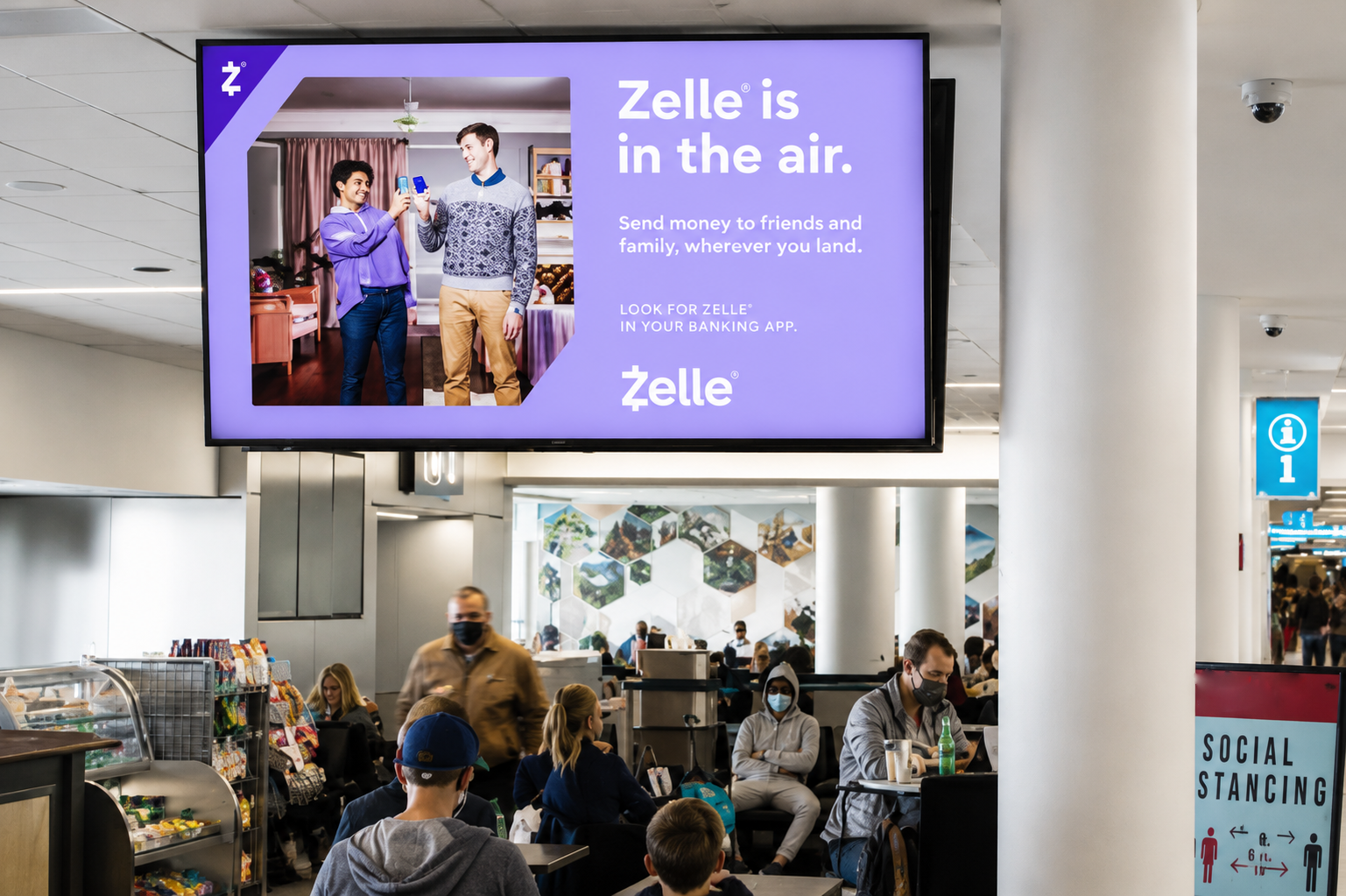
Travel Patterns and Seasonality
Peak seasons:
- June to October: The dominant window. Dry-season conditions, southern winter escape demand, and the regional event calendar converge to produce the highest volume and highest-spend traffic of the year.
- December to January: Australian summer school holiday peak, family-weighted with strong retail and experience spend.
- Easter and April school holidays: Short, high-intensity family and couples peak.
- February to March: Softest window due to wet season and cyclone risk, best used for low-cost baseline presence.
Detailed monthly volume breakdowns are not published by the operator. Data not available. Campaign timing should be built on the seasonal and event rhythm above.
Event-Driven Movement:
- Airlie Beach Race Week (August): Sailing regatta drawing vessel owners, sponsors, and marine industry decision-makers. The single highest-value HNWI window of the year.
- Hamilton Island Race Week (August): Australia's premier offshore regatta, concentrating genuine ultra-high-net-worth attendees and corporate hospitality. Book eight to ten weeks ahead.
- Great Barrier Reef Festival, Airlie Beach (August): Broad-base visitor influx layered on top of the regatta season, extending peak exposure across the month.
- Airlie Beach Festival of Music (November): Shoulder-season demand driver bringing a younger high-discretionary domestic audience, suited to beverage, telecom, and lifestyle brands.
- Bowen and regional agricultural shows and mango season (September to December): Localised catchment movement relevant to agri-finance, equipment, and regional business advertisers.
It’s Not Just Where You Advertise - It’s How Fast You Execute
We combine local insight with fast rollout to deliver results for you, now.
Talk to an ExpertAudience and Cultural Intelligence
Top 2 Languages:
- English: Overwhelmingly dominant across both the resident catchment and the domestic passenger base. Single-language English creative reaches effectively the entire audience, which cuts production cost and shortens rollout timelines.
- Mandarin: The most commercially relevant second language, tied to the inbound Chinese reef and island leisure segment, a historically high per-head spender. Secondary European languages appear through the German, French, and Italian working-holiday and backpacker cohort, relevant to telecom and financial-inclusion advertisers rather than premium categories.
Major Traveller Nationalities: The passenger base is majority Australian domestic, drawn from Melbourne, Sydney, Brisbane, and regional Queensland. International arrivals reach PPP via domestic connections through Brisbane, Sydney, and Melbourne, led by New Zealand, the United Kingdom, the United States, Germany, and China. For advertisers this means creative should be built for an Australian premium-leisure sensibility as the primary read, with visual-led execution that also lands with English-second-language international visitors. Cultural adaptation requirements are minimal, which is an execution-speed advantage.
Religion, Advertiser Intelligence:
- No religion, approximately 40 percent: The largest single response across this region, and a critical planning insight. The calendar that drives spending here is commercial and school-holiday based rather than devotional, so campaign timing should follow holiday periods and events, not religious observance.
- Christianity, Catholic and Anglican, approximately 45 to 50 percent combined: Christmas and Easter remain the two strongest family travel and gifting peaks. Spending triggers cluster on family gathering, celebration travel, and gifting, favouring retail, hospitality, and travel brands.
- Other faiths, small but growing minorities: Present largely through the seasonal and skilled workforce. Commercially relevant to remittance, telecom, and food retail advertisers rather than luxury categories.
Behavioral Insight: This audience blends two mindsets that rarely share a terminal. Leisure arrivals are in high-permission spending mode, primed by anticipation and receptive to upgrade, indulgence, and aspirational messaging. The resident and resources audience is pragmatic, high-income, and low on brand deference, responding to value proof, reliability, and speed rather than prestige signalling. Effective creative here leads with the destination emotion on the arrival side and with hard commercial substance on the departure side.
Outbound Wealth and Investment Intelligence
The outbound passenger at PPP is a genuinely under-served wealth audience. It combines Australian HNWI leisure travellers with locally domiciled asset owners: cane and grazing landholders, mining-services company principals, tourism operators, and vessel owners. Australian household wealth ranks among the highest globally, and this catchment holds an unusual concentration of land, vessel, and business equity relative to its population. That capital is actively seeking offshore diversification, which makes this terminal a viable channel for international property, residency, and wealth-management advertisers.
Outbound Real Estate Investment: Australian HNWI capital from Queensland flows into New Zealand, Bali and wider Indonesia, Thailand and Vietnam, Japan's ski property markets, and increasingly Portugal, Spain, and Greece. Motivations are yield diversification, currency hedging, and lifestyle access, with Southeast Asian and southern European entry pricing comparing favourably against Australian east-coast valuations. Dubai has emerged as a strong competing destination for tax-efficient yield. International developers advertising at PPP reach an equity-rich buyer with proven appetite for coastal and resort property.
Outbound Education Investment: Australia is primarily an inbound education market, so the outbound opportunity is specific rather than broad. It centres on United Kingdom and United States postgraduate and MBA study, executive education in Europe and Singapore, and boarding placements in the UK and New Zealand among the wealthiest regional families. Regional Queensland families routinely fund relocation for tertiary study, creating substantial multi-year education budgets. International universities, business schools, and education consultancies should treat this catchment as a recruitment market rather than overlook it as regional.
Outbound Wealth Migration and Residency: Demand among Australian HNWI centres on Portugal and Greece residency-by-investment routes, Malta and Caribbean citizenship programmes including St Kitts and Nevis, Dominica, and Antigua, alongside New Zealand's investor visa pathways and long-stay residency in Thailand and Indonesia. Motivation is mobility and generational optionality rather than emigration. Competitive advertising noise for these programmes at regional Australian airports is minimal, which makes visibility here disproportionately cheap.
Strategic Implication for Advertisers: Brands on both ends of this corridor should treat PPP as a priority precision buy: inbound reaches international visitors at their highest spending permission, outbound reaches Australian capital actively seeking offshore deployment. Because clutter here is a fraction of capital-city terminals, share of voice is achievable rather than aspirational. Masscom Global can activate both sides simultaneously, pairing PPP with destination-market airports so the same buyer is reached at origin and arrival.
Airport Infrastructure and Premium Indicators
Terminals:
- Single modern terminal, expanded in a 15 million dollar upgrade completed in 2019 that doubled baggage claim and departure lounge space and added a second screening lane. Arrivals and departures share one level in a compact linear flow, which means every passenger passes the same limited set of high-impact positions.
- A 2,073 metre runway supports narrowbody jet operations, including the larger A321 aircraft now serving the airport at 230 seats. This single terminal handles the full passenger flow, so there is no audience fragmentation across buildings.
Premium Indicators:
- A dedicated island resort partnership lounge operates in the arrivals area for premium resort guests, a clear signal that the ultra-premium leisure segment moves through this terminal rather than bypassing it.
- General aviation, charter, and helicopter transfer activity servicing island resorts and reef excursions, alongside the region's marina and superyacht ecosystem at Airlie Beach.
- Award-recognised regional terminal with licensed café, full retail and car hire, and free WiFi, delivering the dwell-friendly environment brand messaging needs.
- Direct proximity to Australia's flagship island resort market and one of the Southern Hemisphere's leading bareboat charter and superyacht clusters, the strongest wealth signal at any airport of this size in Queensland.
Forward-Looking Signal: A five-year low-cost carrier agreement has already delivered roughly a 30 percent capacity uplift and approximately 117,000 additional seats a year, with larger A321 aircraft opening the possibility of longer-haul routes. Airline discussions for additional domestic routes are active, with further announcements anticipated. Passenger volumes have set consecutive records and the region continues attracting resort, marine, and renewable energy investment. Masscom Global advises clients to secure positions now, while rate structures still reflect yesterday's traffic rather than the volume this expansion will deliver.
Airline and Route Intelligence
Top Airlines: Jetstar as the dominant carrier, Virgin Australia, and regional operators serving island and intrastate connections. QantasLink direct Brisbane services ceased in October 2025 under a capacity reallocation, with low-cost capacity more than replacing it.
Key International Routes: No direct international services. The airport operates domestic only and has no border-processing facility, so international itineraries connect via Brisbane, Sydney, or Melbourne. Notably, major international carriers including Emirates, Qatar Airways, Singapore Airlines, and Etihad codeshare onto PPP services through those gateways, which places international premium-cabin passengers directly into this terminal.
Domestic Connectivity: Daily Melbourne services, up to 11 weekly Sydney services, and up to 10 weekly Brisbane services, plus Virgin Australia Brisbane frequency. The seasonal Adelaide service has been wound back under network optimisation.
Wealth Corridor Signal: The route map is a precise map of Australian discretionary capital. Melbourne, Sydney, and Brisbane are the country's three largest concentrations of high-income households, and all three feed this airport directly and daily. The presence of Gulf and Asian carrier codeshares onto these routes confirms that long-haul premium travellers are landing here, not just domestic holidaymakers. This is a leisure corridor carrying wealth-corridor passengers, which is why luxury and financial categories outperform expectations relative to airport size.
Media Environment at the Airport
- Compact single-terminal environment with materially lower advertising clutter than any Australian capital city airport. A brand can realistically achieve dominant share of voice here at a fraction of metropolitan investment.
- Dwell time is strong and rising. Regional check-in and screening patterns, single-lane passenger flow, and a licensed café environment hold passengers in place, while holiday-mode arrivals are unhurried and highly attentive.
- The reef and island context elevates brand association before creative is even read. Appearing at the gateway to a globally recognised destination confers aspirational positioning by environment alone.
- Masscom Global delivers inventory access, placement precision across arrivals and departures touchpoints, and fast rollout, so brands can be live inside the June to October peak rather than arriving after it.
Strategic Advertising Fit
Best Fit:
- Luxury travel, resorts, and cruise: Reaches travellers at maximum spending permission, already proven to commit premium leisure budgets.
- Marine, superyacht, and charter services: The Whitsundays marine cluster puts vessel owners, brokers, and captains through this terminal repeatedly.
- Premium financial services, wealth management, and private banking: Land, business, and vessel equity across the catchment creates genuine advisory demand.
- International real estate and residency programmes: Equity-rich Australian buyers actively diversifying into Asia-Pacific, Gulf, and southern European markets.
- Insurance, including travel, marine, and rural: High-asset, high-risk-exposure catchment with a captive attentive audience.
- Premium automotive and four-wheel drive: Very high vehicle ownership across mining and agricultural households with strong replacement cycles.
- Agri-finance, equipment, and industrial B2B: Sugar, horticulture, mining services, and renewable energy decision-makers in one catchment.
- Telecom, beverage, and lifestyle brands: Broad appeal across both the holiday and resident audience during peak months.
Brand Alignment at a Glance:
| Category | Fit |
|---|---|
| Luxury travel and resorts | Exceptional |
| Marine and superyacht services | Exceptional |
| Premium financial services | Strong |
| International real estate and residency | Strong |
| Premium automotive and insurance | Strong |
| Agri-finance and industrial B2B | Moderate |
| Luxury watches and jewellery | Moderate |
| Corporate B2B enterprise software | Poor fit |
Who Should Not Advertise Here:
- Corporate and enterprise B2B technology: There is no head-office or corporate decision-maker density here. The business audience is operational and asset-based, not procurement based.
- Duty-free-dependent impulse retail: The airport operates domestic services only, so there is no international departure browsing behaviour to intercept.
- Urban commuter and metropolitan services: Categories built around daily city routines, transit, and local urban convenience have no audience alignment in a destination airport.
- Deep-discount value retail: Arrival mindset here is celebratory and pre-committed. Price-led messaging squanders the premium the environment creates.
Event and Seasonality Analysis
- Event Strength: High
- Seasonality Strength: High
- Traffic Pattern: Seasonal with a dominant mid-year peak and a secondary summer holiday peak
Strategic Implication: Budget should be weighted heavily toward June to October, when dry-season demand, regatta season, and festival traffic combine to deliver both the highest volume and the highest-spending passengers of the year. December to January and Easter warrant a secondary family-focused weight, while February to March is best used for low-cost baseline presence that maintains continuity. Masscom Global structures PPP campaigns around this rhythm, concentrating weight into the August regatta window where HNWI density peaks and ROI is highest.
Poor Placement and Delays Affect Airport Campaigns
We help you move faster, access better inventory, and get it right now.
Talk to an ExpertFinal Strategic Verdict
Whitsunday Coast Airport is the clearest example in regional Australia of an airport whose advertising value outruns its passenger count. A record 522,000 passengers, roughly 117,000 new seats a year, a 30 percent capacity uplift, and larger A321 aircraft make this the fastest-growing regional airport in the country by capacity, and every one of those passengers is either a pre-committed premium leisure traveller or part of a high-income resources, agribusiness, and marine economy. A single compact terminal with minimal competing clutter means one brand can own the gateway to the Great Barrier Reef, an association capital city airports cannot sell at any price. Luxury travel, marine and superyacht, premium financial services, international real estate, and residency programmes are the categories that will extract the most value, reaching an audience that arrives in spending mode and departs in investment mode. With route announcements pending and longer-haul capability now in place, rates today reflect traffic that has already been surpassed. Masscom Global has the access, audience intelligence, and execution speed to convert that gap into advantage before it closes.
About Masscom Global
Masscom Global is a premium international airport advertising and media buying agency operating across 140 countries. With deep expertise in airport OOH, premium publications, and high-net-worth audience targeting, Masscom helps brands reach the world's most valuable travellers at the moments that matter most. For advertising packages, media rates, and campaign planning at Whitsunday Coast Airport and airports across the globe, contact Masscom Global today.
Frequently Asked Questions
How much does airport advertising cost at Whitsunday Coast Airport? Cost at PPP depends on format, position within the single terminal, campaign duration, and seasonal demand, which swings sharply between the June to October peak and the wet-season trough. Because the terminal is compact and low-clutter, cost per qualified high-spend contact is typically far more efficient than at Australian capital city airports. Rates are also moving as capacity expands, so pricing is quoted current rather than published. Contact Masscom Global for live rates and availability.
Who are the passengers at Whitsunday Coast Airport? Predominantly Australian domestic travellers from Melbourne, Sydney, Brisbane, and regional Queensland arriving for the Whitsunday Islands, Airlie Beach, and the Great Barrier Reef, plus international leisure visitors connecting via the capital city gateways. Alongside them travel resources and energy professionals for the Bowen Basin, agribusiness principals from the sugar and horticulture belt, and marine industry operators and vessel owners. Spend per passenger is well above what the volume suggests.
Is Whitsunday Coast Airport good for luxury brand advertising? Yes, and for a specific structural reason. Passengers here have already committed premium spend on flights, island resorts, and reef or charter experiences before landing, and the region carries a genuine ultra-premium island resort and superyacht segment. That produces high spending permission and strong receptivity to aspirational messaging. Luxury travel, marine, premium financial services, and international property perform strongly. Duty-free-dependent impulse categories do not, because the airport is domestic only.
What is the best airport in Queensland to reach HNWI audiences? For raw HNWI volume, Brisbane leads on scale. For HNWI concentration and achievable share of voice, PPP outperforms decisively during the mid-year peak, because the reef, island resort, and regatta economy funnels genuine wealth through one small terminal with minimal competing advertising. The strongest strategy is a paired approach: Brisbane for scale, PPP for concentration and premium association. Masscom Global builds these pairings across Australia.
What is the best time to advertise at Whitsunday Coast Airport? June to October is the dominant window, driven by dry-season conditions, southern winter escape demand, and the August regatta and festival calendar. Airlie Beach Race Week and Hamilton Island Race Week in August deliver the single highest HNWI density of the year and should be booked eight to ten weeks ahead. December to January and Easter deliver a secondary family peak. February to March is the softest window due to wet season conditions.
Can international real estate developers advertise at Whitsunday Coast Airport? Yes, and it is one of the strongest fits here. This catchment holds unusual concentrations of land, business, and vessel equity, and Australian HNWI capital is actively buying in New Zealand, Indonesia, Thailand, Vietnam, Japan, Dubai, Portugal, Spain, and Greece. Departing passengers are in reflective, decision-open mode, the highest-conversion moment for property messaging. With almost no competing property advertising in this terminal, developers can achieve dominant visibility on a modest budget.
Which brands should not advertise at Whitsunday Coast Airport? Corporate and enterprise B2B technology, duty-free-dependent impulse retail, urban commuter and metropolitan convenience services, and deep-discount value retail. The first has no head-office decision-maker density, the second has no international departure journey to intercept, the third has no audience overlap in a destination airport, and the fourth wastes the premium mindset the reef context creates.
How does Masscom Global help brands advertise at Whitsunday Coast Airport? Masscom Global delivers the full chain: catchment and audience intelligence specific to the Whitsundays tourism, marine, and Bowen Basin corridors, inventory access across the single terminal's highest-impact arrival and departure positions, placement precision tuned to holiday-mode versus business-mode passenger flow, creative guidance calibrated to Australian premium-leisure sensibility, and execution fast enough to launch inside the mid-year peak. Masscom also pairs PPP with destination-market airports so the same investor is reached at both ends of the corridor.