

Airport at a Glance
| Field | Detail |
|---|---|
| Airport | Port Macquarie Airport |
| IATA Code | PQQ |
| Country | Australia |
| City | Port Macquarie, New South Wales |
| Annual Passengers | Approximately 230,000, with 226,932 revenue passengers recorded in 2023 to 2024 |
| Primary Audience | Equity-rich retirees and sea-change households, medical specialist and patient referral travellers, small business owners and regional professionals |
| Peak Advertising Season | December to February, April to May, September to October |
| Audience Tier | Tier 3 by scale, exceptionally high wealth liquidity |
| Best Fit Categories | Wealth management and retirement finance, private health and insurance, cruise and long-stay travel, premium automotive and recreational vehicles |
Port Macquarie Airport handles approximately 230,000 passengers annually, with 226,932 revenue passengers recorded in the 2023 to 2024 year, making it the 33rd busiest airport in Australia and the fifth busiest regional airport in New South Wales. Volume is modest, but the composition is unusual: this catchment holds one of the highest median ages and highest proportions of self-funded retirees in the state. Advertising value here is not measured in impressions but in disposable capital per impression. Masscom Global reads PQQ as a wealth-liquidity buy rather than a reach buy.
The commercial mechanism behind this audience is property equity release. For three decades, Sydney households have sold metropolitan homes, bought comfortable coastal property in Port Macquarie for a fraction of the price, and retained the difference as liquid, unencumbered capital held largely in self-managed superannuation. The result is a population with modest declared incomes and very substantial investable assets, alongside a healthcare and aged care sector that is the region's largest employer. Masscom activates capital that most media plans never identify because it does not show up in income data.
Advertising Value Snapshot
- Passenger scale: Approximately 230,000 passengers annually, with 226,932 revenue passengers in 2023 to 2024. The endorsed airport master plan projects growth toward 396,000 by 2045.
- Traveller type: Self-funded retirees and sea-change households, medical specialist and patient referral travellers, small business owners and regional professionals.
- Airport classification: Tier 3 by passenger volume, with a wealth-liquidity profile that outperforms airports several times its size.
- Commercial positioning: The air gateway to the New South Wales Mid North Coast, Australia's principal sea-change and retirement corridor.
- Wealth corridor signal: PQQ sits directly on the Sydney-to-coast equity release corridor, one of the largest internal wealth transfers in Australia.
- Advertising opportunity: A single terminal with one departure lounge and one screening point means a small number of placements achieves effectively complete audience coverage. Because Sydney absorbs over 90 percent of departures, exposure frequency against the same individuals is exceptionally high across a campaign period. Masscom Global secures position and structures frequency to convert repeat exposure into consideration.
Airport Advertising is Complex to Get Right
We help you execute faster, with proven results and local insight most planners lack starting now.
Talk to an Expert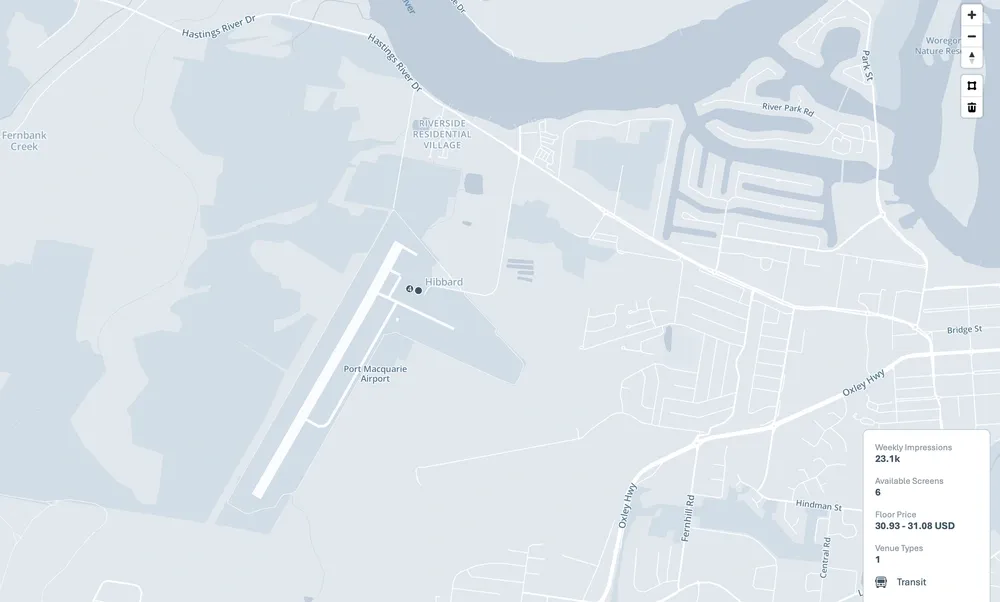
Catchment Area and Economic Drivers
Top 10 Cities within 150 km, Marketer Intelligence:
- Port Macquarie: The commercial and medical core of the region. Self-funded retirees, medical specialists, and small business proprietors concentrate here, supported by premium waterfront and golf-adjacent residential stock.
- Wauchope: Timber, agriculture, and trades wealth inland of the coast. Owner-operator households that buy vehicles, equipment, and property rather than consumer luxury.
- Laurieton, North Haven, and Lake Cathie: The Camden Haven retirement belt, with an even older demographic than Port Macquarie itself. Highly receptive to health, insurance, estate planning, and cruise travel messaging.
- Kempsey and South West Rocks: Agricultural and beef country combined with a strong coastal holiday-home segment. Mixed audience of landholders and Sydney second-home owners.
- Taree and Old Bar: Regional service centre for the Manning Valley with dairy, beef, and a substantial aged care and healthcare workforce.
- Forster and Tuncurry: Another dense retirement and holiday-home cluster with marine and boating ownership. Strong fit for recreational vehicles, boats, and travel products.
- Nambucca Heads and Macksville: Coastal retirement and agriculture, with households that fly rather than drive for specialist medical appointments in Sydney.
- Wingham and Gloucester: Beef, dairy, and rural landholding wealth in the Barrington foothills. Asset-rich families with agricultural finance and succession planning needs.
- Bellingen and Dorrigo: Higher-income lifestyle in-migration from Sydney and Melbourne, skewing professional, creative, and sustainability-minded. Receptive to premium and ethical brand positioning.
- Coffs Harbour: At the northern edge of the drive catchment, contributing horticulture, tourism, and healthcare travel, with some passenger overlap depending on schedule and fare.
NRI and Diaspora Intelligence: There is no large historical diaspora on the Mid North Coast, so the commercially significant migrant flow is recent and workforce-driven. Regional New South Wales aged care, nursing, and allied health have become heavily dependent on skilled migration, and Nepali, Indian, and Filipino health workers now form a visible and growing community across Port Macquarie, Taree, and Kempsey. These are young, employed, remittance-sending households with genuine appetite for money transfer services, telecom, international education, and eventual property purchase both locally and in their home markets. The dominant HNI movement, however, remains domestic: retirees and pre-retirees flying to Sydney to manage investments, meet advisers, attend specialist appointments, and connect to international departures.
Economic Importance: Healthcare and social assistance is the region's largest employer, driven by a hospital and health precinct, a substantial private aged care sector, and a university campus focused on medical, nursing, and allied health training. Construction and retail follow, both sustained by continuous in-migration and housing demand from arriving retirees. Agriculture, beef, dairy, oysters, macadamias, and timber underpin the inland and river economies, while tourism carries the coastal summer. For advertisers, this produces a rare combination: a very large retirement consumer market and a professional health services audience travelling through the same small terminal.
Business and Industrial Ecosystem
- Healthcare, aged care, and allied health: The dominant sector. Produces specialist clinicians, hospital and facility administrators, and a large migrant workforce, all with defined procurement and personal financial needs.
- Construction, property development, and trades: Continuous residential demand from in-migration creates owner-builder and developer wealth with strong equipment finance and insurance requirements.
- Agriculture and aquaculture: Beef, dairy, oyster, and horticultural producers holding appreciating land assets with succession and agricultural finance needs.
- Tourism, hospitality, and retail: Small business ownership at scale, highly seasonal, and consistently in market for working capital, payments, and insurance products.
Passenger Intent, Business Segment: Business travel here is overwhelmingly Sydney-directed and highly repetitive. Passengers fly for adviser and accountant meetings, specialist medical consultations and procedures, government and industry engagements, and to connect to international departures from Kingsford Smith. A large proportion are proprietors, practitioners, or self-directed investors rather than corporate employees, which means the person in the lounge controls the decision. Financial services, private health, insurance, professional services, and premium automotive intercept them most effectively.
Strategic Insight: The commercially valuable characteristic of the PQQ business audience is self-direction. Australian self-managed superannuation puts investment authority directly in the hands of individuals, and this catchment has one of the higher concentrations of self-funded retirees and self-directed investors in New South Wales. They are researching, comparing, and reallocating capital personally, without an institutional gatekeeper. Because the terminal has one departure lounge and a single dominant route, a financial or health brand can build genuine frequency against the same individuals across a full quarter at a cost that would buy almost nothing in Sydney. Masscom Global structures these campaigns for repeat exposure rather than one-hit reach.
Tourism and Premium Travel Drivers
- Ironman Australia (May): A long-established endurance event that brings several thousand athletes and their families into Port Macquarie. Triathlon participants skew strongly toward high income, high education, and high discretionary spend, making this the single most affluent inbound window of the year.
- Coastal beaches, whale watching, and the Koala Hospital: Internationally recognised attractions supporting a sustained domestic and international visitor base across spring and summer.
- Lord Howe Island access: Regional air service from this airport connects to a UNESCO World Heritage island with strictly capped visitor numbers and ultra-premium lodge accommodation. A genuine luxury signal within the terminal.
- Golf, boating, and river lifestyle: Marina berths, courses, and Hastings River recreation align directly with premium automotive, marine, and lifestyle categories.
Passenger Intent, Tourism Segment: Inbound leisure passengers arrive with accommodation and event entry already paid, leaving budget open for dining, vehicle hire, retail, and experiences. Departing visitors and returning residents sit in a high-recall, positive-association state that favours brand and consideration messaging over immediate response. The retiree segment in particular travels frequently and plans far ahead, meaning cruise lines, tour operators, travel insurance, and long-stay residency propositions reach genuine intent rather than aspiration. Financial services, health cover, travel, and destination property benefit most.
Travel Patterns and Seasonality
Peak seasons:
- December to February: Australian summer school holidays and Christmas family travel, the highest-volume window of the year.
- April to May: School holidays, the Anzac commemorative period, and the Ironman event combine into a dense and unusually affluent peak.
- September to October: Spring school holidays plus whale watching season and the start of the outbound northern hemisphere travel planning cycle.
- Year-round Sydney shuttle demand: Specialist medical, financial, and business travel provides a stable baseline with limited seasonal variation.
Event-Driven Movement:
- Ironman Australia (May): Several thousand affluent athletes plus supporting families inbound. Exceptional window for premium automotive, private health, insurance, financial services, and performance nutrition.
- Christmas and summer holidays (December to January): Maximum family volume, gifting spend, and multi-generational travel with grandparents funding a large share.
- Anzac Day and the commemorative period (April): Deeply significant in regional Australia, driving veteran and family travel and creating a receptive environment for insurance, health, and financial security messaging.
- School holiday cycles (April, July, September to October): Recurring grandparent and family travel patterns unique to a retirement-weighted catchment.
- Whale watching and spring tourism season (June to November): Sustained inbound visitation supporting hospitality, vehicle hire, and experience spend.
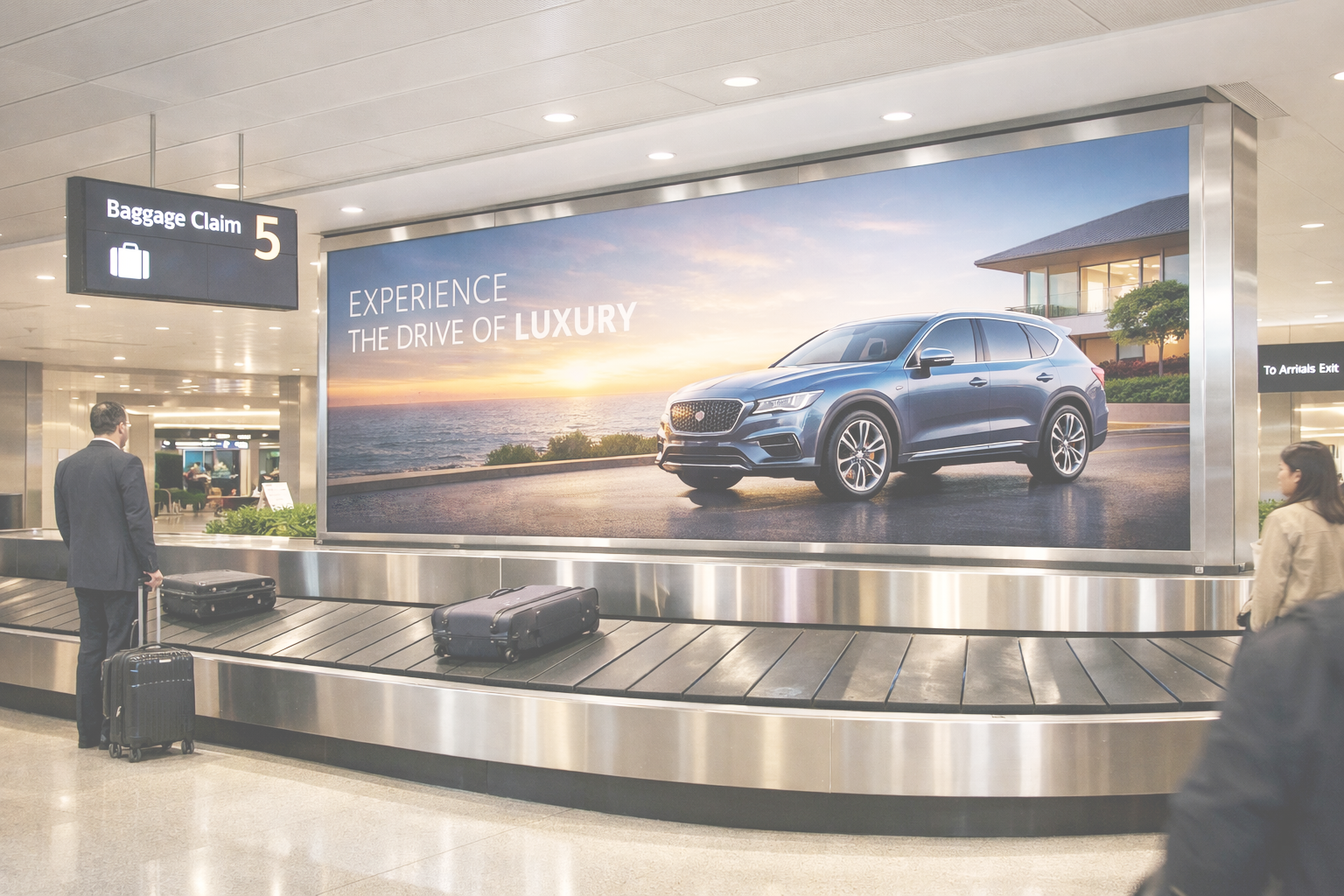
It’s Not Just Where You Advertise - It’s How Fast You Execute
We combine local insight with fast rollout to deliver results for you, now.
Talk to an ExpertAudience and Cultural Intelligence
Top 2 Languages:
- English: The functional language of essentially all traffic and the mandatory base for creative. This audience is older, highly literate, and sceptical of marketing language, so plain, specific, evidence-led copy substantially outperforms stylised or slogan-led execution.
- Nepali and Punjabi: Commercially the most useful secondary languages, reflecting the skilled migrant workforce that now staffs regional aged care, nursing, and allied health across this catchment. These are young, employed, remittance-sending households with real needs in money transfer, telecom, and international education. Mandarin and Italian follow, the latter tied to established postwar migrant families across the Manning and Hastings valleys.
Major Traveller Nationalities: Traffic is overwhelmingly Australian domestic, drawn from the Mid North Coast and from Sydney-based visitors travelling to see family or holiday property. There is no scheduled international service, so international travel is achieved through Sydney and Brisbane, which positions PQQ as an origin capture point for outbound Australians rather than a transfer environment. International visitors appearing here are predominantly New Zealand, British, German, and North American leisure travellers on East Coast touring itineraries. For creative, this means English-first execution with credible institutional proof points, because an older, financially literate audience rejects claims it cannot verify.
Religion, Advertiser Intelligence:
- Christianity, Anglican and Catholic predominant (collectively approximately 45 to 50 percent): Christmas and Easter drive the year's heaviest family travel and gifting cycles. Church and community networks carry real referral weight in this catchment, and messaging built on family provision, legacy, and stewardship converts strongly for insurance, estate planning, and financial services.
- No religion (approximately 35 to 42 percent and rising): Very high in coastal New South Wales and higher still among recent arrivals from Sydney. This is the segment most receptive to conventional premium, lifestyle, wellness, and sustainability positioning without cultural framing, and it is growing.
- Hinduism, Buddhism, and Islam (small but growing, concentrated in the health workforce): Diwali and related festival periods produce defined remittance, gifting, and travel spikes among nursing and aged care households. Small in share, useful in precision, and almost entirely unaddressed by competing advertising at this airport.
Behavioral Insight: This audience thinks in capital preservation rather than accumulation, which fundamentally changes what converts. They are asset-rich, income-modest, and acutely focused on outliving their money, so propositions built on security, guaranteed outcomes, fee transparency, and downside protection outperform growth and upside messaging. Trust is established through longevity, named local presence, and third-party verification rather than brand polish, and word of mouth within clubs, community groups, and medical networks carries disproportionate weight. They also plan far in advance, which means travel, health, and financial campaigns should target consideration windows months ahead of the purchase rather than at the point of sale.
Outbound Wealth and Investment Intelligence
The outbound passenger at PQQ is deploying realised property equity and superannuation capital, not business earnings. This is a self-directed investor base with liquid assets, long planning horizons, and a very high propensity to spend on extended travel and long-stay lifestyle arrangements rather than on acquisitive property speculation. That makes it one of the most valuable and least contested audiences in Australia for travel, residency, and cross-border financial advertising.
Outbound Real Estate Investment: Domestic reinvestment dominates, with southeast Queensland, the Gold Coast, and the Sunshine Coast absorbing the largest share of second and downsizing purchases from this catchment. Internationally, activity concentrates on lifestyle and long-stay markets rather than yield plays: New Zealand for family and heritage reasons, Bali and coastal Thailand for extended-season living, and increasingly Portugal, Spain, Italy, and Greece where dollar-to-euro pricing and mild climate appeal to retirees with European ancestry. Interest in the United Arab Emirates and Southeast Asian resort property exists among the smaller pre-retirement business-owner segment. International developers advertising at PQQ reach buyers with cash rather than mortgage dependency, which materially shortens transaction timelines.
Outbound Education Investment: Education spending here is generational rather than personal, with grandparents funding a meaningful share of tuition and study abroad for grandchildren, most often to the United Kingdom, Ireland, the United States, and Canada. Within the migrant health workforce segment, remittance-funded education for family members in Nepal, India, and the Philippines is an active and recurring commitment. International universities, pathway providers, and education consultancies gain advantage here because the funder and the student are frequently different people, and the funder is the one sitting in the departure lounge.
Outbound Wealth Migration and Residency: Second-residency demand in this catchment is retirement-driven and lifestyle-led rather than tax-driven. The most relevant routes are Portugal's passive income and residency pathways, Italy and Greece elective residency programmes, Malaysia and Thailand long-stay retirement visas, and New Zealand residency for family reunification. Italian, Irish, and British citizenship by descent is actively pursued by Australians of European ancestry, opening European residency without investment, which makes advisory services in this area unusually marketable to this specific audience.
Strategic Implication for Advertisers: Cruise lines, tour operators, private health insurers, wealth managers, residency advisories, and international developers should treat PQQ as a priority origin buy because the capital here is liquid, self-directed, and committed to spending in retirement rather than hoarding. Sydney-focused media plans reach this audience only before they move, and once relocated they become effectively invisible to metropolitan buys. Masscom Global activates both sides of the corridor, placing the same brand at PQQ and at the destination-market airports across Europe, Southeast Asia, and New Zealand where this spending lands.
Airport Infrastructure and Premium Indicators
Terminals:
- A single terminal building located roughly four kilometres west of the city centre, which shortens the ground journey and encourages early, unhurried arrival.
- The terminal was doubled in size to approximately 2,000 square metres under a jointly funded upgrade completed in December 2019, delivering an expanded check-in area, doubled departure lounge seating, a new café, upgraded screening, a new baggage carousel, and a dedicated car rental zone.
Premium Indicators:
- No airline lounge provision, which keeps premium and business passengers in the shared departure lounge and café area where advertising exposure and dwell are both at their highest.
- Substantial general aviation activity, including a base for regional charter and scenic operations, reflecting private and charter aircraft use across the Mid North Coast.
- Scheduled access to Lord Howe Island, a UNESCO World Heritage destination with capped visitor numbers and ultra-premium lodge accommodation, which identifies a discrete high-net-worth passenger stream within the terminal.
- The surrounding region supports marina berthing, golf, and premium waterfront residential development at a standard well above typical regional Australian markets, extending brand exposure across the ground journey.
Forward-Looking Signal: The airport operates as a self-funded commercial unit, and the master plan endorsed in 2025 sets a twenty-year framework projecting growth from around 218,600 passengers in 2019 to approximately 396,000 by 2045. Near-term works include refurbishment of the main runway across 2026 to 2028, short-stay car park expansion, and general aviation apron resurfacing, with the longer-term plan contemplating capability for 180-seat narrowbody aircraft. Any jet capability upgrade would transform route potential and reprice this market immediately. Masscom Global advises clients to secure position now, at current-cycle rates, ahead of infrastructure delivery and capacity growth.
Airline and Route Intelligence
Top Airlines: QantasLink is the dominant operator at roughly 64 percent of departures, with Rex operating Sydney services and a regional charter operator based here serving Lord Howe Island. Aircraft types are turboprop, principally the Dash 8 Q400 and Saab 340.
Key International Routes: PQQ has no scheduled international service. International connectivity is achieved through Sydney and Brisbane, which positions this airport as the origin capture point for outbound Australian travel capital before it reaches a major hub.
Domestic Connectivity: Sydney accounts for over 90 percent of departures, with roughly 43 weekly services, supported by QantasLink Brisbane service and regional Lord Howe Island flights. Total scheduled network reach is small and deliberately concentrated.
Wealth Corridor Signal: A route map this concentrated is an advertising advantage, not a limitation. Sydney is simultaneously the specialist medical corridor, the financial adviser and superannuation corridor, the family visitation corridor, and the international gateway corridor for this catchment, which means a single dominant route carries four distinct high-value intents. Brisbane serves southeast Queensland family, property, and medical connections. Lord Howe Island service identifies a discrete premium leisure segment. The near-total absence of low-value incidental traffic is precisely why impressions here carry more commercial weight than the passenger count suggests.
Media Environment at the Airport
- A single terminal with one departure lounge and one screening point delivers effectively complete audience coverage from a very small number of placements, which no metropolitan Australian airport can offer at any price.
- Dwell is long and predictable, extended by an older passenger profile that arrives early by habit, by turboprop boarding processes, and by a departure lounge and café where passengers sit rather than transit.
- The terminal was fully rebuilt and doubled in size in 2019, producing a modern, low-clutter, well-lit environment that elevates premium brand association instead of competing with it.
- Masscom Global provides direct inventory access across check-in, screening recomposition, departure lounge, café, and baggage claim positions, with creative production and installation managed end to end.
Strategic Advertising Fit
Best Fit:
- Wealth management, retirement income, and annuities: A dense concentration of self-funded retirees and self-directed superannuation investors with liquid capital and long horizons.
- Private health insurance and specialist medical services: Older audience with high utilisation plus a resident clinical and hospital administration audience in the same terminal.
- Cruise lines, tour operators, and extended travel: Australian retirees are among the world's highest per-capita cruise buyers, and this catchment sits at the top of that curve.
- Travel insurance and out-of-country medical cover: Structurally necessary for an older audience taking long international trips, with clear seasonal purchase windows.
- Premium automotive, SUVs, caravans, and recreational vehicles: High vehicle replacement rates, touring culture, and cash purchase capability.
- Estate planning, legal, and funeral and bequest services: A demographic actively engaged in succession and estate structuring, reachable nowhere else this efficiently.
- Retirement living, aged care, and assisted living operators: Both the resident audience and their adult children fly this route to make placement decisions.
- International residency and citizenship by descent advisory: European ancestry combined with retirement lifestyle motivation makes this an unusually receptive market.
Brand Alignment at a Glance:
| Category | Fit |
|---|---|
| Wealth management and retirement finance | Exceptional |
| Private health, insurance, and medical services | Exceptional |
| Cruise, tour, and extended travel | Strong |
| Premium automotive and recreational vehicles | Strong |
| Retirement living and aged care | Strong |
| International residency and citizenship advisory | Moderate |
| Domestic tourism and hospitality | Moderate |
| Youth fashion, gaming, and nightlife | Poor fit |
Who Should Not Advertise Here:
- Youth fashion, gaming, streaming, and nightlife brands: This catchment has one of the older median ages in New South Wales, and the under-30 audience is both small and largely road-travelling. Spend delivers minimal addressable reach.
- Enterprise technology and corporate B2B software: There is no significant corporate headquarters, technology cluster, or institutional IT procurement audience in this region.
- Long-haul international airlines and premium cabin products: With no scheduled international service and a turboprop domestic network, there is no addressable premium cabin buyer at this terminal, though travel intermediaries remain a strong fit.
Event and Seasonality Analysis
- Event Strength: Medium
- Seasonality Strength: High
- Traffic Pattern: Seasonal with a stable year-round medical and financial underlay
Strategic Implication: Budget should be weighted toward December to February for maximum family and holiday volume, and toward April to May where school holidays, the commemorative period, and the Ironman event combine into the year's most affluent inbound window. Because Sydney-directed medical, financial, and business travel runs at a stable rate all year, an always-on baseline presence protects reach and builds the repeat frequency this audience requires before acting. Masscom Global structures PQQ campaigns around exactly this rhythm, running continuous wealth, health, and insurance presence against the year-round shuttle audience while weighting travel, automotive, and premium categories into the summer and autumn peaks.
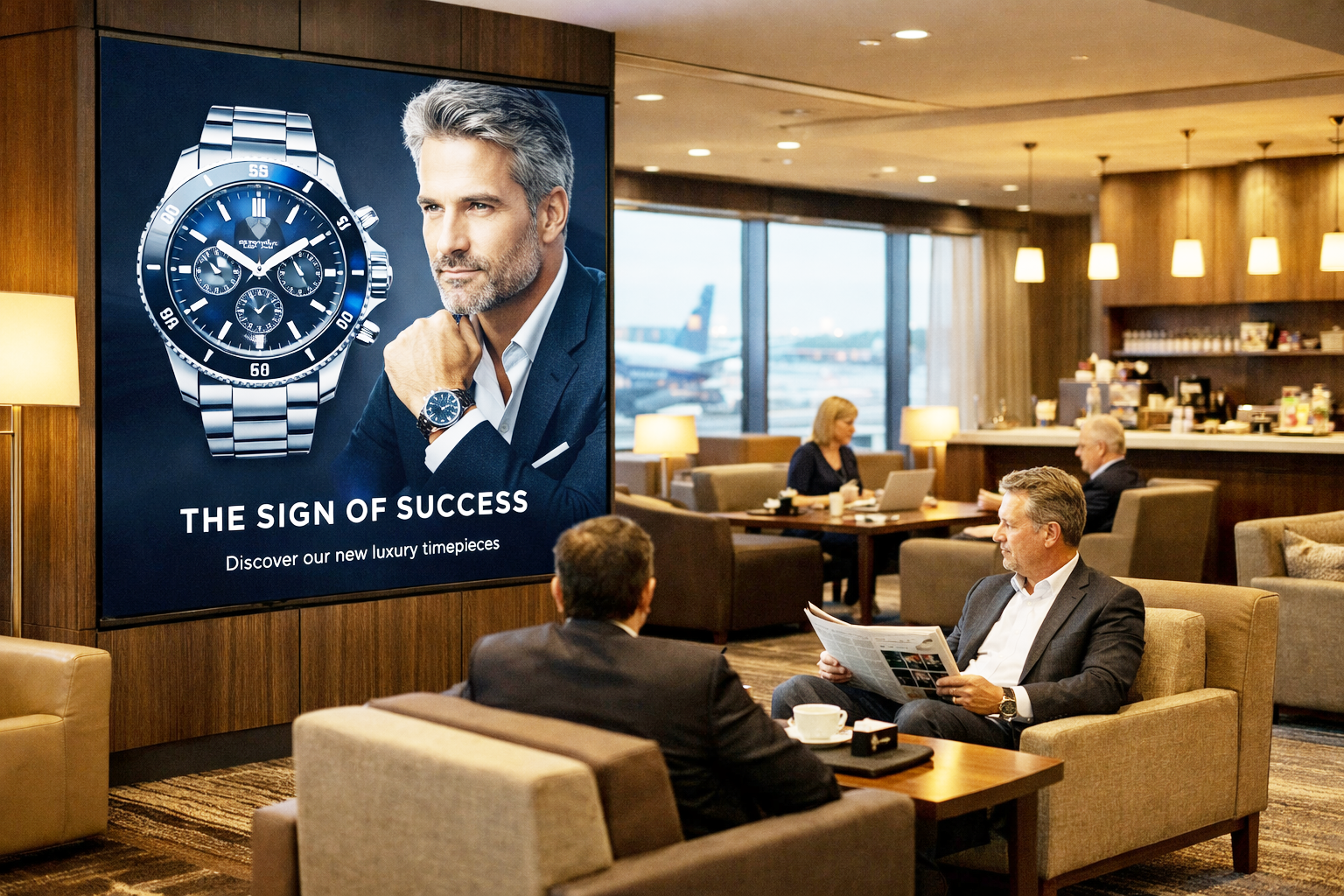
Poor Placement and Delays Affect Airport Campaigns
We help you move faster, access better inventory, and get it right now.
Talk to an ExpertFinal Strategic Verdict
Port Macquarie is the clearest example in Australian regional aviation of an audience worth far more than its passenger count. Approximately 230,000 passengers a year pass through a single terminal with one departure lounge, over 90 percent of them on one route to Sydney, and a very large share of them are self-funded retirees holding liquid capital released from decades of Sydney property appreciation, alongside the clinicians and administrators of the region's largest employing sector. Wealth management, retirement income products, private health and insurance, cruise and extended travel, premium automotive and recreational vehicles, and estate and residency advisory gain the most, because this is a self-directed, cash-capable, security-focused audience that no metropolitan media buy can reach once it has relocated. An endorsed master plan targeting 396,000 passengers, runway works from 2026, and long-term narrowbody capability all point to a market that will reprice. Masscom Global has the inventory access, catchment intelligence, and frequency planning capability to own this audience before that happens.
About Masscom Global
Masscom Global is a premium international airport advertising and media buying agency operating across 140 countries. With deep expertise in airport OOH, premium publications, and high-net-worth audience targeting, Masscom helps brands reach the world's most valuable travellers at the moments that matter most. For advertising packages, media rates, and campaign planning at Port Macquarie Airport and airports across the globe, contact Masscom Global today.
Frequently Asked Questions
How much does airport advertising cost at Port Macquarie Airport? Cost at PQQ depends on format, position within the terminal, campaign duration, and seasonal demand, with the December to February and April to May windows carrying the strongest premiums. Because the terminal has a single departure lounge and one screening point, cost per share of voice here is exceptionally efficient, and the concentration of a single dominant route means frequency against the same individuals is unusually high for the money. Rates remain calibrated to a regional airport rather than to the investable wealth of the audience passing through it. Contact Masscom Global for current rates and availability.
Who are the passengers at Port Macquarie Airport? Predominantly residents of the New South Wales Mid North Coast plus Sydney-based visitors travelling to see family or holiday property. The core segments are self-funded retirees and pre-retirement sea-change households flying to Sydney for specialist medical appointments, financial adviser meetings, and international connections, medical specialists and hospital administrators, small business owners and trades proprietors, agricultural landholders from the Manning and Hastings valleys, and a growing migrant aged care and nursing workforce. The median age of this catchment is well above the state average.
Is Port Macquarie Airport good for luxury brand advertising? It is strong for premium and wealth-adjacent categories and weak for flagship luxury. Wealth management, private banking, private health, premium automotive, marine and recreational vehicles, cruise and premium travel all perform well, supported by genuine liquid capital, marina and golf lifestyle assets, and access to ultra-premium Lord Howe Island. Flagship fashion and jewellery should not buy here, because consumption in this catchment is deliberately understated and skews to experiences, vehicles, and security rather than apparel.
What is the best airport in Australia to reach HNWI audiences? Sydney and Melbourne lead on absolute concentration of Australian wealth, and Sydney remains the country's premier executive and international audience. PQQ is the most efficient route to retired and semi-retired liquid wealth specifically, an audience that metropolitan plans reach only before relocation and then lose entirely. For national coverage of self-funded retirement capital, Masscom typically recommends PQQ alongside Sunshine Coast and Sydney.
What is the best time to advertise at Port Macquarie Airport? December to February delivers the highest volume through summer school holidays and Christmas family travel. April to May is the most affluent window, combining school holidays, the Anzac commemorative period, and the Ironman Australia event, which brings several thousand high-income athletes and families into the region. September to October provides a spring peak. Year-round Sydney shuttle traffic makes an always-on baseline worthwhile, particularly for health and financial categories.
Can international real estate developers advertise at Port Macquarie Airport? Yes, with the right proposition. This audience buys lifestyle and long-stay property rather than yield-driven investment, with activity concentrated in New Zealand, Bali and coastal Thailand, Portugal, Spain, Italy, and Greece, frequently supported by European citizenship by descent. Critically, these are cash buyers rather than mortgage-dependent buyers, which shortens transaction timelines considerably. Developers marketing retirement lifestyle, long-stay residency, or managed resort living will find this one of the most receptive origin audiences in Australia. Masscom Global places developers at both origin and destination airports simultaneously.
Which brands should not advertise at Port Macquarie Airport? Youth fashion, gaming, streaming, and nightlife brands have minimal addressable audience here given one of the older median ages in New South Wales. Enterprise technology and corporate B2B software are misaligned, as there is no headquarters or institutional procurement presence. Long-haul international airlines and premium cabin products also lack an addressable buyer, since the airport operates a turboprop domestic network with no scheduled international service.
How does Masscom Global help brands advertise at Port Macquarie Airport? Masscom Global handles the full campaign lifecycle: catchment and wealth-profile intelligence across the Mid North Coast retirement corridor, format and placement selection mapped to a single-lounge terminal where complete coverage is achievable with minimal inventory, frequency planning built around a dominant single route, creative production, rate negotiation, installation, and performance reporting. We time campaigns to the summer and autumn peaks while maintaining the continuous presence this considered, security-focused audience requires before acting, and we extend the same brand to the destination markets in Europe, Southeast Asia, and New Zealand where their capital is spent. Book a 15-minute planning call to review current inventory and rates.