


Airport at a Glance
| Field | Detail |
|---|---|
| Airport | Palmerston North Airport (Milson Airport) |
| IATA Code | PMR |
| Country | New Zealand |
| City | Palmerston North, Manawatū-Whanganui |
| Annual Passengers | Circa 600,000 to 750,000 at last verified pre-2020 full year. Current-year total: data not available |
| Primary Audience | Agri-science and agribusiness professionals, defence force personnel and contractors, university and research sector travellers |
| Peak Advertising Season | February to May and September to November (academic and business peaks) |
| Audience Tier | Tier 3 Niche Institutional and Agri-Science Gateway |
| Best Fit Categories | Agribusiness and agri-technology B2B, higher education and research services, defence-adjacent B2B, regional financial services |

Palmerston North Airport, located in the suburb of Milson, serves a city whose commercial identity is defined by three distinct institutional pillars: Massey University with its internationally recognised agricultural and veterinary science programmes, a significant New Zealand Defence Force presence including Linton Military Camp and Ohakea Air Base, and a concentration of agri-research organisations supporting the country's primary export sector. This is not a tourism gateway, and advertisers should not evaluate it as one.
What PMR does deliver is a passenger base of unusual institutional credentials for a regional New Zealand airport. Agricultural scientists, veterinary researchers, defence personnel and university administrators move through this terminal on predictable, institution-driven cycles, giving advertisers access to genuine research and procurement decision-making authority within New Zealand's most economically important export sector.
Advertising Value Snapshot
- Passenger scale: Circa 600,000 to 750,000 at last verified pre-2020 full year. Current-year total and year-on-year growth: data not available
- Traveller type: Agri-science and agribusiness professionals, defence force personnel and contractors, university and research sector travellers
- Airport classification: Tier 3 Niche Institutional and Agri-Science Gateway. Moderate volume with a distinctly credentialed institutional passenger base
- Commercial positioning: New Zealand's agri-science, research and defence sector gateway, anchored by Massey University and regional military installations
- Wealth corridor signal: Sits on the New Zealand agri-export research corridor linking Manawatū's science and farming institutions to Auckland, Wellington and international agricultural markets
- Advertising opportunity: Terminal clutter is minimal and the passenger base carries genuine institutional research and procurement authority. Masscom Global positions brands here to reach New Zealand's agri-science and defence decision-makers directly, at a fraction of Auckland or Wellington media cost.

Airport Advertising is Complex to Get Right
We help you execute faster, with proven results and local insight most planners lack starting now.
Talk to an Expert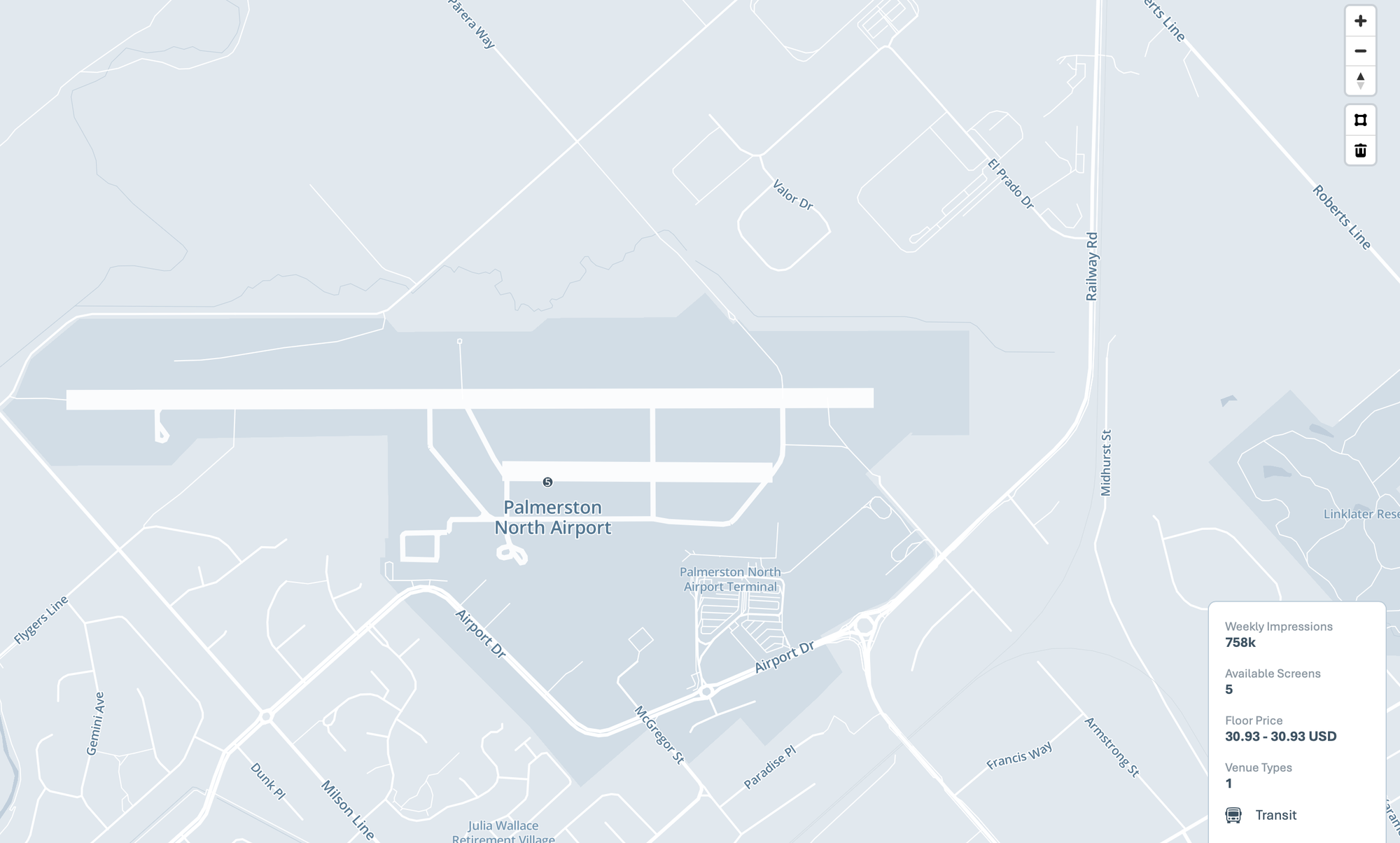
Catchment Area and Economic Drivers
Top 10 Cities within 150 km — Marketer Intelligence:
- Palmerston North: The Manawatū region's commercial and academic capital, home to Massey University and a concentration of agri-research organisations. Produces the airport's dominant academic, research and professional travel base.
- Feilding: Historic agricultural service town with one of New Zealand's most significant livestock saleyards. Produces genuine farming ownership and agribusiness travel.
- Levin: Regional service and horticultural centre contributing steady agricultural and commerce-linked travel.
- Whanganui: Regional city with arts and heritage identity, contributing secondary regional business and cultural tourism traffic.
- Ohakea (Air Force base area): New Zealand Defence Force air base, producing distinct defence personnel and contractor travel with specific B2B relevance.
- Linton (military camp area): Major army base, producing further defence personnel and logistics-linked travel.
- Foxton: Smaller coastal town contributing modest regional traffic.
- Marton: Rural service town contributing agricultural commerce traffic.
- Dannevirke: Farming service town in the Tararua district, contributing agricultural business travel.
- Masterton (outer catchment): Wairarapa regional centre contributing occasional overlapping business and agricultural travel.
NRI and Diaspora Intelligence:
Palmerston North does not carry a significant international diaspora audience of scale, though Massey University's international student population contributes a modest but genuine international academic traveller segment drawn from across Asia and the Pacific. Advertisers should treat PMR as a domestic institutional and agri-science gateway with an international academic layer, rather than a diaspora remittance corridor.
Economic Importance:
The Manawatū economy is anchored by agricultural production and processing, agri-science research and higher education through Massey University, and a substantial New Zealand Defence Force presence. This structure produces an unusually credentialed traveller base for a regional New Zealand airport, combining research and academic authority with genuine farming ownership wealth and defence procurement relevance.
Business and Industrial Ecosystem
- Agri-science and agricultural research: Massey University's internationally recognised agricultural and veterinary programmes anchor a genuine research economy, producing scientist, academic and research executive travel
- Dairy, sheep and livestock farming: The region's core agricultural sector produces genuine farming ownership travel with equipment and finance purchasing authority
- New Zealand Defence Force operations: Linton Military Camp and Ohakea Air Base produce steady defence personnel, contractor and logistics-linked travel
- Food processing and agri-technology: A growing sector supporting New Zealand's export economy, producing B2B executive travel
Passenger Intent — Business Segment:
Business travellers at PMR are predominantly agri-science researchers, university academics and administrators, farming business owners, and defence personnel and contractors moving between Palmerston North and Auckland or Wellington for institutional, procurement and administrative purposes. Agri-technology B2B, higher education services, defence-adjacent B2B and regional financial services advertisers intercept this segment most effectively.
Strategic Insight:
The commercial value here is credentialed institutional density. Massey University's agricultural science reputation and the region's defence installations concentrate genuine research funding and procurement authority into a small passenger pool, meaning a message reaching this terminal reaches decision-makers with real institutional budgets rather than a diluted general business audience.
Tourism and Premium Travel Drivers
- Manawatū Gorge and Tararua Ranges outdoor recreation: A modest but genuine outdoor recreation draw appealing to active-lifestyle travellers
- Te Manawa museum and regional cultural institutions: Contribute a small civic and cultural tourism segment
- New Zealand Rugby Museum: A niche sports heritage draw with genuine national significance for rugby-focused visitors
- Regional agricultural events and shows, including major livestock and farming exhibitions: Contribute business-linked event tourism rather than classic leisure travel
Passenger Intent — Tourism Segment:
PMR's leisure passenger volume is modest relative to its institutional and academic traffic. Visitors are predominantly connected to Massey University, family visitors of students and defence personnel, and attendees of regional agricultural events rather than classic tourism. Higher education services, regional hospitality and agricultural event-linked brands benefit most from this audience.
Travel Patterns and Seasonality
Peak seasons:
- February to May: Strong academic year start and autumn agricultural business period, driving concentrated institutional travel
- September to November: Secondary academic and spring agricultural business peak, aligned with lambing and calving cycles and research activity
- December to January: Lower institutional travel season, aligned with the New Zealand summer holiday period
- June to August: Winter period with steady but reduced academic and agricultural travel
Monthly passenger distribution data: not available at verified level.
Event-Driven Movement:
- Massey University academic year start (February to March): Drives concentrated student, family and academic staff travel
- Central Districts Field Days and regional agricultural exhibitions (varies, concentrated in spring): Drive concentrated farming ownership and agri-technology B2B travel
- Agricultural research and science conference season (autumn and spring): Drives concentrated researcher and academic travel
- Massey University graduation ceremonies (varies through the year): Drive notable family and visitor travel spikes

It’s Not Just Where You Advertise - It’s How Fast You Execute
We combine local insight with fast rollout to deliver results for you, now.
Talk to an ExpertAudience and Cultural Intelligence
Top 2 Languages:
- English: The default language of the overwhelming majority of the passenger base, essential across all advertiser categories at this airport.
- Te Reo Māori: Carries genuine cultural significance in New Zealand, and its respectful inclusion in creative signals authentic local commitment, particularly valuable for institutional and public-sector-adjacent brands.
Major Traveller Nationalities:
The passenger base is overwhelmingly New Zealand domestic, drawn from the Manawatū region's academic, agricultural and defence sectors. A modest international segment is tied to Massey University's international student and visiting researcher population, drawn primarily from Asia and the Pacific. Creative should lead in English, with culturally respectful Te Reo Māori elements adding genuine local credibility.
Religion — Advertiser Intelligence:
- Christianity, spanning Anglican, Catholic and Presbyterian denominations (largest single affiliation, though with low active observance): Functions primarily as a cultural calendar marker, with Christmas and Easter driving family travel and gifting spend.
- Non-religious (very large and growing share, consistent with New Zealand's broadly secular profile): Reflects the country's secular character. Values-based messaging around sustainability, innovation and community outperforms faith-based framing substantially.
- Māori spiritual traditions and minority faiths (present, reflecting the region's Māori population and international student diversity): Relevant to culturally respectful messaging rather than direct commercial targeting.
Behavioral Insight:
The Palmerston North audience combines New Zealand practicality and understated professionalism with a genuinely credentialed academic and scientific layer. This audience responds strongly to evidence, research credibility and demonstrated performance rather than aspirational status positioning. Agri-technology, education and financial services brands that lead with scientific validity, sustainability credentials and proven results will consistently outperform lifestyle-driven branding with this audience.
Outbound Wealth and Investment Intelligence
PMR is not primarily an outbound international wealth corridor. Its defining wealth-relevant movement is institutional and agricultural: research funding, university sector investment, and genuine farming ownership wealth concentrated in the Manawatū region's agricultural economy. The strongest commercial opportunity for advertisers lies in capturing this institutional and agricultural wealth rather than positioning for outbound investment categories.
Outbound Real Estate Investment:
Verified data on significant outbound international property investment specific to this catchment is limited. The more relevant real estate dynamic is domestic agricultural land holding and transaction activity within the Manawatū region, alongside steady residential demand tied to university and defence sector employment.
Outbound Education Investment:
The region is more accurately characterised as an inbound education destination, drawing domestic and international students to Massey University's agricultural and veterinary programmes. Outbound education investment from this catchment is a lower-priority category for advertisers, though New Zealand students broadly favour Australia and the United Kingdom for overseas study.
Outbound Wealth Migration and Residency:
Verified data on residency or citizenship-by-investment activity specific to this catchment is not available. This is not a relevant category for campaign planning at PMR.
Strategic Implication for Advertisers:
The stronger strategic angle at PMR is institutional and agricultural capture: agri-technology suppliers, agricultural equipment brands, education services and regional financial providers should treat this airport as a direct channel to New Zealand's agri-science research authority and genuine farming ownership. Masscom Global positions these categories to intercept this audience at a fraction of Auckland or Wellington media cost.
Airport Infrastructure and Premium Indicators
Terminals:
- Single passenger terminal handling domestic scheduled services with a compact, easily navigable passenger flow and no concourse fragmentation.
- Facilities are functional and well-maintained, consistent with a regional New Zealand airport standard.
Premium Indicators:
- Lounge infrastructure is limited in scale, consistent with a regional New Zealand airport rather than a major international gateway.
- General aviation activity is present, alongside significant defence-linked aviation operations in the wider region tied to Ohakea Air Base, though verified civilian premium movement figures are not available.
- No luxury hotel is located at the airport itself. Hospitality in the catchment is concentrated in Palmerston North city, oriented toward academic, defence and agricultural business visitors.
- New Zealand's strong national sustainability and agricultural innovation credentials function as an indirect brand-association asset valuable to agri-technology and environmentally positioned brands.
Forward-Looking Signal:
Continued investment in New Zealand's agri-technology and food innovation sectors, combined with Massey University's ongoing research role and the sustained defence presence in the region, points toward a stable institutional travel base for PMR. As New Zealand's agri-export sector continues to prioritise innovation and sustainability, advertiser interest in reaching this credentialed research audience directly is likely to increase. Masscom Global advises clients to secure positions now while regional New Zealand airport advertising rates remain well below Auckland or Wellington.
Airline and Route Intelligence
Top Airlines:
Domestic service is operated by New Zealand's principal domestic carriers connecting Palmerston North to Auckland, Wellington and Christchurch, with route composition subject to periodic change. Current verified carrier list and frequencies: data not available.
Key International Routes:
No significant scheduled direct international service is verified at this airport. International visitors and outbound international travellers typically connect via Auckland or Wellington.
Domestic Connectivity:
Auckland, Wellington and Christchurch are the primary domestic routes, connecting the Manawatū region's institutional and agricultural economy to New Zealand's main commercial, governmental and international gateway centres.
Wealth Corridor Signal:
The Auckland and Wellington routes reflect PMR's dual institutional identity: the Wellington connection carries government, defence and policy-linked travel given the capital's proximity, while the Auckland connection carries commercial, agri-export and international onward connectivity. Advertisers should treat this dual corridor as confirmation of a genuine institutional and agribusiness audience rather than a leisure passenger base.
Media Environment at the Airport
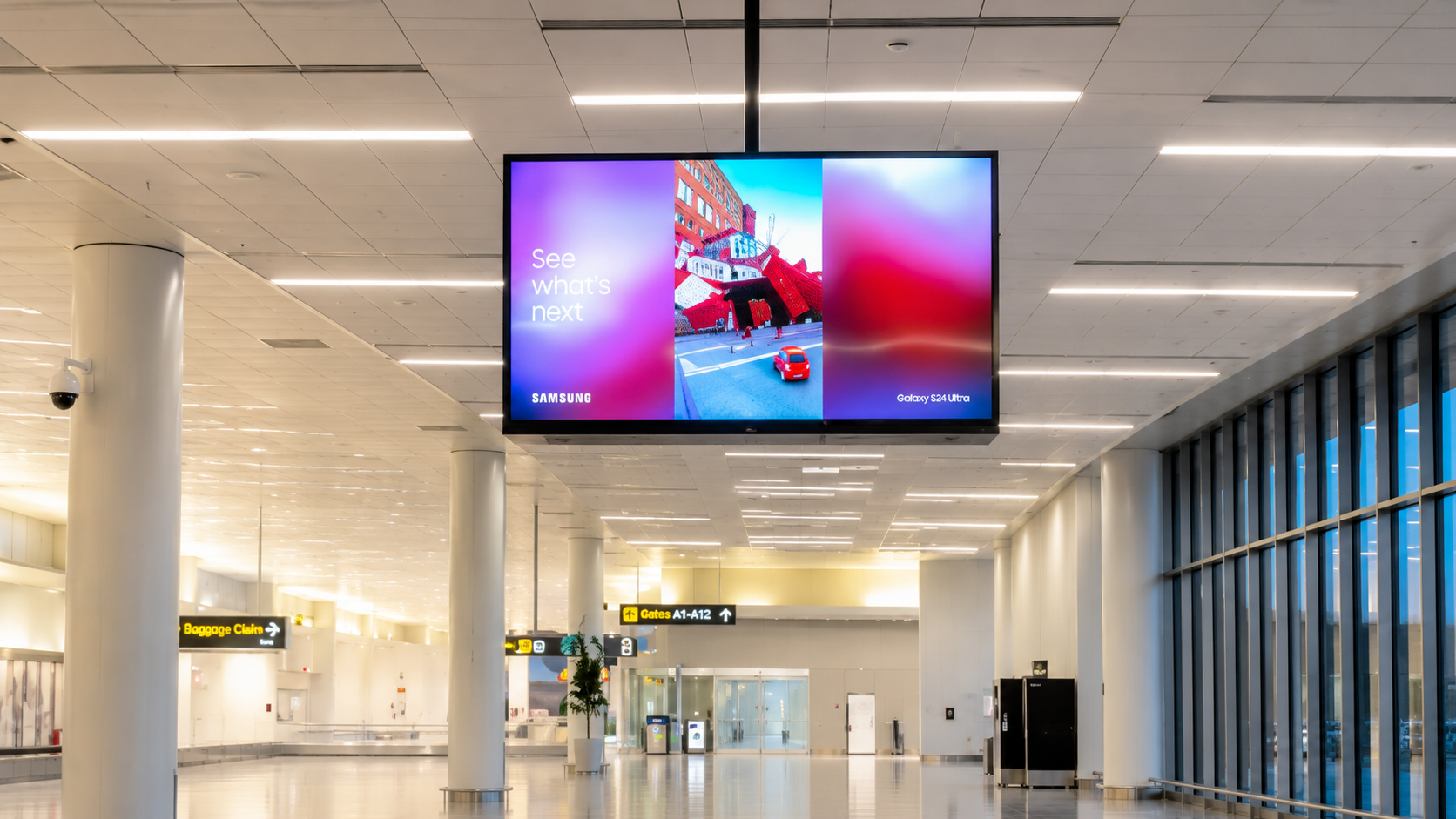
- Terminal scale is compact and clutter is minimal, allowing a small number of well-placed formats to achieve strong effective coverage of a passenger base with genuine institutional and agricultural purchasing authority
- Dwell time is shaped by a straightforward single-terminal flow with modest retail distraction, supporting sustained attention on airport media
- The region's agri-science research credentials and defence sector presence create a premium institutional environment association valuable to agri-technology, education and B2B brands
- Masscom Global provides direct access to regional New Zealand airport inventory that is difficult for independent buyers to secure efficiently, and coordinates PMR placements with Auckland and Wellington inventory for broader New Zealand market coverage
Strategic Advertising Fit
Best Fit:
- Agribusiness and agri-technology B2B: Direct alignment with the region's farming economy and Massey University's agricultural research authority
- Higher education and research services: Reflects Massey University's significant academic and international student presence
- Agricultural equipment and machinery: Strong fit given genuine farming ownership in the Manawatū catchment
- Defence-adjacent B2B and logistics services: Reflects the substantial New Zealand Defence Force presence at Linton and Ohakea
- Regional financial services and rural banking: Aligned with agricultural land finance and farming business capital needs
- Sustainability and environmental technology brands: Matches New Zealand's agri-innovation and environmental credibility priorities
Brand Alignment at a Glance:
| Category | Fit |
|---|---|
| Agribusiness and agri-technology B2B | Exceptional |
| Higher education and research services | Exceptional |
| Agricultural equipment and machinery | Strong |
| Defence-adjacent B2B and logistics | Strong |
| Regional financial services and rural banking | Strong |
| Sustainability and environmental technology | Moderate |
| Luxury and status-driven brands | Poor fit |
Who Should Not Advertise Here:
- Luxury and status-driven brands: Culturally misaligned with New Zealand's understated professional norms and this catchment's institutional, research-oriented audience
- International real estate and outbound wealth migration advisory: Weak alignment given the catchment's domestic institutional and agricultural wealth profile
- Mass-market fast fashion: Passenger volume is modest and the audience is professionally credentialed rather than general consumer retail driven
Event and Seasonality Analysis
- Event Strength: Medium
- Seasonality Strength: Medium
- Traffic Pattern: Dual-Peak, aligned with academic year cycles and agricultural business seasons in autumn and spring
Strategic Implication:
Advertisers should weight spend toward February to May and September to November, when academic year cycles and agricultural business activity concentrate institutional travel. Masscom Global structures PMR campaigns around this rhythm, prioritising agri-technology, education and financial services messaging during these peaks while maintaining a smaller baseline presence for defence-adjacent and B2B categories year-round.

Poor Placement and Delays Affect Airport Campaigns
We help you move faster, access better inventory, and get it right now.
Talk to an ExpertFinal Strategic Verdict
Palmerston North Airport is a precision institutional buy for brands targeting New Zealand's agri-science research authority and genuine farming ownership. Passenger volume is modest, but the audience carries real research funding, procurement and agricultural capital decision-making power concentrated through Massey University, the region's farming economy and a substantial defence presence. Agri-technology suppliers, education brands and rural financial services gain disproportionate value here relative to Auckland or Wellington cost. Masscom Global secures this inventory now, while regional New Zealand airport advertising remains underpriced relative to audience quality.
About Masscom Global
Masscom Global is a premium international airport advertising and media buying agency operating across 140 countries. With deep expertise in airport OOH, premium publications, and high-net-worth audience targeting, Masscom helps brands reach the world's most valuable travellers at the moments that matter most. For advertising packages, media rates, and campaign planning at Palmerston North Airport and airports across the globe, contact Masscom Global today.
Frequently Asked Questions
How much does airport advertising cost at Palmerston North Airport? Cost depends on format, terminal position, campaign duration and seasonal demand, with the February to May and September to November academic and agricultural peaks commanding the strongest rates. Positions remain well below Auckland or Wellington pricing. Masscom Global provides current rates and availability on request.
Who are the passengers at Palmerston North Airport? The core audience is agri-science researchers and academics tied to Massey University, farming business owners from the Manawatū region, and New Zealand Defence Force personnel and contractors linked to Linton Military Camp and Ohakea Air Base.
Is Palmerston North Airport good for luxury brand advertising? No. This is an institutional and agri-science gateway with an understated, research-oriented audience. Luxury and status-driven brands will find weak cultural and audience alignment here.
What is the best airport in New Zealand to reach HNWI audiences? Queenstown and Wanaka lead decisively on ultra-high-net-worth density, with Auckland strongest on overall scale and international HNWI volume. Palmerston North is not a substitute for any of these, but it offers unusually efficient access to agri-science research and farming ownership authority that those airports do not concentrate.
What is the best time to advertise at Palmerston North Airport? February to May and September to November are the strongest windows, aligned with Massey University's academic year cycles and the region's autumn and spring agricultural business seasons.
Can international real estate developers advertise at Palmerston North Airport? This is a poor fit. The relevant real estate dynamic here is domestic agricultural land holding and university and defence-linked residential demand, rather than international outbound property investment from this catchment.
Which brands should not advertise at Palmerston North Airport? Luxury and status-driven brands show weak cultural alignment with New Zealand's understated professional norms. International real estate and wealth migration advisory, and mass-market fast fashion, also show limited relevance to this catchment's institutional audience.
How does Masscom Global help brands advertise at Palmerston North Airport? Masscom Global provides direct access to regional New Zealand airport inventory that independent buyers struggle to secure efficiently, combined with catchment intelligence on the Manawatū region's agri-science, defence and university economy. We coordinate PMR placements with Auckland and Wellington inventory for broader New Zealand market coverage and manage negotiation, execution and reporting end to end. Book a call to review availability and rates at PMR.