


Airport at a Glance
| Field | Detail |
|---|---|
| Airport | Coffs Harbour Airport |
| IATA Code | CFS |
| Country | Australia |
| City | Coffs Harbour, New South Wales |
| Annual Passengers | More than 263,000 (FY2024-25) |
| Primary Audience | Sea-change retirees and relocated Sydney professionals, horticultural landowners and agribusiness operators, health and public sector professionals |
| Peak Advertising Season | December to January, Easter, July, and the June to November whale season |
| Audience Tier | Tier 3 |
| Best Fit Categories | Wealth management and retirement planning, private healthcare, residential real estate, horticultural inputs and rural credit |
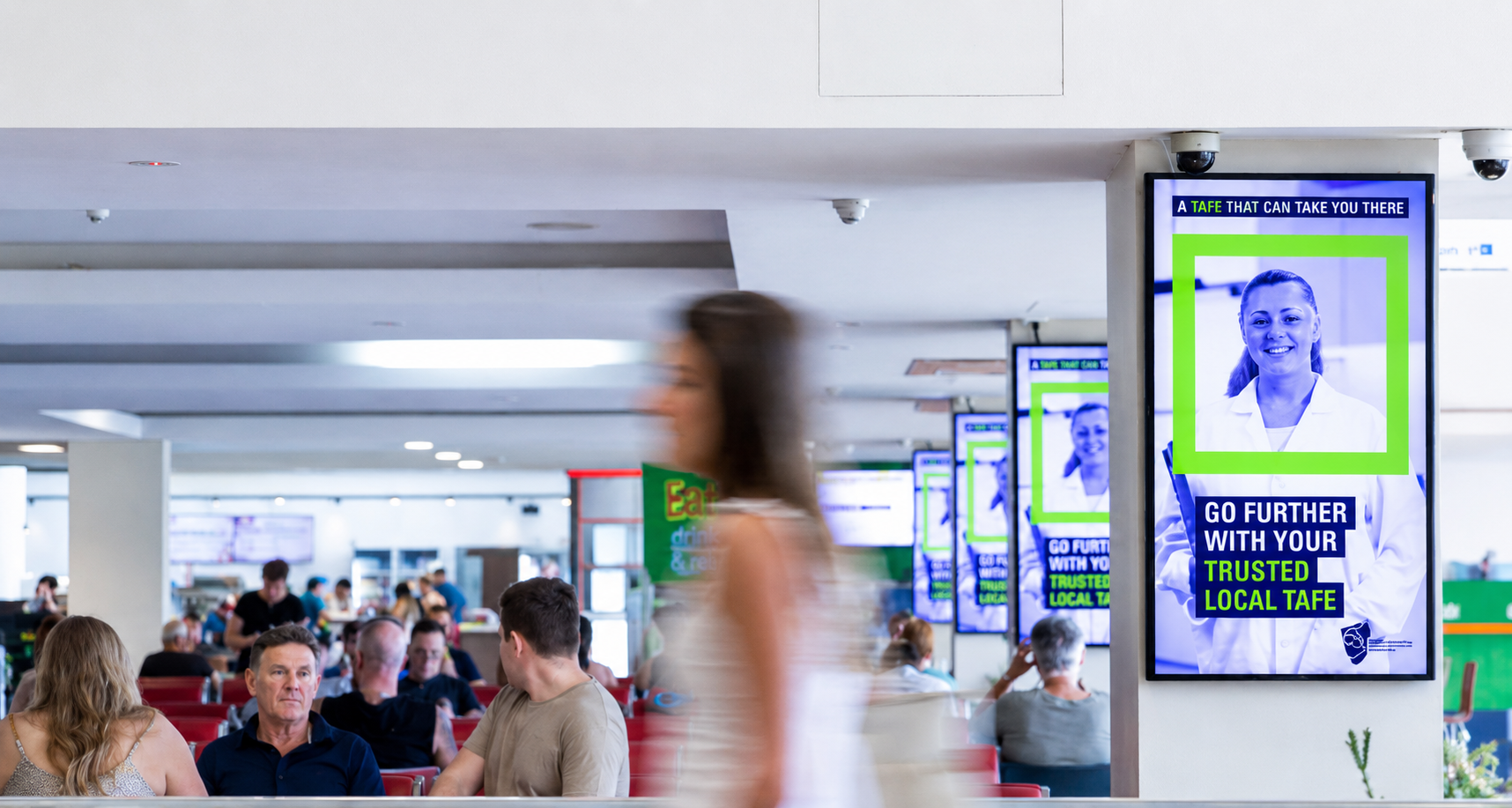
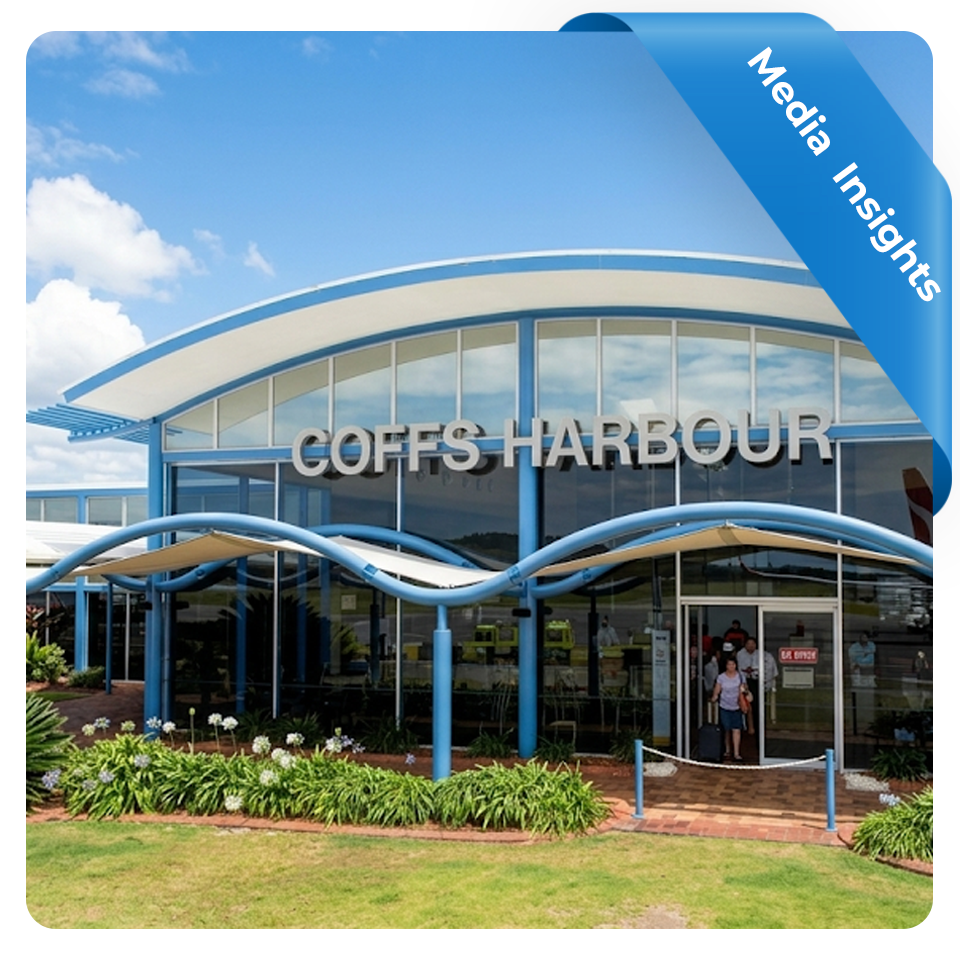
Coffs Harbour Airport handled more than 263,000 passenger movements in the year to June 2025 through one compact terminal, with around 40 aircraft movements a day and five to six daily Sydney services. It is one of the busiest regional airports in New South Wales, and its commercial appeal has nothing to do with volume. Because there is one terminal, one screening point and one departure lounge, an advertiser reaches effectively the entire audience from a very small placement set, at a cost that no metropolitan airport can approach.
The audience is the reason to buy here. The Mid North Coast is one of Australia's most active sea-change corridors, absorbing retirees and remote-working professionals who arrive with Sydney and Melbourne property equity and deploy it locally. Alongside that sits a genuinely wealthy horticultural base built on bananas and blueberries, anchored by the Punjabi Sikh farming community around Woolgoolga, one of the most significant Sikh communities in Australia. Add a regional health, education and public sector professional layer and a very strong seasonal tourism economy, and CFS delivers concentrated regional wealth in a terminal with almost no advertising clutter.
Advertising Value Snapshot
- Passenger scale: More than 263,000 passenger movements in FY2024-25, against a record 413,103 in FY2017-18, with an independent economic analysis projecting 3.8% annual growth to 624,054 by 2040
- Traveller type: Sea-change retirees and relocated professionals, horticultural landowners and agribusiness operators, health and public sector professionals
- Airport classification: Tier 3, a regional airport with Tier 2 audience characteristics because household asset values and land wealth in the catchment sit well above what the passenger count implies
- Commercial positioning: The air gateway to the Coffs Coast and Mid North Coast, Australia's blueberry capital and one of the country's strongest lifestyle relocation markets
- Wealth corridor signal: CFS sits on the Sydney to Mid North Coast equity migration corridor, moving metropolitan property capital and retirement wealth into a fast-growing coastal region
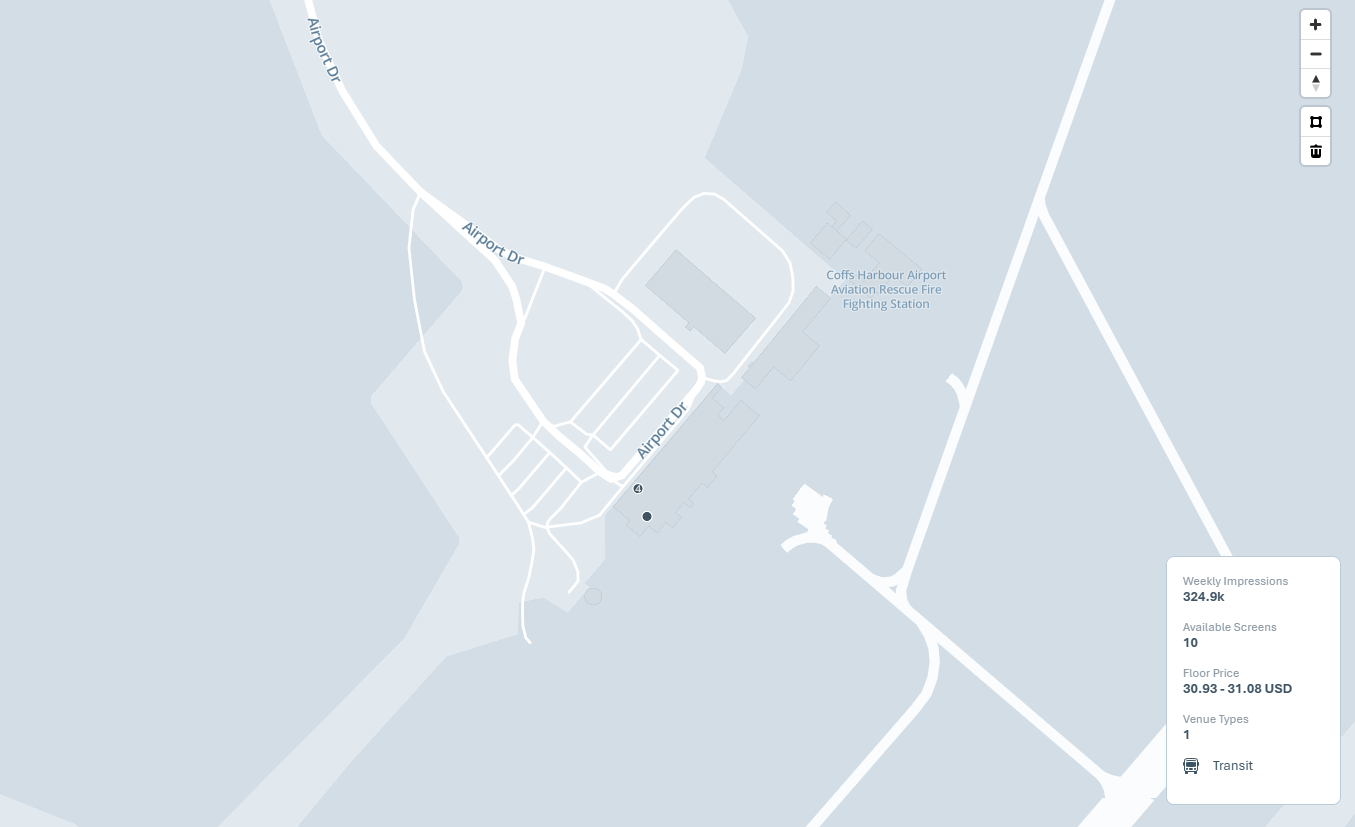
- Advertising opportunity: One terminal, one screening point and one lounge mean total audience coverage is achievable from a handful of positions, and clutter is minimal. Masscom Global provides access across check-in hall, security approach, departure lounge and arrivals, with the ability to weight placement toward weekday business waves on the Sydney route or the summer and school holiday leisure surges. For brands selling into regional wealth, this is one of the cheapest routes to near-complete audience coverage in Australia.
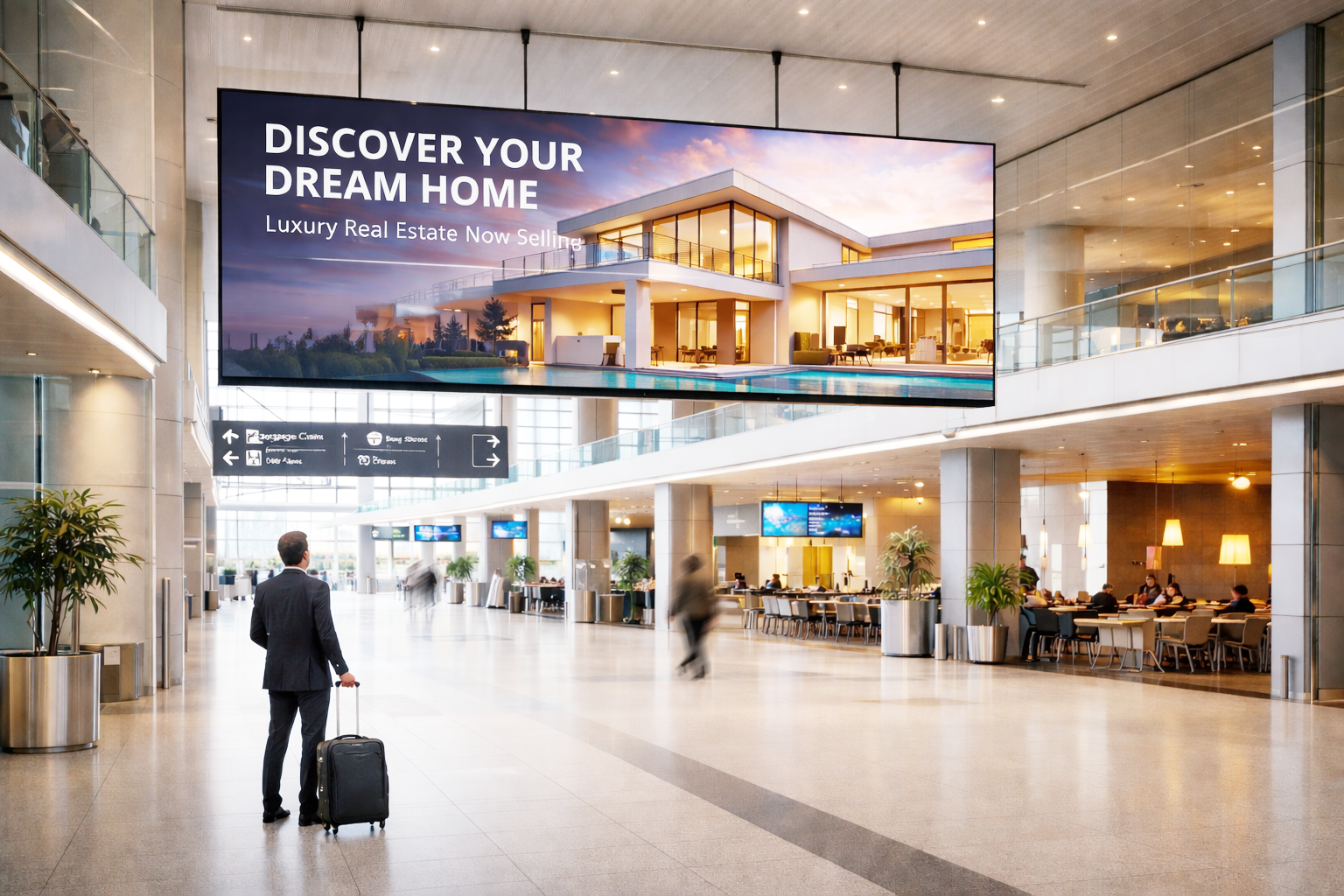
Airport Advertising is Complex to Get Right
We help you execute faster, with proven results and local insight most planners lack starting now.
Talk to an ExpertCatchment Area and Economic Drivers
Top 10 Cities within 150 km, Marketer Intelligence:
- Coffs Harbour, NSW: The commercial and wealth centre of the catchment, concentrating regional health services, professional practices, horticultural business ownership and a large relocated retiree and remote-working population. Highest receptivity to wealth management, private healthcare, property and premium automotive messaging.
- Sawtell and Boambee, NSW: Affluent coastal residential belt favoured by retirees and relocated professionals with substantial realised property equity. Prime audience for retirement planning, estate structuring, luxury residential and premium travel.
- Woolgoolga, NSW: The heart of the region's Punjabi Sikh farming community and a significant banana and blueberry landowning base. A distinctive high-value audience for rural credit, machinery, gold, insurance, India corridor travel and international education advertising.
- Grafton, NSW: Regional administrative, agricultural and correctional services centre with a stable professional and public sector workforce. Effective for insurance, retail banking, automotive and family consumer categories.
- Bellingen and Dorrigo, NSW: Lifestyle landowning and hinterland communities holding creative-economy earners, tree-change professionals and grazing property owners. Receptive to rural finance, luxury lifestyle, property and premium beverage messaging.
- Nambucca Heads and Macksville, NSW: Retirement and coastal holiday communities with strong pension and superannuation income and high recreational property ownership. Direct target for annuities, private health, travel and insurance.
- Yamba and Maclean, NSW: High-demand coastal lifestyle markets absorbing metropolitan equity, with a significant seasonal visitor economy. Strong fit for residential real estate, wealth advisory and leisure categories.
- Kempsey and the Macleay Valley, NSW: Dairy, beef and horticultural production plus regional services, producing landowners and agricultural operators. Aligns with agricultural inputs, machinery, fleet and vocational education.
- Urunga and Mylestom, NSW: Small affluent coastal communities with an older, asset-rich resident base and strong second-home ownership. Relevant to healthcare, insurance, travel and estate planning.
- Coramba and the Orara Valley, NSW: Horticultural and rural residential belt supplying the blueberry and banana industries, producing farm operators and agricultural service businesses with equipment and irrigation spend.
NRI and Diaspora Intelligence:
The most commercially distinctive audience at CFS is the Punjabi Sikh community concentrated around Woolgoolga, one of the earliest and most established Sikh settlements in Australia, built over generations on banana farming and now diversified into blueberries, packing, transport and property. A substantial share of this community owns productive farmland and business assets, which makes it genuinely wealthy rather than merely numerous. It sustains a persistent India corridor routed through Sydney, involving extended family travel, weddings, remittance, gold purchase, property investment in Punjab and heavy education spending. Alongside it sits a growing Nepalese, Indian and Filipino professional presence in health and aged care, and a smaller but significant Sikh and South Asian student population linked to regional education. For advertisers this means a small coastal terminal carrying genuine cross-border capital movement, which is rare at this scale.
Economic Importance:
The catchment economy runs on four engines: horticulture, notably blueberries and bananas at nationally significant scale, tourism and hospitality, health and aged care services, and construction and property development driven by population inflow. Each produces a distinct audience. Horticulture produces asset-rich landowners with cyclical liquidity and heavy equipment and input requirements. Tourism produces high-volume seasonal visitors with prepaid spend. Health and aged care produce stable professional travellers and a large service-purchasing older population. Construction and property produce developers, trades business owners and relocating buyers. Advertisers therefore get land wealth, retirement wealth and seasonal consumer volume in one terminal.
Business and Industrial Ecosystem
- Blueberry, banana and horticultural production: The dominant agricultural wealth engine nationally significant in blueberries, producing landowners and packing operators with substantial irrigation, netting, machinery and labour management spend.
- Health, aged care and allied services: A major regional employer built around the Coffs Harbour health campus and an ageing population, producing clinicians, administrators and aged care operators receptive to medical technology, professional services and premium consumer categories.
- Construction, property development and infrastructure: Sustained population growth and major highway infrastructure work generate developers, trades business owners and engineering management with fleet, finance and equipment needs.
- Tourism, hospitality and sports event infrastructure: A regional stadium and training facility base plus a substantial accommodation sector produce owner-operators and event decision-makers alongside constant visitor flow.
Passenger Intent, Business Segment:
Business travellers at CFS are predominantly regional principals and professionals flying to Sydney, Brisbane and Melbourne for banking, client, government and supplier meetings, using the five to six daily Sydney services in a weekday commuter pattern with early morning departures and late afternoon returns. Horticultural and property business travel is cycle-driven, intensifying around harvest, finance renewal and development approval periods. Categories that intercept them most effectively are agricultural machinery and irrigation technology, rural and business credit, insurance and risk services, commercial vehicles and fleet, professional services and business banking.
Strategic Insight:
The commercial value here is that the regional decision-making class is genuinely small and completely funnelled. A few thousand people control the horticultural land, the property development pipeline, the medical practices and the significant private businesses of the Mid North Coast, and almost all of them fly out of this one lounge repeatedly through the year. That produces extremely high effective frequency against a named commercial target for a very modest total spend. In Sydney a rural finance or irrigation brand pays for millions of irrelevant impressions to touch this profile. At CFS, Masscom can cover the entire regional buying class from a handful of positions.
Tourism and Premium Travel Drivers
- Coffs Coast beaches, Solitary Islands Marine Park and the resort accommodation belt: Draw large volumes of prepaid family and couple visitors with committed accommodation, dining and activity budgets.
- Whale migration season from June to November: Extends the visitor calendar well beyond summer and brings an older, higher-spending eco and experience traveller.
- Dorrigo and the World Heritage rainforest hinterland: Attracts nature, wellness and food tourism visitors with strong premium hospitality and outdoor equipment spend.
- Regional sporting and training facilities plus event calendar: Bring team, official and family travel in concentrated bursts, an audience for sports nutrition, apparel, insurance and travel categories.
Passenger Intent, Tourism Segment:
Inbound leisure passengers arrive with prepaid accommodation and activity budgets, skewing toward families in school holidays and toward older couples during whale and shoulder seasons, and a meaningful share are also inspecting the region as a possible relocation or investment destination. Outbound leisure is where premium value concentrates: asset-rich retirees and professionals travelling on to Europe, the Middle East, New Zealand, Fiji, Bali and Japan through Sydney and Brisbane, typically on longer trips with substantial pre-committed spend. Both groups respond to travel insurance and cards, telecom and roaming, premium travel offers, property propositions and automotive. Financial services, travel, healthcare, property and telecom categories benefit most.
Travel Patterns and Seasonality
- Peak seasons: December to January, the strongest window by a wide margin, driven by summer school holidays and family visitation; Easter, driven by a compressed high-volume holiday break; July, driven by the winter school break; June to November, sustained by whale season and shoulder-period visitors; business travel runs steadily through the working year outside January.
- Monthly passenger breakdown:The consistent pattern is a very pronounced summer holiday surge, secondary Easter and July peaks, and a stable weekday Sydney business flow through the rest of the year.
Event-Driven Movement:
- Summer school holidays (mid-December to late January): The largest volume window of the year, delivering prepaid family visitors and visiting-relative travel, ideal for consumer, telecom, retail, insurance and automotive brands seeking scale.
- Easter holiday period (March or April): A short, intense family travel surge with strong retail, automotive and travel services alignment.
- Winter school holidays (July): A second family peak overlapping with early whale season, effective for dual family and premium travel targeting.
- Whale migration season (June to November): Brings an older, higher-income experience traveller across a long window, the best period for wealth management, private healthcare, insurance and premium travel messaging.
- Horticultural harvest and packing season, plus regional sporting carnivals: Drive concentrated business, labour management and team travel, sustaining a B2B and event audience outside the leisure peaks.

It’s Not Just Where You Advertise - It’s How Fast You Execute
We combine local insight with fast rollout to deliver results for you, now.
Talk to an ExpertAudience and Cultural Intelligence
Top 2 Languages:
- English: The overwhelming primary language of the catchment and the travelling audience. Single-language creative reaches effectively the entire terminal, which keeps production cost low and allows budget to concentrate on placement quality and frequency.
- Punjabi: Commercially relevant well beyond its share of speakers because it maps directly to the Woolgoolga farming and business community, an asset-rich, landowning and internationally mobile segment. Culturally aware or bilingual treatment signals recognition to an audience with real purchasing power, active India travel and significant gold, property and education spending.
Major Traveller Nationalities:
CFS traffic is overwhelmingly Australian domestic, with no scheduled international service, so international demand is carried through Sydney and Brisbane. Within that domestic base, the Punjabi Sikh community sustains a genuine India corridor, and a growing Nepalese, Indian and Filipino health workforce adds further international family travel. Inbound international visitors reach the region primarily by road from Sydney and Brisbane rather than through this terminal. Practically, creative should be built for an Australian regional audience with strong asset ownership, while treating the Sikh landowning community as a distinct high-value target during wedding and festival travel periods. Masscom recommends English-primary creative with community-aware execution layered into those windows.
Religion, Advertiser Intelligence:
- Christianity, principally Anglican and Catholic, the largest affiliation in the catchment: Christmas and Easter drive the two clearest family travel and gifting peaks, with Christmas coinciding with the summer holiday surge to produce the single most intense consumer window of the year. Spending triggers cluster on gifting, family gathering, home and vehicle upgrade and charitable giving, benefiting retail, automotive, telecom and consumer finance.
- No religion, a very large and growing share typical of coastal lifestyle regions: Indicates a secular, experience-oriented audience travelling around school holidays and personal milestones rather than religious calendars. Spending triggers favour wellness, travel experiences, outdoor and sustainability-led brands, and this cohort responds to evidence and ethics rather than tradition.
- Sikhism, small in national share but exceptionally significant locally and commercially: Concentrated in the Woolgoolga farming community. Vaisakhi, Diwali and wedding season drive concentrated India corridor travel, and spending triggers include gold, property investment in Punjab, international education, remittance and heavy vehicle and machinery purchase. Directly relevant to banking, remittance, gold, education and international real estate advertisers.
Behavioral Insight:
This audience holds substantial assets but modest cash flow, which shapes everything. Retirees and sea-change households are working from realised property equity and superannuation, so they are advice-led, risk-aware and deliberate, making decisions over weeks with a spouse or adviser rather than impulsively. Horticultural owners are cycle-timed and peer-influenced, committing capital when harvest liquidity arrives and after checking with dealers and neighbours. In both cases airport advertising functions as a credibility and shortlist builder ahead of the decision rather than as direct response. Messaging performs best when it emphasises security, longevity, health, family provision and demonstrable reliability, and when a brand is already familiar by the time the money moves.
Outbound Wealth and Investment Intelligence
The outbound passenger at CFS is commercially distinctive because this is realised wealth rather than earned wealth. A large share of the departing audience has already sold a metropolitan home, exited a business or accumulated appreciating farmland, which means they travel with capital to deploy and time to research. Their outbound movement is directed at property, extended international leisure, healthcare, family provision and education, and it repeats on a predictable seasonal and family-event rhythm.
Outbound Real Estate Investment:
Capital from this catchment moves most actively within Australia, into Queensland's Gold Coast and Sunshine Coast, Byron and the Northern Rivers, Port Macquarie and the Mid North Coast itself, plus Sydney investment property retained after relocation. Internationally, interest concentrates on New Zealand, Bali and Thailand for lifestyle and long-stay purchase, Fiji through Pacific connections, and Portugal and Spain for residency-linked lifestyle buying. The Punjabi landowning community sustains a separate and substantial investment flow into Punjab and Delhi property. International developers marketing lifestyle, yield-bearing or residency-linked property reach a genuinely liquid, decision-ready buyer at CFS, and Masscom can place that message directly in the departure path.
Outbound Education Investment:
Students from this catchment move primarily to Sydney, Brisbane and Newcastle institutions, with international flows toward the United Kingdom, Canada and New Zealand, and a significant two-way education corridor with India within the Sikh community, where overseas and metropolitan study is a central family investment. Family spending profile is high relative to regional income because farm and property assets are deliberately allocated to education, often with grandparent support. International universities, metropolitan institutions and education consultancies advertising at CFS reach the funding decision-maker rather than the applicant, which is where the budget sits.
Outbound Wealth Migration and Residency:
Second-residency demand from this audience is retirement and lifestyle driven rather than mobility driven, given the strength of the Australian passport. The most relevant pathways are long-stay retirement visas in Thailand, Malaysia and Indonesia, New Zealand residency for family reasons, Portuguese and Spanish residency for lifestyle buyers, and Indian overseas citizen status and property structures for the Sikh community. Interest rises sharply among households approaching or entering retirement with superannuation and land sale proceeds to deploy.
Strategic Implication for Advertisers:
Brands at both ends of this corridor should treat CFS as a priority buy, because the same small terminal carries capital heading to the Gold Coast, Bali, Punjab and Lisbon alongside the machinery, irrigation, credit and healthcare brands selling into the region. An Indian property group, a Balinese resort developer and an irrigation manufacturer are all addressing the same passenger flow from different angles. Masscom Global activates both sides of that corridor simultaneously, pairing CFS placement with matched inventory in the destination market so a single brand narrative lands at origin and arrival.
Airport Infrastructure and Premium Indicators
Terminals:
- Coffs Harbour Airport operates a single passenger terminal four kilometres south of the city centre, expanded in recent years with roughly 25% additional floor space across the departures and arrivals halls plus upgraded passenger amenities. Because there is one check-in hall, one screening point and one departure lounge, every passenger passes the same positions, which delivers total audience coverage from a very small placement set.
- The airport has two runways, the longest at 2,080 metres, with the capacity to accommodate widebody aircraft such as the Boeing 767, an air traffic control tower and security screening. Passenger types are not segregated, so horticultural owners, retirees, health professionals and holiday families share the same environment.
Premium Indicators:
- A major-carrier business lounge operates at the terminal, which is a strong signal at this scale: it indicates a frequent-flyer and business passenger base disproportionate to a 263,000-movement airport, and because the terminal is compact, premium passengers remain fully addressable in shared space.
- Substantial general aviation activity operates alongside scheduled service, including aero clubs, flying schools and agricultural and charter aviation, plus corporate travel serving the region's horticultural and property businesses, indicating a private aviation layer above the scheduled base.
- On-airport luxury hotel: Premium accommodation sits across the Coffs Coast resort belt and city centre, with a hotel identified as a development opportunity within the airport precinct, which currently makes the terminal the first and last brand touchpoint of a high-value trip.
- The airport sits on a professionally managed long-term lease structure with an adjacent commercial precinct under active development, which supports a more polished commercial environment than most regional Australian terminals.
Forward-Looking Signal:
Operations transferred to a long-term private lease structure in June 2021 under a 50-year term with a 49-year option, and the Airport Enterprise Park is delivering more than 23 hectares of serviced commercial land for retail, commercial, industrial and light manufacturing use, with rezoning work underway to broaden permissible uses and a hotel identified as a precinct opportunity. Independent economic analysis projects passenger growth of 3.8% a year to 624,054 by 2040, more than double current levels, consistent with the region's visitor and population trajectory. Terminal capacity, runway length and widebody capability all sit well ahead of current traffic. Masscom Global advises clients to secure position now, while rates reflect a 263,000-movement airport rather than the doubled traffic and developed precinct being built toward, and to lock multi-year terms before competition intensifies.
Airline and Route Intelligence
Top Airlines:
Qantas, operating to Sydney and Melbourne, Rex to Sydney, and Link Airways to Brisbane, with around 40 aircraft movements a day in total.
Key International Routes:
No scheduled international service. International demand is carried through Sydney and Brisbane, feeding onward to Asia, the Middle East, Europe, New Zealand and the Pacific.
Domestic Connectivity:
Sydney is the dominant route with approximately five to six daily services in each direction across two carriers, spread through morning, midday and afternoon to serve both business and leisure demand. Melbourne is served roughly daily at around five weekly flights, and Brisbane at around five weekly flights with about two movements daily.
Wealth Corridor Signal:
The route map is short but reads clearly. The Sydney corridor is the commercial spine, carrying the region's business principals, medical professionals, property developers and horticultural owners on a weekday pattern, and it is also the equity migration route along which metropolitan capital arrives and Sydney investment property is managed from a distance. Melbourne and Brisbane carry a mix of business and family travel plus onward international connection. Because there is no international departure here, the outbound premium traveller is intercepted at the start of a longer journey, when attention is highest and the trip is still being planned. For advertisers this means CFS is three overlapping audiences on a small number of services, and Masscom plans placement against departure timing rather than generic footfall.
Media Environment at the Airport
- A single terminal with one check-in hall, one screening point and one departure lounge produces near-zero clutter and total coverage, which makes standout easy and share of attention unusually high for the spend involved.
- Dwell time is extended by regional flying habits, with passengers arriving early because the airport is close to town and there is limited alternative if a service is missed, and by lounge use among the business segment, giving brands sustained rather than glancing exposure.
- The environment is credible for premium categories thanks to recent terminal expansion, business lounge provision and professional precinct management, which supports financial, healthcare, property and machinery advertising rather than undercutting it.
- Masscom Global provides inventory access across check-in hall, security approach, departure lounge, gate and arrivals and baggage collection, with placement precision by weekday business wave, school holiday surge and community travel window.
Strategic Advertising Fit
Best Fit:
- Wealth management, retirement planning and estate structuring: The catchment holds a dense population of asset-rich retirees and sea-change households with realised equity and superannuation to deploy.
- Private healthcare, aged care and medical services: An older resident population plus a regional health campus creates both practitioner and patient audiences with high service spend.
- Residential real estate, both regional and international: The region is both a destination for metropolitan equity and a source of outbound lifestyle property capital.
- Horticultural inputs, irrigation, netting and machinery: Nationally significant blueberry and banana production concentrates procurement authority in a small landowning group.
- Rural credit, agricultural banking and insurance: Cyclical liquidity, land finance and crop risk all drive sustained demand.
- Premium and commercial automotive, including utility vehicles: High asset ownership, farm operations and long regional distances all support this category.
- Premium travel, cruise and escorted tour operators: A proven high-conversion audience among the retiree and empty-nester cohort with time and capital available.
- International education and India corridor financial services: The Woolgoolga community sustains genuine cross-border education, remittance and gold demand.
Brand Alignment at a Glance:
| Category | Fit |
|---|---|
| Wealth management and retirement planning | Exceptional |
| Private healthcare and aged care | Exceptional |
| Residential real estate | Strong |
| Horticultural inputs, irrigation and machinery | Strong |
| Premium travel and cruise | Strong |
| Rural credit and agricultural banking | Moderate |
| International education and remittance | Moderate |
| Duty-free and global luxury retail | Poor fit |
Who Should Not Advertise Here:
- Duty-free, currency exchange, international roaming and transit retail: There is no scheduled international service, so the purchase occasion these categories depend on does not exist in this terminal.
- Global luxury fashion, high jewellery and status brands: Regional wealth here is asset-based, coastal and deliberately understated, so display-led luxury misreads the audience and wastes budget.
- Large-scale enterprise technology and corporate consulting: There is no corporate headquarters cluster in this catchment, so messaging built for enterprise buying committees finds no audience compared with regional B2B and agricultural categories.
Event and Seasonality Analysis
- Event Strength: Low
- Seasonality Strength: High
- Traffic Pattern: Seasonal
Strategic Implication:
CFS is one of the most seasonally driven airports in Australia, and flat allocation wastes money here. Consumer advertisers should concentrate spend into December and January, when family volume peaks hard, with secondary bursts at Easter and in July. Wealth, healthcare, insurance and premium travel advertisers should weight into the June to November whale and shoulder season, when the passenger mix skews older, wealthier and more receptive to advice-led propositions, and hold presence through the working year to reach the weekday Sydney business flow. Agricultural categories should time into harvest and finance renewal periods. Masscom Global structures CFS campaigns around this rhythm, shifting weight between consumer and wealth categories as the terminal audience changes rather than buying a single flat year.

Poor Placement and Delays Affect Airport Campaigns
We help you move faster, access better inventory, and get it right now.
Talk to an ExpertFinal Strategic Verdict
Coffs Harbour Airport is one of the most cost-efficient regional wealth intercepts in Australia, and the case rests on concentration rather than scale. More than 263,000 passenger movements pass through a single terminal with one check-in hall, one screening point and one lounge, which means total audience coverage from a handful of positions with almost no competing clutter, and that audience is dominated by asset-rich sea-change retirees deploying Sydney and Melbourne property equity, horticultural landowners in Australia's blueberry capital including the substantial Punjabi Sikh farming community around Woolgoolga, and regional health, property and professional decision-makers who fly the Sydney corridor week after week. Wealth managers and retirement planners, private healthcare and aged care providers, residential and international property developers, horticultural input and irrigation brands, rural credit providers and premium travel operators will see the strongest returns, particularly by splitting budget between the summer family surge and the June to November premium shoulder season. With a 50-year lease structure in place, more than 23 hectares of commercial precinct under development, widebody-capable infrastructure already built and independent projections pointing to 624,054 passengers by 2040, audience value here is set to more than double while inventory is still priced against today's traffic. Masscom Global has the inventory access, the audience intelligence and the execution speed to place your brand in that flow before the market reprices.
About Masscom Global
Masscom Global is a premium international airport advertising and media buying agency operating across 140 countries. With deep expertise in airport OOH, premium publications, and high-net-worth audience targeting, Masscom helps brands reach the world's most valuable travellers at the moments that matter most. For advertising packages, media rates, and campaign planning at Coffs Harbour Airport and airports across the globe, contact Masscom Global today.
Frequently Asked Questions
How much does airport advertising cost at Coffs Harbour Airport? Cost at CFS depends on format, position within the terminal, campaign duration and seasonal demand. December and January price highest because family volume peaks, while the June to November shoulder season commands premium value for wealth and healthcare categories because the passenger mix is older and more affluent. Because total audience coverage requires only a handful of positions here, the cost to reach effectively the entire regional decision-making population is unusually low. Contact Masscom Global for current rates and package options.
Who are the passengers at Coffs Harbour Airport? CFS carries an overwhelmingly Australian domestic audience with high asset ownership: retirees and relocated professionals who have moved north with Sydney and Melbourne property equity, blueberry and banana landowners including the significant Punjabi Sikh farming community around Woolgoolga, health and aged care professionals tied to the regional health campus, property developers and trades business owners, and prepaid family holiday visitors in school holiday periods. It is an asset-rich regional audience, not a corporate commuter audience.
Is Coffs Harbour Airport good for luxury brand advertising? It is strong for advice-led and asset-led premium categories and weak for display-led luxury. Private wealth management, retirement planning, private healthcare, premium travel and cruise, luxury residential property and high-specification vehicles all perform well because they match how coastal and land wealth is actually held and spent. Global luxury fashion and high jewellery underperform, because there is no international departure occasion and this wealth is deliberately understated.
What is the best airport in regional New South Wales to reach HNWI audiences? Sydney delivers the largest raw HNWI volume in the state, but among regional airports CFS is one of the strongest, combining one of the busiest regional passenger bases in New South Wales with an unusual concentration of realised property equity, retirement capital and horticultural land wealth in a zero-clutter terminal. For wealth, healthcare and property brands targeting the Mid North Coast, CFS is the most efficient buy in the region. Masscom recommends CFS as a precision regional buy alongside a Sydney volume buy.
What is the best time to advertise at Coffs Harbour Airport? December and January deliver the largest volume of the year through the summer school holidays, with Easter and July providing secondary family peaks. June to November is the highest-value window for wealth, insurance, healthcare and premium travel categories because whale season and shoulder-period travel bring an older, wealthier passenger mix. Weekday business presence through the working year reaches the Sydney corridor decision-maker flow.
Can international real estate developers advertise at Coffs Harbour Airport? Yes, and the audience is unusually liquid. Capital from this catchment moves into the Gold Coast, Sunshine Coast, Byron and Northern Rivers, plus New Zealand, Bali, Thailand and Fiji for lifestyle and long-stay purchase, and Portugal and Spain for residency-linked buying, with a separate substantial investment flow into Punjab and Delhi property from the Sikh farming community. Developers reach buyers who have often just realised a property sale and have capital waiting, with no competing international property messaging in the environment. Masscom can activate both the CFS placement and matched inventory in the destination market.
Which brands should not advertise at Coffs Harbour Airport? Duty-free, currency exchange, international roaming and transit retail have no audience because CFS has no scheduled international service. Global luxury fashion and status brands are misaligned with an understated, asset-based coastal wealth profile. Enterprise technology and corporate consulting messaging built for headquarters buying committees wastes budget, because there is no corporate headquarters cluster in this catchment.
How does Masscom Global help brands advertise at Coffs Harbour Airport? Masscom delivers the full chain: audience intelligence specific to the Coffs Coast and Mid North Coast, covering sea-change wealth, horticultural land ownership and the Woolgoolga community, inventory access across check-in hall, security approach, departure lounge, gate and arrivals, seasonally weighted planning that splits budget between the summer family surge and the premium shoulder season, creative guidance tuned to an advice-led and understated audience, and execution speed that gets campaigns live while rates still reflect current traffic rather than the doubled growth projected for this airport. Book a fifteen-minute planning call and we will build the CFS case for your brand.