

Airport at a Glance
| Field | Detail |
|---|---|
| Airport | Tartu Airport |
| IATA Code | TAY |
| Country | Estonia |
| City | Tartu |
| Annual Passengers | 44,489 (2025) |
| Primary Audience | Academic and research travellers, technology and deep-tech founders, Nordic business commuters |
| Peak Advertising Season | February, June to August, September |
| Audience Tier | Tier 3 |
| Best Fit Categories | International education, business aviation and mobility, financial and residency services, premium hospitality |
A low-volume, high-concentration audience gateway where almost every passenger is a decision-maker.
Tartu Airport is the smallest useful buy in the Baltic region and one of the most concentrated. It served 44,489 passengers in 2025, and every one of them was an international traveller moving on a single scheduled corridor to Helsinki. There is no leisure mass market diluting the audience here, no low-cost holiday traffic, and no transit crowd. The passenger profile is dominated by university faculty, doctoral researchers, technology founders, government and defence sector personnel, and Nordic executives servicing Southern Estonian operations. For advertisers, this is the rare environment where a small impression count carries an unusually high proportion of qualified prospects.
What makes Tartu commercially distinct is what sits behind the terminal. This is the home of the University of Tartu, Estonia's oldest and largest research institution, and the anchor of the country's science, biotech, and software talent pipeline. Estonia produces more technology company founders per capita than almost any European economy, and Tartu supplies a disproportionate share of that talent. The airport functions as the private wealth and intellectual capital corridor between Southern Estonia and the Helsinki global network, where onward connections reach well over a hundred destinations. Masscom Global reads TAY not as a volume buy but as a precision buy.
Advertising Value Snapshot
- Passenger scale: 44,489 passengers in 2025, up from 27,270 in 2024, a year-on-year increase of approximately 63 percent and the airport's strongest result on record. Growth continued into 2026 with regional traffic up 18 percent year-on-year in March.
- Traveller type: Academic and research travellers, technology and startup founders, Nordic corporate commuters.
- Airport classification: Tier 3. Low absolute volume, but 100 percent international traffic and an exceptionally high concentration of educated, high-income passengers.
- Commercial positioning: Estonia's academic and deep-tech capital, and the country's second economic centre after Tallinn.
- Wealth corridor signal: The Tartu to Helsinki axis is a Nordic capital and talent corridor, not a holiday route. It moves research funding, venture capital, and cross-border employment.
- Advertising opportunity: Small terminals convert into disproportionate share of attention because clutter is minimal and dwell is enforced by a compact single-corridor operation. Masscom Global secures placement at airports of this scale where large networks do not maintain planning coverage, giving clients uncontested visibility against a premium audience. Masscom builds TAY into wider Baltic and Nordic buys so the corridor is covered on both ends.
Airport Advertising is Complex to Get Right
We help you execute faster, with proven results and local insight most planners lack starting now.
Talk to an ExpertCatchment Area and Economic Drivers
Top 10 Cities within 150 km — Marketer Intelligence:
- Tartu: The core audience. Roughly 100,000 residents with an unusually high graduate concentration, generating a young, English-fluent, digitally native consumer base with strong receptivity to education, fintech, and technology brands.
- Elva: Affluent residential belt for Tartu professionals and academics. Household income sits above the regional average, producing a family audience for premium retail and financial services.
- Põlva: Agricultural and food processing base. Produces owner-operator business travellers who buy equipment, logistics, and agri-technology.
- Jõgeva: Agricultural research and plant breeding centre. A specialist B2B audience for agri-science, machinery, and export services.
- Viljandi: Cultural economy and light manufacturing hub. Its festival calendar creates seasonal inbound spend and hospitality demand.
- Otepää: Estonia's winter sports capital and second-home market. Delivers a discretionary-spend audience for premium sportswear, resort real estate, and hospitality.
- Võru: Timber and wood processing centre feeding Nordic construction supply chains. Produces export-oriented SME decision-makers.
- Valga: Cross-border logistics point on the Latvian frontier. Freight, transit, and trade audiences with practical procurement authority.
- Paide: Central Estonian administrative and manufacturing town. Public sector and industrial management audiences.
- Valmiera, Latvia: Northern Latvian industrial and glass fibre manufacturing centre inside the drive catchment. Adds a cross-border industrial audience that treats Tartu as its nearest air access.
NRI and Diaspora Intelligence: Estonia does not have a large inbound remittance diaspora, so the commercially relevant flow here is outbound and circular. A substantial share of Southern Estonian working-age professionals hold employment, property, or business interests in Finland, and Finland hosts the largest Estonian expatriate working community. These passengers are not one-time travellers. They fly the Helsinki corridor repeatedly across the year, which means frequency of exposure at TAY is far higher per individual than terminal volume suggests. Layered on top is a returning academic diaspora: Estonian researchers and founders based in the Nordics, Germany, the UK, and the United States who cycle through Tartu for institutional and investment reasons. This is a high-income, high-education, repeat-contact audience.
Economic Importance: Southern Estonia's economy runs on four engines: higher education and research, software and deep technology, wood and agri-processing, and cross-border trade with Finland and Latvia. Education and technology produce the airport's premium audience, salaried well above national average and internationally mobile. Wood, agriculture, and logistics produce the owner-manager audience with capital expenditure authority. For advertisers, that split matters. It means a single environment reaches both consumer-side affluence and business-side procurement power.
Business and Industrial Ecosystem
- Higher education and research: The University of Tartu and its affiliated research institutes generate faculty, visiting academics, doctoral candidates, and conference delegates. This is the primary audience for international education, publishing, scientific instrumentation, and premium relocation services.
- Software, deep tech, and defence technology: Tartu's startup and R&D cluster produces founders, engineers, and investors travelling for funding and partnership. High-value audience for financial services, business aviation, and B2B technology.
- Biotechnology and genomics: Estonia's genomics and biotech capability is anchored in Tartu, drawing pharmaceutical and life-science visitors. Specialist but exceptionally high-value.
- Wood processing, agri-industry, and logistics: Export-driven SMEs across Võru, Jõgeva, and Valga produce practical decision-makers for machinery, freight, insurance, and trade finance.
Passenger Intent — Business Segment: Business travel through TAY is purposeful and repeat. Passengers are flying to Helsinki either to reach a Nordic counterparty directly or to connect onward to Europe, Asia, and North America. They are time-constrained, English-fluent, and travelling on institutional or company budgets. Categories that intercept them most effectively are business banking and cross-border payments, trade finance, corporate travel and business aviation, professional services, and enterprise technology.
Strategic Insight: The value of the business audience at Tartu lies in its density rather than its size. In a large hub, a B2B advertiser pays for millions of impressions to reach a few thousand qualified prospects. At TAY, the qualification rate is inverted: a high proportion of the terminal population holds budget authority, research funding access, or founder equity. Masscom Global positions this as one of the most efficient cost-per-qualified-contact environments in the Baltic region, particularly for brands selling into research institutions, technology companies, and export SMEs.
Tourism and Premium Travel Drivers
- University of Tartu and the historic city core: Drives academic tourism, alumni return travel, and conference delegations. Relevant to education brands, premium hospitality, and cultural sponsorship.
- Tartu 2024 European Capital of Culture legacy: Elevated the city's international cultural standing and left a permanent uplift in event tourism and inbound cultural travel.
- Otepää winter sports region: Estonia's premier ski and cross-country destination, driving an active, discretionary-spend audience in winter for sportswear, equipment, and resort brands.
- Southern Estonian lake and nature belt including Lake Peipus and Soomaa: Drives premium wellness, eco-tourism, and second-home interest, with relevance to outdoor, automotive, and lifestyle brands.
Passenger Intent — Tourism Segment: Inbound leisure travellers through Tartu are self-selecting: they have chosen a destination that requires deliberate effort rather than a package holiday, which signals higher income and higher cultural spend. They arrive already committed to accommodation, dining, and event spend, and they are receptive at the airport to duty free, premium spirits, wellness, and destination financial services. Outbound leisure passengers are Estonian professionals routing through Helsinki toward Southern Europe and Asia, and they respond to travel insurance, currency and card products, luxury retail, and hospitality messaging at the point of departure.
Travel Patterns and Seasonality
- Peak seasons: February, driven by the winter sports calendar and the Tartu Ski Marathon inflow. June to August, driven by summer festivals, cultural events, motorsport, and family travel. September, driven by the start of the academic year and the arrival of international students and faculty.
- Regional traffic through Estonia's smaller airports rose 6 percent in 2025, with growth led almost entirely by Tartu. First-quarter 2026 data showed continued momentum, with Tartu recording an 18 percent year-on-year increase in March, supported by charter activity alongside the scheduled Helsinki service.
Event-Driven Movement:
- Tartu Ski Marathon (February): One of Northern Europe's largest cross-country ski events. Brings affluent Nordic and Central European participants with high equipment and travel spend. Strong window for sportswear, nutrition, insurance, and automotive.
- Rally Estonia, Southern Estonia (July): International motorsport event drawing large cross-border spectator and team movement. Prime timing for automotive, energy, telecom, and premium consumer brands.
- Tartu Hanseatic Days (June and July): Major heritage and commerce festival driving inbound regional and Nordic visitors. Suits FMCG, hospitality, and retail activation.
- Viljandi Folk Music Festival (July): Large cultural inflow into the catchment with a young, high-engagement audience. Fits telecom, beverage, and lifestyle brands.
- Academic year commencement (late August to September): International student and faculty arrival concentrated into a short window. The single strongest period for education, banking, telecom, and residency service advertising.
It’s Not Just Where You Advertise - It’s How Fast You Execute
We combine local insight with fast rollout to deliver results for you, now.
Talk to an ExpertAudience and Cultural Intelligence
Top 2 Languages:
- Estonian: The primary language of the catchment and the language of trust for local consumer and SME audiences. Estonian-language creative signals that a brand has committed to the market rather than repurposed regional assets.
- Russian: Spoken by a meaningful minority in the catchment, particularly toward the eastern districts near Lake Peipus. Relevant for reaching a distinct consumer segment with its own retail and financial behaviour.
- English in practice: Estonia has among the highest English proficiency levels in continental Europe, and Tartu's academic and technology population is effectively bilingual. English-language premium creative performs without translation loss for the airport's core audience.
Major Traveller Nationalities: Estonians dominate the passenger base, followed by Finns travelling for business, property, and family reasons. Beyond those two, the airport carries a visible flow of Latvians using Tartu as their nearest northern air access, plus Germans, Swedes, and Norwegians linked to research, forestry, and industrial partnerships, and a broad international academic population from across Europe, Asia, and North America drawn by the university. For campaign creative, this means the audience is culturally Nordic-Baltic in its expectations: understated, evidence-led, sceptical of hyperbole, and highly responsive to clear value and digital-first calls to action.
Religion — Advertiser Intelligence:
- Non-religious and unaffiliated (majority): Estonia is among the least religiously affiliated countries in Europe. Advertisers should note that faith-based festival cycles are weak triggers here. Purchase and travel triggers are secular: the academic calendar, midsummer, and the winter sports season carry the behavioural weight that religious festivals carry in other markets.
- Lutheran Christianity (minority): Culturally embedded rather than devotionally dominant. Christmas and Easter still function as strong commercial gifting and family travel periods, driving December and spring retail, hospitality, and outbound family movement.
- Eastern Orthodoxy (minority, concentrated in the Russian-speaking community): Orthodox Christmas and Easter fall on separate dates and create a distinct second gifting and travel window. Advertisers targeting the Russian-speaking segment should plan a separate January calendar rather than assuming a single seasonal peak.
- Secular and folk traditions: Jaanipäev, the midsummer celebration in late June, is the strongest cultural spend trigger in the Estonian year, driving travel, food and beverage, and retail volume well above any religious observance.
Behavioral Insight: This audience is analytical, digitally sophisticated, and low-tolerance for marketing noise. Estonia's near-total digital public infrastructure means consumers expect frictionless transactions and treat clunky processes as a disqualifier. Purchase decisions are research-led, comparison-heavy, and influenced more by demonstrated performance than by aspirational imagery. The most effective airport creative here is specific, quantified, and offers an immediate digital next step. Brands that lead with proof and precision outperform brands that lead with prestige.
Outbound Wealth and Investment Intelligence
The outbound passenger at Tartu is unusual in the Baltic context. Wealth here is not inherited or commodity-based. It is created by equity events in technology companies and by internationally funded research careers, which produces a young, liquid, mobile capital holder rather than a traditional dynastic HNI. These passengers deploy capital into Nordic and Central European property, into globally diversified financial products, and into education for their children. They travel to Helsinki as the gateway, then onward to Northern and Western Europe, and increasingly to Asia and North America for venture and academic reasons.
Outbound Real Estate Investment: Southern Estonian capital moves most consistently into Finland, particularly the Helsinki metropolitan area, where proximity, rental yield, and currency alignment make acquisition practical. Beyond Finland, Spain and Portugal draw lifestyle and rental-yield buyers seeking Mediterranean second homes, with Portugal historically attractive on tax structuring grounds. Germany and Latvia attract yield-focused buyers looking for larger rental markets at lower entry cost, and Dubai has become a visible destination for Estonian technology wealth attracted by zero personal income tax and residency-linked property purchase. International real estate developers advertising at TAY reach a buyer who is already comparing cross-border yields and already holds the liquidity to act.
Outbound Education Investment: Students from this catchment migrate primarily to Finland, Sweden, Denmark, and Germany, drawn by low or zero tuition and proximity, and to the Netherlands and the United Kingdom for English-taught programmes in business, engineering, and law. A smaller but high-spend segment targets the United States and Canada for postgraduate research. Family spending profile is distinctive: because domestic and Nordic tuition is inexpensive, household budgets are allocated toward living costs, mobility, and international exposure rather than fees, and parents in this catchment are highly educated and treat education as the primary vehicle of social investment. International universities, English-taught programme providers, and education consultancies reach an audience here that is already sold on studying abroad and is comparing institutions rather than deciding whether to go.
Outbound Wealth Migration and Residency: Demand centres on tax-efficient mobility rather than escape. The UAE Golden Visa is the most relevant single programme for Tartu's technology wealth, offering long-term residency alongside a zero personal income tax structure. Portugal's residency-by-investment framework remains relevant for those prioritising EU-adjacent lifestyle and eventual citizenship optionality. Caribbean citizenship-by-investment programmes attract interest as travel-flexibility instruments among founders with global business exposure. Because Estonian passport holders already enjoy broad visa-free access, this audience buys residency for tax and lifestyle reasons, not mobility, which changes the messaging that works: lead with structure, cost, and speed rather than with passport power.
Strategic Implication for Advertisers: Tartu sits on a two-way corridor where inbound international talent and outbound Estonian capital pass through the same compact terminal. Developers, universities, private banks, and residency advisers should treat TAY as a high-intent, low-competition point of intercept rather than a volume buy. Masscom Global activates both sides of this corridor simultaneously, pairing Tartu placement with Helsinki, Nordic, and Gulf destination inventory so the same prospect is reached at origin, transit, and destination.
Airport Infrastructure and Premium Indicators
Terminals:
- Single passenger terminal, compact and modernised, designed around scheduled regional and charter operations rather than mass throughput. All commercial passenger traffic is Schengen international, so the passenger flow is unified and predictable, with no domestic or transit segmentation to fragment audience reach.
- Runway length of approximately 1,799 metres supports regional jets, turboprops, and a wide range of business aircraft, giving the airport capability well above its current scheduled volume.
Premium Indicators:
- Terminal facilities are functional rather than luxury-led, which for advertisers means minimal commercial clutter and unusually high standout for any well-placed brand presence.
- General and business aviation activity is meaningful relative to airport size, alongside medical flight operations linked to Tartu University Hospital, indicating a private and institutional aviation user base.
- The Estonian Aviation Academy is located adjacent to the airport, adding a permanent professional aviation community and training traffic to the site's daily population.
- Located approximately 10 kilometres from Tartu city centre, giving fast access for premium hotel and conference audiences in the city, including internationally branded and boutique properties serving the university and conference market.
Forward-Looking Signal: The trajectory here is clear and steep. Tartu delivered its best passenger result on record in 2025 with roughly 63 percent year-on-year growth, sustained by a public service agreement securing the Helsinki connection through the end of 2027, and continued to grow into 2026 alongside expanding charter activity. Navigation reliability issues that disrupted operations in 2024 have been resolved, and Estonia's broader regional aviation programme is adding capacity and seasonal Nordic routes. As Tartu's cultural and deep-tech profile continues to lift following its European Capital of Culture year, advertising demand at this terminal will tighten. Masscom Global advises clients to secure position now, while current rates reflect historic volumes rather than the airport's growth curve.
Airline and Route Intelligence
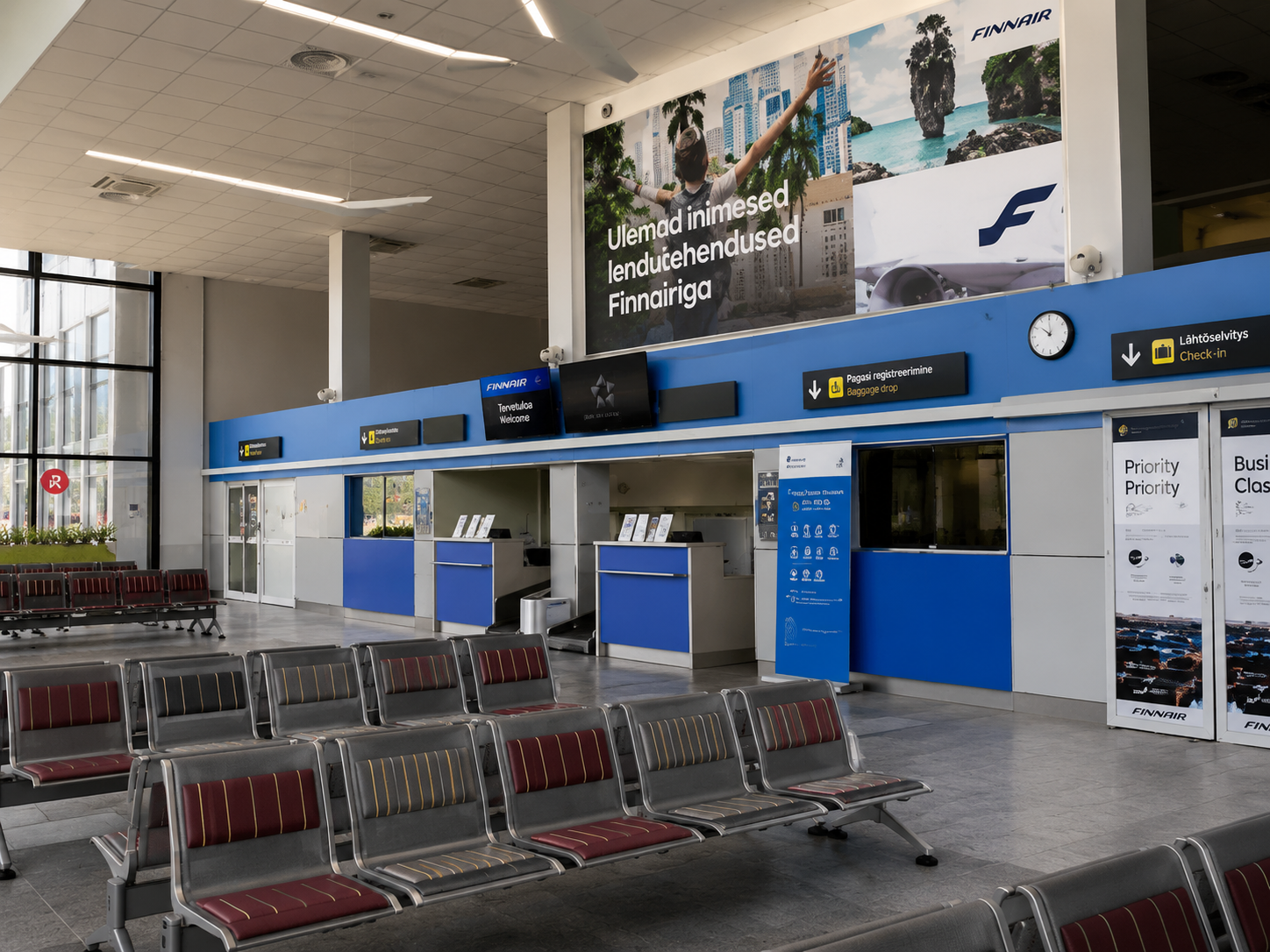
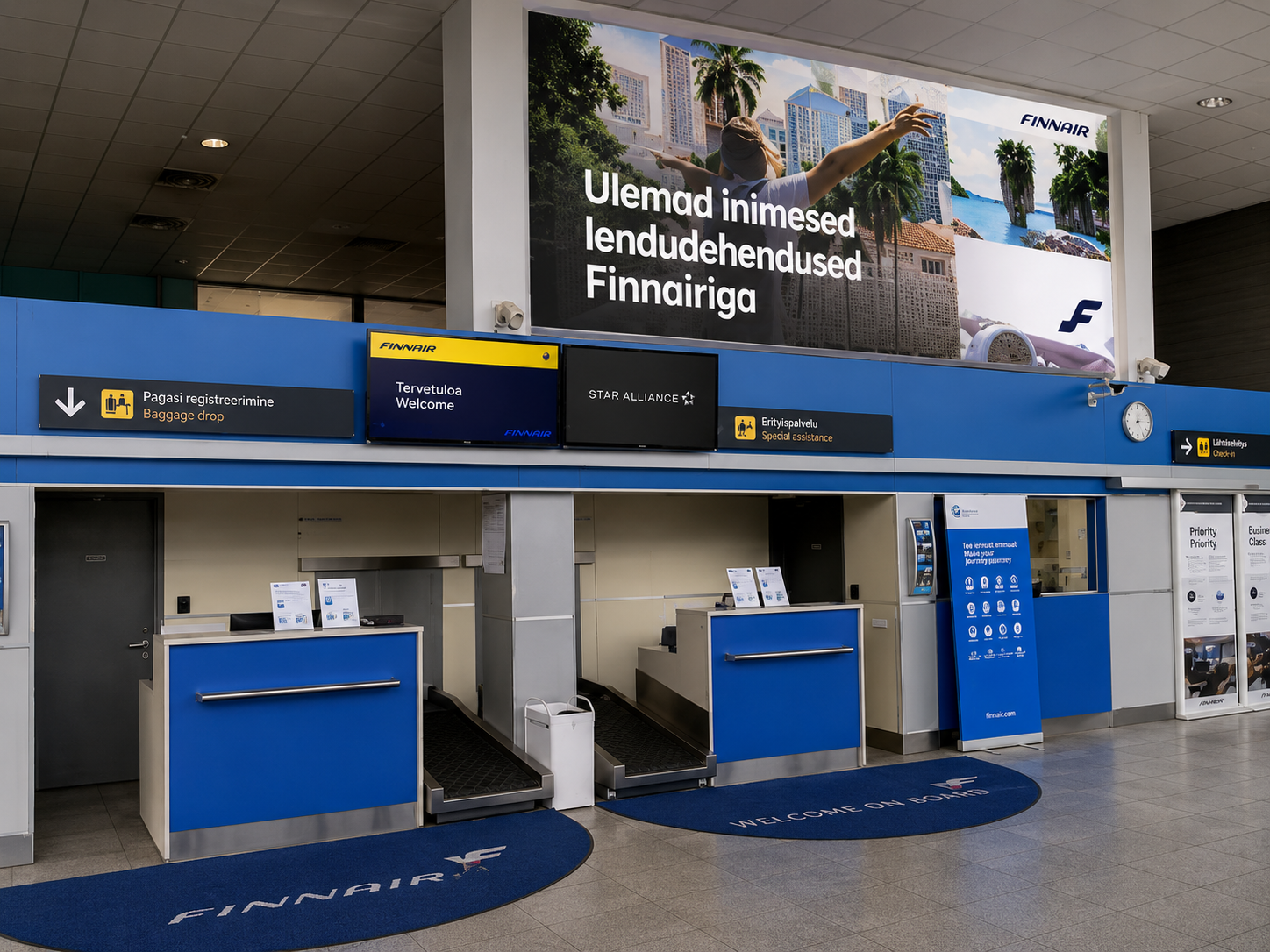
Top Airlines: Finnair operates the airport's scheduled service. Charter operators supply additional seasonal capacity, and general and business aviation operators use the field year-round alongside Estonian Aviation Academy training activity and medical flights.
Key International Routes: Tartu to Helsinki is the airport's scheduled corridor, operated by Finnair at approximately 11 to 12 weekly rotations with a flight time under one hour. The route runs under a public service agreement in place until the end of December 2027. Helsinki functions as the onward gateway, opening connectivity to well over a hundred destinations across Europe, Asia, and North America, including the Finnair Asian network. Seasonal charter services supplement this with direct leisure links.
Domestic Connectivity: No scheduled domestic passenger service. Tallinn is reached by road and rail, which means TAY's traffic is entirely international and entirely purposeful.
Wealth Corridor Signal: A single-route network is usually a weakness. Here it is a targeting advantage. Because every scheduled passenger is flying to or through Helsinki, the audience is defined with a precision no multi-route airport can offer: these are people connecting to the Nordic economy and the global network beyond it, not holiday travellers scattering across dozens of destinations. The Helsinki corridor is a wealth and knowledge transfer route, carrying research funding, venture capital, cross-border employment income, and onward long-haul business travel. For advertisers, that means one creative proposition can address effectively the entire terminal population.
Media Environment at the Airport
- Compact single-terminal environment with low advertising density compared to Tallinn, Riga, or Helsinki. Share of voice achievable here is far higher per unit of spend than at any Baltic hub, and a single well-placed installation can dominate the passenger journey.
- Dwell time is driven by the airport's schedule structure. Early morning departures and evening arrivals concentrate passengers into defined windows, and small-airport processing means passengers spend their wait in a limited number of shared spaces rather than dispersing across concourses. Exposure is repeated and unavoidable.
- The academic and research character of the passenger base elevates brand association. Presence here signals seriousness and institutional credibility rather than mass-market reach, which benefits education, financial services, and technology brands specifically.
- Masscom Global maintains planning and execution capability at secondary and regional airports across 140 countries, including markets where large networks do not hold active coverage. That means accurate placement selection, fast rollout, and the ability to bundle TAY into a coordinated Baltic and Nordic buy rather than treating it as an isolated line item.
Strategic Advertising Fit
Best Fit:
- International universities and English-taught programme providers: Reaches an academically committed catchment already sending students to Northern and Western Europe, in an environment where education is the primary household investment.
- Education consultancies and student mobility services: The September academic cycle concentrates exactly this audience into a short, predictable window.
- Business banking, cross-border payments, and fintech: Estonia's digitally native, founder-heavy population adopts financial technology faster than almost any European market.
- Residency and citizenship-by-investment advisory: Technology wealth in this catchment actively buys UAE and EU residency structures for tax and lifestyle reasons.
- International real estate developers, particularly Finland, Iberia, Germany, and Dubai: The outbound buyer here is liquid, yield-focused, and already comparing cross-border markets.
- Business aviation, corporate travel, and mobility services: Meaningful private and institutional aviation activity relative to airport scale, with a founder and executive user base.
- Premium sportswear, outdoor, and performance nutrition: The February winter sports peak and the Otepää region deliver an affluent, active audience with high equipment spend.
- B2B technology, scientific instrumentation, and life sciences suppliers: Uniquely dense access to research institution and biotech decision-makers.
Brand Alignment at a Glance:
| Category | Fit |
|---|---|
| International education and universities | Exceptional |
| Business banking and fintech | Exceptional |
| Residency and investment migration | Strong |
| International real estate development | Strong |
| Premium sportswear and outdoor | Strong |
| Business aviation and corporate mobility | Moderate |
| Luxury fashion and high jewellery | Moderate |
| Mass-market FMCG and discount retail | Poor fit |
Who Should Not Advertise Here:
- Mass-market FMCG and discount retail: Volume is far too low to deliver the reach these categories need, and the audience is not price-led.
- Ultra-luxury fashion, high jewellery, and flagship watch brands: The catchment's wealth is technical and understated rather than display-oriented, and there is no luxury retail environment at the terminal to convert intent.
- Long-haul leisure destination tourism boards targeting mass volume: Passenger numbers cannot justify destination-marketing budgets built on reach metrics, though niche cultural and academic destination positioning can work.
- Automotive volume brands seeking national reach: Better served by Tallinn. Premium and performance automotive tied to the motorsport and winter sports calendar is the exception.
Event and Seasonality Analysis
- Event Strength: Medium
- Seasonality Strength: High
- Traffic Pattern: Dual-Peak
Strategic Implication: Budget should not be spread evenly across the year at Tartu. Two windows carry disproportionate value: February, when the ski marathon and winter sports season pull affluent Nordic and Central European visitors into the catchment, and late August through September, when the international academic intake concentrates students, faculty, and accompanying families into a compressed arrival period. The June to August cultural and motorsport block is the third priority, strong for consumer and automotive categories. Masscom Global structures campaigns around this rhythm, weighting inventory into the February and September peaks where cost per qualified contact is at its most efficient, and using lighter always-on presence through the shoulder months to hold share of voice without wasting spend.

Poor Placement and Delays Affect Airport Campaigns
We help you move faster, access better inventory, and get it right now.
Talk to an ExpertFinal Strategic Verdict
Tartu Airport should be bought for concentration, not for volume. Its 44,489 passengers in 2025 represent record traffic and roughly 63 percent year-on-year growth, and every one of those passengers is an international traveller on a purposeful journey through the Helsinki gateway. This is the airport of Estonia's oldest university, its biotech and genomics capability, and a technology founder population that generates liquid, mobile wealth at an unusually young age. Education brands reach families who have already decided to study abroad. Fintech and business banking reach the most digitally advanced consumer base in Europe. Real estate developers and residency advisers reach buyers already comparing Finnish yields against Dubai tax structures. Advertising density here is minimal, standout is high, and rates still reflect the airport's pre-growth volumes rather than a trajectory that has more than doubled traffic in two years. Masscom Global holds the planning depth and execution capability to activate secondary airports like Tartu with the same precision applied to major hubs, and to pair TAY with Helsinki and Nordic inventory so the corridor is covered end to end. For brands selling into knowledge, capital, and mobility, this is one of the most efficient qualified-audience buys in Northern Europe.
About Masscom Global
Masscom Global is a premium international airport advertising and media buying agency operating across 140 countries. With deep expertise in airport OOH, premium publications, and high-net-worth audience targeting, Masscom helps brands reach the world's most valuable travellers at the moments that matter most. For advertising packages, media rates, and campaign planning at Tartu Airport and airports across the globe, contact Masscom Global today.
Frequently Asked Questions
How much does airport advertising cost at Tartu Airport? Cost at Tartu Airport depends on format, terminal position, campaign duration, and seasonal demand, with February and September commanding the strongest rates because of the winter sports and academic intake peaks. Because the terminal is compact, high-impact positions are limited and price according to availability rather than a fixed rate card. Masscom Global provides current rates, format options, and availability on request.
Who are the passengers at Tartu Airport? The passenger base is entirely international, flying the Helsinki corridor. It is dominated by University of Tartu faculty, researchers, and international students, technology and deep-tech founders and engineers from Estonia's second-largest startup cluster, Nordic business travellers servicing Southern Estonian operations, and export-oriented SME owners from the wood, agri, and logistics sectors. Winter adds an affluent sports tourism segment tied to the Otepää region.
Is Tartu Airport good for luxury brand advertising? For traditional display luxury such as high jewellery and flagship fashion, no. The catchment's wealth is technical and understated, volume is low, and there is no luxury retail environment at the terminal to convert intent. For premium services luxury, the answer changes. Private banking, wealth structuring, residency advisory, international real estate, and business aviation reach a genuinely high-net-worth, liquid audience here with very little competing brand presence.
What is the best airport in Estonia to reach HNWI audiences? Tallinn Airport delivers the volume, with 3,488,104 passengers in 2025 and 51 scheduled destinations, and remains the primary Estonian HNWI buy. Tartu is the precision complement: lower volume, but the highest concentration of academic, research, and technology-founder wealth in the country. The strongest Estonian strategy pairs both, and Masscom Global plans them as a single coordinated buy.
What is the best time to advertise at Tartu Airport? February is the first priority, driven by the Tartu Ski Marathon and the winter sports season bringing affluent Nordic and Central European visitors. Late August through September is the second, when the international academic intake concentrates students, faculty, and families into a short arrival window. June and July form a strong third window around Rally Estonia, Hanseatic Days, and the Viljandi festival calendar.
Can international real estate developers advertise at Tartu Airport? Yes, and it is one of the airport's strongest categories. This catchment's outbound capital moves into Helsinki metropolitan property, Spain and Portugal for lifestyle and yield, Germany and Latvia for rental returns, and Dubai for tax-efficient acquisition tied to residency. Because the audience is liquid, young, and already comparing cross-border yields, the airport works as a genuine origination channel rather than a brand-awareness placement.
Which brands should not advertise at Tartu Airport? Mass-market FMCG, discount retail, and volume automotive should not buy here, because passenger numbers cannot support reach-based media models and the audience is not price-led. Ultra-luxury fashion and high jewellery are also misaligned, since the catchment's wealth is understated and there is no terminal luxury retail to convert. Large-budget leisure destination tourism boards will find the volume insufficient.
How does Masscom Global help brands advertise at Tartu Airport? Masscom Global provides the full chain: audience intelligence built on catchment economics rather than passenger counts alone, inventory access at secondary airports where most networks hold no active planning coverage, creative and language guidance calibrated to a Nordic-Baltic audience, timing structured around the February and September peaks, and campaign execution with performance reporting. Masscom also bundles Tartu with Helsinki, Nordic, and Gulf destination inventory so the wealth corridor is covered at both ends.