

Airport at a Glance
| Field | Detail |
|---|---|
| Airport | Rabat–Salé Airport |
| IATA Code | RBA |
| Country | Morocco |
| City | Rabat (Salé) |
| Annual Passengers | 2,169,189 (2025) |
| Primary Audience | Government and diplomatic travellers, European-based Moroccan diaspora, capital-city business and institutional decision-makers |
| Peak Advertising Season | June to September, December to January, Ramadan and Eid window |
| Audience Tier | Tier 2 with Tier 1 audience quality |
| Best Fit Categories | International real estate, banking and wealth management, higher education, luxury automotive |
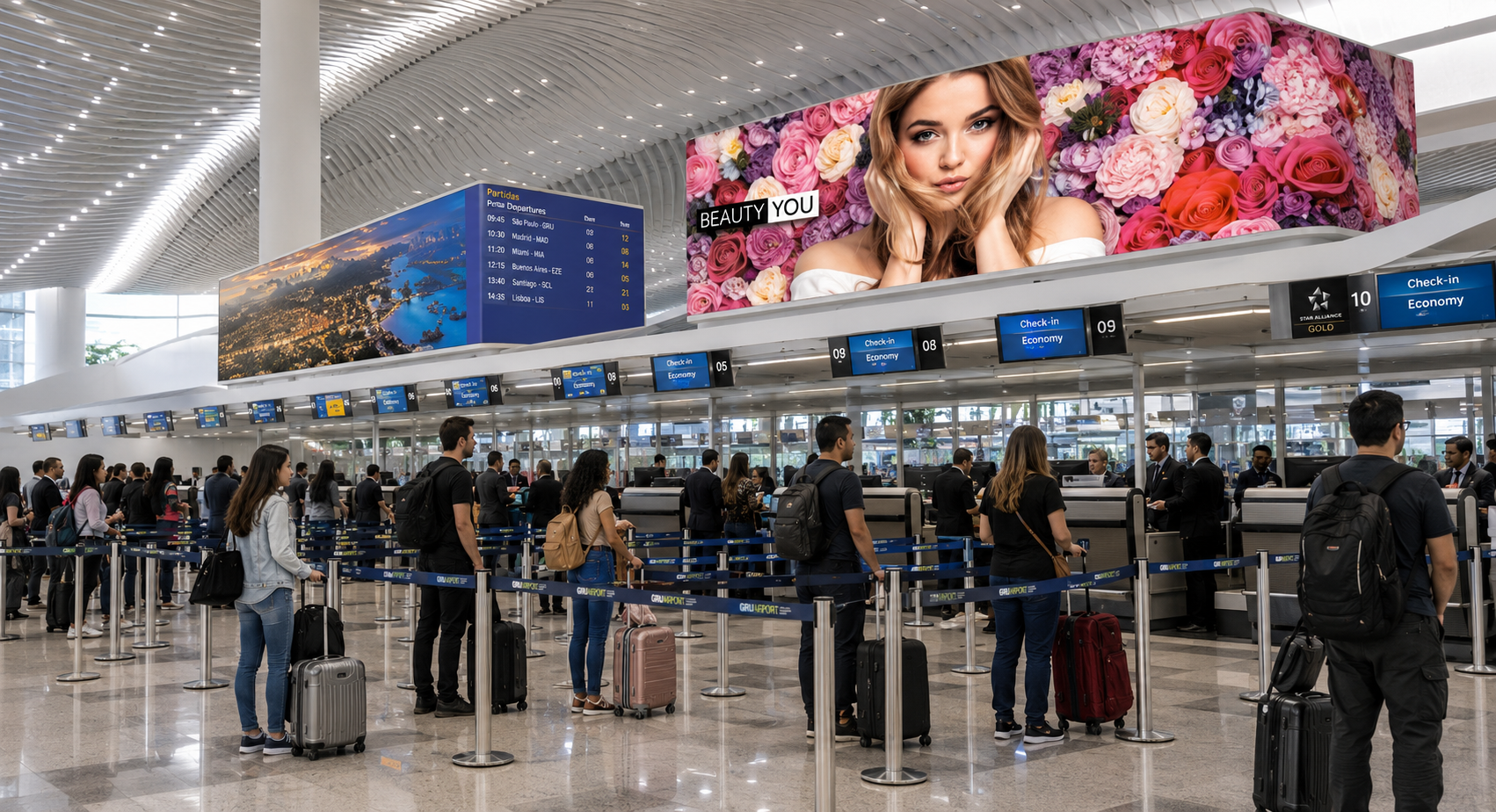
Morocco's smallest major gateway carrying its most institutionally powerful audience.
Rabat–Salé is not a volume airport, and advertisers who evaluate it on passenger count alone will misprice it. It is the air gateway to Morocco's political capital, the seat of national government, every foreign embassy in the country, the central bank, the constitutional institutions, and the headquarters of state-linked enterprise. The passenger mix here skews heavily toward people who authorise budgets, sign policy, allocate sovereign and institutional capital, and travel on state or corporate account. For advertisers, this is the rare airport where a modest impression count intercepts an unusually high concentration of authority and disposable wealth.
The airport handled 2,169,189 passengers in 2025, a 25.69 percent increase over 1,725,812 in 2024 — one of the steepest growth curves in the Moroccan network. That growth is structural, not seasonal. Rabat sits on a live wealth corridor between the Moroccan administrative elite and Europe, particularly France, Spain, Belgium, and Italy, carrying diaspora households with dual-market spending power and Moroccan families deploying capital into European property, education, and residency. Masscom Global treats RBA as a precision buy: low clutter, high-authority audience, and a cost base that has not yet caught up with its audience value.
Advertising Value Snapshot
- Passenger scale: 2,169,189 passengers in 2025, up 25.69 percent year on year; aircraft movements rose 25.66 percent to 15,334
- Traveller type: Government, diplomatic and institutional travellers; European-based Moroccan diaspora; capital-city professionals and academics
- Airport classification: Tier 2 by volume, Tier 1 by audience quality — the passenger profile outperforms the passenger count
- Commercial positioning: Morocco's capital-city and diplomatic gateway, and the primary short-haul European access point for Rabat and Kénitra
- Wealth corridor signal: The Rabat–Western Europe corridor, carrying administrative wealth outbound and diaspora capital inbound
- Advertising opportunity: A single-terminal environment concentrates the entire passenger flow through a compressed, repeatable journey, which means high frequency against a defined audience rather than diluted reach. Masscom Global secures placement across the highest-traffic touchpoints in that flow and builds campaigns sized to the audience rather than the footfall. For brands targeting decision-makers in Morocco, this is one of the most efficient buys on the continent.
Airport Advertising is Complex to Get Right
We help you execute faster, with proven results and local insight most planners lack starting now.
Talk to an ExpertCatchment Area and Economic Drivers
Top 10 Cities within 150 km — Marketer Intelligence:
- Rabat: The administrative and diplomatic core. Produces the highest-authority audience in Morocco — ministry officials, ambassadors, regulators, and institutional executives with salaried stability and strong appetite for education, property, and wealth products.
- Salé: Dense residential mass adjacent to the terminal. A high-volume diaspora departure base with remittance-funded household spending on construction, consumer durables, and family travel.
- Témara: Established upper-middle professional suburb serving Rabat's civil service. Reliable audience for banking, insurance, private schooling, and mid-luxury automotive.
- Kénitra: Morocco's fastest-rising industrial belt with a major automotive manufacturing free zone. Generates a technical and managerial expatriate audience plus supply-chain B2B travellers.
- Casablanca: Within reach and economically inseparable from Rabat. Contributes finance, corporate, and legal travellers who choose RBA for capital-city meetings and short-haul European connections.
- Mohammedia: Petrochemical and refining base. Produces industrial procurement travellers and an engineering audience with above-average income and technical purchase authority.
- Khémisset: Agricultural and land-holding wealth. Understated but liquid audience with capital in land and livestock, receptive to real estate and financial products.
- Sidi Kacem: Agro-processing centre. Delivers a business-owner audience with cash-based buying behaviour and low banking penetration, a growth target for financial services.
- Sidi Slimane: Agricultural production and military presence. Produces a state-salaried and landowning household audience with consistent remittance linkage to France.
- Meknès: Wine, agri-industry, and a major university base. Supplies a student and academic outbound flow highly relevant to international education advertisers.
NRI and Diaspora Intelligence:
Morocco's diaspora is one of the largest and most financially significant in Africa, concentrated in France, Spain, Belgium, Italy, and the Netherlands, and Rabat–Salé is a primary point of entry for the Rabat–Salé–Kénitra region's share of that population. Remittances into Morocco run at multi-billion-dollar annual scale and are a structural pillar of the national economy. The behaviour that matters commercially is what this money does on arrival: it buys land, funds construction, capitalises small businesses, and pays for family education. Diaspora travellers arriving at RBA are frequently in an active spending decision window, often carrying purchase intent formed abroad and executed in Morocco. That makes the arrivals journey at RBA one of the highest-intent advertising environments in the country.
Economic Importance:
The catchment economy runs on three engines: government and institutional employment in Rabat, automotive and industrial manufacturing in Kénitra and the surrounding free zones, and agriculture across the Gharb plain. Each produces a distinct audience. Government creates a stable, credentialed, credit-worthy audience that responds to education, property, and long-horizon financial products. Manufacturing creates a technical B2B and expatriate management audience. Agriculture creates asset-rich, cash-liquid business owners underserved by formal financial marketing. Advertisers who segment by these three engines rather than treating RBA as one undifferentiated flow will materially outperform.
Business and Industrial Ecosystem
- Government, diplomacy, and public administration: Produces the highest-authority audience at the airport, including foreign missions and international organisation staff with expatriate spending profiles.
- Automotive manufacturing and free zones around Kénitra: Produces senior engineering and procurement travellers, plus a European management expatriate cohort.
- Financial services, regulation, and central banking: Produces institutional finance travellers with direct relevance to wealth management and cross-border investment advertisers.
- Technology, offshoring, and higher education: Rabat's technology park and university cluster produce a young professional and academic audience with strong outbound education and mobility intent.
Passenger Intent — Business Segment:
Business travellers at RBA are travelling to and from institutional meetings, not sales calls. They are ministry delegations, diplomatic staff, regulatory officials, development-finance representatives, and industrial management moving between Rabat and European capitals. Their trips are scheduled, repeated, and expensed. The categories that intercept them most effectively are premium banking and private wealth, business aviation and charter, professional services, international real estate, and enterprise technology positioned around institutional credibility rather than price.
Strategic Insight:
The commercial value of the business audience here is concentration of decision rights. In most airports, advertisers pay for volume and hope authority is somewhere inside it. At Rabat–Salé, authority is the base condition of the audience because the city itself is the seat of national decision-making. A brand appearing in this terminal is speaking to people who influence procurement, policy, licensing, and capital allocation at national scale, in an environment with far less competing brand noise than a hub airport. That combination of high authority and low clutter is rare, and Masscom Global builds RBA campaigns specifically to exploit it.
Tourism and Premium Travel Drivers
- Rabat's UNESCO-listed capital core, including the Kasbah of the Udayas, Hassan Tower, and Chellah: Draws a cultural, higher-income, longer-staying visitor rather than a budget beach tourist. Relevant to premium hospitality and luxury retail.
- Salé medina and the Bou Regreg valley development: Anchors a growing urban leisure and marina-led premium precinct, signalling rising local luxury consumption.
- Volubilis and Meknès within the catchment: Attracts heritage and educated European travellers with high cultural spend and low price sensitivity.
- Rabat's institutional and conference circuit: International summits, diplomatic events, and academic congresses generate a delegate audience that behaves commercially like premium business travel.
Passenger Intent — Tourism Segment:
Tourists arriving at RBA have self-selected away from Morocco's mass-market coastal and Marrakech circuits and toward the capital's cultural and institutional offering. They are predominantly French, Spanish, and Northern European, older, better educated, and travelling on committed budgets for hotels, guided cultural experiences, and dining rather than package deals. At the airport they are receptive to premium hospitality, duty-free luxury and fragrance, financial and currency services, telecom and connectivity, and cultural experience brands. Categories built on discount messaging will underperform against this audience.
Travel Patterns and Seasonality
- Peak seasons: June to September is the dominant peak, driven by diaspora family return travel from Europe and the summer holiday cycle. December to January delivers a second peak from year-end diaspora visits and winter cultural tourism. The Ramadan and Eid al-Fitr window creates a distinct, high-intent movement surge tied to family gatherings and gifting.
- Traffic volume data: December 2025 recorded 199,613 passengers, up 16.34 percent year on year, confirming that the winter peak is strengthening alongside the summer one.
Event-Driven Movement:
- Ramadan and Eid al-Fitr (variable, spring): Religious and family travel peak. Brings diaspora households in gifting and remittance-spending mode. Advertisers should be live two to three weeks before the window opens.
- Mawazine Festival, Rabat (June): Large-scale international music festival in the capital. Brings a young, urban, high-spending domestic and regional audience alongside international visitors. Strong window for telecom, beverage, fashion, and entertainment brands.
- Eid al-Adha (variable, summer): Drives heavy domestic and diaspora movement plus significant household expenditure. Retail, consumer finance, and automotive campaigns perform strongest here.
- Summer diaspora return (July to August): The highest-volume and highest-intent window of the year. Real estate, construction, banking, and remittance services should own this period.
- FIFA World Cup 2030 build-up (multi-year, accelerating): Morocco's co-hosting role is driving sustained infrastructure, institutional, and delegation travel into the capital. This creates a rising multi-year event floor rather than a single spike.
It’s Not Just Where You Advertise - It’s How Fast You Execute
We combine local insight with fast rollout to deliver results for you, now.
Talk to an ExpertAudience and Cultural Intelligence
Top 2 Languages:
- Arabic (Moroccan Darija and Modern Standard Arabic): The default language of the domestic and diaspora audience. Modern Standard Arabic carries institutional and formal authority, which matters for financial, government-adjacent, and premium brand messaging. Darija carries emotional proximity and works for consumer and family-oriented creative.
- French: The working language of Moroccan government, banking, higher education, and elite commerce, and the shared language of the France-based diaspora. For advertisers, French is the single most efficient language for reaching the high-income and decision-making segment at this airport. Bilingual Arabic and French creative is the baseline standard for RBA campaigns.
Major Traveller Nationalities:
The dominant flows are Moroccan nationals and dual-national Moroccans resident in France, Spain, Belgium, Italy, and the Netherlands, followed by French and Spanish leisure and business travellers, and a smaller but disproportionately valuable cohort of diplomatic and international-organisation staff from across Europe, the Gulf, and Sub-Saharan Africa. Creative must therefore work across two cultural registers simultaneously: European-resident Moroccans who consume brands in a European frame of reference, and domestic Moroccan travellers who do not. Masscom Global structures RBA campaigns bilingually and dual-register so a single buy performs against both.
Religion — Advertiser Intelligence:
- Islam (approximately 99 percent): Ramadan, Eid al-Fitr, and Eid al-Adha are the defining commercial calendar events. Ramadan concentrates family reunion travel and elevated food, gifting, and charitable spending. Eid al-Adha drives major household and livestock expenditure plus domestic travel. Both windows produce measurable spikes in retail, consumer finance, telecom, remittance, and automotive purchase activity, making them the highest-ROI advertising windows of the year.
- Judaism (small but historically significant community): Morocco maintains a long-established Jewish heritage and a returning diaspora, particularly from France, Israel, and Canada, travelling for pilgrimage and heritage visits. This is a low-volume, high-value audience relevant to premium hospitality, heritage tourism, and private wealth services.
- Christianity (small resident and expatriate community): Largely diplomatic, European expatriate, and Sub-Saharan African student populations in Rabat. Commercially relevant as an expatriate consumption segment for international schooling, premium housing, and financial services rather than as a festival-driven audience.
Behavioral Insight:
This audience makes decisions slowly, consultatively, and with family involvement, and it places heavy weight on institutional credibility over promotional urgency. Wealth in the Rabat catchment is typically held in land, property, and business equity rather than liquid financial products, which means the winning message is about security, legacy, and legitimate cross-border access rather than yield or speed. Diaspora travellers add a second layer: they benchmark brands against European standards and reject creative that feels locally compromised. Messaging that signals international standing, regulatory legitimacy, and multi-generational benefit consistently outperforms discount-led or urgency-led approaches at this airport.
Outbound Wealth and Investment Intelligence
The outbound passenger at Rabat–Salé is defined by a permanent, structural connection to Western Europe rather than by episodic tourism. This is an audience with family, bank accounts, education histories, property, and often a second nationality across the Mediterranean, and it moves capital in both directions continuously. Government and institutional salaries, industrial equity, agricultural land wealth, and diaspora earnings converge into a consistent flow of capital toward European property, European and North American education, and residency instruments. For international brands, RBA is not a leisure airport with occasional wealth; it is a capital-movement corridor with a terminal attached.
Outbound Real Estate Investment:
Spain and France are the primary outbound property markets for this catchment, with concentrated activity in Andalusia, Madrid, Barcelona, Paris, and the southern French coast, driven by proximity, language, family presence, and Spain's non-lucrative and investment residency pathways. Portugal remains a target for its established residency-linked property market and Lisbon and Algarve yields. Secondary interest runs toward the UAE, particularly Dubai, for zero personal income tax, high rental yields, and long-term residency visas, and toward Turkey for lower entry thresholds and citizenship-linked thresholds. International developers selling into this corridor find an audience that is culturally comfortable with cross-border ownership and already banked in Europe, which shortens the sales cycle significantly.
Outbound Education Investment:
France remains the dominant destination for higher education from this catchment, followed by Spain, Canada, Germany, and increasingly the UK and the United States for postgraduate study. Rabat's concentration of elite secondary schooling and its academic and civil-service households produce a high volume of qualified, French-fluent applicants each year. Families here treat education as the primary vehicle for intergenerational advancement and will commit disproportionate household capital to it, frequently supported by diaspora relatives already resident in the destination country. International universities, business schools, and education consultancies advertising at RBA reach parents and students in the same terminal, at the moment the decision is being actively researched.
Outbound Wealth Migration and Residency:
Demand centres on Spain's residency routes, Portugal's residency-by-investment framework, and UAE long-term residency and golden visa categories, with secondary interest in Turkish and Caribbean citizenship-by-investment programmes among business-owner households seeking mobility and asset diversification. Canadian and French family-reunification and skilled-migration pathways carry significant volume among the professional and academic segment. Residency advisory, immigration law, and international private banking brands are addressing an audience here that is already partly domiciled abroad and treats second residency as portfolio management rather than emigration.
Strategic Implication for Advertisers:
Brands on either side of the Morocco–Europe corridor should treat RBA as a priority buy because the same passenger is a buyer in both markets: a European developer, university, or bank is not reaching a foreign prospect here, it is reaching an existing cross-border participant. The corridor is bidirectional, which means a campaign can be built to intercept outbound capital and inbound diaspora spending in the same terminal. Masscom Global activates both sides of this corridor simultaneously, aligning creative and placement in Rabat with the destination markets where the capital lands.
Airport Infrastructure and Premium Indicators
Terminals:
- A single passenger terminal handles the full traffic flow across domestic and international services, which concentrates every passenger through one shared journey and creates unusually high frequency for well-placed advertising.
- The apron covers 84,000 square metres with four jetways and 10 aircraft stands, and the single 3,500 metre runway supports widebody operations up to Boeing 747 size, giving the airport genuine long-haul and heavy-charter capability relative to its passenger count.
Premium Indicators:
- CIP and VIP lounge facilities operated within the airport serve government, diplomatic, and business-class passengers, signalling a structurally higher-value passenger mix than volume figures imply.
- Dedicated business aviation handling supports state, diplomatic, and private charter movements, a direct indicator of ultra-high-net-worth and official traffic.
- Rabat's five-star and international-brand hotel supply in the city and along the Bou Regreg corridor supports a premium inbound audience, with the airport positioned roughly eight kilometres from the capital's centre.
- Capital-city status itself is the strongest premium signal: this is the airport through which foreign delegations, sovereign counterparties, and institutional investors enter Morocco.
Forward-Looking Signal:
A new terminal is nearing completion and is expected to lift capacity to around 4 million passengers, timed to Morocco's role in the 2030 football World Cup. Combined with 2025's 25.69 percent traffic growth, this points to a step change in both audience volume and premium retail and hospitality development at the airport over the next few years. Advertising rates at RBA currently reflect its historic scale, not its future one. Masscom Global advises clients to secure position and pricing now, before expanded capacity and World Cup-driven demand reset the cost base and intensify competition for the strongest placements.
Airline and Route Intelligence
Top Airlines:
Royal Air Maroc and Royal Air Maroc Express, Air Arabia Maroc, Ryanair, Transavia France, Vueling, TAP Air Portugal, Turkish Airlines, and Iberia-affiliated regional operations, supported by seasonal and charter carriers.
Key International Routes:
Paris and other French cities including Marseille, Lyon, Bordeaux and Toulouse form the highest-frequency international corridor with multiple daily and near-daily services. Madrid, Barcelona, and Malaga anchor the Spanish corridor. Brussels, Amsterdam, Milan, Rome, Istanbul, and Lisbon carry significant scheduled volume, with Middle East and North American connectivity served primarily via Casablanca and European hubs.
Domestic Connectivity:
Agadir, Oujda, Nador, Marrakech, Laayoune, Dakhla, Errachidia, and Essaouira, providing the capital with direct access to Morocco's southern provinces, eastern regions, and Saharan territories without routing through Casablanca.
Wealth Corridor Signal:
The route map is unambiguous: France, Spain, Belgium, Italy, and the Netherlands are wealth transfer routes, not leisure routes. They carry dual-national households, cross-border property owners, students, and institutional travellers whose money moves in both directions and whose purchase decisions are made in one country and executed in the other. The Istanbul and Gulf connections signal an emerging secondary investment and residency corridor. The domestic southern network, by contrast, carries administrative and development traffic tied to state activity in the southern provinces, an institutional B2B audience rather than a consumer one. Advertisers should weight budget toward the European corridors for consumer and investment categories, and toward the domestic network for institutional and infrastructure-facing brands.
Media Environment at the Airport
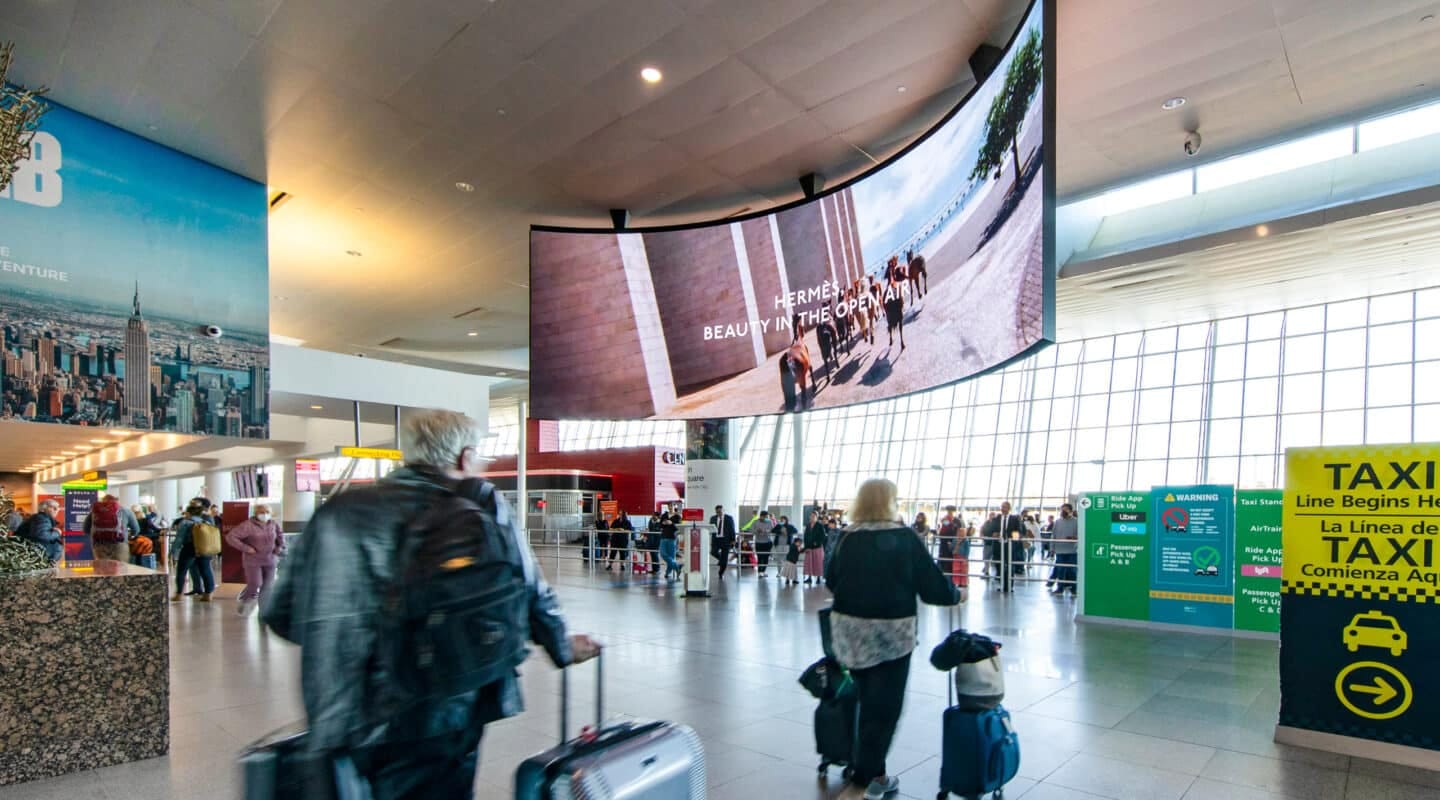
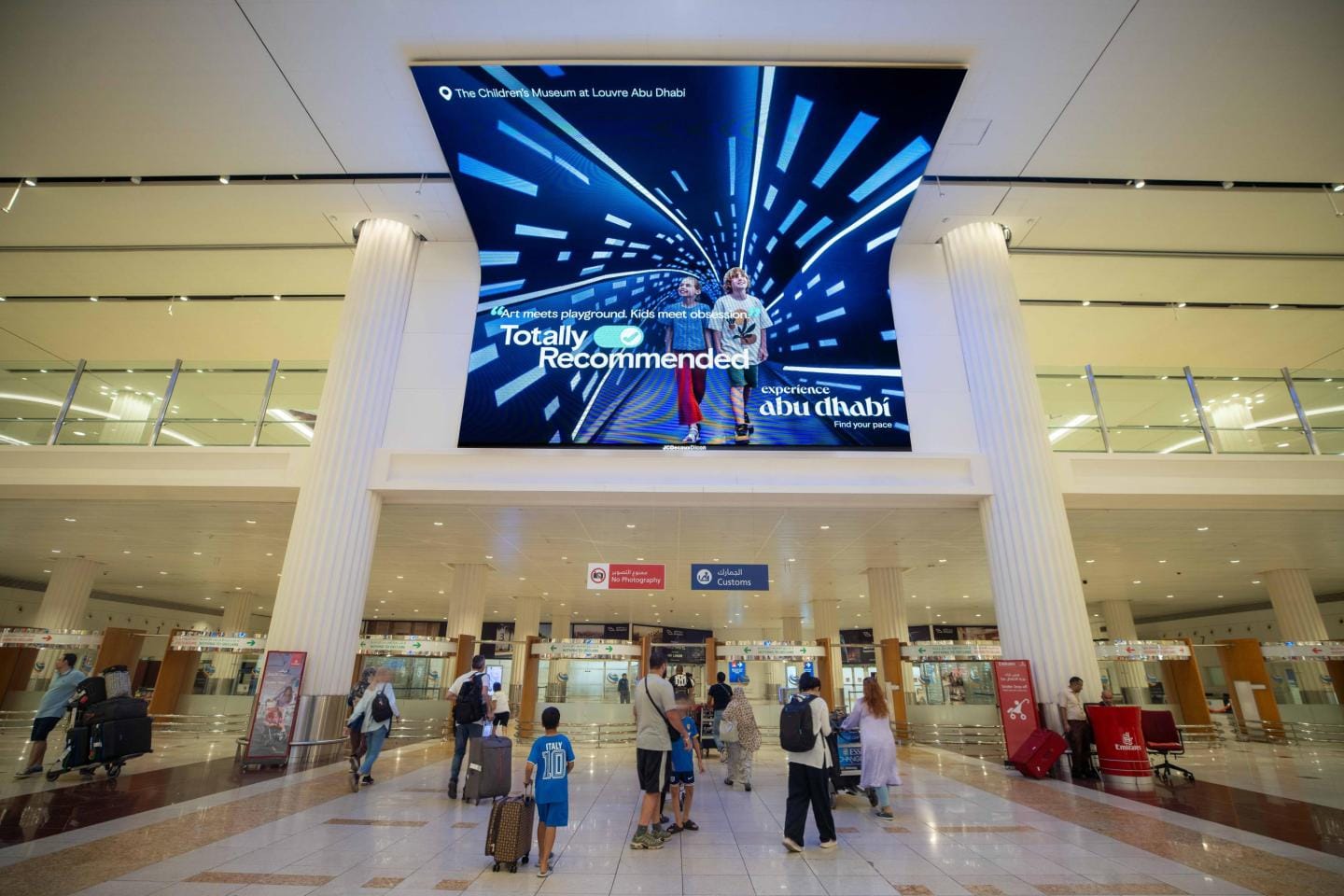
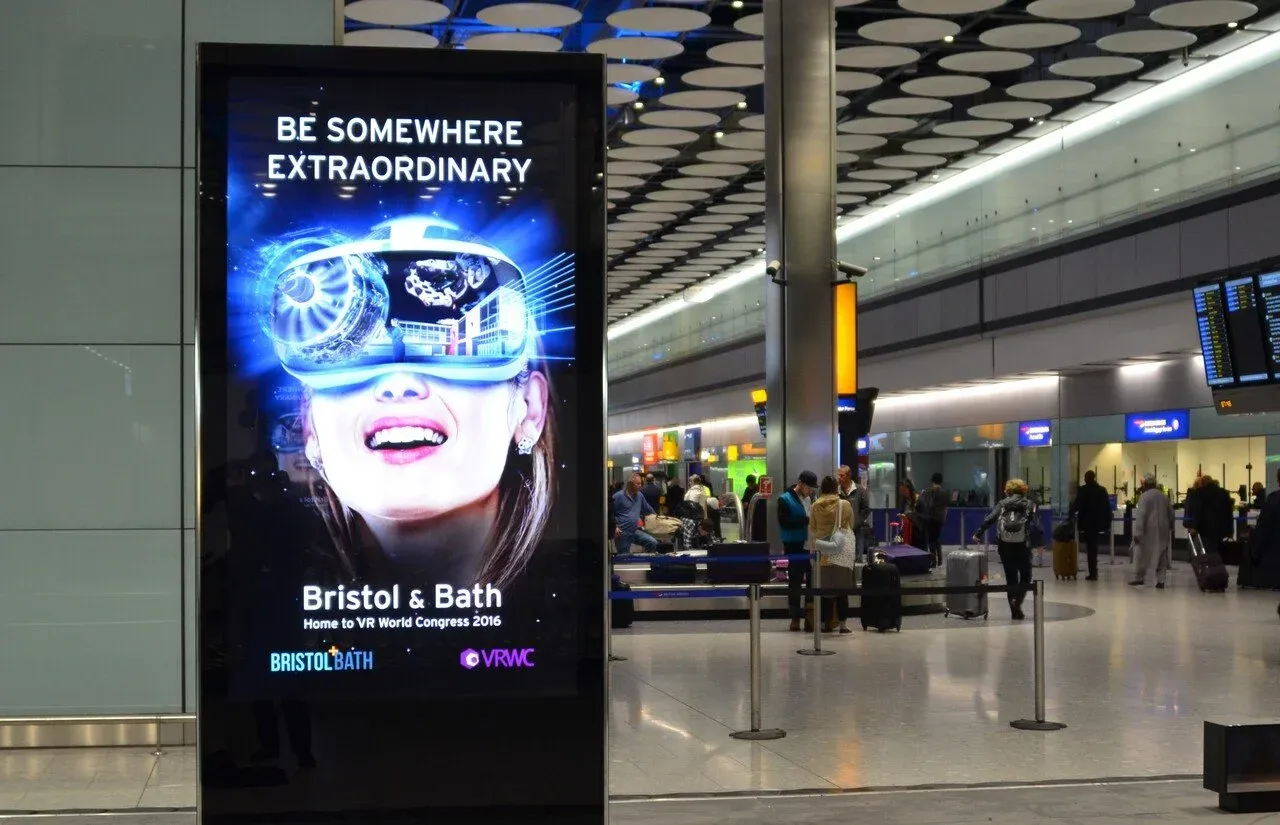
- Single-terminal architecture means a compact, low-clutter environment where a well-positioned campaign achieves standout impossible at a multi-terminal hub. Share of voice at RBA is dramatically higher per unit of spend than at Morocco's larger airports.
- Dwell time is driven by security and immigration processing, boarding gate consolidation, and the diaspora travel pattern of early arrival with extended family groups, producing long, repeated exposure windows rather than transient glances.
- The presence of diplomatic, government, and business aviation traffic elevates brand association: appearing here places a brand in the same environment as institutional and sovereign activity.
- Masscom Global provides direct inventory access across the terminal's highest-traffic positions, precise placement against arrivals versus departures depending on campaign intent, bilingual creative execution, and rollout speed that lets clients activate around Ramadan, summer diaspora, and event windows without missing the window.
Strategic Advertising Fit
Best Fit:
- International real estate developers (Spain, France, Portugal, UAE): Directly addressing an audience already buying property abroad, with European banking and family presence in place.
- Private banking, wealth management, and cross-border financial services: Reaching institutional salaries, agricultural and business equity, and diaspora capital in one terminal.
- International universities, business schools, and education consultancies: Rabat's academic and civil-service households commit heavily to overseas education, with France, Spain, and Canada as primary destinations.
- Residency, golden visa, and immigration advisory: An audience that treats second residency as portfolio diversification rather than emigration.
- Luxury and premium automotive: Government, diplomatic, and industrial management audiences with expensed and high-disposable-income purchasing.
- Remittance, payments, and digital banking: The diaspora flow at RBA is one of the most concentrated remittance audiences in North Africa.
- Premium hospitality and destination resorts: Cultural inbound travellers and outbound diaspora both convert on premium leisure.
- Telecom, connectivity, and eSIM services: Every arriving diaspora and international passenger is an immediate connectivity buyer.
Brand Alignment at a Glance:
| Category | Fit |
|---|---|
| International real estate | Exceptional |
| Private banking and wealth management | Exceptional |
| International education | Strong |
| Residency and immigration advisory | Strong |
| Luxury automotive | Strong |
| Remittance and payments | Strong |
| Premium hospitality | Moderate |
| Fast-moving consumer goods and discount retail | Poor fit |
Who Should Not Advertise Here:
- Mass-market discount retail and low-cost FMCG: The audience skews institutional, diaspora, and cultural-premium; volume-discount messaging has no traction and wastes a high-value environment.
- Beach resort and package holiday operators: Rabat is not a leisure gateway. That audience routes through Marrakech, Agadir, and Tangier, and the creative simply misfires here.
- Gambling, alcohol-led, and nightlife brands: Culturally misaligned with a 99 percent Muslim catchment and with the diplomatic and institutional character of the terminal. Association risk outweighs any reach benefit.
Event and Seasonality Analysis
- Event Strength: Medium, rising to High through the 2030 World Cup build-up
- Seasonality Strength: High
- Traffic Pattern: Dual-Peak
Strategic Implication:
Budget should be weighted heavily toward two windows: June to September for the diaspora and summer peak, and the Ramadan and Eid al-Fitr period for family, gifting, and consumer finance categories, with a secondary December to January allocation now justified by that month's continued double-digit growth. Real estate, banking, and education campaigns deliver maximum ROI when live two to three weeks ahead of each window, because purchase decisions in this audience are formed before travel and executed on arrival. Masscom Global structures RBA campaigns around this exact rhythm, front-loading presence ahead of each peak rather than spreading spend evenly across a year that does not behave evenly.
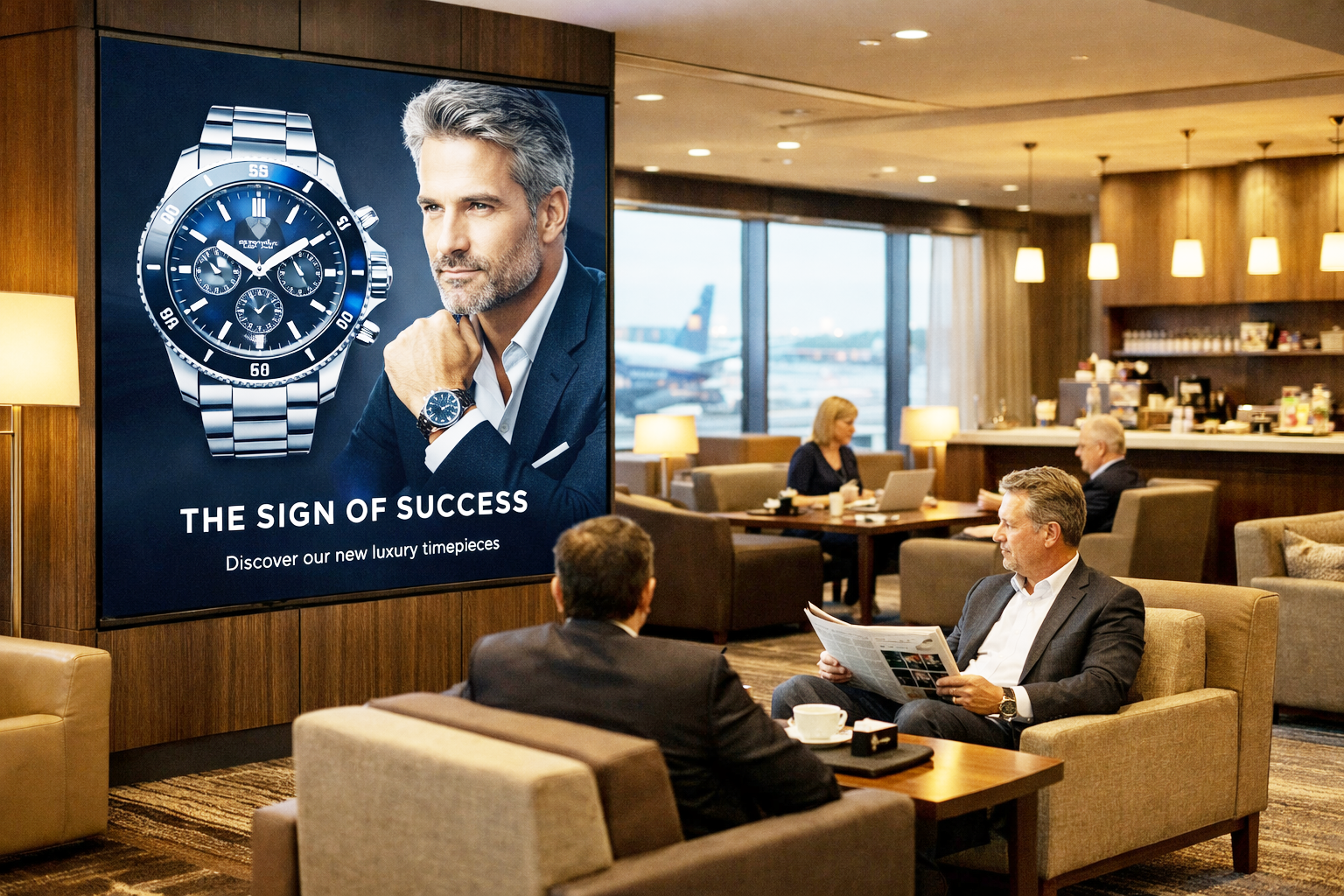
Poor Placement and Delays Affect Airport Campaigns
We help you move faster, access better inventory, and get it right now.
Talk to an ExpertFinal Strategic Verdict
Rabat–Salé is the most underpriced high-authority advertising environment in Morocco. It delivers a passenger base built from national government, foreign missions, institutional finance, Kénitra's industrial management, and a European-resident diaspora that owns property and holds bank accounts on both sides of the Mediterranean, all funnelled through a single low-clutter terminal that grew 25.69 percent in a single year. The brands that benefit most are international real estate developers, private banks, universities, residency advisers, and premium automotive, because every one of them is selling to an audience here that is already a cross-border buyer rather than a cold prospect. With a new terminal nearing completion, capacity heading toward four million passengers, and 2030 World Cup demand building, the pricing window that currently reflects RBA's historic scale will not stay open. Masscom Global holds the access, the corridor intelligence, and the execution speed to place brands in this terminal now, on both sides of the wealth corridor, before the cost base resets.
About Masscom Global
Masscom Global is a premium international airport advertising and media buying agency operating across 140 countries. With deep expertise in airport OOH, premium publications, and high-net-worth audience targeting, Masscom helps brands reach the world's most valuable travellers at the moments that matter most. For advertising packages, media rates, and campaign planning at Rabat–Salé Airport and airports across the globe, contact Masscom Global today.
Frequently Asked Questions
How much does airport advertising cost at Rabat–Salé Airport? Cost at RBA varies by format, terminal position, campaign duration, and seasonal demand, with rates rising sharply around the summer diaspora peak and the Ramadan and Eid window. Arrivals positions and high-dwell departure zones command different pricing to general circulation placements. Because the airport is currently expanding capacity, rates are also shifting year on year. Contact Masscom Global for current rate cards and package options tailored to your category and campaign window.
Who are the passengers at Rabat–Salé Airport? Predominantly Moroccan government, diplomatic, and institutional travellers based in the capital, European-resident Moroccan diaspora returning from France, Spain, Belgium, Italy, and the Netherlands, industrial and engineering management linked to Kénitra's manufacturing zones, and a smaller cohort of cultural and business visitors from Western Europe. The mix is more institutional and more cross-border than any other Moroccan airport of comparable size.
Is Rabat–Salé Airport good for luxury brand advertising? Yes, for the right kind of luxury. The airport carries a high concentration of diplomatic, government, and institutional wealth alongside a diaspora audience benchmarked to European standards, and it supports CIP lounges and business aviation. Luxury categories tied to legacy, property, wealth management, and automotive perform strongly. Fashion-led impulse luxury performs better at Morocco's higher-volume tourism airports.
What is the best airport in Morocco to reach HNWI audiences? Casablanca leads on total HNWI volume as the country's financial and hub airport, and Marrakech leads on international luxury tourism. Rabat–Salé is the specialist choice: it delivers the highest concentration of institutional, diplomatic, and government-linked wealth in Morocco at a fraction of hub competition and cost. For advertisers targeting decision-makers and cross-border investors rather than sheer numbers, RBA is the sharper buy, and Masscom Global recommends it as a precision complement to a Casablanca or Marrakech presence.
What is the best time to advertise at Rabat–Salé Airport? June to September is the strongest window, driven by diaspora return travel. The Ramadan and Eid al-Fitr period is the highest-intent window for consumer finance, retail, and gifting categories. December to January now delivers a genuine second peak, with December 2025 traffic up 16.34 percent year on year. Campaigns should go live two to three weeks ahead of each window.
Can international real estate developers advertise at Rabat–Salé Airport? This is one of the strongest categories at the airport. The catchment's HNI and diaspora audience actively buys property in Spain, France, Portugal, and increasingly the UAE and Turkey, and most already hold European banking relationships and family connections in those markets. Developers reach an audience here that is a repeat cross-border buyer rather than a first-time prospect, which shortens the conversion path considerably.
Which brands should not advertise at Rabat–Salé Airport? Mass-market discount retail and low-cost FMCG, because the audience skews institutional and premium and discount messaging is wasted spend. Beach and package holiday operators, because Rabat is not a leisure gateway and that traffic routes elsewhere. Gambling, alcohol-led, and nightlife brands, because they conflict with the cultural profile of the catchment and the diplomatic character of the terminal.
How does Masscom Global help brands advertise at Rabat–Salé Airport? Masscom Global delivers the full chain: corridor and audience intelligence on who is travelling and what they are buying, direct access to the terminal's highest-performing inventory, bilingual Arabic and French creative execution built for both domestic and diaspora registers, campaign timing aligned to the airport's dual-peak rhythm, and performance reporting throughout. We also activate the destination side of the corridor so your campaign works in Rabat and in the markets your audience is investing in.