


Airport at a Glance
| Field | Detail |
|---|---|
| Airport | Djerba Zarzis International Airport |
| IATA Code | DJE |
| Country | Tunisia |
| City | Djerba (Mellita, Medenine Governorate) |
| Annual Passengers | 2.3 million (2025) |
| Primary Audience | Western European leisure travellers, Tunisian and North African diaspora, Libyan cross-border business and medical travellers |
| Peak Advertising Season | April to October, with a secondary May pilgrimage window |
| Audience Tier | Tier 2 with Tier 1 seasonal spending intensity |
| Best Fit Categories | Luxury hospitality and resorts, duty free and fragrance, banking and remittance services, real estate and residency programmes |
A single-terminal island gateway where 83 percent of traffic is international and nearly every arriving passenger has already committed a full holiday budget.
Djerba Zarzis is the rare mid-size airport where audience quality outperforms audience volume. The airport handled over 2.3 million passengers across 16,777 flights in 2025, a 6.5 percent increase in passengers with international traffic up 8.1 percent year on year. It ranks second in Tunisia by flight volume, and 83 percent of its flights connect to destinations abroad. For advertisers, that ratio is the entire commercial story: this is not a domestic commuter airport carrying price-sensitive local traffic, it is a concentrated European inbound and outbound corridor. Masscom Global treats DJE as a high-intent environment where audience composition is predictable months in advance.
The airport matters because it converts a small island into a disproportionate wealth channel. The Djerba Zarzis tourism zone recorded 7.3 million overnight stays in 2025, roughly a quarter of Tunisia's entire national tourism nights. Every one of those visitors passes through a single terminal. Layer on the Tunisian diaspora returning from France, Germany, Italy and Belgium with hard currency, and the Libyan cross-border flow that uses Djerba as its nearest functioning international gateway, and DJE becomes three distinct high-value audiences funnelled through one controlled space.
Advertising Value Snapshot
- Passenger scale: 2.3 million passengers in 2025, up 6.5 percent overall and 8.1 percent on international traffic, following 12.8 percent growth in 2024. Sustained multi-year expansion.
- Traveller type: Western European package and premium leisure travellers, Tunisian and Maghrebi diaspora returning for holidays and family occasions, Libyan business, trade and medical travellers.
- Airport classification: Tier 2 with Tier 1 seasonal spending intensity. Volume is mid-size, but discretionary spend per passenger during peak months matches far larger hubs.
- Commercial positioning: North Africa's leading island resort gateway and Tunisia's most internationally weighted airport by traffic share.
- Wealth corridor signal: DJE sits on the Western Europe to North Africa leisure and remittance corridor, with a secondary Libya to Mediterranean trade and capital corridor running through Ben Gardane and Zarzis.
- Advertising opportunity: A single-terminal layout means guaranteed exposure with no passenger fragmentation across concourses, which is rare at this traffic level. Masscom Global structures DJE campaigns to capture both the pre-holiday arrivals mindset and the higher-value departures window, where duty free intent and residual budget peak. Our access allows brands to secure dominant positions before the April to October surge locks up premium placement.
Airport Advertising is Complex to Get Right
We help you execute faster, with proven results and local insight most planners lack starting now.
Talk to an ExpertCatchment Area and Economic Drivers
Top 10 Cities within 150 km, Marketer Intelligence:
- Houmt Souk: The island's commercial and retail capital and the primary spending floor for tourists. Souk purchase behaviour here signals high receptivity to jewellery, fragrance and craft-luxury positioning at the airport.
- Midoun: The resort belt. Concentration of four and five star inventory means this audience arrives with prepaid accommodation and free discretionary budget, ideal for excursion, dining and duty free advertisers.
- Erriadh: Home to Africa's oldest synagogue and the Djerbahood art district, generating a cultural-heritage visitor with above-average education and income profile, receptive to premium and institutional brands.
- Ajim: Ferry link to the mainland and a working port economy. Produces local trade and fishing wealth plus film-tourism traffic tied to the island's Star Wars locations.
- Zarzis: Petroleum services, olive oil export and a free trade zone presence. Generates a resident business audience and Libyan-linked trade traffic that uses DJE by default.
- Ben Gardane: Tunisia's main Libyan border trade town. High cash-liquidity informal economy with strong demand for currency, remittance and consumer electronics categories.
- Medenine: Governorate administrative seat. Public sector professionals, education services and the feeder base for domestic diaspora households with relatives in France and Italy.
- Tataouine: Southern desert gateway and a source region for both outbound labour migration to Europe and inbound Sahara excursion tourism, a strong pairing for remittance and travel services advertisers.
- Gabes: Chemical and industrial hub with a port and petrochemical complex. The nearest source of genuine B2B and industrial-procurement travellers in the catchment.
- Matmata: Berber troglodyte heritage and film location tourism. Almost entirely excursion-driven day traffic, useful for tour operator and car rental advertisers targeting arrivals.
NRI and Diaspora Intelligence:
The Tunisian diaspora is the most commercially reliable audience segment at DJE outside peak tourist season. Communities concentrated in France, Italy, Germany, Belgium and Switzerland return for summer holidays, family events and religious occasions, travelling in family groups with elevated luggage allowance and gift-purchase behaviour. Southern Tunisia in particular has a deep multi-generational migration history to Europe, and remittance inflows are a structural pillar of household income across Medenine, Tataouine and Ben Gardane. This audience holds European bank accounts, euro-denominated income and property ambitions in both markets, which makes them a priority target for banking, remittance, insurance and real estate advertisers.
Economic Importance:
The catchment economy runs on four engines: tourism and hospitality, olive oil and agricultural export, Libyan cross-border trade, and European remittances. Tourism produces the largest and highest-spending airport audience. Cross-border trade produces a cash-rich, transaction-oriented business traveller. Remittances produce a euro-earning diaspora with dual-market financial needs. Each engine creates a distinct advertiser fit, and Masscom Global maps campaign creative to the engine that matters most for your category rather than treating DJE as one undifferentiated leisure audience.
Business and Industrial Ecosystem
- Tourism and hospitality: The dominant employer and the source of resort operators, tour wholesalers and international hotel management travellers, a natural audience for B2B hospitality technology and supply brands.
- Petroleum and industrial services around Zarzis and Gabes: Produces technical and managerial travellers with corporate expense authority, relevant to industrial equipment, logistics and energy services advertisers.
- Olive oil and agricultural export: Southern Tunisia is a significant export origin, generating trade buyers and export intermediaries travelling to European markets, a fit for logistics, trade finance and packaging brands.
- Libyan cross-border trade and reconstruction supply: Ben Gardane and Zarzis channel goods and capital into Libya, producing a high-liquidity trader audience with limited home-market financial infrastructure.
Passenger Intent, Business Segment:
Business travellers at DJE are traders, hospitality operators, energy services staff and Libyan nationals using Tunisia as their functional international gateway. They travel for procurement, contracting, banking and medical access rather than corporate conferences. The categories that intercept them most effectively are banking and foreign exchange, private healthcare, logistics and freight, telecoms and roaming, and residency or second-passport advisory.
Strategic Insight:
The business audience at DJE is commercially valuable precisely because it is underserved in its home markets. A Libyan trader or a southern Tunisian exporter often makes financial, healthcare and property decisions while in transit, because the airport is one of the few points where international service providers are visible and reachable. That creates unusually short consideration-to-action cycles for B2B and financial advertisers, and it is the reason Masscom Global recommends conversion-led rather than awareness-only creative for this segment.
Tourism and Premium Travel Drivers
- UNESCO World Heritage status: Djerba was inscribed as a UNESCO World Heritage Site in September 2023 and named inaugural World Capital of Island Cuisine in 2025. This shifts the visitor mix toward higher-income cultural travellers, expanding the fit for premium and luxury categories.
- 125 kilometres of beaches and the Midoun resort belt: The island offers 125 kilometres of beaches supporting a dense concentration of four and five star inventory, producing prepaid, high-discretionary-spend arrivals.
- El Ghriba Synagogue and the Lag BaOmer pilgrimage: Africa's oldest synagogue and a Jewish community with roots going back three millennia drive a concentrated May pilgrimage window bringing international visitors with strong charitable and premium purchase behaviour.
- Star Wars locations, Djerbahood and Sahara excursions: Ajim, Matmata, Tataouine and the Erriadh mural district anchor film tourism and desert excursion demand, generating repeat excursion spend and a younger affluent European segment.
Passenger Intent, Tourism Segment:
Tourists at DJE are predominantly French, German, Italian, Belgian, Swiss, British and Central European travellers who have already committed to flights, accommodation and often full-board packages before arrival. Their remaining budget is discretionary and mobile: excursions, dining, retail, spa, jewellery and duty free. On arrival they are receptive to destination services and experiences. On departure they carry residual local currency and gifting intent, which is the highest-converting moment in the terminal. Duty free, fragrance and cosmetics, watches and jewellery, premium spirits, hospitality and destination real estate benefit most.
Travel Patterns and Seasonality
- Peak seasons: April to October is the primary European leisure season, with July and August at absolute peak driven by school holidays and diaspora summer return. May carries a distinct pilgrimage and shoulder-season premium. December to February holds a modest winter-sun and diaspora holiday flow, well below summer levels.
- Traffic volume data: Monthly breakdown not available. Annual traffic of 2.3 million in 2025 against terminal capacity of 4 million indicates significant peak-month concentration rather than year-round distribution.
Event-Driven Movement:
- Lag BaOmer pilgrimage at El Ghriba (May): International religious pilgrimage bringing a concentrated, high-net-worth global Jewish audience. The single highest-value short window in the DJE calendar for luxury, jewellery and financial services advertisers.
- Ramadan and Eid al Fitr (moving, spring period): Diaspora return traffic surges for family reunion. Peak window for remittance, telecoms, gifting and food retail messaging.
- Eid al Adha (moving, roughly two months after Eid al Fitr): Second diaspora return peak with strong household and livestock-linked spending, relevant for banking and consumer finance.
- European summer school holidays (July to August): Maximum volume with families and multi-generational groups. Highest reach efficiency of the year, best suited to mass premium and duty free campaigns.
- Djerba cultural and heritage programming (autumn): UNESCO-linked exhibitions and festivals extend the shoulder season into October, offering lower-cost windows with a still-affluent cultural audience.
It’s Not Just Where You Advertise - It’s How Fast You Execute
We combine local insight with fast rollout to deliver results for you, now.
Talk to an ExpertAudience and Cultural Intelligence
Top 2 Languages:
- Arabic (Tunisian Arabic): The language of the resident catchment, the Libyan trade audience and the diaspora's family identity. Essential for financial services, telecoms, healthcare and property creative aimed at outbound and returning audiences.
- French: The functional business and tourism language of Tunisia and the first language of the largest inbound source market. French-language creative reaches both the European visitor and the educated local professional in a single execution, making it the highest-efficiency choice at DJE.
Major Traveller Nationalities:
The inbound mix is led by France, Germany, Italy, Belgium, Switzerland, the United Kingdom and Central European markets, with Paris Orly the single most frequent route at around 36 weekly departures, roughly 22 percent of all weekly departures. Add Tunisian nationals resident in Europe, Algerian traffic served by expanded Air Algérie schedules, and Libyan nationals crossing overland to fly out of Djerba. For advertisers this means French and German creative carries the bulk of reach, English serves the UK and Swiss premium tier, and Arabic captures the diaspora and Libyan segments. Campaigns that run a single language leave a meaningful share of high-value passengers uncovered.
Religion, Advertiser Intelligence:
- Islam (approximately 99 percent of Tunisia's population): Ramadan, Eid al Fitr and Eid al Adha are the definitive diaspora travel triggers, producing family group travel, gifting, remittance transfer and household purchase spikes. Banking, money transfer, telecoms, food retail and consumer electronics see their strongest response in these windows.
- Judaism (small resident community, globally significant pilgrimage): Djerba's ancient Jewish community and the El Ghriba pilgrimage bring an international visitor segment with exceptional spending capacity in a compressed May window. Luxury retail, jewellery, private banking and premium hospitality should treat this as a dedicated micro-campaign rather than part of general summer buying.
- Christianity (inbound European visitors): Not a resident religious market, but Christmas and Easter holidays drive the winter-sun and spring shoulder flows from Europe, supporting resort, excursion and duty free campaigns outside the summer peak.
Behavioral Insight:
This is an audience that separates committed spend from discretionary spend very clearly. The European leisure traveller has already paid for the trip and treats airport purchases as reward or gifting, which favours emotional, brand-led creative and clear price anchoring at departure. The diaspora and Libyan segments think in terms of dual-market utility: what serves the family at home and the household in Europe or Libya simultaneously. That audience responds to trust signals, institutional credibility and specificity about cross-border capability rather than aspiration alone. Messaging that works at DJE names the benefit in concrete terms and makes the next step obvious.
Outbound Wealth and Investment Intelligence
The outbound passenger at DJE is defined by a dual-residency mindset. Southern Tunisia has one of the country's deepest European migration histories, which means outbound traffic is not purely tourism, it is capital, education and residency movement. Money earned in euros is deployed across two markets at once: property and business at home, and long-term security, schooling and residency status in Europe and the Gulf. This is a wealth corridor with traffic in both directions, and both sides are addressable in the same terminal.
Outbound Real Estate Investment:
The HNI and diaspora audience at DJE concentrates property interest in France, Italy, Germany, Belgium and Spain, driven by existing family and residency ties, alongside growing interest in the UAE and Turkey for yield and ownership ease. Domestic coastal investment in Djerba, Zarzis and greater Tunis remains a parallel priority. For international developers, this is a rare audience that is already comfortable with cross-border transactions and mortgage structures. Masscom Global positions developer campaigns at DJE to reach this buyer at the exact point of departure toward the markets they invest in.
Outbound Education Investment:
France is the dominant higher education destination for students from this catchment, reinforced by language, curriculum alignment and family networks, followed by Germany, Italy, Canada and increasingly Turkey and the Gulf. Families treat overseas education as the single largest planned expenditure of the household cycle and typically fund it through diaspora relatives and remittance pooling. That makes international universities, pathway programmes, student housing providers, education loan providers and visa consultancies a strong fit at DJE, particularly in the spring and late summer admission windows.
Outbound Wealth Migration and Residency:
Demand centres on European long-stay and family reunification routes, French and Italian residency pathways, and growing interest in UAE golden visa and Turkish citizenship-by-investment programmes among traders and business owners in Zarzis and Ben Gardane. Second-residency interest is driven by business mobility and banking access rather than tax optimisation alone, which favours advisory messaging built on practical mobility outcomes. Masscom Global can place residency and citizenship advisory brands directly in the departure path of this audience.
Strategic Implication for Advertisers:
DJE is one of the few airports where the same terminal reaches an inbound European consumer with holiday budget and an outbound North African investor deploying capital into Europe and the Gulf. Brands that buy only one side of that corridor leave half the value on the table. Masscom Global activates both directions simultaneously, matching creative and placement to arrival and departure intent within a single campaign structure.
Airport Infrastructure and Premium Indicators
Terminals:
- The airport operates a single terminal, upgraded in 2007 to three levels, with capacity for more than 4 million passengers annually. One terminal serving both international and domestic traffic means every passenger segment moves through the same commercial space, which is a structural advantage for reach.
- The airport covers 295 hectares with a single 3,100 by 45 metre runway, and the terminal handles both arrivals and departures. Current traffic of 2.3 million against 4 million capacity means peak-season density without terminal fragmentation.
Premium Indicators:
- Lounge provision is present but limited in scale, consistent with a leisure-weighted airport. The premium signal at DJE comes from resort-tier passenger profile rather than lounge infrastructure, so brand association is built in the main concourse rather than in segregated premium zones.
- Private and charter aviation activity is present, supported by seasonal charter concentration and regional business aviation using Djerba as a southern Mediterranean access point. Specific FBO detail not available.
- The island carries a dense five star and international resort base, including the reopening of Club Med Djerba La Douce in April 2026 and the Lebanese group Lancaster taking over the Dar Jerba complex under a 15 year lease in April 2026. Luxury hospitality sits minutes from the terminal rather than inside it.
- UNESCO World Heritage inscription in September 2023 and the World Capital of Island Cuisine designation in 2025 are the strongest premium credentials, elevating the destination's positioning and the profile of visitors it attracts.
Forward-Looking Signal:
Tunisia's Ministry of Transport allocated roughly TND 63.4 million in investment for Djerba Zarzis across 2025 to 2026, with a further TND 14.2 million planned for 2027 to 2030. Add recent terminal upgrades, apron expansion, automated check-in and enhanced screening, new easyJet direct services from London and Manchester, and Air Algérie's expanded schedule to Djerba, and the trajectory is clear: capacity, route breadth and international brand presence are all rising together. Masscom Global advises clients to secure positions now, at current rates, before expanded capacity and new source markets intensify competition for premium inventory.
Airline and Route Intelligence
Top Airlines:
Nouvelair is the largest carrier by departures with around 45 scheduled weekly take-offs, followed by Transavia France. Other operators include Tunisair, Tunisair Express, TUI fly, easyJet, Brussels Airlines, SWISS, Edelweiss, Luxair, Neos, Discover Airlines and Helvetic Airways. Air Algérie has expanded its Djerba schedule.
Key International Routes:
Paris Orly is the leading route at approximately 36 weekly departures, around 22 percent of all weekly departures. The airport serves 37 scheduled destinations across 15 airlines, reaching 15 countries with 83 percent of flights international. Core corridors run to France, Germany, Belgium, Switzerland, Italy, Luxembourg, the United Kingdom and Central Europe. The longest scheduled route is to Madinah, operated with a Boeing 777.
Domestic Connectivity:
Tunis and Enfidha are the leading domestic destinations, with three domestic destinations served in total. Domestic traffic is a feeder and connection layer rather than a primary audience.
Wealth Corridor Signal:
The route map reveals two very different audiences. The Swiss, Luxembourg, Belgian and German services carry the highest-yield leisure and premium travellers, and are the corridors where luxury retail, private banking and residency advisory should concentrate. The French services are dual-purpose, carrying both leisure volume and the diaspora wealth corridor, which is why Paris is the single most commercially important route at DJE. The Madinah service signals religious travel with its own distinct spending pattern. Masscom Global uses this corridor distinction to weight placement toward the gates and flows that carry your specific buyer rather than spreading spend evenly across the terminal.
Media Environment at the Airport
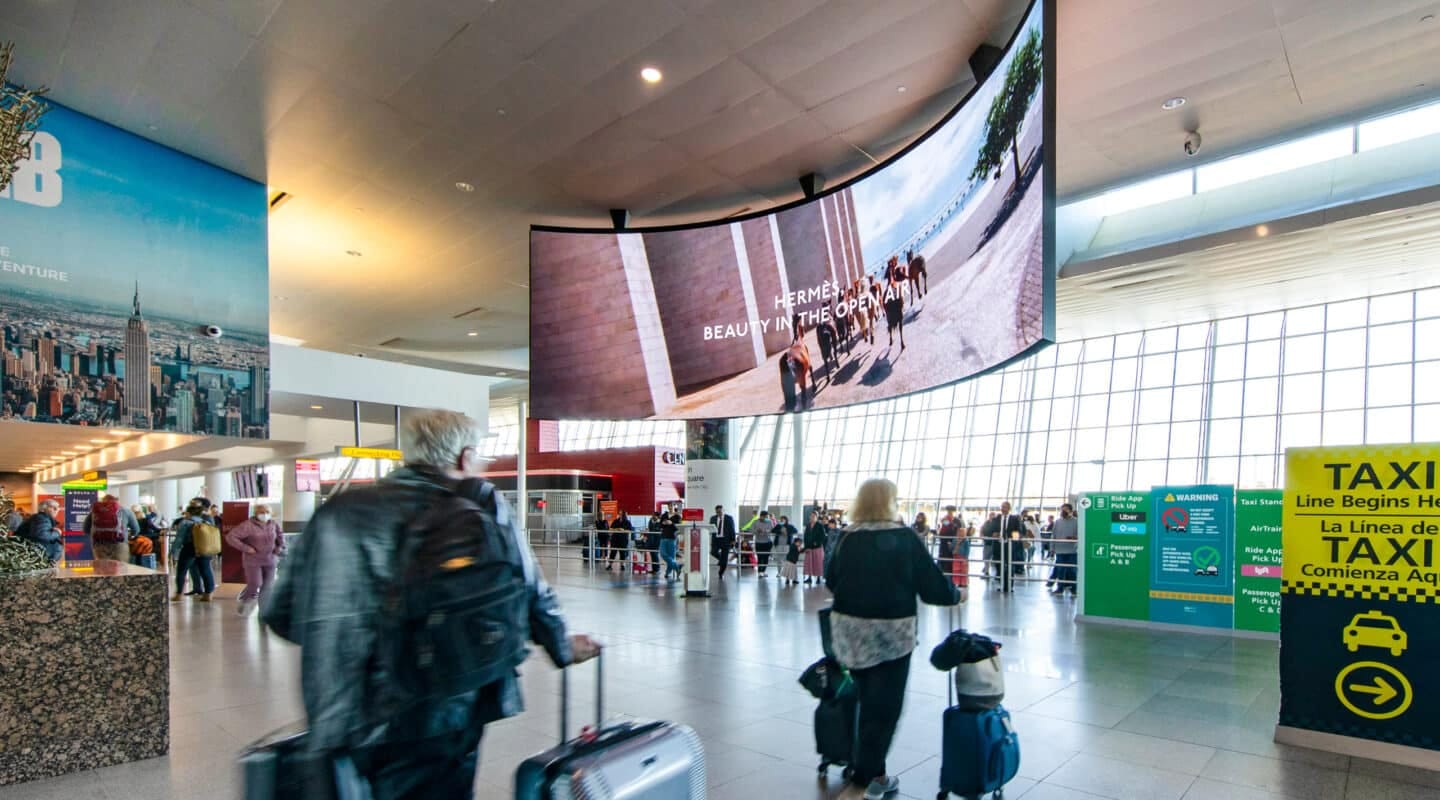
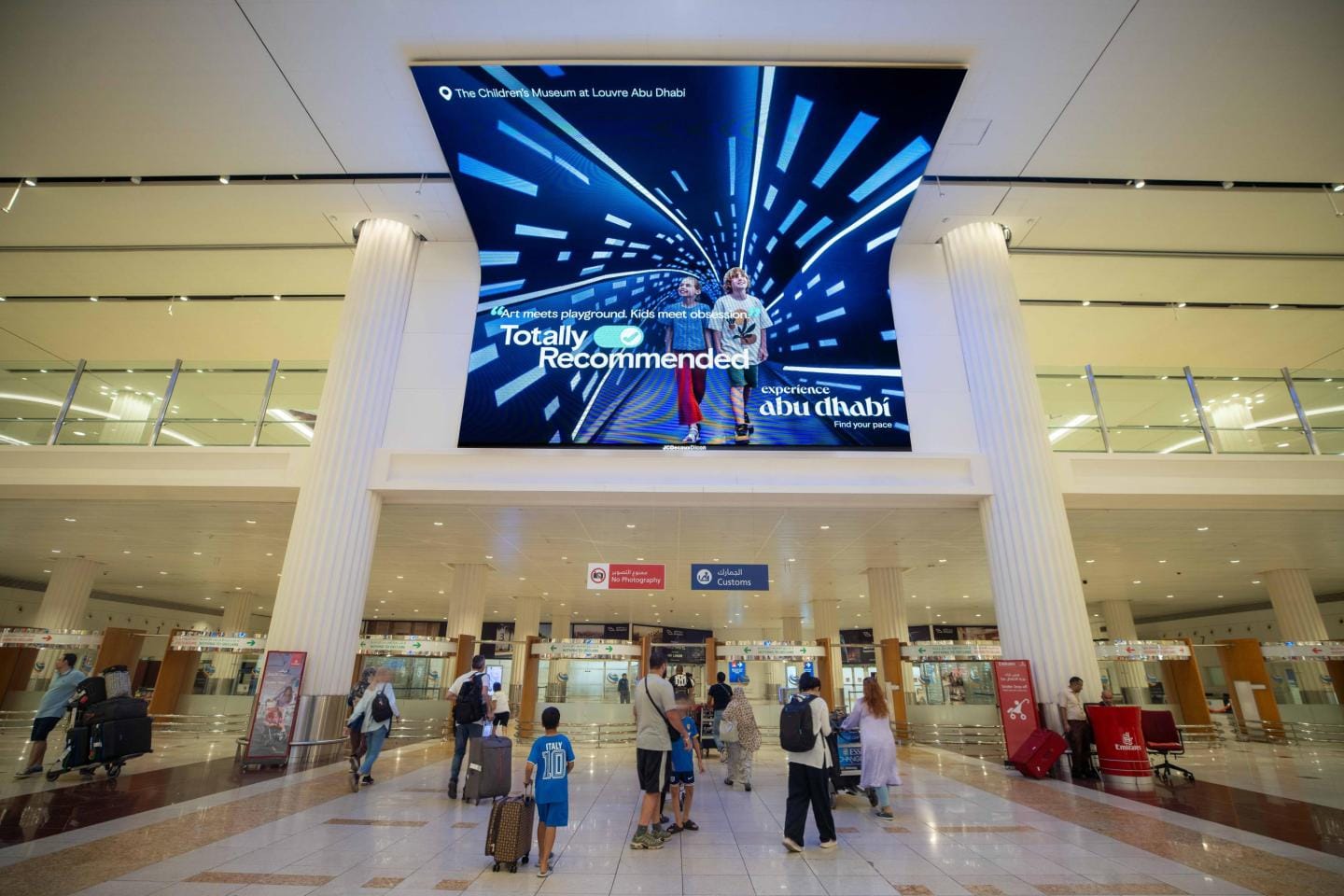
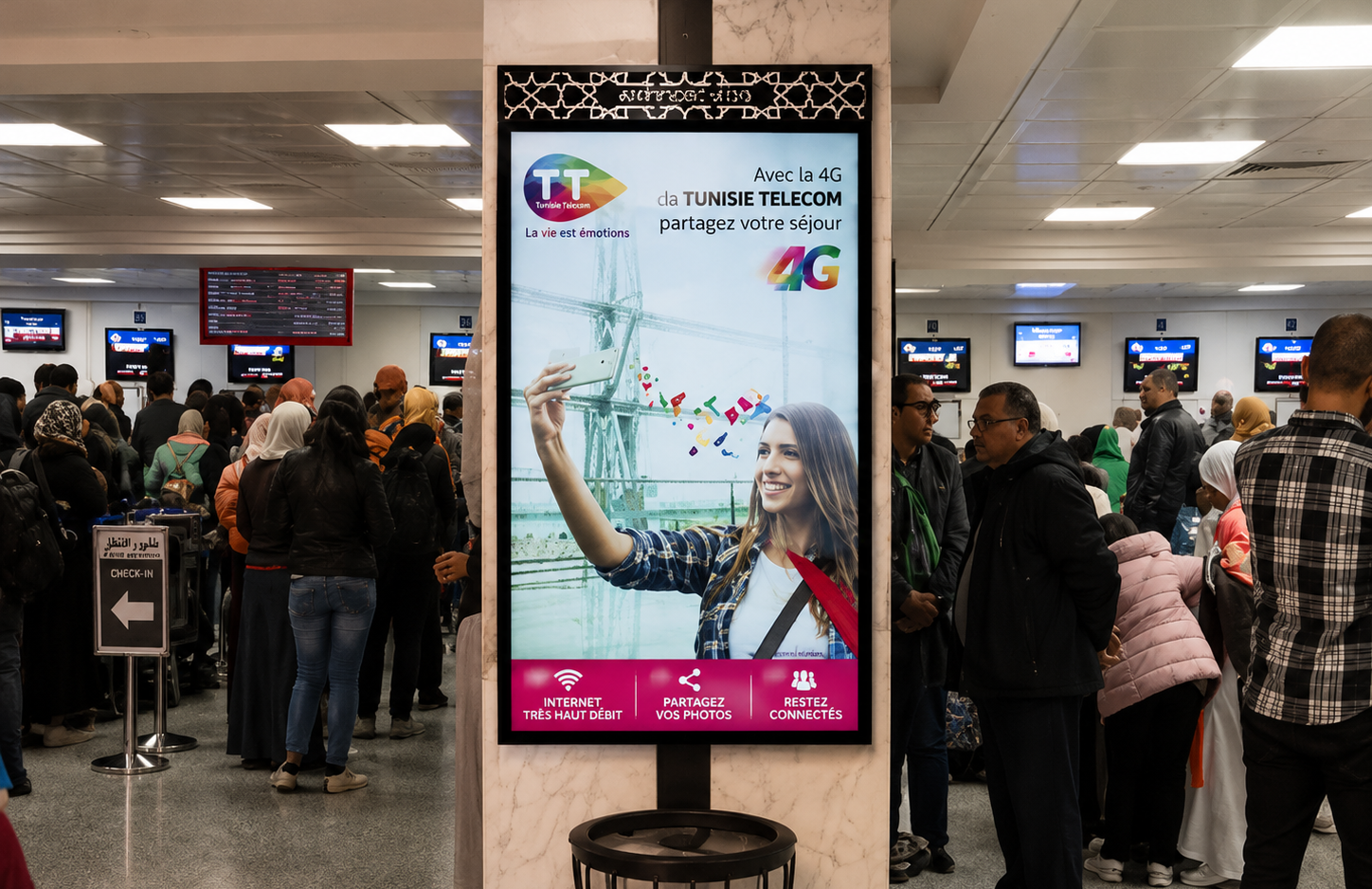
- Single-terminal, three-level layout with all traffic converging through shared arrival and departure paths. Advertising clutter is materially lower than at comparable European resort gateways, so standout potential per placement is high.
- Dwell time is extended by resort transfer scheduling, charter bunching and peak-season processing, with local advice acknowledging that customs and immigration can take longer than anticipated, especially during the July to August peak. Long dwell in a low-clutter environment is the single best condition for brand recall.
- The premium environment signal comes from destination equity: UNESCO status, five star resort density and an affluent Western European visitor base elevate brand association well above what the airport's passenger count alone would suggest.
- Masscom Global provides inventory access across the terminal's high-traffic convergence points, with placement precision matched to arrival intent versus departure intent, and execution timelines built around the April to October window and the May pilgrimage micro-peak.
Strategic Advertising Fit
Best Fit:
- Luxury hospitality and resort brands: Reaching an audience with proven willingness to pay resort rates, at the moment of arrival and of rebooking consideration.
- Duty free, fragrance and cosmetics: Departing European travellers with residual budget and gifting intent, the highest-converting behaviour in the terminal.
- Watches and jewellery: The May pilgrimage window and the Swiss, Belgian and Luxembourg corridors deliver a concentrated high-net-worth buyer.
- Banking, foreign exchange and remittance services: Diaspora and Libyan trade audiences with active cross-border financial needs and limited home-market alternatives.
- International real estate developers: A dual-market buyer already comfortable with cross-border property transactions in Europe, the UAE and Turkey.
- Residency, golden visa and citizenship advisory: Business owners and traders from Zarzis and Ben Gardane with genuine mobility requirements.
- International education and university brands: France, Germany, Italy, Canada and Gulf-bound students from a catchment that treats education as its largest planned spend.
- Telecoms, roaming and travel insurance: Universal need across every inbound and outbound segment, with immediate point-of-decision relevance.
Brand Alignment at a Glance:
| Category | Fit |
|---|---|
| Luxury hospitality and resorts | Exceptional |
| Duty free, fragrance and cosmetics | Exceptional |
| Banking, forex and remittance | Strong |
| International real estate and residency | Strong |
| International education | Strong |
| Watches and jewellery | Moderate to Strong, peaks in May |
| Automotive and industrial B2B | Moderate |
| Domestic mass-market FMCG | Poor fit |
Who Should Not Advertise Here:
- Domestic mass-market FMCG and low-ticket local retail: The audience is overwhelmingly international and transient, with no local purchase occasion in the terminal.
- Enterprise software, SaaS and corporate technology: DJE carries almost no corporate decision-maker traffic. Tunis and Enfidha are better matched for that audience.
- Regional healthcare and clinic advertising aimed at local residents: The catchment population is small and the passenger base is not local, making reach efficiency poor despite the Libyan medical travel niche.
- Heavy logistics and freight forwarding: Cargo throughput is minimal relative to passenger traffic, so freight-oriented B2B messaging has no meaningful audience here.
Event and Seasonality Analysis
- Event Strength: Medium to High. The El Ghriba pilgrimage and the Eid diaspora peaks are commercially significant, but volume remains driven mainly by season rather than event.
- Seasonality Strength: High. April to October carries the overwhelming majority of traffic, with a pronounced July and August apex.
- Traffic Pattern: Seasonal with a dual-peak overlay, combining the European summer surge and the May pilgrimage and Eid diaspora windows.
Strategic Implication:
Budget should be weighted heavily toward May through September, with contracts secured in the first quarter before peak inventory tightens. The highest ROI windows are July and August for reach efficiency, and May for value density, where a short high-net-worth pilgrimage audience justifies a dedicated luxury execution. Masscom Global structures DJE campaigns around exactly this rhythm, front-loading commitment during low-demand months to lock favourable rates, then concentrating creative weight and placement dominance into the windows that convert.

Poor Placement and Delays Affect Airport Campaigns
We help you move faster, access better inventory, and get it right now.
Talk to an ExpertFinal Strategic Verdict
Djerba Zarzis is the strongest audience-quality-per-passenger buy in Tunisia and one of the most efficient in North Africa. With 2.3 million passengers, 83 percent international traffic, a single terminal that no passenger can bypass, and a catchment producing 7.3 million tourism overnight stays a year, DJE concentrates affluent Western European leisure spend, euro-earning diaspora capital and Libyan cross-border liquidity into one commercial space with low advertising clutter. Luxury hospitality, duty free and fragrance, banking and remittance, and international real estate and residency brands will see the clearest returns, with the May pilgrimage window offering a rare short-burst high-net-worth opportunity. Government investment of TND 77 million, terminal and apron upgrades, new easyJet services from London and Manchester, and rising international hotel operator commitment all point to a market where rates are still favourable relative to where demand is heading. Masscom Global holds the inventory access, corridor-level audience intelligence and execution speed to secure dominant positions at DJE before that window closes.
About Masscom Global
Masscom Global is a premium international airport advertising and media buying agency operating across 140 countries. With deep expertise in airport OOH, premium publications, and high-net-worth audience targeting, Masscom helps brands reach the world's most valuable travellers at the moments that matter most. For advertising packages, media rates, and campaign planning at Djerba Zarzis International Airport and airports across the globe, contact Masscom Global today.
Frequently Asked Questions
How much does airport advertising cost at Djerba Zarzis International Airport?
Cost at DJE varies by format, terminal position, campaign duration and seasonal demand. Rates in the April to October peak sit materially above shoulder-season pricing because inventory is finite in a single-terminal airport. Arrival hall, departure concourse and gate-adjacent placements are priced differently based on dwell exposure. Masscom Global provides current rate cards and package options on request, including early-commitment pricing for peak-season positions.
Who are the passengers at Djerba Zarzis International Airport?
Roughly 83 percent of flights are international, dominated by French, German, Italian, Belgian, Swiss, British and Central European leisure travellers arriving on prepaid resort packages. The second major group is the Tunisian and North African diaspora resident in Europe, travelling for holidays, Eid and family occasions with euro-denominated income. The third is Libyan and southern Tunisian business, trade and medical travellers who use Djerba as their nearest functioning international gateway. Domestic traffic to Tunis and Enfidha is a small feeder layer.
Is Djerba Zarzis International Airport good for luxury brand advertising?
Yes, with correct timing. The audience carries genuine spending capacity, reinforced by UNESCO World Heritage status, a dense five star resort base and high-yield corridors from Switzerland, Luxembourg, Belgium and Germany. Duty free, fragrance, watches and jewellery perform well at departure, where residual budget and gifting intent peak. The May El Ghriba pilgrimage window brings a concentrated international high-net-worth audience that justifies a dedicated luxury execution. Lounge infrastructure is limited, so luxury brands should build presence in main concourse positions rather than segregated premium zones.
What is the best airport in Tunisia to reach HNWI audiences?
Tunis Carthage carries the largest corporate and government audience, and Enfidha carries high charter volume. Djerba Zarzis delivers the highest concentration of affluent Western European leisure travellers and diaspora capital per passenger, which makes it the strongest choice for luxury retail, hospitality, property and residency advertisers specifically. For a national HNWI strategy, Masscom Global typically recommends pairing Tunis Carthage for corporate reach with DJE for wealth and leisure reach.
What is the best time to advertise at Djerba Zarzis International Airport?
May through September delivers the strongest returns. July and August offer maximum reach as European school holidays and diaspora summer travel peak together. May carries the highest value density through the El Ghriba pilgrimage and the shoulder-season premium visitor. The Ramadan and Eid windows shift annually and are the key periods for remittance, telecoms and gifting categories. October offers lower-cost access to a still-affluent cultural and heritage audience. Contracts are best secured in the first quarter before peak inventory is committed.
Can international real estate developers advertise at Djerba Zarzis International Airport?
Yes, and it is one of the strongest category fits at DJE. This audience actively buys property in France, Italy, Germany, Belgium and Spain through existing family and residency ties, with growing interest in the UAE and Turkey for yield and ownership ease. The diaspora segment already operates across two markets financially, which shortens the education cycle for cross-border property offers. Positioning developer creative in the departure path toward the very markets this audience invests in is how Masscom Global structures these campaigns.
Which brands should not advertise at Djerba Zarzis International Airport?
Domestic mass-market FMCG and low-ticket local retail have no purchase occasion here, since the audience is international and transient. Enterprise software and corporate technology brands will find almost no decision-maker traffic and should focus on Tunis Carthage. Local resident healthcare and clinic advertising suffers from a small catchment population relative to passenger volume. Heavy logistics and freight forwarding brands have no audience given minimal cargo throughput.
How does Masscom Global help brands advertise at Djerba Zarzis International Airport?
Masscom Global delivers the full chain: corridor-level audience intelligence identifying which routes carry your specific buyer, inventory access across the terminal's highest-converting convergence points, campaign structuring built around the April to October season and the May pilgrimage micro-peak, creative guidance across French, German, English and Arabic, and end-to-end execution with performance reporting. We also activate both sides of the wealth corridor, reaching the inbound European consumer and the outbound North African investor within one campaign. Book a fifteen minute planning call to review current DJE availability and rates.