

Airport at a Glance
| Field | Detail |
|---|---|
| Airport | Palanga International Airport |
| IATA Code | PLQ |
| Country | Lithuania |
| City | Palanga |
| Annual Passengers | 448,400 (2025) |
| Primary Audience | Nordic and Baltic leisure HNI, coastal resort visitors, western Lithuania business owners and diaspora returnees |
| Peak Advertising Season | May to September, with a December to February secondary peak |
| Audience Tier | Tier 3 by volume, Tier 2 by audience quality |
| Best Fit Categories | Luxury real estate, private banking and wealth management, premium wellness and medical tourism, spirits and premium retail |
Lithuania's only coastal air gateway, where a small passenger base carries a disproportionately high concentration of resort wealth and Nordic capital.
Palanga is not a volume airport and should never be bought as one. It is a precision environment where 448,400 annual passengers move through two compact terminals with almost no advertising clutter, meaning a single well-placed brand owns the visual field rather than competing for it. The airport grew 18.7 percent in 2025, the fastest growth rate in the Lithuanian Airports network, and passenger flows continued to set records through the first half of 2026. Every passenger here has made a deliberate choice to fly to a resort coastline rather than a capital city, which filters the audience toward discretionary spenders rather than transit traffic. For advertisers, that filtering is the entire commercial argument.
What makes Palanga matter is the corridor it sits on. It is the direct air link between Lithuania's Baltic resort belt and the Nordic wealth markets of Norway, Denmark and Sweden, with airBaltic feeding Riga and Amsterdam into onward long-haul networks. The catchment includes Klaipėda, Lithuania's only seaport and its most concentrated pool of logistics, shipping and export wealth, plus the country's densest cluster of luxury resort property. Roughly 570,000 people sit within the immediate catchment, and the summer population of the coastal strip multiplies well beyond that. Masscom Global treats PLQ as a wealth-density buy, not a reach buy.
Advertising Value Snapshot
- Passenger scale: 448,400 passengers in 2025, up 18.7 percent year on year, following 378,000 in 2024 which was itself a 23 percent rise. Two consecutive years of double-digit growth with momentum sustained into 2026.
- Traveller type: Nordic and Baltic leisure travellers with high discretionary spend, western Lithuanian business and export owners, and returning diaspora from Norway, the UK and Ireland.
- Airport classification: Tier 3 by volume, Tier 2 by audience value. Small footprint, unusually affluent and intent-driven passenger mix.
- Commercial positioning: Lithuania's resort and coastal gateway, the arrival point for the country's premium spa, wellness and seaside property economy.
- Wealth corridor signal: Sits on the Klaipėda port and Nordic capital corridor, where shipping, export logistics and Scandinavian leisure money converge on a 60 kilometre coastal strip.
- Advertising opportunity: Low inventory density means share of voice at PLQ is achievable at a fraction of what a capital-city airport demands. Masscom Global secures placement across both the South and North terminals, where all arrivals and departures funnel through a small number of unavoidable sightlines. Brands can hold near-exclusive category presence across a full resort season.
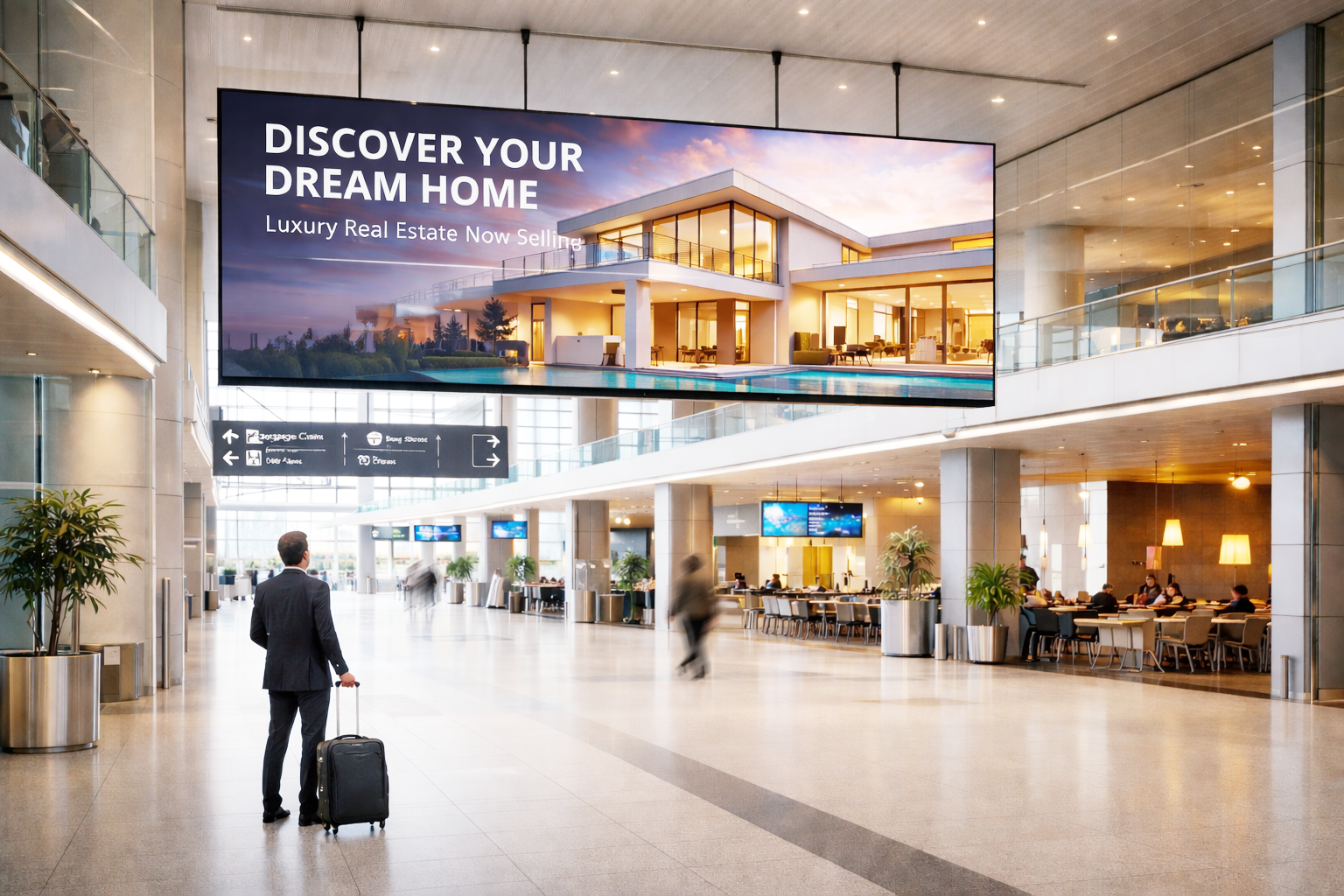
Airport Advertising is Complex to Get Right
We help you execute faster, with proven results and local insight most planners lack starting now.
Talk to an ExpertCatchment Area and Economic Drivers
Top 10 Cities within 150 km — Marketer Intelligence:
- Klaipėda: Lithuania's port capital and the single richest commercial pool in the catchment. Shipping, freight forwarding, LNG and ship repair owners here are the highest-value B2B audience at PLQ and the primary buyers of second property and offshore investment products.
- Palanga: Pure discretionary spend territory. Resort hotel, spa and restaurant ownership concentrated in a small number of families, plus a seasonal influx of high-spend visitors who arrive already in purchase mode.
- Kretinga: Furniture and light manufacturing base supplying export markets. Produces owner-operator and mid-market management audiences receptive to automotive, banking and business services messaging.
- Neringa and the Curonian Spit: The highest property values per square metre in Lithuania. A UNESCO-protected luxury enclave whose owners are the clearest luxury real estate and wealth management prospects in the country.
- Gargždai: Commuter and industrial satellite of Klaipėda. Dual-income households with rising disposable spend, a strong fit for consumer finance, education and family travel categories.
- Plungė: Agricultural processing and food export centre. Generates land-holding wealth that converts into conservative investment products and premium vehicle purchases.
- Telšiai: Regional administrative and education hub for Samogitia. Produces professional and public-sector audiences plus a steady outbound student flow.
- Mažeikiai: Home to Lithuania's oil refining and petrochemical activity. Concentrated corporate travel budgets and high average household income relative to the region.
- Šiauliai: Northern Lithuania's fourth-largest city with defence, aviation logistics and manufacturing employment. Feeds both corporate and diaspora traffic into PLQ.
- Liepāja, Latvia: Cross-border catchment less than two hours away. Latvian port and industrial travellers use PLQ for Nordic connections, adding a second national audience to any campaign here.
NRI and Diaspora Intelligence:
Lithuania has one of the highest per-capita emigrant populations in the European Union, with the largest concentrations in the UK, Norway, Ireland and Germany. Palanga's route map maps directly onto that diaspora, with Oslo, Bergen, London Stansted, Dublin and Copenhagen forming the backbone of the network. These travellers return with foreign-earned income and a defined agenda: family property purchases, land transactions, private schooling decisions and healthcare. They arrive with a compressed decision window, typically one to three weeks, which makes airport contact the earliest and most influential touchpoint in their spending cycle. Remittance and repatriated-capital flows from Norway and the UK are a persistent driver of coastal property demand.
Economic Importance:
The catchment economy rests on four pillars: the Klaipėda seaport and its free economic zone, oil refining and petrochemicals at Mažeikiai, export manufacturing across Samogitia, and the coastal resort and wellness economy. The port creates a compact, high-authority B2B audience of owners and directors. The resort economy creates a seasonal high-spend consumer audience with visible willingness to pay premiums. For advertisers, this means PLQ delivers two commercially distinct audiences through one small terminal footprint, and the seasonal calendar tells you exactly which one you are buying.
Business and Industrial Ecosystem
- Klaipėda Seaport and Free Economic Zone: Shipping, logistics and manufacturing leadership. Produces senior decision-makers with international mobility and corporate purchase authority.
- Oil refining and petrochemicals: High-value industrial corporate travel with concentrated budgets and frequent Nordic and Polish movement.
- Export manufacturing in furniture, plastics and food processing: Owner-entrepreneur audience, the most receptive segment for business banking, wealth advisory and premium automotive.
- Resort, spa and hospitality sector: Property-owning families and hospitality investors, a direct audience for construction, interiors, hospitality technology and real estate development brands.
Passenger Intent — Business Segment:
Business travellers at PLQ are predominantly owners, directors and senior managers rather than junior corporate staff, because the airport's limited schedule means only those with control over their own diaries choose it. They fly to Copenhagen, Riga and Amsterdam for onward connections, and to Oslo for Nordic partnership and trade activity. Their intent is transactional and time-poor, which favours high-clarity messaging from banking, wealth management, business services, logistics technology and premium automotive brands.
Strategic Insight:
The business audience at PLQ carries unusually high average decision authority per passenger. In a capital-city airport, a brand pays for reach and absorbs a large share of low-authority travellers. At Palanga, the schedule itself does the qualification, and a campaign reaching a fraction of the volume can reach a comparable number of genuine decision-makers. This is the environment where B2B and financial brands achieve efficiency that volume airports cannot match.
Tourism and Premium Travel Drivers
- Palanga resort and Basanavičius promenade: Lithuania's flagship seaside destination with the highest concentration of premium hotels and spas in the country. Arrivals have pre-committed to a holiday budget and are receptive to wellness, hospitality and premium retail messaging.
- Curonian Spit UNESCO World Heritage site and Nida: The country's most exclusive coastal destination. Draws domestic and Nordic HNI visitors and second-home owners, the clearest luxury and real estate audience at the airport.
- Druskininkai and Baltic spa and wellness circuit: Medical and wellness tourism drawing Nordic, German and Israeli visitors seeking cost-advantaged premium treatment. High fit for healthcare, dental, aesthetics and insurance categories.
- Klaipėda Old Town, Sea Festival and the Baltic cruise calling: Cultural and event tourism that extends the season either side of summer and adds international nationality diversity to the passenger mix.
Passenger Intent — Tourism Segment:
Tourists arriving at PLQ have already spent on the two largest line items, flights and accommodation, before they reach the terminal. What remains uncommitted is discretionary: dining, spa treatments, retail, excursions, duty-free spirits and, for a meaningful minority, property viewings. Arrival is the single most receptive moment in the trip because the itinerary is still fluid. Wellness, premium spirits, luxury retail, resort real estate and financial services intercepting outbound departures all perform in this window.
Travel Patterns and Seasonality
Peak seasons:
- June to August: Absolute peak. The Baltic summer resort season drives maximum volume and maximum discretionary spend. June 2026 alone delivered close to 39,000 passengers.
- May and September: Shoulder months with strong wellness and business mix, softer competition and excellent value for advertisers seeking season-length presence.
- December to February: Secondary peak driven by diaspora returning for Christmas and New Year, plus Tenerife charter departures serving the winter-sun market.
- Late March: Summer aviation season launch, when route restarts and frequency increases reset the passenger mix.
Event-Driven Movement:
- Klaipėda Sea Festival (July): The largest annual event in the region, drawing hundreds of thousands including significant Nordic and Latvian visitors. Peak arrival window for consumer and beverage brands.
- Palanga summer resort season (June to August): Continuous rather than single-date, with a sustained influx of high-spend domestic and Nordic visitors. The core window for luxury, wellness and hospitality.
- Christmas and New Year diaspora return (December to early January): Highest-value emotional and financial decision window of the year. Property, banking, education and insurance brands should own this period.
- Easter and spring school holidays (March to April): Family and diaspora travel surge coinciding with the summer season launch. Strong for family finance, retail and education categories.
- Curonian Spit and Nida cultural season (June to September): Concentrated ultra-premium audience movement. Small in volume, exceptional in wealth profile.
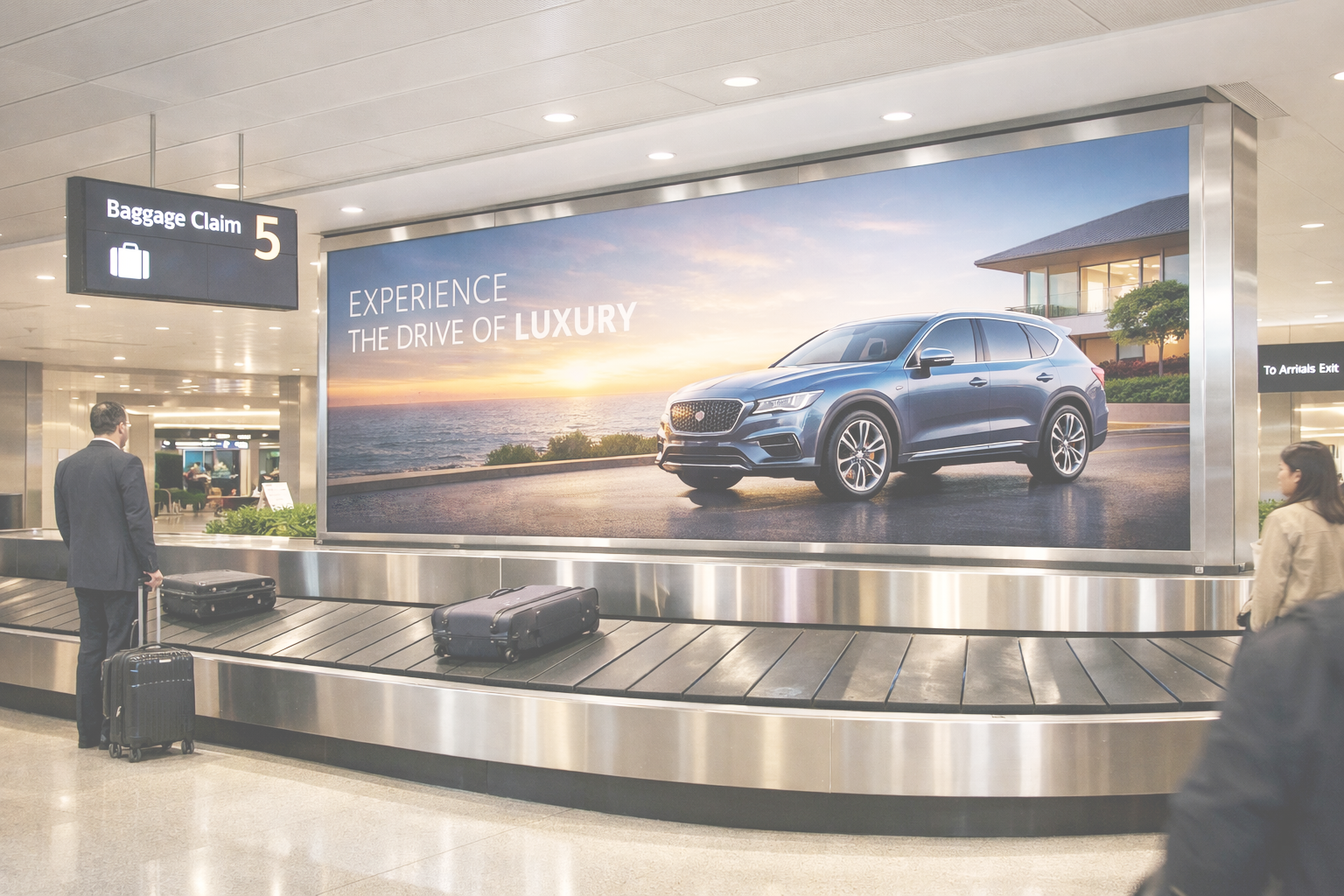
It’s Not Just Where You Advertise - It’s How Fast You Execute
We combine local insight with fast rollout to deliver results for you, now.
Talk to an ExpertAudience and Cultural Intelligence
Top 2 Languages:
- Lithuanian: The primary language of the resident catchment, the diaspora returnee segment and the local business ownership audience. Lithuanian-language creative signals credibility and local commitment, which matters disproportionately for financial, property and healthcare categories.
- English: The functional language of the inbound Nordic, UK and Irish traveller and of all business traffic connecting through Copenhagen, Riga and Amsterdam. English-first creative reaches the highest-spend inbound segment without dilution.
Russian retains partial comprehension among older residents and some cross-border Latvian traffic, but it is not a recommended primary creative language in this market.
Major Traveller Nationalities:
Lithuanian nationals dominate the passenger base, split between resident coastal travellers and diaspora returning from Norway, the UK, Ireland and Germany. Norwegians and Danes form the largest inbound foreign contingent, drawn by direct Oslo, Bergen and Copenhagen services and by the cost-to-quality advantage of the Baltic resort and wellness offer. Latvians from the Liepāja corridor use PLQ as a nearer Nordic gateway. For campaign planning, this means a bilingual Lithuanian and English creative approach with Scandinavian visual coding will cover the commercially significant majority of the audience.
Religion — Advertiser Intelligence:
- Roman Catholic (approximately 74 percent): The dominant cultural frame. Christmas, Easter and All Souls Day in early November are the three fixed points of the annual travel calendar, each triggering diaspora return and family gathering. These are the periods when family-level financial decisions get made, which makes them the highest-conversion windows for property, insurance, education and banking. Gifting and premium spirits spend concentrates sharply around Christmas.
- Orthodox Christian (approximately 4 percent): A smaller but distinct community with a January Christmas observance, extending the winter gifting and travel window beyond the Catholic calendar. Relevant for brands wanting a longer December to January activation.
- Non-religious and other (approximately 20 percent): A large secular segment, particularly among younger urban and Klaipėda-based professionals. This group responds to value, design and lifestyle positioning rather than tradition-led messaging, and is the core audience for technology, automotive and travel categories.
Behavioral Insight:
This is a financially conservative audience with a strong preference for tangible assets. Property, land and gold carry more persuasive weight than abstract financial products, and a Lithuanian buyer will almost always want to see, visit and verify before committing. Diaspora returnees behave differently, arriving with foreign-currency confidence and a compressed timeline that makes them decisive. Messaging that works here is concrete and evidence-led: specific yields, specific locations, specific timelines. Aspirational language without proof underperforms badly in this market.
Outbound Wealth and Investment Intelligence
The outbound passenger at PLQ is unusual because two different wealth profiles share the same terminal. The first is Klaipėda port and export wealth, internationally experienced and actively diversifying capital outside Lithuania. The second is the diaspora earner, moving money in the opposite direction but making purchase decisions on both sides of the corridor. Both groups deploy capital abroad, and both pass through a terminal small enough that a single brand can reach them consistently across an entire season.
Outbound Real Estate Investment:
Lithuanian HNI capital moves primarily into Spain, with the Costa del Sol, Alicante and the Canary Islands the dominant targets, a pattern reinforced by the direct seasonal Tenerife service from PLQ itself. Cyprus and Greece attract yield-focused buyers, while Dubai has become the fastest-growing destination for Baltic capital seeking zero personal income tax and freehold ownership. Poland and Germany draw buy-to-rent capital from the more conservative end of the segment. International developers targeting Baltic buyers find PLQ efficient because the audience arrives at the exact moment they are thinking about coastal property, and Masscom Global positions developer messaging at that moment of receptivity.
Outbound Education Investment:
Students from this catchment migrate predominantly to the UK, Germany, the Netherlands, Denmark and Poland, with the Netherlands and Denmark gaining ground on the UK because of English-taught programmes and lower fees. Family spending on education here is prioritised above almost every other discretionary category, and decisions are made jointly across two generations, often during the Christmas return window. International universities, boarding schools and education consultancies reach both the funding parent and the departing student in a single terminal environment, which is rare at this scale.
Outbound Wealth Migration and Residency:
Baltic HNI interest concentrates on Portugal's residency routes, Greece's Golden Visa, and Cyprus and Malta residency programmes, with UAE long-term residency now competing strongly on tax grounds. Second-residency demand in this catchment is driven by security diversification as much as by lifestyle, given Lithuania's geopolitical position, which makes the audience unusually motivated and unusually fast-moving compared with equivalent segments elsewhere in Europe. Programme administrators and immigration advisory firms find high intent here.
Strategic Implication for Advertisers:
International brands should treat PLQ as an inbound and outbound buy simultaneously: Nordic visitors arriving with high discretionary spend, and Baltic capital departing in search of property, education and residency. The two flows share the same physical inventory, meaning one campaign can address both. Masscom Global activates on both sides of this corridor at once, aligning creative and placement to arrival and departure sightlines so a single buy works twice.
Airport Infrastructure and Premium Indicators
Terminals:
- South Terminal: The original terminal, built in the 1970s and renovated in the late 1990s, handling arrivals and departures. Compact footprint means high passenger concentration through a small number of sightlines.
- North Terminal: Opened in 2007, spanning 2,000 square metres, purpose-built for international arrivals and departures and carrying the seasonal tourist peak. The primary environment for reaching inbound Nordic and UK traffic.
- Neither terminal uses jet bridges. Passengers walk to and from aircraft, creating additional apron-side and walkway exposure not available at larger airports.
Premium Indicators:
- Approximately 750,000 euros was invested in terminal modernisation in 2025, upgrading passenger amenities and processing, alongside self-service check-in and digital boarding deployment.
- Established FBO and private aviation handling with tailored VIP services. Frequently chartered types in 2025 included the Bombardier Challenger 300, Challenger 604 and Embraer Phenom 300, a fleet profile that confirms genuine HNI and corporate private movement.
- A 2,280 metre runway supporting light and mid-size jet operations, positioning PLQ as the practical private aviation entry point for the Lithuanian coast.
- Immediate proximity to Palanga and Neringa, the two highest-value resort property markets in Lithuania, with premium spa hotel inventory within a short drive.
- New advanced drone detection and airspace monitoring infrastructure installed as part of a network-wide security upgrade, a signal of state investment confidence in the airport's trajectory.
Forward-Looking Signal:
Palanga is on a clear upward path. Wizz Air returned to the airport with Oslo services rising to three weekly from March 2026, airBaltic is running over 20 routes across the Lithuanian network including Riga and Amsterdam from PLQ, SAS continues Copenhagen with codeshare feed, and Turkey and Egypt charter programmes launched to strong demand are being extended. Lithuanian Airports is projecting more than 7.5 million network passengers, with PLQ growing faster in percentage terms than either Vilnius or Kaunas. Advertising costs at a small airport lag its growth curve, and that gap is where the value sits right now. Masscom Global advises clients to secure position and rate at PLQ in the current cycle, before route expansion and rising volume reset the pricing baseline.
Airline and Route Intelligence
Top Airlines:
airBaltic, SAS Scandinavian Airlines, Ryanair, Norwegian and Norwegian Air Sweden, Wizz Air, plus seasonal charter operators serving Turkey and Egypt.
Key International Routes:
- Copenhagen: up to three daily services with SAS, including Singapore Airlines codeshare, the airport's principal intercontinental feed
- Riga: daily airBaltic service opening onward access to a network of roughly 80 destinations
- Oslo Gardermoen: six weekly across Norwegian and Wizz Air, rising to thrice-weekly Wizz Air from March 2026
- London Stansted: seasonal Ryanair service, May to October
- Amsterdam: two weekly with airBaltic
- Dublin: two weekly with Ryanair
- Bergen: two weekly with Norwegian Air Sweden from March 2026
- Tenerife: seasonal airBaltic service, October to March, the longest route at 4,299 kilometres
- Seasonal charters to Turkey and Egypt
Domestic Connectivity:
There are currently no scheduled domestic flights at PLQ. All traffic is international, which means every passenger in the terminal is a cross-border traveller with either foreign currency exposure or an international agenda.
Wealth Corridor Signal:
The route map is a precise map of where this audience's money comes from and goes to. Copenhagen and Riga are the wealth transfer and business corridors, carrying decision-makers to global onward networks and justifying premium financial and B2B placement. Oslo, Bergen, London Stansted and Dublin are the diaspora income corridors, carrying repatriated earnings that convert into property and education spend. Tenerife and the Turkey and Egypt charters are pure discretionary leisure, confirming a resident base with money to spend outside necessity. A campaign here can be timed by corridor: business creative on the Copenhagen and Riga cycles, property and education creative on the Nordic and Irish diaspora cycles.
Media Environment at the Airport
- Two compact terminals with a low advertising density compared to Vilnius, Riga or Tallinn. Standout potential is exceptional because there is minimal competing visual noise, and a single brand can realistically dominate the passenger journey rather than share it.
- Dwell time is elevated by the airport's operating pattern. Walk-boarding, a single small security channel and the habit of early arrival at regional airports mean passengers spend extended, unhurried time in a confined space with few distractions. Attention here is materially higher per impression than at a large hub.
- The premium environment is set by geography rather than architecture. This is the arrival point for Lithuania's most expensive coastline and its most exclusive resort enclaves, and brands placed here inherit that association. Private aviation and FBO activity reinforce the signal.
- Masscom Global provides inventory access across both the South and North terminals with placement precision at arrival halls, baggage reclaim, departures and walkway sightlines. Our capability extends to season-length exclusivity structures that are simply not available at high-clutter airports, plus coordinated activation across Vilnius and Kaunas for advertisers who want national Lithuanian coverage from a single plan.
Strategic Advertising Fit
Best Fit:
- International and resort real estate developers: Spanish, Cypriot, Greek and UAE developers reach an audience actively deploying capital into coastal property, at the precise moment they are thinking about coastal property.
- Private banking and wealth management: Klaipėda port and export wealth plus diaspora repatriated income create concentrated demand for cross-border wealth structuring.
- Premium wellness, medical and dental tourism: The Baltic spa and wellness corridor draws Nordic and German visitors specifically for cost-advantaged premium treatment. Inbound arrivals are pre-qualified.
- Premium spirits and duty-free retail: A Catholic gifting calendar plus high summer discretionary spend plus international-only traffic make this a reliable performer, particularly November to January.
- Residency and citizenship-by-investment programmes: Unusually high motivation in this catchment, combining lifestyle and security diversification.
- International universities and education consultancies: Reaches funding parent and departing student together, with peak conversion in the Christmas return window.
- Premium automotive: Owner-entrepreneur density in Klaipėda, Mažeikiai and Kretinga supports high-value vehicle messaging.
- Logistics, shipping and B2B industrial services: The port catchment delivers senior decision authority at a concentration disproportionate to passenger volume.
Brand Alignment at a Glance:
| Category | Fit |
|---|---|
| International resort real estate | Exceptional |
| Private banking and wealth management | Exceptional |
| Premium wellness and medical tourism | Strong |
| Premium spirits and duty-free retail | Strong |
| Residency and investment migration | Strong |
| International education | Moderate |
| Premium automotive | Moderate |
| Mass-market FMCG | Poor fit |
Who Should Not Advertise Here:
- Mass-market FMCG and everyday consumer goods: The passenger volume is too small to deliver the reach these categories require, and the audience is not in a routine-purchase mindset at a resort airport.
- Long-haul intercontinental carriers and global hub airlines: There is no long-haul traffic base here and no domestic feed, so the message has no audience to convert.
- Enterprise software and large-corporate B2B technology: The catchment is dominated by owner-operators and mid-size industrial firms rather than large corporate IT buying committees, so the decision structure the category needs does not exist in this terminal.
Event and Seasonality Analysis
- Event Strength: Medium
- Seasonality Strength: High
- Traffic Pattern: Dual-Peak, with a dominant summer peak and a secondary winter diaspora peak
Strategic Implication:
Budget should not be spread evenly at PLQ, because doing so wastes money on a genuinely quiet spring and autumn. Allocate the majority to June through August where volume and discretionary spend peak together, and reserve a defined second tranche for late November through early January where diaspora return drives the year's highest-value financial and property decisions. Masscom Global structures PLQ campaigns around this dual-peak rhythm, front-loading share of voice into the two windows that convert and using shoulder months for lower-cost brand maintenance rather than full-weight activation.

Poor Placement and Delays Affect Airport Campaigns
We help you move faster, access better inventory, and get it right now.
Talk to an ExpertFinal Strategic Verdict
Palanga International Airport is the most efficient wealth-density buy in the Baltic states for advertisers who understand that reach and value are not the same thing. It delivers 448,400 international-only passengers growing at 18.7 percent a year through two small terminals with minimal advertising competition, meaning a brand can own the category outright at a cost no capital-city airport will match. The audience is precisely the one premium advertisers pay heavily to reach elsewhere: Klaipėda port and export owners with real purchase authority, Nordic leisure travellers with high discretionary spend, and diaspora returnees making property, education and residency decisions inside a compressed two-week window. The dual-peak calendar tells you exactly when to spend, the route map tells you exactly which corridor to speak to, and the current pricing has not yet caught up to two consecutive years of double-digit growth. International real estate developers, private banks, wellness providers and residency programmes should be here now, and Masscom Global has the inventory access, terminal-level placement precision and Baltic market intelligence to put them in position before that pricing window closes.
About Masscom Global
Masscom Global is a premium international airport advertising and media buying agency operating across 140 countries. With deep expertise in airport OOH, premium publications, and high-net-worth audience targeting, Masscom helps brands reach the world's most valuable travellers at the moments that matter most. For advertising packages, media rates, and campaign planning at Palanga International Airport and airports across the globe, contact Masscom Global today.
Frequently Asked Questions
How much does airport advertising cost at Palanga International Airport?
Cost at PLQ varies by format, terminal position, campaign duration and seasonal demand, with summer season rates and December diaspora-peak rates commanding a premium over shoulder months. Because inventory volume at a two-terminal airport is limited, pricing is also driven by availability at the time of booking rather than by a fixed rate card. Contact Masscom Global for current rates and availability at PLQ.
Who are the passengers at Palanga International Airport?
PLQ carries 448,400 passengers annually, all on international routes. The mix is Lithuanian residents and diaspora returning from Norway, the UK, Ireland and Germany, inbound Nordic leisure and wellness travellers from Oslo, Bergen and Copenhagen, Klaipėda port and export business travellers connecting via Riga and Copenhagen, and cross-border Latvian traffic from the Liepāja corridor.
Is Palanga International Airport good for luxury brand advertising?
Yes, for the right kind of luxury. PLQ is the gateway to Palanga and the Curonian Spit, the two most expensive property markets in Lithuania, and it handles regular private jet traffic including Challenger and Phenom types. Luxury real estate, private banking, premium wellness and high-end spirits align strongly. Global fashion and watch brands seeking scale will find the volume too small, though brands seeking category exclusivity in a Baltic HNI environment will find it unusually achievable here.
What is the best airport in Lithuania to reach HNWI audiences?
Vilnius delivers the highest absolute volume of HNI passengers as the capital gateway. Palanga delivers the highest concentration of resort, coastal property and Nordic-linked wealth per passenger, with far less advertising competition. Advertisers targeting broad Lithuanian affluence should start at Vilnius. Advertisers targeting coastal property, wellness and Nordic HNI flows should start at PLQ, and Masscom Global can structure both in one plan.
What is the best time to advertise at Palanga International Airport?
Two windows matter. June to August is the summer resort peak, delivering maximum volume and the highest discretionary spend, with July amplified by the Klaipėda Sea Festival. Late November to early January is the diaspora return peak, when Christmas and New Year travel coincides with family-level property, education and financial decisions. May, September and late March are effective lower-cost shoulder periods as the summer aviation season opens and closes.
Can international real estate developers advertise at Palanga International Airport?
This is one of the strongest use cases at PLQ. The catchment's HNI audience buys actively in Spain including the Costa del Sol and the Canary Islands, in Cyprus and Greece for yield, and increasingly in Dubai for tax and freehold advantages. The airport's own seasonal Tenerife route confirms the Spanish orientation. Reaching this audience at a coastal airport, when property is already front of mind, gives developer messaging unusual relevance, and Masscom Global places it accordingly.
Which brands should not advertise at Palanga International Airport?
Mass-market FMCG and everyday consumer goods lack the volume they need and face an audience not in routine-purchase mode. Long-haul carriers and global hub airlines have no relevant traffic base, since PLQ has no long-haul or domestic flights. Enterprise software and large-corporate B2B technology miss because the catchment is built on owner-operators and mid-size industrial firms rather than large corporate buying committees.
How does Masscom Global help brands advertise at Palanga International Airport?
Masscom Global delivers the full chain: catchment and audience intelligence specific to the Klaipėda and Baltic coast corridor, inventory access across both the South and North terminals, placement precision at the arrival, reclaim, departure and walkway sightlines that every passenger passes, seasonal timing built around the dual-peak calendar, and post-campaign performance reporting. We also coordinate PLQ with Vilnius and Kaunas for national coverage, and with destination-market airports for advertisers working both ends of the wealth corridor. Book a 15 minute planning call to review current PLQ availability and rates.