

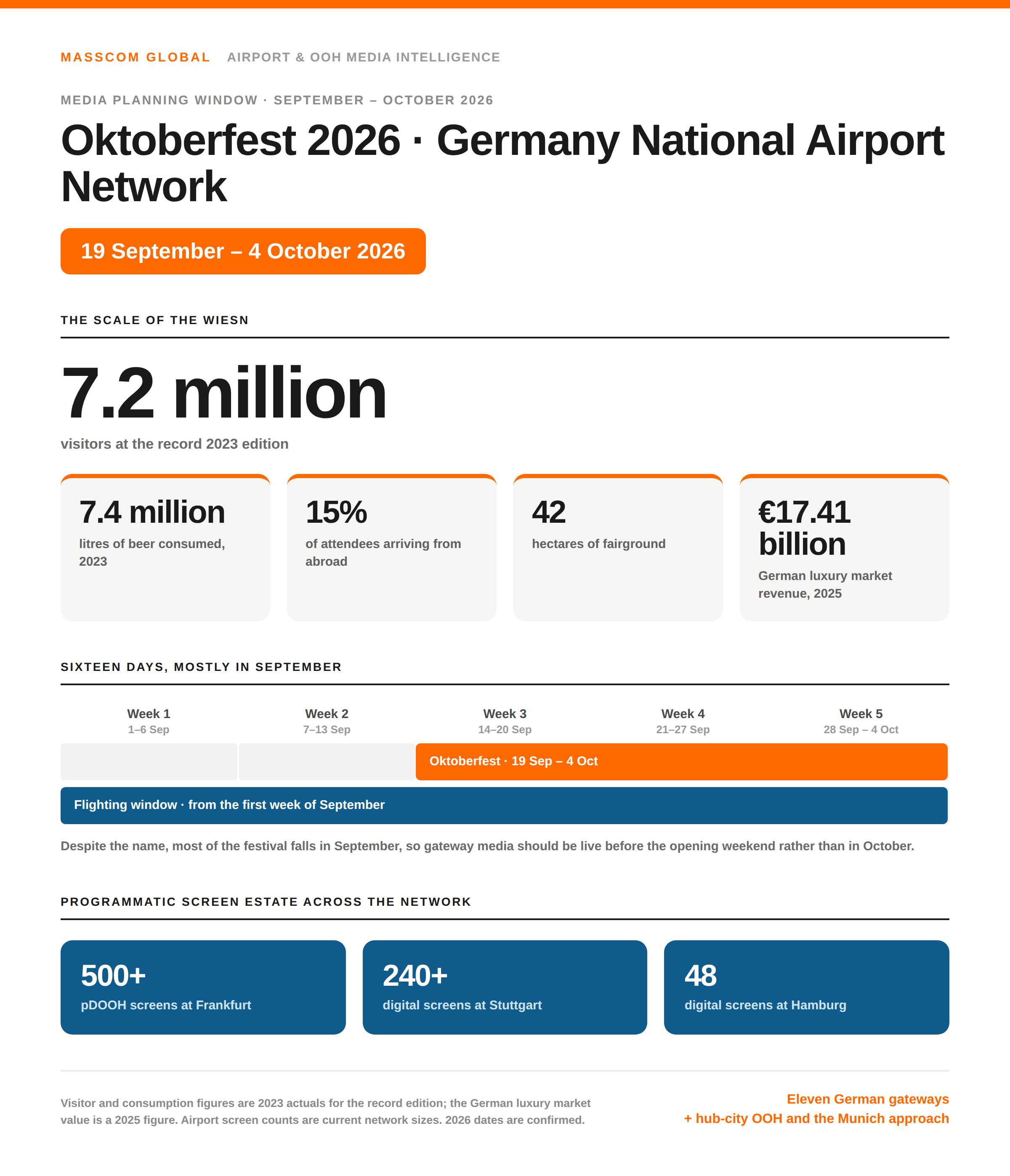
Oktoberfest draws around seven million visitors each year, a record 7.2 million in 2023, and roughly 15% arrive from abroad, most of them never landing at Munich Airport at all. The 190th edition runs from 19 September to 4 October 2026 on the Theresienwiese in Munich, opening at noon on Saturday 19 September with the tapping of the first barrel, across a 42-hectare fairground where visitors consume approximately 7.4 million litres of beer.
This post is deliberately not about Munich. Roughly 15% of attendees arrive from abroad: the EU, North America, Oceania and East Asia, and most of that volume does not land at Munich Airport. It lands at Frankfurt, Düsseldorf, Berlin Brandenburg and Hamburg, then completes the journey by ICE rail or connecting flight. Oktoberfest is a national traffic event with a single-city terminus, and the inbound premium audience is capturable across eleven German gateways before anyone reaches the Theresienwiese.
Why Airport & City Advertising Works During Oktoberfest


Germany's luxury market was projected at €17.41 billion in 2025, growing 1.90% annually, and the country ranks among the top markets globally for high-net-worth individuals: more than one million high-net-worth consumers, concentrated in the four cities that anchor this network: Frankfurt, Munich, Hamburg and Berlin.
A national programme running 19 September to 4 October reaches three groups at once: international visitors inbound for the festival, domestic travellers moving between hubs and Munich, and the weekday flow of executives and financiers who use Frankfurt and Düsseldorf year-round. The fortnight is also a corporate entertainment calendar (reserved tent tables, board offsites abutting the weekend, inbound investor visits) and those travellers arrive on long-haul premium cabins into Frankfurt and Düsseldorf, not on charters into Munich.
The argument is efficiency. A Munich-only buy reaches the festival. A national buy reaches the festival and Europe's largest financial gateway in its strongest autumn weeks, for one planning cycle and one run of creative.
Key Benefits of Airport & City Advertising During Oktoberfest
Reach a qualified, high-spend audience
Inbound traffic from North America, East Asia and Oceania is long-haul discretionary travel: a self-selecting premium cohort. Routed through Frankfurt and Düsseldorf, it passes unavoidable arrival, immigration and reclaim sequences where dwell is measured in tens of minutes.
Elevate your brand positioning
Frankfurt sits 12 kilometres from the European Central Bank, Deutsche Bank and Germany's financial core. Appearing across its premium terminals in the autumn corporate season places a brand in the same environment as global financial institutions and flag carriers, with no festival sponsorship commitment and no association with the beer category.
Generate real business opportunity
Wealth managers, private-aviation operators, watch and jewellery houses, developers and investment-migration advisors all schedule client contact into the Wiesn window. Multi-hub visibility keeps a brand present through arrival, transfer and return leg.
Get Free Expert Assistance from Our Global Media Planning Team
Receive strategic recommendations, media planning support, campaign monitoring and reporting to maximise your visibility throughout Oktoberfest premium corporate.
Book Expert ConsultationFrankfurt Airport (FRA): Germany's Intercontinental Front Door
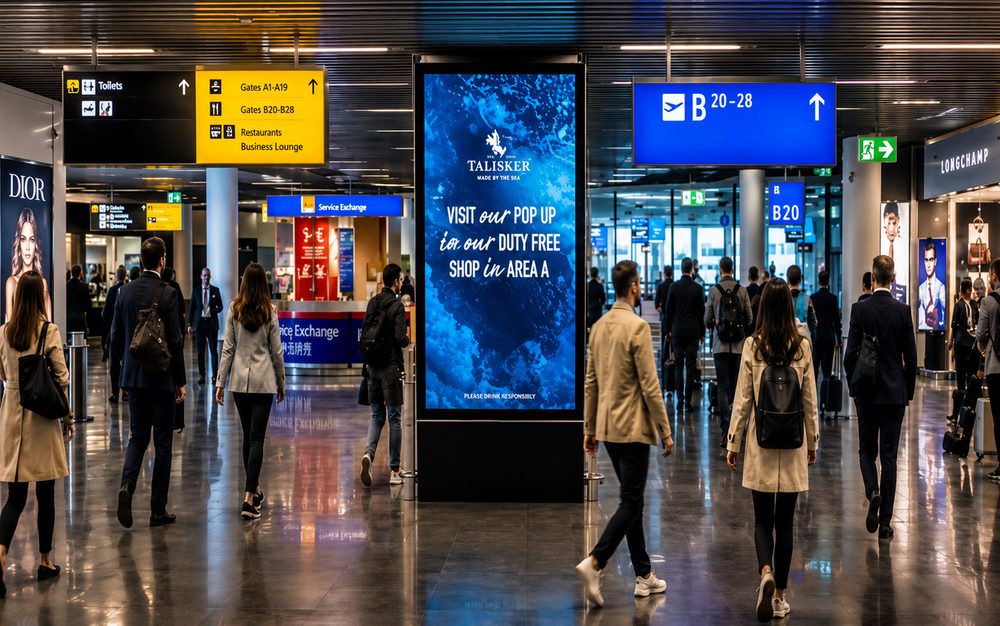
Frankfurt handles approximately 61 million passengers annually. Terminal 1 is the Lufthansa and Star Alliance long-haul hub: Lufthansa, ANA, Singapore Airlines, Air Canada, United and Thai on routes including New York, Tokyo, Singapore and Bangkok. Terminal 2 carries Emirates, Qatar Airways, Etihad, Korean Air and Air India to Dubai, Doha, Abu Dhabi, Seoul and Delhi. The programmatic estate extends to 500+ pDOOH screens.
Inventory Highlights
- Programmatic digital across a 500+ screen pDOOH network, allowing day-part and route-timed activation across the full window
- Terminal 1 long-haul positions reaching Star Alliance premium-cabin traffic from North America and East Asia
- Terminal 2 positions on the Gulf and Asian carrier concourses
- Premium lounge environments including the Lufthansa First Class and Senator lounges, the Emirates Lounge and the Air Canada Maple Leaf Lounge
Advantages for Advertisers
- The highest-value intercontinental audience in the network, reached before it disperses
- Programmatic buying supports short lead times and mid-flight optimisation
- Financial-district proximity skews the audience institutional, not leisure-only
 Wealth in motion intelligence.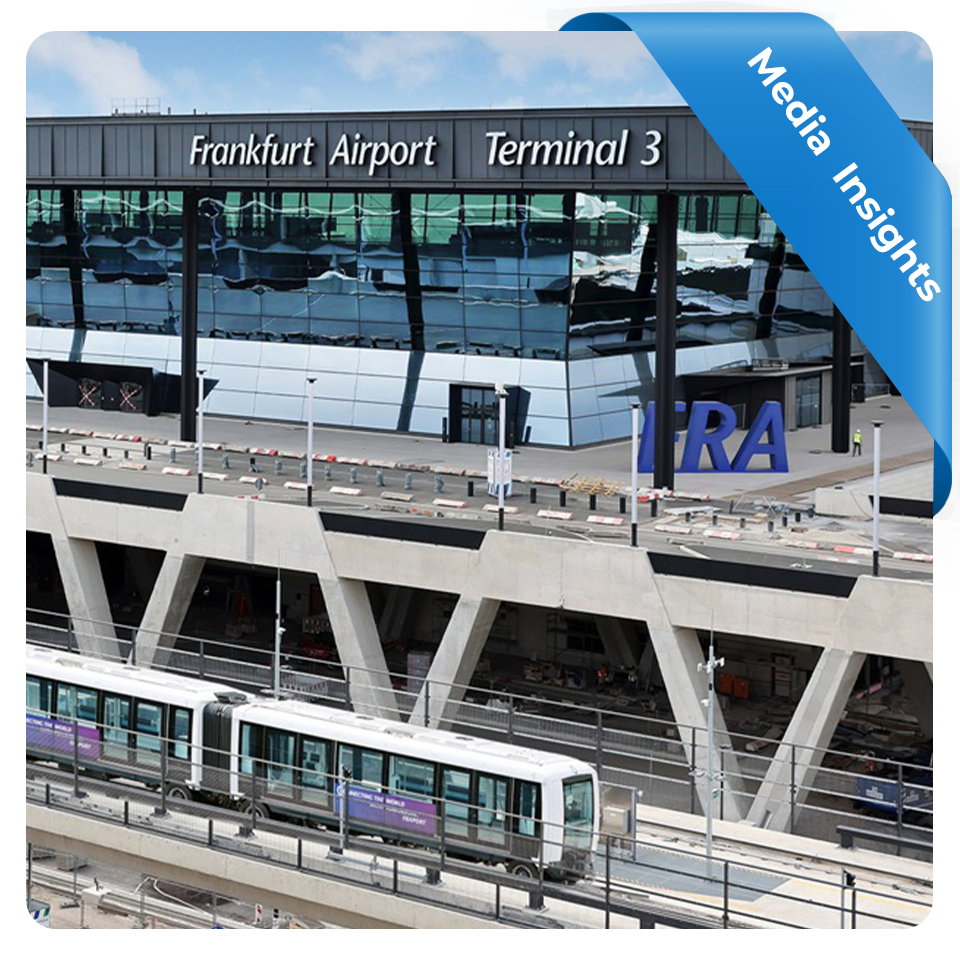
Munich Airport (MUC): The Terminus, Not the Whole Campaign
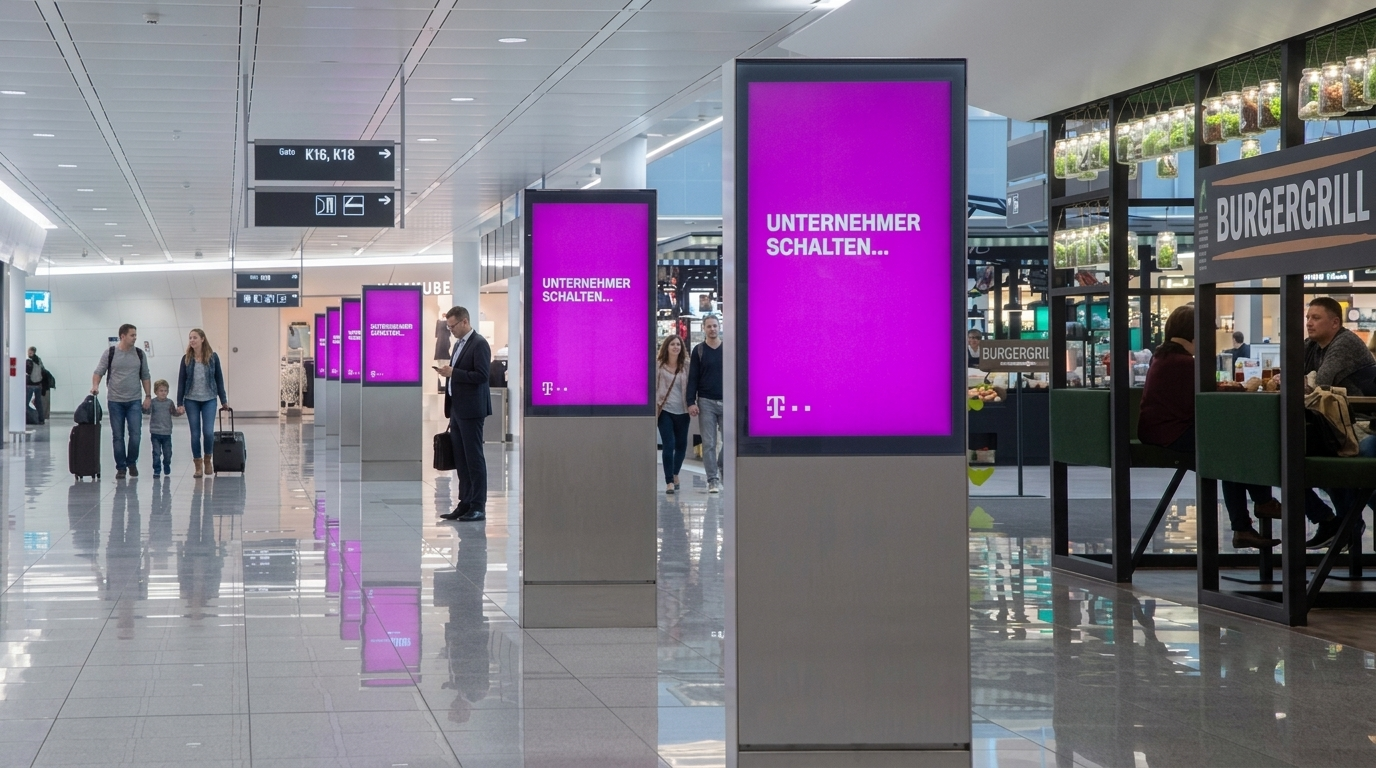
Munich is where national and inbound flows converge, but in a network campaign it is the closing frame, not the opening one. Its role is confirmation: a traveller reached at Frankfurt arrivals and again in Munich has had a sequenced exposure, not two unrelated impressions.
Inventory Highlights
- Arrivals and reclaim positions serving inbound festival and corporate traffic across the sixteen days
- Departure and gate environments covering the return wave in the first days of October
- Transfer zones reaching domestic passengers connecting from Frankfurt, Düsseldorf, Hamburg and Berlin
Advantages for Advertisers
- Completes the Airport → City → Venue sequence for travellers first reached at another hub
- Closing-week departures support post-event conversion messaging and QR-led response
- Bavarian industrial and family-business decision-makers sit in this flow year-round
 Wealth in motion intelligence.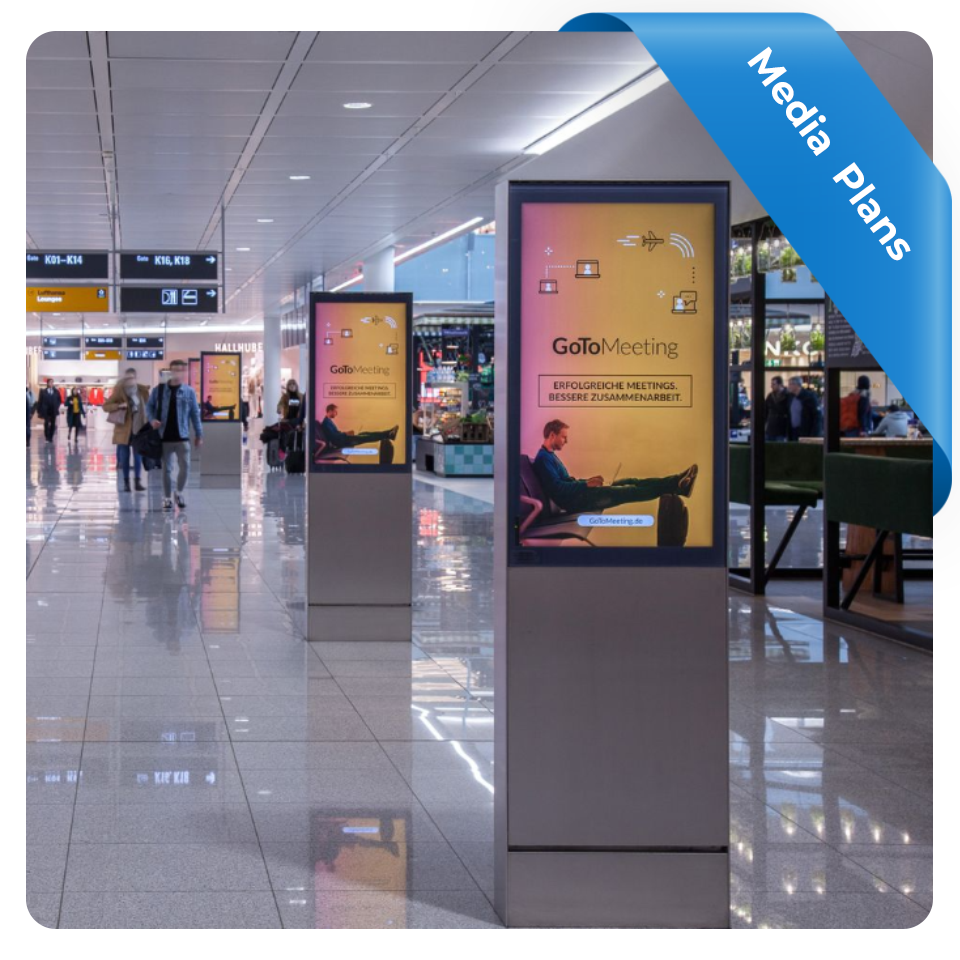
Düsseldorf Airport (DUS): North Rhine-Westphalia's Corporate Gateway
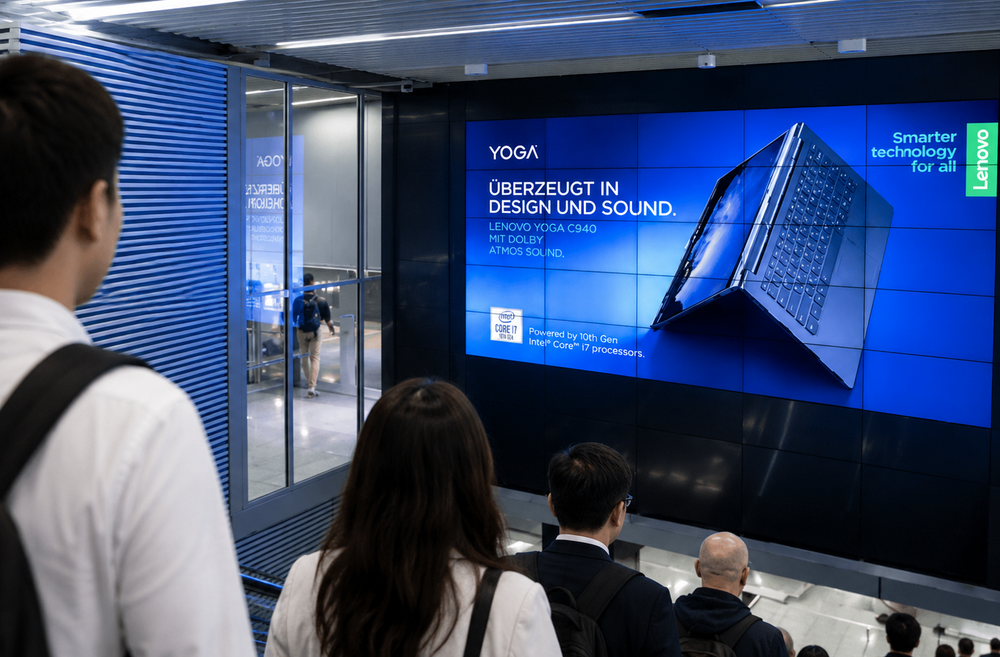
Düsseldorf serves the Rhine-Ruhr corporate belt: headquarters, professional-services firms and Mittelstand principals. Its inbound mix combines intercontinental business traffic with heavy European short-haul volume, and it is the primary alternative entry point for visitors connecting onward to Munich.
Inventory Highlights
- Arrivals hall and immigration approach placements reaching inbound business and festival traffic
- Departures and check-in environments serving outbound Rhine-Ruhr executive travel
- Digital and large-format static along principal routes and domestic transfer zones
Advantages for Advertisers
- Access to the Rhine-Ruhr corporate audience, which a Munich-only buy misses entirely
- Strong European short-haul density through September and early October
- Complements Frankfurt without duplicating it: different catchment, different carrier mix
 Wealth in motion intelligence.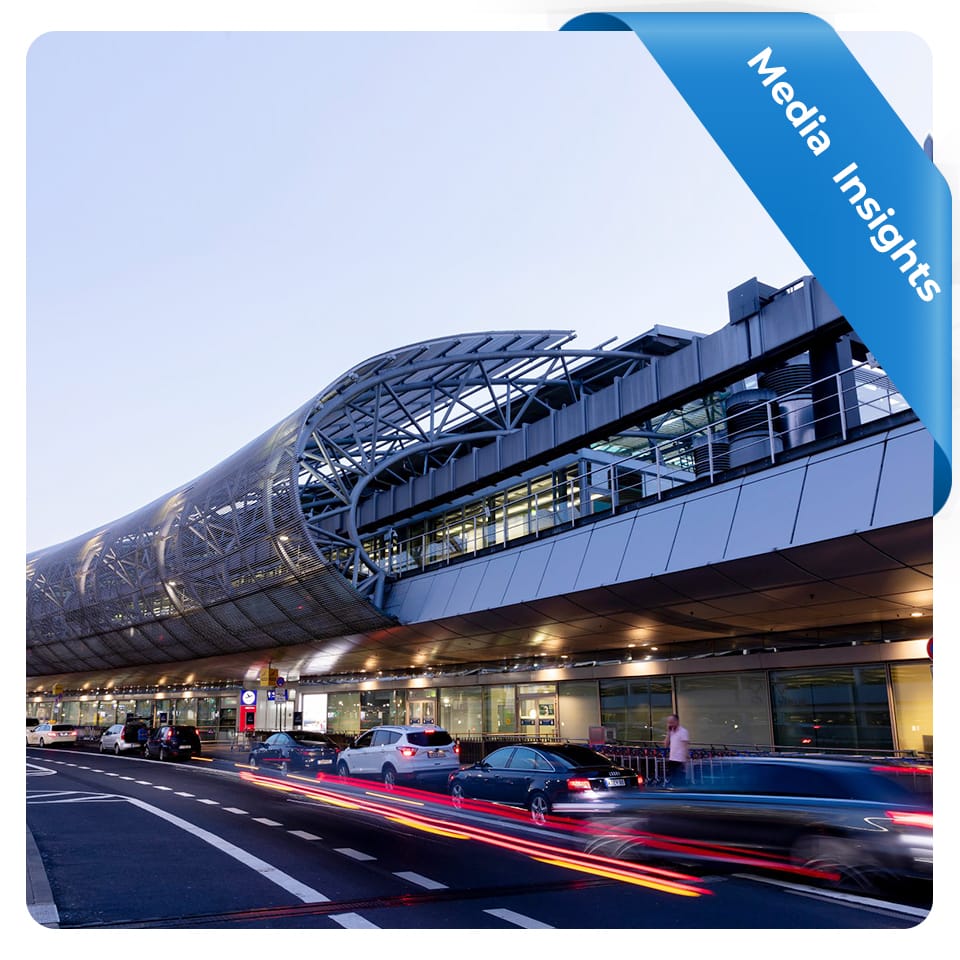
Berlin Brandenburg Airport (BER): Capital, Government and Technology
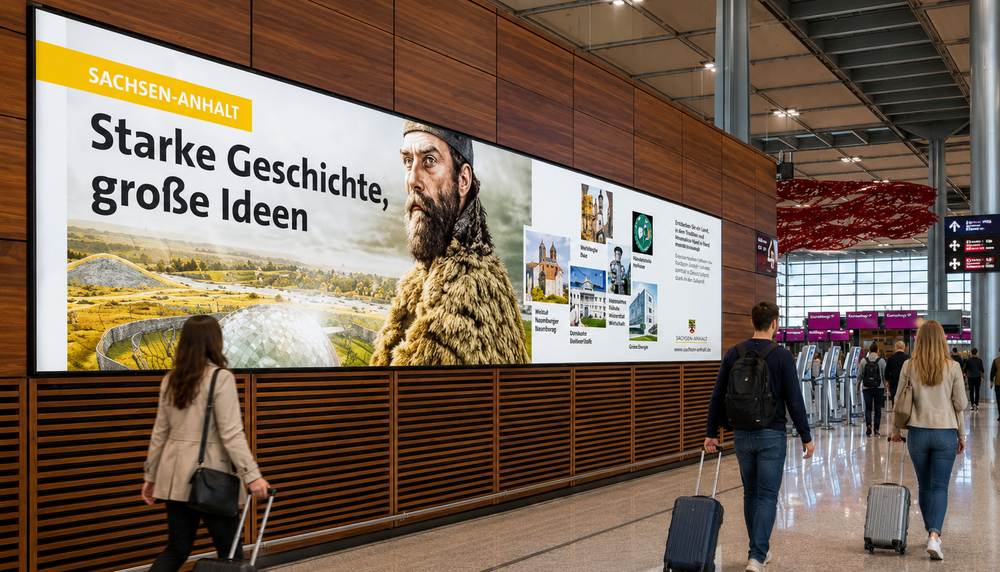
Berlin Brandenburg handles approximately 32.1 million international passengers annually on 2023–24 data. Terminal 1 opened in October 2020 with roughly 320,000 square metres of floor space; Terminal 5, the former Schönefeld facility, carries low-cost and charter traffic. Average international departure dwell runs 1.5 to 2 hours. Peak advertising seasons are March–June and September–November, placing the Oktoberfest window inside BER's strongest half-year.
Inventory Highlights
- Terminal 1 multi-level positions across departures, arrivals and transit
- Static large-format, digital/DOOH and experiential formats
- Placements timed to a 1.5–2 hour departure dwell, long enough for detailed creative
Advantages for Advertisers
- Audience spans tech founders and venture capitalists, federal officials and the diplomatic corps, creative-industry professionals and premium cultural tourists
- The fortnight falls within BER's September–November peak season
- Extended dwell makes it the network's best environment for message-heavy creative
 Wealth in motion intelligence.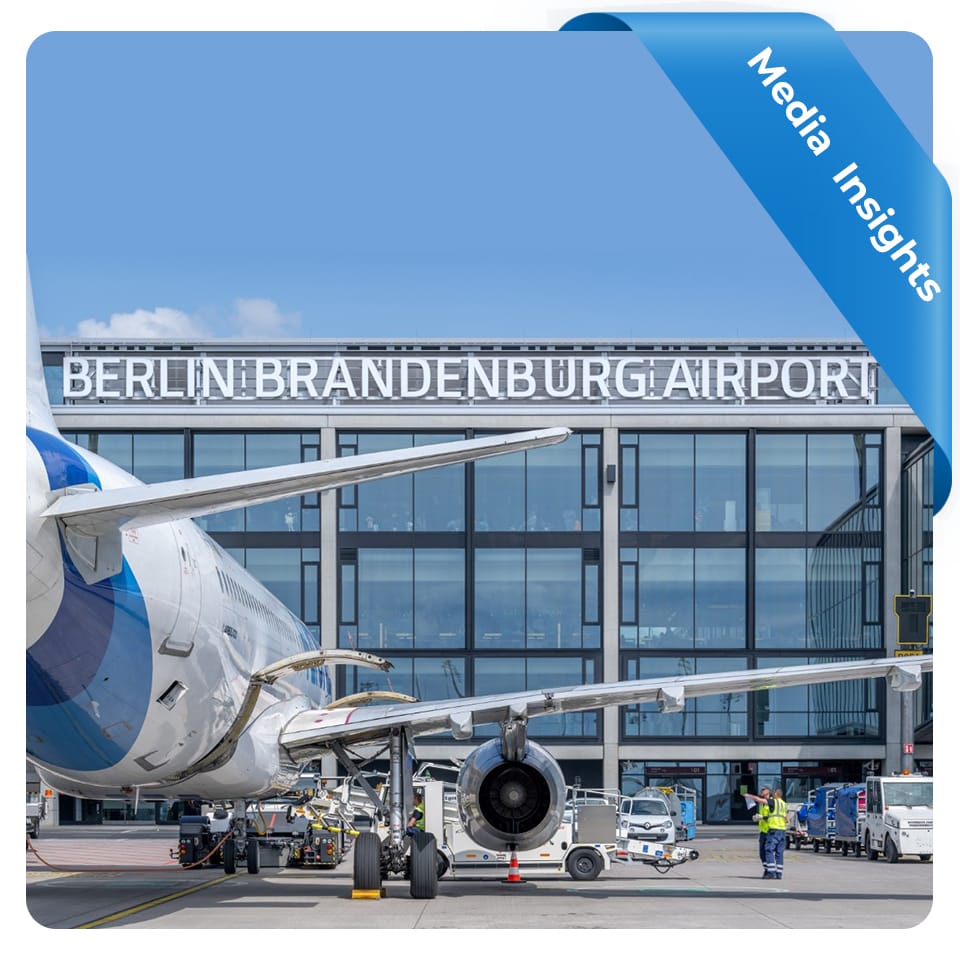
Hamburg Airport (HAM): Northern Germany's Premium Hub
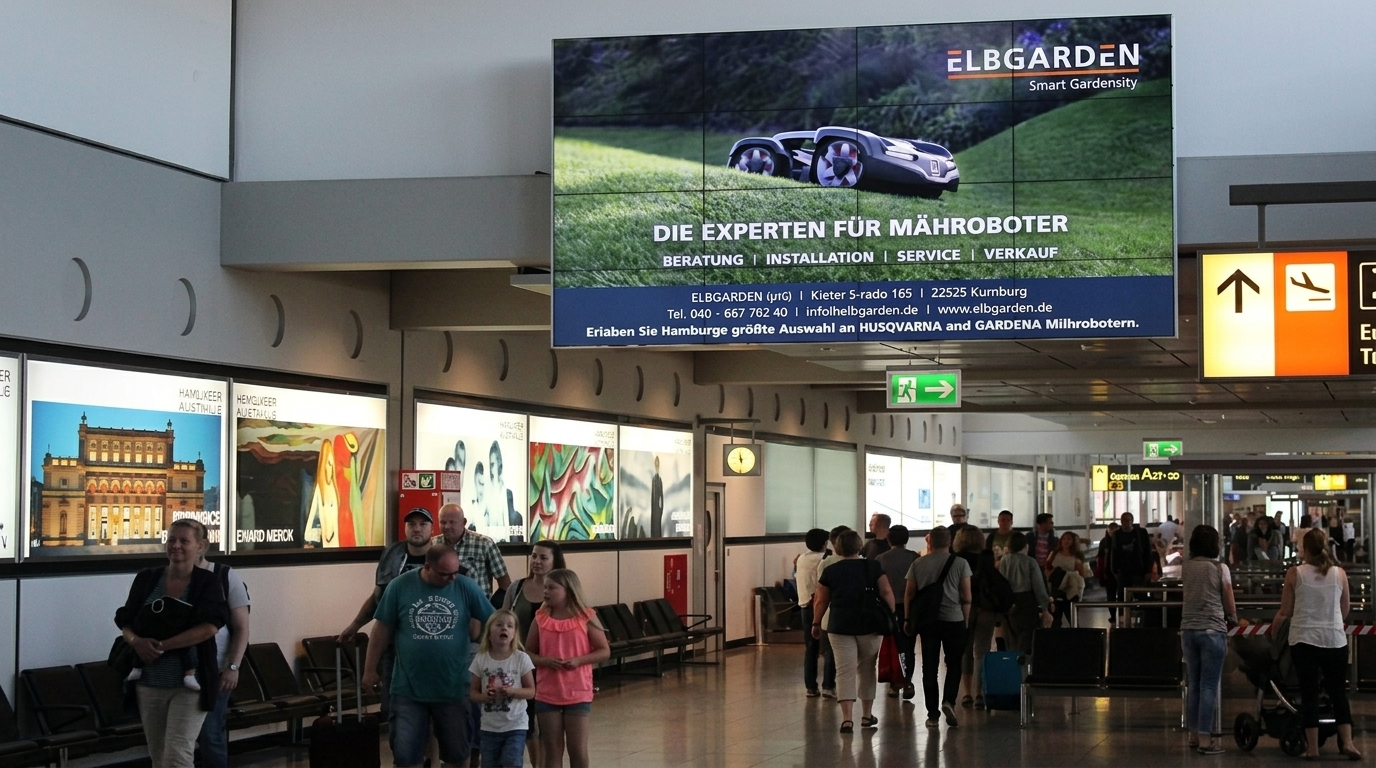
Hamburg serves northern Germany's trading, shipping, media and private-wealth base, and carries a 48-screen digital network.
Inventory Highlights
- 48 digital screens across principal corridors, buyable as a full-network package
- Arrivals and departures positions serving northern German business and leisure flows
Advantages for Advertisers
- A countable digital estate makes reach modelling and share-of-voice straightforward
- Access to a shipping, trade and media wealth base distinct from Frankfurt's financial audience
- Efficient regional addition at a lower entry cost than the primary hubs
 Wealth in motion intelligence.
National Network Coverage
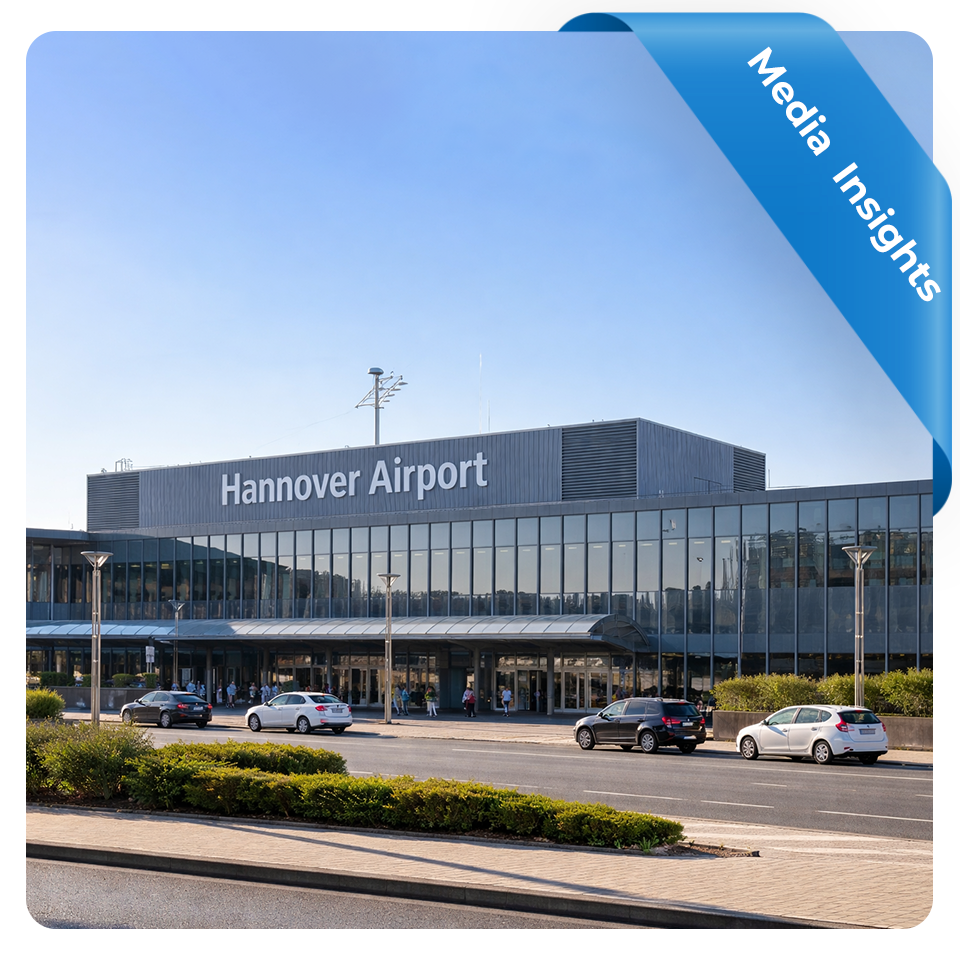
Beyond the five primary hubs the programme extends across Stuttgart Airport (a 240+ screen digital network reaching Baden-Württemberg's automotive and engineering base) plus Hanover Airport, Cologne Bonn Airport, Nuremberg Airport, Friedrichshafen Airport and Dortmund Airport, adding Lower Saxony and the trade-fair calendar, the Rhineland and former federal capital, northern Bavaria, Lake Constance with the Swiss and Austrian border markets, and the eastern Ruhr.
Destination Germany: Full Visitor Journey Coverage
Airport. First contact at Frankfurt, Düsseldorf, Berlin or Hamburg arrivals, while attention is undivided during immigration and reclaim.
City. OOH and DOOH across Frankfurt's financial district, Düsseldorf's Königsallee, Berlin's central districts, Hamburg's HafenCity and Stuttgart's and Cologne's commercial cores carries the message through the working days around the festival weekend. A large share of arrivals finish the journey by ICE, making hub-city main-station environments part of the same exposure path.
Venue. Munich Airport arrivals, the Munich city core and the approach to the Theresienwiese close the sequence.
Run in that order, the programme produces increased brand recall, because the audience meets the brand at three separated points on one trip; consistent presence, because coverage does not lapse between gateway and destination; and enhanced campaign effectiveness, because each placement lands against an audience primed by the last.
Why Brands Choose Airport & City Advertising for Oktoberfest
Exclusive audience access. Eleven airports deliver Germany's inbound premium travellers, its million-plus resident high-net-worth consumers and its industrial and financial decision-making class in one buying window.
A prestigious environment. Frankfurt's intercontinental terminals, Berlin's 320,000 sqm Terminal 1 and Germany's premium lounge estate are controlled, low-clutter settings where placement itself signals scale.
End-to-end campaign support. Masscom Global plans, negotiates and runs multi-airport programmes across 1,000+ airports in 180+ countries, coordinating one creative set across eleven German gateways and their city media.
Strategic planning assistance. We advise on hub weighting, the programmatic-versus-fixed split, and the sequencing of gateway, city and destination placements so the fortnight is covered without paying twice for one passenger.
The Masscom Global Standard Behind Every Oktoberfest Placement
- Verified inventory and audience data: screen counts and traffic figures across Germany's national network come from live operator data at proposal stage, not published estimates.
- Transparent delivery reporting: campaign monitoring and reporting across the network, so you see exactly where your creative ran.
- Benchmarked recommendations: format mix set against comparable campaigns across our network.
- We absorb the complexity: one point of accountability from negotiation through execution.
Request Your Customised Oktoberfest premium corporate Advertising Plan
Tell us your audience, category and budget. Our planners will return a costed plan across airport and prime city inventory, with availability confirmed.
Book NowFrequently Asked Questions
When exactly is Oktoberfest 2026?
19 September to 4 October 2026, at the Theresienwiese in Munich, opening with the tapping of the first barrel at noon on Saturday 19 September. Although it is called Oktoberfest, most of it falls in September: flighting should begin in the first week of September, not October.
Who attends, and why does a national airport buy reach them?
Around seven million visitors, roughly 15% from abroad: the EU, North America, Oceania and East Asia. That long-haul segment is a self-selecting premium cohort, routed through Frankfurt, Düsseldorf, Berlin or Hamburg where dwell during arrival, immigration and reclaim is measured in tens of minutes. A national buy reaches them at entry; a Munich-only buy only at the end.
How does whole-journey reach work in practice?
Three times on one trip: at the gateway airport on arrival, in the hub city during the working days around the festival, and at Munich Airport on final approach. One creative set, three separated exposures.
How far in advance should a campaign be booked?
Fixed and large-format positions should be secured well before the September peak, which coincides with BER's strongest season and the autumn trade-fair calendar. Frankfurt's and Stuttgart's programmatic networks accept shorter lead times, but premium fixed inventory moves first.
Which brand categories perform best?
Private banking and wealth management, watches and fine jewellery, automotive and premium mobility, business aviation, luxury real estate and residency advisory, premium hospitality, and B2B technology aimed at the Mittelstand. Categories needing an institutional setting are better served by Frankfurt and Düsseldorf than festival-adjacent media.
Related Airport Advertising Guides
Detailed inventory, audience and planning notes for the airports covered above:
Wealth in motion intelligence.Wealth in motion intelligence.Wealth in motion intelligence.Wealth in motion intelligence. Wealth in motion intelligence.
 Wealth in motion intelligence.
 Wealth in motion intelligence.
 Wealth in motion intelligence.
 Wealth in motion intelligence.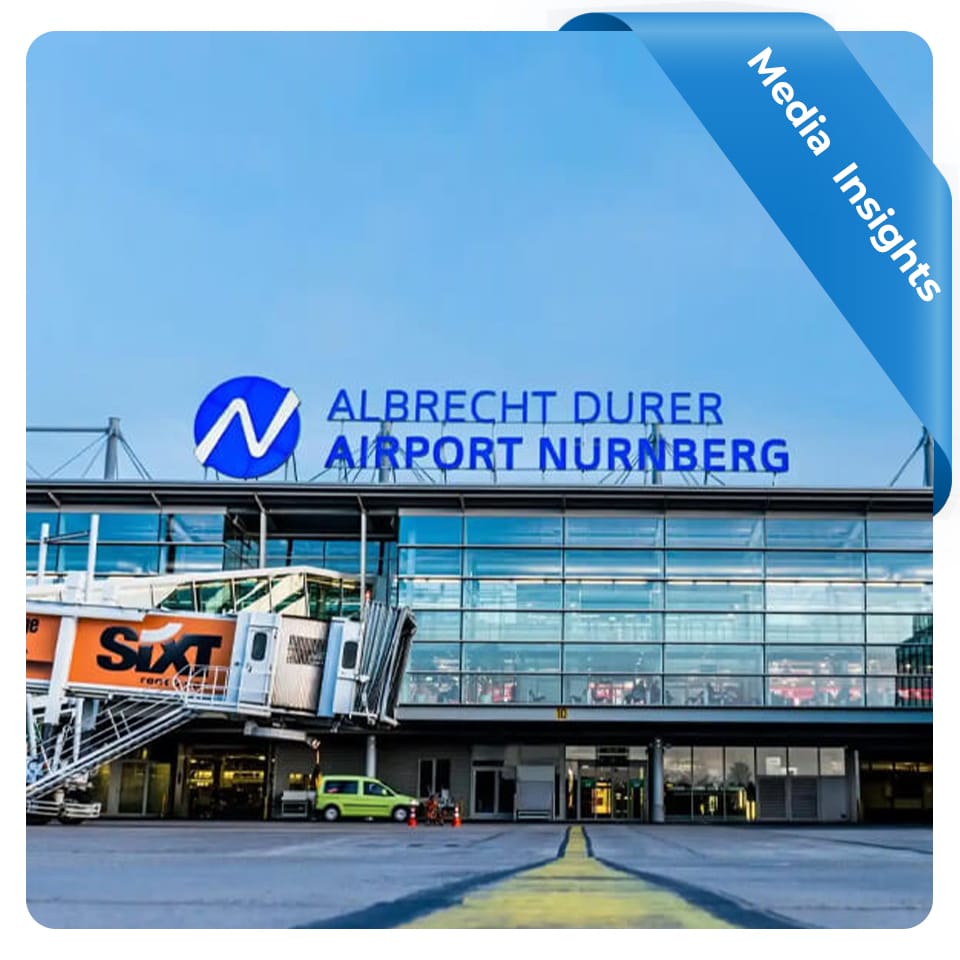
 Wealth in motion intelligence.
 Wealth in motion intelligence.
Oktoberfest Won't Wait. Neither Should You.
- Once a year, then gone: fixed and large-format positions should be secured well before the September peak, which coincides with BER's strongest season and the autumn trade-fair calendar.
- Competitors are already moving: every week without a plan is a week a private banking, automotive or hospitality brand gets closer to locking the same positions.
- The window is exact, not approximate: the festival's dates are fixed, so a campaign that isn't live for it misses the window entirely.
- The alternative reaches the wrong tier: programmatic networks accept shorter lead times, but the premium fixed inventory this audience actually notices moves first.
Get Free Expert Assistance Now
Our planners will map the eleven-airport network against your audience and budget, and identify which hubs carry your audience and which do not. No charge for the conversation.
Request Availability
Fixed premium positions at Frankfurt, Düsseldorf, Berlin Brandenburg, Hamburg and Munich are finite and the September window is contested. Ask for availability and rates and we will return a costed national plan.
Oktoberfest is Germany's largest single inbound travel event, but its arrivals do not concentrate in one city: eleven airports carry the national flow long before Munich comes into view. A programme built around that reality reaches the €17.41 billion luxury market's core buyers, from Frankfurt's financial-district travellers to Hamburg's trade and shipping wealth, inside one planning cycle and one run of creative. For brands weighing a Munich-only buy against national coverage, the eleven-gateway network is the difference between reaching the festival and reaching the country behind it.