

Airport at a Glance
| Field | Detail |
|---|---|
| Airport | Berlin Brandenburg Airport "Willy Brandt" |
| IATA Code | BER |
| Country | Germany |
| City | Berlin |
| Annual Passengers | 32.1 million international (2023–24) |
| Primary Audience | Tech founders and startup investors, creative industry professionals, government and diplomatic leadership, premium cultural tourists, international business executives |
| Peak Advertising Season | March–June, September–November |
| Audience Tier | Tier 1 |
| Best Fit Categories | Technology and B2B enterprise, luxury lifestyle and premium consumer, international real estate, creative and design brands, financial services |
Berlin Brandenburg Airport is the sole international gateway of a city that defines three distinct commercial identities simultaneously. Berlin is the capital of Europe's largest economy, producing a federal government, diplomatic corps, and institutional leadership class whose international mobility is among the most consequential of any political city on earth. It is the continent's most vibrant startup ecosystem, generating a technology entrepreneur and investor class whose combined valuations rival Silicon Valley on a per-capita basis. And it is Europe's cultural capital — the city that has defined fashion, music, art, and design movements for three consecutive decades and whose creative industry professionals are the most internationally networked of any comparable cultural community in the world. The advertiser who reaches BER reaches all three of these audiences in a single placement.
What makes BER commercially distinct from Germany's other major gateways — Frankfurt and Munich — is not just volume. It is the character of the wealth it concentrates. Frankfurt is banking, corporate governance, and traditional financial services wealth. Munich is automotive, engineering, and Bavarian industrial wealth. Berlin is a different kind of capital accumulation entirely — technology equity, creative intellectual property, real estate transformation, and institutional influence. These are the wealth sources of the twenty-first century economy, and Berlin is where they are concentrated at the highest density in Central Europe.
Advertising Value Snapshot
- Passenger scale: 32.1 million international passengers annually, with sustained growth driven by Berlin's expanding technology and venture capital ecosystem, the post-Brexit shift of European institutional activity toward Berlin and other continental capitals, and Berlin's undiminished position as one of Europe's three most visited tourist destinations
- Traveller type: Technology founders, startup employees, and venture capital investors; federal government officials and diplomatic corps; creative industry professionals in fashion, music, art, and design; premium cultural tourists from the UK, USA, and across Europe; international real estate investors attracted to Berlin's property market transformation; and a growing cohort of post-Brexit financial services professionals relocating European operations to the German capital
- Airport classification: Tier 1 — Germany's capital city gateway and the operational hub of Europe's most consequential confluence of startup technology, creative industry, and governmental institutional wealth
- Commercial positioning: The gateway of the city that simultaneously defines European startup culture, generates the policy frameworks for the world's fourth-largest economy, and sets the creative agenda for European fashion, music, and design — an advertising environment whose audience is defined not by a single industry but by influence across multiple sectors simultaneously
- Wealth corridor signal: BER sits at the intersection of the transatlantic technology investment corridor that connects Berlin's startup ecosystem to Silicon Valley, New York, and London; the European institutional corridor that connects the German capital to Brussels, Paris, and the EU governance complex; and the creative industry corridor that connects Berlin's fashion, art, and music scenes to their global audiences
- Advertising opportunity: Masscom Global provides premium placement access across BER's international terminal, with campaign strategy calibrated to Berlin's tech conference calendar, the German government parliamentary cycle, the fashion and design event calendar, and the peak cultural tourism windows that define the airport's premium audience concentration moments throughout the year
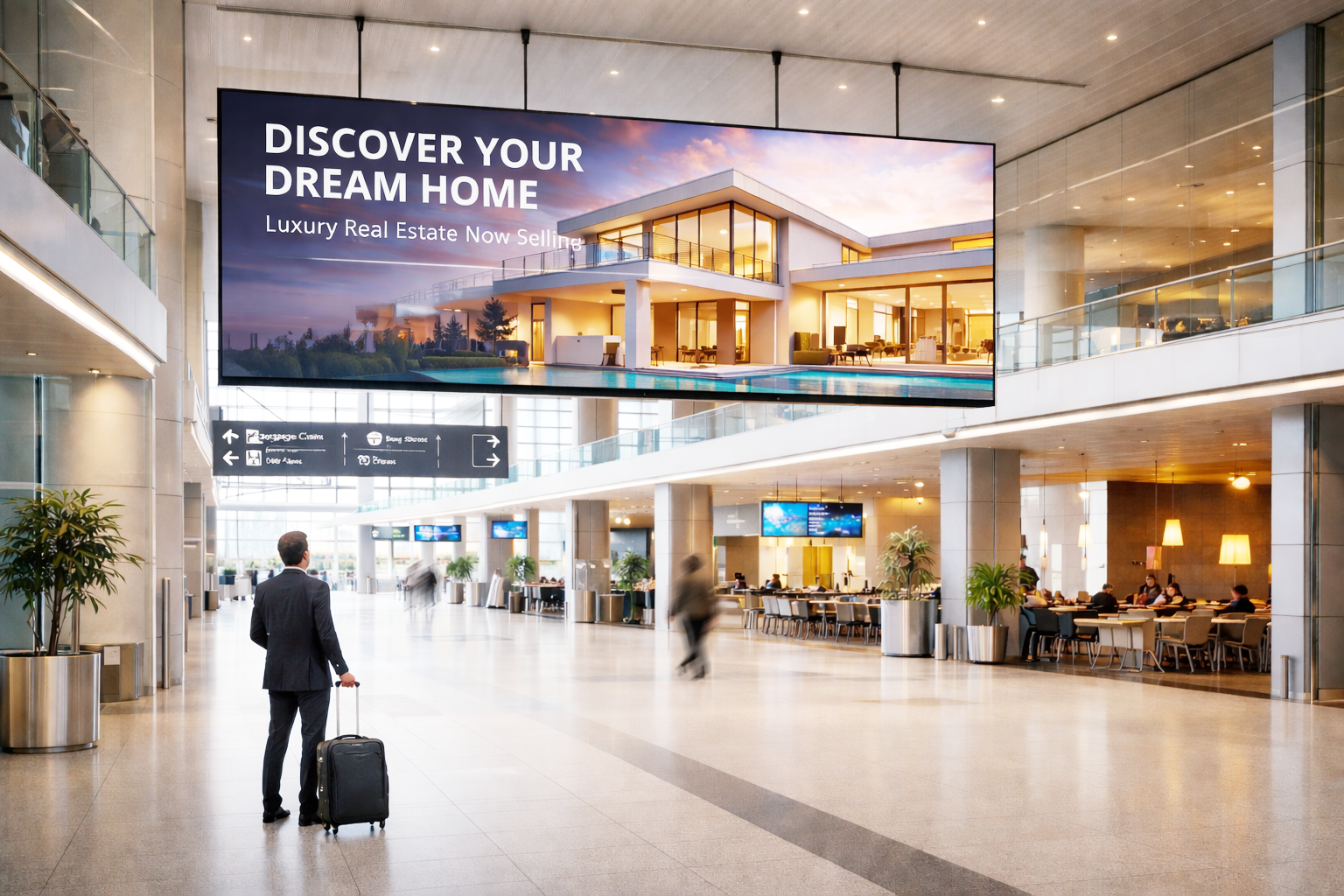
Airport Advertising is Complex to Get Right
We help you execute faster, with proven results and local insight most planners lack starting now.
Talk to an ExpertCatchment Area and Economic Drivers
Top 10 Cities within 150 km — Marketer Intelligence
- Berlin: Germany's capital and the economic engine of the country's northeast — home to the federal Bundestag and Bundesrat, the offices of every major German and international corporation maintaining a government relations or policy function, and the headquarters of Zalando, Delivery Hero, HelloFresh, N26, Auto1 Group, and dozens of unicorn-status technology companies whose founders, executives, and investor class represent the most concentrated startup wealth audience at any European capital city airport
- Potsdam: Brandenburg's state capital and one of Germany's most prestigious residential cities — home to the Sanssouci palace complex, a concentration of science and technology research institutions including the Max Planck Institute and the University of Potsdam, and the affluent residential community of senior federal government officials and Berlin's creative industry leadership who prefer Potsdam's quality of life to Berlin's urban intensity; their regular BER transit makes them a high-frequency premium audience with strong real estate, financial services, and luxury lifestyle brand appetite
- Cottbus: The economic capital of Lusatia and Eastern Brandenburg, historically a textile and energy industry city undergoing significant structural transformation through federal investment in post-coal economic diversification — its engineering executives, public sector leadership, and growing technology sector entrepreneurs represent an emerging B2B audience whose federal-funding-enabled investment activity is creating new wealth formation at BER
- Frankfurt (Oder): Germany's easternmost major city on the Polish border, functioning as a logistics and trade gateway between Germany and the growing Polish economy — its cross-border trade entrepreneurs, logistics company owners, and EU-border business operators represent a commercially active catchment audience for B2B financial, technology, and premium consumer brand advertising at BER
- Brandenburg an der Havel: A historic Hanseatic city 80 km west of BER with a growing industrial and logistics sector, hosting steel manufacturing and automotive component production — its industrial management class and engineering executives transit BER for business travel to Western German and European industrial partners, representing a first-generation business wealth segment with growing appetite for premium financial and lifestyle products
- Magdeburg: The capital of Saxony-Anhalt, approximately 140 km from BER, with a growing technology and engineering sector anchored by the Otto von Guericke University's applied research programmes and Intel's announced semiconductor manufacturing facility — its technology and industrial executive class is beginning to route through BER for international connections, representing a forward-looking B2B technology audience whose volume will increase as Intel's Magdeburg investment activates
- Halle (Saale): A university and industrial city in Saxony-Anhalt with a strong chemical and pharmaceutical manufacturing heritage and a growing startup ecosystem connected to Leipzig's tech cluster — its academic, scientific, and business professional class transit BER for international conference and partnership travel, representing a research-intensive B2B audience for scientific, pharmaceutical, and technology brand advertising
- Dessau-Rosslau: The city of the Bauhaus heritage — birthplace of the design movement that shaped the entire twentieth century's visual and industrial culture — whose architecture, design, and cultural sector professionals represent a niche but globally respected creative audience at BER whose international connections extend to design schools and cultural institutions worldwide
- Oranienburg: A peri-Berlin city north of the capital hosting industrial and logistics operations that supply Berlin's construction and real estate development boom — its construction contractors, real estate developers, and logistics operators represent a first-generation commercial wealth audience at BER whose asset accumulation is directly linked to Berlin's property market transformation
- Strausberg: A growing suburban city east of Berlin within BER's direct catchment, attracting Berlin's professional class seeking lower property costs while maintaining BER and Berlin city connectivity — its commuter-belt HNWI residents are regular BER users whose suburban property ownership and Berlin professional careers create a dual-economy audience with above-average combined income and purchasing power
NRI and Diaspora Intelligence
Berlin's international community is not a conventional diaspora in the remittance-economy sense — it is a deliberate professional migration of the globally mobile knowledge economy class. Over 20 percent of Berlin's population was born outside Germany, representing one of the highest foreign-born proportions of any major European capital. This internationally diverse resident community creates a diaspora-return travel dynamic at BER that is unique in character: returning Israeli tech founders, British creative professionals commuting between London and Berlin post-Brexit, American startup employees whose Berlin equity packages are maturing, and Turkish-German families whose second and third generations maintain both identities simultaneously. The Turkish-German community — approximately 80,000 in Berlin — is commercially significant both as a consumer and business travel audience, with established family and trade connections to Istanbul and Ankara that make the Berlin–Istanbul corridor one of BER's most commercially active bilateral routes. The Israeli tech community in Berlin — one of the largest Israeli diaspora concentrations outside Israel — generates a sustained flow of Tel Aviv corridor business travel whose startup investment and company management motivations make them a premium B2B audience at BER's departures hall.
Economic Importance
Berlin's economy has undergone the most dramatic positive transformation of any major European capital city in the past three decades — from a subsidised divided city into the capital of a reunified Germany and then into a global technology and creative economy benchmark. The digital economy now accounts for a substantial share of Berlin's economic output, with the city's technology sector generating billions in annual revenue and its startup ecosystem having produced more unicorn-status companies than any other German city. The federal government's presence adds an institutional economic weight that shapes the city's demand for legal, financial, lobbying, and professional services at levels that reflect the administrative complexity of Europe's largest economy. Berlin's real estate market has been one of Europe's most actively transforming investment environments — attracting international capital from Israel, the USA, the UK, and the Gulf as the city's property values have risen to levels that now rival mid-tier European capitals, creating a significant real estate investment wealth class whose BER travel connects to international investor networks in London, New York, and Tel Aviv.
Business and Industrial Ecosystem
- Technology and startup ecosystem: Berlin's tech sector — anchored by Zalando (Europe's largest fashion e-commerce platform), Delivery Hero (global food delivery leader), HelloFresh, N26, and Auto1 Group — has produced a founder and employee wealth class whose stock option liquidity events, venture capital fundraising rounds, and international expansion travel generate a high-frequency, high-income business travel segment at BER whose routes connect to Silicon Valley, London, New York, and Singapore investor ecosystems
- Federal government, lobbying, and policy sector: Every major German and international corporation with interests in European regulatory, trade, or fiscal policy maintains a Berlin government relations function — creating a permanent community of senior policy professionals, lobbyists, consultants, and think tank executives whose international travel through BER connects to Brussels, Washington, Beijing, and Brussels for regulatory engagement, making them a precise B2B audience for institutional technology, legal services, and premium hospitality brand advertising
- Creative industries — fashion, music, art, and media: Berlin Fashion Week, the Berlin International Film Festival (Berlinale), and Art Berlin concentrate the European creative industry's most influential participants at BER in defined annual windows — the creative director, gallery owner, record label executive, and fashion buyer who passes through BER is operating at the intersection of cultural influence and commercial wealth in a way that makes them a uniquely brand-receptive premium lifestyle audience
- Post-Brexit financial services: Following the United Kingdom's departure from the European Union, Berlin has attracted a growing number of financial services firms establishing or expanding their European operations — adding a financial sector professional class to BER's commercial audience that Frankfurt has historically dominated but Berlin is increasingly sharing, particularly in fintech, where Berlin's startup credentials make it the preferred EU location for technology-driven financial services companies
Passenger Intent — Business Segment
The business traveller at BER is executing decisions that operate at the intersection of technology, policy, and creative influence — the three domains where Berlin has established European leadership. They are closing venture capital rounds with London and New York investors, attending EU policy meetings in Brussels that will determine the regulatory framework for their industry, presenting at technology conferences whose attendee list reads as a who's who of global startup investment, or managing the global distribution of creative intellectual property whose value is defined by Berlin's cultural authority. Their dwell time at BER is a captive window for technology brand advertising, premium financial services, international real estate, luxury lifestyle, and creative industry brand messaging that reaches a decision-maker whose professional sphere of influence far exceeds their personal visibility.
Strategic Insight
BER's business audience has a characteristic that is commercially unusual at comparable European capital city airports: it is a mixed-generation wealth class. The same terminal simultaneously processes the established institutional wealth of federal government and diplomatic officials, the newly liquid startup equity wealth of technology founders completing Series C and D funding rounds, and the creative intellectual property wealth of artists, designers, and musicians whose brand value is globally recognised but whose financial assets are being formally structured for the first time. This wealth generation diversity is not a complication for advertisers — it is an opportunity. Financial services, wealth management, real estate, and premium lifestyle brands that can speak to all three wealth generations simultaneously will achieve a breadth of HNWI audience reach at BER that single-category wealth airports cannot match.
Tourism and Premium Travel Drivers
- Museum Island and world-class cultural infrastructure: Berlin's concentration of world-class museums — the Pergamon, Neues Museum, Alte Nationalgalerie, and Gemäldegalerie — draws an international cultural tourism audience of exceptional quality. The museum visitor at BER is overwhelmingly a premium tourist whose educational level, cultural sophistication, and income bracket correlate with the highest consumer brand loyalty and luxury goods purchasing behaviour in European tourism research
- Berlinale — International Film Festival (February): One of the world's three most prestigious film festivals — alongside Cannes and Venice — concentrates the global film industry's creative and commercial leadership at BER in a ten-day February window whose delegate, press, and industry audience is among the most influential creative and media professional concentrations at any European airport event
- Berlin Art Week and Gallery Weekend (September–October): Berlin's position as Europe's most active contemporary art market draws international collectors, gallery directors, curators, and art investors through BER each autumn — a financially significant audience whose art investment activity and premium lifestyle spending make them a priority target for luxury brands, private banking, and international real estate advertising
- Berlin Fashion Week (January and July): While smaller than Paris or Milan's fashion weeks, Berlin Fashion Week draws the European streetwear, sustainable fashion, and contemporary design community — an internationally networked creative professional audience whose brand influence extends far beyond the event itself and who transit BER for international fashion industry relationships year-round
Passenger Intent — Tourism Segment
The inbound tourist arriving at BER is rarely a passive sightseer. Berlin attracts a culturally motivated, intellectually engaged visitor whose trip planning reflects specific purpose — Berlinale accreditation, gallery openings, conference attendance, or the city's legendary nightlife and music scene — rather than generic leisure tourism. This purposefulness elevates the inbound tourist at BER above the average European leisure traveller in terms of brand sophistication, disposable income, and receptivity to premium experience and lifestyle brand advertising. The American, British, and Israeli premium tourist whose Berlin itinerary includes contemporary art, Michelin-starred restaurants, and design hotel stays carries a spending profile and brand relationship that makes them a priority audience for luxury lifestyle advertising at arrivals.
Travel Patterns and Seasonality
Peak seasons:
- March–June (spring conference and event season): Berlin's most commercially concentrated professional travel window — anchored by major technology conferences (re:publica, TOA, Bits and Pretzels Berlin), the startup investment season's Q1 and Q2 fundraising cycle, and the spring government parliamentary schedule — producing the year's highest concentration of business and institutional premium audience at BER
- September–November (autumn event and conference season): The second major professional travel peak, anchored by Berlin Art Week, the IFA electronics consumer show, the ESMT Berlin executive education calendar, and the autumn venture capital deal-making season — combined with Berlin's peak cultural tourism window when the city's outdoor culture season concludes and indoor venues reach their annual highlights
- February (Berlinale peak): A contained but commercially exceptional window — ten days when the global film industry descends on Berlin, filling BER with international creative and media executives whose combined cultural influence and personal spending power make them among the most brand-resonant audiences at any European airport event window
- July–August (summer tourism peak): Berlin's warmest months draw European leisure tourists in the highest absolute volume of the year — a more mixed audience profile by income than the professional event seasons, but one that includes the international cultural tourism segment whose Berlin itinerary reflects premium spending and high brand engagement
Event-Driven Movement
- Berlinale — Berlin International Film Festival (February): The world's most attended public film festival concentrates 20,000+ accredited film industry professionals — directors, producers, distributors, and talent agents — alongside global press and media at BER in a single ten-day window. The professional delegate at Berlinale is a creative industry HNWI whose brand relationships and lifestyle purchasing decisions are shaped by the intersection of artistic ambition and commercial success
- IFA Berlin — International Consumer Electronics Show (September): Europe's largest consumer electronics and home appliances show draws technology company executives, retail buyers, and technology media from across the world — generating a pure B2B technology audience at BER whose product launch and commercial partnership motivations make them a priority audience for enterprise technology, premium consumer electronics, and financial services brand advertising
- re:publica — Internet and Digital Society Conference (May–June): Europe's most significant digital culture and technology conference draws 20,000+ participants including startup founders, technology investors, digital policy professionals, and social media influencers — a concentrated digital economy audience whose BER transit represents a priority window for B2B technology, fintech, and digital lifestyle brand advertising
- Berlin Gallery Weekend (April–May): One of Europe's most commercially active contemporary art market events, drawing international collectors, gallerists, and art investment advisers to Berlin's Mitte and Charlottenburg gallery districts — a financially sophisticated premium audience whose art investment activity and luxury lifestyle spending make them an exceptional target for private banking, real estate, and luxury brand advertising
- Berlin Fashion Week (January and July): The European sustainable and contemporary fashion community's biannual gathering concentrates fashion buyers, creative directors, sustainability-focused brand executives, and fashion media at BER — a brand-literate, premium lifestyle audience whose purchasing decisions influence European fashion markets beyond Berlin's own consumer base
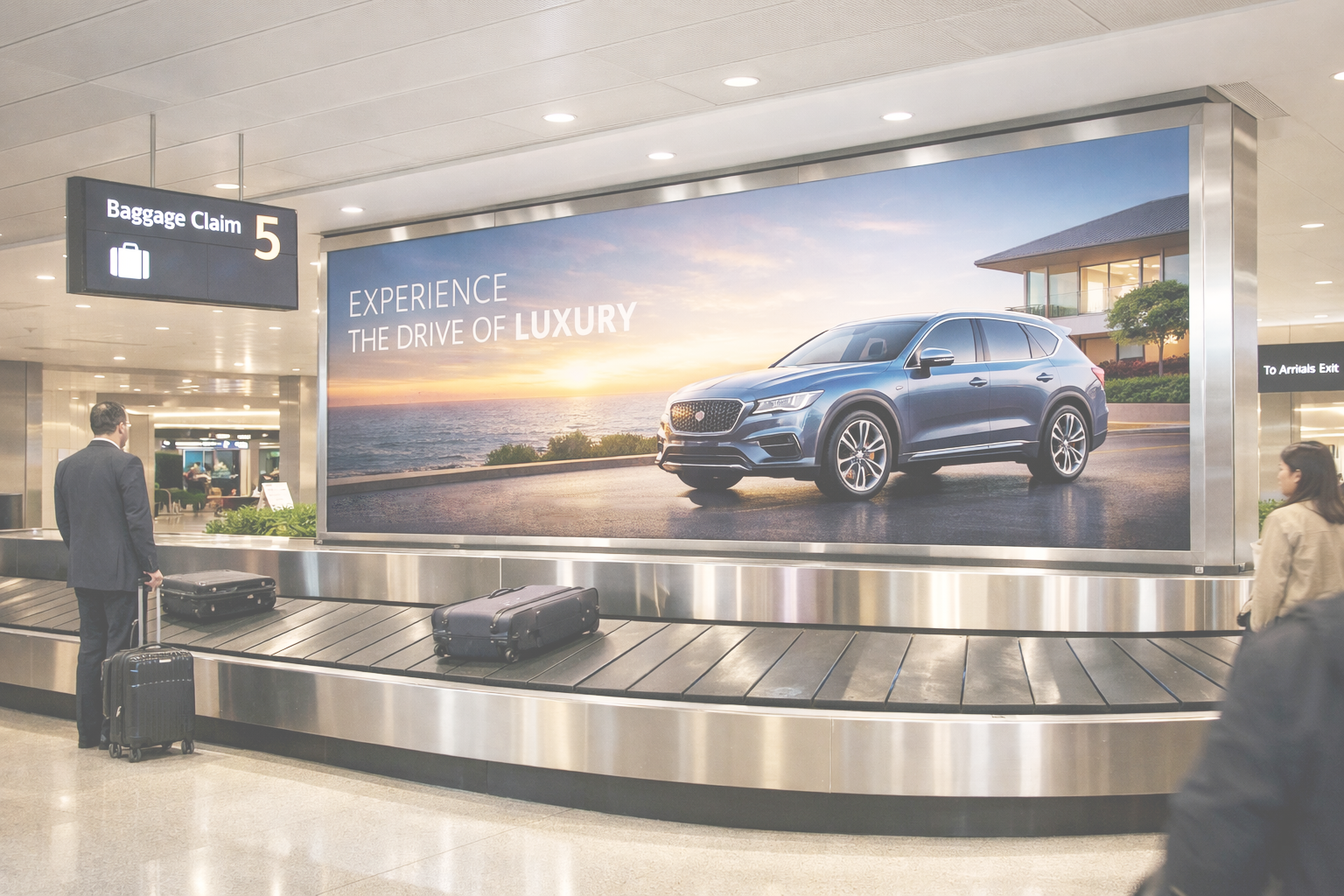
It’s Not Just Where You Advertise - It’s How Fast You Execute
We combine local insight with fast rollout to deliver results for you, now.
Talk to an ExpertAudience and Cultural Intelligence
Top 2 Languages
- German: The operational language of BER's entire resident business, government, and professional audience — advertising creative in German that demonstrates genuine cultural understanding of Berlin's specific identity, distinct from broader German cultural positioning, achieves a depth of resonance with the Berliner professional class that generic German-language advertising cannot replicate; Berlin's creative and tech audience in particular responds to German-language communication that reflects the city's irreverence, international openness, and quality-over-convention values
- English: The operational language of Berlin's entire technology ecosystem, the working language of the startup and venture capital community, the communication register of the city's large international professional population, and the language of every international creative, cultural, and diplomatic visitor — English is essential for reaching the full breadth of BER's premium audience, and for Berlin's tech and startup community specifically, English-language brand communication is not a foreign language strategy but the native commercial register of their industry
Major Traveller Nationalities
German nationals are the dominant nationality at BER but represent a city whose resident population is among the most internationally diverse in Europe — the German professional at BER is as likely to have lived in London, New York, or Singapore as in another German city. British travellers represent the largest non-German inbound group — driven by the sustained demand for Berlin's cultural and nightlife offering, the Berlinale's British film industry participation, and the growing number of British technology and creative professionals who have relocated to Berlin since Brexit. Israeli nationals are BER's most commercially distinctive inbound technology segment — Berlin hosts one of Europe's largest Israeli communities, and the Tel Aviv–Berlin technology investment corridor generates consistent high-frequency startup founder and investor travel whose commercial sophistication and equity wealth profile makes them a priority B2B audience. American travellers combine cultural tourism, Berlinale participation, and venture capital activity in a profile that makes them among BER's highest-spending per-visitor inbound groups. Turkish nationals — reflecting both Berlin's large Turkish-German resident community and Istanbul's growing technology and creative economy ties to Berlin — represent a consistent and commercially active corridor audience.
Religion — Advertiser Intelligence
- Christianity — Protestant and Catholic (approximately 25–30%, with a long secular tradition): Berlin is one of the world's most secular major cities — fewer than a third of residents identify as actively Christian, and the city's cultural identity has been defined by secular, humanist values since the Weimar Republic era. This means faith-calendar advertising windows — Christmas and Easter — operate primarily as cultural and family reunion triggers rather than as spiritually motivated travel peaks, but their consumer spending implications are substantial nonetheless; the Christmas return travel and gifting season produces one of BER's most concentrated diaspora and family reunion consumer spending windows of the year
- Islam (approximately 8–9%, predominantly Turkish-German and Arab communities): Berlin's Muslim community is among the largest of any Western European capital city on an absolute basis — concentrated in Neukölln, Kreuzberg, and Wedding — and their Eid ul Fitr and Eid ul Adha travel peaks generate secondary audience concentration windows at BER with strong cross-border connections to Istanbul, Beirut, and Amman. The Turkish-German business community specifically — whose commercial networks span both Berlin's consumer economy and Istanbul's growing tech and retail sectors — represents a commercially sophisticated bilateral audience for financial services, real estate, and premium consumer brand advertising.
- Jewish community (approximately 0.5–1%, with growing Israeli diaspora): Berlin's Jewish and Israeli community — the fastest-growing in Europe by some estimates — generates a high-frequency, high-income bilateral travel pattern to Tel Aviv and Jerusalem whose startup investment and creative industry motivations make it commercially disproportionate to its population share. Rosh Hashanah and Passover generate diaspora return travel peaks from Berlin to Israel whose Jewish holiday purchasing behaviour — premium food, gifts, and family occasion spending — creates defined seasonal advertising windows for appropriate brand categories.
Behavioral Insight
The Berlin premium traveller is defined by a specific and commercially consequential combination of values: intellectual rigor, authentic quality preference, and a strong suspicion of superficial brand positioning. This is a city that built its post-reunification identity on the rejection of excess — where the culture premium is on genuine creativity, sustainable values, and anti-establishment quality over conventional luxury signalling. The startup founder at BER does not want to be sold to with the language of Swiss private banking. The creative director does not want generic luxury fashion positioning. The government official does not respond to conspicuous consumption imagery. But all of them will engage deeply with brands that demonstrate genuine excellence, authentic purpose, and intellectual respect for their audience's sophistication. At BER, the quality of the advertising idea matters as much as the quality of the product — this is an audience that will evaluate both simultaneously.
Outbound Wealth and Investment Intelligence
The outbound HNWI traveller at BER is deploying capital that has been formed in the most distinctive wealth-creation environments of the European knowledge economy — technology equity, creative intellectual property, and real estate transformation. Their investment corridors are shaped by the international professional networks of Berlin's startup community, the global cultural relationships of the creative industry, and the institutional investment mandates of the government and policy sector. For international brands positioned at the intersection of these corridors, BER concentrates a wealth class whose asset growth trajectory is among the steepest in Europe and whose investment decisions are being made now.
Outbound Real Estate Investment
Lisbon and Portugal have attracted significant Berlin tech and creative community investment, driven by the Golden Visa programme, digital nomad visa accessibility, lower cost of living, and the city's growing position as a secondary European tech hub — Berlin professionals whose equity has matured are increasingly buying Lisbon property as a lifestyle and investment asset simultaneously. Barcelona has historically attracted Berlin's creative and tech community for its Mediterranean lifestyle and lower property cost compared to Western European capitals — Eixample and Gràcia are active zones for Berlin-resident buyer activity. London — despite Brexit — continues to attract Berlin's professional class for investment property, driven by sterling-denominated asset diversification and the established German community in the UK financial services sector. Miami and New York draw the startup equity wealth tier whose liquidity events have produced dollar-denominated asset allocation needs beyond the European real estate market's available yield.
Outbound Education Investment
The United Kingdom remains the primary international higher education destination for Germany's HNWI families — with the University of Edinburgh, London School of Economics, Imperial College London, and Oxford drawing the most academically ambitious German students. The United States — MIT, Harvard, Stanford, and the Ivy League — attracts the technology and entrepreneurship-focused segment of Berlin's HNWI education investment, particularly for graduate-level programmes whose alumni networks feed directly into the startup investment ecosystem that Berlin's founders are navigating. Switzerland — ETH Zurich in particular — represents the German-speaking international education premium choice for engineering and science families whose academic and professional excellence criteria are met only by world-ranked technical institutions.
Outbound Wealth Migration and Residency
Second-residency demand among Berlin's HNWI class is primarily driven by tax optimisation, global mobility, and investment diversification. Portugal's Non-Habitual Resident tax regime and Golden Visa fund investment route attract the startup equity wealth tier whose liquidity events produce capital gains requiring structuring. The UAE's Golden Visa is increasingly pursued by Berlin's international entrepreneur community whose global business activity makes UAE residency operationally advantageous. Malta and Cyprus citizenship-by-investment programmes draw the most tax-planning-motivated tier of Berlin's business wealth class. Israel's Law of Return creates a specific residency pathway for Berlin's growing Israeli-German tech community whose professional flexibility makes dual residency practically and commercially valuable.
Strategic Implication for Advertisers
Berlin's outbound HNWI traveller is simultaneously a technology wealth deployer, a creative intellectual property investor, and a real estate transformation beneficiary — which means the brands that reach them at BER are positioning to a wealth class whose capital is concentrated in exactly the sectors and geographies that premium international brands in real estate, financial services, and lifestyle categories are most actively cultivating. Masscom Global's ability to activate BER campaigns in coordination with placements in Lisbon, London, Tel Aviv, and New York allows brands to intercept the same Berlin HNWI traveller at departure from Germany and at arrival in the markets where their capital is being deployed.
Airport Infrastructure and Premium Indicators
Terminals
Berlin Brandenburg Airport operates two terminals — Terminal 1, the modern primary international and domestic facility that opened in October 2020 after a famously protracted construction process, and the adjacent Terminal 5 (the former Schönefeld terminal) handling primarily low-cost and charter traffic. Terminal 1's modern design — with its wide concourses, extended retail and food and beverage environment, and purpose-built dwell zones — delivers a contemporary advertising environment consistent with Berlin's design-conscious identity. The terminal's scale, at approximately 320,000 square metres of total floor space across its multiple levels, provides a broad canvas for multi-format advertising strategies across multiple audience touchpoints. Terminal 1's design was intended to reflect Berlin's architectural ambition — the execution has delivered a modern, high-quality terminal whose brand environment is significantly superior to the airports it replaced.
Premium Indicators
- The Lufthansa Senator and Business Lounge at BER, alongside lounges operated by Star Alliance and oneworld partners, serves a well-defined premium traveller segment — federal officials, startup executives, creative industry leadership — whose lounge access creates a defined high-dwell, high-receptivity advertising zone adjacent to the terminal's most commercially valuable passenger concentration
- Berlin's luxury hotel corridor — anchored by the Hotel Adlon Kempinski, Soho House Berlin, Waldorf Astoria Berlin, and a growing inventory of design-led boutique hotels — provides a pre-airport brand environment consistent with the city's HNWI and creative professional audience profile, extending the commercial reach of a BER campaign into the city's premium hospitality ecosystem
- BER's proximity to the new Tesla Gigafactory Berlin-Brandenburg in Grünheide — the largest single automotive investment in European history — has generated a new community of automotive technology executives, engineers, and supply chain professionals whose international travel through BER connects to Tesla headquarters in Austin, Detroit suppliers, and European automotive technology centres, adding an advanced manufacturing B2B dimension to BER's commercial audience
- The airport's direct rail connection to Berlin city centre via S-Bahn, combined with its proximity to the government district, makes BER the most operationally efficient gateway for federal government officials and diplomatic missions whose international schedules require minimum ground transfer time — ensuring consistent high-frequency institutional audience presence in the terminal regardless of tourism seasonality
Forward-Looking Signal
Intel's announced semiconductor manufacturing facility in Magdeburg — a EUR 30 billion investment that represents the largest industrial investment in German history — will generate a sustained flow of semiconductor industry executive travel through BER over the next decade as the facility is constructed and commissioned. Tesla's Gigafactory in Grünheide is expanding capacity and generating growing automotive technology executive travel through BER to Austin, Detroit, and Shanghai. Berlin's startup ecosystem continues to mature, with a growing number of late-stage and pre-IPO companies whose capital events will produce new liquid wealth in the city's tech community over the next three to five years. Masscom Global is advising clients to establish BER presence now — before Intel-related industrial traffic compounds B2B technology audience volume at the terminal and before the next cycle of startup IPOs raises the per-traveller wealth concentration of the airport's technology sector audience.
Airline and Route Intelligence
Top Airlines
Ryanair (largest operator by volume), easyJet, Eurowings, Lufthansa, British Airways, Wizz Air, Vueling, Air France, KLM, Turkish Airlines, Emirates, Qatar Airways, SunExpress, Condor, El Al, ITA Airways
Key International Routes
- London Gatwick, Stansted, and Heathrow (multiple carriers, multiple daily — highest-frequency international corridor and primary UK creative and tech travel route)
- Paris CDG and Orly (Air France, multiple daily — French institutional and cultural corridor)
- Amsterdam (KLM, Ryanair, multiple daily — Benelux connection and startup investor corridor)
- Istanbul (Turkish Airlines, multiple daily — Turkish-German community and Eurasian connection corridor)
- Tel Aviv (El Al, multiple weekly — Israeli tech investor and community corridor)
- Dubai (Emirates, daily — Gulf business and premium leisure corridor)
- Doha (Qatar Airways, daily — Gulf connection and onward Asia corridor)
- Madrid and Barcelona (Iberia, Vueling, Ryanair, multiple weekly — Iberian corridor)
- Vienna and Zurich (multiple carriers, multiple daily — DACH region professional corridor)
- Warsaw and Prague (multiple carriers, multiple weekly — Central European institutional corridor)
- New York JFK (multiple carriers, multiple weekly — US venture capital and cultural corridor)
- Rome and Milan (multiple carriers, multiple weekly — Italian design and creative industry corridor)
Domestic Connectivity
Munich, Frankfurt, Hamburg, Düsseldorf, Stuttgart, and Cologne form the primary domestic network — with the Frankfurt and Munich routes carrying the highest frequency of federal government and corporate executive commuter traffic between Germany's capital and its financial and industrial centres.
Wealth Corridor Signal
BER's route map is a precise reflection of Berlin's three-axis commercial identity. The London and New York corridors carry the venture capital and startup funding ecosystem that defines Berlin's technology wealth — these are the routes on which startup founders travel to close investment rounds and on which VC partners travel to monitor portfolio companies. The Tel Aviv corridor carries the bilateral technology investment and cultural relationship that makes Berlin's Israeli community commercially unique in European aviation. The Istanbul corridor carries the Turkish-German business and cultural community whose bilateral commercial relationships span two of Europe's most dynamic economies. The Dubai and Doha corridors carry the Gulf institutional investment and premium tourism traffic that Berlin's cultural and real estate reputation increasingly attracts from the Gulf's sovereign and private wealth managers. Every major route into BER encodes a distinct commercial intelligence about the audience it delivers.
Media Environment at the Airport
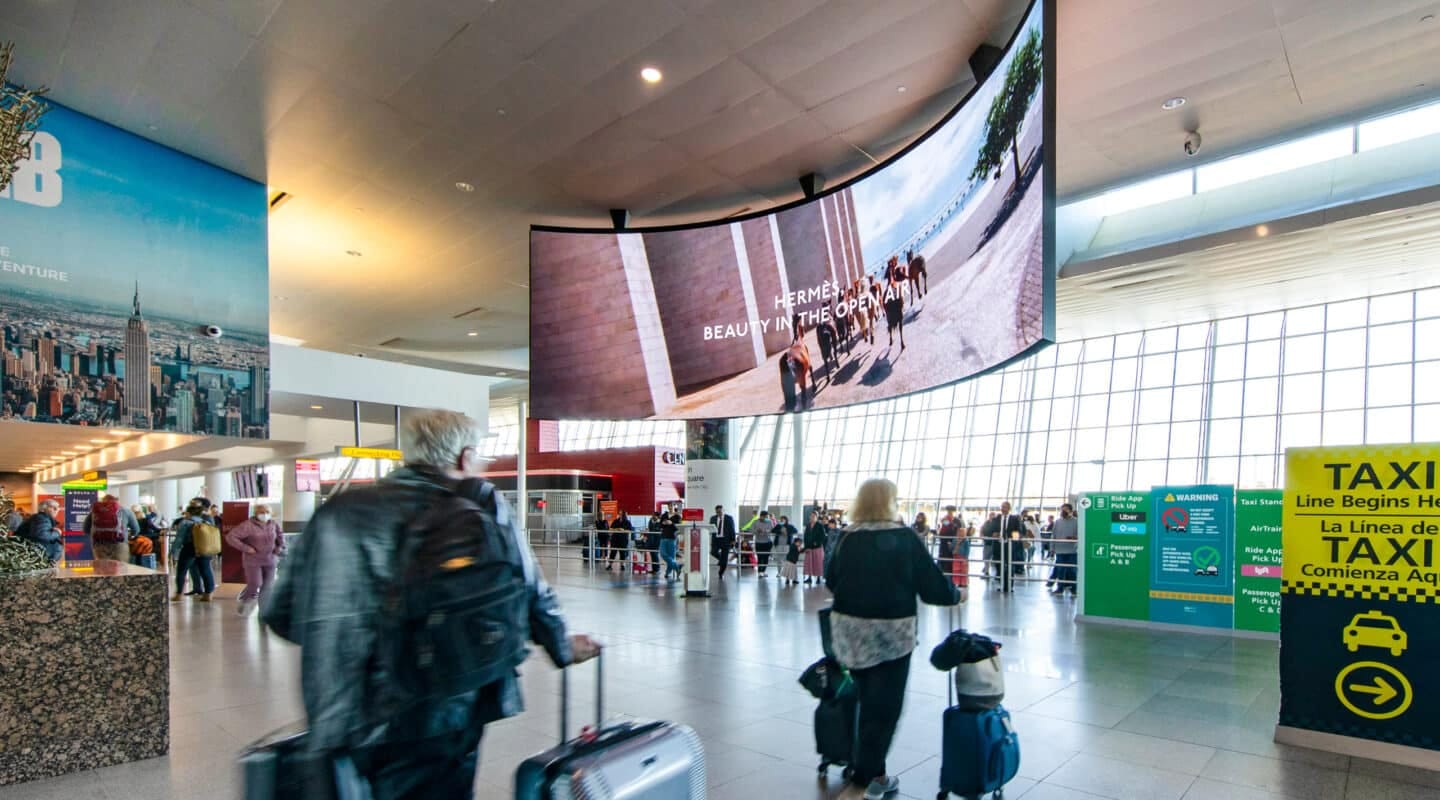
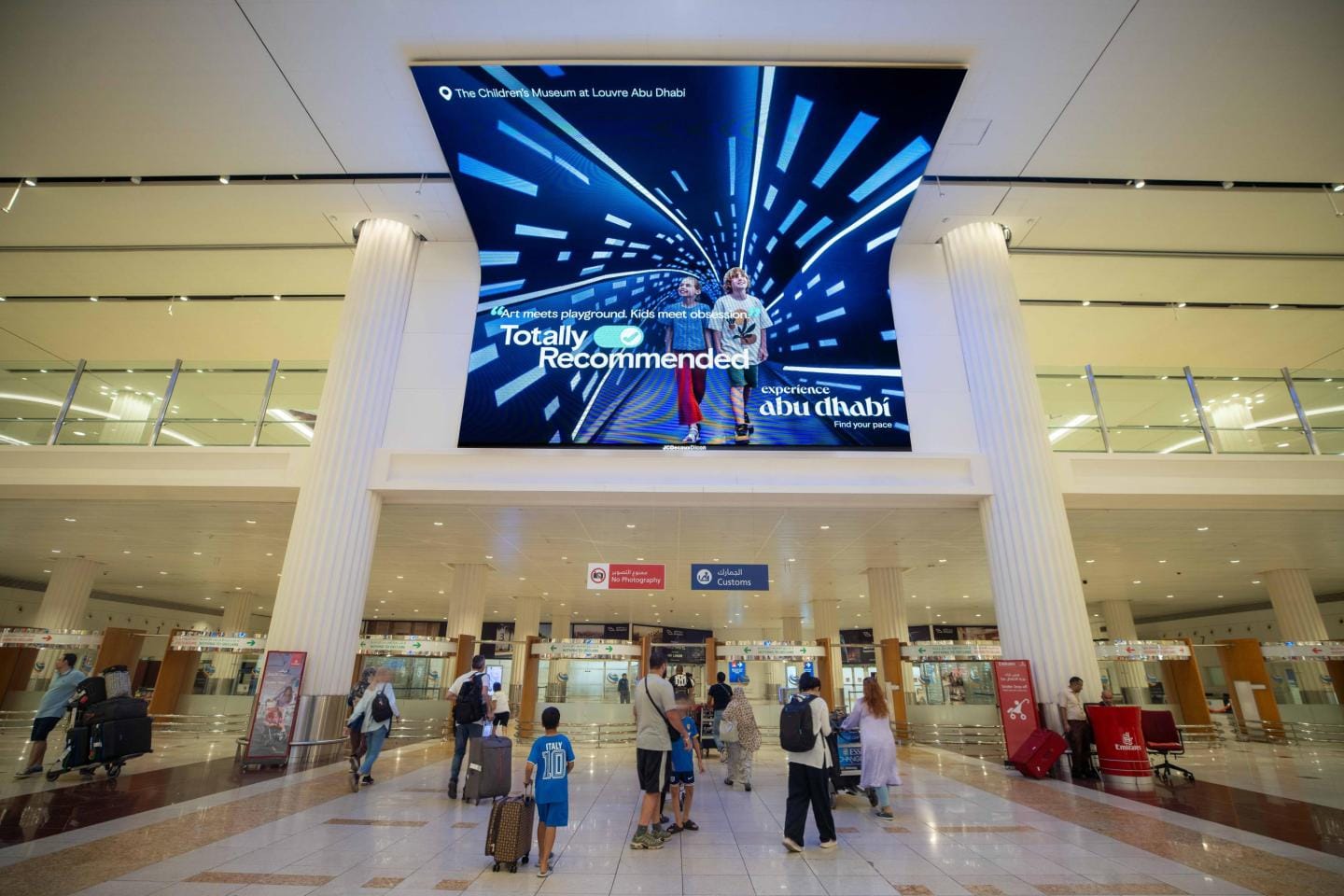
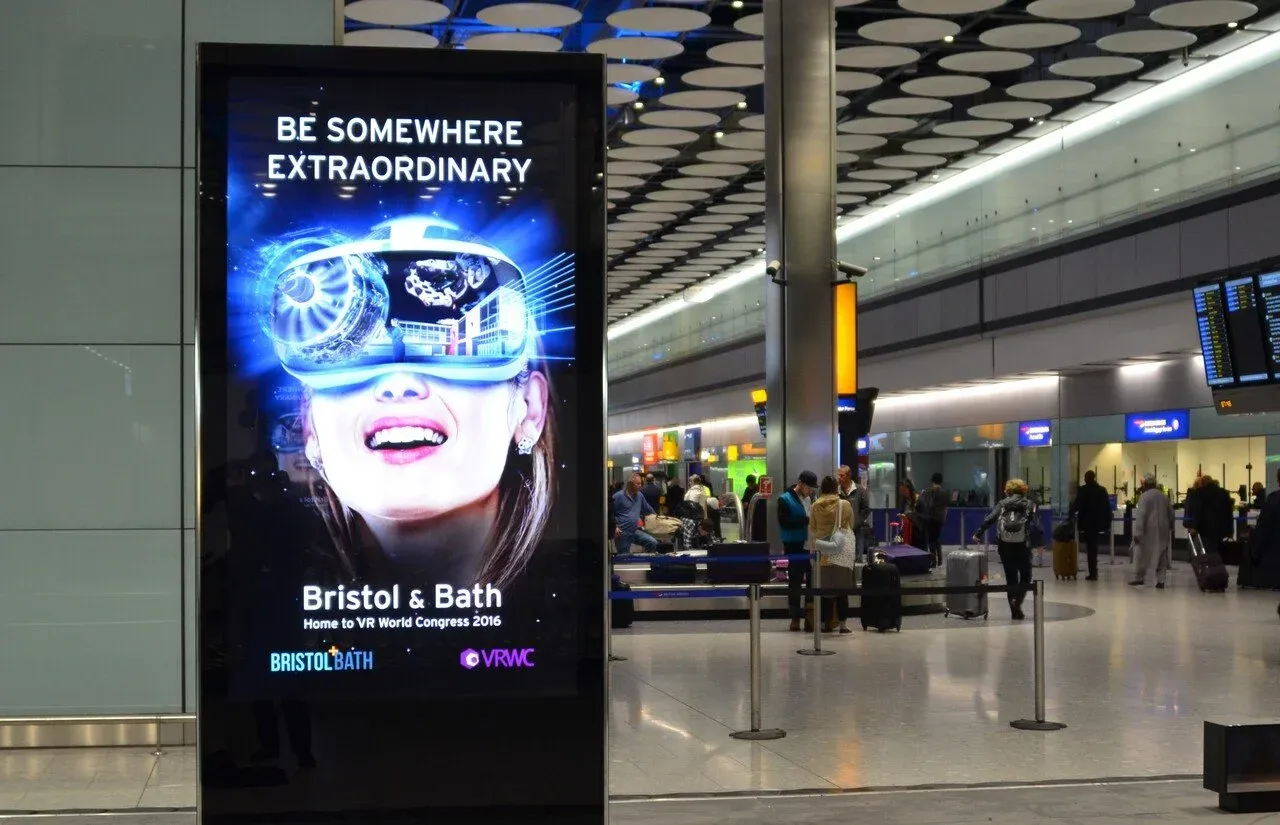
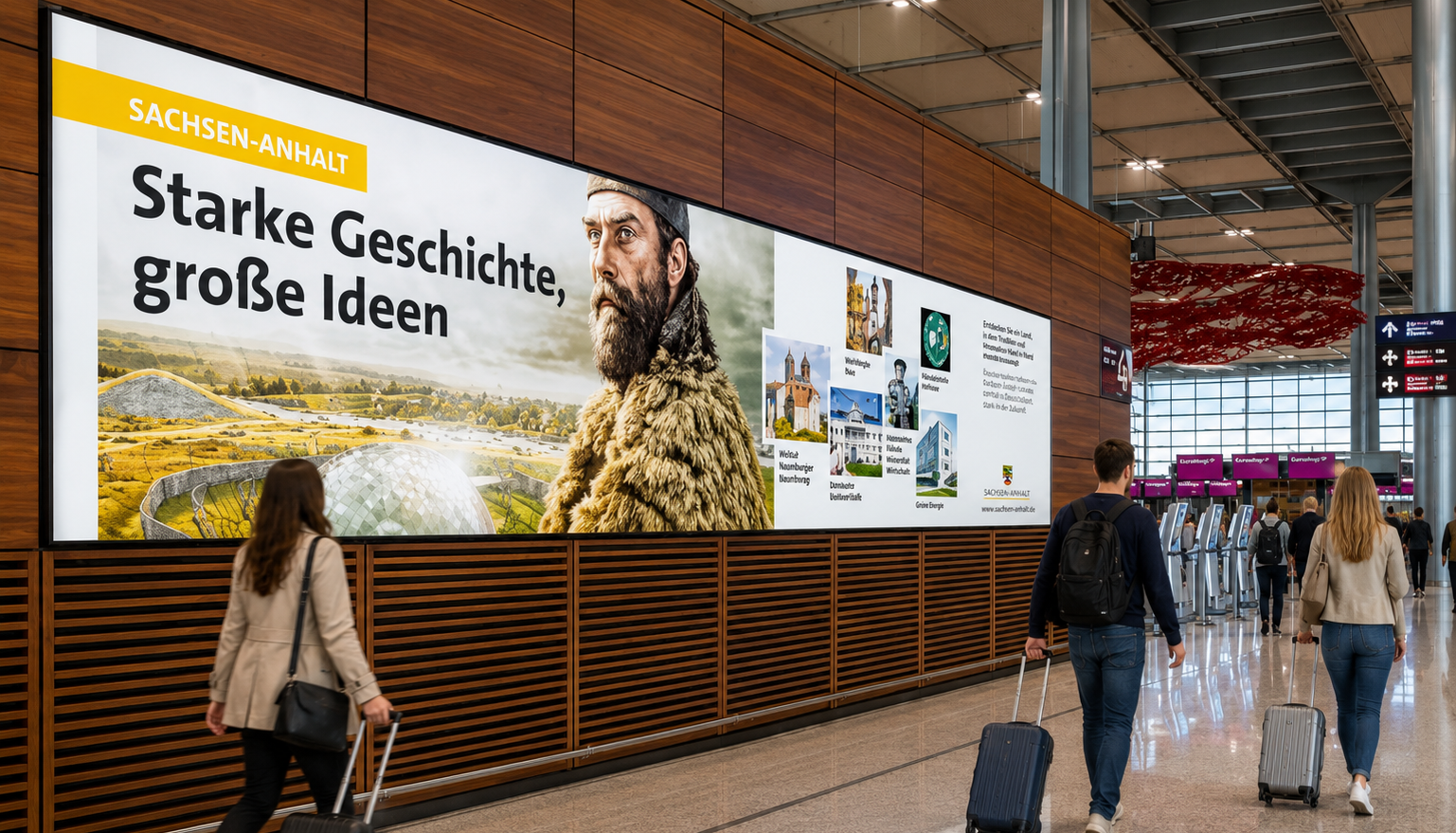
- BER Terminal 1's modern design delivers a significantly improved advertising environment compared to the former Tegel and Schönefeld facilities — purpose-built placement zones, high ceilings, and wide concourses create standout potential and sustained dwell-zone brand exposure across multiple passenger journey touchpoints that the legacy facilities could not provide
- Average dwell time at BER is approximately 1.5 to 2 hours for international departures — the airport's efficient rail connection from central Berlin means passengers arrive with sufficient time for substantive terminal dwell, and the terminal's retail and food and beverage environment encourages active engagement with the departures hall rather than passive waiting at gates
- The demographic heterogeneity of BER's premium audience — spanning startup technology wealth, creative industry influence, governmental institutional authority, and premium cultural tourism in roughly equal concentrations — creates a terminal environment where brand advertising with genuine intellectual content and authentic premium positioning achieves significantly higher engagement than generic luxury or B2B messaging; the Berlin audience is highly literate and will engage with advertising that respects their intelligence
- Masscom Global holds inventory access across BER's key placement zones in Terminal 1, with campaign planning intelligence aligned to the technology conference calendar, the Berlinale and Gallery Weekend event windows, the spring and autumn parliamentary and government travel peaks, and the seasonal tourism cycles that define BER's quarterly premium audience composition
Strategic Advertising Fit
Best Fit
- Technology and B2B enterprise platforms: BER's startup ecosystem audience is the most concentrated daily presence of early-to-mid stage technology company decision-makers at any European capital city airport — enterprise software, SaaS, developer tools, and B2B fintech brands will find an audience at BER whose professional domain is technology adoption by definition
- Venture capital, private equity, and wealth management: The startup founder completing a liquidity event, the Series B company CEO managing investor relations across London and New York, and the corporate venture capital executive whose Berlin portfolio requires regular monitoring — all are BER users whose newly liquid or actively managed wealth positions them as priority targets for premium financial services and investment management advertising
- Premium lifestyle and luxury brands with creative credibility: Berlin's HNWI class is brand-literate and authenticity-demanding — luxury brands that can demonstrate genuine creative heritage, sustainable production values, or cultural legitimacy will find an audience at BER that is not merely wealthy but culturally authoritative in their brand judgements
- International real estate developers (Lisbon, Barcelona, London, Miami): BER's tech and creative equity wealth class is an active international property investor whose preferred markets are well-defined and whose purchase decisions are in formation at the moment they transit BER
- Premium automotive brands (especially electric and technology-adjacent): Berlin's tech community has a specific relationship with electric and technology-integrated vehicles — Tesla's Gigafactory in Grünheide, Volkswagen's software division relocation to Berlin, and the city's general orientation toward sustainable urban mobility make premium EV brand advertising at BER exceptionally well-timed
- International education — MBA, executive, and graduate programmes: BER's federal government, startup, and professional community generates consistent demand for executive and MBA education from INSEAD, Harvard Business School, London Business School, and ESMT Berlin — September and January departure windows concentrate the terminal's highest family and executive education investment moments
- Creative tools, design software, and premium creative services: The Berlin creative industry traveller — the graphic designer, architect, musician, fashion director, and film producer — is a regular BER user whose professional toolkit purchasing decisions favour premium brand positioning and genuine creative community alignment over generic B2B positioning
- Premium wellness, fitness, and health brands: Berlin's professional class has a strong health and fitness culture — CrossFit, wellness retreats, organic nutrition, and preventive healthcare brand advertising at BER reaches an audience whose lifestyle values make them prime conversion prospects for premium wellness product categories
Brand Alignment at a Glance
| Category | Fit |
|---|---|
| B2B Technology and Enterprise Software | Exceptional |
| Venture Capital and Private Wealth Management | Exceptional |
| Premium Electric and Technology-Integrated Automotive | Exceptional |
| International Real Estate (Lisbon, Barcelona, London) | Strong |
| Luxury Lifestyle with Creative Credibility | Strong |
| International Executive Education | Strong |
| Creative Tools and Premium Design Software | Strong |
| Premium Wellness and Health Brands | Strong |
| Mass FMCG and Generic Consumer Brands | Moderate |
| Traditional Luxury Signalling without Creative Credibility | Poor fit |
Who Should Not Advertise Here
- Traditional luxury brands without authentic creative positioning: Conventional luxury brand advertising that relies on heritage signalling and status communication without genuine creative or intellectual content will underperform at BER — the Berlin premium audience is specifically resistant to luxury positioning that does not demonstrate substance behind the aesthetic; brands that cannot articulate what makes them genuinely excellent will not earn engagement from this audience
- Mass retail and price-led consumer brands: BER's premium audience is defined by quality preference over price sensitivity — budget consumer propositions and value-driven messaging achieve awareness but near-zero conversion against a technology, creative, and institutional leadership audience whose purchasing decisions are driven by authenticity and quality, not price
- Heavy industrial and manufacturing B2B categories without technology angles: Traditional heavy industrial procurement and supply chain brands without a technology, innovation, or sustainability dimension face audience misalignment — BER's B2B audience is the knowledge economy, not the industrial economy, and messaging that does not speak to innovation and digital transformation will not resonate with a startup and policy professional audience
Event and Seasonality Analysis
| Metric | Rating |
|---|---|
| Event Strength | High |
| Seasonality Strength | Medium |
| Traffic Pattern | Dual-Peak with stable year-round baseline |
Strategic Implication
BER operates on a more evenly distributed annual traffic pattern than purely tourism-anchored airports, with a stable year-round professional and government travel baseline supplemented by clearly defined event-driven peaks in February (Berlinale), April–May (Gallery Weekend, re:publica), September (IFA, Art Week), and October–November (autumn conference and investment season). This structure means that while summer delivers the highest absolute passenger volume, the highest per-traveller premium audience concentration occurs in the event-driven spring and autumn windows when the city's technology, creative, and institutional leadership are in simultaneous movement. Masscom Global structures BER campaigns to maintain a consistent brand presence across the year while concentrating creative investment in the Berlinale, IFA, and Gallery Weekend windows — the three moments when BER's terminal concentrates a global creative and technology industry elite whose combined cultural influence and purchasing authority exceeds what any volume metric can adequately represent.
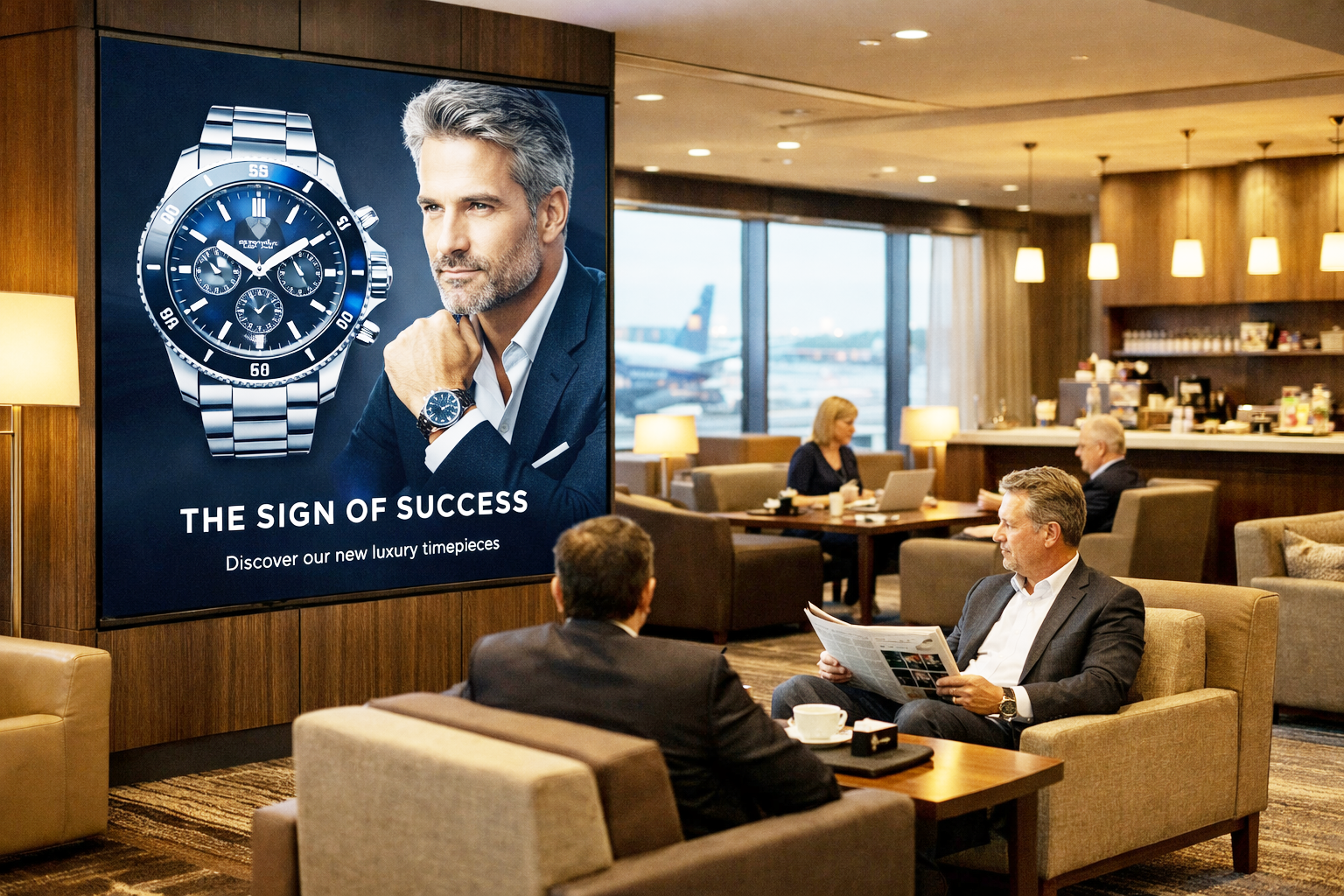
Poor Placement and Delays Affect Airport Campaigns
We help you move faster, access better inventory, and get it right now.
Talk to an ExpertFinal Strategic Verdict
Berlin Brandenburg Airport is the most intellectually demanding and commercially sophisticated advertising environment at a European capital city gateway — a terminal whose audience has been defined not by inherited institutional wealth but by the most consequential wealth-creation mechanisms of the twenty-first century economy: technology equity, creative intellectual property, policy influence, and real estate transformation. The traveller at BER is not impressed by luxury for luxury's sake. They are the individual who built the platform, designed the collection, shaped the regulation, or invested in the company — and who applies the same exacting standard to every brand that seeks their attention as to every professional decision they make. For B2B technology platforms, creative industry brands, premium financial services, international real estate developers, and luxury brands that can demonstrate genuine creative and intellectual credibility, BER offers access to the knowledge economy's most concentrated decision-making class in the format they prefer — substantive, intelligent, and on their terms. Masscom Global's access, cultural intelligence, and event-aligned campaign architecture make this the partner for brands serious about earning the attention of Europe's most discerning premium audience.
About Masscom Global
Masscom Global is a premium international airport advertising and media buying agency operating across 140 countries. With deep expertise in airport OOH, premium publications, and high-net-worth audience targeting, Masscom helps brands reach the world's most valuable travellers at the moments that matter most. For advertising packages, media rates, and campaign planning at Berlin Brandenburg Airport and airports across the globe, contact Masscom Global today.
Frequently Asked Questions
How much does airport advertising cost at Berlin Brandenburg Airport? Advertising costs at Berlin BER vary by format type, placement zone, campaign duration, and seasonal demand — with the Berlinale in February, IFA in September, and the spring and autumn tech conference seasons commanding premium rates due to concentrated high-value professional and creative industry audience windows. Terminal 1's modern multi-level layout offers a range of static large-format, digital, and experiential format options across departures, arrivals, and transit zones at different pricing tiers. Contact Masscom Global for current rate cards and available inventory across all formats at BER.
Who are the passengers at Berlin Brandenburg Airport? BER's passenger base combines three distinct high-value segments in near-equal measure: Berlin's resident technology and startup professional class — founders, engineers, investors, and startup employees — whose equity wealth and high-frequency international travel make them a premium B2B and lifestyle brand audience; the federal government and diplomatic institutional community whose governmental and policy travel generates year-round high-seniority professional traffic; and international creative, cultural, and premium tourism visitors drawn by Berlin's Berlinale, gallery scene, design culture, and nightlife whose income and brand sophistication exceed the European average leisure traveller.
Is Berlin Brandenburg Airport good for luxury brand advertising? BER is a strong luxury brand environment for brands that can demonstrate genuine creative credibility and authentic quality positioning. Berlin's premium consumer class is one of Europe's most brand-literate — they have lived in a city that defines creative culture and apply the same authenticity standard to commercial brands as to art and design. Conventional luxury signalling without intellectual substance will underperform; luxury brands with genuine creative heritage, sustainable credentials, or cultural community alignment will find BER's audience among the most deeply engaging in European airport advertising.
What is the best airport in Germany to reach startup and technology wealth? BER is Germany's only airport that concentrates startup and technology equity wealth at scale — Berlin's tech ecosystem is not distributed across German cities but concentrated in the capital, making BER the primary access point for this specific wealth class. Frankfurt serves the traditional financial and corporate executive class; Munich serves the automotive and engineering industrial elite; Berlin serves the digital economy's founders and builders. For brands targeting the technology wealth generation specifically, BER has no German equivalent. Masscom Global can build multi-airport German strategies combining BER, Frankfurt, and Munich for brands requiring coverage across all three German wealth archetypes simultaneously.
What is the best time to advertise at Berlin Brandenburg Airport? BER offers four high-value advertising windows: February (Berlinale — global film and media industry elite), April–May (Gallery Weekend and re:publica — art investment community and digital economy leadership), September (IFA and Art Week — consumer electronics industry and art market simultaneously), and October–November (autumn venture capital and government policy season). The September window — combining IFA's global consumer technology executive audience with Berlin Art Week's premium art investment community — delivers BER's most commercially diverse premium audience concentration in a single month and represents the highest-yield single-period investment at this terminal for most brand categories.
Can international real estate developers advertise at Berlin Brandenburg Airport? BER is a commercially viable real estate advertising channel for developers targeting Berlin's technology equity wealth class, whose primary outbound investment destinations are Lisbon, Barcelona, London, and Miami. The spring and autumn professional travel peaks are the most intent-concentrated periods for real estate messaging at this terminal, particularly for Portuguese and Spanish property developers whose Golden Visa and digital nomad visa programmes align precisely with the BER tech community's lifestyle and tax planning motivations. Masscom Global can structure corridor campaigns combining BER placements with receiving-end advertising in Lisbon, Barcelona, and London.
Which brands should not advertise at Berlin Brandenburg Airport? Traditional luxury brands relying solely on heritage and status signalling without genuine creative or intellectual content face the specific challenge of a Berlin audience that is culturally suspicious of conventional luxury positioning. Mass-market budget consumer brands and price-led FMCG will achieve awareness but minimal conversion against a knowledge economy professional audience whose purchasing decisions are driven by authenticity and quality standards that discount propositions cannot satisfy.
How does Masscom Global help brands advertise at Berlin Brandenburg Airport? Masscom Global provides full-service airport advertising execution at BER — from audience intelligence and event-calendar campaign planning through to inventory access across Terminal 1's key placement zones, creative consultation for the German and English-language audiences that define BER's premium segments, and performance reporting aligned to the airport's event-driven and seasonal traffic patterns. Masscom's ability to activate BER campaigns in coordination with placements in London, Lisbon, Tel Aviv, and New York allows brands to intercept the same Berlin HNWI traveller at every point of their international corridor. Contact Masscom Global to discuss media rates, format availability, and campaign strategy at Berlin Brandenburg Airport.