


Airport at a Glance
| Field | Detail |
|---|---|
| Airport | Presidente Prudente State Airport (Adhemar de Barros) |
| IATA Code | PPB |
| Country | Brazil |
| City | Presidente Prudente, Sao Paulo |
| Annual Passengers | 319,059 (2019, most recent verified full-year figure); post-2019 official annual totals: Data not available |
| Primary Audience | Agribusiness owners and rural landholders, regional corporate and public-sector executives, university-linked family travellers |
| Peak Advertising Season | December to January, July, and September to October |
| Audience Tier | Tier 3 |
| Best Fit Categories | Agricultural machinery and inputs, rural credit and agri-finance, pickup trucks and utility vehicles, private education |
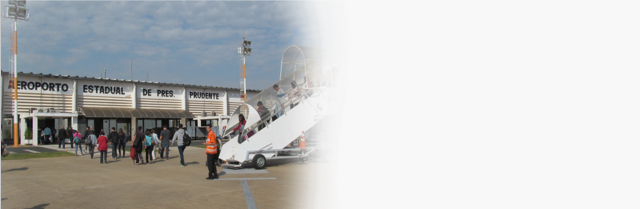
A low-volume, high-asset-value airport where a small passenger count masks unusually concentrated land wealth.
Presidente Prudente is the air gateway to the Alta Sorocabana and Pontal do Paranapanema regions of western Sao Paulo state, a catchment where wealth sits in land, cattle, sugarcane and grain rather than in urban salaries. Passenger volume is modest by Brazilian standards, but the composition is what matters commercially: a high proportion of travellers are farm owners, agro-industrial operators, regional bank and cooperative executives, and public administrators moving between the interior and Sao Paulo or Campinas. This is a decision-maker airport, not a mass tourism airport. For advertisers, the value proposition is precision rather than reach.
The airport matters because it sits on a domestic wealth corridor rather than an international one. Capital generated in this catchment moves eastward to Sao Paulo for banking, medical treatment, private education and luxury retail, and the aircraft is the preferred vehicle for that movement because the road journey to the capital exceeds eight hours. Every passenger boarding at PPB has effectively self-selected as someone who values time enough to pay for it. Masscom Global treats airports like this as sniper buys inside broader Brazilian media plans, where a small footprint delivers disproportionate access to landowning capital.
Advertising Value Snapshot
- Passenger scale: 319,059 passengers in 2019, representing 12 percent growth over the prior year; more recent verified annual totals: Data not available
- Traveller type: Agribusiness proprietors and rural landholders, regional corporate and government executives, family and student traffic tied to the local university cluster
- Airport classification: Tier 3, a regional domestic airport with single-terminal scale and no scheduled international service
- Commercial positioning: Known as the aviation hub of western Sao Paulo's agricultural frontier, serving roughly fifty surrounding municipalities
- Wealth corridor signal: Sits on the interior-to-Sao Paulo capital corridor, the primary channel through which agricultural income converts into financial, real estate and education spending
Advertising opportunity: Low terminal clutter and a compact passenger journey mean a single well-placed brand presence can achieve near-total audience coverage, an outcome impossible at metropolitan airports. Masscom Global secures placement in the highest-dwell zones of the terminal and structures buys so that agri-sector and financial brands own the environment for the full campaign period. Our team plans PPB alongside comparable interior Brazilian airports to build a state-wide agricultural decision-maker network from a single media plan.
Airport Advertising is Complex to Get Right
We help you execute faster, with proven results and local insight most planners lack starting now.
Talk to an ExpertCatchment Area and Economic Drivers
Top 10 Cities within 150 km — Marketer Intelligence:
- Presidente Prudente: The catchment's commercial and professional command centre, home to the regional headquarters of banks, cooperatives, agro-dealers and a large private university, producing a concentrated audience of professionals and business owners with urban spending habits and rural income
- Presidente Epitacio: River-port and cattle-trade town on the Parana; the audience skews toward livestock traders and transport operators who buy heavy vehicles, land and machinery rather than lifestyle goods
- Presidente Venceslau: Sugarcane and ethanol processing base; produces a supervisory and technical management audience with stable salaried income and strong appetite for financed vehicles and private schooling
- Adamantina: Education and health services centre for the northwest; delivers a professional household audience where medical, dental and academic incomes support discretionary family spending
- Dracena: Dairy and cattle belt with a dense population of mid-sized landowners, an audience highly responsive to agricultural equipment, veterinary inputs and rural insurance messaging
- Assis: Grain, sugarcane and industrial mix on the Parana state border; generates both agro-executive and manufacturing management audiences, and functions as a competing catchment edge where air access decisions are actively made
- Tupa: Agricultural machinery distribution and cattle auction hub; audience is transactional and high-ticket, evaluating capital equipment purchases on a seasonal cycle
- Rancharia: Sugarcane and cattle municipality where wealth is land-concentrated in relatively few families, making it a disproportionate source of high-value travellers relative to population
- Osvaldo Cruz: Light manufacturing and agro-processing town producing a small-business-owner audience with credit needs and steady cross-border movement to the regional capital
- Teodoro Sampaio: Pontal do Paranapanema frontier municipality tied to eucalyptus, cattle and land-tenure activity; audience includes large-holding proprietors and agribusiness legal and consulting professionals
NRI and Diaspora Intelligence: This catchment has no significant outbound diaspora of the kind seen in South Asian or Middle Eastern airports. The dominant audience movement is internal migration of capital rather than people. Wealth accumulated by landowning families in the Pontal and Alta Sorocabana is systematically redeployed into Sao Paulo city assets, apartments in Campinas and Ribeirao Preto, private banking relationships in the capital, and increasingly into United States dollar-denominated instruments. Historic Japanese and Italian settlement in western Sao Paulo has left a legacy of multi-generational family agribusinesses, which for advertisers means purchase decisions are made at family-council level and respond to legacy, succession and land-value messaging rather than individual aspiration.
Economic Importance: The catchment economy is built on cattle ranching, sugarcane and ethanol, soy and grain, dairy, eucalyptus forestry and the agro-industrial processing that surrounds all of them. Layered above this is a substantial private education and healthcare services economy centred on Presidente Prudente. That structure produces three distinct advertiser audiences: asset-rich proprietors with high credit capacity, salaried technical and supervisory managers, and professional service households. Each responds to different price points, but all three concentrate at the same single terminal.
Business and Industrial Ecosystem
- Cattle ranching and beef processing: Produces proprietor-class travellers with large land holdings and high-value equipment and financing needs, the single most valuable audience segment at this airport
- Sugarcane, ethanol and bioenergy: Generates mill management, agronomy and industrial engineering travellers who move regularly to Sao Paulo and Campinas for commercial and regulatory meetings
- Grain, soy and agricultural inputs distribution: Creates a trader and dealer audience with seasonal cash cycles and pronounced pre-harvest purchasing windows
- Private higher education and regional healthcare: Delivers academic, medical and administrative professional travellers plus the parent and student traffic that follows them
Passenger Intent — Business Segment: Business travellers at PPB are overwhelmingly flying to Sao Paulo Congonhas or Campinas Viracopos for banking, commodity trading, regulatory, legal and supplier meetings that cannot be conducted remotely. They travel with intent and under time pressure, which makes them attentive to messages framed around efficiency, capital access and asset protection. Agri-finance, rural credit lines, machinery brands, commodity trading platforms, insurance, legal and tax advisory, and premium utility vehicle brands intercept this segment most effectively.
Strategic Insight: The business audience here is valuable because it is uncontested and unusually homogeneous. At a metropolitan airport an agricultural machinery brand pays to reach millions of irrelevant passengers; at PPB nearly every business traveller sits inside or adjacent to the agricultural value chain. That density means a B2B advertiser can achieve category ownership of an entire regional economy's decision-makers within one terminal. Masscom Global builds these buys specifically for brands that need depth of relevance rather than breadth of reach.
Tourism and Premium Travel Drivers
- Parana river corridor at Presidente Epitacio and the Sergio Motta reservoir: Sport fishing, boating and river tourism that attracts domestic leisure travellers with equipment, vehicle and hospitality spending
- Pontal do Paranapanema and Morro do Diabo State Park: Ecotourism and nature travel drawing domestic visitors from Sao Paulo state, a segment receptive to outdoor gear, vehicle and financial services messaging
- Agricultural trade fairs and cattle expositions across the catchment: Generate concentrated inbound business-leisure traffic during defined windows, the highest-intent commercial audience of the year
- Seasonal northeast beach routes operated from the airport: Family holiday traffic to destinations including Porto Seguro, Maceio, Natal and Recife, representing confirmed discretionary spending
Passenger Intent — Tourism Segment: Leisure travellers at PPB are almost entirely domestic Brazilian families and groups who have already committed significant discretionary budget to a package holiday, most visibly on the seasonal northeast beach services. They are in pre-departure spending mode at the terminal, receptive to travel insurance, mobile data and roaming offers, banking and card products, resort and hospitality brands, and duty-adjacent retail. Because these routes operate only in defined seasons, the leisure audience arrives in dense, predictable waves rather than continuously, which makes short high-weight campaign bursts more efficient than year-round presence.
Travel Patterns and Seasonality
- Peak seasons: December to January, driven by Brazilian summer school holidays, Christmas and New Year family travel, and the seasonal northeast leisure routes; July, driven by the mid-year school break and winter holiday travel; September to October, driven by the agricultural fair, cattle exposition and pre-harvest commercial calendar
- Traffic volume data: Verified monthly passenger breakdowns for this airport: Data not available
Event-Driven Movement:
- Carnival (February or March): National holiday period generating outbound family and group leisure movement toward coastal destinations, a short high-intensity window for travel, telecom and financial brands
- Agricultural and cattle expositions (September to October): Regional trade events bringing agribusiness proprietors, dealers and machinery buyers into concentrated movement, the single highest-value advertiser timing window of the year
- Brazilian Independence and Children's Day holiday cluster (September and October): Extended weekend travel producing family leisure peaks that favour retail, hospitality and consumer brands
- University academic calendar transitions (February and August): Student and parent movement tied to the Presidente Prudente education cluster, a defined window for education finance, housing and consumer technology brands
- December to January harvest and year-end financial close: Combined commercial settlement and holiday travel, when agri-finance and banking messages meet audiences actively making capital decisions
It’s Not Just Where You Advertise - It’s How Fast You Execute
We combine local insight with fast rollout to deliver results for you, now.
Talk to an ExpertAudience and Cultural Intelligence
Top 2 Languages:
- Portuguese: The overwhelmingly dominant language of the catchment and the only viable primary creative language. Brazilian Portuguese with regional interior register performs better than formal metropolitan copy with this landowning and agro-professional audience, because trust in this market is built on familiarity rather than polish
- Spanish: Commercially relevant as a secondary language due to proximity to Mato Grosso do Sul, the Parana river corridor and cross-border agricultural and trade linkages toward Paraguay and Argentina. Useful for agribusiness, machinery and logistics brands operating regionally, though secondary in weight
Major Traveller Nationalities: Passenger nationality at PPB is almost entirely Brazilian, with movement concentrated between western Sao Paulo state and the Sao Paulo and Campinas metropolitan areas. There is no meaningful foreign inbound passenger base, since the airport carries no scheduled international service. For campaign creative this simplifies the problem considerably: single-language Portuguese execution, domestic cultural references, and pricing in reais. Foreign brands should treat this airport as a route to Brazilian agricultural capital rather than a route to international travellers.
Religion — Advertiser Intelligence:
- Roman Catholic (majority of the catchment, consistent with Sao Paulo state's predominantly Catholic profile): Christmas, Easter, Our Lady of Aparecida in October and local patron saint festivals drive family gathering travel and gift spending. These windows favour retail, consumer electronics, jewellery, hospitality and family financial products, and the October Aparecida holiday coincides usefully with the agricultural exposition season
- Evangelical and Protestant (a substantial and growing minority across interior Sao Paulo): This community drives conference and congregational travel, and its spending mindset favours savings, education, family security and debt avoidance. Advertisers benefit from framing messages around provision, family stability and long-term security rather than status or indulgence
- Other faiths and no religious affiliation (smaller share): Includes Spiritist and Afro-Brazilian traditions and a secular segment. Precise catchment-level percentage breakdowns for this airport: Data not available
Behavioral Insight: This audience thinks in asset terms rather than income terms. Wealth here is measured in hectares, head of cattle and harvest yield, which means purchase decisions are cyclical, cash-flow dependent and heavily concentrated after harvest and settlement periods. Trust is relationship-driven and locally validated, so brands that signal permanence, service presence and understanding of the agricultural calendar outperform brands leading with aspiration or novelty. Messaging that connects a purchase to productivity, land value or family succession converts far better than lifestyle positioning.
Outbound Wealth and Investment Intelligence
The outbound passenger at PPB is commercially unusual because their outbound journey is domestic while their capital deployment is increasingly international. Wealth generated from land and commodities in this catchment does not stay in the interior. It moves first to Sao Paulo's private banking and real estate market, and from there a growing share moves offshore. The traveller sitting in this terminal is frequently in the middle of exactly that conversation, which is what makes the environment valuable to financial, property and education advertisers.
Outbound Real Estate Investment: Brazilian agricultural wealth has an established preference for United States residential property, with Florida and specifically the Miami and Orlando corridors dominating as the primary offshore real estate destination, driven by dollar hedging, rental yield and family use. Portugal remains the leading European destination for Brazilian buyers due to language, ancestry-based citizenship pathways and residency programmes, with Lisbon, Porto and the Algarve as focal markets. Secondary interest extends to Spain and to Uruguay's coastal market for regional diversification. International developers targeting Brazilian agricultural capital should treat interior Sao Paulo airports as an efficient channel, because this audience is asset-rich, dollar-conscious and rarely reached by property marketing concentrated in Sao Paulo city alone. Masscom Global places developer campaigns in front of this audience at the exact point in their journey when they are travelling to meet their bankers.
Outbound Education Investment: Families from this catchment send children abroad primarily to the United States, Portugal, Canada, Spain and the United Kingdom, with Portugal carrying disproportionate weight because of language and recognised degree pathways. Australia and Ireland attract English-language and vocational study traffic. The spending profile is a multi-year family commitment funded from land or commodity proceeds, with decisions typically made jointly across two generations. International universities, boarding schools, pathway providers and education consultancies advertise here to reach households with the asset base to fund overseas study but limited exposure to international education marketing.
Outbound Wealth Migration and Residency: The most relevant programmes for this audience are Portugal's residency and ancestry-linked citizenship routes, which remain the leading second-passport pathway for Brazilian families, alongside Italian and Spanish ancestry-based citizenship claims that are unusually common given western Sao Paulo's European settlement history. United States investor visa routes attract the upper tier of agricultural wealth, and Caribbean citizenship-by-investment programmes attract holders seeking mobility rather than relocation. Residency advisory firms, immigration law practices and private banks find this catchment underserved relative to its asset base.
Strategic Implication for Advertisers: International brands should read PPB as the collection point for a capital corridor that starts in western Sao Paulo farmland and ends in Miami, Lisbon and Sao Paulo's private banking towers. Property developers, universities, residency advisors and wealth managers reach a concentrated, uncontested pool of asset-rich decision-makers here at a fraction of metropolitan cost. Masscom Global activates both ends of that corridor simultaneously, placing brands at PPB and at the destination-market airports their capital is flowing toward.
Airport Infrastructure and Premium Indicators
Terminals:
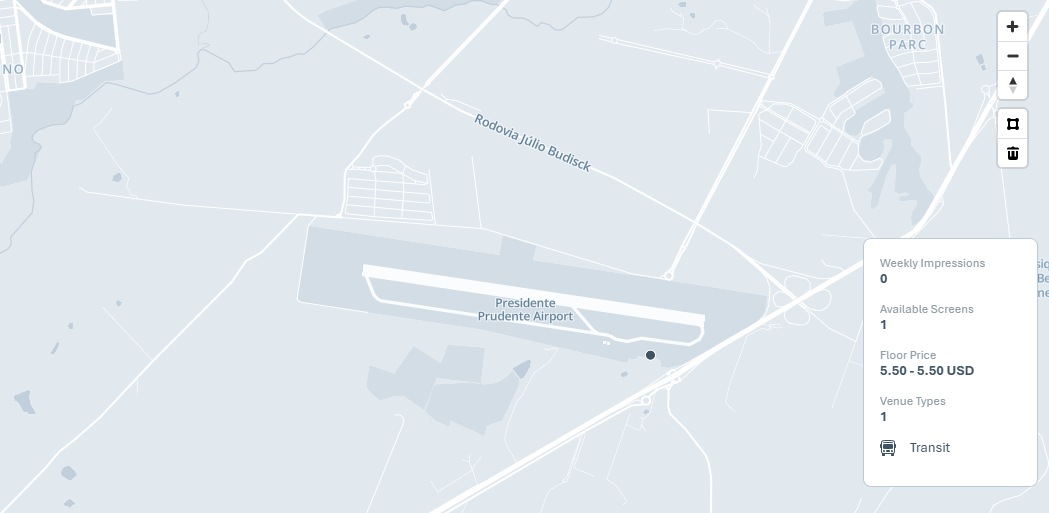
- Single passenger terminal serving all scheduled domestic traffic, with a compact linear passenger flow from entrance through check-in to a consolidated departure area. This configuration means every departing passenger passes through the same narrow set of touchpoints, producing near-universal exposure for correctly placed inventory
- Runway length of approximately 2,110 metres supports narrowbody and regional jet operations. The airport is operated under state concession by a private consortium following the 2021 auction of Sao Paulo state regional airports, and operating hours run from early morning to late evening daily
Premium Indicators:
- Dedicated commercial airline lounge infrastructure: Data not available. The premium signal at this airport comes from passenger composition rather than facility tier
- General aviation and FBO handling facilities are available, and the airport serves private and business aircraft movements from agribusiness operators in the catchment, a strong wealth indicator disproportionate to the airport's scheduled passenger count
- Luxury hotel at or adjacent to the airport: Data not available. Business accommodation is concentrated in Presidente Prudente city, five kilometres away
- The airport recorded close to 13,000 aircraft operations in 2019 against 319,059 passengers, a ratio that reflects substantial general aviation, agricultural aviation and training activity alongside scheduled service
Forward-Looking Signal: Transfer of Sao Paulo's state regional airports to private concession operation has set the direction of travel: commercial modernisation, improved terminal amenity and active pursuit of additional scheduled routes across the interior network. Continued expansion of seasonal leisure routes to the Brazilian northeast and the underlying growth trend visible before 2020 both point to a rising commercial profile. Advertisers who establish presence while this airport is still priced as a small regional facility will hold position as terminal upgrades and route additions increase its value. Masscom Global advises clients to secure placement now and lock rates ahead of that repricing.
Airline and Route Intelligence
Top Airlines: Azul Brazilian Airlines and Gol Linhas Aereas operate the scheduled service at this airport.
Key International Routes: The airport operates no scheduled international routes. All international travel from this catchment connects through Sao Paulo Guarulhos or Campinas Viracopos.
Domestic Connectivity: Core year-round services connect Presidente Prudente to Campinas Viracopos and to Sao Paulo Congonhas, with Campinas functioning as the connecting gateway to the wider national network. Seasonal and leisure services extend to Porto Seguro and, in defined periods, to northeast destinations including Maceio, Natal and Recife. Verified weekly frequency figures by route: Data not available.
Wealth Corridor Signal: The route map tells advertisers exactly what this audience is doing. The Congonhas service is a pure wealth and business corridor, since Congonhas is the downtown financial-district airport of Sao Paulo and passengers pay a premium to land beside their bankers, lawyers and commodity brokers rather than at a distant international hub. The Campinas service is a connectivity corridor, feeding onward domestic and international travel. The northeast beach routes are unambiguous leisure corridors carrying committed discretionary spend. That separation is a gift to media planners, because departure timing and route alone segment the audience into business capital, connecting travellers and holiday spenders without any additional data.
Media Environment at the Airport
- Single compact terminal with very low advertising clutter compared with Sao Paulo Congonhas, Viracopos or Guarulhos, meaning a brand can achieve visual dominance of the environment at a scale that is financially impossible at metropolitan airports
- Dwell time is driven by limited daily frequency and consolidated departure banks, which concentrates passengers into the same waiting areas for extended periods; with a small number of daily rotations, exposure repetition against the same repeat business travellers is exceptionally high
- The premium environment signal comes from audience quality rather than architecture, since general aviation activity and the Congonhas business corridor place brands alongside proprietor and executive travellers rather than mass leisure crowds
- Masscom Global provides inventory access across the terminal's highest-visibility positions, executes with local operational support, and plans PPB in coordination with other interior Brazilian airports so clients build a full agricultural decision-maker network under one campaign structure
Strategic Advertising Fit
Best Fit:
- Agricultural machinery, equipment and implement brands: Tractors, harvesters, sprayers and irrigation reach proprietor buyers with active capital budgets and land-backed credit capacity
- Agri-finance, rural credit and crop insurance: This audience borrows against land and harvest cycles and evaluates credit products constantly, making the environment ideally timed
- Pickup trucks and premium utility vehicles: The default status and utility purchase of the Brazilian rural proprietor class, with high replacement frequency
- Agricultural inputs, seed, veterinary and animal nutrition: Direct category alignment with the cattle, dairy and grain economy of the catchment
- Private banking, wealth management and offshore investment services: Asset-rich households with limited exposure to competing wealth marketing outside Sao Paulo city
- International real estate developers, particularly United States and Portugal focused: Matches documented outbound property preferences of Brazilian agricultural wealth
- International education, universities and study-abroad consultancies: Multi-generational family decisions funded from commodity proceeds, reached at the point of travel
- Residency, second-citizenship and immigration advisory: Strong ancestry-based eligibility in this catchment combined with the asset base to act on it
Brand Alignment at a Glance:
| Category | Fit |
|---|---|
| Agricultural machinery and equipment | Exceptional |
| Agri-finance and rural credit | Exceptional |
| Pickup trucks and utility vehicles | Strong |
| Private banking and wealth management | Strong |
| International education and universities | Strong |
| International real estate development | Moderate |
| Travel and telecom services | Moderate |
| Luxury fashion, watches and duty-free retail | Poor fit |
Who Should Not Advertise Here:
- International luxury fashion, high jewellery and watch houses: The wealth is real but the consumption pattern is asset-directed rather than display-directed, and these purchases are made in Sao Paulo or abroad, not influenced at a regional interior terminal
- Global airline and hotel loyalty programmes targeting international frequent flyers: There is no international traffic and no long-haul frequent flyer base at this airport to convert
- Youth-focused streaming, fintech apps and urban lifestyle brands: The passenger profile skews toward established proprietors and professional households rather than the young metropolitan digital-first consumer these brands need at scale
Event and Seasonality Analysis
- Event Strength: Medium
- Seasonality Strength: High
- Traffic Pattern: Dual-Peak
Strategic Implication: Advertisers should not spread budget evenly across the year at this airport. The two windows that justify weight are September to October, when the agricultural exposition and pre-harvest commercial calendar concentrates the highest-value proprietor and buyer audience, and December to January, when harvest settlement, year-end financial decisions and family leisure travel overlap to create both the largest volume and the strongest spending mindset. Masscom Global structures campaigns around this rhythm, front-loading agri-sector and financial messaging into the September to October decision window and shifting consumer, travel and family-oriented creative into the December to January peak.

Poor Placement and Delays Affect Airport Campaigns
We help you move faster, access better inventory, and get it right now.
Talk to an ExpertFinal Strategic Verdict
Presidente Prudente State Airport is not a volume buy and should never be evaluated as one. It is a precision buy into the decision-making layer of one of Brazil's most productive agricultural economies, where 319,059 annual passengers include a density of landowning proprietors, agro-industrial executives and rural credit borrowers that no metropolitan terminal can replicate. The Congonhas corridor confirms what the passenger profile suggests: this audience flies to meet capital, and it flies often enough that repetition against the same high-value individuals is achievable within a single campaign period. Agricultural machinery brands, agri-finance and insurance providers, utility vehicle manufacturers, private banks, international universities and residency advisors will find no more efficient single point of access to western Sao Paulo's asset wealth. Add the low clutter environment, the compact single-terminal passenger flow, and pricing that has not yet caught up to the airport's post-concession trajectory, and the case for acting now is clear. Masscom Global holds the inventory access, the local execution capability and the corridor intelligence to convert that case into a campaign that performs.
About Masscom Global
Masscom Global is a premium international airport advertising and media buying agency operating across 140 countries. With deep expertise in airport OOH, premium publications, and high-net-worth audience targeting, Masscom helps brands reach the world's most valuable travellers at the moments that matter most. For advertising packages, media rates, and campaign planning at Presidente Prudente State Airport and airports across the globe, contact Masscom Global today.
Frequently Asked Questions
How much does airport advertising cost at Presidente Prudente Airport? Cost at PPB is determined by format, position within the terminal, campaign duration and seasonal demand. Because this is a compact single-terminal airport, high-impact positions are limited in number, which means rates move with availability rather than following a fixed card. The September to October and December to January windows carry the highest demand and price accordingly. Masscom Global provides current rates and availability on request for any format at this airport.
Who are the passengers at Presidente Prudente Airport? Passengers are almost entirely Brazilian domestic travellers from western Sao Paulo state. The dominant segments are agribusiness proprietors and rural landholders travelling for banking, commodity and supplier meetings, regional corporate and public-sector executives moving to Sao Paulo Congonhas and Campinas, professional households tied to the local education and healthcare cluster, and seasonal family leisure traffic on northeast beach routes. There is no international scheduled traffic and no foreign inbound passenger base.
Is Presidente Prudente Airport good for luxury brand advertising? It is strong for asset-directed luxury and weak for display luxury. Private banking, offshore wealth management, international property, premium utility vehicles and international education perform well because this audience holds substantial land and commodity wealth. Fashion houses, high jewellery and watch brands perform poorly, because this catchment's consumption of those categories happens in Sao Paulo city or abroad, not at a regional interior terminal.
What is the best airport in Brazil to reach HNWI audiences? Sao Paulo Guarulhos and Congonhas remain Brazil's primary high-net-worth airports by absolute volume, and Congonhas in particular concentrates financial-sector wealth. Presidente Prudente occupies a different and complementary position: it is the most efficient access point to agricultural and land-based wealth in western Sao Paulo, an audience that is asset-rich, under-marketed to, and largely invisible in metropolitan media plans. Brands seeking Brazilian HNWI reach should treat Congonhas as the volume buy and interior airports like PPB as the depth buy.
What is the best time to advertise at Presidente Prudente Airport? September to October is the strongest window for business and agri-sector advertisers, because the agricultural exposition and pre-harvest purchasing calendar concentrates buyers and decision-makers. December to January delivers the highest overall passenger volume, combining harvest settlement, year-end financial activity and family holiday travel. July offers a secondary leisure peak on the mid-year school break. Campaigns weighted into these windows outperform flat annual presence at this airport.
Can international real estate developers advertise at Presidente Prudente Airport? Yes, and the audience fit is stronger than the passenger count suggests. Brazilian agricultural wealth from this catchment invests actively in United States property, with Florida and the Miami and Orlando corridors leading, and in Portugal, where Lisbon, Porto and the Algarve benefit from language and ancestry-linked residency pathways. These households are asset-rich and dollar-conscious but rarely reached by property marketing concentrated in Sao Paulo city. Masscom Global places developer campaigns at PPB and at the destination-market airports this capital flows toward.
Which brands should not advertise at Presidente Prudente Airport? International luxury fashion, high jewellery and watch brands should avoid this airport, because the wealth here is directed into land, equipment and financial assets rather than visible consumption. Global airline and hotel loyalty programmes targeting international frequent flyers have no audience, since the airport carries no scheduled international service. Youth-oriented streaming, app and urban lifestyle brands lack the demographic scale they need in this passenger mix.
How does Masscom Global help brands advertise at Presidente Prudente Airport? Masscom Global delivers the full chain: catchment and audience intelligence specific to western Sao Paulo's agricultural economy, access to the terminal's highest-visibility inventory, creative guidance tuned to a Portuguese-language proprietor audience, execution with local operational support, and performance reporting across the campaign. We also plan PPB alongside other interior Brazilian airports and destination markets so your brand reaches this audience at both ends of its wealth corridor. Book a fifteen minute call to review availability and rates.