

When Formula 1 returns to Sao Paulo's Autodromo Jose Carlos Pace (Interlagos) on 6 to 8 November 2026, with the race itself on Sunday 8 November, it brings one of the most concentrated flows of global corporate and ultra-high-net-worth travellers that Brazil sees all year. Team principals, sponsor executives, celebrity guests and a wall of Brazilian and international business elite converge on Sao Paulo for a single race weekend, moving through the city's two commercial airports in numbers that dwarf a typical November week.
For advertisers, the opportunity is not the grandstand itself, it is the week either side of it: the audience that lands at Guarulhos on international long-haul from Europe, the Middle East and North America, and the audience that shuttles between Sao Paulo and Rio, Brasilia and beyond on the Congonhas business corridor, carrying paddock passes, sponsor lanyards and the kind of luxury watch, automotive and finance-category spend that a single race weekend concentrates in one city.
Why Airport & City Advertising Works During the Brazilian F1 Grand Prix
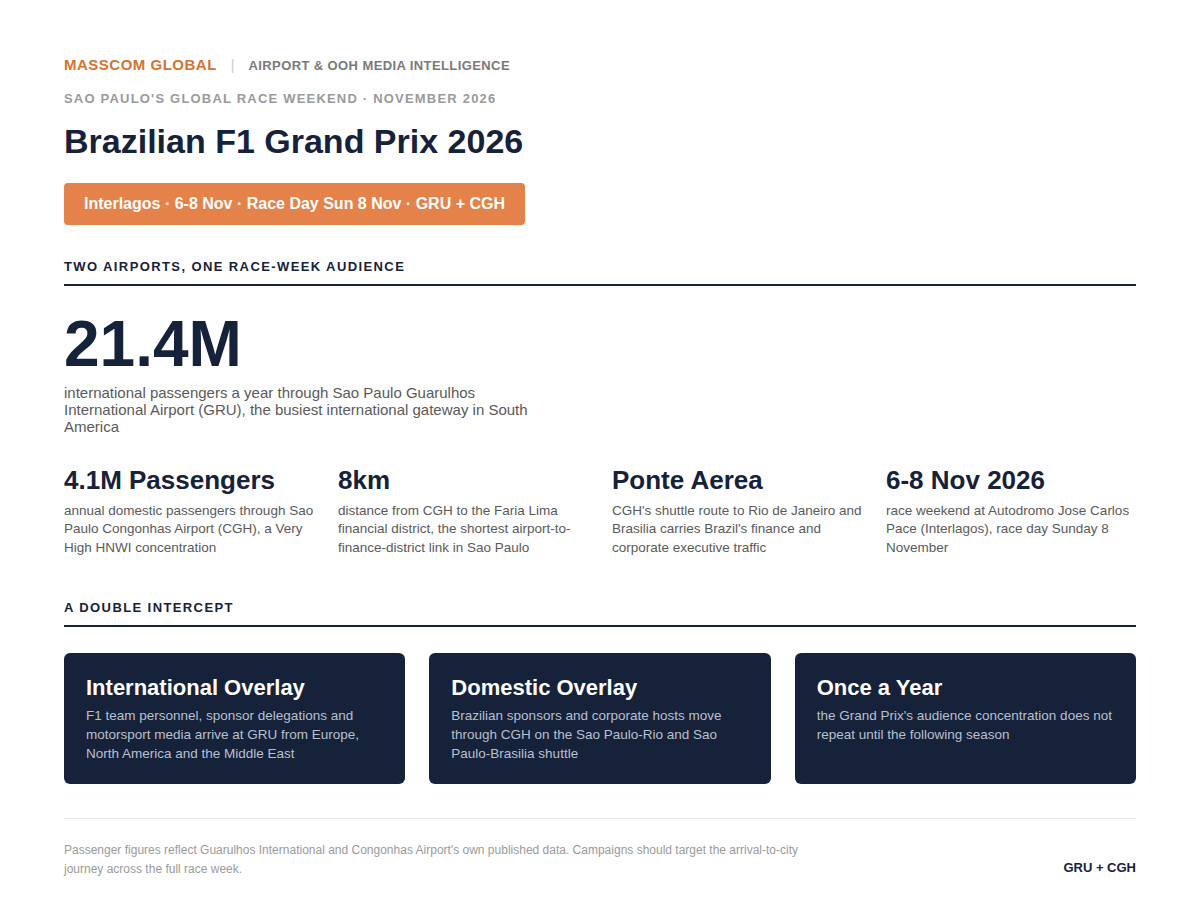
Sao Paulo Guarulhos International Airport (GRU) is the busiest international gateway in South America, handling 21.4 million international passengers a year and serving as the primary point of entry for Latin America's most valuable consumers. During Brazilian Grand Prix week, that international flow is joined by a specific overlay: F1 team personnel, sponsor delegations, motorsport media and the international corporate guests who fly in exclusively for the race, arriving on the same long-haul routes from Europe, North America and the Middle East that already carry GRU's ultra-HNWI passenger base.
Sao Paulo Congonhas Airport (CGH) tells a different but complementary story. With 4.1 million annual domestic passengers and a Very High HNWI concentration built on the Ponte Aerea shuttle to Rio de Janeiro and Brasilia, Congonhas is the airport of the Brazilian financial and corporate executive, situated just 8 kilometres from the Faria Lima financial district. During race week, Congonhas carries the domestic overlay of the Grand Prix economy: Brazilian sponsors, hospitality operators and corporate guests moving between Sao Paulo and the rest of the country's business centres.
The combination of GRU's international scale and CGH's domestic finance-executive concentration gives brands a rare double intercept: the global motorsport, luxury automotive and premium spirits audience arriving from abroad, and the Brazilian corporate and finance audience whose calendars are built around the same race weekend.
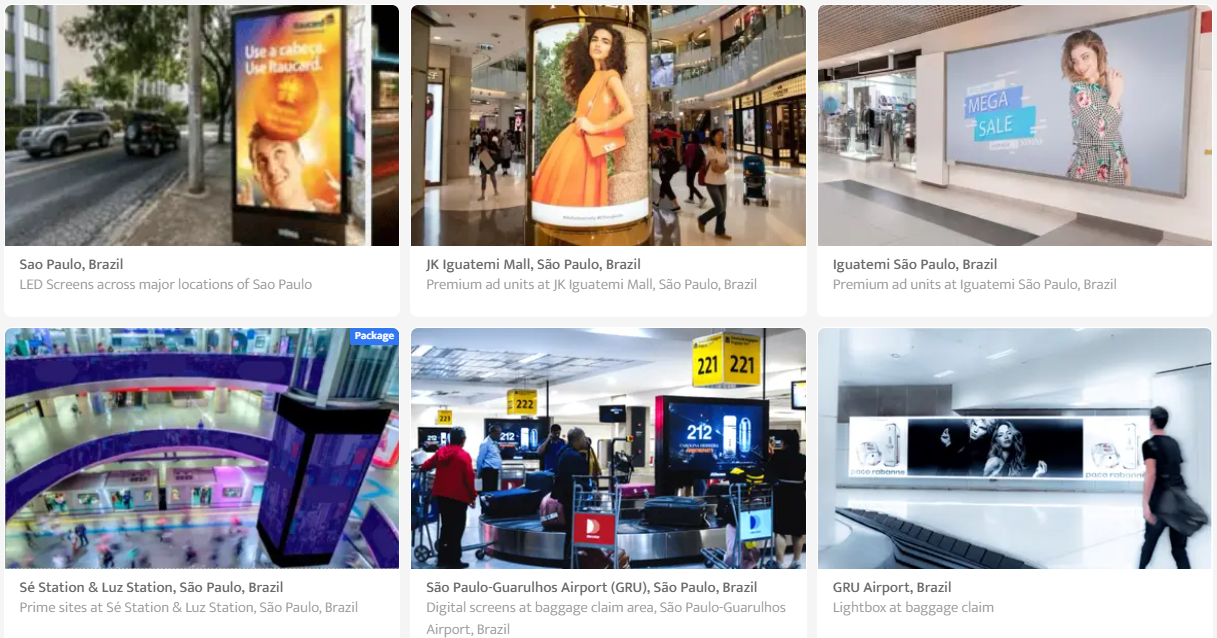
Key Benefits of Airport & City Advertising During the Brazilian F1 Grand Prix
- Reach a qualified, high-spend audience: race-week travellers through GRU and CGH combine international motorsport tourism with Brazil's domestic corporate and finance elite, a category profile that indexes strongly against luxury watches, automotive and premium spirits.
- Elevate your brand positioning: association with the Brazilian Grand Prix's global broadcast and paddock prestige, extended into the physical spaces travellers pass through before and after the race, reinforces premium positioning beyond what trackside sponsorship alone can achieve.
- Generate real business opportunity: Congonhas' concentration of Sao Paulo's financial and corporate executive community means race-week advertising also reaches decision-makers actively hosting sponsors, clients and partners for the weekend.
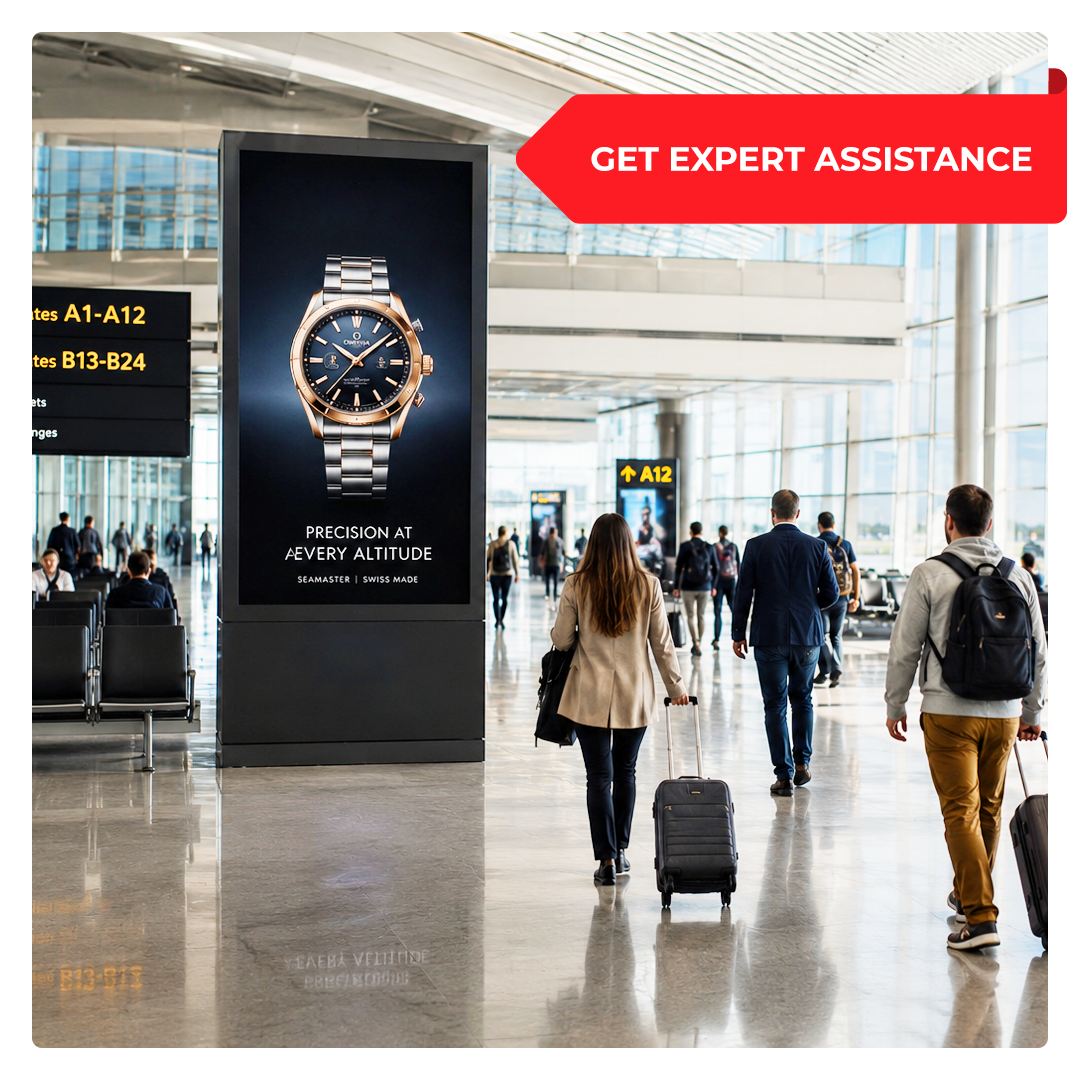
Get Free Expert Assistance from Our Global Media Planning Team
Receive strategic recommendations, media planning support, campaign monitoring and reporting to maximise your visibility throughout the Brazilian F1 Grand Prix at Interlagos.
Book Expert Consultation
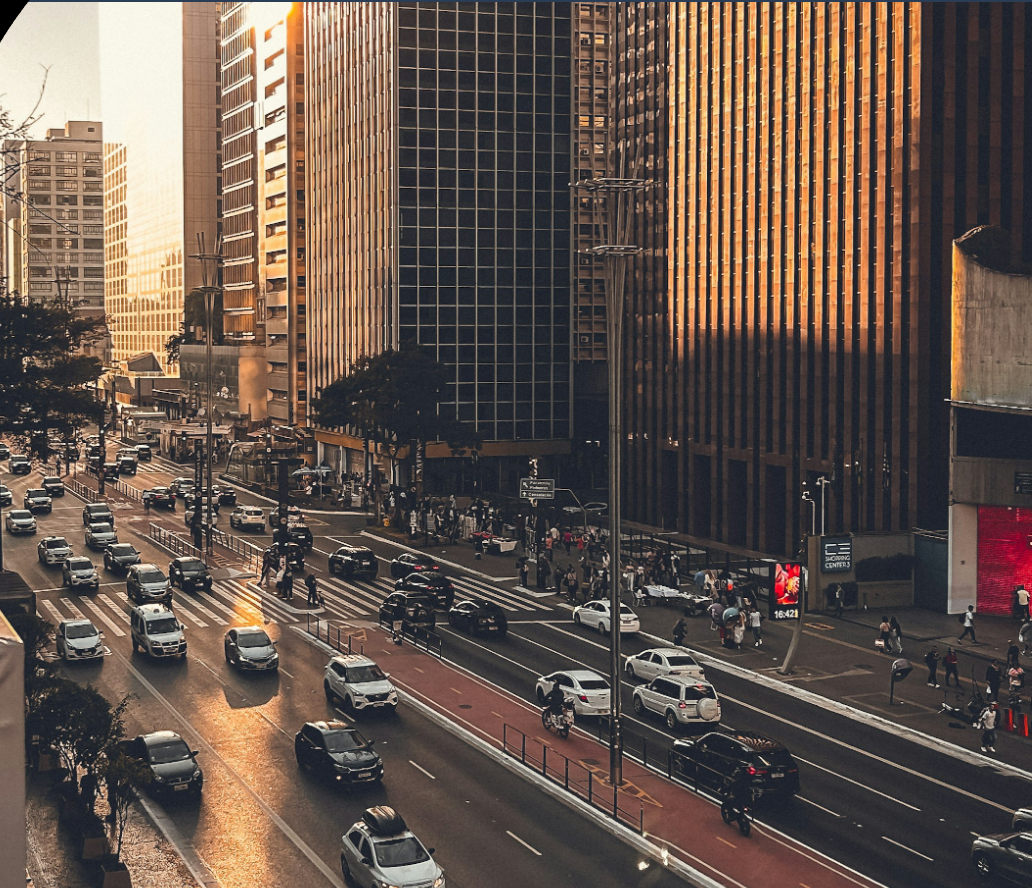
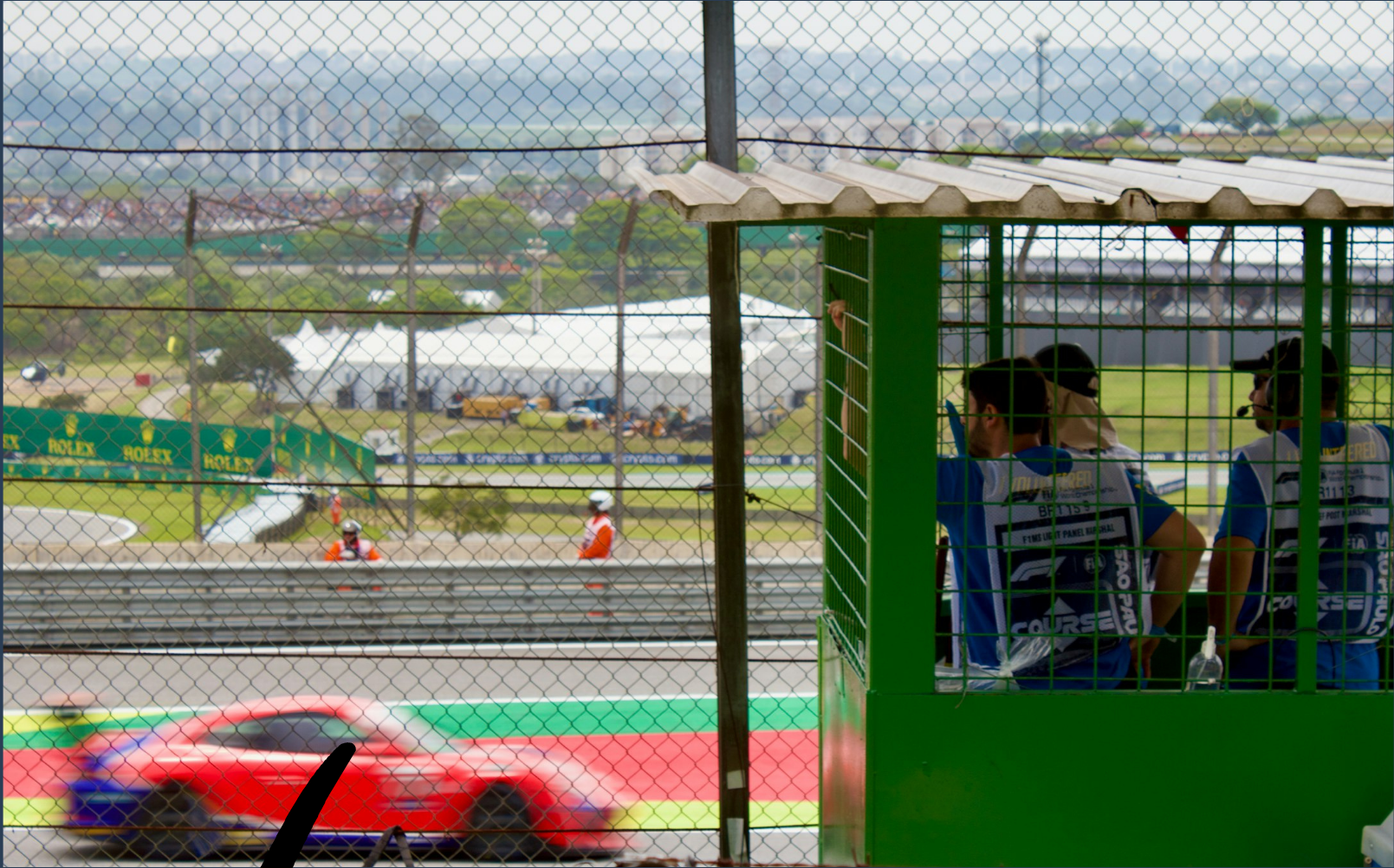
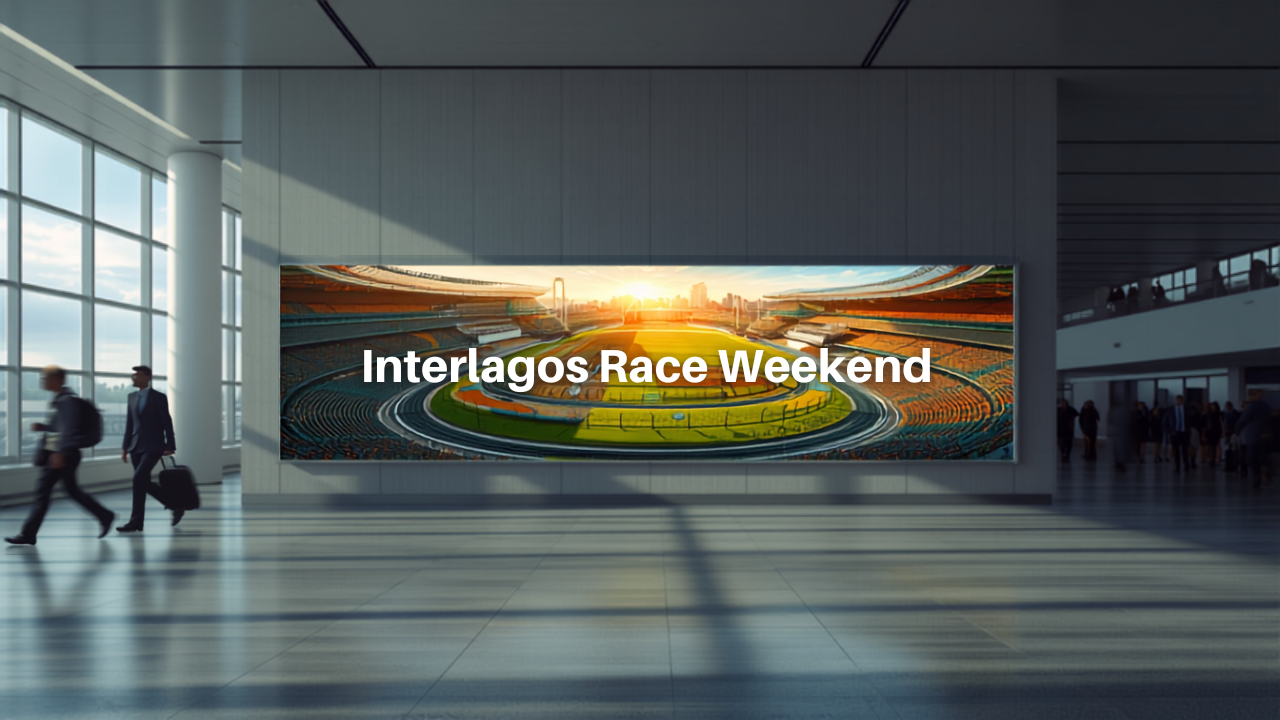
Sao Paulo's skyline, avenues and Interlagos circuit: the backdrop to the 2026 Brazilian Grand Prix.
Sao Paulo Guarulhos International Airport (GRU): South America's Busiest International Gateway
GRU is the primary international arrival point for Grand Prix travellers flying in from Europe, North America and the Middle East, and the highest-volume international airport in South America.
Inventory Highlights
- Terminal 2 international arrivals and departures, the primary commercial environment for reaching the ultra-HNWI international passenger base
- High-dwell digital and static formats across arrivals corridors serving 21.4 million international passengers a year
- Premium lounge-adjacent placements suited to sponsor and VIP guest traffic during race week
Advantages for Advertisers
- Direct intercept of international race-week arrivals before they reach the circuit or their hotel
- Route network spanning five continents, meaning race-week overlay traffic is layered onto an already premium, globally sourced passenger base
- Scale to sustain a full campaign across the race week and its shoulder days
Sao Paulo Congonhas Airport (CGH): The Domestic Business and Finance Gateway
CGH is a domestic-only airport 8 kilometres from the Faria Lima financial corridor, carrying 4.1 million annual passengers with a Very High HNWI concentration among Sao Paulo's finance, banking and corporate executive community.
Inventory Highlights
- Main check-in and security area formats reaching the broad Sao Paulo domestic business traveller base
- Ponte Aerea gate-area placements concentrated against the Sao Paulo-Rio and Sao Paulo-Brasilia finance and corporate shuttle routes
- Formats calibrated for a professional, B2B-oriented dwell-time audience rather than leisure travellers
Advantages for Advertisers
- Reaches Brazilian sponsors, hospitality partners and corporate hosts moving through Sao Paulo during race week on domestic connections
- Concentrated proximity to the city's financial district gives campaigns relevance beyond race week itself
- Complements GRU's international reach with a finance and business-category audience GRU's international terminal does not carry in the same concentration
Destination Sao Paulo: Full Visitor Journey Coverage
A Grand Prix visitor's journey does not end at the airport. It continues through the ride into the city or to Interlagos itself, through hotel and hospitality-district exposure across the race week, and back through the terminal on departure. Airport advertising at GRU and CGH is most effective when it is one part of a sequenced presence across that full journey, airport to city to circuit, rather than a single isolated placement.
Brands that appear at the airport on arrival, again in the city's premium hospitality and dining districts during the race week, and once more at departure build a recall pattern that trackside sponsorship, confined to the circuit itself, cannot replicate.
- Increased brand recall: repeated exposure across arrival, city and departure touchpoints outperforms a single placement.
- Consistent presence: a campaign that spans the full race week, not just race day, matches the actual length of stay of race-week travellers.
- Enhanced campaign effectiveness: sequencing airport and city inventory reinforces the same message at the moments travellers are most receptive to it, before and after the emotional peak of race day.
Why Brands Choose Airport & City Advertising for the Brazilian F1 Grand Prix
- Exclusive audience access. Race-week travel through GRU and CGH concentrates a global motorsport, luxury automotive and Brazilian finance-executive audience in one city for a single week.
- A prestigious environment. Airport and city placements associate a brand with the Grand Prix's global prestige without requiring paddock or trackside sponsorship cost.
- End-to-end campaign support. Masscom Global manages planning, booking and reporting across both airports and city inventory as a single coordinated campaign.
- Strategic planning assistance. Our media planning team benchmarks placement and timing recommendations against the specific race-week travel pattern GRU and CGH see each November.
The Masscom Global Standard Behind Every Brazilian F1 Grand Prix Placement
- Verified inventory and audience data drawn from GRU's 21.4 million international passengers and CGH's 4.1 million domestic passenger base, not estimated figures.
- Transparent delivery reporting throughout the race week campaign window.
- Benchmarked recommendations calibrated to the specific international versus domestic audience split between the two airports.
- We absorb the complexity of coordinating a multi-airport, multi-format campaign across a single, tightly timed race week.
Request Your Customised Brazilian F1 Grand Prix Advertising Plan
Tell us your audience, category and budget. Our planners will return a costed plan across airport and prime city inventory, with availability confirmed.
Book NowFrequently Asked Questions
When should a Brazilian F1 Grand Prix campaign be booked?
Given the race falls on 8 November 2026 with the event weekend running 6 to 8 November, campaigns should be confirmed at least 6 to 8 weeks in advance to secure premium arrivals and Ponte Aerea gate-area inventory before race-week demand peaks.
Who actually travels through GRU and CGH during race week?
GRU carries the international overlay, team personnel, sponsor delegations, motorsport media and international corporate guests, layered onto its existing ultra-HNWI international passenger base. CGH carries the domestic overlay of Brazilian sponsors, hospitality operators and corporate hosts moving on the Sao Paulo-Rio and Sao Paulo-Brasilia shuttle routes.
Does the campaign only make sense for automotive and motorsport brands?
No. Luxury watches, premium spirits, private banking and finance-category brands all perform strongly, since Congonhas' audience is defined by finance and corporate executive concentration rather than motorsport interest specifically.
Can a campaign cover the full visitor journey, not just the airports?
Yes. Masscom Global plans airport inventory at GRU and CGH alongside prime city and hospitality-district placements as one sequenced Sao Paulo campaign.
What happens after the Grand Prix weekend ends?
GRU's scale and CGH's finance-executive concentration are permanent features of Sao Paulo's airport advertising market, so inventory booked for race week can extend into a longer Sao Paulo campaign if a brand wants sustained presence beyond the event itself.
The Brazilian F1 Grand Prix Won't Wait. Neither Should You.
- Once a year, then gone: the Brazilian Grand Prix runs a single race weekend, 6 to 8 November 2026, and the audience concentration it creates does not repeat until the following season.
- Competitors are already moving: luxury automotive, watch and spirits brands with global motorsport programmes plan Sao Paulo race-week activity months ahead of the event.
- The window is exact, not approximate: race week is a fixed calendar date, 8 November 2026 for the race itself, not a loosely defined season.
- The alternative reaches the wrong audience: generic Sao Paulo advertising outside race week misses the specific international motorsport and domestic finance-executive overlay this event creates.
Related Airport Advertising Guides
Detailed inventory, audience and planning notes for the airports covered above:
 Wealth in motion intelligence.
 Wealth in motion intelligence.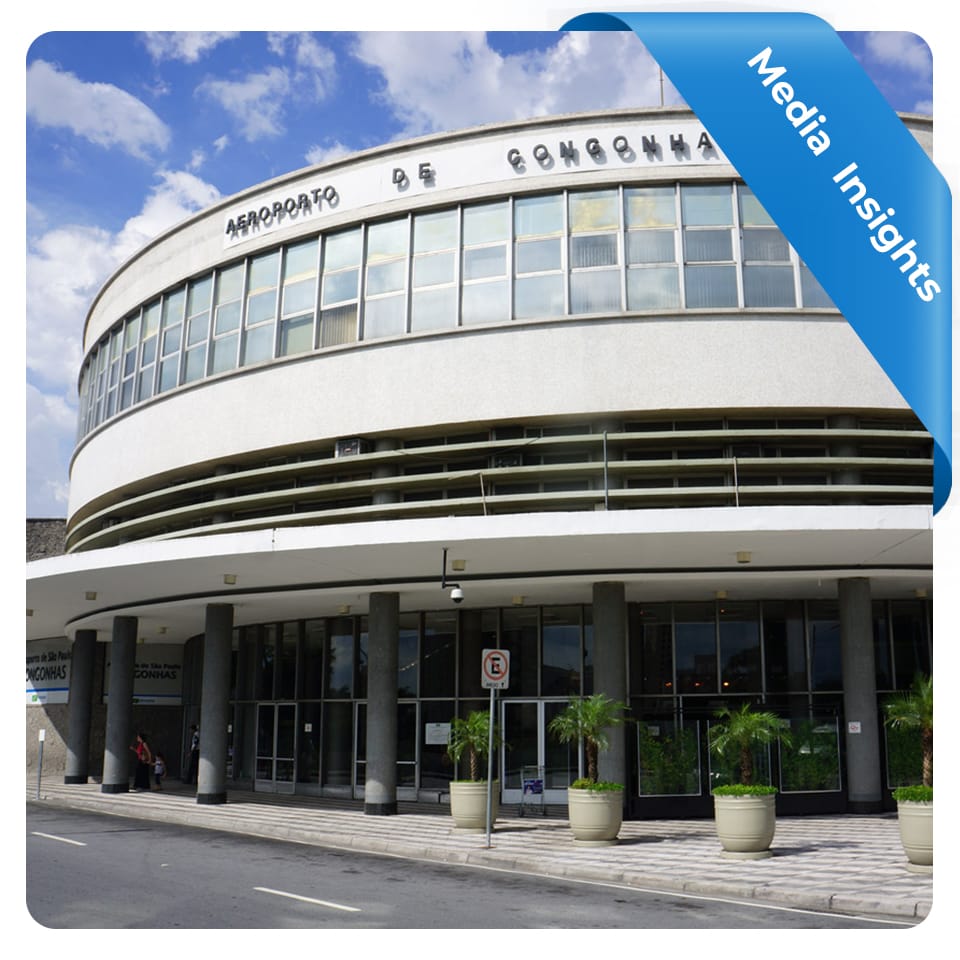
Get Free Expert Assistance Now
Our global media planning team will assess your category, budget and target audience, then return specific placement recommendations across GRU and CGH ahead of the 2026 Brazilian Grand Prix.
Request Availability
Confirm your Sao Paulo race-week inventory now, availability across GRU's international terminal and CGH's Ponte Aerea gate area tightens as the 8 November race date approaches.
The Brazilian F1 Grand Prix concentrates a global motorsport and luxury audience alongside Brazil's domestic finance and corporate elite into a single Sao Paulo race week. GRU's 21.4 million international passengers and CGH's 4.1 million finance-heavy domestic passengers give advertisers two distinct but complementary intercepts across that week. Combined with prime city inventory sequenced across the visitor journey, a race-week campaign reaches an audience that trackside sponsorship alone cannot access, at a fraction of the cost.