


Airport at a Glance
| Field | Detail |
|---|---|
| Airport | McAllen Miller International Airport |
| IATA Code | MFE |
| Country | United States |
| City | McAllen, Hidalgo County, Texas |
| Annual Passengers | 1,142,842 (2025), with 576,034 enplanements |
| Primary Audience | Cross-border Mexican shoppers and HNWI households, nearshoring logistics and manufacturing decision-makers, Winter Texan seasonal residents |
| Peak Advertising Season | November to March, plus Holy Week and July to August back-to-school |
| Audience Tier | Tier 2 |
| Best Fit Categories | Cross-border banking and remittance, retail and shopping destination marketing, logistics and nearshoring B2B, private healthcare and education |
McAllen Miller International Airport handled 1,142,842 passengers in 2025 with 576,034 enplanements, making it the busiest airport in the Rio Grande Valley ahead of Harlingen and Brownsville. The multi-year trajectory has been strong: enplanements reached 513,770 in 2023, up 13.43 percent on 2022, and the airport crossed one million total passengers for the first time in 2024 at a reported 1,206,320, a 25 percent increase. The 2025 figure represents a modest pullback from that peak while remaining well above the 2023 base. A 176 million dollar terminal expansion was approved in 2025 to add gate capacity and relieve pressure the airport has described as a genuine pinch on existing facilities.
What makes MFE commercially distinctive among American airports of this size is that it is not really a domestic airport. It sits two miles from downtown McAllen and roughly fifteen kilometres from Reynosa, Tamaulipas, and it operates scheduled international service to Mexico City, Cancún and, from March 2026, Monterrey. The surrounding economy is built on cross-border movement: McAllen is one of the highest retail-sales-per-capita markets in the United States because Mexican nationals shop here, the Pharr-Reynosa bridge is the largest produce port of entry in the country, and the Reynosa maquiladora belt across the river has been a principal beneficiary of the nearshoring shift. Layered on top are Mexican high-net-worth families who have bought homes in McAllen, Sharyland and Mission for security, banking, schooling and healthcare, and a large Winter Texan population from the Midwest and Canada. Masscom Global treats MFE as a bilingual, bi-currency, two-nation intercept rather than as a small Texas airport.
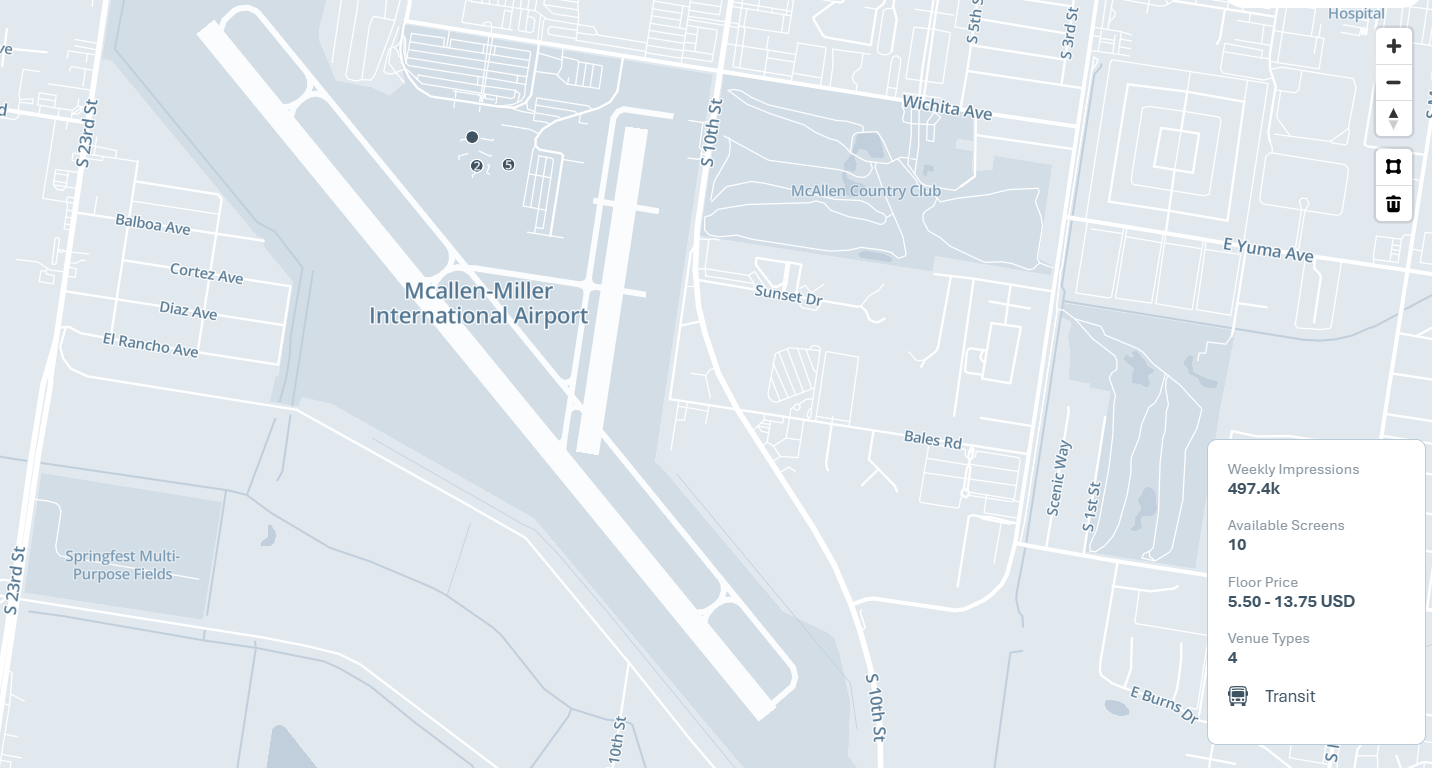
Advertising Value Snapshot
- Passenger scale: 1,142,842 passengers in 2025 with 576,034 enplanements, against a reported record 1,206,320 in 2024 and 513,770 enplanements in 2023. Multi-year growth remains strong despite a modest 2025 pullback.
- Traveller type: Cross-border Mexican shoppers and high-net-worth households, nearshoring logistics and manufacturing decision-makers, and Winter Texan seasonal residents.
- Airport classification: Tier 2. The mass audience is modest-income Rio Grande Valley households and value-conscious seasonal residents, with a genuinely wealthy and separately addressable Mexican HNWI layer.
- Commercial positioning: The busiest and best-connected airport in the Rio Grande Valley, and one of very few small American airports with genuine scheduled service into Mexico.
- Wealth corridor signal: The Monterrey and northern Mexico wealth corridor into South Texas, alongside the nearshoring manufacturing and produce trade corridor.
Advertising opportunity: Very few American airports let a brand address Mexican and United States audiences simultaneously in one compact terminal. Cross-border banking, remittance, retail, healthcare, education and logistics propositions all find genuine two-nation demand here, with message competition far below the San Antonio, Houston and Monterrey airports. Masscom Global provides inventory access and placement precision mapped to the Mexico-facing and domestic route flows separately.
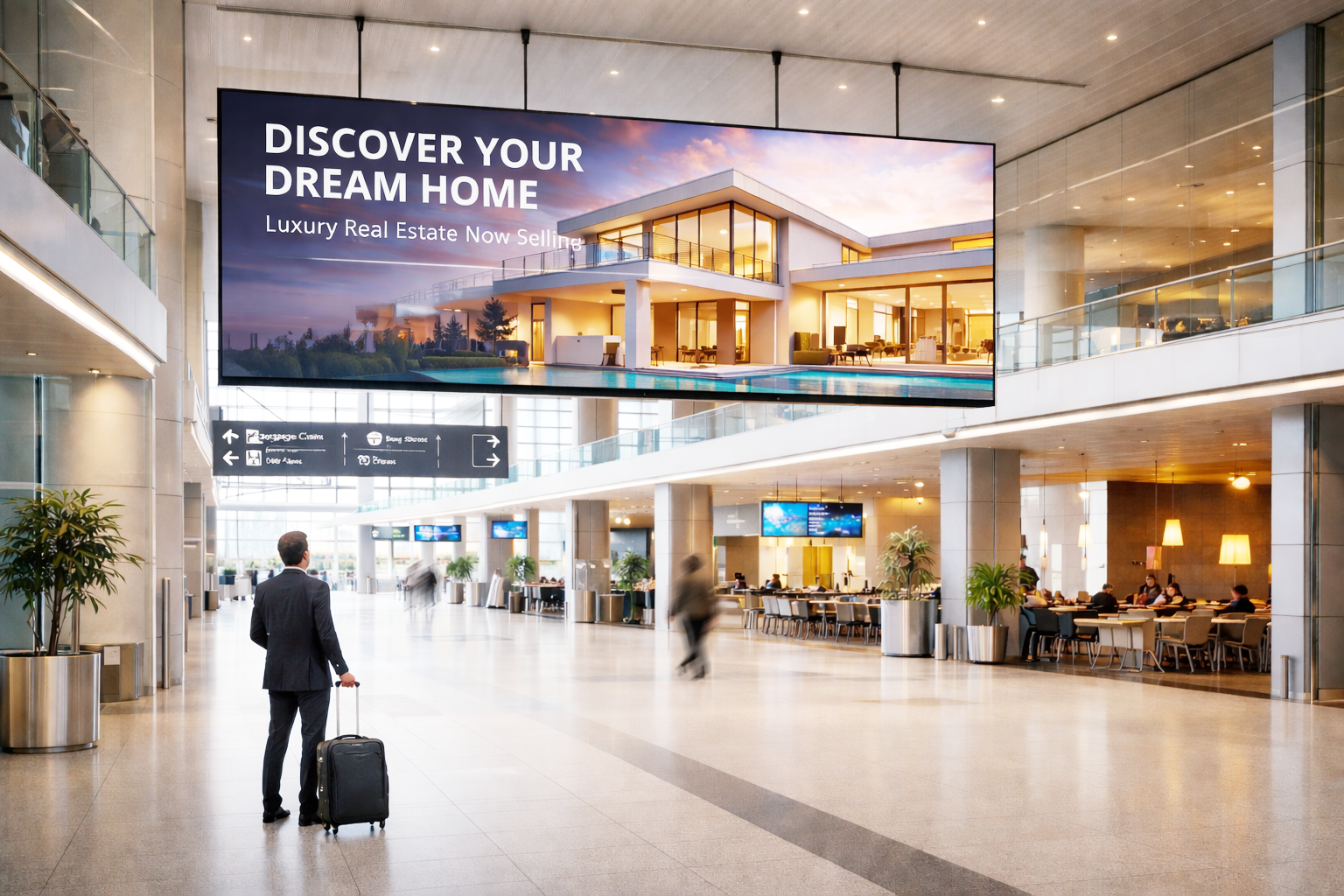
Airport Advertising is Complex to Get Right
We help you execute faster, with proven results and local insight most planners lack starting now.
Talk to an ExpertCatchment Area and Economic Drivers
Top 10 Cities within 150 km, Marketer Intelligence:
- McAllen, Texas: The retail and commercial core two miles from the terminal, home to one of the highest-grossing shopping centres in Texas and an outsized retail sector driven by Mexican cross-border spending. Produces retail, banking, customs brokerage and professional audiences whose fortunes track the peso exchange rate directly.
- Mission and Sharyland, Texas: The catchment's most affluent residential district, with substantial homeownership by Mexican nationals from Monterrey, Reynosa and Tampico who maintain a US base for security, banking and schooling. This is the single most valuable premium audience concentration in the region and the natural target for private banking, wealth structuring, private education and luxury retail.
- Edinburg, Texas: County seat and healthcare and education anchor, hosting the region's main university campus with a medical school and a large physician-owned hospital system. Produces medical, academic and public sector audiences, including a notably wealthy physician cohort.
- Pharr, Texas: Home to the largest produce port of entry in the United States, with dense customs brokerage, cold chain, warehousing and freight forwarding activity. Produces logistics and trade decision-makers with continuous procurement needs in transport, refrigeration, technology and compliance.
- Weslaco and Mercedes, Texas: Agricultural processing and outlet retail corridor drawing both Mexican shoppers and Winter Texan spending. Delivers a value-led consumer audience alongside agribusiness principals.
- Reynosa, Tamaulipas, Mexico: One of Mexico's largest maquiladora centres roughly fifteen kilometres across the river, manufacturing electronics, automotive components, appliances and medical devices. Produces plant management and procurement audiences who bank, shop, receive healthcare and frequently reside on the US side.
- Río Bravo and Nuevo Progreso, Tamaulipas: Border communities supporting agriculture, light manufacturing and a substantial dental, optical and pharmacy trade serving US visitors. Relevant to healthcare, insurance and cross-border services advertisers.
- Harlingen, Texas: Regional medical and commercial centre roughly 55 kilometres east with its own airport. Delivers healthcare, retail and Winter Texan audiences, and a share of its residents choose MFE for its broader network.
- Brownsville and Matamoros: Port, industrial and cross-border metropolitan area approximately 90 kilometres southeast, adjacent to major liquefied natural gas construction projects and a commercial spaceflight facility. Produces engineering, construction and project audiences of genuine scale.
- South Padre Island, Texas: Gulf resort market roughly 110 kilometres away, serving Winter Texans, Mexican family holidaymakers and a very large spring break influx. Relevant to hospitality, beverage, automotive rental and consumer advertisers.
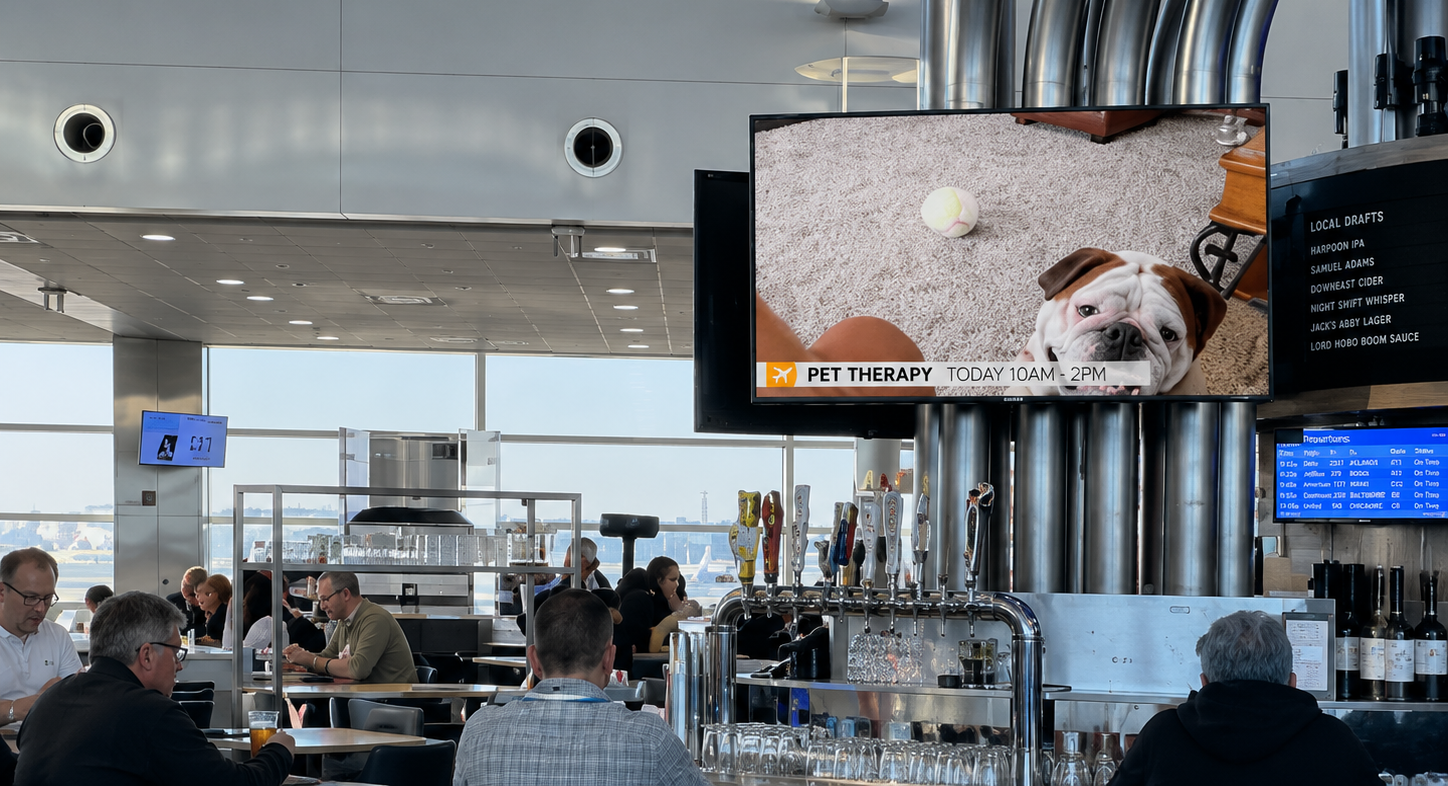
NRI and Diaspora Intelligence:
This catchment does not have a diaspora in the conventional sense; it has a border. Hidalgo County is overwhelmingly Hispanic, predominantly of Mexican origin, and a large majority of households speak Spanish at home. Family, business, property and financial relationships routinely span both countries, with people holding assets, employers and relatives on each side. That produces four distinct and highly addressable flows.
First, remittances to Mexico and Central America are substantial and continuous, making money transfer, prepaid telecom and low-cost banking among the most commercially effective categories at this airport. Second, cross-border shopping is a structural economic force rather than a seasonal event, with Mexican nationals travelling to McAllen specifically to buy, and with the peso exchange rate functioning as the region's most important commercial variable. Third, Mexican high-net-worth families from Monterrey, Reynosa, Tampico and Matamoros have relocated wholly or partially to McAllen, Sharyland and Mission, and they represent a genuinely wealthy audience seeking US banking, investment, insurance, private schooling, healthcare and property. Fourth, cross-border education runs in both directions, with Valley families sending children to Mexican private universities and Mexican families sending children to Texas institutions. Precise remittance and cross-border spending volumes for this catchment are not available.
Economic Importance:
Five engines drive this catchment. Cross-border retail makes McAllen one of the most retail-intensive markets in the United States relative to local income, entirely because of Mexican purchasing power. International trade and logistics centre on the produce bridge at Pharr and the adjacent crossings, with customs brokerage, cold chain and freight forwarding at genuine scale. Manufacturing sits across the river in the Reynosa maquiladora belt, which has been a principal beneficiary of the nearshoring shift and whose management, banking and residence functions frequently sit on the US side. Healthcare and higher education anchor Edinburg and McAllen with a university medical school, multiple hospital systems and a large physician population. Agriculture across the Valley delivers citrus, sugarcane, vegetables and cotton on a year-round growing season. Federal border enforcement employment and, further east, major energy and aerospace construction projects add substantial payroll and project travel.

Business and Industrial Ecosystem
- International trade, customs brokerage and cold chain logistics: The Pharr-Reynosa crossing is the largest produce port of entry in the United States, supported by dense brokerage, warehousing, refrigerated transport and compliance activity. Produces logistics executives and procurement leads with continuous spend on transport, refrigeration, technology, insurance and regulatory services.
- Cross-border manufacturing and nearshoring: The Reynosa maquiladora belt manufactures electronics, automotive components, appliances and medical devices at large scale, with US-side offices, warehousing and management residence in McAllen. Produces plant directors, supply chain leadership and industrial procurement audiences, in a sector currently attracting sustained nearshoring investment.
- Retail, real estate development and automotive: An outsized retail sector serving Mexican purchasing power, alongside shopping centre development, auto dealership groups and commercial property. Produces owner-operators and developers with substantial local business equity.
- Healthcare, academic medicine and higher education: A university medical school, multiple competing hospital systems including a large physician-owned network, and a substantial regional university. Produces physician, executive, academic and administrative travellers, with the physician cohort representing a notable concentration of local wealth.
- Energy, aerospace and major project construction: Liquefied natural gas terminal construction and a commercial spaceflight facility to the east, plus natural gas pipeline infrastructure serving Mexico. Produces engineering, construction and project finance audiences travelling on national and international itineraries.
Passenger Intent, Business Segment:
Business travellers at MFE fall into three groups. Trade and logistics executives travel to Houston, Dallas and Mexico City for customer, regulatory and supply chain business, and they are the most efficiently reachable B2B audience here. Manufacturing and nearshoring management travel between McAllen, Monterrey, Mexico City and their corporate parents' home markets, connecting through Houston and Dallas for Asia and Europe. Public sector, healthcare and education professionals travel to Austin for legislative, regulatory, conference and technology business, which is precisely why the Austin route has performed. Categories that intercept them effectively are logistics technology, refrigeration and transport equipment, customs and trade compliance services, commercial banking and trade finance, insurance and business technology.
Strategic Insight:
The commercial value at MFE is that it addresses two national markets from one terminal at one price. A cross-border bank, a trade finance provider, a logistics technology firm or a private hospital group can reach Mexican and American decision-makers in the same placement, at a fraction of what equivalent coverage would cost split across Monterrey and Houston. Nearshoring has made this corridor structurally more important than it was five years ago, and the industrial audience travelling through this terminal is growing in both number and authority. Masscom Global builds campaigns here around that dual-market position rather than treating MFE as a domestic regional airport.
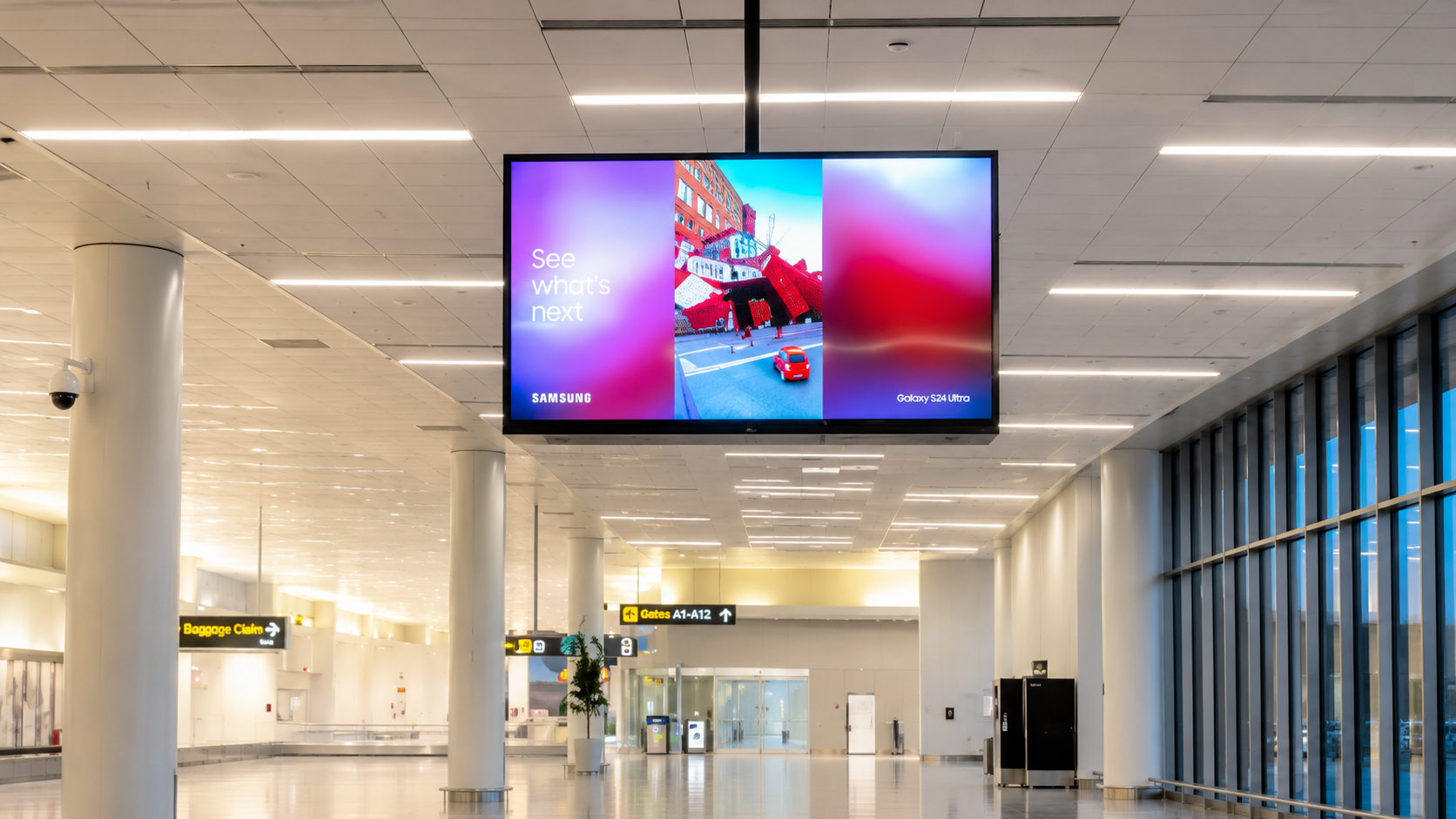
Tourism and Premium Travel Drivers
- The Winter Texan season: Between November and March, a large seasonal population from the Midwest, the Great Plains and Canada relocates to the Valley's resort, RV and retirement communities. This audience has time, discretionary income and high receptivity, and it is the region's single most valuable consumer season.
- World-class birding and nature tourism: The Rio Grande Valley is among the leading birding destinations globally, supported by a network of nature centres and an autumn birding festival that draws affluent, internationally sourced visitors. This is a niche but genuinely high-income inbound audience.
- South Padre Island and Gulf coast leisure: Beach resort inventory approximately 110 kilometres east serving Winter Texans, Mexican family holidaymakers and a very substantial spring break influx.
- Cross-border leisure, dining and health services: Nuevo Progreso and Reynosa draw United States visitors for dental, optical, pharmacy and dining, while Mexican visitors cross for retail, entertainment and healthcare, producing continuous two-directional leisure movement.
Passenger Intent, Tourism Segment:
Two inbound audiences matter. Winter Texans arrive between October and December, stay for months, and spend across groceries, healthcare, dining, automotive services, insurance and entertainment, which makes them one of the most valuable long-dwell consumer audiences at any small American airport. Birding and nature visitors are fewer but wealthier and internationally sourced. Outbound leisure is dominated by Valley residents travelling to Mexico for family and holidays on the Mexico City, Cancún and Monterrey services, and to Las Vegas, Orlando and the Gulf coast via connections. Advertisers should treat the Winter Texan arrival window and the Mexican holiday calendar as two separate campaigns.
Travel Patterns and Seasonality
Peak seasons:
- November to March: The dominant window, combining Winter Texan arrival and residence, the Mexican Christmas and Three Kings holiday calendar, the birding festival season and the region's most favourable weather.
- Holy Week and Easter: One of the largest cross-border travel and spending surges of the year, driven by the Mexican Semana Santa holiday, with heavy family movement in both directions.
- July and August: Back-to-school shopping season, when Mexican families travel to McAllen specifically to buy clothing, footwear, electronics and supplies. A genuinely major retail event with little parallel at other American airports.
- March: Spring break volume toward South Padre Island alongside the regional livestock show and agricultural calendar.
Traffic volume data:
Passenger volume reached 1,142,842 in 2025 with 576,034 enplanements, following a reported record 1,206,320 total passengers in 2024 and 513,770 enplanements in 2023, which was 13.43 percent above 2022. The airport is classified as a small hub primary commercial service facility and is the busiest of the three Rio Grande Valley airports. Full monthly distributions are not available.
Event-Driven Movement:
- Winter Texan arrival and departure (October to December, and March to April): Not a single event but the region's defining seasonal migration, delivering months of high-dwell consumer presence. The priority window for healthcare, insurance, automotive services, retail, financial and travel advertisers.
- Holy Week and Semana Santa (March or April): Concentrated cross-border family travel and spending in both directions, with strong retail, remittance, telecom, automotive and hospitality relevance.
- Back-to-school shopping season (July and August): A major inbound Mexican retail travel window driving apparel, footwear, electronics, luggage and payments spend. Underused by advertisers relative to its commercial size.
- Mexican Christmas calendar, including 12 December devotions, Las Posadas and Three Kings Day on 6 January: An extended festival and gifting sequence rather than a single date, generating sustained cross-border travel, gifting and remittance activity from late November into January.
- Rio Grande Valley birding festival (November): Draws an affluent, internationally sourced nature tourism audience, well matched to premium outdoor, optics, eco-travel and hospitality categories.
- Regional livestock show and citrus festival calendar (January to March): Long-established agricultural and community events reaching landowner, agribusiness and family audiences, relevant to agricultural equipment, land finance, automotive and insurance advertisers.
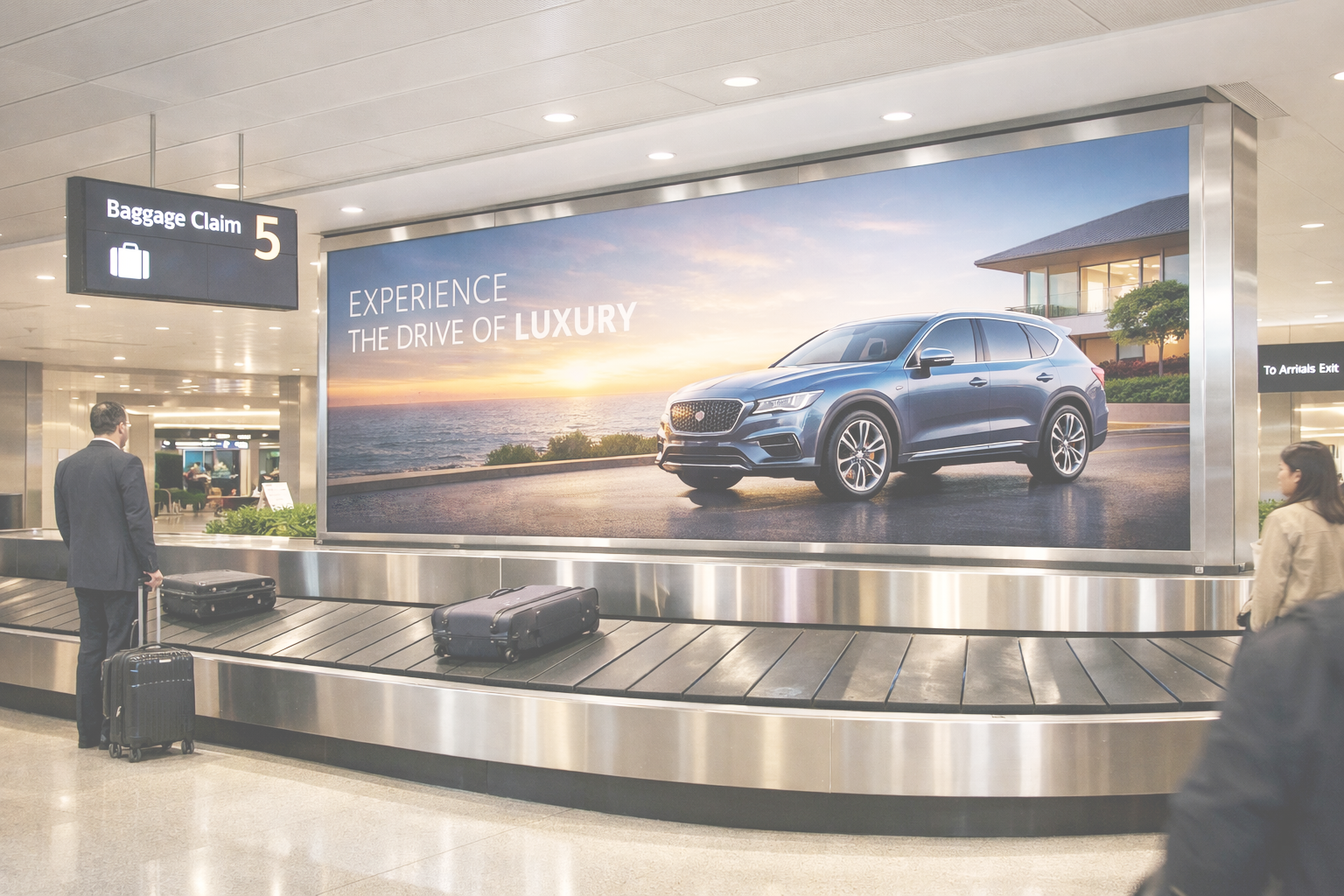
It’s Not Just Where You Advertise - It’s How Fast You Execute
We combine local insight with fast rollout to deliver results for you, now.
Talk to an ExpertAudience and Cultural Intelligence
Top 2 Languages:
- Spanish: This is one of a very small number of American airports where Spanish should be treated as the primary creative language rather than a secondary layer. Hidalgo County is overwhelmingly Hispanic and a large majority of households speak Spanish at home, while a significant share of passengers are Mexican nationals. Creative should be written in Spanish first and adapted to English, not the reverse, and should use Mexican rather than generic Latin American register.
- English: The working language of business, government, healthcare and the Winter Texan population, and essential for the seasonal resident audience from the Midwest and Canada. English creative is also necessary for corporate, logistics and international manufacturing propositions.
True bilingualism is the norm here rather than the exception, and advertisers who run English-only creative at this airport will materially underperform. Code-switching in creative is culturally normal and can be effective when handled by writers with genuine regional fluency.
Major Traveller Nationalities:
The passenger base divides between United States citizens of Mexican descent resident in the Rio Grande Valley, Mexican nationals travelling for retail, business, healthcare and family, and Winter Texans from the American Midwest and Great Plains alongside Canadian seasonal residents. Scheduled service to Mexico City, Cancún and, from March 2026, Monterrey means genuine international passenger presence, unusual at this airport size. A smaller but high-value international corporate segment travels in connection with the Reynosa manufacturing belt's Asian, European and North American parent companies. Campaign creative should assume a Mexican-American bilingual audience as the base case, with distinct English-language creative for the seasonal resident and corporate segments.
Religion, Advertiser Intelligence:
Figures below are directional approximations for the Rio Grande Valley rather than airport-level survey data.
- Roman Catholicism (approximately 60 to 70 percent): Among the highest Catholic shares of any American catchment, with devotional practice considerably more active than the national norm. The commercial calendar is genuinely distinctive: the 12 December Guadalupe observance, Las Posadas, Three Kings Day on 6 January, Ash Wednesday and Lenten Friday practice, and Holy Week all shape travel and spending. Quinceañeras represent a major household expenditure event with strong apparel, jewellery, photography, hospitality and financing relevance.
- Evangelical and Pentecostal Protestantism (approximately 20 to 25 percent and growing): Expanding on both sides of the border, with strong penetration among working and lower-middle-income households. Drives congregational travel and shapes consumption toward family framing, financial prudence and community endorsement.
- Religiously unaffiliated and other faiths (approximately 8 to 12 percent): Concentrated among the university population and younger professionals, and among the seasonal resident population. Higher receptivity to value, convenience and experience positioning.
Advertisers should note that the religious calendar here is not a demographic footnote but the region's principal spending-trigger schedule, and campaigns timed to it will outperform campaigns timed to the standard American retail calendar.
Behavioral Insight:
Three characteristics should shape creative at this airport. First, currency consciousness is pervasive. The peso exchange rate determines the volume and value of cross-border retail spending, and both Mexican and American audiences here track it closely. Propositions that address exchange rates, dual-currency accounts, cross-border payments and price certainty carry unusual weight. Second, household income across the Valley is well below the national average while retail intensity is far above it, because much of the spending is not local. Advertisers must therefore separate the local resident audience, for whom value, instalment credit and payment flexibility are decisive, from the Mexican visitor and HNWI audiences, for whom they are not. Third, family decision-making is genuinely collective and multi-generational here, and creative that addresses a household rather than an individual consistently outperforms. The Winter Texan audience behaves differently again: older, comparison-driven, heavily reliant on peer recommendation within their communities, and highly responsive to healthcare, insurance and service reliability messaging.
Outbound Wealth and Investment Intelligence
The wealth story at MFE runs across a border rather than out from a city, and this inverts the usual analysis. Local Rio Grande Valley household income sits below the national average, so the significant wealth passing through this terminal is either Mexican in origin or concentrated in specific local sectors: agricultural landowners, physicians, logistics and customs brokerage owners, retail and property developers, and auto dealership groups. Capital deployment runs in three directions, and all three are commercially actionable.
Outbound Real Estate Investment:
The dominant flow is inbound rather than outbound. Mexican capital from Monterrey, Reynosa, Tampico, Matamoros and Mexico City is purchasing residential property in McAllen, Sharyland, Mission and Edinburg, driven by security, schooling, banking access and proximity to family and business in Mexico. That same capital extends to San Antonio, Austin, Houston and Dallas, and at the wealthier end to Miami, Madrid and Vancouver. Outbound from the local audience, property capital moves to South Padre Island and the Gulf coast, the Texas Hill Country, Colorado mountain markets and, notably, back into Mexico for family property in Monterrey, San Miguel de Allende and Los Cabos. For international developers, the highest-intent proposition at this airport is US and Spanish inventory addressed to Mexican buyers rather than long-haul product addressed to local residents.
Outbound Education Investment:
Cross-border education runs in both directions and is one of the more distinctive propositions at this airport. Mexican families send children to Texas private schools and universities, and to the regional university's medical and professional programmes. Valley families send children to Texas flagship institutions and, in meaningful numbers, to Mexican private universities in Monterrey and Mexico City. Household spending capacity varies enormously between the local and Mexican HNWI segments, so education advertisers should target the Mexico-facing route flows and the Sharyland and Mission audience for premium propositions, and the domestic flows for scholarship, community college and vocational messaging.
Outbound Wealth Migration and Residency:
The relevant migration here is Mexican wealth relocating northward, and it is substantial and ongoing. Mexican high-net-worth families pursue United States investor and business visas, permanent residency and, at the wealthier end, Spanish and Portuguese residency and citizenship-by-descent routes, with Spain particularly favoured for language and family ties. Demand for these products among the local American audience is minimal. This is a genuine reversal of the pattern at most US airports and advertisers must get the direction right: residency, immigration advisory, cross-border tax structuring and international private banking should be addressed to Mexican nationals and to recently relocated Mexican households, not to the general terminal audience.
Strategic Implication for Advertisers:
The pairing available here is unusual and valuable. Cross-border banks, remittance operators, immigration and cross-border tax advisers, private hospital groups, private schools and universities, and retail destination marketers can address Mexican and American audiences in a single placement while both are physically present. Masscom Global can activate simultaneously at MFE and at Monterrey, Mexico City, San Antonio, Houston and Madrid, reaching the same family at origin, at the border and at destination inside one campaign structure.
Airport Infrastructure and Premium Indicators
Terminals:
- A single consolidated passenger terminal of approximately 138,000 square feet, originally built in the early 1990s with roughly 55,000 square feet added in a 2015 concourse expansion that increased gate capacity, expanded baggage claim and added administration space, engineered to resist hurricane-force winds. Single-terminal configuration means every arriving and departing passenger passes through the same circulation spine, delivering near-complete coverage from one compact footprint.
- The site covers approximately 370 acres with two asphalt runways, the primary measuring 7,120 by 150 feet, and supports both commercial and general aviation with full fuel services. Parking comprises roughly 1,200 spaces across short-term, long-term and economy lots with a free shuttle from the economy area.
- A 176 million dollar terminal expansion project was approved in 2025 to add gates and improve facilities, following a 7.4 million dollar federally funded design study prompted by the airport's own assessment that current facilities are being strained by passenger growth.
Premium Indicators:
- Genuine scheduled international service is the airport's most distinctive commercial credential. Very few American airports of this size operate nonstop flights to multiple Mexican cities, and this materially changes the passenger quality profile and the range of addressable advertiser categories.
- Passenger amenities include two restaurants, a bar, two retail outlets, complimentary wireless connectivity, charging stations, a shoe shine service and seven rental car counters, alongside private nursing rooms and full accessibility provision. The post-security rotunda features a choreographed water feature, which is an unusual and genuinely effective dwell-time asset that concentrates attention in a defined space.
- General aviation activity serves the region's business, agricultural and cross-border corporate audiences, and the airport maintains a full-service fuel and rescue and firefighting capability.
- Premium hospitality and retail within short reach include one of the highest-grossing shopping centres in Texas and a substantial hotel and conference inventory serving both the trade and Winter Texan markets.
Forward-Looking Signal:
The direction of travel is expansionary on both the terminal and the network. A 176 million dollar terminal expansion approved in 2025 responds directly to growth that pushed the airport past one million passengers for the first time in 2024. On the network side, a legacy carrier returned to the airport after an eighteen-year absence with daily Austin service, an established Mexican carrier operates daily Mexico City flights, a low-cost Mexican carrier serves Cancún, and a new operator launched daily Monterrey service from 27 March 2026, directly connecting McAllen to northern Mexico's industrial and wealth capital. Beyond the airport, the nearshoring shift continues to draw manufacturing investment into the Reynosa belt while major energy and aerospace construction proceeds to the east. Masscom Global advises advertisers to secure position and multi-year rates now, before the expanded terminal and the Monterrey connection reset the commercial baseline.
Airline and Route Intelligence
Top Airlines:
American Airlines, United Airlines, Delta Air Lines, Allegiant Air, Aeroméxico, Volaris and Aerus.
Key International Routes:
Aeroméxico operates daily nonstop service to Mexico City. Volaris operates twice-weekly nonstop service to Cancún. Aerus launched daily direct service to Monterrey from 27 March 2026, connecting McAllen to northern Mexico's industrial and financial capital. Verified current frequencies beyond these are not available.
Domestic Connectivity:
Nine nonstop destinations across the United States and Mexico. Core domestic markets include Houston, Dallas/Fort Worth, Austin and Chicago, with Allegiant operating twice-weekly leisure service to Tampa and St. Petersburg. Delta returned to McAllen after departing in 2006 and operates daily Austin service, which the airport has identified as filling a genuine gap for government, education and technology travel to the state capital.
Wealth Corridor Signal:
The route map divides into three commercial functions and reading it correctly determines campaign design. Houston and Dallas/Fort Worth are the corporate, trade and international connection corridors, carrying logistics executives, manufacturing management and internationally bound travellers, and they are where B2B, trade finance and industrial spend belongs. Mexico City and Monterrey are the wealth and business corridors carrying Mexican executives, high-net-worth families and cross-border professionals, and they are where private banking, immigration advisory, private healthcare, education and luxury retail spend belongs, particularly the Monterrey service given that city's Very High wealth rating. Austin is the government, education and technology corridor. Cancún and Tampa are leisure corridors carrying local families and Winter Texans. The presence of two, soon three, Mexican destinations at an airport this size is the clearest evidence that this is a bi-national terminal rather than a regional one.
Media Environment at the Airport
- Single-terminal configuration means full-journey coverage across roughly 1.14 million passengers is achievable from one compact footprint, at a fraction of San Antonio, Houston or Monterrey pricing while reaching both national audiences simultaneously.
- Advertising clutter is materially lower than at the Texas hub airports or at Monterrey. A well-placed campaign at MFE achieves standout that would demand premium spectacular positioning at either.
- Dwell time is supported by international processing on the Mexican routes, terminal capacity currently under pressure from growth, and a post-security rotunda water feature that concentrates passenger attention in a specific area for extended periods. The Winter Texan audience also arrives early by habit.
- Masscom Global provides advertisers with inventory access, placement precision mapped to individual route flows, and execution capability at an airport where local relationship depth determines availability while capacity is tight. We separate the Mexico City and Monterrey flows, where premium and cross-border propositions belong, from the domestic and leisure flows, so Spanish-first premium, bilingual value and English-language corporate creative each reach their intended audience.
Strategic Advertising Fit
Best Fit:
- Cross-border banking, dual-currency accounts and trade finance: The defining category at this airport, addressing Mexican and American customers with a shared need in one placement.
- Remittance, money transfer and international telecom: Continuous, high-frequency demand across a majority-Hispanic catchment with dense family ties across the border.
- Retail and shopping destination marketing: McAllen's retail economy exists because Mexican nationals travel here to buy, and the terminal intercepts them on arrival.
- Logistics, cold chain, transport equipment and trade compliance B2B: The largest produce port of entry in the United States plus a nearshoring manufacturing belt across the river.
- Private healthcare, medical specialty and health insurance: Competing hospital systems, a university medical school, Mexican patients seeking US care, and a large Winter Texan population making provider decisions.
- Private schools, universities and education advisory: Genuine two-directional cross-border education demand, with Mexican families seeking Texas placement.
- Immigration, cross-border tax advisory and international private banking: Substantial and ongoing Mexican wealth relocation into South Texas, addressed to the Mexico-facing route flows.
- Automotive, pickup trucks and dealership groups: High ownership and replacement rates, a large agricultural and trade workforce, and significant cross-border vehicle purchasing.
Brand Alignment at a Glance:
| Category | Fit |
|---|---|
| Cross-border banking and trade finance | Exceptional |
| Remittance, money transfer and telecom | Exceptional |
| Logistics, cold chain and trade compliance B2B | Strong |
| Retail and shopping destination marketing | Strong |
| Private healthcare and health insurance | Strong |
| Immigration and cross-border tax advisory | Strong |
| Private education and education advisory | Moderate |
| Ultra-luxury European fashion and haute joaillerie | Poor fit |
Who Should Not Advertise Here:
- Ultra-luxury European fashion and haute joaillerie: The Mexican HNWI audience exists but is too small in terminal volume to support these categories, and the mass audience has household incomes well below the national average. This spend belongs at Monterrey, Mexico City, Houston or Miami, all of which Masscom can activate alongside a targeted MFE presence.
- English-only creative in any category: This is less a category exclusion than a hard execution rule. Given the linguistic composition of the catchment, English-only campaigns will underperform regardless of how strong the underlying proposition is.
- Long-haul offshore property and citizenship-by-investment aimed at the general audience: Demand exists but only within the Mexican HNWI segment and principally for United States and Spanish inventory. Broad-brush campaigns aimed at the whole terminal will waste most of their exposure.
Event and Seasonality Analysis
- Event Strength: High
- Seasonality Strength: High
- Traffic Pattern: Winter-weighted with a distinct Mexican festival calendar overlay
Strategic Implication:
Budget should follow two calendars rather than one. The Winter Texan season from November through March is the primary consumer window, and healthcare, insurance, automotive services, retail, financial and travel spend belongs there with English-language creative live before the end of October. Running in parallel and partly overlapping, the Mexican festival and shopping calendar drives the cross-border audience: the December Guadalupe and Posadas sequence into Three Kings Day on 6 January, Holy Week in spring, and the July to August back-to-school retail surge. Spanish-first creative should be live across all three. Advertisers who treat the standard American retail calendar as the planning framework will miss the majority of the commercial opportunity at this airport. Masscom structures campaigns around both calendars simultaneously.

Poor Placement and Delays Affect Airport Campaigns
We help you move faster, access better inventory, and get it right now.
Talk to an ExpertFinal Strategic Verdict
McAllen Miller International is a bi-national terminal disguised as a small Texas airport, and that is precisely why it belongs on a media plan. It carried 1,142,842 passengers in 2025 with 576,034 enplanements, having crossed one million for the first time in 2024, and it operates genuine scheduled service to Mexico City, Cancún and now Monterrey, which almost no American airport of this size can claim. Its catchment is the largest produce port of entry in the United States, one of the most retail-intensive markets in the country by virtue of Mexican purchasing power, a nearshoring manufacturing belt across the river, a university medical school, and a wealthy population of relocated Mexican families in Sharyland and Mission. Cross-border banks, remittance and telecom operators, logistics and cold chain B2B advertisers, retail destination marketers, private hospital groups, schools and immigration and cross-border tax advisers will find two national audiences reachable in one placement at a fraction of Monterrey or Houston pricing. Ultra-luxury European fashion and any English-only campaign should look elsewhere. With a 176 million dollar terminal expansion approved, a new Monterrey link operating and nearshoring investment continuing across the corridor, Masscom Global is the partner positioned to secure inventory, timing and placement precision before that gap closes.
About Masscom Global
Masscom Global is a premium international airport advertising and media buying agency operating across 140 countries. With deep expertise in airport OOH, premium publications, and high-net-worth audience targeting, Masscom helps brands reach the world's most valuable travellers at the moments that matter most. For advertising packages, media rates, and campaign planning at McAllen Miller International Airport and airports across the globe, contact Masscom Global today.
Frequently Asked Questions
How much does airport advertising cost at McAllen Miller International Airport?
Cost at MFE varies by format, terminal position, campaign duration and seasonal demand. Positions covering the arrivals environment and the post-security rotunda command premiums during the November to March Winter Texan season and the July to August back-to-school retail surge. Because terminal capacity is currently under pressure ahead of a major expansion, availability is tightening. Contact Masscom Global for current rates and availability.
Who are the passengers at McAllen Miller International Airport?
Four distinct groups sharing one terminal. Rio Grande Valley residents, overwhelmingly Hispanic and predominantly bilingual, travelling domestically and to Mexico. Mexican nationals travelling for retail, business, healthcare and family, including a wealthy segment from Monterrey, Reynosa and Tampico with homes in McAllen and Sharyland. Winter Texans from the American Midwest, Great Plains and Canada resident from November to March. And trade, logistics and manufacturing professionals connected to the produce bridge and the Reynosa maquiladora belt.
Is McAllen Miller International Airport good for luxury brand advertising?
Selectively. There is a genuinely wealthy Mexican HNWI audience with homes in Sharyland and Mission, reachable on the Mexico City and Monterrey route flows, and premium banking, private healthcare, private education and premium automotive convert well with it. However, terminal volume in that segment is too thin to support ultra-luxury European fashion or fine jewellery, and the mass audience has household incomes below the national average. Buy the Mexico-facing flows specifically, in Spanish, or spend at Monterrey and Houston instead.
What is the best airport in the Rio Grande Valley to reach HNWI audiences?
McAllen is the busiest of the three Valley airports and, critically, the only one with multiple scheduled Mexican destinations, which makes it the strongest choice for reaching Mexican business and high-net-worth travellers. Harlingen serves border trade and regional audiences at smaller scale, and Brownsville serves the port, energy and aerospace corridor. For genuine Mexican wealth, Masscom recommends pairing MFE with Monterrey, which sits at the Very High tier and anchors the corridor.
What is the best time to advertise at McAllen Miller International Airport?
Two calendars matter. November through March delivers the Winter Texan season, the highest-value consumer window, with English-language creative live before the end of October. In parallel, the Mexican festival and retail calendar drives the cross-border audience: December through Three Kings Day on 6 January, Holy Week in spring, and the July to August back-to-school shopping surge. Spanish-first creative should run across all three. Planning against the standard American retail calendar alone will miss most of the opportunity.
Can international real estate developers advertise at McAllen Miller International Airport?
Yes, but the direction matters. The strongest demand is Mexican capital buying United States property in McAllen, Sharyland, Mission, San Antonio, Austin, Houston and Miami, alongside Spanish inventory for the wealthier Monterrey-linked families. Local residents buy South Padre Island, the Texas Hill Country and family property back in Mexico. Developers with US, Texas or Spanish inventory addressed to Mexican buyers will find real intent. Long-haul product aimed at the general terminal audience will not.
Which brands should not advertise at McAllen Miller International Airport?
Ultra-luxury European fashion and haute joaillerie, because the wealthy segment is too thin in terminal volume and mass household income sits below the national average. Long-haul offshore property and citizenship programmes aimed broadly, since demand is confined to the Mexican HNWI segment. And any advertiser unwilling to produce Spanish-language creative, since English-only campaigns will underperform here regardless of category.
How does Masscom Global help brands advertise at McAllen Miller International Airport?
Masscom Global delivers the full sequence: audience and catchment intelligence specific to the cross-border retail, nearshoring and Mexican wealth corridors, inventory access and placement precision mapped to the Mexico-facing and domestic route flows separately, campaign timing structured around both the Winter Texan season and the Mexican festival and retail calendar, and execution management through to performance reporting. Operating across 140 countries, we can activate MFE alongside Monterrey, Mexico City, San Antonio, Houston and Madrid, reaching the same family and the same business at both ends of the corridor. Book a fifteen-minute planning call to review current availability and rates.