

Airport at a Glance
| Field | Detail |
|---|---|
| Airport | Governor José Richa Airport (Londrina Airport) |
| IATA Code | LDB |
| Country | Brazil |
| City | Londrina, Paraná |
| Annual Passengers | 693,450 (2025) |
| Primary Audience | Agribusiness owners and executives, medical and university professionals, Japanese-Brazilian community travellers |
| Peak Advertising Season | January, April, July, and the September to November harvest and trade fair window |
| Audience Tier | Tier 2 |
| Best Fit Categories | Agricultural machinery and inputs, business and rural credit banking, private healthcare and education, premium automotive |
Governor José Richa Airport handled 693,450 passengers in 2025 through a recently rebuilt terminal now capable of roughly 3.5 million passengers a year. The passenger count is modest by Brazilian standards, but the passenger profile is not. Londrina is the commercial capital of northern Paraná, and the people flying out of LDB are landowners, cooperative directors, agro-industrial executives, physicians and university professionals. This is an owner-class audience rather than a salaried one, which changes what advertising here is worth.
The airport matters because it sits at the mouth of a wealth corridor most media plans never see. Northern Paraná generates large, cyclical agricultural surpluses, and that capital converts into machinery, land, vehicles, private education, healthcare and property purchases decided by a small number of high-value households. Londrina also holds one of Brazil's most significant Japanese-Brazilian communities, adding a distinct international travel and remittance pattern on top of the agribusiness base. For advertisers, LDB delivers reach against decision-makers who are almost impossible to isolate through mass media.
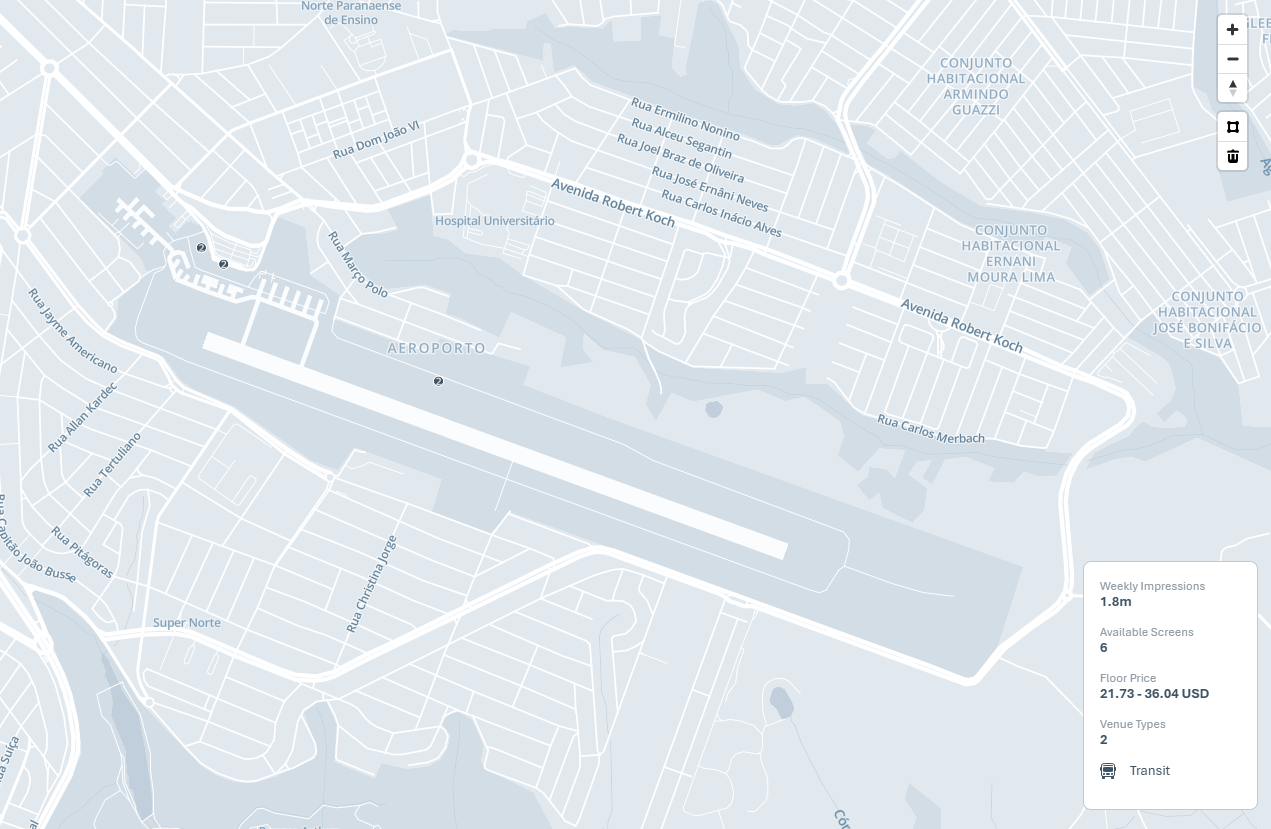
Advertising Value Snapshot
- Passenger scale: 693,450 passengers in 2025 against 768,801 in 2024, a 9.8% decline driven by network adjustments rather than weak demand, with average load factors held above 85% through the year
- Traveller type: Agribusiness owners and executives, medical and higher-education professionals, Japanese-Brazilian community and family travellers
- Airport classification: Tier 2, a regional domestic airport with Tier 1 audience quality because wealth per passenger is far above national average
- Commercial positioning: The air gateway to northern Paraná's agribusiness, cooperative and agro-industrial economy
- Wealth corridor signal: LDB sits on the Paraná commodity wealth corridor feeding São Paulo, where agricultural surplus converts into capital goods, credit and asset purchases
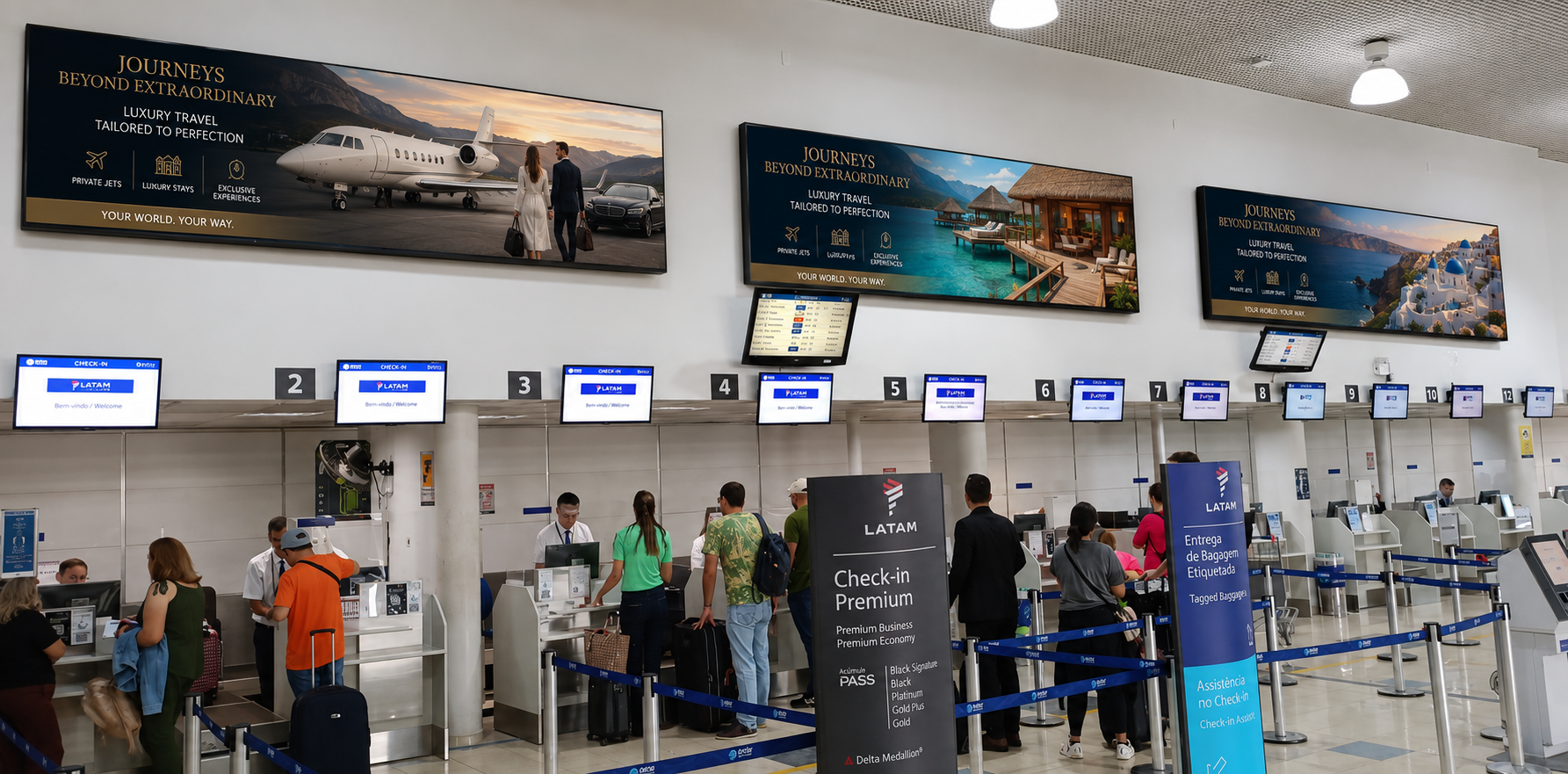
- Advertising opportunity: A single rebuilt terminal means every departing passenger passes the same check-in hall, the same lounge and the same boarding gates, so near-total audience coverage is achievable from a small number of placements. Masscom Global provides inventory access across that full flow with placement precision by zone and time window. In a market this concentrated, one well-executed campaign can address effectively the entire regional decision-maker base.
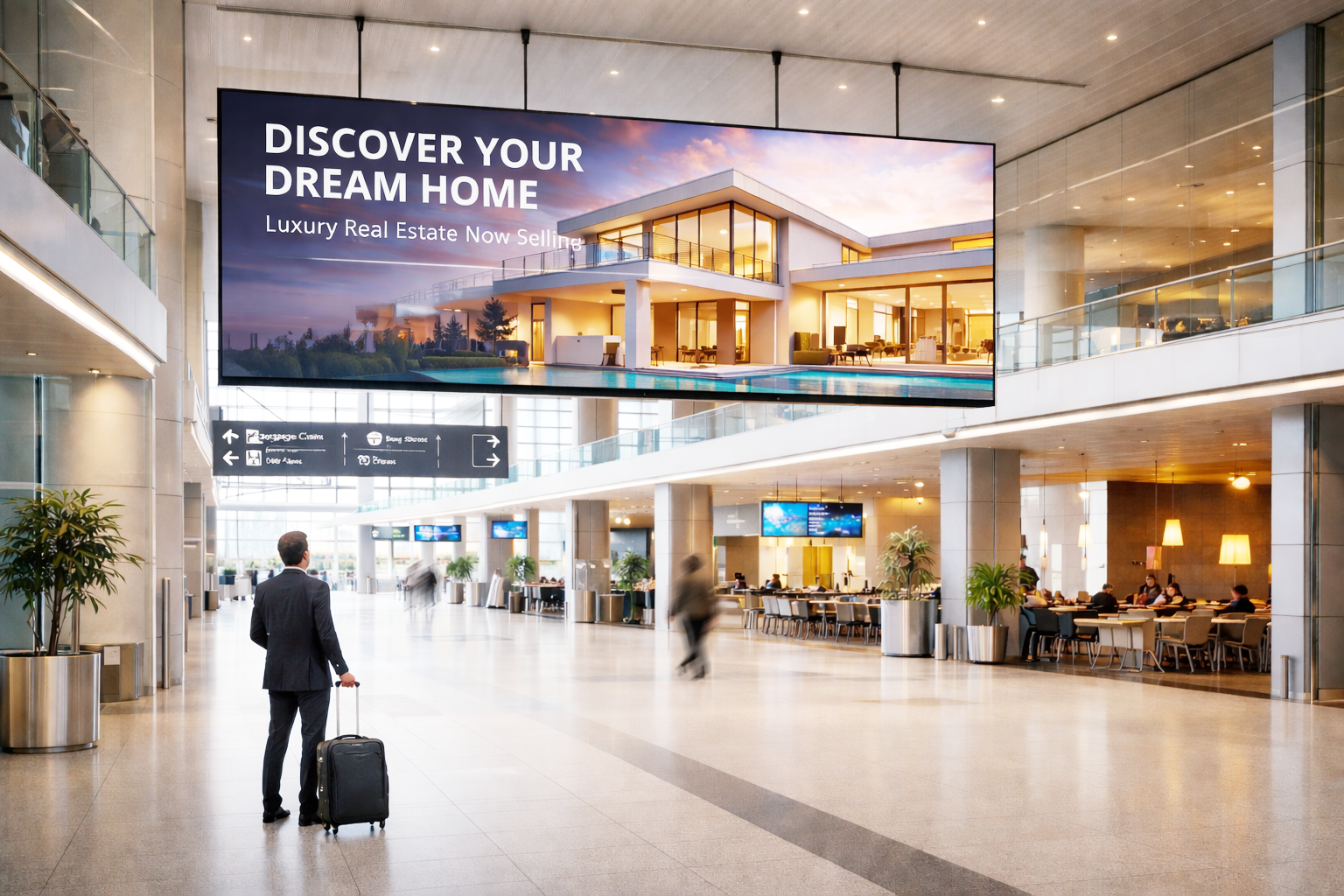
Airport Advertising is Complex to Get Right
We help you execute faster, with proven results and local insight most planners lack starting now.
Talk to an ExpertCatchment Area and Economic Drivers
Top 10 Cities within 150 km, Marketer Intelligence:
- Londrina, PR: The wealth and command centre of the catchment. Concentrates agribusiness ownership, private medicine, legal and financial services, and a large university population. Highest receptivity to premium banking, healthcare, automotive and property messaging.
- Maringá, PR: A high-income planned city with strong professional and entrepreneurial wealth, and a rival commercial hub whose executives use LDB when schedules favour it. Prime audience for private banking, luxury residential and premium retail.
- Apucarana, PR: Textile and industrial manufacturing ownership base with export exposure. Produces owner-operator travellers responsive to B2B logistics, machinery, industrial finance and trade services.
- Arapongas, PR: Furniture manufacturing cluster with a concentrated industrialist class. Family-business wealth that buys premium in vehicles, machinery and education categories.
- Cambé, PR: Industrial and logistics employment adjacent to Londrina, with a strong mid-income consumer base. Effective for telecom, insurance, retail banking and mid-market automotive.
- Rolândia, PR: Agricultural landowning community with strong European settler heritage and high land asset values. Direct target for rural credit, crop inputs, machinery and estate planning.
- Ibiporã, PR: Agro-industrial processing base with a management and technician audience. Aligns with industrial services, business banking and vocational education advertising.
- Cornélio Procópio, PR: Grain and cooperative agriculture centre with high per-farm revenue. Receptive to seed, fertiliser, agrochemical and equipment financing messaging.
- Jacarezinho, PR: Sugarcane and ethanol economy producing a distinct industrial-agricultural audience with heavy equipment and energy sector spend.
- Ourinhos, SP: A São Paulo state border commercial and logistics hub whose businesses use Londrina as their functional air gateway. Strong fit for freight, industrial and business services advertising.
NRI and Diaspora Intelligence:
Londrina holds one of the largest Japanese-Brazilian communities in Brazil outside greater São Paulo, built over generations of agricultural settlement and now embedded in professional, medical and business ownership across the city. This community sustains a persistent Brazil to Japan travel and remittance corridor, with family visits, work migration and education movement running in both directions, all of it routed through LDB to connect onward from São Paulo. The wealth profile is high and asset-heavy, weighted toward land, urban property and family businesses. Alongside this, Italian, German, Lebanese and Ukrainian descended landowning families form the core of the region's agricultural wealth and travel frequently for business and leisure. For advertisers this creates a rare combination: a domestic terminal carrying a genuinely international-facing audience.
Economic Importance:
The catchment economy runs on agribusiness above all: soy, corn, wheat, coffee legacy production, sugarcane and ethanol, plus the cooperatives, trading houses and processing plants built around them. Layered on top are textile and furniture manufacturing, a major university and private medical cluster, and a regional logistics function serving the Paraná to São Paulo freight axis. Each engine produces a different audience: agriculture produces asset-rich owners with cyclical liquidity, manufacturing produces industrialist decision-makers, and the university and health sector produces a stable, educated professional base. Advertisers therefore get both a high-value seasonal spend audience and a year-round professional audience in the same terminal.
Business and Industrial Ecosystem
- Grain, oilseed and cooperative agribusiness: The dominant wealth engine, producing landowners, cooperative directors and trading executives, an audience for machinery, inputs, rural credit, insurance and wealth advisory.
- Sugarcane, ethanol and bioenergy: Generates industrial management and energy sector travel, a B2B audience for heavy equipment, engineering services and industrial finance.
- Textile and furniture manufacturing across Apucarana and Arapongas: Creates owner-operator and export management travellers responsive to logistics, trade finance and industrial technology.
- Higher education, private healthcare and clinical services: A major regional employer producing physicians, academics and administrators, an audience for medical technology, professional services and premium consumer categories.
Passenger Intent, Business Segment:
Business travellers at LDB are predominantly owners and senior managers flying to São Paulo for banking, trading, regulatory and supplier meetings, or connecting onward internationally. Their travel spikes around harvest settlement, credit cycles and trade fair calendars rather than a flat weekly pattern, and because the airport is compact they arrive with dwell time to spare. The categories that intercept them most effectively are agricultural machinery and inputs, rural and business credit, commodity trading and hedging services, industrial equipment, premium automotive and business insurance.
Strategic Insight:
The commercial power of this audience lies in purchase authority per head. A single passenger at LDB may control thousands of hectares, a cooperative supply decision or a multi-unit machinery order, which means the value of one impression here can exceed hundreds elsewhere. Because the population is small and repetitive, the same decision-makers pass the same terminal repeatedly through the year, producing very high effective frequency against a named commercial target. In São Paulo an agricultural equipment brand pays for millions of irrelevant impressions to reach this profile. At LDB, Masscom can deliver near-complete coverage of the northern Paraná buying class inside one terminal.
Tourism and Premium Travel Drivers
- Agribusiness trade fairs and rural exhibitions in and around Londrina: Draw high-spend professional visitors with active procurement mandates, the single most valuable inbound audience for B2B advertisers.
- Cultural and festival calendar, including Londrina's international theatre and music programming: Brings an educated, higher-income domestic visitor with strong discretionary spend on dining, retail and hospitality.
- Regional business and medical tourism into Londrina's private clinical sector: Delivers patients and accompanying families from across northern Paraná and southern São Paulo state with significant health and insurance spend.
- Connecting leisure flow to coastal and Northeast Brazil, including seasonal beach routes: Produces family holiday travellers in prepaid spending mode, a fit for consumer, telecom, retail and travel categories.
Passenger Intent, Tourism Segment:
Leisure passengers at LDB are largely regional families and professionals departing on prepaid domestic holidays, most heavily in January and July, plus the community travel flow tied to family and heritage connections abroad. They have already committed to flights, accommodation and package spend, and at the airport they are receptive to categories that attach to the trip rather than replace it: telecom and data plans, travel insurance, cards and payment products, duty-adjacent retail, and premium consumer goods. Advertisers in banking, insurance, telecom, retail and travel services benefit most from this segment.
Travel Patterns and Seasonality
- Peak seasons: January, driven by summer school holidays and family leisure travel; July, driven by the winter school break and mid-year business cycle; April, driven by the regional agricultural exhibition calendar; September to November, the harvest settlement and commercial planning window when agribusiness travel is heaviest; December, holiday and family travel.
- Monthly passenger breakdown: Data not available. Average load factors were reported above 85% through 2025, indicating a consistently full aircraft and captive terminal audience rather than a thin one.
Event-Driven Movement:
- Regional agricultural exhibition season (April): Brings procurement-ready agribusiness visitors from across Paraná and neighbouring states, the highest-value B2B advertising window of the year.
- Londrina international cultural festival season (June): Draws an educated, high-income domestic audience, well suited to premium consumer, financial services and education messaging.
- Harvest settlement and commercial planning cycle (September to November): The period when agricultural liquidity is highest and capital equipment, land and vehicle decisions are made, the strongest window for machinery, credit and premium automotive.
- Summer holiday peak (January): Maximum family volume and leisure intent, effective for telecom, retail, insurance and consumer brands seeking scale.
- Winter school break (July): A secondary family peak combined with steady business travel, good for dual-audience campaigns.
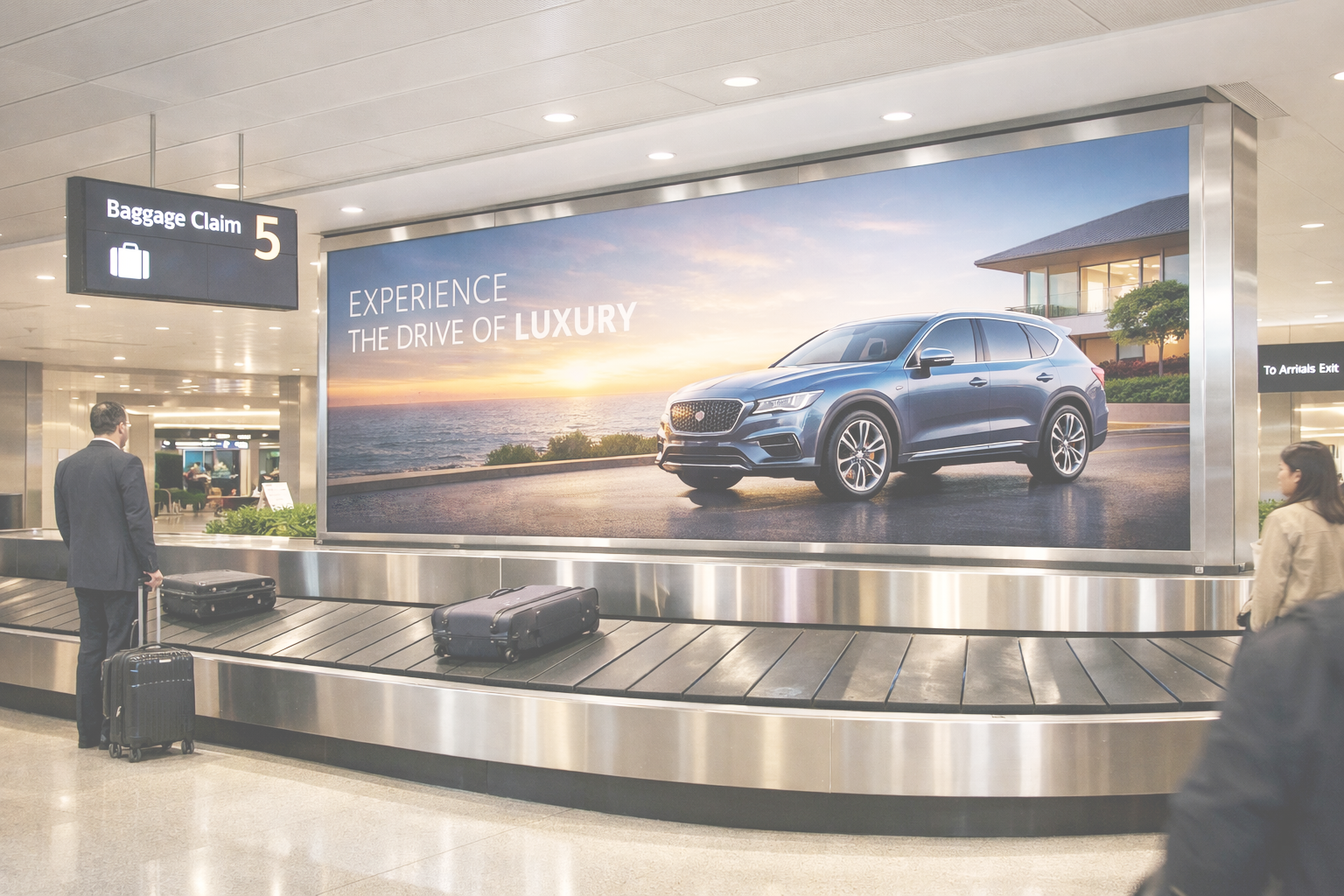
It’s Not Just Where You Advertise - It’s How Fast You Execute
We combine local insight with fast rollout to deliver results for you, now.
Talk to an ExpertAudience and Cultural Intelligence
Top 2 Languages:
- Portuguese: The overwhelming primary language of the catchment and the travelling audience. Single-language creative reaches effectively the entire terminal, which lowers production cost and lets budget shift into placement quality and frequency.
- Japanese: Commercially relevant well beyond its share of speakers because it maps directly to Londrina's Japanese-Brazilian community, a high-asset, business-owning and internationally mobile segment. Bilingual or culturally coded creative signals recognition to an audience with strong purchasing power and a genuine Japan travel corridor.
Major Traveller Nationalities:
LDB traffic is overwhelmingly Brazilian domestic, with no scheduled international service, so international demand is carried by connections through São Paulo. Within that domestic base sits a strongly multi-heritage population of Japanese, Italian, German, Lebanese and Ukrainian descent, which shapes both consumption and outbound destination choice. Practically, this means creative should be built for a Brazilian audience with high asset ownership and international outlook rather than for a transit crowd. Masscom recommends Portuguese-language creative with heritage-aware treatment during peak community travel periods.
Religion, Advertiser Intelligence:
- Catholicism, majority of the catchment: Christmas, Easter and regional patron saint festivals drive family gathering and gifting travel, with December and Holy Week producing clear volume peaks. Spending triggers cluster on gifting, family celebration, home and vehicle upgrade and charitable giving. Retail, telecom, automotive and consumer finance benefit most.
- Evangelical and Protestant Christianity, a large and growing share: Drives conference, congregation and mission-related travel that is less seasonal and more distributed through the year. Spending triggers favour family, education, insurance and value-premium purchases rather than luxury display.
- Buddhism, Shinto and Japanese-Brazilian community observance, smaller but commercially significant: Community festivals and family observance periods coincide with concentrated Japan corridor travel. Spending triggers include international travel, remittance, education abroad and property, making this a direct target for banking, education and international real estate advertisers.
- Exact percentage breakdown: Data not available.
Behavioral Insight:
This is a wealth base built on land, harvests and family enterprise, which produces a specific decision style: patient, cash-aware, cycle-timed and deeply influenced by peer and cooperative opinion. Purchases are made when liquidity arrives, typically after harvest settlement, and they are researched and discussed within family or cooperative networks rather than decided alone. Airport advertising here therefore works as an authority and consideration builder ahead of the buying window, not as impulse response. The messaging that performs emphasises durability, yield, family continuity and long-term value, and it performs best when a brand is already familiar by the time liquidity lands. Masscom builds LDB campaigns to be present before the money moves, not after.
Outbound Wealth and Investment Intelligence
The outbound passenger at LDB is commercially distinctive because they are deploying commodity-generated capital rather than salary. This is a landowning and business-owning population with cyclical liquidity, strong currency awareness and a long history of moving money across borders through family and heritage networks. Their outbound travel is directed at land and property, machinery and technology procurement, education for children, healthcare, and second-residency options that hedge Brazilian currency and political risk.
Outbound Real Estate Investment:
Capital from this catchment moves most actively into Brazilian coastal and premium urban property, notably Santa Catarina's Balneário Camboriú and Florianópolis, plus São Paulo. Internationally, the strongest flows go to Portugal for language, residency and yield advantages, to the United States in Florida for rental returns and dollar exposure, and to Paraguay for agricultural land and tax efficiency, with Uruguay attracting capital seeking stability. Spain and Italy draw interest where European ancestry supports citizenship claims. International developers marketing dollar or euro denominated yield property have an uncontested channel to this buyer at LDB, and Masscom can place that message directly in the departure path.
Outbound Education Investment:
Students from this catchment move primarily to Portugal, the United States, Canada, the United Kingdom, Ireland and Australia, with Japan retaining a distinct pull for the Japanese-Brazilian community across both study and work. Family spending profile is high and often multi-generational, with grandparents and family businesses funding overseas study as a legacy decision. International universities, boarding schools, language institutions and education consultancies advertising at LDB reach the funding decision-maker rather than the applicant, which is where the budget sits.
Outbound Wealth Migration and Residency:
Second-residency demand from this audience centres on Portugal's residency-by-investment route, Italian and Spanish ancestry-based citizenship recovery, Paraguay and Uruguay residency for asset and tax structuring, and United States investor visa pathways for larger family offices. Interest rises whenever the currency weakens, which makes timing of residency and citizenship advertising unusually responsive to macro conditions. Golden Visa and citizenship-by-investment programmes in Portugal, Greece and the Caribbean are all relevant to this profile.
Strategic Implication for Advertisers:
Brands on both ends of this corridor should treat LDB as a priority buy, because the same terminal carries capital leaving for Lisbon, Miami and Asunción and the machinery, technology and finance brands selling into the region on the way back. A Portuguese developer and a global equipment manufacturer are addressing the same passenger from opposite directions. Masscom Global activates both sides simultaneously, pairing LDB placement with matched inventory in the destination market so a single brand narrative lands at origin and arrival.
Airport Infrastructure and Premium Indicators
Terminals:
- LDB operates a single passenger terminal, expanded and modernised under a R$201 million programme that doubled annual capacity to roughly 3.5 million passengers. The runway was extended by 150 metres to 2,100 metres, and infrastructure for a future instrument landing system was installed, which raises operational reliability and route potential.
- The upgrade delivered a large new departure lounge, expanded commercial and concession space and two new passenger boarding bridges. Passenger types are not segregated across terminals, so the agribusiness owner, the physician and the holiday family share the same high-visibility environment, delivering complete audience coverage from a single placement set.
Premium Indicators:
- A dedicated VIP lounge was added in the recent expansion, a clear signal that the airport is provisioning for a premium and business-class passenger base disproportionate to its passenger count.
- General and business aviation activity is a meaningful feature of the airfield, driven by agribusiness owners, cooperative executives and agricultural aviation, confirming an ultra-high-net-worth layer above the scheduled passenger base.
- On-airport luxury hotel: Data not available. Premium accommodation sits in Londrina city, roughly six kilometres away, meaning the airport is the first and last brand touchpoint of a high-value business trip.
- An international cargo terminal operates at the site, supporting agricultural and industrial export flows and adding a logistics and trade decision-maker audience to the passenger base.
Forward-Looking Signal:
The airport now has double its previous capacity, a longer runway, jet bridges, a VIP lounge and expanded commercial space, all against 2025 traffic of under 700,000 passengers. That gap is the opportunity: the infrastructure has already been built for a far larger and more premium passenger base, and route negotiations continue on the strength of sustained load factors above 85%. Ownership of the concession is also moving through a major transaction, which typically accelerates commercial development and media investment. Every one of those signals points to rising audience value and rising inventory pricing. Masscom Global advises clients to secure position now, while rates reflect current traffic rather than built capacity, and to lock multi-year terms before the market reprices.
Airline and Route Intelligence
Top Airlines:
LATAM, Azul and Gol operate the scheduled network at LDB, with roughly 63 departures a week across four domestic airports.
Key International Routes:
No scheduled international service. International demand is carried through São Paulo Guarulhos and Campinas, feeding onward to Portugal, the United States, Japan and the wider network. Weekly international frequency data: Data not available.
Domestic Connectivity:
The core corridors run to São Paulo Congonhas, São Paulo Guarulhos, Campinas Viracopos and Curitiba, with seasonal leisure service to Northeast Brazil coastal markets during the summer high season. The longest nonstop is Londrina to Guarulhos at roughly 475 kilometres and just over an hour, positioning LDB as a short-haul feeder into Brazil's two largest hubs.
Wealth Corridor Signal:
The route map is almost purely a business and capital map. Congonhas carries the São Paulo banking, trading and corporate meeting flow, which is the highest-value business segment in the terminal. Guarulhos and Viracopos carry the internationally bound passenger, the family sending a child to study abroad and the owner travelling for equipment procurement or property. Curitiba carries state government, regulatory and institutional traffic. Seasonal Northeast routes carry the leisure family audience. For advertisers this means LDB is not one audience, it is three clean segments arriving through identifiable time windows, and Masscom plans placement against that structure rather than against generic footfall.
Media Environment at the Airport
- Single-terminal scale with one consolidated passenger flow means clutter is far lower than in Brazil's major hubs, so a well-positioned brand achieves standout that would be impossible in a multi-terminal airport carrying a comparable value audience.
- Dwell time is extended by early arrival habits among business travellers, the expanded departure lounge and concession area, and short-haul schedule patterns that concentrate passengers into defined boarding waves, all of which lengthen brand exposure.
- The recently rebuilt terminal, with a VIP lounge, jet bridges and modern commercial fit-out, delivers a premium environment that supports banking, machinery, healthcare and luxury categories rather than undercutting them.
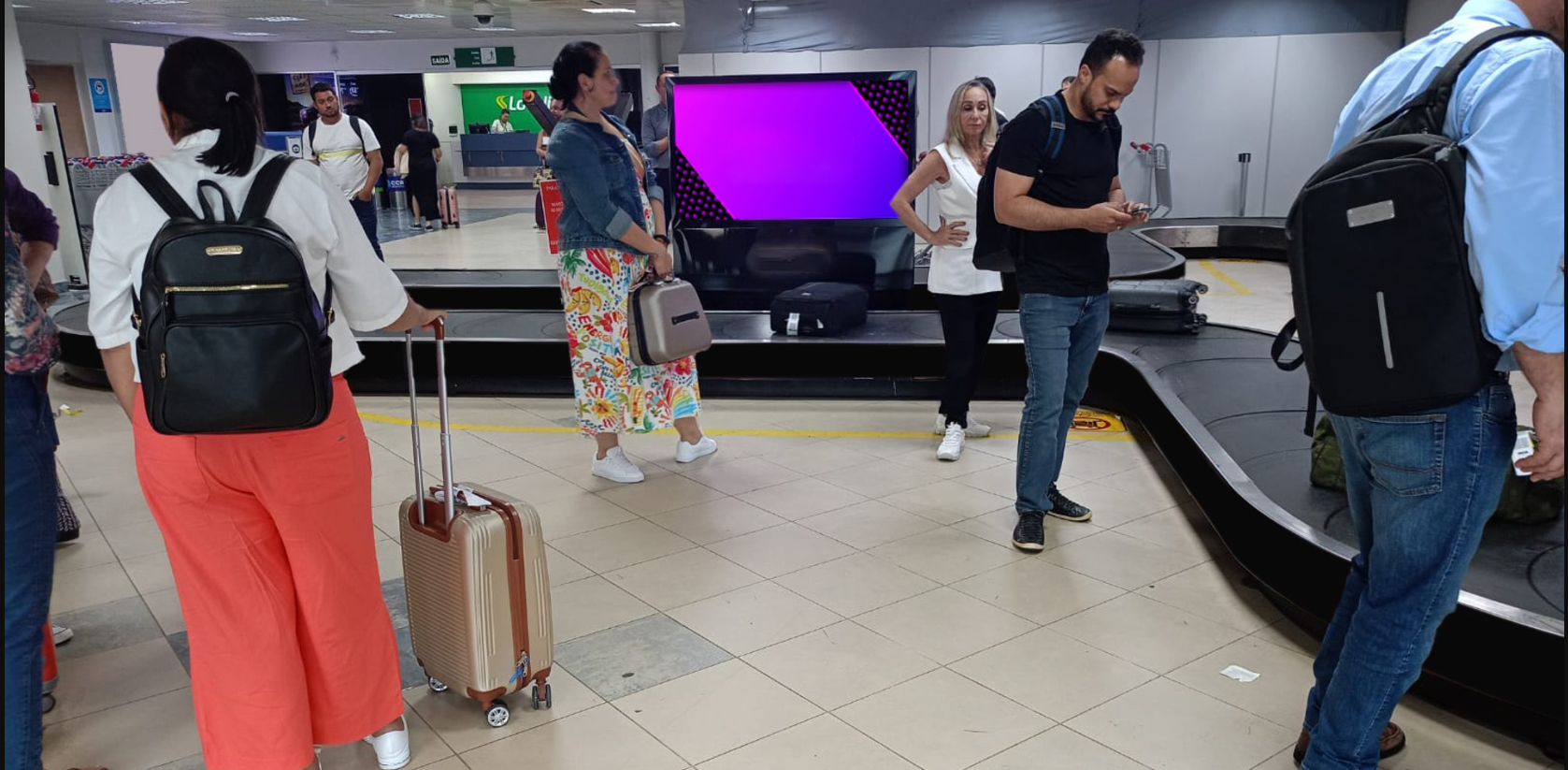
- Masscom Global provides inventory access across the full departure and arrival journey, from check-in hall and security approach through lounge dwell and boarding gates to baggage claim, with placement precision by zone, segment and seasonal window.
Strategic Advertising Fit
Best Fit:
- Agricultural machinery, equipment and precision technology: The catchment is a dense concentration of large-scale grain, oilseed and cane operations with active procurement cycles.
- Agricultural inputs, seed, fertiliser and crop protection: Reaches landowners and cooperative decision-makers directly ahead of planting and settlement windows.
- Rural credit, business banking and commodity risk services: Cyclical liquidity and hedging needs make this audience a primary target for financial products.
- Premium and commercial automotive, including pickups and utility vehicles: High asset ownership and rural distance driving make this a natural fit.
- Private healthcare, clinics and medical technology: Londrina is a regional clinical hub with both practitioner and patient audiences in the terminal.
- International education, universities and language institutions: Reaches the funding decision-maker in a market with strong overseas study demand.
- International residential real estate and residency programmes: Outbound capital is actively seeking dollar and euro denominated assets.
- Insurance, wealth advisory and succession planning: Family-enterprise wealth structures create sustained demand for these services.
Brand Alignment at a Glance:
| Category | Fit |
|---|---|
| Agricultural machinery and precision technology | Exceptional |
| Rural credit and business banking | Exceptional |
| Agricultural inputs and crop protection | Strong |
| Premium and commercial automotive | Strong |
| Private healthcare and medical technology | Strong |
| International education and residency programmes | Moderate |
| International residential real estate | Moderate |
| Global luxury fashion and duty-free retail | Poor fit |
Who Should Not Advertise Here:
- Duty-free, global fragrance and international transit retail: There is no international departure audience at LDB, so the purchase occasion does not exist in this terminal.
- Global luxury fashion and high-visibility status brands: The wealth here is asset-based and understated, oriented toward land, machinery and vehicles rather than displayed apparel, so the message misreads the audience.
- Currency exchange and international mobile roaming services: Domestic-only scheduled traffic removes the trigger that makes these categories work at gateway airports.
Event and Seasonality Analysis
- Event Strength: Medium
- Seasonality Strength: High
- Traffic Pattern: Dual-Peak
Strategic Implication:
Budget should not be spread evenly across the year at LDB, because audience composition and purchasing power shift materially by month. The September to November harvest settlement window and the April exhibition season deliver the highest-intent agribusiness passengers and should carry the premium share of any machinery, inputs, credit or automotive budget. January and July deliver family volume and suit consumer, telecom, insurance and retail campaigns. Masscom Global structures LDB campaigns around this rhythm, weighting placement into the procurement windows while maintaining baseline presence so recall is established before liquidity arrives.
Poor Placement and Delays Affect Airport Campaigns
We help you move faster, access better inventory, and get it right now.
Talk to an ExpertFinal Strategic Verdict
Governor José Richa Airport is one of the most efficient agribusiness wealth intercepts in Brazil. It moved 693,450 passengers in 2025 through a single rebuilt terminal now sized for 3.5 million, with load factors above 85% and a passenger base dominated by landowners, cooperative directors, agro-industrial executives and private medical professionals rather than price-sensitive volume traffic. The route map confirms the profile: Congonhas carrying São Paulo banking and trading business, Guarulhos and Viracopos carrying internationally bound capital and education spend, Curitiba carrying institutional traffic. Agricultural machinery and input brands, rural and business credit providers, premium and commercial automotive, private healthcare, and international education and property developers will see the strongest returns, particularly if budget is weighted into the April exhibition and September to November settlement windows. With capacity doubled, a longer runway, jet bridges, a VIP lounge and concession ownership in transition, audience value and inventory pricing at LDB are both on an upward curve, and the window to enter at current rates is open now. Masscom Global has the inventory access, the audience intelligence and the execution speed to place your brand in that flow before the market reprices.
About Masscom Global
Masscom Global is a premium international airport advertising and media buying agency operating across 140 countries. With deep expertise in airport OOH, premium publications, and high-net-worth audience targeting, Masscom helps brands reach the world's most valuable travellers at the moments that matter most. For advertising packages, media rates, and campaign planning at Governor José Richa Airport and airports across the globe, contact Masscom Global today.
Frequently Asked Questions
How much does airport advertising cost at Londrina Airport? Cost at LDB depends on format, position within the terminal flow, campaign duration and seasonal demand. The April exhibition season and the September to November harvest settlement window price higher because passenger value peaks. Because the terminal was recently rebuilt to far greater capacity than current traffic, rates still reflect present volume rather than the finished asset, which creates a favourable entry point. Contact Masscom Global for current rates and package options.
Who are the passengers at Londrina Airport? LDB carries an overwhelmingly Brazilian domestic audience with unusually high asset ownership: grain, oilseed and cane landowners, cooperative and agro-industrial executives, textile and furniture manufacturing owners from Apucarana and Arapongas, physicians and academics from Londrina's medical and university cluster, and the city's substantial Japanese-Brazilian community. It is an owner-class audience, not a commuter audience.
Is Londrina Airport good for luxury brand advertising? It is strong for asset-led premium categories and weak for display-led luxury. Premium automotive, private banking and wealth advisory, private healthcare, high-specification machinery and international property all perform well because they match how this wealth is actually held and spent. Global luxury fashion and duty-free retail do not, because there is no international departure occasion and the audience does not buy status through apparel.
What is the best airport in southern Brazil to reach HNWI audiences? São Paulo and Curitiba deliver the largest raw HNWI volume, but LDB delivers the highest concentration of agricultural and family-enterprise wealth per passenger, with far lower clutter. For any brand selling into agribusiness capital, LDB is more cost-efficient than a hub buy. Masscom recommends LDB as a precision buy alongside a São Paulo volume buy.
What is the best time to advertise at Londrina Airport? September to November is the strongest window, when harvest settlement liquidity drives machinery, land, vehicle and credit decisions. April is the second priority, driven by the regional agricultural exhibition calendar and procurement-ready visitors. January and July deliver maximum family volume for consumer categories, and December adds a holiday and gifting peak.
Can international real estate developers advertise at Londrina Airport? Yes, and it is one of the most underused opportunities at this airport. Capital from this catchment moves into Portugal, Florida, Paraguay, Uruguay and Brazilian coastal markets, with ancestry-linked interest in Spain and Italy. Developers reach an asset-rich audience actively seeking dollar and euro exposure, with no competing international property messaging in the environment. Masscom can activate both the LDB placement and matched inventory in the destination market.
Which brands should not advertise at Londrina Airport? Duty-free, international transit retail, currency exchange and international roaming services have no audience here because LDB has no scheduled international service. Global luxury fashion and status-display brands are misaligned with an understated, asset-based wealth profile and will waste budget in this terminal.
How does Masscom Global help brands advertise at Londrina Airport? Masscom delivers the full chain: catchment and audience intelligence specific to northern Paraná, inventory access across check-in, security approach, lounge, boarding gates and arrivals, campaign planning weighted to the harvest and exhibition windows, creative guidance tuned to an owner-class agribusiness audience, and execution speed that gets campaigns live while rates still reflect current traffic rather than built capacity. Book a fifteen-minute planning call and we will build the LDB case for your brand.