

Airport at a Glance
| Field | Detail |
|---|---|
| Airport | Lincoln Airport |
| IATA Code | LNK |
| Country | United States |
| City | Lincoln, Lancaster County, Nebraska |
| Annual Passengers | 262,000 (2025), with 79,625 aircraft operations and 174 based aircraft |
| Primary Audience | Business aviation owners, operators and crews, state government and legislative professionals, university and collegiate sport travellers, insurance and financial services executives |
| Peak Advertising Season | January to April, September to November |
| Audience Tier | Tier 2 |
| Best Fit Categories | Business aviation services and finance, government affairs and legal services, farmland and succession advisory, insurance and financial services B2B |
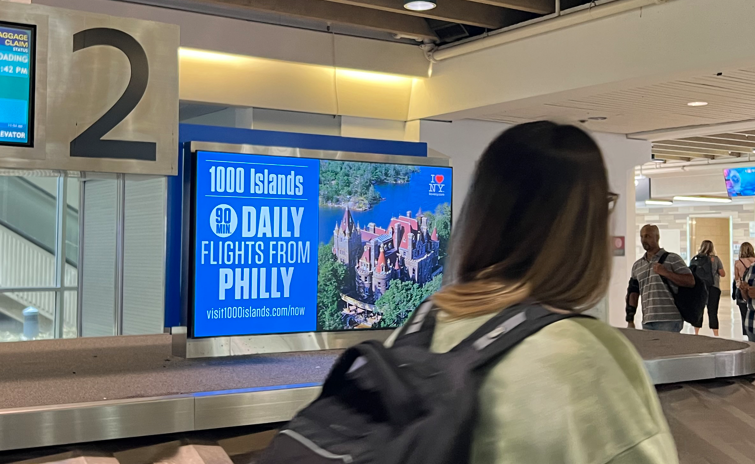
Lincoln Airport recorded 262,000 total passengers in 2025 across 79,625 aircraft operations, with 174 based aircraft. That ratio is the first thing an advertiser should notice, because it reveals what this airport actually is. The Federal Aviation Administration describes LNK as a medium-sized multi-use facility where the large majority of traffic is general aviation, both based and itinerant, alongside a substantial military presence and regularly scheduled commercial service. The airfield covers more than 5,000 acres with three runways, the primary measuring 12,901 feet and once designated as a Space Shuttle emergency landing site. One of the world's largest family-owned business aircraft maintenance, repair and modification companies is headquartered on the field with substantial hangar capacity, and the Nebraska Air National Guard operates from here.
The commercial picture on the passenger side is one of a market being actively won back. Airline passengers rose 3 percent in the first quarter of 2025, and more significantly the airport's share of its own catchment climbed to 20 percent from 17 percent a year earlier, the highest local market share since 2016, representing nearly 50 additional passengers per day. The airport has closed the fare gap with its larger neighbours: average United fares from Lincoln fell 20 dollars each way in that quarter while rising 14 dollars at Omaha and 30 dollars at Kansas City, leaving Lincoln fares lower than that carrier's averages at either. LNK operates a deliberate strategy of low cost per enplaned passenger, minimum revenue guarantees funded by a local tax initiative, and route marketing support. Masscom Global assesses LNK as a business aviation and institutional intercept with a recovering scheduled passenger base, and advertisers should note candidly that 80 percent of the catchment still flies from elsewhere.
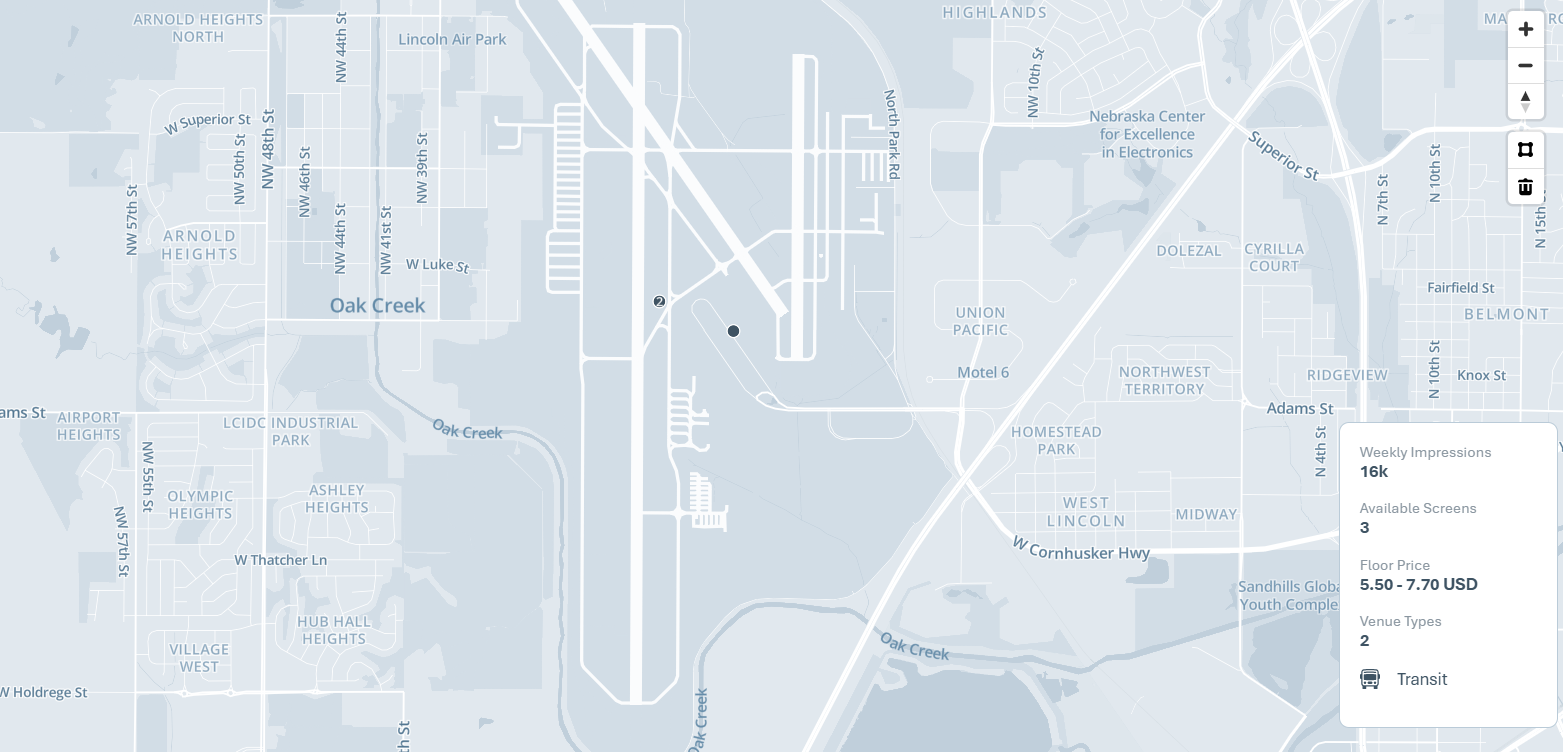
Advertising Value Snapshot
- Passenger scale: 262,000 total passengers in 2025 with 79,625 aircraft operations and 174 based aircraft. Airline passengers up 3 percent in the first quarter of 2025, with catchment market share at 20 percent against 17 percent a year earlier, the highest since 2016.
- Traveller type: Business aviation owners, operators, crews and maintenance customers, state government and legislative professionals, university and collegiate sport travellers, and insurance and financial services executives.
- Airport classification: Tier 2. Scheduled passenger volume is modest and leakage remains substantial, but general aviation activity, institutional density and a globally significant business aviation operation on the field give this airport real weight.
- Commercial positioning: Nebraska's capital city airport, competing on convenience, fare parity and lower cost per enplaned passenger against Omaha and Kansas City, under the positioning line Fly Home, Be Home.
- Wealth corridor signal: Nebraska farmland and family business equity, complicated by a distinctive county-level inheritance tax, with outbound movement toward Colorado, Arizona, Texas and Florida.
- Advertising opportunity: The genuinely exceptional audience here is business aviation. Aircraft come to Lincoln for major maintenance and modification events lasting weeks, bringing owners' representatives, chief pilots, flight crews and operators repeatedly through the field, and 174 based aircraft support a substantial resident general aviation community. For aviation finance, insurance, avionics, charter, management and fractional providers, this is a concentrated and under-bought audience. Masscom Global maps placement to that flow alongside the scheduled terminal.
Airport Advertising is Complex to Get Right
We help you execute faster, with proven results and local insight most planners lack starting now.
Talk to an ExpertCatchment Area and Economic Drivers
Top 10 Cities within 150 km, Marketer Intelligence:
- Lincoln: Nebraska's capital and second-largest city, four miles south of the terminal, concentrating every state agency, the legislature and the courts, a Big Ten land-grant university with more than 24,000 students, multiple life insurance company headquarters, a national student loan servicing and fintech company, two competing hospital systems and powersports and rail vehicle manufacturing. Produces government, legal, academic, financial and industrial audiences in genuine density.
- Seward and the Concordia corridor: University town roughly 40 kilometres west with a private liberal arts institution and productive agricultural land. Delivers academic and landowner audiences alongside a well-off small-town professional base.
- Beatrice and Gage County: Regional agricultural and manufacturing centre roughly 65 kilometres south, with irrigation equipment, food processing and row-crop production. Produces farm owner-operators and industrial procurement audiences.
- Crete, Milford and Saline County: Meat processing and agricultural district roughly 30 to 50 kilometres southwest, with a substantial Hispanic workforce population and a private college. Delivers both industrial procurement and a distinct Spanish-speaking consumer audience.
- Wahoo, Ashland and Saunders County: Fast-growing corridor between Lincoln and Omaha roughly 40 to 60 kilometres northeast, with strong agriculture and increasing affluent residential development serving both metros. Produces landowner and higher-income commuter households.
- Fremont and Dodge County: Agricultural processing centre roughly 80 kilometres north, including a very large integrated poultry complex, alongside grain and livestock production. Produces food processing management and agricultural procurement audiences, plus a large Hispanic workforce population.
- Columbus and Platte County: Manufacturing and agricultural centre roughly 110 kilometres northwest, producing metal buildings, medical devices and agricultural equipment. Delivers industrial engineering and procurement decision-makers.
- York, Aurora and the central Platte agricultural belt: Irrigated corn, soybean and seed production roughly 90 to 130 kilometres west, on some of the most valuable irrigated farmland in the world. Produces landowner principals whose asset wealth substantially exceeds visible income.
- Nebraska City, Auburn and the Missouri River corridor: Agriculture, orchards, river logistics and heritage tourism roughly 90 kilometres southeast. Produces landowner and small business audiences.
- Western Omaha metro and Sarpy County: The affluent western edge of Nebraska's largest metropolitan area roughly 70 to 90 kilometres northeast. This is where LNK's market share battle is fought, since these households can reasonably choose either airport, and Lincoln's fare advantage is aimed squarely at them.
NRI and Diaspora Intelligence:
Lincoln has a genuinely distinctive diaspora profile for an American city of its size and advertisers frequently miss it. The city has recorded among the highest per-capita refugee resettlement rates in the United States and hosts the largest Yazidi community in the country, numbering in the low thousands, alongside substantial Vietnamese, Sudanese, Iraqi, Karen and Chin Burmese, and Afghan populations. These communities sustain remittance flow to Iraq, Sudan, Vietnam, Myanmar and Afghanistan, international family travel routed through Chicago, Denver and Minneapolis, and strong demand for money transfer, prepaid telecom, halal food and low-cost travel. This is a well-defined, community-networked audience that is materially under-served by advertising in this market.
Separately, the Hispanic population across Lincoln and much more heavily in the meat processing towns of Crete, Fremont, Columbus and Schuyler generates consistent cross-border family travel to Mexico and Central America, remittance flow and heavy telecom usage, and Spanish-language creative is commercially warranted for consumer categories.
A third flow is university-driven. The airport itself identifies the university's 24,000-plus students, including many from out of state and abroad, as a key source of frequent flyers, and Chinese, Indian and other international student populations generate recurring long-haul travel through hub connections. Nebraska's German, Czech, Irish and Scandinavian settlement heritage sustains recurring European heritage travel, with the Czech connection particularly strong in this part of the state. Precise remittance volumes for this catchment are not available.
Economic Importance:
Five engines drive this catchment. State government, with every Nebraska agency, the unicameral legislature and the courts in Lincoln, supported by an associated legal, lobbying and association layer. Higher education and agricultural research, anchored by a Big Ten land-grant university with a major agriculture and natural resources institute and an innovation campus. Insurance and financial services, with multiple life insurance headquarters and a nationally significant student loan servicing and fintech company based in the city, forming a substantial white-collar sector. Business aviation, with one of the world's largest family-owned business aircraft maintenance, repair, modification and avionics operations headquartered on the airfield. And agriculture, with Nebraska a leading producer of corn, soybeans and beef cattle on farmland among the most valuable in the world, supported by processing, equipment and agtech activity across the catchment.
Business and Industrial Ecosystem
- Business aviation maintenance, modification and avionics: One of the world's largest family-owned business aircraft support companies is headquartered at the airport with extensive hangar capacity. Aircraft arrive for maintenance and modification events lasting weeks, bringing owners' representatives, chief pilots, flight departments and operators through the field repeatedly. Produces the highest-value and most concentrated audience at this airport.
- State government, legislative and legal services: All Nebraska agencies, the unicameral legislature, the courts and an associated lobbying, legal and trade association layer. Produces a policy and government affairs audience with statewide influence over agriculture, insurance, energy and healthcare regulation.
- Insurance, financial services and fintech: Multiple life insurance company headquarters alongside a nationally significant student loan servicing and diversified financial technology company based in Lincoln. Produces executive, actuarial, technology and professional travellers with stable high incomes.
- Higher education, agricultural research and agtech: A Big Ten land-grant flagship with more than 24,000 students, a major agriculture and natural resources institute, an innovation campus and food and agtech commercialisation activity. Produces academic, research and commercial audiences plus substantial parent and student travel.
- Manufacturing, agriculture and food processing: Powersports and rail vehicle manufacturing and electronic connectors in Lincoln, metal buildings and medical devices at Columbus, a very large poultry complex at Fremont, and irrigated row-crop and livestock production across the catchment. Produces plant management and agricultural procurement decision-makers.
Passenger Intent, Business Segment:
Business travellers at LNK move to Chicago, Denver, Minneapolis, Dallas and Atlanta for corporate, insurance, legal, university and agricultural business, and onward internationally through those hubs. A distinct and unusually valuable subset are business aviation customers arriving to accompany aircraft into maintenance or collect them afterwards, frequently travelling on scheduled service in one direction and privately in the other. Categories that intercept these travellers effectively are aviation finance, insurance and management, avionics and aircraft systems, government affairs and legal services, insurance technology, and agricultural equipment and finance.
Strategic Insight:
The commercial insight at LNK is that its most valuable audience is not in the airline terminal at all. With 79,625 annual aircraft operations against 262,000 total passengers and 174 based aircraft, general aviation dominates this field, and it is anchored by a business aircraft support operation of genuine global standing. That produces a recurring flow of aircraft owners, flight department heads, chief pilots and operators, people who make purchasing decisions on aircraft acquisition, finance, insurance, avionics, charter and management worth millions per transaction. Very few airports in the world concentrate that audience so tightly, and almost none are priced as a small regional terminal. Masscom Global builds business aviation campaigns here around that flow, and separately addresses the scheduled terminal's government, university and insurance audiences.
Tourism and Premium Travel Drivers
- Nebraska Cornhuskers football: Memorial Stadium seats over 85,000 and has sold out every home game since 1962, one of the longest consecutive sellout streaks in American sport, making the stadium the state's third-largest population centre on game days. Seven home Saturdays each autumn produce entirely predictable travel surges, and visiting team charters use Lincoln directly.
- Nebraska volleyball and the wider athletic programme: The volleyball programme set a world attendance record for a women's sporting event with 92,003 spectators at Memorial Stadium in August 2023 and routinely sells out its arena, creating a distinctive and passionately engaged audience. Basketball, baseball and wrestling add further event traffic.
- University academic and parent travel: More than 24,000 students, a substantial share from out of state and abroad, generate compressed and highly predictable travel surges around move-in, graduation and parents' weekends, with the airport explicitly identifying the university as a key source of frequent flyers.
- Nebraska State Capitol and state institutions: A nationally significant piece of architecture and the state's civic centre, alongside museums, gardens and the state historical collections, supporting modest heritage and educational visitation.
Passenger Intent, Tourism Segment:
Inbound leisure at LNK is overwhelmingly event and university driven rather than destination driven, and it is unusually predictable as a result. Football Saturdays, volleyball matches, graduation and move-in weekends produce concentrated arrival patterns that advertisers can plan against with real confidence. A notable operational detail is that many visiting football teams fly into Omaha because Lincoln hotel capacity is constrained on game weekends, staying in Omaha the night before and departing from Lincoln immediately after the game, which means Lincoln captures a share of the departure rather than the arrival. Outbound leisure is dominated by residents connecting through Denver, Chicago, Minneapolis and Dallas for Colorado, Arizona, Texas, Florida and international travel.
Travel Patterns and Seasonality
Peak seasons:
- January to April: The Nebraska legislative session, concentrating lawmakers, lobbyists, trade associations, legal counsel and agency officials in the capital. Combined with the insurance and financial services business calendar, this is the most reliable institutional window of the year.
- September to November: Cornhuskers football season, with seven sold-out home Saturdays alongside harvest-period agricultural business travel and fiscal-year corporate activity. The densest business and event overlap of the year.
- August and May: University move-in and graduation, producing compressed high-income parent travel surges, plus the August volleyball season opening which has drawn record crowds.
- Year-round: Business aviation maintenance activity runs continuously with no meaningful seasonality, which makes it the only audience at this airport that supports genuinely even annual weighting.
Traffic volume data:
Total passengers reached 262,000 in 2025 with 79,625 aircraft operations, and 174 aircraft were based at the field as of 2023. Airline passengers rose 3 percent in the first quarter of 2025, with catchment market share reaching 20 percent against 17 percent a year earlier, the highest since 2016 and equivalent to nearly 50 additional passengers per day. Average United fares from Lincoln fell 20 dollars each way in that quarter while rising 14 dollars at Omaha and 30 dollars at Kansas City. The terminal has four gates with jetways, expanded by two under a recent improvement programme. Full monthly distributions are not available.
Event-Driven Movement:
- Cornhuskers football season (September to November): Seven home Saturdays at a stadium that has sold out continuously since 1962, drawing alumni, corporate hospitality and visiting supporters from across the Big Ten footprint and nationally. Entirely predictable, and prime for automotive, beverage, telecom, insurance, financial services and consumer brands.
- Nebraska Legislature session (January to April): Concentrates legislators, lobbyists, industry associations, legal counsel and agency officials in the capital across a defined period. The definitive institutional window for agriculture, insurance, energy, healthcare and infrastructure advertisers.
- Business aviation maintenance cycle (continuous): Aircraft arriving for multi-week maintenance and modification events bring owners' representatives, flight department leadership and crews through the field repeatedly across the year. The most valuable and most under-bought audience at this airport.
- Nebraska volleyball season (August to December): A programme that set a world attendance record for a women's sporting event, with a passionately engaged and distinctive audience that few advertisers address deliberately.
- University move-in, graduation and parents' weekends (August, May and autumn): Compressed high-income parent travel with strong receptivity to financial services, insurance, automotive and hospitality messaging.
- Harvest and planting seasons (April to May and September to November): Agricultural business travel concentrates around the crop calendar across some of the world's most valuable irrigated farmland.
It’s Not Just Where You Advertise - It’s How Fast You Execute
We combine local insight with fast rollout to deliver results for you, now.
Talk to an ExpertAudience and Cultural Intelligence
Top 2 Languages:
- English: Dominant across government, business aviation, academic, insurance and industrial audiences. Nebraska commercial culture is understated, practical and relationship-driven, and creative should be plain and evidence-led. For the business aviation audience specifically, technical specificity, downtime guarantees and service record persuade where brand assertion does not, because these are professional buyers evaluating multi-million dollar decisions.
- Spanish: The clear second language, present in Lincoln and much more heavily in the meat processing communities of Crete, Fremont, Columbus and Schuyler, several of which have very large Hispanic populations. Spanish-language creative is commercially warranted for automotive, telecom, remittance, insurance, retail and value travel categories.
Kurmanji Kurdish carries commercial weight disproportionate to its speaker numbers because Lincoln hosts the largest Yazidi community in the United States, and Vietnamese, Arabic, Karen, Chin and Dari are all present at meaningful community levels through the city's substantial refugee resettlement history. These communities support remittance, telecom, halal and Asian food, and international family travel categories.
Major Traveller Nationalities:
The passenger base is predominantly domestic American, drawn from Lincoln, southeastern and central Nebraska and the western Omaha metropolitan fringe. International travel connects through Chicago, Denver, Minneapolis and Dallas. Commercially significant international ties run to Iraq, Sudan, Vietnam, Myanmar and Afghanistan through resettled communities, to Mexico and Central America through the processing towns, to China, India and Korea through the university, and to Germany, the Czech Republic, Ireland and Scandinavia through settlement heritage. A distinct international business aviation flow arrives with aircraft coming to Lincoln for maintenance from operators across the Americas and beyond.
Religion, Advertiser Intelligence:
Figures below are directional approximations for Nebraska rather than airport-level survey data.
- Mainline and evangelical Protestant traditions (approximately 40 to 45 percent combined): Lutheran presence is strong given German and Scandinavian settlement, alongside Methodist, Baptist and non-denominational congregations. Drives Christmas and Easter family travel, confirmation and graduation gifting cycles, church-organised group and mission travel, and charitable giving.
- Roman Catholicism (approximately 25 to 30 percent): Built on German, Irish, Czech and Hispanic heritage, with Nebraska's Czech-American community particularly concentrated in this part of the state. Drives Christmas, Easter and family gathering travel, communion and confirmation gifting, and heritage and pilgrimage travel to Central Europe and Ireland.
- Religiously unaffiliated (approximately 20 to 25 percent): Concentrated among the university population and younger professionals. Higher receptivity to experience, technology, sustainability and evidence-led positioning.
- Yazidism, Islam, Buddhism and other traditions (small combined share but genuinely distinctive): Lincoln's status as home to the largest Yazidi community in the United States, alongside Muslim populations from Iraqi, Sudanese and Afghan resettlement and Buddhist communities from Vietnamese and Burmese resettlement, gives this city unusual religious diversity for its size. Ramadan and Eid generate concentrated family travel, gifting and remittance surges, and the Yazidi community's own observances and commemorations carry deep significance. Advertisers engaging these communities should do so with genuine competence and partnership.
Behavioral Insight:
Four characteristics should shape creative here. First, this catchment separates cleanly into a professional buyer audience and a consumer audience with very little overlap, and the professional side is the more valuable. Business aviation customers, insurance executives, lobbyists and farmland owners all make high-value decisions on technical and financial grounds and reward specificity, while the broader consumer audience is value-conscious and comparison-driven. Second, Nebraska wealth is quiet. Irrigated Platte valley farmland ranks among the most valuable agricultural real estate in the world, but the families who own it are conservative, understated and resistant to status signalling, so propositions built on prestige will lose to propositions built on durability, service and generational continuity. Third, collegiate sport is not a peripheral cultural detail here but a central organising feature of the state's social and commercial calendar, and brands that engage it authentically build genuine affinity while those that treat it as generic sports marketing do not. Fourth, the refugee and immigrant communities are community-networked and referral-driven, meaning that credibility earned within a community travels quickly and superficial engagement is identified immediately.
Outbound Wealth and Investment Intelligence
The outbound passenger at LNK sits in a catchment where the most substantial wealth is agricultural land, and where a genuinely unusual tax feature makes advisory demand higher than it would otherwise be. Nebraska's irrigated Platte valley farmland is among the most valuable agricultural real estate in the world and is substantially family-held across generations. Alongside it sit insurance and financial services executive compensation, family manufacturing business equity, professional practice income, and business aircraft ownership at rates well above what the region's population would suggest.
Outbound Real Estate Investment:
The dominant destinations for property capital are Colorado, principally the Denver metropolitan area, the Front Range and the ski corridor, and Arizona around Phoenix and Scottsdale, followed by Texas and Florida. Closer to home, capital moves into Nebraska Sandhills ranch land, Missouri River lake property and Kansas City and Omaha urban real estate. Within the region, capital rotates persistently into additional farmland, which functions as both an operating asset and a long-term store of value, and into irrigation and grain storage infrastructure. International property interest is modest and clusters on European heritage-linked and Mexican resort markets.
Outbound Education Investment:
Families here fund the University of Nebraska system heavily, alongside Big Ten institutions, regional private colleges including those at Seward and Crete, and selective private universities elsewhere. The land-grant university's agricultural, veterinary and engineering programmes carry strong regional loyalty. The distinctive inbound flow is substantial: more than 24,000 students, a significant share from out of state and abroad, generating parent, alumni and international student travel that the airport itself identifies as a core market. Education advertisers should weight toward domestic universities, agricultural and veterinary programmes, and international student recruitment.
Outbound Wealth Migration and Residency:
Nebraska presents an unusual and commercially significant tax situation. It is one of very few American states that levies an inheritance tax, assessed at county level on beneficiaries rather than on estates, and although recent legislation has reduced the rates and raised exemptions, it remains a live and specific planning concern for exactly the audience that holds high-value farmland. Combined with the state's reductions in income tax rates, the practical effect is that farmland succession and inheritance planning is a substantial, technically complex and under-served advisory category here, while general tax-driven relocation is a weaker proposition than in Illinois or New York. Outbound retirement migration to Arizona, Texas, Florida and Colorado continues but is climate-driven. Demand for citizenship-by-investment and international residency programmes is minimal.
Strategic Implication for Advertisers:
The propositions that fit are aviation, land and succession rather than luxury or international. Aircraft finance, insurance, management and fractional providers are addressing a concentrated audience at a field built around business aviation. Farmland succession and inheritance specialists, agricultural lenders, farmland investment managers and estate advisers are addressing families facing a specific and unusual state tax exposure on their most valuable asset. Masscom Global can activate simultaneously at LNK and at the Colorado, Arizona, Texas and Florida airports where this catchment's retirement and property decisions land.
Airport Infrastructure and Premium Indicators
Terminals:
- A single passenger terminal with four gates equipped with jetways, expanded by two additional gates and jet bridges under a recent improvement programme, giving the airport meaningful capacity headroom for new service. Single-terminal configuration means every passenger passes through the same circulation spine.
- The airfield covers more than 5,000 acres with three runways, the primary measuring 12,901 feet, double the length and width of the secondary. That runway was designated as a Space Shuttle emergency landing site, though never used as such, and it allows LNK to handle aircraft of any size including large military types and diversions.
- The airport is owned by the City of Lincoln and operated by the Lincoln Airport Authority, roughly four miles north of the city, with a history dating to the early 1930s. A terminal improvement programme has been delivered under the name LNK Next.
Premium Indicators:
- The business aviation operation on the field is this airport's outstanding commercial asset. One of the world's largest family-owned business aircraft maintenance, repair, modification and avionics companies is headquartered here with extensive hangars, which means aircraft owners, flight departments and operators from across the Americas and beyond come to Lincoln directly. For any aviation-sector advertiser, this is contextual authority that no comparable regional airport offers.
- General aviation scale is genuinely substantial, with 174 based aircraft and 79,625 annual operations, and the Federal Aviation Administration characterises the large majority of traffic as general aviation. This is a working aviation field rather than a small airline terminal.
- The Nebraska Air National Guard operates from the airport, adding a defence dimension and associated personnel and family travel.
- Passenger amenities include complimentary wireless connectivity, dining and shopping, a staffed customer service position in the terminal, participation in the Hidden Disabilities Sunflower programme, and complimentary coffee in gate areas, which travellers have singled out as unusually hospitable for an airport of this size.
Forward-Looking Signal:
The direction here is genuinely positive and it is being actively engineered. Airline passengers rose 3 percent in the first quarter of 2025, catchment market share climbed to 20 percent from 17 percent and the highest level since 2016, and the airport has closed the fare gap with its neighbours to the point where its principal carrier's average fares are now lower at Lincoln than at either Omaha or Kansas City. The airport operates a deliberate air service development strategy built on low cost per enplaned passenger, minimum revenue guarantees funded by a local tax initiative and route marketing support, and it has pursued low-cost carrier service including referenced engagement with Breeze Airways, which advertisers should verify at the time of planning. Terminal gate capacity has been expanded ahead of demand. Set against that, 80 percent of the catchment still flies from elsewhere, which is both the challenge and the growth headroom. Masscom Global advises securing multi-year positions now, while pricing reflects the recovering rather than the recovered position.
Airline and Route Intelligence
Top Airlines:
United Airlines, Delta Air Lines and American Airlines operating through their regional networks to major hubs. The airport has actively pursued additional and low-cost carrier service, and advertisers should verify the current roster when planning.
Key International Routes:
LNK operates no scheduled international service. International travel connects through Chicago, Denver, Minneapolis and Dallas. A genuine international dimension exists on the general aviation side, with business aircraft arriving for maintenance from operators across the Americas and beyond. Advertisers targeting internationally bound travellers, including the university's international student population and the city's resettled communities, reach them here at origin.
Domestic Connectivity:
Hub connections to Chicago, Denver, Minneapolis and Dallas, with the terminal now offering six gates following expansion. Verified current frequencies and the full destination roster should be confirmed at the time of planning given active service development.
Wealth Corridor Signal:
The route map divides into three commercial functions. Chicago, Denver, Minneapolis and Dallas are the corporate, institutional and connection corridors, carrying government, insurance, university, agricultural and internationally bound travellers, and they are where B2B, financial services and professional services spend belongs. Denver additionally functions as a second-home and leisure corridor toward Colorado's Front Range and ski country, which is where this catchment's recreational property capital concentrates. And the general aviation flow, invisible in scheduled terms, is the corridor that matters most: aircraft arriving from across the continent for maintenance, carrying the owners, operators and flight departments who are the highest-value audience on the field.
Media Environment at the Airport
- Single-terminal configuration with six gates means full-journey coverage across 262,000 passengers is achievable from one compact footprint, at a fraction of Omaha or Kansas City pricing while reaching the state capital's institutional and university audience.
- Advertising clutter is negligible. A well-placed campaign at LNK achieves standout and recall that would demand premium spectacular positioning at a hub airport.
- Dwell time is supported by the airport's convenience proposition and hospitable environment, with passengers arriving unhurried, and by the concentrated peaks around football Saturdays, legislative session periods and university travel weekends.
- Masscom Global provides advertisers with inventory access, placement precision mapped to individual route flows, and, importantly at this airport, access to the general aviation and business aviation environment where the highest-value audience actually sits. We separate that flow from the scheduled terminal's government, university and consumer audiences so each creative reaches its intended target.
Strategic Advertising Fit
Best Fit:
- Business aviation finance, insurance, management, charter and fractional ownership: The single strongest category at this airport, addressing aircraft owners, flight departments and operators drawn here by a world-leading maintenance and modification operation.
- Avionics, aircraft systems, interiors and aviation supply chain: A concentrated professional buyer audience arriving with aircraft for multi-week modification programmes.
- Farmland succession, inheritance and estate advisory: Nebraska's county-level inheritance tax combined with among the world's most valuable irrigated farmland creates specific, technically complex and under-served demand.
- Government affairs, legal, lobbying and regulatory services: A state capital where agricultural, insurance, energy and healthcare policy is made, with a defined legislative session concentrating the audience.
- Insurance, financial services and insurtech B2B: Multiple life insurance headquarters and a national financial services and fintech company based in Lincoln.
- Agricultural equipment, inputs, irrigation and land finance: Landowner and agribusiness principals with substantial capital authority across the catchment.
- Higher education, international student recruitment and university services: A Big Ten flagship with over 24,000 students that the airport explicitly targets as a core market.
- Remittance, international telecom and diaspora travel: The largest Yazidi community in the United States plus substantial Vietnamese, Sudanese, Iraqi, Burmese, Afghan and Hispanic populations.
Brand Alignment at a Glance:
| Category | Fit |
|---|---|
| Business aviation finance, insurance and management | Exceptional |
| Avionics and aviation supply chain | Exceptional |
| Farmland succession and inheritance advisory | Strong |
| Government affairs and legal services | Strong |
| Insurance, financial services and insurtech B2B | Strong |
| Agricultural equipment and land finance | Strong |
| Higher education and student recruitment | Moderate |
| Ultra-luxury fashion, haute joaillerie and international property | Poor fit |
Who Should Not Advertise Here:
- Ultra-luxury fashion, haute joaillerie and yachting: The catchment holds genuine farmland and business wealth but expresses it through land, equipment and aircraft rather than luxury consumption, and there is no international luxury transit flow. These budgets belong at Chicago O'Hare, rated Ultra, or Omaha, rated High.
- International residency and citizenship-by-investment programmes: Demand is minimal, and Nebraska's income tax reductions have weakened even the domestic relocation case. The genuine and substantial tax proposition here is the state's inheritance tax as it applies to farmland, which is an entirely different product.
- Status-led creative in any premium category: The categories frequently fit but the execution does not. Nebraska wealth is deliberately understated, and campaigns built on prestige underperform against those built on durability, service and generational continuity.
- Advertisers requiring reach from a single airport: At 262,000 passengers with 80 percent of the catchment still flying elsewhere, LNK cannot carry a reach-dependent plan. It is a precision buy and should be planned alongside Omaha or Chicago where scale matters.
Event and Seasonality Analysis
- Event Strength: High
- Seasonality Strength: Medium
- Traffic Pattern: Stable institutional and general aviation base with a legislative peak and seven predictable football surges
Strategic Implication:
This airport supports annual campaigns because the government, insurance, university and above all business aviation base sustains traffic in every month, and business aviation maintenance activity in particular has no meaningful seasonality. Advertisers should commit to twelve-month positions to build frequency against a repeat-travelling professional audience, then add weight in three windows. January to April delivers the legislative session and is the most valuable institutional window, warranting concentrated spend from agriculture, insurance, energy and professional services advertisers with creative live before the session opens. September to November combines seven sold-out football Saturdays with harvest-period agricultural travel, the densest overlap of the year for consumer, automotive and financial categories. August and May carry university move-in and graduation surges. Aviation-sector advertisers should run continuously, because their audience arrives on a maintenance calendar rather than a seasonal one. Masscom structures campaigns around exactly that.

Poor Placement and Delays Affect Airport Campaigns
We help you move faster, access better inventory, and get it right now.
Talk to an ExpertFinal Strategic Verdict
Lincoln Airport is misread by anyone who looks only at its 262,000 passengers, because the number that matters here is 79,625 aircraft operations against 174 based aircraft, and the fact that the Federal Aviation Administration describes the large majority of traffic as general aviation. This is a working aviation field of more than 5,000 acres with a 12,901-foot runway once designated for the Space Shuttle, home to one of the world's largest family-owned business aircraft maintenance and modification companies and to a Nebraska Air National Guard wing. Aircraft owners, flight departments, chief pilots and operators come to Lincoln from across the continent, and for aviation finance, insurance, management, charter, avionics and supply chain advertisers that is a concentrated, high-value and genuinely under-bought audience. Alongside it sits a state capital with every Nebraska agency and a defined legislative session, a Big Ten flagship with over 24,000 students and a stadium that has sold out continuously since 1962, multiple life insurance headquarters, and farmland among the most valuable in the world facing a distinctive state inheritance tax. Ultra-luxury categories, offshore products and reach-dependent briefs should look elsewhere. With market share at its highest since 2016, fares now below those at Omaha and Kansas City, gate capacity expanded ahead of demand and 80 percent of the catchment still to win, Masscom Global is the partner positioned to secure inventory, timing and placement precision before that gap closes.
About Masscom Global
Masscom Global is a premium international airport advertising and media buying agency operating across 140 countries. With deep expertise in airport OOH, premium publications, and high-net-worth audience targeting, Masscom helps brands reach the world's most valuable travellers at the moments that matter most. For advertising packages, media rates, and campaign planning at Lincoln Airport and airports across the globe, contact Masscom Global today.
Frequently Asked Questions
How much does airport advertising cost at Lincoln Airport?
Cost at LNK varies by format, position, duration and seasonal demand. Positions covering the departures environment command premiums during the January to April legislative session and around the seven autumn football Saturdays. Pricing reflects scheduled passenger volume rather than the airport's substantial general aviation activity or its business aviation standing, which makes it one of the more efficient aviation-sector buys available anywhere. Contact Masscom Global for current rates and availability.
Who are the passengers at Lincoln Airport?
Four principal groups. Business aviation owners, flight department leadership, chief pilots and operators arriving with or for aircraft undergoing maintenance and modification, drawn from across the Americas. State government officials, legislators, lobbyists and legal counsel travelling to and from the capital. University students, parents, faculty and visiting athletic teams connected to a Big Ten flagship with over 24,000 students. And insurance, financial services and agricultural professionals from Lincoln and the surrounding catchment.
Is Lincoln Airport good for luxury brand advertising?
For aviation-adjacent premium categories, exceptionally so, because business aircraft owners and operators are among the wealthiest audiences any airport reaches and they come here deliberately. For conventional consumer luxury, no. Nebraska wealth is deliberately understated, held in farmland and business equity, and there is no international luxury transit flow. Premium automotive, private wealth advisory, aviation finance and private education perform; couture and fine jewellery do not.
What is the best airport in Nebraska to reach HNWI audiences?
Omaha Eppley delivers the greatest volume of wealth traffic in the state and is rated High in our universe for its finance and Berkshire Hathaway catchment, making it the anchor for a statewide campaign. Lincoln delivers something narrower and, for one category, better: the most concentrated business aviation audience in the region, plus the state's government, university and insurance decision-making layer. Masscom recommends Omaha for reach and Lincoln for aviation and institutional precision.
What is the best time to advertise at Lincoln Airport?
Because the institutional and general aviation base sustains traffic year-round, annual positions outperform bursts. Within that, January to April carries the Nebraska legislative session and is the strongest institutional window. September to November combines seven sold-out football Saturdays with harvest agricultural travel. August and May bring university move-in and graduation surges. Aviation-sector advertisers should run continuously, since business aircraft maintenance activity has no meaningful seasonality.
Can international real estate developers advertise at Lincoln Airport?
The realistic proposition is North American. This audience buys in Colorado, principally the Denver metro, Front Range and ski corridor, in Arizona around Phoenix and Scottsdale, and in Texas and Florida, alongside Nebraska Sandhills ranch land and persistent reinvestment into farmland. Long-haul international inventory faces weak intent. Developers with Colorado, Arizona or Sunbelt product will find genuine demand on the Denver route flow.
Which brands should not advertise at Lincoln Airport?
Ultra-luxury fashion, haute joaillerie and yachting, because this wealth is held in land and aircraft rather than luxury goods. International residency and citizenship-by-investment programmes, since the genuine tax question here is Nebraska's county-level inheritance tax on farmland, a different product entirely. Status-led creative in any category, which underperforms against durability and stewardship framing. And any reach-dependent national campaign, given 262,000 passengers and substantial ongoing leakage.
How does Masscom Global help brands advertise at Lincoln Airport?
Masscom Global delivers the full sequence: audience and catchment intelligence covering the business aviation ecosystem on the field, the state government apparatus, the Big Ten university market, the insurance sector and the farmland asset base, inventory access across both the scheduled terminal and the general aviation environment where the highest-value audience sits, campaign timing structured around the legislative session, the football calendar and the continuous aircraft maintenance cycle, and execution management through to performance reporting. Operating across 140 countries, we can activate LNK alongside Omaha, Chicago and the Colorado, Arizona and Sunbelt markets where this audience invests. Book a fifteen-minute planning call to review current availability and rates.