

Airport at a Glance
| Field | Detail |
|---|---|
| Airport | Lafayette Regional Airport (Paul Fournet Field) |
| IATA Code | LFT |
| Country | United States |
| City | Lafayette, Louisiana |
| Annual Passengers | 532,811 (2024, all-time record) |
| Primary Audience | Energy sector executives and offshore professionals, regional business travellers, festival and cultural tourism visitors |
| Peak Advertising Season | February to May, September to November |
| Audience Tier | Tier 3 by volume, Tier 2 by spending power |
| Best Fit Categories | Energy and industrial services, financial and wealth management, premium automotive, healthcare and specialty medical |

Lafayette Regional Airport is a precision buy, not a volume buy. With 532,811 passengers in 2024, its all-time record, LFT does not compete on scale with Gulf Coast hubs. What it delivers instead is concentration: a passenger base weighted heavily toward oil and gas management, offshore service company leadership, chemical and petroleum engineering professionals, and the professional services layer built around them. For advertisers, the value is in who walks through a compact terminal rather than how many. A single well-placed brand presence here reaches a share of the Acadiana energy economy that would take multiple placements to assemble in a larger airport.
The airport sits at the centre of Acadiana, an eight-parish region of more than 625,000 residents, and directly adjacent to the Gulf of Mexico offshore energy corridor. This is a wealth corridor built on resource extraction, marine services, and industrial engineering, sectors that generate high household income concentrated in a geographically tight catchment. Passenger growth of over 15 percent in enplanements between 2023 and 2024 signals an audience returning to sustained business travel rhythm. Masscom Global reads this as a rising-value, low-competition environment where advertiser cost of entry has not yet caught up to audience quality.
Advertising Value Snapshot
- Passenger scale: 532,811 passengers in 2024, an all-time record; enplanements grew from 229,831 in 2023 to 264,471 in 2024, an increase above 15 percent year on year.
- Traveller type: Energy and industrial business travellers, regional professional and medical travellers, cultural and festival tourism visitors.
- Airport classification: Tier 3 by passenger volume, Tier 2 by audience spending power. Small terminal, disproportionately affluent and decision-empowered passenger base.
- Commercial positioning: The business aviation and commercial gateway to the Gulf of Mexico offshore energy economy.
- Wealth corridor signal: LFT sits on the Houston to Gulf Coast energy capital corridor, with connections routing high-income professionals through Dallas, Houston, Atlanta, and Charlotte.
- Advertising opportunity: Masscom Global structures campaigns at LFT around concentration rather than reach, aligning brand placement to the terminal zones where energy and corporate travellers spend the most time. Because the terminal is compact and uncluttered, share of attention per placement is exceptionally high. Masscom provides direct access, placement precision, and rapid activation across the terminal environment.
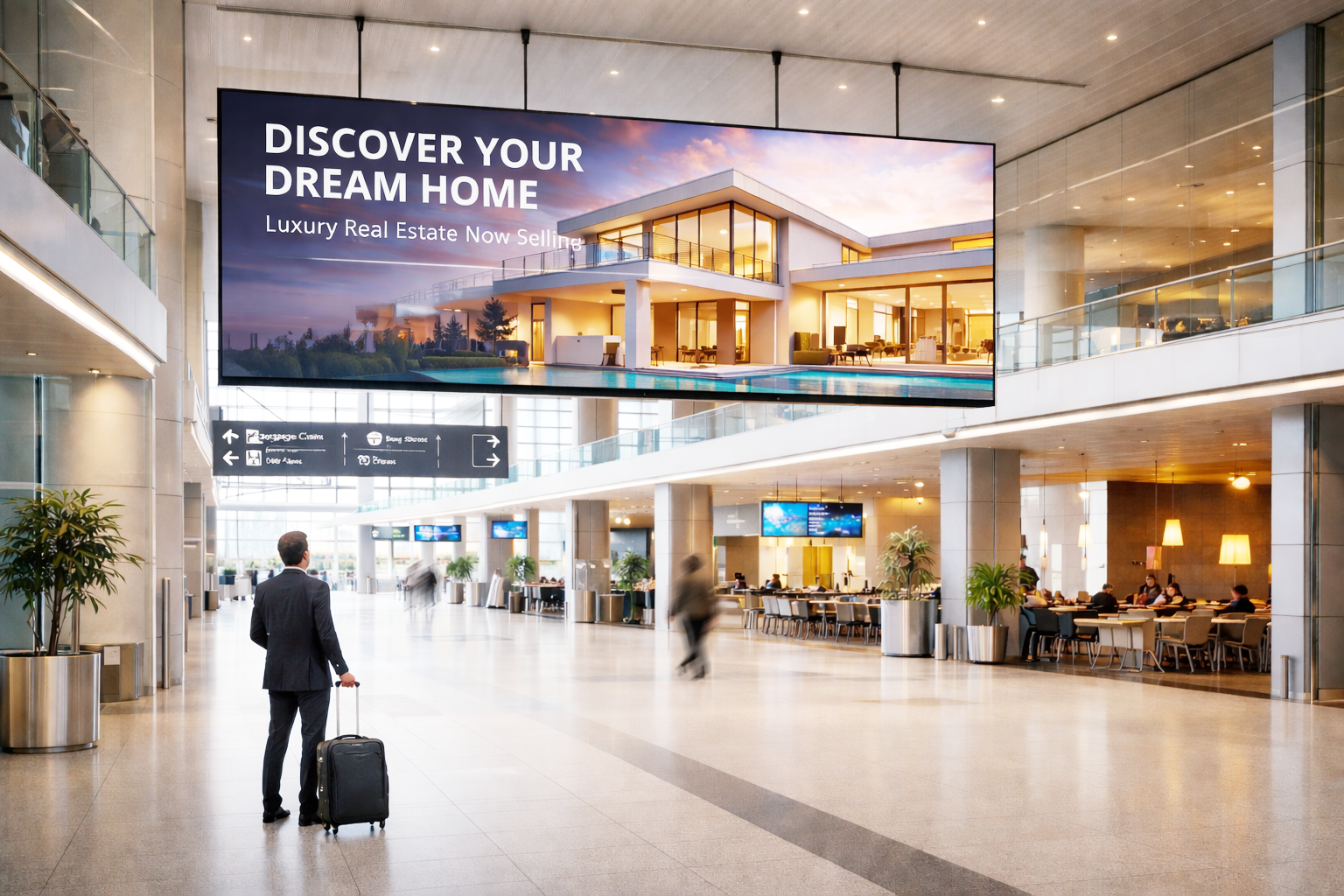
Airport Advertising is Complex to Get Right
We help you execute faster, with proven results and local insight most planners lack starting now.
Talk to an ExpertCatchment Area and Economic Drivers
Top 10 Cities within 150 km, Marketer Intelligence:
- Lafayette: The command centre of the catchment. Concentration of energy company headquarters, engineering firms, healthcare systems, and a large university population. Produces both C-suite spenders and a young professional segment with rising disposable income.
- Baton Rouge: State capital and petrochemical refining hub. Delivers government affairs travellers, refinery and plant management, and institutional finance audiences with expense-account travel patterns.
- New Iberia: Port and offshore supply base economy. Produces marine services owners and operators, a business-owner audience with high liquid wealth and low brand exposure to premium marketing.
- Morgan City: Deepwater fabrication and marine transport centre. A blue-chip industrial audience where purchase decisions are equipment-scale and family wealth is asset-heavy.
- Broussard: Dense cluster of oilfield service yards and industrial parks. Produces mid-market business owners who travel frequently and short, ideal for repeat-exposure campaigns.
- Youngsville: One of the fastest-growing affluent residential communities in the region. High household income, family-oriented spending, strong receptivity to premium automotive, home, and financial categories.
- Opelousas: Agricultural processing and regional retail node. Delivers a value-conscious but high-frequency domestic traveller segment, relevant for telecom, retail, and financial services.
- Crowley: Rice and agribusiness centre. Landowning families with generational asset wealth, a quietly high-net-worth audience underserved by wealth management advertising.
- Abbeville: Coastal energy support and seafood industry base. Produces owner-operator travellers and a strong regional identity that rewards culturally fluent creative.
- Lake Charles: LNG export and petrochemical construction boom market. Sends project executives, EPC contractors, and international engineering personnel through the region, an audience with high spend and short decision cycles.
NRI and Diaspora Intelligence:
LFT does not serve a significant international diaspora corridor. The dominant wealth movement is domestic and internal to the American energy economy. The defining flow is the rotational and project-based professional: offshore crews, engineering teams, and contract executives moving between Acadiana, Houston, and the Gulf on multi-week cycles. This audience travels far more often than the national average, spends heavily on convenience, technology, insurance, and vehicles, and holds significant discretionary income with limited local retail outlets to absorb it. Masscom Global treats this rotational traveller as the single most valuable repeat-exposure audience at LFT.
Economic Importance:
The Acadiana economy runs on oil and gas extraction and services, petroleum and chemical manufacturing, marine and port logistics, agriculture, healthcare, and higher education. Energy and industrial sectors produce the high-income business traveller, healthcare produces specialist and patient-family travel, and the university produces a young, mobile, brand-forming audience. For advertisers, this mix means one terminal delivers three distinct income tiers with a shared regional identity. Campaigns that speak to Acadiana specifically outperform generic national creative here.
Business and Industrial Ecosystem
- Oil and gas services and offshore support: Produces senior operations managers, procurement decision-makers, and business owners who authorise large capital spends.
- Petroleum and chemical manufacturing: Produces plant leadership and technical professionals travelling for corporate and regulatory purposes, a stable year-round audience.
- Marine logistics and port operations: Produces owner-operators and fleet managers with asset-heavy balance sheets and strong appetite for finance, insurance, and equipment categories.
- Healthcare and higher education: Produces physicians, administrators, and academic travellers, an audience with reliable high income and consistent travel frequency.
Passenger Intent, Business Segment:
Business travellers at LFT are largely flying to connect: Dallas, Houston, Atlanta, and Charlotte feed onward corporate itineraries. They arrive early, travel frequently on the same routes, and are highly familiar with the terminal, which means brand placements build cumulative recognition rather than one-time impressions. Categories that intercept them most effectively are business banking and wealth management, industrial and energy B2B services, premium automotive, insurance, telecom, and executive healthcare.
Strategic Insight:
The business audience at LFT is commercially valuable because it is small, senior, and repetitive. In a large hub, a procurement director is one anonymous passenger among tens of thousands. At LFT, that same person passes the same four or five sightlines dozens of times a year. This is one of the few airport environments in the United States where a B2B energy or industrial brand can achieve near-total coverage of a regional decision-maker pool at regional media cost. Masscom Global builds LFT campaigns specifically around this frequency advantage.
Tourism and Premium Travel Drivers
- Cajun and Creole cultural tourism across Acadiana: Draws high-spend domestic culinary and music travellers who have already committed budget to dining, events, and lodging.
- Atchafalaya Basin and bayou country nature tourism: Attracts experience-led travellers with above-average spend on tours, outdoor gear, and photography.
- Avery Island and the St Martinville heritage corridor: Draws heritage and gastronomy visitors, a demographic skewing older and more affluent.
- Baton Rouge and Lake Charles casino, sports, and entertainment traffic: Brings event-driven leisure spenders with clear discretionary intent.
Passenger Intent, Tourism Segment:
Tourists at LFT are deliberate travellers, not accidental ones. They chose a smaller regional airport because Acadiana itself is the destination, which means budget is already allocated to food, festivals, and experience before arrival. On departure they carry high emotional engagement with the region, making them receptive to premium food and beverage, spirits, hospitality, luxury travel, financial travel products, and destination real estate messaging. Advertiser categories that benefit most are premium spirits, hospitality and resorts, cards and travel finance, and lifestyle retail.
Travel Patterns and Seasonality
Peak seasons:
- February to March: Carnival and Mardi Gras season drives inbound leisure and family travel across the region.
- April to May: Peak festival window, the strongest cultural tourism period of the year, combined with steady business travel.
- September to November: Autumn festival season and university sports travel, layered over the strongest quarter of corporate and energy travel activity.
- Late December: Holiday family travel surge, high volume but leisure-weighted rather than business-weighted.
Monthly traffic breakdowns are not published; annual totals reached 532,811 passengers in 2024.
Event-Driven Movement:
- Mardi Gras and Carnival season (February to March): Regional cultural celebration bringing family, diaspora-return, and leisure travellers. Advertisers should be live from late January.
- Festival International de Louisiane (April): Large multi-day international music festival drawing out-of-state and overseas visitors. The highest-value tourism window of the year.
- Breaux Bridge Crawfish Festival (May): Culinary and cultural event pulling strong regional and out-of-state visitor volume, ideal for food, beverage, and hospitality categories.
- Festivals Acadiens et Créoles (October): Heritage music and food festival attracting an older, higher-income cultural tourism audience.
- University sports and autumn corporate season (September to November): Sustained dual traffic of alumni travel and peak business activity, the best window for combined B2B and consumer campaigns.
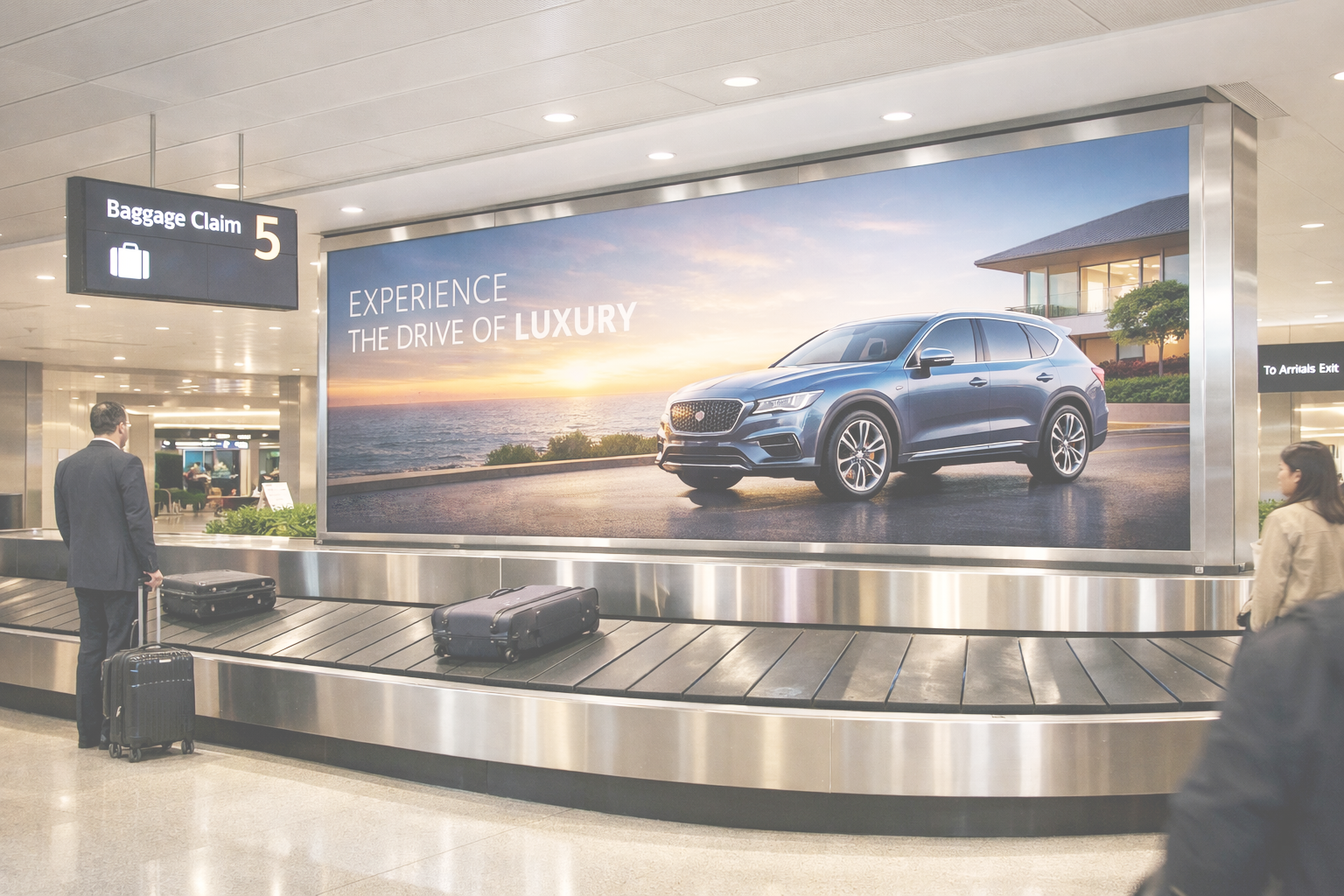
It’s Not Just Where You Advertise - It’s How Fast You Execute
We combine local insight with fast rollout to deliver results for you, now.
Talk to an ExpertAudience and Cultural Intelligence
Top 2 Languages:
- English: The operating language of all business and the default for campaign creative. Reaches the full commercial audience without segmentation loss.
- Louisiana French and Cajun French: Spoken by a smaller heritage community but carrying disproportionate cultural weight. Brands that acknowledge it signal regional respect, which measurably improves trust with local business owners and landowning families.
Major Traveller Nationalities:
LFT is a domestic airport, so the overwhelming majority of passengers are American, drawn from Louisiana, Texas, and the wider Gulf South. A secondary layer of international engineering and energy personnel moves through on project assignments connected to offshore and LNG activity, and the April festival window brings a limited but affluent European and Canadian visitor flow. For advertisers, this means creative should be built for a domestic American audience with strong regional identity, with international brands positioning themselves in terms of American relevance rather than global generality.
Religion, Advertiser Intelligence:
- Catholic Christianity (dominant majority of the Acadiana catchment): Drives the Mardi Gras and Lent calendar, Easter travel, and heavy Christmas family movement. Creates gifting, dining, and family-travel spending triggers. Categories benefiting most are jewellery, premium food and beverage, hospitality, and travel finance.
- Protestant Christianity (substantial minority): Concentrated in the northern and eastern edges of the catchment and in Baton Rouge. Drives Thanksgiving and Christmas travel peaks and a values-led, family-first purchase mindset. Strong fit for insurance, automotive, education, and healthcare messaging.
- Other faith communities including Jewish, Muslim, and Hindu populations (small but professionally concentrated): Present largely within medical, academic, and engineering professions. Small in number, high in income and travel frequency, relevant for premium financial services and international education advertising.
Behavioral Insight:
This audience is asset-minded rather than status-minded. Wealth in Acadiana is typically held in land, equipment, businesses, and vehicles rather than displayed through luxury labels, which means overt prestige messaging underperforms while durability, ownership, capability, and family security messaging converts. Decisions are relationship-driven and slower, so campaigns need frequency and continuity rather than a single burst. Regional pride is a genuine purchase lever: brands seen as investing in Acadiana are trusted faster than brands simply advertising to it. Masscom Global builds creative strategy around this ownership psychology.
Outbound Wealth and Investment Intelligence
The outbound passenger at LFT is commercially distinctive because the wealth is entrepreneurial and liquid, generated by energy service businesses, marine operations, agriculture landholdings, and medical practices. This audience deploys capital into second homes, land, business acquisition, and education rather than into visible luxury consumption. Their travel is connection-based, routing through Dallas, Houston, Atlanta, and Charlotte to reach domestic investment markets and international leisure destinations. That connecting behaviour means LFT is the first and last touchpoint in a high-value journey, and the only point where the brand has this audience undistracted.
Outbound Real Estate Investment:
Acadiana wealth flows most consistently into Gulf Coast and Sun Belt property: the Florida panhandle and Gulf beach markets, Texas metropolitan markets around Houston, Austin, and Dallas, Tennessee and the Carolinas for tax and lifestyle reasons, and Colorado and Montana for recreational land. Internationally, Caribbean and Central American coastal property, particularly Belize, Costa Rica, and Mexico's Gulf and Caribbean coasts, draws interest for accessibility and lifestyle rather than yield. Interest in low-tax and no-income-tax jurisdictions is a consistent driver. International and domestic developers advertising at LFT reach a buyer who purchases in cash, decides quickly, and is rarely targeted by property marketing at this level of precision.
Outbound Education Investment:
Families from this catchment send students primarily to Louisiana and Texas flagship universities, then to Southeastern private institutions, and at the top income tier to national universities in the Northeast and California. International study destinations centre on the United Kingdom, Canada, and Western Europe, largely for postgraduate engineering, business, and medical programmes. Family spending on education is treated as a generational obligation rather than a discretionary expense, with willingness to fund the full cost outright. International universities, boarding schools, and education consultancies should advertise here because the intent exists and the competing message volume is minimal.
Outbound Wealth Migration and Residency:
Second-residency interest among this audience is lifestyle and mobility driven rather than escape driven. The most relevant programmes are Caribbean citizenship-by-investment options for travel flexibility, Portugal and Greece residency routes for European access, Panama and Costa Rica residency programmes given established Gulf-to-Central-America familiarity, and United Arab Emirates long-term residency where energy sector careers create a professional bridge. Programme awareness in this market is lower than the underlying financial capability, which makes it an education-led selling environment.
Strategic Implication for Advertisers:
International brands on both sides of this corridor should treat LFT as a precision buy rather than a scale buy: the audience has capital, low advertising saturation, and a direct professional bridge to Gulf and Middle Eastern energy markets. Property developers, residency advisors, universities, and private banks reach a qualified buyer here without bidding against global brand budgets. Masscom Global activates both origin and destination sides of this corridor simultaneously across its 140-country footprint.
Airport Infrastructure and Premium Indicators
Terminals:
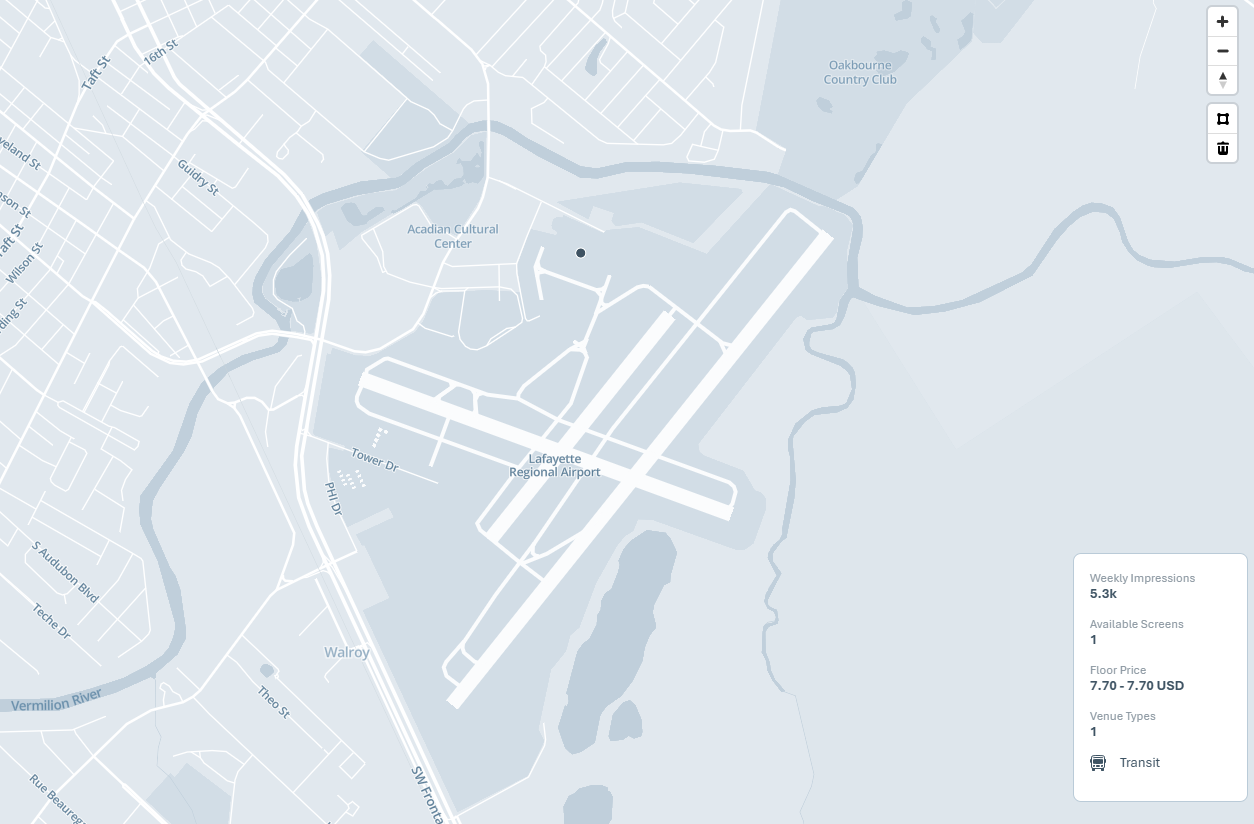
- A single modern terminal opened in 2022, replacing a facility dating to the 1930s era of the airport's founding. The building serves all commercial traffic with a compact, high-clarity passenger flow that concentrates attention rather than dispersing it.
- The airport spans 1,116 acres with three runways, the primary measuring 8,001 by 150 feet, sufficient for large business jets and heavy charter operations.
Premium Indicators:
- Business centre facilities and complimentary connectivity within the terminal, signalling an airport designed around the corporate traveller rather than the mass leisure traveller.
- Substantial general aviation and corporate flight activity, with general aviation and air taxi movements accounting for the large majority of total aircraft operations, a direct indicator of private and executive aviation weight.
- Long-established fixed-base operations and helicopter operations supporting offshore energy transport, the clearest premium signal at this airport and a marker of executive and specialist traffic.
- Recognition as Louisiana Commercial Service Airport of the Year, and a terminal project delivered under budget, both signals of institutional stability and continued investment.
Forward-Looking Signal:
The new terminal, the completion of the Interstate 49 South corridor upgrade adjacent to the airport, sustained LNG and petrochemical investment across the Gulf Coast, and record passenger performance in 2024 all point in the same direction: rising commercial value at LFT. Advertising rates at regional airports adjust after growth becomes visible, not before. Masscom Global advises clients to secure position at LFT now, at current rates, ahead of the demand this growth trajectory will create.
Airline and Route Intelligence
Top Airlines:
American Airlines, Delta Air Lines, United Airlines. Three carriers operate the commercial schedule with at least 18 daily departures.
Domestic Connectivity:
Dallas/Fort Worth and Charlotte with American Airlines, Atlanta with Delta Air Lines, and Houston with United Airlines. All four are major global connecting hubs.
Wealth Corridor Signal:
The route network is almost purely a business-connection network, and that is the defining insight for advertisers. Houston is an energy capital transfer route, Dallas and Atlanta are corporate and international gateway routes, and Charlotte is a financial services corridor. There is no low-cost leisure route structure diluting the passenger mix, which means a higher proportion of travellers here are flying for commercial purpose with a company or business paying for the trip. Advertisers reach an audience of purchase authority rather than an audience of holiday intent.
Media Environment at the Airport
- Compact single-terminal environment with a low advertising clutter level compared with Gulf Coast hub airports, giving individual placements exceptional standout and near-unavoidable visibility.
- Dwell time is driven by the connecting nature of the airport: passengers arrive early for early morning departures to hub airports, producing extended, low-distraction exposure windows.
- The new terminal presents a clean, modern, well-maintained environment that elevates brand association, particularly for premium financial, automotive, and healthcare categories.
- Masscom Global provides inventory access, placement precision at the highest-traffic sightlines, and fast execution, allowing brands to secure dominant terminal presence in a market where a small number of placements delivers effective full coverage.
Strategic Advertising Fit
Best Fit:
- Energy and industrial B2B services: Equipment, engineering, subsea, and inspection brands reach the exact procurement and operations audience they sell to.
- Business banking and wealth management: Reaches asset-rich business owners and landholding families with significant unmanaged liquid wealth.
- Premium automotive, trucks, and SUVs: The highest-conversion consumer category in this market given ownership-led spending behaviour.
- Insurance, including commercial, marine, and property: Hurricane and coastal risk exposure makes this an actively considered category year-round.
- Healthcare and specialty medical services: Regional referral patterns and high-income professional patients make this a strong performer.
- Higher education and international universities: Families fund education outright, and competing message volume here is minimal.
- International and domestic real estate development: Reaches cash-capable second-home and land buyers with existing Gulf and Sun Belt purchase patterns.
- Premium food, beverage, and spirits: Culinary identity is central to regional culture, giving this category unusual receptivity.
Brand Alignment at a Glance:
| Category | Fit |
|---|---|
| Energy and industrial B2B services | Exceptional |
| Business banking and wealth management | Exceptional |
| Premium automotive and trucks | Strong |
| Insurance and risk services | Strong |
| International real estate and residency | Strong |
| Higher education | Moderate |
| Premium spirits and food | Moderate |
| Mass-market fashion and duty-free luxury retail | Poor fit |
Who Should Not Advertise Here:
- Duty-free and international luxury retail: No international terminal, no duty-free purchase context, and no arriving international spend pattern to intercept.
- Global airline and long-haul carrier brand campaigns: Passengers here have already committed to a domestic carrier and connect through hubs where those brands are already dominant.
- Youth-oriented mass-market fashion and streetwear: The passenger mix skews business and family, and the spending culture rewards durability over trend, producing weak recall and weaker conversion.
Event and Seasonality Analysis
- Event Strength: High
- Seasonality Strength: Medium
- Traffic Pattern: Dual-Peak
Strategic Implication:
Advertisers should weight budget toward two windows: February to May for cultural, festival, and consumer-facing campaigns, and September to November for B2B, financial, and energy sector campaigns. The spring window delivers volume and emotional receptivity, the autumn window delivers decision-maker density and budget-cycle timing. Masscom Global structures LFT campaigns around this dual-peak rhythm, front-loading spend into these two periods and maintaining reduced continuity presence through the summer trough to preserve frequency without wasting budget.

Poor Placement and Delays Affect Airport Campaigns
We help you move faster, access better inventory, and get it right now.
Talk to an ExpertFinal Strategic Verdict
Lafayette Regional Airport is one of the most efficient precision buys in the American Gulf South, and advertisers who evaluate it on passenger volume alone will misprice it entirely. A record 532,811 passengers in 2024 and enplanement growth above 15 percent year on year sit on top of an audience that is senior, entrepreneurial, asset-wealthy, and travelling for commercial purpose through four major connecting hubs rather than on discount leisure routes. Energy and industrial B2B brands, private banks, insurers, premium automotive marques, universities, and international property developers gain access here to a decision-maker pool they cannot isolate this cleanly anywhere else in the region, in a compact and uncluttered terminal where a handful of placements achieves effective saturation. The window matters: a new terminal, corridor infrastructure completion, and Gulf Coast energy investment are all pushing this airport's commercial value upward, and current rates reflect yesterday's profile rather than tomorrow's. Masscom Global brings the inventory access, audience intelligence, and execution speed to convert that gap into advantage before it closes.
About Masscom Global
Masscom Global is a premium international airport advertising and media buying agency operating across 140 countries. With deep expertise in airport OOH, premium publications, and high-net-worth audience targeting, Masscom helps brands reach the world's most valuable travellers at the moments that matter most. For advertising packages, media rates, and campaign planning at Lafayette Regional Airport and airports across the globe, contact Masscom Global today.
Frequently Asked Questions
How much does airport advertising cost at Lafayette Regional Airport?
Cost at LFT varies by format, terminal position, campaign duration, and seasonal demand. Placements in the highest-traffic departure and arrival sightlines carry premium pricing, and rates rise during the February to May festival window and the September to November business peak. Because the terminal is compact, effective coverage can be achieved with fewer placements than at hub airports, which changes the cost calculation significantly in the advertiser's favour. Contact Masscom Global for current rates and package options.
Who are the passengers at Lafayette Regional Airport?
Predominantly business travellers from the Acadiana energy economy: oil and gas operations managers, offshore service company leadership, petroleum and chemical engineering professionals, and marine logistics owner-operators. A second layer comprises regional healthcare professionals, university-linked travellers, and affluent residents from the Lafayette, Youngsville, and Broussard corridor. A third layer is festival and cultural tourism visitors concentrated in spring and autumn. Almost all traffic is domestic and routed through Dallas, Houston, Atlanta, or Charlotte.
Is Lafayette Regional Airport good for luxury brand advertising?
It is strong for ownership-led premium categories and weak for display-led luxury. Premium automotive, private banking, wealth management, high-end insurance, and international property perform well because the audience holds substantial entrepreneurial and land-based wealth. Fashion houses, watch brands, and duty-free luxury retail perform poorly because there is no international terminal, no duty-free environment, and a regional culture that does not spend on visible labels. Match the category to the wealth psychology and the results are excellent.
What is the best airport in Louisiana to reach high-net-worth audiences?
Louisiana's larger airports deliver scale, but LFT delivers the highest concentration of energy sector business owners and decision-makers per thousand passengers in the state. For brands targeting the offshore and industrial wealth base of Acadiana specifically, LFT is the most efficient single point of contact available. For statewide luxury consumer reach, LFT works best as part of a multi-airport Louisiana plan that Masscom Global can structure and execute as one campaign.
What is the best time to advertise at Lafayette Regional Airport?
Two windows. February through May captures Carnival season, Festival International de Louisiane in April, and the Breaux Bridge Crawfish Festival in May, the strongest consumer and tourism period. September through November captures the peak corporate and energy travel quarter alongside autumn heritage festivals and university sports travel, the strongest B2B period. Campaigns should be live before each window opens, meaning late January and late August activation.
Can international real estate developers advertise at Lafayette Regional Airport?
Yes, and it is an underexploited channel. This catchment's high-income audience actively buys property in Florida, Texas, Tennessee, the Carolinas, and internationally in the Caribbean and Central America, typically in cash and on short decision timelines. Competing property advertising at this airport is minimal, so message retention is unusually high. Masscom Global positions developer campaigns to reach this buyer at the point of departure, when investment thinking is most active.
Which brands should not advertise at Lafayette Regional Airport?
Duty-free and international luxury retail, because there is no international terminal or duty-free purchase context. Global long-haul airline brand campaigns, because passengers have already selected a domestic carrier and connect through hubs where those brands dominate. Youth mass-market fashion and streetwear, because the passenger mix is business and family weighted with a durability-first spending culture. These categories will generate impressions without conversion.
How does Masscom Global help brands advertise at Lafayette Regional Airport?
Masscom Global delivers the full chain: audience intelligence specific to the Acadiana energy and wealth corridor, inventory access across the terminal, placement precision at the highest-value sightlines, creative guidance tuned to this market's ownership psychology, and performance tracking through the dual-peak season. Operating across 140 countries, Masscom also activates the destination side of this airport's outbound investment corridors simultaneously.