

Airport at a Glance
| Field | Detail |
|---|---|
| Airport | St. Simons Island Airport at McKinnon Field |
| IATA Code | SSI |
| Country | United States |
| City | St. Simons Island, Glynn County, Georgia (Golden Isles) |
| Primary Audience | UHNWI resort and second-home owners, private club members, corporate retreat and family office travellers |
| Peak Advertising Season | March to June, September to November |
| Audience Tier | Tier 1 by audience value, Tier 3 by passenger volume |
| Best Fit Categories | Wealth and family office services, luxury resort and branded residences, private aviation and yachting, golf and luxury lifestyle |
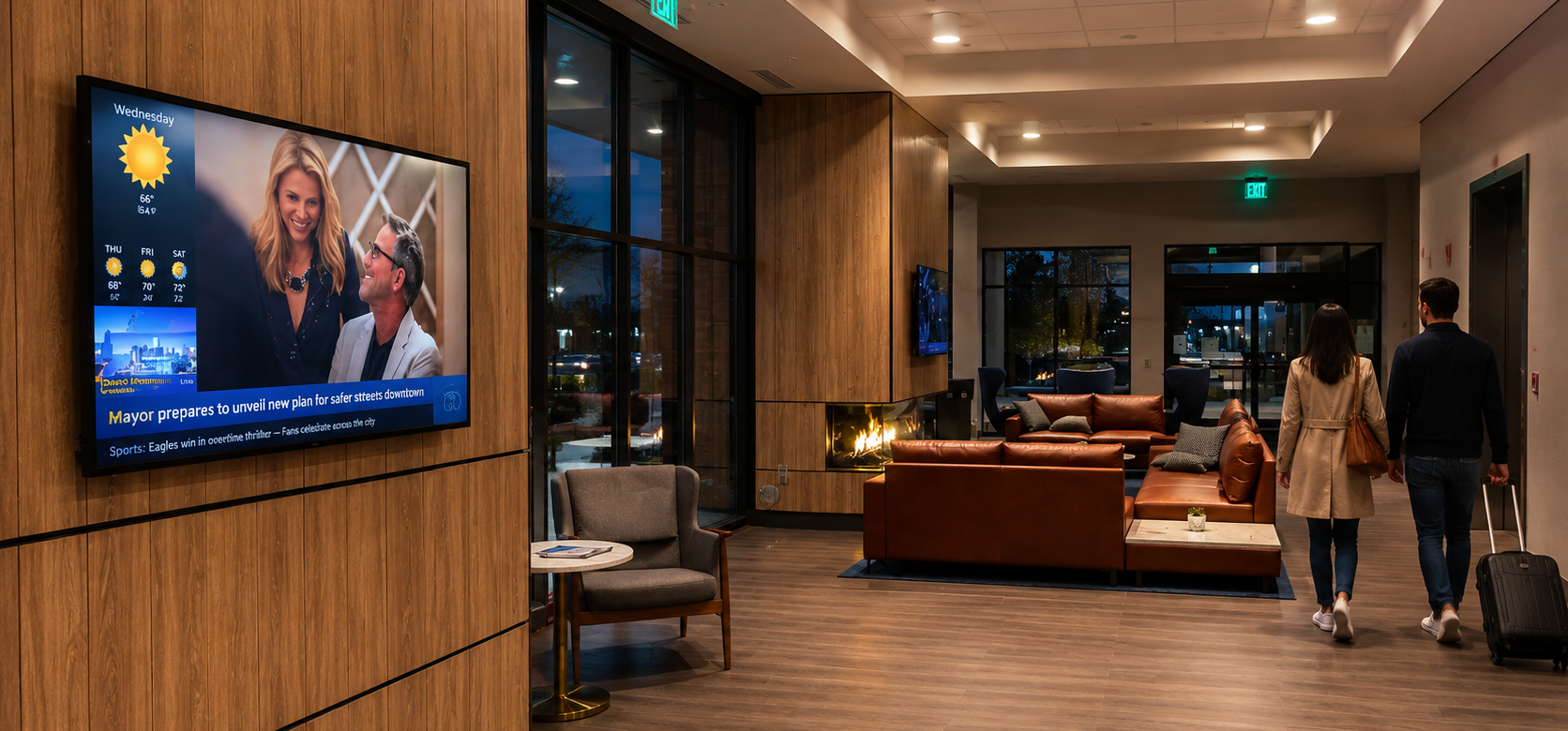
A small county airfield that functions as the private front door to one of America's most concentrated pockets of inherited and executive wealth.
St. Simons Island Airport is a 320 acre, county-owned general aviation field with two runways and no scheduled airline service, and its commercial significance has nothing to do with size. It is the closest and preferred arrival point for St. Simons Island, Sea Island, and Little St. Simons Island, a resort and residential cluster that sits at the very top of the American luxury hospitality market. Roughly 43,000 aircraft movements a year pass through it, and 99 percent are general aviation. Advertisers are not buying reach here. They are buying proximity to a decision maker who arrives by private aircraft and is already in discretionary spending mode.
What makes this airport commercially distinctive is that the wealth is not passing through, it is resident and repeat. Sea Island's club and cottage community, the surrounding Golden Isles second-home market, and the corporate retreat traffic that follows them produce a returning audience rather than a one-time transit crowd. Layered underneath is Brunswick's industrial economy, anchored by the busiest automobile port in the United States. The result is a rare catchment combining ultra-high-net-worth leisure capital with genuine industrial and logistics decision-maker traffic.
Advertising Value Snapshot
- Passenger scale: Approximately 43,070 aircraft movements recorded in the most recent full FAA reporting year, averaging around 118 per day, of which 99 percent are general aviation. Volume is event-amplified, spiking sharply around the November professional golf week and the spring and autumn resort seasons.
- Traveller type: Ultra-high-net-worth resort and second-home owners, private club members and their guests, corporate retreat and incentive groups, and regional industrial and port executives.
- Airport classification: Tier 1 by audience value, Tier 3 by passenger volume. Net worth per impression here ranks among the highest of any airfield in the American Southeast.
- Commercial positioning: The private aviation gateway to the Golden Isles luxury resort cluster, with a single premium fixed base operation and an on-site hotel, an unusual asset for a field of this size.
- Wealth corridor signal: The airport sits on the Northeast and Midwest to Southeast coastal leisure wealth corridor, the same flow that feeds Palm Beach, Hilton Head, and Amelia Island.
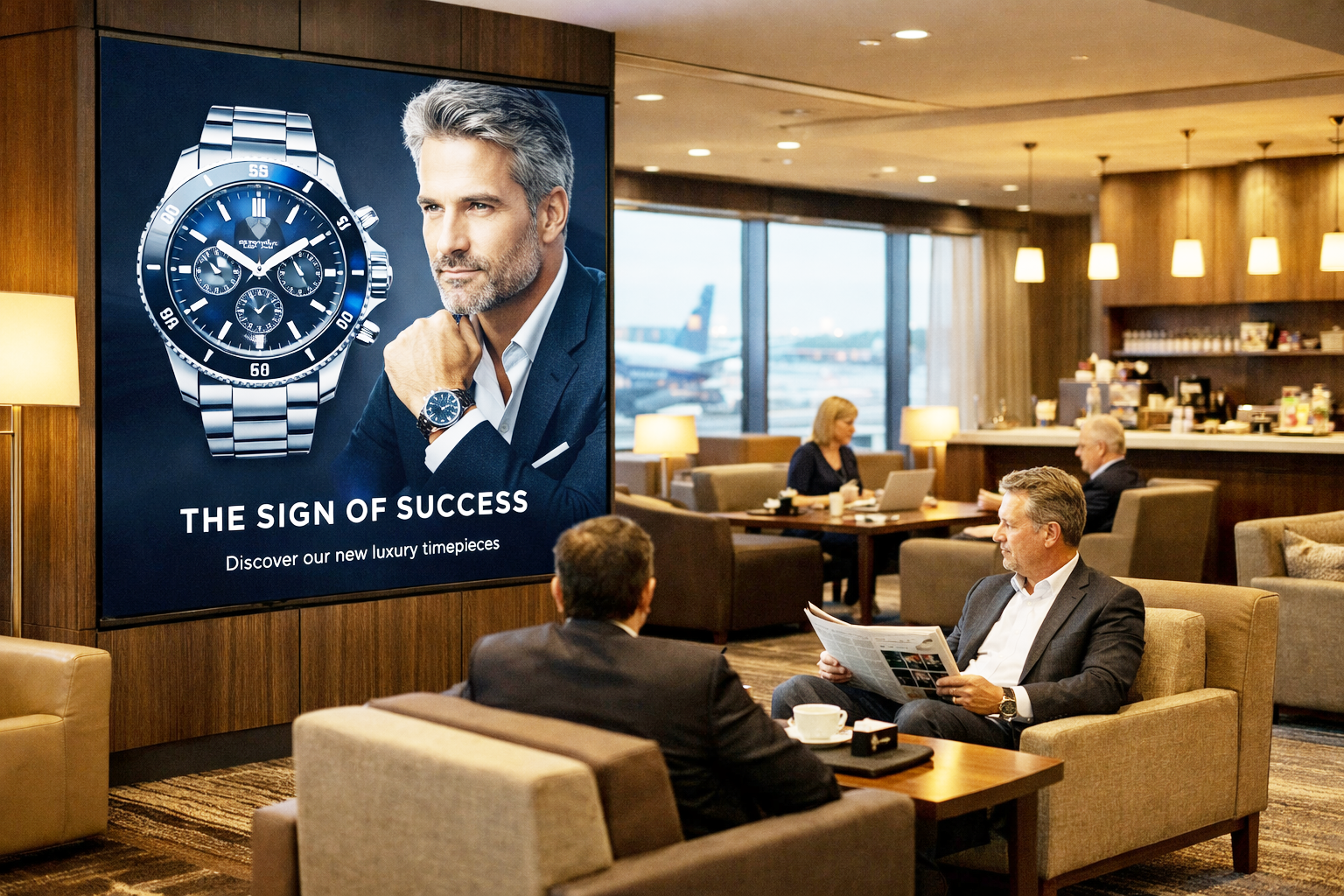
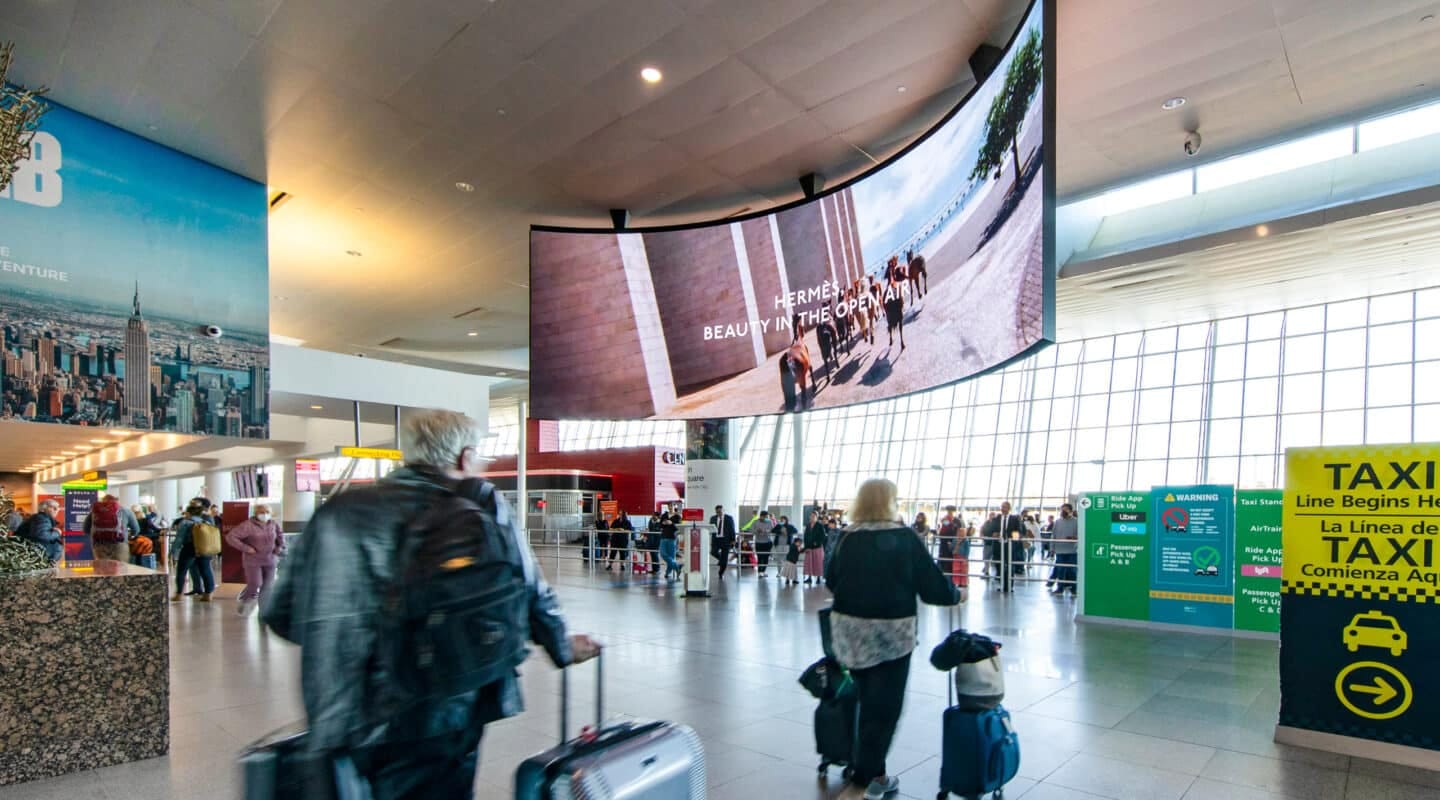
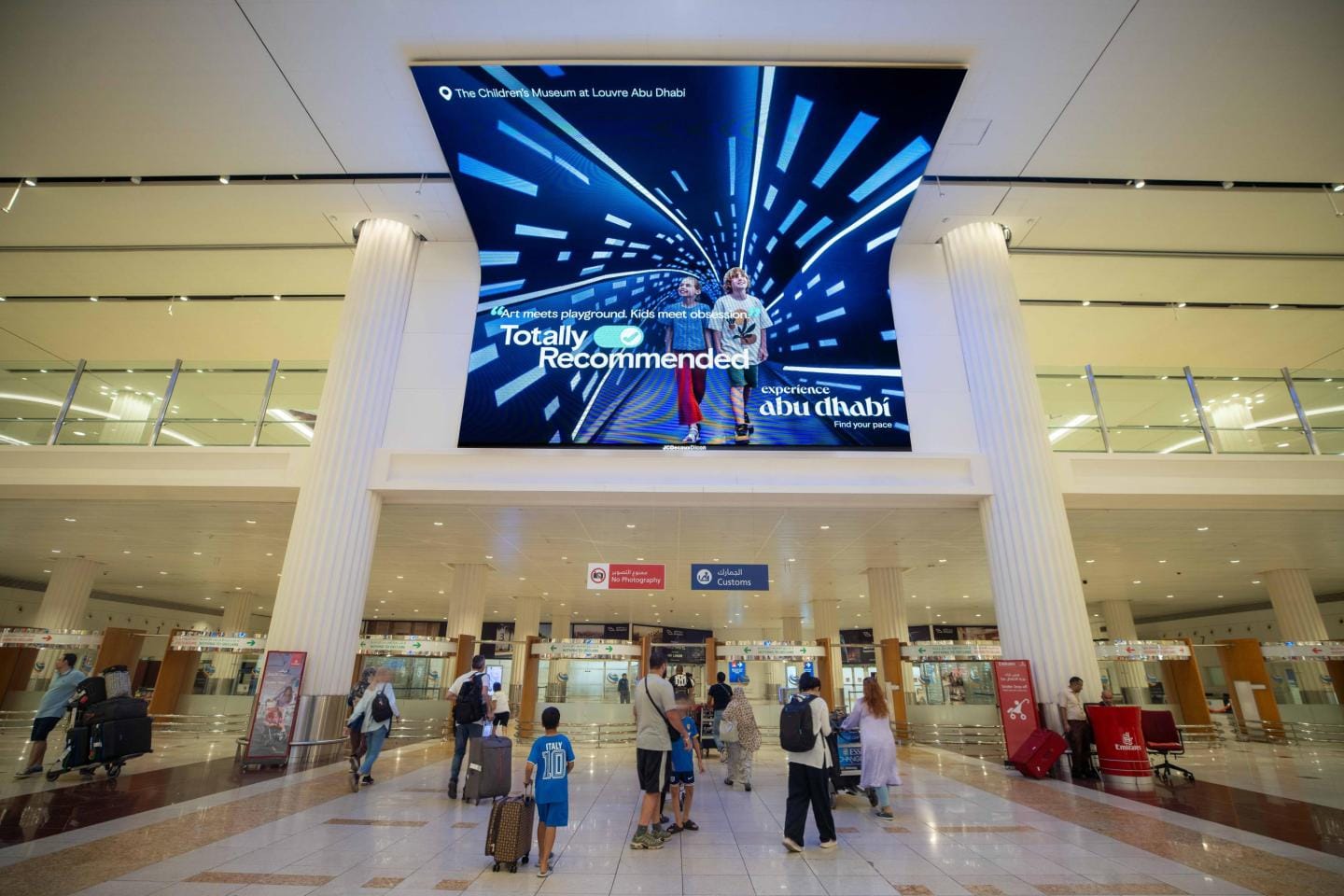
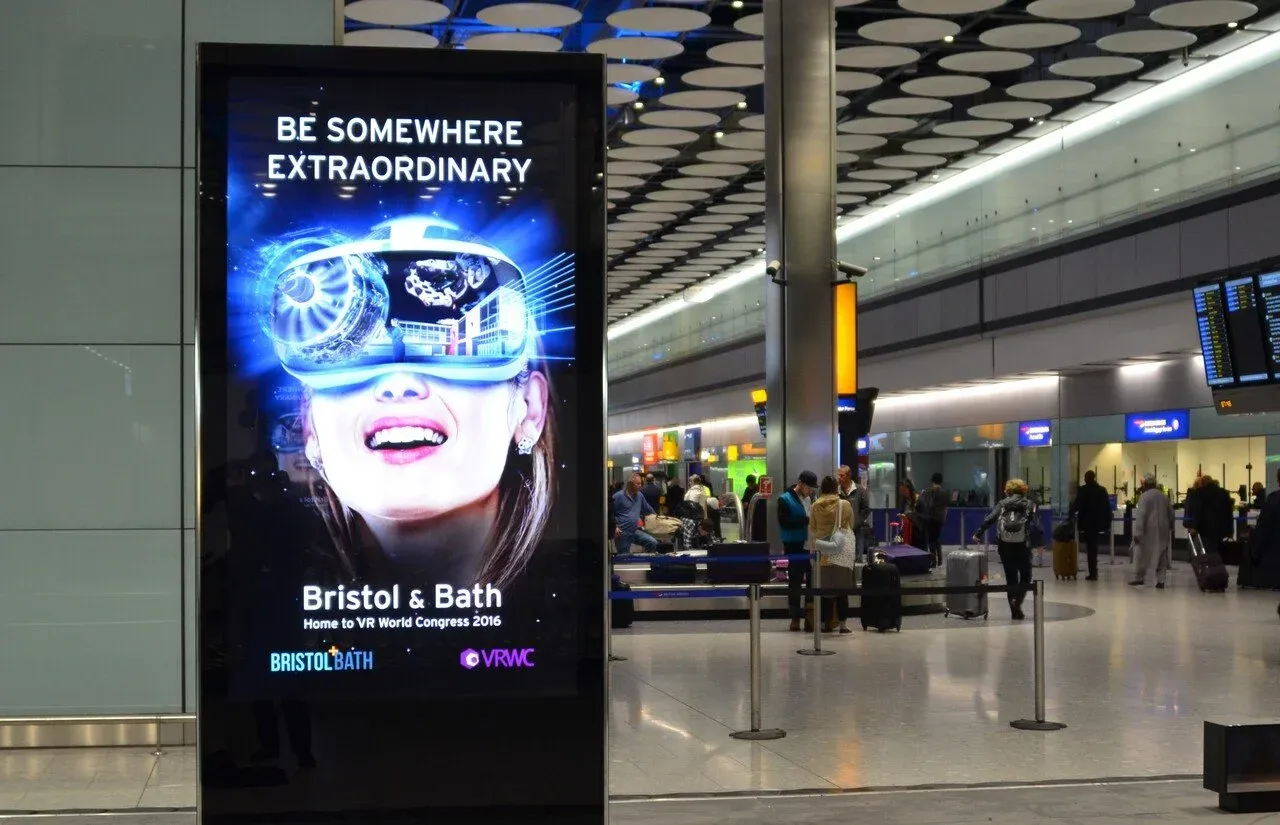
Advertising opportunity: With one arrival environment and one departure environment, a single brand can achieve effectively complete share of voice rather than fighting for attention. Masscom Global secures placement across the arrival, lounge, and departure sequence where dwell is relaxed and receptivity is high. This is the definition of a precision buy, and Masscom builds it as one.
Airport Advertising is Complex to Get Right
We help you execute faster, with proven results and local insight most planners lack starting now.
Talk to an Expert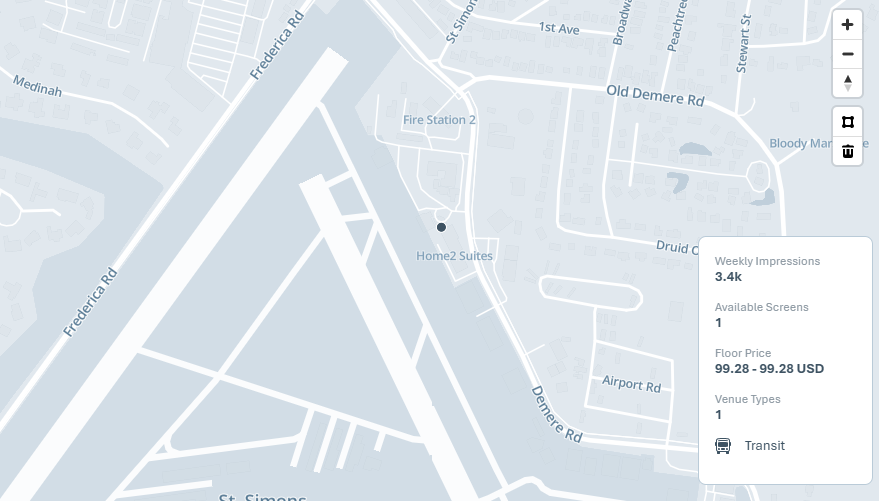
Catchment Area and Economic Drivers
Top 10 Cities within 150 km, Marketer Intelligence:
- St. Simons Island: The core audience base. Affluent full-time and seasonal residents with high second-home ownership, strong club membership penetration, and low price sensitivity across luxury services.
- Sea Island: The single most commercially valuable square mile in the catchment. A private club and cottage community producing a resident and visiting UHNWI audience with family office scale capital and international property holdings.
- Brunswick: The industrial and administrative anchor. Home to the busiest automobile port in the United States, generating logistics, shipping, and automotive executive traffic with capital expenditure authority.
- Jekyll Island: Convention and corporate event destination with a strong association-meeting calendar. Produces group business travel and hospitality receptivity in defined seasonal windows.
- Darien: Coastal second-home and marine services market. Signals boating, waterfront property, and conservation-linked philanthropy audiences.
- Kingsland and St. Marys: Anchored by a major naval submarine installation. Produces senior defence and government-linked professional travellers plus a defence contracting supply chain audience.
- Waycross: A significant regional rail and freight hub. Produces logistics management and industrial procurement decision makers rather than consumer audiences.
- Savannah: Corporate headquarters wealth, a globally significant container port, and a major business aviation manufacturing presence. Feeds high-value corporate movement and luxury tourism spend into the region.
- Amelia Island and Fernandina Beach: Adjacent luxury resort market with overlapping ownership and membership. Effectively the same audience wallet, reachable through the same corridor.
- Jacksonville: The nearest large metropolitan economy, dense with financial services, insurance, and healthcare corporate headquarters. Supplies weekend and event-driven private movement into the Golden Isles.
NRI and Diaspora Intelligence:
There is no significant diaspora community driving traffic at this airport, and advertisers should plan accordingly. The dominant movement is domestic American ultra-high-net-worth leisure and second-home flow, largely originating from the Northeast, the Mid-Atlantic, Atlanta, Nashville, Texas, and the Midwest. This audience is characterised by inherited or liquidity-event wealth, multi-property ownership, and private club membership as the primary social infrastructure. Their travel is habitual and calendar-driven rather than opportunistic, which means a campaign here reaches the same high-value individual multiple times in a season. That repetition is what compensates for the small absolute passenger base.
Economic Importance:
Two economies run in parallel across this catchment. The first is luxury hospitality and residential real estate, which produces the resort, club, and second-home audience and drives almost all premium consumer spending. The second is heavy logistics and trade, anchored by a port that handled 779,000 automobile units and more than 53,000 units of heavy machinery in the most recent calendar year, alongside rail, forestry, and defence activity. The first economy creates the luxury consumer. The second creates the B2B and industrial decision maker. Masscom Global maps creative to whichever of the two an advertiser is selling into rather than treating the terminal as a single undifferentiated audience.
Business and Industrial Ecosystem
- Port, automotive, and roll-on roll-off logistics: The nation's busiest vehicle gateway, with 731 ship calls in the most recent calendar year and ongoing berth, rail, and dredging expansion. Produces automotive, shipping, and supply chain executives with major procurement authority.
- Defence and government installations: A major naval submarine base in the southern catchment plus regional military presence. Produces senior officer and defence contractor travel with stable, non-cyclical volume.
- Luxury hospitality and private club operations: A concentration of five-star resort, club, and residential management activity that generates its own executive, ownership, and investor travel layer.
- Forestry, chemicals, and marine services: Long-established regional industry producing owner-operator and plant leadership audiences with equipment and industrial services purchasing needs.
Passenger Intent, Business Segment:
Business travel here divides cleanly. One group arrives for genuine industrial and port business, flying privately because commercial connectivity to the Golden Isles is limited. The other arrives for corporate retreats, board meetings, and client hospitality hosted at the island resorts, which means senior leadership travelling in groups with the calendar cleared. The second group is the more valuable target. Private banking, family office services, executive advisory, luxury automotive, and premium B2B services intercept them at exactly the moment their attention is not competing with a working day.
Strategic Insight:
The corporate retreat dynamic is what separates this airport from other small general aviation fields. When a company flies its leadership team to an island resort for three days, every one of those executives passes through the same compact arrival environment in the same twenty minute window, in a relaxed frame of mind, and passes through it again on departure. Very few media environments in the United States deliver an entire C-suite in a single, uncluttered, repeated exposure. For advertisers selling to boards and principals rather than to consumers, that is a structurally advantaged buy.
Tourism and Premium Travel Drivers
- The Sea Island resort and club complex: A benchmark American luxury destination with a highly affluent guest and member profile. The single strongest signal in the catchment for luxury goods, private aviation, wealth, and branded residence advertisers.
- Championship coastal golf: The region hosts a professional tour event and carries a dense concentration of top-tier courses and resident touring professionals, drawing golf-motivated wealth from across the country.
- Jekyll Island historic and convention district: Combines heritage tourism with an established corporate and association meeting calendar, delivering group travel volume in shoulder seasons.
- Coastal marine, boating, and nature tourism: Barrier island beaches, saltmarsh, and sportfishing sustain a marine lifestyle audience relevant to yachting, marine equipment, and conservation-linked philanthropy.
Passenger Intent, Tourism Segment:
Nobody arrives at this airport looking for value. A traveller who has flown privately to a five-star island resort has already committed a large discretionary sum before they reach the runway, which removes price from the conversation entirely. They are in an unhurried, socially confident state and are receptive to categories that extend an existing lifestyle position rather than to categories that promise savings. Luxury automotive and marine, watches and jewellery, branded residences and resort real estate, private club and membership products, and wealth and legacy services benefit most.
Travel Patterns and Seasonality
Peak seasons:
- March to June: The strongest sustained window. Spring weather, the resort wedding and reunion calendar, corporate retreat season, and regional golf activity combine to lift private movement across all weeks.
- September to November: The second and sharpest peak. The professional golf week in November, the autumn corporate meeting calendar, and cooler coastal weather concentrate high-value arrivals into a narrow band.
- Late November to early January: A short, intense holiday spike as resident and member families gather at the island resorts. Small in total volume but exceptionally high in audience value.
- July to early September: Softer for premium traffic. Family beach travel continues, but Atlantic hurricane season introduces cancellation risk and suppresses corporate and event movement.
Event-Driven Movement:
- Professional golf tour week at Sea Island (November): The highest-value week of the year. Brings sponsors, corporate hospitality groups, tour professionals, and UHNWI spectators. Advertisers should treat this as the anchor window and book around it well in advance.
- Georgia and Florida college football weekend in Jacksonville (late October to early November): Drives significant regional private aviation and affluent hospitality traffic into the Golden Isles as a base. Strong luxury consumer and hospitality timing.
- Masters week in Augusta (April): Regional private aviation demand across Georgia spikes, with coastal resorts absorbing overflow and pre-tournament hospitality. A reliable April uplift for luxury and golf-adjacent categories.
- Resort wedding and family reunion season (April to June, September to October): Sustained high-value group arrivals with concentrated spending on jewellery, travel, hospitality, and gifting.
- Coastal food, heritage, and festival calendar (September): Regional festival activity lifts leisure arrivals and supports consumer-facing hospitality and lifestyle advertisers in the shoulder period.
It’s Not Just Where You Advertise - It’s How Fast You Execute
We combine local insight with fast rollout to deliver results for you, now.
Talk to an ExpertAudience and Cultural Intelligence
Top 2 Languages:
- English: Overwhelmingly dominant and the only language required for primary creative. This is a domestic American UHNWI audience, and English-language execution should carry the full weight of the campaign with no translation strategy needed.
- Spanish: The meaningful second language across the wider coastal Georgia catchment, concentrated in the service, logistics, and agricultural workforce and among Latin American resort visitors. Commercially relevant for employer-facing, financial access, and select hospitality advertisers, but not for the core luxury proposition.
Major Traveller Nationalities:
The traveller base is predominantly American, drawn from the Northeast, Mid-Atlantic, Atlanta, Nashville, Texas, and the Midwest. International arrivals are a minority and skew toward the United Kingdom, Canada, and Germany, largely golf and heritage tourism, plus European and Asian automotive executives visiting port operations. Dedicated on-site customs clearance at this field:International private arrivals generally clear at nearby regional ports of entry before repositioning. Creative should therefore be built for a domestic American luxury audience, not an international transit audience.
Religion, Advertiser Intelligence:
- Protestant Christianity (approximately 60 to 70 percent of the catchment): The dominant cultural framework across coastal Georgia. Drives the Thanksgiving to New Year travel block and Easter movement, which are the two most reliable family-gathering spending windows. Creates predictable gifting, jewellery, luxury retail, and philanthropic giving triggers, with year-end charitable planning a strong signal for wealth advisory advertisers.
- Catholicism (a significant minority share): Reinforces the same seasonal calendar and adds a distinct wedding and family sacrament cycle in spring and early summer, which aligns directly with the resort wedding season. Benefits jewellery, hospitality, and travel advertisers in the April to June window.
- Jewish and other faith communities (a small but affluent share, largely visiting rather than resident): Concentrated among Northeast-origin second-home owners and club members. Autumn high holiday and spring travel patterns add to the September to November peak and reinforce the value of that window for luxury and wealth categories.
Behavioral Insight:
This is understated wealth, not display wealth. The Golden Isles audience skews toward established capital, multi-generational property, and club-based social structure, which produces a mindset centred on preservation, discretion, legacy, and quality rather than novelty or status signalling. They distrust hard-sell messaging and respond to craftsmanship, provenance, permanence, and referral credibility. Effective creative here is quiet, specific, and confident, and offers a private conversation rather than a public offer.
Outbound Wealth and Investment Intelligence
The outbound passenger at SSI is unusual because they are already at the top of the wealth ladder and are optimising rather than accumulating. Capital here is being deployed into lifestyle assets, tax-efficient structures, and geographic diversification rather than into growth speculation. Their international movement is driven by second and third homes, family travel, and increasingly by mobility planning. This is a low-volume, extremely high-ticket audience for any international brand able to reach them.
Outbound Real Estate Investment:
The strongest destinations are the Bahamas and the Caribbean, where private island club developments, Turks and Caicos, and the Cayman Islands attract this audience for climate, proximity, and favourable tax treatment. Europe follows, with Tuscany, Provence, the Algarve, and Ireland and Scotland drawing golf and heritage-motivated buyers. Mexico's Los Cabos and Riviera Maya corridors take a meaningful share of the second-home budget. Portugal, Greece, and Italy attract the residency-linked purchase. International developers advertising here are speaking to an all-cash buyer with no financing contingency and a short decision cycle.
Outbound Education Investment:
Families in this catchment send children abroad for prestige and network rather than for opportunity. The United Kingdom leads, particularly Scottish and English universities with strong golf and sporting traditions, followed by Switzerland for boarding and hospitality programmes, and Ireland. Semester-abroad and summer programme spending in Europe is routine and unremarked. Household education budgets are effectively uncapped, and decisions are made through advisor and peer referral, which makes trusted-environment advertising unusually effective for international schools, universities, and admissions consultancies.
Outbound Wealth Migration and Residency:
Demand here is mobility planning rather than relocation. The most relevant programmes are Portugal's residency route, Italy's elective residency visa, Greece's property-linked residency, and Caribbean citizenship-by-investment programmes in St Kitts and Nevis, Grenada, Antigua, and Dominica for travel flexibility and structuring. New Zealand's investor pathway attracts the upper tier as a long-horizon hedge. This audience already understands the category and is evaluating providers, not concepts, so advertising should lead with credibility and jurisdictional expertise.
Strategic Implication for Advertisers:
Very few environments in the world put an international developer, residency advisor, or private bank in front of a genuine ultra-high-net-worth buyer in a calm, uncluttered setting they will pass through repeatedly across a season. The audience is small, but the average transaction value is large enough that a single conversion justifies the campaign. Masscom Global can activate at SSI and simultaneously at destination-market airports in the Caribbean, Europe, and the Gulf, reaching the same buyer at origin and reinforcing at arrival.
Airport Infrastructure and Premium Indicators
Terminals:
- A compact single terminal and fixed base operation environment serving effectively all traffic. Because there is no split across concourses or airline gates, every arriving and departing passenger passes through the same small set of spaces, which delivers near-total coverage from a limited number of placements.
- Two asphalt runways, the primary 4/22 at 5,584 feet with high-intensity lighting and precision approach path indicators, and a 3,313 foot crosswind runway. The primary runway accommodates the light and mid-size business jet fleet that carries the core resort and corporate audience.
Premium Indicators:
- A single premium fixed base operation with a modern terminal building, concierge services, gourmet catering, and direct vehicle-to-aircraft ramp access, all of which signal a genuine UHNWI client base rather than recreational flying.
- An on-site hotel located on airport property, an exceptional asset for a field of this size that extends dwell and creates an additional controlled brand touchpoint.
- Immediate access to a globally recognised five-star resort and private club community within minutes of the ramp, which is the underlying reason for the traffic profile.
- Sustained county and state investment in the field as a designated economic asset for the Golden Isles region, reflected in ongoing facility and infrastructure planning.
Forward-Looking Signal:
The regional trajectory is strongly positive. Port expansion at Colonel's Island includes a 100 million dollar fourth roll-on roll-off berth due in service in 2027, doubled rail capacity, and harbour dredging completing through 2026, all of which deepen the industrial executive traffic layer. In parallel, the Golden Isles luxury residential and club market continues to attract capital relocating from higher-tax states. Inventory in a single-terminal environment is finite by definition, and value rises as the audience quality becomes more widely recognised. Masscom Global is advising clients to secure position at current rates now, before demand for a limited premium environment tightens availability.
Airline and Route Intelligence
Top Airlines:
There is no scheduled commercial airline service at St. Simons Island Airport. Traffic is composed of corporate flight departments, fractional ownership and jet card fleets, on-demand charter operators, privately owned aircraft, air ambulance movement, and a small military component. Scheduled service for the wider region operates from the nearby Brunswick regional field and from Savannah and Jacksonville.
Key International Routes:
International movement is on-demand and minimal, with the field functioning as a domestic-first facility. Weekly frequency data for on-demand movement is not published.
Domestic Connectivity:
The heaviest corridors reflect where the second-home and club audience originates. The Northeast leads, with the New York metropolitan business aviation fields, Boston, and Washington dominant. Atlanta, Nashville, Charlotte, and Birmingham supply strong regional volume. Texas, Chicago, and the Midwest contribute a meaningful share, and Florida connects both leisure and repositioning traffic.
Wealth Corridor Signal:
The route map is a wealth map. Almost every high-frequency corridor originates in a major American financial or corporate centre and terminates at a barrier island resort, which is the signature pattern of second-home and club-based leisure capital rather than commerce. There is virtually no price-driven leisure traffic and no transit flow. Advertisers are addressing an audience whose default behaviour is asset acquisition and lifestyle maintenance, which is precisely the audience international property, wealth, and luxury brands spend the most to find elsewhere.
Media Environment at the Airport
- Terminal footprint is small and visual clutter is close to zero compared with any commercial airport in the Southeast, so a single well-placed brand achieves effectively uncontested share of voice rather than competing with dozens of adjacent messages.
- Dwell is driven by crew preparation, ground transport coordination to the island resorts, weather holds, and the on-site hotel, and passengers wait in comfortable lounge conditions rather than gate crowds, producing extended attentive exposure instead of glanced impressions.
- The environment itself confers credibility. Placement inside a premium private aviation facility adjacent to a five-star resort community carries brand association that identical creative would not achieve in a mass terminal.
- Masscom Global holds the access and execution capability to secure precision placement across arrival, lounge, hotel-adjacent, and departure touchpoints, and sizes campaigns to audience value rather than raw footfall.
Strategic Advertising Fit
Best Fit:
- Private banking, family office, and wealth management: Reaches multi-generational and liquidity-event wealth in a discreet setting where legacy and preservation messaging lands.
- Luxury resort real estate and branded residences: An audience that already owns second homes and is actively evaluating a third, with no financing contingency.
- Private aviation, fractional ownership, and aircraft OEMs: Perfect audience-product alignment. Every passenger is a current or prospective customer.
- Yachting, marine, and sportfishing: A coastal barrier island audience with high boat ownership and marina access.
- Golf, private club, and luxury sporting brands: One of the most concentrated championship golf audiences in the United States, amplified around the November tour week.
- Luxury automotive: High replacement cycles among resident and visiting owners, with strong regional automotive infrastructure supporting the category.
- Watches, jewellery, and heritage luxury goods: Anchored by resort wedding season, holiday gifting, and an audience that values provenance over novelty.
- Concierge medicine, longevity, and premium health services: A skewing-older affluent resident base with strong retirement wealth and low price sensitivity for health.
Brand Alignment at a Glance:
| Category | Fit |
|---|---|
| Private banking and family office services | Exceptional |
| Luxury resort real estate and branded residences | Exceptional |
| Private aviation and yachting | Strong |
| Golf, private club, and luxury sporting brands | Strong |
| Luxury automotive, watches, and jewellery | Strong |
| International education and residency advisory | Moderate |
| Industrial and port logistics B2B | Moderate |