


Airport at a Glance
| Field | Detail |
|---|---|
| Airport | Santarem International Airport – Maestro Wilson Fonseca |
| IATA Code | STM |
| Country | Brazil |
| City | Santarem, Para |
| Annual Passengers | 507,581 (2025) |
| Primary Audience | Eco-tourism and adventure travellers, agribusiness and soy trade executives, regional Amazon residents and government personnel |
| Peak Advertising Season | June to September, plus December to January |
| Audience Tier | Tier 3 |
| Best Fit Categories | Travel and hospitality, agribusiness and equipment, banking and rural credit, telecom and connectivity |
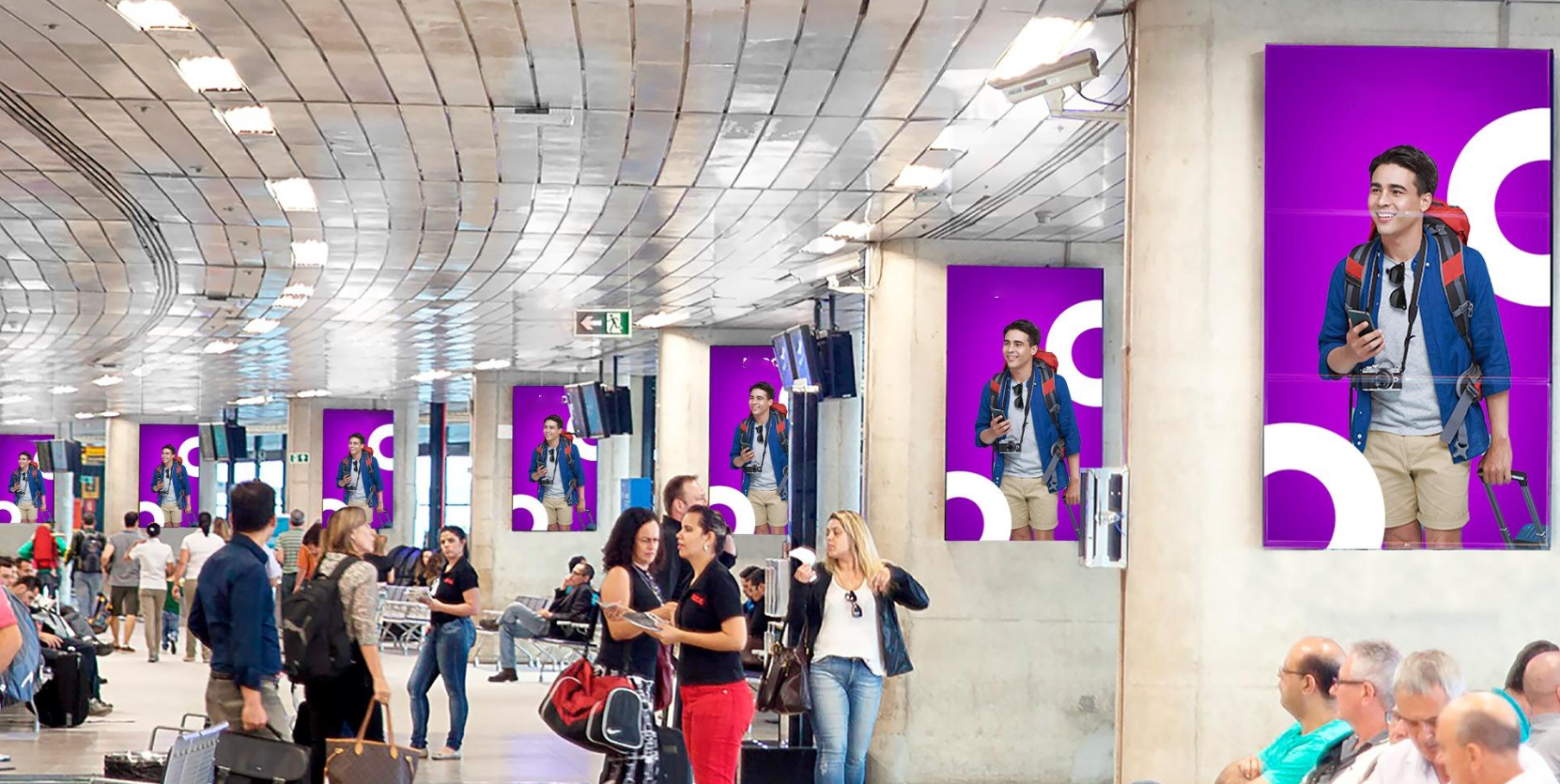
Santarem is a low-volume, high-concentration advertising environment. With 507,581 passengers moved in 2025, the airport is not a scale buy, it is a capture buy. Every visitor arriving in western Para by air passes through a single 1,982 square metre terminal, which means share of voice here is achievable at a fraction of what a Tier 1 Brazilian airport demands. For advertisers targeting either the discretionary-spend traveller heading to Alter do Chao or the commodity trade decision-maker, there is no alternative interception point in a 150 km radius.
The airport matters because two entirely different wealth flows converge in the same room. One is leisure capital: domestic Brazilian travellers from Sao Paulo, Brasilia and Rio who have already committed four-figure spends on Amazon river trips, and a growing inbound European and North American eco-tourism segment. The other is hard commodity capital: Santarem is a deepwater grain export point on the Tapajos and Amazon confluence, so soy, logistics, port and agro-input executives move through STM continuously and independently of tourist seasonality. Masscom Global reads this dual flow as the airport's core commercial asset.
Advertising Value Snapshot
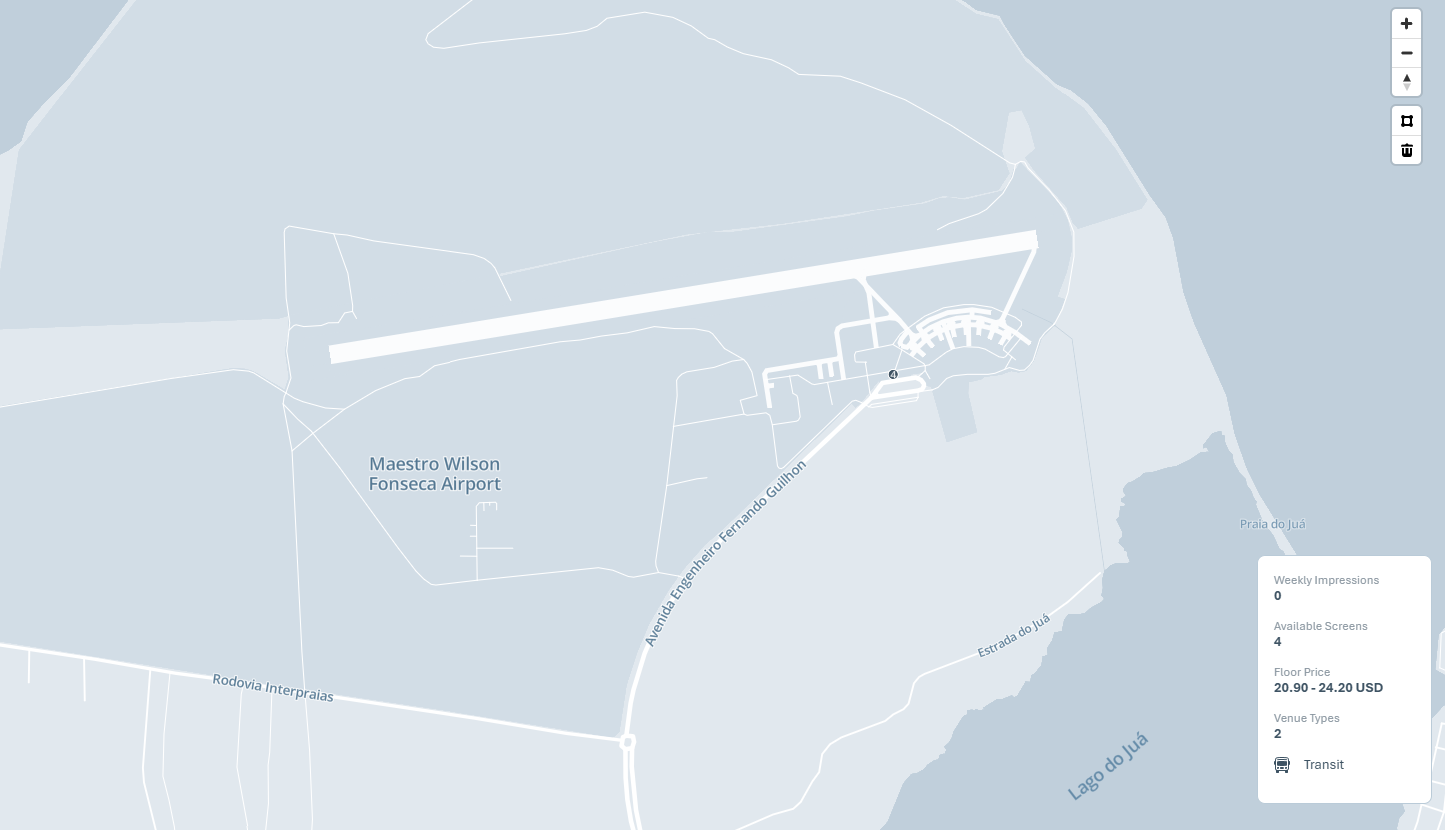
- Passenger scale: 507,581 passengers in 2025, against 523,600 in 2024, a mild contraction of roughly 3 percent after several years of expansion. Aircraft movements reached 9,544 and cargo tonnage grew sharply.
- Traveller type: Domestic eco-tourism and adventure travellers, agribusiness and export logistics professionals, regional residents and public sector personnel.
- Airport classification: Tier 3 — regional international airport with modest volume but monopoly catchment control over a 1.2 million person hinterland.
- Commercial positioning: Known as the air gateway to Alter do Chao and the Tapajos, and as the passenger terminal serving Brazil's northern grain export arc.
- Wealth corridor signal: Sits on the Amazon–Tapajos commodity export corridor linking Para agribusiness output to Atlantic shipping and, through Manaus and Belem, to international markets.
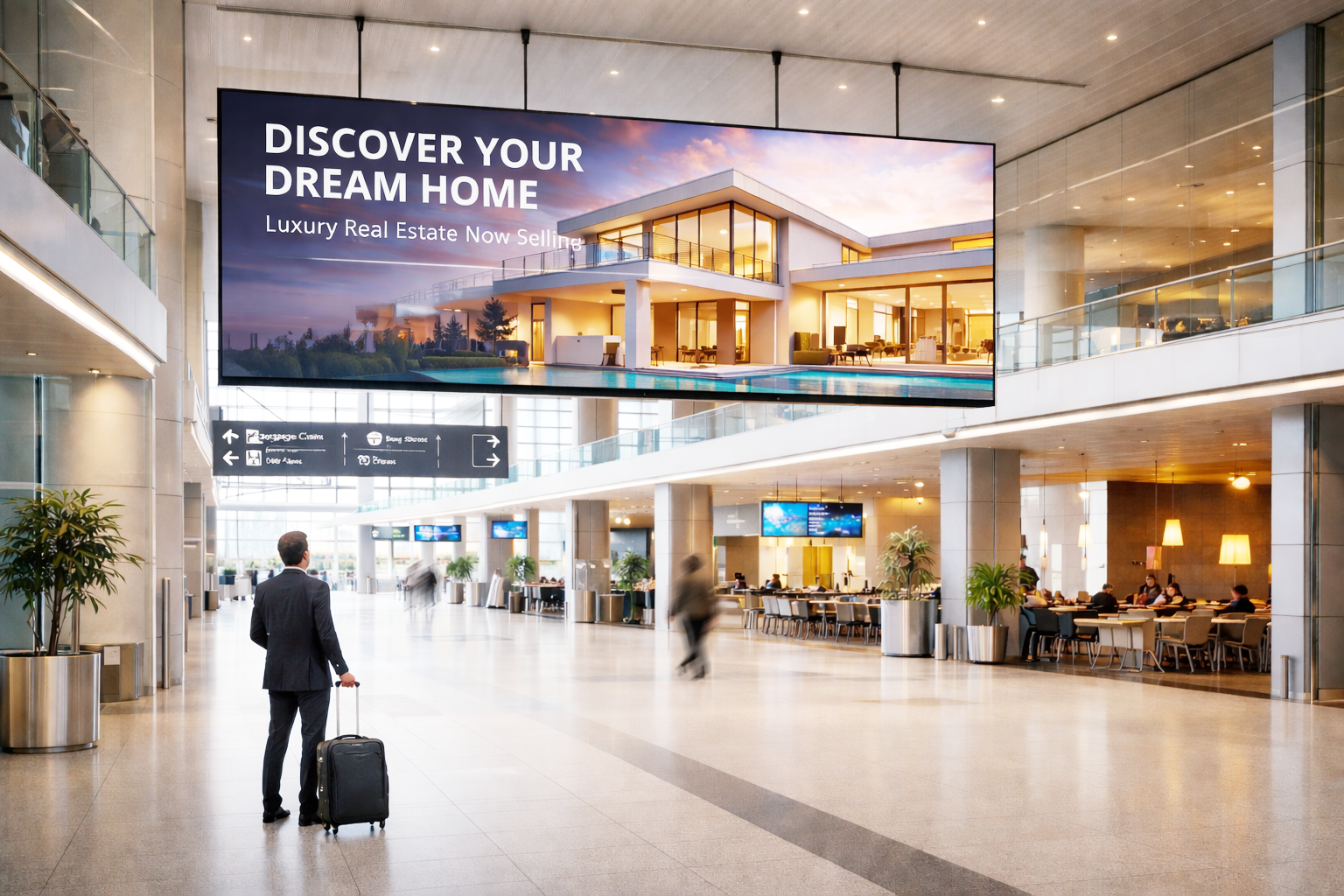
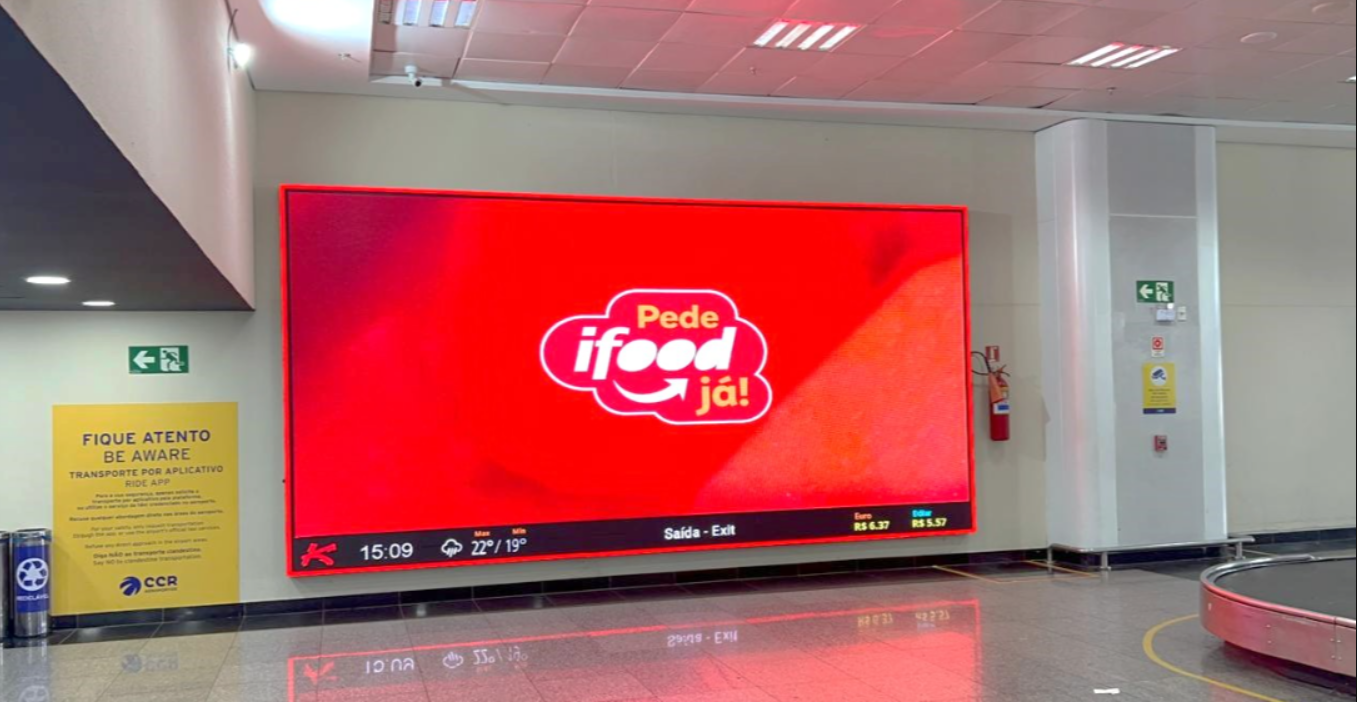
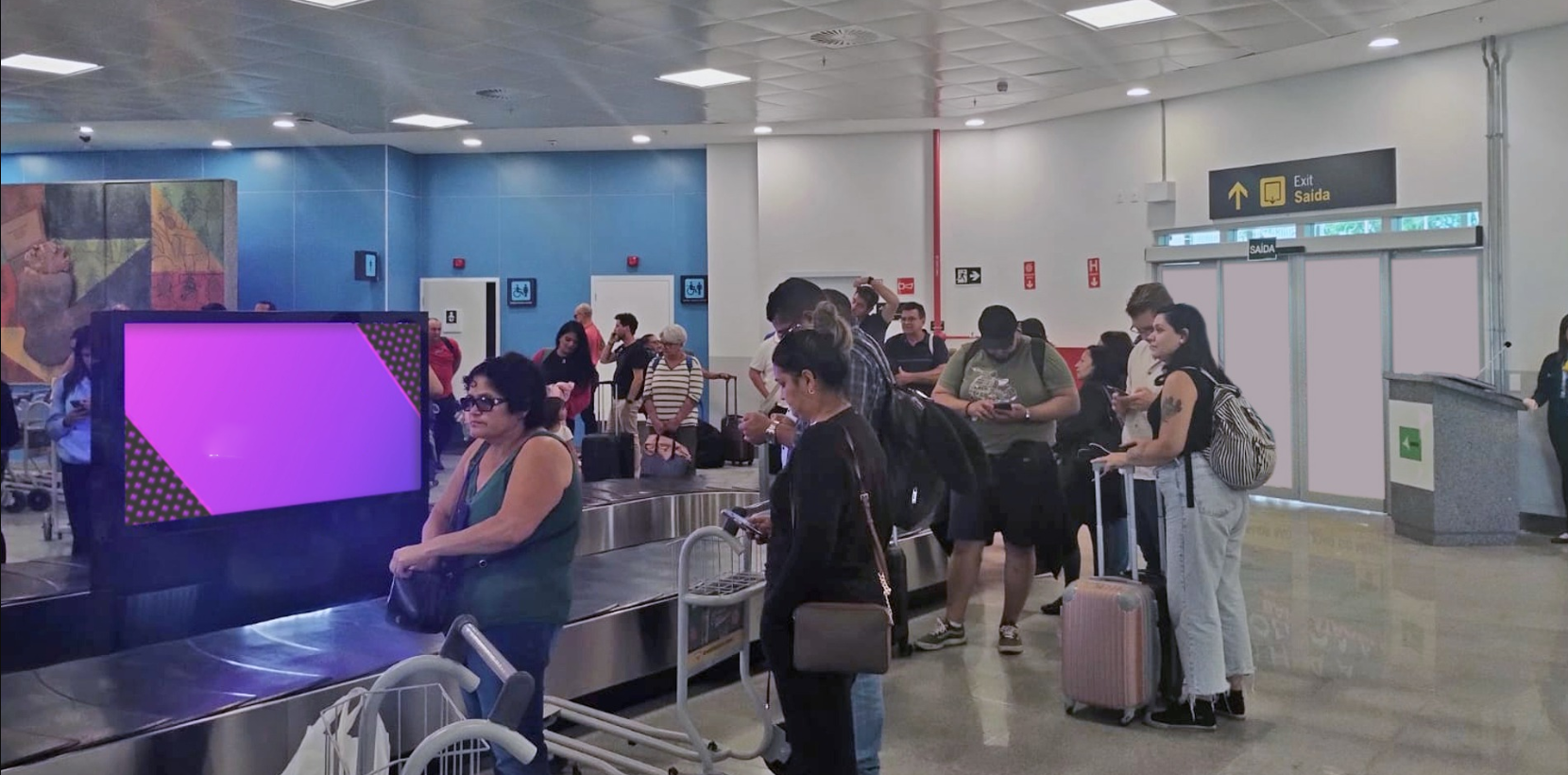
- Advertising opportunity: Small terminals reward dominance. Masscom Global structures single-brand and near-exclusive presence at STM, giving advertisers uncontested visual ownership across arrivals, baggage reclaim and departure hold in a way that is commercially impossible at Guarulhos or Brasilia. Masscom's inventory access and placement precision convert low volume into high recall.
Airport Advertising is Complex to Get Right
We help you execute faster, with proven results and local insight most planners lack starting now.
Talk to an ExpertCatchment Area and Economic Drivers
Top 10 Cities within 150 km — Marketer Intelligence:
- Santarem: The commercial and financial capital of western Para. Concentrates banking branches, private schools, private healthcare and vehicle dealerships, producing the region's only sizeable middle and upper-middle consumer class.
- Alter do Chao: Discretionary spend epicentre. Visitors here arrive with pre-committed budgets for boutique lodging, boat charters and guided experiences, making this the single highest-value leisure wallet in the catchment.
- Belterra: Soy and grain production base with mechanised farming operators. Produces buyers for agricultural machinery, crop inputs, rural credit and heavy vehicle finance.
- Mojui dos Campos: Newly emancipated agricultural municipality within the Santarem metropolitan region. Audience skews to landowners and expanding farm operators with capital equipment needs.
- Monte Alegre: Cattle, fishing and small-scale mining economy. Generates a cash-liquid, low-formal-banking audience receptive to financial inclusion, remittance and telecom offers.
- Alenquer: Riverine agricultural and cattle municipality dependent on Santarem for retail, medical and financial services. Travel through STM is need-driven rather than discretionary.
- Obidos: River narrows town with cattle and fishing trade plus federal administrative presence. Produces a public sector salaried audience with predictable spending cycles.
- Cura: Small agricultural municipality whose residents treat Santarem as the aspirational retail destination. Relevant for value retail and consumer durables messaging.
- Prainha: Cattle and extractive economy with low urban density. Audience relevance sits in telecom coverage, agricultural inputs and basic financial services.
- Aveiro and Juruti corridor: Bauxite and mineral extraction presence brings rotating industrial workforces and contractor management. Produces a rotational-worker audience with high disposable income relative to local cost of living, valuable for remittance, telecom, insurance and consumer electronics.
NRI and Diaspora Intelligence:
Santarem does not carry a significant international diaspora corridor. The dominant wealth movement is internal Brazilian migration and rotation. Farm-owning families originally from Mato Grosso, Parana and Rio Grande do Sul who relocated north for cheaper arable land maintain continuous air links to their states of origin, travelling repeatedly through STM via Brasilia and Belem connections. This group carries southern Brazilian income expectations, southern brand familiarity and southern consumption patterns into a northern cost base, which makes them disproportionately valuable per head. Alongside them, rotational mineral and infrastructure workers create a steady, salaried, high-liquidity flow that behaves like a remittance audience within a single country.
Economic Importance:
The catchment economy rests on four pillars: grain and soy production with associated port logistics, cattle and fishing, bauxite and mineral extraction in the Juruti–Aveiro belt, and eco-tourism anchored on Alter do Chao and the Tapajos National Forest. Grain and mining produce a B2B decision-maker audience with capital budgets. Tourism produces a discretionary consumer audience with open wallets and high receptivity. Government and public health services produce a stable salaried base. For advertisers, this means STM delivers three distinct buyer profiles inside one small terminal, and creative can be sequenced to reach all three across a single campaign window.
Business and Industrial Ecosystem
- Grain and soy export logistics: Produces port operators, trading company representatives, freight and shipping managers, and inbound technical visitors. Audience for logistics services, heavy equipment, commodity finance and B2B insurance.
- Mechanised agriculture across the Santarem plateau: Produces landowners and farm managers with recurring capital expenditure. Audience for machinery, crop protection, irrigation, seed technology and rural credit.
- Mineral extraction in the Juruti and Trombetas belt: Produces engineering contractors, mining management and rotational skilled labour. Audience for industrial services, safety equipment, telecom and personal finance.
- Regional trade, healthcare and education services: Santarem functions as the service capital for over a million people, producing professional and administrative travellers. Audience for banking, private education, health services and business travel categories.
Passenger Intent — Business Segment:
Business travellers at STM are moving for operational reasons, not conference tourism. They are inspecting farms and port facilities, closing commodity contracts, managing mining rotations or attending state-level meetings in Belem and Brasilia. They travel on repeat schedules, which produces high frequency exposure to the same audience across a campaign period. Categories that intercept them most effectively are agricultural equipment and inputs, commercial banking and rural credit, logistics and freight services, telecom and connectivity solutions, industrial safety, and business hospitality.
Strategic Insight:
The business audience at STM is commercially valuable because it is unusually concentrated and unusually senior. In a terminal averaging around 1,200 passengers a day, a single well-placed campaign reaches a meaningful share of the entire decision-making layer of western Para's agribusiness and extractive economy within weeks. That level of penetration into a defined B2B universe is not purchasable at national gateway airports, where the same buyers dissolve into millions of unrelated passengers. Masscom Global treats STM as a precision B2B environment rather than a mass reach environment.
Tourism and Premium Travel Drivers
- Alter do Chao and the Amazon river beaches: Ranked among Brazil's most desired domestic destinations. Visitors arrive with committed spend on lodging, charters and experiences, making them prime targets for travel gear, cards, insurance, telecom roaming and premium beverage.
- Tapajos National Forest and river cruise departures: Draws high-spend expedition and cruise passengers, including international eco-tourists with long stay durations and elevated budgets.
- Sport fishing and river expedition circuits: Attracts a specialist, affluent, largely male segment from southern Brazil and North America. Strong fit for outdoor equipment, watches, optics and premium spirits.
- Cultural calendar and Amazonian gastronomy circuit: Draws domestic cultural travellers and food tourism, supporting consumer packaged goods, regional retail and hospitality advertising.
Passenger Intent — Tourism Segment:
Tourists at STM have already paid for the expensive part. Airfare into the Amazon, lodging in Alter do Chao and guided river experiences are booked before arrival, which means the passenger in the terminal is in a post-commitment, high-confidence spending state. On arrival they are receptive to connectivity, mobility, insurance, payment and experience upgrade messaging. On departure they are in the classic gift, duty, souvenir and self-reward window, with residual budget and high emotional recall of the trip. Categories that benefit most are financial cards and travel insurance, telecom and eSIM, outdoor and adventure equipment, premium beverage, hospitality groups and destination marketing bodies.
Travel Patterns and Seasonality
Peak seasons:
- June to September: The Amazon dry season and Brazilian school holiday overlap. River beaches emerge at Alter do Chao, water levels favour navigation, and this becomes the single strongest tourism window of the year.
- December to January: Brazilian summer holidays and year-end family travel. High volume of domestic leisure and returning-family traffic.
- February to April: Grain harvest and export logistics peak, driving business and technical travel independently of leisure demand.
- Traffic volume data: Airport average is approximately 1,200 passengers daily across 2025, with aircraft movements of 9,544 for the year. Monthly granular breakdowns are data not available.
Event-Driven Movement:
- Sairé Festival, Alter do Chao (September): Major Amazonian cultural festival drawing national visitors and media. Highest concentration of discretionary leisure spend in the calendar and the priority September buying window.
- Brazilian winter holidays (July): Family and youth travel surge into Alter do Chao. Ideal for consumer, telecom, beverage and family financial products.
- Carnival period (February or March): Domestic leisure movement plus regional celebration travel. Short, intense consumer spike.
- Year-end and New Year travel (late December): Family reunification and holiday leisure. Strong for retail, gifting and financial services.
- Regional agribusiness and grain export cycle (February to May): Not a single event but a sustained business travel wave. The correct window for B2B, machinery, finance and logistics campaigns.
It’s Not Just Where You Advertise - It’s How Fast You Execute
We combine local insight with fast rollout to deliver results for you, now.
Talk to an ExpertAudience and Cultural Intelligence
Top 2 Languages:
- Portuguese: The overwhelming primary language. Effectively all domestic leisure and business audiences operate in Portuguese, and creative must be Brazilian Portuguese rather than European. Any campaign without Portuguese-first messaging forfeits the majority of the audience.
- English: Second commercial language, carried by inbound eco-tourists, river cruise passengers and international mining and trading personnel. Small in volume but the highest spending-per-head segment, which makes bilingual placement in arrivals and premium hold areas commercially efficient.
Major Traveller Nationalities:
The dominant nationality is Brazilian by a wide margin, drawn from Para, Amazonas, the Federal District, Sao Paulo and the southern states. International presence is led by North American and Western European eco-tourism and cruise passengers, with a smaller technical and managerial contingent tied to mining and commodity operations. For campaign creative this means the base layer must speak to domestic Brazilian aspiration and value, while a secondary premium layer targets international expedition travellers with English messaging around adventure, sustainability and premium experience.
Religion — Advertiser Intelligence:
- Catholicism (approximately 55 to 60 percent): Cirio and regional patron saint festivities, Holy Week and Christmas drive family reunification travel and gifting spend. Advertiser benefit sits with retail, gifting, food and beverage, family financial products and telecom family plans in the weeks preceding these windows.
- Evangelical Protestantism (approximately 25 to 30 percent): A fast-growing and community-organised segment. Drives group and conference travel plus strong household savings orientation. Advertiser benefit sits with banking, insurance, education savings and value retail, with messaging that emphasises family security over status signalling.
- Afro-Brazilian and Amazonian syncretic traditions plus non-religious (remainder): Culturally significant to the Santarem identity and to festival tourism, notably the Sairé calendar. Advertiser benefit sits with cultural tourism, beverage, hospitality and destination marketing that leans on authenticity.
Behavioral Insight:
This audience separates cleanly into two decision styles that advertisers must not blend. The leisure traveller is in a post-commitment mindset, already emotionally invested in the trip, and responds to messaging that extends or protects the experience rather than messaging that sells price. The agribusiness and extractive audience is calculating, asset-focused and credit-aware, responding to yield, durability, financing terms and service reliability. Both are also value-conscious relative to southern Brazil, so premium claims must be justified by durability, guarantee or utility rather than badge alone. Campaigns that carry one emotional creative and one rational creative in the same terminal consistently outperform single-message buys here.
Outbound Wealth and Investment Intelligence
The outbound passenger at STM is unusual because most of the wealth movement is domestic rather than international. Capital generated in western Para from grain, cattle and minerals does not typically leave Brazil first, it moves south into Brazilian financial and property markets before it ever considers a foreign jurisdiction. That makes STM a rare airport where a domestic property developer or private bank can reach a genuinely capital-rich audience that national gateways cannot isolate.
Outbound Real Estate Investment:
Landowning and agribusiness families from this catchment deploy surplus capital into Brazilian urban property, concentrating on Belem, Brasilia, Goiania, Curitiba, Florianopolis and Sao Paulo, with coastal second-home purchases in Santa Catarina and along the northeastern coast. A smaller upper tier looks at Miami and Orlando residential product, the standard first international destination for Brazilian capital, alongside Portugal for language and residency reasons. Developers marketing southern Brazilian, northeastern coastal or Florida residential inventory have a viable and largely uncontested channel at STM.
Outbound Education Investment:
Higher education outflow from this catchment moves primarily to Belem, Brasilia, Sao Paulo and Curitiba for medicine, agronomy, engineering and law. International study, where it occurs, favours Portugal for language continuity, followed by the United States and Canada, with Argentina remaining a cost-efficient medical education route for Brazilian families. Agribusiness families in particular treat education as a succession investment and will fund it aggressively. International universities, pathway providers and education consultancies targeting Portuguese-speaking families with real assets have a defined audience here.
Outbound Wealth Migration and Residency:
Second-residency demand from this catchment is early stage but directionally clear. Portugal remains the most relevant programme for Brazilian nationals given language and ancestry pathways, followed by Spain and Italy for citizenship-by-descent claims common among southern-origin farming families, and the United States investor visa route for the highest tier. Caribbean citizenship-by-investment programmes have limited traction with this specific audience. Detailed volumes are data not available.
Strategic Implication for Advertisers:
Brands positioned on either side of this corridor should treat STM as a low-cost, high-precision entry point into Brazilian commodity wealth before it consolidates in the south. A residential developer, private bank or education institution can achieve near-exclusive visibility to this audience at a fraction of a Sao Paulo buy. Masscom Global activates both sides of the corridor simultaneously, pairing STM with the southern Brazilian and international gateways this audience travels into.
Airport Infrastructure and Premium Indicators
Terminals:
- Single passenger terminal of approximately 1,982 square metres, handling all domestic and international movement. Compact footprint means every passenger traverses the same arrival, check-in, security and hold sequence, producing near-total exposure to well-placed inventory.
- Commercial leasable area of roughly 132 square metres distributed across 17 commercial points covering retail, services and food and beverage, plus surface vehicle parking. Concession retail is limited, which raises the relative value of media as the primary brand surface in the terminal.
Premium Indicators:
- Lounge infrastructure is limited and premium hold facilities are minimal, which signals that the premium audience here is captured in general circulation rather than segregated behind lounge doors. For advertisers this is an advantage, not a deficit.
- Private and general aviation activity is present and material, driven by farm, mining and expedition charter movement into the interior. This is where the highest-net-worth movement at STM concentrates.
- No luxury hotel operates at or adjacent to the airport. Premium accommodation is concentrated in Santarem city and Alter do Chao.
- The airport operates under a Spanish-led international concession covering a block of Brazilian terminals, which brings standardised commercial governance and a modernisation mandate to the asset.
Forward-Looking Signal:
Under its long-term international concession, Santarem is inside a multi-airport modernisation programme with terminal capacity, commercial area and passenger experience upgrades on the roadmap, while cargo tonnage growth of roughly a third in 2025 signals accelerating trade intensity ahead of passenger recovery. Expanding grain export throughput on the Tapajos and rising national profile for Alter do Chao both point to structural demand growth. Masscom Global advises clients to secure position now, while current rates reflect today's passenger base rather than tomorrow's, and to lock multi-cycle terms before terminal expansion and rising competition reset pricing.
Airline and Route Intelligence
Top Airlines:
Azul, LATAM and GOL operate the core scheduled network, supported by regional and charter operators serving interior Amazon destinations.
Key International Routes:
Santarem holds international airport status and functions as a mid-point alternate between Manaus and Belem, but scheduled international service is not currently a feature of the network. International connectivity is delivered through Belem, Manaus, Brasilia and Sao Paulo hubs. Weekly international frequencies are data not available.
Domestic Connectivity:
Direct scheduled service links Santarem to Belem, Manaus and Brasilia, the three hubs that connect the airport to the wider Brazilian network and onward international destinations. Onward one-stop demand concentrates on Sao Paulo, Campinas, Rio de Janeiro and Maraba.
Wealth Corridor Signal:
The route map tells advertisers exactly where the money is going. The Brasilia and Sao Paulo corridors are the wealth transfer routes, carrying capital, contracts, education decisions and property investment south. The Belem and Manaus corridors are administrative and trade routes, carrying regional business, government and logistics movement. Leisure demand arrives on the same southern trunk routes but with a completely different spending posture. Advertisers should therefore treat departure-side inventory as capital-mindset territory and arrival-side inventory as discretionary-spend territory, and Masscom Global builds placement plans on exactly that split.
Media Environment at the Airport
- Terminal scale is small and clutter is correspondingly low, so standout potential per placement is substantially higher than at Guarulhos, Brasilia or Belem, where equivalent spend disappears into competitive noise.
- Dwell time is driven by limited concession options, single-terminal processing and connection-dependent scheduling with a high share of early-morning and late-night departures, which extends passive exposure time to terminal media.
- Premium association is carried by the eco-tourism and expedition identity of the destination and by an internationally operated concession, which lends credibility to sustainability, adventure, premium outdoor and financial brand messaging.
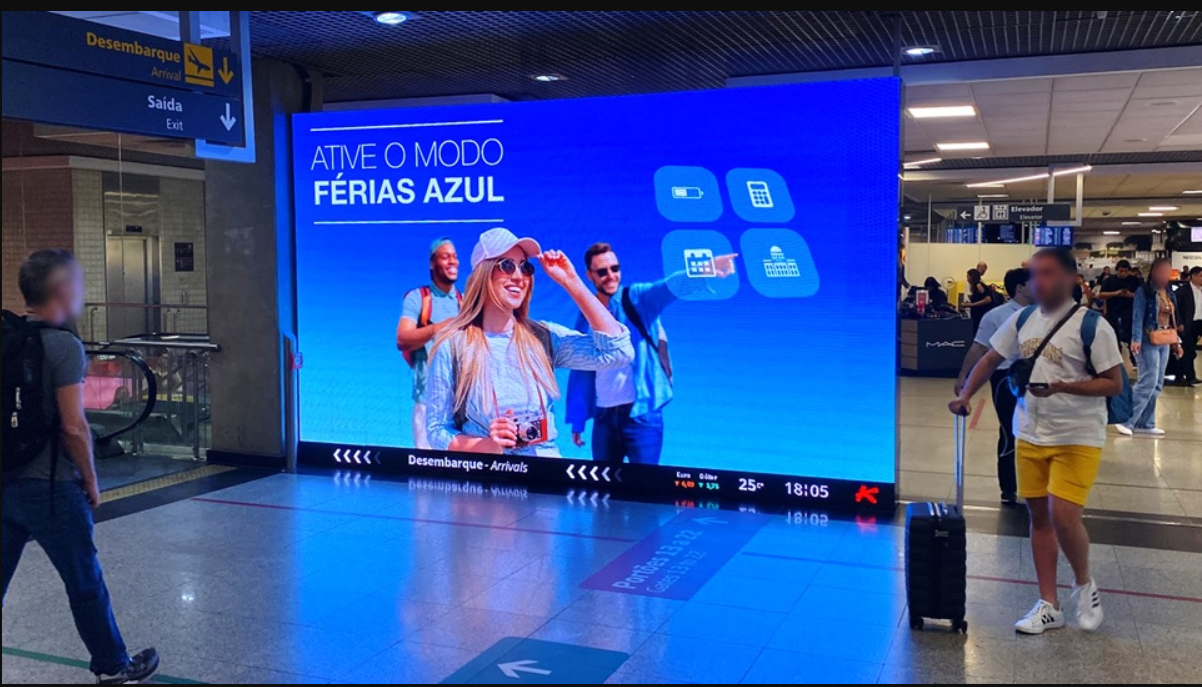
- Masscom Global provides direct inventory access, near-exclusive and dominance package structuring, precise arrival versus departure placement control, and rapid rollout in a market where local execution capability is scarce.
Strategic Advertising Fit
Best Fit:
- Travel and hospitality brands: Lodges, cruise operators, destination marketing and OTA products reaching a passenger already spending on Amazon experience.
- Agricultural machinery and inputs: Tractors, harvesters, crop protection and irrigation reaching landowners and farm managers with active capital budgets.
- Banking, rural credit and insurance: Commodity-linked finance, agricultural insurance and business banking reaching an asset-rich, credit-active audience.
- Telecom and connectivity: Mobile, satellite and eSIM products reaching both tourists needing coverage and interior operations needing reliability.
- Outdoor, adventure and technical equipment: Apparel, footwear, optics and expedition gear aligned to sport fishing and river expedition segments.
- Logistics, port and freight services: B2B reach into the grain export and mineral supply chains that anchor the local economy.
- Domestic real estate developers: Southern Brazilian and coastal residential inventory reaching commodity wealth at the point of formation.
- Education institutions and consultancies: Domestic and international higher education reaching succession-minded agribusiness families.
Brand Alignment at a Glance:
| Category | Fit |
|---|---|
| Travel and hospitality | Exceptional |
| Agricultural machinery and inputs | Exceptional |
| Banking, rural credit and insurance | Strong |
| Telecom and connectivity | Strong |
| Outdoor and adventure equipment | Strong |
| Domestic real estate development | Moderate |
| Ultra-luxury fashion and jewellery | Poor fit |
Who Should Not Advertise Here:
- Ultra-luxury fashion, high jewellery and haute horlogerie: The passenger mix lacks the density of ultra-high-net-worth international travellers these brands require, and there is no luxury retail environment to close the loop.
- Private jet fractional ownership and elite wealth management: Private aviation exists but at operational rather than lifestyle scale, and the audience does not concentrate in the terminal.
- Global mass consumer electronics launches and duty-free luxury cosmetics: Insufficient international transfer volume and minimal duty-free retail presence to convert exposure into purchase.
Event and Seasonality Analysis
- Event Strength: Medium
- Seasonality Strength: High
- Traffic Pattern: Dual-Peak
Strategic Implication:
Budget should not be spread evenly across the year at STM. Weight leisure and consumer campaigns into June through September, with a sharp concentration around the September Sairé window and the July holiday surge, then take a secondary position in late December. Weight B2B, machinery, finance and logistics campaigns into February through May, when the harvest and export cycle puts decision-makers in the terminal regardless of tourism demand. Masscom Global structures campaigns around this dual rhythm, splitting creative and placement by season so that each buying window is matched to the audience actually present.

Poor Placement and Delays Affect Airport Campaigns
We help you move faster, access better inventory, and get it right now.
Talk to an ExpertFinal Strategic Verdict
Santarem is the clearest example in northern Brazil of an airport where low passenger volume produces high advertising efficiency. Half a million passengers a year moving through a single 1,982 square metre terminal means a brand can own the visual environment of the only air gateway to Alter do Chao and the entire western Para agribusiness belt for a fraction of a Tier 1 Brazilian buy. Travel, hospitality, agricultural equipment, rural finance, telecom and adventure equipment brands benefit most, because both of this airport's audiences are in high-conviction spending states: the tourist has already paid for the trip, and the farm operator is already in a capital cycle. Cargo volumes up roughly a third in 2025, a Spanish-led concession modernisation mandate and rising national demand for Alter do Chao all point the same direction, which means today's rates are priced against yesterday's traffic. Masscom Global holds the inventory access, dual-season planning capability and local execution speed to convert that gap into measurable advantage before it closes.
About Masscom Global
Masscom Global is a premium international airport advertising and media buying agency operating across 140 countries. With deep expertise in airport OOH, premium publications, and high-net-worth audience targeting, Masscom helps brands reach the world's most valuable travellers at the moments that matter most. For advertising packages, media rates, and campaign planning at Santarem International Airport and airports across the globe, contact Masscom Global today.
Frequently Asked Questions
How much does airport advertising cost at Santarem International Airport? Cost at STM varies by format, terminal position, campaign duration and seasonal demand. Arrival and baggage reclaim positions price differently from departure hold placements, and the June to September tourism peak carries higher demand than shoulder months. Because the terminal is compact, dominance and near-exclusive packages are available at rates that are not achievable at larger Brazilian gateways. Contact Masscom Global for current rate cards and package options.
Who are the passengers at Santarem International Airport? Three groups dominate. Domestic Brazilian leisure travellers from Sao Paulo, Brasilia, Rio and the southern states heading to Alter do Chao and the Tapajos. Agribusiness, port logistics and mining professionals tied to the grain export and mineral economies of western Para. Regional residents and public sector personnel using Santarem as the service capital for a hinterland of over a million people. A smaller international eco-tourism and expedition segment carries the highest spend per head.
Is Santarem International Airport good for luxury brand advertising? For accessible premium and technical premium, yes. Adventure equipment, premium outdoor apparel, watches with sport or expedition positioning, premium beverage and premium financial products all align with the audience. For ultra-luxury fashion, high jewellery and duty-free luxury cosmetics, no. The airport lacks the international transfer volume, lounge segregation and luxury retail environment those categories require to convert exposure.
What is the best airport in northern Brazil to reach HNWI audiences? Belem and Manaus carry greater absolute volume and international connectivity, making them the primary Amazon HNWI buys. Santarem's role is precision rather than scale: it is where commodity wealth from western Para is captured at the point of formation, before it consolidates in Brasilia and Sao Paulo. Advertisers seeking Amazon HNWI reach should use Belem or Manaus for volume and Santarem for concentrated agribusiness and eco-premium capture, which Masscom Global plans as a combined regional buy.
What is the best time to advertise at Santarem International Airport? For consumer and travel brands, June through September, with peak weight around the September Sairé Festival and the July Brazilian holiday surge, plus a secondary window in late December. For agribusiness, finance and logistics brands, February through May during the harvest and export cycle. Campaigns launched four to six weeks ahead of each window capture planning-stage decision-making.
Can international real estate developers advertise at Santarem International Airport? Yes, and the channel is largely uncontested. This audience deploys capital into southern Brazilian and northeastern coastal property, with an upper tier looking at Florida and Portugal. Reaching agribusiness landowners at their home airport, before they arrive in a saturated southern market, delivers earlier influence at lower cost. Masscom Global structures campaigns that pair STM with the destination-market gateways this audience travels into.
Which brands should not advertise at Santarem International Airport? Ultra-luxury fashion, high jewellery and haute horlogerie lack sufficient audience density and any supporting retail environment. Private jet ownership and elite wealth management products do not find their audience concentrated in the terminal. Global consumer electronics launches and duty-free luxury cosmetics depend on international transfer volume and duty-free retail that STM does not currently provide.
How does Masscom Global help brands advertise at Santarem International Airport? Masscom Global delivers the full chain: audience and catchment intelligence specific to western Para, direct inventory access including dominance and near-exclusive structures, dual-season campaign planning that separates leisure and agribusiness windows, creative guidance for Brazilian Portuguese and bilingual placement, and on-ground execution in a market where local capability is scarce. Book a 15 minute planning call to see availability and rates before the next peak window closes.