


Airport at a Glance
| Field | Detail |
|---|---|
| Airport | San Luis Obispo County Regional Airport (McChesney Field) |
| IATA Code | SBP |
| Country | United States of America |
| City | San Luis Obispo, California |
| Annual Passengers | 811,905 (2025), an all-time record and a rise of nearly 23 percent in two years |
| Primary Audience | Premium wine and lifestyle tourists, relocated California tech and finance wealth, university families and aerospace and energy professionals |
| Peak Advertising Season | April to June, July to October, late November to December |
| Audience Tier | Tier 2 by volume, Tier 1 by visitor spend and household wealth |
| Best Fit Categories | Luxury hospitality and travel, wealth management and real estate, premium automotive and wine and lifestyle brands |
San Luis Obispo County Regional Airport carried 811,905 passengers in 2025, an all-time record and an increase of nearly 23 percent in just two years. Growth of that scale at a Tier 2 airport signals something structural rather than cyclical: the Central Coast has become a destination for both premium tourism and permanent wealth relocation out of the Bay Area and Los Angeles. The airport is the only commercial gateway to a county with more than 200 wineries, a nationally ranked polytechnic university, a major nuclear generating station and the busiest space launch complex on the American West Coast. Every visitor arriving by air passes through one small terminal.
The airport matters because of the spending profile of the people using it. This is not a cost-driven leisure market. Visitors come for premium wine tourism, coastal resorts, Hearst Castle and the Highway 1 corridor, and they arrive having already committed to significant discretionary spend. Alongside them sits a resident base of vineyard and ranch owners, relocated technology and finance executives, university faculty and donors, and aerospace and energy professionals. There is no competing airport within convenient reach, which makes this a captive gateway to one of California's most affluent non-metropolitan markets. Masscom Global positions SBP as a premium lifestyle and private wealth environment at regional airport cost.
Advertising Value Snapshot
- Passenger scale: 811,905 passengers in 2025 with 72,268 aircraft operations, an all-time record. Traffic rose more than 65,000 over 2024 and more than 151,000 over 2023, a near 23 percent two-year increase against a previous record of 544,575 in 2019.
- Traveller type: Affluent wine and coastal leisure visitors, relocated California technology and finance wealth, Cal Poly student families and alumni, and aerospace, nuclear and agricultural business travellers.
- Airport classification: Tier 2 by volume, Tier 1 by visitor spend and household net worth. Three major carriers serve nine markets including every West Coast hub plus Denver and Dallas.
- Commercial positioning: Known nationally as the gateway to Paso Robles wine country, the Central Coast beaches and the Highway 1 corridor.
- Wealth corridor signal: SBP sits on the California coastal wealth migration corridor, absorbing capital moving out of San Francisco and Los Angeles into vineyard estates, ranch property and coastal second homes.
- Advertising opportunity: A single modern terminal means concentrated passenger flow, negligible advertising clutter and near-total share of attention for a well-placed brand. Rates still reflect a mid-size regional airport while the audience profile has moved decisively upmarket. Masscom Global secures position now and pairs SBP with Los Angeles, San Francisco, Phoenix, Denver, Seattle and Dallas so lifestyle and wealth brands intercept the same visitor at origin and destination.
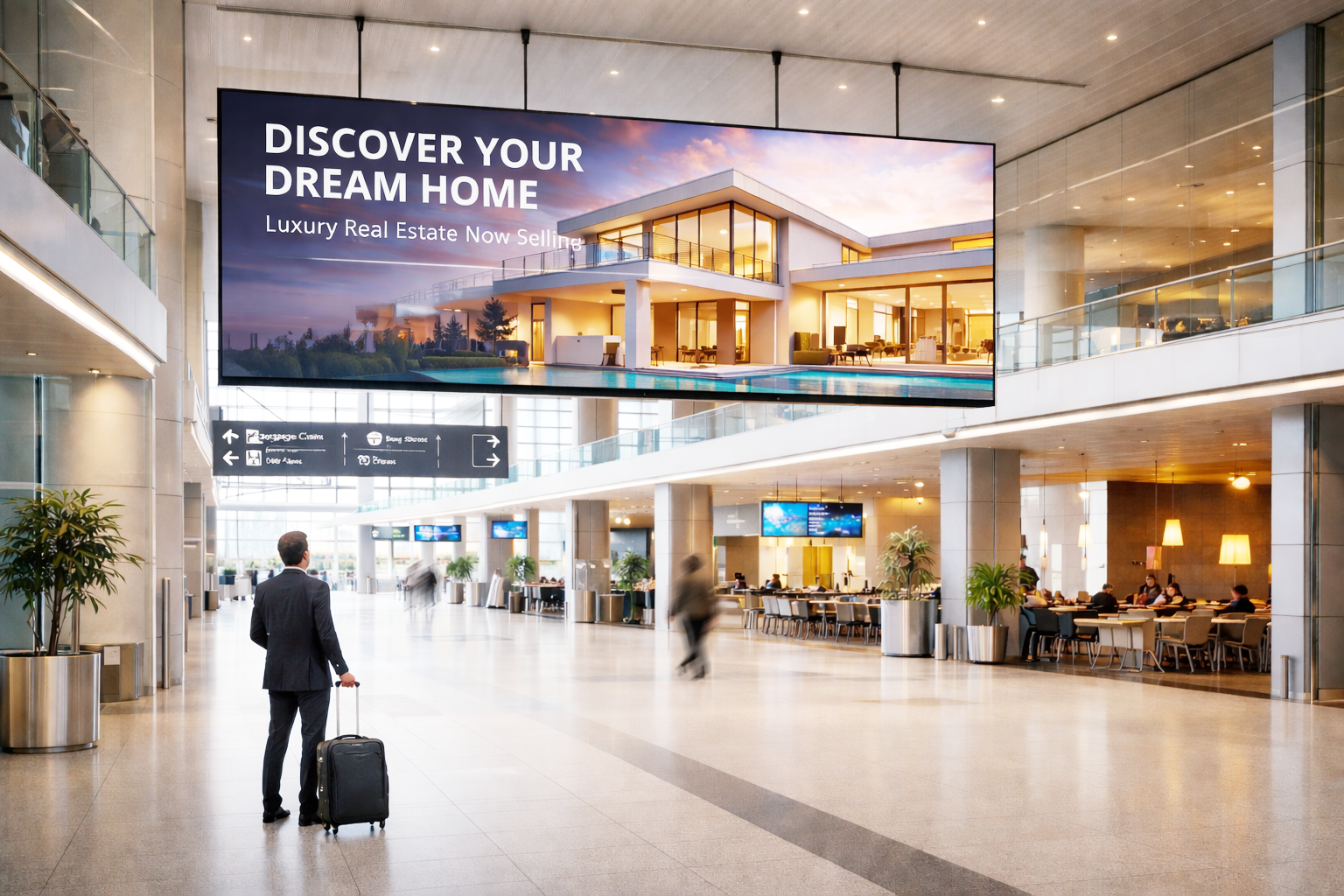
Airport Advertising is Complex to Get Right
We help you execute faster, with proven results and local insight most planners lack starting now.
Talk to an ExpertCatchment Area and Economic Drivers
Top 10 Cities within 150 km, Marketer Intelligence:
- San Luis Obispo, California: The county's professional, government and university centre, home to a nationally ranked polytechnic institution and a growing technology sector. Produces faculty, engineers, physicians and a young high-earning professional base with strong premium consumer adoption.
- Paso Robles, California: The commercial heart of one of America's premium wine regions with more than 200 wineries. Produces vineyard and estate owners, hospitality operators and a steady flow of affluent wine tourists. The highest-value audience concentration in the catchment.
- Pismo Beach and Avila Beach, California: Coastal resort economy serving high-spending short-stay visitors and second-home owners. Strong relevance for luxury hospitality, automotive, wellness and premium retail advertisers.
- Arroyo Grande and Nipomo, California: Affluent residential communities with a large retired and semi-retired population holding substantial home equity. Heavy wealth management, healthcare, insurance and premium travel spending.
- Atascadero and Templeton, California: Ranch and equestrian country with established landowning families and relocated professionals. Relevant to land brokerage, agricultural finance, luxury vehicles and private education.
- Santa Maria, California: The county's agricultural production and processing centre with a large Hispanic workforce. Produces both agribusiness management and a substantial remittance, telecom and consumer finance audience.
- Lompoc and Vandenberg, California: Anchored by a major space launch installation with an accelerating commercial launch cadence. Produces aerospace engineers, defence contractors and government personnel travelling on federal and corporate business.
- Morro Bay and Los Osos, California: Coastal tourism and retirement communities with mature, discretionary-income visitor and resident profiles. Relevant to hospitality, healthcare, cruise and travel services.
- Solvang, Buellton and the Santa Ynez Valley, California: Premium wine and boutique hospitality destination drawing Los Angeles and Bay Area affluent weekend visitors, with significant estate and vineyard ownership.
- Santa Barbara and Goleta, California: At the southern edge of the catchment, contributing exceptional household wealth including the Montecito ultra-high-net-worth corridor, plus a research university and technology sector.
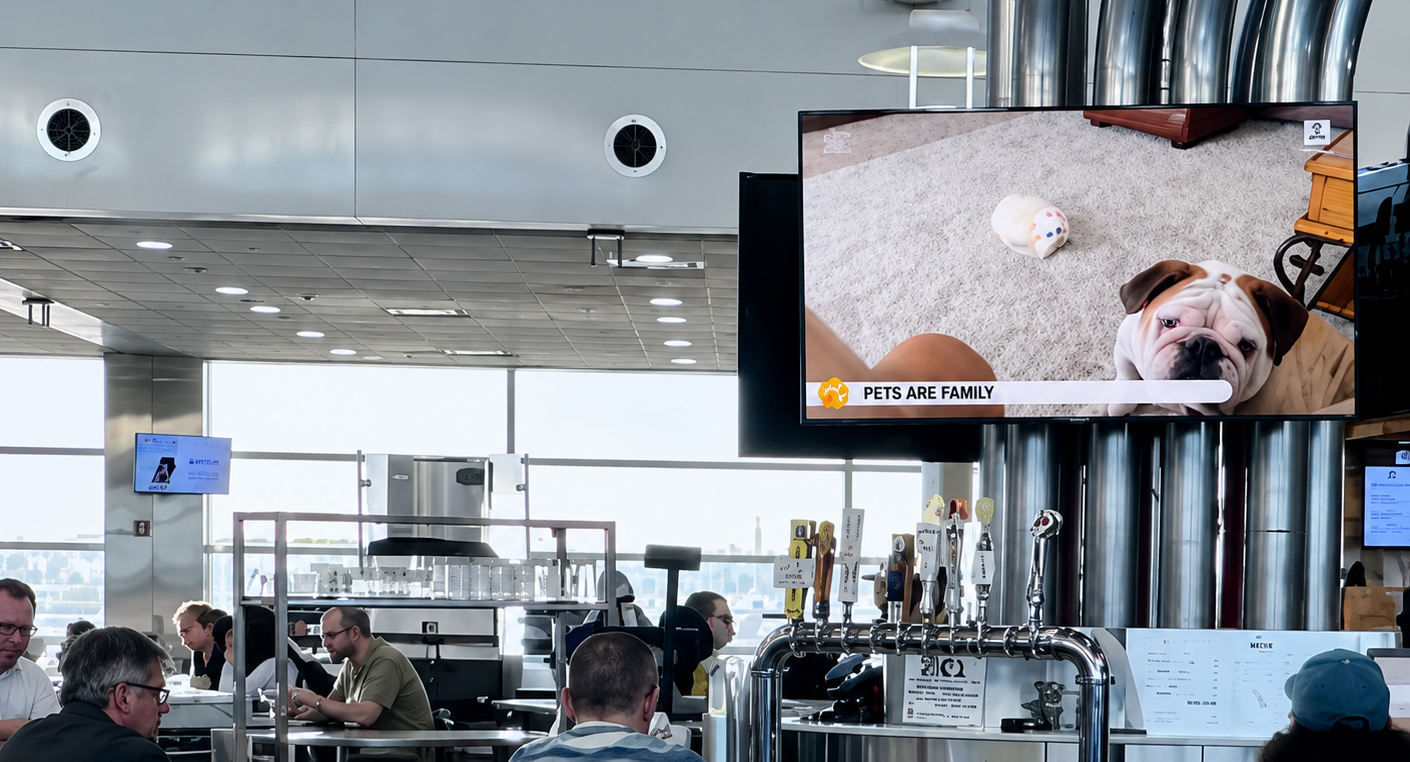
NRI and Diaspora Indistinctive Intelligence:
There is no large South Asian or Gulf expatriate population here, so the relevant story is different and commercially significant. The Central Coast agricultural economy sustains a very large Mexican and Central American workforce concentrated in Santa Maria, Guadalupe, Oceano and Nipomo, generating high remittance volume, strong money transfer and prepaid telecom demand, and family-linked property activity in Mexico. Cal Poly and the University of California campus to the south add an international academic population from China, India and South Korea with cross-border education and banking needs. The dominant HNI movement, however, is domestic: capital relocating from San Francisco and Los Angeles into vineyard estates, ranch land and coastal property, plus retirement-stage wealth arriving from across the Western United States.
Economic Importance:
Five engines drive this catchment. Premium viticulture and wine tourism create estate ownership wealth and a continuous stream of high-spending visitors. Higher education anchors a professional, engineering-literate population and generates recurring family and alumni travel. Aerospace and space launch operations at the coastal installation produce federal contracting and engineering audiences with growing commercial activity. Nuclear power generation sustains a specialised technical workforce and substantial county revenue. Agriculture and food processing produce both agribusiness leadership and a large wage-earning consumer base. Each generates a clearly separable advertiser audience within one small terminal.
Business and Industrial Ecosystem
- Premium viticulture, wine production and hospitality: Produces estate and vineyard owners, hospitality operators and distribution executives. Core audience for wealth management, land brokerage, luxury vehicles, premium equipment and international wine-region property advertisers.
- Higher education and research: Produces faculty, administrators, visiting academics and a substantial donor and alumni network. Relevant to financial services, private education, insurance and premium travel advertisers.
- Aerospace, space launch and defence contracting: Produces engineers, programme managers and federal contractors with predictable business travel. Relevant to technology, industrial supply, professional services and business travel brands.
- Nuclear energy and utilities: Produces a highly paid specialist technical workforce with stable, high household income and long tenure. Relevant to wealth management, private education, automotive and healthcare advertisers.
Passenger Intent, Business Segment:
Business travellers here move for specific reasons: wine industry distribution and trade meetings, university and research business, aerospace programme reviews and federal contracting, utility and energy sector activity, and agricultural commodity work. They connect through Los Angeles, San Francisco, Phoenix, Denver, Dallas and Seattle toward national itineraries. Volumes are modest but composition is strong, weighted toward owners, engineers and senior managers rather than junior staff. Wealth management, premium automotive, business travel services, enterprise technology and executive education intercept them most effectively.
Strategic Insight:
The business audience at SBP is valuable because it is asset-heavy rather than merely salaried. Vineyard and ranch ownership in this county represents substantial illiquid wealth, and estate owners are simultaneously business operators and private investors. A single placement therefore reaches the corporate buyer and the private wealth holder in the same individual, which is rare at any airport and almost unheard of at this scale. Combined with the aerospace and nuclear technical population and a university donor base, the terminal carries an unusually high proportion of people with genuine financial capacity and decision authority for an airport of 800,000 passengers.
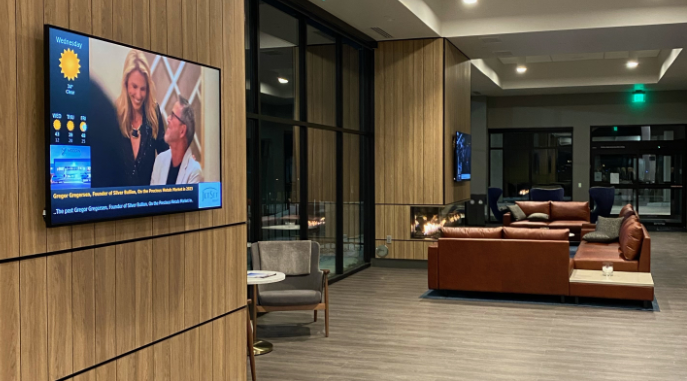
Tourism and Premium Travel Drivers
- Paso Robles and Edna Valley wine country: More than 200 wineries across a nationally recognised premium appellation. Visitors arrive with committed spending on tastings, hospitality, club memberships and shipping, and many are prospective vineyard buyers. The strongest advertiser-relevant driver at this airport.
- Hearst Castle and the Highway 1 Big Sur corridor: A globally recognised destination drawing domestic and international visitors on premium road itineraries, with high hospitality, automotive rental and retail spend.
- Pismo Beach, Avila Beach and the coastal resort strip: Sustains year-round leisure and wellness tourism with strong repeat visitation and second-home purchase consideration.
- Cal Poly San Luis Obispo: Generates continuous family, prospective student, alumni and event travel, with a donor and alumni base of significant means and strong emotional attachment to the region.
Passenger Intent, Tourism Segment:
Inbound leisure passengers are the defining audience at SBP and they are wealthy by any measure. They have already paid for premium accommodation, wine experiences and often multi-day itineraries before arriving, and they are in a high-consideration mindset about the region itself, with a meaningful minority actively evaluating second-home or vineyard purchase. That combination makes them exceptionally receptive to luxury hospitality, real estate, wealth management, premium automotive, wellness and lifestyle brand messaging. Outbound leisure passengers are affluent residents flying to Los Angeles, San Francisco, Seattle, Denver and Las Vegas, receptive to travel finance, card products and destination services.
Travel Patterns and Seasonality
Peak seasons:
- April to June: Spring wine season, the film festival calendar, university open house and graduation weekends, and the start of the coastal visitor season.
- July to October: The strongest sustained period of the year, combining peak summer coastal tourism, the July county fair, September university arrival and the October harvest wine season.
- Late November to December: Holiday compression around Thanksgiving and the year-end period, with strong family and alumni travel.
- February to March: Shoulder business travel resumption plus growing off-season wine and wellness tourism.
Event-Driven Movement:
- Paso Robles Wine Festival (May): One of the longest-running wine events in California, drawing trade buyers, collectors and affluent consumers. Prime timing for luxury, hospitality, automotive and wealth advertisers.
- Harvest Wine Weekend (October): The highest-intent wine tourism window of the year, when visitors buy allocations, join clubs and evaluate property. Exceptional timing for real estate and luxury lifestyle brands.
- California Mid-State Fair, Paso Robles (July): A major regional fair with national touring entertainment, concentrating both local families and out-of-region visitors into the county.
- Cal Poly graduation, open house and move-in weekends (April, June and September): Brings prospective and enrolling families with committed multi-year education budgets plus alumni with donor capacity. Strong for education finance, banking, insurance and premium hospitality.
- San Luis Obispo International Film Festival (spring): Draws industry visitors from Los Angeles with strong luxury, hospitality and premium consumer alignment.
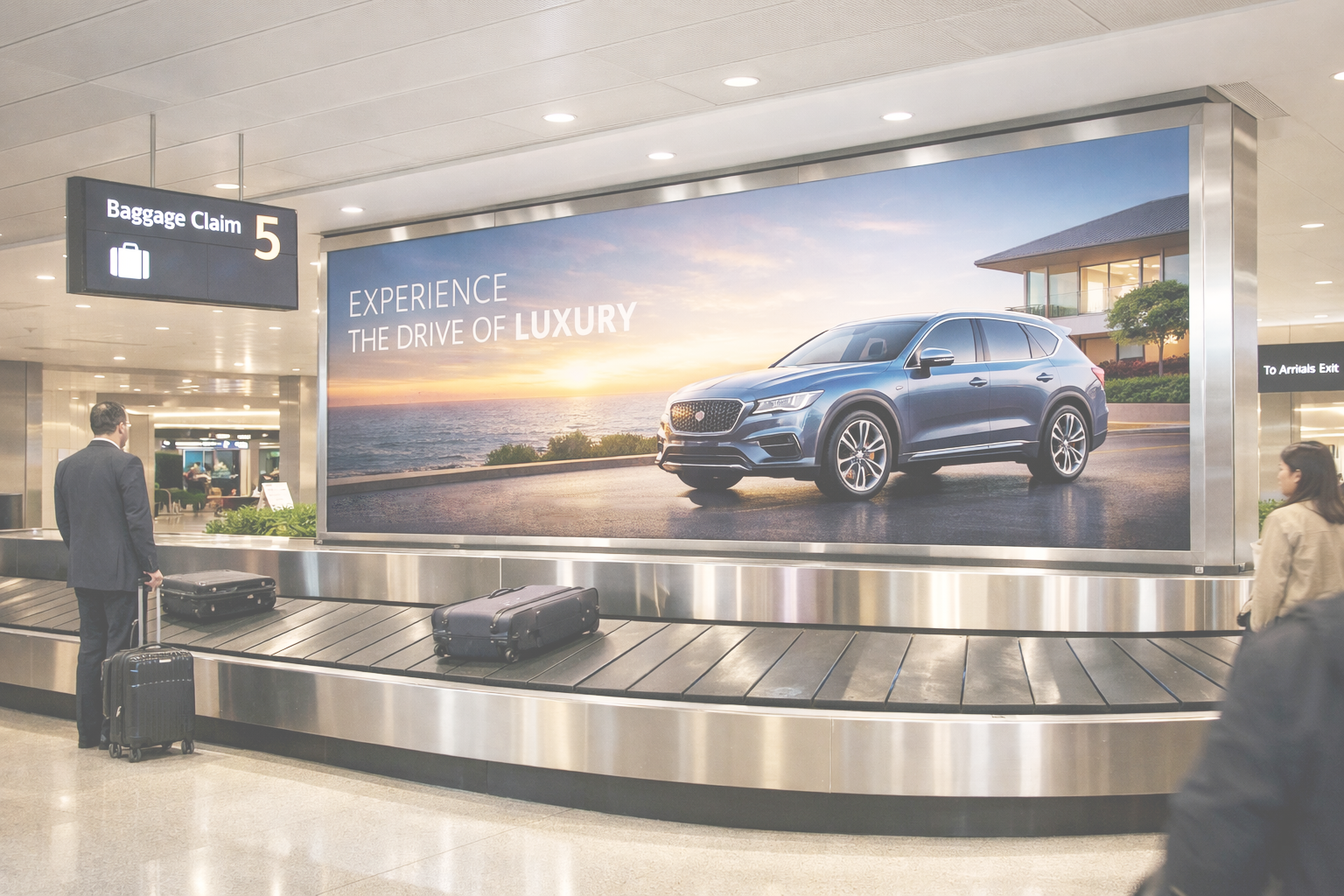
It’s Not Just Where You Advertise - It’s How Fast You Execute
We combine local insight with fast rollout to deliver results for you, now.
Talk to an ExpertAudience and Cultural Intelligence
Top 2 Languages:
- English: The language of the visitor, estate owner, university and aerospace audience. This is an educated, design-literate and brand-aware readership that responds to considered, aesthetically confident creative and rejects hard-sell approaches, which makes it well suited to premium lifestyle and financial messaging.
- Spanish: Spoken across a very large share of the agricultural workforce and established Mexican-American communities in Santa Maria, Guadalupe, Oceano and Nipomo, spanning field labour through business ownership. Essential for remittance, telecom, consumer finance, healthcare and family insurance advertisers.
Major Traveller Nationalities:
The passenger base is predominantly American, drawn from California, the Pacific Northwest, Arizona, Colorado and Texas. There is a meaningful international visitor layer arriving via Los Angeles and San Francisco, particularly from Canada, the United Kingdom, Germany, Australia and China, drawn by Highway 1, Hearst Castle and the wine regions. The university adds international students and faculty from China, India and South Korea. For creative this means English-led premium messaging aimed at a domestic affluent visitor, Spanish localisation for consumer finance and telecom, and recognition that international visitors here arrive already deep into a high-spend itinerary rather than at the start of one.
Religion, Advertiser Intelligence:
- Christianity, Catholic (approximately 30 to 35 percent of the catchment): Rooted in the region's Spanish mission heritage and strongly reinforced by the Mexican-American population. Christmas, Easter, Lent, confirmation and quinceañera milestones drive family gathering, apparel, gifting, photography and travel spending. Relevant to consumer finance, remittance, retail and family insurance advertisers.
- Christianity, Protestant and Evangelical (approximately 20 to 25 percent): Strong across the inland and North County communities. Christmas and Easter drive family travel and gifting, and community trust networks heavily influence purchase decisions, favouring credibility-led messaging. Relevant to insurance, healthcare and agricultural finance.
- Religiously unaffiliated (approximately 30 to 35 percent, unusually high for the United States): A defining characteristic of coastal California and a genuine advertiser signal. This group indexes strongly on wellness, sustainability, experience over possession, and ethical brand credentials, and responds to environmental and provenance claims that would carry less weight elsewhere.
- Judaism, Buddhism and Islam (each small but present): Create niche but reliable demand around fixed religious calendars for premium travel, wellness, specialist food retail and money transfer categories.
Behavioral Insight:
This audience buys on aesthetics, provenance and values as much as on price or specification. Wealth on the Central Coast is deliberately understated, expressed through land, wine, wellness and experience rather than through overt luxury branding, and overt status signalling actively underperforms here. Sustainability and origin claims carry real weight given the region's agricultural identity and high proportion of environmentally motivated consumers. Visitors are in an unusually receptive state of mind, having chosen a slower, considered trip, which means the airport supports longer-form and more atmospheric creative than a hub environment allows. Purchase decisions for major items are researched and advisor-mediated, so the terminal functions as a credibility and desire-building touchpoint rather than a conversion channel.
Outbound Wealth and Investment Intelligence
The outbound passenger at SBP is commercially distinctive because the dominant capital flow at this airport is inbound rather than outbound. This is a wealth destination absorbing money from wealthier metropolitan markets, which changes the advertiser opportunity: the highest-value proposition is often selling the region itself, or selling to people who have just chosen it. Outbound capital deployment is real but secondary and concentrated in lifestyle assets rather than yield-driven investment.
Outbound Real Estate Investment:
The dominant behaviour is intra-California and Western United States acquisition: vineyard and ranch estates in Paso Robles and the Santa Ynez Valley, coastal second homes along the Central Coast, and tax-motivated purchase in Nevada, Arizona, Idaho and Texas. Cross-border activity concentrates in Mexico, particularly Baja California, Los Cabos and Puerto Vallarta, alongside Costa Rica for retirement buyers. Internationally, this audience is drawn to wine-region lifestyle property in Portugal, Spain, Italy and France, and to New Zealand, because those markets mirror what they already value. International developers should lead with lifestyle, climate, provenance and wine-country parallels rather than yield tables. The Mexican-American community maintains substantial family-linked property and construction activity in Mexico.
Outbound Education Investment:
Higher education movement is primarily domestic, into the University of California and California State systems, Cal Poly itself, and out-of-state private institutions, with engineering, agricultural science, architecture, business and environmental studies dominating. International undergraduate and postgraduate study in the United Kingdom, Canada, Australia and Ireland occurs among professional and estate-owning families, and viticulture and oenology programmes in France, Italy, Australia and New Zealand attract genuine specialist interest from wine industry families. International universities, wine and hospitality schools and education advisory firms have a real if selective audience, strongest in the January and August to September windows.
Outbound Wealth Migration and Residency:
Golden Visa and citizenship-by-investment demand is modest but rising, concentrated on Portugal, Spain and Italy among estate owners and technology executives seeking European optionality and lifestyle alignment, with limited Caribbean interest. Far more common is domestic tax domicile migration to Nevada, Texas and Florida among retiring business owners, and dual-residency arrangements between the Central Coast and lower-tax states. Immigration services demand also exists around the agricultural workforce and the university's international population, covering work authorisation, residency and cross-border tax advisory.
Strategic Implication for Advertisers:
The commercial logic at SBP runs in two directions and both are addressable. Regional luxury hospitality, wine estates, private schools, wealth managers and property developers should be visible to arriving visitors who are actively falling in love with the region. International lifestyle property, wine-region developers, European residency advisors and specialist education providers should be visible to residents whose values already predispose them toward those markets. Masscom Global activates both, pairing SBP with the California hub airports and with destination markets in Portugal, Spain, Italy and Mexico.
Airport Infrastructure and Premium Indicators
Terminals:
- A single modern terminal, purpose-built and opened in the last decade, replacing a much smaller facility. Contemporary architecture with strong natural light and runway and mountain views, giving advertisers a high-quality display environment unusual for an airport of this size.
- Substantial general aviation activity, with 72,268 aircraft operations in 2025 against 811,905 passengers, indicating that private, corporate, flight training and firefighting aviation account for a large share of movements. Corporate and private aircraft bring vineyard owners, estate buyers and executives directly into the field.
Premium Indicators:
- No traditional airline lounge, which is standard at this tier. Premium positioning derives from passenger composition and terminal quality rather than from lounge provision.
- Fixed base operator and general aviation services support business jet and charter traffic, including private arrivals connected to vineyard ownership and Santa Barbara and Montecito adjacency. A meaningful ultra-high-net-worth signal.
- On-site restaurant and marketplace concessions with runway and mountain outlook, plus a resident state firefighting air operation. Luxury hotel supply sits in the surrounding wine country and coastal corridor rather than on the campus, including internationally recognised resort and spa properties.
- The airport's setting and design quality, combined with the region's sustainability-oriented identity, support brand association for advertisers with environmental, wellness or provenance positioning.
Forward-Looking Signal:
The trajectory here is unusually clear. Passenger volume reached an all-time record of 811,905 in 2025, up nearly 23 percent in two years and roughly 50 percent above the previous 2019 record, driven by new and restored routes including Portland, San Diego and a returning seasonal Las Vegas service from April 2026. Three major carriers now serve nine markets, giving the county its strongest connectivity in its history. Commercial space launch activity on the coast continues to accelerate, and inbound wealth migration shows no sign of slowing. Advertising rates have not yet caught up with either the volume growth or the upmarket shift in audience composition. Masscom Global advises clients to secure premium position now, before the market reprices what this environment has become.
Airline and Route Intelligence
Top Airlines:
United Airlines is the largest carrier by departures, followed by Alaska Airlines and American Airlines. Regional jet and narrowbody equipment including Embraer and Airbus A320-family aircraft operate the majority of services.
Key International Routes:
None. There is no scheduled international passenger service. International travel from this catchment connects through Dallas-Fort Worth, Denver, Los Angeles, San Francisco, Phoenix and Seattle.
Domestic Connectivity:
Nine markets served with daily nonstop flights to Los Angeles, San Francisco, San Diego, Phoenix, Seattle, Portland, Denver and Dallas-Fort Worth, plus seasonal Las Vegas service. Phoenix is the highest-frequency route at roughly 23 weekly departures. The Dallas-Fort Worth service at 1,356 miles is the longest nonstop and the airport's principal eastbound and international connecting gateway.
Wealth Corridor Signal:
The route network reveals exactly who this airport serves. Los Angeles and San Francisco are the wealth migration and weekend visitor corridors, carrying the metropolitan money that is reshaping Central Coast property values. Seattle, Portland and Denver are affluent leisure and relocation corridors from the wider West. Phoenix and Dallas-Fort Worth are connecting gateways that make the region accessible to national and international premium visitors. Las Vegas is pure discretionary leisure. There is minimal low-value traffic in the mix. Advertisers should build separately for arriving premium visitors and departing affluent residents, and Masscom Global structures placement so each message reaches the right directional flow.
Media Environment at the Airport
- A single modern terminal with contemporary architecture and strong sightlines delivers display quality well above what the airport's passenger count would suggest, with advertising clutter close to negligible. A brand can achieve dominant share of attention here for a fraction of Los Angeles or San Francisco cost.
- Dwell time is driven by the recommended two hour arrival window, concentrated early morning departure peaks, single-security processing and a restaurant and marketplace programme that passengers actively use. Visitors on relaxed leisure itineraries are unhurried and attentive, which supports atmospheric, longer-form creative that hub environments cannot carry.
- Premium environment signalling is strong and improving. A recently built terminal, a scenic setting, a wine-country visitor profile and the region's sustainability identity combine to make this a genuinely aspirational environment for brand association.
- Masscom Global provides inventory access, placement precision and rapid execution at SBP, and integrates it into a West Coast corridor plan spanning Los Angeles, San Francisco, San Diego, Seattle, Portland, Phoenix, Denver and Dallas-Fort Worth so brands reach the same affluent visitor at both ends of the journey.
Strategic Advertising Fit
Best Fit:
- Luxury hospitality, resorts, spas and wellness: Reaches arriving visitors at the exact moment they are planning and extending a premium regional itinerary, with high propensity to book on impulse.
- Regional and international real estate, vineyard and estate brokerage: Speaks to visitors actively evaluating second-home and vineyard purchase and to residents holding substantial property equity.
- Wealth management, private banking and land and estate advisory: Matches vineyard owners, relocated technology and finance wealth, retirement-stage capital and a university donor base.
- Premium and electric automotive: Aligns with high household income, a sustainability-motivated consumer base and a scenic driving corridor that makes vehicles central to the visitor experience.
- Wine, spirits and premium food and beverage brands: Reaches the most contextually receptive audience possible for the category, including trade buyers, collectors and club members.
- Luxury travel, cruise, rail and experiential tour operators: Fits an affluent, experience-motivated audience with high repeat travel behaviour.
- Higher education, viticulture and hospitality programmes: Matches a university-anchored catchment with strong specialist industry links and high family education spend.
- Healthcare, longevity and wellness services: Relevant to an ageing, affluent, insured population and to a wellness-oriented visitor profile.
Brand Alignment at a Glance:
| Category | Fit |
|---|---|
| Luxury hospitality and wellness | Exceptional |
| Real estate and vineyard brokerage | Exceptional |
| Wealth management and estate advisory | Strong |
| Premium and electric automotive | Strong |
| Wine, spirits and premium food and beverage | Strong |
| Luxury travel and experiential tourism | Moderate |
| Education and specialist programmes | Moderate |
| Duty free and mass-market FMCG | Poor fit |
Who Should Not Advertise Here:
- Duty free and travel retail: No scheduled international service and no international departure environment, which removes the transactional basis these campaigns require.
- Overt status luxury and trophy asset positioning: This audience holds real wealth but expresses it through land, wine and understatement. Loud luxury and trophy property messaging reads as misjudged and actively underperforms here.
- Mass-market FMCG and discount-led consumer brands: Passenger volume cannot support reach-driven buying, and the audience profile misaligns with price-led positioning.
- Inbound foreign tourism boards and long-haul destination marketing: Visitors arrive mid-itinerary having already committed to this region, so competing destination messaging reaches them at the wrong moment.
- Youth-oriented nightlife and entertainment brands: Beyond the student population, which does not fly frequently, the age and income profile skews established professional, estate-owning and retirement stage.
Event and Seasonality Analysis
- Event Strength: High
- Seasonality Strength: High
- Traffic Pattern: Seasonal with dual peaks, a long summer and autumn visitor season plus a spring wine and university cluster
Strategic Implication:
Budget should be weighted heavily toward April through October, which captures the wine calendar, the summer coastal season, the July fair and the October harvest window. The May wine festival and the October harvest weekend are the two highest-intent short buys of the year for luxury hospitality, real estate and wealth advertisers, because visitors in those windows are actively buying allocations, joining clubs and evaluating property. April, June and September carry the university family and alumni surges. Late November and December deliver the sharpest family compression. Given growth of nearly 23 percent in two years, advertisers should also secure longer terms now rather than buying season by season. Masscom Global structures campaigns around this rhythm and locks position ahead of the volume curve.

Poor Placement and Delays Affect Airport Campaigns
We help you move faster, access better inventory, and get it right now.
Talk to an ExpertFinal Strategic Verdict
San Luis Obispo County Regional Airport is one of the most undervalued premium environments in American airport advertising. Passenger volume hit an all-time record of 811,905 in 2025, up nearly 23 percent in two years and roughly 50 percent above its pre-pandemic peak, and every one of those passengers moves through a single modern terminal with almost no competing advertising. The audience is exceptional: affluent visitors arriving for a wine region of more than 200 wineries and the Hearst Castle and Highway 1 corridor, having already committed to premium spend and a meaningful share actively evaluating vineyard and second-home purchase, alongside resident vineyard owners, relocated Bay Area and Los Angeles wealth, a nationally ranked university's donor base and a well-paid aerospace and nuclear technical workforce. Luxury hospitality, estate and real estate brokerage, wealth management, premium automotive and wine and lifestyle brands will find few environments in the United States where receptivity and cost sit in a better relationship. Rates have not caught up with the growth or the upmarket shift, which makes this a closing window. Masscom Global has the access, the Central Coast intelligence and the West Coast corridor reach to place brands here now and at every hub this audience travels through.
About Masscom Global
Masscom Global is a premium international airport advertising and media buying agency operating across 140 countries. With deep expertise in airport OOH, premium publications, and high-net-worth audience targeting, Masscom helps brands reach the world's most valuable travellers at the moments that matter most. For advertising packages, media rates, and campaign planning at San Luis Obispo County Regional Airport and airports across the globe, contact Masscom Global today.
Frequently Asked Questions
How much does airport advertising cost at San Luis Obispo County Regional Airport?
Cost at SBP varies by format, position within the terminal, duration and seasonal demand, and remains well below comparable premium-audience environments in California because rates still reflect a mid-size regional airport rather than the upmarket audience the airport now carries. April through October commands peak demand, particularly around the May wine festival and the October harvest weekend. Longer terms secure position ahead of continued volume growth. Contact Masscom Global for current rates and availability.
Who are the passengers at San Luis Obispo County Regional Airport?
A mix of affluent inbound leisure visitors and high-income residents. Visitors come for Paso Robles and Edna Valley wine country, the coastal resort strip, Hearst Castle and the Highway 1 corridor, arriving mainly from Los Angeles, San Francisco, Seattle, Portland, Denver, Phoenix and Dallas. Residents include vineyard and ranch owners, relocated technology and finance wealth, university faculty and families, aerospace and space launch professionals, nuclear utility staff and agribusiness management.
Is San Luis Obispo County Regional Airport good for luxury brand advertising?
Yes, for the right kind of luxury. Hospitality, wellness, real estate, wealth management, premium automotive and wine and lifestyle brands perform strongly because the audience genuinely has the means and is in a receptive, high-consideration mindset. Overt status luxury and trophy asset positioning performs poorly, because Central Coast wealth is deliberately understated and expressed through land, wine and experience. Duty free is not viable given the absence of international service.
What is the best airport in California to reach affluent wine country and coastal audiences?
For volume, Los Angeles and San Francisco lead but at high cost and with heavily diluted audiences. For concentration, San Luis Obispo is arguably the most efficient premium leisure gateway in the state, because it is the sole air access point to a major wine region and coastal wealth market with negligible advertising competition. Santa Barbara, Monterey and Sonoma County offer complementary reach. The strongest approach pairs SBP with Los Angeles and San Francisco hub placement, which is how Masscom Global builds California premium plans.
What is the best time to advertise at San Luis Obispo County Regional Airport?
April through October delivers the bulk of the value. The May Paso Robles wine festival and the October harvest weekend are the two highest-intent windows, when visitors are buying wine allocations, joining clubs and evaluating property. July brings the county fair and peak coastal season. April, June and September carry university graduation, open house and move-in surges. Late November and December deliver the sharpest family travel compression.
Can international real estate developers advertise at San Luis Obispo County Regional Airport?
Yes, with the right proposition. This audience is drawn to wine-region and lifestyle property in Portugal, Spain, Italy, France and New Zealand, and to Mexico, particularly Baja California, Los Cabos and Puerto Vallarta, plus Costa Rica for retirement buyers. Creative should lead with climate, provenance, lifestyle and wine-country parallels rather than yield tables, because this audience buys on values and aesthetics. Regional and domestic estate and vineyard brokerage performs even more strongly, targeting arriving visitors actively considering purchase. Masscom Global can activate origin and destination simultaneously.
Which brands should not advertise at San Luis Obispo County Regional Airport?
Duty free and travel retail, given no scheduled international service. Overt status luxury and trophy property, which misreads an understated audience. Mass-market FMCG and discount-led consumer brands, because volume cannot support reach-driven buying. Foreign tourism boards and long-haul destination marketing, because visitors arrive already committed to this region. Youth-focused nightlife and entertainment brands, given the dominant age and income profile.
How does Masscom Global help brands advertise at San Luis Obispo County Regional Airport?
Masscom Global delivers catchment intelligence specific to the wine country, coastal wealth and university structure of the Central Coast, inventory access and placement precision inside a modern single-terminal environment with almost no advertising competition, campaign timing built around the wine and university calendars rather than the general travel calendar, and integration into a West Coast corridor plan spanning Los Angeles, San Francisco, San Diego, Seattle, Portland, Phoenix, Denver and Dallas-Fort Worth. Book a fifteen minute planning call to review availability and rates before growth resets pricing.