

Airport at a Glance
| Field | Detail |
|---|---|
| Airport | San Antonio International Airport |
| IATA Code | SAT |
| Country | United States of America |
| City | San Antonio, Texas |
| Annual Passengers | 10.7 million (2025). Record over 11 million in 2024, against a 2019 high of 10.36 million |
| Primary Audience | Mexican high-net-worth cross-border families, military and cybersecurity leadership, energy and insurance corporate executives |
| Peak Advertising Season | February to April, June to August, November to December |
| Audience Tier | Tier 1 |
| Best Fit Categories | Cross-border banking and wealth management, international real estate and residency advisory, luxury retail and automotive, healthcare and education |
San Antonio carried 10.7 million passengers in 2025 across 50 nonstop destinations in the United States, Mexico and Canada, following a record year above 11 million in 2024. What makes this airport commercially distinctive is not the volume. It is the composition. San Antonio is the preferred United States city for affluent Mexican families from Monterrey, Mexico City, Saltillo and Torreón, who own property here, educate children in local private schools, seek medical care in the city's medical centre and shop in its luxury retail districts. Nonstop service to Mexican cities including Morelia, San Luis Potosí and Torreón moves that audience through this terminal continuously.
The airport matters for three further reasons that rarely coexist. San Antonio is the largest military city in the United States, hosting the Department of Defense's largest joint base and one of the country's two principal concentrations of military cyber operations, which produces senior officers, security-cleared engineers and defence contractors. It is a Fortune 500 headquarters city in energy and insurance, and the operational capital of a major shale basin. And it is one of the most visited tourism destinations in America, drawing tens of millions to the River Walk and the Alamo annually. A 2.5 billion dollar programme is now rebuilding the airport around all of it. Masscom Global positions SAT as a cross-border wealth and defence corridor buy.
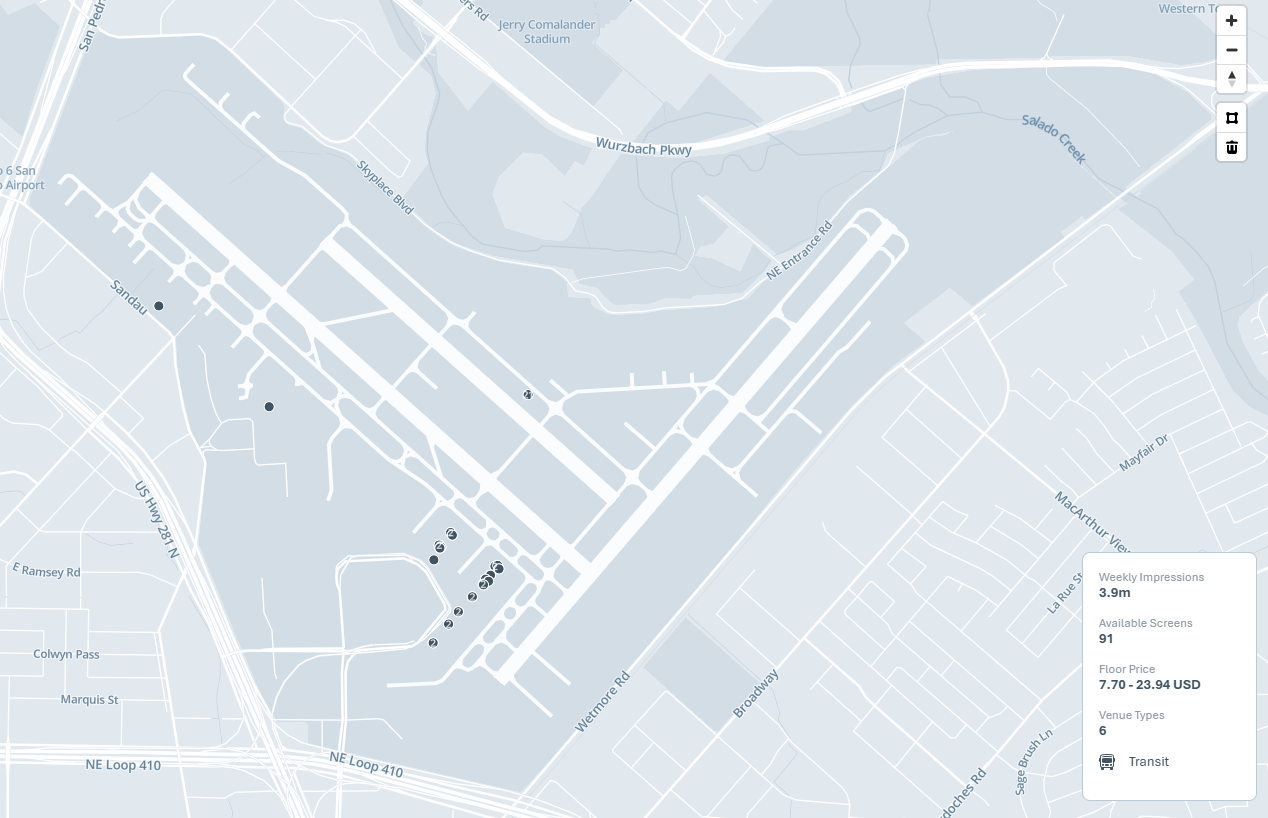
Advertising Value Snapshot
- Passenger scale: 10.7 million passengers in 2025, following a record above 11 million in 2024 and against a 2019 peak of 10.36 million. Nonstop destinations grew from 33 in 2023 to 50, served by 14 airlines across the United States, Mexico and Canada.
- Traveller type: Affluent Mexican cross-border families and business owners, military and cybersecurity leadership, energy and insurance corporate executives, medical tourism patients, and a very large leisure visitor base.
- Airport classification: Tier 1. Among the top 50 busiest airports in the United States, serving one of the fastest growing metropolitan areas in the country.
- Commercial positioning: Known as the gateway to Military City USA, the Alamo and River Walk, and as the northern anchor of the Monterrey to San Antonio wealth corridor.
- Wealth corridor signal: SAT sits directly on the Interstate 35 and Monterrey corridor, the most commercially significant cross-border wealth route between Mexico and the United States, and on the Eagle Ford shale energy corridor.
- Advertising opportunity: The 2.5 billion dollar ELEVATE/SAT programme delivers an 18-gate, 850,000 square foot Terminal C in 2028 with a 37,000 square foot federal inspection station and widebody capability, alongside a new Terminal A ground load facility already open and a 100 million dollar Terminal B renovation planned. Masscom Global secures position across the current terminals now, at pre-completion rates, and pairs SAT with Monterrey, Mexico City, Guadalajara, Dallas and Houston so brands cover both sides of the corridor.
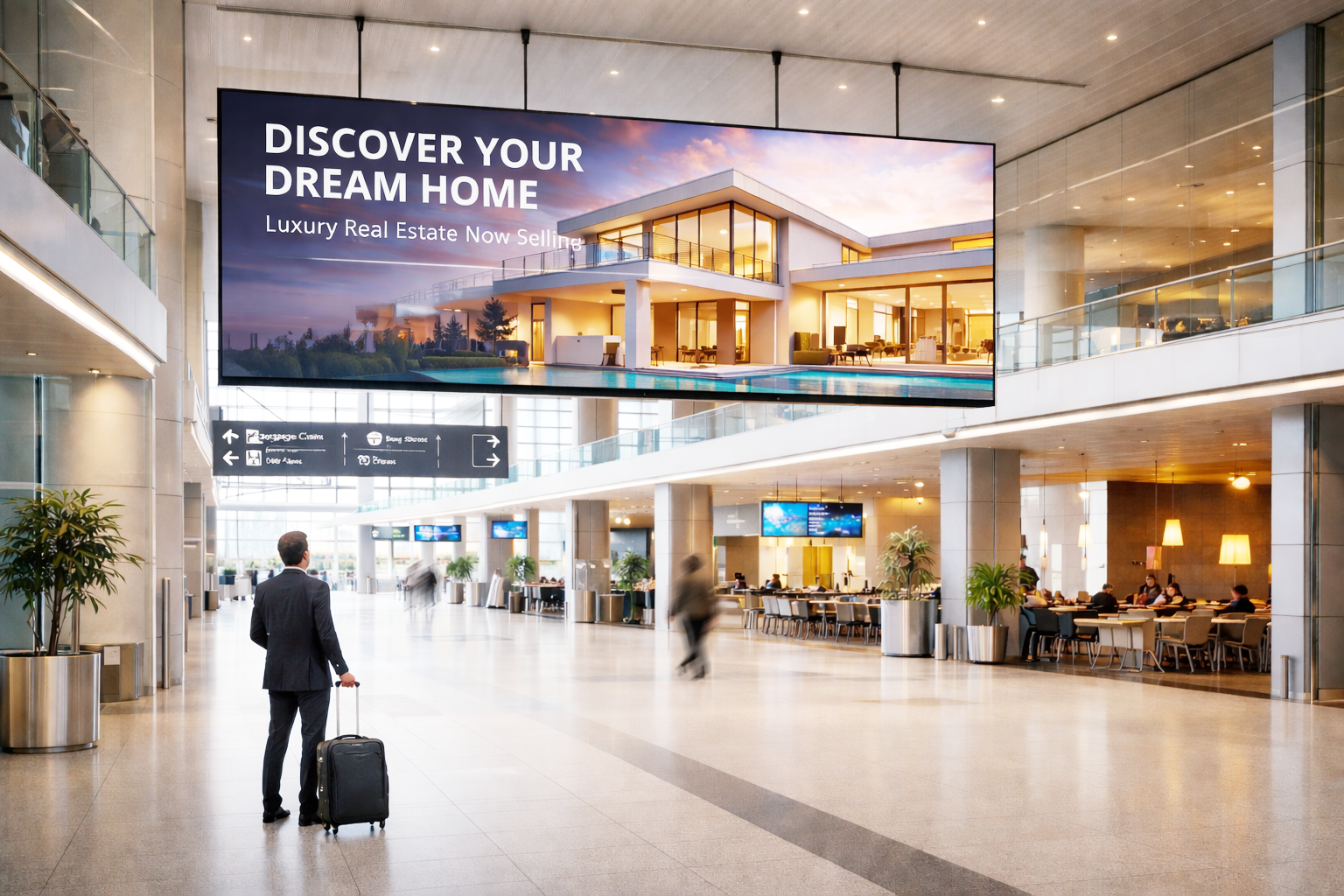
Airport Advertising is Complex to Get Right
We help you execute faster, with proven results and local insight most planners lack starting now.
Talk to an ExpertCatchment Area and Economic Drivers
Top 10 Cities within 150 km, Marketer Intelligence:
- San Antonio, Texas: A Fortune 500 headquarters city in insurance and energy, the largest military concentration in the United States, and home to a major medical centre and research cluster. Produces corporate executives, senior officers, physicians and, critically, a large resident population of affluent Mexican families with substantial cross-border assets.
- Austin, Texas: At the northern edge of the catchment, contributing technology and venture wealth, state government and a major research university. Overlapping catchment means SAT competes for and captures a share of this high-income audience.
- Boerne and the Hill Country, Texas: Affluent estate and ranch country immediately northwest of the city. High household net worth, land ownership, private education and luxury vehicle spending concentrated in relatively few hands.
- New Braunfels, Texas: One of the fastest growing cities in the United States, absorbing relocating professionals and retirees from California and the coasts. Produces new-money affluent households with high consumer spending and property purchase activity.
- Fredericksburg, Texas: The centre of Texas wine country and a premium weekend destination. Produces estate and winery owners plus a continuous flow of affluent visitors relevant to luxury hospitality, real estate and lifestyle advertisers.
- Kerrville, Texas: Established ranch and retirement wealth with a significant general aviation community. Relevant to wealth management, land brokerage, healthcare and private aviation advertisers.
- Schertz, Cibolo and Universal City, Texas: Anchored by a major air force installation and pilot training centre. Produces military families, officers and defence contractors with stable incomes and predictable travel patterns.
- San Marcos, Texas: University city and major outlet retail destination on the corridor between San Antonio and Austin. Produces student families and a substantial cross-border shopping visitor flow from Mexico.
- Seguin, Texas: Manufacturing and agricultural centre with growing industrial investment. Produces plant management and procurement audiences relevant to industrial supply and commercial services.
- Floresville and Pleasanton, Texas: The northern edge of the Eagle Ford shale. Produces energy operators, mineral rights holders and service company management with substantial royalty and contracting income.
NRI and Diaspora Intelligence:
San Antonio is one of the largest majority-Hispanic cities in the United States, with a deeply rooted multi-generational Mexican-American population and, layered on top, one of the most commercially valuable inbound wealth communities in North America. Affluent families from Monterrey, Saltillo, Mexico City, Torreón and San Luis Potosí have made San Antonio their preferred United States base for decades, buying property in the northern suburbs, enrolling children in local private schools and universities, using the city's medical centre for elective and specialist care, and shopping its luxury retail centres. This is not a remittance-driven relationship. It is a genuine high-net-worth cross-border corridor involving property, education, healthcare, banking and investor visa activity. Alongside it sits a substantial working-class remittance economy and a growing Indian, Chinese and Filipino professional population in the northern suburbs and medical centre.
Economic Importance:
Five engines drive this catchment. Military and cyber operations create the country's largest concentration of defence personnel outside Washington, alongside a major military cybersecurity command. Insurance and financial services, anchored by one of the largest member-owned financial institutions in the United States, create an executive and actuarial audience. Energy, including a Fortune 500 refiner headquartered in the city and the Eagle Ford shale operations it supports, creates corporate and royalty wealth. Healthcare, biomedical research and medical tourism create physician, researcher and patient flows including significant cross-border volume. Tourism, at tens of millions of annual visitors to the River Walk and Alamo, creates continuous high-volume consumer traffic.
Business and Industrial Ecosystem
- Military, defence and cybersecurity: Produces senior officers, security-cleared engineers, cyber operators and defence contractors, with the country's largest joint base and a major military cyber command in the city. Relevant to cybersecurity, technology, financial services, insurance, relocation and higher education advertisers.
- Insurance, banking and financial services: Produces executives, actuaries and advisors at a scale unusual for a city this size, including a major member-owned financial institution serving military families nationwide. Relevant to wealth management, enterprise technology and premium business services advertisers.
- Energy, refining and Eagle Ford shale: Produces corporate leadership, operators, mineral rights holders and service company management with substantial royalty and contracting income. Relevant to industrial supply, oilfield services, wealth management and premium automotive advertisers.
- Healthcare, biomedical research and medical tourism: Produces physicians, researchers, hospital leadership and a significant cross-border patient population from northern Mexico. Relevant to medical technology, pharmaceutical, private healthcare, insurance and hospitality advertisers.
Passenger Intent, Business Segment:
Business travellers here divide into distinct streams. Military and defence personnel travel on federal orders and contracting business, frequently to Washington, and their volume is stable and predictable regardless of economic cycles. Corporate executives travel to national operations through Dallas, Houston, Atlanta, Chicago and Denver. Energy sector personnel move between the city and shale operations across South Texas. Mexican business owners travel between Monterrey, Mexico City and San Antonio managing cross-border commercial interests. Cross-border banking, wealth management, cybersecurity, enterprise technology, industrial services and premium automotive intercept them most effectively.
Strategic Insight:
The business audience at SAT is valuable because two of its most significant segments are structurally immune to normal advertising competition. Military and defence traffic is federally driven and constant, and cross-border Mexican wealth is relationship-driven and largely invisible to United States media planning, which means most competitors are not addressing it at all. A single terminal placement reaches the American corporate executive, the senior officer and the Mexican family principal simultaneously. Add an energy royalty audience and a physician population, and this becomes one of the most diversified high-value business environments available at a Tier 1 airport outside the largest metropolitan markets.
Tourism and Premium Travel Drivers
- The River Walk and the Alamo: Among the most visited attractions in the United States, drawing tens of millions of visitors annually. Creates enormous consumer volume with strong hospitality, retail, dining and card product relevance.
- Luxury retail and the northern shopping districts: A primary destination for affluent Mexican shoppers who travel specifically to buy, at levels that make San Antonio one of the most important cross-border retail markets in North America. Exceptional relevance for luxury retail, fashion, watches and beauty advertisers.
- Texas Hill Country wine, resorts and Fredericksburg: A premium weekend and destination-wedding market drawing affluent Texas and out-of-state visitors, with strong luxury hospitality, spa and real estate alignment.
- Theme parks, caverns and family attractions: Sustain very high family visitor volume with strong consumer finance, telecom, retail and entertainment relevance.
Passenger Intent, Tourism Segment:
Visitors arrive having already committed to substantial spend, and the composition is unusually broad. Domestic leisure families come for the River Walk, Alamo and theme parks, receptive to consumer finance, telecom, retail and entertainment. Mexican visitors arrive for retail, healthcare, education and property purposes with far higher per-capita spending power, and are highly receptive to luxury retail, banking, real estate, education and private healthcare messaging. Premium domestic visitors come for Hill Country wine, golf and resort experiences. Outbound residents fly to Mexico, Florida, Nevada, Colorado and the Caribbean. Advertisers should build separately for the mass domestic visitor and the premium cross-border visitor, because their spending capacity differs by an order of magnitude.
Travel Patterns and Seasonality
Peak seasons:
- February to April: The strongest and most commercially valuable period, combining the February stock show and rodeo, the April city-wide festival and a major professional golf tournament, plus spring break and Semana Santa cross-border travel.
- June to August: Peak summer family leisure and theme park season, with heavy cross-border shopping and medical travel during Mexican school holidays.
- November to December: Holiday compression around Thanksgiving, the River Walk illumination season, Day of the Dead activity and a December bowl game, with strong Mexican Christmas and Guadalupe-period travel.
- September to October: Secondary business peak with conference activity, military rotation cycles and Hill Country wine harvest tourism.
Event-Driven Movement:
- San Antonio Stock Show and Rodeo (February): A multi-week event drawing millions of attendees, concentrating ranch owners, agricultural buyers and family visitors. Strong for agricultural finance, equipment, premium trucks and consumer brands.
- Fiesta San Antonio (April): An eleven-day city-wide festival with attendance in the millions, one of the largest civic celebrations in the United States. The highest-volume brand association window of the year.
- Valero Texas Open (April): A professional golf tournament with corporate hospitality, sponsor delegations and affluent spectators. Prime timing for luxury, automotive, energy and financial services advertisers.
- Semana Santa and Mexican school holidays (March to April, July, December): The defining cross-border travel windows, when affluent Mexican families concentrate shopping, medical and property activity in San Antonio. The single highest-intent period for luxury retail, banking, real estate and education advertisers.
- Bowl game, marathon and River Walk holiday season (December): Compressed visitor volume with strong hospitality, retail and sportswear relevance.
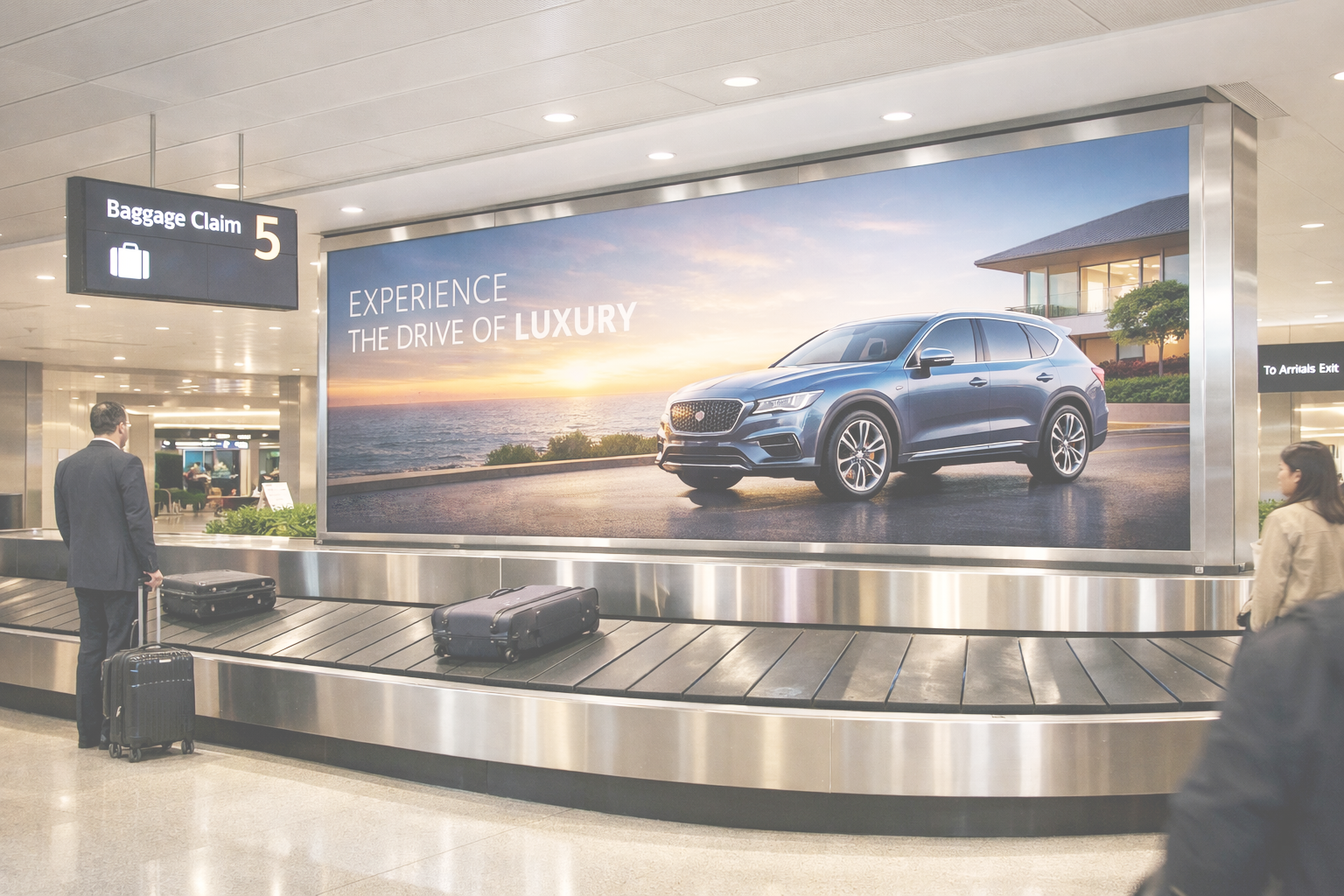
It’s Not Just Where You Advertise - It’s How Fast You Execute
We combine local insight with fast rollout to deliver results for you, now.
Talk to an ExpertAudience and Cultural Intelligence
Top 2 Languages:
- Spanish: This is one of the few major United States airports where Spanish should be treated as a primary rather than secondary language. It is the language of the resident majority-Hispanic population, of the affluent Monterrey and Mexico City cross-border audience, and of the Mexican nonstop route network. Premium Spanish-language creative is essential, and it must be written for a wealthy Mexican audience rather than translated from generic American copy, because the distinction is immediately obvious to the reader.
- English: The language of the military, corporate, energy and medical audience, and of the domestic visitor majority. This is a credential-conscious readership, particularly among the officer and physician populations, that responds to institutional legitimacy, tenure and specificity.
Major Traveller Nationalities:
The passenger base is predominantly American but with the most commercially significant Mexican component of any major airport in the United States outside the border cities, sustained by nonstop service to multiple Mexican destinations. Canadian traffic resumed with new Toronto service, and there is a meaningful visitor layer from the United Kingdom, Germany and Latin America arriving via Dallas and Houston. The military population brings a nationally sourced, geographically mobile American audience with unusual demographic diversity. For creative this means genuinely bilingual campaigns as standard, premium Spanish messaging aimed at Mexican high-net-worth families, and English messaging that acknowledges military and medical credential culture.
Religion, Advertiser Intelligence:
- Christianity, Catholic (approximately 40 to 45 percent of the catchment, unusually high for the United States): Deeply rooted in the city's Spanish colonial and Mexican heritage, anchored by a historic cathedral and major archdiocese. Christmas, Easter, Lent, Our Lady of Guadalupe in December, Day of the Dead in November, confirmations and quinceañeras drive very substantial family gathering, apparel, jewellery, photography, catering and travel spending. Quinceañera and wedding spending in this catchment is exceptional and materially underserved by advertisers.
- Christianity, Protestant and Evangelical (approximately 30 to 35 percent): Strong across the Hill Country, suburban and military communities. Christmas and Easter drive family travel and gifting, and community and church networks strongly influence purchase trust, favouring credibility-led messaging. Relevant to insurance, healthcare and family financial services.
- Islam (approximately 1 to 2 percent, with an established community in the northern suburbs and medical centre): Ramadan and Eid create concentrated family travel, gifting and remittance activity, with genuine Umrah and Hajj demand. Relevant to money transfer, halal finance, telecom and hospitality advertisers.
- Judaism and Hinduism (each small but present and economically prominent): Fixed religious calendars create reliable family travel windows within professionally established, higher-income communities. Relevant to premium travel, wealth management, private education and gold and jewellery advertisers.
Behavioral Insight:
Two distinct decision cultures operate at this airport and conflating them wastes budget. The affluent Mexican audience is brand-conscious, family-centred and highly responsive to visible quality, prestige and provenance, and its purchase decisions are made collectively across extended families and often involve cross-border tax, currency and residency considerations. Premium presentation and Spanish-language sophistication matter enormously to this group, and understated messaging reads as low quality. The American military, corporate and Hill Country audience is close to the opposite: credential-driven, value-conscious, sceptical of gloss and responsive to tenure, guarantees and clear arithmetic. Brands that run one creative approach across both segments underperform against brands that split them properly. Masscom Global structures placement so each message reaches the flow where it works.
Outbound Wealth and Investment Intelligence
The outbound passenger at SAT is commercially unique in the United States because the dominant wealth flow at this airport runs in both directions across a single border. Mexican capital moves north into San Antonio property, education, healthcare and investor visas, while American capital moves south into Mexican property and business interests. No other Tier 1 United States airport carries this two-way high-net-worth dynamic at comparable intensity, and it is the single most important strategic fact for advertisers here.
Outbound Real Estate Investment:
Southbound, this catchment's affluent audience buys in Mexico, concentrated in San Miguel de Allende, Los Cabos, Puerto Vallarta, the Riviera Maya, Monterrey and Mexico City, alongside family-linked property across the central Mexican states served by the nonstop network. Domestically, the audience buys in the Texas Hill Country, Austin, Colorado and Florida. Northbound, and commercially larger, affluent Mexican families buy residential property in northern San Antonio, Boerne and the Hill Country as a United States base and asset hedge. Internationally, Spain and Portugal attract genuine interest from dual-national and Mexican high-net-worth families seeking European optionality, given language and cultural alignment. Developers on all three sides of that triangle have a real audience here.
Outbound Education Investment:
Education is one of the strongest categories at this airport and it moves in both directions. Mexican families send children to San Antonio private schools, Trinity University, the University of Texas system and Texas A&M, treating United States education as a multi-generational commitment funded years in advance. American families from the catchment send children to Texas public universities, and to the United Kingdom, Canada, Spain and Mexico's leading private universities for international exposure. Military families access substantial federal education benefits, creating a large and reliable audience for universities and certification providers. International universities, boarding schools, business schools and education advisory firms find an unusually receptive, high-intent audience, strongest in the January and July to September windows.
Outbound Wealth Migration and Residency:
The dominant residency story here runs north rather than south, and most advertisers miss it entirely. Mexican high-net-worth families are active users of United States investor and residency pathways, using San Antonio as their landing point for property, schooling and banking. That makes immigration and investor visa advisory, cross-border tax planning, trust structuring and private banking exceptionally strong categories at this airport. Secondary demand exists for Spanish and Portuguese residency programmes among Mexican and dual-national families seeking European access, and for Caribbean citizenship among a smaller group. Domestic tax-motivated relocation into Texas from California and the coasts adds further volume to relocation and financial advisory categories.
Strategic Implication for Advertisers:
International brands should treat SAT as the northern terminal of a two-way wealth corridor rather than as a domestic Texas airport, because that is what it is. Cross-border private banks, Mexican and American developers, investor visa and tax advisory firms, private schools, universities, private hospitals and luxury retailers all have a genuinely underserved audience here, and most of their competitors are not present. Masscom Global activates both ends simultaneously, pairing SAT with Monterrey, Mexico City, Guadalajara and the central Mexican gateways, and with Madrid and Lisbon for the European residency corridor.
Airport Infrastructure and Premium Indicators
Terminals:
- Terminal A and Terminal B operate side by side, connected on both levels before security, which concentrates pre-security passenger flow into shared circulation space and delivers strong effective frequency for advertisers. Terminal B has eight jet-bridge gates serving two network carriers and a single checkpoint.
- A new 55 million dollar ground load facility opened at Terminal A in March 2026, adding three gates and roughly 37,000 square feet with its own federal inspection station supporting both domestic and international flights, plus a new outdoor terrace and overnight aircraft ramp, part-funded by 35 million dollars in federal grants.
Premium Indicators:
- Carrier lounge provision including a network carrier club in Terminal B, alongside a dedicated military services lounge in arrivals, which is itself a clear signal of the airport's defence audience composition and a differentiator no comparable airport offers.
- Substantial general and corporate aviation activity reflecting Fortune 500 headquarters presence, Eagle Ford energy operations, ranch ownership and cross-border business aviation from Mexico. Business aviation from Monterrey and Mexico City is a meaningful ultra-high-net-worth signal.
- Luxury hotel supply sits in downtown along the River Walk, in the northern resort corridor and in the Hill Country rather than on the airport campus, including internationally recognised resort and spa properties serving both corporate and premium leisure demand.
- Sustainability and technology credentials from the improvement programme, including energy-efficient systems, electric ground vehicles, advanced security screening and digital wayfinding.
Forward-Looking Signal:
ELEVATE/SAT is a 2.5 billion dollar, twenty-year capital programme, and its centrepiece is Terminal C: 18 gates, more than 850,000 square feet, capacity for three widebody aircraft simultaneously, a single security checkpoint, 40,000 square feet of concessions and a roughly 37,000 square foot integrated federal inspection station, targeted to open in 2028. Widebody and expanded international arrival capability is the decisive change, because it makes long-haul service viable in a way the current terminals do not. A 100 million dollar Terminal B renovation is planned, Terminal A remodelling begins after Terminal C completes, and Terminal A's new ground load facility is already operating. Nonstop destinations grew from 33 in 2023 to 50, and Canadian service returned in May. Advertising rates currently reflect two ageing terminals, not the facility arriving in 2028. Masscom Global advises clients to secure position now, before the terminal opening resets this market.
Airline and Route Intelligence
Top Airlines:
Fourteen airlines operate at SAT. Southwest Airlines, American Airlines, United Airlines and Delta Air Lines account for the majority of traffic, with Alaska Airlines, Spirit, Frontier, Allegiant, Air Canada and Mexican carriers providing additional domestic, cross-border and leisure capacity.
Key International Routes:
International service covers Mexico and Canada. Mexican destinations include Morelia, San Luis Potosí and Torreón alongside the established network to major Mexican cities, and Air Canada began three-weekly Toronto service on 1 May operating through October, currently the only nonstop Canadian option. A brief European nonstop to Germany operated previously and did not return. The 2028 terminal's widebody capability and expanded federal inspection station are specifically designed to enable long-haul international growth.
Domestic Connectivity:
Fifty nonstop destinations covering every major United States hub including Dallas-Fort Worth, Houston, Atlanta, Chicago, Denver, Charlotte, Phoenix, Los Angeles, Las Vegas, Seattle, New York, Washington and San Juan, plus extensive leisure markets. A hard-won nonstop to Washington reflects the city's defence and federal significance.
Wealth Corridor Signal:
The route network reveals four separable audiences. The Mexican routes are pure cross-border wealth corridors carrying property owners, students, patients and shoppers with exceptional per-capita spending power, and they are the most commercially undervalued flow at this airport. The Washington route is a defence and federal corridor tied to the military and cyber presence. The Dallas, Houston, Atlanta, Chicago and Denver routes are corporate corridors. The Florida, Nevada, Colorado and Caribbean routes are leisure and second-home corridors. Advertisers who treat all four as one audience will underperform. Masscom Global structures placement so each corridor receives the right message.
Media Environment at the Airport
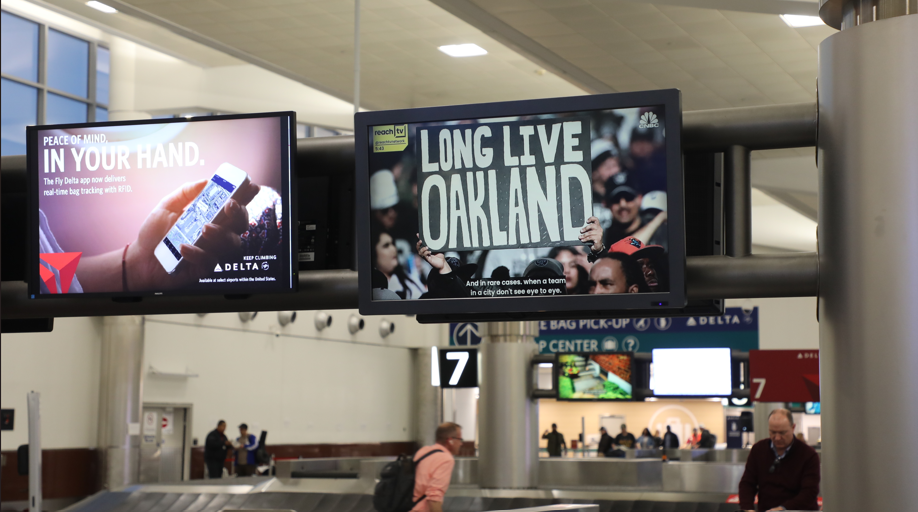
- Two connected terminals with shared pre-security circulation concentrate passenger flow into predictable, high-traffic zones, with clutter substantially lower than at Dallas or Houston. A brand can achieve strong share of attention across a Tier 1 audience at well below Tier 1 metropolitan cost.
- Dwell time is driven by single-checkpoint processing in Terminal B, the new ground load facility where passengers board across the tarmac, international arrival processing through the federal inspection station, and a heavy leisure and family passenger mix that arrives early. Cross-border passengers clearing customs represent extended, captive exposure among the highest-value segment at this airport.
- Premium environment signalling is improving in stages. The new Terminal A facility with its outdoor terrace, modernised finishes and the coming Terminal B renovation are raising presentation quality now, and Terminal C in 2028 will transform it entirely.
- Masscom Global provides inventory access, placement precision and rapid execution at SAT, including targeting the international arrival and Mexican route flows specifically, and integrates it into a corridor plan spanning Monterrey, Mexico City, Guadalajara, Dallas-Fort Worth and Houston so brands intercept the same cross-border families on both sides of the border.
Strategic Advertising Fit
Best Fit:
- Cross-border private banking, wealth management and trust services: Reaches affluent Mexican families managing assets, currency exposure and succession across two jurisdictions, an audience most United States media planning ignores entirely.
- International real estate developers, Mexican, American and European: Speaks to a two-way buyer base purchasing in San Antonio and the Hill Country, across central Mexico and the Mexican resort coasts, and increasingly in Spain and Portugal.
- Investor visa, immigration and cross-border tax advisory: Matches sustained demand from Mexican high-net-worth families using San Antonio as their United States landing point, plus corporate expatriate assignments.
- Luxury retail, fashion, jewellery and watches: Aligns with one of the most important cross-border luxury shopping markets in North America and with very high quinceañera and wedding spending in the resident population.
- Private healthcare, specialist medicine and medical tourism: Reaches cross-border patients travelling specifically for care alongside a large insured domestic population and a major medical research centre.
- Private schools, universities and education advisory: Matches Mexican families funding United States education, military families with federal education benefits and domestic families with strong university pathways.
- Cybersecurity, defence technology and enterprise services: Targets the country's largest military concentration and a major military cyber command with genuine procurement authority.
- Premium and luxury automotive: Fits energy royalty income, Hill Country estate ownership, corporate executive compensation and the brand-conscious cross-border audience.
Brand Alignment at a Glance:
| Category | Fit |
|---|---|
| Cross-border banking and wealth management | Exceptional |
| International real estate and residency advisory | Exceptional |
| Luxury retail, fashion and jewellery | Strong |
| Private healthcare and medical tourism | Strong |
| Education and universities | Strong |
| Cybersecurity and defence technology | Moderate |
| Premium automotive | Moderate |
| Long-haul destination marketing | Poor fit |
Who Should Not Advertise Here:
- Long-haul foreign tourism boards and intercontinental destination marketing: With no current European or Asian nonstop service, intercontinental journeys begin at Dallas or Houston, so origin-airport long-haul destination messaging reaches the audience at the wrong point. This changes if widebody service arrives after 2028.
- Duty free and travel retail at scale: International traffic is limited to Mexico and Canada, so the transactional environment supports cross-border retail messaging rather than conventional duty free campaigns.
- English-only premium campaigns: Not a category so much as an execution failure, and the most common one at this airport. Any premium brand running English-only creative here forfeits the highest-spending segment of the passenger base.
- Discount-led and low-margin volume FMCG: Reach is available but Tier 1 inventory cost misaligns with price-led positioning, and cheaper environments deliver better efficiency.
- Youth-oriented nightlife brands: Despite strong student and military youth populations, the travelling audience skews family, executive and cross-border affluent.
Event and Seasonality Analysis
- Event Strength: High
- Seasonality Strength: High
- Traffic Pattern: Dual-Peak with a very strong February to April cluster and a summer leisure peak, over a stable military and corporate base
Strategic Implication:
February through April is the most valuable window of the year and should carry the heaviest weight, combining the stock show and rodeo, the city-wide April festival, a professional golf tournament, spring break and Semana Santa cross-border travel. Cross-border advertisers should concentrate premium spend into Semana Santa, the July Mexican school holiday and the December Guadalupe and Christmas period, when affluent Mexican families are physically present and actively buying. Summer carries peak family leisure. A continuous baseline layer is justified year-round because military and corporate traffic is structurally stable regardless of season. Advertisers should also take longer terms now, because Terminal C's 2028 opening will reset pricing. Masscom Global structures campaigns around exactly this rhythm.

Poor Placement and Delays Affect Airport Campaigns
We help you move faster, access better inventory, and get it right now.
Talk to an ExpertFinal Strategic Verdict
San Antonio International is the most undervalued cross-border wealth environment in American airport advertising. It carried 10.7 million passengers in 2025 across 50 nonstop destinations after a record year above 11 million, but volume is not the story. This is the preferred United States city of affluent Mexican families from Monterrey, Mexico City and the central states, who own property here, school their children here, seek medical care here and shop here, moving continuously through this terminal on a nonstop Mexican network that most media planners never think to buy. Layered on top is the largest military concentration in the United States with a major cyber command, Fortune 500 headquarters in energy and insurance, an Eagle Ford royalty audience, a world-class medical centre and tens of millions of annual visitors to the River Walk and Alamo. A 2.5 billion dollar programme is delivering an 18-gate, 850,000 square foot terminal in 2028 with widebody capability and an expanded international arrivals hall, and rates today still reflect two ageing terminals. Cross-border private banks, developers, investor visa advisors, private schools, hospitals and luxury retailers should hold position here now, in properly written Spanish as well as English. Masscom Global has the corridor access from San Antonio to Monterrey, Mexico City and Guadalajara, the intelligence to split the audiences correctly, and the execution speed to place brands before 2028 resets this market.
About Masscom Global
Masscom Global is a premium international airport advertising and media buying agency operating across 140 countries. With deep expertise in airport OOH, premium publications, and high-net-worth audience targeting, Masscom helps brands reach the world's most valuable travellers at the moments that matter most. For advertising packages, media rates, and campaign planning at San Antonio International Airport and airports across the globe, contact Masscom Global today.
Frequently Asked Questions
How much does airport advertising cost at San Antonio International Airport?
Cost at SAT varies by format, terminal, position and duration, and currently reflects two ageing terminals rather than the audience quality the airport carries or the facility arriving in 2028. February through April commands the sharpest premium demand, along with the Semana Santa, July and December cross-border windows. Advertisers taking longer terms secure position ahead of the Terminal C opening and the Terminal B renovation, both of which will reset pricing. Cross-border packages pairing SAT with Monterrey and Mexico City improve the economics further. Contact Masscom Global for current rates and availability.
Who are the passengers at San Antonio International Airport?
A distinctly mixed base. Affluent Mexican families from Monterrey, Saltillo, Mexico City, Torreón and San Luis Potosí travelling for property, education, healthcare and retail. Senior military officers, security-cleared engineers and defence contractors connected to the largest joint base in the United States and a major military cyber command. Corporate executives from the city's energy and insurance headquarters, Eagle Ford energy operators and royalty holders, physicians and researchers from a major medical centre, and a very large domestic leisure and family visitor flow.
Is San Antonio International Airport good for luxury brand advertising?
Yes, and the reason is specific. San Antonio is one of the most important cross-border luxury shopping markets in North America, drawing affluent Mexican families who travel here expressly to buy, and the resident population generates exceptional quinceañera and wedding spending. Luxury retail, fashion, jewellery, watches and premium automotive all perform. The critical requirement is properly written premium Spanish creative rather than translated American copy, because the highest-spending segment notices the difference immediately. Conventional duty free is limited given international service covers only Mexico and Canada.
What is the best airport in the United States to reach Mexican high-net-worth audiences?
Outside the immediate border cities, San Antonio is arguably the strongest, because affluent Mexican families have used it as their preferred United States base for decades and it holds nonstop service to multiple Mexican cities. Miami leads for Latin American wealth more broadly, Houston and Dallas offer greater volume, and Los Angeles serves western Mexican corridors. The most effective approach is a two-sided corridor buy pairing San Antonio with Monterrey, Mexico City and Guadalajara, which is how Masscom Global structures cross-border plans.
What is the best time to advertise at San Antonio International Airport?
February through April is the highest-value period, combining the stock show and rodeo, the eleven-day April city festival, a professional golf tournament and both spring break and Semana Santa cross-border travel. For cross-border advertisers specifically, Semana Santa, the July Mexican school holiday and the December Guadalupe and Christmas period are the highest-intent windows. Summer delivers peak family leisure volume, and November to December brings holiday compression and the River Walk illumination season.
Can international real estate developers advertise at San Antonio International Airport?
Yes, and in three directions, which is unusual. Mexican and resort developers reach American and dual-national buyers active in San Miguel de Allende, Los Cabos, Puerto Vallarta, the Riviera Maya, Monterrey and Mexico City. American developers reach affluent Mexican families buying residential property in northern San Antonio, Boerne and the Hill Country as a United States base. Spanish and Portuguese developers reach Mexican and dual-national families seeking European residency and optionality with language and cultural alignment. Masscom Global can activate any or all of these with corridor placement on both sides.
Which brands should not advertise at San Antonio International Airport?
Long-haul foreign tourism boards and intercontinental destination marketing, because those journeys currently begin at Dallas or Houston, though this changes if widebody service follows the 2028 terminal. Conventional duty free at scale, given international service covers only Mexico and Canada. English-only premium campaigns, which forfeit the highest-spending segment of the passenger base. Discount-led and low-margin volume FMCG, which achieves better efficiency in cheaper environments. Youth-focused nightlife brands, given the family, executive and cross-border affluent skew of travellers.
How does Masscom Global help brands advertise at San Antonio International Airport?
Masscom Global delivers catchment intelligence on the Monterrey to San Antonio wealth corridor, the military and cyber audience and the Eagle Ford energy base, inventory access and placement precision across Terminals A and B including the new ground load facility and international arrival flows, creative strategy that splits the premium Spanish-language cross-border audience from the credential-driven American audience rather than running one message at both, and corridor integration with Monterrey, Mexico City, Guadalajara, Dallas-Fort Worth, Houston, Madrid and Lisbon. Book a fifteen minute planning call to review availability and rates before Terminal C resets this market.