

Airport at a Glance
| Field | Detail |
|---|---|
| Airport | Orlando Sanford International Airport |
| IATA Code | SFB |
| Country | United States of America |
| City | Sanford, Florida (Greater Orlando) |
| Annual Passengers | 3,166,417 (2025), up 10.04% year on year |
| Primary Audience | Value-driven US leisure families, snowbirds and seasonal residents, Canadian cross-border travellers |
| Peak Advertising Season | January to April, June to August, November to December |
| Audience Tier | Tier 3 |
| Best Fit Categories | Florida residential real estate and relocation, attractions and ticketing, car rental and mobility, retail outlets and value retail |
Orlando Sanford is not a wealth airport and advertisers should not buy it as one. It is a frequency and capture airport. Passenger flow is concentrated through a compact terminal footprint with a dominant single carrier, which means near total exposure of the travelling population to a small number of well-placed positions. For advertisers whose audience is the American middle-market family, the seasonal resident, and the relocating household, SFB delivers reach at a cost structure that Orlando International cannot match.
The airport matters because of what sits underneath it rather than what flies through it. Its catchment is one of the fastest growing population and housing corridors in the United States, anchored by Seminole, Orange, Osceola and Volusia counties, with a continuous inflow of domestic relocation capital from the Northeast and Midwest. Passengers arriving at SFB are disproportionately repeat visitors, second-home owners, and prospective residents rather than one-time tourists. That converts the terminal into a relocation and residency intent environment, not a duty-free environment.
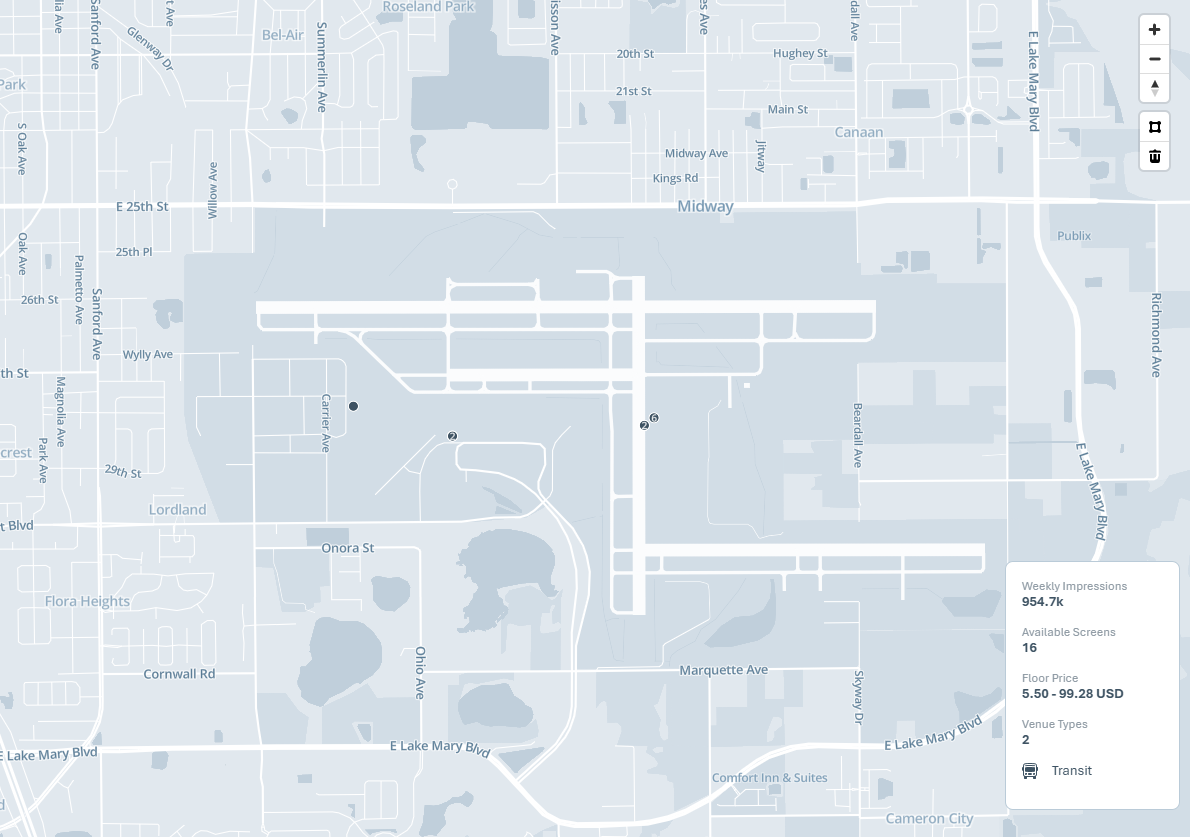
Advertising Value Snapshot
- Passenger scale: 3,166,417 passengers in 2025, up 10.04% year on year, with growth led by domestic leisure demand
- Traveller type: Value-conscious US leisure families, snowbirds and seasonal residents, Canadian cross-border leisure travellers
- Airport classification: Tier 3. Volume is strong for a secondary airport but premium cabin, corporate and long-haul international share is minimal
- Commercial positioning: Known as the low-cost, fast-transit alternative gateway to Central Florida and its attractions economy
- Wealth corridor signal: Sits on the US domestic relocation and retirement capital corridor moving from the Northeast and Midwest into Florida
- Advertising opportunity: Masscom Global structures SFB as an efficiency buy layered onto Orlando International rather than a substitute for it. The compact terminal allows a small number of positions to achieve close to full passenger capture, and Masscom's placement precision ensures those positions sit where dwell is longest rather than where inventory is simply available. For relocation, residential, mobility and attractions categories, Masscom can deliver frequency at SFB and reach at MCO within one coordinated Central Florida plan.
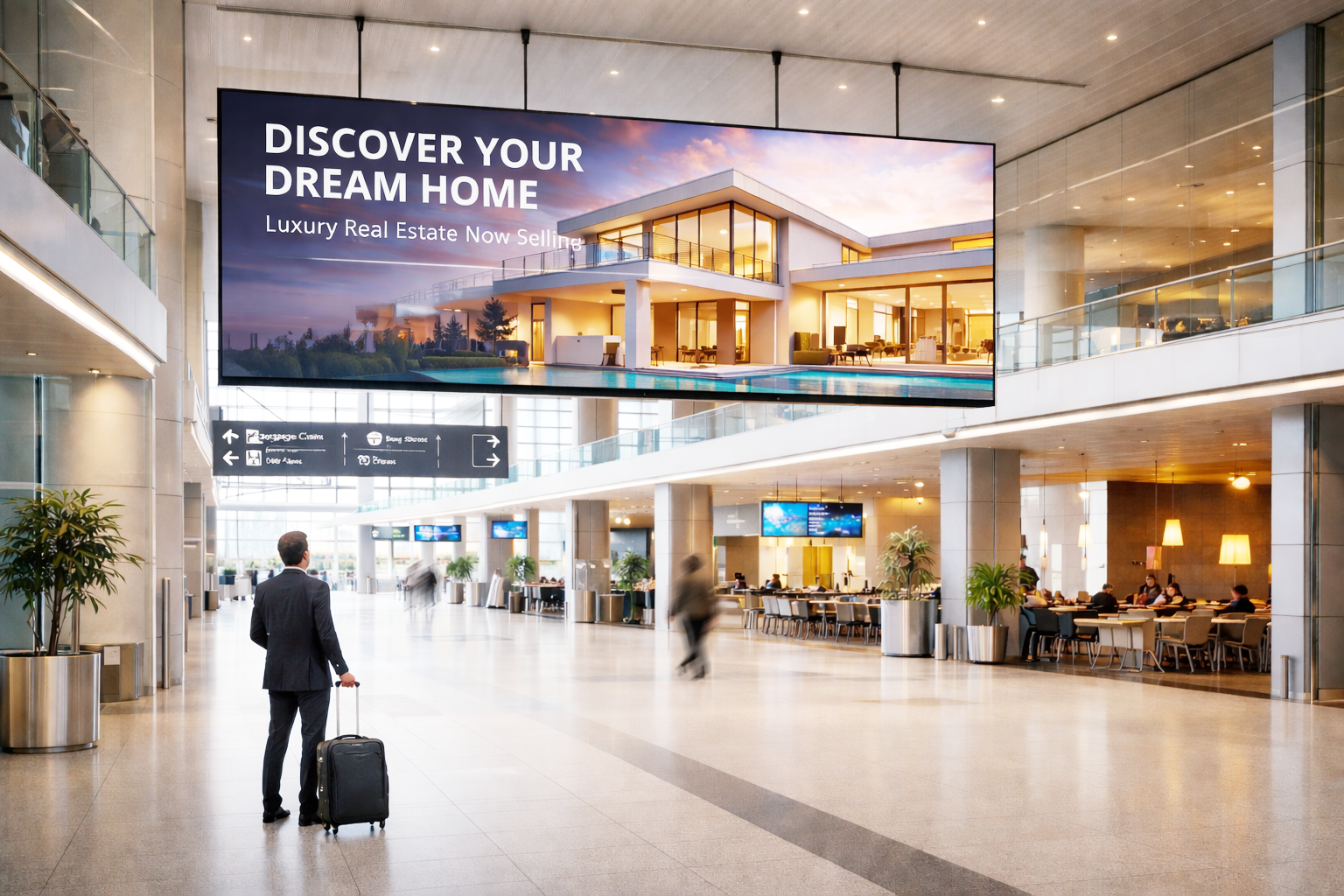
Airport Advertising is Complex to Get Right
We help you execute faster, with proven results and local insight most planners lack starting now.
Talk to an ExpertCatchment Area and Economic Drivers
Top 10 Cities within 150 km, Marketer Intelligence:
- Orlando: The demand engine. Its attractions and hospitality economy creates a permanent inbound consumer audience plus a large service workforce with high mobile and remittance behaviour
- Sanford and Lake Mary: Corporate back-office and financial services cluster with an affluent professional resident base. This is the closest thing SFB has to a resident business audience and it responds to banking, insurance and private education messaging
- Winter Park: Established old-money Central Florida wealth. Low volume but the highest household income tier in the catchment, relevant for premium home services, wealth advisory and luxury automotive
- Altamonte Springs: Dense middle-income suburban household base with high retail and QSR frequency, a reliable audience for value retail and telecom offers
- Kissimmee and Osceola County: Heavily Puerto Rican and Latin American resident population with strong visiting friends and relatives travel, high remittance activity and price-led purchase behaviour
- Daytona Beach: Event-driven consumer economy built on motorsport and beach tourism, producing sharp seasonal spikes that reward short-burst campaign timing
- Deltona and DeLand: Fast-growing commuter housing corridor. This is where new residents land, making it prime territory for homebuilders, mortgage, moving and storage categories
- Melbourne and Palm Bay: Aerospace and defence engineering workforce with above-average technical salaries, the strongest B2B and high-income professional pocket in the catchment
- Titusville and the Space Coast: Launch-driven contractor and visitor movement creating irregular but high-value technical traveller flow
- Ocala and The Villages: Equine industry wealth and one of the largest concentrated retirement populations in the country. Discretionary spending is high, healthcare and financial services demand is structural, and travel is frequent but seasonal
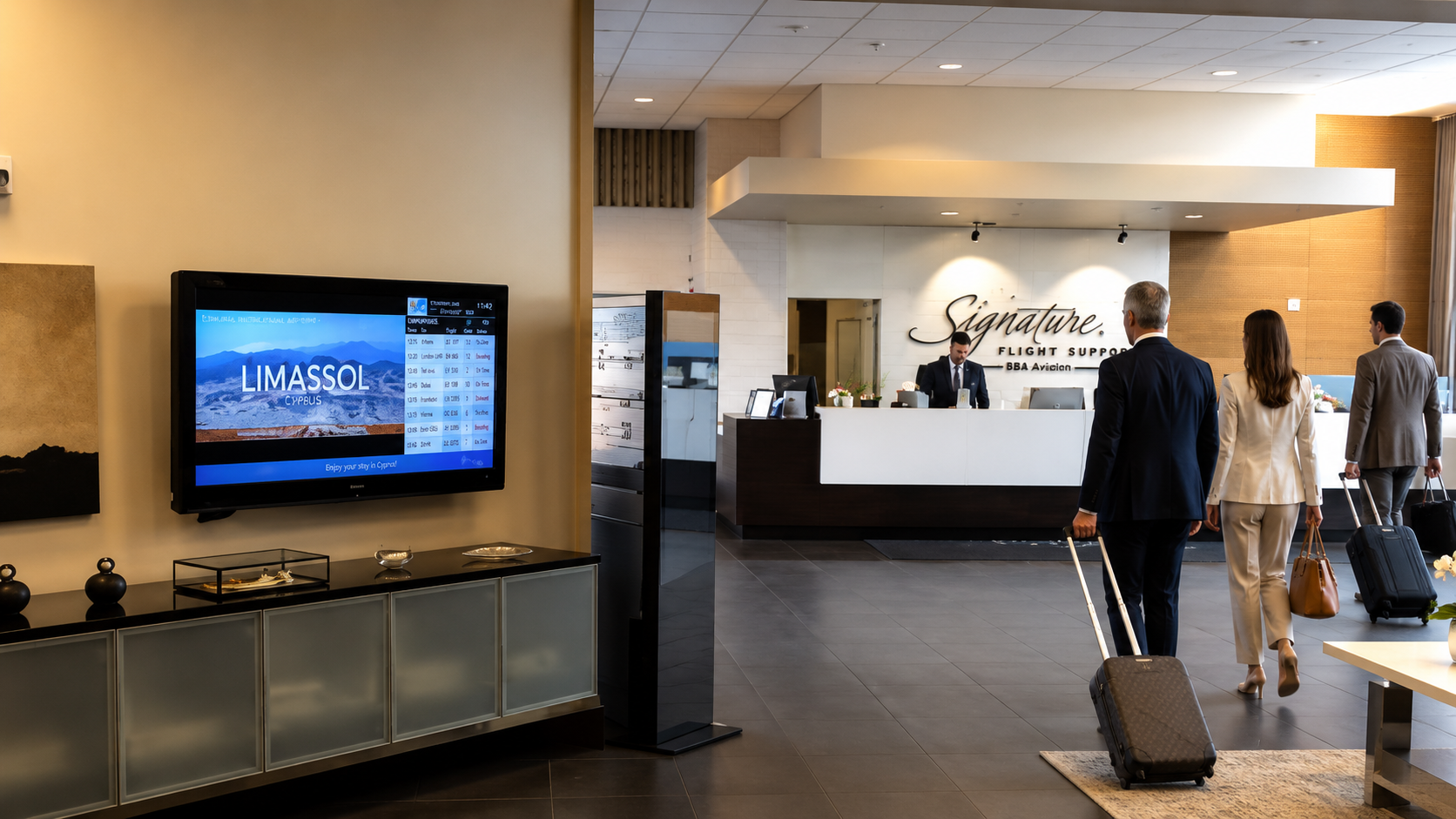
NRI and Diaspora Intelligence:
SFB does not carry a significant long-haul diaspora flow, so the commercially meaningful movement is different. The dominant recurring audience is the seasonal resident: Northern US and Canadian households who own or rent Florida property for part of the year and travel the same route multiple times annually. This group carries above-median liquid assets, established property ownership on both sides of the corridor, and high receptivity to healthcare, insurance, banking and property services messaging. The secondary flow is Puerto Rican and Latin American visiting friends and relatives traffic from the Kissimmee and Osceola catchment, which is price-sensitive but very high frequency and responds strongly to remittance, telecom and money transfer categories.
Economic Importance:
The catchment economy runs on four engines: attractions and hospitality, aerospace and defence, healthcare, and residential construction. Hospitality creates volume audiences with low individual spend. Aerospace and healthcare create the technical and professional audiences that carry income. Residential construction creates the relocation audience, which is the most commercially valuable group passing through SFB because it is actively making six-figure purchase decisions. Advertisers should read the terminal as a relocation funnel first and a tourism funnel second.
Business and Industrial Ecosystem
- Modelling, simulation and training cluster around Central Florida Research Park: Produces a defence and technical contractor audience with security clearances and consistent travel patterns, relevant for B2B technology and professional services
- Aerospace and space launch on the Space Coast: Creates engineering and supply chain traveller flow with high technical salaries and long project cycles
- Commercial pilot and aviation training operations based at the airport itself: One of the largest concentrations of flight training in the world, generating a young international and domestic trainee audience plus visiting families
- Financial services and corporate back-office operations in the Lake Mary and Heathrow corridor: Produces a resident white-collar professional audience that uses SFB for domestic travel because of its convenience
Passenger Intent, Business Segment:
Business travel at SFB is thin and should be priced accordingly. The genuine business flow is contractor and technical rather than corporate: aviation training personnel, aerospace and defence supply chain staff, and small business owners using the airport for time efficiency. These travellers are intercepted most effectively by aviation career and training, professional certification, banking and business services, and vehicle and equipment leasing categories.
Strategic Insight:
The commercial value of the business audience here is not its size but its concentration. Because the terminal is small, a single well-placed position reaches essentially every technical and contractor traveller moving through the airport, which is unusually efficient for narrow B2B targeting. Advertisers looking for aerospace, defence adjacent and aviation training audiences get a cleaner intercept at SFB than at any large hub, where the same audience is diluted across dozens of gates.
Tourism and Premium Travel Drivers
- The Orlando theme park cluster: The single largest reason passengers fly into SFB. Visitors have already committed major spend before arrival, making them receptive to ticketing, dining, transport and add-on experience offers
- Daytona International Speedway and the Volusia beaches: Drive concentrated event tourism with high alcohol, automotive, apparel and hospitality spend in tight windows
- Kennedy Space Center and the Space Coast: Attracts a family and education-oriented visitor with above-average willingness to pay for experiences
- The Ocala equestrian circuit and World Equestrian Center: The one authentic high-net-worth tourism driver in the catchment, bringing owners, breeders and buyers with genuine luxury spending capacity during the winter season
Passenger Intent, Tourism Segment:
The SFB tourist is a value optimiser who has already spent heavily on accommodation and park tickets and is looking to control every remaining cost. That makes them highly responsive at the airport to car rental, ground transport, discount retail, dining and mobile data offers, and largely unresponsive to luxury and aspirational categories. Arrivals are in decision mode on transport and logistics, departures are in recall mode on the destination itself. Advertisers who match message to direction of travel see materially better outcomes here, and Masscom plans SFB placements by arrival and departure flow rather than by generic terminal position.
Travel Patterns and Seasonality
Peak seasons:
- January to April: The strongest window. Snowbird and seasonal resident inflow overlaps with spring break family travel and the Daytona motorsport calendar
- June to August: Summer family leisure peak driven by school holidays and theme park demand
- November to December: Thanksgiving and Christmas holiday travel, heavily visiting friends and relatives weighted
- September to October: The clear trough, coinciding with hurricane season and the school calendar. Lowest rates and lowest returns
Monthly passenger breakdown: Data not available.
Event-Driven Movement:
- Daytona 500 (February): Major national motorsport event bringing high-volume domestic fan traffic with strong automotive, alcohol, apparel and betting category alignment
- Daytona Bike Week (March): Large scale motorcycle event drawing an older, high discretionary spend domestic audience across a ten-day window
- Spring Break (March): Peak family and student leisure surge, the highest volume advertising window of the year
- Winter equestrian season in Ocala (January to March): Brings the catchment's genuine affluent audience, relevant for luxury automotive, equine finance and premium property
- Biketoberfest (October): Rescues an otherwise weak month with a concentrated high-spend domestic audience
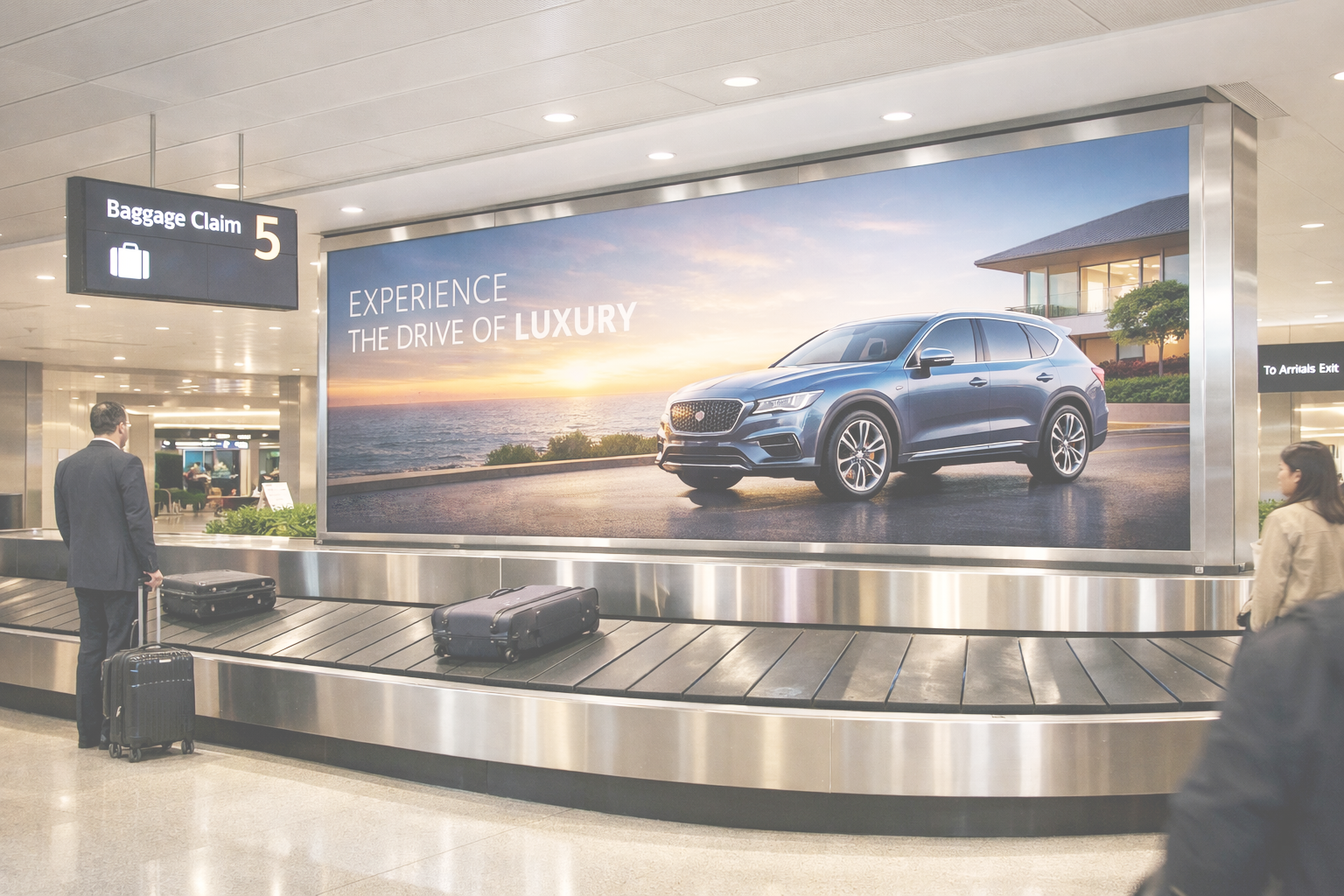
It’s Not Just Where You Advertise - It’s How Fast You Execute
We combine local insight with fast rollout to deliver results for you, now.
Talk to an ExpertAudience and Cultural Intelligence
Top 2 Languages:
- English: The default commercial language for almost the entire passenger base. Creative should be plain, offer-led and price-transparent because this audience is comparison shopping
- Spanish: Commercially essential rather than optional. The Osceola and Kissimmee catchment carries a large Puerto Rican and Latin American population, and Spanish language creative materially lifts response in remittance, telecom, healthcare and value retail categories
Major Traveller Nationalities:
The passenger base is overwhelmingly American, drawn from small and mid-sized cities across the Northeast, Midwest and Appalachian regions served by the airport's dominant low-cost carrier. The most significant non-US group is Canadian, travelling on cross-border leisure and snowbird routes with property or long-stay interests in Florida. Historic European charter flow has largely migrated to Orlando International. For campaign creative this means US domestic messaging conventions, US pricing, and a distinct Canadian layer during the winter months where cross-border banking, healthcare coverage and property services perform well.
Religion, Advertiser Intelligence:
- Christianity, Protestant and Catholic (approximately 65 to 70%): Christmas, Easter and Thanksgiving drive the two largest family travel surges of the year. Spending triggers are gifting, family gathering, group dining and multi-generational travel, which benefits retail, dining, telecom and family attraction categories
- Catholic, with a strong Hispanic component (a significant share of the above): Holy Week and Christmas drive concentrated visiting friends and relatives travel from and to Puerto Rico and Latin America. Triggers are remittance, gifting and family support spending, which benefits money transfer, telecom and consumer finance
- Judaism (approximately 2 to 3%): Small in share but concentrated in the affluent Winter Park and Maitland pockets, with travel clustering around the autumn High Holidays and Passover. Relevant for premium travel and family wealth services
Behavioral Insight:
This audience is value-rational rather than status-driven. They choose SFB deliberately to save money, which means they arrive already in a comparison mindset and reward clear pricing, concrete savings and immediate utility. Aspirational and prestige messaging underperforms here; specific offers, guarantees and cost comparisons outperform. The exception is the relocation and retirement segment, which makes slow, high-value decisions and responds to trust signals, longevity and local credibility rather than discounts.
Outbound Wealth and Investment Intelligence
The honest read on SFB is that it is a capital-inbound airport, not a capital-outbound one. The valuable money movement in this catchment flows toward Florida rather than away from it, driven by domestic relocation, retirement migration and second-home purchase from higher-tax northern states. Advertisers who understand this stop trying to sell foreign assets to this audience and start selling Florida to it.
Outbound Real Estate Investment:
Where genuine outbound property interest exists, it concentrates in the nearby Caribbean and Central America rather than Europe or Asia. The Bahamas, Turks and Caicos, the Dominican Republic, Costa Rica and Panama are the recurring destinations for second-home and rental yield purchases by Central Florida buyers, supported by proximity, US dollar familiarity and favourable holding costs. International developers in these markets have a viable audience here. Developers marketing European or Gulf property will find better returns at other airports, and Masscom will advise clients accordingly rather than sell them the wrong inventory.
Outbound Education Investment:
Education flow at this catchment runs inbound rather than outbound. The University of Central Florida and the region's aviation training academies pull large domestic and international student volumes into the area, and the airport itself is a primary arrival point for flight training candidates and their families. The commercial opportunity is therefore for aviation academies, universities, student housing and education finance targeting arriving students and visiting parents, not for foreign universities recruiting outbound.
Outbound Wealth Migration and Residency:
Second-residency demand is modest and concentrated in Caribbean citizenship-by-investment programmes and Central American residency routes chosen for tax and lifestyle reasons, plus Portugal and Spain interest among a small affluent minority. Volume is insufficient to justify a standalone residency campaign at SFB, and Masscom recommends residency and citizenship advisers concentrate their Florida spend on Miami and Orlando International while using SFB only as a low-cost frequency layer.
Strategic Implication for Advertisers:
The wealth corridor at SFB runs north to south inside the United States, not across oceans. Brands positioned to capture relocating and retiring American households, Florida developers, wealth and healthcare providers, and Caribbean second-home developers should treat this airport as a priority efficiency buy. Masscom Global activates both ends of that domestic corridor simultaneously, pairing SFB placements with airports in the originating Northeast and Midwest markets so the same household is reached at departure and arrival.
Airport Infrastructure and Premium Indicators
Terminals:
- Terminal A: Handles the dominant domestic low-cost operation, processing the large majority of passengers through a compact concourse. Passenger flow is highly concentrated, which is the single most important structural fact for advertisers here
- Terminal B: Handles international and charter arrivals with federal inspection facilities. Lower volume, but captures the Canadian and charter audience in a low-competition environment
Premium Indicators:
- Lounge infrastructure is minimal. There is no significant network carrier lounge presence, which accurately signals a leisure rather than premium cabin audience
- Private and general aviation is the airport's real premium layer. SFB is a substantial general aviation and business aviation field, with new purpose-built private aircraft hangar capacity adding storage and operational space for private operators
- Hotel provision is limited-service and mid-market adjacent to the airport. Luxury accommodation sits in the Orlando resort corridor rather than at the airport
- The airport's operational positioning as a fast, low-friction alternative gateway is its defining brand signal, reinforced by short processing times and recent terminal and security upgrades
Forward-Looking Signal:
SFB announced $300 million in proposed development in 2025, alongside a new dedicated highway connector improving direct road access, expanded private aviation hangar capacity, terminal renovation and cargo growth ambitions. Combined with double digit passenger growth, this points to a structurally rising audience base and improving environment quality over the next cycle. Rates at Tier 3 airports adjust after growth becomes visible, not before. Masscom Global advises clients to secure multi-cycle positions at SFB now, while pricing still reflects the airport's former scale rather than its current trajectory.
Airline and Route Intelligence
Top Airlines:
Allegiant Air operates the dominant share of scheduled traffic as a base carrier. Canadian low-cost service and seasonal charter operators account for the international component. Additional carrier detail: Data not available.
Key International Routes:
Cross-border Canadian leisure and snowbird routes, plus seasonal charter services. Weekly frequency data: Data not available.
Domestic Connectivity:
An extensive point-to-point network to small and mid-sized cities across the Midwest, Northeast, Appalachian and Great Lakes regions, most of which have no or limited direct service to Orlando International. This is the network's defining characteristic.
Wealth Corridor Signal:
The route map tells advertisers exactly who this audience is. These are not hub-to-hub business corridors; they are secondary city leisure and second-home corridors connecting northern middle-income and retiree populations directly to Central Florida. That makes SFB a relocation and seasonal residency route network rather than a wealth transfer network. Advertisers selling Florida property, healthcare, insurance, mobility and family leisure are buying exactly the right audience. Advertisers selling international luxury are not.
Media Environment at the Airport
- Terminal scale is compact and clutter levels are low relative to comparable US leisure airports, so a single strong position achieves standout that would require multiple placements at a major hub
- Dwell is shorter than at large hubs because the airport is built for speed, but it is highly predictable and concentrated at check-in, security exit and a single gate concourse, which makes placement precision more important than placement volume
- The environment signals accessibility and efficiency rather than luxury. Brands that align with value, utility and trust gain positive association here; prestige brands risk contextual mismatch
- Masscom Global provides direct inventory access, rapid rollout, and placement selection based on measured flow rather than availability, plus the ability to combine SFB with Orlando International in one Central Florida plan for reach and frequency together
Strategic Advertising Fit
Best Fit:
- Florida residential real estate, homebuilders and relocation services: The catchment is a primary US relocation destination and the passenger base is actively evaluating moving
- Car rental, ride hailing and ground mobility: Almost every arriving passenger needs vehicle access immediately, making this the highest intent category in the terminal
- Attractions, theme park ticketing and experience add-ons: Passengers arrive with confirmed leisure budgets and open discretionary spend
- Value retail, outlet centres and shopping destinations: Aligns exactly with a price-optimising audience
- Healthcare, medical networks and insurance: Structural demand from the retiree, snowbird and Villages segment
- Banking, credit cards and consumer finance: Mid-market products, cross-border Canadian banking and remittance services all have clear audience fit
- Telecom, roaming and mobile data: High relevance for Canadian and Latin American travellers
- Aviation training academies and career education: The airport is itself a global flight training centre with arriving candidates and visiting families
Brand Alignment at a Glance:
| Category | Fit |
|---|---|
| Florida real estate and relocation | Exceptional |
| Car rental and ground mobility | Exceptional |
| Attractions and ticketing | Strong |
| Healthcare and insurance | Strong |
| Value retail and outlets | Strong |
| Consumer finance and telecom | Moderate |
| International luxury real estate | Moderate |
| Luxury watches, jewellery and private banking | Poor fit |
Who Should Not Advertise Here:
- Ultra-luxury watches, jewellery and fashion: The passenger base is defined by price optimisation and premium cabin share is minimal. Spend is wasted
- Private banking and wealth management: Insufficient concentration of qualifying assets in the passenger flow to justify premium airport rates
- Enterprise B2B technology and corporate airline campaigns: There is no meaningful corporate business traveller base here. Orlando International is the correct buy
Event and Seasonality Analysis
- Event Strength: Medium
- Seasonality Strength: High
- Traffic Pattern: Dual-Peak Seasonal
Strategic Implication:
Budget should follow the seasonal curve, not the calendar year. January to April is the highest return window because snowbird, spring break and motorsport audiences overlap, and June to August delivers the second peak on family leisure volume. September and October should be treated as maintenance-only spend, with the single exception of the October motorcycle event window. Masscom Global structures SFB campaigns around this rhythm, concentrating impact in the two peaks and negotiating position continuity through the trough so clients hold prime placements without paying peak rates year round.
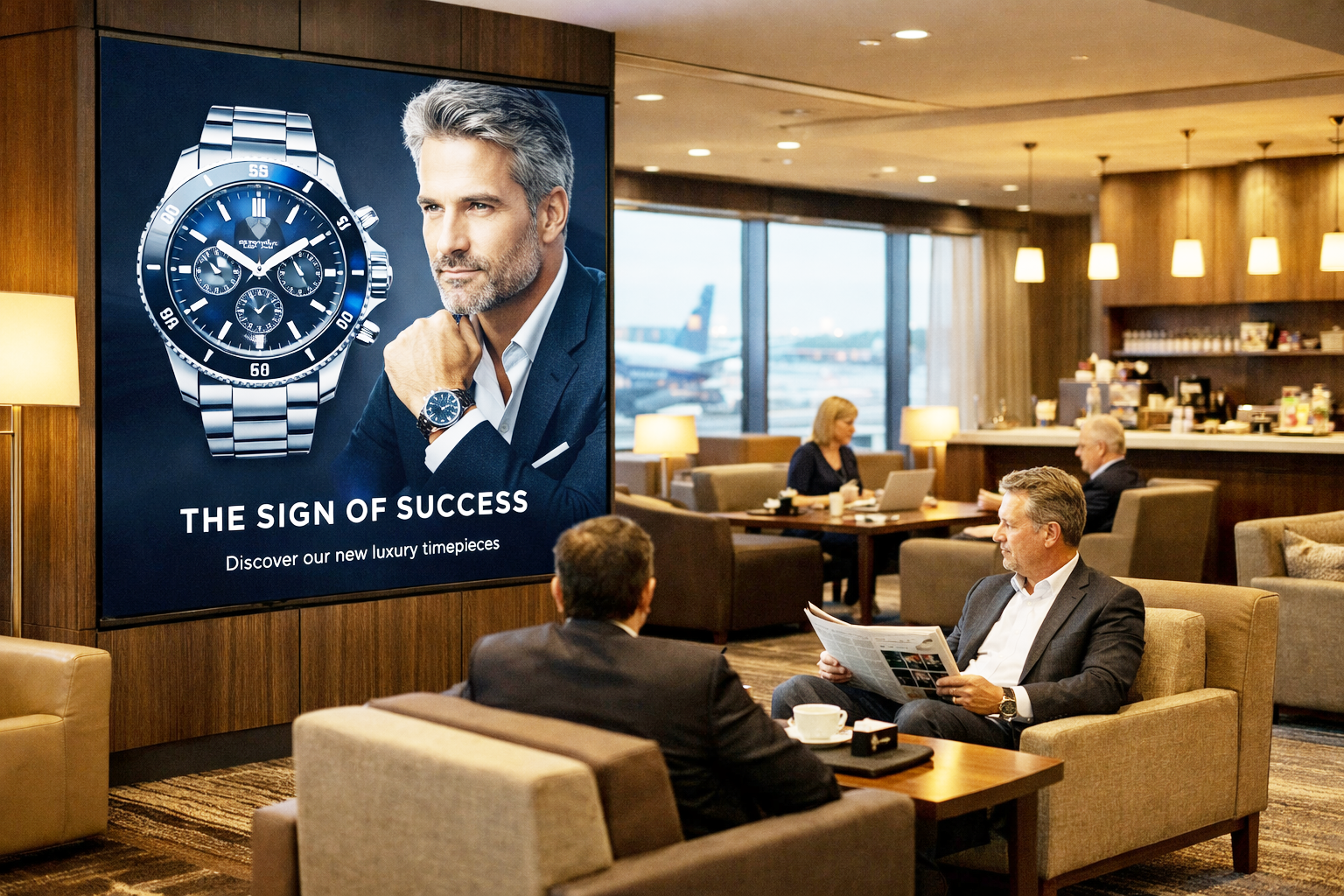
Poor Placement and Delays Affect Airport Campaigns
We help you move faster, access better inventory, and get it right now.
Talk to an ExpertFinal Strategic Verdict
Orlando Sanford is the most efficient way to reach the American value leisure and Florida relocation audience at scale. Three million passengers moving through a compact single-carrier terminal with low advertising clutter means a small number of correctly chosen positions capture nearly the entire passenger flow, at a cost base that Orlando International cannot approach. The audience is not wealthy, and advertisers who buy it as a luxury environment will be disappointed. But for Florida developers and homebuilders, mobility and car rental brands, attractions, healthcare and insurance providers, value retail, and Caribbean second-home developers, this is a high-intent audience arriving with spending decisions still open. With double digit passenger growth, $300 million in proposed development, improved road access and expanding private aviation capacity, current rates reflect the airport SFB was rather than the airport it is becoming. Masscom Global gives brands direct inventory access, flow-based placement precision, and the ability to run SFB and Orlando International as one coordinated Central Florida plan, which is the difference between buying impressions and buying the right audience.
About Masscom Global
Masscom Global is a premium international airport advertising and media buying agency operating across 140 countries. With deep expertise in airport OOH, premium publications, and high-net-worth audience targeting, Masscom helps brands reach the world's most valuable travellers at the moments that matter most. For advertising packages, media rates, and campaign planning at Orlando Sanford International Airport and airports across the globe, contact Masscom Global today.
Frequently Asked Questions
How much does airport advertising cost at Orlando Sanford International Airport? Cost at SFB varies by format, terminal position, campaign duration and seasonal demand. Winter and spring positions carry the highest rates because snowbird, spring break and motorsport audiences overlap, while September and October pricing is materially softer. Because the terminal is compact, prime positions are limited in number and price on scarcity rather than volume. Contact Masscom Global for current rates and availability.
Who are the passengers at Orlando Sanford International Airport? Predominantly value-conscious American leisure families flying point-to-point from small and mid-sized cities across the Midwest, Northeast and Great Lakes regions, plus a substantial snowbird and seasonal resident population, Canadian cross-border leisure travellers, and visiting friends and relatives traffic tied to the region's large Puerto Rican and Latin American community. Business and premium cabin share is minimal.
Is Orlando Sanford International Airport good for luxury brand advertising? No. This is a Tier 3 leisure airport with minimal lounge infrastructure, negligible premium cabin traffic and a passenger base that deliberately chooses the airport to reduce cost. Luxury watch, jewellery, fashion and private banking brands will not find sufficient audience concentration. The exception is the general aviation side of the field, where private aircraft services and aviation-adjacent premium categories do have genuine fit.
What is the best airport in Florida to reach HNWI audiences? Miami International leads decisively for high-net-worth reach, followed by Fort Lauderdale, Palm Beach and Orlando International. Orlando Sanford sits well below these on wealth concentration and should be bought for domestic reach efficiency and relocation intent rather than for affluence. Masscom Global builds Florida plans that place luxury spend where it converts and use SFB for volume and frequency.
What is the best time to advertise at Orlando Sanford International Airport? January through April is the strongest window, driven by snowbird arrivals, spring break family travel, the Daytona 500 in February and Bike Week in March. June through August delivers the second peak on summer family leisure, and November through December captures holiday and visiting friends and relatives travel. September and October are the weakest months, with the October motorcycle event window the only exception.
Can international real estate developers advertise at Orlando Sanford International Airport? Yes, with the right market fit. This audience buys second homes and rental yield property in the Bahamas, Turks and Caicos, the Dominican Republic, Costa Rica and Panama, supported by proximity and dollar familiarity. Developers in those markets have a real audience here. Developers selling European, Gulf or Asian property will see better returns at other airports, and Masscom Global will direct that spend appropriately rather than misplace it.
Which brands should not advertise at Orlando Sanford International Airport? Ultra-luxury retail, private banking and wealth management, enterprise B2B technology, and premium cabin airline campaigns. All four require an affluent or corporate traveller concentration that this passenger base does not provide. Spending here on those categories buys reach without qualified audience.
How does Masscom Global help brands advertise at Orlando Sanford International Airport? Masscom Global provides catchment and audience intelligence, direct inventory access, placement selection based on measured passenger flow rather than availability, rapid campaign rollout, and performance tracking. Critically, Masscom plans SFB alongside Orlando International so brands achieve reach and frequency across Central Florida within a single budget, and secures position continuity through the low season so clients hold prime placements without paying peak rates year round.