


Airport at a Glance
| Field | Detail |
|---|---|
| Airport | Lubbock Preston Smith International Airport |
| IATA Code | LBB |
| Country | United States of America |
| City | Lubbock, Texas |
| Annual Passengers | 563,180 enplanements (2024), up 3.65 percent, roughly 1.12 million total passengers |
| Primary Audience | Cotton and dairy landowning families, university and medical leadership, energy and wind sector professionals |
| Peak Advertising Season | February to April, August to October, November to December |
| Audience Tier | Tier 2 by volume, Tier 1 by agricultural landowner and institutional decision-maker concentration |
| Best Fit Categories | Agricultural machinery and inputs, agricultural lending and land brokerage, regional healthcare and higher education, energy services and remittance finance |
Lubbock Preston Smith International recorded 563,180 enplanements in 2024, up 3.65 percent, and ranks as the eighth-busiest airport in Texas and the leading airport among the state's smaller cities. Volume is not the argument. The argument is monopoly and concentration. The nearest alternative airports sit 145 to 194 kilometres away in Clovis, Hobbs, Amarillo and Midland, which makes LBB the sole practical air access point for a vast, sparsely populated but economically productive region. Everyone who flies from the South Plains passes through one terminal with twelve gates.
The airport matters because of the wealth structure beneath it. Lubbock anchors the largest contiguous cotton-producing region on earth, alongside a rapidly expanded dairy industry, cattle feeding, peanuts, sorghum and the vineyards that supply the majority of Texas wine grapes. It is also the home of a major research university with roughly forty thousand students, a health sciences centre with medical, nursing, pharmacy and law schools, and the referral hospital system for well over one hundred counties across West Texas and eastern New Mexico. Layer on one of the densest wind energy corridors in the United States and northern Permian energy activity, and the passenger base becomes unusually dense in landowners, institutional leadership and business owners. Masscom Global positions LBB as a precision agricultural, institutional and energy environment at small-airport cost.
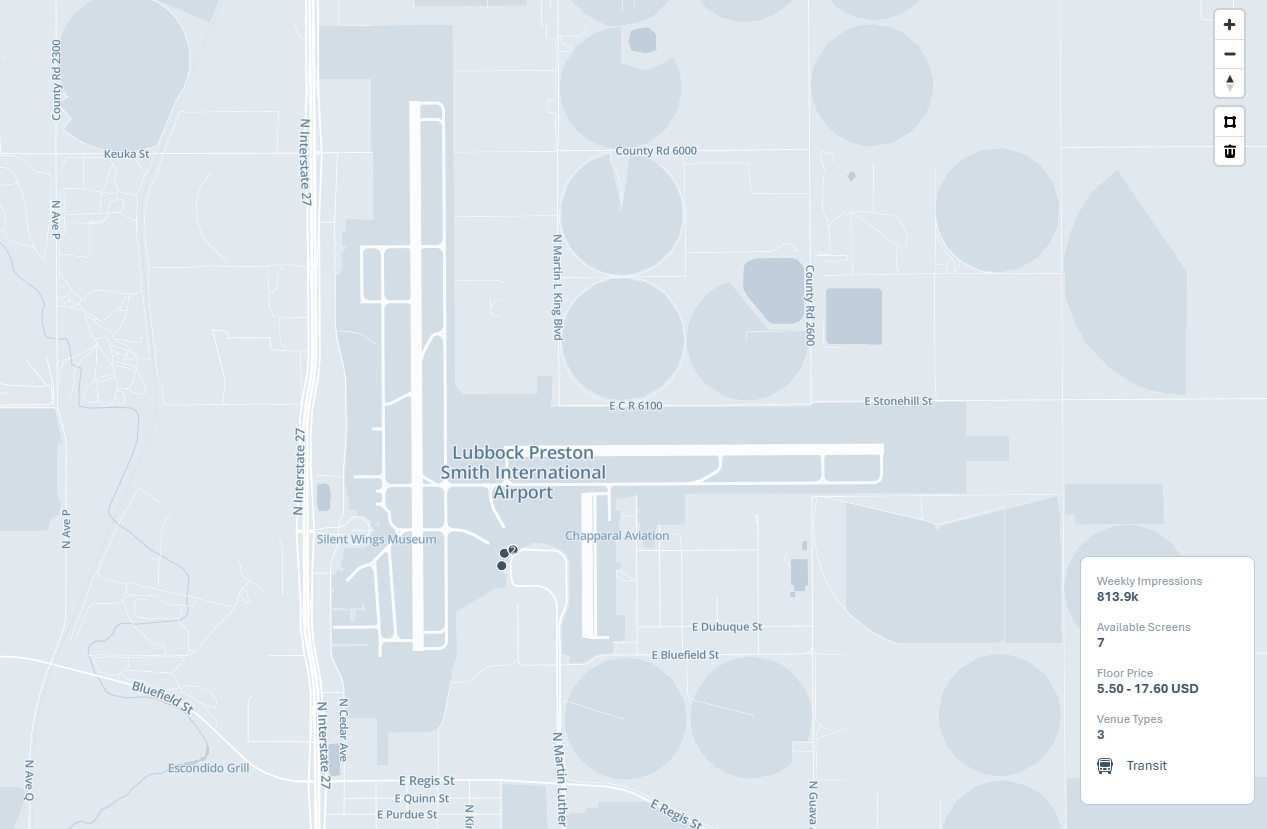
Advertising Value Snapshot
- Passenger scale: 563,180 enplanements in 2024, up 3.65 percent, equating to roughly 1.12 million total passengers. Around 50 daily flights and 147 weekly departures serve approximately 4,000 passengers per day. Aircraft operations reached 92,881 with 156 based aircraft, reflecting very heavy general aviation and flight training activity alongside commercial service.
- Traveller type: Cotton, dairy and cattle landowning families, university faculty administrators and student families, physicians and medical referral patients, energy and wind sector professionals, and regional business owners.
- Airport classification: Tier 2 by volume and an FAA small hub, but Tier 1 by landowner and institutional decision-maker concentration. Eighth-busiest airport in Texas and the leading airport among smaller Texas cities.
- Commercial positioning: Known regionally as the Hub City airport, the air gateway to the South Plains cotton economy and to a major university and medical centre.
- Wealth corridor signal: LBB sits on the High Plains agricultural land and water corridor, where wealth is held in acreage, water rights, cattle, cotton allotments and wind and solar lease income rather than in urban financial assets.
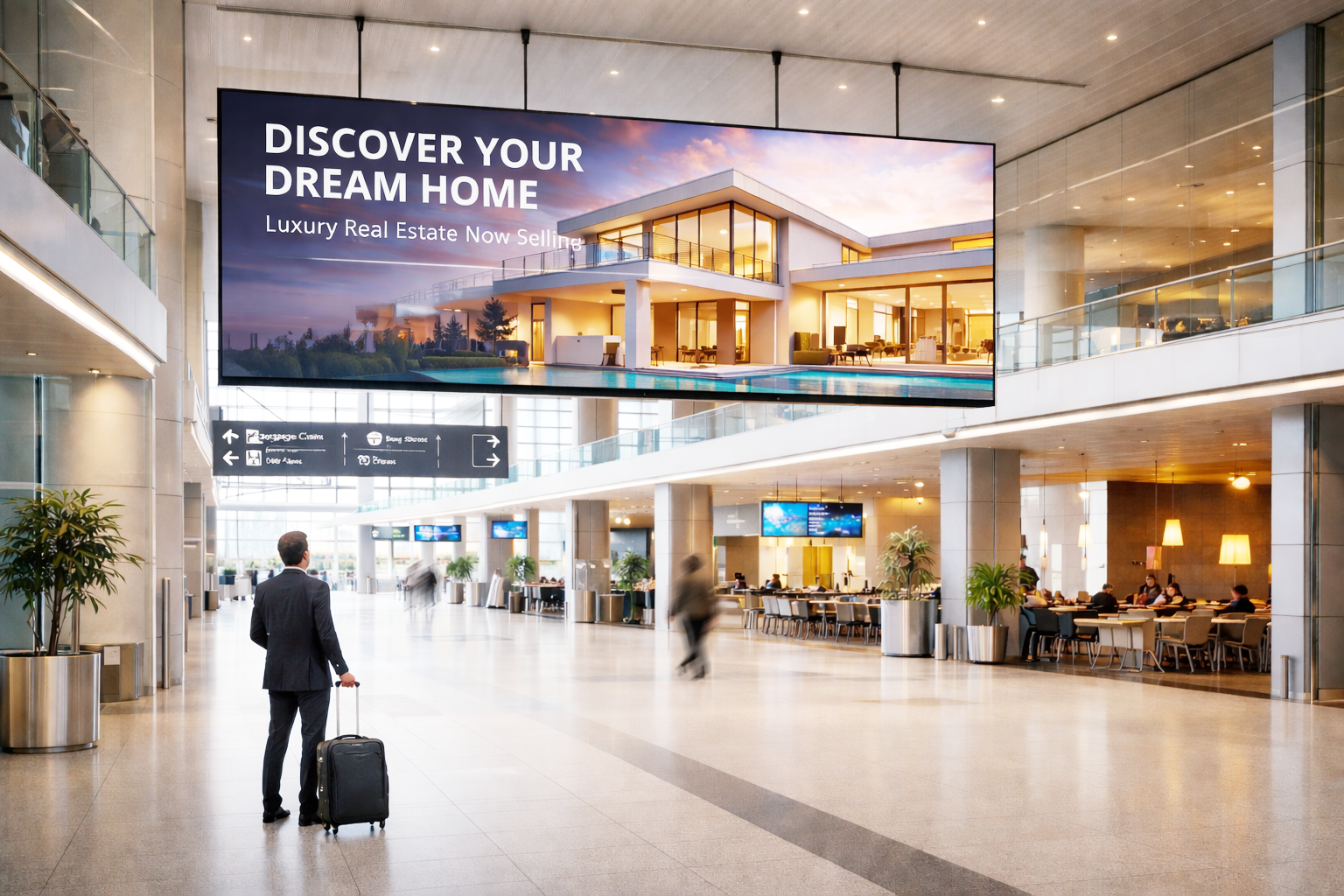
- Advertising opportunity: Twelve gates, one terminal and no competing airport within 145 kilometres means concentrated flow and negligible advertising clutter. A brand placed here can own the visual environment outright at a fraction of Dallas or Houston cost. Masscom Global secures this inventory and pairs LBB with Dallas-Fort Worth, Houston, Denver, Las Vegas and Phoenix so agricultural, healthcare and energy brands cover the whole region in one coordinated buy.
Airport Advertising is Complex to Get Right
We help you execute faster, with proven results and local insight most planners lack starting now.
Talk to an ExpertCatchment Area and Economic Drivers
Top 10 Cities within 150 km, Marketer Intelligence:
- Lubbock, Texas: The commercial, medical, educational and retail capital of a region far larger than its population suggests. Home to a major research university, a health sciences centre and two competing hospital systems serving a referral area of more than one hundred counties. Produces university leadership and donors, physicians and healthcare executives, agricultural cooperative principals and regional business-owning families.
- Plainview, Texas: Agricultural processing, dairy and grain handling centre with a substantial Hispanic workforce. Produces plant management and agribusiness leadership alongside a large wage-earning consumer base with high remittance activity.
- Levelland, Texas: Cotton, oil and community college town. Produces farm owner-operators and energy service personnel who make substantial seasonal equipment and input purchasing decisions.
- Brownfield, Texas: Cotton, peanut and vineyard country with oil and gas activity. Produces landowning families whose acreage values and mineral interests create real wealth in a small population.
- Lamesa, Texas: Cotton and irrigated crop centre at the northern edge of the Permian, with strong energy service and landowner overlap. Relevant to agricultural finance, land brokerage and oilfield services advertisers.
- Seminole, Texas: Cotton, oil and dairy centre and home to one of the largest Old Colony Mennonite communities in the United States, with deep family and property links to Chihuahua in Mexico and to Canada. A distinctive audience combining large-scale farming operations, cross-border family movement and unusually concentrated agricultural landholding.
- Snyder, Texas: Oil, wind energy and ranching centre. Landowners here are actively negotiating renewable energy leases alongside mineral royalties, creating strong demand for legal, tax and land valuation services.
- Muleshoe and Littlefield, Texas: The heart of the region's expanded dairy industry alongside cotton and cattle feeding. Produces dairy owner-operators with very large capital equipment budgets and a substantial immigrant workforce.
- Post, Tahoka and Slaton, Texas: Ranching, cotton and rail communities feeding the Lubbock trade area. Produce farm and ranch families who rely entirely on LBB for air access.
- Clovis, New Mexico: At the catchment edge across the state line, anchored by an air force installation hosting special operations aviation, plus dairy and agricultural processing. Produces military personnel, defence contractors and agribusiness management who frequently use LBB rather than more distant New Mexico airports.
NRI and Diaspora Intelligence:
There is no significant South Asian or Gulf expatriate wealth community here, so the relevant diaspora picture is different and commercially substantial. The South Plains agricultural and dairy economy sustains a very large Mexican, Guatemalan and Honduran workforce concentrated across Lubbock, Plainview, Muleshoe and the dairy corridor, producing high per capita remittance volume and strong demand for money transfer, prepaid telecom, cross-border insurance and low-cost banking. Seminole holds one of the largest Old Colony Mennonite communities in the United States, a Low German speaking population with active Mexican and Canadian family, property and business links, which creates a genuinely cross-border agricultural audience unlike anything at comparable American airports. The university adds an international student and faculty population from India, China, Nigeria, Saudi Arabia and Bangladesh. The dominant HNI audience remains multi-generational cotton, dairy and ranch families whose wealth sits in acreage, water rights, cattle and lease income.
Economic Importance:
Five engines drive this catchment. Cotton production and ginning, at the centre of the world's largest contiguous cotton region, create landowner wealth and enormous seasonal input and equipment demand. Dairy and cattle feeding, both substantially expanded in recent decades, create large-scale operators with heavy capital budgets and a significant immigrant workforce. Higher education and academic medicine create faculty, administrator, physician and student family audiences plus a large donor and alumni base. Wind and solar energy, in one of the densest renewable corridors in the country, plus northern Permian oil and gas, create lease income, royalty holders and service personnel. Regional retail, distribution and healthcare make Lubbock the trade capital for a region of well over half a million people.
Business and Industrial Ecosystem
- Cotton production, ginning, cooperatives and cottonseed processing: Produces owner-operators, cooperative leadership and commodity marketers controlling large capital budgets. Core audience for agricultural machinery, cotton technology, crop inputs, irrigation systems, agricultural lending and land brokerage advertisers.
- Dairy, cattle feeding and protein processing: Produces large-scale operators with substantial equipment, feed, genetics and facility investment requirements, plus workforce recruitment demand. Relevant to agricultural equipment, animal health, industrial refrigeration and workforce services.
- Higher education, academic medicine and healthcare systems: Produces faculty, administrators, physicians, researchers and hospital leadership serving a referral area of more than one hundred counties. Relevant to medical technology, pharmaceutical, insurance, education and professional services advertisers.
- Wind and solar energy, oil and gas services: Produces developers, landowners negotiating leases, royalty holders and field management. Relevant to legal and tax advisory, land valuation, heavy equipment, industrial supply and wealth management advertisers.
Passenger Intent, Business Segment:
Business travellers here fly for defined, purposeful reasons: cotton and commodity industry meetings, cooperative and lending business, equipment procurement, university and academic medical business, energy lease and royalty matters, and specialist medical appointments in Dallas, Houston and Denver. Connections run almost entirely through Dallas-Fort Worth, Houston, Denver, Las Vegas and Phoenix. This audience travels with clear intent rather than casually, arrives unhurried in a small terminal, and includes a high proportion of owners and institutional leaders rather than junior staff. Agricultural equipment and inputs, agricultural lending and crop insurance, land brokerage, medical technology and premium trucks intercept them most effectively.
Strategic Insight:
The business audience at LBB is valuable because it is both concentrated and monopolised. In a metropolitan airport, cotton technology, irrigation systems and crop input advertisers waste the overwhelming majority of their impressions. Here, an exceptionally high proportion of the passenger base is directly connected to cotton, dairy, cattle, land or the institutions that serve them, and there is no alternative airport within 145 kilometres to fragment that audience. Add negligible advertising competition and the effective cost per relevant impression can materially outperform far larger airports for these specific categories. Layer the university and medical referral audiences on top and this becomes one of the most efficient targeted B2B environments in Texas.
Tourism and Premium Travel Drivers
- University athletics and the conference calendar: Major football and basketball programmes fill a stadium of roughly sixty thousand and drive repeated inbound and outbound travel surges with affluent alumni participation. Strong for hospitality, automotive, financial services and sportswear advertisers.
- Texas High Plains wine country: The region supplies the substantial majority of Texas wine grapes and hosts established wineries and harvest events, drawing affluent visitors from Dallas, Austin and Houston. Relevant to hospitality, beverage, automotive and lifestyle brands.
- Music heritage, arts and the performing arts centre: A nationally recognised music heritage identity plus a modern performing arts venue sustain a cultural visitor economy relevant to hospitality, retail and premium consumer brands.
- Ranching heritage, cowboy culture and regional fairs: A major heritage centre and long-running symposium and fair calendar bring ranching families and heritage tourists into the city, with strong truck, equipment, apparel and hospitality alignment.
Passenger Intent, Tourism Segment:
Leisure travel here is largely outbound rather than inbound. Outbound passengers are affluent South Plains families and retirees flying to Las Vegas, Phoenix, Denver and Florida, or connecting onward, having already committed to holiday, ski or second-home spending, and receptive to travel finance, insurance, telecom and destination services. Inbound leisure is event-driven, weighted toward university athletics, alumni weekends and wine and heritage tourism, with the alumni cohort carrying meaningful affluence and institutional loyalty. Advertisers should treat outbound flow as a consumer finance and travel services opportunity and inbound event flow as a hospitality and brand association opportunity.
Travel Patterns and Seasonality
Peak seasons:
- February to April: The strongest business period, combining pre-planting agricultural financing and input purchasing, cotton industry meetings, spring break travel and the spring rodeo and arts calendar.
- August to October: Peak combined period, with university move-in and semester start in August, football season from September, the regional fair, the cowboy symposium and the start of cotton harvest and ginning.
- November to December: Holiday compression around Thanksgiving and the year-end period, plus December graduation and continued harvest and ginning activity.
- May to June: Spring graduation, early summer family travel and the start of irrigation and growing season commercial activity.
Event-Driven Movement:
- University football and basketball season (September to March): Repeated weekend surges with affluent alumni, donor and visiting-team travel. The most reliable recurring inbound volume of the year.
- Cotton industry annual meetings and commodity conferences (January to April): Concentrate cooperative leadership, growers and marketers making annual input, equipment and marketing decisions. Highest-intent window for agricultural machinery, inputs and finance advertisers.
- University move-in, semester start and graduation (August, May and December): Bring prospective and enrolling families with committed multi-year education budgets plus alumni with donor capacity. Strong for education finance, banking, insurance and hospitality.
- Cotton harvest and ginning season (October to January): The region's most intense commercial period, when capital expenditure is committed and equipment, logistics and financing decisions concentrate.
- Panhandle-South Plains fair, cowboy symposium and rodeo calendar (April and September): Concentrate ranching and farming families and heritage visitors, with strong truck, equipment, apparel and consumer alignment.

It’s Not Just Where You Advertise - It’s How Fast You Execute
We combine local insight with fast rollout to deliver results for you, now.
Talk to an ExpertAudience and Cultural Intelligence
Top 2 Languages:
- English: The language of the landowner, university, medical and energy audience. This is a practical, results-oriented readership that responds to durability, service network coverage, financing terms and total cost of ownership rather than aspirational positioning. Agricultural buyers here evaluate equipment on dealer support and resale value, and creative should reflect that.
- Spanish: Spoken across a very large share of the agricultural, dairy and processing workforce and by an established Mexican-American population throughout Lubbock, Plainview and the surrounding towns. Essential for remittance, telecom, consumer finance, healthcare and family insurance advertisers, and increasingly relevant for mid-market retail and automotive given rising Hispanic household income in the region.
Major Traveller Nationalities:
The passenger base is overwhelmingly American, drawn from West Texas and eastern New Mexico, with three distinctive international layers. A large first and second generation Mexican, Guatemalan and Honduran population sustains the agricultural and dairy economy. The Old Colony Mennonite community around Seminole maintains active Mexican and Canadian family and property links and speaks Low German at home, creating a cross-border agricultural audience with unusual dual-nationality patterns. The university adds international students and faculty from India, China, Nigeria, Saudi Arabia and Bangladesh. For creative this means bilingual English and Spanish execution as standard, messaging built around cross-border family obligation and practical financial utility for the workforce audience, and no assumption of international outbound luxury travel.
Religion, Advertiser Intelligence:
- Christianity, Protestant and Evangelical including Southern Baptist and Church of Christ (approximately 55 to 60 percent of the catchment, among the highest concentrations in the United States): Church attendance and congregational networks are exceptionally influential here, which means community endorsement, local presence, tenure and relationship-based messaging materially outperform discount-led or novelty-driven creative. Christmas and Easter drive the clearest family travel and gifting peaks. Highly relevant to agricultural finance, insurance, healthcare and family financial services.
- Christianity, Catholic (approximately 20 to 25 percent): Concentrated in the Hispanic population across Lubbock, Plainview and the agricultural towns. Christmas, Easter, Lent, confirmation, first communion and quinceañera milestones drive substantial family gathering, apparel, jewellery, photography, catering and travel spending, and quinceañera spending in this catchment is materially underserved by advertisers. Relevant to consumer finance, remittance, retail and family insurance.
- Anabaptist and Mennonite traditions (concentrated around Seminole): A distinctive community with its own calendar, language and strong internal commercial networks, active in large-scale agriculture and cross-border movement. Relevant to agricultural equipment, land brokerage, cross-border banking and immigration and legal services advertisers.
- Islam and Hinduism (each small but present, tied to the university and medical community): Ramadan, Eid, Diwali and Navratri create defined family travel, gifting, gold and food purchasing windows within a high-credential professional and student population. Relevant to money transfer, telecom, gold and jewellery, and international education advertisers.
Behavioral Insight:
Two financial mindsets operate side by side and conflating them wastes budget. The landowner and business operator audience thinks in multi-year cycles, holds wealth in illiquid land, water rights and equipment, is acutely sensitive to commodity prices, rainfall and interest rates, and buys on durability, dealer service coverage and trust rather than novelty. Sales cycles are long, relationship-driven and heavily influenced by peer and neighbour opinion in communities where reputation travels fast. The agricultural workforce audience thinks in weekly and monthly cycles, prioritises cost, reliability and speed of transfer, and responds strongly to clear Spanish-language pricing. Neither group responds to abstract brand advertising. Both respond to specificity, local presence and proof that the brand understands West Texas conditions.
Outbound Wealth and Investment Intelligence
The outbound passenger at LBB is commercially distinctive because capital here leaves the region in three clearly separated forms rather than one. The first is remittance, flowing in high volume to Mexico and Central America. The second is agricultural and lease wealth reinvested into land, water rights, cattle and equipment across the High Plains. The third is second-home and recreational property purchase in a narrow set of well-established destinations. Advertisers should understand plainly that this is not an international luxury investment audience, and positioning it as one wastes budget.
Outbound Real Estate Investment:
The dominant behaviour is domestic and highly concentrated. Northern New Mexico, particularly Ruidoso, Red River, Angel Fire and Taos, has been the default second-home and recreational property market for affluent West Texas families for generations, followed by Colorado ski and mountain property. Texas Hill Country, Austin, Dallas and Gulf Coast markets including South Padre, Galveston and the Florida panhandle absorb further second-home and retirement purchase, with Arizona attracting retirement-stage buyers. Cross-border activity centres on Mexico, with the Mennonite community around Seminole maintaining substantial property and farming interests in Chihuahua, and the Mexican-American population holding family-linked property in Chihuahua, Durango and Zacatecas. Resort purchase in Los Cabos, Puerto Vallarta and Cancún exists but is modest. European and Gulf luxury property has negligible traction. Domestically, farmland and ranchland acquisition across Texas and eastern New Mexico remains the region's primary wealth accumulation strategy.
Outbound Education Investment:
Higher education movement is overwhelmingly domestic, directed to the local research university, Texas A&M, the University of Texas, Baylor, Texas Christian and the regional community and technical colleges, with agricultural science, engineering, veterinary medicine, nursing, pharmacy, law and business dominating. Education spending is significant relative to household income and frequently first-generation. Study abroad through the university's overseas programmes creates a real if modest international education market. The Indian, Chinese and Nigerian academic population maintains active international education ties. Domestic universities, agricultural and technical programmes, trade certification providers and education financing brands have the strongest opportunity, with international university advertising limited to a small professional and academic segment.
Outbound Wealth Migration and Residency:
Golden Visa and citizenship-by-investment demand is minimal to nonexistent in this catchment, and budget spent on it here will not return. The relevant immigration-adjacent demand runs in the opposite direction and is substantial: work authorisation, permanent residency and family reunification services for the agricultural and dairy workforce and their employers, student and employment visa services for the university's international population, and cross-border legal, dual-nationality and property advisory for the Mennonite community's Mexican and Canadian connections. Immigration legal services, document and translation services, and cross-border insurance are the categories with real traction.
Strategic Implication for Advertisers:
The corridor here is North America internal, running between the South Plains and Mexico and Central America, plus the domestic agricultural belt and the New Mexico and Colorado mountain second-home markets. International brands that fit are Mexican and Central American banks, telecoms, money transfer operators and developers on one side, and North American agricultural, energy, equipment and healthcare brands on the other. Masscom Global activates both ends of that corridor, placing brands at LBB and at the destination airports this audience and its capital actually move through.
Airport Infrastructure and Premium Indicators
Terminals:
- A single terminal with twelve gates serving three passenger carriers, around 50 daily flights and roughly 4,000 passengers per day. Single-terminal architecture concentrates all passenger flow through one shared circulation path, delivering exceptionally high effective frequency for advertisers.
- Extensive general aviation infrastructure, with 92,881 aircraft operations and 156 based aircraft, reflecting heavy flight training, agricultural aviation, corporate and air ambulance activity that substantially exceeds scheduled passenger movement. FedEx and UPS feeder operations run from the field, and on-site customs services support limited international general and corporate aviation.
Premium Indicators:
- Airline lounge provision: none, which is standard at this tier. Premium positioning derives from passenger composition, specifically landowner wealth and institutional leadership, rather than from lounge infrastructure.
- Full general aviation, fuel and corporate handling facilities support charter, agricultural spraying, air ambulance and corporate aircraft, including operations for large farming enterprises and the regional hospital systems. On-site customs is a meaningful signal for cross-border corporate aviation.
- On-airport luxury hotel: none. Hotel supply in Lubbock is mid-market and business-oriented, serving university, medical and agricultural visitors, with the strongest inventory near the university and medical centre corridors.
- The terminal completed a substantial renovation programme begun in 2019, covering expanded security screening, refreshed check-in counters, gates, waiting areas, restrooms, concessions and rental car desks, with most improvements opening to the public in late 2021. Advanced baggage screening, digital passenger information systems, energy-efficient lighting and recycling programmes provide credible modernisation and efficiency credentials.
Forward-Looking Signal:
The picture here is one of steady, funded growth rather than dramatic transformation. Enplanements rose 3.65 percent in 2024 to 563,180, and the airport has consolidated its position as the eighth-busiest in Texas and the leading facility among the state's smaller cities. The terminal renovation delivered from late 2021 has already lifted presentation quality, and ongoing terminal and runway improvements are designed to support increased passenger and cargo volumes. Underlying demand drivers continue to strengthen: dairy expansion across the South Plains, sustained wind and solar development, continued university enrolment and a medical referral catchment that keeps widening. Advertisers with an agricultural, healthcare, energy or workforce proposition should secure position now while inventory is uncontested and rates reflect current scale. Masscom Global monitors capacity and service developments across the West Texas network and structures agreements so clients hold position as the region's activity grows.
Airline and Route Intelligence
Top Airlines:
American Airlines with its regional affiliate, Southwest Airlines and United Airlines, together operating roughly 147 weekly departures. Southwest operates the most flights, and no carrier treats the airport as a hub. FedEx and UPS feeder operations, general aviation, flight training, agricultural aviation and air ambulance account for the large majority of total aircraft movements.
Key International Routes:
No scheduled international passenger service. On-site customs services support limited international general and corporate aviation. International passenger travel from this catchment connects through Dallas-Fort Worth, Houston and Denver.
Domestic Connectivity:
Core nonstop service to Dallas-Fort Worth, operated multiple times daily and functioning as the airport's principal connecting gateway, alongside Houston, Denver, Las Vegas and Phoenix, plus Dallas Love Field and Austin service. Route mix is business-weighted with clear leisure additions to Las Vegas and Phoenix.
Wealth Corridor Signal:
The route network reveals a captive, purpose-driven audience. With no competing airport within 145 kilometres and no low-cost route choice beyond Las Vegas and Phoenix, everyone using LBB has a specific reason to fly and has accepted a connection to reach anywhere beyond Texas, Colorado, Nevada or Arizona. The Dallas-Fort Worth and Houston corridors are business and medical corridors carrying landowners, cooperative leadership, physicians and university staff onward nationally and internationally. Denver serves both business and mountain second-home travel. Las Vegas and Phoenix are discretionary leisure and retirement corridors. That produces high dwell time and high commercial intent, and Masscom Global structures placement so business and leisure messaging reach the right flow.
Media Environment at the Airport
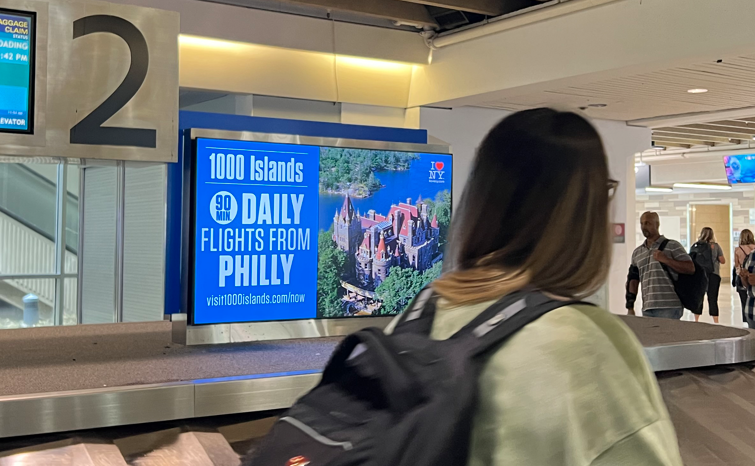
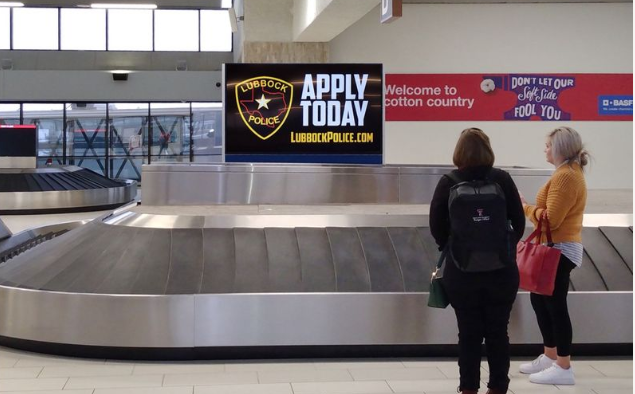
- A twelve-gate single terminal with no competing airport in the region produces concentrated, monopolised passenger flow and advertising clutter close to negligible. A single brand can achieve near-complete visual ownership of the passenger environment, which is unattainable at any hub at any price.
- Dwell time is driven by single-terminal processing, connection-dependent itineraries through Dallas-Fort Worth and Houston, and the habit of arriving early in a community where the airport sits four to five miles from downtown. Passengers are unhurried and attentive, which supports detailed, specification-heavy creative that hub environments cannot carry.
- Premium environment signalling comes from audience composition and the completed renovation rather than from facility opulence. Association with the region's agricultural, university and medical leadership carries real weight with a trust-driven local business community where reputation travels through personal networks.
- Masscom Global provides inventory access, placement precision and rapid execution at LBB, and integrates it into a West Texas and Southwest corridor plan spanning Dallas-Fort Worth, Houston, Denver, Las Vegas, Phoenix, Amarillo and Midland so agricultural, healthcare and energy brands reach the entire region through one coordinated buy.
Strategic Advertising Fit
Best Fit:
- Agricultural machinery, cotton harvesting and processing technology: No airport in the world places a brand closer to the world's largest contiguous cotton region and the owner-operators who control its equipment budgets.
- Crop inputs, seed, irrigation and water management technology: Directly targets irrigated and dryland cotton, sorghum, peanut and corn operators in a region where water management is the defining commercial constraint.
- Agricultural lending, crop insurance, land and water rights brokerage: Speaks to landowners whose wealth is illiquid and who actively seek financing, risk cover and valuation, with harvest-cycle timing that is highly predictable.
- Dairy equipment, animal health, genetics and facility construction: Matches one of the fastest expanding dairy regions in the United States, where operators commit very large capital sums.
- Regional healthcare, specialist medicine, medical technology and air ambulance: Reaches physicians and hospital leadership serving a referral catchment of more than one hundred counties, plus patients travelling for specialist care.
- Universities, agricultural and technical education, trade certification: Matches a university-anchored catchment with roughly forty thousand students, a health sciences centre and strong first-generation education demand.
- Wind, solar, energy services and lease advisory: Targets landowners negotiating renewable leases and royalty holders in one of the densest renewable corridors in the country.
- Money transfer, remittance, telecom and consumer finance: Serves a large agricultural and dairy workforce with high transfer volume and strong Spanish-language response.
Brand Alignment at a Glance:
| Category | Fit |
|---|---|
| Agricultural machinery and cotton technology | Exceptional |
| Agricultural lending, insurance and land brokerage | Exceptional |
| Dairy equipment and animal health | Strong |
| Regional healthcare and medical technology | Strong |
| Remittance, telecom and consumer finance | Strong |
| Energy, wind and lease advisory | Moderate |
| Universities and technical education | Moderate |
| Duty free, status luxury and international residency | Poor fit |
Event and Seasonality Analysis
- Event Strength: Medium
- Seasonality Strength: High
- Traffic Pattern: Seasonal, aligned to the agricultural and academic calendars with a distinct autumn double peak
Strategic Implication:
Budget should follow the cotton and academic calendars rather than the general travel calendar. The October to January harvest and ginning period is the single highest-return window for agricultural advertisers, because that is when capital expenditure, equipment replacement and financing decisions concentrate. January to April captures cotton industry meetings, pre-planting input purchasing and agricultural financing. August to October combines university move-in and semester start with the football season, the regional fair and the beginning of harvest, making it the highest-volume period of the year. Remittance and telecom advertisers should weight toward November, December and the Easter period when cross-border transfer volume peaks. A modest continuous layer is justified because medical referral and university travel runs year-round. Masscom Global structures campaigns around this rhythm rather than spreading spend evenly, which is how advertisers extract genuine value from an airport of this scale.

Poor Placement and Delays Affect Airport Campaigns
We help you move faster, access better inventory, and get it right now.
Talk to an ExpertFinal Strategic Verdict
Lubbock Preston Smith International will never justify a reach-based media buy, and advertisers should not attempt one. What it offers is near-total ownership of the only air gateway serving the world's largest contiguous cotton region, one of the fastest expanding dairy corridors in the United States, a research university of roughly forty thousand students with a health sciences centre attached, and the hospital referral system for more than one hundred counties across West Texas and eastern New Mexico. With 563,180 enplanements in 2024, up 3.65 percent, twelve gates, one terminal, and no alternative airport within 145 kilometres, every impression lands on someone with a specific reason to fly and a specific commercial interest in this region. For agricultural machinery, cotton technology, crop inputs, farm lending, land and water brokerage, dairy equipment, regional healthcare, energy lease advisory, money transfer and telecom brands, the effective cost per relevant contact here can outperform airports many times its size. For luxury, duty free and international residency brands, it offers nothing worth buying. Masscom Global knows exactly which of those two lists a client belongs on and has the corridor access to build a West Texas plan that works from Lubbock through Dallas-Fort Worth, Houston and Denver.
About Masscom Global
Masscom Global is a premium international airport advertising and media buying agency operating across 140 countries. With deep expertise in airport OOH, premium publications, and high-net-worth audience targeting, Masscom helps brands reach the world's most valuable travellers at the moments that matter most. For advertising packages, media rates, and campaign planning at Lubbock Preston Smith International Airport and airports across the globe, contact Masscom Global today.
Frequently Asked Questions
How much does airport advertising cost at Lubbock Preston Smith International Airport?
Cost at LBB varies by format, position, duration and seasonal demand, and entry costs sit among the lowest of any commercial airport in Texas given the twelve-gate single-terminal scale. That low base is precisely what makes long-duration ownership of the environment viable for regional agricultural, healthcare and B2B advertisers. Demand peaks around the October to January harvest period and the August to October university and football season. Multi-airport West Texas and Southwest packages change the economics further. Contact Masscom Global for current rates and availability.
Who are the passengers at Lubbock Preston Smith International Airport?
Predominantly residents of the South Plains, West Texas and eastern New Mexico travelling for business, medical or family reasons. The mix includes cotton, dairy and cattle owner-operators, agricultural cooperative leadership, university faculty administrators and student families, physicians and patients connected to a referral catchment of more than one hundred counties, wind, solar and oil and gas personnel, regional business owners, and a substantial Mexican, Guatemalan and Honduran agricultural workforce.
Is Lubbock Preston Smith International Airport good for luxury brand advertising?
No. Passenger volume is modest, there is no scheduled international service or duty free environment, and regional wealth is held in farmland, water rights, cattle and lease income rather than expressed through luxury consumption. Advertisers seeking high-net-worth luxury audiences in Texas should look to Dallas, Houston, Austin and the private aviation focused fields. Masscom Global will advise against a luxury buy here rather than sell one.
What is the best airport in West Texas to reach agribusiness and landowner decision makers?
For volume, Dallas-Fort Worth and Houston lead. For concentration and efficiency, Lubbock is arguably the strongest single choice, because it is the sole air gateway to the world's largest contiguous cotton region, an expanding dairy corridor and a major university and medical centre, with no competing airport within 145 kilometres. Amarillo, Midland and Abilene offer complementary reach across the Panhandle and Permian. The strongest approach is a corridor buy combining Dallas-Fort Worth reach with the regional airports inside the farming economy, which is how Masscom Global builds West Texas plans.
What is the best time to advertise at Lubbock Preston Smith International Airport?
October to January for the cotton harvest and ginning season, which is the highest commercial intent window of the year. January to April for cotton industry meetings, pre-planting input purchasing and agricultural financing. August to October for university move-in, semester start, football season and the regional fair, which together deliver the highest passenger volume. November, December and the Easter period for remittance and telecom advertisers when cross-border transfer volume peaks.
Can international real estate developers advertise at Lubbock Preston Smith International Airport?
Selectively, and only in the right direction. Mexican and Central American developers, mortgage providers and construction finance brands targeting the diaspora have a real and underserved audience, with family-linked property activity concentrated in Chihuahua, Durango and Zacatecas, and the Old Colony Mennonite community around Seminole holding substantial Chihuahua farming and property interests. Domestic second-home developers in Ruidoso, Red River, Angel Fire, Taos and the Colorado mountains reach this catchment's default recreational property market. Developers marketing luxury property in Dubai, Southern Europe or the Caribbean will find no meaningful audience here.
Which brands should not advertise at Lubbock Preston Smith International Airport?
Duty free and travel retail, given no scheduled international passenger service. Overt status luxury, watches, jewellery and international fashion, which misread a land-based, understated wealth profile. International residency and citizenship-by-investment advisory, because demand is minimal and the real immigration need runs the other way. Foreign tourism boards and long-haul destination marketing, because the passenger base connects through Dallas-Fort Worth and Houston. Any mass-reach FMCG campaign dependent on impression volume.
How does Masscom Global help brands advertise at Lubbock Preston Smith International Airport?
Masscom Global delivers candid catchment intelligence on which categories actually work at this scale, inventory access and placement in a twelve-gate terminal where a single brand can own the environment, campaign timing built around the cotton harvest, university and remittance calendars rather than the general travel calendar, bilingual creative guidance for a genuinely two-language audience, and integration into a wider West Texas and Southwest corridor plan spanning Dallas-Fort Worth, Houston, Denver, Las Vegas, Phoenix, Amarillo and Midland. Book a fifteen minute planning call to review availability, rates and corridor options.