

Airport at a Glance
| Field | Detail |
|---|---|
| Airport | Green Bay Austin Straubel International Airport |
| IATA Code | GRB |
| Country | United States of America |
| City | Green Bay (Ashwaubenon / Brown County), Wisconsin |
| Annual Passengers | 695,150 (12 months ending February 2026) |
| Primary Audience | Corporate and manufacturing executives, affluent leisure and second-home owners, sports and event travellers |
| Peak Advertising Season | April to October, plus November to December holiday and NFL season window |
| Audience Tier | Tier 3 by scale, Tier 2 by audience income quality |
| Best Fit Categories | Private aviation and business jet services, wealth management and banking, international real estate and second homes, industrial B2B and logistics |
GRB is not a volume buy and should never be planned as one. It is a precision buy. Roughly 695,000 annual passengers move through a single compact terminal, which means near-total unavoidable exposure for any brand placed correctly, at a fraction of the cost of a hub environment. The passenger mix is unusually senior: Northeast Wisconsin is headquarters territory for packaging, paper, trucking, shipbuilding, insurance and banking, and those companies fly their leadership through GRB rather than driving three hours to a hub. For advertisers, this is one of the highest executive-per-thousand-passengers ratios available in the American Midwest.
The second reason GRB matters is discretionary wealth. This catchment feeds Door County, one of the Upper Midwest's most established second-home and lakefront property markets, and it feeds a snowbird corridor that moves capital and residency south every winter into Florida, Arizona and increasingly the Caribbean and Mexico. Layer on the Green Bay Packers, a global sports brand that pulls high-spend visitors into a city of only 100,000, and the annual EAA AirVenture gathering 50 minutes south that brings the world's largest concentration of aircraft owners and pilots into the region. GRB delivers audiences whose spending power has no relationship to the airport's passenger count.
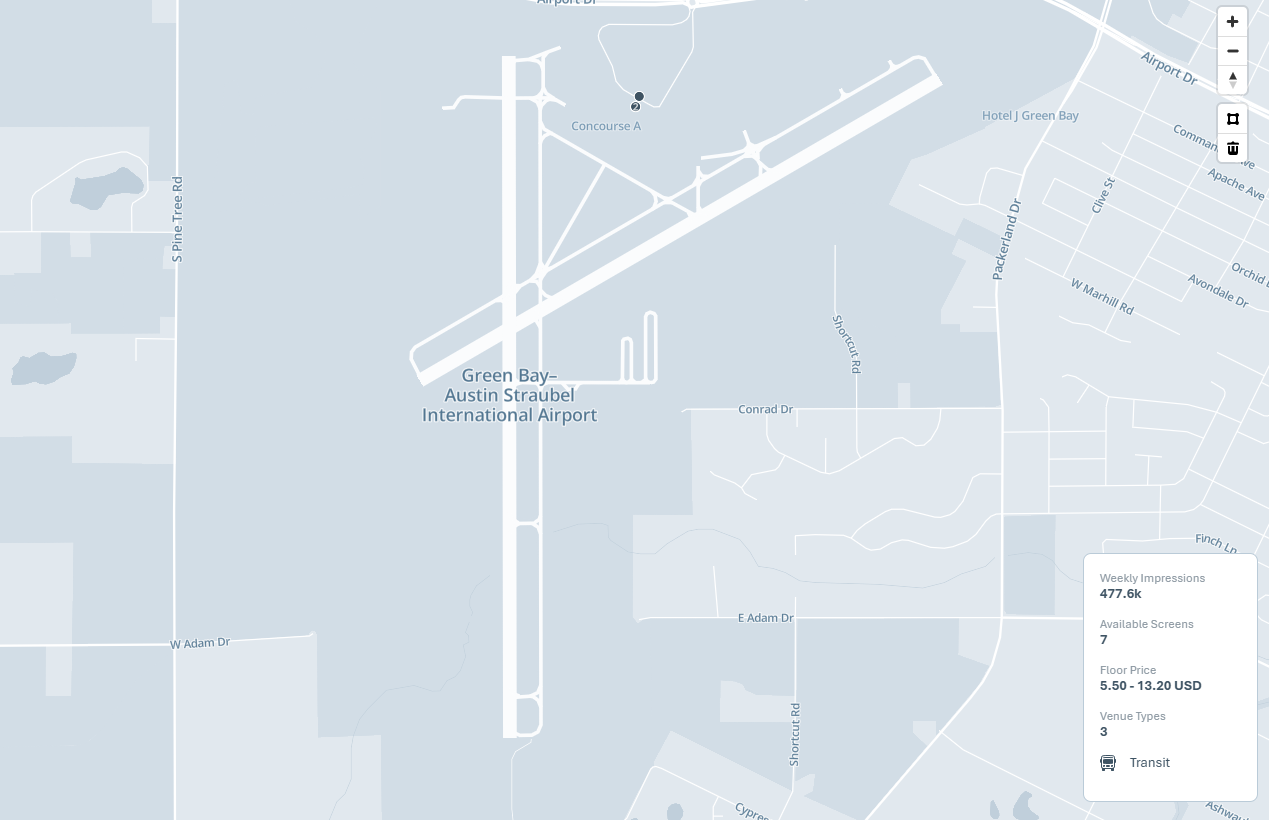
Advertising Value Snapshot
- Passenger scale: 695,150 passengers in the twelve months to February 2026, with 2025 the strongest year since 2011 and double-digit monthly growth through the second half of 2025.
- Traveller type: Corporate and manufacturing decision-makers, affluent leisure and second-home owners, sports and event visitors.
- Airport classification: Tier 3 by scale, Tier 2 by audience income quality. Non-hub primary commercial service facility with hub-grade corporate passenger composition.
- Commercial positioning: The business gateway to Northeast Wisconsin's manufacturing and logistics headquarters belt, and the commercial arrival point for Packers and Door County travel.
- Wealth corridor signal: GRB sits on the Wisconsin industrial wealth corridor, feeding capital outbound to Florida, Arizona and offshore residency markets, and inbound to Door County property.
- Advertising opportunity: A single-terminal footprint means a brand can own the passenger journey end to end rather than compete for share of attention across sprawling concourses. Masscom Global structures GRB campaigns around arrivals, security and gate-hold dwell zones where corporate and premium leisure traffic concentrates. We plan and execute GRB alongside the wider US airport network so brands can pair precision reach here with scale elsewhere.
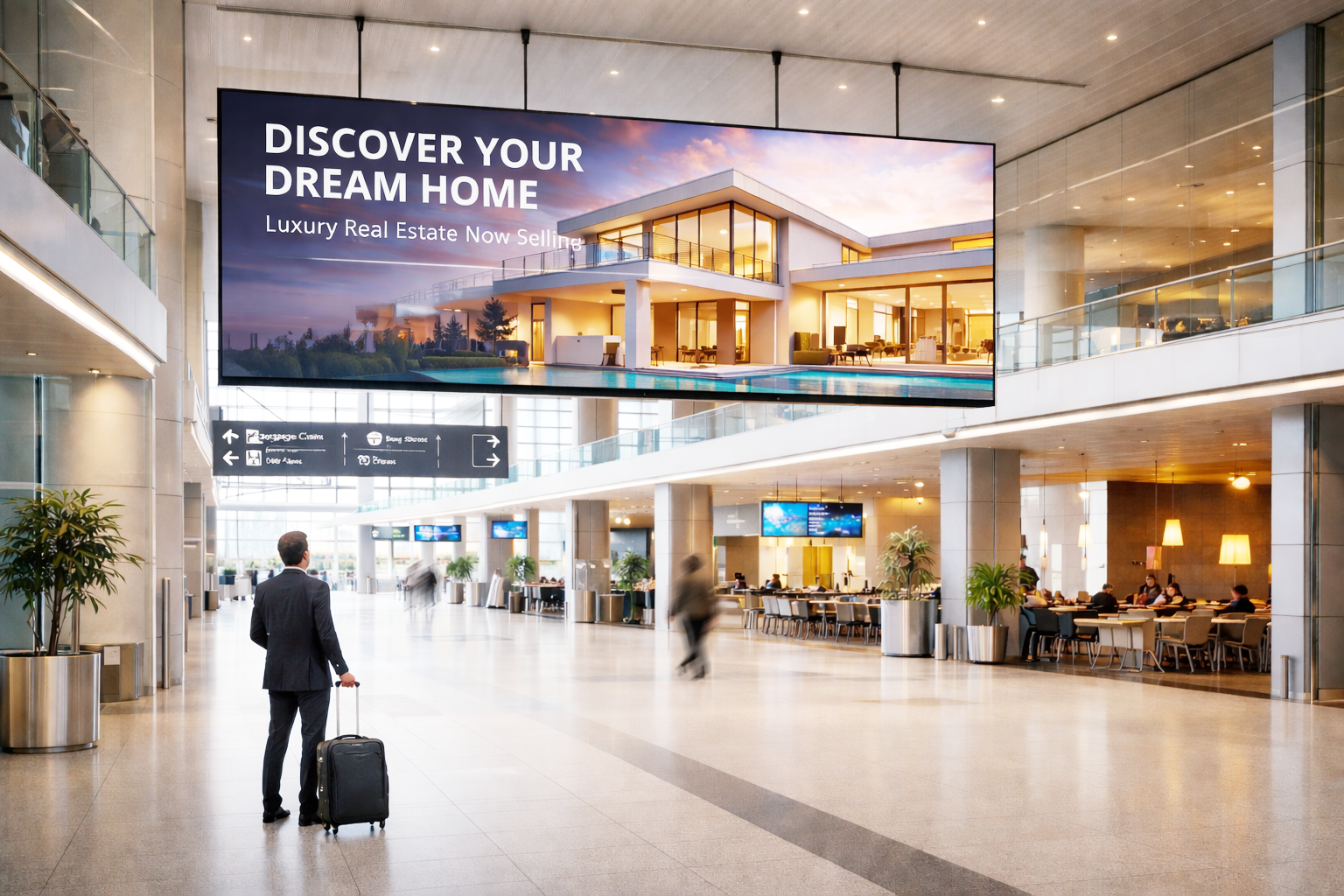
Airport Advertising is Complex to Get Right
We help you execute faster, with proven results and local insight most planners lack starting now.
Talk to an ExpertCatchment Area and Economic Drivers
Top 10 Cities within 150 km, Marketer Intelligence:
- Green Bay: Corporate headquarters and healthcare employment base producing senior salaried households with stable, high discretionary spend and strong brand loyalty behaviour.
- De Pere: Highest-income residential belt in the catchment, home to executive families and a private college audience, ideal for wealth management and premium education messaging.
- Appleton: Second economic engine of the catchment with paper, packaging and regional aviation employers, delivering a technical and managerial audience receptive to B2B and financial categories.
- Oshkosh: Defence, speciality vehicle and aviation manufacturing hub, and host to the world's largest general aviation gathering, producing an aircraft-owner and industrial-buyer audience found nowhere else at this scale.
- Neenah: Concentrated consumer products and materials industry wealth, with a long-established old-money residential profile that responds to legacy and heritage brand positioning.
- Sheboygan: Manufacturing plus a nationally known luxury golf and resort economy, producing a mixed audience of plant leadership and high-spend visitors.
- Manitowoc: Shipbuilding, cold storage and marine engineering employment, generating a project-procurement audience relevant to industrial and logistics advertisers.
- Sturgeon Bay and Door County: Second-home and lakefront property market, delivering the most asset-rich seasonal audience in the catchment for real estate, marine and luxury retail categories.
- Fond du Lac: Agricultural equipment, machining and boating wealth, producing owner-operator business audiences with direct purchase authority.
- Marinette and Menominee: Naval shipbuilding contract economy with a rising, well-paid skilled workforce and a growing appetite for premium consumer finance and vehicle categories.
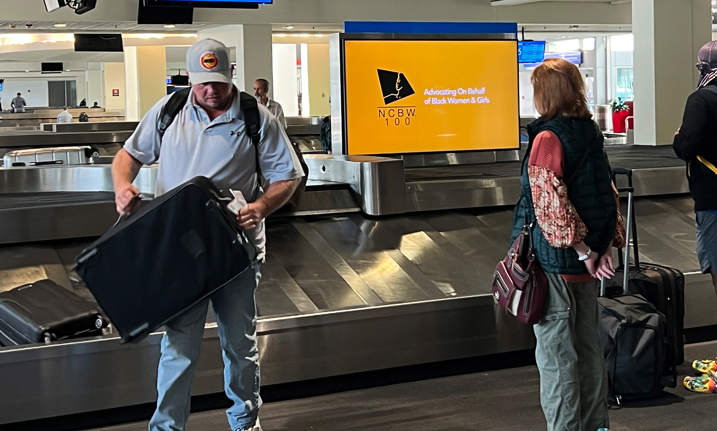
HNI and Diaspora Intelligence: GRB does not carry a large international diaspora flow, so the commercially relevant movement here is domestic high-net-worth migration. The dominant pattern is the seasonal wealth shift: affluent Northeast Wisconsin households maintaining primary residences in the catchment and second properties in Florida, Arizona, Texas and the Carolinas, travelling repeatedly between the two across a defined winter window. A second layer is owner-operator wealth, business founders in packaging, trucking, marine and machining who hold private aviation access alongside commercial travel. These are asset holders rather than salary earners, which changes the advertiser categories that convert.
Economic Importance: The catchment economy runs on paper and packaging, food processing, freight and logistics, speciality vehicle and marine manufacturing, insurance and regional banking, and healthcare. Each produces a distinct audience: packaging and marine generate procurement and engineering leadership, logistics generates fleet and capital-equipment buyers, banking and insurance generate a professional services audience with investable surplus. Advertisers should read GRB as a business-to-business environment first and a premium consumer environment second.
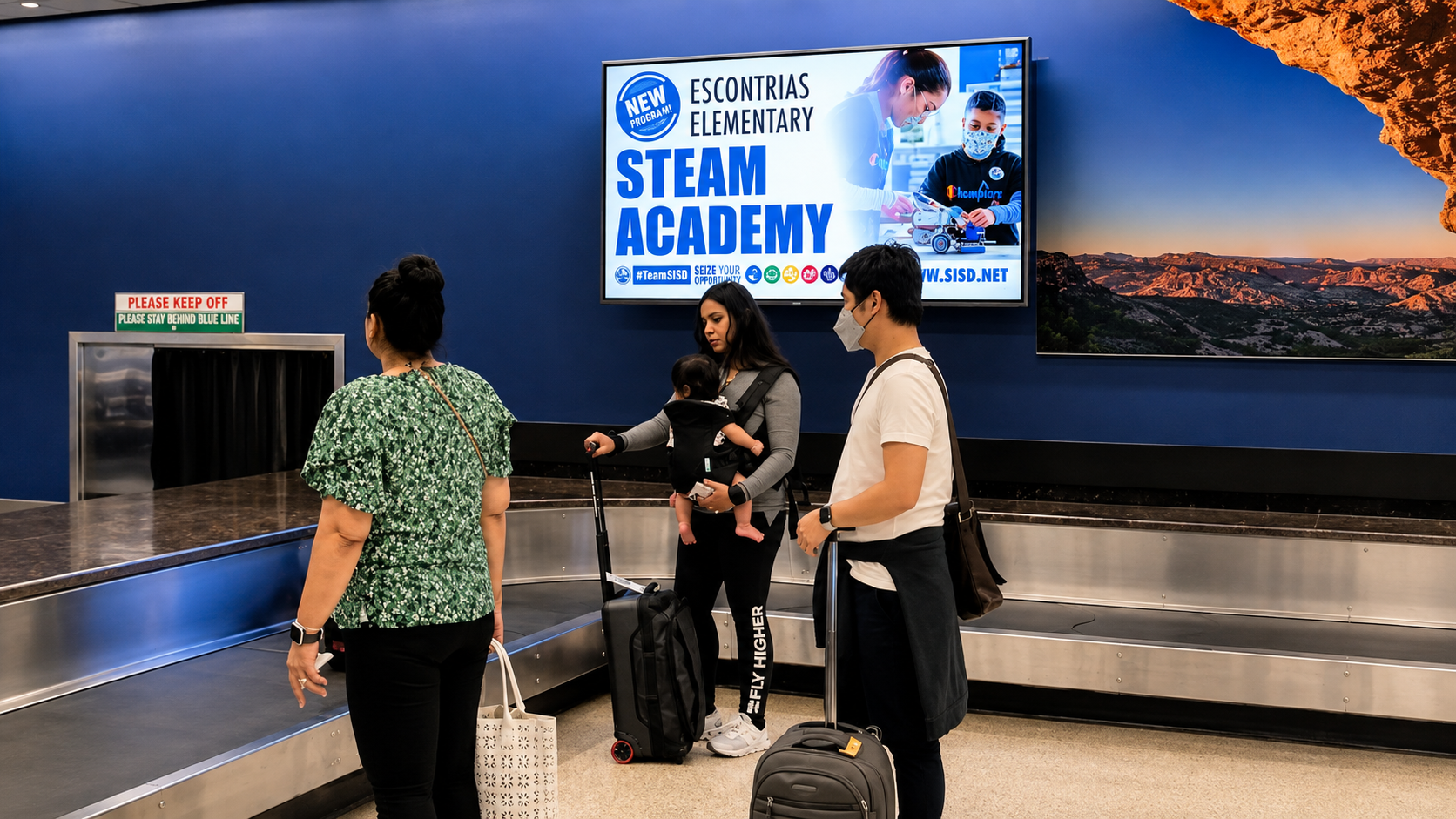
Business and Industrial Ecosystem
- Paper, packaging and converting: Produces plant leadership, procurement heads and engineering travellers, the strongest fit for industrial equipment, materials and enterprise technology advertisers.
- Freight, trucking and logistics: One of the largest concentrations of transport management in the Midwest, delivering fleet buyers and supply chain decision-makers with high-value contract authority.
- Marine and speciality vehicle manufacturing: Long-cycle defence and commercial contracts create a stable, well-compensated technical audience and sustained inbound supplier travel.
- Banking, insurance and healthcare systems: Generates a professional audience with investable income, the core target for wealth management, private banking and premium lifestyle categories.
Passenger Intent, Business Segment: Business travellers at GRB are flying to and from hub connections for supplier meetings, plant visits, contract negotiation and corporate reporting. They are time-compressed, repeat travellers who see the same environment weekly or monthly, which makes frequency-based placement unusually effective here. Categories that intercept them best are private aviation and charter, business banking, enterprise software and industrial services, fleet and commercial vehicles, and executive relocation.
Strategic Insight: The commercial value of GRB's business audience lies in seniority per impression. In a hub, a brand pays for volume and absorbs enormous waste. At GRB, a high proportion of the traffic is regional leadership from companies with national and international operations, meaning a single terminal reaches procurement authority that would otherwise require multi-airport buying. For B2B advertisers with long sales cycles and high deal values, the cost per qualified decision-maker at GRB is among the most efficient in the United States.
Tourism and Premium Travel Drivers
- Lambeau Field and the Packers ecosystem: A globally recognised sports property drawing high-spend visitors into a small city, with a mixed-tier audience that includes corporate hospitality and premium ticket holders.
- Door County: The catchment's luxury leisure and second-home destination, producing repeat affluent arrivals across late spring through autumn who have already committed to significant property and lifestyle spend.
- EAA AirVenture Oshkosh: The world's largest aviation gathering, concentrating aircraft owners, pilots and aviation executives in the catchment for one week, an audience with exceptional purchase power in aviation, finance and luxury categories.
- Kohler resort and golf corridor: Championship golf and resort demand pulling national and international premium leisure travellers into the southern catchment.
Passenger Intent, Tourism Segment: Leisure passengers at GRB have almost always pre-committed to high spend before they arrive: game tickets, resort stays, charter bookings, property visits. That pre-commitment means they arrive in a spending mindset rather than a budgeting one, which is the ideal state for luxury retail, hospitality, financial services and real estate messaging. Winter outbound leisure is a separate and equally valuable segment, with warm-weather routes carrying second-home owners and long-stay travellers. Categories that benefit most are premium real estate, wealth management, luxury automotive, private aviation and destination tourism boards.
Travel Patterns and Seasonality
Peak seasons:
- April to June: Business travel intensity plus the opening of the Door County season and spring event calendar.
- July and August: Strongest leisure months, driven by lakefront season and the aviation gathering, with July recording a 13.2% year-on-year rise in 2025.
- September to early January: Football season combined with corporate travel and the holiday window, producing the year's most reliable dual-purpose traffic.
- January to March: Outbound premium leisure peak on warm-weather routes carrying second-home owners south.
Monthly signals: Summer 2025 delivered increases of 11% in June, 13.2% in July and close to 5% in August against 2024, and November 2025 rose 11.7% year on year as airlines added seats and frequency.
Event-Driven Movement:
- EAA AirVenture Oshkosh (July): Global aviation gathering bringing aircraft owners, pilots and aviation industry leadership into the catchment. The single highest-value advertising window of the year for aviation, finance and luxury brands.
- NFL regular season home games (September to January): Repeated high-volume inbound waves of visiting supporters and corporate hospitality groups, ideal for short-burst campaign flighting around specific weekends.
- Door County peak season (June to October): Sustained affluent leisure and property-buyer arrivals, the prime window for real estate and luxury lifestyle advertisers.
- Kohler golf and resort events (May to September): Premium leisure and corporate entertainment travel with a national and international profile.
- Holiday and Thanksgiving period (late November to December): Peak family and diaspora-style domestic reunion travel with elevated retail and gifting receptivity.
It’s Not Just Where You Advertise - It’s How Fast You Execute
We combine local insight with fast rollout to deliver results for you, now.
Talk to an ExpertAudience and Cultural Intelligence
Top 2 Languages:
- English: The overwhelming primary language of the catchment and the default for all creative. Messaging should be direct, value-led and free of ornamental luxury language, which underperforms with Midwest business audiences.
- Spanish: The most significant second language, concentrated in food processing, manufacturing and agricultural employment centres across the Fox Valley and Green Bay. Relevant for remittance, telecom, consumer finance and travel categories.
Major Traveller Nationalities: The passenger base is predominantly American domestic, with inbound Canadian traffic and international business travellers arriving via hub connections from Europe and Asia tied to packaging, marine and speciality vehicle contracts. Sports tourism adds a genuinely international layer, with Packers supporters travelling from Canada, the United Kingdom, Germany, Mexico and Brazil for home games. For advertisers, this means creative should be built for an American core audience with clear, non-idiomatic language that also reads cleanly to international sports and business visitors.
Religion, Advertiser Intelligence:
- Catholic (approximately 30 to 35%): Deeply established through Belgian, German, Irish and Polish heritage communities. Drives Christmas and Easter travel peaks, First Communion and confirmation season family gatherings in spring, and strong family-gifting spend. Retail, jewellery, travel and family financial products convert well in these windows.
- Protestant, primarily Lutheran (approximately 25 to 30%): A conservative-saving, asset-accumulating household profile with high home and property ownership. Christmas and Thanksgiving drive the heaviest travel. Wealth preservation, insurance, estate planning and long-term investment messaging performs strongly.
- Native American traditions, Oneida and Menominee Nations (locally significant): Tribal enterprise, hospitality and gaming operations sit immediately adjacent to the airport, generating year-round employment, conference traffic and cultural event travel. Relevant for hospitality, entertainment and regional tourism advertisers.
- Religiously unaffiliated and other faiths (approximately 25 to 30%): A younger, professional and mobile segment concentrated in the university and healthcare economy, responsive to technology, experience-led travel and digital financial services.
Behavioral Insight: This audience is wealth-holding but understated. Purchase decisions are made on durability, service reliability and long-term value rather than status signalling, and buyers research heavily before committing. Overtly aspirational luxury creative reads as inauthentic here and underperforms. What works is proof: performance claims, yield figures, warranty and service credentials, and named local presence. Advertisers who lead with substance and specificity convert far better than those leading with prestige imagery.
Outbound Wealth and Investment Intelligence
The outbound passenger at GRB is commercially distinctive because the wealth is closely held and self-directed. Much of the catchment's affluence sits with business owners and multi-generational family firms in packaging, freight, marine and agriculture, meaning capital deployment decisions are made by the traveller in the seat rather than an institutional committee. Their capital moves in three directions: domestic sunbelt property, offshore residency and lifestyle assets, and next-generation education. This is a low-volume, high-value outbound profile that rewards precision placement over mass reach.
Outbound Real Estate Investment: The dominant outbound property flow is into Florida, particularly the Gulf Coast, Naples, Sarasota and Fort Myers, followed by Arizona around Scottsdale and Phoenix, then Texas and coastal Carolina markets. Beyond the domestic sunbelt, this audience is active in Mexican resort property around Los Cabos and the Riviera Maya, and in Costa Rica, Belize and Portugal for lifestyle and yield-driven purchases. Tax residency advantages in Florida and Texas are a primary driver, alongside climate escape from Wisconsin winters. International developers targeting American self-made wealth should treat GRB as an unusually clean channel, because the winter outbound window concentrates exactly this buyer into a single small terminal.
Outbound Education Investment: Families in this catchment invest heavily in higher education, with outbound flows into major American universities across the Midwest, the East Coast and the Sunbelt, and a growing appetite for international undergraduate and postgraduate study in Canada, the United Kingdom, Ireland and continental Europe. Study-abroad participation is high among the region's private colleges and state universities. Household spending profiles support full-cost placement without financial aid dependence in a meaningful share of cases. International universities, boarding schools and education advisory firms reach a decision-making parent audience at GRB at a cost point no metropolitan hub can match.
Outbound Wealth Migration and Residency: Second-residency interest in this audience is driven by lifestyle optionality and tax planning rather than mobility necessity, since the American passport already delivers access. The most relevant programmes are Caribbean citizenship by investment across St Kitts and Nevis, Grenada, Antigua and Dominica, alongside European residency routes in Portugal, Greece, Italy and Spain. Grenada holds particular appeal for its treaty access. Retirement and long-stay residency in Costa Rica, Panama and Mexico is a strong parallel demand among the pre-retirement business owner segment.
Strategic Implication for Advertisers: Brands on both sides of this corridor should treat GRB as a priority precision buy: Florida and Arizona developers reaching outbound buyers, and Caribbean, European and Latin American residency programmes reaching self-directed capital with no institutional gatekeeper. The audience is asset-rich, decision-empowered and reachable in a single terminal environment. Masscom Global activates both directions of this corridor simultaneously, pairing GRB placement with airport inventory in the destination markets so the same buyer is intercepted at origin and arrival.
Airport Infrastructure and Premium Indicators
Terminals:
- A single passenger terminal with two concourses serving all scheduled commercial traffic, compact enough that virtually every departing passenger passes the same core circulation points. This creates near-complete audience coverage from a limited number of positions, which is rare and highly efficient for advertisers.
- Concourse composition splits between legacy carrier hub-connection traffic, which skews corporate, and low-fare leisure operations, which skew family and seasonal warm-weather travel. This allows audience-specific placement within a single small footprint.
Premium Indicators:
- Premium passenger handling is delivered through carrier priority services and hub-connection first and business cabins rather than large standalone lounge estates, which means the premium audience is visible in the general terminal environment rather than shielded inside a lounge. For advertisers, this is an advantage: high-value passengers are exposed to public-area media.
- Two established fixed-base operations support significant private and charter aviation, including corporate fleets, aircraft ownership traffic and heavy seasonal general aviation movement tied to the regional aviation calendar. GRB records over 100 based aircraft with a substantial jet component.
- A full-service hotel and conference facility sits immediately adjacent to the airport alongside a major tribal entertainment and gaming complex, creating a continuous business, event and hospitality footprint at the airport doorstep.
- GRB has been recognised nationally as a leading non-hub airport for service quality and on-time performance, a credential that elevates brand association for advertisers placed in the environment.
Forward-Looking Signal: A current terminal area master plan prioritises terminal and landside improvement, expanded parking and adjacent real estate development, while airlines have responded to demand with double-digit capacity increases and new seasonal routes. Traffic has moved past pre-pandemic levels and is at its highest point since 2011, which means audience volume, route breadth and premium composition are all improving at once. Historically, inventory pricing at non-hub airports lags demand growth by several cycles. Masscom Global advises clients to secure GRB positions now, while rates still reflect the airport's previous traffic profile rather than its current trajectory.
Airline and Route Intelligence
Top Airlines: Delta Air Lines, American Airlines, United Airlines, Frontier Airlines and Sun Country Airlines operate scheduled service, supported by two fixed-base operations handling private and charter aviation.
Key International Routes: GRB does not operate scheduled long-haul international service. International access is delivered through connections at Detroit, Minneapolis, Chicago, Atlanta, Denver and Charlotte, feeding transatlantic and transpacific networks.
Domestic Connectivity: Core year-round hub connections to Detroit, Minneapolis, Chicago and Atlanta, with additional service to Denver and Charlotte. Seasonal leisure service operates to Orlando, Las Vegas, Phoenix and Fort Myers, with additional capacity layered in around major regional events.
Wealth Corridor Signal: The route map tells advertisers exactly who is in the terminal. The Detroit, Minneapolis, Chicago, Atlanta and Charlotte connections are corporate corridors carrying executives to global hub networks, and these are the flights where B2B, private aviation and wealth management messaging lands. The Florida, Arizona and Nevada services are asset corridors, carrying second-home owners and pre-retirement wealth rather than budget holidaymakers, which is why real estate and residency advertisers should weight toward winter. The absence of scheduled long-haul is not a weakness for advertisers, it simply means the international audience here is hub-connecting corporate traffic rather than transit volume, and it is more concentrated and easier to target as a result.
Media Environment at the Airport
- Single-terminal scale with limited advertising clutter compared to hub environments, meaning individual placements achieve dominance rather than competing for attention across dozens of competing positions.
- Dwell time is driven by hub-connection scheduling, security processing and the airport's own on-time culture, which encourages early arrival. Passengers spend concentrated time in a small number of predictable zones, producing high repeat exposure per traveller.
- Premium environment signals are strong for the airport's size: national service recognition, significant private aviation activity, adjacent conference and hospitality infrastructure, and a passenger base weighted toward corporate seniority. Brand association here reads as credible and locally invested rather than transactional.
- Masscom Global provides inventory access, placement precision and rollout speed at GRB, matching format and position to the specific passenger flow an advertiser needs, whether that is corporate hub-connection traffic, seasonal warm-weather outbound, or event-driven inbound waves.
Strategic Advertising Fit
Best Fit:
- Private aviation, charter and aircraft ownership services: The catchment holds one of the densest aircraft-owner and pilot populations in the country, amplified by a world-scale annual aviation event.
- Wealth management, private banking and estate planning: A closely held business-owner audience with succession and liquidity events approaching and no institutional gatekeeper.
- International and domestic real estate developers: Direct access to an active outbound second-home buyer flow into Florida, Arizona, Mexico and Europe.
- Industrial B2B, enterprise technology and capital equipment: Procurement and engineering leadership from packaging, marine, logistics and speciality vehicle manufacturers.
- Commercial fleet, trucking and logistics services: One of the Midwest's largest concentrations of transport decision-making authority.
- Premium automotive and marine: Lakefront and Door County ownership culture drives sustained boat, vehicle and toy-asset purchasing.
- Residency and citizenship by investment programmes: Self-directed American wealth exploring Caribbean and European optionality.
- Destination tourism boards and premium hospitality: Winter outbound and warm-weather leisure demand with high pre-commitment spend.
Brand Alignment at a Glance:
| Category | Fit |
|---|---|
| Private aviation and charter | Exceptional |
| Wealth management and private banking | Exceptional |
| International real estate and second homes | Strong |
| Industrial B2B and capital equipment | Strong |
| Premium automotive and marine | Strong |
| Residency and citizenship programmes | Moderate |
| Luxury fashion and hard luxury retail | Moderate |
| Mass-market fast fashion and impulse retail | Poor fit |
Who Should Not Advertise Here:
- Mass-market fast fashion and impulse consumer retail: Passenger volume is far too low to deliver reach economics, and the audience mindset is not browse-driven.
- Youth-focused entertainment, gaming and nightlife brands: The passenger age and purpose profile skews business, family and pre-retirement leisure, with no meaningful young transit population.
- Transit-dependent duty free and travel retail models: There is no scheduled long-haul international traffic to support duty free purchase behaviour at scale.
- Local service businesses with no travel relevance: The audience is in motion and out of market, so location-bound service advertising wastes the environment's core value.
Event and Seasonality Analysis
- Event Strength: High
- Seasonality Strength: High
- Traffic Pattern: Dual-Peak with strong event overlay
Strategic Implication: Advertisers should reject flat annual flighting at GRB and build around two distinct peaks with different audiences. The June to October window belongs to affluent leisure, property buyers and the aviation audience, making it the priority for real estate, private aviation and luxury lifestyle spend. The September to January window belongs to combined corporate travel, football-driven inbound and holiday movement, making it the priority for B2B, financial services and retail, with the January to March outbound warm-weather window reserved for residency and destination property campaigns. Masscom Global structures GRB campaigns around this rhythm, concentrating weight into the July aviation week, the autumn game-day sequence and the winter outbound corridor, where return on investment is measurably highest.

Poor Placement and Delays Affect Airport Campaigns
We help you move faster, access better inventory, and get it right now.
Talk to an ExpertFinal Strategic Verdict
GRB is the clearest example in the American Midwest of an airport whose advertising value has nothing to do with its passenger count. A single compact terminal delivers 695,150 annual travellers who include the procurement and executive leadership of a packaging, marine, freight and speciality vehicle economy of national significance, the second-home and lakefront wealth of Door County, one of the densest aircraft-owner populations in the country, and a winter outbound flow of self-directed capital moving into Florida, Arizona, Mexico and offshore residency programmes. Traffic is at its highest level since 2011, airlines are adding double-digit capacity, and a terminal master plan is underway, which means audience quality and volume are both rising while inventory pricing still reflects an earlier era. Brands in private aviation, wealth management, international real estate, industrial B2B and premium automotive will find their qualified audience here at a cost per decision-maker no hub can approach. Masscom Global brings the inventory access, placement precision and corridor-level intelligence needed to convert that efficiency into results, and to act while the pricing advantage still exists.
About Masscom Global
Masscom Global is a premium international airport advertising and media buying agency operating across 140 countries. With deep expertise in airport OOH, premium publications, and high-net-worth audience targeting, Masscom helps brands reach the world's most valuable travellers at the moments that matter most. For advertising packages, media rates, and campaign planning at Green Bay Austin Straubel International Airport and airports across the globe, contact Masscom Global today.
Frequently Asked Questions
How much does airport advertising cost at Green Bay Austin Straubel International Airport? Cost at GRB varies by format, terminal position, campaign duration and seasonal demand. Placements in high-dwell zones such as security exit, baggage claim and gate hold areas price differently from concourse circulation positions, and rates rise during the July aviation week, the autumn football sequence and the winter outbound leisure peak. Because GRB is a non-hub airport with rising traffic, current pricing still reflects an earlier traffic profile, which makes early commitment materially more efficient. Contact Masscom Global for current rate cards and availability.
Who are the passengers at Green Bay Austin Straubel International Airport? The passenger base is predominantly American domestic and splits into three clear groups. First, corporate travellers from Northeast Wisconsin's packaging, paper, freight, marine, banking and healthcare employers, connecting through Detroit, Minneapolis, Chicago and Atlanta. Second, affluent leisure travellers including Door County second-home owners and warm-weather outbound snowbirds heading to Florida, Arizona and Nevada. Third, event-driven inbound visitors for Packers home games and the regional aviation calendar, including international sports tourists. The profile skews older, higher-income and asset-owning compared to a typical airport of this size.
Is Green Bay Austin Straubel International Airport good for luxury brand advertising? It is strong for asset-led luxury and weaker for status-led luxury. Private aviation, wealth management, premium marine and automotive, high-value real estate and residency programmes perform well because the audience holds substantial closely held wealth and makes its own purchase decisions. Hard luxury retail and fashion perform less well, because passenger volume is too low for reach economics and the regional buying culture rewards durability and proof over prestige signalling. Luxury brands should adapt creative toward substance and service credentials rather than aspirational imagery.
What is the best airport in Wisconsin or the Upper Midwest to reach HNWI audiences? For raw volume, the region's large hubs will always deliver more impressions. For concentration of self-directed business-owner wealth per thousand passengers, GRB is exceptional. It is Wisconsin's fourth-busiest airport by enplanements, yet it serves a catchment containing the headquarters of nationally significant packaging, freight, marine and speciality vehicle companies, plus the Door County second-home market and one of the densest aircraft-owner populations in the United States. The correct strategy for most HNWI advertisers is a hub buy for scale paired with GRB for precision, which Masscom Global plans and executes as a single coordinated campaign.
What is the best time to advertise at Green Bay Austin Straubel International Airport? There are three high-value windows. July delivers the year's single strongest concentration of aviation, finance and luxury-relevant audiences around the regional aviation gathering, with traffic up 13.2% year on year in July 2025. September to January combines corporate travel, football-driven inbound waves and the holiday peak, with November 2025 up 11.7% year on year. January to March is the priority window for real estate and residency advertisers, when outbound second-home and long-stay traffic to Florida and Arizona peaks. Flat annual flighting wastes budget at this airport.
Can international real estate developers advertise at Green Bay Austin Straubel International Airport? Yes, and it is one of the strongest categories at GRB. The catchment's affluent households are active buyers in Florida's Gulf Coast, Arizona, Texas and the Carolinas domestically, and internationally in Los Cabos and the Riviera Maya in Mexico, Costa Rica, Belize and Portugal. Because these buyers travel repeatedly through a single small terminal during a defined winter window, developers reach a pre-qualified property audience with minimal wastage. Masscom Global can activate the same buyer at origin in Green Bay and at arrival in the destination market.
Which brands should not advertise at Green Bay Austin Straubel International Airport? Mass-market fast fashion and impulse consumer retail should avoid GRB, because passenger volume cannot support reach-based economics and the audience is not in a browsing mindset. Youth entertainment, gaming and nightlife brands lack an audience, as the passenger profile is business, family and pre-retirement. Duty free and travel retail models dependent on international transit volume have no supporting traffic, since GRB operates no scheduled long-haul service. Purely local service businesses also misuse the environment, as this audience is leaving the market rather than buying within it.
How does Masscom Global help brands advertise at Green Bay Austin Straubel International Airport? Masscom Global delivers the full campaign chain: catchment and audience intelligence specific to Northeast Wisconsin, inventory access and placement selection matched to the passenger flow a brand needs, creative guidance calibrated to a proof-driven Midwest buying culture, seasonal flighting around the July aviation week and the autumn and winter peaks, and performance measurement across the campaign. Because we operate across 140 countries, we also connect GRB to the destination markets this audience invests in, so brands intercept the same buyer at both ends of the corridor. Book a fifteen minute planning call to review current availability and rates.