


Airport at a Glance
| Field | Detail |
|---|---|
| Airport | Fresno Yosemite International Airport |
| IATA Code | FAT |
| Country | United States |
| City | Fresno, California |
| Annual Passengers | 2,752,392 (2025, record) |
| Primary Audience | Agribusiness owners and farm operators, Mexico corridor family and community travellers, national park and Sierra tourism visitors |
| Peak Advertising Season | March, June to August, and the August to December harvest and holiday window |
| Audience Tier | Tier 2 |
| Best Fit Categories | Agricultural machinery and inputs, rural credit and business banking, remittance and payment services, premium and commercial automotive |
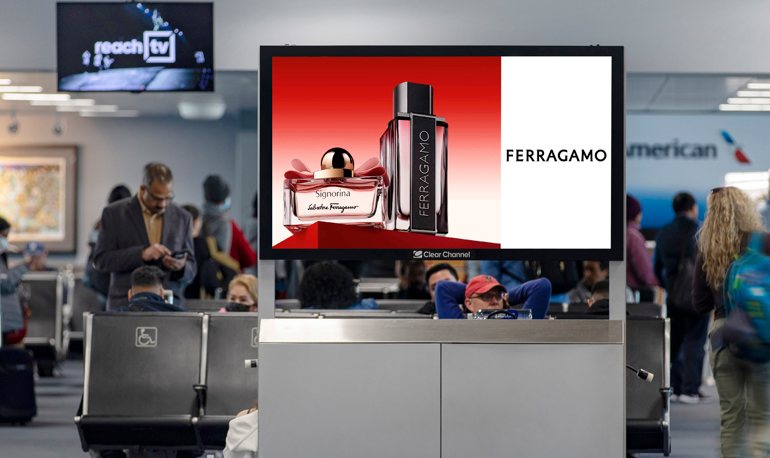
Fresno Yosemite International Airport served 2,752,392 passengers in 2025, its busiest year ever and a third consecutive year of growth, through a terminal that has just completed the largest expansion in the airport's history. Volume has more than doubled over the past decade, which tells advertisers something important: this is a market on a sustained upward curve rather than a mature one. The new Concourse B and International Arrivals Facility opened in December 2025, and the environment now supports premium brand placement that the previous terminal could not.
The audience is what makes FAT commercially distinctive. This is the gateway to California's Central Valley, an agricultural economy of extraordinary value producing almonds, pistachios, grapes, citrus, dairy and processing tomatoes, controlled by a landowning class that includes deep Punjabi Sikh, Armenian, Portuguese and Mexican-American farming dynasties. Layer on 433,636 passengers travelling between Fresno and Mexico in 2025, a figure growing 4% year on year, and a national park tourism corridor feeding Yosemite and Sequoia. The result is one terminal carrying agricultural capital, community and remittance travel, and international leisure spend simultaneously.
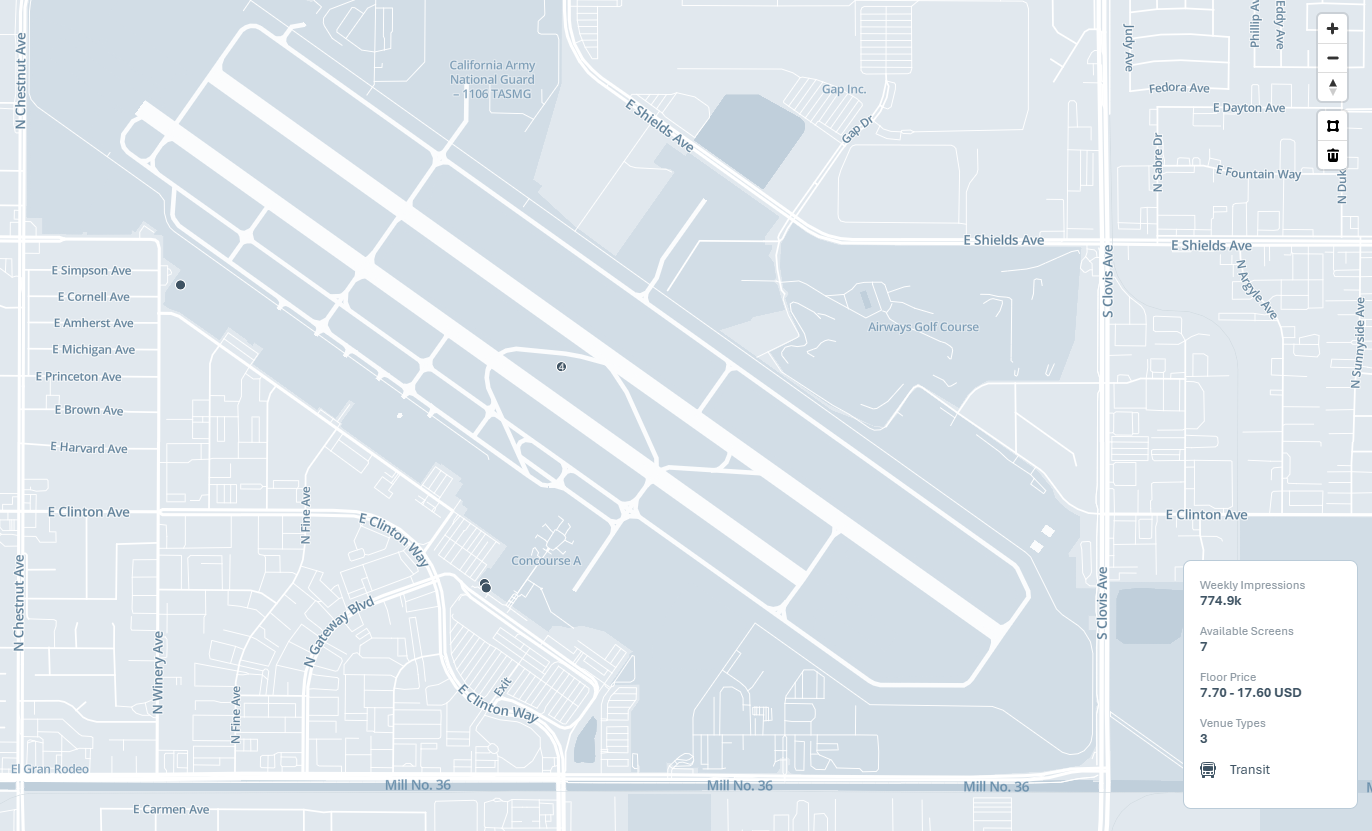
Advertising Value Snapshot
- Passenger scale: 2,752,392 passengers in 2025, a record and a 2.97% increase on 2024, with volume having more than doubled since 2014
- Traveller type: Agribusiness owners and farm operators, Mexico corridor community and family travellers, national park and Sierra tourism visitors
- Airport classification: Tier 2, a mid-size regional airport with Tier 1 audience quality in its agricultural ownership segment and genuine international traffic
- Commercial positioning: The air gateway to the world's most productive farm belt, and the closest commercial airport corridor to Yosemite and Sequoia
- Wealth corridor signal: FAT sits on the California to Mexico corridor for family, labour and property flows, and on the agricultural export corridor linking Valley producers to global buyers
- Advertising opportunity: A single terminal with consolidated processing means the entire departing audience converges on the same ticketing hall, checkpoint and concourse flow, so complete coverage is achievable from a controlled placement set. The newly opened Concourse B and International Arrivals Facility create fresh, uncluttered premium positions in an environment with no legacy inventory saturation. Masscom Global provides access across that full journey with the ability to weight placement toward agricultural business waves, Mexico boarding windows or peak tourism season.
Airport Advertising is Complex to Get Right
We help you execute faster, with proven results and local insight most planners lack starting now.
Talk to an ExpertCatchment Area and Economic Drivers
Top 10 Cities within 150 km, Marketer Intelligence:
- Fresno, CA: The commercial and wealth centre of the Valley, concentrating agribusiness ownership, food processing management, private healthcare, legal and financial services and a major university population. Highest receptivity to rural credit, machinery, premium automotive, healthcare and property messaging.
- Clovis, CA: The affluent residential counterpart to Fresno, holding farm-owning families, physicians and professionals with high household assets. Prime audience for wealth management, private education, luxury residential and premium retail.
- Visalia, CA: Citrus, dairy and diversified agriculture centre with substantial family-enterprise wealth and strong cooperative activity. Direct target for agricultural inputs, equipment financing, insurance and succession planning.
- Madera, CA: Almond, pistachio and vineyard belt with high per-acre land values and a large Punjabi Sikh and Mexican-American landowning community. Receptive to machinery, irrigation technology, rural finance and India and Mexico corridor travel messaging.
- Merced, CA: Dairy and row-crop economy plus a growing university presence, producing both agricultural operators and a young professional audience. Fits agricultural technology, telecom, education and value automotive.
- Tulare, CA: The heart of American dairy production and host to major agricultural exhibition activity, generating procurement-ready owners and international agricultural visitors. The strongest single B2B agricultural audience in the catchment.
- Hanford and Lemoore, CA: Row-crop agriculture combined with a significant naval aviation presence, producing an unusual dual audience of farm operators and military households with stable incomes and relocation travel.
- Porterville and the citrus belt, CA: Packing, cold chain and citrus ownership audience with export exposure. Aligns with logistics, cold chain technology, industrial services and trade finance.
- Selma, Kingsburg and Reedley, CA: Raisin, stone fruit and specialty crop communities with deep Punjabi Sikh, Armenian and Scandinavian farming heritage. High-value audience for rural credit, machinery, gold, insurance and international family travel.
- Los Banos and the west side, CA: Large-scale irrigated agriculture and a Bay Area commuter population, producing both major water-dependent operators and a high-income commuter segment with distinct travel needs.

NRI and Diaspora Intelligence:
FAT carries one of the most commercially valuable diaspora audiences of any mid-size American airport. The Central Valley holds one of the largest Punjabi Sikh populations outside India, concentrated in Fresno, Selma, Kerman and Madera, and a substantial share of that community owns farmland, trucking businesses and packing operations. This produces a wealthy, asset-heavy audience sustaining a persistent India corridor with extended family travel, remittance, gold purchase, property investment in Punjab and heavy education spending. Alongside it sits Fresno's historic Armenian community, long established in agriculture and professional services with significant accumulated wealth, Portuguese and Azorean dairy families, one of the largest Hmong populations in the United States, and a very large Mexican-American population driving the 433,636-passenger Mexico corridor. For advertisers this means a regional terminal carrying genuine cross-border capital and family movement across four distinct corridors.
Economic Importance:
The catchment economy is dominated by agriculture at a scale unmatched anywhere: tree nuts, table and raisin grapes, citrus, dairy, processing tomatoes and vegetables, supported by packing, cold storage, food processing, agricultural equipment dealing and irrigation technology. Secondary drivers include healthcare, a major university and community college system, logistics and distribution, naval aviation and construction linked to statewide infrastructure work. Each engine produces a different audience: agriculture produces asset-rich owners with cyclical liquidity, processing and logistics produce management and procurement authority, healthcare and education produce stable professional travellers. Advertisers therefore get a high-value seasonal spend audience and a steady professional base in the same terminal.
Business and Industrial Ecosystem
- Tree nut, grape, citrus and row crop agriculture: The dominant wealth engine, producing landowners and farm managers with very large capital equipment, irrigation and input budgets, the most valuable B2B audience in the terminal.
- Dairy and livestock production: Concentrated in Tulare and Merced counties at national scale, generating owner-operators with heavy equipment, feed, veterinary and facility investment needs.
- Food processing, packing, cold chain and agricultural export logistics: Creates procurement, quality and export management travellers responsive to logistics, cold chain technology, packaging and trade finance advertising.
- Water technology, irrigation and agricultural machinery dealing: A commercially critical cluster given regional water constraints, producing engineering and dealer decision-makers with sustained capital spend.
Passenger Intent, Business Segment:
Business travellers at FAT are predominantly agricultural principals and managers flying to buyer meetings, commodity conferences, equipment shows and financing discussions, plus healthcare, education and logistics professionals on regular domestic patterns. Agricultural travel is cycle-driven rather than evenly spread, intensifying around harvest settlement, exhibition season and credit renewal periods. Categories that intercept them most effectively are agricultural machinery and precision technology, irrigation and water management, crop inputs, rural and business credit, commodity risk services, commercial vehicles and fleet, and business insurance.
Strategic Insight:
The B2B value at FAT rests on purchase authority per passenger. A single traveller here may control several thousand acres of high-value permanent crops, a packing facility or a dairy herd, which means the commercial weight of one impression can exceed hundreds elsewhere. Because the ownership population is relatively small, geographically concentrated and repetitive in its travel, the same decision-makers pass the same terminal repeatedly through the year, producing very high effective frequency against a named commercial target. In Los Angeles or San Francisco an agricultural equipment or irrigation brand pays for millions of irrelevant impressions to reach this profile. At FAT, Masscom can deliver near-complete coverage of the Central Valley buying class inside one building.
Tourism and Premium Travel Drivers
- Yosemite National Park: A globally recognised destination drawing large international and domestic visitor volumes through Fresno, with high accommodation, equipment and experience spend already committed before arrival.
- Sequoia and Kings Canyon National Parks: Reinforce the Sierra tourism corridor with a second major draw, extending the season and the visitor base beyond a single park itinerary.
- Sierra Nevada lakes and mountain resorts including Bass Lake and Shaver Lake: Produce a second-home and recreational property audience with strong vehicle, boat and outdoor equipment spend.
- Blossom Trail, wine country and agricultural tourism: Attracts regional and international agricultural and culinary visitors, an unusual audience that overlaps directly with the B2B agricultural segment.
Passenger Intent, Tourism Segment:
Inbound tourists at FAT arrive with prepaid park lodging, tours and rental vehicles, and a meaningful share are international visitors treating Fresno as the practical gateway to Yosemite, which makes them receptive to travel services, telecom and data, outdoor equipment, premium retail and destination offers. Outbound leisure splits between prepaid warm-weather and Las Vegas travel and the very large Mexico corridor, where family travel carries heavy gifting, remittance and celebration spend. Both groups respond to cards and payment products, travel insurance, telecom, retail and automotive. Financial services, remittance, telecom, travel and outdoor categories benefit most.
Travel Patterns and Seasonality
- Peak seasons: March, driven by spring break travel to Las Vegas, Mexico and warm-weather markets; June to August, the strongest and longest peak, driven by national park tourism, family holidays and community travel to Mexico and India; August to October, driven by harvest settlement and agricultural exhibition activity; December, the highest-intensity Mexico corridor and holiday window of the year.
- Monthly passenger breakdown: The consistent pattern is a summer tourism and community travel peak, an autumn agricultural business peak and a very pronounced December family travel surge.
Event-Driven Movement:
- Agricultural exhibition and equipment show season (February and autumn): Brings procurement-ready farm owners and international agricultural visitors into the region, the highest-value B2B advertising window of the year.
- Spring break travel period (March): Carriers concentrate leisure capacity to Las Vegas, Mexico and warm-weather markets, producing a high-volume family audience in prepaid spending mode.
- National park summer season (June to August): The largest inbound visitor window, ideal for travel services, telecom, outdoor equipment, automotive and consumer brands seeking scale.
- Harvest and settlement cycle (August to October): The period when agricultural liquidity is highest and equipment, land, vehicle and irrigation decisions are made, the strongest window for machinery, inputs and credit advertising.
- December holiday and Mexico corridor peak (December): Maximum family volume with heavy gifting and remittance behaviour, the most effective window for remittance services, telecom, retail and consumer finance.

It’s Not Just Where You Advertise - It’s How Fast You Execute
We combine local insight with fast rollout to deliver results for you, now.
Talk to an ExpertAudience and Cultural Intelligence
Top 2 Languages:
- English: The primary language of business, agriculture and professional travel across the catchment, and the default for B2B creative aimed at farm owners, packers and processors.
- Spanish: Commercially co-primary rather than secondary at this airport, reflecting a majority-Hispanic metropolitan population and a Mexico corridor carrying more than 433,000 passengers a year. Spanish-language creative is not an optional add-on here, it is essential for remittance, telecom, insurance, retail, automotive and travel categories, and Punjabi and Hmong follow as meaningful third-tier community languages tied to high-value landowning and business audiences.
Major Traveller Nationalities:
FAT carries a domestic American base alongside a substantial Mexican national and Mexican-American flow, plus international inbound visitors bound for Yosemite and Sequoia from Europe, East Asia and Australia. Within the domestic base, Punjabi Indian, Armenian, Portuguese and Hmong communities all add distinct international travel patterns routed through West Coast hubs. Practically, this means creative should be built bilingually for the Mexico corridor while treating the Punjabi landowning community and international park visitors as separate high-value targets. Masscom recommends dual-language execution with segment-specific placement weighted to Mexico boarding gates and international arrivals.
Religion, Advertiser Intelligence:
- Catholicism, the largest affiliation in the catchment: Rooted in Mexican-American, Portuguese and Italian communities. Christmas, Easter, Día de los Muertos and patron saint festivals drive powerful family gathering, gifting and remittance travel, with December the single clearest peak. Spending triggers cluster on gifting, family celebration, vehicle purchase and money transfer, benefiting remittance services, retail, automotive, telecom and consumer finance.
- Evangelical and Protestant Christianity, a very large share across the Valley: Includes substantial Hispanic evangelical and Hmong congregations, driving conference, mission and community travel distributed through the year. Spending triggers favour family, education, insurance and durable value purchases.
- Sikhism, alongside Hinduism and Islam, smaller in share but exceptionally high in commercial value: Concentrated in the Punjabi landowning and trucking community. Vaisakhi, Diwali and wedding season drive concentrated India corridor travel, and spending triggers include gold, property in Punjab, international education, remittance and heavy vehicle purchase. Directly relevant to banking, remittance, gold, education and international real estate advertisers.
- Armenian Apostolic Christianity, historically significant in Fresno: A smaller community with substantial accumulated agricultural and professional wealth, and a distinct Armenia and Europe travel corridor. Relevant to premium travel, private banking and estate planning.
Behavioral Insight:
This audience combines land wealth with immigrant enterprise culture, and both push in the same direction: decisions are cash-aware, family-consulted, cycle-timed and made on demonstrated reliability rather than brand prestige. Agricultural buyers commit when harvest liquidity arrives and after checking with peers, dealers and cooperative networks, which means airport advertising works as an authority and shortlist builder ahead of the buying window rather than as impulse response. On the community side, purchase and remittance behaviour spikes around religious and family events with strong obligation-driven spending. Messaging performs best when it emphasises durability, yield, family provision and long-term value, and when a brand is already familiar by the time the money moves. Masscom builds FAT campaigns to be present before liquidity lands, not after.
Outbound Wealth and Investment Intelligence
The outbound passenger at FAT is commercially distinctive because this is land-based and enterprise-based wealth with strong cross-border obligations. Farm owners, packers, trucking operators and processing principals hold substantial appreciating assets but manage cyclical liquidity, and a large share maintain genuine financial commitments in Mexico, India, Portugal or Armenia. Their outbound travel is aimed at property, family provision, education, equipment procurement and second-residency planning, and it repeats on both agricultural and religious calendars.
Outbound Real Estate Investment:
Capital from this catchment moves most actively into Mexican property, particularly Guadalajara, Michoacán, Jalisco and Pacific coastal markets including Puerto Vallarta, driven by family ties and retirement intent. The Punjabi landowning community sustains substantial and continuing investment into Punjab and Delhi property. Domestically, capital moves into Nevada, Arizona, Idaho and Texas for tax efficiency and land value, alongside Central Coast and Sierra recreational property. Portugal and the Azores draw dairy-family investment and residency interest, and Armenia and Southern Europe attract the Armenian community. International developers marketing residency-linked or income-producing property reach a genuinely asset-rich, cross-border-oriented buyer at FAT, and Masscom can place that message directly in the departure path.
Outbound Education Investment:
Students from this catchment move primarily into California and wider United States institutions, with the strongest international flows toward Canada, the United Kingdom and Australia, and a very significant two-way education corridor with India within the Punjabi community, where overseas study is a central family investment. Family spending profile is high and often multi-generational, with farm and business income deliberately allocated to education as a legacy decision. International universities, colleges and education consultancies advertising at FAT reach the funding decision-maker rather than the applicant, which is where the budget sits.
Outbound Wealth Migration and Residency:
Second-residency demand from this audience is family and retirement driven rather than mobility driven. The most relevant pathways are Mexican temporary and permanent residency for retirees and dual-nationality families, Portuguese residency and citizenship routes through Azorean ancestry, Indian overseas citizen status and property structures for the Punjabi community, and Costa Rica and Panama retiree residency. Interest rises among owners approaching succession, when land sales and generational transfers release substantial liquidity.
Strategic Implication for Advertisers:
Brands at both ends of this corridor should treat FAT as a priority buy, because the same terminal carries capital heading to Guadalajara, Punjab, the Azores and Nevada alongside the machinery, irrigation, credit and logistics brands selling into the Valley on the way back. A Mexican developer, an Indian property group and a global irrigation manufacturer are all addressing the same passenger flow from different angles. Masscom Global activates both sides of that corridor simultaneously, pairing FAT placement with matched inventory in the destination market so a single brand narrative lands at origin and arrival.
Airport Infrastructure and Premium Indicators
Terminals:
- FAT operates a single terminal, now substantially expanded under the FAT Forward programme completed in December 2025. The new Concourse B adds roughly 98,000 square feet with modernised holdrooms and two swing-gate jet bridges capable of handling both domestic and international arrivals, which means the airport can flex capacity by season rather than being locked into a fixed configuration.
- A new International Arrivals Facility replaces a modular building rated for only 150 passengers per hour, with a customs area around three times the previous size. Passenger types are not segregated by terminal, so farm owners, Mexico corridor families and international park visitors share the same high-visibility environment, delivering complete audience coverage from a single placement set.
Premium Indicators:
- The expansion delivered new dining and concessions and a curated art programme using natural wood and greenery, creating a genuinely elevated environment that lifts brand association for advertisers placed within it, and one with no legacy inventory clutter.
- Substantial general and business aviation activity operates alongside scheduled service, driven by large agricultural operators, agricultural aviation and corporate travel, confirming an ultra-high-net-worth layer above the scheduled passenger base.
- A significant air cargo function moved over 20 million pounds in 2025, supporting perishable agricultural export flows and adding logistics and export decision-makers to the passenger mix.
- On-airport luxury hotel: Premium accommodation sits in Fresno and Clovis and across the Sierra resort corridor, which makes the airport the first and last brand touchpoint of high-value business and leisure trips.
Forward-Looking Signal:
FAT has just completed the largest expansion in its history as part of a $150 million multi-year capital programme, the biggest public works investment in Fresno in a generation, and it is doing so at a record traffic level with three consecutive years of growth behind it. Runway reconstruction continues toward 2027, a terminal refresh programme is progressing, and carriers are adding capacity including twice-daily San Diego service, restored seasonal Chicago service and increased peak Las Vegas frequency, while the Mexico corridor grows 4% year on year. The tripled customs capacity is a clear statement of intent on further international service. Masscom Global advises clients to secure position now, while rates reflect the current market rather than the fully realised expanded terminal, and to lock multi-year terms before competition for the new concourse intensifies.
Airline and Route Intelligence
Top Airlines:
Southwest, United, American, Delta, Alaska, Allegiant and Frontier on domestic service, alongside Mexican carriers including Aeroméxico, Volaris and Viva Aerobus on the Mexico corridor.
Key International Routes:
Mexico dominates international service, with core connectivity to Guadalajara and other central and western Mexico markets carrying 433,636 passengers in 2025. Long-haul international demand is carried through Los Angeles, San Francisco, Dallas, Denver and Phoenix.
Domestic Connectivity:
The strongest corridors run to Los Angeles, San Francisco, San Diego, Las Vegas, Phoenix, Denver, Dallas, Seattle, Portland and Chicago on a seasonal basis, with San Diego added at twice-daily frequency in 2025.
Wealth Corridor Signal:
The route map divides into three clear commercial functions. The hub routes to Los Angeles, San Francisco, Dallas, Denver and Phoenix carry the agricultural principal, the export manager and the professional traveller, the highest-value business segment in the terminal and the one that justifies premium placement. The Mexico corridor is the family, remittance and property corridor, carrying obligation-driven spend that peaks hard in December and summer. Las Vegas, Phoenix and San Diego carry prepaid leisure. Inbound international traffic to the national parks arrives through the new international facility with committed tourism budgets. For advertisers this means FAT is not one audience but four, arriving through identifiable gates and seasons, and Masscom plans placement against that structure rather than against generic footfall.
Media Environment at the Airport
- A single terminal with consolidated ticketing and checkpoint flow produces far lower clutter than the California hubs, and because the new concourse has only just opened, premium positions are available without the inventory saturation typical of mature terminals.
- Dwell time is extended by early arrival habits among family and community travellers, longer processing for the Mexico corridor and international arrivals, and the expanded concessions and seating in the new concourse, all of which lengthen brand exposure well beyond a transit glance.
- The environment supports premium association through the new build's natural materials, curated art programme and modern concession fit-out, making the terminal appropriate for machinery, financial, healthcare and premium consumer categories rather than undercutting them.
- Masscom Global provides inventory access across ticketing hall, checkpoint approach, both concourses, gate holdrooms, baggage claim and the new international arrivals facility, with placement precision by segment, language and seasonal window.
Strategic Advertising Fit
Best Fit:
- Agricultural machinery, precision agriculture and harvest equipment: No American terminal concentrates high-value permanent crop and dairy ownership at this density.
- Irrigation, water management and agricultural technology: Regional water constraints make this the most commercially urgent category in the Valley.
- Crop inputs, fertiliser and crop protection: Reaches landowners and farm managers directly ahead of planting and settlement windows.
- Rural credit, agricultural banking and commodity risk services: Cyclical liquidity and land finance needs make this audience a primary target.
- Remittance, cross-border payments and money transfer: A Mexico corridor of 433,636 passengers with strong family obligation spending makes this exceptionally efficient.
- Commercial and premium automotive, including trucks and fleet: High asset ownership, long rural distances and trucking business ownership all support this category.
- Private healthcare, clinics and medical services: Fresno is the Valley's clinical hub with both practitioner and patient audiences in the terminal.
- International education and international residential real estate: Punjabi, Mexican-American and Portuguese communities all sustain active cross-border education and property investment.
Brand Alignment at a Glance:
| Category | Fit |
|---|---|
| Agricultural machinery and precision agriculture | Exceptional |
| Irrigation and water technology | Exceptional |
| Remittance and cross-border payments | Strong |
| Rural credit and agricultural banking | Strong |
| Commercial and premium automotive | Strong |
| Private healthcare and medical services | Moderate |
| International education and residential real estate | Moderate |
| Global luxury fashion and high jewellery | Poor fit |
Who Should Not Advertise Here:
- Global luxury fashion, high jewellery and duty-free style transit retail: Long-haul international volume is absent and Valley wealth is land-based and understated rather than display-driven, so this messaging misreads the audience.
- Youth-oriented nightlife, gaming and premium urban lifestyle brands: The passenger base is dominated by farm owners, family travellers and park visitors, so these categories find no aligned audience.
- Ultra-premium business services aimed at corporate headquarters buyers: There is no headquarters cluster here, so enterprise software and consulting messaging built for that audience wastes budget compared with agriculture-specific B2B.
Event and Seasonality Analysis
- Event Strength: Medium
- Seasonality Strength: High
- Traffic Pattern: Dual-Peak
Strategic Implication:
Budget should not be spread evenly across the year at FAT, because both audience composition and purchasing power shift sharply by season. The August to October harvest settlement window and the agricultural exhibition periods deliver the highest-intent agricultural passengers and should carry the premium share of any machinery, irrigation, inputs, credit or commercial vehicle budget. June to August delivers the largest tourism and community travel volume for consumer and travel categories, and December delivers the most intense Mexico corridor and remittance window of the year. Masscom Global structures FAT campaigns around this rhythm, weighting placement into the procurement and remittance windows while holding baseline presence so recall is established before the money moves.

Poor Placement and Delays Affect Airport Campaigns
We help you move faster, access better inventory, and get it right now.
Talk to an ExpertFinal Strategic Verdict
Fresno Yosemite International Airport is one of the most underpriced audience buys in the United States, and the case is built on three things happening at once. It set a record in 2025 with 2,752,392 passengers and a third straight year of growth, it just completed the largest terminal expansion in its history with a new concourse, tripled customs capacity and no legacy inventory clutter, and it carries an audience of unusual purchasing authority: landowners controlling some of the most valuable agricultural acreage on earth, a Punjabi Sikh and Armenian farming and trucking wealth base with genuine cross-border investment behaviour, a Mexico corridor of 433,636 passengers growing 4% a year, and an international tourism flow bound for Yosemite and Sequoia. Agricultural machinery and irrigation brands, crop input suppliers, rural credit and banking providers, remittance and payments companies, commercial and premium automotive, and international education and property developers will see the strongest returns, particularly by weighting budget into the harvest window and the December corridor peak. With a $150 million capital programme still delivering and customs capacity built for far more international service, audience value here is rising fast and the window to enter at current rates is open now. Masscom Global has the inventory access, the audience intelligence and the execution speed to place your brand in that flow before the market reprices.
About Masscom Global
Masscom Global is a premium international airport advertising and media buying agency operating across 140 countries. With deep expertise in airport OOH, premium publications, and high-net-worth audience targeting, Masscom helps brands reach the world's most valuable travellers at the moments that matter most. For advertising packages, media rates, and campaign planning at Fresno Yosemite International Airport and airports across the globe, contact Masscom Global today.
Frequently Asked Questions
How much does airport advertising cost at Fresno Yosemite International Airport? Cost at FAT depends on format, position within the terminal flow, campaign duration and seasonal demand. Summer tourism months and the December Mexico corridor peak price higher on volume, while the harvest window commands premium value for agricultural categories. Because the expanded concourse and international arrivals facility have only just opened, positions are available before the market fully reprices around the new asset. Contact Masscom Global for current rates and package options.
Who are the passengers at Fresno Yosemite International Airport? FAT carries four distinct audiences: agricultural landowners, dairy operators, packers and trucking business owners from the Central Valley, an exceptionally large Mexican-American and Mexican national community travelling the 433,000-passenger Mexico corridor, Punjabi Sikh, Armenian, Portuguese and Hmong communities with active cross-border family and investment ties, and domestic and international visitors bound for Yosemite and Sequoia. It is an owner-class and community terminal rather than a corporate commuter terminal.
Is Fresno Yosemite International Airport good for luxury brand advertising? It is strong for asset-led premium categories and weak for display-led luxury. Premium and commercial automotive, private banking and agricultural wealth advisory, gold, private healthcare and high-specification machinery all perform well because they match how Valley wealth is actually held and spent. Global luxury fashion and high jewellery underperform, because long-haul international volume is absent and this wealth is understated and land-based.
What is the best airport in California's Central Valley to reach HNWI audiences? FAT is the definitive Central Valley gateway for high-net-worth agricultural audiences, carrying more passengers and more international traffic than any other Valley airport and drawing from Fresno, Madera, Tulare, Merced, Kings and Visalia catchments. Los Angeles and San Francisco deliver larger raw HNWI volume, but neither concentrates agricultural landowning wealth the way FAT does. Masscom recommends FAT as a precision agribusiness buy alongside a coastal hub volume buy.
What is the best time to advertise at Fresno Yosemite International Airport? August to October is the strongest window for agricultural categories, when harvest settlement liquidity drives machinery, irrigation, land and vehicle decisions. June to August delivers the largest tourism and community travel volume for consumer and travel brands. December is the single most intense window for remittance, telecom, retail and gifting categories. March adds a concentrated spring break leisure surge.
Can international real estate developers advertise at Fresno Yosemite International Airport? Yes, and the corridor is unusually well defined. Capital from this catchment moves into Guadalajara, Jalisco, Michoacán and Pacific coastal Mexico, into Punjab and Delhi property through the Sikh landowning community, into Portugal and the Azores through dairy families, and domestically into Nevada, Arizona, Idaho and Texas. Developers reach an asset-rich buyer with existing cross-border investment behaviour and no competing property messaging in the environment. Masscom can activate both the FAT placement and matched inventory in the destination market.
Which brands should not advertise at Fresno Yosemite International Airport? Global luxury fashion, high jewellery and duty-free style transit retail lack both the long-haul volume and the audience disposition to work here. Youth-oriented nightlife and premium urban lifestyle brands are misaligned with a farm-owner, family and park-visitor passenger base. Enterprise software and consulting messaging built for corporate headquarters buyers wastes budget, because there is no headquarters cluster in this catchment.
How does Masscom Global help brands advertise at Fresno Yosemite International Airport? Masscom delivers the full chain: catchment and audience intelligence specific to Central Valley agriculture and its diaspora communities, inventory access across ticketing hall, checkpoint, both concourses, gate areas, baggage claim and the new international arrivals facility, seasonally weighted planning built around harvest settlement and the December corridor peak, bilingual creative guidance for an English and Spanish audience with Punjabi community targeting, and execution speed that gets campaigns live while rates still reflect the pre-expansion market. Book a fifteen-minute planning call and we will build the FAT case for your brand.