


Airport at a Glance
| Field | Detail |
|---|---|
| Airport | Hector International Airport |
| IATA Code | FAR |
| Country | United States |
| City | Fargo, North Dakota |
| Annual Passengers | 1,179,442 total passengers (2025), 590,542 enplanements |
| Primary Audience | Agricultural landowners and agribusiness principals, corporate and healthcare professionals, snowbird leisure travellers |
| Peak Advertising Season | January to March, June to August, September, December |
| Audience Tier | Tier 2 |
| Best Fit Categories | Agricultural equipment and agtech, financial services and wealth management, healthcare systems, domestic real estate and resort property |
Hector International Airport is the primary air gateway for the Fargo-Moorhead metropolitan region and the wider Red River Valley, one of the most agriculturally productive and land-wealthy corridors in the United States. The airport carried 1,179,442 total passengers in 2025, an 8 percent increase over 2024, following nineteen consecutive months of record passenger boardings. It is not a large airport by national standards, and advertisers should not evaluate it on scale. Its commercial value lies in audience concentration: a captive, repeat-frequency audience of business owners, landowners, professionals and corporate travellers with limited alternative routing options.
The reason this airport matters commercially is asset wealth rather than income display. Red River Valley cropland is among the highest-valued farmland in the country, and the family enterprises that hold it are multi-generational, capital-intensive and banked locally. Layer on Fargo's technology and healthcare employment base, a large state university system, and a regional headquarters cluster in equipment manufacturing and financial services, and the result is a passenger profile with substantial balance sheet strength and low advertising clutter competing for attention. Masscom Global positions FAR as a precision buy rather than a volume buy.
Advertising Value Snapshot
- Passenger scale: 1,179,442 total passengers in 2025, up 8 percent year on year, with 590,542 enplanements against 546,787 in 2024. Traffic in 2026 tracked approximately 3.2 percent ahead of record pace through June.
- Traveller type: Agribusiness owners and agricultural landowners, corporate and healthcare professionals, snowbird and leisure travellers.
- Airport classification: Tier 2. Modest passenger volume with disproportionate audience asset wealth and near-total catchment capture.
- Commercial positioning: The consolidated business and leisure gateway for eastern North Dakota and western Minnesota, with no competing airport of scale within its immediate catchment.
- Wealth corridor signal: The Red River Valley agricultural wealth corridor, feeding into the Minneapolis, Denver, Dallas, Atlanta and Chicago corporate hubs and the Phoenix, Las Vegas and Florida sunbelt property markets.
- Advertising opportunity: Masscom Global provides advertisers with placement across the terminal environment at an airport where message competition is a fraction of that at major hubs. Share of voice here is achievable at a level impossible at a top-thirty US airport. For B2B agricultural, financial and industrial categories, this is one of the most efficient decision-maker intercepts in the American Midwest.
Airport Advertising is Complex to Get Right
We help you execute faster, with proven results and local insight most planners lack, starting now.
Airport Advertising is Complex to Get Right
We help you execute faster, with proven results and local insight most planners lack starting now.
Talk to an ExpertCatchment Area and Economic Drivers
Top 10 Cities within 150 km, Marketer Intelligence:
- Fargo, North Dakota: The commercial and professional core of the catchment. Concentration of corporate headquarters, banking, healthcare employers and technology employment produces a salaried professional audience with high discretionary capacity and strong digital and financial services adoption.
- West Fargo, North Dakota: The region's fastest-growing residential and family market, with new-build housing at premium price points. Audience skews toward younger high-earning households in expansion mode: home, vehicle, insurance and education spending triggers.
- Moorhead, Minnesota: Cross-border twin city with a large student and academic population plus Minnesota tax-resident professionals. Delivers a dual-state audience for advertisers whose offers vary by state jurisdiction, particularly financial and insurance categories.
- Grand Forks, North Dakota: University, aerospace and unmanned systems employment base. Produces a technical and defence-adjacent professional audience that routes through Fargo for wider network access on premium fares.
- Jamestown, North Dakota: Agricultural processing and manufacturing centre. Audience is dominated by farm principals and plant management with capital equipment authority and long replacement cycles.
- Wahpeton, North Dakota: Industrial and technical training hub with sugar and corn processing anchors. Delivers skilled trade and plant leadership audiences relevant to industrial supply and equipment advertisers.
- Breckenridge, Minnesota: Cross-river industrial and healthcare employment. Small population but high proportion of household decision-makers travelling for medical and family purposes, giving healthcare and insurance advertisers relevance.
- Detroit Lakes, Minnesota: Lakes-country second-home market with owners drawn from Fargo and the Twin Cities. High-value recreational property, boats, resort membership and premium leisure spending concentrated in this audience.
- Fergus Falls, Minnesota: Regional retail and services centre serving surrounding farm communities. Audience arrives at the airport with pre-planned trips and high fare sensitivity, favouring value and family-positioned offers.
- Valley City, North Dakota: Agricultural and small-manufacturing base with an established university presence. Landowner households here hold significant untaxed asset wealth relative to visible income, relevant for estate, succession and wealth management advertisers.
NRI and Diaspora Intelligence:
Fargo-Moorhead hosts one of the more diverse resettled and professional migrant populations in the northern plains, including Somali, Nepali and Bhutanese, Kurdish, Bosnian, Liberian and Latin American communities, alongside a growing South Asian professional cohort in healthcare, engineering and technology roles. This population generates consistent remittance flow, family visitation travel and international education linkage, though FAR carries no scheduled international service and these travellers connect via Minneapolis, Chicago, Denver, Dallas and Atlanta. Precise remittance volumes for this catchment are not available. For advertisers, the commercially actionable segment is the professional migrant household: dual-income, high-savings, actively purchasing property, education and cross-border financial products.
A second and larger heritage audience is Scandinavian and German-descended, sustained through regional cultural institutions and heritage festivals. This community generates recurring outbound travel to Norway, Sweden and Germany, typically in premium tour and cruise formats booked well in advance.
Economic Importance:
The catchment economy rests on four pillars: large-scale row crop agriculture and its processing chain, agricultural equipment and precision agriculture technology, regional healthcare systems serving a multi-state referral area, and a technology and financial services employment base anchored in Fargo. Each pillar produces a distinct advertiser-relevant audience. Agriculture produces asset-rich principals with high-ticket capital authority. Healthcare and technology produce salaried professionals with recurring travel. Higher education produces family travel and international student flow.
Business and Industrial Ecosystem
- Row crop agriculture and processing: Sugar beet, soybean, corn, wheat and specialty crop production across the Red River Valley. Produces farm owner-operators and cooperative board members with equipment, land, input and financing authority frequently exceeding seven figures per cycle.
- Agricultural equipment and precision agriculture technology: Compact equipment manufacturing, dealer networks, precision guidance and agtech development concentrated in the Fargo-West Fargo corridor. Produces engineering leadership, dealer principals and procurement decision-makers.
- Healthcare systems and medical services: Two major regional health systems operate multi-state referral networks headquartered or heavily invested in the region. Produces physician, executive and administrative travellers alongside inbound patient and family travel.
- Technology, insurance and financial services: Software development operations, regional banking, credit union and insurance headquarters concentrated in Fargo. Produces salaried professional travellers with stable high incomes and strong category receptivity for financial and premium consumer products.
Passenger Intent, Business Segment:
Business travellers at FAR are predominantly heading to Minneapolis, Chicago, Denver, Dallas and Atlanta for corporate meetings, trade events, supplier negotiations and healthcare system business. A significant subset are owner-operators rather than employees, meaning the person in the terminal holds final purchase authority rather than influencing a committee. Categories that intercept them most effectively are agricultural and industrial equipment, commercial finance and leasing, business insurance and risk, wealth and succession planning, and enterprise technology.
Strategic Insight:
The commercial value of the business audience at FAR is authority density. At a major hub, a B2B advertiser reaches a large volume of employees. Here, the same investment reaches a smaller number of principals who sign. Combined with low advertising competition in the terminal, this produces an unusually favourable ratio of qualified impressions to spend. Masscom Global structures B2B buys at this airport around the trade show and harvest calendar, when principal travel concentrates.
Tourism and Premium Travel Drivers
- Minnesota lakes country second-home market: The Detroit Lakes and Otter Tail lake districts within the catchment support a substantial recreational property economy. Relevant to resort property, marine, powersports, premium home and financing advertisers.
- Regional sports and university events: The Fargodome hosts a nationally dominant collegiate football programme with sustained playoff hosting, drawing visiting fans and alumni into the market through late autumn and December. Relevant to hospitality, automotive, beverage and consumer brands.
- Major agricultural trade exposition: The region hosts one of the largest outdoor farm shows in North America each September, drawing tens of thousands of agricultural buyers from across the northern plains and Canada. This is the single highest-value B2B window at this airport.
- Cultural, museum and downtown leisure assets: Air and heritage museums, an established arts institution, a restored historic theatre and a redeveloped downtown dining district support weekend and event visitation, alongside a nationally known flagship sporting goods retail destination.
Passenger Intent, Tourism Segment:
The dominant leisure flow at FAR is outbound rather than inbound. Passengers are travelling to Phoenix, Las Vegas, Orlando, Tampa and Nashville on low-cost and mainline carriers, and they have already committed to accommodation, resort and activity spend before reaching the terminal. This makes them receptive to destination services, resort property, credit and travel finance, duty-free equivalent retail and premium travel goods rather than to destination discovery messaging. Inbound leisure is smaller and event-driven, concentrated around collegiate sport, agricultural exposition and summer festival dates.
Travel Patterns and Seasonality
Peak seasons:
- January to March: Snowbird and warm-weather escape travel to Arizona, Nevada and Florida. The strongest single leisure window at this airport, extended by spring break in March.
- June to August: Family vacation travel, lakes-country visitation, summer festivals and agricultural business travel between planting and harvest.
- September: The agricultural trade exposition and harvest-adjacent business travel window. Highest concentration of B2B decision-maker traffic in the year.
- November to December: Holiday visiting-friends-and-relatives travel plus collegiate playoff-driven movement.
Traffic volume data:
Monthly totals through the record 2025 year ranged from approximately 84,000 to 115,220 total passengers, with March 2025 the first month in the airport's history to exceed 100,000 total passengers at 115,220, up 26 percent year on year. July 2025 recorded 107,632 total passengers and August 101,171. Airlines operated 7,573 landings across 2025 at an average of 94 seats per flight and an 84 percent load factor, indicating consistently full aircraft rather than surplus capacity.
Event-Driven Movement:
- Big Iron Farm Show (September): Large-scale outdoor agricultural exposition drawing farm principals, dealers and equipment buyers from North Dakota, Minnesota, South Dakota and the Canadian prairie provinces. The definitive B2B advertiser window at FAR, warranting a dedicated flight from late August.
- Collegiate football season and playoffs (September to December): Sustained home-game and playoff-hosting traffic bringing visiting supporters, alumni and corporate hospitality groups into the market. Consumer, automotive, beverage and financial services timing opportunity.
- Spring break (March): The highest-volume outbound leisure surge of the year, concentrated on Arizona, Nevada and Florida routes. Optimal for resort, travel finance, credit and family consumer messaging.
- Fargo Marathon (May): Regional participation event drawing inbound athletes and families, with strong health, insurance, nutrition and apparel category alignment.
- Summer festival and fair calendar (June to August): Scandinavian heritage festival, regional fair and a major country music festival in the Minnesota lakes district. Consumer packaged goods, beverage, powersports and telecom relevance.
It’s Not Just Where You Advertise - It’s How Fast You Execute
We combine local insight with fast rollout to deliver results for you, now.
Talk to an ExpertAudience and Cultural Intelligence
Top 2 Languages:
- English: Overwhelmingly dominant across the catchment. Creative should be English-first, with plain commercial language rather than aspirational abstraction. This audience responds to specificity, proof and value substantiation rather than to lifestyle signalling.
- Spanish: The largest non-English language in the catchment, concentrated in agricultural processing, food manufacturing and service employment, with a growing professional and small business ownership segment. Relevant to remittance, mobile telecom, insurance and family financial products.
Somali, Nepali, Arabic, Kurdish and Bosnian are also present at meaningful community scale in Fargo-Moorhead and support targeted remittance, telecom and travel category messaging, though precise speaker counts for the catchment are not available.
Major Traveller Nationalities:
The passenger base is predominantly domestic American, drawn from eastern North Dakota and western Minnesota. The most commercially notable non-domestic segment is Canadian, principally from Manitoba, where travellers cross the border to access lower US fare structures on sunbelt leisure routes. This produces a cross-border audience with currency-conscious purchasing behaviour and high receptivity to US retail, resort and property offers. Smaller international student and professional migrant cohorts, primarily South Asian, connect through domestic hubs. Campaign creative should be built for a North American audience with a cross-border value overlay rather than for a multi-national terminal.
Religion, Advertiser Intelligence:
Figures below are directional approximations based on regional affiliation patterns rather than airport-level survey data.
- Protestant Christianity, predominantly Lutheran (approximately 45 to 50 percent): Deep Scandinavian and German heritage foundation. Drives Christmas and Easter family travel, confirmation and graduation season spending in May and June, and heritage travel to Norway, Sweden and Germany. Advertiser benefit accrues to premium tour operators, cruise lines, gifting, jewellery and family financial planning.
- Roman Catholicism (approximately 20 to 25 percent): Concentrated in German and Central European descended farm communities. Drives large family gathering travel at Christmas and Easter, first communion and confirmation gifting cycles, and pilgrimage travel to Italy and Central Europe. Relevant to travel, gifting and multi-generational financial products.
- Islam (approximately 1 to 2 percent): Somali, Kurdish, Bosnian and South Asian communities. Ramadan and Eid create concentrated family travel, gifting and remittance surges. Relevant to remittance operators, halal food, telecom and family travel advertisers, with Eid-timed creative delivering disproportionate response.
- Unaffiliated and other (approximately 25 percent): Skews younger, urban and professional. Higher receptivity to experience, technology, sustainability and direct-to-consumer positioning than to tradition-anchored messaging.
Behavioral Insight:
This audience holds wealth quietly. Asset-rich agricultural and business-owning households in the northern plains typically underdisplay their net worth, and messaging built on status signalling underperforms here. What converts is durability, service reliability, total cost of ownership, generational continuity and demonstrated local capability. Purchase decisions on high-ticket items are made slowly, consulted within the family or partnership, and executed decisively once trust is established. Advertisers should treat airport exposure as trust-building and shortlist-entry rather than as impulse conversion, and should plan flight durations long enough to accumulate frequency against a repeat-travelling audience.
Outbound Wealth and Investment Intelligence
The outbound passenger at FAR is commercially distinctive because their wealth is held in land, equipment, private business equity and closely held banking relationships rather than in liquid securities or visible luxury consumption. Capital deployment from this catchment moves in three directions: additional productive farmland and agricultural infrastructure, warm-climate second-home property in the American sunbelt, and recreational property in the surrounding Minnesota lakes districts. This is a domestic-first, hard-asset-oriented investor profile.
Outbound Real Estate Investment:
The dominant destinations for property capital from this catchment are Arizona, principally the greater Phoenix and Scottsdale corridor, and Florida, principally the Tampa, St Petersburg, Fort Myers, Naples and Orlando markets. Nevada and Texas draw secondary interest, supported by state income tax advantages that matter considerably to owners contemplating retirement relocation from a taxed jurisdiction. Mexican resort markets in Los Cabos and Puerto Vallarta and Caribbean resort ownership attract a smaller premium segment. For international real estate developers, the realistic proposition at this airport is resort and second-residence property in warm-climate North American and near-shore markets rather than long-haul European or Gulf inventory.
Outbound Education Investment:
Families from this catchment send students principally to Big Ten and upper-Midwest flagship institutions in Minnesota, Wisconsin, Iowa and Illinois, alongside strong retention within the North Dakota and Minnesota state systems. Study-abroad participation skews toward the United Kingdom, Ireland, Spain and Italy. The catchment is simultaneously an education importer: regional universities recruit substantial international student populations, particularly from South Asia and West Africa, which generates family visitation travel and creates relevance for institutions marketing graduate and professional programmes.
Outbound Wealth Migration and Residency:
Citizenship-by-investment and golden visa demand in this catchment is limited, and advertisers should not overweight it. The dominant wealth-migration behaviour is interstate rather than international: tax-motivated relocation of primary residence to Florida, Texas, Arizona, Nevada and South Dakota, frequently coordinated with farm succession and business sale events. Where international residency interest exists, it clusters around Portugal, Italy, Ireland and Costa Rica, typically driven by heritage connection or retirement lifestyle rather than tax structuring.
Strategic Implication for Advertisers:
Brands on both ends of this corridor should treat FAR as a targeted acquisition channel rather than a brand awareness buy. Sunbelt resort developers, wealth and succession advisers, agricultural finance providers and interstate relocation specialists are addressing an audience at precisely the life stage where farm succession, business exit and retirement planning converge. Masscom Global can activate simultaneously at FAR and at the receiving-market airports across Arizona, Nevada, Texas and Florida, capturing the same household on both sides of the decision.
Airport Infrastructure and Premium Indicators
Terminals:
- Hector International operates a single consolidated passenger terminal. A major expansion programme valued at approximately 155 million dollars broke ground in spring 2024, with the terminal expansion opening in February 2026, adding four new boarding gates alongside renovation of the existing five, taking the airport to nine gates.
- A new multi-level parking ramp opened in August 2025, with an elevated skyway connecting the ramp to the terminal scheduled for completion in late 2026 and the remodel of the original terminal scheduled for completion in early 2027. Apron expansion supports increased aircraft movements.
Premium Indicators:
- Lounge infrastructure at FAR is limited relative to hub airports, reflecting a market where premium passengers are business owners travelling on mainline economy and first cabins rather than through dedicated lounge networks. Advertisers should target general terminal circulation rather than lounge-exclusive placement.
- General and business aviation activity is significant, supported by fixed base operations and a substantial Air National Guard presence at the field. Corporate and agricultural aviation movement adds a decision-maker layer not reflected in commercial passenger counts.
- The airport installed both an immersive reality room and a sensory room within the operational terminal in March 2026, positioned as a global first for the combination. The immersive room offers hundreds of interactive destination environments without headsets, creating a genuinely novel dwell-time asset within the terminal.
- Renovated concourse and gate areas, expanded restrooms, a children's play area and pet relief facilities were delivered through the expansion, materially improving the environmental quality in which brand messaging appears.
Forward-Looking Signal:
FAR is in the middle of the largest capital programme in its history, with gate capacity nearly doubling, a skyway due in late 2026 and original terminal renovation completing in early 2027. Passenger volume set records in nineteen consecutive months through late 2025 and continued ahead of that pace into 2026, while discussions have advanced regarding a transition to a broader regional airport authority structure. Every one of these signals points toward rising inventory value and rising competitive interest in the terminal environment. Masscom Global advises advertisers to secure position and pricing during the current build-out phase rather than after the expanded terminal has been fully absorbed and rate cards reset upward.
Airline and Route Intelligence
Top Airlines:
Delta Air Lines, United Airlines, American Airlines, Allegiant Air, Frontier Airlines.
Key International Routes:
FAR carries no scheduled international passenger service despite its designation. All international travel from this catchment connects via Minneapolis, Chicago, Denver, Dallas-Fort Worth and Atlanta. Advertisers targeting international travellers reach them here at the origin stage, before hub-level competition for attention begins.
Domestic Connectivity:
Nonstop service operates to Minneapolis/St Paul, Chicago, Denver, Dallas-Fort Worth, Atlanta, Las Vegas, Phoenix-Mesa, Orlando-Sanford, Nashville and Tampa/St Petersburg-Clearwater, with seasonal service to Phoenix Sky Harbor and Los Angeles. Delta operates daily Atlanta service departing Fargo at 6:00 am. Phoenix ranks as the single most popular destination from Fargo, followed by Atlanta, Denver and Chicago.
Wealth Corridor Signal:
The route map divides cleanly into two commercial functions. Minneapolis, Chicago, Denver, Dallas-Fort Worth and Atlanta are corporate and connection corridors carrying business principals, healthcare executives and international-bound travellers. Phoenix, Las Vegas, Orlando, Tampa and Nashville are leisure and second-home corridors carrying discretionary spenders and prospective sunbelt property buyers. The dominance of Phoenix as the top destination is the clearest single indicator available of where this catchment's retirement and property capital is heading, and it should shape both category selection and creative for any advertiser buying this airport.
Media Environment at the Airport
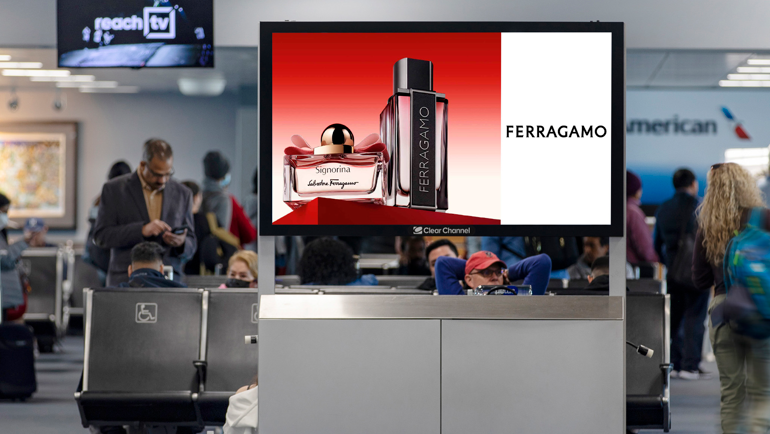
- Single-terminal, nine-gate configuration concentrates all passenger flow through a limited number of circulation points, meaning terminal-wide coverage is achievable at a fraction of the investment required at a comparable-quality hub audience.
- Advertising clutter is materially lower than at major US airports. A well-placed campaign here achieves standout and recall levels that would require premium spectacular positioning elsewhere.
- Dwell time is extended by regional travel behaviour: early departures, single-security-checkpoint queuing, weather-related schedule variability in winter, and a newly expanded concourse with improved seating and amenities that encourages passengers to arrive early and remain in the gate environment.
- Masscom Global provides advertisers with inventory access, placement precision against specific gate and route flows, and execution capability at an airport where local relationship depth determines what is actually available. We map placement to the Phoenix, Atlanta and Minneapolis flows separately, so that leisure and B2B creative reach the right audience rather than a blended average.
Strategic Advertising Fit
Best Fit:
- Agricultural equipment, inputs and precision agtech: Reaches farm principals and dealer decision-makers with capital authority, in the highest-value farmland corridor in North America.
- Agricultural and commercial finance, leasing and crop insurance: Directly aligned to an audience whose businesses run on seasonal credit and asset financing.
- Wealth management, succession and estate planning: The catchment is in an active generational transfer phase for land and closely held business equity.
- Healthcare systems and specialist medical services: Regional referral patterns and multi-state patient flow make the terminal a legitimate healthcare acquisition channel.
- Domestic resort and second-home real estate, particularly Arizona, Nevada, Florida and Texas: Matches the demonstrated outbound property behaviour of this audience.
- Automotive, pickup trucks and powersports: High ownership rates, replacement-cycle purchasing and strong regional brand loyalty.
- Regional and national banking, insurance and credit products: Stable professional incomes plus business banking needs across two state jurisdictions.
- Higher education, graduate and professional programmes: Strong outbound student flow and a significant international student recruitment market.
Brand Alignment at a Glance:
| Category | Fit |
|---|---|
| Agricultural equipment and agtech | Exceptional |
| Agricultural and commercial finance | Exceptional |
| Wealth management and succession planning | Strong |
| Domestic resort and second-home real estate | Strong |
| Healthcare and specialist medical services | Strong |
| Automotive and powersports | Strong |
| Higher education | Moderate |
| Ultra-luxury fashion and haute joaillerie | Poor fit |
Who Should Not Advertise Here:
- Ultra-luxury fashion, couture and haute joaillerie: The audience holds asset wealth but does not express it through visible luxury consumption, and there is no international luxury transit flow to compensate. Spend is better placed at hub or gateway airports.
- Long-haul international property in Dubai, London or Southeast Asia: Outbound property capital from this catchment moves to the American sunbelt, not offshore. The intercept exists but the intent does not.
- Citizenship-by-investment and second-passport programmes: Demand in this catchment is minimal, with relocation behaviour driven by interstate tax positioning rather than international residency.
Event and Seasonality Analysis
- Event Strength: Medium
- Seasonality Strength: High
- Traffic Pattern: Dual-Peak
Strategic Implication:
Budget should concentrate on two windows rather than spread evenly. January to March delivers the leisure and property peak, driven by snowbird and spring break travel toward Phoenix, Las Vegas and Florida, and is the correct window for resort property, travel finance and consumer categories. Late August through September delivers the B2B peak, driven by the agricultural trade exposition and harvest-adjacent business travel, and is the correct window for equipment, agtech, commercial finance and industrial categories. Masscom Global structures campaigns around this rhythm, sequencing creative so that a single annual budget captures both peaks at full weight rather than diluting across low-yield shoulder months.
Poor Placement and Delays Affect Airport Campaigns
We help you move faster, access better inventory, and get it right now.

Poor Placement and Delays Affect Airport Campaigns
We help you move faster, access better inventory, and get it right now.
Talk to an ExpertFinal Strategic Verdict
Hector International Airport is a precision instrument, not a volume play, and advertisers who evaluate it correctly will find few better decision-maker intercepts in the American Midwest. A little over 1.18 million passengers moved through a nine-gate terminal in 2025 at an 84 percent load factor, following nineteen straight record months, and those passengers include the principals who control the highest-value farmland, the equipment budgets and the succession decisions of the Red River Valley. Agricultural equipment and agtech brands, commercial and agricultural lenders, wealth and succession advisers, healthcare systems and sunbelt property developers will find an audience here that is asset-rich, authority-holding, repeat-travelling and largely uncontested for attention. Luxury fashion and offshore residency programmes should spend elsewhere. With gate capacity nearly doubling, a skyway completing in late 2026 and terminal renovation finishing in early 2027, current rates reflect the airport as it was rather than as it is becoming, and Masscom Global is the partner positioned to secure inventory, timing and placement precision before that gap closes.
About Masscom Global
Masscom Global is a premium international airport advertising and media buying agency operating across 140 countries. With deep expertise in airport OOH, premium publications, and high-net-worth audience targeting, Masscom helps brands reach the world's most valuable travellers at the moments that matter most. For advertising packages, media rates, and campaign planning at Hector International Airport and airports across the globe, contact Masscom Global today.
Frequently Asked Questions
How much does airport advertising cost at Hector International Airport Fargo?
Cost at FAR varies by format, terminal position, campaign duration and seasonal demand. Placements in high-circulation gate and arrivals positions during the January to March leisure peak and the September agricultural trade window command premium pricing, while shoulder-month rates are considerably more efficient. Because the terminal is compact and inventory is finite, availability rather than budget is frequently the binding constraint. Contact Masscom Global for current rates and availability.
Who are the passengers at Hector International Airport?
Predominantly domestic travellers from eastern North Dakota and western Minnesota. The audience divides into agricultural landowners and agribusiness principals, corporate and healthcare professionals from Fargo's technology, banking and health system employers, university-connected travellers, and a large outbound snowbird and leisure segment heading to Arizona, Nevada and Florida. A meaningful cross-border Canadian segment from Manitoba uses the airport for lower US fares.
Is Hector International Airport good for luxury brand advertising?
For traditional luxury fashion and fine jewellery, no. This is asset wealth rather than display wealth, and there is no international luxury transit flow. For premium categories that align with how this audience actually spends, the answer changes: high-specification vehicles and pickups, resort and second-home property, private wealth and succession services, premium travel and cruise products all perform. Category selection matters more here than at almost any comparable airport.
What is the best airport in North Dakota to reach HNWI audiences?
Hector International is the state's busiest airport and its most concentrated business-audience intercept, carrying more passengers than Bismarck, Grand Forks and Minot combined territory profiles at comparable premium density. For agricultural and business-owner wealth in the Red River Valley, FAR is the primary buy. For energy sector wealth in the Bakken, western North Dakota airports are the correct complement, and Masscom can structure a statewide plan across both.
What is the best time to advertise at Hector International Airport?
Two windows dominate. January through March captures the snowbird and spring break leisure peak, with March historically the airport's highest-volume month. Late August through September captures the agricultural trade exposition and harvest business travel peak, delivering the year's densest concentration of B2B decision-makers. December adds a secondary holiday and collegiate playoff peak.
Can international real estate developers advertise at Hector International Airport?
Yes, with the right inventory. This audience buys property in Arizona, Florida, Nevada, Texas and the Minnesota lakes region, plus resort markets in Mexico and the Caribbean. Developers marketing sunbelt, resort and near-shore inventory will find strong intent. Developers marketing Dubai, London or Southeast Asian property should expect weak response, as outbound capital from this catchment stays largely within North America.
Which brands should not advertise at Hector International Airport?
Ultra-luxury fashion and couture, haute joaillerie, long-haul offshore property, and citizenship-by-investment programmes. None of these align with an audience whose wealth is held in land and private business equity and whose relocation decisions are driven by interstate tax positioning rather than international residency. Spend in these categories belongs at international gateway airports.
How does Masscom Global help brands advertise at Hector International Airport?
Masscom Global delivers the full sequence: audience and catchment intelligence specific to the Red River Valley economy, inventory access and placement precision mapped to individual route flows, campaign timing structured around the dual-peak leisure and agricultural calendar, and execution management through to performance reporting. We operate across 140 countries, which means we can activate FAR alongside the Arizona, Nevada, Texas and Florida airports where this audience is buying property, capturing the same household on both sides of the corridor. Book a fifteen-minute planning call to review current availability and rates.