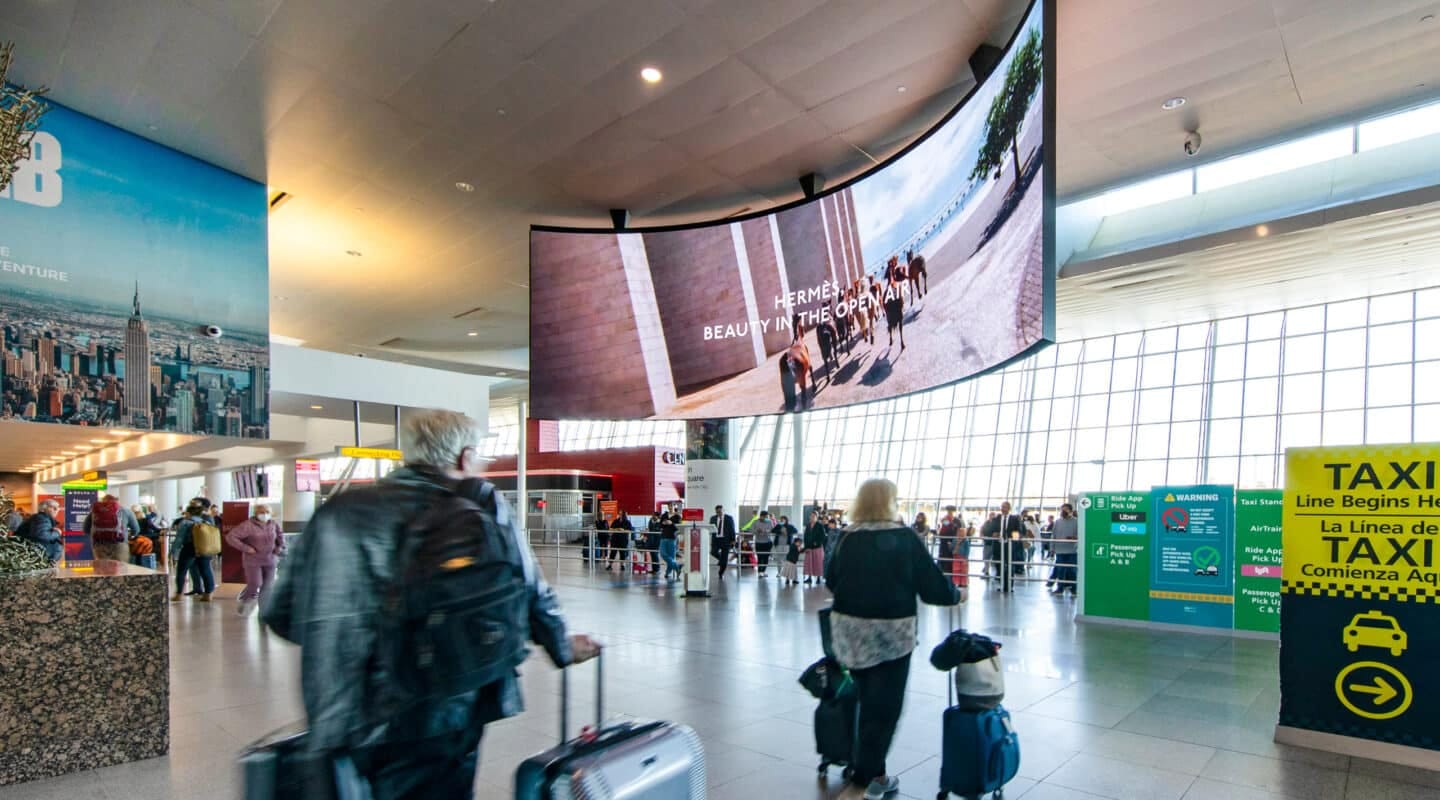
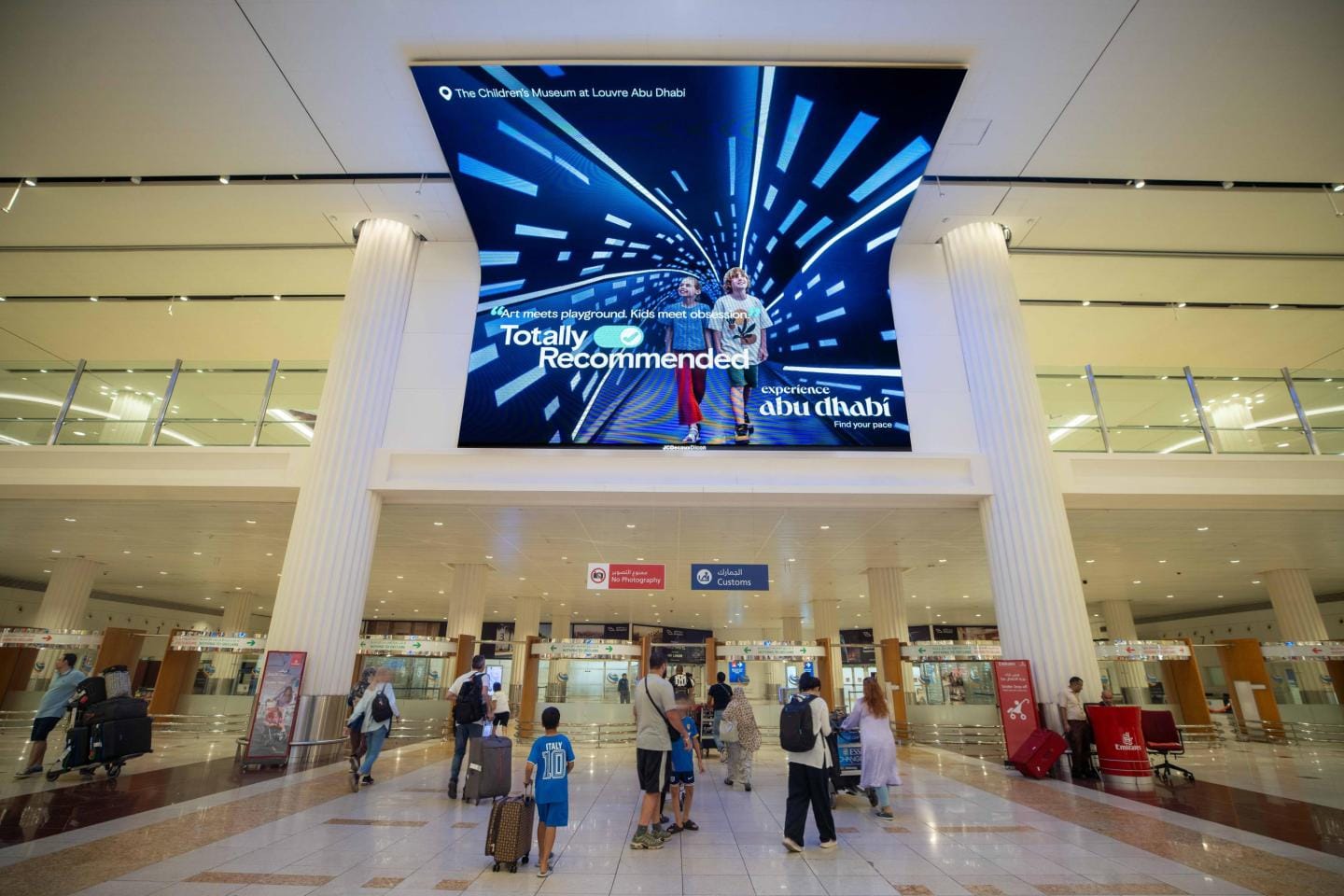
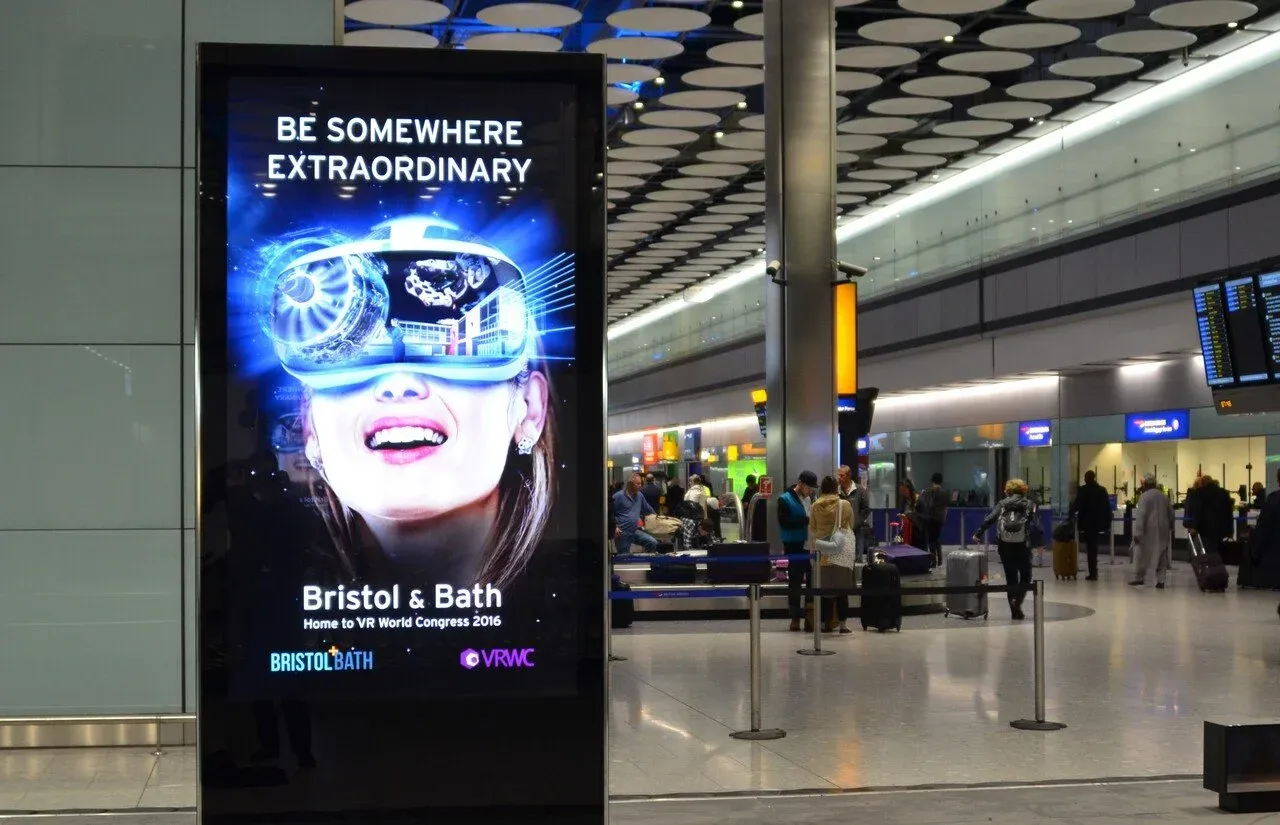


On the nights of 1 and 2 November 2026, Mexico observes Día de los Muertos, All Saints' and All Souls' Days, when monumental altars rise in Mexico City's Zócalo, the Gran Desfile of giant skeletons and brass bands moves down Paseo de la Reforma to crowds numbering in the hundreds of thousands, and marigold-covered ofrendas appear in cities and coastal resorts across the country. It is Mexico's most internationally recognised cultural moment, a UNESCO-listed tradition that has become as much a global travel draw as a domestic observance, pulling luxury leisure travellers into Los Cabos and Tulum alongside the millions who fill Mexico City's streets.
For advertisers, the opportunity is not the two nights of altars and parades themselves. It is the week either side of them, when UHNWI cultural tourists, returning Mexican diaspora and premium leisure travellers converge on eight of the country's most commercially significant airports at once, from the capital's business gateway to the ultra-luxury resort corridors of the Pacific and Caribbean coasts.
Why Airport & City Advertising Works During Day of the Dead
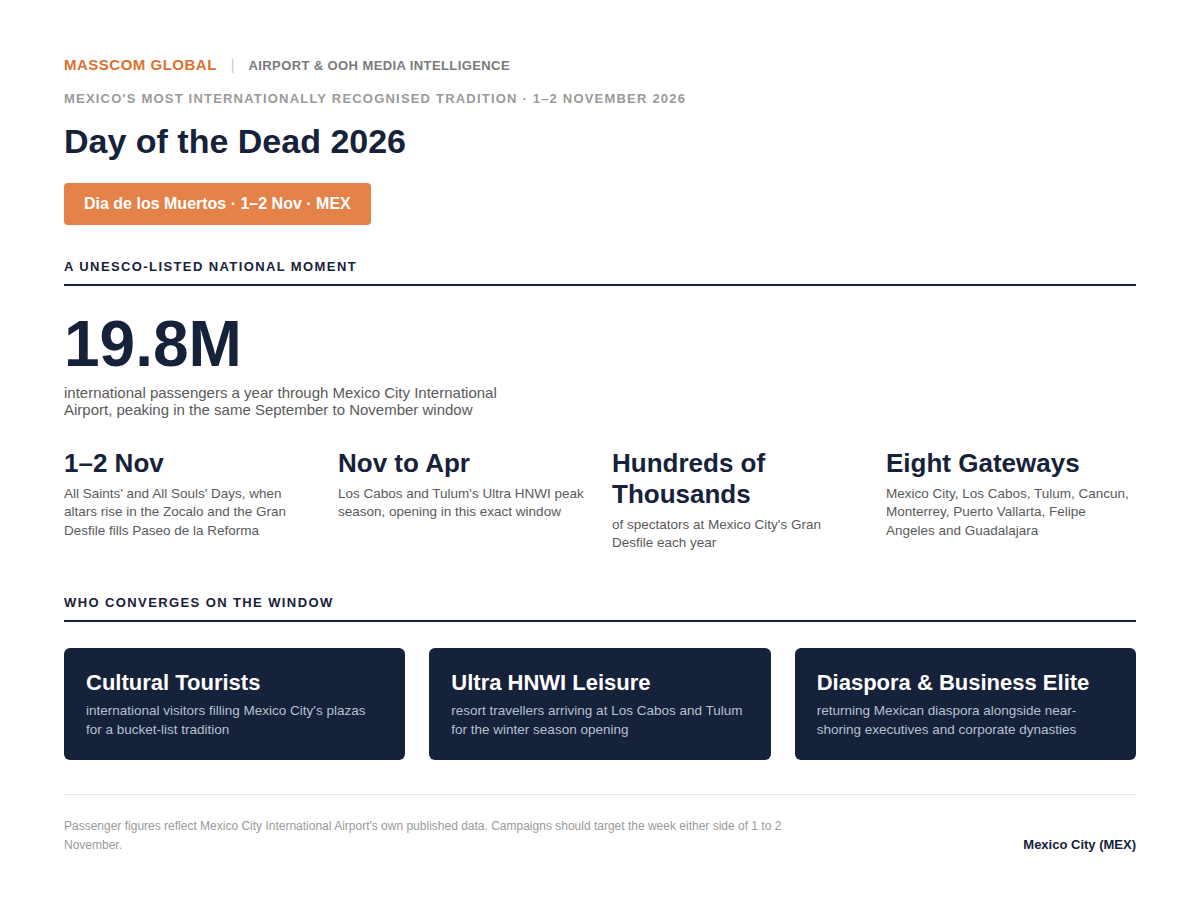
Día de los Muertos sits in a unique commercial category among Mexico's national events: it is simultaneously a solemn family observance, a UNESCO-recognised cultural tradition, and one of the most photographed, internationally travelled-for festivals in the Western Hemisphere. Mexico City's Gran Desfile down Paseo de la Reforma draws hundreds of thousands of spectators each year, and its Zócalo altars have become a bucket-list destination for international cultural tourists in the same way Carnival or Oktoberfest draw travellers to Rio or Munich.
That international draw compounds with Mexico's ultra-luxury resort calendar. Los Cabos and Tulum, both classified as Ultra HNWI environments in their own advertising profiles, sit inside their peak November-through-April high season during this exact window, meaning the same days that fill Mexico City's streets with cultural tourists also fill the Pacific and Caribbean coast's most exclusive resorts.
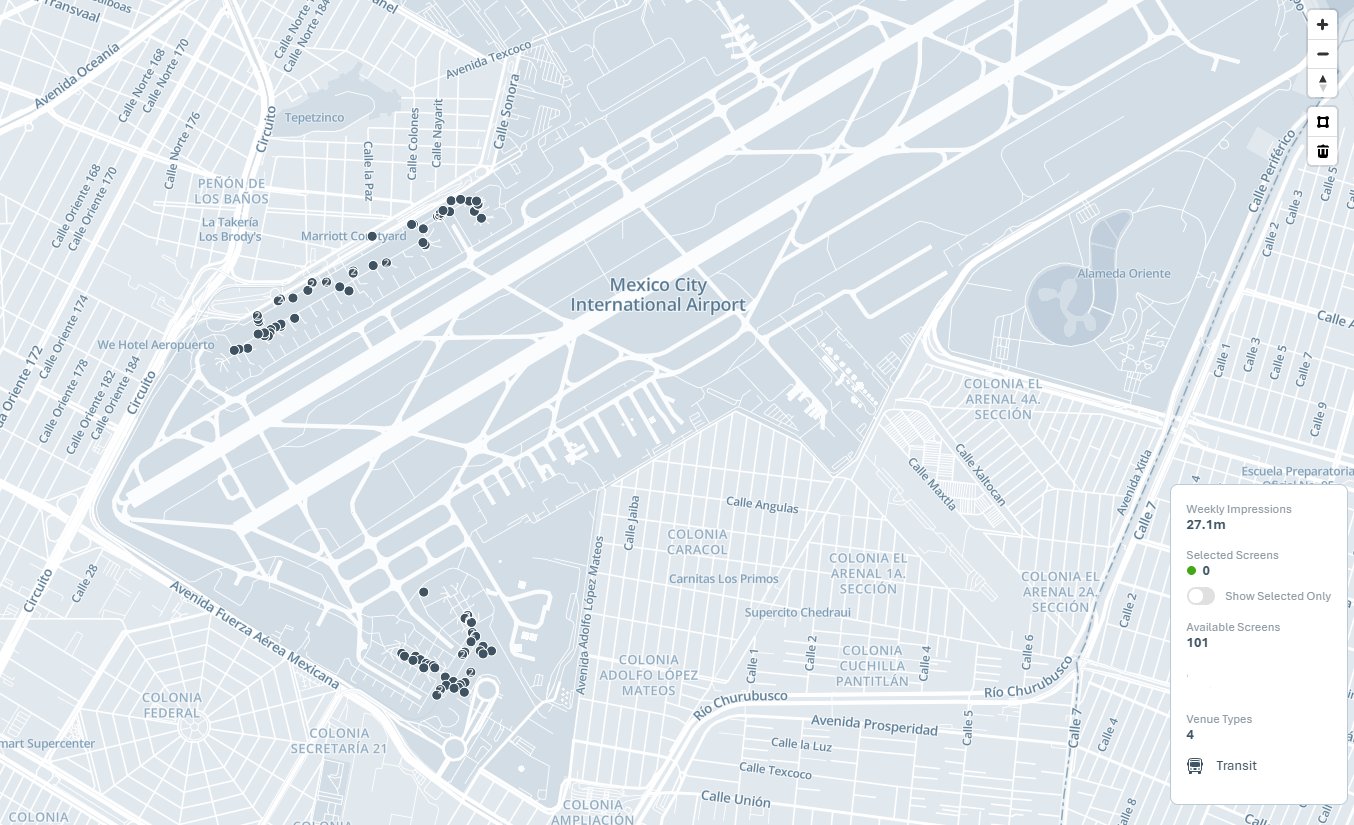
Mexico City International Airport itself anchors an audience of Mexican corporate dynasty HNWI, multinational near-shoring executives and Latin American business elite moving through the capital at a rate of approximately 19.8 million international passengers a year, a business and diaspora travel volume that peaks in the same September to November window as the Day of the Dead observance.
What makes this period commercially distinctive is the breadth of the audience it moves simultaneously: cultural tourists filling Mexico City's plazas, ultra-HNWI leisure travellers arriving at Los Cabos and Tulum for the winter season opening, returning Mexican diaspora reconnecting with family traditions, and the country's industrial and near-shoring business class continuing year-round travel through Monterrey and Guadalajara. Few single events in the Mexican calendar reach this many distinct high-value segments at once.
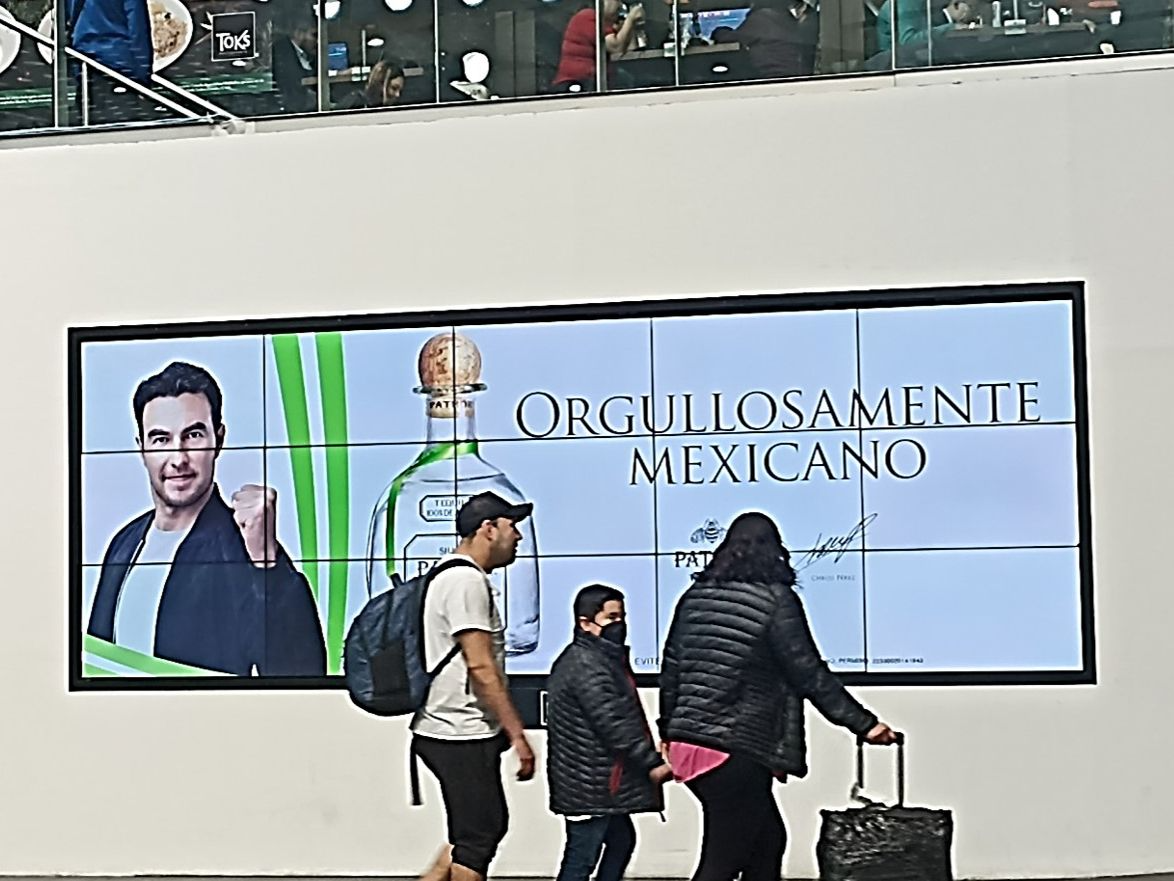
Key Benefits of Airport & City Advertising During Day of the Dead
- Reach a qualified, high-spend audience: UHNWI resort travellers, cultural tourists and Mexican corporate and diaspora elite converge on the same national window, giving advertisers concentrated access to travellers primed for luxury hospitality, real estate and premium lifestyle spend.
- Elevate your brand positioning: premium terminal environments across Mexico City, Los Cabos, Tulum and Cancún place your brand alongside a UNESCO-recognised tradition widely regarded as one of the most visually iconic cultural events in the world.
- Generate real business opportunity: luxury hospitality, tequila and premium spirits, and international real estate brands can convert this concentrated cultural and leisure travel window into direct bookings and long-term brand recall.
Get Free Expert Assistance from Our Global Media Planning Team
Receive strategic recommendations, media planning support, campaign monitoring and reporting to maximise your visibility throughout Día de los Muertos.
Book Expert Consultation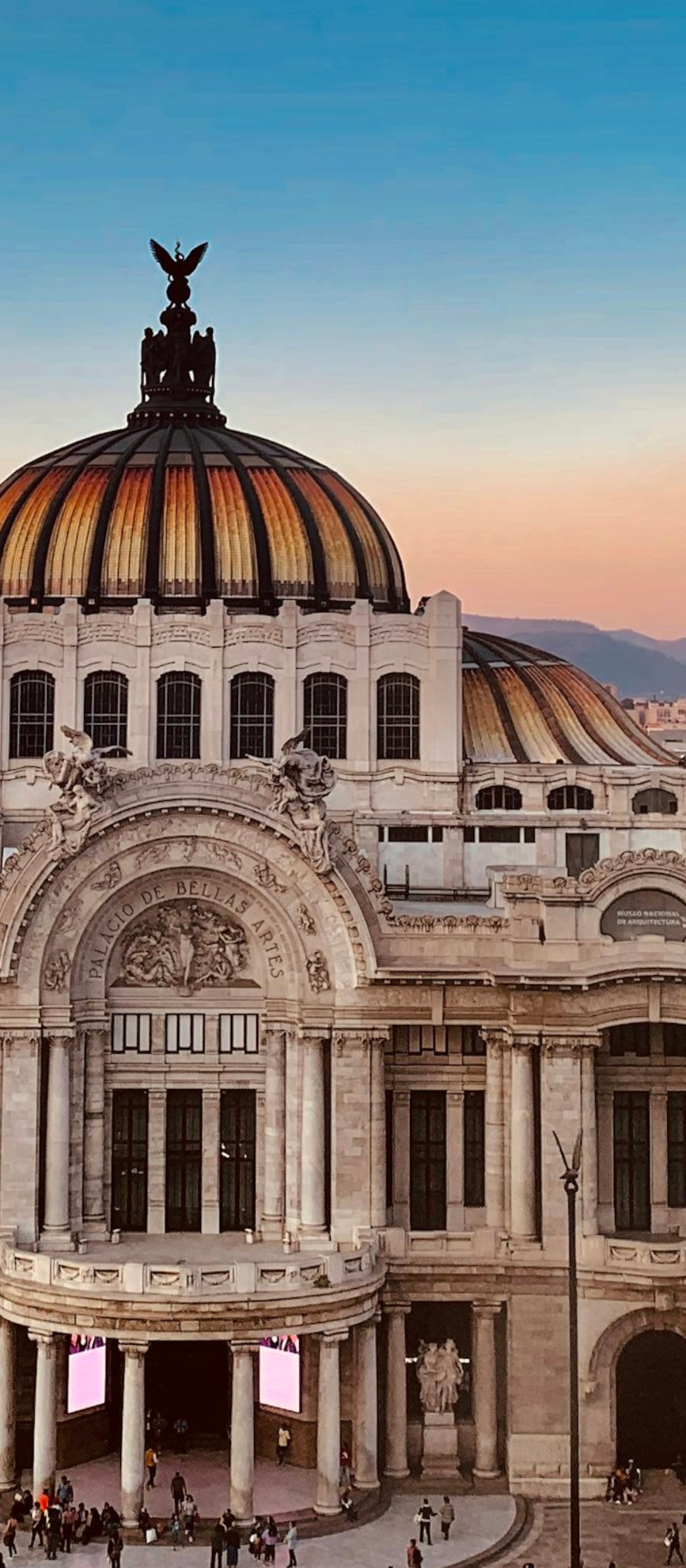

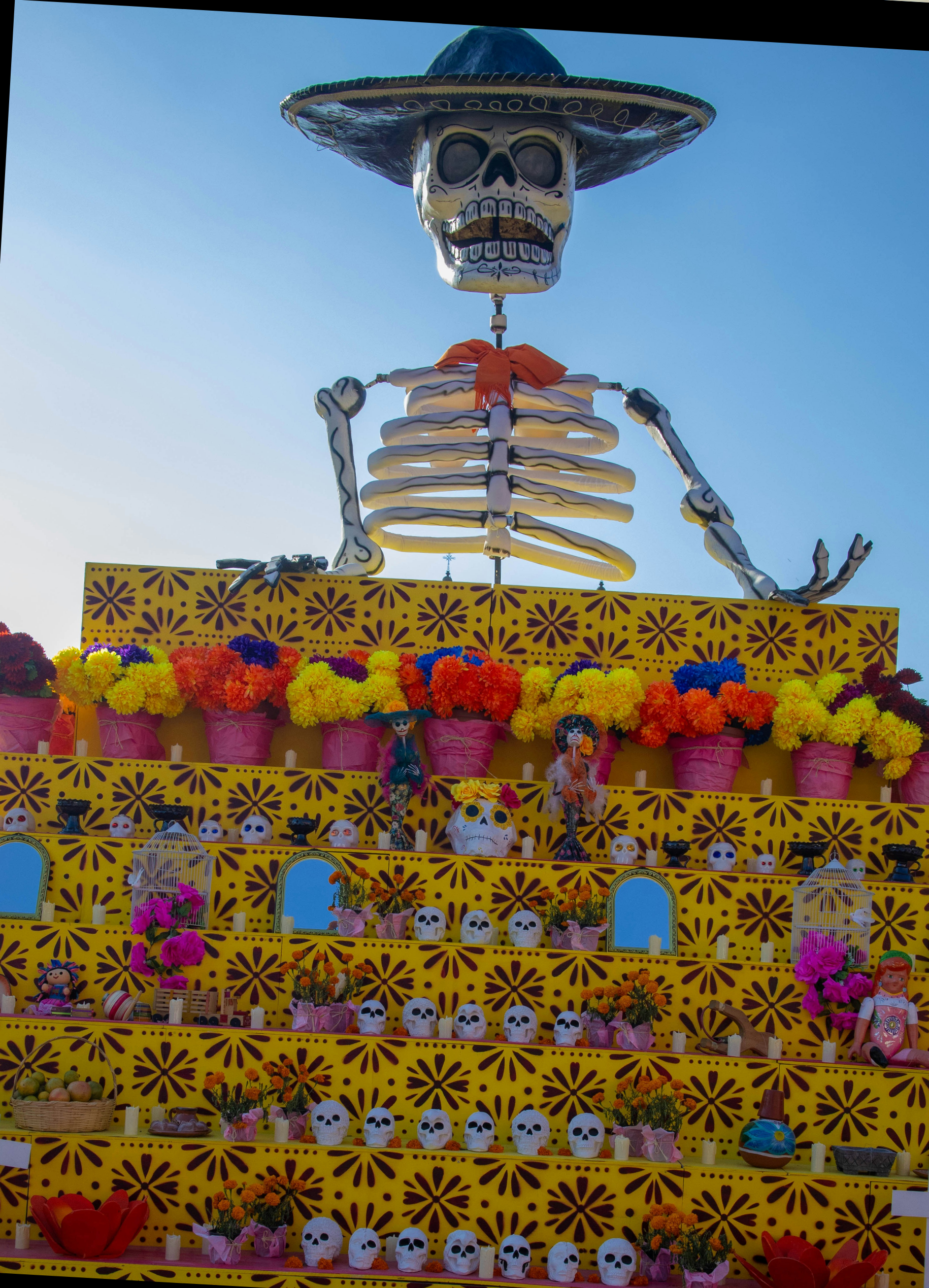
Bellas Artes, Catrina face paint and a marigold ofrenda: the backdrop to Mexico's 2026 Day of the Dead.
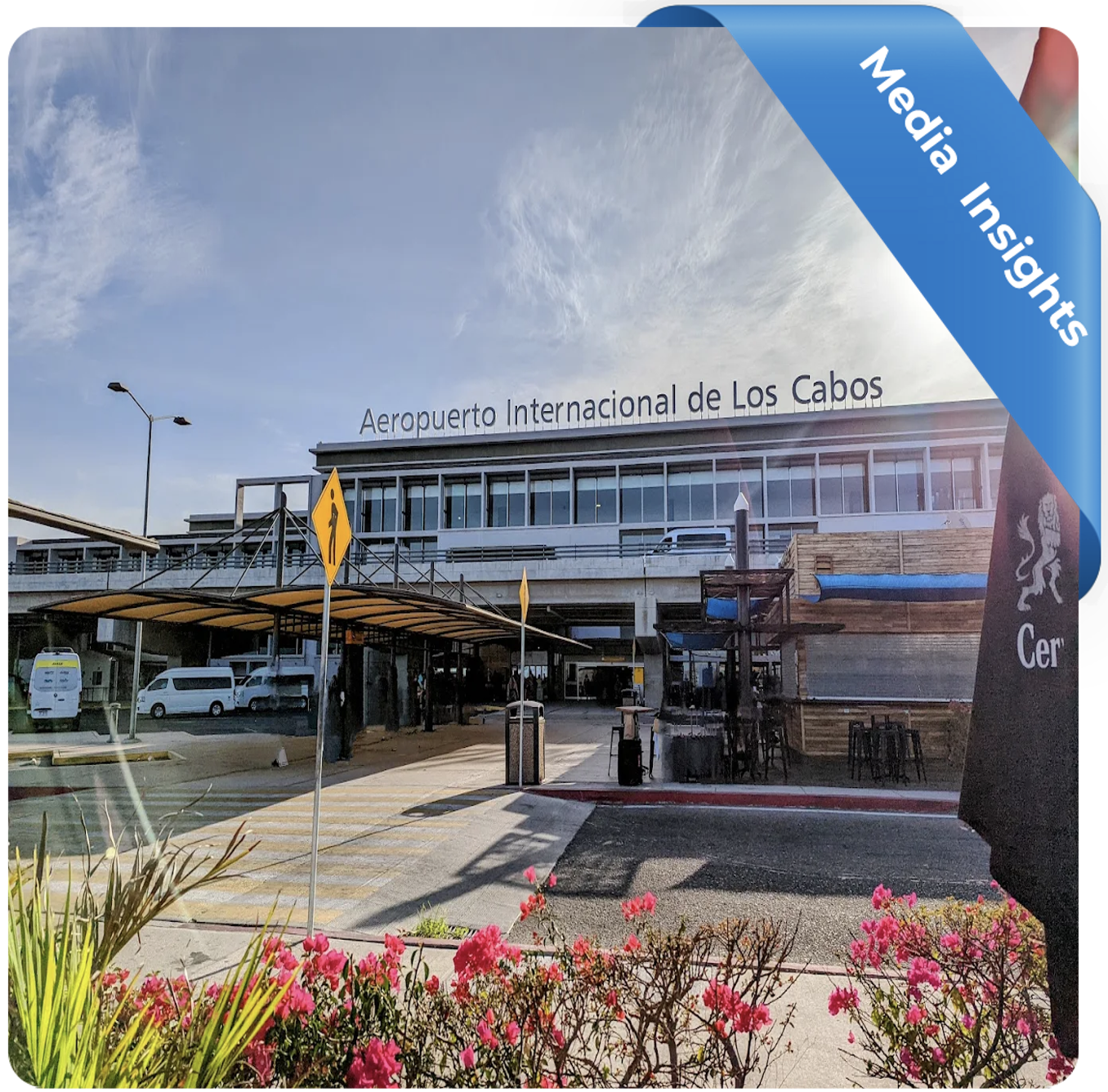
Los Cabos International Airport (SJD): The Ultra-HNWI Leisure Gateway
Los Cabos International Airport served 4.8 million passengers in 2023 and is classified as one of the most commercially concentrated ultra-HNWI environments in the Western Hemisphere, with a peak advertising season running November through April, including US holiday windows, that opens during Día de los Muertos.
- Inventory Highlights: premium arrivals and departures placements reaching ultra-HNWI leisure travellers and luxury real estate buyers.
- Advantages for Advertisers: direct access to one of the Americas' highest-value leisure audiences at the exact moment its winter high season opens.
Tulum Airport (TQO): The Conscious Luxury Gateway
Tulum Airport, inaugurated in December 2023, served approximately 500,000 passengers in its first full year and is classified as Tier 1 Ultra, its audience built around conscious luxury and wellness travellers, boutique eco-jungle resort guests and Tulum real estate investors, with a peak season of November through April.
- Inventory Highlights: arrivals hall placements reaching a newly concentrated ultra-luxury wellness and creative-class audience.
- Advantages for Advertisers: access to Mexico's newest and fastest-growing ultra-luxury leisure gateway as it enters its second full Día de los Muertos season.
Mexico City International Airport (MEX): The Capital Business Gateway
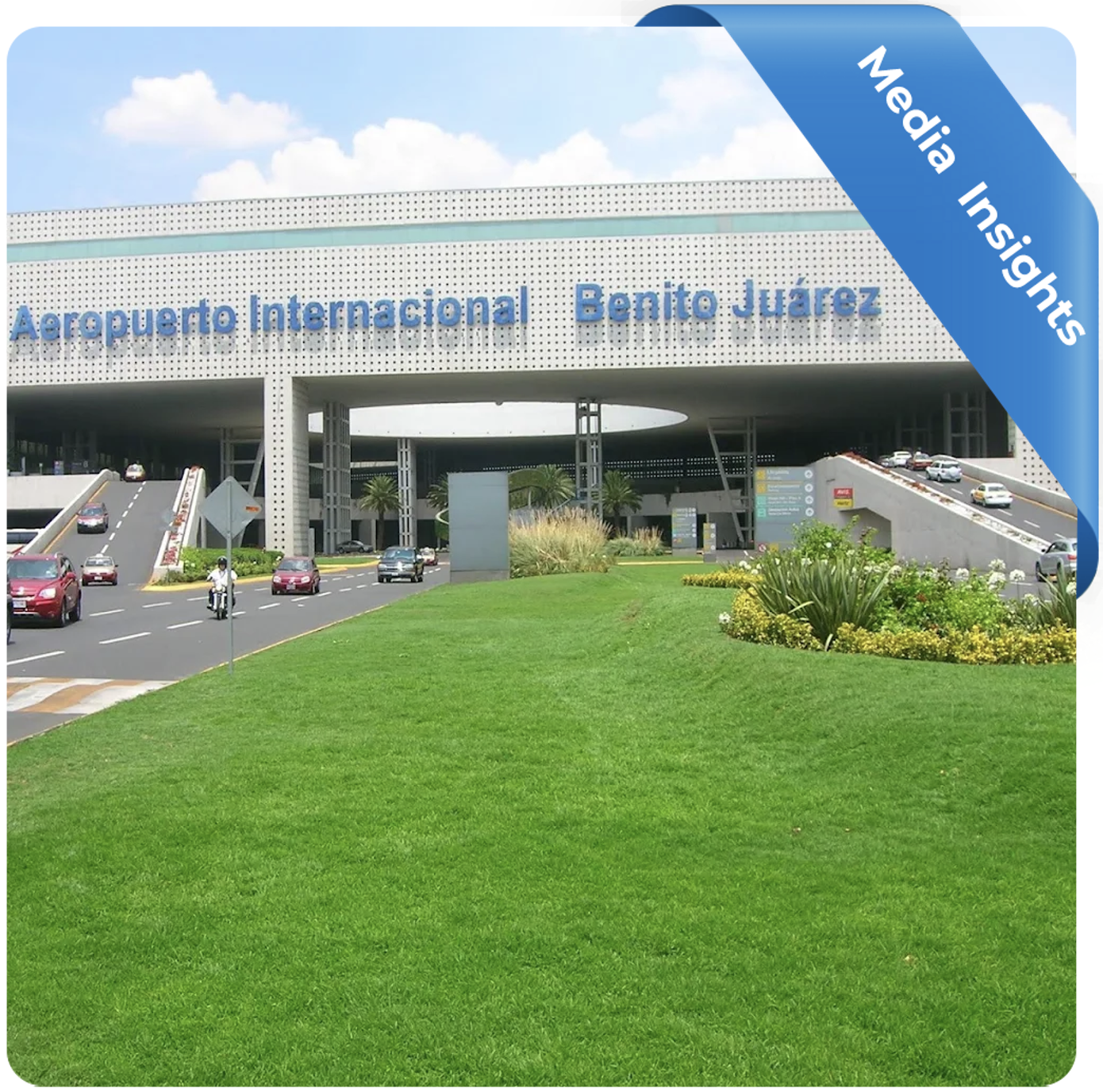
Mexico City's Benito Juárez International Airport carries approximately 19.8 million international passengers annually, its audience built around Mexican corporate dynasty HNWI, multinational near-shoring executives and Polanco luxury lifestyle ultra-HNWIs, with year-round travel that peaks in the September to November window containing the Day of the Dead observance and its Gran Desfile.
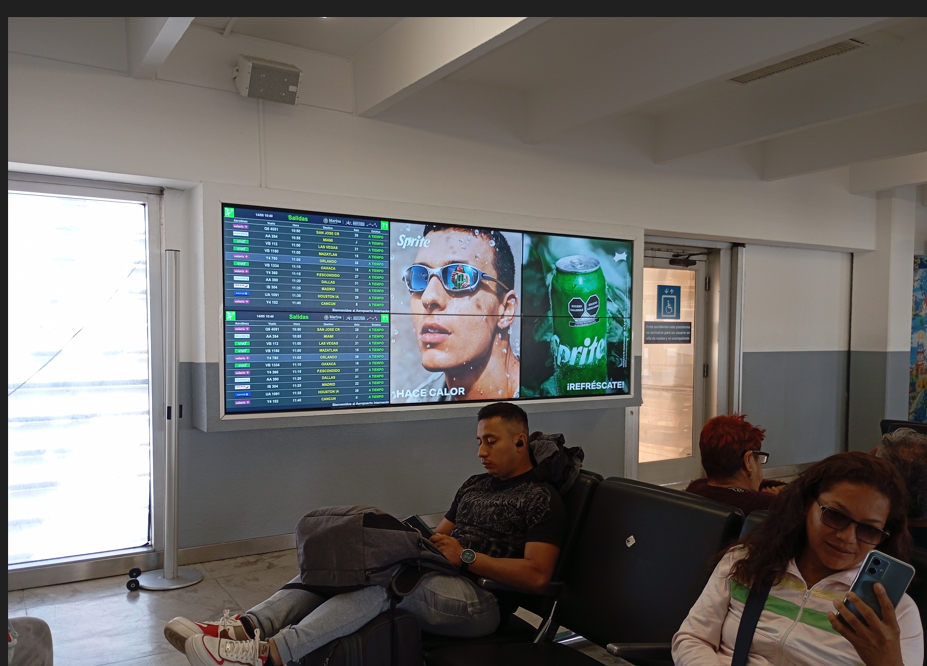
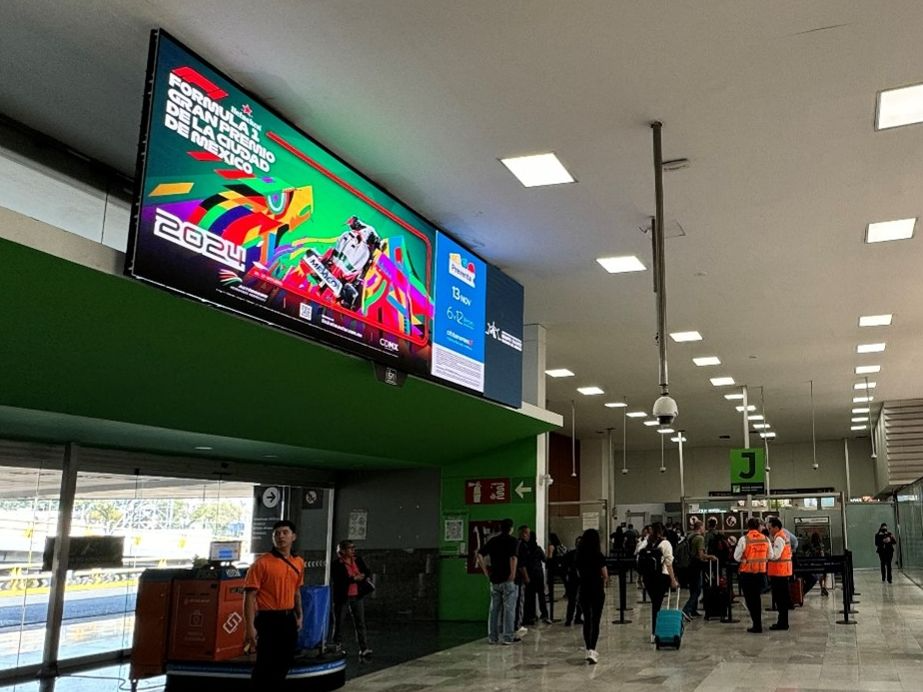
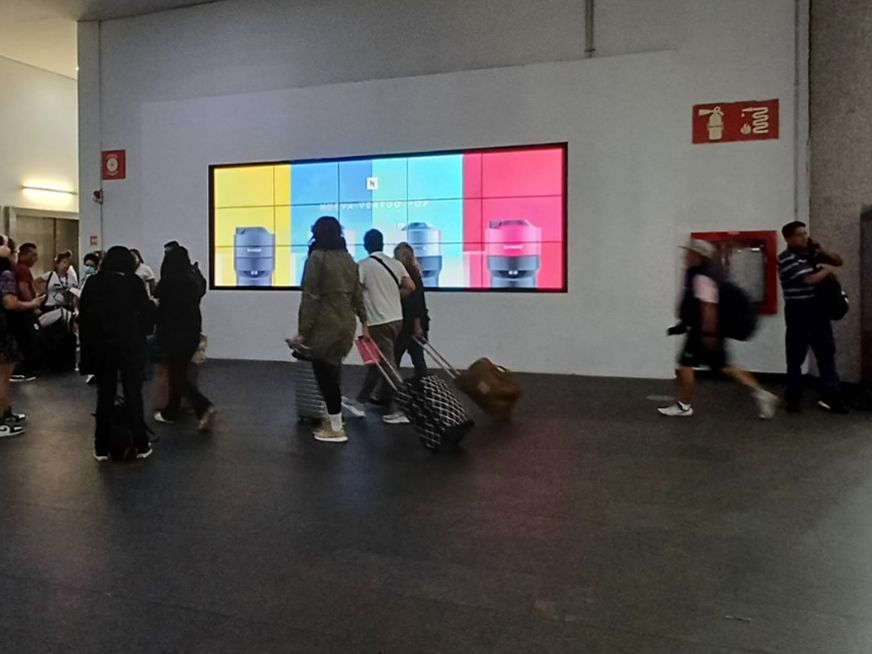
- Inventory Highlights: terminal-wide network placements reaching the capital's highest-volume business and diaspora travel audience.
- Advantages for Advertisers: the largest single audience in the network, arriving in the capital during the exact days the Zócalo altars and citywide parade draw international attention.
Cancún International Airport (CUN): The Caribbean Resort Corridor
Cancún International Airport served 25.1 million passengers in 2023, its audience spanning premium all-inclusive resort guests, Riviera Maya real estate investors and North American and European leisure HNWI, with a peak season of December through April that opens as Día de los Muertos begins.
- Inventory Highlights: high-volume arrivals and departures placements reaching one of Mexico's largest leisure travel audiences.
- Advantages for Advertisers: scale reach into the Caribbean coast's resort and real estate economy as its winter season opens.
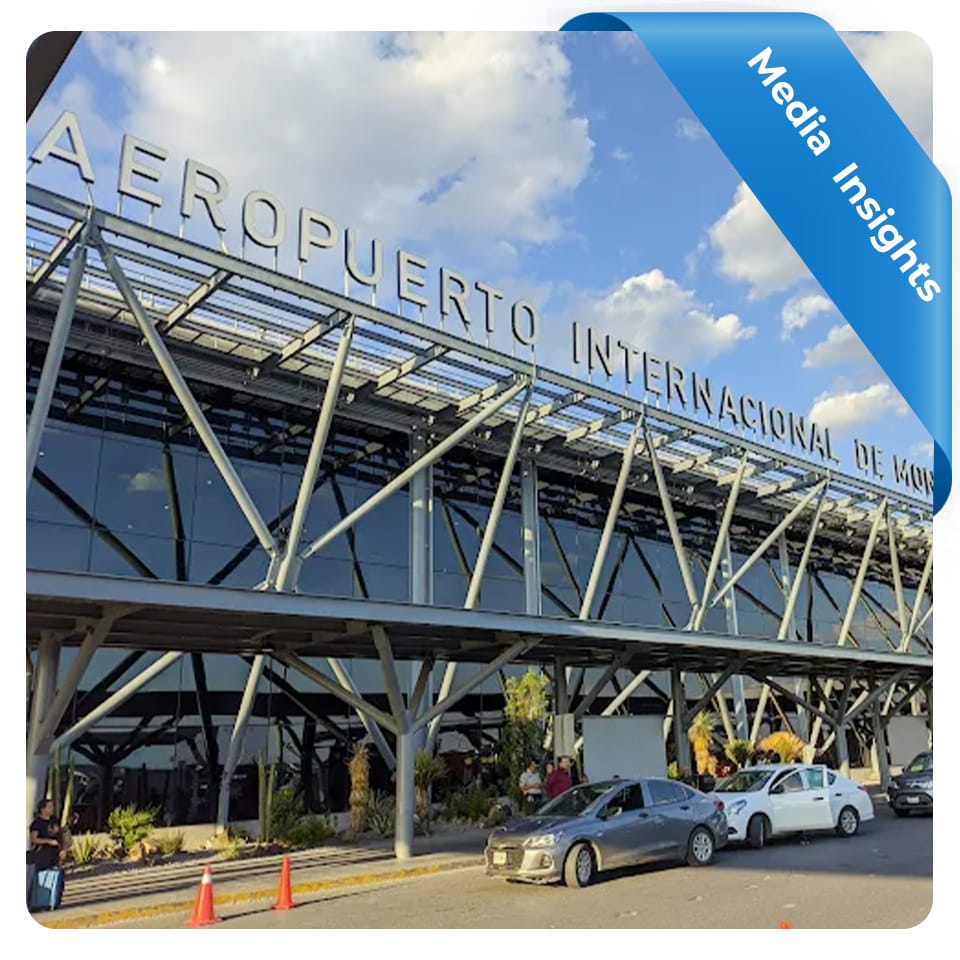
Monterrey General Escobedo Airport (MTY): The Industrial Dynasty Hub
Monterrey's airport serves approximately 7.2 million international passengers, its audience built around Monterrey industrial dynasty HNWI, near-shoring manufacturing executives and San Pedro Garza García luxury residential ultra-HNWIs, with year-round travel peaking in the September to November manufacturing investment window.
- Inventory Highlights: terminal placements reaching Mexico's northern industrial business elite.
- Advantages for Advertisers: access to one of Mexico's wealthiest industrial dynasty audiences during a period when family and cultural travel around Día de los Muertos overlaps with continued business travel.
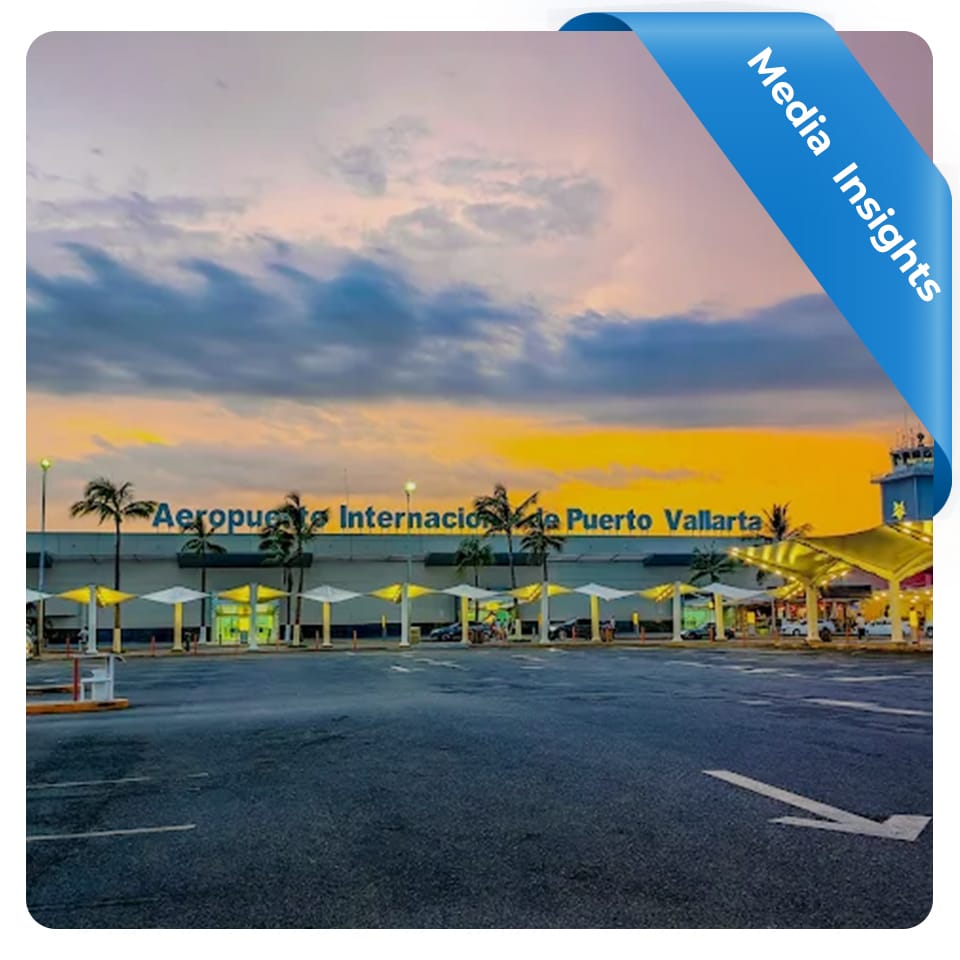
Puerto Vallarta International Airport (PVR): The Punta Mita Luxury Corridor
Puerto Vallarta's airport served 3.6 million passengers in 2023, its audience anchored by Punta Mita's ultra-HNWI Four Seasons and St. Regis guests and villa owners, with a peak season of November through April that opens during this window.
- Inventory Highlights: arrivals placements reaching an ultra-luxury villa and branded residence audience.
- Advantages for Advertisers: concentrated access to one of Mexico's highest-value branded residential real estate audiences at the exact point its season begins.
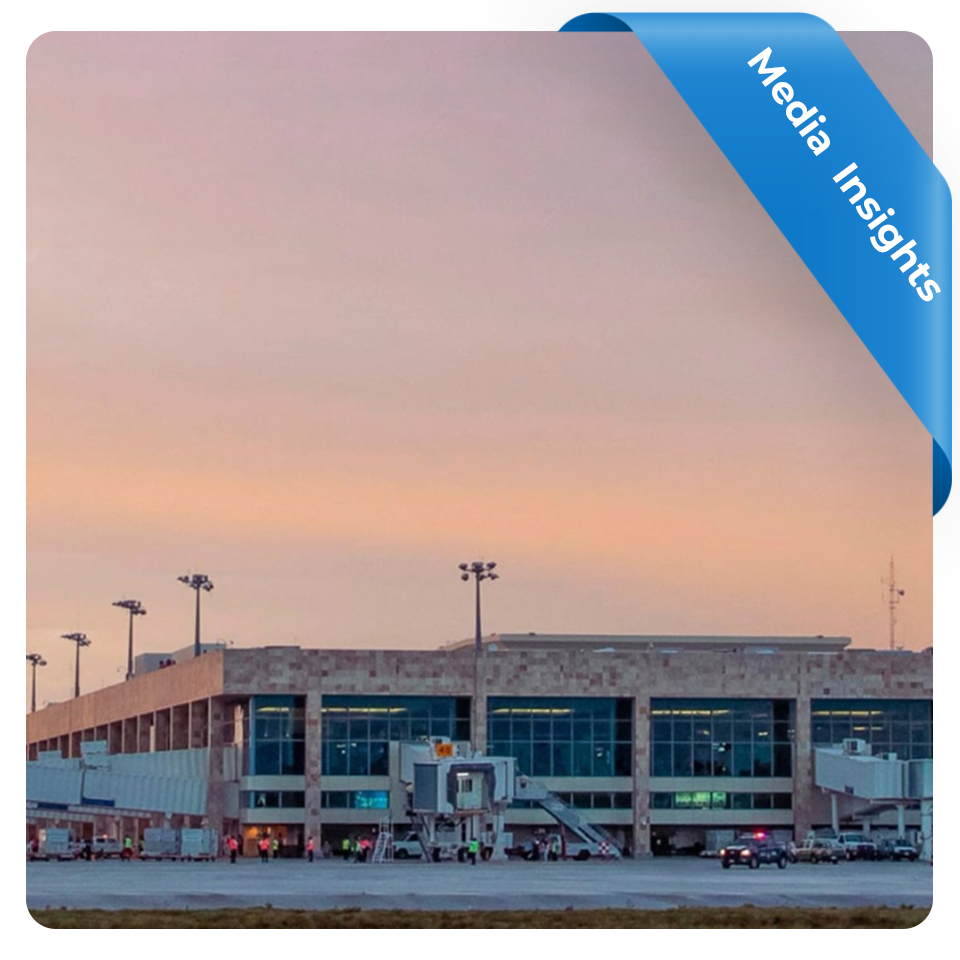
Mexico City Felipe Ángeles Airport (NLU): The Northern Metropolitan Corridor
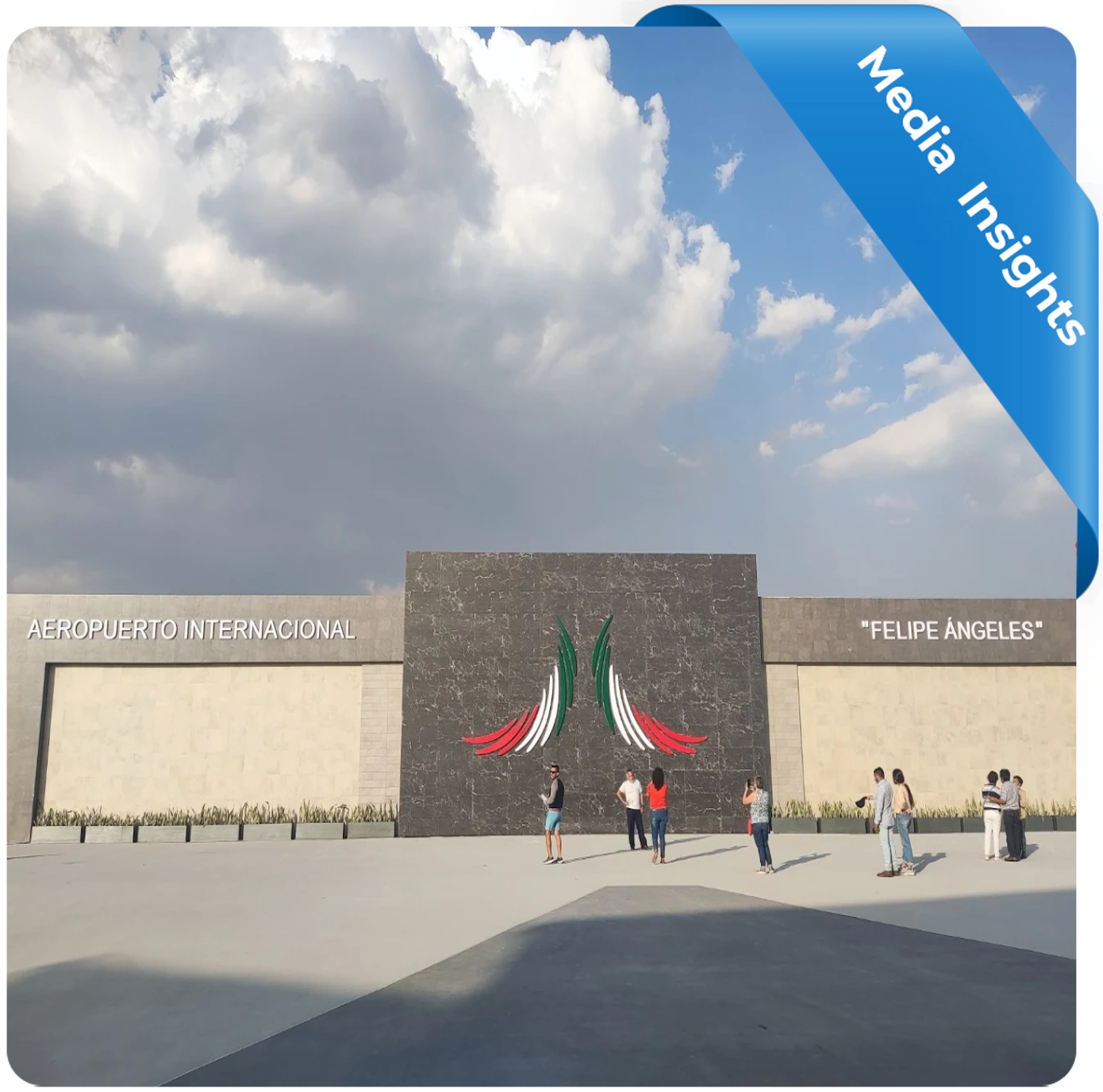
Felipe Ángeles International Airport carries 4.1 million international passengers, serving Mexico City's northern metropolitan corridor with an audience of corporate executives, government professionals and the emerging premium consumer class of Estado de México and Hidalgo.
- Inventory Highlights: terminal placements reaching the capital region's northern commercial audience.
- Advantages for Advertisers: a second capital-region touchpoint that extends reach into the metropolitan area's B2B and premium consumer segments.
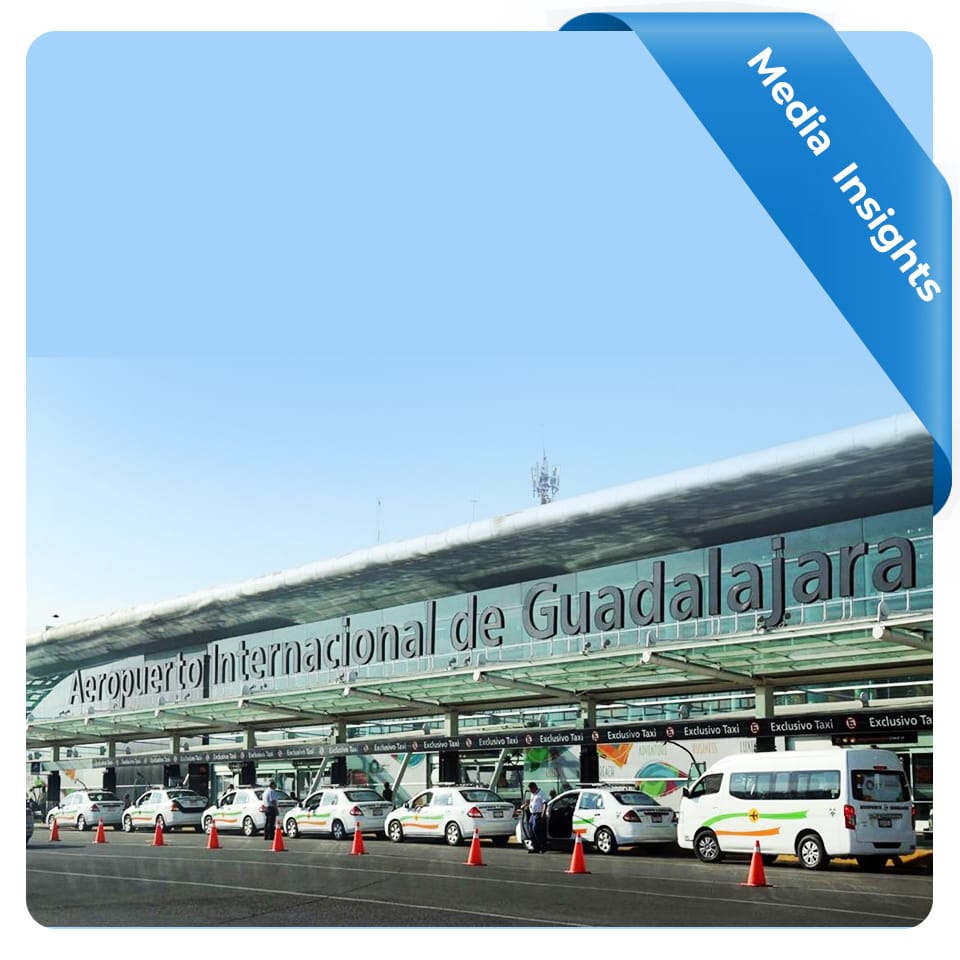
Guadalajara International Airport (GDL): The Tequila and Tech Gateway
Guadalajara's airport carries 8.3 million international passengers, its audience built around tech sector executives, tequila and premium spirits industry leaders, and Jalisco commercial dynasty families, with peak seasons including December and the Semana Santa window.
- Inventory Highlights: terminal placements reaching Mexico's second-largest commercial hub audience.
- Advantages for Advertisers: a direct connection to Mexico's tequila and premium spirits industry, a category with natural affinity to Día de los Muertos brand storytelling.
National Network Coverage
Together, these eight airports give advertisers coordinated coverage of Mexico's Día de los Muertos travel footprint: the capital's business and cultural gateway carrying the Gran Desfile audience, the ultra-luxury Pacific and Caribbean resort corridors opening their winter season in Los Cabos, Tulum, Puerto Vallarta and Cancún, and the industrial and commercial hubs of Monterrey and Guadalajara. This is the core of Masscom Global's Mexico airport network; the network extends further into additional regional Mexican gateways for brands seeking deeper national coverage beyond this featured corridor.
Destination Mexico: Full Visitor Journey Coverage
A Día de los Muertos traveller's journey rarely ends at the airport. In Mexico City it continues from the arrivals hall into the Zócalo's monumental altars and along the Gran Desfile route on Paseo de la Reforma; on the coasts it continues from the airport directly into resort check-in and the marigold-covered ofrendas that appear in hotel lobbies and town squares. Airport advertising captures the traveller at the point of highest anticipation; city and resort-adjacent placements then carry that message through to the observance itself.
Because this event is genuinely nationwide, spanning the capital's plazas and the country's most exclusive resort coastlines simultaneously, a single-city campaign captures only a fraction of the actual audience in motion.
- Increased brand recall: repeated exposure across the airport-to-city or airport-to-resort journey reinforces message retention beyond a single placement.
- Consistent presence: the same campaign follows travellers from arrival through to the altars, parade or resort setting itself.
- Enhanced campaign effectiveness: layered touchpoints convert cultural and leisure attention into measurable brand engagement.
Why Brands Choose Airport & City Advertising for Day of the Dead
- Exclusive audience access. This window concentrates UNESCO-drawn cultural tourists, ultra-HNWI resort travellers and Mexico's industrial business elite in a way no single-city campaign can replicate.
- A prestigious environment. Premium terminal media across Mexico City, Los Cabos and Tulum places brands inside one of the most internationally recognised cultural traditions in the Western Hemisphere.
- End-to-end campaign support. Masscom Global plans, books and reports across all eight gateways as a single coordinated national campaign.
- Strategic planning assistance. Our regional planners align creative timing with each airport's own documented peak season, from the coastal resorts' November opening to the capital's cultural surge.
The Masscom Global Standard Behind Every Day of the Dead Placement
- Verified inventory and audience data: every airport figure in this guide, from Cancún's 25.1 million passengers to Los Cabos' Ultra HNWI classification, is drawn from verified airport data.
- Transparent delivery reporting: campaign performance is reported against agreed benchmarks across every airport in the network.
- Benchmarked recommendations: media plans are built against each airport's own documented audience tier and peak season.
- We absorb the complexity: coordinating eight airports across Mexico's capital, Pacific coast, Caribbean coast and northern industrial corridor in a single campaign is normally a major logistical undertaking; our team manages sourcing, scheduling and reporting so you do not have to.
Request Your Customised Day of the Dead Advertising Plan
Tell us your audience, category and budget. Our planners will return a costed plan across airport and prime city inventory, with availability confirmed.
Book NowFrequently Asked Questions
What are the exact 2026 dates for Día de los Muertos?
The observance falls on 1 and 2 November 2026, All Saints' and All Souls' Days, with Mexico City's Gran Desfile traditionally held on the preceding weekend along Paseo de la Reforma.
Who is the audience travelling during this window?
The audience spans UNESCO-drawn cultural tourists filling Mexico City's plazas and parade route, ultra-HNWI leisure travellers opening their winter season at Los Cabos, Tulum, Puerto Vallarta and Cancún, and Mexico's industrial and near-shoring business elite continuing year-round travel through Monterrey and Guadalajara.
Does coverage extend beyond the airport terminal?
Yes. Masscom Global coordinates airport placements with city and resort-adjacent inventory so a single campaign follows travellers from arrival through to the Zócalo's altars, the Gran Desfile route, or the resort setting itself.
Which brand categories perform best during this window?
Luxury hospitality and resort brands, tequila and premium spirits, international real estate and premium lifestyle categories see the strongest response, reflecting the audience composition documented across each airport's own advertising profile.
How far in advance should a campaign be booked?
Given that Día de los Muertos draws both major domestic cultural travel and the opening of Mexico's ultra-luxury winter resort season, we recommend confirming inventory at least six to eight weeks ahead of the 1-2 November 2026 dates.
Day of the Dead Won't Wait. Neither Should You.
- Once a year, then gone: Día de los Muertos falls on 1-2 November every year and does not repeat until the following November.
- Competitors are already moving: luxury hospitality, spirits and lifestyle brands active in Mexico typically confirm this period's inventory well ahead of the date.
- The window is exact, not approximate: the observance dates and the opening of the coastal resorts' winter season are fixed and predictable, not a loose seasonal guess.
- The alternative reaches the wrong audience: generic year-round Mexican media misses the specific concentration of cultural and ultra-luxury leisure travellers moving through these eight airports in this exact window.
Related Airport Advertising Guides
Detailed inventory, audience and planning notes for the airports covered above:
 Wealth in motion intelligence.
 Wealth in motion intelligence.
 Wealth in motion intelligence.
 Wealth in motion intelligence.
 Wealth in motion intelligence.
 Wealth in motion intelligence.
 Wealth in motion intelligence.
 Wealth in motion intelligence.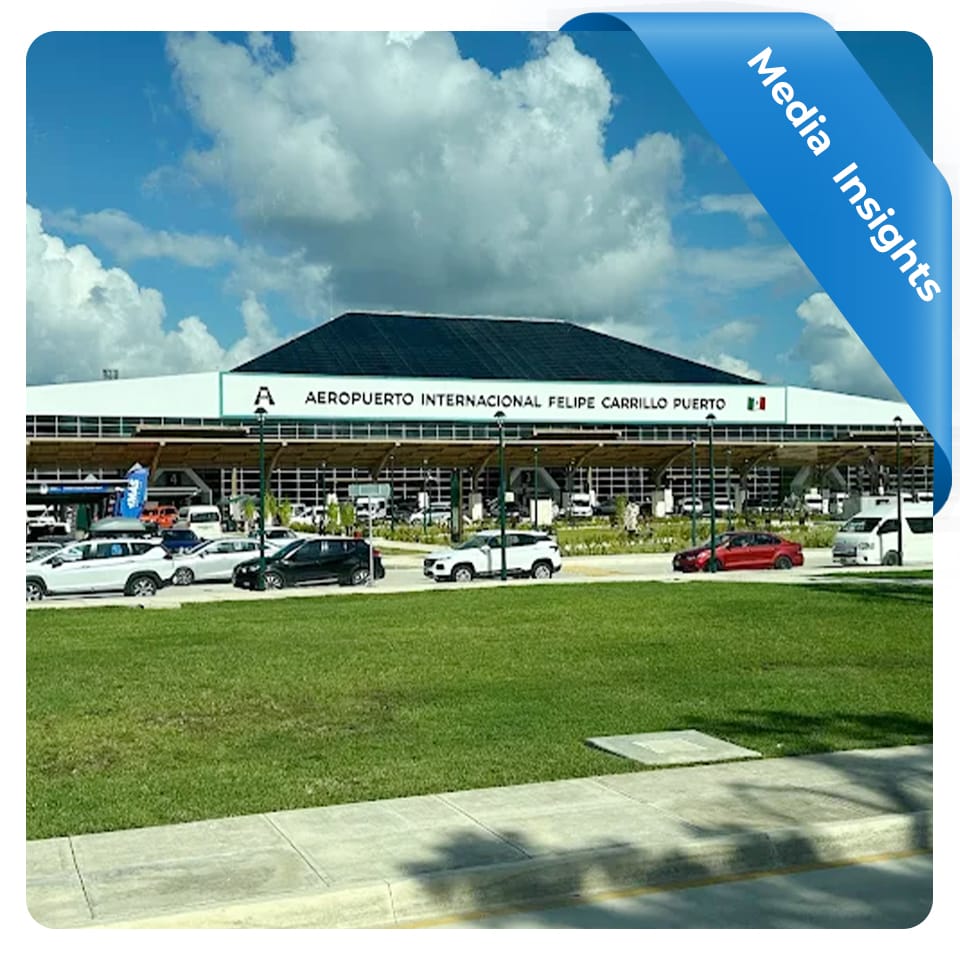
Get Free Expert Assistance Now
Our regional media planning team can build a costed, benchmarked plan across any combination of these eight Mexican airports and prime city inventory, tailored to your budget and category, at no cost to you.
Request Availability
Inventory across Mexico City, Los Cabos, Tulum and Mexico's other featured gateways moves quickly ahead of the observance and the opening of the winter resort season. Confirm your placements now to secure preferred positions before the November surge.
Día de los Muertos brings a UNESCO-recognised national tradition to eight of Mexico's most commercially significant airports, from the capital's 19.8 million-passenger business gateway to the ultra-HNWI resort corridors of Los Cabos, Tulum, Puerto Vallarta and Cancún opening their winter high season. The audience moving through these gateways around 1-2 November 2026 spans cultural tourists, ultra-luxury leisure travellers and Mexico's industrial business elite, exactly the profile luxury hospitality, spirits and real estate brands are built to reach. Masscom Global coordinates campaigns across all eight airports as a single national plan, with reporting benchmarked against each airport's own verified audience data. The dates are fixed and do not repeat until next year, so the opportunity is best captured now, ahead of the surge.