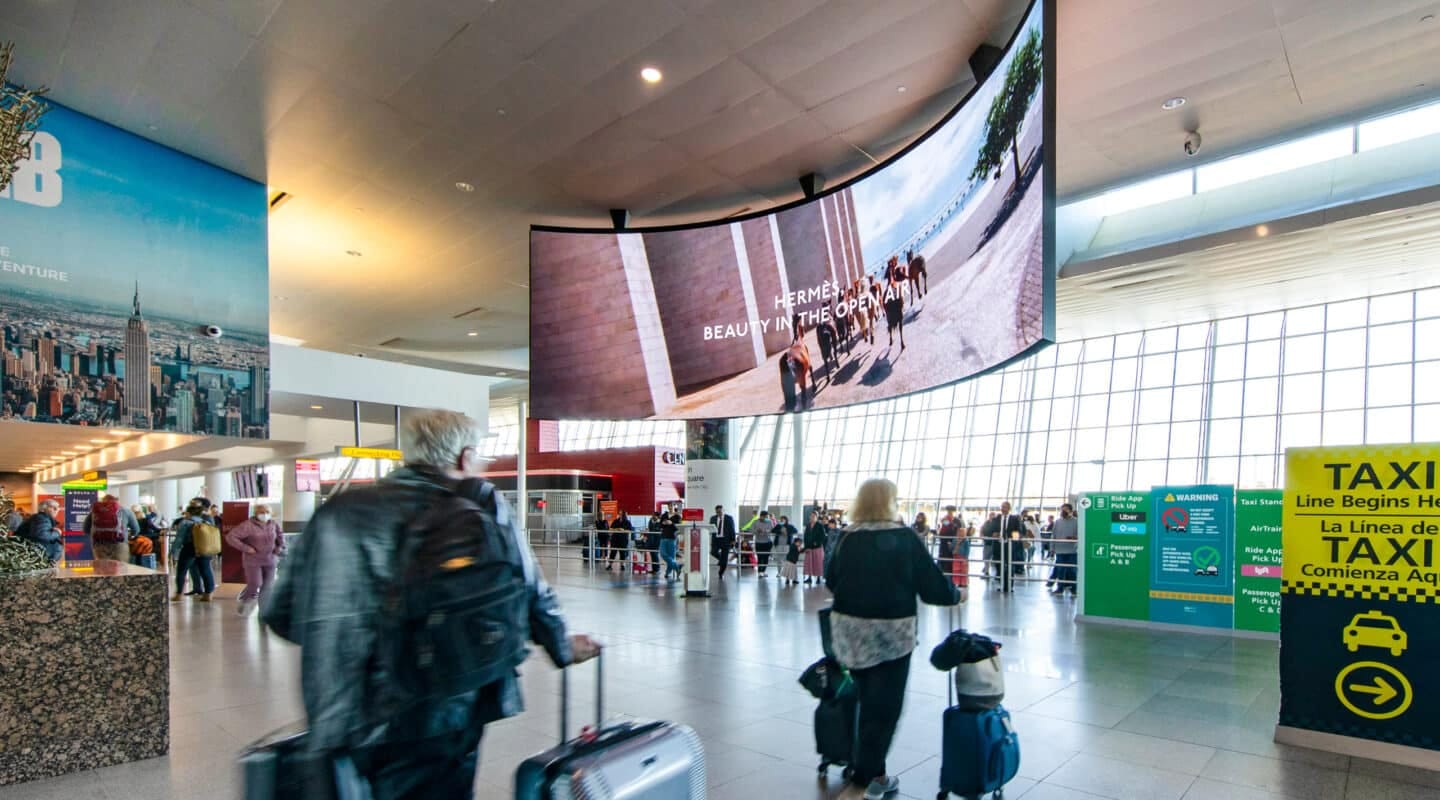
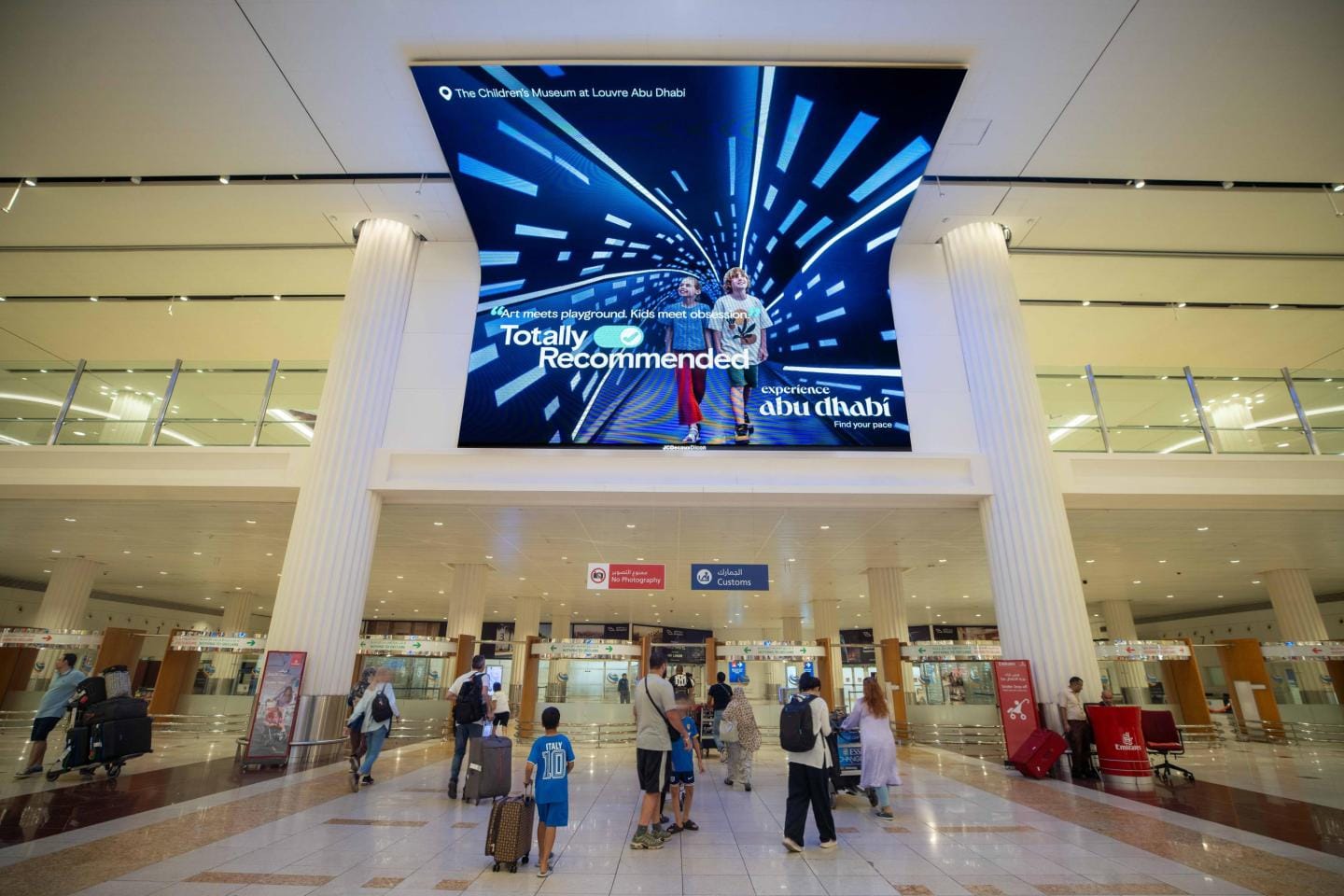
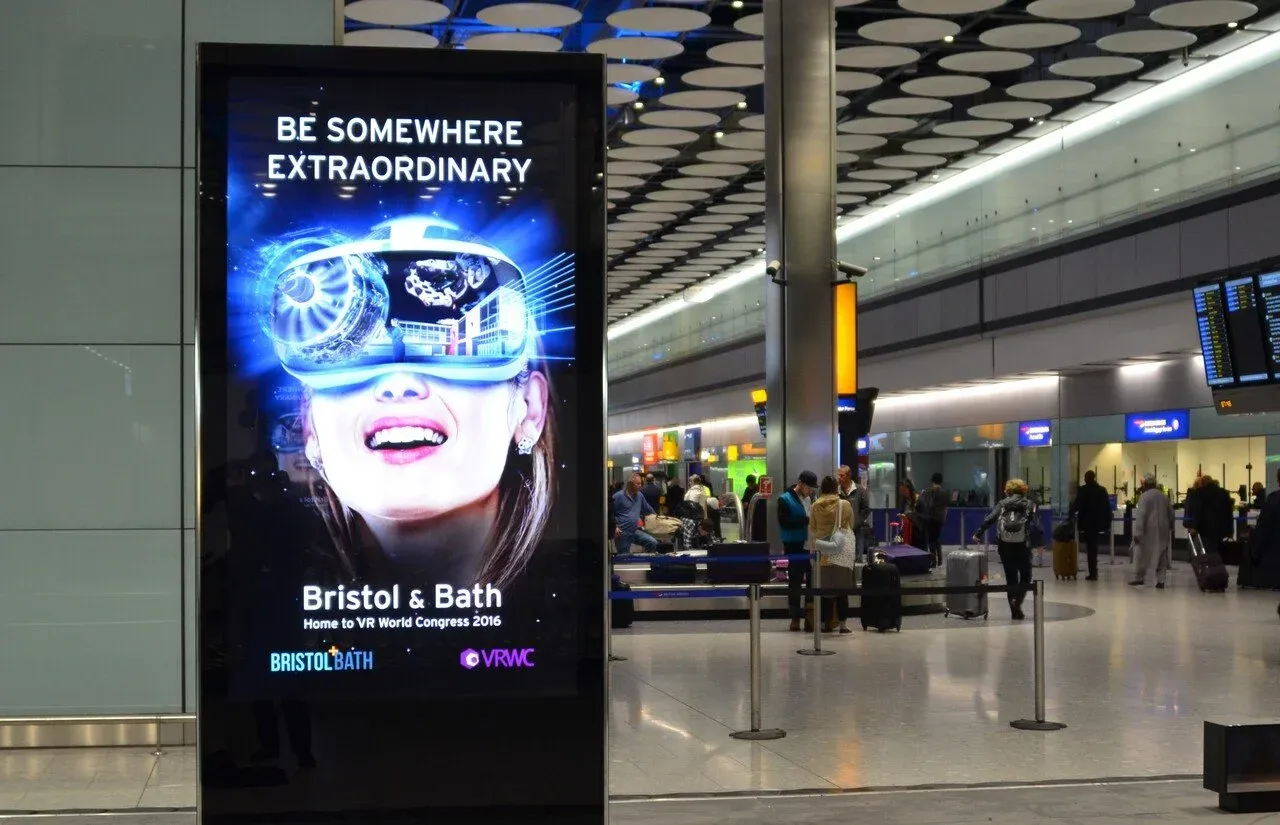


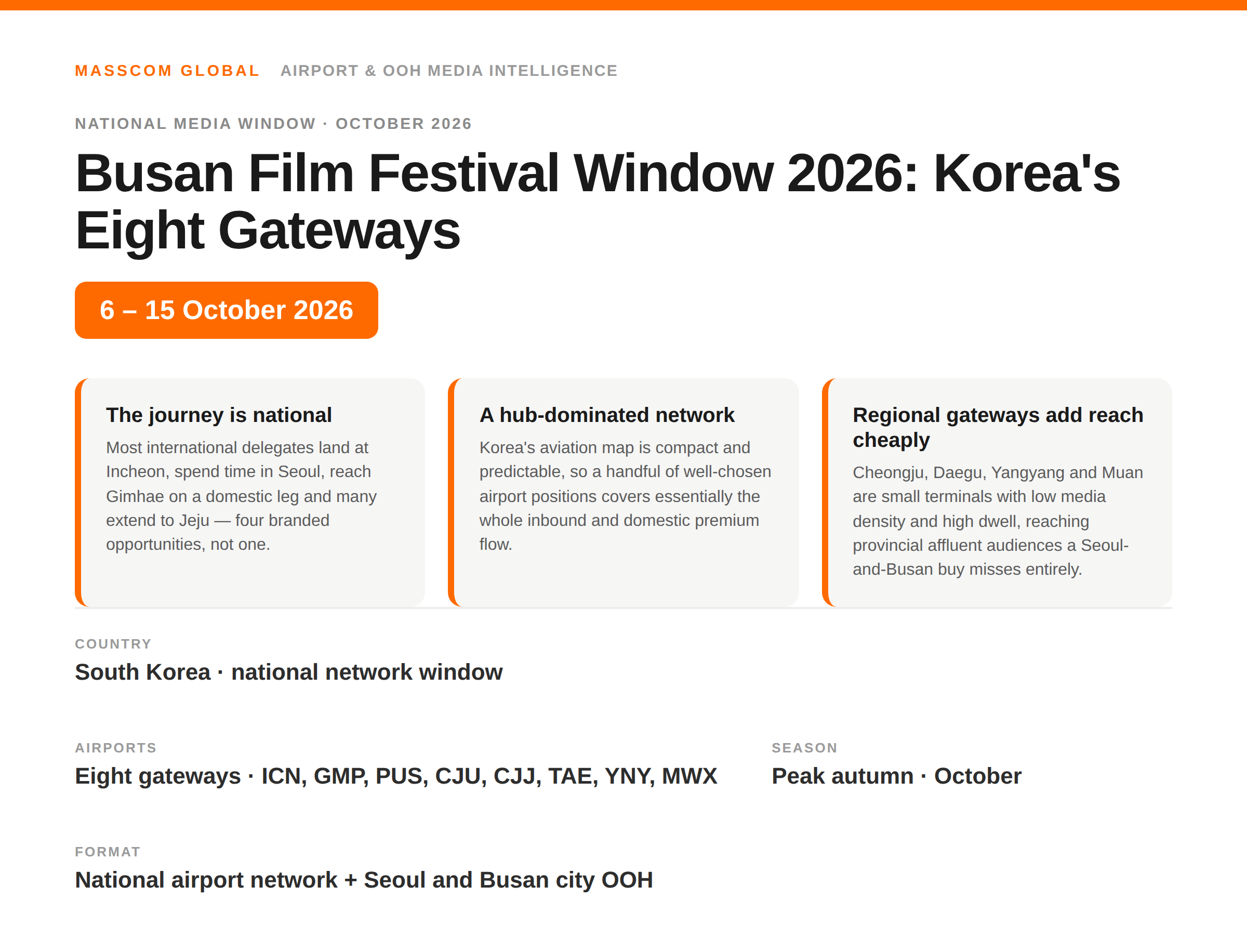
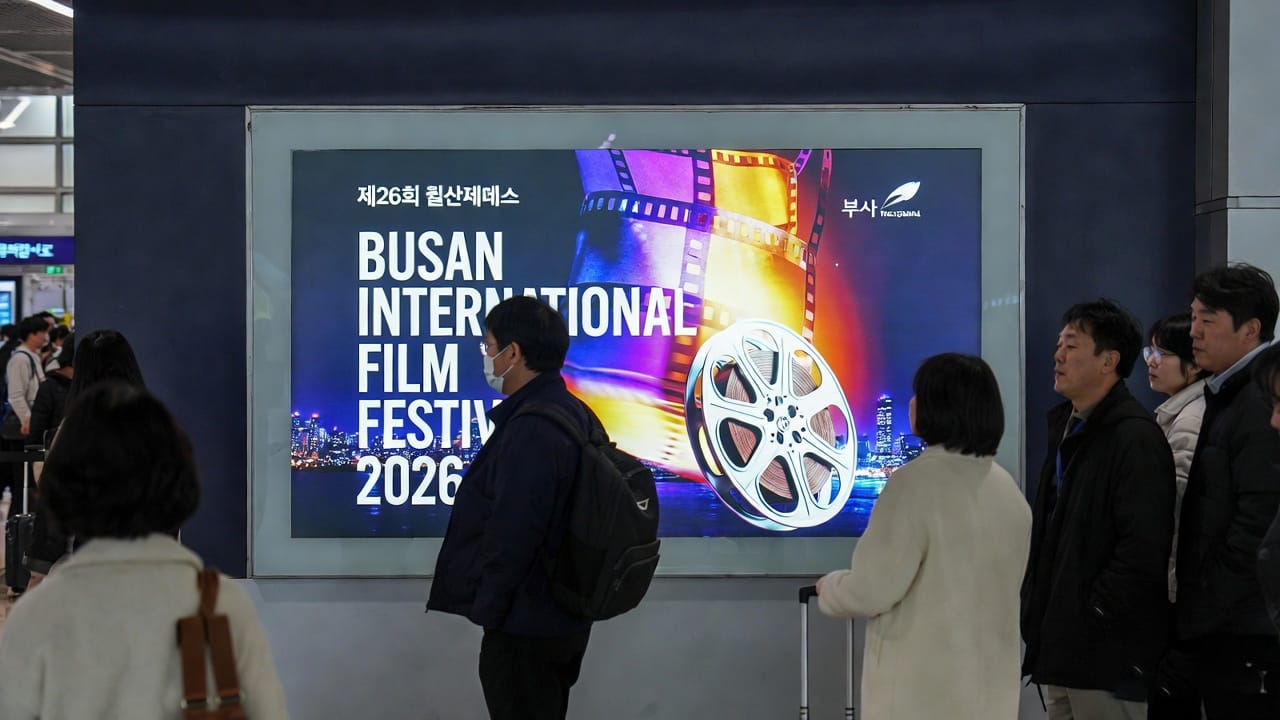
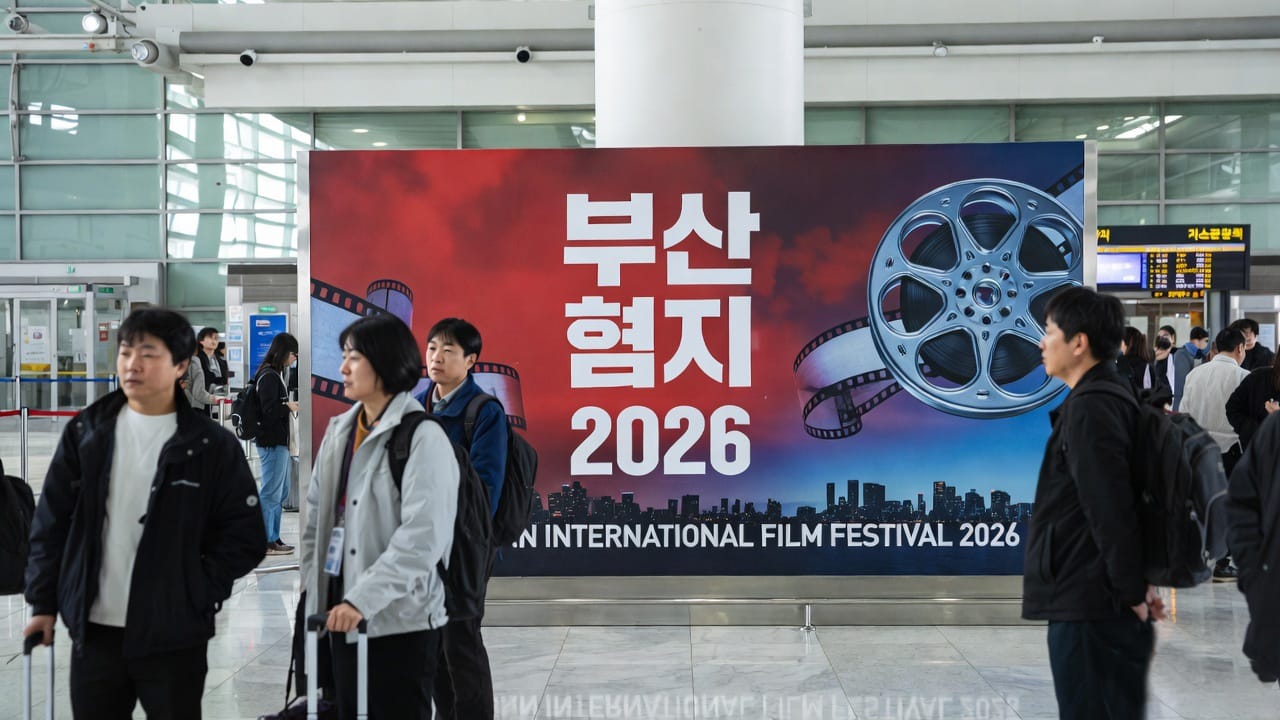
This is deliberately a country-level media window rather than a city one: eight South Korean airport gateways capture the same festival traveller multiple times before Busan itself ever comes into view. The 31st Busan International Film Festival runs from 6 to 15 October 2026, centred on the Busan Cinema Center and BIFF Hill in Haeundae-gu. For ten days it turns South Korea into a single arrival market: international delegates, distributors, financiers, press and premium leisure travellers enter through Incheon, Gimpo, Jeju, Gimhae, Cheongju, Daegu, Yangyang and Muan, and move between them by air, rail and road.
Few BIFF attendees fly directly into Busan from outside Asia: most arrive at Incheon, spend time in Seoul, then continue to Gimhae, and a substantial share extend the trip to Jeju. A campaign confined to Busan captures the last leg of a journey that has already offered three or four branded opportunities.
Why Advertise During the Busan International Film Festival Window?
The festival coincides with South Korea's strongest travel fortnight of the autumn. October is peak inbound season: settled weather, the beginning of the foliage season, and the Korean corporate calendar at its most active. BIFF layers an international industry audience on top of that, and the associated content market brings the commercial side of the business (buyers, sellers, financiers and platform executives) into the same ten days.
For planners the value is in composition rather than raw volume. Festival and market delegates travel on business accounts, book premium cabins and hotels, and are drawn disproportionately from the entertainment, technology, luxury, hospitality and financial sectors. Around them sits the Korean audience that matters commercially in its own right: Seoul's corporate leadership, the Gyeongnam industrial base that Gimhae serves, and the domestic premium leisure market that fills Jeju.
Reaching that combination is efficient in a way few markets allow. South Korea's aviation network is compact and hub-dominated, and the routes that matter for a festival campaign are few and predictable: a handful of well-chosen airport positions covers essentially the entire inbound and domestic premium flow.
Key Benefits of Advertising During the Busan Festival Window
Reach a qualified audience across the whole country
A national buy covers the international arrival point, the domestic connection, the festival gateway and the leisure extension: the same traveller met four times across the window rather than once at the venue.
Elevate your brand positioning
BIFF is the most prestigious cultural platform in the Korean calendar, and Korean airport environments are modern and uncluttered. Presence across the national gateways during the festival associates a brand with the event's standing without an official partnership.
Generate real business opportunity
The market side of the festival is a working deal calendar: content buyers, financiers, brand partners and distribution executives hold concentrated meetings across the ten days, with the Korean autumn business quarter running in parallel. Sustained visibility across the arrival journey keeps a brand in consideration while those conversations are live.
Get Free Expert Assistance from Our Global Media Planning Team
Receive strategic recommendations, media planning support, campaign monitoring and reporting to maximise your visibility throughout Busan International Film Festival window (country-level).
Book Expert ConsultationIncheon International Airport (ICN): The National Gateway
Incheon is South Korea's principal international gateway and the entry point for the overwhelming majority of inbound BIFF delegates, press and international premium travellers. Its scale and multi-terminal structure make it the single most important position in any Korean campaign.
Inventory Highlights
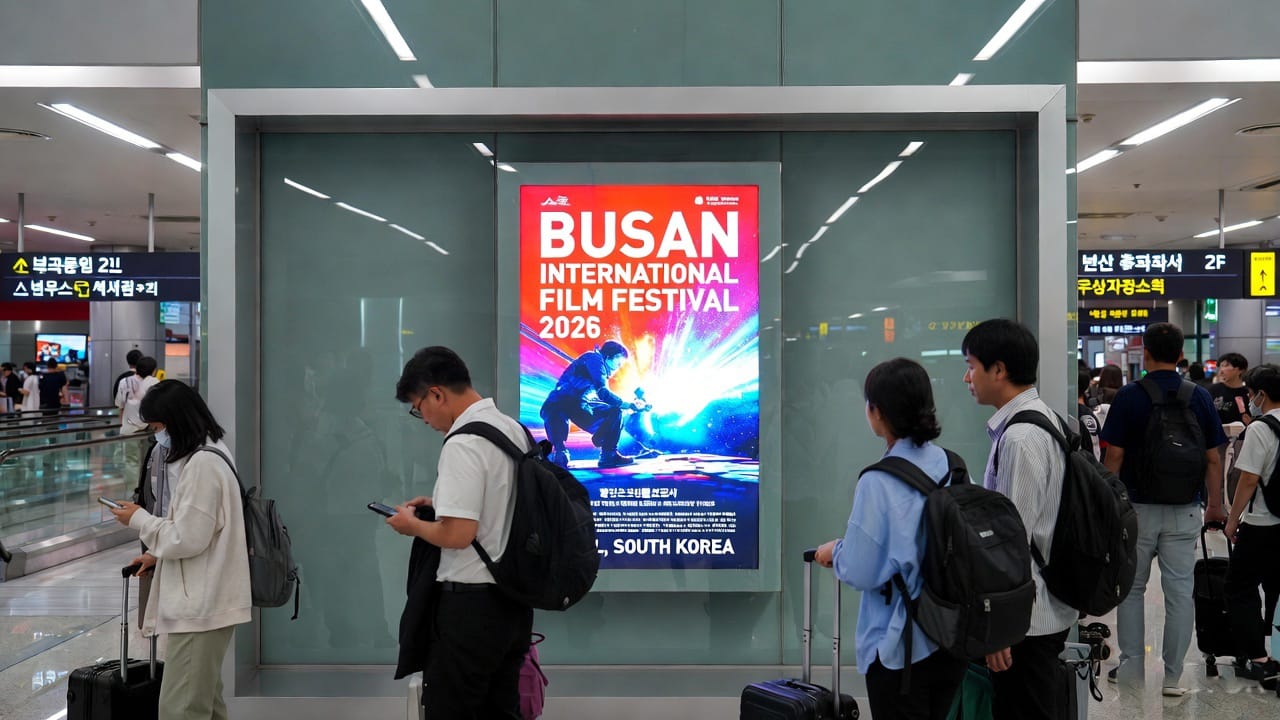
- Arrivals and immigration approach positions (the first branded surface an inbound delegate sees in Korea) plus baggage reclaim and greeter halls with extended dwell
- Digital and large-format environments along departure concourses and transfer corridors, plus premium check-in and lounge-approach touchpoints
Advantages for Advertisers
- Unavoidable exposure. There is no realistic alternative long-haul route into Korea for the international festival audience.
- High dwell. Long international arrival and transfer sequences support detailed creative rather than glance-only messaging.
- Dual capture. A single Incheon buy reaches both the inbound international audience and the outbound Korean premium traveller.
 Wealth in motion intelligence.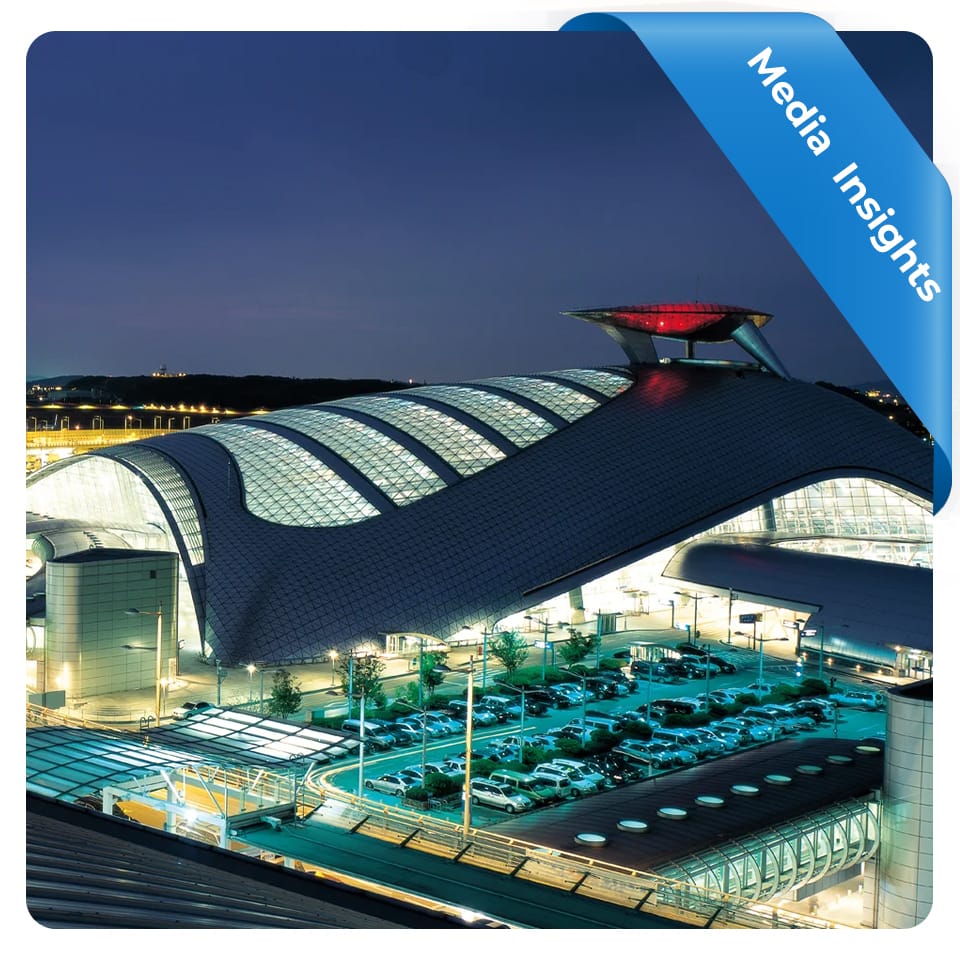
Gimpo International Airport (GMP): The Seoul Business Shuttle
Gimpo sits inside Seoul and carries the country's high-frequency domestic trunk traffic alongside short-haul regional international services. For a festival campaign it is the connector: the Seoul-to-Busan and Seoul-to-Jeju shuttles run from here, carrying the Korean industry delegation, domestic press and the executive audience travelling for the market days.
Inventory Highlights
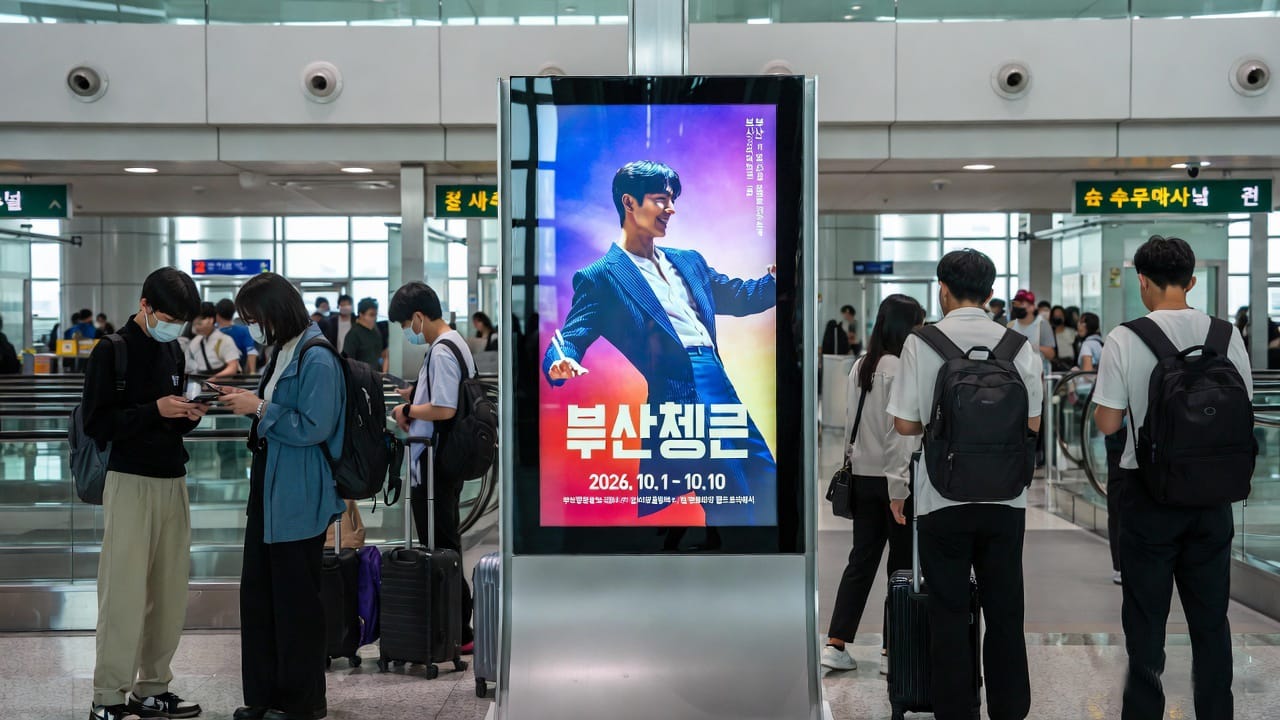
- Domestic departure and arrivals hall positions on the Busan and Jeju shuttle routes
- Premium and business-traveller touchpoints along a short, controlled passenger path
Advantages for Advertisers
- Audience concentration. Gimpo's traffic is dominated by Korean business travellers: the domestic decision-maker audience, reached without waste.
- Repeat frequency. Shuttle passengers pass through the same terminal several times within the festival fortnight, and because Gimpo sits inside Seoul the airport and city impressions fall in one journey.
 Wealth in motion intelligence.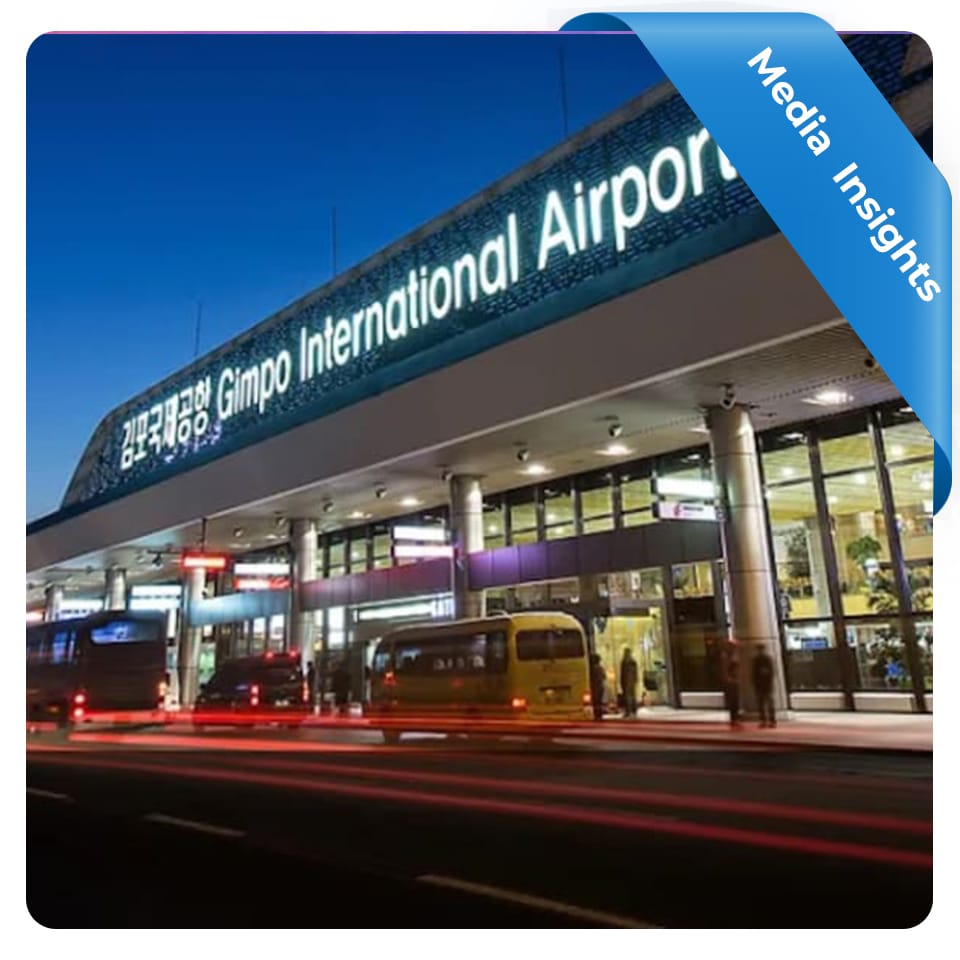
Busan Gimhae International Airport (PUS): The Festival Gateway
Gimhae is the airport of arrival for the festival itself, serving Busan and the wider Gyeongnam region. Its passenger mix during the BIFF window is unusually concentrated: domestic delegates from Seoul, regional international arrivals from Japan, China, Taiwan and Southeast Asia, and the industry audience travelling for the market. It is a compact terminal, which for advertisers is an advantage rather than a limitation.
Inventory Highlights
- Domestic and international arrivals hall positions on a short, funnelled passenger path
- Departure concourse and gate-area placements against the Japan, China, Taiwan and Southeast Asia routes
- Ground-transport interface placements on the route into Haeundae and the Cinema Center district
Advantages for Advertisers
- Low media clutter. A compact terminal means a single well-placed position carries a disproportionate share of attention.
- Festival-window concentration. Nearly every delegate arriving for BIFF passes through this terminal within the same ten days.
- Direct handover to the city. The airport-to-Haeundae route is short and well defined, keeping the airport-to-venue sequence continuous.
 Wealth in motion intelligence.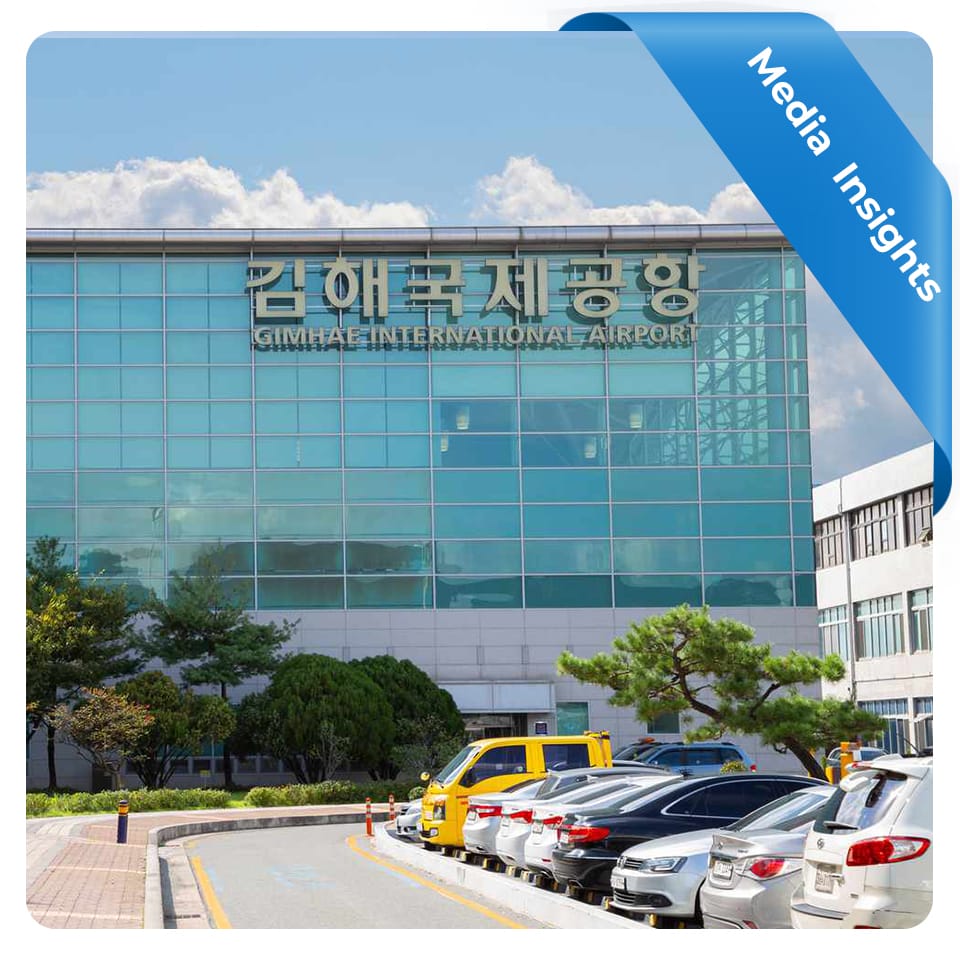
Jeju International Airport (CJU): The Premium Leisure Extension
Jeju is South Korea's leisure gateway and one of the busiest single-runway operations in the world by movement density. During the October window it carries a heavily affluent audience: Korean premium domestic travellers, international visitors extending a mainland trip, and the resort and golf market that peaks in autumn. It belongs in a BIFF-window plan because a meaningful share of delegates and attendees add a Jeju leg.
Inventory Highlights
- Arrivals and reclaim positions serving a holiday-mindset audience, and domestic gate-area placements on the high-frequency Seoul and Busan routes
Advantages for Advertisers
- Audience mindset. Leisure arrivals are more receptive to premium travel, hospitality, automotive and lifestyle messaging than business travellers in transit, and exceptional movement density concentrates them through few positions.
- Seasonal alignment. October is a peak month for the island's premium resort and golf market.
 Wealth in motion intelligence.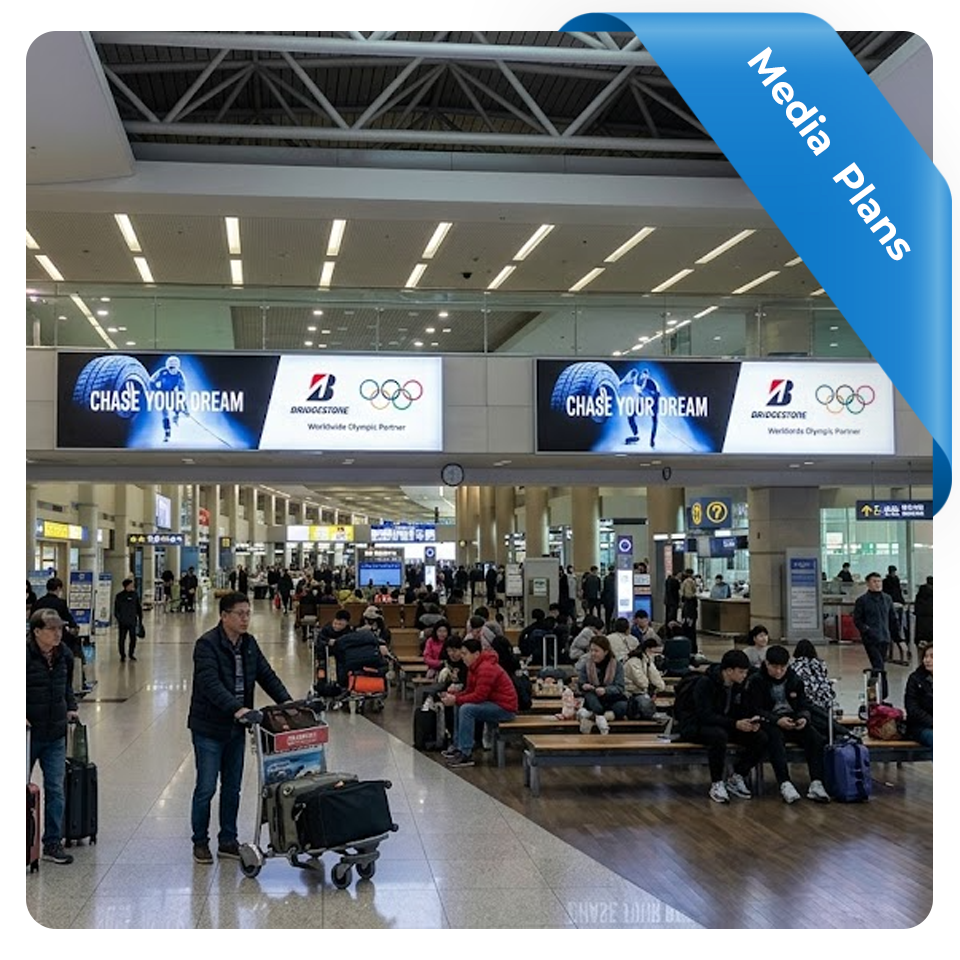
National Network Coverage
Beyond the four principal gateways, Korea's regional international airports extend the campaign into provincial premium markets. Masscom Global's Korean network includes Cheongju International Airport, serving the central Chungcheong region and its industrial and administrative base; Daegu International Airport, gateway to the Gyeongbuk region; Yangyang International Airport, serving the Gangwon east coast and its resort and ski market; and Muan International Airport, the southwestern gateway for Jeollanam.
These are smaller terminals, and that is their planning value. Media density is low, dwell is high, and including them reaches regional affluent audiences a Seoul-and-Busan-only buy misses entirely. For brands building national recognition in Korea rather than event-specific presence, the regional gateways are often the most cost-efficient positions in the network.
Destination South Korea: Full Visitor Journey Coverage
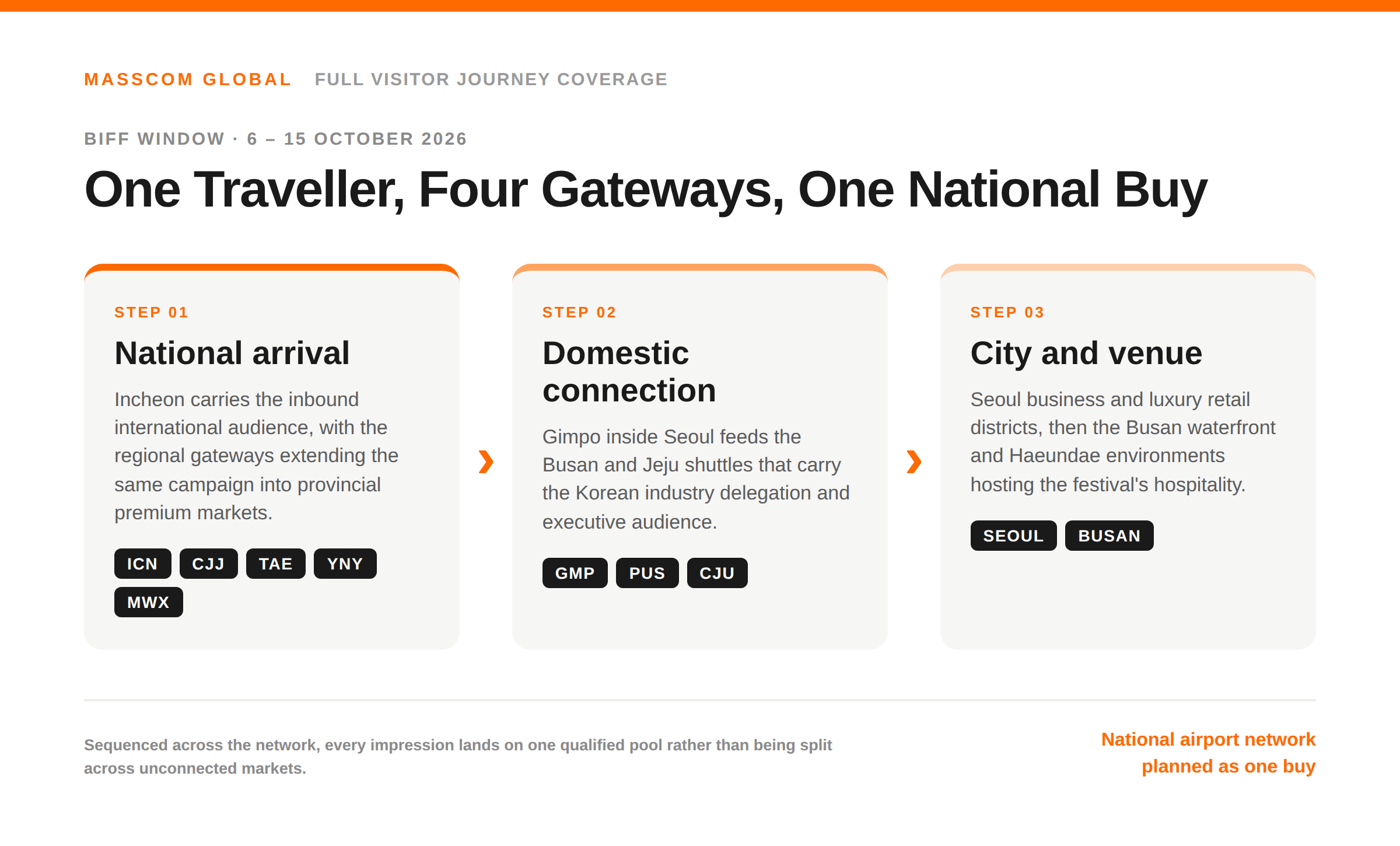
The window rewards sequencing because the Korean journey is predictable. A typical international delegate lands at Incheon, spends time in Seoul, connects through Gimpo or continues by rail, arrives at Gimhae, and moves into Haeundae for the Cinema Center. A domestic delegate begins at Gimpo; a premium leisure traveller adds Jeju.
Around that spine, prime city-location opportunities cover the Seoul business and luxury retail districts, the Busan waterfront and Haeundae hotel and retail environments that host the festival's hospitality, and the transit interchanges between them. Built as an Airport → City → Venue sequence rather than a scatter of unrelated placements, the buy produces three compounding effects:
- Increased brand recall: the audience meets the brand at national arrival, in the city, and on the approach to the festival district
- Consistent presence: the brand becomes part of the festival period's visual environment rather than an interruption to it
- Enhanced campaign effectiveness: a coordinated national sequence outperforms the same budget split across unconnected markets, because every impression lands on one qualified pool
Why Brands Choose Airport & City Advertising for Busan Festival Window
Exclusive audience access. Ten days in which the international content industry, Korea's corporate leadership and the autumn premium leisure market all move through the same eight gateways.
A prestigious environment. BIFF is the most credible cultural platform in the Korean calendar, and Korea's airports are modern, uncluttered environments that give premium creative the setting it needs.
End-to-end campaign support. Masscom Global plans, negotiates and executes across all eight Korean gateways and prime city inventory under one brief.
Strategic planning assistance. Our planners advise on Incheon-versus-regional weighting, which gateways suit a given category, and how to phase spend across the 6–15 October window.
The Masscom Global Standard Behind Every Busan International Film Festival Placement
- Verified inventory and audience data: screen counts and traffic figures across all eight Korean gateways come from live operator data at proposal stage, not published estimates.
- Transparent delivery reporting: campaign monitoring and reporting across the national campaign window, so you see exactly where your creative ran.
- Benchmarked recommendations: hub selection and format mix set against comparable campaigns across our network.
- We absorb the complexity: one point of accountability from negotiation through execution.
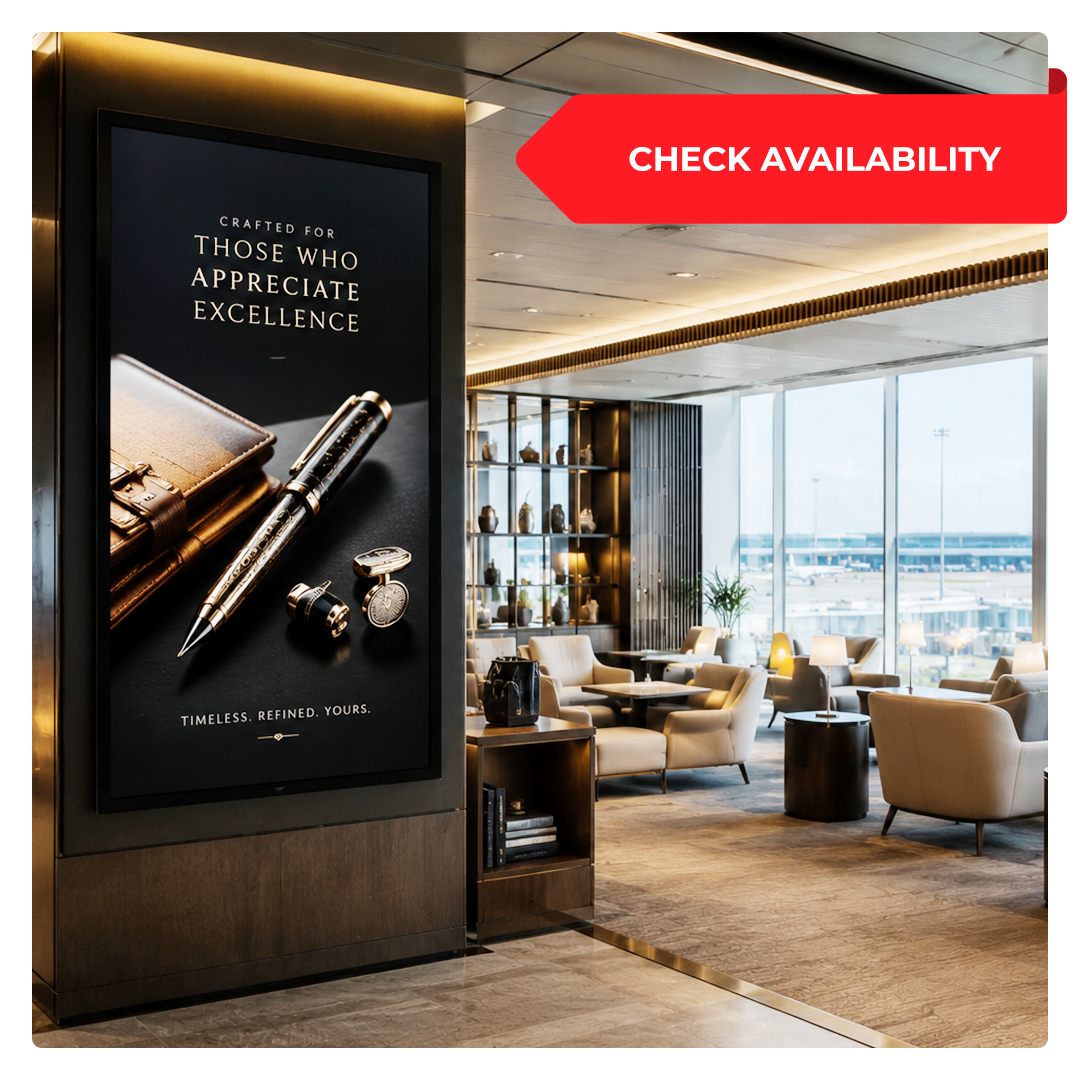
Request Your Customised Busan International Film Festival window (country-level) Advertising Plan
Tell us your audience, category and budget. Our planners will return a costed plan across airport and prime city inventory, with availability confirmed.
Book NowFrequently Asked Questions
When exactly is the Busan International Film Festival in 2026?
6 to 15 October 2026, centred on the Busan Cinema Center and BIFF Hill in Haeundae-gu, Busan. The practical media window opens a few days earlier as delegates and market attendees arrive.
Who attends during this window?
International and Korean filmmakers, talent and press; content buyers, distributors, financiers and platform executives attending the market; Korean corporate leadership; and a large premium leisure audience travelling in Korea's peak autumn season.
Why a national campaign rather than a Busan-only one?
Because the journey is national. Most international attendees arrive at Incheon, pass through Seoul and reach Busan on a domestic leg, many extending to Jeju. A Busan-only buy reaches the final stage of a journey that already offered three or four earlier opportunities.
How far in advance should a festival-window campaign be booked?
October is South Korea's autumn peak and premium inventory across Incheon, Gimpo, Gimhae and Jeju commits well ahead of it. We recommend confirming availability several months in advance; later requests can often still be served, but with reduced format choice.
Which brand categories perform best in this window?
Luxury goods, watches and beauty; premium hospitality and airlines; consumer technology; luxury automotive; wealth management and private banking; content platforms and entertainment brands; and premium food and beverage.
Related Airport Advertising Guides
Detailed inventory, audience and planning notes for the airports covered above:
Wealth in motion intelligence.Wealth in motion intelligence.Wealth in motion intelligence.Wealth in motion intelligence. Wealth in motion intelligence.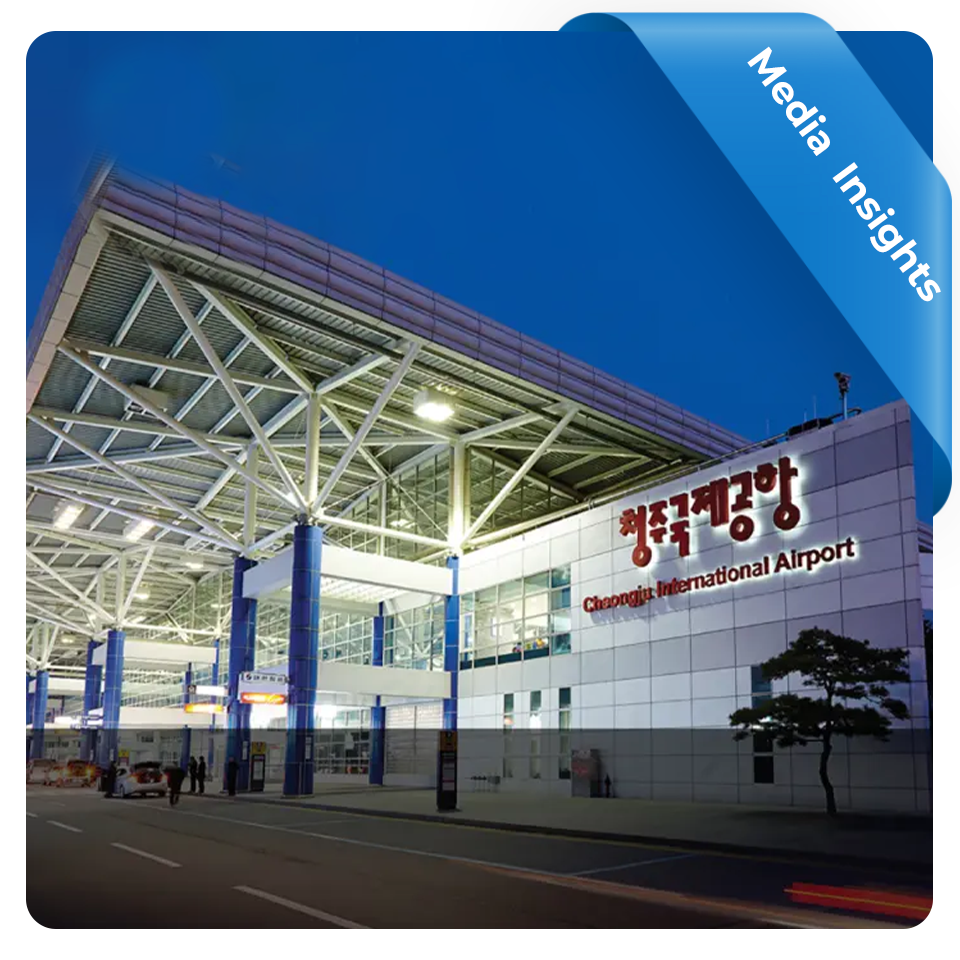
 Wealth in motion intelligence.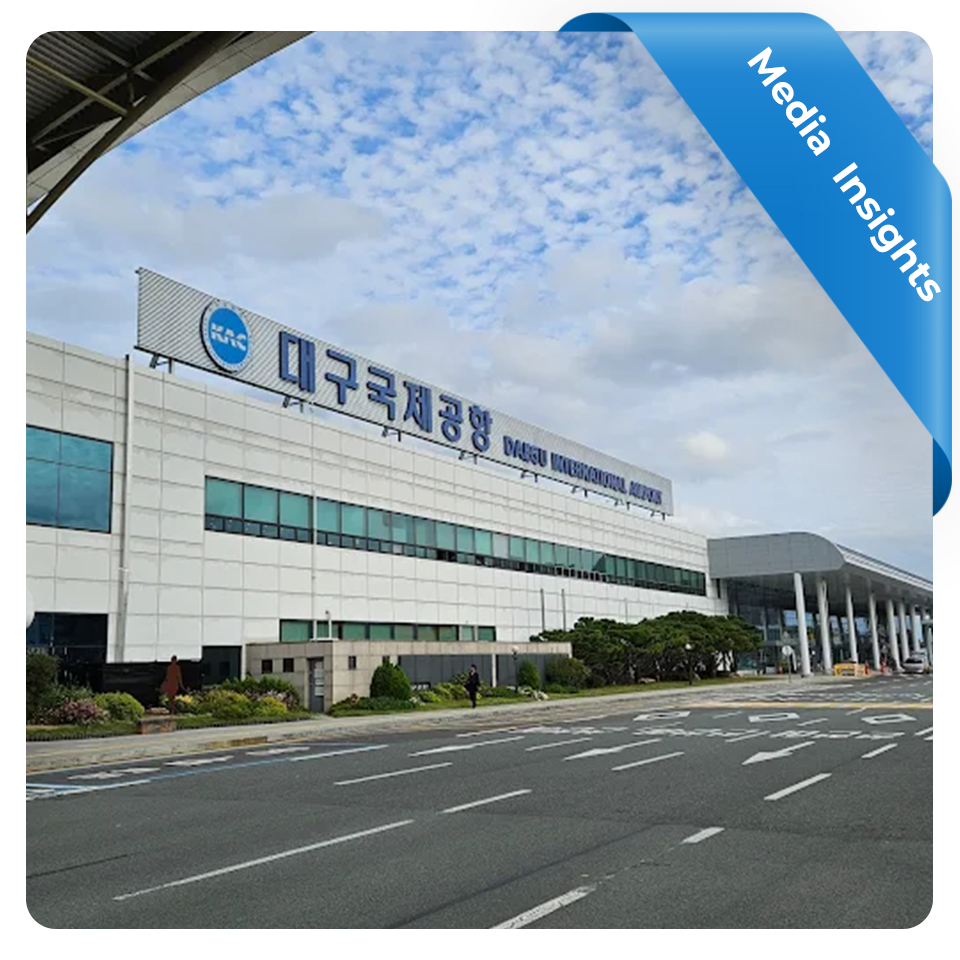
 Wealth in motion intelligence.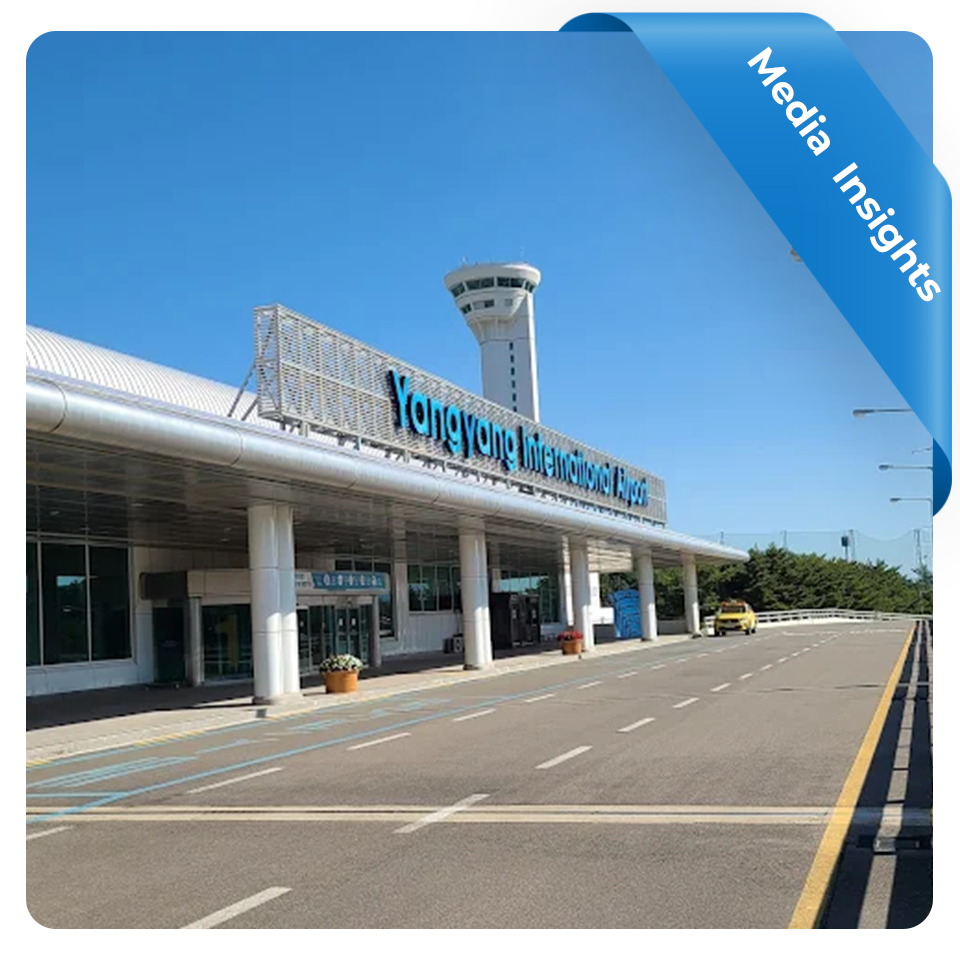
 Wealth in motion intelligence.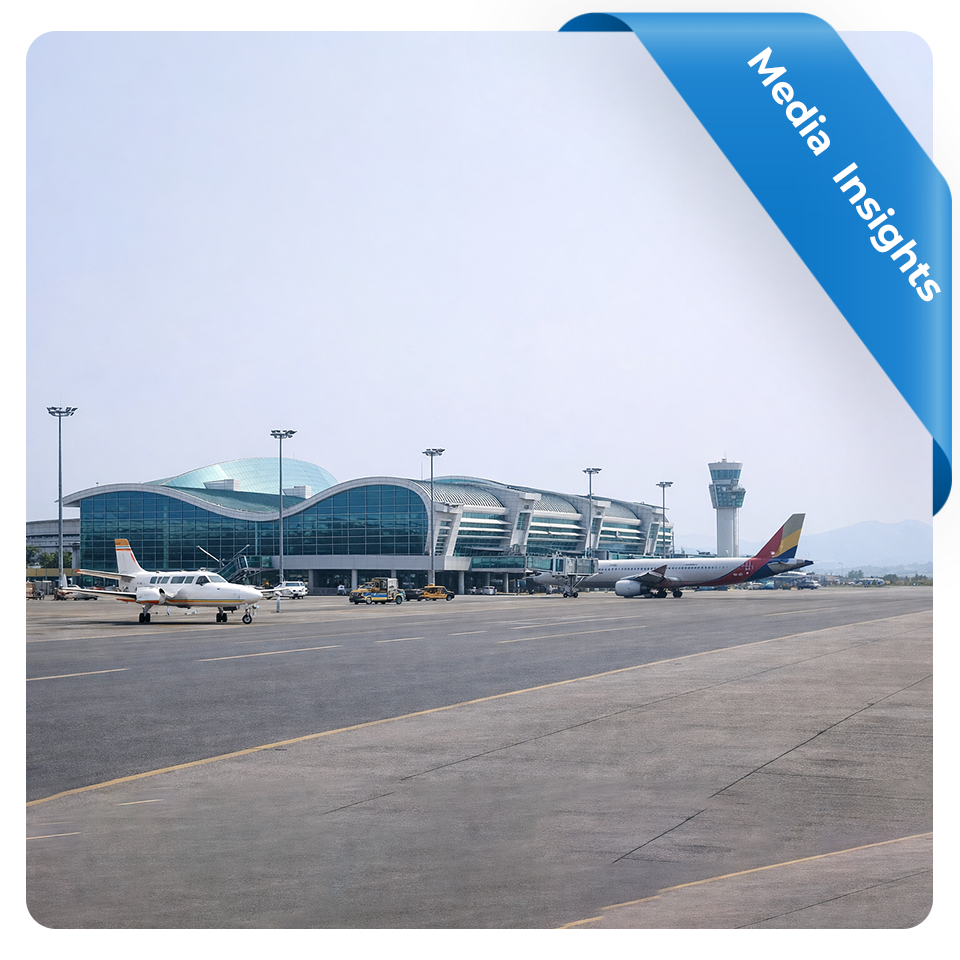
Busan International Film Festival Won't Wait. Neither Should You.
- Once a year, then gone: October is South Korea's autumn peak and premium inventory across Incheon, Gimpo, Gimhae and Jeju commits well ahead of it.
- Competitors are already moving: every week without a plan is a week a luxury goods, hospitality or automotive brand gets closer to locking the same positions.
- The window is exact, not approximate: a campaign that isn't live for the festival misses the delegation and audience entirely.
- The alternative can't buy this credibility: straight commercial media cannot purchase the cultural authority a major film festival confers.
Get Free Expert Assistance Now
Tell us your category, target audience and budget, and our Korea planners will return a costed festival-window plan across the national airport network and prime city inventory.
Request Availability
Incheon, Gimpo, Gimhae and Jeju positions for the 6 – 15 October window move quickly. Ask what is still open.
BIFF works as a national buy because the festival's own travel pattern is national: delegates land at Incheon, pass through Seoul, connect via Gimpo or Gimhae, and a meaningful share extend to Jeju, so a Busan-only campaign catches only the last of three or four branded moments. South Korea's compact, hub-dominated aviation network means a handful of well-chosen gateway positions covers essentially the whole inbound and domestic premium flow. Masscom Global plans and executes across all eight Korean gateways and prime city inventory under one brief, so a brand rides the entire journey rather than the final leg of it.