


Airport at a Glance
| Field | Detail |
|---|---|
| Airport | Roi Et Airport |
| IATA Code | ROI |
| Country | Thailand |
| City | Roi Et, Thawat Buri district, Northeastern Thailand |
| Annual Passengers | 342,970 (2024), with 3,989 aircraft movements, against a rebuilt capacity of 1.2 million |
| Primary Audience | Returning domestic and overseas migrant workers, jasmine rice and cassava farming households, pilgrimage and family travellers |
| Peak Advertising Season | April, late December to early January, and May to July |
| Audience Tier | Tier 3 by wealth index, Tier 1 by reach efficiency |
| Best Fit Categories | Remittance and money transfer, telecommunications, agricultural equipment and rice inputs, motorcycle and pickup finance |
Roi Et Airport handled 342,970 passengers in 2024 across 3,989 aircraft movements, served by one airline on a single route to Bangkok Don Mueang at roughly four flights a day. The important number is not the traffic figure but the gap behind it. Following a 110 million baht upgrade and a full expansion and renovation programme completed in December 2022, this airport now has a designed handling capacity of 1.2 million passengers a year. It is running at under a third of that. The infrastructure is modern, jet-capable and largely empty, and advertising rates reflect the traffic rather than the terminal.
The catchment behind it is the agricultural heart of Thailand. Roi Et sits in Thung Kula Ronghai, the geographically protected heartland of Thai Hom Mali jasmine rice and the global benchmark for premium aromatic rice. It is also one of the country's highest labour-sending provinces, with households across the region supported by earnings sent home from Bangkok and from overseas contracts in Taiwan, South Korea, Israel, Japan and the Gulf. That remittance economy, not local wages, is what actually funds consumption in this catchment, and it moves through this terminal.
Advertising Value Snapshot
- Passenger scale: 342,970 passengers in 2024 with 3,989 aircraft movements, against a post-2022 rebuilt capacity of 1.2 million. Roughly 28 weekly flights on a single route, all on one carrier
- Traveller type: Returning domestic and overseas migrant workers, jasmine rice, cassava and sugarcane farming households, pilgrimage and family travellers, provincial government and university travellers
- Airport classification: Tier 3 by wealth index, Tier 1 by reach efficiency. Individual spending power is modest, but the audience is homogeneous, highly repeat, and reachable in full from a handful of positions
- Commercial positioning: The air gateway to Thung Kula Ronghai and the Thai Hom Mali jasmine rice heartland
- Wealth corridor signal: Sits on Thailand's principal internal labour and remittance corridor, connecting Isan farming households to Bangkok and overseas earnings
- Advertising opportunity: Masscom Global positions ROI as a low-cost total-coverage buy in a modern terminal with unused capacity. One route, one carrier and one departure area mean a small number of positions covers the entire passenger flow repeatedly. Masscom concentrates weight into Songkran and New Year when returning-worker volumes and accumulated savings peak simultaneously against fixed inventory.

Airport Advertising is Complex to Get Right
We help you execute faster, with proven results and local insight most planners lack starting now.
Talk to an ExpertCatchment Area and Economic Drivers
Top 10 Cities and Provinces within 150 km, Marketer Intelligence:
- Roi Et city: The provincial capital and the commercial, administrative, healthcare and education centre for the surrounding rice country. Delivers the region's professional, government and retail audience.
- Maha Sarakham: Roughly 40 kilometres west and a significant university province, producing a large student and academic population alongside rice farming households. Strong receptivity to telecommunications, education and financial services messaging.
- Kalasin: Rice, cassava and reservoir fisheries to the north, with high labour outmigration and correspondingly high remittance dependence.
- Yasothon: Rice country to the southeast and the home of Isan's best-known rocket festival tradition, adding a distinct seasonal festival travel audience.
- Selaphum and Phon Thong: Core Thung Kula Ronghai rice districts within Roi Et province, delivering concentrated jasmine rice growing households with input and equipment purchasing tied to planting and harvest.
- Kaset Wisai and Suwannaphum: Southern Roi Et districts at the centre of the premium rice belt, with cooperative and mill activity alongside smallholder farming.
- Nong Phok: The district containing both the airport and the province's principal pilgrimage site, combining agricultural households with a domestic religious visitor flow.
- Surin: Around 120 kilometres south, adding rice, silk weaving and Cambodian border trade to the wider catchment, with its own substantial labour outmigration.
- Khon Kaen: Roughly 115 kilometres northwest and the commercial capital of central Isan. Significant as both a catchment contributor and a competing gateway, since Khon Kaen operates a larger airport with more route choice.
- Sisaket: At the outer edge of the practical catchment, contributing rice and shallot farming households with established migration channels.
Migrant and Remittance Intelligence:
This is the defining commercial characteristic of the Roi Et catchment. The province and its neighbours are among Thailand's most consistent labour-sending regions, supplying workers to Bangkok, the Eastern Seaboard industrial estates, and overseas contracts in Taiwan and South Korea in manufacturing and construction, Israel in agriculture, Japan under technical and skilled worker schemes, and Singapore, Malaysia and the Gulf across construction and services. Those workers return for Songkran and New Year, and they travel through this terminal with accumulated savings and clear intentions. A secondary flow comes from the established pattern of Isan nationals partnered with European spouses, who return seasonally with foreign income.
Economic Importance:
Three engines drive this catchment and one of them dominates. Rice is the province's identity, with Thung Kula Ronghai producing the geographically protected Thai Hom Mali jasmine rice that defines premium Thai rice in export markets. Cassava, sugarcane, rubber and reservoir fisheries provide diversification. Remittance income from internal and overseas migration functions as a parallel economy that frequently exceeds local agricultural earnings. Government, healthcare and the university sector anchor the provincial centres. Each produces travellers, and all use the same single corridor.
Business and Industrial Ecosystem
- Jasmine rice cultivation, milling and export: The province's defining industry, producing smallholder farming households, cooperative managers, mill operators and exporters with seasonal purchasing across seed, fertiliser, machinery, drying and storage
- Cassava, sugarcane and rubber: Volume crops providing income diversification, generating additional machinery, input and haulage demand across the rural districts
- Silk weaving and handicraft production: A genuine regional specialism with export and domestic premium market value, producing small enterprise owners and cooperative groups
- Government, education and healthcare: Provincial administration, universities across Roi Et and Maha Sarakham, and regional hospitals, producing officials, academics, clinicians and students with recurring Bangkok travel
Passenger Intent, Business Segment:
Business travel at ROI is on the Bangkok corridor and it is functional rather than discretionary. Rice cooperative and mill managers meet buyers, exporters and financiers. Agricultural cooperative officials attend ministry and policy meetings. Provincial administrators travel for budget and programme matters. University and hospital staff travel for training and conferences. Journeys are around one hour each way and repeated frequently by the same individuals, which builds recall efficiently. Agricultural machinery and inputs, drying and storage equipment, commercial vehicle finance, business banking, insurance and telecommunications intercept this audience.
Strategic Insight:
The B2B opportunity here rests on premium rice. Thai Hom Mali from Thung Kula Ronghai commands a price premium in export markets, which means growers and mills in this catchment have both the incentive and, in good years, the means to invest in quality: certified seed, precision fertiliser, moisture control, drying and storage. No competing advertiser is present at this terminal. For agricultural input suppliers, machinery manufacturers, post-harvest equipment brands and rural lenders, Roi Et offers uncontested visibility with the people who make those purchasing decisions across the most valuable rice-growing region in Thailand.
Tourism and Premium Travel Drivers
- Phra Maha Chedi Chai Mongkol at Wat Pha Nam Yoi: One of Thailand's largest and most striking chedis, located in Nong Phok district near the airport, and a substantial domestic pilgrimage destination drawing visitors from across the northeast and beyond
- Bueng Phlan Chai and the standing Buddha: The island lake at the centre of Roi Et city with its towering standing Buddha image, the province's principal urban landmark and a focal point for domestic visitation
- Ku Phra Kona and the Khmer-era sites: Ancient stone sanctuaries across the province, drawing heritage and educational visitation with growing archaeological interest
- Isan cultural and festival heritage: Rocket festival traditions, ponglang and khaen music, and the twelve-month merit cycle that shapes community life and generates recurring domestic travel
Passenger Intent, Tourism Segment:
Masscom Global will be direct here: Roi Et is not an international tourism destination and should not be sold as one. The leisure traveller at this airport is overwhelmingly domestic Thai, arriving for family, merit-making, pilgrimage and festival obligation as much as recreation, and travelling in extended groups with pooled household spending. They are receptive at arrival to gifting, food, beverage, mobile connectivity and transport categories. Pilgrimage travel to the province's major chedi adds a distinct and reliable domestic flow with associated giving, gifting and hospitality spending. Advertisers seeking international leisure audiences should look elsewhere in Thailand entirely.
Travel Patterns and Seasonality
Peak seasons:
- April, Songkran: The largest movement of the year by a clear margin. Migrant workers return from Bangkok, the Eastern Seaboard and overseas contracts, arriving with accumulated savings and the highest purchase intent of the calendar
- Late December to early January: New Year return travel, the second homecoming peak, combining migrant return with domestic holiday movement
- May to July: The rocket festival season, the start of Buddhist Lent and the rice planting period, combining cultural travel with agricultural input purchasing
- October to December: Ok Phansa observance followed by the rice harvest and marketing period, when farm income is realised and equipment and durable goods purchasing follows
- February to March: The quietest period, with limited festival activity and no harvest cycle, and the weakest advertising window of the year
Event-Driven Movement:
- Songkran (mid April): Thailand's traditional new year and the defining homecoming event for Isan. The highest conversion window of the year for remittance, telecommunications, motorcycle and pickup finance, consumer credit, insurance and durable goods advertisers.
- New Year (late December to early January): The second homecoming peak, overlapping the rice harvest income period. Strong for gifting, food and beverage, retail and travel categories.
- Bun Bang Fai rocket festivals (May): Isan's distinctive pre-planting festival tradition, driving village-level community spending and coinciding with agricultural input purchasing ahead of the rice season.
- Khao Phansa and Ok Phansa (July and October): The start and end of Buddhist Lent, driving temple giving, family gathering and pilgrimage travel to the province's major chedi.
- Rice harvest and marketing season (November to December): Income realisation for the catchment's highest-value crop, driving machinery, vehicle, construction and finance purchasing.

It’s Not Just Where You Advertise - It’s How Fast You Execute
We combine local insight with fast rollout to deliver results for you, now.
Talk to an ExpertAudience and Cultural Intelligence
Top 2 Languages:
- Isan: The everyday home language across essentially the entire catchment, closely related to Lao and distinct from Central Thai. This is the most important creative insight at this airport. Consumer messaging that uses Isan register, humour and cultural reference performs with an authenticity that Central Thai copy cannot reach, and brands that treat Isan as a legitimate marketing language rather than a dialect to be smoothed out consistently outperform better-funded competitors.
- Central Thai: The language of government, formal business, banking, education and national media. Necessary for financial services, government-facing and formal B2B categories where institutional credibility carries the message. The strongest campaigns here run both, split by category rather than by placement.
Major Traveller Nationalities:
The passenger base is almost entirely Thai domestic, drawn from Roi Et and the surrounding central and lower Isan provinces. There are no scheduled international services and no meaningful international visitor segment. The small foreign presence consists of European partners of Isan nationals travelling to family homes, and occasional academic, development and agricultural sector visitors connected to the rice economy or the regional universities. Campaign creative should be built for a Thai and Isan audience without exception, and advertisers should not budget for international-facing execution at this airport.
Religion, Advertiser Intelligence:
- Theravada Buddhism, approximately 95 percent or above: Overwhelmingly dominant and actively practised. The Buddhist lunar calendar governs travel here more comprehensively than in most of Thailand, with Khao Phansa in July, Ok Phansa in October, Makha Bucha in February and Visakha Bucha in May all driving movement and household spending. Merit-making is a real recurring financial commitment for Isan families, and remittances are frequently timed to coincide with it. Financial services, telecommunications, gifting, food and transport advertisers benefit substantially from calendar alignment.
- Isan customary practice and the twelve-month merit cycle: A structured annual sequence of community observances layered over the national Buddhist calendar and unique to the northeast, including the rocket festival tradition tied to the planting season. It produces predictable monthly gathering and spending patterns that national advertisers routinely miss and that local execution can target precisely.
- Pilgrimage practice: The province's major chedi at Nong Phok functions as a genuine regional pilgrimage destination, generating recurring domestic travel with associated giving, gifting, transport and hospitality spending across the year rather than only at festival peaks.
- Christianity, Islam and other faiths, under 3 percent combined: Very small minority communities with limited standalone commercial significance in this catchment.
Behavioral Insight:
Decisions here are made collectively and framed by obligation. Household income is pooled across generations and across locations, with a worker in Bangkok, Taipei or Tel Aviv simultaneously funding a parent's healthcare, a sibling's schooling and a house extension. Purchases are therefore evaluated against family benefit rather than individual preference, and messaging built on personal indulgence underperforms sharply while messaging built on providing for family converts strongly. Price sensitivity is genuine but coexists with real aspiration around vehicles, phones and housing, which serve as visible proof that a migration has succeeded. Instalment structure and credit accessibility frequently decide the purchase more than headline price does.
Outbound Wealth and Investment Intelligence
The outbound story at Roi Et is labour rather than capital, and stating that plainly is more useful to an advertiser than manufacturing a wealth narrative that does not exist. There is no private banking audience here, no business aviation and no market for offshore residency. What does exist is one of the largest and most predictable labour and remittance flows in Thailand, and it is directly addressable at this terminal.
Outbound Labour Migration and Remittance:
Workers from Roi Et and the surrounding provinces take contracts in Taiwan and South Korea in manufacturing and construction, in Israel in agriculture, in Japan under technical training and skilled worker schemes, and in Singapore, Malaysia and the Gulf states across construction, hospitality and services. Contracts typically run several years, with returns clustered around Songkran and New Year. Remittances fund house construction, land purchase, vehicles, agricultural investment and children's education across the catchment. Overseas employment agencies, pre-departure and language training providers, international money transfer services, mobile wallets and migrant-focused insurance and banking products reach a precisely defined audience here.
Outbound Education Investment:
Education is where remittance income is most consistently deployed and where family ambition concentrates. Bangkok universities remain the primary aspiration, with the regional universities in Roi Et, Maha Sarakham and Khon Kaen serving those staying closer to home. Overseas study is growing, focused on China, Japan, Taiwan and Australia, with language study and vocational qualifications frequently functioning as a pathway into overseas employment rather than as academic ends. Universities, vocational colleges, language schools and student finance providers reach parents here who are actively funding this route and who decide jointly across a household.
Land, Housing and Household Capital:
The dominant asset purchases in this catchment are entirely local: rice land, house construction and renovation in the home village, pickup trucks and motorcycles, gold, and agricultural machinery including tractors, harvesters and post-harvest drying equipment. Successful families extend into Khon Kaen or Bangkok property for the next generation. Housing finance, construction materials, vehicle finance, gold retail and land services are among the strongest categories at this airport because this is genuinely where household capital goes.
Strategic Implication for Advertisers:
Money transfer operators, telecommunications providers, vehicle and consumer finance companies, insurers, agricultural suppliers, overseas employment agencies and education providers should treat ROI as one of the most precisely sorted mass audiences available in Thailand. The single route corridor and the homecoming calendar have already done the targeting. Masscom Global activates ROI alongside Bangkok Don Mueang and the other Isan gateways at Ubon Ratchathani, Khon Kaen and Udon Thani, and alongside the overseas destination airports where this workforce lands, so the brand meets the traveller at every stage of the cycle.
Airport Infrastructure and Premium Indicators
Terminals:
- A single modern terminal serving one airline, comprehensively expanded and renovated in a programme completed in December 2022 that raised annual handling capacity to 1.2 million passengers, following an earlier 110 million baht upgrade. All traffic passes through one departure area, so a small number of positions achieves complete audience coverage
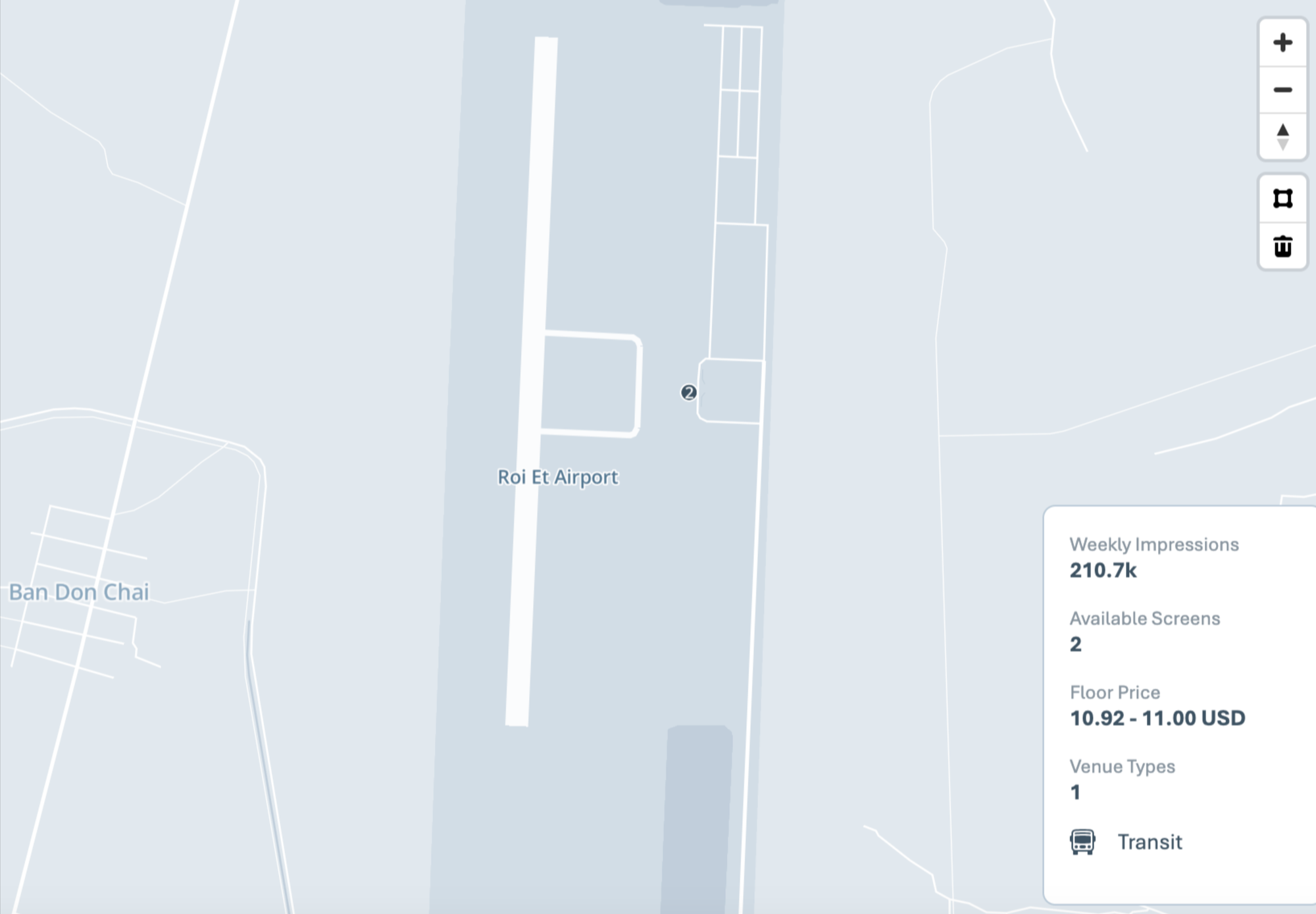
- A runway and airfield capable of handling Airbus A320 and Boeing 737 family aircraft, located in Thawat Buri district roughly 20 kilometres north of Roi Et city
Premium Indicators:
- The airport's most notable characteristic is capacity headroom rather than luxury: modern, recently rebuilt infrastructure operating at under a third of designed throughput, which means the operator has strong incentive to attract traffic and advertisers face no congestion or inventory scarcity
- Terminal facilities including waiting areas, food and beverage, retail, banking and ATM provision and car rental, giving a controlled and contained environment for message delivery
- Proximity to one of Isan's principal pilgrimage destinations in the same district, which brings a domestic visitor flow beyond the migrant and business base
- Jet capability well ahead of current demand, leaving the airport structurally able to absorb additional carriers and routes without further investment
Forward-Looking Signal:
The central fact for any advertiser here is the gap between 342,970 passengers and 1.2 million of rebuilt capacity. The infrastructure exists, the runway takes narrow body jets, and the airport is operating at roughly 29 percent utilisation. Thai low-cost carrier capacity across the domestic network continues to expand, a second carrier previously served this route and could return, and Isan aviation demand has grown substantially over the past two decades. Against that, this airport competes directly with Khon Kaen, Buriram and Ubon Ratchathani for a shared regional catchment, which is the honest counterweight. Masscom Global advises clients to secure position now, while rates reflect a 343,000 passenger airport rather than the terminal that was actually built.
Airline and Route Intelligence
Top Airlines:
One carrier serves Roi Et. Thai AirAsia operates the sole scheduled route with roughly 28 weekly flights, around four daily rotations. A second low-cost operator previously served the route and a full-service carrier operated to Suvarnabhumi briefly in 2022. Advertisers should understand the concentration risk this represents: the airport's entire commercial passenger base currently rests on one airline's commitment to one route.
Key International Routes:
There are no scheduled international services from Roi Et. International travel from this catchment connects through Bangkok, which means outbound international passengers, including the substantial overseas worker cohort departing for Taiwan, South Korea, Israel, Japan and the Gulf, are captured at ROI on the first leg of a journey already committed to and paid for. This is the most undervalued intercept position at the airport and it is directly relevant to money transfer, telecommunications, insurance and employment services advertisers.
Domestic Connectivity:
Bangkok Don Mueang is the entire scheduled network, a 418 kilometre route taking approximately one hour and five minutes. Khon Kaen offers a larger nearby airport with more carriers and route choice, and Buriram and Ubon Ratchathani serve adjacent catchments, which means ROI competes for its own hinterland rather than owning it outright.
Wealth Corridor Signal:
A single-route network concentrates rather than dilutes the audience. Every passenger here is travelling the same corridor between rural Isan and the capital, which is Thailand's principal internal labour and remittance route. The result is a homogeneous, predictable audience fully covered by a single terminal placement, defined by one economic relationship. That makes proposition design considerably simpler than at a multi-route airport, provided the advertiser has a proposition that fits.
Media Environment at the Airport
- Single-terminal, single-route environment in recently rebuilt infrastructure with effectively no advertising clutter, meaning a small number of positions delivers complete and repeated coverage at very low absolute cost
- Dwell is extended by the travel behaviour of the audience: extended family groups arrive early together, low-cost carrier check-in and baggage processes take time, and greeting parties gather in arrivals in numbers that multiply exposure well beyond the ticketed passenger count
- Capacity headroom means no congestion, no inventory competition and a calm environment that holds attention, which is unusual and valuable at this cost level
- Masscom Global provides inventory access, position selection across arrivals and departures, and seasonal flighting concentrated on Songkran, New Year and the planting and harvest cycles when volumes and purchase intent align
Strategic Advertising Fit
Best Fit:
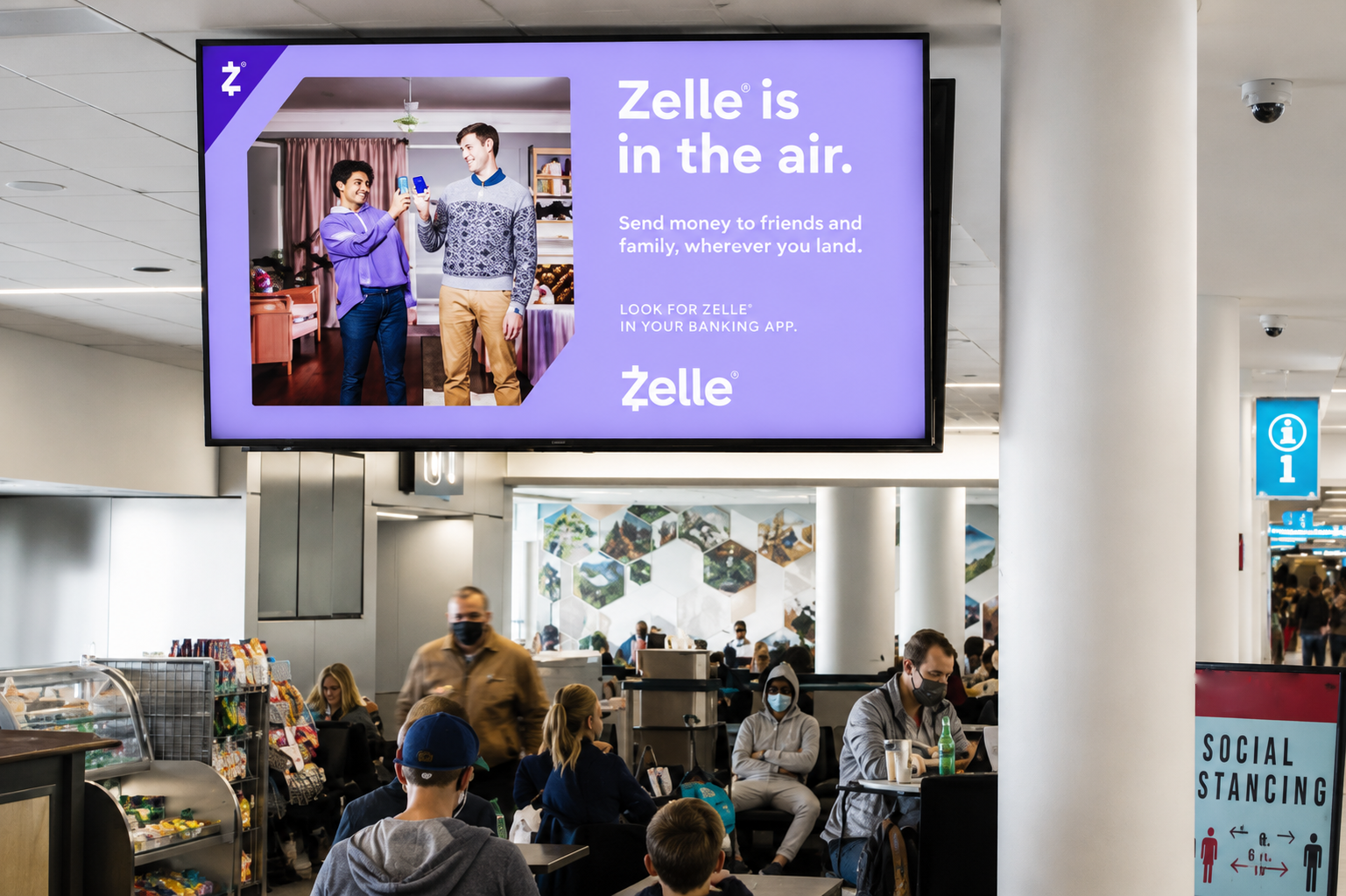
- International money transfer and remittance services: The strongest category at this airport. The audience, the route corridor and the homecoming calendar all align around remittance behaviour
- Telecommunications, mobile data and international calling: Essential for households maintaining relationships across provinces and borders, with clear seasonal upgrade and top-up triggers
- Agricultural machinery, rice inputs and post-harvest equipment: Reaching growers and mills in the geographically protected Thai Hom Mali heartland, where quality investment carries a genuine price premium
- Motorcycle, pickup truck and vehicle finance: The defining aspirational purchase in Isan, funded by remittance and harvest income and bought on instalment terms
- Consumer credit, microfinance and instalment retail: Accessibility and terms drive decisions here more than headline price
- Life, health and accident insurance: Particularly migrant-focused and family protection products, sold to a population working away from home
- Housing finance, construction materials and gold retail: Where household capital actually lands after a successful migration or harvest
- Overseas employment agencies, vocational and language training: Directly aligned to the region's defining economic activity
Brand Alignment at a Glance:
| Category | Fit |
|---|---|
| Remittance and money transfer | Exceptional |
| Telecommunications and mobile data | Exceptional |
| Agricultural machinery and rice inputs | Strong |
| Motorcycle, pickup and vehicle finance | Strong |
| Consumer credit and instalment retail | Strong |
| Insurance and family protection | Strong |
| Housing finance, construction and gold | Moderate |
|
Who Should Not Advertise Here:
Event and Seasonality Analysis
Strategic Implication: Roi Et is among the most seasonally concentrated airports an advertiser can buy, and the plan should work with that rather than against it. April and the Songkran homecoming is the definitive window, when returning workers arrive with accumulated savings and purchase intent peaks. Late December and early January repeats the pattern while overlapping the rice harvest income period, which makes it unusually strong for durable goods and finance. May through July captures the rocket festival season and agricultural input purchasing ahead of planting. February and March should carry minimal weight. Masscom Global structures campaigns around this rhythm and aligns creative to the homecoming, merit-making and harvest moments rather than to generic travel messaging. 
Poor Placement and Delays Affect Airport CampaignsWe help you move faster, access better inventory, and get it right now. Talk to an ExpertFinal Strategic VerdictRoi Et Airport is a straightforward proposition for the right advertiser and worthless for the wrong one, and Masscom Global will tell you which you are. It is not a luxury environment, it has no international traffic, and it depends on one airline flying one route. What it is instead is a modern terminal rebuilt for 1.2 million passengers currently carrying 342,970, which means complete environmental dominance is available at a cost that barely registers in a national plan, with no congestion and no competing advertisers. Behind it sits Thung Kula Ronghai, the geographically protected heartland of Thai Hom Mali jasmine rice and the global benchmark for premium aromatic rice, and one of Thailand's most consistent labour-sending populations whose consumption is funded by earnings from Bangkok, Taipei, Seoul, Tel Aviv and the Gulf. Money transfer operators, telecommunications providers, vehicle and consumer finance companies, insurers, agricultural machinery and input suppliers and education providers will not find this audience more cleanly sorted or more cheaply reached, and the Songkran and New Year homecoming windows deliver them at the precise moment savings meet spending decisions. The capacity is built, the utilisation is a third, and rates have not caught up. Masscom Global has the access, the cultural and language intelligence, and the network reach to place your brand here, across the Isan gateways, and at the overseas destinations where this workforce lands. About Masscom GlobalMasscom Global is a premium international airport advertising and media buying agency operating across 140 countries. With deep expertise in airport OOH, premium publications, and high-net-worth audience targeting, Masscom helps brands reach the world's most valuable travellers at the moments that matter most. For advertising packages, media rates, and campaign planning at Roi Et Airport and airports across the globe, contact Masscom Global today. Frequently Asked QuestionsHow much does airport advertising cost at Roi Et Airport? Cost at ROI varies by format, position, duration and seasonal demand. April, late December and the planting and harvest windows carry premiums because homecoming and agricultural income cycles lift volumes and purchase intent against fixed inventory. Absolute rates are low, and because the terminal was rebuilt for 1.2 million passengers while carrying under 343,000, there is no inventory scarcity and no congestion premium. Contact Masscom Global for current rates and available positions. Who are the passengers at Roi Et Airport? Almost entirely Thai domestic travellers from Roi Et and the surrounding central and lower Isan provinces. The largest group is migrant workers returning from Bangkok, the Eastern Seaboard and overseas contracts in Taiwan, South Korea, Israel, Japan and the Gulf. Alongside them are jasmine rice and cassava farming households, rice cooperative and mill managers, provincial officials, university and hospital staff and students, and domestic pilgrimage and family travellers. Is Roi Et Airport good for luxury brand advertising? No. The catchment economy is built on rice farming and remittance income, there is no private aviation segment, no international departure area and no resident population that supports luxury categories. Brands seeking Thai luxury audiences should target Bangkok, Phuket, Samui and Chiang Mai. The categories that perform at ROI are money transfer, telecommunications, vehicle and consumer finance, insurance, agricultural supply and education. What is the best airport in Isan to reach rice farming and remittance audiences? Roi Et sits at the centre of the Thung Kula Ronghai premium rice belt and delivers the most concentrated jasmine rice growing catchment of any Isan airport. Khon Kaen offers greater volume and route choice as the region's commercial hub, Ubon Ratchathani serves the lower Isan provinces and the Lao border, and Udon Thani serves the upper northeast. Masscom Global typically builds a multi-airport Isan package to cover the farming and remittance audience at low combined cost. What is the best time to advertise at Roi Et Airport? April and the Songkran homecoming is the primary window, when returning workers arrive with accumulated savings. Late December and early January delivers the second homecoming peak while overlapping rice harvest income, which makes it particularly strong for finance and durable goods. May through July captures the rocket festival season and pre-planting input purchasing. February and March are the weakest months and should carry minimal weight. Can international real estate developers advertise at Roi Et Airport? This is not a suitable fit. Household capital in this catchment goes into rice land, house construction, vehicles, gold and children's education rather than offshore property, and residency programmes have effectively no relevance here. Domestic housing finance, construction materials and land services perform far better. Developers seeking Thai buyers for international property should target Bangkok and the major resort gateways. Which brands should not advertise at Roi Et Airport? Luxury fashion, watches and fine jewellery, private banking and wealth management, business aviation, duty free and travel retail formats, international property and residency programmes, and international tourism or long-haul carrier advertising. These depend on concentrated wealth or international transit behaviour, and neither exists at this airport. Buying ROI for those categories converts nothing. How does Masscom Global help brands advertise at Roi Et Airport? Masscom Global manages the full campaign lifecycle: catchment and remittance audience intelligence, inventory access and position selection across arrivals and departures in a modern under-utilised terminal, creative guidance calibrated to Isan-language consumer messaging and Central Thai institutional messaging, flighting concentrated on Songkran, New Year and the agricultural income cycles, execution and performance reporting. Because this audience passes through Bangkok Don Mueang and lands at overseas employment destinations, Masscom can activate matching placements across the whole cycle. Book a fifteen minute planning call and we will map the windows and placements for you. Similar Recommendations
Holi 2027: Airport and City Advertising for India's Spring Festival Travel SeasonHoli 2027 falls on March 23. Airport advertising across Delhi, Jaipur and Udaipur to reach the luxury and heritage-hotel travel surge around India's festival of colors. 
Jaipur Literature Festival 2027: Airport Advertising for the World's Largest Free Literary Festival's 20th EditionThe Jaipur Literature Festival marks its 20th edition January 14-18, 2027. Airport advertising across Jaipur and Delhi to reach the festival's global literary and HNWI audience. 
Angkor Cultural HNWI Peak Advertising: Siem Reap 2026Siem Reap's Bon Om Touk festival runs 23-25 November 2026, opening Angkor's dry season peak. Airport advertising to reach Angkor Wat's travellers. 
Shanghai Art Week 2026: Airport and City Advertising for West Bund and ART021Shanghai Art Week pairs West Bund Art & Design with ART021 in early November 2026. Airport advertising to reach Asia's contemporary art collectors and curators. 
Airport and City Advertising During the Udaipur Destination Wedding SeasonUdaipur's destination wedding season runs November through February, peaking Nov-Dec. Airport advertising to reach India's NRI and UHNWI wedding families.
Airport and City Advertising During the Jaipur Wedding SeasonJaipur's royal wedding season runs November through February, peaking in Nov-Dec. Airport advertising to reach India's NRI wedding families. |