

Airport at a Glance
| Field | Detail |
|---|---|
| Airport | Marechal Cunha Machado International Airport |
| IATA Code | SLZ |
| Country | Brazil |
| City | São Luís, Maranhão (Northeast Brazil) |
| Annual Passengers | More than 820,000 passengers in the first half of 2025, up 9.22 percent year on year, with 10,143 movements in the半 period. 2025 was the best year in the airport's history. Full-year 2025 total: Data not available. Terminal capacity is 3.9 million per year. |
| Primary Audience | Mining, port and agribusiness executives, domestic Brazilian heritage and nature tourists, regional professional and diaspora travellers |
| Peak Advertising Season | June to September, December to January |
| Audience Tier | Tier 2 by audience value, Tier 2 by passenger volume |
| Best Fit Categories | Mining and industrial B2B, banking and consumer finance, domestic tourism and airlines, Portugal and US property and citizenship advisory |
A recently rebuilt terminal running at record volumes, serving one of the largest commodity export corridors in the Americas and a state with two UNESCO World Heritage sites.
São Luís closed 2025 as the best year in its history. More than 820,000 passengers moved through the terminal in the first half alone, a 9.22 percent year-on-year increase across 10,143 landings and takeoffs, and July 2025 delivered 202,000 passengers, the busiest single month in thirteen years and a 21 percent jump on the prior July. June also set an all-time record for that month. The terminal itself was rebuilt and expanded under a R$117 million private concession investment programme, lifting capacity to 3.9 million passengers a year against current volumes well below that ceiling.
What sits behind the airport is what makes it commercially serious. Maranhão anchors one of the highest-tonnage bulk export corridors on the planet, moving iron ore from the Carajás system and soy, corn, and cotton from Brazil's newest agricultural frontier through the São Luís port complex, alongside a major aluminium operation and Brazil's equatorial space launch centre. Add a UNESCO World Heritage colonial capital and, since 2024, a UNESCO-inscribed natural park drawing rapidly growing domestic tourism, and you have an airport where industrial capital and heritage tourism arrive through the same doors.
Advertising Value Snapshot
- Passenger scale: More than 820,000 passengers in the first half of 2025, up 9.22 percent, with a record 202,000 in July 2025 and June also setting an all-time monthly high. Terminal capacity stands at 3.9 million per year, so there is substantial headroom for continued growth.
- Traveller type: Mining, port, and agribusiness executives, domestic Brazilian heritage and nature tourists, and regional professional and family travellers connecting to the Southeast.
- Airport classification: Tier 2 on both volume and audience value. It is the dominant airport of its state with no meaningful domestic competition within the catchment.
- Commercial positioning: The principal gateway to Maranhão and one of the main entry points to Brazil's Northeast for both commerce and tourism.
- Wealth corridor signal: The airport sits on the Carajás iron ore and MATOPIBA grain export corridor to the Atlantic, one of the highest-value commodity flows in the Americas.
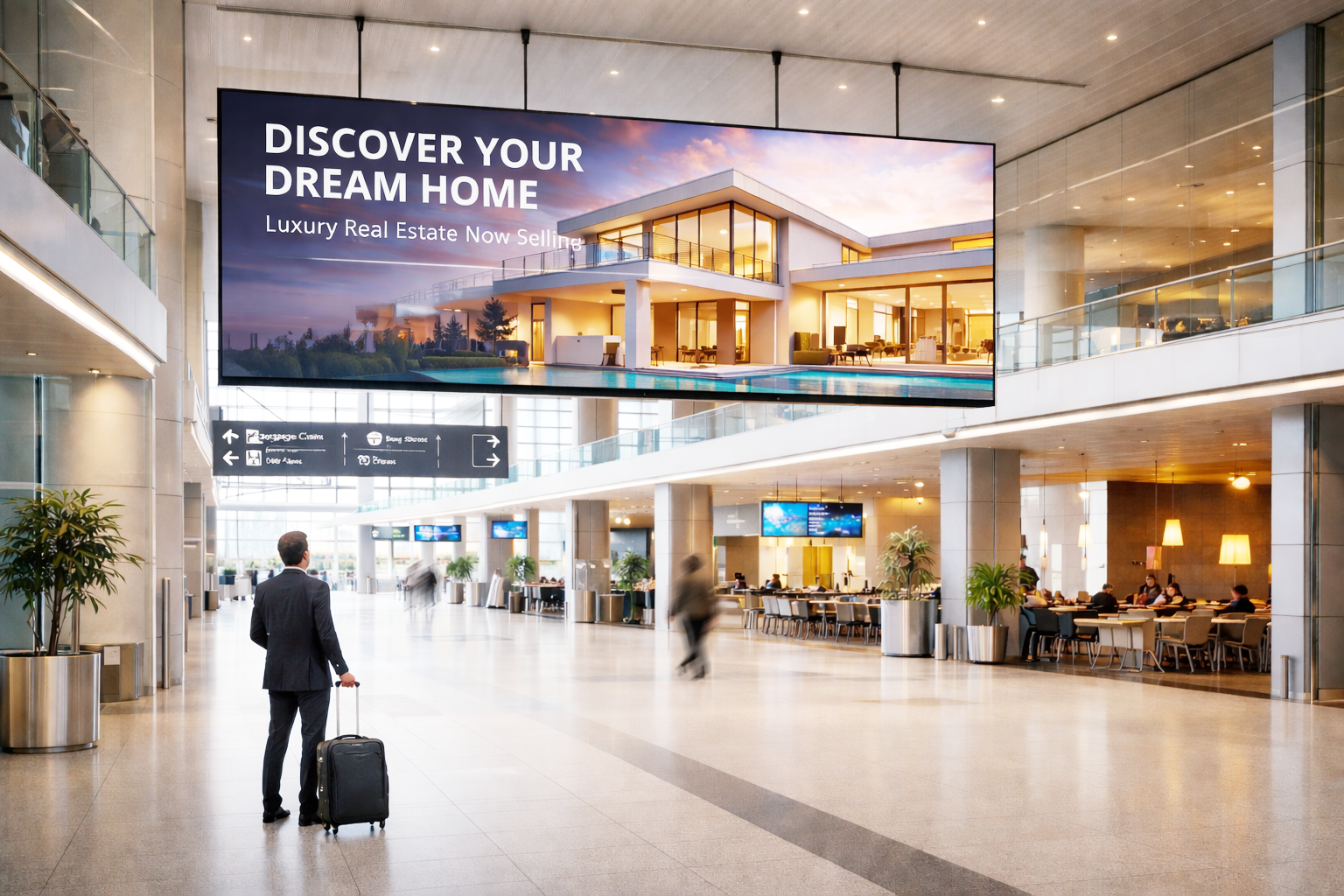
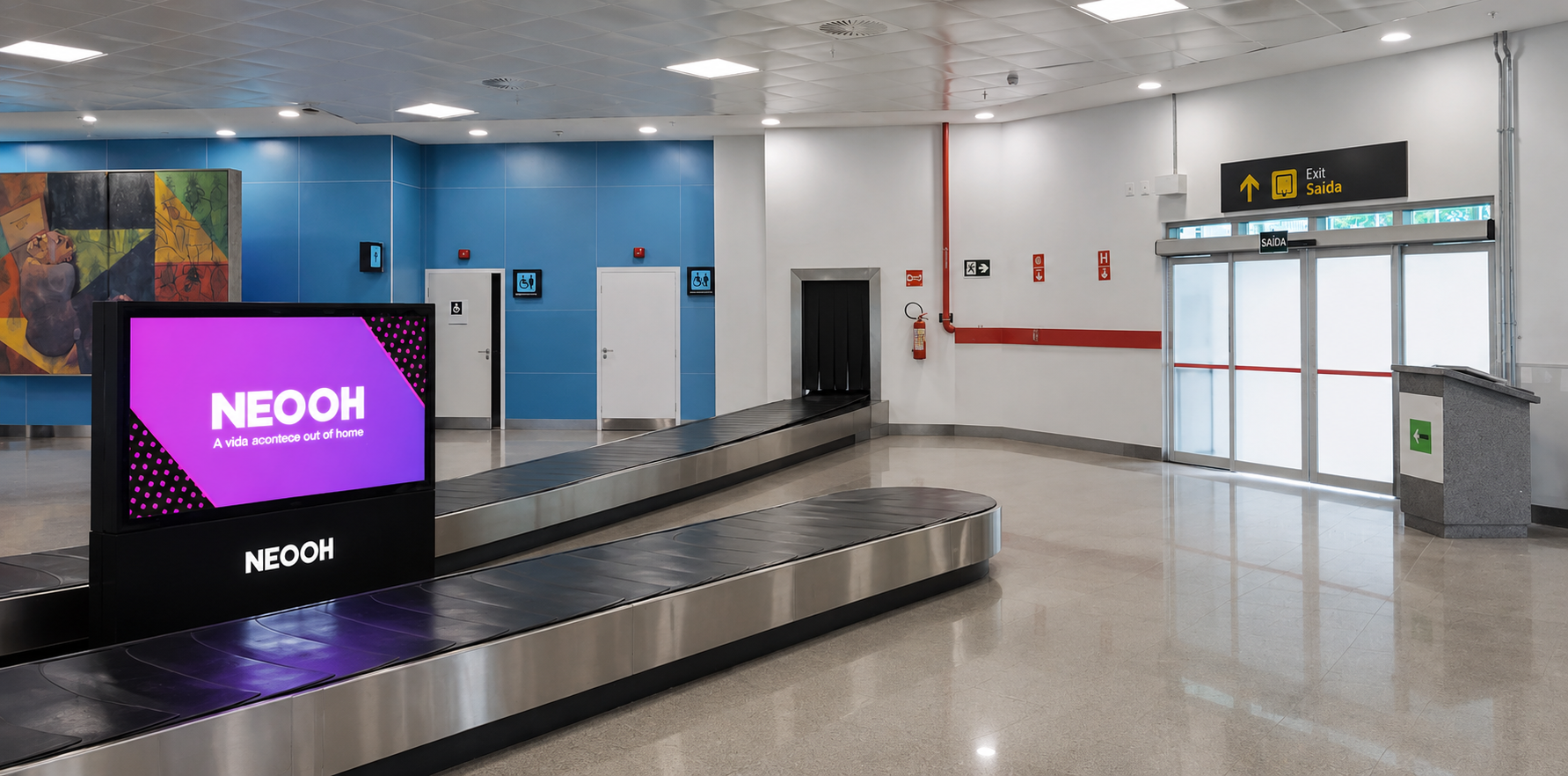
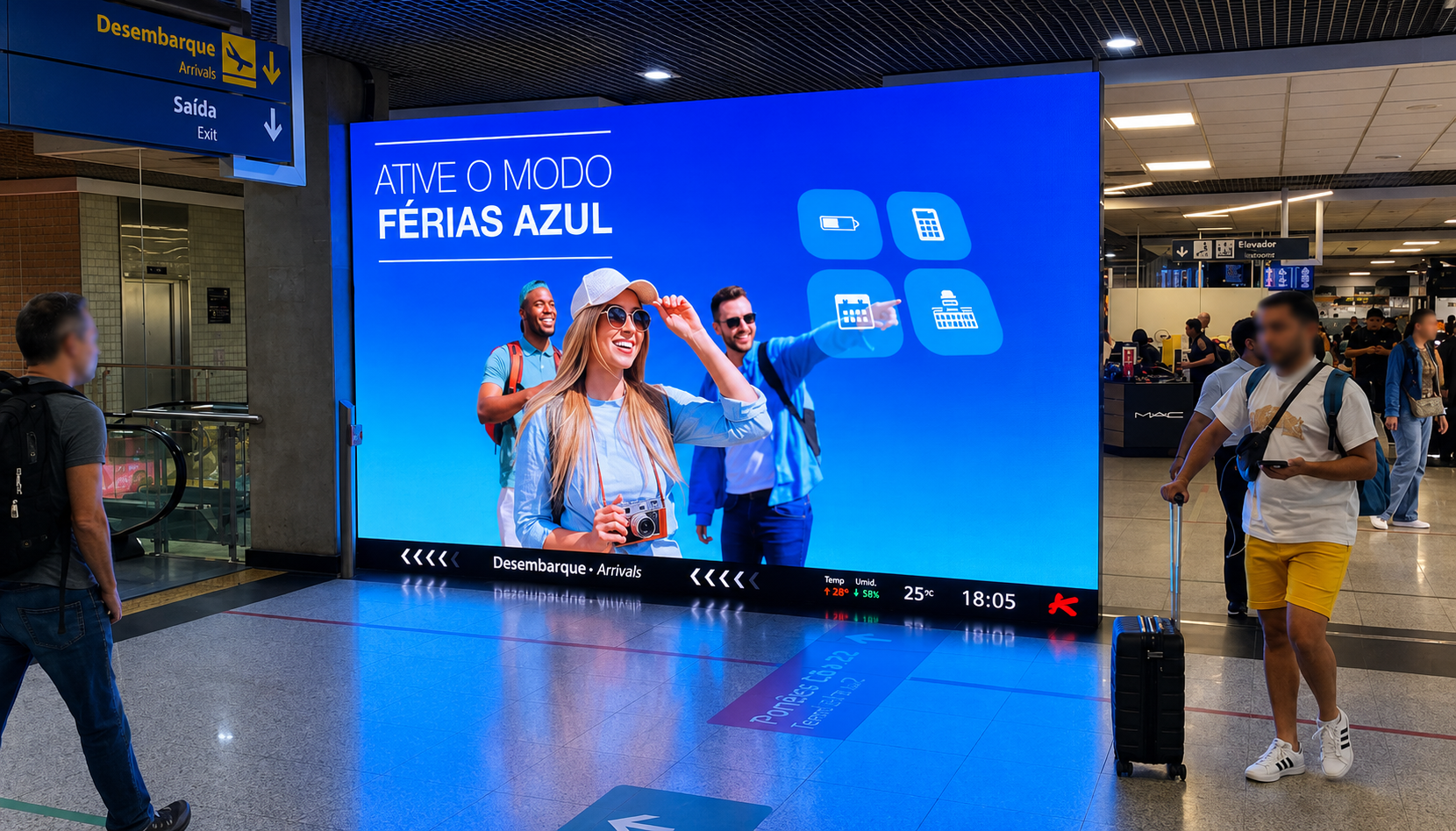
- Advertising opportunity: A single recently modernised terminal with concentrated flows delivers high frequency against a defined regional audience rather than diluted reach. Masscom Global secures placement across check-in, security, boarding lounge, and arrivals touchpoints in a terminal that has just been expanded and refitted, meaning the environment itself is clean, contemporary, and flattering to premium creative.
Airport Advertising is Complex to Get Right
We help you execute faster, with proven results and local insight most planners lack starting now.
Talk to an ExpertCatchment Area and Economic Drivers
Top 10 Cities within 150 km, Marketer Intelligence:
- São Luís: The state capital and the concentration point for essentially all of Maranhão's commercial, financial, professional, and administrative activity, alongside a UNESCO World Heritage historic centre. Produces the state's entire executive and affluent consumer base.
- São José de Ribamar: The largest municipality in the metropolitan area after the capital, with substantial residential growth and coastal leisure activity. Produces a rising middle-income consumer market with strong housing and vehicle finance demand.
- Paço do Lumiar: Rapidly expanding metropolitan residential municipality absorbing São Luís overflow. Produces young household formation, retail, and consumer credit demand.
- Raposa: Coastal fishing and artisanal community with growing weekend leisure traffic from the capital. Produces small enterprise and leisure consumer audiences.
- Alcântara: Historic colonial town across the bay and site of Brazil's equatorial space launch centre. Produces aerospace, defence, and government-linked technical audiences alongside heritage tourism.
- Bacabeira: Industrial and logistics corridor municipality on the São Luís access route, with refining and industrial development activity. Produces industrial procurement and logistics decision makers.
- Rosário: Transit and agricultural service town on the main highway corridor into the capital. Produces agricultural trade and transport audiences.
- Santa Rita: Agricultural and livestock district feeding the metropolitan food supply. Produces farming enterprise with equipment and input purchasing needs.
- Itapecuru-Mirim: Riverine agricultural and commercial centre with regional trade functions. Produces small commercial ownership and agri-service audiences.
- Icatu: Coastal and agricultural municipality on the route toward the state's eastern dune coast. Produces emerging tourism services and agricultural households.
NRI and Diaspora Intelligence:
There is no significant inbound foreign diaspora at this airport, and advertisers should not plan for one. The commercially relevant migration story is internal and outbound. Maranhão has long been one of Brazil's largest source states for internal migration, with substantial Maranhense communities established in São Paulo, Brasília, Belém, and across the Southeast, and these families return for the June festival season and the December holidays in significant numbers. Layered on top is a smaller but genuinely wealthy outbound flow: Brazilian professionals and business owners pursuing Portuguese and Italian citizenship by descent, property in Portugal and Florida, and second residency in Europe. That second group is small in headcount and large in transaction value.
Economic Importance:
Four engines drive this catchment. Iron ore export is the largest by value, with the state's port complex handling one of the highest bulk tonnages in the world via the Carajás rail system. Grain and fibre export is the fastest-growing, as soy, corn, and cotton from Brazil's newest agricultural frontier route to the Atlantic through São Luís rather than the congested southern ports. Aluminium and heavy industry forms the third, anchored by a major refining and smelting complex. Tourism is the fourth and newest, transformed by UNESCO recognition of the state's dune park in 2024. Masscom Global maps creative to the engine an advertiser is selling into rather than treating the terminal as one audience.
Business and Industrial Ecosystem
- Iron ore mining, rail, and port export: The Carajás corridor terminates at São Luís, making this one of the highest-tonnage bulk export operations globally. Produces mining, rail, port, and heavy engineering leadership with very large capital budgets.
- Grain and fibre export logistics: Soy, corn, and cotton from the MATOPIBA agricultural frontier increasingly route through the São Luís port complex for the shorter northern sea route. Produces agribusiness trading, logistics, and commodity finance decision makers.
- Aluminium refining and heavy industry: A major alumina and aluminium complex in the metropolitan area, alongside associated energy and industrial services. Produces plant management and industrial procurement audiences.
- Aerospace and defence: Brazil's equatorial launch centre sits within the catchment, offering the most fuel-efficient launch latitude in the country. Produces aerospace, defence, and government technical audiences with long-horizon programmes.
Passenger Intent, Business Segment:
Business travellers here are principals and senior operators rather than junior corporate staff, because São Luís sits far enough from Brazil's commercial centres that only substantive trips justify the flight. They are mining and port executives, agribusiness traders and farm owners from the interior, industrial plant leadership, engineering contractors, and state government and legal professionals. Mining and industrial equipment, agribusiness inputs and machinery, logistics and port services, banking and trade finance, energy, and professional services intercept them most effectively.
Strategic Insight:
The commercial advantage of this airport is that it is the single unavoidable air gateway for an entire state economy built on export commodities. There is no competing airport in the catchment, no alternative routing, and no way for a Maranhão business decision maker to fly without passing through this terminal. That monopoly of access means a sustained presence here reaches essentially the whole of the state's commercial leadership repeatedly across a year. For industrial, agricultural, and financial brands selling into a commodity export economy, that is a level of account coverage that would otherwise require a national sales team. Masscom Global builds it as a long-duration account-based buy.
Tourism and Premium Travel Drivers
- São Luís historic centre: A UNESCO World Heritage colonial quarter holding one of the largest surviving collections of Portuguese tilework outside Portugal. The anchor of the state's cultural tourism and a genuine international-grade heritage asset.
- Lençóis Maranhenses National Park: Inscribed as a UNESCO Natural World Heritage site in 2024, a vast dune and seasonal lagoon landscape that has become one of Brazil's most photographed destinations. The single strongest driver of the airport's recent tourism growth.
- Bumba Meu Boi and the June festival cycle: Recognised by UNESCO as Intangible Cultural Heritage, a month-long celebration that fills the capital and drives the strongest domestic travel window of the year.
- Alcântara and the colonial bay circuit: Historic ruins, colonial architecture, and boat access across the bay, extending visitor stay beyond the capital and supporting multi-day itineraries.
Passenger Intent, Tourism Segment:
The dominant tourist here is a Brazilian domestic traveller, typically from São Paulo, Brasília, Rio, or the Northeast capitals, arriving for the dune park or the June festival with a trip already paid for. They are middle to upper-middle income, socially active, heavily digital, and receptive to categories that extend the trip: hotels and tour operators, car rental, telecom and data packages, travel insurance, banking and payment services, and local craft and food brands. A smaller international segment, principally European and North American nature and heritage travellers, is growing since UNESCO inscription and skews older and more affluent.
Travel Patterns and Seasonality
Peak seasons:
- June to September: The strongest window of the year and the one the data confirms. June 2025 set an all-time monthly record and July 2025 delivered 202,000 passengers, the busiest month in thirteen years, driven by the June festival cycle, Brazilian school holidays, and the optimal season for the dune park when the lagoons are full.
- December to January: The second peak, combining the Brazilian summer holidays, year-end family travel, and the return of the Maranhense diaspora from the Southeast.
- February to March: Carnival delivers a short sharp national travel spike, though Maranhão's own cultural calendar peaks in June rather than February.
- April to May and October to November: The softer shoulder periods, with April and May affected by the heavy regional rainy season and reduced tourism demand.
Granular monthly data beyond the reported record months is not published in current public form. Data not available.
Event-Driven Movement:
- São João and Bumba Meu Boi festival season (June): The defining cultural event of Maranhão and a UNESCO-recognised tradition. Fills the capital, draws the diaspora home, and produced an all-time June passenger record in 2025. The highest-value cultural window of the year.
- Brazilian school holidays (July and January): The peak family and leisure travel periods nationally, and the months in which dune park visitation concentrates. July 2025 was the airport's busiest month in over a decade.
- Carnival (February or March): A national travel surge with strong domestic movement and concentrated consumer spending on travel, hospitality, and beverages.
- Grain harvest and export season (roughly February to August): Drives agribusiness executive and trader movement through the port corridor, running counter to the tourism calendar and supporting year-round B2B relevance.
- Reggae and coastal music calendar (year-round, peaking in the dry season): São Luís holds a distinctive and nationally recognised reggae culture that supports a continuous events and nightlife economy relevant to beverage and telecom advertisers.
It’s Not Just Where You Advertise - It’s How Fast You Execute
We combine local insight with fast rollout to deliver results for you, now.
Talk to an ExpertAudience and Cultural Intelligence
Top 2 Languages:
- Portuguese: Overwhelmingly dominant and the only language required for the core campaign. Brazilian Portuguese creative is essential, and Northeastern regional register outperforms São Paulo-produced national creative on local trust in a state with a strong and proud cultural identity.
- English: Commercially relevant as a secondary layer for the mining, port, aerospace, and agribusiness export audience, who negotiate internationally and read technical material in English, and for the growing international heritage and nature tourism segment following UNESCO inscription.
Spanish carries limited but real relevance for regional Latin American business contacts. Masscom Global recommends deploying it selectively rather than as a standing translation.
Major Traveller Nationalities:
The passenger base is overwhelmingly Brazilian, drawn from Maranhão itself and from the Maranhense communities established in São Paulo, Brasília, Belém, and across the Southeast. International visitors are a growing minority, principally from Portugal, France, Germany, the Netherlands, Argentina, and the United States, arriving for the dune park and colonial heritage. A distinct international business layer connects to the mining, aluminium, aerospace, and commodity trading sectors, with visitors from China, Japan, the United States, and Europe. Creative should assume a Brazilian-first environment with a deliberate English business layer.
Religion, Advertiser Intelligence:
- Roman Catholicism (the largest tradition in the state): Shapes the festival calendar that governs the entire travel year, including the June São João cycle, Festa do Divino, and the Christmas and New Year block. These are the two windows in which family gathering, gifting, travel, and hospitality spending concentrate most heavily. Benefits travel, hospitality, food and beverage, retail, and consumer finance advertisers.
- Evangelical and Pentecostal Christianity (a large and rapidly growing share, as across Brazil): Increasingly influential in consumer culture and community structure, with strong congregation-based social networks that make community endorsement a genuine marketing lever. Tends toward value-conscious, family-framed purchasing and responds well to aspiration framed around family security rather than status.
- Afro-Brazilian traditions including Tambor de Mina (a small share by declaration but culturally foundational in São Luís): The city holds some of the most historically significant Afro-Brazilian religious houses in the country, and this heritage is inseparable from the state's music, festival, and tourism identity. Brands that respect and reflect this cultural depth earn substantial local credibility.
Behavioral Insight:
This is a warm, expressive, relationship-driven market with a strong regional identity and a well-founded wariness of brands that treat the Northeast as an afterthought. Household purchasing power is concentrated: Maranhão ranks among Brazil's lower-income states, so the mass consumer market is highly price-sensitive and instalment credit is the mechanism through which most durable goods are bought. Simultaneously, a genuine commercial elite tied to mining, ports, agribusiness, law, and politics holds real wealth and buys internationally. Advertisers must decide which of these two markets they are addressing, because creative that works for one will actively fail with the other.
Outbound Wealth and Investment Intelligence
The outbound picture here requires precision rather than generalisation. Maranhão as a whole is not a wealthy state, and advertisers who apply a blanket affluence assumption will waste budget. What exists is a narrow but genuinely internationally-minded elite concentrated in São Luís, built on mining and port services, agribusiness landholding in the interior, professional practice, and political and administrative networks. That group behaves like Brazilian upper-tier wealth everywhere: it is actively diversifying out of the real and out of Brazilian jurisdictional risk.
Outbound Real Estate Investment:
Portugal is the dominant destination, driven by language, historical ties, and residency pathways, with Lisbon, Porto, and the Algarve absorbing the largest share of Brazilian capital. The United States follows closely, with Florida, particularly Miami, Orlando, and the Gulf coast, the single most common foreign property purchase for Brazilian buyers. Spain and Italy attract the upper tier, often connected to citizenship pathways, and Uruguay and Paraguay draw regional diversification capital. Developers in Portugal and Florida in particular are addressing a Brazilian buyer profile that is well-established, well-advised, and transacting steadily.
Outbound Education Investment:
Families in this catchment educate domestically at Brazilian federal and private universities, with the most ambitious sending children to São Paulo and Rio institutions. International outbound study concentrates on Portugal, where Brazilian students face no language barrier and enjoy favourable admission arrangements, followed by the United States, Canada, the United Kingdom, and Ireland for English-language study and exchange programmes. Portuguese universities, English-language schools, exchange programme operators, and student services providers have a real and underserved audience among the professional class here.
Outbound Wealth Migration and Residency:
This is the strongest international category at this airport, and it is specifically Brazilian in character. Portuguese and Italian citizenship by descent is a mass-market pursuit among Brazilians with European ancestry, and the associated legal, genealogical, and documentation services represent a substantial and growing industry. Beyond descent claims, Portugal's residency routes, Spain's and Greece's programmes, and the United States investor visa pathway all attract genuine interest from the São Luís commercial elite. Caribbean citizenship programmes carry moderate appeal. Immigration and citizenship advisory firms will find this an efficient and receptive environment.
Strategic Implication for Advertisers:
Two propositions work here and they must be kept separate. Portugal and Florida property developers, citizenship-by-descent and residency advisory firms, and international banking and currency services should target the São Luís professional and commercial elite with precision, English or upper-register Portuguese creative, and credibility-led messaging. Domestic and regional brands should target the much larger mass consumer base with value, instalment finance, and family framing. Masscom Global can also activate in Portugal and Florida to reach the same Brazilian buyer at the destination end of the corridor.
Airport Infrastructure and Premium Indicators
Terminals:
- A single passenger terminal substantially rebuilt and expanded under a R$117 million private concession investment programme, including an enlarged departure lounge and modernised passenger areas, delivered as the eighth of fifteen airports in the concession programme and generating 475 jobs during construction.
- Terminal capacity of 3.9 million passengers per year against current volumes well below that, meaning the environment is uncrowded, contemporary, and comfortable rather than congested, which is materially better for advertising presentation.
Premium Indicators:
- Full international airport designation with dedicated international flight facilities, allowing charter and future scheduled international service without new capital works.
- Runway and apron capacity handling Airbus A320 family and Boeing 737 equipment, with the Airbus A321 at 220 seats operating regularly, confirming the airport can absorb mainline narrowbody growth.
- Record performance in 2025 across multiple measures, including a 9.22 percent first-half passenger increase, a thirteen-year monthly high in July, and an all-time June record, all achieved after the terminal refit.
- Private concession management with a delivered capital programme, which signals continued operational investment, commercial professionalism, and a media environment maintained to modern standards.
Forward-Looking Signal:
Three developments point the same direction. The terminal refit is complete and capacity now stands at 3.9 million against volumes well below it, meaning growth can be absorbed without disruption. UNESCO inscription of the state's dune park in 2024 is still working through the international tourism system, and heritage designations reliably drive multi-year visitor growth and hospitality investment after inscription. And the grain export corridor through the São Luís port complex continues to expand as Brazilian agricultural output shifts toward the shorter northern shipping route. Record volumes are being set now, before any of these fully mature. Inventory in a single terminal is finite by definition, and rates will not stay indexed to pre-record numbers. Masscom Global is advising clients to secure position now, ahead of the repricing.
Airline and Route Intelligence
Top Airlines:
The three major Brazilian carriers operate scheduled service, using Airbus A320 family and Boeing 737 equipment, with the Airbus A321 the largest aircraft in regular operation. International movement is currently limited to occasional seasonal and charter services.
Key International Routes:
There is no regular scheduled international service, though the airport holds full international designation and dedicated international facilities. International passengers connect through São Paulo, Brasília, Belém, or Fortaleza. Seasonal and charter international activity occurs periodically. Weekly frequency data for charter operations is not published. Data not available.
Domestic Connectivity:
The network connects São Luís to Brazil's major hubs and to the principal Northeastern capitals, giving the state access to the national air system through São Paulo, Brasília, and the regional gateways. This structure means a substantial share of passengers here are connecting travellers with extended pre-departure time in the terminal rather than short-hop point-to-point flyers.
Wealth Corridor Signal:
The route network is a readout of a commodity economy connected to national rather than international capital. Outbound flows carry mining, port, and agribusiness executives to São Paulo and Brasília, where financing, regulation, and corporate decision-making sit. Inbound flows carry domestic tourists to the UNESCO sites and the Maranhense diaspora home for the June and December calendars. Both are recurring rather than one-off, which converts the passenger base into deep repeat frequency against stable audiences, and Masscom Global prices and plans against that repetition.
Media Environment at the Airport
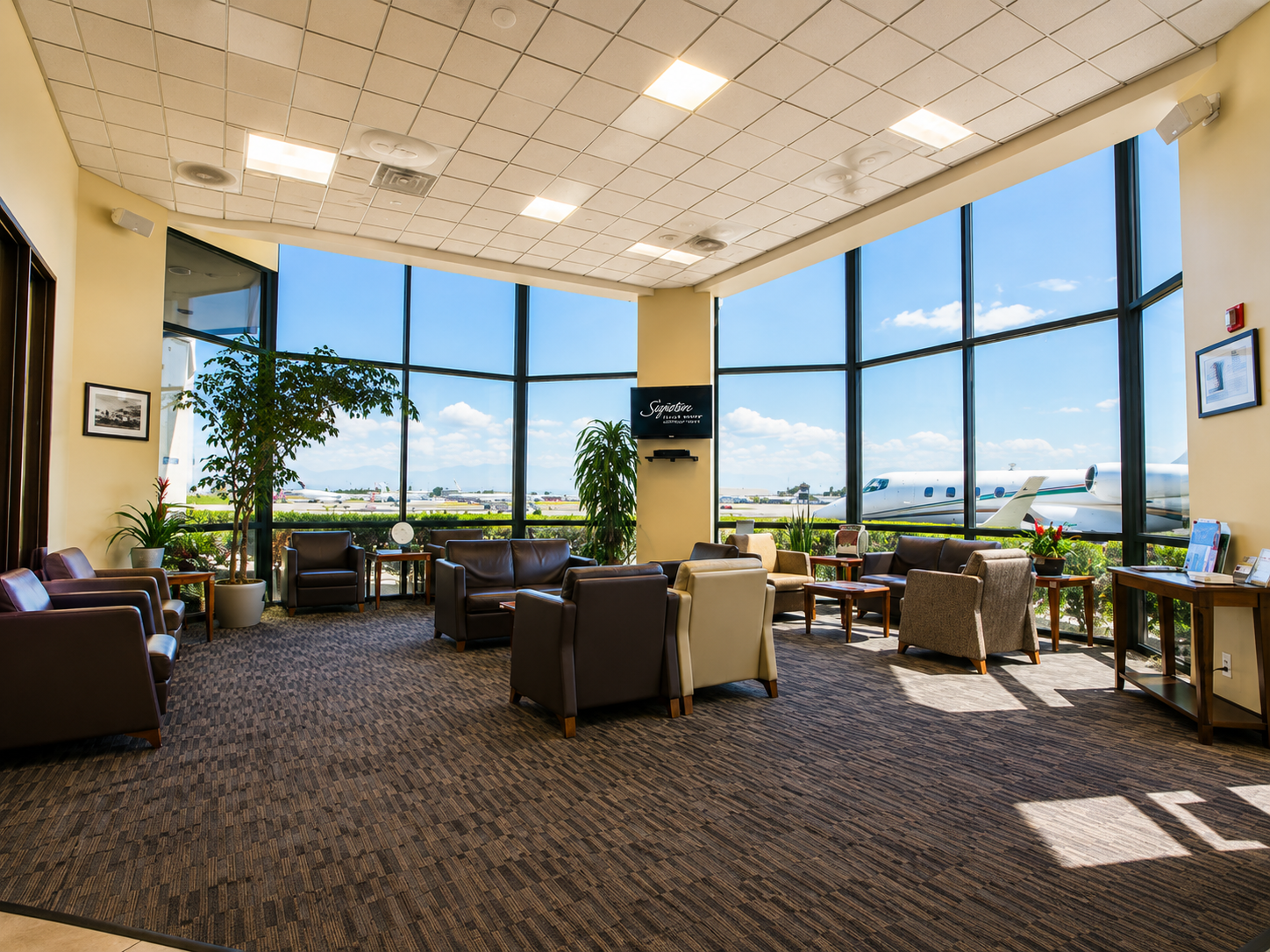
- A recently rebuilt and expanded terminal with a modernised departure lounge and limited existing visual competition, so a well-placed brand achieves high frequency across a clean, contemporary environment that flatters premium creative.
- Dwell is structurally long because most passengers are connecting through distant national hubs and arrive well ahead of departure, and current volumes sit far below the 3.9 million capacity, so waiting is comfortable and attention is available rather than compressed by congestion.
- The audience is unusually complete for a state economy. With no competing airport in the catchment, essentially all of Maranhão's commercial leadership and all of its inbound tourism passes through this single terminal.
- Masscom Global holds the access and execution capability to secure precision placement across check-in, security, boarding lounge, and arrivals touchpoints, and structures campaigns to address the industrial and tourism audiences with distinct propositions rather than one averaged message.
Strategic Advertising Fit
Best Fit:
- Mining, port, and heavy industrial B2B: Reaches the decision makers of one of the highest-tonnage bulk export operations in the world, with no alternative air access.
- Agribusiness equipment, inputs, and commodity finance: Serves the MATOPIBA agricultural frontier whose export route now runs through this state.
- Banking, consumer credit, and payment services: A market where instalment finance is the mechanism for most durable goods purchasing, alongside a commercial elite requiring private and trade banking.
- Domestic airlines, hotels, and tour operators: UNESCO inscription and record passenger growth make this one of Brazil's most dynamic domestic tourism markets.
- Telecommunications and mobile data: A young, highly digital, socially active population with strong data consumption and constant plan switching.
- Automotive, pickups, and motorcycles: The pickup is the working vehicle of the agricultural interior and the motorcycle the default urban vehicle, both bought on credit.
- Citizenship, residency, and immigration advisory: Portuguese and Italian citizenship by descent is a mainstream Brazilian pursuit, and this is an efficient environment to reach qualified prospects.
- Portugal and Florida property developers: The two dominant destinations for Brazilian outbound property capital, reaching a São Luís elite that transacts without financing delay.
Brand Alignment at a Glance:
| Category | Fit |
|---|---|
| Mining, port, and heavy industrial B2B | Exceptional |
| Banking, consumer credit, and payments | Exceptional |
| Domestic airlines, hotels, and tour operators | Strong |
| Agribusiness equipment and commodity finance | Strong |
| Citizenship, residency, and immigration advisory | Strong |
| Telecommunications and mobile data | Moderate |
| Portugal and Florida property developers | Moderate |
| Global luxury fashion and haute joaillerie | Poor fit |
Who Should Not Advertise Here:
- Global luxury fashion, haute joaillerie, and prestige watches: Maranhão ranks among Brazil's lower-income states and the ultra-high-net-worth audience density is not present. These budgets belong in São Paulo, Rio, or Brasília.
- International private banking at ultra-high-net-worth level: The commercial elite here is real but narrow, and private banking propositions calibrated to Brazilian mega-wealth will not find sufficient scale.
- Long-haul inbound tourism boards from distant markets: There is no regular international service and no meaningful outbound long-haul leisure culture at this passenger volume. Destination marketing should target domestic Brazilian and regional South American travel instead.
Event and Seasonality Analysis
- Event Strength: High
- Seasonality Strength: High
- Traffic Pattern: Dual-Peak with a Stable Commodity Base
Strategic Implication:
Budget should weight heavily toward June to September, the window the airport's own record data confirms as strongest, driven by the June festival cycle, Brazilian school holidays, and the optimal dune park season. December to January deserves a second concentrated layer for holiday and diaspora return travel, and Carnival warrants a short sharp burst. Crucially, the commodity export and agribusiness audience travels year-round on a harvest and shipping rhythm that runs counter to tourism, which means B2B advertisers should maintain continuous presence rather than flighting seasonally. Masscom Global structures campaigns exactly this way, with an always-on industrial base and consumer overlays timed to the festival and holiday calendar.
Poor Placement and Delays Affect Airport Campaigns
We help you move faster, access better inventory, and get it right now.
Talk to an ExpertFinal Strategic Verdict
São Luís is one of the best-timed airport buys in Brazil, and the numbers are moving faster than the market has priced. More than 820,000 passengers crossed the terminal in the first half of 2025 alone, up 9.22 percent, with July setting a thirteen-year monthly record at 202,000 and June setting an all-time high for the month, capping the best year in the airport's history. The terminal has just been rebuilt and expanded under a R$117 million investment programme to a capacity of 3.9 million, so the environment is modern and uncrowded. Behind it sits one of the world's highest-tonnage iron ore export corridors, a grain and cotton frontier increasingly shipping through this state, a major aluminium complex, Brazil's equatorial launch centre, a UNESCO World Heritage colonial capital, and a dune park inscribed by UNESCO in 2024 that is still working its way through the international tourism system. Mining and industrial B2B, banking and consumer credit, domestic airlines and tour operators, agribusiness suppliers, and citizenship and residency advisory firms should treat this as a priority buy, and Masscom Global has the access, audience intelligence, and execution speed to secure position while rates still reflect the pre-record market.
About Masscom Global
Masscom Global is a premium international airport advertising and media buying agency operating across 140 countries. With deep expertise in airport OOH, premium publications, and high-net-worth audience targeting, Masscom helps brands reach the world's most valuable travellers at the moments that matter most. For advertising packages, media rates, and campaign planning at Marechal Cunha Machado International Airport and airports across the globe, contact Masscom Global today.
Frequently Asked Questions
How much does airport advertising cost at São Luís Airport? Cost varies by format, position within the terminal, campaign duration, and seasonal demand. Because SLZ is a single recently modernised terminal, premium positions are limited in number and priced on exclusivity and audience quality rather than raw footfall. Rates currently reflect historic volumes rather than the record 2025 performance, which makes this a favourable entry point. Contact Masscom Global for current availability and rate cards.
Who are the passengers at São Luís Airport? Three groups. Mining, port, agribusiness, and industrial executives travelling to São Paulo and Brasília on commercial business. Domestic Brazilian tourists visiting the UNESCO World Heritage historic centre and the UNESCO-inscribed dune park. And the Maranhense diaspora based in São Paulo, Brasília, and Belém returning home for the June festival cycle and the December holidays.
Is São Luís Airport good for luxury brand advertising? For global prestige fashion, haute joaillerie, and ultra-high-net-worth private banking, no, and those budgets belong in São Paulo, Rio, or Brasília. Maranhão ranks among Brazil's lower-income states. For premium domestic categories, banking, automotive, international property, and citizenship advisory targeted at the São Luís commercial elite, it performs well because that group is narrow, identifiable, and unavoidably passes through this terminal.
What is the best airport in Brazil to reach HNWI audiences? São Paulo Guarulhos and Congonhas lead decisively, with Brasília relevant for political and administrative wealth and Rio for a distinct affluent leisure profile. São Luís is not a top-tier HNWI airport, but it is the only way to reach Maranhão's mining, port, and agribusiness leadership by air. The optimal Brazilian strategy pairs São Paulo for wealth scale with SLZ for state-level commercial precision.
What is the best time to advertise at São Luís Airport? June to September is the strongest window, confirmed by the airport's own record data, driven by the June São João festival cycle, Brazilian school holidays, and the optimal dune park season when the lagoons are full. December to January delivers the second peak through holiday and diaspora travel. Carnival adds a short burst. April and May are softest due to the heavy regional rainy season.
Can international real estate developers advertise at São Luís Airport? Yes, with targeting discipline. The São Luís commercial elite invests actively in Portugal, particularly Lisbon, Porto, and the Algarve, and in Florida, especially Miami and Orlando, following the established Brazilian outbound pattern. Spain, Italy, and Uruguay attract smaller flows. Developers in those specific markets will find qualified buyers. Masscom Global can also activate in Portugal and Florida to reach the same buyer at destination.
Which brands should not advertise at São Luís Airport? Global luxury fashion and haute joaillerie, ultra-high-net-worth private banking, and long-haul inbound tourism boards from distant markets. The state's income profile does not support conspicuous luxury at scale, and with no regular international service there is no outbound long-haul leisure audience for destination marketing.
How does Masscom Global help brands advertise at São Luís Airport? Masscom Global delivers the full chain: audience intelligence on the industrial, tourism, and diaspora populations this airport serves, inventory access across check-in, security, boarding lounge, and arrivals touchpoints, creative guidance calibrated to a proud Northeastern regional identity with an English business layer, timing built around the June festival, school holiday, and harvest calendars, and performance reporting. Operating across 140 countries, Masscom can also activate in Portugal and Florida where this audience deploys capital.