

Airport at a Glance
| Field | Detail |
|---|---|
| Airport | Tunis-Carthage International Airport |
| IATA Code | TUN |
| Country | Tunisia |
| City | Tunis |
| Annual Passengers | Approximately 7 million (2022-23) |
| Primary Audience | European diaspora returnees, inbound heritage and leisure tourists, Libyan transit HNWIs, business executives |
| Peak Advertising Season | June to September, December to January |
| Audience Tier | Tier 1 |
| Best Fit Categories | International real estate, international education, travel and hospitality, financial services, Islamic banking |
Tunis-Carthage International Airport is the singular access point to one of the Arab world's most internationally integrated economies, a country whose educated, French-fluent professional class has been exporting talent to Paris, Lyon, Montreal, and Rome for three generations and whose diaspora now returns through this terminal carrying European purchasing power and active cross-border investment mandates. For advertisers, TUN is not a volume play. It is a precision play – a gateway where the concentration of internationally mobile, financially literate, and culturally sophisticated travelers creates an advertising environment that punches significantly above its passenger count in commercial terms. The audience here speaks French as a business language, holds European consumer expectations, and travels with a combination of nostalgic emotional connection to Tunisia and the spending habits of a Western-educated diaspora class.
Tunisia's unique position as North Africa's most tourism-developed economy, its proximity to Libya's oil wealth, and its deep integration into the French and Italian industrial supply chain create a passenger profile at TUN that no other Maghrebi airport replicates. Inbound European tourists arrive with confirmed premium leisure budgets. Libyan business travelers and families use Tunis as their primary aviation gateway to Europe, bringing Gulf-scale oil wealth through a Mediterranean terminal that is far more commercially accessible than Tripoli. Returning Tunisian diaspora from France, Italy, Germany, and Canada arrive with accumulated Western income, active investment intentions in North African coastal real estate, and purchasing power that reflects salaries earned in euros, not dinars. Masscom Global positions advertisers to intercept all three of these flows at their highest point of commercial receptivity.
Advertising Value Snapshot
- Passenger scale: Approximately 7 million annually (2022-23), with strong post-COVID recovery trajectory as European summer tourism and diaspora return traffic restored to near pre-pandemic levels
- Traveller type: French and European diaspora returnees, inbound European leisure and heritage tourists, Libyan HNWI transit passengers using TUN as their European gateway, export and manufacturing sector business executives, students relocating to France and Canada
- Airport classification: Tier 1 -- primary national gateway and North Africa's leading cultural and heritage tourism hub, with a diaspora travel intensity that concentrates commercially valuable audiences beyond what its geographic footprint suggests
- Commercial positioning: North Africa's most Francophone international airport, anchoring the continent's most educated Arabic-speaking diaspora corridor and serving as the transit hub for Libyan oil-wealth travelers who cannot access direct European routes from Tripoli
- Wealth corridor signal: Positioned at the intersection of the Paris-Tunis diaspora remittance channel, the Libyan oil wealth transit corridor, and the European tourism inbound premium flow -- three commercially distinct but simultaneously accessible audience layers
- Advertising opportunity: Masscom Global activates across TUN's full inventory environment with the regional intelligence and Francophone market understanding that international advertisers need to access North Africa's most internationally connected airport audience with precision
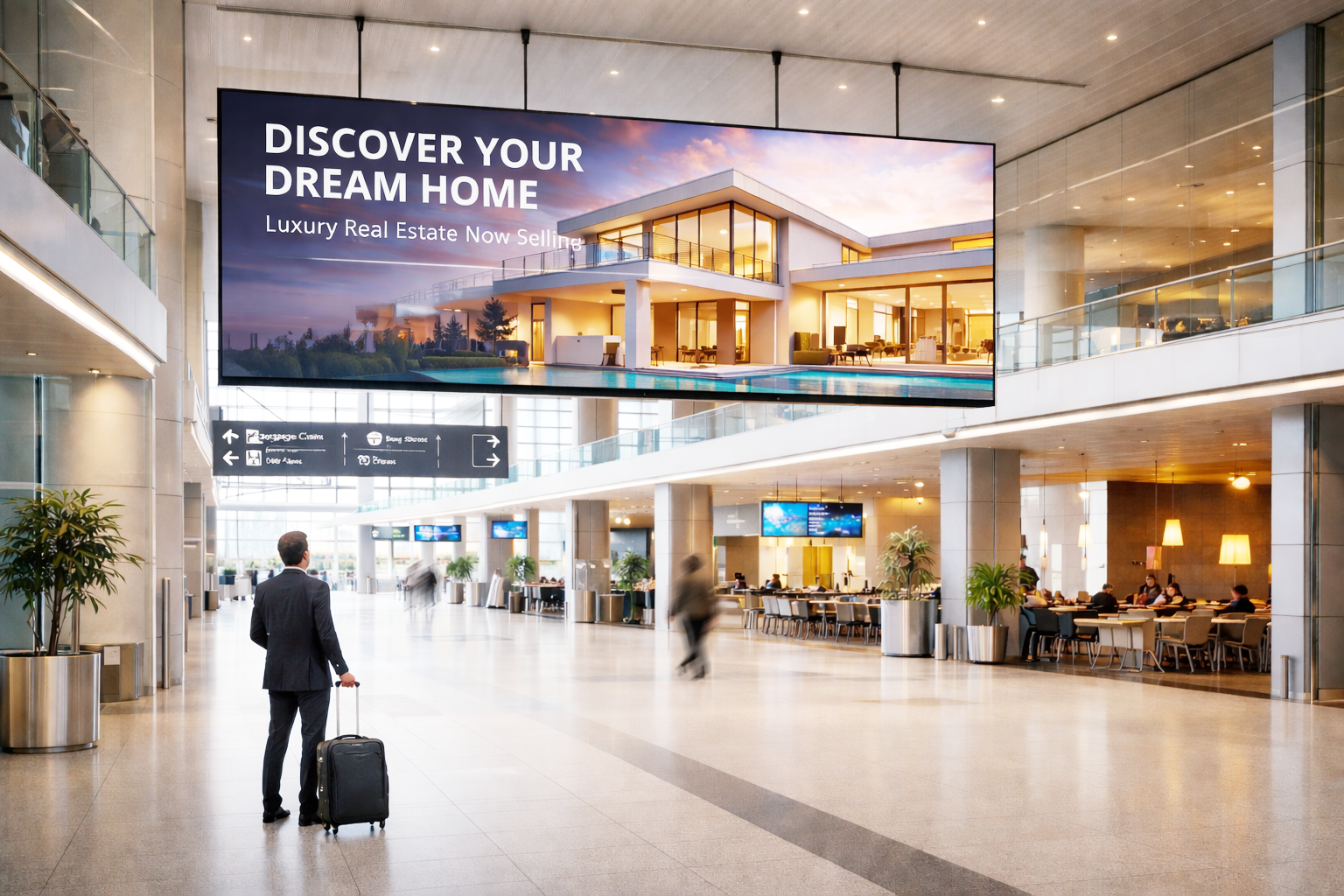
Airport Advertising is Complex to Get Right
We help you execute faster, with proven results and local insight most planners lack starting now.
Talk to an ExpertCatchment Area and Economic Drivers
Top 10 Cities within 150 km — Marketer Intelligence:
- Ariana: Tunis's fastest-growing northern suburb and the country's most concentrated technology and digital services corridor -- the French-fluent, internationally educated professional class here is highly mobile between Tunis, Paris, and Montreal, generating strong demand for Canadian and European immigration products, international education consultancies, and premium financial services tailored to cross-border income earners.
- La Marsa: Tunisia's most affluent residential address, home to diplomatic missions, senior government officials, and the country's established business families in their coastal villas and embassy-district apartments -- this postcode consistently produces TUN's highest-spending leisure and outbound business travelers and is the primary audience signal for luxury, premium hospitality, wealth management, and international real estate advertisers.
- Bizerte: A strategic Mediterranean port city whose industrial base -- petrochemicals, steel production, and naval activities -- produces a workforce of technically qualified professionals with European supply chain relationships and regular business travel to France, Italy, and Germany -- relevant for trade finance, industrial B2B services, and corporate banking advertisers reaching executives with active European commercial engagements.
- Nabeul: The capital of the Cap Bon peninsula and Tunisia's artisanal export hub, with established ceramic, citrus, and handicraft trading relationships with French and Italian buyers -- the business class here has direct EU market exposure and is receptive to international trade banking, export financing, and premium insurance products aligned with cross-Mediterranean commercial activity.
- Hammamet: Tunisia's most internationally recognised beach resort destination and the engine of North Africa's most developed leisure tourism economy -- the resort's commercial ecosystem draws premium European tourists with confirmed accommodation and activity spend, and the local hospitality business class travels through TUN on European route procurement and partnership meetings, creating a dual advertiser opportunity across both segments.
- Zaghouan: An agricultural highland city known for olive oil production and one of the Roman world's most significant water infrastructure legacies -- the agribusiness families here have generational land wealth and are transitioning toward urban investment in Tunis real estate and financial diversification products, making them an emerging audience for property and wealth management brands targeting traditional Tunisian wealth in transition.
- Béja: The heart of Tunisia's northern wheat belt and a significant agricultural wealth zone whose landowners and agri-commodity traders travel through TUN for European and Gulf business engagements -- a traditional wealth segment with above-average interest in real estate investment, gold, and family financial planning products as vehicles for intergenerational capital preservation.
- Grombalia: Tunisia's viticulture and agri-processing hub, with wine and agribusiness operators who have active French and Italian trading relationships and an above-average exposure to European commercial culture -- relevant for international trade finance, premium automotive, and lifestyle brands targeting cosmopolitan agri-business professionals with cross-Mediterranean commercial identities.
- Sousse: Tunisia's third-largest city and a dual-economy hub combining significant manufacturing -- textiles, food processing, electronics assembly -- with one of North Africa's strongest beach tourism corridors -- the business class here travels regularly to France, Italy, and the Gulf, and the outbound student population from Sousse's universities is actively seeking European and Canadian higher education, making it a commercially productive catchment for financial services, real estate, and education advertisers simultaneously.
- Siliana: A mining and agricultural governorate with phosphate proximity, traditional landowning wealth, and growing Gulf remittance inflows from overseas workers -- the commercial families here are increasingly engaged with urban investment products and real estate in Tunis and coastal Tunisia, making them a secondary but growing audience for financial services and property advertisers seeking reach into Tunisia's wealth accumulation layer beyond the capital.
NRI and Diaspora Intelligence:
Tunisia's overseas community numbers approximately 1.5 million, representing one of the highest diaspora-to-domestic-population ratios in the Arab world, with concentrations in France (the dominant destination at approximately 600,000 to 700,000), Italy, Germany, Canada, and the Gulf states. The French Tunisian community is three to four generations deep in cities including Paris, Lyon, Marseille, Nice, and Montpellier, and its members travel through TUN carrying euro-denominated purchasing power, active property investment mandates in coastal Tunisian real estate, and the consumption expectations of a European middle and upper-middle class. Annual remittances to Tunisia approach 2.5 billion US dollars, with the French corridor accounting for the largest share. The Canadian Tunisian community, concentrated in Montreal and Toronto, has grown significantly over the past decade and represents a higher-income, more recently arrived segment with strong outbound investment appetite and frequent travel through TUN. For international real estate developers, wealth managers, luxury brands, and education advertisers, the TUN diaspora audience is among the most commercially sophisticated in North Africa -- it combines Arabic cultural roots with European consumer habits and multi-currency financial behaviour.
Economic Importance:
Tunisia's economy is anchored by tourism (the single largest foreign exchange earner), textile and garment manufacturing for European fast-fashion supply chains, phosphate mining (the country holds among the world's largest confirmed reserves), olive oil exports (Tunisia is consistently among the world's top two or three exporters), and a growing automotive and aerospace parts sector embedded in French and Italian industrial supply chains. These industries generate a business owner and professional class that is deeply integrated into European commercial relationships, travels frequently to Paris, Rome, Frankfurt, and Barcelona for client meetings and trade exhibitions, and consumes premium international services as a professional baseline rather than an aspiration. For advertisers, the TUN catchment economy produces a target audience whose commercial orientation is European in practice, even while its cultural and family identity remains firmly rooted in North Africa.
Business and Industrial Ecosystem
- The automotive and aerospace parts manufacturing sector -- anchored by European tier-one suppliers operating in Tunisia's coastal industrial zones -- generates a population of bilingual Tunisian executives and European expatriate managers with frequent air travel between Tunis and Paris, Stuttgart, Toulouse, and Turin, creating a high-frequency B2B audience for corporate banking, trade finance, and premium business travel services
- Tunisia's textile and garment manufacturing industry, serving French and Italian fashion supply chains from Zara to luxury sub-contractors, produces an export business class with active European buyer relationships and the international commercial exposure to appreciate premium brand positioning across financial, automotive, and lifestyle categories
- The ICT and business process outsourcing sector, built on Tunisia's French-language capability and competitive cost base, is producing a young technology entrepreneur and senior professional class with international client relationships, remote income streams, and consumption patterns increasingly aligned with European premium brands and digital financial services
- Phosphate and agri-commodity export businesses operating through TUN's catchment represent a traditional wealth segment with generational asset accumulation and growing appetite for international diversification -- a commercially underserved audience that is particularly receptive to wealth management, second-residency, and international real estate advertising
Passenger Intent — Business Segment:
Business travelers at TUN are drawn primarily from the textile, automotive, aerospace, ICT, and tourism management sectors, with a significant layer of financial services professionals, government officials, and development organization staff. They travel predominantly to Paris and other French cities for supply chain management, buyer meetings, and regulatory engagements, with Istanbul, Dubai, and Casablanca serving as secondary business corridors for regional commercial activity. Advertiser categories that intercept them most effectively include international trade banking, corporate travel management, premium business services, technology platforms serving cross-border businesses, and luxury goods positioned around professional achievement in an internationally mobile context.
Strategic Insight:
The business audience at TUN carries a commercially specific characteristic that distinguishes it from peer airports in the Maghreb: these are professionals and business owners whose economic identity is defined by integration into European supply chains, not by domestic market dominance alone. They are accustomed to European brand standards, hold European banking relationships, and make purchasing decisions against a comparative benchmark set in Paris and Milan, not exclusively in Tunis. For international B2B and premium consumer brands, this means TUN's business audience is pre-qualified for European-standard brand communication -- it does not require the market education investment that many advertisers assume North African audiences demand.
Tourism and Premium Travel Drivers
- The ancient city of Carthage and the UNESCO-listed Medina of Tunis anchor North Africa's most compelling heritage tourism corridor, drawing European visitors with strong cultural engagement, premium accommodation spend, and high receptiveness to curated retail, cultural brand experiences, and premium food and beverage advertising at the airport arrival point
- Sidi Bou Said, the iconic blue-and-white clifftop village overlooking the Gulf of Tunis, and the Bardo National Museum -- home to the world's most significant collection of Roman mosaics -- attract culturally motivated European visitors with above-average educational attainment and premium leisure spending profiles, particularly from France, Germany, and the United Kingdom
- Hammamet and Cap Bon's beach resort corridor is Tunisia's primary mass-premium leisure tourism product, drawing French, Italian, German, and Scandinavian visitors with confirmed all-inclusive or boutique hotel spend and strong airport retail and duty-free purchasing behaviour at both arrival and departure
- The annual Festival of Carthage, held within the ancient amphitheatre above Tunis from July to August, is North Africa's most prestigious performing arts event, attracting regional and international cultural tourism from the Arab world and European diaspora communities with above-average cultural product purchasing and premium hospitality demand
Passenger Intent — Tourism Segment:
Inbound European leisure tourists at TUN arrive with confirmed accommodation expenditure, pre-booked activity budgets, and the shopping intent of travelers who have been building anticipation for a culturally rich North African experience. They are highly receptive to artisanal, heritage, and locally branded retail products at the airport, alongside premium food and beverage brands and destination marketing for secondary Tunisian experiences they have not yet booked. Outbound domestic tourists, primarily Tunisians returning from European holidays or departing for Gulf and Turkish destinations, carry confirmed leisure spend and are receptive to premium travel accessories, financial services, and luxury brand advertising in the departure corridor. Advertisers in hospitality, travel, cultural goods, premium retail, and destination marketing find TUN's tourism passenger segment commercially accessible across both directions of the travel flow.
Travel Patterns and Seasonality
Peak seasons:
- June to September: The dominant passenger peak driven by European summer tourism arrivals from France, Italy, Germany, and Scandinavia, combined with the Tunisian diaspora return season as French and European-based families return for extended summer visits -- the overlap of inbound tourism premium and outbound diaspora commercial activity makes this the highest combined commercial value window of the year
- December to January: A secondary diaspora return peak driven by French and European school holiday calendars, with Tunisian families in Paris and Lyon returning for the winter break -- this window delivers above-average dwell times and premium retail spend as returning diaspora members complete gift purchasing and personal care transactions at the airport
- Eid ul Fitr (date varies annually -- Lunar calendar): The most significant Islamic travel event of the year, generating diaspora returns and family reunion traffic across both international and domestic routes, with sharply elevated spending on apparel, food, gifting, and devotional products in the weeks preceding the holiday
- Eid ul Adha (date varies annually -- Lunar calendar): A second major Islamic travel peak with strong family travel motivation and, among the devout HNWI segment, Hajj pilgrim departures through TUN's international corridor
Event-Driven Movement:
- Festival of Carthage (July to August): North Africa's most prestigious performing arts festival drives inbound cultural tourism from the Arab world, France, and the wider Mediterranean, delivering a concentrated audience of culturally engaged, premium-spending visitors at the height of summer -- strong alignment for hospitality brands, cultural lifestyle products, and premium food and beverage advertisers
- La Ghriba Pilgrimage, Djerba (Lag B'Omer -- April or May): The annual Jewish pilgrimage to the ancient Ghriba synagogue on Djerba Island draws thousands of Jewish visitors from France, Israel, and North America through Tunisian airports, generating a commercially distinct inbound flow of internationally mobile, culturally engaged travelers -- advertisers in premium hospitality, heritage tourism, and cultural goods benefit from this unique North African audience event
- Sahara Festival of Douz (December): Tunisia's premier desert cultural festival draws international adventure and heritage tourists through TUN in the typically quieter December period, supporting the winter advertiser window with a culturally motivated audience segment
- Ramadan to Eid window (30 to 45 days before Eid ul Fitr): A commercially intense period combining elevated Umrah pilgrim departures, intensified diaspora gifting and apparel purchasing, and peak engagement with Islamic banking and charitable financial products -- the most concentrated window for brands targeting Tunisia's devout Muslim consumer class
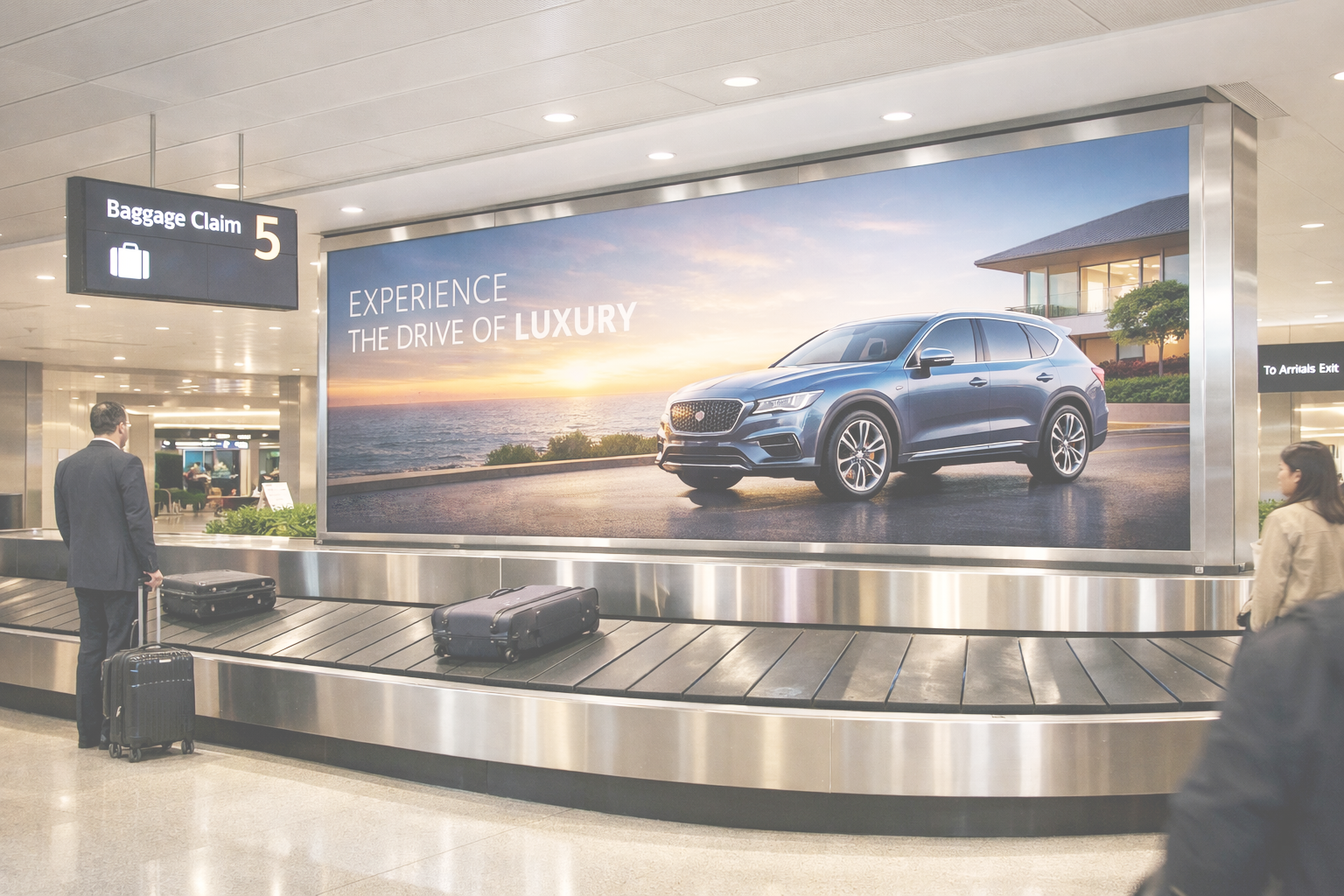
It’s Not Just Where You Advertise - It’s How Fast You Execute
We combine local insight with fast rollout to deliver results for you, now.
Talk to an ExpertAudience and Cultural Intelligence
Top 2 Languages:
- Arabic (Tunisian Darija and Modern Standard): The mother tongue and emotional first language of TUN's domestic audience and the primary communication register for family-decision messaging, Islamic financial products, and national identity positioning -- campaigns that deploy Arabic effectively signal cultural respect and build the trust premium that drives purchase commitment in both the domestic and diaspora audience segments
- French: The functional commercial language of Tunisia's professional and business class, the natural register of the returning diaspora audience from France, Belgium, and Canada, and the language in which most Tunisian HNWI consumers evaluate international brands and financial products -- for luxury goods, education, real estate, and financial services advertisers, French-language creative at TUN is not a translation concession but a commercial necessity that directly increases audience engagement
Major Traveller Nationalities:
Tunisian nationals dominate TUN's passenger profile, subdivided into the French diaspora return segment (the largest and most commercially valuable group), domestic business and professional travelers, outbound leisure travelers to European and Turkish destinations, and Hajj and Umrah pilgrims. French nationals represent the dominant inbound international nationality, followed by Italians, Germans, Belgians, and Scandinavians -- primarily leisure tourists with confirmed accommodation spend and premium beach and heritage itineraries. Libyan nationals form a commercially significant and systematically underacknowledged segment at TUN, using Tunis as their primary gateway to Europe and the wider world given Libya's constrained aviation infrastructure -- these travelers carry oil-economy purchasing power, are active buyers of European real estate and medical services, and pass through TUN's international terminal with spending capacity that significantly exceeds their numerical share of the passenger count. For campaign creative and targeting, the ability to communicate across Arabic, French, and European cultural registers simultaneously is the single most commercially differentiating capability an advertiser can deploy at this airport.
Religion — Advertiser Intelligence:
- Islam (approximately 99%): The unifying cultural framework of virtually the entire TUN catchment, expressed in Tunisia through the Maliki tradition, with strong Sufi influences at major shrines and a historically moderate and cosmopolitan urban practice in Tunis -- Ramadan creates the most intense consumer engagement period of the year for food, gifting, apparel, and charitable financial products; Eid periods generate the highest passenger volumes and most concentrated retail spending events; the Hajj and Umrah season drives significant pilgrim spending on travel accessories, religious garments, and premium products from the holy cities, with outbound Saudi real estate interest particularly notable among the devout HNWI segment
- Judaism (small residential minority, significant annual pilgrimage inflow): Tunisia's Jewish community, historically centred in Tunis's Hara and on Djerba Island, is among the oldest in the world, and the annual La Ghriba pilgrimage draws thousands of French, Israeli, and North American Jewish visitors through TUN in spring -- a commercially distinct audience segment with Western purchasing power, strong emotional connection to Tunisia, and premium hospitality and cultural product spending during their visits
- Christianity (very small, primarily expatriate and diplomatic community): European diplomatic staff, French and Italian expatriate professionals, and NGO workers in Tunis's international community represent a small but high-income audience whose December and Easter period travel behaviour aligns with premium retail and hospitality advertiser windows
Behavioral Insight:
The TUN audience makes purchasing decisions through a blend of French-educated rationalism and Arab social consensus -- significant investments, including real estate, education, and financial products, require family consultation and community validation before commitment, but the evaluation process itself is conducted against European brand benchmarks rather than purely local market comparisons. The returning diaspora segment is particularly commercially strategic because it arrives at TUN simultaneously homesick and aspirationally Western, in a decision state that combines emotional openness with the confidence of European-income purchasing power. Brands that bridge both registers -- speaking to cultural pride and international quality in the same creative execution -- consistently outperform those that choose one register at the expense of the other.
Outbound Wealth and Investment Intelligence
The outbound passenger at Tunis-Carthage International Airport represents one of the most commercially layered investor profiles in the African and Mediterranean airport network. This is not a uniform audience -- it encompasses the French diaspora professional deploying euro savings into Tunisian coastal property and French suburban real estate simultaneously, the Libyan HNWI using TUN as a gateway to Malta, Istanbul, and London for capital preservation, the Tunisian industrial owner diversifying manufacturing profits into UAE commercial real estate, and the upper-middle-class family funding a French engineering degree for their eldest child. The commercial opportunity lies in the diversity and depth of these parallel investment flows, all of which converge in a single terminal with meaningful dwell time and high advertising receptivity.
Outbound Real Estate Investment:
France remains the dominant outbound real estate market for TUN's diaspora audience, with Tunisian families in France managing active property portfolios across Paris suburbs, Lyon's residential corridors, Marseille, Nice, and Montpellier -- and returning diaspora members using TUN transit as a decision window for both French property management and Tunisian coastal villa or apartment acquisitions. Tunisia's own northern coastal property market -- Hammamet, La Marsa, Sidi Bou Said, Gammarth -- attracts significant diaspora re-investment as returning families purchase second homes and retirement properties within the country. Dubai has emerged as an active secondary real estate destination for Tunisia's industrial and business-owner class, driven by the UAE's tax-free environment, strong rental yields, and the established regional business community in the Emirates. Turkey's citizenship-by-investment programme, which offers Turkish citizenship through a $400,000 property purchase, has attracted meaningful Tunisian HNWI interest, particularly from Libyan-connected families using Istanbul as a regional capital management hub. For Libyan HNWI travelers transiting through TUN, Malta and Portugal represent active European property investment markets where residency and EU access motivations combine with property yield objectives.
Outbound Education Investment:
France is the dominant higher education destination for TUN's catchment by a significant margin, driven by the shared language, the prestigious reputation of French grandes écoles and engineering schools among Tunisia's professional class, and the deep cultural and institutional ties between the two countries -- Tunisian students are among the top three non-EU source nationalities at French universities, and the families funding these placements pass through TUN in active tuition payment and setup spending mode. Canada, particularly Montreal and its French-language university ecosystem, has accelerated strongly as an alternative destination, offering post-study immigration pathways and a French-speaking environment that Tunisia's diaspora community treats as a culturally comfortable second choice to France. Germany is an emerging destination for engineering and technical programs, attracting Tunisia's scientifically oriented students who are prepared to acquire German language capability for access to Europe's strongest engineering employment market. For international universities, foundation program providers, and education consultancies, TUN's departure hall delivers families in active multi-year spending commitment mode with decision cycles that run from 12 to 24 months.
Outbound Wealth Migration and Residency:
The demand for second residency and alternative citizenship among Tunisia's HNWI and upper-professional class has intensified over recent years, driven by political uncertainty, currency instability, and a structural desire among the educated class to secure European mobility and educational access for their children. French naturalization and long-term residency remains the most actively pursued pathway given the deep existing diaspora networks. Canadian immigration through the Express Entry system and Quebec's skilled worker program is the most discussed alternative among TUN's younger professional class, particularly those with engineering, IT, or French-language academic credentials. Turkey's citizenship-by-investment program attracts the business-owner segment seeking a non-EU but internationally respected second passport with low acquisition threshold. Malta's citizenship and residency program is particularly relevant for Libyan HNWI travelers transiting through TUN who are seeking EU access through a Mediterranean jurisdiction with cultural and geographic proximity. Portugal and Greece Golden Visa programs, despite regulatory evolution, continue to attract interest from TUN's upper-income professional class seeking European residency.
Strategic Implication for Advertisers:
International brands on both sides of the TUN wealth corridor -- those seeking to sell premium products into North Africa's most internationally oriented consumer market, and those offering real estate, education, residency, and investment products to its outbound capital class -- should treat this airport as a simultaneously inbound and outbound commercial channel. The same terminal handles European tourist arrivals with confirmed leisure spend and Tunisian HNWI departures with active investment mandates in the same dwell window. Masscom Global is positioned to activate campaigns targeting both flows with the Francophone creative capability, regional market intelligence, and placement precision that this dual-directional audience environment demands.
Airport Infrastructure and Premium Indicators
Terminals:
- Tunis-Carthage International Airport operates through an integrated international terminal complex handling the full volume of Tunisia's primary aviation gateway, with distinct international and domestic processing zones and a modernised commercial corridor linking check-in and departure halls -- the international departure wing concentrates TUN's highest-value audience segment in a defined dwell environment with sequential advertising exposure from check-in approach through security, retail concourse, and boarding gate approaches
- Ongoing terminal modernisation investments have upgraded the commercial retail, food and beverage, and passenger service environment to a standard that supports premium brand positioning, reducing the gap between TUN and comparable Mediterranean European hub airports in terms of advertiser environment quality
Premium Indicators:
- Business and premium class lounge facilities concentrate TUN's highest-income outbound travelers -- European-bound business class passengers, senior government officials, Libyan HNWI transit travelers, and diplomatic personnel -- in a premium dwell environment where lounge-adjacent advertising achieves the highest audience quality per impression in the terminal
- VIP and protocol services at TUN accommodate the political, diplomatic, and high-net-worth traveler segment that operates outside standard terminal flows but remains within the airport's commercial advertising environment during pre-departure and arrival movements
- The airport's proximity to Tunis's five-star hotel corridor -- including internationally branded properties within a short radius -- positions TUN within a premium hospitality ecosystem that captures extended-stay corporate and diplomatic travelers within the airport's commercial catchment zone
- The airport's identity as the gateway to Carthage, one of the ancient world's most significant civilisations, lends TUN a heritage and cultural brand association that premium advertisers can leverage -- no other airport in North Africa carries this degree of historical prestige as an embedded brand signal
Forward-Looking Signal:
Tunisia's aviation sector liberalisation agenda, supported by the country's Open Skies agreement framework with the European Union, is progressively adding new route options from secondary European cities with significant Tunisian diaspora populations and from Gulf and African markets. New bilateral air service agreement negotiations targeting direct connections to additional Canadian cities, Gulf secondary markets, and sub-Saharan African growth economies will expand TUN's nationality diversity and introduce new commercially valuable audience segments into the terminal. Masscom Global advises brands planning North African campaigns to secure TUN advertising positions now, before route expansion and increasing tourist arrival targets drive both inventory demand and rate competition upward.
Airline and Route Intelligence
Top Airlines:
Tunisair, Nouvelair, Transavia France, Air France, Turkish Airlines, EasyJet, Ryanair, Vueling, Lufthansa, Brussels Airlines, Royal Air Maroc, Air Arabia, Qatar Airways, ITA Airways, Air Malta, Tunisair Express
Key International Routes:
- Paris CDG and Orly (Tunisair, Air France, Transavia, EasyJet) -- multiple daily, the highest frequency route and the arterial channel of the Tunisia-France diaspora corridor
- Lyon (Tunisair, Transavia) -- daily to multiple weekly, serving Tunisia's second-largest French diaspora concentration
- Marseille (Tunisair, EasyJet) -- multiple weekly, reflecting the large Tunisian community in France's Mediterranean capital
- Rome and Milan (Tunisair, ITA Airways, Vueling) -- multiple weekly, serving Italy's significant Tunisian community and Italian tourism inbound flow
- Frankfurt (Tunisair, Lufthansa) -- multiple weekly, reflecting the German-Tunisian manufacturing and trade relationship
- Brussels (Tunisair, Brussels Airlines) -- multiple weekly, serving Belgium's Tunisian diaspora and the EU institutional travel corridor
- Geneva and Zurich (Tunisair) -- multiple weekly, reflecting the Swiss-Tunisian professional and banking community
- Istanbul (Turkish Airlines) -- daily, serving both Turkish tourism and onward connections to Gulf, Asian, and African markets
- Casablanca (Royal Air Maroc) -- multiple weekly, the primary North African regional connection
- London (Tunisair) -- multiple weekly, serving the UK Tunisian community and British tourism inbound
- Sharjah (Air Arabia) -- multiple weekly, serving the Gulf diaspora and outbound business corridor
- Doha (Qatar Airways) -- connecting hub service for Gulf and Asian onward destinations
Domestic Connectivity:
Djerba-Zarzis (DJE), Sfax (SFA), Monastir Habib Bourguiba (MIR), Tozeur (TOE) -- with Djerba commanding the highest domestic frequency as Tunisia's primary secondary leisure destination and Monastir serving the Sousse tourist resort corridor
Wealth Corridor Signal:
The TUN route network encodes three distinct commercial audience layers with precision. The Paris-Lyon-Marseille-Brussels corridor is the primary diaspora wealth transfer channel -- these routes carry three generations of French Tunisians managing cross-border family finances, property portfolios, and education investments in both countries simultaneously. The Istanbul route is the regional investment corridor, carrying business owners with active Turkish property and citizenship interests and onward Gulf connections. The Rome and Milan routes encode the Italian industrial supply chain relationship -- these are not leisure routes but B2B commercial connections between Tunisia's textile and manufacturing base and European buyer networks. For advertisers, each major TUN route is a distinct commercial audience type that should inform campaign creative, language, and category targeting.
Media Environment at the Airport
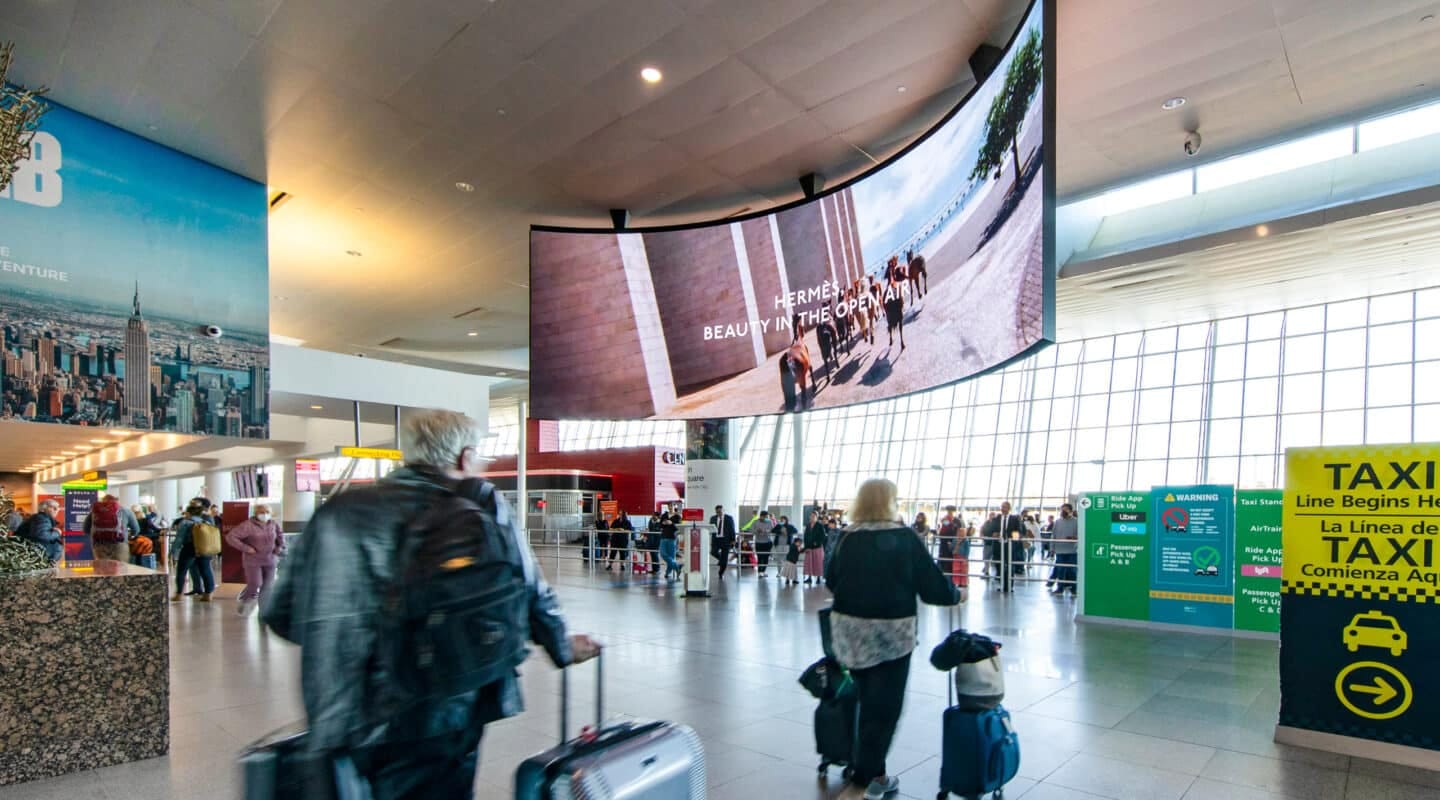
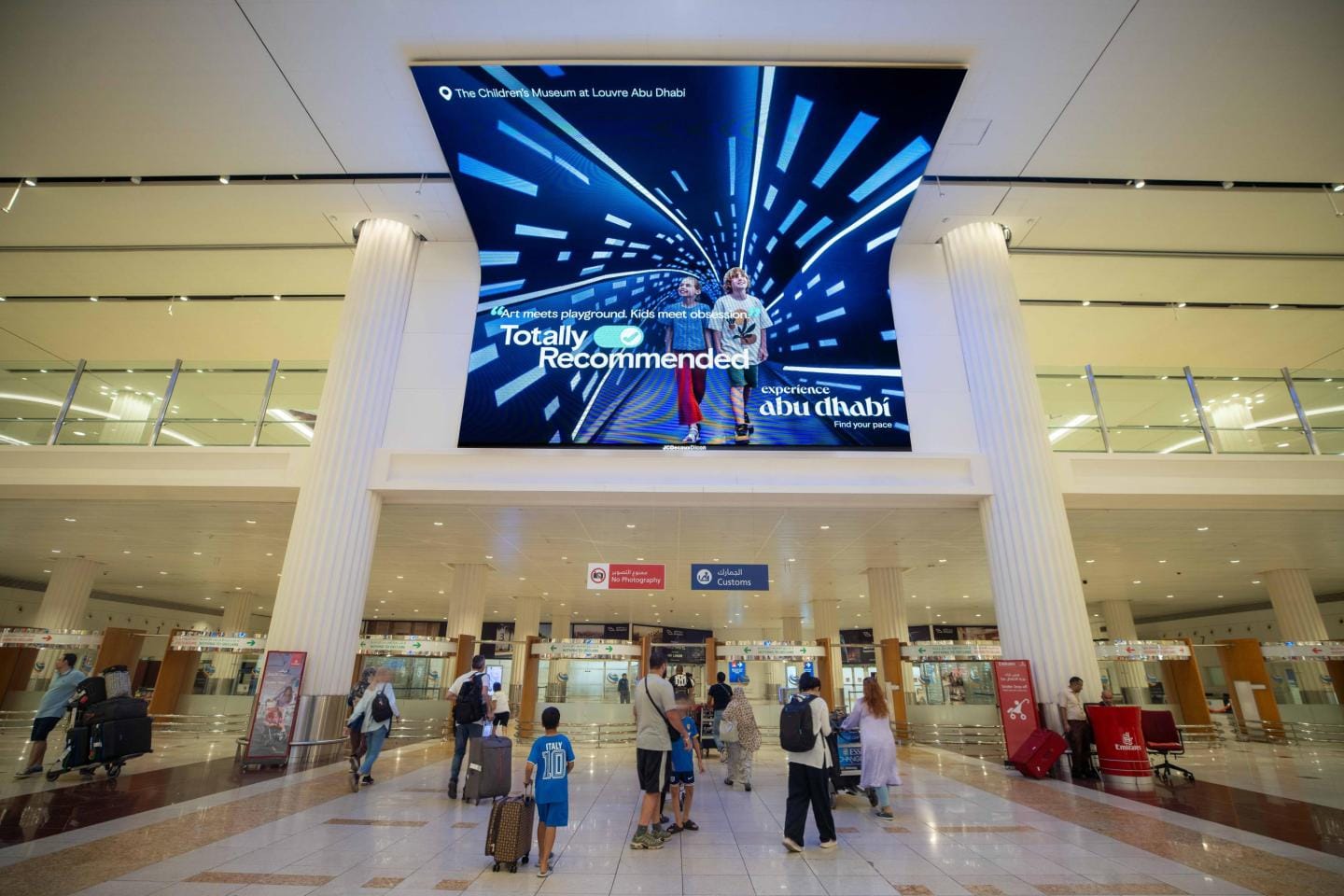
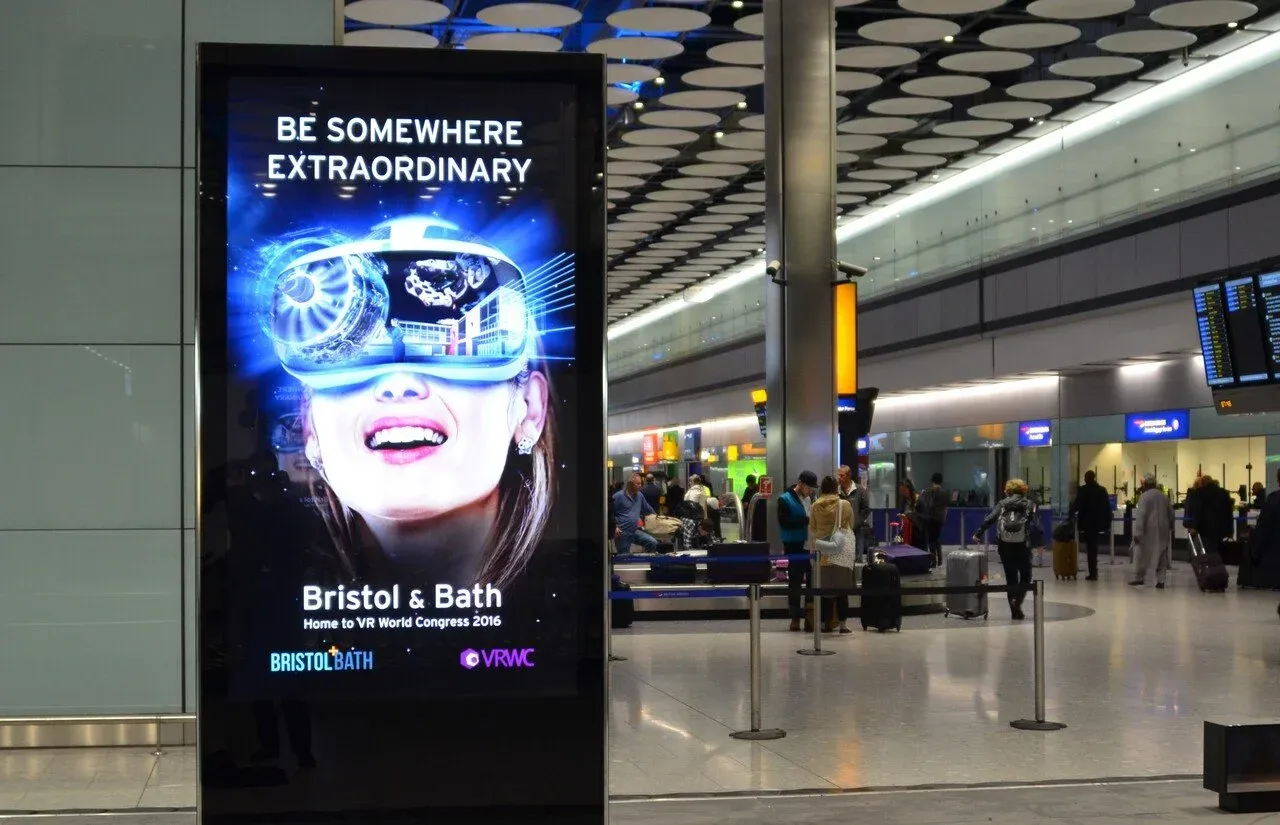
- TUN's international terminal concentrates advertising exposure within a sequential dwell corridor that moves passengers from check-in through security into a commercial retail and food and beverage environment before boarding gates -- this linear architecture creates natural high-frequency impression opportunities at every transition point and enables layered campaign strategies that build brand recall across the full journey
- Dwell times at TUN are extended by the airport's consistent peak-season volume pressure, with international departure passengers regularly experiencing 90 to 120 minutes of active commercial environment exposure during summer and Eid peak periods -- among the highest effective dwell durations of any North African airport
- The returning European diaspora passenger arrives at TUN in a distinctive commercial mindset -- the transition from European daily life to a Tunisian family and cultural context creates heightened emotional receptivity and a shopping orientation that is significantly more active than the standard departure experience, making the first advertising touchpoints after check-in particularly high-value impression windows
- Masscom Global provides full TUN inventory access, placement strategy, Francophone creative execution guidance, campaign management, and performance reporting, giving international advertisers the regional expertise and local execution capability needed to activate in North Africa's most culturally layered airport environment with confidence and measurable return
Strategic Advertising Fit
Best Fit:
- International real estate developers (France, UAE, Turkey, Malta, Tunisia coastal): TUN's diaspora audience is one of North Africa's most active cross-border property buyers, managing simultaneous French and Tunisian real estate portfolios and increasingly acquiring in Dubai and Turkish markets -- the departure hall intercepts this audience at the intersection of homebound nostalgia and outbound investment intent, a psychographic moment that no other channel replicates
- International education (France, Canada, Germany, Belgium): The TUN catchment sends among the highest volumes of students to French universities of any non-EU source country, and the Canadian pipeline is growing rapidly -- families funding six-figure multi-year education investments pass through this terminal in active research and commitment mode, making TUN a primary channel for university and education consultancy advertisers
- Travel and premium hospitality (European destinations, Turkey, UAE, luxury Tunisian resorts): TUN's internationally mobile, leisure-oriented audience is in active destination evaluation mode at both departure and arrival, making it the highest-value channel for hospitality brands, cruise operators, and destination marketing organisations targeting North Africa's most sophisticated leisure traveler segment
- Islamic banking and Shariah-compliant financial products: The deeply Islamic character of Tunisia's population, combined with the elevated financial awareness of the diaspora class, creates strong demand for halal investment products, sukuk instruments, and Islamic wealth management services -- Ramadan and Eid windows at TUN represent the highest receptivity periods for this category
- French-market and European financial services: The returning diaspora's need to manage cross-border finances, Franco-Tunisian tax obligations, and dual-country investment portfolios creates specific demand for French-market banking products, international insurance, and cross-border financial planning services that few other North African airports can deliver with comparable audience precision
- Luxury goods (mid-tier premium -- watches, jewellery, leather goods, cosmetics): The La Marsa residential class, the French diaspora returnees, and the Libyan HNWI transit segment collectively form a premium goods audience with European consumer expectations -- mid-tier luxury and aspirational premium brands find a more receptive audience here than ultra-luxury, though the premium environment supports strong positioning
- Medical tourism and international healthcare (Turkey, Germany, France, Tunisia private sector): Tunisia has an established medical tourism sending and receiving tradition -- Libyan travelers seek treatment in Tunis's private clinics, while Tunisians access specialist procedures in Turkey and France -- making healthcare destination brands a commercially viable advertiser category at TUN
Brand Alignment at a Glance:
| Category | Fit |
|---|---|
| International real estate | Exceptional |
| International education | Exceptional |
| Travel and premium hospitality | Exceptional |
| Islamic banking and financial products | Strong |
| European financial services | Strong |
| Luxury goods (mid-tier premium) | Strong |
| Medical tourism and international healthcare | Strong |
| Ultra-luxury (Hermes, Patek Philippe tier) | Moderate |
| Mass-market FMCG | Poor fit |
Who Should Not Advertise Here:
- Ultra-luxury brands at their highest price tier: While TUN's HNWI segment is commercially meaningful, the airport's overall wealth profile does not match the ultra-high-net-worth concentration required to justify ultra-premium inventory investment for brands at the absolute apex of the luxury pyramid -- mid-tier premium delivers significantly stronger ROI
- Mass-market FMCG brands with low unit values: The cost structure of premium airport inventory at TUN cannot be justified by categories without a direct connection to the travel, investment, or premium lifestyle context of the terminal's commercially valuable audience segments
- Budget and discount retail brands: The La Marsa and diaspora return audience has European consumer price expectations and will actively associate budget-positioned advertising with a brand equity reduction signal that undermines the premium airport environment
Event and Seasonality Analysis
Event Strength: High Seasonality Strength: High Traffic Pattern: Seasonal with Diaspora Summer Surge and Religious Event Peaks
Strategic Implication:
Advertisers at TUN should structure annual media investment around three primary windows -- the summer diaspora and tourism peak (June to September, with July and August delivering the highest French diaspora and European tourist volume), the Eid ul Fitr corridor (date varies with lunar calendar, consistently the highest consumer spending week of the year), and the December diaspora return window (aligned with French school holiday calendars) -- and overlay these foundations with the Festival of Carthage cultural premium in July and August and the La Ghriba pilgrimage window in spring for categories aligned with those specific audience types. Masscom Global builds TUN campaign schedules specifically calibrated to this seasonal architecture, ensuring brands are present at maximum-intensity audience moments rather than distributed across lower-value periods. The summer peak delivers the highest value per impression for real estate, education, hospitality, and luxury goods categories, as returning diaspora members arrive with active cross-border investment mandates and European purchasing power at their annual peak.

Poor Placement and Delays Affect Airport Campaigns
We help you move faster, access better inventory, and get it right now.
Talk to an ExpertFinal Strategic Verdict
Tunis-Carthage International Airport is North Africa's most commercially undervalued airport advertising environment -- a gateway that delivers a French-educated diaspora carrying euro-denominated purchasing power, a Libyan HNWI transit segment with oil-economy wealth and active European investment mandates, a European inbound tourism flow with confirmed premium leisure budgets, and a domestic professional class whose commercial identity is defined by integration into French and Italian supply chains. No other airport in Africa or the Arab world combines these four commercially distinct audience layers within a single terminal and a single investment. The diaspora return dynamic alone -- approximately 700,000 French Tunisians passing through or returning via TUN annually -- constitutes one of the most commercially concentrated wealth corridor flows in the Mediterranean basin. For international real estate developers, education institutions, travel brands, and financial services providers targeting the French-Arabic interface of global consumer markets, TUN is not a secondary North African buy. It is a primary access point to an audience whose sophistication, international orientation, and spending capacity are consistently underestimated by global media plans. Masscom Global brings the Francophone market intelligence, regional execution capability, and inventory access that international advertisers need to activate at TUN with the speed and precision this opportunity demands.
About Masscom Global
Masscom Global is a premium international airport advertising and media buying agency operating across 140 countries. With deep expertise in airport OOH, premium publications, and high-net-worth audience targeting, Masscom helps brands reach the world's most valuable travellers at the moments that matter most. For advertising packages, media rates, and campaign planning at Tunis-Carthage International Airport and airports across the globe, contact Masscom Global today.
Frequently Asked Questions
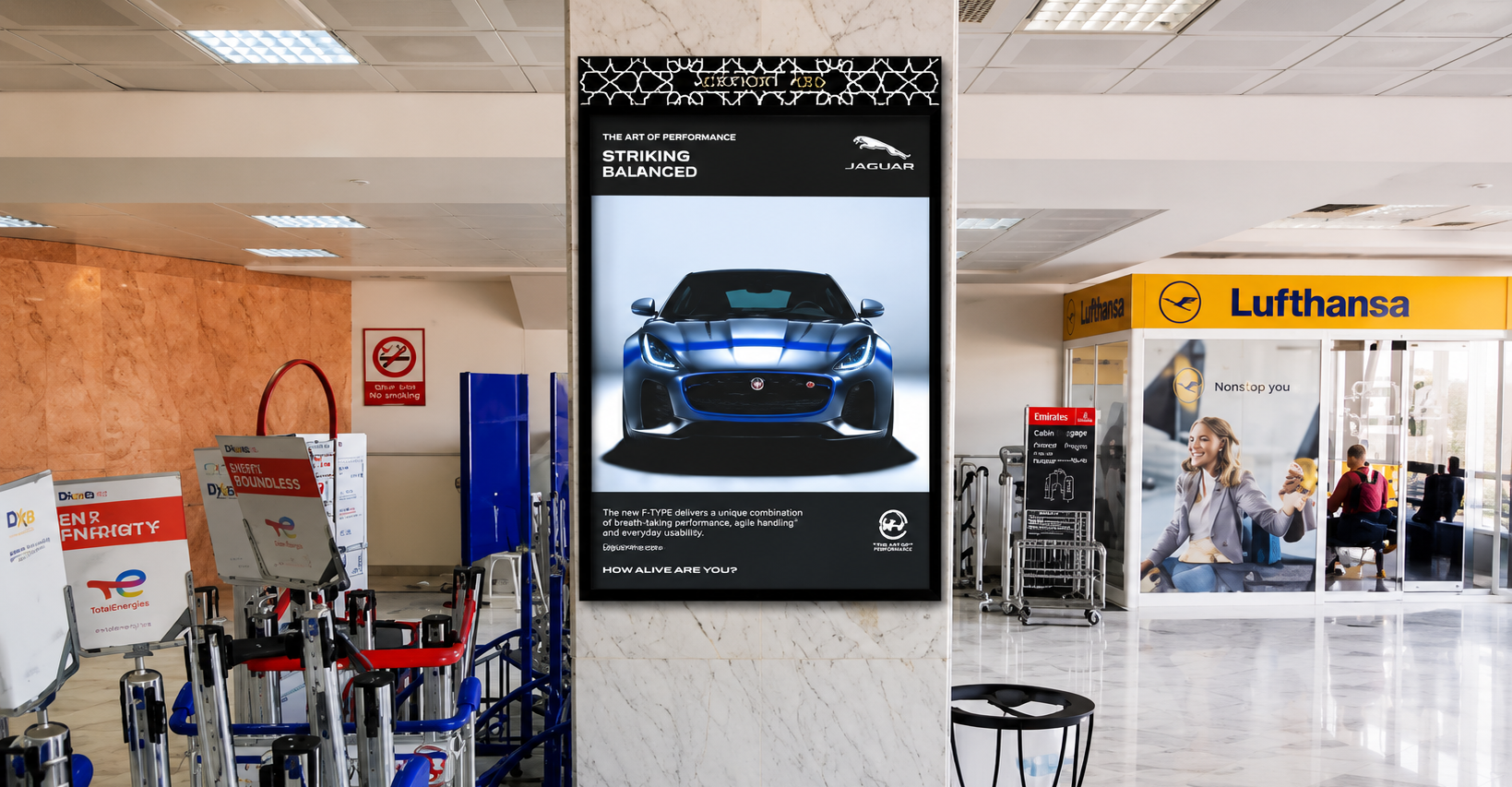
How much does airport advertising cost at Tunis-Carthage International Airport? Advertising costs at TUN vary based on format (digital screens, static lightboxes, branded corridor installations, experiential zones), placement position within the terminal, campaign duration, and seasonal demand -- summer peak months and Eid periods attract elevated inventory demand and corresponding rate premiums. Masscom Global provides current rate cards, strategic placement recommendations, and full campaign package options tailored to your category, target audience, and budget objectives. Contact Masscom for a detailed and personalised proposal.
Who are the passengers at Tunis-Carthage International Airport? TUN serves a commercially layered audience combining French and European diaspora returnees (the largest and most commercially valuable segment), inbound European leisure and heritage tourists from France, Italy, Germany, and Scandinavia, Libyan HNWI transit travelers using TUN as their European and Gulf gateway, export and manufacturing sector business executives from Tunisia's industrial catchment, outbound students relocating to France and Canada, and Hajj and Umrah pilgrims. The airport's unique combination of diaspora wealth, Libyan oil-economy transit, and European tourism inbound makes its audience commercially distinct from any other North African airport.
Is Tunis-Carthage International Airport good for luxury brand advertising? TUN is well suited to mid-tier premium and aspirational luxury brand advertising. The returning French diaspora audience holds European consumer expectations and purchasing power. The La Marsa residential class represents Tunisia's highest-concentration HNWI address. The Libyan transit segment carries oil-economy wealth with active European luxury retail consumption. For brands at the mid-luxury tier -- premium watches, jewellery, leather goods, cosmetics, and design -- TUN delivers a genuinely aligned audience. For ultra-luxury brands at their absolute price apex, Masscom advises assessing whether the volume of ultra-HNW passengers justifies the investment relative to Gulf hub alternatives.
What is the best airport in North Africa or the Maghreb to reach high-value audiences? TUN is North Africa's most internationally integrated airport audience, defined by its French diaspora depth, Libyan HNWI transit flow, and European tourism premium. Mohammed V International Airport in Casablanca serves Morocco's larger economy and has stronger sub-Saharan Africa connectivity. Algiers's Houari Boumediene Airport serves a larger domestic market with a significant French diaspora parallel. Within the Maghreb, TUN delivers the highest concentration of French-speaking, internationally mobile, and cross-border investment-oriented travelers -- making it the primary channel for brands targeting the French-Arabic commercial corridor specifically. Masscom Global advises on multi-airport North Africa strategies that maximise reach across the Maghreb simultaneously.
What is the best time to advertise at Tunis-Carthage International Airport? The highest-value advertising windows at TUN are the summer peak (June to September, with July and August delivering the highest combined diaspora return and European tourist volume), the Eid ul Fitr corridor (dates vary by lunar calendar, consistently the highest passenger and consumer spending week), and the December school holiday window when French Tunisian families return. The Ramadan period creates a concentrated 30-day consumer engagement window with peak receptivity to Islamic financial, gifting, apparel, and premium food categories. Masscom structures campaigns to capture all major traffic peaks with precision timing and appropriate creative positioning for each audience window.
Can international real estate developers advertise at Tunis-Carthage International Airport? TUN is among the strongest airport channels in the Mediterranean and North Africa for international real estate advertising. The French diaspora audience manages active property portfolios in France and Tunisia simultaneously, and is increasingly acquisitive in Dubai and Turkish markets. Libyan HNWI transit travelers are active buyers of European and Mediterranean real estate, particularly in Malta, Turkey, and Southern European Golden Visa markets. The Tunisian business owner class is diversifying manufacturing profits into UAE commercial real estate. Real estate developers targeting the French-Arabic speaking HNWI market, Libyan oil-wealth buyers, and the Maghrebi diaspora with European income will find TUN's commercial dwell environment a direct and highly receptive channel for property investment advertising.
Which brands should not advertise at Tunis-Carthage International Airport? Mass-market FMCG brands with low unit values and no premium or aspirational positioning will not justify the cost of airport inventory at TUN against audience ROI. Budget and discount retail brands are misaligned with the diaspora and tourism audience's European consumer expectations and will risk brand equity damage in a premium Mediterranean environment. Ultra-luxury brands at their highest price tier face a volume challenge, as TUN's ultra-HNWI passenger count is meaningful but smaller than Gulf hub airports -- mid-tier premium delivers considerably stronger returns at this airport.
How does Masscom Global help brands advertise at Tunis-Carthage International Airport? Masscom Global delivers end-to-end airport advertising capability at TUN – spanning audience intelligence, Francophone market strategy, inventory access and placement negotiation, bilingual creative execution guidance, implementation management, and post-campaign performance reporting. With operations across 140 countries and specific expertise in the North African and Mediterranean airport advertising environment, Masscom brings the regional market understanding and execution speed that international advertisers need to navigate TUN effectively. For brands entering the North African market for the first time, expanding existing Maghreb campaigns, or seeking to reach the Tunisian diaspora at the point of maximum commercial receptivity, Masscom eliminates complexity and delivers measurable results. Contact Masscom Global today.