

Airport at a Glance
| Field | Detail |
|---|---|
| Airport | Split Saint Jerome Airport (Sveti Jeronim Airport) |
| IATA Code | SPU |
| Country | Croatia |
| City | Kaštela / Split, Split-Dalmatia County |
| Annual Passengers | 3,624,150 (2024) — +7.9% on 2023; +9.8% on 2019; 3.9 million in 2025 (6% growth) |
| Primary Audience | British, German, and Northern European premium leisure tourists; luxury yacht and sailing charter guests; American premium travellers; Dalmatian coast villa holiday visitors; premium wine and gastronomy tourists |
| Peak Advertising Season | June to September (summer peak); growing May and October shoulder |
| Audience Tier | Tier 1 (Premium Seasonal Destination) |
| Best Fit Categories | Luxury yacht charter, premium Dalmatian wine and gastronomy, international real estate, premium outdoor and sailing brands, luxury automotive, Croatian artisan lifestyle, premium wellness and spa |
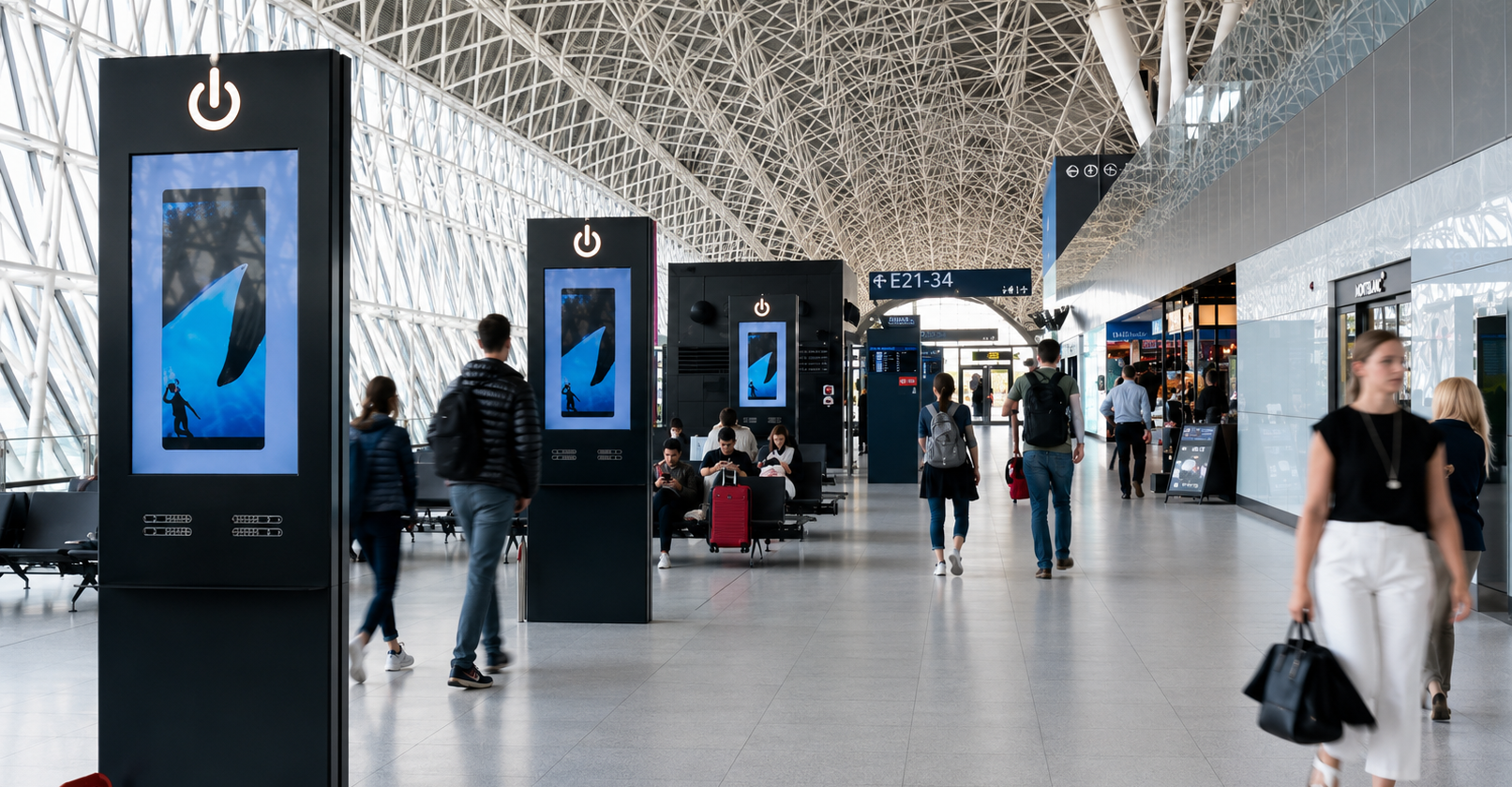
Split Airport is the most commercially significant seasonal leisure gateway in the Eastern Adriatic. It is the operational hub of Europe's fastest-growing premium sailing destination — the Croatian Dalmatian coast — and the primary departure and arrival point for the overwhelming majority of international visitors to one of the most densely UNESCO-heritage-certified coastlines in the Mediterranean. Every superyacht guest flying in to begin a seven-day circuit from Split to Hvar, Brač, Vis, and Korčula boards at this airport. Every British family driving to their villa above Omiš transits here. Every American traveller completing a Croatia island-hopping itinerary takes their last meal in Diocletian's Palace and departs through this terminal. The airport processed 3.6 million passengers in 2024 — a record by Croatian standards — and 3.9 million in 2025, with the first direct transatlantic New York service launching in 2026, confirming that what was already a world-class seasonal destination gateway is accelerating toward a genuinely year-round premium hub.
The commercial logic of SPU is straightforward: the airport's catchment destination is Croatia's premium tourism crown jewel. Split itself is a living UNESCO World Heritage city where a Roman emperor's retirement palace became a medieval settlement that became a modern Mediterranean destination. Hvar — the island most British, American, and German luxury travellers name first when asked about their Croatian aspirations — is a 90-minute ferry from Split. The ACI Marina adjacent to the airport is the primary embarkation point for the entire Dalmatian charter yacht fleet. The audience transiting SPU has committed premium spending before boarding; the only question for advertisers is which category best intercepts them at the moment of departure.


Advertising Value Snapshot
- Passenger scale: 3,624,150 in 2024 (+7.9% year-on-year; +9.8% on 2019 record); 3.9 million in 2025 (+6%); 70% of annual passengers concentrated in June to September; peak weekends exceed 200 daily flights and 50,000 passengers; terminal capacity 5 million, confirming substantial growth headroom
- Traveller type: British premium leisure tourists (largest inbound nationality); German charter and Adriatic coast visitors; Scandinavian and Dutch premium leisure couples; French and Italian travellers; growing American market enabled by new transatlantic routes; yacht and sailing charter guests departing from ACI Marina Split
- Airport classification: Tier 1 (Premium Seasonal Destination) — Croatia's second-busiest airport serving the most commercially aspirational section of the Dalmatian coast, with a terminal designed to handle 5 million passengers and a route network expanding to include its first direct US transatlantic service in 2026
- Commercial positioning: The operational hub of the Adriatic's premier yacht charter circuit, the gateway to four UNESCO World Heritage Sites within 90 minutes of the terminal, and the primary air access point for Hvar — the Mediterranean's most glamorous island party destination — and the boutique Dalmatian wine and gastronomy corridor
- Wealth corridor signal: SPU connects the HNWI premium leisure markets of London, Manchester, Frankfurt, Amsterdam, and Stockholm to one of the Mediterranean's most rapidly appreciating real estate and luxury tourism markets, while simultaneously anchoring the departure leg of the superyacht circuit that covers the full Central Dalmatian archipelago
- Advertising opportunity: Masscom Global provides access to SPU's advertising environment and the primary UK, German, and Dutch feeder airports that supply the airport's highest-spending inbound audience, enabling brands to intercept the Dalmatian coast visitor from their home city through arrival at Europe's premiere Adriatic sailing gateway
Airport Advertising is Complex to Get Right
We help you execute faster, with proven results and local insight most planners lack starting now.
Talk to an ExpertCatchment Area and Economic Drivers
Top 10 Destinations within 150 km — Marketer Intelligence
- Split Old Town (Diocletian's Palace): A UNESCO World Heritage Site built as a Roman emperor's retirement palace in the fourth century AD and still lived in as a functioning city neighbourhood — arguably the most extraordinary inhabited ancient monument in Europe; the traveller arriving at SPU for Diocletian's Palace arrives with cultural curiosity at its peak, having read, planned, and anticipated an experience that exists nowhere else in the world; the commercial context for premium heritage brands, premium gastronomy, and luxury accommodation is exceptional
- Hvar Island: Croatia's most celebrated luxury island destination and the unquestionable jewel of the Central Dalmatian archipelago; home to Europe's most talked-about harbour beach clubs, lavender hillsides, Venetian Renaissance architecture, and a premium hospitality ecosystem that draws a genuinely HNWI European and American audience; the Hvar-bound passenger at SPU is the highest-spending individual leisure traveller in the Croatian tourism market, and all of them pass through this terminal
- Trogir: A UNESCO World Heritage medieval island town 6 kilometres from the airport — closer to SPU than Split city itself — with one of the most perfectly preserved Romanesque cores in the Mediterranean; Trogir's proximity to the airport creates a unique scenario where deplaning tourists can walk to one of Europe's most important medieval cities within 30 minutes; for premium cultural heritage and artisan lifestyle brands, Trogir provides an extraordinary contextual backdrop immediately adjacent to the advertising environment
- Brač Island: Home to Zlatni Rat — Croatia's most photographed beach and one of the most iconic natural formations in the Adriatic, a white pebble tongue that extends into the turquoise sea and shifts direction with the tide; Brač also produces some of Croatia's finest stone (the island's white limestone was used to build Diocletian's Palace and, in part, the White House in Washington) and premium olive oils; its Bol resort attracts a premium sporting and nature tourism audience with high engagement in outdoor, wellness, and artisan food categories
- Vis Island: The most authentic and least developed of the major Dalmatian islands — formerly a closed Yugoslav military base, only opened to tourists in the 1980s, and still largely free of mass tourism development; compares to Capri for its dramatic beauty and unspoiled character; attracts the most discerning and repeat-visiting segment of the Croatian premium tourist audience — typically older, wealthier, and more culturally engaged; the Blue Cave and Stiniva Cove are among the most dramatic natural experiences in the Mediterranean
- Makarska Riviera: A 60-kilometre stretch of premium beach and coastal resort towns between Split and the mountains, home to some of Croatia's most popular summer destinations for German, Austrian, and Czech premium leisure tourists; the Biokovo Nature Park backdrop creates an adventure and nature tourism layer that supplements the beach and hospitality economy; generates a broad middle-to-premium European leisure audience with strong package holiday and premium self-catering spending
- Šibenik and Krka National Park: Croatia's oldest natively founded medieval city (as opposed to Roman or Greek foundations) and home to the UNESCO Cathedral of St. James — a 15th-century architectural masterpiece built entirely from stone without mortar — alongside the extraordinary Krka waterfalls and canyon; the Šibenik audience is culturally more sophisticated and independently motivated than the standard beach tourist, representing a premium heritage and nature category with strong artisan food, wine, and craft brand engagement
- Mostar (Bosnia and Herzegovina): The most-visited city in Bosnia and Herzegovina, accessible within 90 minutes of SPU, home to the iconic Stari Most bridge and one of the most moving cultural heritage sites in the Western Balkans; Mostar day-trip visitors using SPU represent a culturally engaged, internationally motivated premium tourist audience that extends the airport's commercial catchment beyond Croatian national boundaries
- Korčula Island: The birthplace of Marco Polo and one of Croatia's most perfectly preserved medieval walled towns, connected to the Dalmatian coast by regular ferry from Split; home to some of Croatia's finest white wines — Pošip and Grk — and a growing premium wine tourism economy; the Korčula-bound audience at SPU represents the destination's most wine-engaged and culturally committed tourism segment
- Omiš and Cetina Canyon: A dramatic river canyon and heritage fortress town where the Cetina River meets the Adriatic, 30 minutes south of Split; home to Croatia's finest white-water rafting and adventure tourism ecosystem and generating a premium active tourism audience whose outdoor brand engagement and physical activity spending is above the Dalmatian coast average
NRI and Diaspora Intelligence:
Croatia's Dalmatian diaspora — concentrated in Germany, Australia, and to a lesser extent in the United States and Canada — maintains significant emotional and property ties to the Split region, visiting regularly and often owning coastal properties or island apartments. This community generates a reliable shoulder-season travel audience that uses SPU for family visits outside the peak summer window, contributing to the airport's year-round viability and generating a domestic-identity brand engagement that responds well to Croatian heritage and artisan product advertising. The British premium leisure community, while not technically diaspora, has developed such a strong repeat-visit pattern with the Dalmatian coast that it functions commercially like a loyal secondary home audience — many British visitors have returned to the same Dalmatian destination for five or more consecutive summers, building deep engagement with Croatian premium food, wine, and artisan categories.
Economic Importance:
Tourism is the dominant economic driver of Split-Dalmatia County, contributing the majority of regional commercial activity and employment during the summer months. Split's position as Croatia's second-largest city and the administrative, commercial, and cultural capital of Dalmatia gives SPU a dual economic function: it serves both the premium international tourism economy and the regional business and professional community whose international connections run primarily through the airport. The Croatian wine industry — anchored by the Pelješac, Dalmatia, Vis, and Korčula appellations — has grown into one of the Mediterranean's most respected and internationally traded premium wine regions, generating export professional travel and an inbound wine tourism audience that strengthens the airport's gastronomy and lifestyle category commercial profile.
Business and Industrial Ecosystem
- Yacht charter and marine tourism industry: The ACI Marina Split adjacent to the airport is the operational hub of Croatia's largest yacht charter fleet — the biggest charter yacht market in the Mediterranean by number of vessels; the professional crew, charter operators, boat brokers, and maintenance professionals supporting this fleet generate a consistent B2B audience at SPU with high engagement in marine luxury, technical services, and premium hospitality categories
- Tourism and premium hospitality investment: The Dalmatian coast's booming luxury villa, boutique hotel, and premium hospitality development market generates a consistent flow of investors, architects, and hospitality group representatives using SPU for European and international supplier visits; a small but commercially concentrated B2B audience relevant for financial services, construction and design, and premium property categories
- Croatian premium wine production and export: The wine regions of Dalmatia — Plavac Mali, Pošip, Dingač, and the island appellations — generate an internationally traded premium wine professional community that uses SPU for travel to trade fairs in London, Düsseldorf, and Amsterdam, contributing a niche but above-average-income business travel segment
- Public sector and military (historical): Split hosts Croatia's naval base and significant public sector employment; government and military professional travel through SPU adds a year-round institutional audience alongside the dominant tourism-related passenger base
Passenger Intent — Business Segment:
Business travellers at SPU are overwhelmingly embedded in the tourism, marine, and luxury hospitality economy. Yacht charter company managers coordinating fleet logistics, boutique hotel owners meeting suppliers in Vienna and London, wine producers travelling to premium trade fairs, and real estate developers conducting coastal property due diligence together form the airport's B2B audience. Their commercial decisions involve multi-season operational commitments, significant asset management, and premium product procurement — all categories with natural relevance for financial services, luxury brand, and professional services advertising.
Strategic Insight:
SPU's business audience is concentrated in the experience economy. These are professionals who manage, sell, and invest in the Mediterranean's most aspirational leisure destination — a position that creates an unusually coherent values alignment between their professional identity and the premium leisure brands that perform best in this airport's advertising environment. A yacht charter company manager is simultaneously a B2B target for marine insurance and financial services and a premium consumer whose lifestyle mirrors the ultra-premium travellers they serve.
Tourism and Premium Travel Drivers
- Diocletian's Palace and Split Old Town: A UNESCO World Heritage Site that is simultaneously an archaeological marvel and a functioning living city — restaurants, bars, and residential apartments occupy chambers and cellars built 1,700 years ago for a Roman emperor; no destination in Europe combines ancient heritage with such immediate, accessible living culture; the tourist arriving for Split is not visiting a museum — they are entering a civilisation that never stopped
- Hvar luxury island circuit: The Hvar-Brač-Vis-Korčula yacht circuit anchored at Split represents the Mediterranean's most complete one-week sailing experience for premium leisure travellers — rotating between glamorous nightlife at Hvar Town, unspoiled natural beauty at Vis's Stiniva Cove, Marco Polo's birthplace at Korčula, and Croatia's finest beach at Zlatni Rat on Brač; the premium yacht charter market that begins and ends at ACI Marina Split generates some of the highest per-day tourist spending in the Adriatic
- Croatian premium wine and gastronomy tourism: The Pelješac peninsula wine route — producing the internationally celebrated Dingač Plavac Mali — and the Dalmatian coast's renaissance of premium seafood, olive oil, and artisan food production have created a growing wine tourism circuit that draws an internationally educated, high-spending gastronomy audience whose brand engagement in premium food and wine categories is above European average
- Trogir and the UNESCO Dalmatian Heritage Circuit: Within 90 minutes of SPU, the airports's catchment encompasses four UNESCO World Heritage Sites — Split, Trogir, Šibenik Cathedral, and Hvar's Stari Grad Plain — a concentration of certified heritage tourism attractions unmatched by any comparable regional airport in the Mediterranean; the premium cultural tourist accessing this heritage circuit is among the most intellectually engaged and highest-spending visitors in the Croatian tourism market
Passenger Intent — Tourism Segment:
The tourist at SPU has, in most cases, committed to the most physically active form of premium Mediterranean leisure available — a sailing circuit, a villa week on a specific Dalmatian island, or a multi-destination Adriatic itinerary. This audience has done significant research before arriving, chosen Croatia over cheaper alternatives, and arrived with a clear itinerary and pre-committed accommodation and boat charter spending. In the airport environment they are in pure anticipation mode — primed for brands that extend or enhance the experience they have travelled to have, particularly in categories related to sailing, outdoor activity, premium food and wine, and Croatian artisan culture.
Travel Patterns and Seasonality
Peak seasons:
- July and August (Ultra-Peak): SPU's dominant travel period — approximately 40 to 45% of annual passengers in these two months alone; peak weekends see over 200 flights and 50,000 passengers in a single day; the premium charter yacht market is fully deployed, Hvar's hotels and villa rentals are at maximum occupancy and premium pricing, and the Dalmatian coast road is at capacity; for advertisers, this is the window of maximum audience volume and premium leisure brand alignment simultaneously
- June and September (Premium Shoulder): Growing rapidly as Croatia's tourism authorities and airlines successfully extend the premium season; June offers the best combination of warm weather, lower crowds, and premium pricing before the August peak; September is the wine harvest month — one of the most compelling wine tourism windows in the Adriatic — and generates an increasingly valued late-summer sailing and gastronomy audience; both months attract more independent, culturally motivated, and higher-spending travellers than the peak school-holiday August crowd
- May and October (Emerging Shoulder): Increasing viability with more airline routes now extending into these months; audiences in May and October are predominantly independent and experienced Dalmatian coast visitors — often repeat travellers who consciously avoid August's crowds and whose per-day spending is above the summer peak average
- November to April (Minimal Season): SPU effectively hibernates outside of Croatia Airlines' thin year-round service; small volumes of domestic professional travel, yacht winter maintenance professionals, and off-season cultural tourists; not a meaningful advertising window for most categories
Event-Driven Movement:
- Ultra Europe and Hideout Festivals (July): Split and Hvar host two of Europe's most celebrated electronic music festivals, collectively drawing over 100,000 young-affluent European and American music tourists annually; the Hideout festival on the island of Pag and Ultra Europe in Split generate intense late-July arrival and departure spikes with a specific young-premium audience whose spending on premium accommodation, boat charters, and music festival experiences is substantial and whose brand receptivity to premium lifestyle and aspirational travel categories is high
- Croatia Boat Show (April, Split Marina): One of the most significant marine industry trade events in the Adriatic, drawing yacht builders, charter company owners, and marine equipment professionals from across Europe; creates a specific April B2B audience window at SPU with concentrated marine industry and premium financial services advertising relevance
- Harvest Season and Wine Events (September to October): The Plavac Mali and Pošip grape harvest on the Pelješac Peninsula and the Dalmatian islands generates an annual premium wine tourism audience that has become one of the most commercially reliable shoulder-season movements through SPU; wine professionals, collectors, and premium food and wine tourists arriving for vineyard visits and harvest lunches constitute a high-value audience window for premium wine, gastronomy, and artisan lifestyle brands
- Diocletian Days (August): A week-long historical recreation event within Diocletian's Palace bringing together Roman re-enactors, open-air performances, and cultural programming that attracts a specifically heritage-motivated premium cultural audience from across Europe; creates an elevated cultural tourism audience within the larger August peak
- Croatian Summer Film and Music Festivals (June to September): The Summer Festival at Trogir and Split's open-air summer event programme, using the Palace's ancient courtyards as performance venues, generate a culturally engaged premium audience throughout the summer that supplements the sailing and beach tourism volume with a cultural heritage tourism layer
It’s Not Just Where You Advertise - It’s How Fast You Execute
We combine local insight with fast rollout to deliver results for you, now.
Talk to an ExpertAudience and Cultural Intelligence
Top 2 Languages:
- English: The dominant commercial and operational language of SPU's international audience; British nationals form the single largest inbound nationality, and the broader English-speaking and Northern European visitor base communicates in English throughout the Dalmatian coast tourism infrastructure; American arrivals on Croatia Airlines and charter services add to the English-language premium audience; campaign creative in English achieves complete international audience penetration at SPU without adaptation
- German: The second most commercially relevant language at SPU, reflecting Germany's position as one of Croatia's largest source markets; German tourists — particularly the affluent Bavarian and Baden-Württemberg holiday markets — have a long-established relationship with the Dalmatian coast dating back to the 1970s and represent a high-frequency, above-average-spending repeat visitor segment; German-language creative at SPU reaches this audience in their preferred language and signals the cultural familiarity with Croatia that distinguishes the most loyal and highest-spending segment of German Adriatic tourism
Major Traveller Nationalities:
British nationals are the largest and most premium-leaning single inbound nationality, motivated by a combination of Hvar's global celebrity status in UK lifestyle media, the long-established Croatian sailing circuit's prominence in premium UK travel editorial, and the UK market's consistent overindexing in per-trip Adriatic spending relative to other European nationalities. German visitors are the second largest group, combining charter yacht and motorboat holidays in the Makarska Riviera and island circuit with a substantial villa rental audience across the Central Dalmatian coast. Scandinavian visitors — predominantly Norwegians, Swedes, and Danes — form the third significant segment, drawn by Croatia's combination of maritime culture alignment, pristine sailing conditions, and premium natural beauty. Dutch and Belgian visitors form a consistent fourth group. French visitors, enabled by Air France and multiple low-cost connections, are growing. The American market is the fastest-growing premium nationality, now enabled by new transatlantic capacity including the announced United Airlines New York-Split direct service launching in 2026, which will be the first direct US service in Split's history.
Religion — Advertiser Intelligence:
- Roman Catholicism (approximately 87% — dominant faith of Croatia's population): The dominant cultural and religious identity of Split-Dalmatia County, expressed in the architectural language of the entire coastal heritage landscape — from Split's Cathedral of Saint Domnius (built within Diocletian's mausoleum) to Trogir's Cathedral of Saint Lawrence; the Catholic calendar creates the most commercially relevant domestic event advertising window at SPU in the annual Feast of Saint Duje (Domnius) in May, Split's patron saint celebration; for brands targeting the Croatian domestic and diaspora audience using SPU for religious and cultural return visits, the Feast of Saint Duje, Easter, and Christmas represent concentrated audience moments of genuine community significance
- Secular-leaning European visitor majority: The predominant international tourist audience at SPU is functionally secular in its consumption behaviour — motivated by natural beauty, cultural heritage, and premium leisure experience rather than religious observance; this audience responds to quality narratives, authenticity claims, and environmental stewardship positioning rather than tradition-based messaging; brands with genuine Mediterranean sustainability, artisan craft, and natural beauty values alignment perform above category average with this audience
Behavioral Insight:
The SPU traveller is one of the most physically active and experientially engaged in the Mediterranean leisure tourism spectrum. They are not lying by a pool on a package holiday — they are swimming in Stiniva Cove, wine-tasting on the Pelješac Peninsula, sailing between islands with their family on a skippered catamaran, or eating black risotto on a Vis harborfront terrace that their Croatian sailing friends have been talking about for three years. This experiential motivation is commercially significant: it translates into a purchasing psychology that rewards brands with genuine product relevance to the outdoors, the sea, the Adriatic, and Croatian culture over generic luxury messaging. The brand that makes a genuinely relevant connection to what this audience is about to do — or has just done — achieves recall rates that generic premium campaigns cannot reach.
Outbound Wealth and Investment Intelligence
The outbound passenger at SPU is departing, in most cases, from one of the most personally meaningful holidays of their recent life. Whether they sailed the entire island circuit for the first time or returned to the same Dalmatian stone house they have rented for six summers, they depart with a heightened emotional valuation of Croatia, the Adriatic, and the values — simplicity, natural beauty, quality without pretension — that the destination embodies. Their purchasing decisions in the weeks following a Dalmatian coast holiday are measurably shaped by this experience, creating a post-trip conversion window for Croatian artisan products, comparable Mediterranean real estate, and premium lifestyle categories.
Outbound Real Estate Investment:
The Dalmatian coast property market has become one of the most actively watched premium coastal real estate corridors in Europe. British buyers — consistent with their long-standing pattern at comparable Mediterranean destinations — represent the largest foreign nationality in the Croatian property market; the combination of the UK's direct flight connections via multiple airlines and the British community's deep emotional attachment to the Dalmatian coast has created a buyer pool whose interest in Split-region and island property is structurally durable. German, Dutch, and Scandinavian buyers form the next significant international groups. The Croatian coast's property values, while rising, still benchmark below comparable Italian, French, and Greek coastal markets — a relative value proposition that has drawn early-stage HNWI investment from buyers who have identified the Dalmatian coast as a structurally undervalued premium European coastal market. For developers in complementary Mediterranean markets — Italian Puglia, Greek islands, Portuguese Algarve — the SPU outbound audience carries the coastal lifestyle investment disposition that makes them viable cross-market targets.
Outbound Education Investment:
Croatia's professional middle class, based primarily in Split and the surrounding Dalmatia region, directs children to Zagreb's universities domestically and increasingly to Austrian, German, and Italian universities for international higher education. The British market's university aspirations among the families who have built second-home relationships with the Dalmatian coast create a bidirectional education advertising opportunity — UK families departing SPU after a Croatian holiday are simultaneously potential buyers of Croatian property and users of UK elite education; Croatian professional families are active researchers of European university options. Both segments are reachable at SPU with well-timed and contextually relevant messaging.
Outbound Wealth Migration and Residency:
Croatia joined the Schengen Zone and the eurozone in 2023, significantly elevating its attractiveness as a residency market for European and international HNWI individuals seeking EU access and Mediterranean lifestyle. The country's tax environment for foreign income is competitive by EU standards. British buyers who built second-home relationships with the Dalmatian coast pre-Brexit have accelerated their property acquisition pace to secure EU residency access. Non-EU buyers from the US, Australia, and the Gulf seeking a Croatian residency are a small but growing segment whose investment activities transit through SPU as their primary air gateway.
Strategic Implication for Advertisers:
International brands targeting the premium coastal real estate, Mediterranean lifestyle, and Croatian artisan product markets should treat SPU as the most commercially relevant single Western Adriatic gateway for their target buyer profile. Masscom Global's cross-corridor strategy at SPU's primary UK, German, and Dutch feeder airports allows brands to intercept the Split-bound HNWI audience from their home city through arrival, creating consistent brand presence across the complete journey to the Adriatic's most commercially active premium leisure destination.
Airport Infrastructure and Premium Indicators
Terminals:
- SPU operates a single terminal complex that underwent a major 2019 expansion increasing floor space from approximately 14,000 m² to 50,000 m² and raising designed annual capacity to 5 million passengers — a capacity ceiling that at 3.9 million passengers in 2025 still provides significant growth headroom. The terminal's modern international departures zone, arrivals hall, and commercial retail areas provide a quality commercial environment that has substantially elevated the airport's advertising inventory quality above its previous configuration. The Business Lounge on the second floor of the departures zone is accessible to business class ticket holders and premium card holders, providing a dedicated premium dwell environment for the airport's highest-value departure audience
Premium Indicators:
- The ACI Marina Split's immediate proximity to the airport — the primary embarkation point for the entire Dalmatian charter yacht fleet — creates an operational relationship between the airport and the yacht charter market that is structurally unique in the Adriatic; brands advertising at SPU are present in the environment where the yacht circuit begins and ends, intercepting the most premium leisure audience before they board and when they return
- The announced United Airlines New York-Split direct service launching in spring 2026 — the first transatlantic service in Split's history, operated with Boeing 767-300ER widebody aircraft configured with increased business class seats — signals a structural step change in the premium American market's access to Split and a decisive upgrade in the airport's international premium profile; this route will introduce a high-spending US leisure audience to SPU that has not previously been directly reachable at this airport
- Trogir's UNESCO status and its adjacency to the airport — just 6 kilometres away — creates a unique premium destination halo for the SPU terminal environment that most comparable Adriatic airports lack; the first thing the arriving tourist sees beyond the terminal is a UNESCO World Heritage medieval island town visible across Kaštela Bay
- The catamaran service connecting the airport directly to Split harbour and Brač's Bol beach during peak season creates an extended premium dwell moment for passengers who choose sea transfer — a premium product that reinforces the Adriatic maritime identity of the airport's commercial environment
Forward-Looking Signal:
SPU's trajectory from 3.6 million to 3.9 million to a credible 4 million-plus target within a two-year window, combined with the historic arrival of a direct US transatlantic service in 2026, signals an airport in structural acceleration rather than mature-plateau growth. The 5 million capacity ceiling provides room to absorb continued inbound demand growth without infrastructure constraint. Croatia's active route development strategy — building on the existing UK, German, and Dutch corridors with the US, French, and Scandinavian markets — will introduce new premium nationality audiences at SPU over the coming seasons. Masscom Global advises brands targeting the Adriatic premium leisure and coastal real estate market to establish SPU presence now, while the combination of growing volume, improving terminal quality, and expanding route network continues to elevate both audience scale and placement competition in the airport's summer peak.
Airline and Route Intelligence
Top Airlines:
Croatia Airlines (year-round seasonal base, European network including Athens, Frankfurt, London, Paris, Madrid), easyJet (major seasonal presence, multiple UK and European routes), Ryanair (seasonal European network), Wizz Air, Jet2 (seasonal UK routes), TUI Airways (UK and German charter), Norwegian, Eurowings, KLM, Transavia, Vueling, Volotea, Air France, LOT Polish Airlines, Austrian Airlines, Flydubai, SAS, Luxair, Czech Airlines, and approximately 40 carriers at seasonal peak
Key International Routes:
- London Heathrow (Croatia Airlines — year-round limited service)
- London Gatwick (easyJet, TUI — seasonal)
- London Stansted (easyJet, Ryanair, Jet2 — seasonal)
- Manchester (easyJet, Jet2, Ryanair, TUI — seasonal; major UK regional corridor)
- Birmingham, Edinburgh, Glasgow, Leeds/Bradford, Bristol, Newcastle (Jet2, TUI, easyJet — seasonal UK regional)
- Frankfurt (Croatia Airlines, Lufthansa — seasonal)
- Amsterdam (KLM, Transavia — seasonal)
- Paris (Air France, Transavia — seasonal)
- Düsseldorf, Berlin, Munich, Stuttgart (Eurowings, Ryanair — seasonal)
- Oslo, Stockholm, Copenhagen (Norwegian, SAS, Wizz Air — seasonal)
- Dublin (Ryanair — seasonal)
- Dubai (Flydubai — seasonal)
- New York (United Airlines — from April 2026, first transatlantic service in SPU history)
Domestic Connectivity:
Zagreb (Croatia Airlines — year-round; primary domestic connection and hub for international onward transfers)
Wealth Corridor Signal:
SPU's route map reads as a catalogue of the UK and Northern European premium leisure markets whose residents have adopted the Dalmatian coast as their primary Mediterranean destination. The density of UK regional routes — multiple carriers from London, Manchester, Birmingham, Edinburgh, Glasgow, Leeds, Bristol, and Newcastle — reflects the British market's structural dominance in Croatian Adriatic tourism and its consistent above-average per-trip spending relative to other nationalities. The Amsterdam, Frankfurt, and Scandinavian corridors add the high-spending Northern European leisure market that has historically driven premium hospitality demand on the Dalmatian coast. The Dubai seasonal service adds a Gulf premium leisure audience. The incoming New York direct service from 2026 will introduce the most commercially valuable new nationality at SPU — American premium travellers whose per-trip spending in Croatia already benchmarks among the highest of any foreign visitor and who will no longer need to connect through European hubs to reach the Dalmatian coast.
Media Environment at the Airport
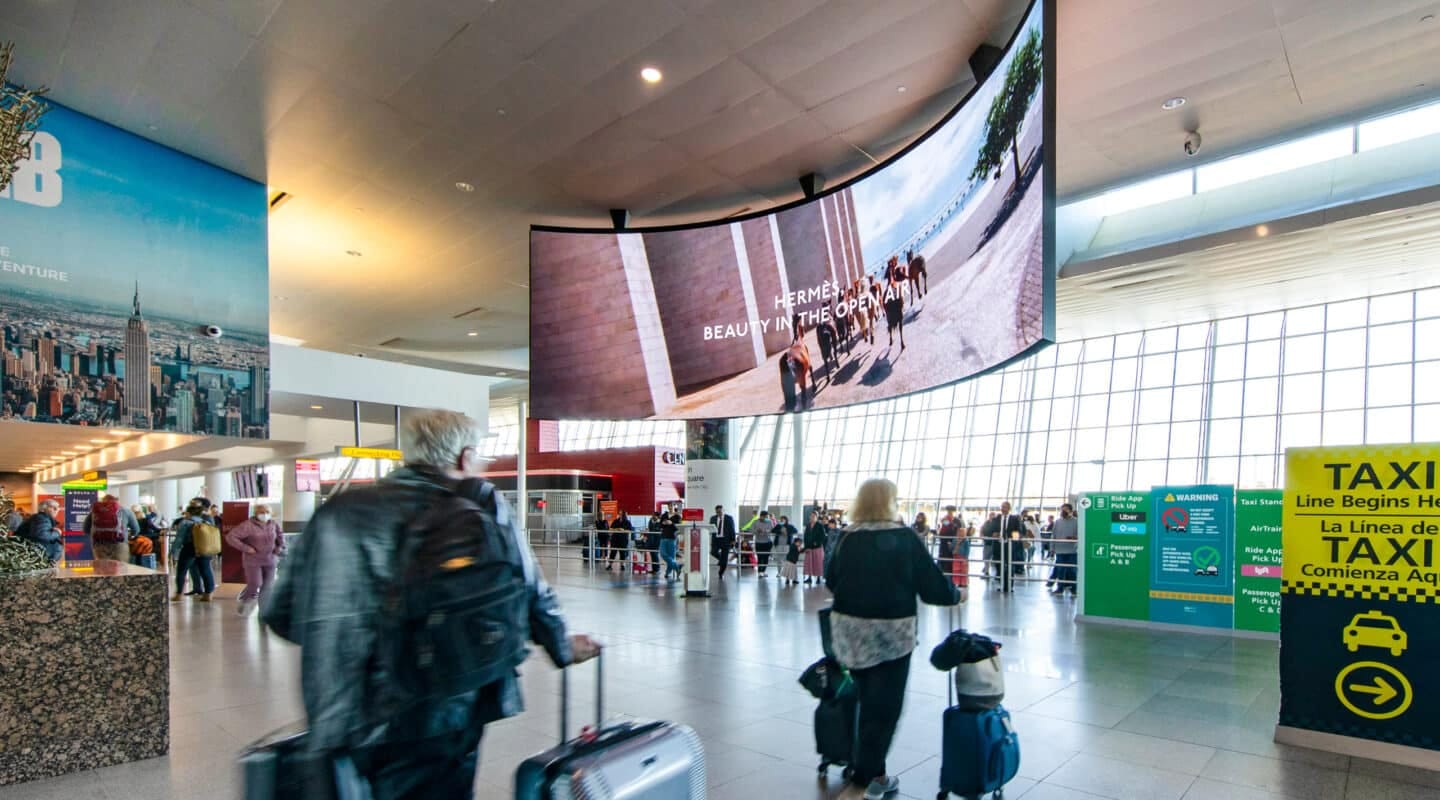
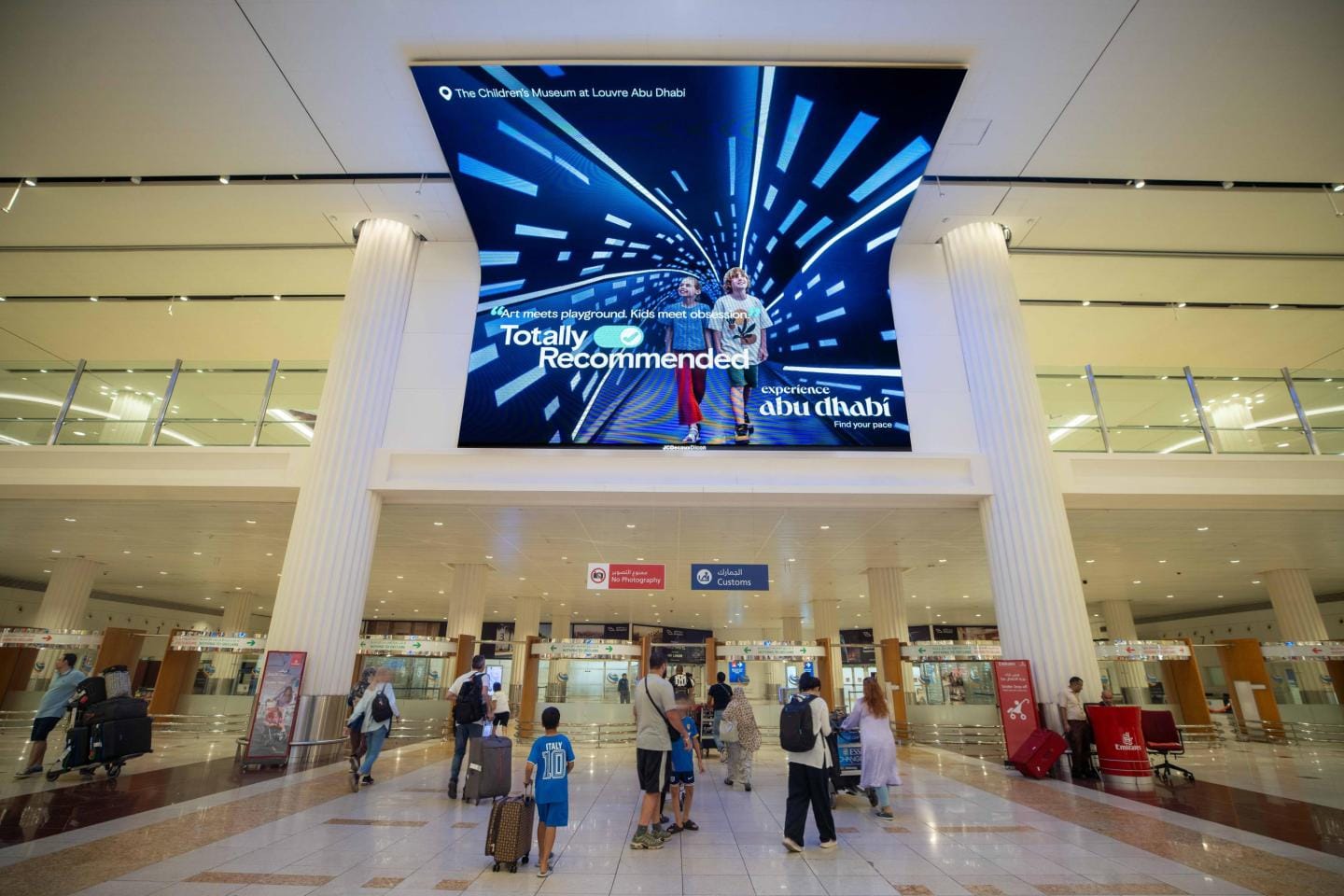
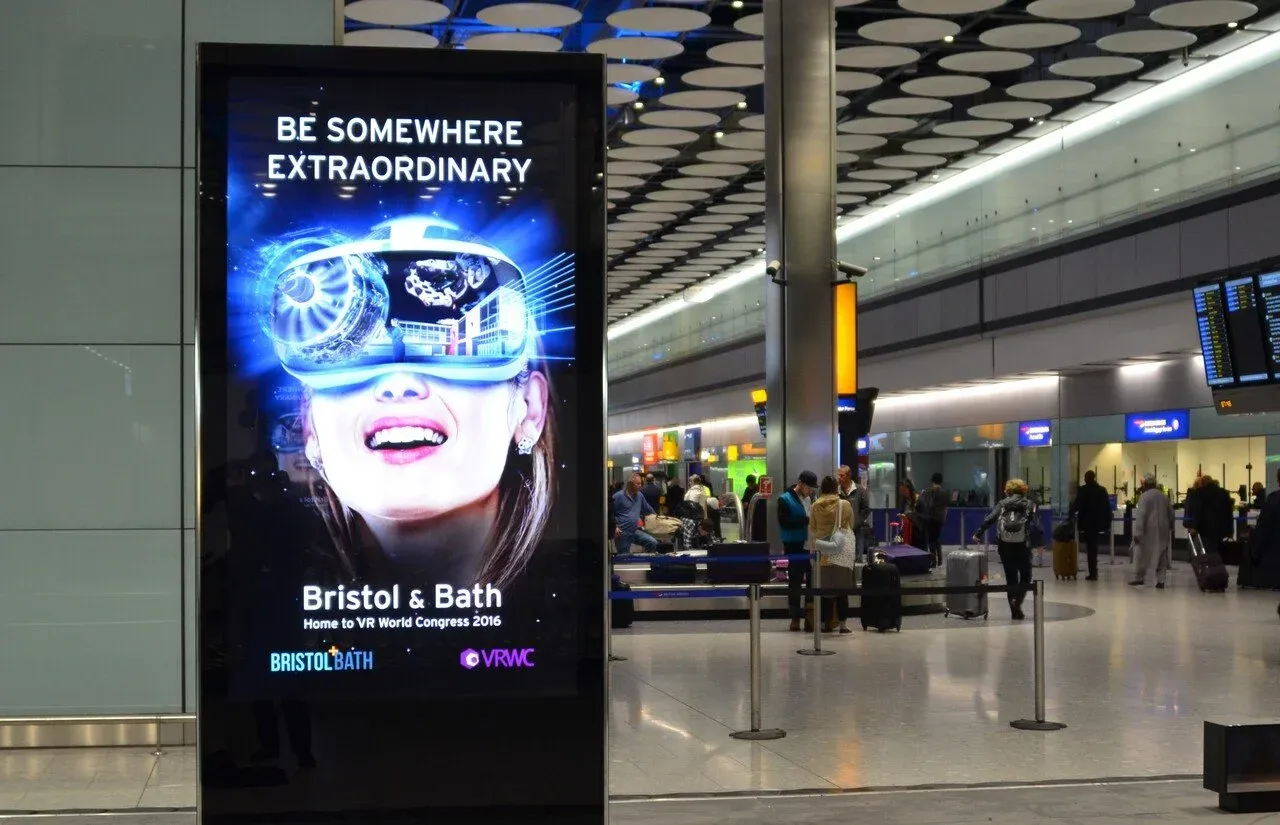
- SPU's 2019-expanded single terminal provides a well-circulated commercial environment with clear advertising placement opportunities at check-in, security, the international departures lounge, and the arrivals hall; the single-terminal layout means any premium placement achieves complete passenger coverage without the audience fragmentation that affects multi-terminal hubs at comparable volume airports
- The strongly seasonal passenger distribution — approximately 70% of annual passengers in June to September — creates a compressed summer advertising environment where any well-placed campaign achieves frequency of impression across a concentrated window of premium leisure audience that cannot be obtained at year-round distributed airports of comparable annual volume
- The Business Lounge's second-floor departures position delivers a premium dwell environment for business class and card-holder passengers; advertising adjacent to and within this environment reaches the airport's highest per-person commercial value segment at the moment of maximum temporal availability and reduced cognitive distraction
- Masscom Global's cross-corridor capability extends SPU campaigns into London Heathrow, London Gatwick, Manchester, Frankfurt, and Amsterdam — the airports that supply the majority of SPU's premium inbound audience — ensuring brand presence throughout the complete journey from departure city to the Adriatic gateway
Strategic Advertising Fit
Best Fit:
- Luxury yacht and sailing charter brands: SPU is the operational entry point for the Mediterranean's most active charter yacht market; every guest beginning a Dalmatian sailing circuit transits this airport, and the ACI Marina's proximity to the terminal creates the highest-intent captive audience for premium yacht charter advertising available at any airport in the Eastern Adriatic
- Premium Croatian wine and Dalmatian gastronomy: The airport is surrounded by some of Croatia's most celebrated wine regions — Plavac Mali, Pošip, Dingač — and the departing tourist completing a Croatian island circuit has invariably encountered and fallen in love with Dalmatian cuisine and wine; the post-trip purchasing intent for premium Croatian wine brands is at its annual maximum at SPU's departure environment
- International luxury real estate — Dalmatian coast, Mediterranean comparables: The British, German, and Scandinavian audience at SPU contains Europe's most active buyer pool for Croatian coastal property; developers on the Dalmatian coast and in comparable Mediterranean markets intercept this audience in a state of maximum destination alignment
- Premium outdoor, sailing, and water sports equipment: Every tourist at SPU has just engaged in, or is about to engage in, the Adriatic's full spectrum of outdoor water activities; premium sailing gear, diving equipment, outdoor apparel, and water sports brands find a maximally receptive captive audience at this airport
- Premium automotive: The German, British, and Scandinavian leisure travellers who make up SPU's core audience are the primary European buyers of premium automotive brands; Dalmatian coast lifestyle aspirations correlate strongly with premium car purchasing intent
- Premium wellness and spa brands: The Croatian wellness tourism market — anchored by natural mineral spa experiences and the growing Dalmatian wellness hotel sector — draws a premium wellness-conscious audience whose brand engagement in natural skincare, wellness, and health product categories is above European average
- International elite education and universities: Croatian professional families and the Golden Visa-influenced international property buyers arriving at SPU represent a combined education advertising audience for premium UK, Austrian, and German universities and schools
Brand Alignment at a Glance:
| Category | Fit |
|---|---|
| Luxury yacht and sailing charter | Exceptional |
| Premium Croatian wine and gastronomy | Exceptional |
| International luxury real estate | Exceptional |
| Premium outdoor and sailing equipment | Exceptional |
| Premium automotive | Strong |
| Premium wellness and spa | Strong |
| International luxury hospitality | Strong |
| Mass-market budget categories | Poor fit |
Who Should Not Advertise Here:
- Mass-market budget travel and value retail: While SPU handles volume leisure travellers on value carriers during peak season, the airport's entire destination context — Croatia's UNESCO Dalmatian heritage, Hvar's premium island positioning, the luxury charter yacht circuit — is structurally aspirational; value-positioning messaging generates contextual incongruence and is commercially ineffective against an audience whose destination choice communicates premium aspiration
- Categories with no connection to sea, coast, heritage, or Mediterranean lifestyle: SPU's entire commercial character is defined by its destination — the Adriatic, the islands, the ancient heritage, the sailing circuit; brands whose identity has no relationship to any dimension of coastal Mediterranean life will find the airport's contextual frame an unreliable advertising environment
Event and Seasonality Analysis
| Indicator | Rating |
|---|---|
| Event Strength | Medium-High |
| Seasonality Strength | High |
| Traffic Pattern | Highly Seasonal (Summer Peak) with rapidly growing shoulder |
Strategic Implication:
SPU's advertising calendar is dominated by the summer peak window, but its commercial value is increasingly distributed across the growing shoulder months of May, June, September, and October. Advertisers should weight campaign budgets heavily toward the July-August ultra-peak while deploying shoulder-season activations for the premium cultural tourism, wine tourism, and independent Adriatic traveller audience that specifically chooses these less crowded months. The Ultra Europe and Hideout festival windows in July create specific brand activation opportunities for premium lifestyle, music, and experiential categories within the broader summer peak. Masscom Global structures SPU campaigns around the full May-October extended season, coordinating timing with the UK and German feeder airport campaigns that deliver the airport's most commercially valuable nationality audiences consistently across the summer arc.

Poor Placement and Delays Affect Airport Campaigns
We help you move faster, access better inventory, and get it right now.
Talk to an ExpertFinal Strategic Verdict
Split Airport is the commercial nexus of Croatia's most aspirational tourism product — the Dalmatian coast sailing circuit, the UNESCO heritage corridor, and the island premium leisure market anchored by Hvar, the Mediterranean's most talked-about jet-set destination. With 3.6 million passengers in 2024, 3.9 million in 2025, and the first direct transatlantic New York service announced for 2026 — the most significant single route addition in SPU's six-decade history — this airport is in structural acceleration toward a premium volume and route network that will, within three to five years, fundamentally reposition it in the European Adriatic aviation hierarchy. The premium audience it currently serves — British couples sailing the islands, German families returning to their Makarska Riviera rental for the fifth consecutive summer, Scandinavian adventurers discovering Vis's unspoiled coastline for the first time — already represents some of the highest per-trip spending of any comparable Mediterranean seasonal airport. For brands in yacht charter, Croatian wine and gastronomy, premium outdoor equipment, coastal real estate, and premium Adriatic lifestyle, SPU delivers the most concentrated and contextually aligned audience available at any Eastern Adriatic gateway. Masscom Global provides the cross-corridor strategy, inventory access, and creative intelligence to position brands at this extraordinary confluence of maritime heritage, premium European leisure, and the structural aviation growth that will define the Dalmatian coast's next decade. The Adriatic circuit starts here — and so does your campaign.
About Masscom Global
Masscom Global is a premium international airport advertising and media buying agency operating across 140 countries. With deep expertise in airport OOH, premium publications, and high-net-worth audience targeting, Masscom helps brands reach the world's most valuable travellers at the moments that matter most. For advertising packages, media rates, and campaign planning at Split Airport and airports across the globe, contact Masscom Global today.
Frequently Asked Questions
How much does airport advertising cost at Split Airport? Advertising costs at SPU vary by format, placement zone, campaign duration, and seasonal demand. The July and August ultra-peak window commands premium rates reflecting the airport's highest passenger concentration and the premium leisure audience's maximum spend commitment. The May-June and September-October shoulder windows deliver growing premium audiences at rates that reflect lower competitive pressure but improving audience quality — often the best value window for premium brands targeting the independent and culturally motivated Adriatic traveller. The 2019 terminal expansion has introduced new premium placement formats across the expanded departures zone and arrivals hall. Contact Masscom Global for current inventory availability and cross-corridor campaign structures linking SPU to UK, German, and Dutch feeder airports.
Who are the passengers at Split Airport? SPU's 3.6 million annual passengers are overwhelmingly international premium leisure travellers whose destination choice is the Dalmatian coast's UNESCO heritage cities, the Adriatic yacht circuit, Hvar's luxury island ecosystem, and the premium wine and gastronomy culture of Central Dalmatia. British nationals are the dominant inbound nationality, served by the most extensive multi-airport UK network of any Eastern Adriatic airport north of Dubrovnik. German and Austrian tourists are the second largest group. Scandinavian visitors — Norwegian, Swedish, and Danish — form the third significant segment. The US market is growing rapidly, enabled by increasing indirect connections and the announced United Airlines New York direct service from 2026. Domestic Croatian travel via Croatia Airlines adds a year-round professional and diaspora return audience.
Is Split Airport good for luxury brand advertising? Yes — SPU is one of the strongest contextually aligned luxury brand environments in the Eastern Adriatic for the specific categories that match its destination. Luxury yacht charter brands, premium Croatian wine, Dalmatian artisan food, and premium outdoor and sailing equipment brands find a captive, pre-motivated, high-spending audience at SPU that is virtually unavailable at comparable volume at any alternative Eastern Adriatic gateway airport. The destination's inherent premium filter — the Dalmatian coast is not cheap, and Hvar is explicitly aspirational — means the audience has already demonstrated a quality-over-price purchasing decision that receptivity to premium brand messaging confirms.
What is the best airport in Croatia to reach HNWI audiences? For premium sailing and island leisure audiences specifically, SPU is unmatched in Croatia — it is the gateway to the yacht charter circuit and the primary entry point for Hvar, Croatia's most HNWI-oriented island destination. Zagreb handles a larger business travel and year-round audience with stronger domestic professional coverage. Dubrovnik serves the more intensely premium UNESCO city audience at lower volume. For brands requiring the widest coverage of Croatian premium leisure audiences with the highest total yacht and sailing relevance, SPU is the single best Croatian airport choice. Masscom Global can structure pan-Croatian campaigns combining SPU with Zagreb and Dubrovnik for full national premium market coverage.
What is the best time to advertise at Split Airport? July and August deliver the highest absolute passenger volumes, with peak weekends exceeding 50,000 daily passengers; this window is essential for all premium leisure, Croatian wine, sailing charter, and Adriatic lifestyle categories. June and September deliver growing premium shoulder audiences of independently minded and above-average-spending travellers — ideal for premium wine, cultural heritage, and artisan gastronomy brands. The Ultra Europe festival window in late July creates a specific lifestyle and music brand activation opportunity within the summer peak. May advertising intercepts the first wave of sailing-motivated and cultural tourism visitors at a time when competition for their attention is lower. Feeder airport campaigns in the UK and Germany should begin from April to intercept the Croatia-planning audience in advance of their summer booking decisions.
Can international real estate developers advertise at Split Airport? Yes — and the audience alignment is commercially strong in both directions. SPU's outbound British, German, and Scandinavian audience contains Europe's most active buyer pool for Croatian coastal property, with the Dalmatian coast's relative value compared to Italian, French, and Greek comparables creating active purchase intent among repeat visitors who have fallen in love with the destination. For developers with inventory in comparable Mediterranean coastal markets — Italy's Puglia, Greek islands, Portugal's Algarve — the SPU audience's demonstrated Adriatic coastal lifestyle commitment makes them viable cross-market targets. Masscom Global can structure cross-corridor campaigns that reach the same buyer profiles at their UK and German home airports, multiplying brand exposure across the full planning and travel journey.
Which brands should not advertise at Split Airport? Budget travel operators, mass-market retail brands with no Mediterranean lifestyle alignment, and price-comparison platforms are misaligned with SPU's audience context. The airport's entire commercial character derives from a destination that is explicitly aspirational — Croatia's premium coastal heritage, the luxury yacht circuit, Hvar's status as the Adriatic's jet-set destination — and value-positioning messaging creates contextual incongruence rather than relevance. Categories requiring mass-volume consumer reach should direct investment toward higher-volume year-round airports.
How does Masscom Global help brands advertise at Split Airport? Masscom Global provides end-to-end campaign capability at SPU — from audience intelligence and peak-season placement strategy to inventory access, creative context advice, and cross-corridor coordination at the UK, German, Dutch, and Scandinavian feeder airports that supply SPU's most commercially valuable inbound audiences. Our team structures campaigns around the extended May-to-October premium season, with summer ultra-peak investment for maximum volume reach and shoulder-season activations for the premium independent traveller audience. For brands in yacht charter, Dalmatian wine, Mediterranean real estate, and premium outdoor lifestyle, we design creative approaches that connect genuinely with the Adriatic values both Croatian residents and international premium tourists have demonstrated they are willing to travel for