

Airport at a Glance
| Field | Detail |
|---|---|
| Airport | Istanbul Sabiha Gökçen International Airport |
| IATA Code | SAW |
| Country | Türkiye |
| City | Istanbul (Asian/Anatolian Side — Pendik District) |
| Annual Passengers | 41,484,000 (2024) — +13% on 2023; 48.4 million in 2025 (+17% YoY) |
| Primary Audience | Domestic Turkish middle and professional class, Middle Eastern and Gulf leisure and business travellers, European price-conscious leisure tourists, Turkish diaspora returnees, Anatolian business professionals |
| Peak Advertising Season | June to September (summer); December to January (New Year); year-round domestic baseline |
| Audience Tier | Tier 1 |
| Best Fit Categories | Turkish citizenship by investment and real estate, FMCG and mass premium consumer brands, financial services and digital banking, telecommunications, premium automotive, Gulf and Arab travel brands, international education, fashion and lifestyle |
Istanbul Sabiha Gökçen is in the middle of one of the most sustained commercial expansions of any airport in Europe. From 41.4 million passengers in 2024 to 48.4 million in 2025 — a 17% year-on-year surge — SAW is not a recovering airport or a post-pandemic rebound story. It is a structurally growing hub whose second runway, completed in late 2023, added wide-body aircraft capacity that immediately translated into accelerating international route expansion. In just eleven months of 2025, it surpassed 2024's full-year record. Its night curfew was lifted in October 2025, extending its operational capacity further. The airport's own official catchment encompasses 23 million people within a two-hour drive — a population base larger than many European nations — anchored on Istanbul's Anatolian side, which is home to the city's most industrially productive, demographically youngest, and fastest-urbanising districts.
Named after Sabiha Gökçen — Atatürk's adopted daughter and the world's first female fighter pilot — SAW is the hub of Pegasus Airlines and AJet, the two carriers that dominate Turkey's domestic low-cost market and connect Istanbul's Asian side to 141 international destinations across 51 countries. For advertisers, this airport is not positioned at the ultra-luxury end of the European airport spectrum. It is positioned at something equally commercially powerful: the intersection of the Turkish middle and professional class, the Gulf and Arab premium leisure traveller, and the diaspora remittance economy — three of the most commercially active audience pools in the Eastern Mediterranean and Middle Eastern markets combined.
Advertising Value Snapshot
- Passenger scale: 41,484,000 in 2024 (+13% YoY); 48.4 million in 2025 (+17% YoY); the fastest-growing airport in the 40 million-plus passenger category in Europe; 19.5 million domestic and 21.97 million international passengers in 2024; daily record of 77,652 passengers (29 December 2024); 242,345 flights in 2024
- Traveller type: Domestic Turkish middle and professional class; Middle Eastern and Gulf leisure and family visitors; European value-leisure tourists; Turkish diaspora returnees from Germany, UK, Netherlands, and France; Anatolian business professionals; Central Asian and North African transit passengers
- Airport classification: Tier 1 — Europe's 9th busiest airport by passenger volume (2024), fastest-growing major European hub, and the primary aviation gateway for Istanbul's Asian side and its 23-million-person catchment
- Commercial positioning: The high-volume, high-growth gateway of the city that Euromonitor named the world's most visited by international travellers in 2023 — connecting Pegasus and AJet's combined domestic and international network to the largest Turkish urban catchment outside the European side
- Wealth corridor signal: SAW connects Türkiye's domestic middle class to 80 domestic destinations, links the Turkish diaspora in Western Europe to their families via affordable return routes, and serves as the preferred entry point for Gulf, Arab, and Central Asian visitors whose access to Istanbul's Asian side is structurally more convenient than the European-side IST
- Advertising opportunity: Masscom Global provides full access to SAW's rapidly expanding advertising environment, including the new Terminal 1 renovation adding 5.5 million passengers of annual capacity, and the feeder airport corridors in Dubai, Riyadh, Amsterdam, London Stansted, and Frankfurt that supply the airport's most commercially valuable inbound segments
Airport Advertising is Complex to Get Right
We help you execute faster, with proven results and local insight most planners lack starting now.
Talk to an ExpertCatchment Area and Economic Drivers
Top 10 Cities within 150 km — Marketer Intelligence
- Kadıköy (Istanbul Asian Side): Istanbul's most culturally vibrant Asian district — known as the Manhattan of Istanbul's Anatolian side — home to a dense professional, creative, and young HNWI residential population; Kadıköy property prices increased 17–25% in 2024, reflecting the district's rapid commercial elevation; its residents are SAW's most commercially sophisticated domestic departure audience, with high brand awareness and above-average digital and lifestyle spending
- Pendik (Istanbul — SAW's host district): The municipality directly surrounding SAW, home to rapidly appreciating coastal real estate developments, major logistics and industrial employers, and the Marmaray connection to the Istanbul city centre; Pendik property values increased over 20% in 2024 as proximity to the airport and improving public transport infrastructure elevated its investment profile among both domestic and foreign buyers
- Ataşehir (Istanbul Asian Side): Istanbul's emerging financial district on the Asian side, home to the Istanbul Financial Centre (IFC) — the Turkish Central Bank, major banking regulators, and private bank headquarters — generating a dense professional financial services audience with above-average income and international travel frequency; the IFC's Anatolian positioning makes SAW the natural departure airport for all its resident professional community
- Üsküdar (Istanbul Asian Side): One of Istanbul's oldest and most historically significant Asian districts, home to upper-middle-class residential communities, premium healthcare facilities, and a professionally engaged workforce with strong engagement in premium consumer, financial, and technology categories
- Gebze (Kocaeli Province): Turkey's most important industrial corridor outside of Istanbul, home to the Gebze Organized Industrial Zone — one of the largest in Europe — and the Turkish headquarters of dozens of international manufacturers including Ford, Arçelik, Vestel, and Henkel; generates a dense professional industrial audience with extensive European and international business travel demand routed through SAW
- Kocaeli (Izmit): A major industrial and port city 70 kilometres east of SAW, home to Ford Otosan, TÜPRAŞ, and a significant petrochemical and automotive cluster; its professional workforce represents one of SAW's most important B2B departure communities for European and international business travel, with high demand for premium business class products and financial services
- Bursa: Turkey's fourth-largest city and its automotive and textile manufacturing capital, home to TOFAŞ (Fiat-Renault joint venture) and one of the world's largest silk and textile markets; Bursa's industrial and commercial professionals represent a major secondary catchment for SAW using the ferry connection from Yalova to Kartal, creating a specific premium business travel audience for automotive, industrial, and financial service categories
- Sakarya (Adapazarı): A mid-sized industrial city known for automotive and steel manufacturing — including Toyota's Turkish plant — that generates a skilled manufacturing professional audience with regular European and Asian business travel via SAW
- Yalova: A coastal spa and thermal spring destination 45 minutes by ferry from Kartal-Pendik, known as one of Atatürk's favourite retreats; generates a premium leisure and wellness tourism audience on day trips from Istanbul and a growing real estate investment community attracted by its affordable coastal property and fast ferry access to SAW's catchment
- Düzce and Bolu (Northwest Anatolia): Industrial and logistics-oriented cities approximately 120–140 kilometres east of SAW, whose professional business travel community uses SAW as their primary international gateway; relevant for B2B categories targeting Turkey's growing mid-Anatolian industrial base
NRI and Diaspora Intelligence:
Türkiye's diaspora community in Western Europe — estimated at over 5 million people across Germany, the Netherlands, France, the UK, and Austria — represents one of SAW's most commercially significant inbound audience segments. German-Turkish community members alone number over 3 million, and SAW's Pegasus and AJet routes to Frankfurt, Berlin, Munich, Düsseldorf, Amsterdam, Rotterdam (one of SAW's fastest-growing routes at +122% in 2024), and London Stansted serve as the primary diaspora return corridors. These passengers carry remittance flows, gifting budgets, and emotional reunion spending that makes them a premium audience for financial transfer services, premium consumer goods, and electronics in the departures zone. The Arab and Gulf diaspora — particularly Saudi, Emirati, Egyptian, and Kuwaiti visitors arriving for Istanbul's retail, healthcare, and cultural tourism draw — represents the highest per-trip spending international nationality group at SAW, consistently bringing above-average spending in luxury goods, real estate, and premium hospitality categories.
Economic Importance:
SAW's catchment economy is anchored by the Anatolian side's industrial and commercial powerhouse. The Marmara region — encompassing Istanbul's Asian districts and Kocaeli province — accounts for the highest concentration of manufacturing GDP outside Istanbul's European core. The Ataşehir Financial Centre, home to the IFC, has positioned the Asian side as Türkiye's emerging financial regulatory capital. Combined with Gebze's industrial zone hosting some of Türkiye's largest multinationals, the SAW catchment generates the highest-density intersection of manufacturing, financial services, and digital economy workers of any Turkish airport outside the European side of Istanbul. These sectors produce the business professional and aspirational consumer audiences that are the primary commercial targets for premium B2B and consumer advertisers at SAW.
Business and Industrial Ecosystem
- Automotive and manufacturing industry: Ford Otosan in Kocaeli (Turkey's largest vehicle exporter), TOFAŞ-Fiat in Bursa, Toyota in Sakarya, and Arçelik's global operations in Gebze collectively generate one of Europe's largest single-catchment automotive and manufacturing professional business travel communities at SAW; their procurement, engineering, and management professionals travel extensively to European and Asian markets
- Financial services and the Istanbul Finance Centre: The IFC on Istanbul's Asian side — hosting the Turkish Central Bank, banking regulatory bodies, and major private bank headquarters — creates a premium financial professional audience at SAW whose travel patterns to London, Frankfurt, Dubai, and New York produce the highest per-trip business class spending of any SAW sub-segment
- Technology and digital economy: Turkey's Anatolian tech ecosystem, including Arçelik's global R&D operations, technology parks at Kocaeli, and a growing digital services sector in Kadıköy, generates a young professional technology audience with high mobile usage, strong brand awareness, and above-average international conference travel frequency
- Retail and logistics: The Marmara region houses Turkey's largest logistics capacity — 11.3 million square metres of logistics real estate — and Istanbul's 136 shopping centres with 5.3 million square metres of retail GLA generate a commercial management and retail professional audience that uses SAW extensively for European buying and supplier visits
Passenger Intent — Business Segment:
Business travellers at SAW are primarily professional and managerial employees from Türkiye's Anatolian industrial corridor and financial sector. They travel to Frankfurt, London, Amsterdam, and Dubai for manufacturing trade fairs, financial conferences, technology summits, and supplier negotiations. Their spending profile — while generally below the Istanbul IST business class tier — is structurally growing as the Anatolian side's economy upgrades from manufacturing to financial and knowledge services. For B2B advertisers in automotive, financial technology, industrial services, and premium business travel products, SAW's business audience represents Türkiye's most productive non-European-side professional community.
Strategic Insight:
The business audience at SAW is the commercial ambassador of Türkiye's Anatolian economic transformation story. These are not Istanbul's Bosphorus-view finance executives — they are the professional architects of Türkiye's industrial export machine, its financial regulatory evolution, and its tech sector ambitions. For brands selling products that facilitate economic productivity — digital platforms, financial services, industrial technology, business travel management — SAW's business audience is an underutilised and rapidly growing media opportunity in Turkish aviation.
Tourism and Premium Travel Drivers
- Istanbul's Asian cultural districts — Kadıköy, Üsküdar, and Moda: The Anatolian side of Istanbul offers a markedly different travel experience from the European tourist circuit; Kadıköy's street food markets, Moda's coastal promenade, and Üsküdar's historic mosques attract a culturally engaged premium tourist who specifically prefers authentic Istanbul over the Old Town tourist circuit; arrivals at SAW for these districts represent a sophisticated, independently minded premium traveller with strong food, design, and lifestyle brand engagement
- Princes' Islands (Adalar): A car-free archipelago in the Sea of Marmara, accessible by ferry from Pendik in 40 minutes, home to some of Istanbul's most expensive summer residences and one of the most serene day-trip experiences available from any major European city; the Princes' Islands audience at SAW includes Istanbul's wealthiest domestic leisure community and international visitors who have specifically sought the city's best-kept Bosphorus secret
- Bursa and Green Bursa tourism: Bursa's Ottoman heritage — the first capital of the Ottoman Empire, home to the Covered Bazaar, Bursa's famous İskender kebab, and thermal spa resorts — combined with the accessible Uludağ ski resort (winter) generates a premium domestic and Arab leisure tourism circuit; Gulf visitors who arrive at SAW for shopping and cultural tourism in Bursa and Istanbul represent a high-spending specialised audience for Turkish retail and hospitality brands
- Istanbul as a global gastronomy and luxury shopping destination: Istanbul attracted over 17 million tourists in 2024, ranking among the world's most visited cities; the Gulf, Arab, and Caucasian audiences who arrive via SAW specifically for premium retail on İstiklal Avenue, Bağdat Caddesi, and the Grand Bazaar, combined with Istanbul's extraordinary restaurant scene, create a discretionary spending-oriented arrival audience with above-average purchasing intent across fashion, luxury goods, and gastronomy categories
Passenger Intent — Tourism Segment:
The tourist arriving at SAW is most commonly one of three profiles: a European value-leisure traveller arriving for Istanbul's extraordinary culture and gastronomy at more accessible price points than Western European cities; a Gulf or Arab visitor arriving for premium shopping, medical tourism, real estate viewing, or cultural experience; or a Turkish diaspora returnee arriving for family reunion and to reconnect with home. All three profiles carry meaningful discretionary spending intent, with the Gulf visitor profile representing the highest per-stay expenditure. The departing Turkish traveller at SAW is typically a domestic middle-class consumer bound for a Mediterranean resort, a European city break, or a diaspora family visit — carrying a budget that has grown significantly with Turkey's urbanisation and rising middle-class consumption.
Travel Patterns and Seasonality
Peak seasons:
- June to September (Summer Peak): SAW's dominant volume window, driven by Turkish domestic summer holiday travel to Antalya, Bodrum, Izmir, and coastal resorts; simultaneously the peak inbound period for European value-leisure tourists and Gulf Arab visitors who arrive during Istanbul's cooler months for cultural and shopping tourism; the combination creates SAW's highest monthly passenger volumes, with August consistently exceeding 5 million passengers in peak years
- December and January (New Year and Winter Peak): A significant secondary peak driven by New Year tourism — Istanbul draws international visitors specifically for its spectacular New Year atmosphere — and the winter holiday travel period for the Turkish domestic market; the daily record of 77,652 passengers was set on 29 December 2024, confirming the New Year window as SAW's single highest-demand day
- Year-round domestic baseline: Unlike purely seasonal leisure airports, SAW's 19.5 million domestic passengers distribute across the full year, providing a consistent professional and middle-class Turkish audience for advertisers who need reach beyond the summer peak; January through May see above-average business travel frequency as industrial procurement and financial calendar events drive Anatolian professional travel
- Ramadan and Eid windows: Both Eid Al-Fitr and Eid Al-Adha generate the largest event-driven passenger spikes in SAW's Muslim-majority domestic calendar; the days preceding and following each Eid produce concentrated diaspora return, family reunion, and consumer gifting spending that is the single most commercially significant event window for FMCG, financial services, and fashion advertisers targeting the Turkish and Arab market
Event-Driven Movement:
- Eid Al-Fitr (date varies — March/April): The most concentrated single travel spike in SAW's annual calendar; Gulf, Arab, and diaspora communities returning to or from Istanbul for Eid celebration generate peak daily passenger counts and the highest in-airport spending activity of any window; brands in financial transfer, premium FMCG, and lifestyle categories achieve their annual peak conversion rates at SAW in this window
- Eid Al-Adha (date varies — June/July): SAW's second Eid window, overlapping with the summer leisure peak, creating a combined holiday season and religious celebration travel surge that amplifies both the diaspora and leisure segments simultaneously
- New Year (December 31 to January 1): Istanbul's iconic New Year celebration draws international visitors who arrive at SAW for the city's festive atmosphere; the daily passenger record set on 29 December 2024 confirms this as the single busiest day in the airport's history and a peak advertising window for premium hospitality, fashion, and experiential brands
- Istanbul Shopping Festival and major retail events (July to August): Istanbul's retail calendar aligns with the summer Gulf visitor peak, when Arab tourists arrive specifically for the combination of summer weather, premium shopping, and cultural experiences; SAW arrivals during this period carry the highest per-stay retail spending of any international nationality group
- Turkish national holidays — Republic Day (29 October) and National Sovereignty Day (23 April): Major domestic travel spikes that compress significant leisure and family travel into short windows, creating concentrated advertising opportunities for consumer brands targeting the domestic Turkish middle class
It’s Not Just Where You Advertise - It’s How Fast You Execute
We combine local insight with fast rollout to deliver results for you, now.
Talk to an ExpertAudience and Cultural Intelligence
Top 2 Languages:
- Turkish: The primary language of the vast majority of SAW's passenger base — domestic travellers, diaspora returnees, and the professional Anatolian business community; Turkish-language campaign creative at SAW achieves total domestic audience penetration and signals cultural authenticity to the most brand-loyal segment of the airport's commercial base; brands that communicate in Turkish rather than defaulting to English are consistently better-received by the domestic and diaspora audience
- Arabic: The primary language of SAW's highest per-trip spending international audience — Gulf, Saudi, Emirati, Qatari, Egyptian, and Jordanian visitors for whom Istanbul has become the premier regional tourism, shopping, and medical destination; Arabic-language creative at SAW signals direct cultural engagement with the most commercially valuable inbound segment and achieves conversion rates for luxury goods, real estate, and financial services that significantly exceed English-language equivalent campaigns targeting the same audience
Major Traveller Nationalities:
Turkish nationals constitute the overwhelming majority of SAW's total passenger base by volume, reflecting the airport's role as the hub of Turkey's domestic aviation market — the world's second most domestically air-travelled market after the United States on a per-capita basis. Saudi Arabians represent the largest inbound international nationality, followed by Germans (primarily Turkish-German diaspora returnees), Emirati and Qatari visitors, Egyptians (both leisure and business travellers benefiting from Cairo's 100% traffic growth at SAW in 2024), and British nationals (Turkish-British diaspora and leisure travellers). Rotterdam showed 122% traffic growth in 2024 — the fastest-growing route at SAW — reflecting the rapid expansion of the Dutch-Turkish diaspora corridor. Uzbek, Azerbaijani, and other Central Asian national segments are growing consistently, reflecting Türkiye's increasing role as a regional hub for Central Asian business and leisure travel.
Religion — Advertiser Intelligence:
- Islam (approximately 98% — Turkish domestic; majority of international arrivals): SAW is one of the most reliably Muslim-majority airport audiences of any European hub, reflecting both the domestic Turkish passenger base and the Gulf, Arab, and Central Asian international audience that SAW specifically serves; the Ramadan and Eid calendar governs the airport's highest spending commercial windows — pre-Eid gifting, festive FMCG, halal food retail, and family reunion spending create peak advertiser opportunities that are structurally unavailable at comparable non-Muslim-majority European airports; the month of Ramadan itself, far from depressing commercial activity, creates a heightened gifting and occasion-focused consumer mindset in the departures zone that rewards brands with culturally attuned messaging
- Secular Muslim and culturally Muslim (significant domestic sub-segment): Istanbul's Asian side professional community maintains a broadly secular lifestyle within a culturally Muslim identity — a consuming class whose brand preferences mirror European premium market patterns while retaining cultural sensitivity to halal product claims and festival-aligned marketing; this audience represents the primary target for premium consumer brand advertising that needs both cultural fluency and Western-brand aspiration simultaneously
Behavioral Insight:
The SAW traveller — particularly the domestic Turkish middle-class passenger — is one of the most brand-aware and aspirationally motivated consumer audiences in the Eastern Mediterranean. Turkey's urbanisation has produced a professional class that combines strong income growth, high digital adoption, intense social media engagement with international luxury and lifestyle brands, and a well-documented propensity to convert airport dwell into actual purchases. Turkish consumers have among the highest per-visit duty-free spending in Europe relative to average income; the combination of a duty-free environment, a relaxed pre-departure mindset, and the emotional valence of either a holiday or a homecoming produces exceptional conversion rates for brands that communicate with cultural sensitivity and brand quality simultaneously. The Gulf Arab visitor at SAW is in Istanbul specifically to spend — their per-stay retail and hospitality expenditure consistently ranks among the highest of any nationality in Turkish tourism data, and any brand present in the SAW terminal during their transit participates in the highest-spending per-session consumer journey available at this airport.
Outbound Wealth and Investment Intelligence
The outbound passenger at SAW — whether the Turkish professional departing for Frankfurt, the Gulf visitor returning from an Istanbul property viewing, or the diaspora community member completing a family visit — carries commercially significant investment and financial activity that advertisers can directly address. Turkey's citizenship-by-investment programme, offering a Turkish passport to real estate buyers above USD 400,000, has created a structurally active real estate investment market among Gulf and Arab visitors that is directly served by SAW's inbound corridors.
Outbound Real Estate Investment:
Turkish HNWI professionals and upper-middle outbound travellers at SAW are active buyers in European and UAE real estate markets. Germany — the most frequent destination for Turkish diaspora travellers from SAW — hosts significant Turkish-origin property ownership, particularly in Berlin, Frankfurt, and Düsseldorf; Turkish expatriates actively acquiring property in Germany represent a cross-border real estate audience uniquely reachable at SAW's European departure gates. Dubai is the fastest-growing investment destination for Turkish upper-professional buyers seeking zero capital gains tax, strong rental yields, and access to Emirati residency. Conversely, the Arab inbound audience arriving at SAW — particularly Saudi, Emirati, and Qatari buyers — represents the most active foreign purchaser segment in Istanbul's Asian-side real estate market, where Ataşehir IFC developments, Pendik coastal projects, and Kartal urban transformation assets offer compelling entry prices compared to Dubai and Riyadh equivalents.
Outbound Education Investment:
Turkish upper-professional families in SAW's catchment represent one of the most educationally investment-oriented consumer demographics in Europe's eastern flank. German and British universities attract the largest outbound Turkish student flows, followed by US Ivy League and liberal arts institutions for the highest-income Istanbul segment. The diaspora audience returning to Germany via SAW frequently involves families managing children in German educational systems, creating a consistent audience for bilingual, international school, and university advertising. Gulf visitors to Istanbul occasionally send children to Turkish international schools — Istanbul has the largest concentration of international schools in the Eastern Mediterranean — before returning via SAW; international school networks find a bidirectional audience at this airport.
Outbound Wealth Migration and Residency:
Türkiye's own citizenship-by-investment programme — granting Turkish passports to real estate buyers above USD 400,000 — is the most commercially significant residency programme at SAW, as inbound Arab and international buyers arriving to complete qualifying purchases transit the airport as their first Turkish touch point. Outbound Turkish HNWI professionals increasingly explore UAE long-term visa structures, Portuguese non-habitual residency, and various EU residency programmes as Türkiye's capital controls and currency volatility have elevated international financial structuring awareness. Financial advisers, wealth management platforms, and residency consultancy services find a structurally active audience at SAW that is simultaneously exploring inbound Turkish real estate investment (for Arab buyers) and outbound European and UAE diversification (for Turkish HNWIs).
Strategic Implication for Advertisers:
International brands on both sides of SAW's wealth corridors — those seeking to attract Arab and Gulf capital to Turkish real estate and those seeking to serve Turkish professional outbound investment — should treat SAW as the primary single-airport access point to Türkiye's most commercially active cross-border investor community. Masscom Global's cross-corridor strategy at SAW's Dubai, Riyadh, Amsterdam, and Frankfurt feeders enables brands to intercept the airport's most commercially valuable audiences at their origin cities, reinforcing Turkish investment and lifestyle messaging before they even board.
Airport Infrastructure and Premium Indicators
Terminals:
- SAW operates a modern single terminal complex with the recently renovated Terminal 1 — adding 5.5 million passengers of annual handling capacity to support the airport's accelerating growth trajectory; the terminal renovation is designed to match the infrastructure quality of major European hub airports while maintaining SAW's reputation for compact, efficient passenger flow; the addition of self-service kiosks and digital passenger management systems reflects a deliberate commercial environment upgrade aligned with the growing premium international passenger mix
- The second runway, completed in December 2023 and capable of accommodating wide-body aircraft, was the single most consequential infrastructure investment in SAW's history — directly enabling the 13% growth in 2024 and the 17% surge in 2025 by unlocking capacity for long-haul widebody routes that were previously structurally impossible
Premium Indicators:
- The VIP Lounge at SAW — offering open buffet, complimentary refreshments, high-speed WiFi, and a dedicated premium environment — provides a concentrated HNWI business class departure audience for premium financial, automotive, and real estate advertising in a calm, captive setting
- The night curfew removal in October 2025 has extended SAW's operational hours to 24/7, significantly increasing the airport's commercial value for brands targeting late-evening and early-morning flight audiences — including the Arab and Gulf visitor segment whose travel patterns frequently involve night departures
- Qatar Airways' presence at SAW signals the airport's growing premium international carrier mix alongside Pegasus and AJet; flydubai, Air Arabia, and Flynas — the Gulf's most commercially significant value carriers — connect SAW directly to the three largest GCC aviation markets, bringing their premium leisure and business class passengers through SAW's terminal environment
- Istanbul's status as Euromonitor's world's most visited city by international travellers creates a destination halo effect for every brand present at SAW — the airport of a city whose global tourism brand reaches 17 million annual visitors
Forward-Looking Signal:
SAW's trajectory is one of the most compelling in European aviation. Having surpassed 41 million passengers in 2024 and 48 million in 2025, its own projections — supported by the completed second runway, the night curfew removal, and the Terminal 1 expansion — point toward 55 million or more within the medium term. The airport is actively pursuing routes to Tokyo, Riyadh, and additional Asian destinations as priorities, following the pattern of its 2024 new route additions in Egypt, the Netherlands, and Serbia. New routes confirmed for 2026 include Prague (AJet, 4 weekly), with the Sulaymaniyah launch and Luxor-Marsa Alam Egyptian expansions already confirmed for 2025–2026. Masscom Global advises brands targeting the Turkish domestic premium consumer, the Gulf inbound traveller, and the European diaspora to establish SAW advertising presence now — before the inventory compression and premium rate escalation that will follow as the airport's passenger volumes continue accelerating toward 60 million.
Airline and Route Intelligence
Top Airlines:
Pegasus Airlines (dominant hub carrier — largest by frequency), AJet (second Turkish LCC hub carrier), Qatar Airways, Flydubai, Flynas, Air Arabia, Turkish Airlines (limited operations), Air Serbia, LOT Polish Airlines, Vueling, Wizzair, Royal Jordanian, Egyptian Airlines, Corendon, SunExpress
Key International Routes:
- London Stansted (Pegasus — multiple daily; Gatwick adding Pegasus from 2026)
- Frankfurt (Pegasus, AJet — high frequency year-round)
- Amsterdam and Rotterdam (Pegasus — Rotterdam +122% growth in 2024)
- Paris, Berlin, Munich, Düsseldorf, Vienna, Zurich — Pegasus/AJet year-round
- Dubai (Flydubai — year-round)
- Doha (Qatar Airways — year-round)
- Riyadh and Jeddah (Flynas, Flyadeal — seasonal and year-round)
- Cairo (Pegasus, EgyptAir — growing rapidly; +100% in 2024)
- Amman and Beirut (Royal Jordanian, MEA — regional Middle East)
- Belgrade (+72% in 2024), Prague (AJet, 4 weekly from 2026)
- Baku, Almaty, Tashkent — Central Asian corridors
Domestic Connectivity:
Antalya, Ankara, Izmir, Bodrum, Dalaman, Trabzon, Erzurum, Van, Diyarbakır, Gaziantep, and 70+ Turkish domestic destinations via Pegasus and AJet — the most extensive domestic network at any Turkish airport after Istanbul IST
Wealth Corridor Signal:
SAW's route architecture functions simultaneously as the diaspora reunion network of the Turkish-European community, the holiday pipeline of Turkey's domestic middle class, and the inbound leisure corridor of the Gulf's most commercially active consumer base. The Frankfurt-Istanbul and Amsterdam-Istanbul corridors are wealth transfer routes — carrying diaspora remittance in both emotional and financial form. The Dubai and Doha routes bring the Gulf's most prolific per-trip spenders into a destination where they shop, invest in real estate, and seek medical treatment at above-European price points. The rapidly growing routes to Rotterdam, Cairo, and Belgrade confirm SAW's position as a destination hub for a widening circle of emerging market economies whose middle classes are discovering Istanbul as their most accessible gateway to European-quality travel.
Media Environment at the Airport
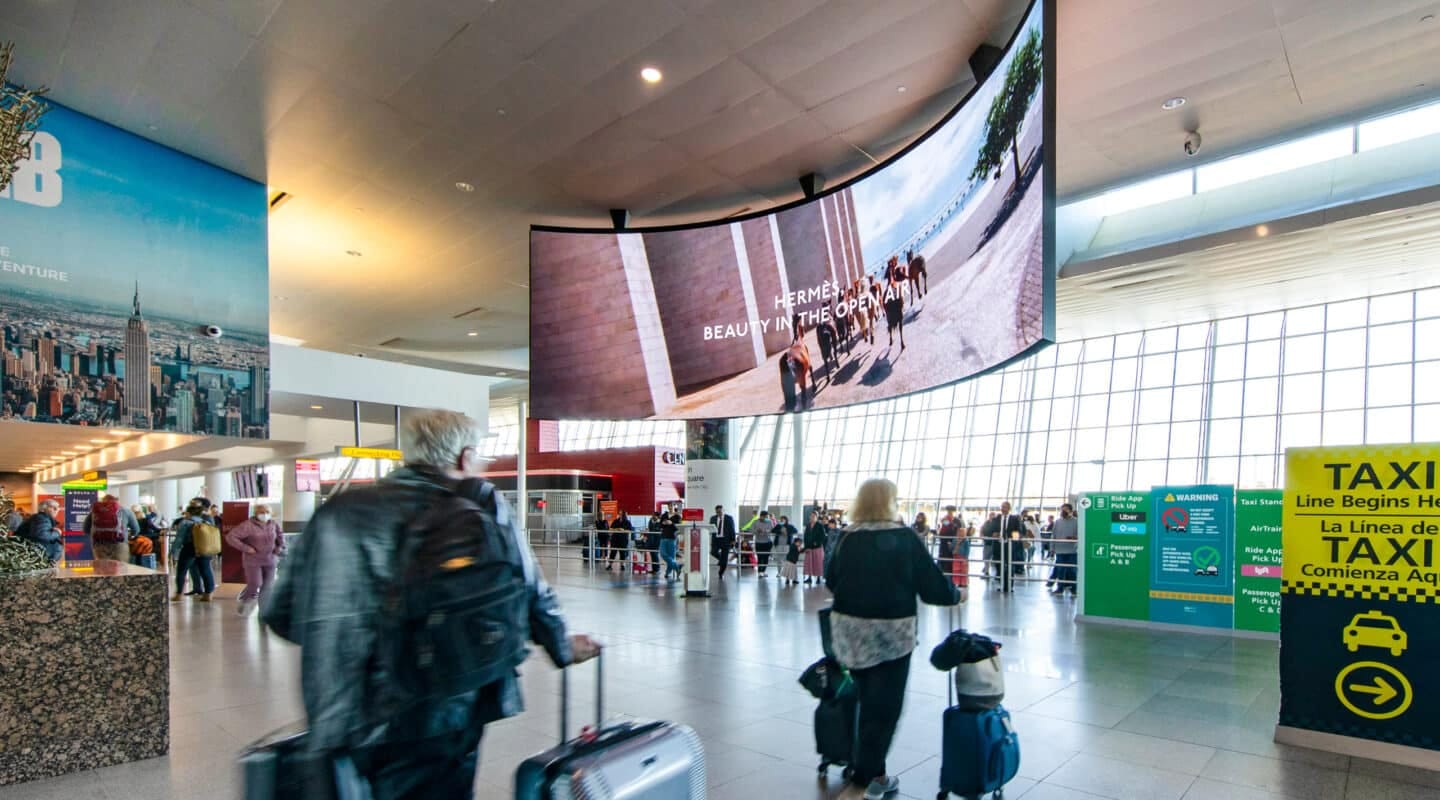
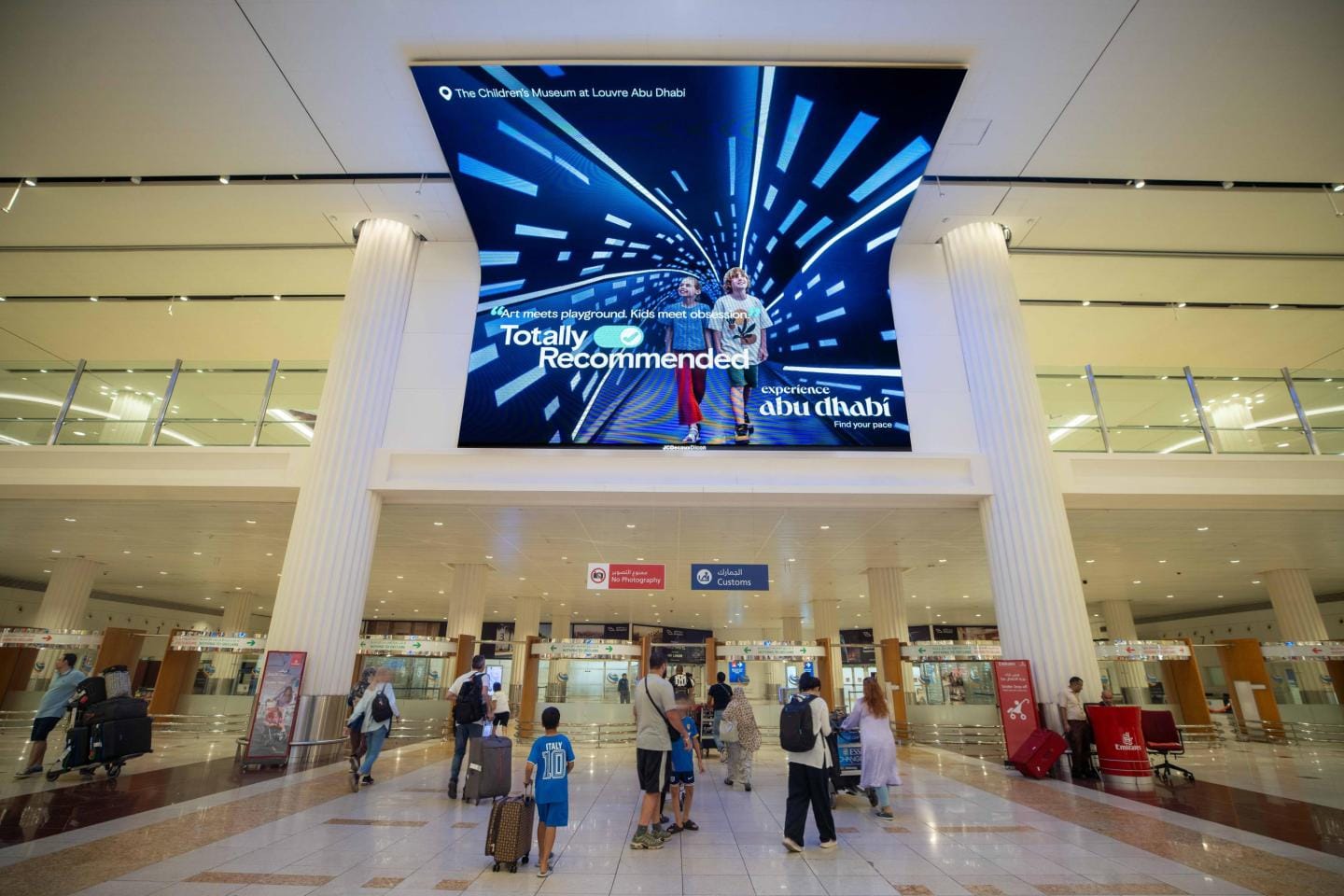
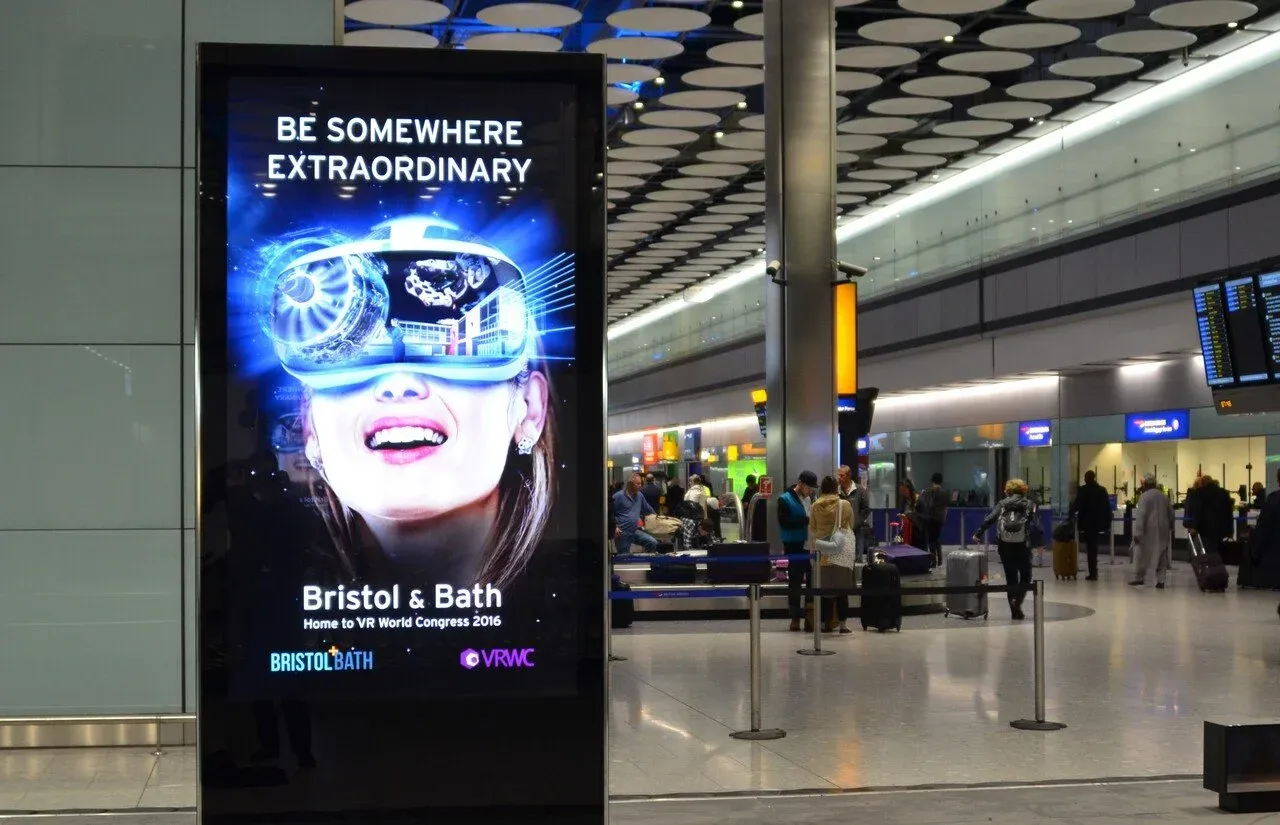
- SAW's single-terminal layout with the newly expanded Terminal 1 creates a comprehensive passenger environment where any premium placement achieves coverage across all 48+ million annual passengers without the audience fragmentation characteristic of multi-terminal airports; the compact and efficient terminal design — frequently praised by passengers for its navigability compared to Istanbul Airport — creates dwell environments with natural visual attention and minimal competing format clutter
- The airport's transformation from primarily domestic to increasingly international — with international passengers now exceeding domestic at 21.97 million vs 19.5 million in 2024 — has elevated the premium purchasing power of the terminal audience significantly; the Gulf, Arab, and Central Asian inbound segments carry per-session retail spending that benchmarks well above the European airport average
- The night curfew removal has created new commercial opportunities in the late-evening and early-morning passenger windows, including the Arab and Gulf late-night departure audience whose purchasing behaviour peaks in the airport retail environment before long-haul returns
- Masscom Global's access to SAW's advertising environment across the terminal and the key feeder airport corridors — Dubai, Frankfurt, Amsterdam, and London Stansted — enables brands to build consistent messaging exposure from origin city through arrival in one of the world's most commercially dynamic urban environments
Strategic Advertising Fit
Best Fit:
- Turkish real estate and citizenship-by-investment programmes: SAW is the entry point for the Arab and Gulf buyers who constitute Turkey's largest foreign real estate purchaser community; the USD 400,000 citizenship threshold and the active IFC and Pendik coastal development market create a buyer audience at SAW's arrival hall that no other Turkish airport serves with comparable Gulf-origin volume
- Financial services, digital banking, and remittance platforms: SAW's Turkish diaspora corridors to Germany, the Netherlands, and the UK carry Türkiye's most active remittance community; digital banking brands, international money transfer platforms, and financial advisory services find a structurally pre-qualified audience at SAW's European departure and arrival gates
- FMCG and mass premium consumer brands: At 48 million annual passengers and a domestic-dominant passenger composition, SAW offers one of the highest single-site consumer audience volumes in the Middle Eastern and Eastern European advertising market; FMCG brands with Turkey as a priority market find an unmatched reach and frequency opportunity
- Telecommunications and digital platforms: Turkey's tech-forward consumer base — with one of the world's highest smartphone penetration and social media engagement rates — is concentrated at SAW; telecommunications brands launching products or services in the Turkish market find the airport's professional and young consumer audience at peak receptivity
- Premium automotive — particularly Turkish-market relevance: Ford, Fiat, Toyota, and Renault's Turkish manufacturing partnerships have created a professional car-buyer audience among the Anatolian industrial workforce that uses SAW; premium SUV and electric vehicle segments find an aspirational buyer audience across the Gebze, Kocaeli, and Bursa professional catchment
- Halal food, lifestyle, and fashion brands: SAW's Muslim-majority domestic and international audience creates the most reliably halal-brand-receptive airport environment of any major European hub; premium halal food, Islamic fashion, and modest lifestyle brands find unmatched audience alignment here
- International education and premium universities: The Turkish professional class's exceptional investment in international education and the Gulf visitor's active interest in Istanbul's international school ecosystem create a bidirectional education advertising audience at SAW
Brand Alignment at a Glance:
| Category | Fit |
|---|---|
| Turkish real estate and citizenship investment | Exceptional |
| Financial services and remittance | Exceptional |
| FMCG and mass premium consumer | Exceptional |
| Halal lifestyle and Islamic fashion | Exceptional |
| Telecommunications and digital platforms | Strong |
| Premium automotive (Turkish-market models) | Strong |
| International education | Strong |
| Ultra-niche Western luxury (zero mass market) | Moderate |
Who Should Not Advertise Here:
- Brands with no relevance to Turkish, Arab, or Central Asian consumer markets: SAW's audience is structurally defined by Turkish national identity, Islamic cultural context, and the Gulf-diaspora-Anatolian spending ecosystem; brands whose primary market is the Western European premium consumer without relevance to any of these dimensions will find contextual disconnect reduces both recall and conversion
- Alcohol brands: SAW's audience composition — overwhelmingly Muslim-majority domestic and international passengers — creates active consumer resistance to alcohol advertising in this specific airport context; brands in this category achieve better cost-per-engagement at Istanbul IST's more internationally diverse terminal environment
- Categories requiring exclusively Anglophone creative: SAW's core audience is Turkish and Arabic language-primary; English-only campaigns without Turkish or Arabic localisation achieve significantly reduced engagement relative to bilingual or localised equivalents
Event and Seasonality Analysis
| Indicator | Rating |
|---|---|
| Event Strength | High |
| Seasonality Strength | High |
| Traffic Pattern | Dual-Peak (Summer Leisure and New Year) with strong Eid-driven spikes and year-round domestic baseline |
Strategic Implication:
SAW's advertising calendar rewards a multi-window strategy rather than concentration in a single peak. The summer June-to-September window delivers maximum volume for FMCG, travel, automotive, and consumer lifestyle categories. The Eid windows — varying annually but consistently generating SAW's highest daily passenger counts among religious event windows — deliver the highest-converting moments for financial, gifting, and premium consumer categories targeting the Muslim domestic and Arab inbound audience. The New Year window in late December delivers the airport's absolute record-breaking days for premium hospitality, fashion, and experiential brands. The year-round domestic baseline — 19.5 million domestic passengers — provides consistent audience access for telecommunications, banking, and FMCG brands that cannot afford to be seasonal. Masscom Global structures SAW campaigns around all four of these commercial windows simultaneously, ensuring brands have presence at every peak-value moment in one of Europe's fastest-growing major airports.
Poor Placement and Delays Affect Airport Campaigns
We help you move faster, access better inventory, and get it right now.
Talk to an ExpertFinal Strategic Verdict
Istanbul Sabiha Gökçen Airport is the most structurally undervalued major European airport in airport advertising — undervalued not because its audience is deficient but because its audience composition is different from the Western European HNWI leisure profile that has historically dominated airport advertising strategy. SAW at 48 million passengers in 2025 is now larger than London Gatwick, larger than Munich, and growing faster than any comparable European hub. It serves a catchment of 23 million people that includes Türkiye's most industrially productive corridor, Istanbul's rapidly appreciating Asian-side financial district, and the most commercially active Arab inbound tourism corridor of any European city airport. Its Muslim-majority audience profile creates exceptional alignment for halal consumer brands, Islamic finance and real estate, and the Gulf investment market that Turkey's citizenship programme specifically targets. Its diaspora corridors to Germany, the Netherlands, and the UK connect Türkiye's most prolific remittance community to a financial services advertising environment of unmatched relevance. For brands targeting the Turkish consumer, the Gulf-Arab investor, or the European diaspora community — in categories from real estate and financial services to FMCG and halal lifestyle — SAW delivers audience scale, cultural precision, and commercial growth momentum that no alternative Eastern Mediterranean airport can match. Masscom Global provides the cultural intelligence, inventory access, and cross-corridor execution capability to convert SAW's extraordinary audience growth into measurable commercial outcomes for brands ready to engage the world's most visited city from its most dynamic gateway.
About Masscom Global
Masscom Global is a premium international airport advertising and media buying agency operating across 140 countries. With deep expertise in airport OOH, premium publications, and high-net-worth audience targeting, Masscom helps brands reach the world's most valuable travellers at the moments that matter most. For advertising packages, media rates, and campaign planning at Istanbul Sabiha Gökçen Airport and airports across the globe, contact Masscom Global today.
Frequently Asked Questions
How much does airport advertising cost at Istanbul Sabiha Gökçen Airport? Advertising costs at SAW vary by format, placement zone, campaign duration, and seasonal demand. The airport's rapid passenger growth — from 41 million in 2024 to 48 million in 2025 — has created a commercial environment where premium inventory is increasingly competitive, particularly in the summer peak and Eid windows. The Terminal 1 renovation has introduced new premium placement zones with higher audience dwell and engagement quality. Turkish-language and Arabic-language creative in premium zones commands higher engagement rates than English-only campaigns targeting the same audience. Contact Masscom Global for current rate cards, available formats, Eid-window booking strategies, and cross-corridor campaign structures that extend SAW placements into Dubai, Frankfurt, and Amsterdam feeder airports.
Who are the passengers at Istanbul Sabiha Gökçen Airport? SAW's 48 million annual passengers (2025) are dominated by Turkish nationals across domestic and international routes — the professional and middle-class Anatolian workforce of Gebze, Kocaeli, and Istanbul's Asian districts, alongside leisure travellers to Mediterranean resorts. The international audience is anchored by Gulf and Arab visitors — Saudi, Emirati, Qatari, Kuwaiti, and Egyptian — who arrive as Istanbul's most prolific per-stay retail and real estate spenders. The European-Turkish diaspora community from Germany, the Netherlands, and the UK forms the third major segment, using SAW's Pegasus corridors for family reunion and homeland visits. Rotterdam showed 122% traffic growth in 2024, confirming the Dutch-Turkish diaspora as one of the fastest-growing bilateral corridors at the airport.
Is Istanbul Sabiha Gökçen Airport good for luxury brand advertising? SAW is excellent for luxury brands with Turkish market relevance, Gulf-Arab audience targeting, or halal-compatible positioning. It is less effective for Western European ultra-premium niche luxury categories that have no connection to the Turkish, Arab, or diaspora consumer profiles. Turkish consumers are intensely brand-aspirational — premium Turkish market brands in fashion, automotive, technology, and lifestyle achieve exceptional recall and conversion at SAW relative to cost. Gulf inbound visitors are Istanbul's highest per-stay spenders in luxury retail, real estate, and premium hospitality; luxury brands in these categories find an unmatched pre-qualified audience in SAW's arrival hall. For broadly positioned luxury brands, Masscom Global recommends combining SAW for Turkish and Gulf audience reach with Istanbul IST for the European premium leisure segment.
What is the best airport in Istanbul to reach HNWI audiences? Istanbul Airport (IST) serves a more internationally diverse HNWI audience at higher absolute volume — 80 million passengers — including premium Western European, American, and Asian long-haul travellers, and is the hub of Turkish Airlines' globally prestigious premium cabin product. SAW serves a more concentrated and structurally specific HNWI audience: the Turkish upper-professional class, Gulf real estate investors, and Arab premium leisure visitors whose per-Istanbul-stay spending consistently exceeds comparable European nationalities. For brands requiring the full Istanbul premium audience, Masscom Global recommends a coordinated dual-airport strategy that deploys IST for Western premium and long-haul audiences while SAW delivers Turkish professional and Gulf-Arab inbound audiences simultaneously.
What is the best time to advertise at Istanbul Sabiha Gökçen Airport? The Eid windows — both Al-Fitr and Al-Adha — deliver SAW's highest per-session commercial value for halal, financial, gifting, and premium consumer categories; these dates should be booked months in advance as peak inventory compresses rapidly. The summer June-to-September period provides maximum volume and the largest Gulf inbound concentration. Late December and New Year deliver the airport's record passenger days — the 29 December 2024 record of 77,652 passengers confirms this as the highest-intensity single-day advertising window. Year-round, the domestic baseline of 19.5 million Turkish passengers provides consistent reach for telecommunications, FMCG, and financial service brands that need Turkish consumer market presence continuously.
Can international real estate developers advertise at Istanbul Sabiha Gökçen Airport? Yes — and the audience alignment is structurally exceptional. Turkish citizenship by investment (USD 400,000 minimum) has made Istanbul one of the world's most active real estate markets for Gulf, Arab, and international buyers. SAW is the primary arrival point for this buyer community from Dubai, Riyadh, Jeddah, Doha, Cairo, and Amman. The IFC in Ataşehir, Pendik coastal developments, and Kartal urban transformation projects are all within the SAW direct catchment and generate a Turkish domestic professional buyer audience simultaneously. For international developers with inventory in Dubai, London, or other premium markets, SAW's outbound Turkish HNWI corridor — particularly the Frankfurt and Amsterdam routes — intercepts buyers actively diversifying international portfolios. Masscom Global can structure cross-corridor campaigns at SAW and its Gulf feeder airports to maximise reach among both inbound Arab and outbound Turkish buyer profiles.
Which brands should not advertise at Istanbul Sabiha Gökçen Airport? Alcohol brands face structural audience incompatibility with SAW's Muslim-majority domestic and international passenger base and achieve significantly better results at Istanbul IST's more internationally diverse terminal. Western European ultra-niche luxury brands with no connection to Turkish, Arab, or diaspora consumer culture will find limited audience resonance without bilingual creative adapted to the local context. English-only campaigns without Turkish or Arabic localisation consistently underperform at SAW compared to the equivalent campaign at IST; brands unwilling to invest in local language creative adaptation should consider IST's more Anglophone international terminal for their initial Turkish market campaigns.
How does Masscom Global help brands advertise at Istanbul Sabiha Gökçen Airport? Masscom Global provides end-to-end campaign capability at SAW — from Turkish and Arabic cultural intelligence and placement strategy to inventory access across the terminal's premium zones, Eid and seasonal booking strategy, and cross-corridor coordination at Dubai, Frankfurt, Amsterdam, and London Stansted feeders. Our team structures campaigns around SAW's four commercially distinct calendar windows — summer peak, Eid spikes, New Year surge, and year-round domestic baseline — and provides the bilingual creative advisory that converts SAW's high-volume, culturally specific audience into active brand responders rather than passive impressions. For brands entering the Turkish market, scaling Gulf-Arab audience reach, or activating diaspora corridors to Western Europe, Masscom Global delivers the intelligence, access, and execution precision that Europe's fastest-growing major airport demands.