

Airport at a Glance
| Field | Detail |
|---|---|
| Airport | Honolulu Daniel K. Inouye International Airport |
| IATA Code | HNL |
| Country | United States of America |
| City | Honolulu, Oahu, Hawaii |
| Annual Passengers | Approximately 21 million (2023, steady recovery and growth trajectory) |
| Primary Audience | Asia-Pacific HNW investors and tourists, luxury resort travellers, military and defence elite, returning Hawaiian diaspora |
| Peak Advertising Season | November to April, June to August |
| Audience Tier | Tier 1 |
| Best Fit Categories | Luxury real estate, Asia-Pacific investment products, premium hospitality, financial services, premium automotive, international education |
Honolulu Daniel K. Inouye International Airport is unlike any other Tier 1 airport in the United States. As the sole major international gateway for Hawaii — the country's most geographically isolated state and its most internationally oriented leisure destination — HNL serves an audience that has made the most deliberate, highest-cost, and most pre-committed travel decision of any domestic US airport catchment. The 21 million passengers who move through HNL annually have not chosen Hawaii as a convenience or a connecting stop — they have chosen it as a destination whose very inaccessibility is part of its premium proposition, committing to transoceanic flights, premium accommodation packages, and luxury resort experiences whose aggregate expenditure places the Hawaii visitor among the highest-spending leisure travellers in the American domestic market. For advertisers, this pre-commitment is the defining commercial signal: every passenger at HNL, without exception, has already demonstrated the financial capacity and spending intent to access the world's most expensive island resort destination.
The commercial case for HNL extends well beyond its domestic luxury resort premium. The airport functions as the United States' most strategically positioned access point for the Japan, South Korea, and broader Asia-Pacific capital flow into American real estate, financial markets, and premium consumer goods — a geographic positioning that makes HNL one of the most important bilateral wealth corridor gateways in US aviation despite its relatively modest passenger volume. Simultaneously, HNL serves one of the largest military and defence institutional communities of any US Tier 1 airport — the Pearl Harbor-Hickam complex, US Indo-Pacific Command headquarters, and a constellation of Army, Navy, Marine, and Coast Guard installations that house a senior officer and defence contractor professional class whose income, global mobility, and premium brand engagement create a commercially valuable resident audience entirely distinct from the resort tourism flow that defines the airport's public identity.
Advertising Value Snapshot
- Passenger scale: Approximately 21 million annually, with a consistent post-pandemic recovery trajectory driven by Japan's travel market reopening, continued growth in South Korean and Australian leisure tourism, and the structural resilience of domestic US premium leisure travel demand for Hawaii
- Traveller type: Japan and South Korean luxury resort tourists and investors, domestic US HNWI leisure travellers on premium Hawaii holidays, senior military and defence institutional professionals, returning Hawaiian and Pacific Islander diaspora, Australian and international premium leisure visitors
- Airport classification: Tier 1 — the sole international gateway for America's most geographically isolated and premium-positioned state, serving a bilateral Asia-Pacific wealth corridor of global significance and a domestic luxury resort tourism flow whose per-visitor spending consistently leads all US domestic leisure markets
- Commercial positioning: America's Pacific paradise and Asia-Pacific investment gateway, handling the United States' most commercially committed leisure tourism HNWI flow alongside one of the country's most strategically positioned bilateral Japan-US and Korea-US capital access corridors
- Wealth corridor signal: HNL sits at the geographic midpoint of the United States-Japan-South Korea investment and tourism corridor — the world's most commercially valuable transoceanic aviation route system — making it simultaneously the departure point for the most premium domestic US resort audience and the arrival gateway for the Asia-Pacific's most significant outbound investment capital flows
- Advertising opportunity: Masscom Global provides strategic inventory access and full campaign execution at Honolulu Daniel K. Inouye International Airport, enabling brands to reach one of the United States' most commercially exceptional airport audiences at the intersection of Asia-Pacific investment capital and domestic luxury resort commitment. Masscom's global network allows advertisers to coordinate HNL placements with campaigns at Tokyo Haneda, Seoul Incheon, Sydney, and Los Angeles — the four origin corridors that define the airport's highest-value international audience flows.
Airport Advertising is Complex to Get Right
We help you execute faster, with proven results and local insight most planners lack starting now.
Talk to an ExpertCatchment Area and Economic Drivers
Top 10 Cities within 150 km — Marketer Intelligence
- Honolulu: The commercial, governmental, and financial capital of Hawaii and the most geographically isolated major US city by distance from the continental United States; home to a professional and business owner class whose income levels reflect Hawaii's premium cost of living and whose international commercial connections — particularly with Japan, South Korea, and Australia — create one of the most internationally oriented resident business audiences of any US state capital; the Honolulu professional class uses HNL for international and domestic travel with above-average frequency and carries strong receptivity for financial services, real estate investment, and premium consumer brand advertising
- Pearl City and Aiea: The residential communities immediately adjacent to Pearl Harbor-Hickam and some of the most densely populated military and defence contractor housing areas in the United States; the Pearl City and Aiea resident audience is dominated by active duty military officers, senior NCOs, defence contractors, and their families whose combined income profile and global mobility create a commercially valuable resident audience with strong premium financial product, automotive, and consumer goods brand receptivity
- Kaneohe and Kailua: The Windward Oahu communities housing Marine Corps Base Hawaii and a significant premium residential enclave of wealthy Hawaiian families, mainland transplant professionals, and luxury resort property owners; the Kaneohe-Kailua corridor represents one of the highest-income residential communities in Hawaii and contributes a commercially exceptional HNWI resident audience with strong real estate, financial services, and premium lifestyle brand engagement
- Kapolei and Ewa Beach: The rapidly developing Second City of Oahu on the western shore, with significant residential expansion driven by military housing overflow, resort development, and a growing technology and professional services employment base; the Kapolei corridor represents Hawaii's fastest-growing suburban professional audience and the primary residential expansion zone for the military and defence contractor community whose purchasing power is concentrated in this rapidly appreciating real estate market
- Mililani and Central Oahu: The planned suburban community at the centre of Oahu, housing a significant concentration of military officer families, government professionals, and technology sector employees connected to the defence and intelligence community operations at Wheeler Army Airfield and the adjacent intelligence complex; Mililani's professional class contributes a high-income, internationally mobile audience with strong financial services and premium consumer brand receptivity
- Wahiawa: A working community adjacent to Schofield Barracks — one of the largest US Army installations in the Pacific — whose military and defence contractor audience contributes a senior officer and career military professional segment with above-average savings rates, strong financial product engagement, and growing real estate investment behaviour driven by Hawaii's consistently appreciating property market
- North Shore — Haleiwa: Hawaii's world-famous surf and outdoor lifestyle community, hosting the Vans Triple Crown of Surfing and drawing a premium international outdoor lifestyle and sports tourism audience from across the globe; the North Shore's visitor demographic — combining serious surf athletes, premium sports tourism, and international lifestyle tourism — represents a commercially distinct audience with strong outdoor lifestyle, premium travel, and adventure sports brand receptivity
- Waikiki: The world's most commercially iconic resort beach district, hosting over 100 hotels and generating the highest density of international tourist spending per square kilometre of any US domestic leisure destination; the Waikiki visitor — overwhelmingly international in composition, with Japanese, South Korean, and Australian guests forming the dominant cohorts — carries pre-committed luxury resort spending intent that creates exceptional advertiser receptivity for premium goods, financial services, and international real estate messaging within the airport environment
- Ko Olina: Hawaii's premium resort development corridor on the western shore of Oahu, home to Disney's Aulani Resort, the Four Seasons Oahu, and a rapidly expanding luxury residential and resort community whose property values and visitor profile place it at the apex of Hawaii's real estate premium; every Ko Olina visitor flows through HNL, making the airport the mandatory advertising touchpoint for the ultra-luxury resort audience whose accommodation choice signals the highest tier of Hawaii leisure spending commitment
- Makakilo and Hoopili: Emerging residential communities in West Oahu representing Hawaii's primary affordable and mid-market housing development corridor; commercially relevant as the residential base of the growing young professional and military junior officer class whose financial services, insurance, and entry-level premium consumer brand engagement creates a commercially addressable secondary audience within the broader HNL catchment
NRI and Diaspora Intelligence: Hawaii's diaspora commercial profile is one of the most internationally distinctive of any US state, structured around three commercially significant community networks that create unique advertising opportunities at HNL. The Japanese-American community — the largest ethnic group in Hawaii after Native Hawaiians and white residents, representing approximately 16 percent of the state population — maintains deep cultural, family, and commercial ties to Japan that create a high-frequency bidirectional travel flow whose combined purchasing power and cross-Pacific investment behaviour is commercially exceptional; Japanese-American business owners and professionals in Hawaii serve as commercial bridge figures between the US market and Japanese investment capital, making them a uniquely valuable resident audience for financial services, real estate, and premium consumer brands with Japan-facing propositions. The Filipino-American community — Hawaii's second-largest Asian ethnic group — maintains strong remittance and family visit travel ties to the Philippines and contributes a high-frequency VFR travel flow through HNL whose combined remittance volume and growing middle-class consumer spending represent a commercially relevant secondary diaspora audience. The Korean-American community, though smaller in absolute numbers, carries above-average household income through professional and business ownership and maintains active travel connections with South Korea that reinforce HNL's South Korea corridor commercial value. The Native Hawaiian and Pacific Islander community — whose cultural identity as the original residents of the world's most commercially premium island destination — contributes a politically and commercially significant resident audience whose engagement with Hawaii's tourism economy as stakeholders and participants rather than merely visitors creates a commercially complex but important audience context for brands advertising at HNL.
Economic Importance: Hawaii's economy is built on three commercially significant pillars that produce distinct and addressable advertiser audience segments. The tourism and luxury hospitality economy — the state's largest industry by revenue — generates an annual visitor spending total that consistently exceeds $20 billion, producing a senior hospitality executive, resort development, and tourism services business owner class with above-average income and strong international commercial connections. The defence and military economy — anchored by Pearl Harbor Naval Station, Hickam Air Force Base, Schofield Barracks, Marine Corps Base Hawaii, and the US Indo-Pacific Command headquarters — generates the second-largest economic contribution of any sector in the state, producing a senior officer, defence contractor, and intelligence professional class whose combined household income and financial sophistication makes them a commercially valuable resident audience that most airport advertising strategies targeting Hawaii underestimate. The technology and professional services sector — growing through the University of Hawaii's research commercialisation pipeline, a defence-adjacent technology startup ecosystem, and the increasing attraction of Hawaii as a remote work and digital nomad destination for mainland high-income professionals — adds a third wealth-generating engine whose output in terms of premium consumer households is accelerating as Hawaii's broadband infrastructure and remote work culture continue to develop.
Business and Industrial Ecosystem
- US Indo-Pacific Command Headquarters and Pacific Fleet — Pearl Harbor-Hickam Complex: The command centre for US military operations across the world's largest geographic theatre, generating the highest concentration of senior military officers, intelligence professionals, and defence contractor executives of any US Tier 1 airport catchment; this audience — flag officers, senior civilian defence officials, and senior contractor executives managing multi-billion dollar Pacific defence programme relationships — carries exceptional income levels, global mobility, and above-average premium financial product and consumer brand engagement
- Hawaii Tourism Authority and Major Resort Operations — Marriott, Hilton, Four Seasons, Ritz-Carlton:Hawaii's major resort operator executive class generates a senior hospitality professional audience with strong international travel frequency, above-average premium brand awareness, and active engagement with real estate investment, wealth management, and luxury goods categories
- University of Hawaii Research and Medical Complex: Hawaii's flagship research university and associated medical school generate a senior academic and medical professional audience with international research connections to Japan, South Korea, and Australia that create a high-frequency cross-Pacific travel pattern with strong financial services and premium lifestyle brand receptivity
- Hawaii Technology and Defence Contractor Ecosystem — Booz Allen Hamilton Hawaii, Leidos, SAIC Hawaii Operations: The defence-adjacent technology contractor sector in Hawaii generates a senior technology and intelligence professional class whose combined security clearance, high income, and global mobility create a commercially valuable and consistently underestimated premium audience at HNL
Passenger Intent — Business Segment: Business travellers at HNL span a commercially distinctive range that reflects Hawaii's unusual economic composition. Senior military and defence officials departing for Washington DC, Japan, South Korea, and INDOPACOM partner nation capitals carry the highest individual decision-making authority of any professional category at the airport — these are individuals whose professional judgements are measured in billions of defence procurement dollars and whose personal financial sophistication reflects careers managed at the highest levels of US institutional life. Hospitality and tourism executives managing international partnerships, resort development projects, and investor relations with Asia-Pacific capital sources travel with the deal-making intent and premium brand awareness of the global luxury hospitality industry. Academic and research professionals maintaining Japan and Korean research partnerships carry the international professional network and financial product sophistication of the University of Hawaii's globally connected research community. Together, these three business segments create an HNL business traveller tier whose aggregate commercial distinctiveness — shaped by military, hospitality, and Pacific academic identity rather than the technology or pharmaceutical profiles that define most US Tier 1 hub business audiences — is genuinely unique in the American airport landscape.
Strategic Insight: The business audience at Honolulu Daniel K. Inouye International Airport is defined by a Pacific-orientation that creates cross-cultural commercial competence, international relationship depth, and a consumer psychology shaped by living at the literal crossroads of East and West. The senior military and defence professional who has served multiple Pacific postings carries a cultural intelligence and international network whose commercial applications in financial services, real estate investment, and global lifestyle products exceed what their institutional role alone would suggest. The Hawaii hospitality executive who manages relationships with Japanese investment partners and Korean resort developers carries a cross-Pacific deal-making fluency that reflexively benefits brands whose messaging demonstrates genuine understanding of both American and Asian cultural values. Masscom-structured campaigns at HNL that acknowledge and respect this Pacific cultural sophistication consistently achieve stronger engagement than generic premium formats imported without modification from continental US airport playbooks.
Tourism and Premium Travel Drivers
- Waikiki Beach and the Diamond Head Corridor: The world's most commercially iconic beach resort zone, whose 2-mile stretch of Pacific coastline generates more hotel revenue per square kilometre than any comparable US domestic leisure destination; the Waikiki visitor has pre-committed to a holiday experience whose cultural cachet and global recognition make it the most aspirationally loaded domestic US destination brand, creating an arriving audience whose entire experiential mindset is oriented toward premium consumption, luxury access, and the full expression of the aspirational spending they have saved toward
- Wailea and Kapalua on Maui: Hawaii's premier ultra-luxury resort corridor, where the Four Seasons, Grand Wailea, and Montage Kapalua Bay attract a domestic and international UHNW visitor whose per-night expenditure places them in the global top tier of luxury resort consumers; visitors connecting to Maui through HNL represent the airport's highest-income inbound leisure segment and carry a luxury brand receptivity at the airport that reflects their entire Hawaii visit commitment
- Ko Olina Resort Complex — Oahu: Disney's Aulani Resort, the Four Seasons Oahu at Ko Olina, and the adjacent Marriott Villas create a west Oahu luxury resort destination whose Japanese, Korean, and Asian-American family visitor demographic represents the most commercially concentrated Asia-Pacific luxury family tourism audience accessible at any US airport
- Pearl Harbor National Memorial and Pacific Historic Sites: The USS Arizona Memorial, USS Missouri, and Pacific Aviation Museum collectively draw over two million visitors annually — making Pearl Harbor one of the most visited US historical sites outside Washington DC; the Pearl Harbor visitor demographic — disproportionately educated, history-literate, and internationally diverse — reinforces HNL's premium cultural tourism dimension and creates a commercially relevant heritage tourism audience whose spending behaviour and brand orientation are distinct from the pure leisure resort visitor
Passenger Intent — Tourism Segment: Leisure travellers arriving at HNL have made one of the most deliberate, high-commitment, and financially pre-qualifying destination choices in US domestic aviation. A Hawaii holiday is not an impulse purchase — it requires transcontinental flight commitment, premium accommodation investment, and a total trip budget that consistently places the Hawaii visitor in the top quintile of US domestic holiday spenders by total expenditure. This pre-commitment spending profile creates an arriving audience whose entire consumer orientation is calibrated toward experiencing the premium Pacific paradise lifestyle they have anticipated and saved toward, making them maximally receptive to luxury goods, financial services, real estate investment, and premium lifestyle brand messaging at the point of arrival and departure. The Japan and South Korean tourist adds an international dimension of exceptional commercial value — these visitors consistently rank among the highest per-visit spending international nationalities at any US destination, carrying luxury goods purchasing intent, financial product engagement, and real estate investment interest that makes them the most commercially consequential individual international audience segments at HNL.
Travel Patterns and Seasonality
Peak seasons:
- November to April: Hawaii's primary visitor season — the escape from cold-weather continental US and Asian markets; the Christmas and New Year window produces the year's single highest-volume concentration of domestic HNWI leisure visitors, while the February to April spring break and cherry blossom travel season drives the Japan-Hawaii corridor's annual peak
- June to August: The summer domestic leisure peak driven by the school holiday calendar, delivering the year's highest-volume family leisure travel period; Japanese and Korean summer holidaymakers add significant international volume to the domestic leisure surge, creating HNL's highest absolute passenger month in July and August
- Golden Week — Japan (late April to early May): Japan's most significant domestic and outbound travel mobilisation period, producing one of the largest single-nationality international tourism surges of any US airport's annual calendar; the Golden Week window at HNL delivers the highest concentration of Japanese HNWI tourists of any fortnight in the year
Event-Driven Movement:
- Japan Golden Week (late April to early May): The combination of Constitution Day, Greenery Day, and Children's Day creates a ten-day national holiday that mobilises Japan's highest-spending leisure travellers toward Hawaii in the single largest annual surge of Japanese tourism to the United States; luxury goods, real estate, financial services, and premium hospitality advertising achieves its maximum Japan-audience relevance and receptivity during this specific window at HNL
- Vans Triple Crown of Surfing — North Shore (November to December): The world's most prestigious professional surfing competition, drawing a global audience of surf athletes, brand sponsors, international media, and premium outdoor lifestyle tourism from over 50 countries; the Triple Crown audience at HNL is commercially valuable for premium outdoor lifestyle, sports brand, and adventure lifestyle advertisers whose target demographic is concentrated in this window with unusual purity
- Honolulu Marathon (December): The fourth-largest marathon in the United States and the largest with an international field by proportion — approximately 20,000 of the 30,000 runners travel from Japan specifically for the race, making this the single most commercially significant Japanese tourist mobilisation event in Hawaii outside Golden Week; the Honolulu Marathon's Japanese participant audience carries above-average income levels, strong health and wellness brand engagement, and premium consumer goods purchasing intent in the pre-and post-race shopping windows
- Chinese New Year and Lunar New Year (January/February): The Lunar New Year travel mobilisation from across Asia-Pacific — particularly Hong Kong, Taiwan, South Korea, and the Chinese diaspora — creates a short but commercially concentrated Asia-Pacific HNWI travel window at HNL whose luxury goods, premium hospitality, and real estate investment advertising relevance peaks sharply in the weeks surrounding the celebration
- Merrie Monarch Festival — Big Island (April): Hawaii's most prestigious hula and Native Hawaiian cultural festival draws a culturally engaged domestic and international audience from across Hawaii and the Pacific whose cultural sophistication and Hawaiian cultural investment create a commercially relevant window for brands with genuine Hawaiian cultural alignment and premium lifestyle positioning
It’s Not Just Where You Advertise - It’s How Fast You Execute
We combine local insight with fast rollout to deliver results for you, now.
Talk to an ExpertAudience and Cultural Intelligence
Top 2 Languages:
- English: The dominant language of the airport's domestic US leisure, military, and professional audience; English-language creative at HNL must simultaneously address three distinct consumer registers — the domestic HNWI leisure visitor in a state of premium experiential anticipation, the military and defence professional whose communication preferences reflect the direct, mission-oriented clarity of the institutional culture, and the Hawaii resident professional whose Pacific cultural sensibility rewards brands that demonstrate genuine respect for the islands' cultural complexity rather than generic tropical lifestyle clichés; campaigns that authentically navigate all three registers will achieve the broadest English-language commercial reach
- Japanese: The essential second language for reaching HNL's most commercially significant international audience — the Japanese tourist whose per-visit spending at Hawaii consistently leads all international nationalities and whose luxury goods, real estate, and financial product engagement makes them the highest-yield individual passenger category at the airport; Japanese-language creative at HNL must reflect the aesthetic standards, indirect communication preferences, and quality orientation of Japanese consumer culture — whose sensitivity to visual excellence, authenticity, and cultural respect demands a creative standard that generic Western luxury advertising cannot satisfy
Major Traveller Nationalities: The international audience at HNL is led by Japanese nationals — by a significant margin, both in volume and in per-visitor commercial value; Japan is Hawaii's most important single international tourism market, with annual Japanese visitor spending in Hawaii exceeding $2 billion, and the Japan-Hawaii corridor is one of the most commercially durable bilateral leisure tourism relationships in US aviation history, sustained by decades of cultural affinity, investment connection, and the deep personal relationship Japanese families have developed with Hawaii as their preferred international destination. South Korean nationals form the second-largest and most rapidly growing international segment, whose combination of luxury resort tourism, premium shopping intent, and growing real estate investment interest in Hawaii makes them among the most commercially dynamic international audiences at the airport. Australian nationals represent the dominant Southern Hemisphere segment, whose proximity relative to Japan and their strong cultural alignment with Hawaii's outdoor and surf lifestyle creates a consistent premium leisure audience. Canadian nationals form a high-frequency seasonal leisure flow whose winter migration to Hawaii mirrors the snowbird pattern of Florida-bound Canadians. Chinese nationals — both mainland and overseas Chinese from Hong Kong, Singapore, and Taiwan — represent a growing premium tourism and real estate investment audience whose Hawaii property acquisition activity has been commercially significant.
Religion — Advertiser Intelligence:
- Protestant and Non-Denominational Christianity (approximately 30% of Hawaii population): The dominant religious tradition of Hawaii's Anglo-American and Pacific Islander resident communities, shaping Christmas and Easter travel and gifting mobilisation events; the military community's strong Protestant observance creates additional institutional alignment with Christian holiday consumer behaviour, reinforcing the commercial value of the December and April advertising windows for lifestyle, gifting, and premium consumer brands
- Buddhism (approximately 8%, predominantly Japanese-American and Japanese visitor community): The Japanese-American community and the significant Japanese tourist population observe Buddhist traditions whose major events — including Obon (July/August), a festival honouring ancestors that drives one of the year's most significant Japanese domestic and diaspora travel mobilisations — create commercially relevant windows for brands targeting the Japanese consumer audience with culturally resonant messaging; the Obon summer window reinforces HNL's summer leisure peak with a Japanese cultural travel motivation that adds commercial depth to what would otherwise be a purely domestic family leisure season
- Catholicism (approximately 20%, predominantly Filipino-American and Latin American community): The strong Filipino-American Catholic community and Hawaii's growing Latino population observe the Catholic holiday calendar with travel and consumer spending behaviour that reinforces the Christmas and Easter commercial peaks; the Filipino-American community's strong family orientation and gift-giving culture create specific high-value audience moments for consumer lifestyle, premium food and beverage, and family travel brand advertisers
- Shinto and Japanese cultural traditions (commercially significant within Japanese visitor community): The Japanese visitor population's cultural observance of Shinto traditions — particularly the New Year Hatsumode pilgrimage and seasonal gift-giving customs — shapes some of the year's most commercially significant Japanese consumer spending windows; the omiyage gift-purchasing tradition specific to Japanese tourism culture creates a retail and premium goods advertising opportunity at HNL that is without parallel at any other US airport, as departing Japanese tourists systematically purchase premium gifts before returning home in quantities and at price points that consistently place them among the highest airport retail spenders of any nationality globally
Behavioral Insight: The Honolulu airport audience is shaped by a layered consumer psychology that reflects Hawaii's extraordinary cultural synthesis of East and West. The domestic US leisure visitor arrives with the most deliberate luxury spending commitment of any continental US holiday — a psychological state of earned reward and aspirational fulfilment that makes them maximally receptive to premium brand messaging that validates and amplifies the quality of the experience they have chosen. The Japanese visitor carries the specific combination of aesthetic perfectionism, brand loyalty depth, and gift-giving cultural obligation that makes them the most commercially consistent and highest-yielding individual leisure tourist nationality at any US airport — their purchasing behaviour is not impulsive but deeply considered, brand-faithful, and quality-anchored in ways that reward brands with genuine heritage and craftsmanship credentials over those relying on novelty or trend. The military and defence professional brings a discipline-oriented, mission-focused consumer psychology that responds to clarity, performance, and proven reliability in brand communication rather than aspirational lifestyle imagery. Campaigns at HNL that acknowledge this triple-audience complexity and calibrate their creative strategy to the distinct psychological register of each segment will achieve commercial returns that single-audience approaches cannot replicate.
Outbound Wealth and Investment Intelligence
The outbound traveller at Honolulu Daniel K. Inouye International Airport represents a commercially distinctive and internationally oriented wealth deployment audience whose Pacific positioning creates investment behaviour and market knowledge that no continental US airport's catchment can replicate. Hawaii's HNWI class — built on resort real estate appreciation, defence sector income, and the commercial bridge role that Hawaii's Japanese-American and Korean-American business communities play in Pacific investment capital flows — is deploying capital internationally with a cross-Pacific sophistication that reflects the state's unique geographic and cultural positioning.
Outbound Real Estate Investment: Hawaii's HNWI resident class and the Japanese and Korean investors who cycle through HNL deploy international real estate capital across a geography defined by Pacific cultural alignment and investment sophistication. Japan — particularly Tokyo, Osaka, and resort properties in Hokkaido and Okinawa — is the dominant international real estate market for Hawaii's Japanese-American HNWI community, whose family and cultural ties to Japan sustain active property acquisition and inheritance management behaviour across generations. South Korea — particularly Seoul's Gangnam district and Jeju Island resort properties — attracts the Korean-American community's real estate investment activity and the reverse flow of Korean HNW investors acquiring Hawaii residential and commercial properties as part of a bilateral investment relationship. The continental United States — particularly California, Washington State, and Nevada — attracts outbound Hawaii HNWI investment from residents seeking portfolio diversification beyond Hawaii's already premium-priced residential market. The Pacific Island nations — Guam, Palau, and the Federated States of Micronesia — attract the military and defence contractor class whose posting histories have created personal connections and commercial opportunities in Pacific territories with growing resort and infrastructure development pipelines.
Outbound Education Investment: Hawaii's HNWI resident class maintains a strong and culturally distinctive international education investment behaviour shaped by both the Japanese-American community's premium placement in US and Japanese elite universities and the military community's exceptional access to federally funded tuition benefit programmes. The primary international university destinations for Hawaii's HNWI families are mainland US institutions — particularly Stanford, UC Berkeley, UCLA, and the Ivy League — rather than international universities, reflecting the geographic and cultural pull of the continental US for Hawaii's professional class. Japanese universities — particularly Keio, Waseda, and the University of Tokyo — attract the Japanese-American community's most Japan-oriented families. Australian universities — the University of Melbourne, Australian National University, and the University of Sydney — are growing destinations for Hawaii students whose Pacific geographic orientation and surfing and outdoor culture alignment with Australia creates a natural educational pathway. The military community's access to the GI Bill and CLEP programmes creates a distinct and commercially relevant adult education and professional certification travel flow through HNL whose institutional scale is commercially significant for education platform and professional development advertisers.
Outbound Wealth Migration and Residency: Hawaii's HNWI class shows distinctive interest in international mobility options shaped by the state's Pacific positioning and its historically close relationship with Japan and Australia. Japan's long-term resident visa programme attracts Hawaii's Japanese-American HNWI community seeking formalized access to Japan for retirement and lifestyle purposes. Australia's skilled migration and investor visa programmes attract Hawaii professionals and entrepreneurs whose Pacific cultural affinity and outdoor lifestyle values create a strong motivational alignment with Australian residency. New Zealand's investor visa and lifestyle residency programmes attract a growing segment of Hawaii's HNWI class seeking a South Pacific English-speaking alternative whose outdoor culture and environmental standards mirror Hawaii's own. For immigration advisory services, international wealth management platforms, and Pacific real estate investment programmes, HNL provides access to one of the most Pacific-oriented, internationally connected, and culturally sophisticated HNWI audiences of any US state.
Strategic Implication for Advertisers: International brands on both sides of Hawaii's Pacific wealth corridor — real estate developers in Japan, South Korea, Australia, and the Pacific Island nations; Japanese and Australian universities; international wealth management platforms with Pacific market expertise; and luxury lifestyle brands whose heritage and quality credentials resonate with the Japanese consumer's aesthetic standards — should treat Honolulu Daniel K. Inouye International Airport as a priority activation point in any Pacific-facing campaign strategy. Masscom Global offers the capability to coordinate simultaneous campaign placements at HNL and at the origin airports where Hawaii's highest-value international audience departs — Tokyo Haneda, Seoul Incheon, Sydney, and Vancouver — creating a transoceanic corridor narrative that follows the investment and lifestyle decision from Asia-Pacific origin to American destination and back.
Airport Infrastructure and Premium Indicators
Terminals:
- Honolulu Daniel K. Inouye International Airport operates through a multi-terminal complex including the Overseas Terminal handling international arrivals and departures, the Inter-island Terminal serving Hawaii's domestic inter-island network, and the Commuter Terminal; the Overseas Terminal is the primary premium advertising environment, concentrating the international Asia-Pacific HNWI tourist audience and the premium domestic transoceanic leisure traveller in a contained zone whose commercial density per passenger is among the highest of any US international terminal relative to its volume
- The airport is currently executing a significant terminal modernisation programme — the Mauka Concourse and associated infrastructure upgrades — that will progressively improve the advertising environment quality and expand the premium retail and lounge infrastructure to levels commensurate with the international audience standard that HNL's Asia-Pacific route network requires
Premium Indicators:
- HNL hosts United Club, Delta Sky Club, and international carrier business class lounges serving the premium transoceanic audience; the lounge ecosystem signals a traveller income floor among the frequent international travellers that defines the highest-value advertising tier at the airport
- The airport's proximity to Waikiki's luxury hotel corridor — the Halekulani, Royal Hawaiian, and Moana Surfrider — and to the Four Seasons Ko Olina creates an ambient ultra-premium hospitality context that reflexively elevates the brand association value of advertising placed at HNL; arriving guests of these properties pass through HNL in a luxury spending mindset that the airport's advertising environment has an exceptional opportunity to intercept
- The airport's unique open-air design — a reflection of Hawaii's tropical climate and the outdoor lifestyle culture that defines the destination brand — creates a physically distinctive advertising environment unlike any continental US airport; the open-air concourse spaces, tropical landscaping, and Pacific views create an ambient premium environmental context that aligns naturally with outdoor luxury, premium lifestyle, and destination-quality brand messaging
- HNL's Japanese-language signage, Japanese retail offerings, and cultural sensitivity infrastructure — reflecting decades of Japanese tourism industry investment in the airport's Japan-facing service capacity — creates a premium bilingual brand environment whose implicit validation of Japanese consumer standards benefits all premium brands advertising within it
Forward-Looking Signal: Honolulu Daniel K. Inouye International Airport is executing a phased modernisation programme that will upgrade terminal infrastructure, expand premium retail offerings, and improve the international arrivals experience to standards that better reflect the premium positioning of Hawaii as a global luxury destination. The ongoing recovery and growth of the Japan-Hawaii tourism corridor — accelerating as Japan's travel market fully normalises post-pandemic — is expected to drive meaningful incremental premium international passenger growth through HNL over the next three years. The growing South Korean tourism market and the expanding Australian leisure flow are adding additional international premium audience depth that will compound the airport's commercial value as new direct route frequencies are added. The defence sector's continued growth through INDOPACOM's expanding operational budget adds structural resident audience commercial depth that is independent of tourism cycle volatility. Masscom Global advises clients to activate campaigns at HNL now, while the airport's modernisation investment is progressively improving the advertising environment quality ahead of the Japan corridor's full volume recovery and the rate adjustments that the airport's enhanced infrastructure and growing premium international audience will generate.
Airline and Route Intelligence
Top Airlines:
- Hawaiian Airlines (primary carrier — dominant share of domestic inter-island and mainland US transoceanic routes)
- United Airlines
- Delta Air Lines
- American Airlines
- Alaska Airlines
- Japan Airlines
- ANA (All Nippon Airways)
- Korean Air
- Air Canada (seasonal)
- Air New Zealand
- Qantas and Jetstar (seasonal Australian routes)
- WestJet (seasonal Canadian routes)
- China Airlines (Taiwan corridor)
- Philippine Airlines
Key International Routes:
- Tokyo Narita and Haneda (Japan Airlines and ANA — the single most commercially significant international corridor at HNL, carrying the Japan-Hawaii bilateral tourism and investment relationship of over five decades of cultural and commercial depth)
- Seoul Incheon (Korean Air — the fastest-growing premium international corridor at HNL and the primary South Korean luxury tourism and real estate investment route)
- Sydney (Qantas and Hawaiian Airlines — the Southern Hemisphere leisure and lifestyle corridor)
- Auckland (Air New Zealand — the New Zealand outdoor lifestyle and premium leisure corridor)
- Tokyo, Osaka, and regional Japanese cities (multiple Japanese carrier services carrying the full geographic diversity of Japan's Hawaii-bound leisure market)
- Taipei (China Airlines — the Taiwan business and leisure corridor)
- Manila (Philippine Airlines — the Philippines family visit and commercial corridor)
- Vancouver (Air Canada and WestJet, seasonal — the Canadian ski and resort leisure corridor)
Domestic Connectivity: Honolulu Daniel K. Inouye International Airport serves as the primary inter-island hub for Hawaii's domestic aviation network, with Hawaiian Airlines and Mokulele providing frequent services to Maui, the Big Island, Kauai, Lanai, and Molokai; the inter-island connectivity ensures that HNL functions as the mandatory gateway through which every visitor to every Hawaiian island must pass, amplifying the international and mainland US transoceanic audience with the connecting inter-island leisure flow that delivers Maui's Four Seasons guests and Kauai's ultra-luxury resort visitors through the HNL terminal at both arrival and departure.
Wealth Corridor Signal: The Tokyo and Seoul route pair at HNL communicates the two most commercially defining bilateral narratives of the airport. The Tokyo corridor carries five decades of accumulated Japan-Hawaii cultural and investment relationship — a depth of bilateral attachment that goes beyond leisure tourism into genuine second-home acquisition, retirement planning, and multi-generational family connection that makes the Japanese tourist at HNL a more investment-oriented, brand-loyal, and commercially durable audience than the volume of their tourism spending alone suggests. The Seoul corridor carries the most commercially dynamic growth narrative at the airport — South Korea's rapidly expanding outbound tourism market, growing real estate investment interest in Hawaiian properties, and the Korean luxury goods shopping behaviour that makes Korean visitors among the highest per-visit retail spenders of any international nationality in the United States. Advertisers who build campaign strategy around the specific commercial depth of the Tokyo corridor and the commercial growth momentum of the Seoul corridor will consistently intercept HNL's highest-value international audience segments with a precision that generic Asia-Pacific audience planning cannot achieve.
Media Environment at the Airport
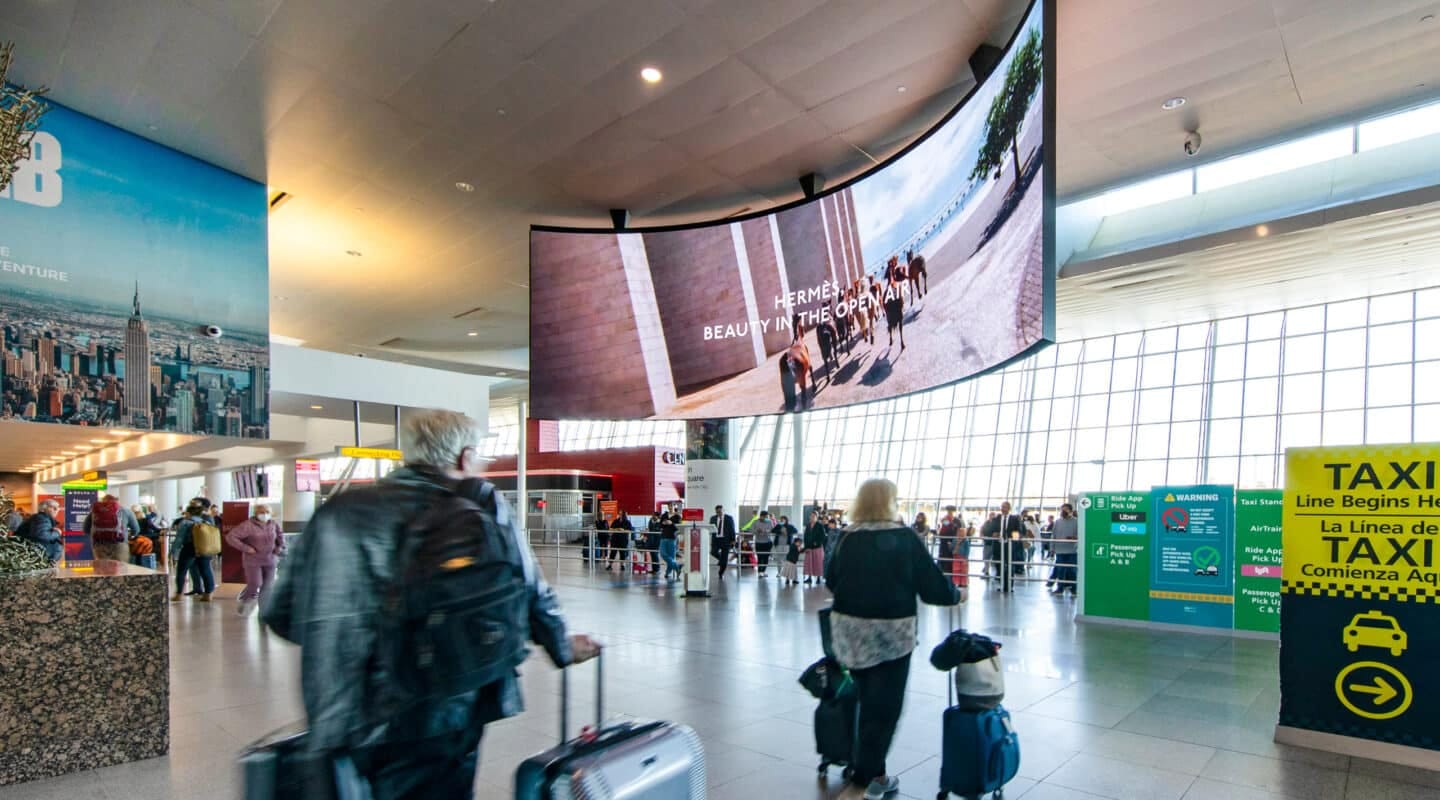
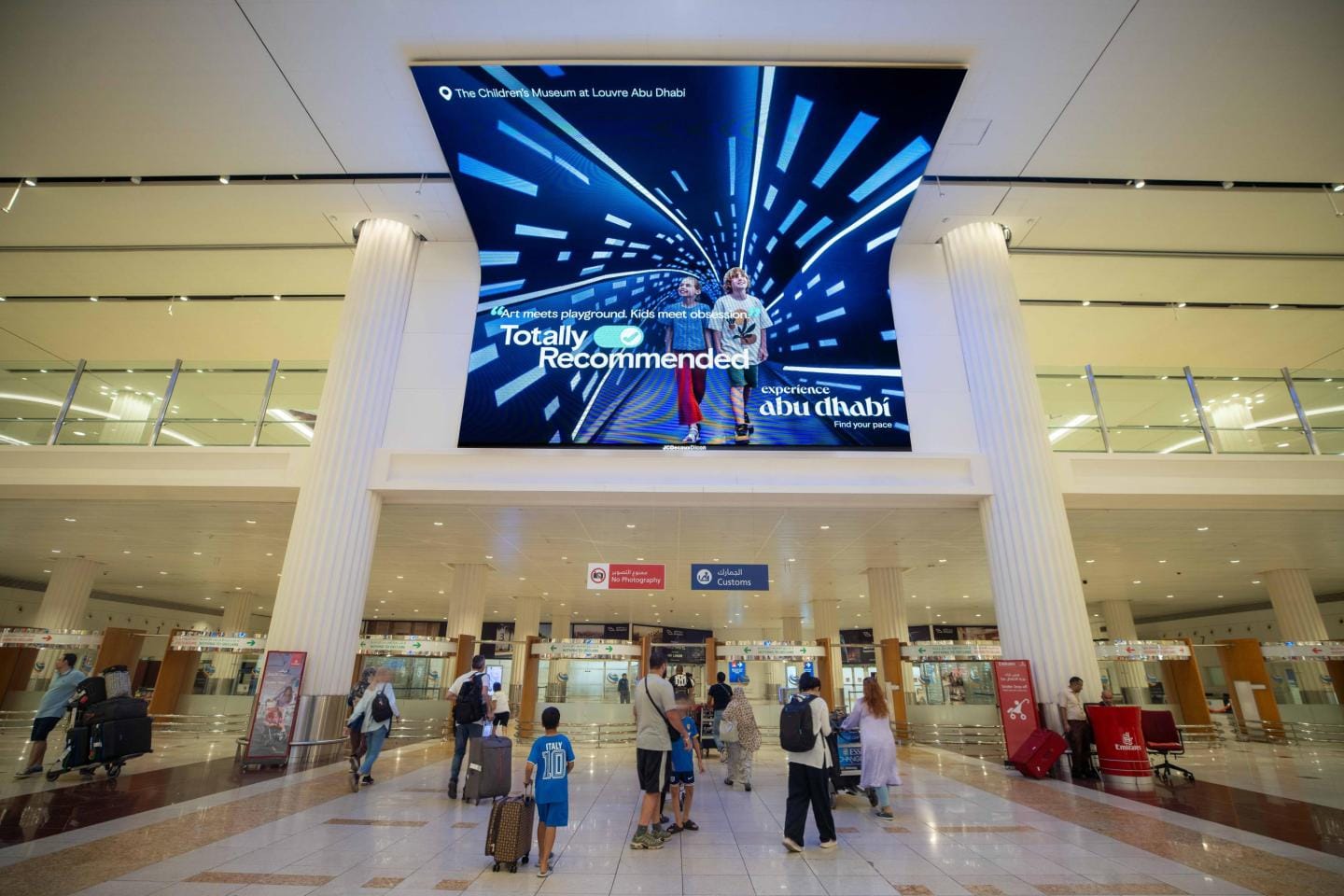
- Honolulu Daniel K. Inouye International Airport's open-air terminal architecture creates a physically distinctive and tonally unique advertising environment whose tropical design, natural light, and Pacific views generate an ambient premium experiential context that no enclosed continental US airport can replicate; brands advertising at HNL benefit from the environmental quality signal of the Pacific paradise setting itself, which reflexively elevates the premium association of every brand message placed within its physical spaces
- Dwell time at HNL is elevated by the transoceanic flight psychology — passengers preparing for long Pacific crossings arrive early, move deliberately, and spend extended pre-departure periods in the terminal environment; international departure dwell windows consistently run two hours or more for Japan and Korean-bound flights, generating multiple advertising exposures per passenger with the Asia-Pacific HNWI audience at its most commercially receptive pre-travel moment
- The Japanese omiyage gift-purchasing cultural practice — in which Japanese tourists systematically acquire premium gifts before departure as an obligation to family, colleagues, and community back home — creates a retail and premium goods advertising receptivity at HNL's international departure zone that is commercially unique in US aviation; Japanese departing passengers at HNL consistently spend more per capita in airport retail than any comparable international nationality at any US airport, and campaigns that intercept this specific purchasing intent with precision and cultural intelligence achieve returns that mainland US airport formats cannot match
- Masscom Global holds strategic inventory access at Honolulu Daniel K. Inouye International Airport and executes campaigns with the cultural precision, bilingual creative capability, and transoceanic corridor intelligence that the Japan and South Korean HNWI audience demands; Masscom's HNL campaigns are structured to achieve simultaneous reach across the international Asia-Pacific premium arrival audience, the domestic US HNWI leisure departure audience, and the military and defence institutional resident traveller — three audience segments whose distinct commercial profiles require separate creative and placement strategies within a single terminal environment
Strategic Advertising Fit
Best Fit:
- Japanese and South Korean luxury brands and premium consumer goods: HNL is the most commercially efficient access point in the United States for Japanese-language advertising reaching the Japanese tourist consumer in their pre-departure omiyage purchasing window; premium Japanese consumer goods, watches, cosmetics, and luxury personal goods campaigns achieve their maximum US-market Japanese audience relevance at HNL in ways that mainland US airports — whose Japanese audiences are more dispersed and less culturally concentrated — cannot replicate
- Hawaii and Pacific luxury real estate developers: HNL is the mandatory gateway for every buyer of Hawaii residential and resort real estate — both the domestic US HNWI acquiring a Pacific paradise second home and the Japanese, Korean, and Asian investor acquiring Hawaii property as a cross-Pacific investment; no other media channel provides equivalent access to both buyer audiences simultaneously
- International real estate developers in Japan, South Korea, Australia, and the Pacific: The outbound Hawaii HNWI resident community and the reverse-flow Japanese and Korean investor audience at HNL both carry active cross-Pacific real estate acquisition intent; international developers marketing properties in Japan, Korea, and Australia will find a financially qualified and culturally prepared buyer audience at HNL that is genuinely without peer at any other US domestic airport
- Premium hospitality and luxury resort brands: Every guest arriving at HNL for Maui's Four Seasons, Oahu's Royal Hawaiian, or the Big Island's Four Seasons Hualalai is actively planning their next Hawaii or Pacific resort experience during the airport journey; luxury hospitality advertising at HNL intercepts this planning behaviour at its most experientially engaged and spending-committed moment
- Financial services, private banking, and cross-Pacific wealth management: The Hawaii HNWI resident's active Japan, Korea, and Pacific investment behaviour, combined with the inbound Japanese and Korean investor audience's real estate and financial product engagement, creates a bilateral cross-Pacific financial services advertising environment at HNL that is commercially exceptional for wealth management platforms with genuine Pacific market expertise
- Premium automotive brands with Japanese and Korean market credentials: The Hawaii resident HNWI class carries strong Japanese and Korean automotive brand loyalty reflecting the state's dominant Asian-American demographic composition; Toyota Land Cruiser, Lexus, Hyundai Genesis, and Kia EV6-tier premium automotive advertising achieves above-average brand consideration and purchase intent with both the resident and international audience at HNL
- Premium outdoor lifestyle, surf, and adventure brands: Hawaii's world-famous surf culture and outdoor recreation identity create a globally recognised audience for premium outdoor, surf lifestyle, and adventure travel brands whose authentic alignment with Hawaiian values generates exceptional brand engagement with both the domestic leisure visitor and the international tourist whose Hawaii aspiration is rooted in the outdoor lifestyle dimension of the destination brand
Brand Alignment at a Glance:
| Category | Fit |
|---|---|
| Japanese and Korean luxury consumer goods | Exceptional |
| Hawaii and Pacific luxury real estate | Exceptional |
| Premium hospitality and resort brands | Exceptional |
| Cross-Pacific financial services | Exceptional |
| Premium automotive — Japanese and Korean marques | Strong |
| Premium outdoor lifestyle and surf brands | Strong |
| International education — Australian and US institutions | Strong |
| Luxury goods, watches, and jewellery | Strong |
| Mass-market FMCG | Moderate — volume justifies selective consideration |
| Budget travel and economy accommodation | Poor fit |
Who Should Not Advertise Here:
- Budget travel and economy accommodation brands: The HNL audience's defining characteristic is the most financially pre-qualifying destination self-selection in US domestic aviation — every passenger has committed to a transoceanic journey to the world's most expensive island resort state; budget travel positioning is not merely ineffective at HNL but actively contradicts the destination premium that defines the airport's entire commercial identity and will generate negative brand associations with an audience whose holiday commitment is the antithesis of cost-minimisation
- Continental US-only brands with no Pacific market relevance: A significant and commercially critical proportion of HNL's passenger base — the Japan, South Korea, and Australia international corridor — carries no relevance for brands whose value proposition is exclusively anchored in continental US market contexts; campaigns without any Pacific cultural dimension or international market proposition will miss the airport's highest-value audience segments entirely
- Brands relying on generic tropical lifestyle positioning without authentic Hawaiian cultural grounding: The Hawaii market is unusually sensitive to inauthentic cultural appropriation of its indigenous identity and natural heritage; brands that use generic tropical imagery, stereotypical Polynesian cultural references, or superficial Hawaii branding without genuine cultural knowledge and respect consistently generate backlash from the resident Hawaiian community and the Japanese and Korean tourist audience whose sophisticated aesthetic standards reject lazy cultural stereotyping
Event and Seasonality Analysis
- Event Strength: High
- Seasonality Strength: High
- Traffic Pattern: Extended Dual-Peak with strong baseline — dominant winter-spring domestic HNWI leisure season November to April with Golden Week Asia-Pacific surge; strong summer domestic and Japanese-Korean leisure peak June to August; with Honolulu Marathon in December and Vans Triple Crown November to December as commercially exceptional event overlay windows
Strategic Implication: Honolulu Daniel K. Inouye International Airport's seasonality profile delivers commercially valuable audience concentration across virtually every month of the year — Hawaii's year-round appeal to both domestic US leisure travellers and Asia-Pacific tourists creates a baseline audience quality floor that most US regional airports cannot sustain through their shoulder seasons. Within this consistently premium baseline, four windows deliver maximum return on investment. The Christmas to New Year holiday peak — when domestic HNWI leisure families and the Honolulu Marathon's 20,000 Japanese participants converge simultaneously — creates the year's single highest-density combination of premium leisure audience at HNL. The Japan Golden Week window in late April and early May delivers the year's most concentrated Japanese HNWI tourist audience in the shortest calendar window. The summer peak from June through August captures both the domestic family leisure surge and the Obon-season Japanese cultural travel motivation simultaneously. The Vans Triple Crown window in November and December delivers the premium outdoor lifestyle and international surf audience that reinforces HNL's year-end commercial peak beyond the domestic holiday leisure flow. Masscom Global structures HNL campaigns to exploit all four windows with culturally precise Japanese-language and English-language creative strategies, format placements calibrated to the distinct dwell and purchasing behaviour of each audience segment, and transoceanic corridor coordination that reinforces the campaign narrative at the Japan and Korea origin airports where the highest-value international audience begins its HNL journey.
Poor Placement and Delays Affect Airport Campaigns
We help you move faster, access better inventory, and get it right now.
Talk to an ExpertFinal Strategic Verdict
Honolulu Daniel K. Inouye International Airport is one of the most commercially exceptional and most consistently underestimated Tier 1 airport advertising environments in the United States — an airport whose modest volume ranking in the national hierarchy disguises a concentration of pre-committed luxury leisure spending, Asia-Pacific investment capital, and cross-Pacific cultural commercial intelligence that no other US airport can replicate within the same terminal complex. The domestic HNWI leisure visitor who has committed to a transoceanic journey to America's most expensive island destination, the Japanese tourist whose omiyage purchasing obligation and brand loyalty depth make them the highest-yield individual retail consumer at any US airport, the Korean investor whose real estate and luxury goods appetite is the fastest-growing premium commercial narrative in Pacific tourism, and the INDOPACOM military and defence professional whose institutional authority and financial sophistication create a consistently undervalued resident HNWI audience — all converge at HNL in a physical environment whose open-air Pacific architecture, Japanese cultural infrastructure, and ambient luxury resort context create a brand advertising environment of genuine global distinctiveness. Brands in luxury real estate, Japan and Korea-facing premium consumer goods, cross-Pacific financial services, premium hospitality, and outdoor lifestyle whose proposition has authentic Pacific cultural grounding will find no more commercially concentrated, culturally prepared, or financially committed audience at any US airport of comparable volume. Masscom Global brings the transoceanic corridor intelligence, Japanese-language creative capability, and culturally precise execution to convert this exceptional and irreplicable Pacific gateway into measurable commercial returns — for the brands sophisticated enough to recognise what the passenger volume numbers alone do not reveal.
About Masscom Global
Masscom Global is a premium international airport advertising and media buying agency operating across 140 countries. With deep expertise in airport OOH, premium publications, and high-net-worth audience targeting, Masscom helps brands reach the world's most valuable travellers at the moments that matter most. For advertising packages, media rates, and campaign planning at Honolulu Daniel K. Inouye International Airport and airports across the globe, contact Masscom Global today.
Frequently Asked Questions
How much does airport advertising cost at Honolulu Daniel K. Inouye International Airport? Advertising costs at Honolulu Daniel K. Inouye International Airport vary based on terminal zone — with the Overseas Terminal international zone commanding the highest rates reflecting its concentration of the Japan, South Korea, and premium transoceanic domestic audience — format type, campaign duration, and the seasonal demand window selected. The Christmas to New Year holiday and Honolulu Marathon peak, Japan Golden Week, and the summer Asia-Pacific leisure surge all command premium inventory rates reflecting the extraordinary concentration of high-value transoceanic travellers in those windows. Japanese-language and bilingual format placements in the international departure zone command a further premium given the Japanese tourist's documented above-average airport retail and brand engagement behaviour. Contact Masscom Global for a tailored rate card, bilingual creative guidance, and a strategic media plan calibrated to your specific Asia-Pacific audience objectives and budget.
Who are the passengers at Honolulu Daniel K. Inouye International Airport? HNL's approximately 21 million annual passengers span three commercially distinct audience profiles that together create one of the most culturally and commercially diverse airport audiences of any US regional hub. The domestic US HNWI leisure traveller — who has committed to a transoceanic journey to America's most expensive island destination and arrives in a state of pre-committed luxury spending intent — defines the airport's dominant domestic commercial narrative. The Japanese and South Korean international tourist — whose per-visit spending consistently leads all international nationalities at US leisure destinations and whose luxury goods, real estate, and financial product engagement makes them the highest-yield individual international passenger categories in US aviation — defines the airport's Asia-Pacific commercial premium. And the senior military, defence institutional professional, and defence contractor community of the Pearl Harbor-Hickam complex and INDOPACOM headquarters defines a resident HNWI audience of exceptional income, global mobility, and commercial sophistication that most international brands targeting HNL have systematically underused.
Is Honolulu Daniel K. Inouye International Airport good for luxury brand advertising? HNL is an exceptional luxury brand advertising environment with specific advantages that no continental US airport can replicate. The combination of Japan's omiyage gift-purchasing cultural obligation — which makes departing Japanese tourists the highest per-capita airport retail spenders of any international nationality globally — and the domestic HNWI leisure visitor's pre-committed luxury experiential spending state creates a luxury goods purchase receptivity environment at the international departure zone that is genuinely without parallel in US aviation. For luxury watches, premium cosmetics, fine jewellery, and prestige personal goods brands with Japanese-language creative capability and genuine cultural heritage credentials, HNL delivers a Japanese consumer engagement quality that no other US airport can approach. For domestic luxury real estate, premium hospitality, and financial services brands targeting the US HNWI Pacific resort lifestyle consumer, HNL delivers a pre-qualified buyer audience whose holiday commitment is the most powerful purchase-intent signal in US domestic leisure aviation.
What is the best airport in the United States to reach Japanese luxury tourists and investors? Honolulu Daniel K. Inouye International Airport and Los Angeles International Airport are the two primary US access points for the Japanese luxury tourist audience. Los Angeles delivers higher absolute Japanese passenger volume. Honolulu delivers a far more concentrated and commercially specific Japanese tourist profile — every Japanese national at HNL has made a deliberate, high-commitment, high-spend decision to visit Hawaii as their chosen Pacific paradise destination, creating a purity of luxury leisure intent that LAX's more diverse and functionally complex Japanese passenger mix cannot match. For brands specifically targeting the Japanese luxury leisure consumer in their highest spending state — particularly for premium goods, Hawaii real estate, and resort hospitality — HNL delivers a commercially precise Japanese audience access that LAX's scale dilutes.
What is the best time to advertise at Honolulu Daniel K. Inouye International Airport? The four highest-value advertising windows are the Christmas to New Year and Honolulu Marathon period from December 10 through January 5 — when domestic HNWI holiday leisure and 20,000 Japanese marathon participants create the year's most commercially concentrated transoceanic audience density; Japan Golden Week from late April through early May — the year's most concentrated Japanese HNWI tourist window; the summer peak from June through August — the year's highest absolute volume period with strong domestic family leisure and Japanese Obon cultural travel motivation; and the Vans Triple Crown window in November — the premium international outdoor lifestyle and surf sports audience concentration. Masscom Global recommends booking Christmas, Golden Week, and Honolulu Marathon inventory a minimum of four months in advance given consistent demand from luxury goods and Japanese-market brands that recognise these windows' exceptional commercial concentration.
Can international real estate developers advertise at Honolulu Daniel K. Inouye International Airport? Absolutely — and HNL provides a bilateral real estate advertising opportunity that is commercially unique in US aviation. Developers marketing Hawaii residential and resort real estate can intercept both the departing domestic US HNWI buyer planning their Hawaii property investment and the arriving Japanese and Korean investor whose Hawaii property acquisition intent is among the highest of any international nationality's real estate behaviour in the United States. Simultaneously, international developers marketing properties in Japan, South Korea, Australia, and the Pacific can intercept the outbound Hawaii HNWI resident whose Pacific investment orientation, cross-cultural market knowledge, and accumulated property wealth make them one of the most internationally prepared buyer audiences at any US regional airport.
Which brands should not advertise at Honolulu Daniel K. Inouye International Airport? Budget travel and economy accommodation brands are fundamentally incompatible with HNL's commercial identity — the airport's entire passenger base has self-selected into the most financially demanding domestic US leisure destination, making budget travel positioning not merely ineffective but actively brand-damaging in this context. Continental US-only brands with no Pacific cultural dimension or international market relevance will miss HNL's most commercially valuable international audience segments entirely. Brands relying on generic tropical or superficial Hawaiian cultural imagery without genuine cultural knowledge and authentic local engagement will generate backlash from Hawaii's culturally protective resident community and will fail to meet the aesthetic and authenticity standards of the Japanese and Korean tourist audience whose sophisticated visual culture demands creative excellence.
How does Masscom Global help brands advertise at Honolulu Daniel K. Inouye International Airport? Masscom Global provides end-to-end campaign management at Honolulu Daniel K. Inouye International Airport, from strategic audience intelligence and bilingual creative guidance — including Japanese-language copywriting and cultural review calibrated to the omiyage purchasing context and Japanese aesthetic standards — through to inventory booking in the international departure zone, placement optimisation for the domestic transoceanic leisure audience, and transoceanic corridor coordination with Tokyo Haneda, Seoul Incheon, and Sydney placements for maximum Pacific corridor brand impact. With operational coverage across 140 countries and deep expertise in the Japan-US, Korea-US, and Australia-US corridors that define HNL's highest-value international audience flows, Masscom ensures that campaigns are timed to the airport's commercial peaks, culturally calibrated to the Japanese and Korean audience's specific consumer psychology, and executed with the creative precision that Hawaii's uniquely demanding and multi-cultural audience environment requires. To discuss current inventory availability, bilingual creative services, and a strategic Pacific corridor plan for Honolulu Daniel K. Inouye International Airport, contact Masscom Global today.