

Airport at a Glance
| Field | Detail |
|---|---|
| Airport | Ellison Onizuka Kona International Airport at Keāhole |
| IATA Code | KOA |
| Country | United States of America |
| City | Kailua-Kona, Hawaii |
| Annual Passengers | Approximately 4 million (2023) |
| Primary Audience | Ultra-HNWIs, luxury resort guests, Ironman and premium sports travellers, wellness and adventure HNWIs |
| Peak Advertising Season | October to April, June to August |
| Audience Tier | Tier 2 by volume — Tier 1 by audience quality |
| Best Fit Categories | Ultra-luxury hospitality, premium automotive, wealth management, international real estate, luxury wellness and lifestyle |
Kona International Airport occupies a commercially unique position in the US airport advertising landscape that volume-focused media planning consistently fails to capture. KOA serves the western Kohala Coast of Hawaii's Big Island, home to a concentration of ultra-luxury resort properties — Four Seasons Resort Hualalai, Mauna Kea Beach Hotel, Auberge's Mauna Lani, Fairmont Orchid, and the Hilton Waikoloa Village — whose average nightly rates place them among the most expensive resort accommodations in the United States. The passenger arriving at KOA has already made a financial commitment that disqualifies every budget, mid-market, and aspirational spending category by definition. They are not considering whether to spend at the luxury tier; they have already spent there, often to the tune of five figures per trip, before their flight lands.
For advertisers in ultra-luxury goods, private banking, international real estate, premium automotive, and experiential lifestyle categories, KOA represents something almost without equivalent in US domestic airport advertising: a captive audience of pre-qualified, active luxury spenders who are in a relaxed, experiential, and financially open mindset at the precise moment of brand encounter. The commercial opportunity at KOA is not about audience volume. It is about audience certainty. Every passenger who walks through KOA's open-air terminal has self-selected into the top percentile of luxury consumer spending by the simple act of choosing to be there.
Advertising Value Snapshot
- Passenger scale: Approximately 4 million annual passengers (2023), with consistent recovery trajectory driven by sustained ultra-luxury resort demand and expanding direct mainland route access
- Traveller type: Ultra-HNWIs and luxury resort guests, Ironman World Championship participants and corporate sponsors, wellness and adventure luxury travellers, premium international leisure visitors
- Airport classification: Tier 2 by volume, Tier 1 by audience quality — the pre-committed luxury spend per arriving passenger at KOA is among the highest of any US domestic airport regardless of size
- Commercial positioning: Primary gateway for the world's most acclaimed single-destination ultra-luxury resort corridor, with a passenger base whose average trip expenditure is structurally in the premium tier before any discretionary purchase is made
- Wealth corridor signal: KOA sits at the centre of the Pacific luxury travel corridor connecting North America, Japan, Australia, and Canada to one of the world's most coveted HNWI leisure destinations
- Advertising opportunity: Masscom Global activates premium inventory across KOA's terminal environment, reaching the ultra-HNWI leisure audience at the first moment of arrival into one of the world's most exclusive resort destinations. Masscom's campaign architecture at KOA is structured around the pre-committed luxury spend profile that makes this airport commercially singular in the US domestic network.
Airport Advertising is Complex to Get Right
We help you execute faster, with proven results and local insight most planners lack starting now.
Talk to an ExpertCatchment Area and Economic Drivers
Top 10 Cities and Communities within 150 km — Marketer Intelligence:
- Kailua-Kona: The commercial hub of West Hawaii and the primary retail, dining, and marine activity centre serving the Kohala Coast resort corridor; a steady stream of resort guests drives from their properties into Kailua-Kona for provisioning, boutique shopping, sport fishing charters, and dining, making this community's resident and visiting commercial audience heavily concentrated in the ultra-HNWI leisure spending bracket
- Waikoloa Resort Area: The Kohala Coast's primary resort cluster, anchored by the Hilton Waikoloa Village, Marriott Waikoloa Beach Resort, and Waikoloa Beach Golf Club; this purpose-built luxury resort district generates the densest concentration of high-net-worth leisure guests of any comparable square mileage in the Hawaiian Islands, with an audience profile dominated by high-earning US mainland professionals, Canadian retirees, and Japanese premium leisure travellers
- Waimea (Kamuela): A high-elevation ranching and agricultural community home to Parker Ranch, one of the largest privately owned cattle ranches in the United States; Waimea produces a small but commercially significant local HNWI audience of ranch ownership families, agricultural executives, and the staff management of the Kohala Coast's luxury resort properties whose combined household income and real estate portfolio values are well above the national average
- South Kohala Resort Corridor: The uninterrupted luxury resort strip anchored by Four Seasons Resort Hualalai, Mauna Kea Beach Hotel, and Auberge's Mauna Lani represents the single highest-density concentration of booked ultra-HNWI guests of any US Pacific resort corridor; the guests here are not considering luxury — they are living it, at room rates that begin where other luxury properties end, and their airport arrival and departure moments are among the most commercially valuable HNWI intercept opportunities in US travel
- Captain Cook and South Kona: The heart of the world-renowned Kona coffee growing region, home to hundreds of boutique coffee farms and a growing agritourism economy attracting premium food tourism visitors; this community generates a consistent flow of specialty food industry buyers, culinary tourism visitors, and Kona coffee direct-to-consumer brand executives whose premium food and beverage spending orientation makes them a niche but commercially receptive audience for luxury consumables and experience brands
- Hilo: The Big Island's eastern county seat and the administrative, healthcare, and educational hub of Hawaii County; Hilo's professional workforce, including University of Hawaii at Hilo academics, healthcare administrators, and government officials, creates a secondary professional traveller audience that transits through KOA on domestic routes and represents a consistent if smaller premium advertising audience for financial services, healthcare, and professional services brands
- Volcano Village: The residential community adjacent to Hawaii Volcanoes National Park, one of the most visited national parks in the United States and a major draw for international travellers, particularly from Japan, Germany, Australia, and the UK; Volcano's gateway role to the national park creates a consistent flow of internationally diverse, above-average-income nature tourism visitors through the Big Island's transport network
- Pahoa and the Puna District: An increasingly creative economy corridor attracting relocating artists, remote workers, and lifestyle entrepreneurs from California and the US mainland seeking Hawaii's natural environment at a fraction of Kohala Coast real estate prices; this growing community of financially independent remote professionals and digital entrepreneurs represents an emerging audience for financial technology, investment products, and lifestyle brand advertising at KOA
- Naalehu: The southernmost community in the United States and a gateway to the dramatic Ka Lae coastline and Green Sand Beach, attracting adventure tourism visitors and eco-tourism travellers through the Big Island's southern circuit; while not a major commercial catchment, this community contributes to the premium adventure tourism audience profile that flows through KOA
- Honokaa and the Hamakua Coast: A historic sugar town transitioning to specialty agriculture, artisan food production, and adventure tourism on the dramatic Hamakua Coast; the community's growing farm-to-table and agricultural tourism economy attracts premium food and lifestyle visitors and contributes to the Big Island's overall premium visitor profile that concentrates travel through KOA
NRI and Diaspora Intelligence:
KOA's most commercially significant non-domestic audience is the Japanese luxury visitor segment, which has maintained a deep and enduring relationship with the Big Island's luxury resort properties since the 1980s when Japanese investment capital helped build the Kohala Coast resort corridor. Japanese visitors to KOA are disproportionately high-net-worth leisure travellers from Tokyo, Osaka, and Nagoya, travelling in small family groups or couples, carrying premium retail budgets, and demonstrating exceptionally strong loyalty to the specific resort properties they favour, with many returning annually across decades. This audience's purchasing behaviour during Big Island stays — on Kona coffee, premium jewellery, golf equipment, and luxury sundries — is among the highest per-visitor retail spend of any international tourist segment at any Hawaiian airport. The Canadian visitor segment, primarily from British Columbia, Alberta, and Ontario, represents the single largest international volume group, with affluent Canadian snowbirds and luxury resort guests creating a bilateral corridor that is commercially active year-round but peaks during the Canadian winter escape window from November through March. A smaller but growing Australian and European leisure segment, drawn to the Big Island's volcanic landscapes, world-class sport fishing, and Kohala Coast resort exclusivity, adds a premium international layer whose per-night accommodation spend further validates KOA's position as an ultra-HNWI arrival point.
Economic Importance:
The Big Island's economy is structurally defined by luxury tourism in the west and agricultural and research economies in the east, but it is the western Kohala Coast resort corridor that generates the commercial signal that matters most to advertisers. The resort properties along the South Kohala coast represent billions of dollars in hospitality infrastructure investment that exists exclusively to serve ultra-HNWI guests who choose Hawaii's Big Island specifically because its volcanic landscapes, warm-water marine environment, and protected reef ecosystem deliver experiences that no other Pacific destination can replicate. The economic dependency of West Hawaii on this ultra-luxury hospitality base means that the entire commercial ecosystem surrounding KOA — every charter fishing company, every golf course, every dive operator, every boutique coffee retailer — is calibrated to serve the spending behaviour and quality expectations of guests arriving on nonstop flights from Los Angeles, San Francisco, Seattle, Dallas, Denver, and Phoenix in business class or first class. For advertisers, this economic structure is a self-selecting audience filter of extraordinary commercial power: KOA's economic environment does not attract budget or value-seeking travellers by design.
Business and Industrial Ecosystem
- Ultra-luxury resort hospitality: The Kohala Coast's resort properties collectively employ thousands of highly trained hospitality professionals and generate a senior hotel management, revenue management, and hospitality operations executive audience that travels extensively to industry conferences, ownership meetings, and global hospitality events, representing a B2B hospitality, premium travel, and financial services advertising audience with direct industry purchasing authority
- Deep-sea sport fishing industry: Kailua-Kona is the recognised world capital of Pacific blue marlin sport fishing, hosting the International Billfish Tournament and drawing wealthy fishing enthusiasts, tournament sponsors, and marine luxury goods buyers from across the United States and internationally; the sport fishing charter industry generates a concentrated ultra-HNWI male audience with strong marine, luxury goods, automotive, and premium spirits brand affinity
- Astronomy and space science: The Mauna Kea summit is home to one of the world's most significant concentrations of astronomical observatories, attracting a consistent flow of international research scientists, university astronomers, and technology sector executives affiliated with telescope development and space research; this audience is highly educated, internationally mobile, and represents an emerging connection between Big Island tourism and the technology sector audience that flows through KOA's mainland routes
- Kona coffee and specialty agriculture: The Kona coffee-growing belt is a globally recognised premium agricultural brand generating a specialty food industry audience of buyers, distributors, and culinary tourism visitors whose premium food and beverage spending orientation and international commercial connections make them a commercially relevant secondary audience for luxury consumer and specialty goods advertisers
Passenger Intent — Business Segment:
KOA's business traveller audience is narrower than at mainland corporate hub airports but commercially distinct in its own right. Hospitality executives managing Kohala Coast resort operations, sport fishing industry operators and tournament sponsors, real estate professionals managing the Big Island's luxury residential market, and a small but significant cohort of technology and astronomy sector professionals affiliated with Mauna Kea's research institutions collectively form a business traveller segment whose industry affiliation and income levels place them well above the national business traveller average. The advertiser categories that intercept them most effectively include premium marine and outdoor equipment, luxury automotive, private banking and wealth management, corporate hospitality services, and B2B technology platforms.
Strategic Insight:
KOA's business audience is commercially valuable not primarily for its scale but for its industry seniority and geographic uniqueness. The resort general managers, owners, and executive directors managing the Kohala Coast's ultra-luxury properties are directly responsible for procurement decisions across every luxury category from wine to marine vessels to luxury vehicle fleets, and they move through KOA regularly. The sport fishing tournament community represents some of the highest liquid-asset recreational spenders in the United States, often deploying $50,000 to $500,000 annually on fishing vessel charters, equipment, and tournament entries alone. Masscom structures KOA campaigns to reach these niche but high-authority audiences with the precision and category alignment their spending profiles demand.
Tourism and Premium Travel Drivers
- Kohala Coast ultra-luxury resort corridor: The unbroken ribbon of ultra-luxury resort properties along South Kohala's coastline — including Four Seasons Resort Hualalai, Mauna Kea Beach Hotel, Auberge's Mauna Lani, Fairmont Orchid, and Hilton Waikoloa Village — represents the primary commercial reason that KOA's audience quality is in a different category from most US domestic airports; guests arriving here have pre-booked some of the most expensive resort rooms in the United States, have committed to golf, spa, and deep-sea fishing expenditure on arrival, and are in a state of maximum brand receptivity and spending openness
- Ironman World Championship: The single most commercially impactful sporting event at any US domestic airport in the sport fitness and wellness category, the Ironman World Championship brings thousands of elite triathletes, coaches, corporate sponsors, sports brand executives, and premium sports tourism visitors through KOA annually in October; the Ironman audience is above-average income, highly brand-loyal within the endurance sports and wellness categories, and represents one of the most commercially active premium sports audiences in global event tourism
- Manta ray night diving and world-class marine tourism: The Big Island's manta ray diving sites off the Kohala Coast are considered among the ten best diving experiences in the world, drawing international dive tourism visitors from Japan, Australia, Germany, and the United States who arrive with premium marine, underwater photography, and travel equipment spending profiles that are well above the standard leisure visitor average
- Hawaii Volcanoes National Park: The active volcanic landscape of Kilauea and Mauna Loa, accessible via the eastern side of the Big Island from Hilo and the Volcano area, draws millions of visitors annually including a significant international cohort from Japan, Germany, Australia, and the UK whose extraordinary natural environment motivation and willingness to travel to remote destinations signals above-average travel investment and premium hospitality spending
Passenger Intent — Tourism Segment:
The leisure visitor arriving at KOA represents the most financially pre-committed inbound audience in US domestic airport advertising. Before they disembark, they have already paid for ultra-luxury accommodation, committed to resort activities, and in many cases pre-purchased fishing charters, golf tee times, and spa packages that cost more than the average American's monthly income. At the airport, both arriving and departing, they are in a state of maximum relaxation, experiential satisfaction, and openness to premium brand messaging. Departing guests in particular, having just completed a stay at a property like Four Seasons Hualalai, are in the highest post-luxury-experience receptivity state available to advertisers in any airport environment — they are effectively warm leads for their next ultra-luxury purchase. The categories that benefit most from this mindset are luxury real estate in comparable Pacific destinations, international wealth management and investment products, premium automotive at the luxury tier, and experiential luxury travel to comparable global destinations.
Travel Patterns and Seasonality
Peak seasons:
- October to April (Primary Winter Luxury Peak): Hawaii's winter escape season drives the sustained core of KOA's highest-value audience window, as North American HNWIs from California, the Pacific Northwest, British Columbia, and the US Northeast depart their primary residences for the Kohala Coast's luxury resort properties. This is KOA's longest and most commercially consistent high-value audience period, with resort occupancy at the South Kohala corridor properties regularly reaching capacity across this window.
- October (Ironman Peak): The Ironman World Championship in October creates the single densest concentration of premium sports brand audience and athletic HNWI travellers of the year at KOA, generating an exceptional window for endurance sports brands, wellness companies, sports nutrition, and corporate hospitality advertisers whose products align directly with the world's most commercially active triathlon audience
- June to August (Summer Family Luxury Peak): The summer season drives KOA's second major peak as affluent American and Canadian families choose the Big Island for school holiday luxury resort stays; this window delivers a family-oriented luxury audience with strong receptivity to international education, premium family experiential travel, and family-oriented investment and wealth management advertising
- December to January (Holiday Ultra-Luxury Peak): Christmas and New Year at a Kohala Coast resort represent the most aspirational and expensive holiday expenditure available to the HNWI leisure traveller in the United States; the audience during this window is at the extreme upper end of the HNWI spectrum, with room rates at premium Kohala Coast properties during the holiday fortnight representing some of the highest per-night charges of any US resort destination
Event-Driven Movement:
- Ironman World Championship (October): The pinnacle of global triathlon, drawing 2,500 professional and age-group athletes and tens of thousands of spectators, coaches, and support crew from over 80 countries through KOA; the commercial audience concentration of global endurance sports brands, corporate sponsors, sports nutrition executives, and premium fitness equipment buyers during Ironman week is without parallel at any US domestic airport in this category
- Hawaii International Billfish Tournament (August): The oldest and most prestigious sport fishing tournament in the Pacific, drawing ultra-wealthy sport fishermen, vessel owners, and marine industry executives from across the US and internationally through KOA; the billfish tournament audience represents one of the highest per-capita liquid asset concentrations of any sporting event audience in Hawaii
- Big Island Chocolate Festival (May): A premium artisan food and beverage event drawing specialty food industry buyers, culinary tourism visitors, and premium chocolate and cacao enthusiasts through KOA with strong alignment to luxury consumables, food technology investment, and premium hospitality brand advertising
- Kohala Coast Golf Season (Year-Round, Peak October to March): The Kohala Coast's world-class golf courses, including Francis H. I'i Brown Courses at Mauna Lani, Hualalai Golf Course, and Hapuna Golf Course, sustain a year-round premium golf tourism audience with particularly strong HNWI concentration during the October-to-March winter escape season; this audience carries strong automotive, luxury goods, premium spirits, and private banking brand responsiveness
- Kona Coffee Cultural Festival (November): The premier annual celebration of the world-famous Kona coffee growing region, drawing specialty coffee industry professionals, food and beverage media, and premium agricultural tourism visitors through KOA during a period that coincides directly with the transition into the peak winter luxury resort season, compounding the HNWI audience concentration at KOA's highest commercial window
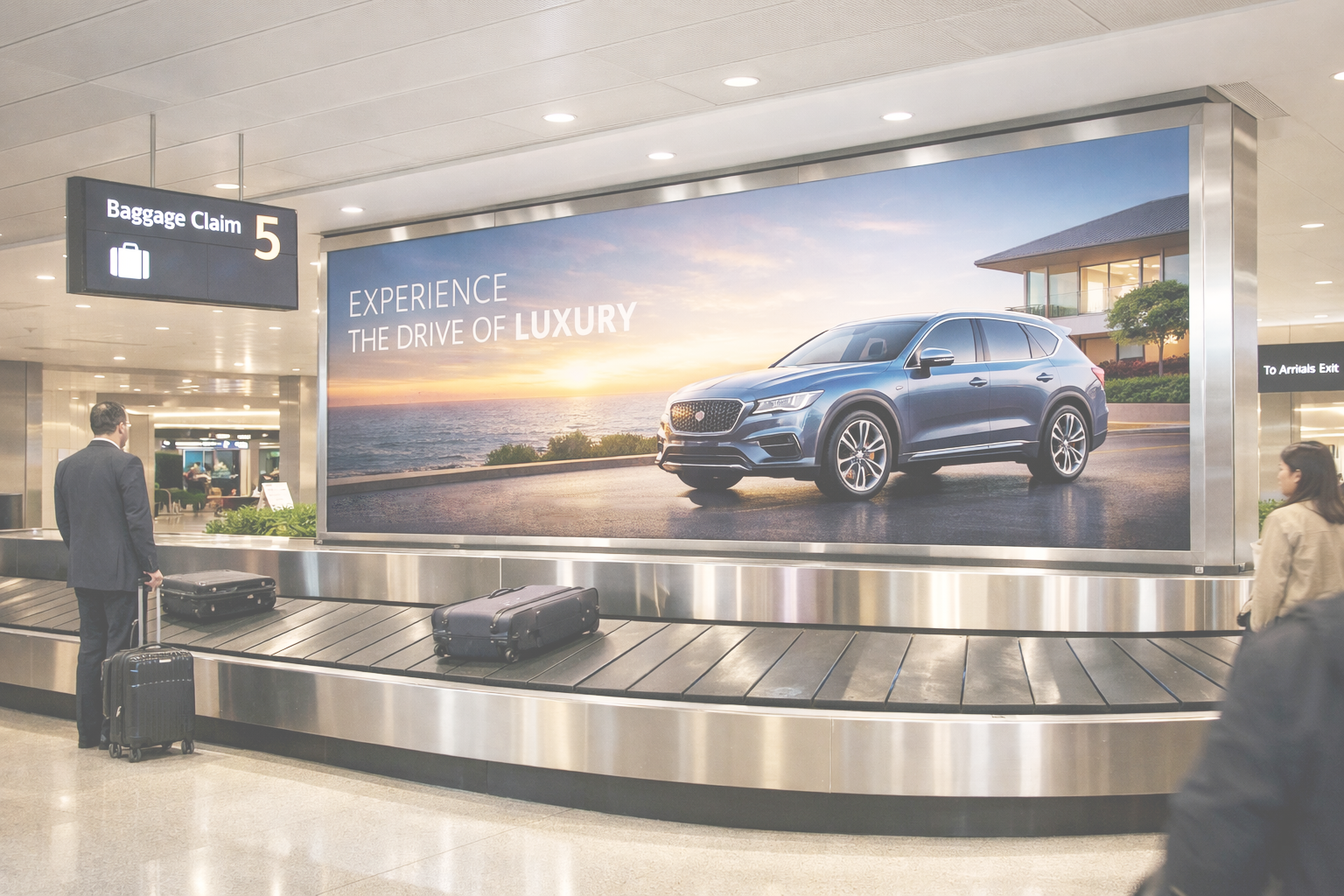
It’s Not Just Where You Advertise - It’s How Fast You Execute
We combine local insight with fast rollout to deliver results for you, now.
Talk to an ExpertAudience and Cultural Intelligence
Top 2 Languages:
- English: The dominant language across all traveller segments and the exclusive medium required to reach KOA's core North American ultra-HNWI resort audience with precision; the English-speaking luxury resort guest at KOA is among the most commercially open and financially capable airport advertising audiences in the United States, combining maximum relaxation mindset with pre-committed luxury spend behaviour that makes them structurally receptive to premium brand messaging in a way that transiting business travellers at mainland hub airports rarely are
- Japanese: The single most commercially significant non-English language at KOA, reflecting the deep and enduring relationship between Japan's upper-middle and HNWI leisure traveller community and the Big Island's luxury resort corridor; Japanese-language and culturally Japanese-aware campaign creative meaningfully expands reach into a bilateral audience whose per-trip retail spend, brand loyalty to specific Kohala Coast resorts, and premium consumer orientation are among the highest of any international tourist segment visiting the Hawaiian Islands
Major Traveller Nationalities:
US domestic travellers dominate the KOA passenger base, arriving overwhelmingly from California (Los Angeles, San Francisco, San Diego), the Pacific Northwest (Seattle, Portland), Texas (Dallas, Houston), and Colorado (Denver), with these corridors collectively representing the primary HNWI residential markets whose residents choose the Big Island as their preferred Pacific luxury destination. Canadian visitors, primarily from British Columbia, Alberta, and Ontario, form the largest international group, with affluent Canadian snowbirds and luxury resort guests creating a commercially active Pacific bilateral corridor that peaks during the Canadian winter escape window. Japanese visitors are the most commercially significant non-English-speaking international segment, with Tokyo, Osaka, and Nagoya travellers maintaining decade-long loyalty relationships with specific Kohala Coast resort properties and demonstrating the highest per-visit retail and luxury goods purchase rates of any international visitor nationality at KOA. Australian visitors, drawn by the Big Island's volcanic landscape and marine tourism offering, and a smaller German and British leisure segment drawn to Hawaii's unique natural environment, complete a diversified international leisure audience whose common characteristic is above-average travel investment and premium spending commitment.
Religion — Advertiser Intelligence:
- Protestant and Non-Denominational Christianity (approximately 35-40%): Hawaii's dominant Christian community among its mainland visitor and resident base creates the largest consumer spending windows at KOA during Christmas and Thanksgiving, when the most financially capable segment of this community elects the Kohala Coast as its preferred holiday destination; the premium gifting, holiday celebration, and family reunion dynamics of this window create exceptional conditions for luxury goods, premium spirits, fine jewellery, and experiential travel advertising at KOA's highest occupancy period
- Buddhism (approximately 8-12%): Hawaii has one of the highest Buddhist population proportions of any US state, reflecting its significant Japanese, Chinese, Filipino, and Southeast Asian community heritage; the Buddhist traveller at KOA, particularly within the Japanese luxury visitor segment, creates commercially relevant Lunar New Year and Obon festival travel windows in January to February and July to August respectively, with strong premium consumer goods, luxury travel, and cultural experience brand alignment
- Native Hawaiian Spiritual Traditions: The cultural and spiritual significance of the Big Island's landscapes — Mauna Kea as a sacred summit, Kilauea as Pele's domain, and the Kohala coastline as ancestral Hawaiian territory — creates a distinct cultural awareness layer among both resident and visitor audiences that makes brand messaging acknowledging and respecting Hawaiian cultural values and environmental stewardship significantly more commercially effective than advertising that ignores the destination's deep cultural identity
Behavioral Insight:
The KOA traveller is defined by a behavioral profile that is almost unique in US airport advertising: they have already resolved the question of how much they are willing to spend on this trip, and the answer is a great deal. The psychological state of the luxury resort guest at a Kohala Coast property is characterised by permission — the active decision to indulge at the maximum level of their means has been made before the flight, creating a downstream commercial environment where the resistance to premium spending is at its lowest and the receptivity to aspirational brand messaging is at its highest. The departing guest, in particular, is in a post-experience glow that functions as a powerful amplifier of brand affinity: they associate the brands they encounter at KOA during departure with the emotional peak of their holiday experience, creating brand memory formation conditions that are commercially superior to almost any other advertising environment. Brands that position their messaging as a natural extension of the Kohala Coast experience — rather than an intrusion upon it — will find KOA's audience among the most responsive premium brand audiences available at any US domestic airport.
Outbound Wealth and Investment Intelligence
The departing passenger at KOA represents one of the most commercially valuable outbound advertising audiences in the US domestic airport network, not because of their volume but because of their confirmed financial status and their psychological readiness to commit to the next premium experience or investment. An individual leaving Four Seasons Hualalai or Mauna Kea Beach Hotel after a week-long stay has demonstrated their position in the top 1-2% of the US income and net worth distribution not by declaration but by action, and they are departing in a mindset of elevated aspiration that makes them extraordinarily receptive to the right next premium proposition.
Outbound Real Estate Investment:
KOA's HNWI visitor base is actively acquiring investment and vacation real estate across several well-defined Pacific and international corridors that directly mirror their travel values. The Big Island's own luxury residential real estate market, particularly the exclusive Hualalai Resort community and the Mauna Lani Resort private residence clubs, attracts significant repeat visitor investment from California, Pacific Northwest, and Texas HNWIs who progress from resort guests to fractional ownership to full residential ownership across multi-year relationships with their preferred properties. Mexico's Los Cabos corridor attracts Big Island resort visitors seeking Pacific luxury real estate at accessible price points with strong rental yield profiles and direct flight access from the same mainland departure cities. The Maldives, Fiji, and French Polynesia attract the segment of the KOA audience seeking comparable ultra-luxury Pacific island resort experiences at international destinations with residential ownership components. For US-based developers in Hawaii, Baja California, or comparable Pacific luxury markets, and for international resort residence developers, KOA's departing ultra-HNWI guest is the single most pre-qualified and emotionally primed real estate buyer audience available at any US domestic airport.
Outbound Education Investment:
The Big Island's year-round HNWI resort visitor demographic includes a significant proportion of affluent mainland families whose children are in or approaching secondary and tertiary education, creating a commercially active outbound education investment audience among departing parents who are simultaneously managing premium real estate, investment portfolios, and children's educational trajectories. Parents departing KOA from the Kohala Coast's luxury resort properties include a high concentration of California, Texas, and Colorado-based entrepreneurs and executives whose household income levels place them in the active evaluation tier for elite boarding school and international university programmes. UK boarding schools, Swiss international schools, and Canadian and Australian universities targeting high-income US families will find KOA's departing family leisure audience during the summer window and holiday periods a genuinely receptive and financially qualified channel.
Outbound Wealth Migration and Residency:
The KOA HNWI audience demonstrates growing interest in Pacific and Atlantic island residency and second-home structures that mirror the Big Island's island lifestyle in alternative tax or regulatory frameworks. New Zealand's investor visa programme attracts the environmentally conscious, Pacific-oriented HNWI segment that chose Hawaii for its natural environment and values comparable Pacific destination residency as a lifestyle and investment asset. Portugal's Golden Visa, accessed through fund routes, appeals to Big Island visitors with European lifestyle affinities, particularly those with connections to Portugal's Atlantic island territories (Madeira, Azores) whose landscape and climate offer a European version of the Hawaiian island premium lifestyle. The Cayman Islands and Turks and Caicos attract the ultra-high-net-worth segment seeking Caribbean island residency structures with zero personal income tax and comparable luxury resort infrastructure.
Strategic Implication for Advertisers:
KOA's departing HNWI audience is the most pre-qualified and emotionally primed luxury purchaser available at any US domestic airport. They have just experienced the world's most exclusive resort corridor at the peak of their experiential and financial commitment, and they are departing with aspirational appetite elevated, not diminished. International brands on both sides of the Pacific luxury corridor — whether selling the next premium destination experience, the next investment property, the next wealth management relationship, or the next ultra-luxury lifestyle asset — should treat KOA departures as a category-defining premium audience intercept moment. Masscom Global activates campaign architectures at KOA that are specifically designed to capture this post-luxury-experience purchase mindset with messaging precision that converts experiential satisfaction into commercial action.
Airport Infrastructure and Premium Indicators
Terminals:
- Ellison Onizuka Kona International Airport operates as a primarily open-air terminal facility whose architecture reflects Hawaii's tropical climate and indoor-outdoor lifestyle rather than the enclosed commercial infrastructure of mainland hub airports; this architectural openness creates a distinctive and relaxed dwell environment where passengers experience the warmth and natural setting of the Big Island from the moment of arrival, establishing an immediate connection to the destination's luxury lifestyle positioning that premium advertisers can leverage as environmental brand alignment
- The airport operates a single terminal with two primary gate areas serving the full range of domestic and limited international airline operations, with gate-level open-air lounges that create extended, relaxed dwell periods in the tropical environment; the open-air terminal design extends effective advertising exposure time because passengers are not compelled toward enclosed spaces and instead linger in the natural setting throughout their departure experience
Premium Indicators:
- The Kohala Coast luxury resort corridor's proximity — the Four Seasons Hualalai is within minutes of the airport, the Mauna Kea Beach Hotel within 20 minutes — means that KOA's audience quality is directly determined by the resort booking behaviour of arriving guests; the average daily rates at the Kohala Coast's leading properties, which regularly exceed $1,500 to $3,000 per night and can reach five figures per night in peak holiday villa configurations, function as a permanent audience quality filter that no advertising targeting system can replicate
- KOA has undergone terminal improvement investments targeting enhanced passenger experience, improved wayfinding, and upgraded commercial concourse facilities aligned with the premium expectations of its HNWI visitor base; while the terminal's open-air format limits the scale of interior advertising formats available at enclosed mainland hub airports, the intimacy of the environment means that well-placed premium advertising achieves exceptionally high audience attention and recall rates in the absence of the visual clutter that characterises large enclosed hub terminals
- The airport's position as the exclusive gateway to the Kohala Coast resort corridor means that there is no alternative arrival option for guests of the Big Island's luxury western properties — every Kohala Coast resort guest passes through KOA, creating a structural audience monopoly for advertisers that closed or multi-gateway destinations cannot deliver
- Private aviation and charter operations serving KOA from the adjacent general aviation facility support the ultra-HNWI segment travelling by private jet to the Kohala Coast, representing a discrete but extremely high-value audience layer whose per-trip expenditure and asset ownership profile place them above even the commercial first-class traveller at this already premium airport
Forward-Looking Signal:
KOA is positioned for sustained growth in both domestic premium route expansion and the gradual re-establishment of direct international service from Japan and Canada, both of which were significantly disrupted by pandemic-era travel restrictions and have been recovering on a trajectory that aligns with growing outbound travel demand from KOA's primary feeder markets. Alaska Airlines and United Airlines have both continued to add and expand direct mainland routes to KOA, reflecting growing demand from the Sun Belt luxury leisure market, and direct service from Dallas, Denver, and Phoenix has deepened the airport's HNWI catchment into the US interior's wealthiest metropolitan markets. Hawaii's state-level investment in tourism infrastructure quality and the Kohala Coast resort corridor's continued capital investment in property renovation and expansion across multiple properties signals an upward trajectory in both visitor quality and per-visitor expenditure that will compound the commercial value of KOA advertising placements over the coming years. Masscom advises clients to secure premium KOA inventory now at current market rates, as the combination of expanding direct routes, recovering international access, and the Kohala Coast's irreplaceable resort infrastructure ensures that demand for this airport's ultra-HNWI advertising audience will only intensify as Pacific luxury travel continues to expand.
Airline and Route Intelligence
Top Airlines:
- Hawaiian Airlines
- Alaska Airlines
- United Airlines
- American Airlines
- Delta Air Lines
- Southwest Airlines
- WestJet (Canada, seasonal)
Key International Routes:
- Vancouver (Air Canada/WestJet, seasonal)
- Calgary (WestJet, seasonal)
- Tokyo Narita (historic service, under recovery evaluation)
- Various Canadian leisure charter services (seasonal winter peaks)
Domestic Connectivity: KOA operates direct nonstop routes to Los Angeles, San Francisco, Seattle, Portland, Phoenix, Denver, Dallas, Chicago, Houston, Las Vegas, and San Diego, collectively connecting the airport to virtually every major HNWI feeder market in the continental United States; this breadth of nonstop mainland connectivity ensures that KOA's Kohala Coast guests never need to transfer through Honolulu, preserving the premium arrival experience and maintaining the direct commercial corridor between the US mainland's wealthiest metropolitan areas and the Big Island's ultra-luxury resort destination.
Wealth Corridor Signal:
KOA's route network is not a commercial hub map; it is a wealth extraction map in the most commercially literal sense. The Los Angeles, San Francisco, Seattle, Denver, and Dallas routes are the primary corridors through which the US's most financially capable leisure travellers elect Hawaii's Big Island as their preferred Pacific luxury destination. The Los Angeles route alone carries a disproportionate concentration of California entertainment industry HNWIs, technology sector executives, and real estate investors whose per-trip spending at Kohala Coast properties is among the highest of any domestic US leisure route. The San Francisco and Seattle routes carry Silicon Valley and Pacific Northwest technology sector executives whose equity compensation profiles and active investment behaviours make them among the most commercially valuable arrivals in US domestic airport advertising. The Dallas and Houston routes carry Texas energy and real estate sector HNWIs whose liquid asset levels and luxury lifestyle consumption patterns are structurally aligned with every premium advertiser category. Masscom reads KOA's route network as a confirmed wealth delivery map and structures campaign placements around the specific arrival and departure corridors that deliver the highest per-passenger commercial value.
Media Environment at the Airport
- KOA's open-air terminal format creates a fundamentally different advertising environment from enclosed mainland hub airports — the absence of visual clutter, the natural light, the tropical setting, and the intimate terminal scale mean that well-positioned advertising achieves exceptionally high unaided recall rates because premium formats are not competing with the sensory overload of large enclosed commercial airport interiors; in this environment, a single well-placed premium format achieves the audience impact that would require multiple placements in a larger, noisier hub terminal
- Dwell time at KOA is structurally extended by the tropical open-air environment, the relaxed pace of the destination, and the airport's modest scale relative to mainland hub airports; passengers who have arrived for a luxury Big Island holiday, or who are departing at the end of one, are not rushing through a crowded terminal — they are moving at the pace of their vacation, lingering in the open-air concourse in a state of maximum relaxation and minimum commercial resistance, creating advertising exposure windows of exceptional quality and duration
- The absence of the premium airline lounge infrastructure found at mainland hub airports is commercially compensated at KOA by the homogeneity of audience quality across the terminal; at a mainland hub, premium audience concentration is highest near lounge entrances and lowest in general gate areas, requiring advertisers to pay premium prices for lounge-adjacent placements to reach HNWI travellers; at KOA, the entire terminal audience is structurally HNWI because the Kohala Coast's room rates ensure that budget and value-seeking travellers are effectively absent from the passenger mix
- Masscom Global holds access to premium inventory across KOA's terminal environment, including the primary arrival and departure zones, baggage claim, and gate-level concourse placements that intercept the ultra-HNWI audience at both ends of their Big Island experience; Masscom's expertise in open-air and tropical airport environment campaign execution ensures that creative formats, material specifications, and placement positions are optimised for KOA's unique physical infrastructure and audience flow characteristics
Strategic Advertising Fit
Best Fit:
- Ultra-luxury real estate (Hawaii and comparable Pacific destinations): The KOA departing guest who has spent a week at Four Seasons Hualalai or Mauna Kea Beach Hotel is the single most pre-qualified potential buyer for luxury Big Island residential real estate, Maldives or Fiji resort residences, or Mexico Pacific Coast luxury investment properties available at any US domestic airport
- Private banking and ultra-high-net-worth wealth management: The pre-confirmed spending behaviour of KOA's Kohala Coast resort guests identifies them as active ultra-HNWI consumers; private banks, family office services, and investment management platforms will find no more commercially certain audience at any US domestic airport
- Luxury automotive: KOA's departing HNWI audience, primarily from California, Texas, Colorado, and the Pacific Northwest, over-indexes on premium and ultra-luxury automotive ownership at rates that make this airport one of the most productive domestic US channels for Porsche, Ferrari, Bentley, Lamborghini, and luxury electric vehicle brands
- Premium wellness, fitness, and longevity medicine: The Ironman audience and the broader Kohala Coast wellness resort culture create a concentrated premium wellness consumer segment whose spending on fitness equipment, nutrition, longevity medicine, and health technology is structurally above average for the HNWI bracket; this is the single best US domestic airport for premium endurance sports, wellness brand, and medical longevity advertising
- Premium marine, sport fishing, and adventure equipment: Kailua-Kona's position as the world capital of Pacific blue marlin sport fishing creates a unique and commercially underserved audience of ultra-wealthy sport fishing enthusiasts and marine vessel owners whose equipment, charter, and tournament spending defines an entire premium marine luxury category
- Luxury travel to comparable Pacific and Indian Ocean destinations: Departing KOA guests who have experienced the best of Pacific island luxury are the most pre-qualified audience for the Maldives, Fiji, French Polynesia, Seychelles, and comparable global luxury island destinations; travel brands in these categories will find no more receptive audience at any US airport
- Premium spirits, wine, and luxury consumables: The open dwell environment, relaxed pace, and post-luxury-experience mindset of KOA's departing audience creates a commercially exceptional environment for premium spirits, Champagne, Japanese whisky, and luxury food and beverage brands whose quality narrative aligns with the Kohala Coast's culinary luxury positioning
Brand Alignment at a Glance:
| Category | Fit |
|---|---|
| Ultra-Luxury Real Estate | Exceptional |
| Private Banking and Wealth Management | Exceptional |
| Premium Wellness and Fitness | Exceptional |
| Luxury Automotive | Strong |
| Premium Marine and Sport Fishing | Strong |
| Luxury Pacific and Island Travel | Strong |
| Premium Spirits and Fine Wine | Strong |
| Mass FMCG and Value Retail | Poor fit |
Who Should Not Advertise Here:
- Budget travel, value accommodation, and price-comparison platforms: KOA's entire passenger base has self-selected out of price-sensitive travel decision-making by booking the Kohala Coast; budget travel advertising is not just commercially inefficient here — it is structurally misaligned with an audience for whom price consideration in the holiday purchase process is essentially irrelevant
- Entry-level and mass-market financial products: KOA's confirmed HNWI audience is already engaged with private banking, institutional wealth management, and sophisticated investment structures; mass-market retail banking and entry-level credit products will find no audience receptivity and will create brand dissonance in an ultra-premium environment
- Fast fashion and mass-market apparel: The Kohala Coast's resort culture is defined by premium resort wear, luxury activewear, and high-end outdoor apparel; fast fashion and mass-market clothing brands are fundamentally misaligned with the aesthetic values and spending behaviour of an audience that shops at Neiman Marcus, Patagonia, and Loro Piana rather than accessible high-street fashion
Event and Seasonality Analysis
- Event Strength: High (Ironman creates singular commercial event window)
- Seasonality Strength: Very High
- Traffic Pattern: Dual-Peak (Winter Luxury Escape Season plus Summer Family Peak with October Ironman Spike)
Strategic Implication:
KOA's commercial calendar is defined by one of the most reliable and commercially concentrated dual-peak structures of any US domestic airport. The primary winter luxury escape season, running from October through April, delivers a sustained six-month window of maximum Kohala Coast resort occupancy and ultra-HNWI audience concentration that rewards brands committed to sustained presence over tactical short-burst campaigns. Within this window, the October Ironman fortnight creates the single highest-intensity audience concentration of the year for wellness, endurance sports, and corporate sponsorship brands, and should be treated as a standalone high-priority campaign window regardless of the broader seasonal strategy. The summer family luxury peak from June through August delivers a family-oriented HNWI audience with strong education investment, domestic real estate, and experiential travel brand receptivity. Masscom structures KOA campaigns to capitalise on all three windows simultaneously, allocating sustained brand presence formats during the winter season window, high-impact event-aligned formats during Ironman, and family-oriented messaging during the summer peak, ensuring that media investment at KOA works against the highest-value audience segment available at every point in the commercial calendar.
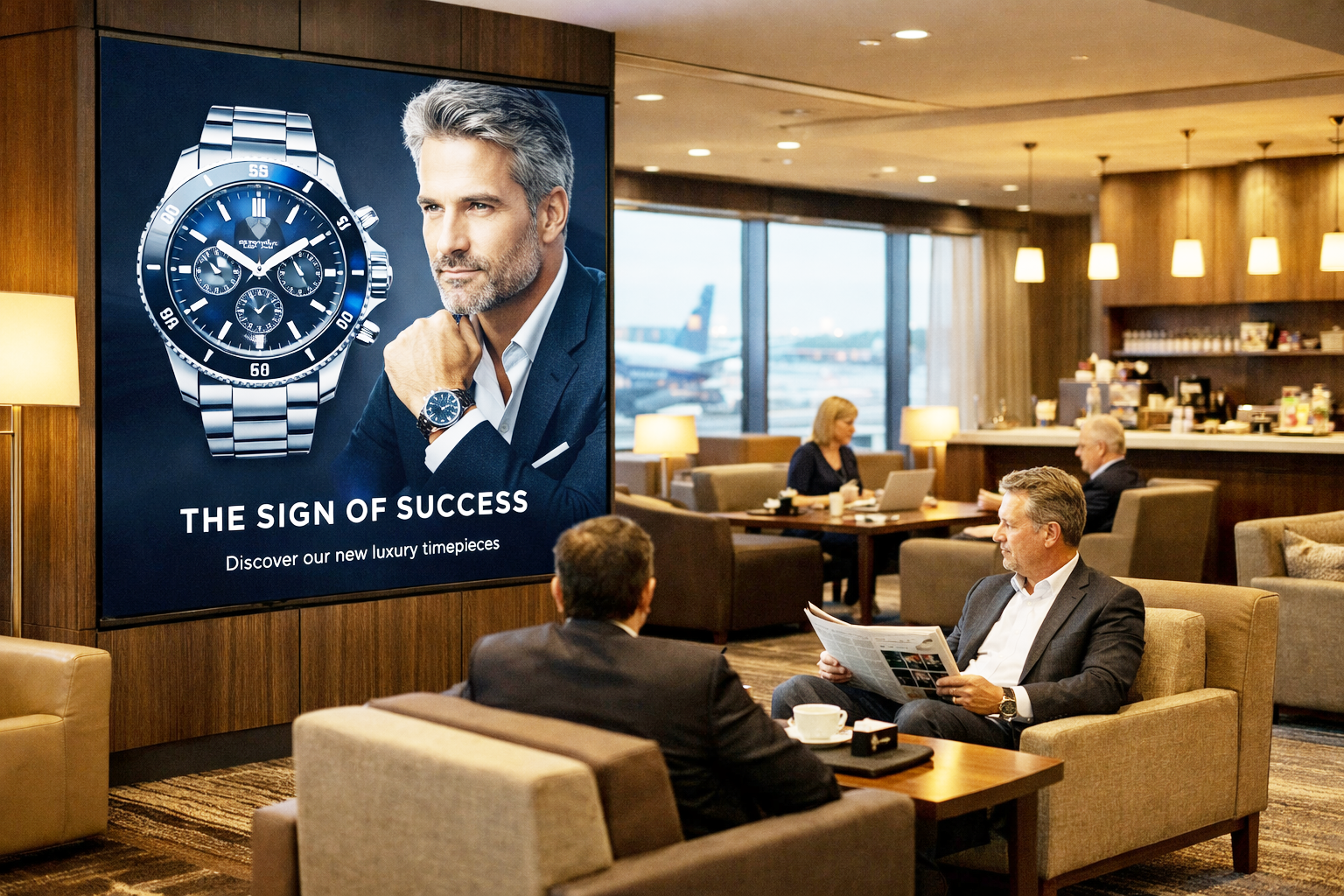
Poor Placement and Delays Affect Airport Campaigns
We help you move faster, access better inventory, and get it right now.
Talk to an ExpertFinal Strategic Verdict
Ellison Onizuka Kona International Airport is the most commercially certain ultra-HNWI advertising environment in the US domestic airport network, and the argument for advertising here rests not on audience volume but on audience confirmation. Every passenger at KOA has already proven their position in the top tier of the HNWI spectrum through the irrefutable evidence of their booking behaviour — they have paid for a Kohala Coast resort stay at some of the highest room rates available anywhere in the United States. No targeting algorithm, no demographic filter, and no audience modelling tool can deliver the certainty of audience quality that the simple act of arriving at KOA provides as self-selected proof. For brands in ultra-luxury real estate, private banking, premium wellness, luxury automotive, and comparable categories, KOA offers the commercial equivalent of a hand-curated audience list delivered to a premium open-air terminal in the middle of the Pacific Ocean. The Ironman World Championship adds a globally famous premium sports event audience layer that no other Hawaiian airport serves. The recovering Japanese luxury visitor corridor adds a transpacific premium retail dimension that is commercially unmatched in the Pacific leisure travel segment. Brands and advertisers that partner with Masscom Global to establish presence at KOA are investing in the most pre-qualified HNWI audience available at any US domestic airport — a commercially exceptional opportunity that the volume-first logic of mainstream airport media planning has consistently overlooked and underpriced.
About Masscom Global
Masscom Global is a premium international airport advertising and media buying agency operating across 140 countries. With deep expertise in airport OOH, premium publications, and high-net-worth audience targeting, Masscom helps brands reach the world's most valuable travellers at the moments that matter most. For advertising packages, media rates, and campaign planning at Ellison Onizuka Kona International Airport and airports across the globe, contact Masscom Global today.
Frequently Asked Questions
How much does airport advertising cost at Kona International Airport? Advertising costs at KOA vary based on format type, placement zone, campaign duration, and seasonal demand. The airport's open-air terminal format and intimate scale mean that fewer total placements are available than at large mainland hub airports, which increases the exclusivity and per-impression value of each placement while maintaining competitive pricing relative to the audience quality delivered. Premium formats in the primary arrival, departures, and baggage claim zones during the October-to-April winter luxury season command the highest rates. Ironman week in October represents a specific high-demand window with premium pricing reflecting the exceptional audience concentration it generates. Masscom Global provides current market rate guidance, format recommendations, and full campaign cost modelling tailored to your commercial objectives and budget parameters. Contact Masscom for a detailed rate consultation before committing to any placement.
Who are the passengers at Kona International Airport? KOA serves one of the most financially pre-qualified passenger bases of any US domestic airport. The dominant year-round audience consists of ultra-HNWIs arriving from Los Angeles, San Francisco, Seattle, Denver, Dallas, and Phoenix to stay at the Kohala Coast's ultra-luxury resort properties, including Four Seasons Hualalai, Mauna Kea Beach Hotel, Auberge's Mauna Lani, and Fairmont Orchid, whose average nightly rates confirm an audience in the top 1-2% of US household net worth. Each October, the Ironman World Championship adds thousands of elite triathletes, corporate sponsors, sports brand executives, and premium sports tourism visitors from over 80 countries. Japanese luxury leisure visitors, Canadian snowbirds, and Australian and European nature and adventure tourists complete an international visitor mix whose common characteristic is above-average travel investment and confirmed luxury spending commitment.
Is Kona International Airport good for luxury brand advertising? KOA is not simply good for luxury brand advertising — it is the most commercially confirmed ultra-luxury brand advertising environment in the US domestic airport network. The self-selecting nature of the Kohala Coast booking decision means that every arriving passenger has already demonstrated their luxury spending qualification through their resort reservation. There is no need for demographic modelling or audience filtering; the booking behaviour does the qualification automatically. For ultra-luxury real estate, private banking, premium wellness, and luxury lifestyle brands, KOA delivers a confirmed HNWI audience that is structurally impossible to replicate through any other US domestic airport of comparable volume.
What is the best airport in Hawaii to reach ultra-HNWI audiences through advertising? For ultra-HNWI audience quality, KOA is unambiguously the top Hawaiian airport. Honolulu's Daniel K. Inouye International Airport (HNL) far exceeds KOA in volume but serves a significantly broader income range including mass-market package tourism, backpacker and budget leisure travel, and military personnel traffic that dilutes the premium audience concentration available per flight. Kahului Airport in Maui (OGG) competes with KOA for luxury resort audience quality, but KOA's specific combination of the Kohala Coast's ultra-luxury resort corridor — which has a higher average rate profile than Maui's most expensive properties — and the Ironman World Championship's annual premium sports audience gives it the edge for brands seeking the highest confirmed HNWI concentration in the Hawaiian Islands.
What is the best time to advertise at Kona International Airport? The primary premium audience window runs from October through April, covering the full winter luxury escape season when Kohala Coast resort occupancy is at maximum and the HNWI audience concentration is highest. Within this window, October is the single most commercially intensive month of the year, combining the start of the peak winter season with the Ironman World Championship's exceptional sports and wellness audience concentration. The December to January holiday fortnight delivers KOA's absolute peak luxury audience — guests staying at the Kohala Coast over Christmas and New Year represent some of the highest-spending leisure travellers in the United States. For wellness, endurance sports, and corporate sponsor brands, the Ironman October window is the singular priority. Masscom structures KOA campaign timing to align format deployment and creative rotation with these specific windows to maximise return on every placement.
Can international real estate developers advertise at Kona International Airport? KOA is one of the most commercially productive US airports for international and luxury real estate advertising globally. The departing KOA guest who has spent five to ten days at a Kohala Coast ultra-luxury resort is the single most emotionally primed and financially qualified potential buyer for comparable luxury real estate in the US airport network. Developers active in Hawaii residential real estate, Mexico Pacific Coast luxury properties (Los Cabos, Riviera Nayarit), the Maldives, Fiji, French Polynesia, and Portugal will find KOA's departing audience in a post-luxury-experience mindset that is maximally receptive to aspirational real estate propositions. Masscom Global builds specific campaign architectures for international real estate advertisers at KOA that align creative messaging, placement position, and campaign timing with the departure patterns of the highest-value resort guest audience at the peak of their experiential satisfaction and investment openness.
Which brands should not advertise at Kona International Airport? KOA is commercially unsuitable for budget travel platforms, value retail brands, entry-level financial products, and mass-market consumer goods. The airport's entire passenger base has self-selected into the ultra-luxury spending tier through their Kohala Coast booking choices, and there is no meaningful volume of budget-oriented, price-sensitive, or value-seeking travellers in the terminal to receive or respond to non-premium advertising. Brands whose commercial proposition depends on price accessibility, convenience, or mass-market reach will generate no commercial return at KOA and will create significant brand dissonance in an environment defined by some of the world's most exclusive resort hospitality.
How does Masscom Global help brands advertise at Kona International Airport? Masscom Global provides complete end-to-end airport advertising services at KOA covering ultra-HNWI audience intelligence, premium inventory access across the terminal environment, creative format guidance specific to KOA's open-air architecture and tropical setting, campaign execution, and performance reporting. Masscom's specific knowledge of KOA's audience confirmation dynamic — the structural certainty of HNWI quality driven by Kohala Coast resort booking behaviour — and the seasonal and event-driven windows that concentrate the highest-value audience segments throughout the year gives clients a decisive intelligence advantage over standard airport advertising planning approaches. For ultra-luxury brands seeking the most financially pre-qualified audience available at any US domestic airport, Masscom Global is the partner that understands KOA's unique commercial architecture and can activate it with the precision and premium execution that this extraordinary audience environment demands. Contact Masscom Global today to begin your KOA campaign planning.