


Airport at a Glance
| Field | Detail |
|---|---|
| Airport | Chumphon Airport |
| IATA Code | CJM |
| Country | Thailand |
| City | Chumphon, Pathio district, Southern Thailand |
| Annual Passengers | 190,929 (2025), up 0.95%, with 1,381 aircraft movements |
| Primary Audience | International island and dive travellers, domestic Thai leisure and family travellers, durian, coffee and coconut plantation owners |
| Peak Advertising Season | December to April, plus July and August |
| Audience Tier | Tier 3 by volume, Tier 2 by international traveller mix |
| Best Fit Categories | Travel connectivity and SIM, dive training and equipment, travel insurance and fintech, plantation equipment and agri export logistics |
Chumphon Airport handled 190,929 passengers in 2025 across 1,381 aircraft movements, served by two airlines on a single route to Bangkok Don Mueang, seven days a week, roughly fifty minutes from the capital. On volume alone that places it in the smallest tier of Thai commercial airports. On audience composition it is a substantially better proposition than the number suggests, and the reason is a boat.
Chumphon is the classic and shortest mainland crossing to Ko Tao, and combined air and high-speed catamaran ticketing links this terminal directly to Ko Tao, Ko Phangan and Ko Samui. That means a meaningful share of the passengers walking through this small terminal are international travellers, many of them young, on multi-week Southeast Asia itineraries, heading to an island that functions as one of the world's principal scuba certification centres. Behind them sits a wealthy agricultural province producing roughly 60 percent of Thailand's coffee and ranking as the country's second largest durian growing area, inside the world's largest durian-exporting nation.
Advertising Value Snapshot
- Passenger scale: 190,929 passengers in 2025, up 0.95 percent, with 1,381 aircraft movements. Two carriers competing on a single route with daily service seven days a week
- Traveller type: International island and dive travellers on Ko Tao, Ko Phangan and Ko Samui itineraries, domestic Thai leisure and family travellers, plantation and fishing business owners, provincial government travellers
- Airport classification: Tier 3 by passenger volume, Tier 2 by international traveller mix. The international share here is materially higher than at comparable Thai regional airports
- Commercial positioning: The fastest air and sea route from Bangkok to Ko Tao, and the eastern anchor of Thailand's proposed trans-peninsular transport corridor
- Wealth corridor signal: Sits on the Thailand to China agricultural export corridor through durian, coconut and coffee, and on the international backpacker and dive circuit through the Gulf islands
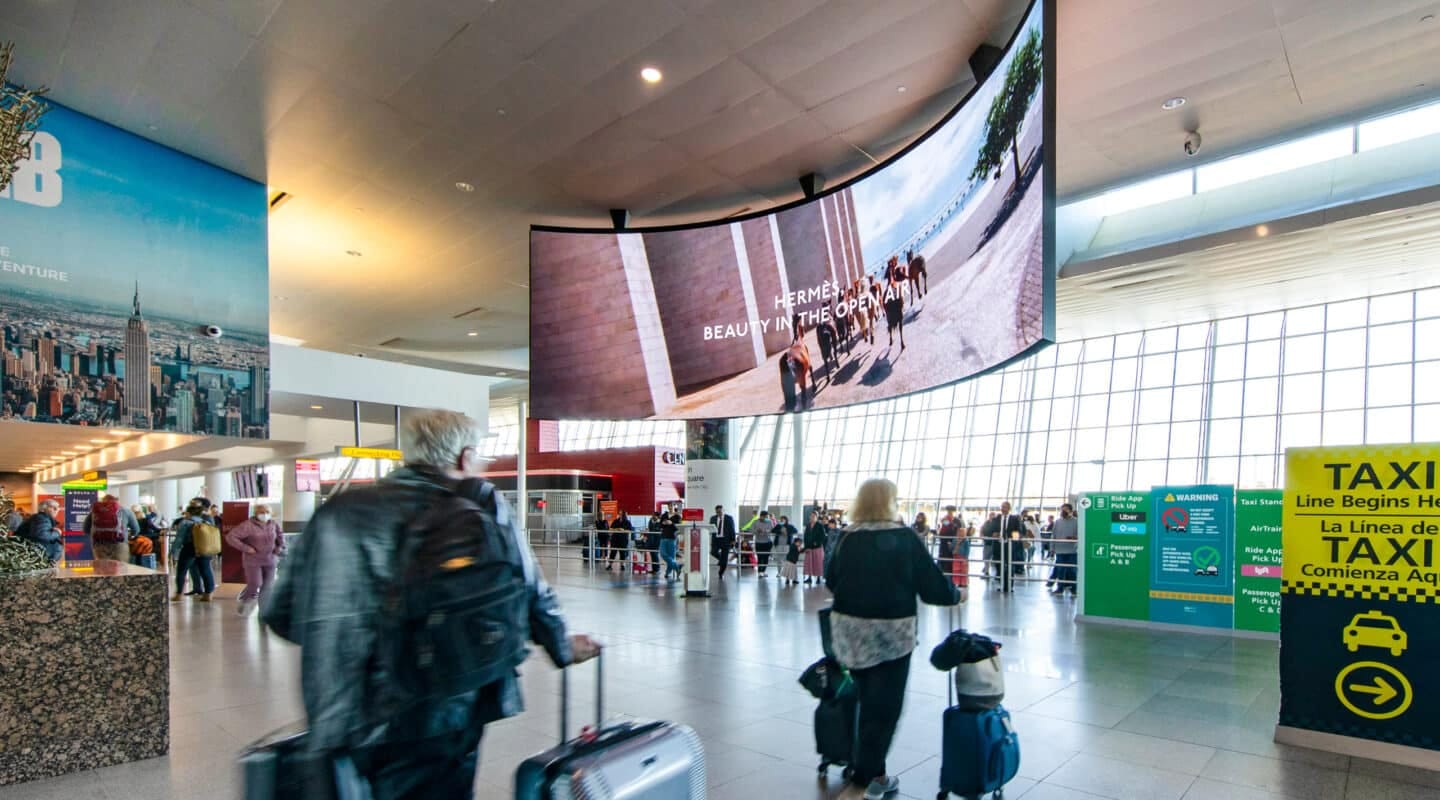
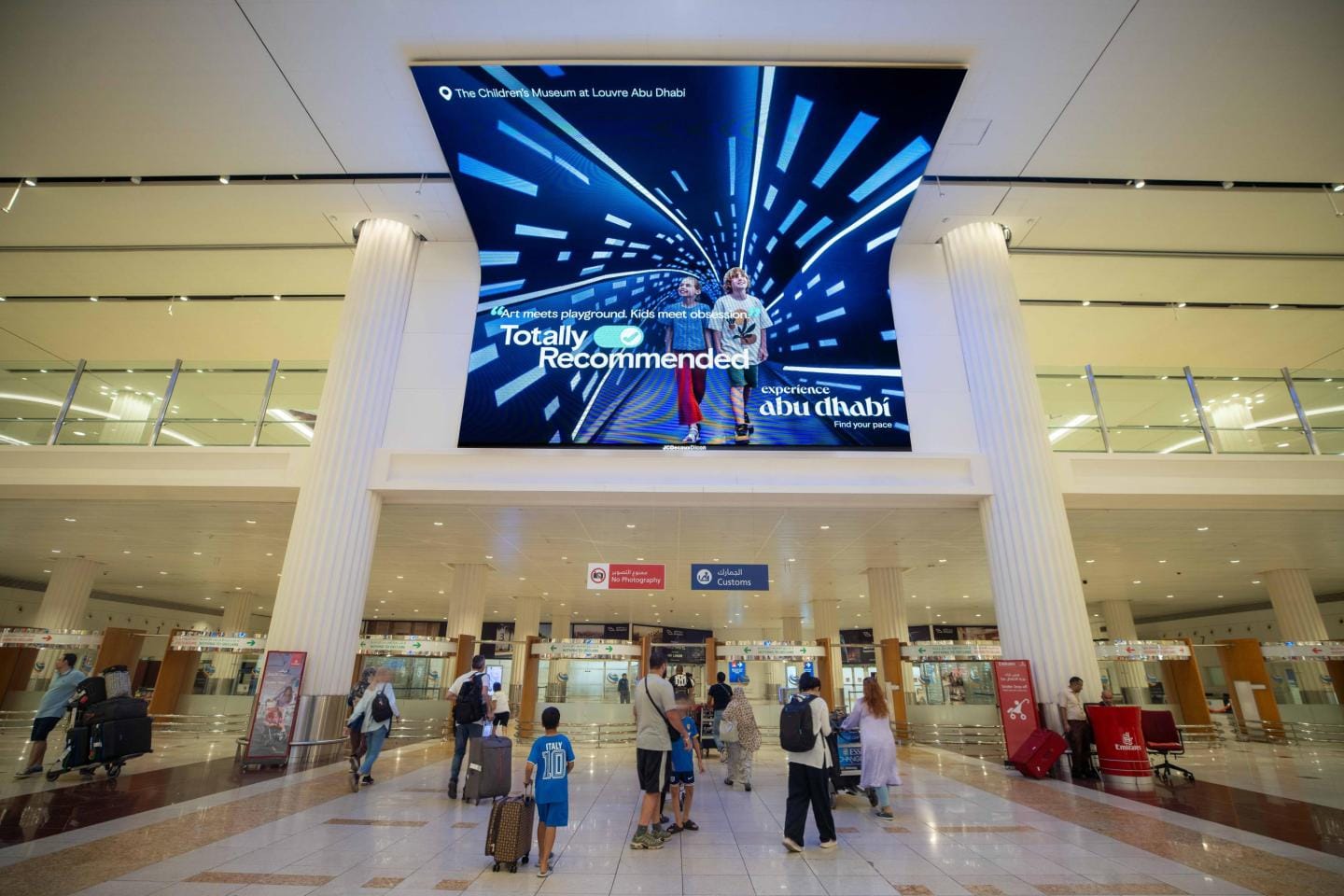
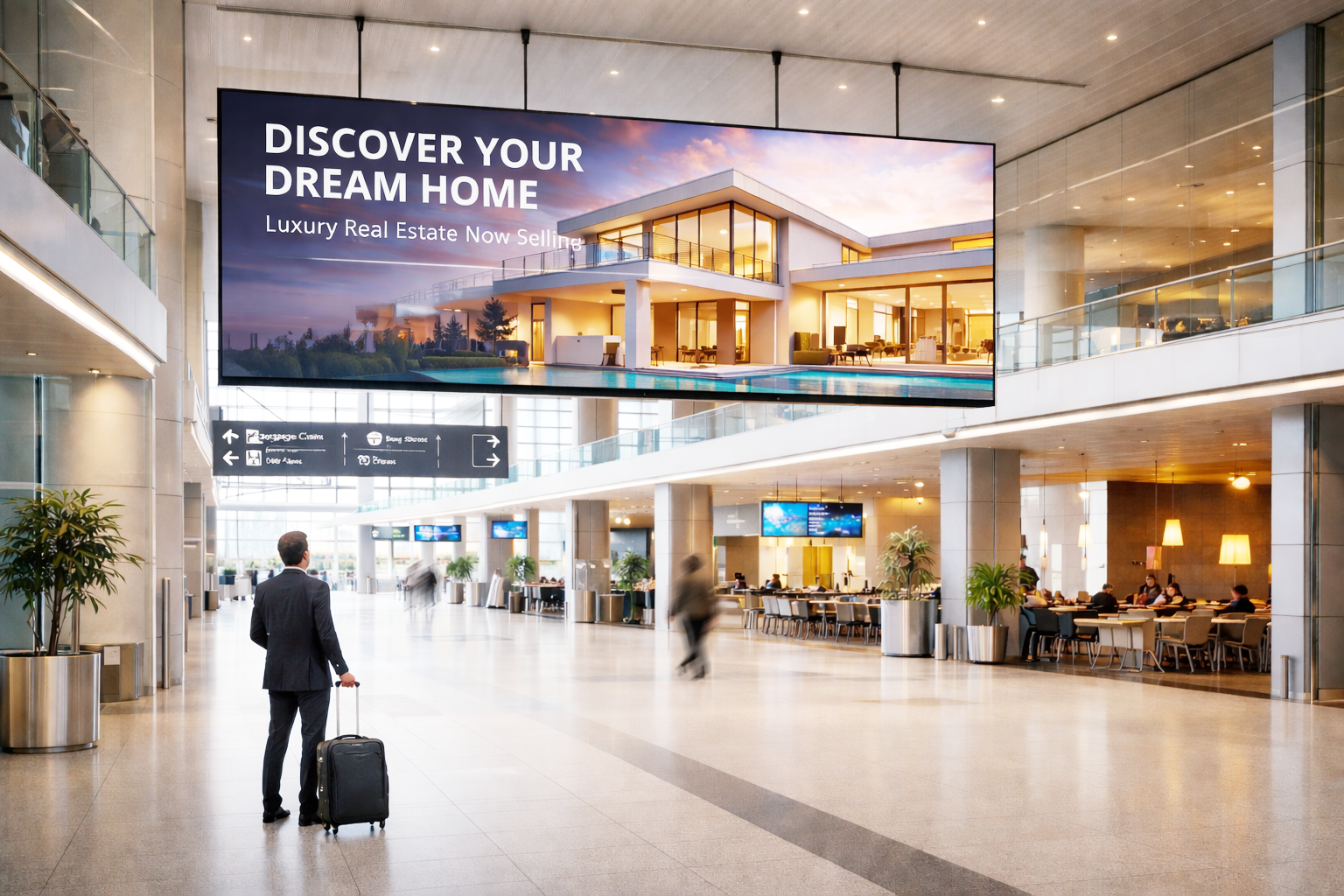
- Advertising opportunity: Masscom Global positions CJM as a low-cost, high-purity international traveller buy. A single small terminal with one route means a handful of positions covers the entire flow, and because passengers here are transitioning onto ferries with waiting time built in, exposure is unusually long. Masscom concentrates weight into the December to April and July to August island seasons when international share peaks.
Airport Advertising is Complex to Get Right
We help you execute faster, with proven results and local insight most planners lack starting now.
Talk to an ExpertCatchment Area and Economic Drivers
Top 10 Cities and Districts within 150 km, Marketer Intelligence:
- Chumphon city: The provincial capital, commercial and administrative centre, and the rail junction where the main southern line meets the province. Delivers the business, government, healthcare and retail audience for the whole province.
- Pathio: The district containing the airport, combining coastal tourism at Thung Wua Laen with coconut and fruit agriculture. Produces both hospitality operators and plantation households.
- Tha Sae: The heart of the province's robusta coffee industry, with established local roasting brands supplying domestic manufacturers and export markets. A concentrated plantation owner audience with processing and equipment spending.
- Lang Suan: The province's second commercial centre and a major fruit trading town, particularly for durian and mangosteen. Delivers traders, packhouse operators and exporters with genuine cold chain and logistics requirements.
- Sawi: Coastal and inland district combining fishing, palm oil and fruit, producing small to mid-scale agricultural and marine business owners.
- Thung Tako: Palm oil and rubber district with landholding households and harvest-linked purchasing cycles.
- Phato: Inland district known for river tourism and fruit growing, contributing both eco-tourism operators and plantation families.
- Bang Saphan, Prachuap Khiri Khan: Roughly 90 kilometres north, adding coastal tourism, fishing and an industrial and steel-related employment base to the northern catchment.
- Ranong city: Around 120 kilometres west across the isthmus, the Andaman counterpart province, adding cross-peninsular business movement and Myanmar border commerce to the wider catchment.
- Ko Tao, Surat Thani province: Approximately 85 kilometres by sea and reached almost entirely through Chumphon. A concentrated international dive training economy that is functionally part of this airport's catchment despite lying in another province.
International Traveller and Agricultural Wealth Intelligence:
Two audiences define this airport and neither is conventional. The first is an international one: young travellers from Europe, the United Kingdom, Australia, Israel, North America and increasingly East Asia, arriving on combined air and ferry tickets to Ko Tao for dive certification and to Ko Phangan and Ko Samui for the wider island circuit. They are not wealthy individually, but they arrive in volume, they are highly receptive at the point of arrival, and they are making immediate decisions about connectivity, insurance, payments and activities. The second is domestic and genuinely affluent: plantation families whose durian, coconut and coffee holdings have appreciated substantially on the back of the China export boom, in a country accounting for the large majority of global fresh durian exports.
Economic Importance:
Four engines drive this catchment. Fruit agriculture leads, with durian as the highest-value crop and coconut and mangosteen alongside it, oriented heavily toward Chinese demand. Coffee is a provincial signature, with Chumphon growing roughly 60 percent of Thailand's total crop. Palm oil, rubber and fishing underpin the rural and coastal districts. Tourism, concentrated on the Gulf islands and the province's own beaches, provides the international traveller flow. Above all four sits the prospective trans-peninsular corridor, for which Chumphon is the eastern terminus.
Business and Industrial Ecosystem
- Durian, coconut and tropical fruit production and export: The province's highest-value agricultural activity, producing orchard owners, packhouse operators, exporters and traders with substantial cold chain, packaging, certification and logistics spending, and rapidly rising incomes tied to Chinese demand
- Robusta coffee cultivation and processing: Roughly 60 percent of Thailand's coffee crop, with established local brands supplying domestic instant coffee manufacturers and export markets, creating a processing and equipment purchasing audience
- Palm oil, rubber and fishing: The volume base of the rural economy, generating plantation owners, mill operators and fleet owners with machinery and finance requirements
- Tourism, dive operations and marine services: Island resorts, dive schools, ferry operators and transfer businesses across Chumphon, Ko Tao, Ko Phangan and Ko Samui, all with equipment, insurance and marketing spend
Passenger Intent, Business Segment:
Business travel at CJM is on the Bangkok corridor and is transaction-focused. Fruit exporters and packhouse operators travel to meet buyers, negotiate Chinese export contracts and handle certification. Coffee processors meet manufacturers and distributors. Plantation and fishing owners see financiers and equipment suppliers. Provincial officials attend ministry meetings, and a growing stream of engineers, developers and logistics consultants assesses the corridor and port opportunity. Cold chain and refrigeration, agricultural machinery, packaging, export finance, logistics and freight forwarding intercept this audience with precision.
Strategic Insight:
The B2B opportunity here is defined by one commodity story. Durian income has transformed the purchasing power of orchard-owning families across this province, and that money moves into land, pickup trucks, gold, construction and children's education, alongside orchard investment in irrigation, netting, fertiliser and cold chain. No competing advertiser is present at this terminal. For agricultural input suppliers, equipment manufacturers, packaging companies and rural lenders, CJM offers uncontested visibility with growers at precisely the moment their sector is generating the most cash it ever has.

Tourism and Premium Travel Drivers
- Ko Tao: Reached in the shortest crossing from Chumphon and one of the world's principal scuba certification destinations, drawing a continuous international stream of divers and instructor trainees. The single most important audience driver at this airport
- Ko Phangan and Ko Samui: Both reachable by catamaran from Chumphon on combined tickets, extending the airport's relevance across the full Gulf island circuit including the wellness, festival and resort economies
- Chumphon's own coast and marine park: Thung Wua Laen beach, the Mu Ko Chumphon islands and the Chumphon Pinnacle dive site, an internationally recognised whale shark location, supporting a domestic and specialist visitor economy
- The Prince of Chumphon shrine: A site of deep national reverence honouring the founding figure of the Royal Thai Navy, drawing sustained domestic pilgrimage and respectful visitation year-round
Passenger Intent, Tourism Segment:
The international traveller arriving at CJM is mid-journey and decision-heavy. They have just landed in a small terminal, they are about to board a ferry, and within hours they will buy a SIM or data package, arrange insurance, book accommodation, select a dive school and start using cards or wallets in a cash-heavy environment. That is an unusually dense cluster of purchase decisions concentrated into a single transit moment, and the terminal is the last controlled environment before it happens. The domestic traveller is a different proposition: family and holiday travel to the province's own beaches and the islands, receptive to hospitality, food, transport and gifting categories.
Travel Patterns and Seasonality
Peak seasons:
- December to April: The strongest and longest window. Gulf sea conditions are favourable, island demand peaks, and the international share of the passenger mix is at its highest
- April, Songkran: The national holiday overlays domestic homecoming and family travel onto the international peak, producing the busiest period of the year
- July and August: The European and Australian summer window, delivering a second strong international peak, and notably the Gulf coast remains viable while the Andaman side is in monsoon
- October to December, northeast monsoon: The Gulf coast's wet season, with rough sea conditions disrupting ferry crossings and suppressing island demand. This is the weakest window and should carry minimal weight
Event-Driven Movement:
- Ko Tao dive season peaks (December to April and July to August): Not a single event but the airport's defining demand pattern, delivering continuous international arrivals in a concentrated purchase-decision state. The priority window for connectivity, insurance, fintech and equipment advertisers.
- Songkran (mid April): Thailand's traditional new year, combining domestic homecoming with peak international island travel. The highest volume period of the year and the strongest domestic purchase-intent window.
- Durian harvest and export season (roughly April to August in the South): Income realisation for the province's highest-value crop, driving equipment, vehicle, construction and finance purchasing among orchard families.
- Full moon and island festival cycles on Ko Phangan (monthly): Recurring international arrival surges on a predictable lunar cycle, routing substantially through Chumphon and Surat Thani.
- Prince of Chumphon commemoration (May): A significant domestic observance drawing naval and civilian visitation to the province.

It’s Not Just Where You Advertise - It’s How Fast You Execute
We combine local insight with fast rollout to deliver results for you, now.
Talk to an ExpertAudience and Cultural Intelligence
Top 2 Languages:
- Thai, Central and Southern: Central Thai is the language of government, banking, formal business and national media, and the default for institutional and financial categories addressing the plantation and business audience. Southern Thai carries strong regional identity in everyday use and adds authenticity to consumer creative aimed at local households.
- English: Genuinely necessary here rather than optional, because the international share of this terminal's traffic is high and the island economies downstream operate primarily in English. Any campaign targeting the dive and island traveller must be executed in clear, direct English, with consideration of German, French, Hebrew and Chinese as secondary layers depending on the season and the source market being prioritised.
Major Traveller Nationalities:
Thai domestic travellers form the largest single group on the Bangkok corridor. The international share is unusually high for a Thai regional airport, led by the United Kingdom, Germany, France, the Netherlands, Scandinavia, Australia, Israel, Canada and the United States, with growing volumes from China, South Korea and India. The profile skews young and independent, travelling on multi-country Southeast Asian itineraries with Ko Tao as a fixed point for dive certification. Campaign creative should run a bilingual Thai and English structure as standard, with international-facing execution weighted to the December to April and July to August windows.
Religion, Advertiser Intelligence:
- Theravada Buddhism, approximately 90 percent or above: Dominant and actively practised across the province. The Buddhist lunar calendar governs domestic travel and household spending through Songkran, Khao Phansa, Ok Phansa and Loi Krathong, with merit-making representing a genuine recurring financial commitment for local families. Financial services, telecommunications, gifting, food and transport advertisers benefit from calendar alignment.
- Islam, approximately 3 to 6 percent: A modest minority, smaller than in the deep South but present. Ramadan and Eid create distinct travel and food spending peaks, and halal provision is a real service consideration for hospitality and food advertisers, particularly given Malaysian and Middle Eastern visitor flows to the islands.
- Chinese folk and Mahayana practice alongside Buddhism: Present within the province's commercial families, with Chinese New Year driving family gathering, gifting and business hospitality. Increasingly relevant as Chinese buyers and traders engage directly with the durian export trade.
- International visitors, predominantly secular: The dive and island audience is largely non-religious in its travel motivation and responds to experience, safety, value and social proof rather than to any calendar observance. This audience requires an entirely separate creative logic from the domestic one.
Behavioral Insight:
Two audiences, two decision models, and a campaign must choose or split. The international traveller decides fast, on peer review and visible social proof, with price sensitivity that coexists with willingness to spend meaningfully on the specific thing they came for, which is diving. Safety credibility matters enormously to this group and converts better than discount messaging. The plantation and business audience decides slowly, collectively across a family, and on relationship and service reliability rather than brand polish, with purchasing clustered tightly around harvest income. Masscom builds these as separate propositions in the same terminal rather than diluting one message across both.
Outbound Wealth and Investment Intelligence
Chumphon presents a more interesting capital picture than its passenger count implies, because the durian and coffee export boom has created genuine new rural wealth in this province over the past decade, and because the airport simultaneously carries an internationally mobile if not individually wealthy traveller flow.
Agricultural Wealth and Domestic Property Investment:
Orchard-owning families in Chumphon have seen substantial income growth as Chinese demand lifted durian values, within a national export sector that has grown strongly over the past decade. That money is deployed conservatively and locally: additional orchard land, irrigation and cold chain investment, house construction, gold, pickup trucks, and Bangkok, Hua Hin or Surat Thani property for the next generation. This is the province's real wealth story, and domestic developers, land services, construction materials, vehicle finance and wealth advisory firms have a live and growing audience here that is almost entirely unaddressed at the airport.
Outbound Education Investment:
Education is where this new agricultural income is most consistently and most ambitiously deployed. Families send children to Bangkok, Hat Yai and Surat Thani for secondary and tertiary study, with overseas study concentrated on China, Taiwan, Singapore, Australia and increasingly the United Kingdom. Chinese-language study carries particular practical value in a province whose principal export market is China, and agricultural science, food technology and logistics qualifications are directly relevant to family businesses. Universities, colleges, language schools and student finance providers reach parents here at the exact point their sector is generating record income.
International Traveller Financial Behaviour:
The other outbound flow at this airport is not investment but expenditure by internationally mobile young travellers. This group is actively selecting travel money cards, multi-currency wallets, eSIM and data providers, travel and dive insurance, and accommodation and activity platforms, frequently at the moment of arrival. For fintech, telecommunications, insurance and travel platform advertisers this is one of the most efficiently targeted audiences available in Thailand, because the terminal captures them before they reach the island and before those decisions are made.
Strategic Implication for Advertisers:
Chumphon supports two entirely credible campaign propositions. Fintech, eSIM, telecommunications, travel and dive insurance and booking platforms should treat CJM as a precision intercept for an international audience about to make exactly the decisions they sell. Agricultural equipment, cold chain, packaging, construction, vehicle finance and education providers should treat it as uncontested access to plantation families in the strongest income period their sector has known. Masscom Global activates CJM alongside Bangkok Don Mueang, Surat Thani, Samui and Phuket, so a small placement here sits inside a campaign with real reach across the same traveller journeys.
Airport Infrastructure and Premium Indicators
Terminals:
- A single compact terminal located roughly 35 kilometres north of Chumphon city in Chum Kho, Pathio district, opened on 14 March 1998 and operated by Thailand's Department of Airports. The scale means a very small number of positions covers the entire passenger flow
- Facilities including waiting areas, food and beverage, retail, banking and ATM provision, and dedicated ferry and onward transfer desks that hold passengers within the terminal environment while transfers are arranged
Premium Indicators:
- The terminal's genuine asset is the integrated air and sea product: combined flight and high-speed catamaran ticketing to Ko Tao, Ko Phangan and Ko Samui, with transfer desks operating inside the airport. This converts a small domestic terminal into a functioning international gateway
- Roughly fifty minutes flying time from Bangkok, making Chumphon the quickest air access point to the northern Gulf islands and a genuine time advantage over the alternatives
- Positioned on the main southern railway line at a significant junction, which gives the province multimodal connectivity that most Thai regional airports lack and which underpins the corridor proposal
- Efficient passenger processing with short queuing and screening times, producing a relaxed rather than congested environment that holds attention well
Forward-Looking Signal:
Chumphon is the eastern terminus of Thailand's proposed trans-peninsular corridor, with a deep-sea port planned at Laem Riow connected by roughly 89 kilometres of motorway and dual-track rail to Ranong on the Andaman coast. The full project, costed at around 997 billion baht, remains a live but contested proposal facing environmental and parliamentary scrutiny, and the latest government signals indicate priority shifting toward port upgrades ahead of the complete corridor. Chumphon's advantage is that it already has rail connectivity to the national network, which makes phased development here more straightforward than on the Andaman side. Alongside this, durian and coconut export demand continues to lift provincial incomes. Masscom Global advises agricultural, logistics, construction and financial clients to establish presence now, while rates reflect a 190,000 passenger airport rather than a corridor terminus.
Airline and Route Intelligence
Top Airlines:
Two carriers serve Chumphon. Nok Air and Thai AirAsia both operate the Bangkok Don Mueang route, seven days a week, with a combined schedule of roughly two to three daily rotations. The presence of two competing operators rather than one is a meaningful stability advantage over comparable Thai regional airports.
Key International Routes:
There are no scheduled international flights to or from Chumphon. The international function of this airport is achieved through the sea leg rather than the air leg: passengers arrive domestically from Bangkok and transfer directly onto catamarans to Ko Tao, Ko Phangan and Ko Samui, having typically flown into Thailand internationally at Bangkok. This makes CJM an unusual and valuable position, a domestic terminal carrying a high international passenger share.
Domestic Connectivity:
Bangkok Don Mueang is the sole scheduled destination, approximately fifty minutes flying time. Surat Thani, Samui and Nakhon Si Thammarat serve as alternative gateways to the southern Gulf islands, and the mainline railway and long-distance bus network compete directly for the same island traffic, particularly among budget travellers taking the overnight train.
Wealth Corridor Signal:
The route structure reveals an airport whose value lies in what happens after the flight rather than in the flight itself. The Bangkok corridor carries agricultural exporters, business owners and officials on necessity travel, alongside a large flow of international travellers using the fastest available route to a dive destination. The more significant corridors at Chumphon are the agricultural export route to China and the sea route to the islands. Advertisers should understand the terminal as an intercept point on two journeys rather than as a destination audience in itself.
Media Environment at the Airport
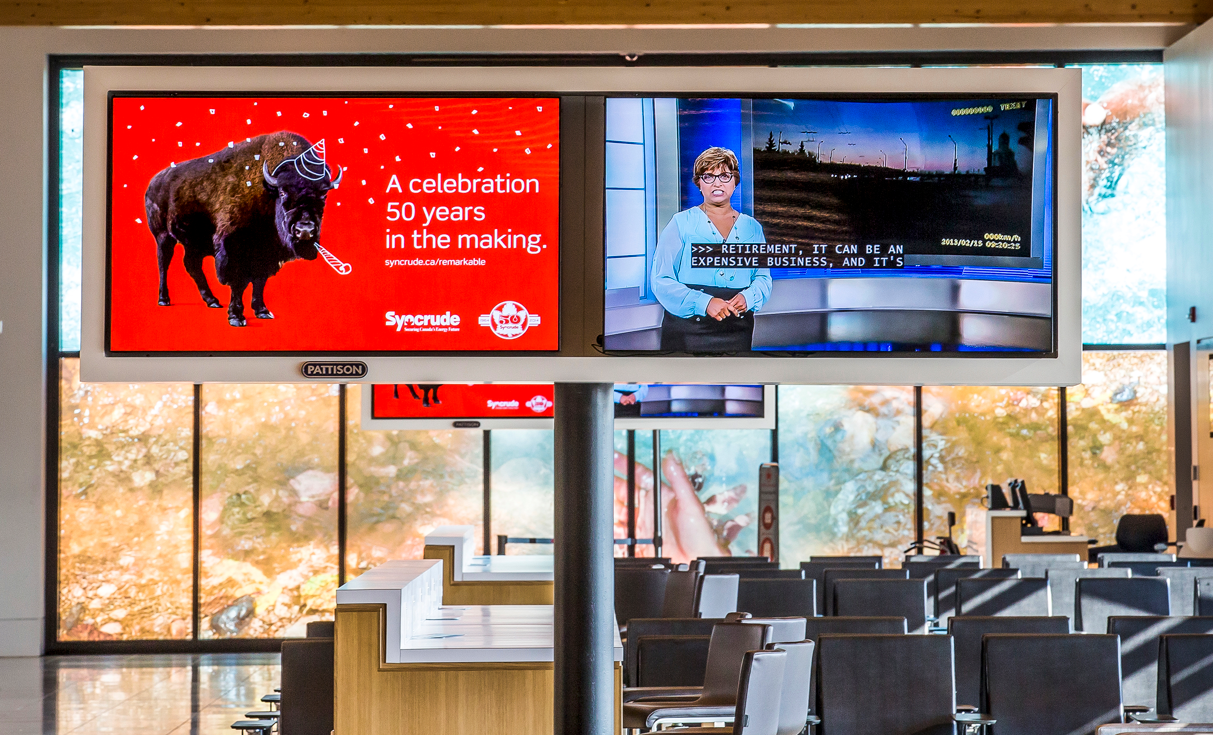
- Single small terminal with effectively no advertising clutter, meaning a handful of positions delivers complete and repeated coverage of the entire passenger base at very low absolute cost
- Dwell is unusually long for an airport of this size because a substantial share of passengers are waiting for coordinated ferry transfers rather than simply exiting, and transfer desks hold them inside the terminal while onward legs are arranged
- The environment is functional and relaxed rather than premium, which suits practical, travel-utility and equipment categories and works against aspirational luxury positioning
- Masscom Global provides inventory access, position selection across arrivals, departures and the transfer waiting areas where dwell is longest, and season-aligned flighting across the December to April and July to August island windows
Strategic Advertising Fit
Best Fit:
- Telecommunications, eSIM, data and roaming: The clearest opportunity at this airport. International arrivals need connectivity before reaching the island, and the terminal is the last controlled moment to sell it
- Travel, medical and dive insurance: A high-relevance purchase for an audience about to undertake scuba training, where safety credibility converts far better than price
- Travel money cards, multi-currency wallets and payment fintech: Reaching internationally mobile travellers at the point they are choosing how to spend across a multi-country itinerary
- Dive training providers, equipment and outdoor apparel: Directly aligned to the reason most international passengers are here
- Accommodation, activity and transfer booking platforms: Intercepting travellers mid-journey with onward legs still unbooked
- Agricultural equipment, irrigation, packaging and cold chain: Serving durian, coconut and coffee growers and packhouses in the strongest income period their sector has known
- Vehicle and equipment finance, construction materials: Where plantation income actually gets spent, with no competing category presence
- Universities, colleges and language schools: Reaching plantation families deploying record agricultural income into education
Brand Alignment at a Glance:
| Category | Fit |
|---|---|
| Telecommunications, eSIM and roaming | Exceptional |
| Travel, medical and dive insurance | Exceptional |
| Payment fintech and travel money | Strong |
| Dive training, equipment and outdoor apparel | Strong |
| Agricultural equipment, cold chain and packaging | Strong |
| Vehicle finance and construction materials | Moderate |
| Education and language schools | Moderate |