




Airport at a Glance
| Field | Detail |
|---|---|
| Airport | Buri Ram Airport |
| IATA Code | BFV |
| Country | Thailand |
| City | Buriram, Isaan (Northeastern Thailand) | Primary Audience | International motorsport visitors, domestic Thai sports and heritage tourists, returning Isaan migrant workers and their families |
| Peak Advertising Season | Late February to March, November to February, April |
| Audience Tier | Tier 3 by baseline volume, Tier 1 for one week each year |
| Best Fit Categories | Automotive and motorcycle brands, beverages and telecoms, remittance and financial services, agricultural equipment and inputs |

Buri Ram Airport sits 35 kilometres north of the provincial town and roughly 40 minutes from the Chang International Circuit, and for most of the calendar it operates as a modest domestic gateway served by a single low-cost carrier flying Airbus A320 equipment to Bangkok. Then, at the end of February, it becomes the arrival point for the opening round of the MotoGP World Championship. The 2025 event drew close to 100,000 spectators on race Sunday and 224,634 total gate entries across four days, and Thailand has held the season opener for two consecutive years under a hosting agreement extended through 2031.
That combination is what makes this airport commercially unusual. Advertisers get a low-cost baseline environment reaching Isaan's domestic and returning migrant population year-round, plus a concentrated annual window in which international motorsport visitors from Europe, Australia, and across Asia pass through a single small terminal. The circuit is FIA Grade 1 certified and shares a site with a football club that has won the Thai top flight ten times. Buriram has built a sports economy where none existed, and this airport is its front door.
Advertising Value Snapshot
- Passenger scale: Baseline scheduled capacity of 17 weekly A320 rotations to Bangkok's two airports, with severe event-driven peaking. Annual totals are not published.
- Traveller type: International motorsport visitors during the Grand Prix window, domestic Thai sports and heritage tourists, and returning Isaan migrant workers and their families year-round.
- Airport classification: Tier 3 by baseline volume, Tier 1 for the Grand Prix week. Advertisers should treat these as two different media buys with two different creative strategies.
- Commercial positioning: Thailand's sports tourism gateway and the access point to the country's only MotoGP venue and one of Southeast Asia's premier motorsport facilities.
- Wealth corridor signal: The airport sits on Thailand's domestic labour and remittance corridor between Bangkok and Isaan, and on the international motorsport visitor corridor from Europe, Australia, Japan, and Indonesia.
- Advertising opportunity: A single small terminal means one brand can own the entire arrival and departure journey rather than compete for fragmented attention. Masscom Global secures placement that carries a low-cost baseline for eleven months and delivers an internationally significant audience for one week. Few airports in the world offer that asymmetry, and Masscom structures the buy to capture both.

Airport Advertising is Complex to Get Right
We help you execute faster, with proven results and local insight most planners lack starting now.
Talk to an Expert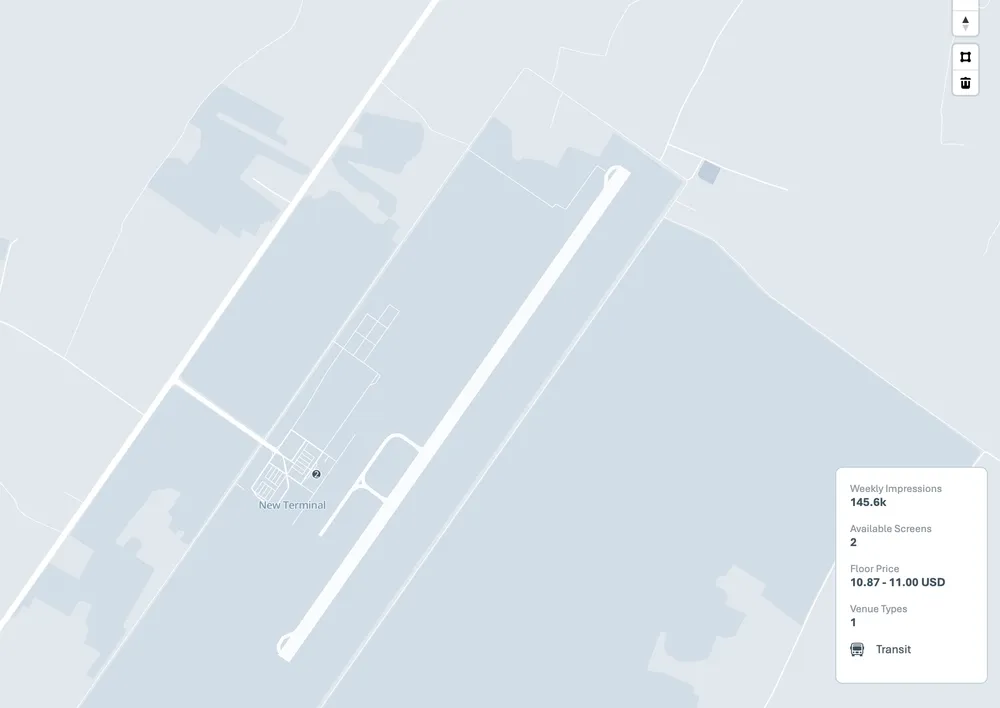
Catchment Area and Economic Drivers
Top 10 Cities within 150 km, Marketer Intelligence:
- Buriram town: The provincial commercial centre and the beneficiary of the sports economy. Concentrates hospitality, retail, motorcycle and pickup dealerships, and a consumer base materially supported by inbound remittances.
- Satuek: The airport district itself, sitting on the Mun River agricultural belt. Produces rice and cassava farming households and the agricultural input and machinery purchasing audience that comes with them.
- Nang Rong: The gateway town for the province's principal Khmer temple heritage site and a significant source community for overseas labour migration. Produces tourism services plus remittance-receiving households.
- Prakhon Chai: Heritage tourism and rice-belt agriculture. A market where household purchasing power is seasonal and harvest-linked rather than salaried.
- Lam Plai Mat: Core rice and cassava production district. Produces agricultural equipment, fertiliser, and farm finance purchasing decisions concentrated into planting and harvest windows.
- Surin: Neighbouring provincial capital known for silk weaving, jasmine rice, and Cambodian border trade. Adds a cross-border commerce audience and a craft export economy.
- Nakhon Ratchasima (Korat): The largest city in Isaan and its commercial and industrial anchor, with automotive component manufacturing and major retail. Produces the region's most substantial middle-class and industrial buyer base.
- Maha Sarakham: A university city and the education centre of the region. Produces a young, digitally engaged audience and an education services market.
- Roi Et: Agricultural processing centre with its own strong overseas labour migration history. Remittance-supported consumption and agri-finance demand.
- Si Sa Ket: Agriculture and Cambodian border trade, with a growing premium fruit export sector. Produces agri-export and logistics decision makers alongside farming households.
NRI and Diaspora Intelligence:
Isaan is Thailand's largest source region for both domestic and overseas labour migration, and Buriram sits at its centre. Workers from this catchment are employed across Taiwan, South Korea, Israel, Japan, Singapore, and the Gulf states under structured labour programmes, and the remittances they send are a foundational component of household income across the province. There is also a long-established pattern of family connection to Northern Europe, principally Scandinavia, Germany, Switzerland, the Netherlands, and the United Kingdom, which has created a resident foreign spouse and retiree population in the province and a steady seasonal travel flow. For advertisers, this is the defining audience insight at this airport: money flows into this catchment from abroad rather than out of it, and remittance, foreign exchange, banking, land and housing, and vehicle finance brands are speaking to households with more disposable capital than local wage data alone would suggest.
Economic Importance:
Three engines drive this catchment. The first is agriculture, principally jasmine rice, cassava, sugarcane, and rubber, which sets the seasonal rhythm of household spending across the entire province. The second is the sports and events economy built around the circuit and the football club, which the Sports Authority of Thailand has associated with roughly 7,000 jobs and which generates the province's only internationally visible economic activity. The third is remittance income from migrant labour, which underwrites consumer durables, housing, and vehicle purchases in a way that is invisible in provincial GDP figures. Masscom Global maps creative to whichever engine an advertiser is selling into rather than treating the terminal as one audience.
Business and Industrial Ecosystem
- Rice, cassava, and sugarcane agriculture: The economic base of the province. Produces farming households and cooperative purchasing decisions concentrated in agricultural machinery, inputs, and seasonal credit.
- Sports, events, and hospitality: The circuit and the adjacent football stadium anchor a hospitality, catering, security, and event services economy that peaks sharply and employs at scale during major fixtures.
- Silk, textiles, and craft export: The Buriram and Surin corridor is nationally significant for handwoven silk, producing a small-enterprise ownership class with export and e-commerce ambitions.
- Cross-border trade with Cambodia: Border checkpoints in the wider catchment generate logistics, agricultural export, and small-trader activity relevant to transport, packaging, and payments brands.
Passenger Intent, Business Segment:
Genuine corporate business travel through this airport is limited and advertisers should be honest about that. The commercially relevant business audience is event-linked: motorsport teams, sponsors, hospitality operators, broadcast crews, and sports marketing personnel arriving for the Grand Prix and major football fixtures, plus provincial officials and event contractors. Automotive and motorcycle brands, beverage and energy drink sponsors, telecoms, sports marketing agencies, and hospitality suppliers intercept them most effectively during those windows.
Strategic Insight:
The commercial value of this airport for B2B is narrow but genuinely global for a few days each year. During the season opener, the paddock and its commercial ecosystem, including manufacturer representatives, sponsor executives, and international media, all arrive through one small terminal with limited alternatives. For automotive, motorcycle, tyre, lubricant, and sponsorship-adjacent brands, that is a concentration of category decision makers that would otherwise require a trade show budget. Masscom Global builds that week as a discrete high-intensity campaign layered over a low-cost annual base.
Tourism and Premium Travel Drivers
- Chang International Circuit: A 4.554 kilometre FIA Grade 1 facility opened in 2014 with capacity for 100,000 spectators, hosting the MotoGP season opener and drawing the most attended round in Asia. The single most important advertiser-relevant asset in the province.
- Buriram United and the adjacent stadium: A ten-time Thai League 1 champion with a national supporter base, generating domestic fan travel across the season and a year-round sports identity for the province.
- Phanom Rung Historical Park: A major Khmer temple complex on an extinct volcano, nationally significant and the anchor of the province's heritage tourism. Draws domestic cultural tourism and the solar alignment festival crowd.
- Prasat Muang Tam and the Khmer temple circuit: A secondary heritage cluster that extends visitor stay length and supports the regional tourism economy beyond a single-site visit.
Passenger Intent, Tourism Segment:
Two distinct tourist audiences pass through here. The international motorsport visitor travels in groups, stays several days, spends heavily on hospitality and merchandise, and frequently continues to other parts of Thailand afterwards, which makes them valuable to national tourism, hospitality, and consumer brands well beyond Buriram. The domestic Thai visitor arrives for football, heritage sites, or family, is price-conscious, and responds to promotions, telecom offers, and consumer finance. Advertisers should not run one creative against both.
Travel Patterns and Seasonality
Peak seasons:
- Late February to early March: The defining window. The MotoGP season opener was staged from 27 February to 1 March in 2026, the second consecutive year Thailand has hosted the opening round, drawing international visitors and generating the highest-value passenger mix of the year by a wide margin.
- November to February: Thailand's cool dry season and the core domestic tourism period, coinciding with the Thai League football season and heritage site visitation.
- April: Songkran drives the largest domestic travel movement of the Thai year as Isaan workers return home from Bangkok and abroad. Volume is high and the audience is family-oriented and spending.
- May to October: The wet season and the softest period, with agricultural labour demand keeping the local population in place and tourism at its lowest.
Event-Driven Movement:
- MotoGP season opener (late February to early March): Nearly 100,000 spectators on race Sunday and 224,634 total gate entries across four days at the 2025 edition. International audience from Europe, Australia, Japan, and Indonesia. The single highest-value advertising week in the province and the anchor of any campaign here.
- Songkran (April): Thai New Year and the largest domestic return migration of the year. Concentrated family spending on gifts, vehicles, home goods, and telecom services.
- Thai League 1 season (August to May): Regular high-attendance fixtures at the adjacent stadium generate recurring domestic fan travel and sustained sports-adjacent consumer demand.
- Phanom Rung solar alignment festival (April and September): A heritage and cultural event drawing domestic tourism and national media attention to the province.
- Buddhist Lent observances, Khao Phansa and Ok Phansa (July and October): Drive merit-making, family gathering, and associated domestic travel and household spending.

It’s Not Just Where You Advertise - It’s How Fast You Execute
We combine local insight with fast rollout to deliver results for you, now.
Talk to an ExpertAudience and Cultural Intelligence
Top 2 Languages:
- Thai (Central): The official and commercial language, universal in written form and the correct default for all creative. Any brand advertising here must lead in Thai script, as English-only creative will fail with the domestic majority audience.
- Northern Khmer and Isaan Lao: Buriram and neighbouring Surin hold one of Thailand's largest Northern Khmer-speaking populations, alongside widespread Isaan Lao. These are the household languages of the catchment. Using them signals regional respect and authenticity in a province with a strong distinct identity, and they materially outperform generic Bangkok-produced creative on local trust.
English is essential as a secondary layer during the Grand Prix window, when the international visitor audience is present in force and dominates the terminal environment for several days.
Major Traveller Nationalities:
Baseline traffic is overwhelmingly Thai, drawn from Buriram, the surrounding Isaan provinces, and the Bangkok working diaspora returning home. During the Grand Prix, the mix shifts dramatically toward international visitors from Spain, Italy, the United Kingdom, Germany, Australia, Japan, Indonesia, and Malaysia, travelling in groups and staying multiple days. A resident European foreign spouse and retiree population in the province adds a small but consistent year-round international presence. Creative planning should assume a Thai-first environment eleven months of the year and an internationally weighted one for the Grand Prix window.
Religion, Advertiser Intelligence:
- Theravada Buddhism (approximately 95 percent of the catchment): The dominant framework and the driver of the domestic travel calendar. Khao Phansa and Ok Phansa, Makha Bucha, and Visakha Bucha generate merit-making expenditure and family gathering travel, while the temple-centred village structure makes community endorsement a powerful marketing lever. Benefits consumer goods, telecom, financial services, and domestic travel advertisers.
- Brahmanic and animist syncretism (widespread and layered onto Buddhist practice): Expressed through spirit house observance, agricultural blessing ceremonies, and the Khmer heritage temple sites that define the province. Creates seasonal spending around planting and harvest ritual and gives heritage-linked brand association genuine local resonance.
- Islam and Christianity (small minority shares): Present but limited in this catchment. Advertisers should not build campaign strategy around these communities in Buriram specifically, though they matter more in Thailand's south.
Behavioral Insight:
This is a value-conscious, family-centred, and community-influenced market where purchase decisions are rarely individual. Household spending follows two rhythms: the agricultural harvest cycle and the arrival of remittance income from family members working in Bangkok or abroad. Big-ticket purchases such as motorcycles, pickups, smartphones, and home improvements cluster around those inflows rather than around promotional calendars set in Bangkok. Effective creative here is warm, family-framed, price-transparent, and finance-explicit, because instalment terms often matter more than headline price. Aspirational luxury framing without a credible payment structure will not convert.
Outbound Wealth and Investment Intelligence
The wealth story at this airport runs in the opposite direction to most, and advertisers who understand that will outperform those who apply a standard template. Buriram is not an origin market for outbound capital deployment. It is a destination market for inbound remittance and a source market for outbound labour, and the commercially relevant flows are people leaving to earn and money arriving to be spent. Overlaid on this, once a year, is a genuinely international motorsport audience with real discretionary income passing through the same terminal.
Outbound Real Estate Investment:
Outbound international property investment from this catchment is negligible and advertisers in that category should look elsewhere in Thailand. The relevant property activity is inbound and domestic: remittance-funded land purchase, house construction, and home improvement within the province, plus resort and residential purchases by the resident foreign spouse and retiree population. Local and regional developers, construction materials brands, and housing finance providers have a strong audience here. International developers targeting Thai buyers should be buying Bangkok, Phuket, and Chiang Mai instead.
Outbound Education Investment:
Families in this catchment send children to Bangkok and to regional universities in Nakhon Ratchasima and Maha Sarakham rather than overseas. Where international movement occurs it is vocational rather than academic, principally structured technical training and skilled worker programmes in Japan and South Korea, which carry substantial fees and family financing. Vocational training providers, language schools, and employment-linked education brands have a real and underserved audience. International universities and boarding schools do not.
Outbound Wealth Migration and Residency:
The genuine migration story is labour, not wealth. Workers from this catchment move under structured programmes to South Korea, Taiwan, Israel, Japan, Singapore, and the Gulf, and the agencies, training providers, foreign exchange services, and banks serving that pipeline reach a concentrated and motivated audience at this airport. The reverse flow matters too: Thailand's long-stay and retirement visa pathways are directly relevant to the province's resident foreign population and their families. Citizenship-by-investment and golden visa advertisers will find no market here and should not buy this airport.
Strategic Implication for Advertisers:
The honest read is that this is a remittance-receiving consumer market with one internationally significant sporting week bolted onto it, and the two require entirely separate propositions. Remittance and foreign exchange providers, banks, vehicle and consumer finance, agricultural suppliers, telecoms, and overseas employment services should buy the year-round base. Global automotive, motorcycle, tyre, lubricant, beverage, and sports apparel brands should buy the Grand Prix window at high intensity. Masscom Global can also activate in the labour destination markets where this catchment's workers are based, closing the loop on the remittance corridor at both ends.
Airport Infrastructure and Premium Indicators
Terminals:
- A single compact domestic terminal operating a small number of daily rotations, located roughly 35 kilometres north of Buriram town and about 40 minutes by road from the circuit. Every passenger follows an identical path through one check-in and departure environment, so placement coverage is effectively complete from very few positions.
- Runway and apron capable of handling Airbus A320 and equivalent narrowbody equipment, which is what allows the airport to absorb surge capacity during major events rather than capping visitor arrivals.
Premium Indicators:
- Proximity to an FIA Grade 1 certified international circuit with 100,000 spectator capacity, a certification level that homologates the venue for the highest tier of international motorsport.
- Adjacency to a purpose-built football stadium hosting a ten-time national champion club, giving the province a year-round professional sports infrastructure that no comparable Thai province possesses.
- A confirmed MotoGP hosting agreement extending through 2031, which converts the annual event window from a speculative opportunity into a bookable multi-year media plan.
- Ground transport, shuttle, and rental infrastructure that scales for event weeks, indicating the airport is operationally prepared for surge volumes rather than overwhelmed by them.
Forward-Looking Signal:
The hosting agreement through 2031 is the single most important forward signal for advertisers at this airport, because it guarantees a repeatable annual concentration of international audience for at least five more editions. Thailand's tourism authority has publicly framed motorsport visitors as high-quality travellers who arrive in groups, stay longer, and continue to other parts of the country, which extends the value of a Buriram impression well beyond the province. There is active national discussion about Thailand's broader motorsport ambitions, and Buriram's position within that will shape long-term traffic. Inventory in a single small terminal is finite by definition, and event-week positions in particular are limited and will tighten as the race's profile grows. Masscom Global is advising clients to secure position and lock multi-year event-week availability now, before pricing catches up with the audience.
Airline and Route Intelligence
Top Airlines:
Scheduled service is operated exclusively by a single Thai low-cost carrier using Airbus A320 equipment. Additional carriers and charter capacity have historically been added around major event weekends.
Key International Routes:
There are no scheduled international services. All international passengers connect through Bangkok, which means the Grand Prix audience arrives via Suvarnabhumi or Don Mueang and transfers domestically.
Domestic Connectivity:
Fourteen weekly rotations serve Bangkok Don Mueang, the country's low-cost carrier hub, and three weekly rotations serve Bangkok Suvarnabhumi on Tuesdays, Thursdays, and Saturdays. The Suvarnabhumi service matters commercially out of proportion to its frequency, because it allows international arrivals to reach Buriram without crossing Bangkok between airports, which is the practical route most Grand Prix visitors take.
Wealth Corridor Signal:
The route network reveals a market entirely dependent on Bangkok as its interchange. There is no direct international access, which means every high-value international impression at this airport is a passenger who has deliberately chosen to make a domestic connection to get here. That self-selection is meaningful: nobody transits Buriram by accident. During the Grand Prix window in particular, the passenger who steps off that A320 has committed time and money specifically to be in this province, which makes them one of the most intentional audiences an advertiser can buy in Southeast Asia.
Media Environment at the Airport
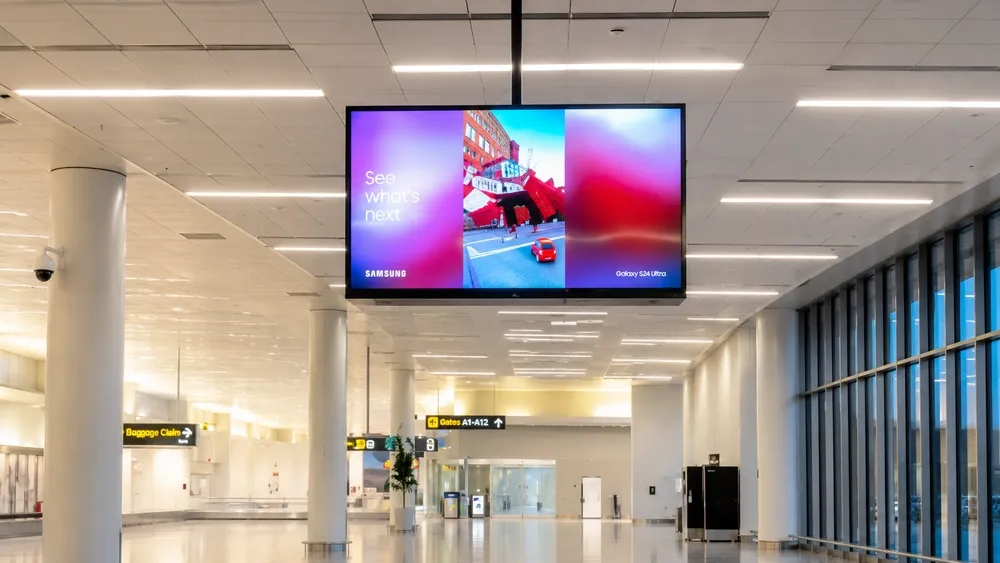
- A single small domestic terminal with minimal existing visual competition, so one brand can own the complete arrival and departure journey rather than fight for share against dozens of adjacent messages.
- Dwell is structurally long because low-cost carrier passengers arrive early, and during event weeks queueing and transfer coordination extend it further, converting a modest impression count into sustained attentive exposure.
- The event-week environment delivers an internationally weighted, category-relevant audience for automotive, motorcycle, and beverage brands at a fraction of what equivalent international sports audiences cost elsewhere.
- Masscom Global holds the access and execution capability to secure precision placement across check-in, security, and gate touchpoints, and structures campaigns as a low-cost annual base with a high-intensity event overlay rather than a flat generic buy.
Strategic Advertising Fit
Best Fit:
- Motorcycle manufacturers, tyres, and lubricants: Perfect category alignment with both the MotoGP audience and Thailand's motorcycle-first consumer market. The most obvious high-conviction buy at this airport.
- Automotive and pickup truck brands: The pickup is the defining household vehicle across Isaan, and the Grand Prix window adds an international automotive audience on top.
- Energy drinks, beverages, and FMCG: Thailand's energy drink category originates in this consumer segment, and the event environment amplifies it further.
- Telecommunications and mobile services: A young, digitally engaged, price-sensitive population with high mobile dependency and constant switching activity.
- Remittance, foreign exchange, and banking services: Reaches a catchment whose household economy is materially underpinned by inbound transfers from abroad and from Bangkok.
- Consumer and vehicle finance: Instalment credit is the mechanism through which most big-ticket purchasing happens in this market.
- Agricultural machinery, inputs, and farm finance: A rice, cassava, and sugarcane economy with concentrated seasonal purchasing decisions.
- Overseas employment agencies and vocational training: Serves one of Thailand's largest labour export catchments with a genuine and underserved need.
Brand Alignment at a Glance:
| Category | Fit |
|---|---|
| Motorcycles, tyres, and lubricants | Exceptional |
| Automotive and pickup trucks | Exceptional |
| Energy drinks, beverages, and FMCG | Strong |
| Telecommunications and mobile services | Strong |
| Remittance, foreign exchange, and banking | Strong |
| Agricultural machinery and inputs | Moderate |
| Overseas employment and vocational training | Moderate |








