

Airport at a Glance
| Field | Detail |
|---|---|
| Airport | Bishop International Airport (Flint Bishop) |
| IATA Code | FNT |
| Country | United States of America |
| City | Flint, Genesee County, Michigan |
| Annual Passengers | 687,489 (2025), with 344,893 enplanements, 54,232 aircraft operations, and 27.1 million pounds of cargo |
| Primary Audience | Florida-bound snowbirds and retirees, Chicago-connecting business travellers, automotive and chemical industry professionals, university and healthcare travellers |
| Peak Advertising Season | January to March, June to August, November to December |
| Audience Tier | Tier 2 |
| Best Fit Categories | Retirement finance and insurance, Florida and warm-climate real estate, healthcare and Medicare products, automotive and industrial B2B |
FNT handled 687,489 passengers in 2025 with 344,893 enplanements, 54,232 aircraft operations, and over 27 million pounds of cargo, placing it third in Michigan behind Detroit and Grand Rapids. The route structure tells advertisers everything they need. Chicago O'Hare accounts for roughly 27 weekly departures, more than 64 percent of all scheduled flights, feeding business travellers and international connections through a hub. Everything else is ultra-low-cost nonstop service to Florida and the sun belt. Masscom Global reads FNT as two clean, separable audiences reachable from a single terminal.
What makes this airport commercially distinct is the strength of the Michigan-to-Florida corridor it serves. Allegiant flies nonstop from Flint to Orlando Sanford, Tampa Bay St. Pete, Fort Myers Punta Gorda, Sarasota, Jacksonville, Fort Lauderdale, and Destin, plus Phoenix Mesa, Las Vegas, Nashville, Portland, and New Jersey. That is not a general holiday network, it is a retirement and second-home network. Behind it sits a catchment of heavy truck manufacturing, global chemical headquarters, elite engineering education, and major hospital systems. Masscom activates both a defined retiree wealth flow and a genuine industrial B2B base.
Advertising Value Snapshot
- Passenger scale: 687,489 passengers in 2025 across 54,232 aircraft operations, with cargo volume exceeding 27 million pounds and 98 based aircraft.
- Traveller type: Florida-bound snowbirds and retirees, Chicago-connecting business and international travellers, automotive and chemical sector professionals.
- Airport classification: Tier 2. Michigan's third busiest airport, with the lowest average airfares in the state and a self-selecting value-driven audience.
- Commercial positioning: Southeast Michigan's low-fare gateway to Florida and the sun belt, and the region's alternative to Detroit Metro.
- Wealth corridor signal: FNT sits on the Michigan-to-Florida snowbird corridor, one of the largest and most durable internal wealth migrations in the United States.
Advertising opportunity: A compact single terminal with security wait times routinely under ten minutes means passengers arrive relaxed and spend their buffer time seated in the gate area rather than queuing. That produces unusually long, attentive dwell for an airport of this size. Masscom Global secures placement across the pre-security and gate zones where that dwell concentrates.
Airport Advertising is Complex to Get Right
We help you execute faster, with proven results and local insight most planners lack starting now.
Talk to an Expert
Catchment Area and Economic Drivers
Top 10 Cities within 150 km, Marketer Intelligence:
- Flint: The airport's home city and a majority Black metropolitan core with deep church, community, and civic networks that carry exceptional referral weight for financial and healthcare brands.
- Grand Blanc and Fenton: The affluent southern suburbs of Genesee County. Executive, physician, and engineering households with high second-home ownership and premium automotive demand.
- Midland: Global chemical company headquarters and one of the highest household income concentrations in mid-Michigan. Corporate leadership, research scientists, and substantial retiree wealth.
- Saginaw and Bay City: Automotive component manufacturing, steering systems engineering, and a large established Mexican-American community. Industrial procurement and skilled trades audiences.
- Auburn Hills, Rochester Hills, and Troy: Automotive headquarters, engineering, and technology employment in northern Oakland County, among the wealthiest municipalities in Michigan.
- Pontiac and Waterford: Manufacturing legacy and healthcare employment, with lakefront residential wealth around the Oakland County lakes.
- Lapeer and Davison: Commuter and light manufacturing communities with practical, value-driven consumer behaviour and high vehicle ownership.
- Frankenmuth and Birch Run: Michigan's leading tourism town alongside a major outlet retail destination, together drawing millions of visitors annually into the catchment.
- Owosso and Mount Pleasant: Agriculture, higher education, and a significant tribal gaming and resort economy at the western catchment edge.
- Port Huron: The Blue Water border crossing to Sarnia, Ontario, adding cross-border commercial traffic and a modest Canadian passenger draw seeking lower US fares.
NRI and Diaspora Intelligence: FNT does not serve a large international diaspora, so the commercially relevant flows are domestic and regional, and they are substantial. The dominant pattern is the Michigan-to-Florida snowbird migration, in which retirees and pre-retirees hold or rent property in Florida and travel between two homes several times a year, generating exactly the traffic Allegiant built this network around. Within the catchment, Flint's majority Black population represents a large, cohesive, church-networked consumer audience that is systematically under-served by national advertising. Saginaw's Mexican-American community and Genesee and Oakland counties' Lebanese, Chaldean, and Arab-American populations add distinct cultural segments with genuine remittance, food, and family travel behaviour. Port Huron adds a small but real Canadian cross-border flow.
Economic Importance: The catchment economy remains anchored in heavy manufacturing, with truck assembly, metal stamping, engine production, and steering systems engineering across Flint, Saginaw, and Bay City, alongside a globally significant chemicals and materials headquarters in Midland. Healthcare is now among the largest employers, with multiple major hospital systems serving mid-Michigan. Higher education adds a nationally recruited engineering institution with a distinctive work-study rotation model, a public university campus in Flint, and further institutions across the region. Tourism through Frankenmuth and outlet retail contributes seasonal volume. For advertisers, the result is an audience mixing industrial decision-makers, healthcare professionals, and a large retiree base with real housing equity.
Business and Industrial Ecosystem
- Automotive manufacturing and heavy truck assembly: Plant leadership, engineering, and supplier management with recurring procurement authority and repeat travel patterns.
- Chemicals, materials, and advanced manufacturing: A global headquarters presence in Midland producing research, regulatory, and commercial leadership on regular business travel.
- Healthcare and hospital systems: Multiple major systems across Flint, Saginaw, and Midland generating clinical, administrative, and medical device procurement audiences.
- Engineering education and co-operative work programmes: A nationally recruited engineering university operating alternating study and industry placement terms, which generates unusually high scheduled student travel throughout the year.
Passenger Intent, Business Segment: Business travellers here overwhelmingly fly the Chicago corridor, using O'Hare to reach domestic and international destinations without driving to Detroit Metro. They are plant managers, engineers, supplier executives, hospital administrators, and academics, travelling on defined schedules and repeating the same route monthly. A meaningful share choose FNT specifically because fares are the lowest in Michigan and the terminal is fast, which means they are value-conscious by disposition. Industrial B2B, equipment finance, professional services, corporate banking, medical devices, and business travel brands intercept them most effectively.
Strategic Insight: The B2B value at FNT is the concentration of manufacturing and healthcare procurement in a terminal where 64 percent of departures funnel through one route. That single Chicago corridor carries the region's engineering, plant leadership, and clinical decision-makers repeatedly, which makes frequency achievable against the same individuals across a full quarter for a fraction of Detroit Metro pricing. The engineering university's rotation model adds a continuous flow of technically trained young professionals moving between study and industry placements nationwide. Masscom Global builds these campaigns around the manufacturing and healthcare procurement calendars so exposure aligns with capital and contract cycles.
Tourism and Premium Travel Drivers
- Frankenmuth and Bronner's Christmas Wonderland: Michigan's leading tourism destination draws millions of visitors annually, making Christmas retail a year-round economy in this catchment rather than a seasonal one.
- Back to the Bricks classic car festival, Flint (August): A major automotive heritage event drawing very large regional and national attendance, deeply resonant in the city where the industry was built.
- Crim Festival of Races and Michigan Renaissance Festival (August to September): Substantial regional event attendance supporting hospitality, retail, and automotive spend.
- Great Lakes shoreline, inland lakes, and regional casino resorts: Sustained domestic leisure demand supporting second-home ownership, boating, and recreational vehicle categories.
Passenger Intent, Tourism Segment: Outbound leisure intent here is unusually well defined. Passengers boarding Allegiant flights to Florida are frequently travelling to property they own or rent seasonally rather than to a hotel for a week, which makes them receptive to property services, mortgage and refinance products, home insurance, health cover, and relocation services rather than conventional holiday advertising. Winter departures skew older and longer-stay, summer departures skew family. Inbound visitors arriving for Frankenmuth, outlet retail, or major events carry committed hospitality and retail budgets with vehicle and dining spend open.
Travel Patterns and Seasonality
Peak seasons:
- January to March: The heart of the snowbird migration, when Michigan winter drives the longest-stay, highest-value departures to Florida and Arizona.
- June to August: Summer family leisure at maximum volume, combined with major regional event traffic and university term transitions.
- November to December: Holiday family travel plus the start of the winter migration south, overlapping with Frankenmuth's peak Christmas tourism season.
- Spring break periods (March and April): Concentrated family departures to Florida with the largest group sizes of the year.
Event-Driven Movement:
- Snowbird departure and return waves (October to November and March to April): A rolling rather than single-date pattern, and the most commercially valuable window at this airport for finance, insurance, and property advertisers.
- Back to the Bricks, Flint (August): Major automotive heritage festival with very large attendance, exceptional for automotive, insurance, financial services, and regional retail.
- Frankenmuth Christmas season (November to December): Sustained inbound tourism into the catchment with high retail and hospitality spend.
- Spring break (March): Concentrated family departures to Florida destinations with committed accommodation and entertainment budgets.
- University co-operative rotation transitions (recurring quarterly): Predictable movement of engineering students between study terms and national industry placements.
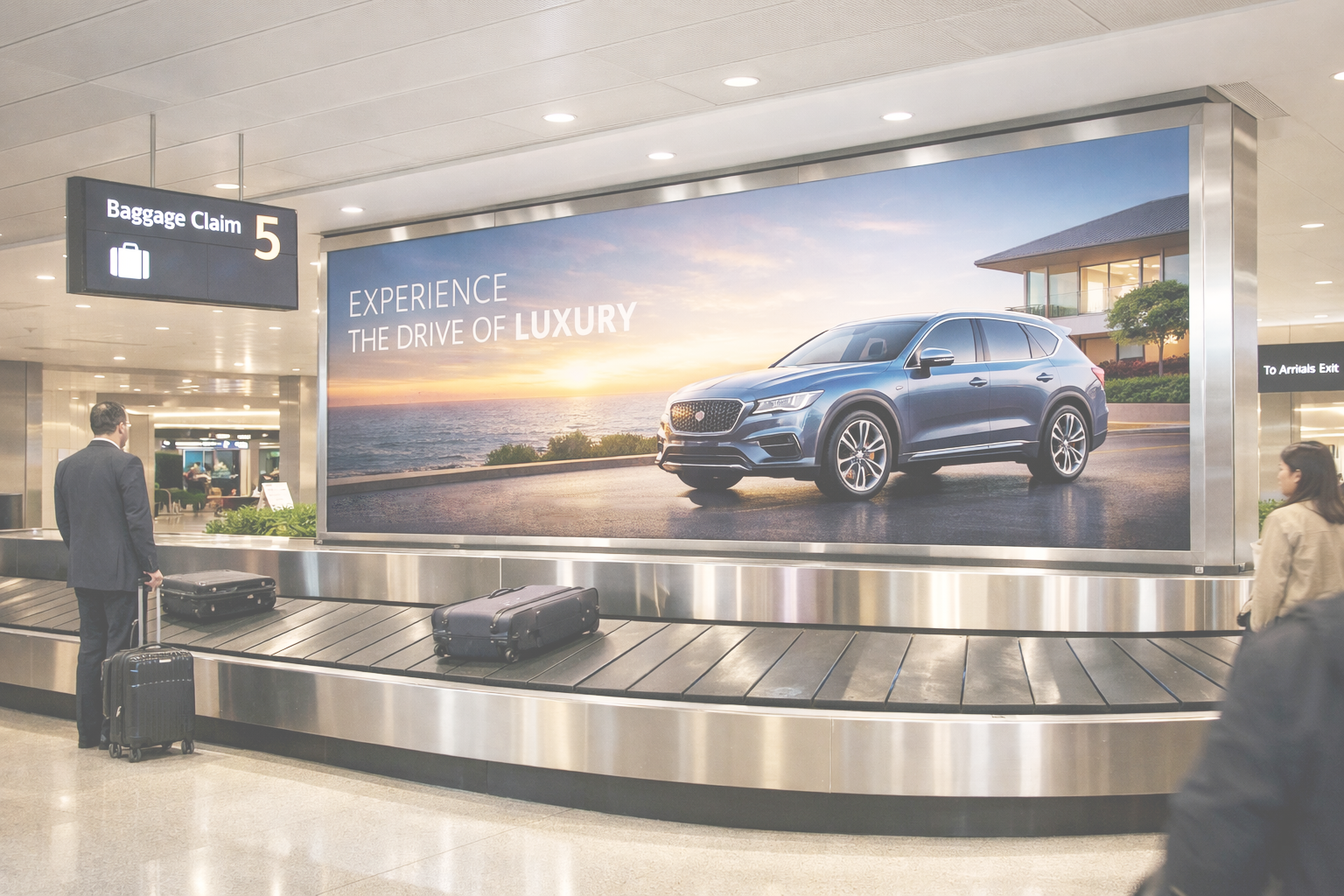
It’s Not Just Where You Advertise - It’s How Fast You Execute
We combine local insight with fast rollout to deliver results for you, now.
Talk to an ExpertAudience and Cultural Intelligence
Top 2 Languages:
- English: The functional language of essentially all traffic and the mandatory base for creative. This audience is value-literate and sceptical by disposition, having chosen this airport specifically on fare, so transparent pricing and concrete benefit claims substantially outperform aspirational framing.
- Spanish: Reflects an established Mexican-American community concentrated in Saginaw and Bay City, alongside a growing Hispanic presence across Genesee County. Arabic carries genuine secondary value given Lebanese, Chaldean, and wider Arab-American communities across Genesee and Oakland counties, particularly for food, telecom, remittance, and family financial products.
Major Traveller Nationalities: Traffic is overwhelmingly American domestic, drawn from Genesee, Saginaw, Bay, Midland, Lapeer, and northern Oakland counties, with a modest Canadian draw from Sarnia and southwestern Ontario via the Port Huron crossing. There is no scheduled international service despite the airport's name, so international travel is achieved through Chicago O'Hare, which positions FNT as an origin capture point for outbound international travellers. Foreign nationals appearing here are principally automotive and chemical sector visitors from Germany, Japan, South Korea, and Canada, alongside international engineering students. Creative should be English-first with concrete, verifiable claims.
Religion, Advertiser Intelligence:
- Protestant Christianity, including a strong Black church tradition (approximately 40 to 48 percent): Baptist, AME, and Church of God in Christ congregations in Flint carry exceptional community trust and referral authority, which makes church-adjacent credibility genuinely valuable for financial, insurance, and healthcare brands. Christmas, Easter, and Thanksgiving drive the heaviest family travel and gifting.
- Catholicism (approximately 18 to 24 percent): Deep Polish, Irish, Italian, and Hispanic heritage across Flint, Bay City, and Saginaw. Easter and Christmas plus wedding and confirmation cycles support jewellery, hospitality, and financial planning.
- Islam and Eastern Christianity, plus a substantial non-religious segment: Arab-American Muslim and Chaldean Catholic communities across Genesee and Oakland counties produce defined Ramadan, Eid, and Orthodox festival spending windows. The non-religious share is growing quickly among younger and professional segments and is most receptive to conventional lifestyle and value-transparent positioning.
Behavioral Insight: This is a value-first audience with more assets than income data suggests, which is an unusual combination worth understanding. Household wealth here sits in paid-off homes, union and manufacturing pensions, and Florida property rather than in salary, and decades of regional economic volatility have produced buyers who research thoroughly, distrust marketing polish, and respond powerfully to quantified savings and guaranteed outcomes. Loyalty runs deep once earned, and community and church referral carries more weight than national brand advertising. For the retiree segment specifically, security, healthcare access, and outliving their money are the dominant concerns, so propositions built on protection and certainty consistently outperform growth messaging.
Outbound Wealth and Investment Intelligence
The outbound proposition at FNT is domestic in its primary form and modest internationally, and advertisers should plan against that honestly. This is a market of retirees and pre-retirees converting Michigan home equity and manufacturing pensions into Florida and Arizona property, and the route network exists precisely to serve that pattern. International capital deployment is real but secondary, concentrated among the professional and corporate segment.
Outbound Real Estate Investment: Florida dominates overwhelmingly, with the Gulf Coast around Fort Myers, Punta Gorda, Sarasota, and Tampa St. Pete, plus Orlando, Jacksonville, Fort Lauderdale, and the Destin panhandle, all served nonstop from this airport. Arizona follows through the Phoenix Mesa route, drawing a distinct desert retirement segment. Nevada and Tennessee attract tax-motivated relocation. Internationally, activity concentrates on Mexico's Gulf and Pacific coasts, Costa Rica, Belize, and Panama for lifestyle and long-stay purchase, with Portugal, Spain, and Italy attracting a smaller retirement and heritage segment. Within the Arab-American and Chaldean communities, property acquisition in Lebanon, Iraq, and the wider Middle East is active and family-driven. Developers should recognise these as cash-capable buyers backed by home equity rather than mortgage-dependent purchasers.
Outbound Education Investment: Families here send students primarily within the United States, and the region's own engineering institution draws students nationally and internationally rather than exporting them. Where international education spending occurs, it concentrates on Canada, given proximity and cost, and on the United Kingdom and Ireland for postgraduate placement. The more marketable opportunity is technical and vocational: engineering certification, skilled trades qualification, and healthcare credentialing, all of which map directly to employers in the immediate catchment. International universities should lead with employment outcomes and cost comparison rather than campus lifestyle.
Outbound Wealth Migration and Residency: Second-residency demand is lifestyle and cost driven rather than tax or mobility driven, and it is modest. The relevant options are Mexican and Panamanian retirement residency, Costa Rica's pensioner programme, Portugal residency pathways, and Caribbean citizenship-by-investment among the small wealthy professional segment. Canadian residency and cross-border planning carries genuine relevance given proximity and family ties. Advertisers should size this category realistically and target it through the professional and Midland corporate segments rather than broadly.
Strategic Implication for Advertisers: Florida and sun-belt developers, mortgage and refinance providers, health insurers and Medicare plan operators, wealth and retirement income advisers, and relocation services should treat FNT as one of the most efficiently qualified snowbird origin points in the Midwest, because the route network filters the audience before the campaign does. International residency and property advertisers should treat it as a secondary market and target it precisely. Masscom Global activates both ends of the corridor, placing the same brand at FNT and at the Florida and Arizona destination airports where these owners land.
Airport Infrastructure and Premium Indicators
Terminals:
- A single compact passenger terminal serving all scheduled commercial traffic, with a straightforward layout, adjacent rental car facilities, and affordable terminal parking with free shuttle service.
- Security processing is consistently fast, with general line wait times routinely publicised at under ten minutes, which changes passenger behaviour materially by converting queue time into seated gate dwell.
Premium Indicators:
- No airline lounge provision, which keeps premium and business passengers in the shared concourse and gate environment where advertising exposure and dwell are highest.
- A substantial pre-security retail and concession offer relative to airport size, creating a genuine secondary dwell zone for meeters, greeters, and accompanying family.
- Significant general aviation presence with 98 based aircraft and 54,232 annual operations, reflecting corporate flight department activity across the automotive and chemical sectors.
- Cargo throughput exceeding 27 million pounds annually, indicating logistics and industrial activity beyond passenger operations.
Forward-Looking Signal: FNT competes on a clear and defensible proposition: the lowest average airfares in Michigan, minimal processing time, and an ultra-low-cost carrier operating base delivering nonstop sun-belt access that Detroit Metro cannot match on price. Its Florida network has broadened across seven destinations, and the Chicago corridor continues to carry the majority of scheduled departures with legacy carrier connectivity. As Detroit Metro parking, processing, and drive times continue to deteriorate for northern suburban travellers, the structural case for FNT strengthens rather than weakens. Media pricing here remains set against a mid-size regional airport rather than the asset base this audience represents. Masscom Global advises clients to secure position now, at current-cycle rates.
Airline and Route Intelligence
Top Airlines: Allegiant Air operates a base here with roughly 15 weekly departures, alongside United Airlines and American Airlines providing regional and mainline hub connectivity, principally on Bombardier CRJ and Airbus A320 family equipment.
Key International Routes: FNT operates no scheduled international service despite its name. International connectivity is achieved through Chicago O'Hare, which makes this airport an origin capture point for outbound international travellers before they reach a hub.
Domestic Connectivity: Around 11 nonstop destinations. Chicago O'Hare dominates with roughly 27 weekly departures, over 64 percent of all scheduled flights. Allegiant serves Orlando Sanford, Tampa Bay St. Pete, Fort Myers Punta Gorda, Sarasota, Jacksonville, Fort Lauderdale, Destin, Phoenix Mesa, Las Vegas, Nashville, Portland, and New Jersey.
Wealth Corridor Signal: This route map divides cleanly into two commercial propositions. Chicago is the business, medical, academic, and international gateway corridor, carrying repeat professional travellers with the highest frequency in the network. Everything else is a retirement and second-home corridor, with seven Florida destinations plus Phoenix Mesa and Las Vegas mapping precisely onto Michigan's snowbird settlement patterns. Nashville and Portland add family and relocation travel. The complete absence of international service confirms that anyone flying abroad from this catchment is captured here at origin. Almost nothing in this network is incidental.
Media Environment at the Airport
- A compact single-terminal layout means every passenger passes through the same check-in, security, and concourse sequence, so a small number of placements achieves near-total coverage compared with the multi-terminal buy required at Detroit Metro.
- Dwell is unusually long and attentive because security clears in under ten minutes while passengers still arrive on standard buffers, converting queue time into seated gate time with no competing stimulus.
- Substantial pre-security retail and concession space creates a second exposure zone reaching accompanying family and meeters, which matters in a market where multi-generational travel is common.
- Masscom Global provides direct inventory access across pre-security, check-in, security recomposition, gate hold, and baggage claim zones, with production and installation managed end to end.
Strategic Advertising Fit
Best Fit:
- Retirement income, annuities, and wealth management: Manufacturing pensions, home equity, and a large pre-retirement and retired population with real investable assets.
- Medicare plans, supplemental health, and private health insurance: An older catchment with high utilisation and defined annual enrolment purchase windows.
- Florida and sun-belt real estate: Seven nonstop Florida destinations plus Arizona make this a pre-qualified second-home buyer audience.
- Mortgage, refinance, and home equity products: Equity-rich Michigan households funding southern property purchases.
- Travel insurance and out-of-state medical cover: Structurally necessary for long-stay snowbirds and purchased seasonally.
- Automotive, pickup trucks, and SUVs: A catchment that builds trucks, celebrates automotive heritage, and has among the highest brand loyalty in the country.
- Industrial B2B, equipment finance, and medical devices: Manufacturing plant leadership and hospital procurement travelling the Chicago corridor.
- Regional healthcare systems and specialist services: Competing hospital networks marketing to a health-conscious older catchment.
Brand Alignment at a Glance:
| Category | Fit |
|---|---|
| Retirement finance and insurance | Exceptional |
| Medicare and private health products | Exceptional |
| Florida and sun-belt real estate | Strong |
| Automotive, trucks, and SUVs | Strong |
| Mortgage and home equity products | Strong |
| Industrial B2B and medical devices | Moderate |
| Regional healthcare and hospital systems | Moderate |
| Luxury fashion, duty free, and premium cabin products | Poor fit |
Who Should Not Advertise Here:
- Luxury fashion, haute couture, and high-end jewellery: Genuine wealth exists in Midland, Grand Blanc, and northern Oakland County, but this terminal's passenger profile is deliberately value-selected, and flagship-tier spend will not recover. That audience flies Detroit Metro.
- Duty free and international travel retail: With no scheduled international service, there is no international departure processing and no addressable travel retail shopper here.
- Long-haul airline and premium cabin products: All service is domestic on regional and narrowbody equipment, so there is no addressable premium cabin buyer at this airport.
Event and Seasonality Analysis
- Event Strength: Medium
- Seasonality Strength: High
- Traffic Pattern: Dual-Peak with a stable Chicago business underlay
Strategic Implication: Budget should be weighted toward January to March for the snowbird core, which carries the highest-value passenger at this airport, and toward June to August for maximum family volume and major regional event traffic. The October to November departure wave and the March to April return wave deserve dedicated tactical weight for finance, insurance, and property advertisers, because that is when the second-home decision is actively being made. Because the Chicago corridor runs at a stable rate all year, an always-on baseline protects reach for B2B and healthcare categories. Masscom Global structures FNT campaigns on exactly this split, weighting retirement, property, and health products into the snowbird windows while maintaining continuous industrial and healthcare presence.
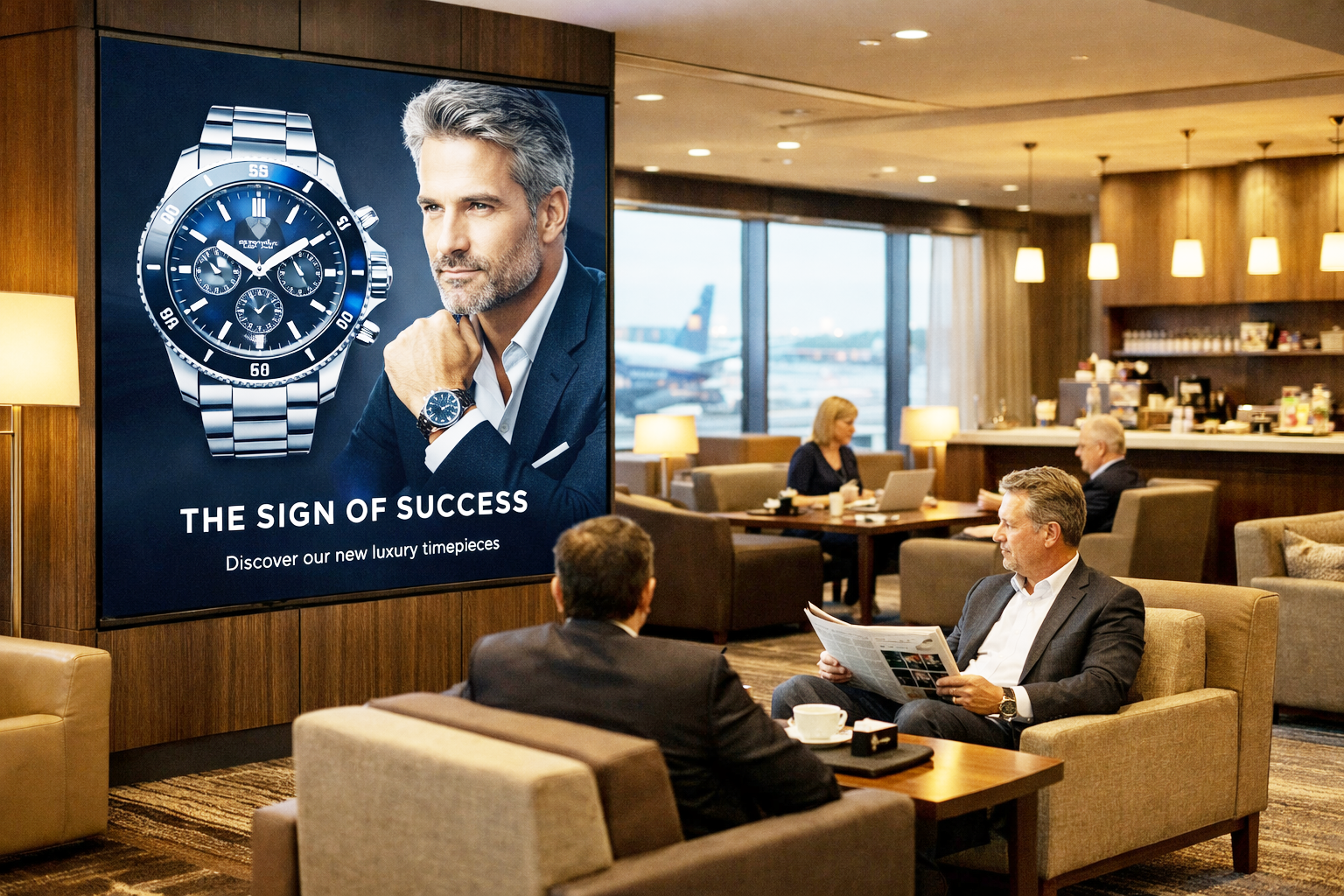
Poor Placement and Delays Affect Airport Campaigns
We help you move faster, access better inventory, and get it right now.
Talk to an ExpertFinal Strategic Verdict
Flint Bishop is one of the most cleanly segmented advertising buys in the American Midwest. At 687,489 passengers in 2025 across 54,232 operations, it ranks third in Michigan and runs two entirely separable networks from one small terminal: a Chicago corridor carrying 64 percent of departures and delivering manufacturing, chemical, healthcare, and academic decision-makers with high repeat frequency, and an ultra-low-cost sun-belt network serving seven Florida destinations plus Arizona that functions as a pure snowbird and second-home pipeline. Retirement income and annuities, Medicare and health insurance, Florida real estate, mortgage and home equity products, and automotive gain the most, because this catchment holds far more assets than its income data suggests, sits on paid-off homes and manufacturing pensions, and has already demonstrated its value orientation by choosing the lowest fares in Michigan. Security clears in under ten minutes, which converts buffer time into seated, attentive gate dwell that larger airports cannot offer. As Detroit Metro grows less convenient for northern suburban travellers, this airport's structural case only strengthens. Masscom Global has the inventory access, corridor intelligence, and seasonal planning capability to own this audience at both ends of its migration.
About Masscom Global
Masscom Global is a premium international airport advertising and media buying agency operating across 140 countries. With deep expertise in airport OOH, premium publications, and high-net-worth audience targeting, Masscom helps brands reach the world's most valuable travellers at the moments that matter most. For advertising packages, media rates, and campaign planning at Bishop International Airport and airports across the globe, contact Masscom Global today.
Frequently Asked Questions
How much does airport advertising cost at Flint Bishop International Airport? Cost at FNT depends on format, position within the terminal, campaign duration, and seasonal demand, with the January to March snowbird period and the summer family window carrying the strongest premiums. Because the terminal is compact with a single security checkpoint and concourse, cost per share of voice here is considerably more efficient than at Detroit Metro, and the unusually long seated gate dwell created by fast security processing improves effective exposure per impression. Contact Masscom Global for current rates and availability.
Who are the passengers at Flint Bishop International Airport? Predominantly residents of Genesee, Saginaw, Bay, Midland, Lapeer, and northern Oakland counties, plus a modest Canadian draw from southwestern Ontario. The core segments are retirees and pre-retirees travelling to Florida and Arizona second homes, business travellers connecting through Chicago O'Hare, automotive and chemical industry professionals, hospital and healthcare staff, engineering university students on work-study rotations, and families travelling on the lowest fares in Michigan.
Is Flint Bishop International Airport good for luxury brand advertising? Not for flagship luxury. Real wealth exists in Midland, Grand Blanc, Fenton, and northern Oakland County, and premium automotive, wealth management, and private healthcare perform well. However, this terminal's passenger base is deliberately value-selected, having chosen it on fare, and haute couture and high-end jewellery will not recover investment here. Brands seeking Michigan luxury audiences should buy Detroit Metro and use FNT as a targeted supplement.
What is the best airport in Michigan to reach HNWI audiences? Detroit Metro leads decisively on absolute concentration of Michigan wealth and international premium traffic, with Grand Rapids strong on West Michigan corporate and family-business wealth. FNT is the most efficient route specifically to retiree and pre-retiree wealth in mid-Michigan and to the Florida second-home buyer segment, an audience that Detroit-focused plans reach expensively and diffusely. Masscom typically recommends FNT alongside Detroit Metro rather than instead of it.
What is the best time to advertise at Flint Bishop International Airport? January to March delivers the highest-value audience, as Michigan winter drives the longest-stay snowbird departures to Florida and Arizona. June to August delivers peak family volume alongside major regional events including the Flint classic car festival. The October to November departure wave and the March to April return wave are the highest-intent windows for finance, insurance, and property advertisers, because that is when the second-home decision is actively being made.
Can international real estate developers advertise at Flint Bishop International Airport? Yes, but with realistic expectations. The overwhelming volume opportunity here is domestic Florida and Arizona property, served by seven nonstop Florida destinations plus Phoenix Mesa. Genuine international buying is smaller and concentrated in Mexico, Costa Rica, Belize, and Panama for lifestyle purchase, with some Portugal, Spain, and Italy interest and active Middle East property acquisition within the Arab-American and Chaldean communities. Developers should treat FNT as a strong domestic second-home market and a selective international one, and Masscom Global will structure it accordingly rather than overselling reach.
Which brands should not advertise at Flint Bishop International Airport? Luxury fashion and high-end jewellery will not recover investment against a value-selected passenger base. Duty free and international travel retail have no addressable shopper, since the airport carries no scheduled international service despite its name. Long-haul airlines and premium cabin products are equally misaligned, as all service is domestic on regional and narrowbody aircraft.
How does Masscom Global help brands advertise at Flint Bishop International Airport? Masscom Global handles the full campaign lifecycle: catchment intelligence across mid-Michigan's manufacturing, healthcare, and retiree economy, format and placement selection mapped to a compact terminal where the long seated gate dwell is the key exposure asset, rate negotiation, production, installation, and performance reporting. We time campaigns to the snowbird departure and return waves that govern when this audience makes property, insurance, and finance decisions, and we extend the same brand to the Florida and Arizona destination airports where these owners arrive. Book a 15-minute planning call to review current inventory and rates.