

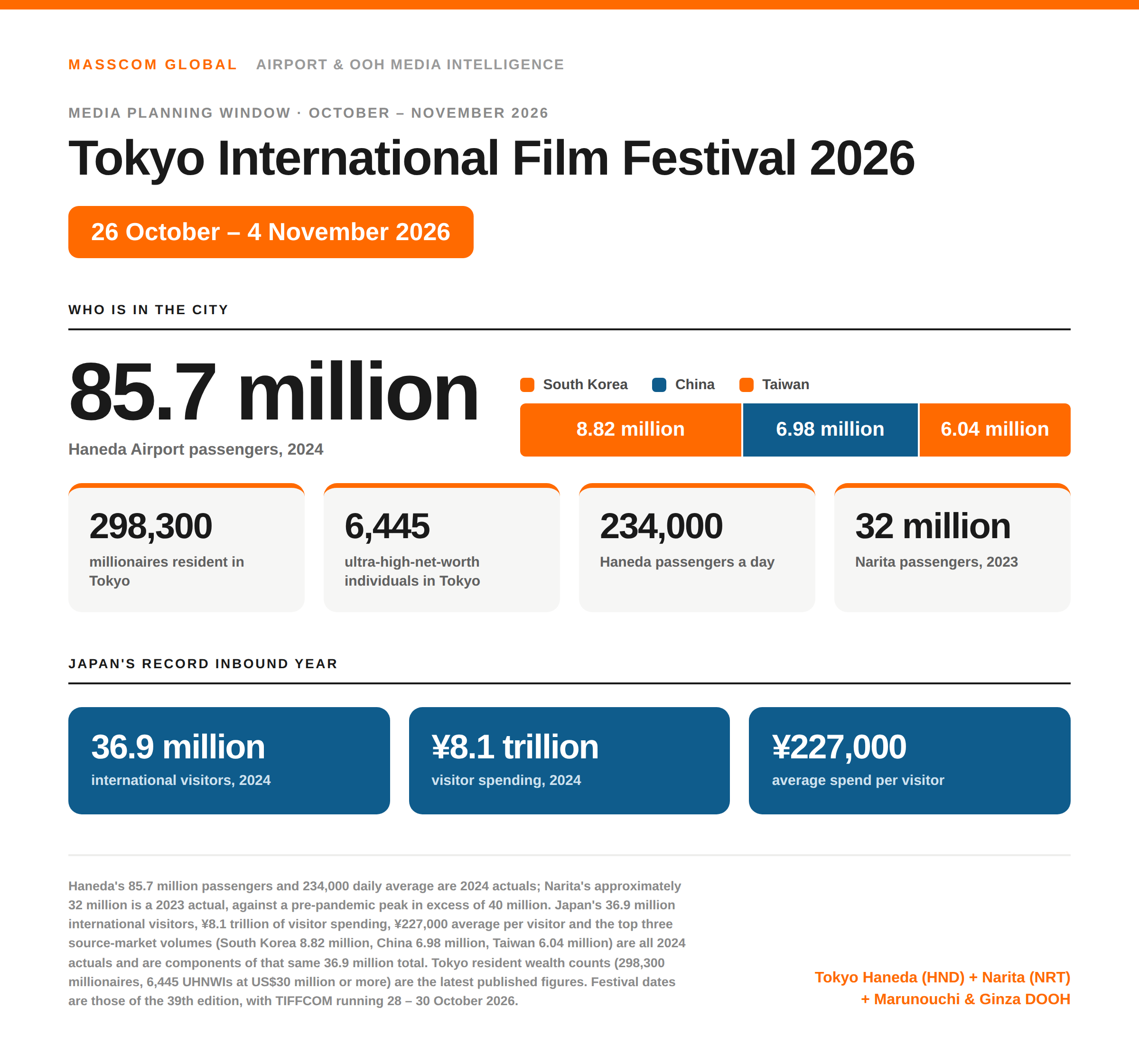
Tokyo is one of the deepest concentrations of private wealth on earth, home to 298,300 millionaires and 6,445 ultra-high-net-worth individuals holding US$30 million or more. The 39th Tokyo International Film Festival runs from 26 October to 4 November 2026, staged across the Hibiya–Yurakucho–Marunouchi–Ginza area: the single most valuable contiguous stretch of central Tokyo, where the imperial palace district, the city's flagship luxury retail and its highest-grade office towers sit within a few minutes' walk of one another. Alongside it, TIFFCOM, the festival's content market, runs 28–30 October 2026 at the Tokyo Metropolitan Industrial Trade Center Hamamatsucho-Kan.
For media planners the ten-day festival window is interesting less for the red carpet than for what surrounds it. TIFF brings international talent, distributors, financiers and press into Tokyo at the point where the autumn business season peaks, and it does so in a district where premium audiences already circulate daily. The festival's own guest list is modest against the size of Tokyo's resident affluent population: the value lies in the overlap.
Why Airport & City Advertising Works During the Tokyo International Film Festival
The festival period places a brand inside that wealth concentration at a moment of heightened cultural attention. Tokyo city GDP stands at approximately US$800 billion, with the Greater Tokyo Area at roughly US$2.2 trillion. Japanese household financial assets total JPY 2,141 trillion, and Japan recorded 400 net HNWI inflows in 2024: a shift in a market long characterised by wealth stability rather than movement.
Around that resident base sits an inbound audience at record scale. Japan received 36.9 million international visitors in 2024, spending ¥8.1 trillion (now the country's second-largest export sector) at an average of ¥227,000 per visitor. The largest source markets are South Korea (8.82 million), China (6.98 million) and Taiwan (6.04 million). Late October and early November is high season: autumn foliage, comfortable weather and the festival itself all pull premium leisure traffic into the same fortnight.
Japan also holds approximately 3.4 million HNWIs nationally, and a meaningful share of them travel through Tokyo's two international gateways during this window. Reaching them at the airport is materially cheaper and more certain than reaching them at home.
Key Benefits of Airport & City Advertising During the Tokyo International Film Festival
Reach a qualified, high-spend audience
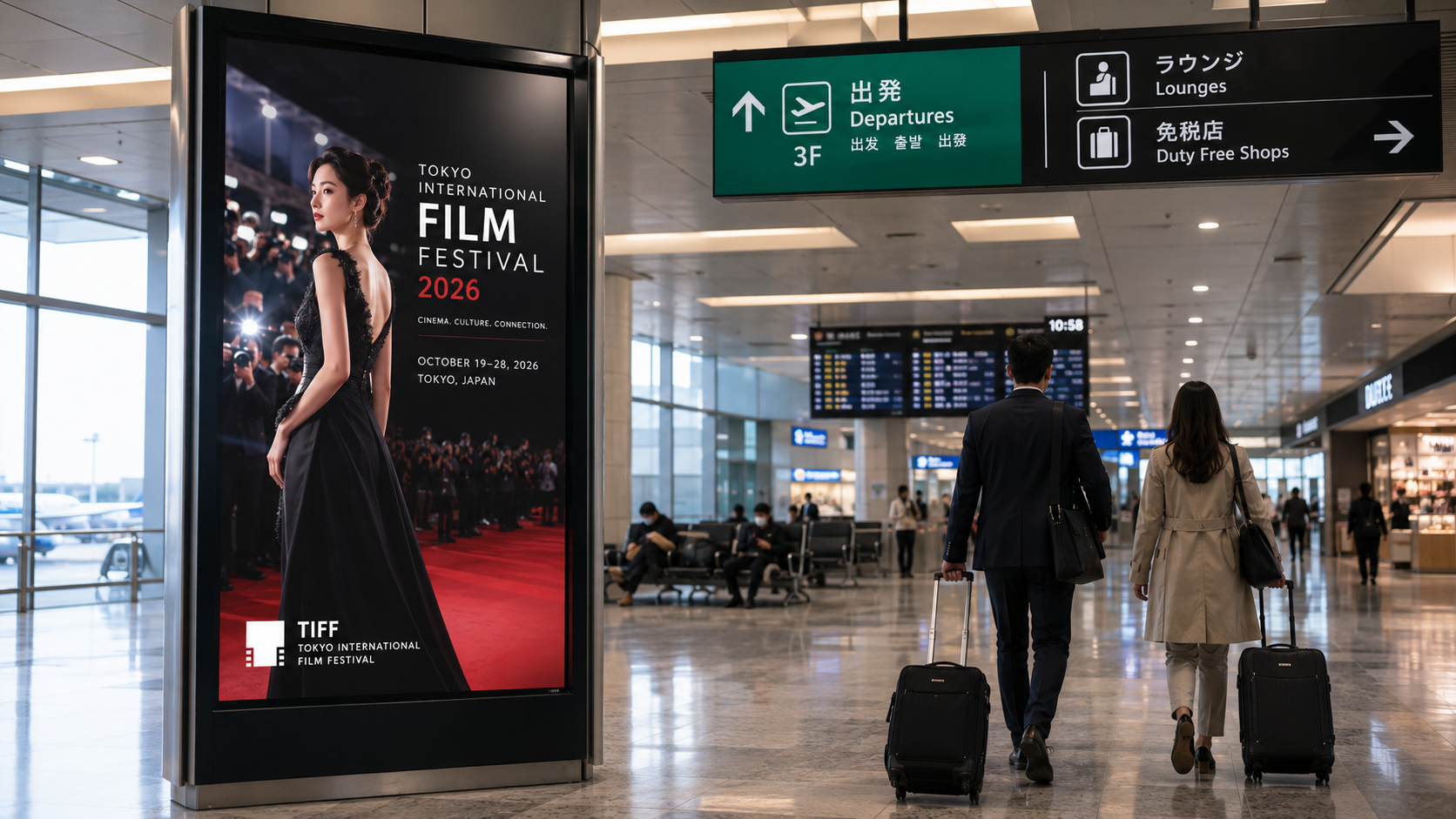
Festival-period arrivals combine international film industry delegates, premium autumn leisure travellers and Tokyo's own executive commuter population. Airport and Ginza-district media place a brand in front of all three during high-dwell, unavoidable moments rather than competing for fragmented attention online.
Elevate your brand positioning
The Hibiya–Marunouchi–Ginza corridor is Japan's most prestigious commercial address, and TIFF gives it a cultural charge for ten days. Presence across the arrival journey and that corridor associates a brand with the register of the festival's own partners, without a sponsorship commitment.
Generate real business opportunity
TIFFCOM makes the festival a working market, not only a public event: distributors, streamers, financiers and rights buyers hold three days of concentrated meetings from 28 to 30 October. Around them, the wider autumn business season places Japanese and international corporate decision-makers in Tokyo simultaneously. Sustained visibility across the window keeps a brand present while those conversations happen.
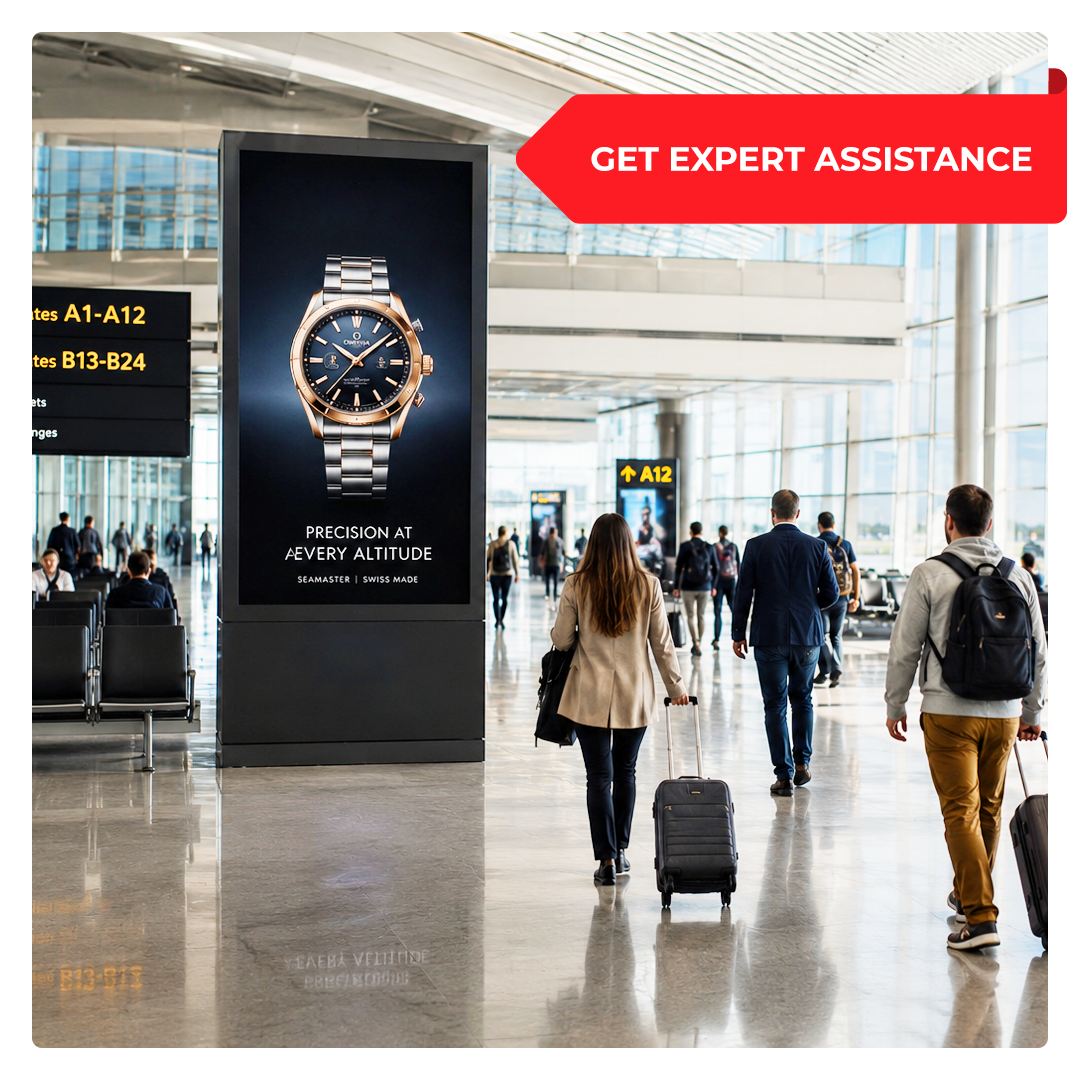
Get Free Expert Assistance from Our Global Media Planning Team
Receive strategic recommendations, media planning support, campaign monitoring and reporting to maximise your visibility throughout Tokyo International Film Festival.
Book Expert ConsultationTokyo Haneda Airport (HND): The Premium Gateway
Haneda handled 85.7 million passengers in 2024, up 4.1% year-on-year, averaging 234,000 passengers a day. It is the second-busiest airport in Asia and carries 22% of Japan's total international passenger share. It holds a 5-Star Skytrax rating for the twelfth consecutive year and ranked third globally in Skytrax's 2025 assessment. Critically for a festival campaign, Haneda is the close-in airport: it sits inside the metropolis, and the Hibiya–Ginza festival district is a short transfer away.
Inventory Highlights
- Positions across all three passenger terminals (Terminal 1, Terminal 2, Terminal 3), covering domestic, international and mixed flows
- Terminal 2's expanded international section, which as of March 2024 handles 26 international departures daily: a concentrated premium departure environment
- Terminal 3 destination environments including the Edo Koji cultural streetscape and Haneda Airport Garden, where dwell extends well beyond a normal transit
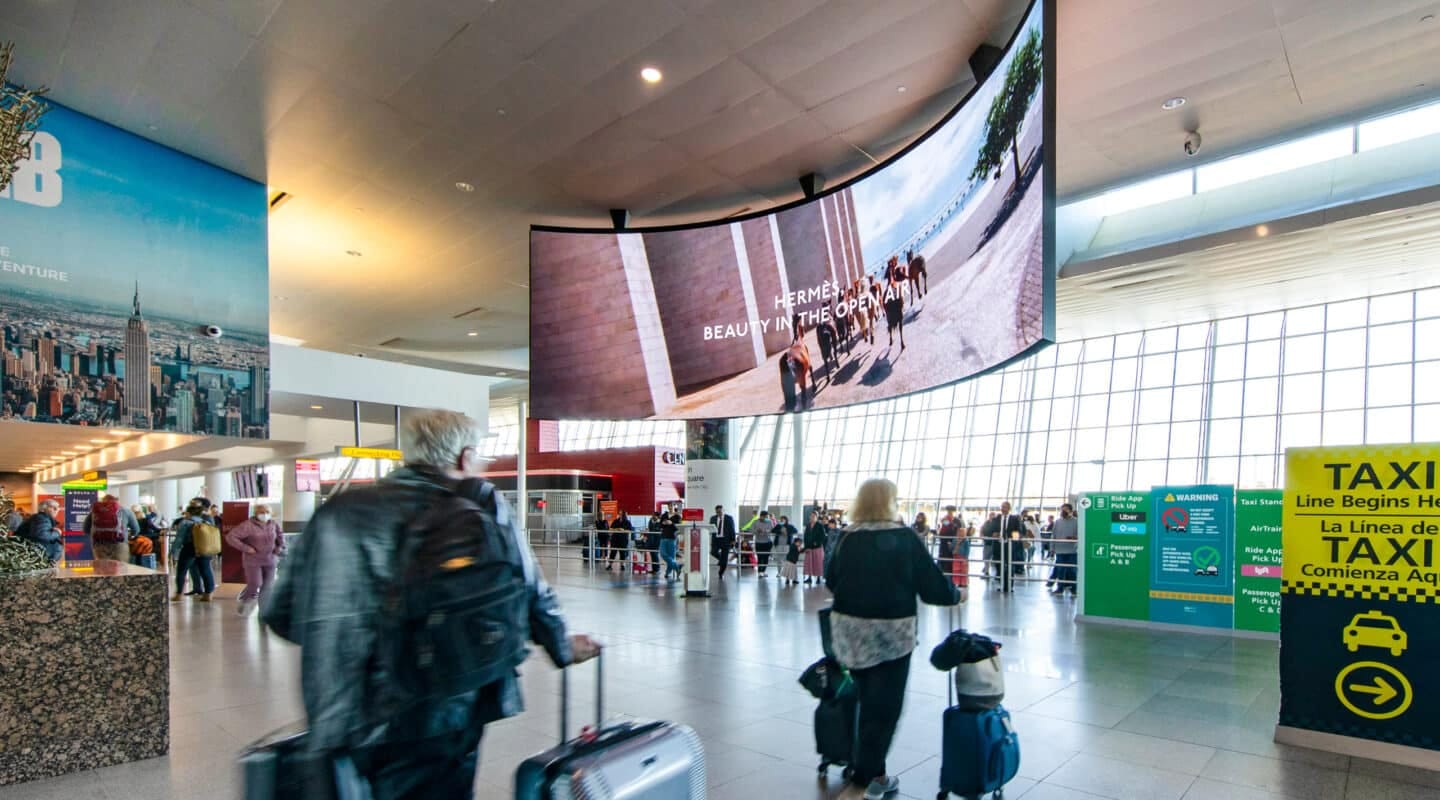
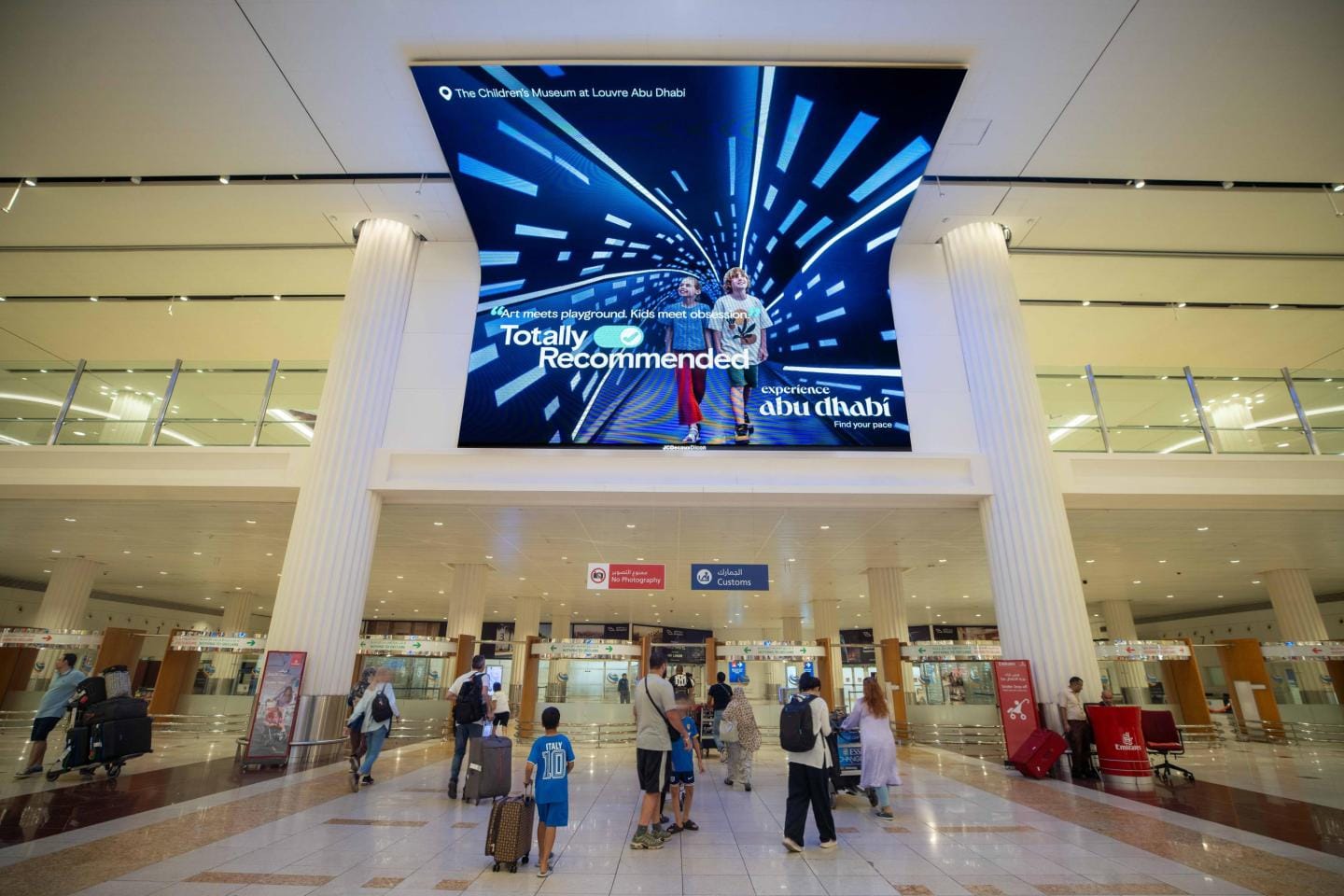
- Arrivals, immigration approach and baggage reclaim placements with extended captive dwell
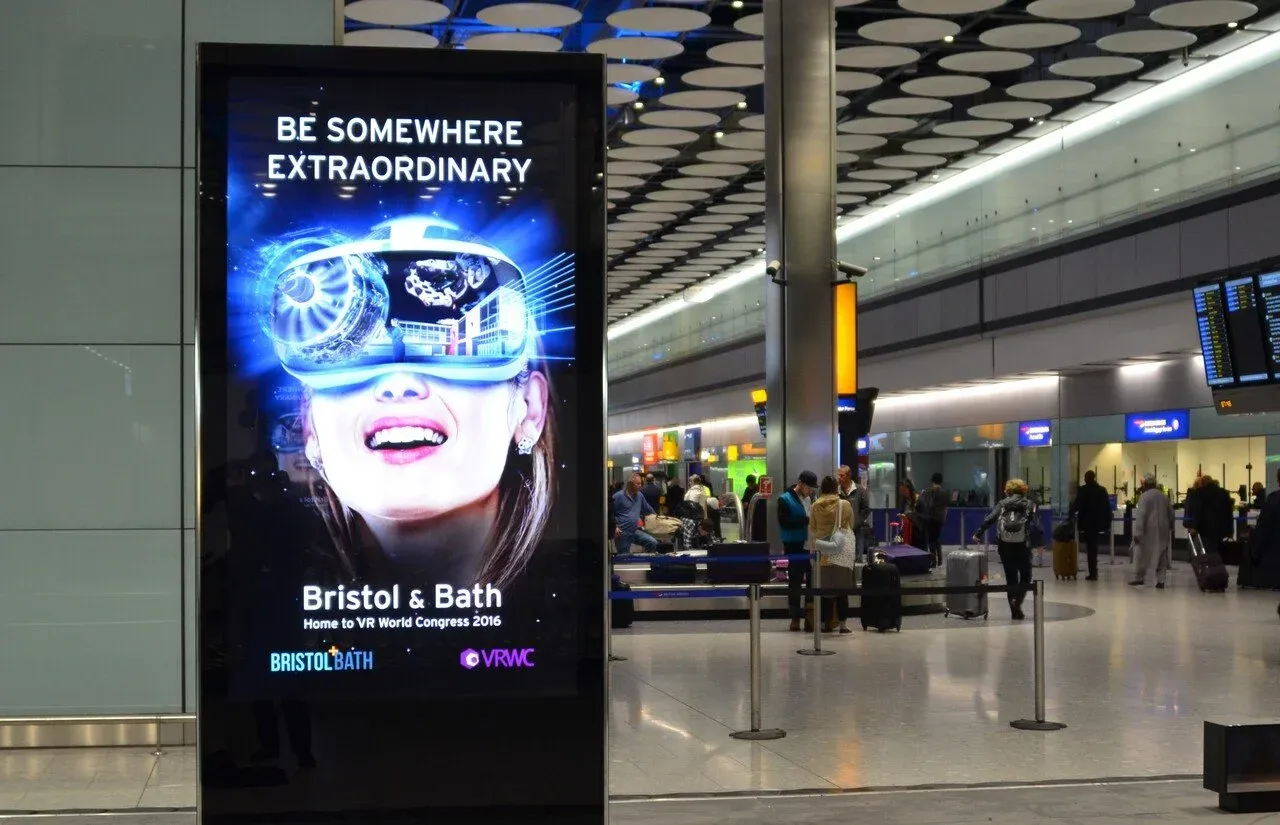
- Premium check-in and lounge-adjacent positions against business and first-cabin traffic
- Forward opportunity in the fourth satellite terminal currently under expansion
Advantages for Advertisers
- Volume plus proximity. At 234,000 passengers a day, Haneda delivers metropolitan-scale reach, and its position inside Tokyo means the airport impression and the city impression fall within an hour of one another.
- Domestic and international in one buy. Haneda's mixed role reaches inbound international delegates and the domestic Japanese executive audience travelling from Osaka, Fukuoka and Sapporo for festival-week business.
- Destination dwell. Edo Koji and Haneda Airport Garden convert airport media into destination media, reaching visitors and residents who are not flying that day.
- Quality environment. A twelve-year 5-Star Skytrax record means an uncluttered, well-maintained media environment in which premium creative reads as intended.
 Wealth in motion intelligence.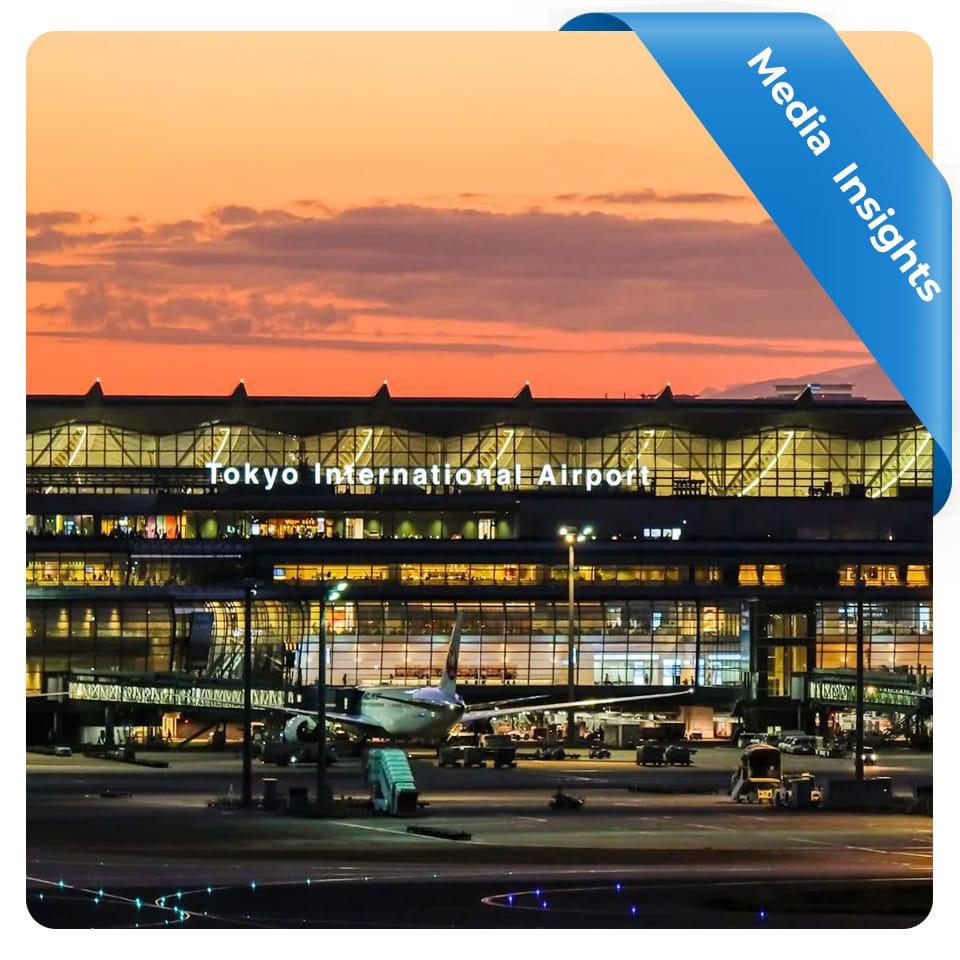
Tokyo Narita International Airport (NRT): Long-Haul and Long Dwell
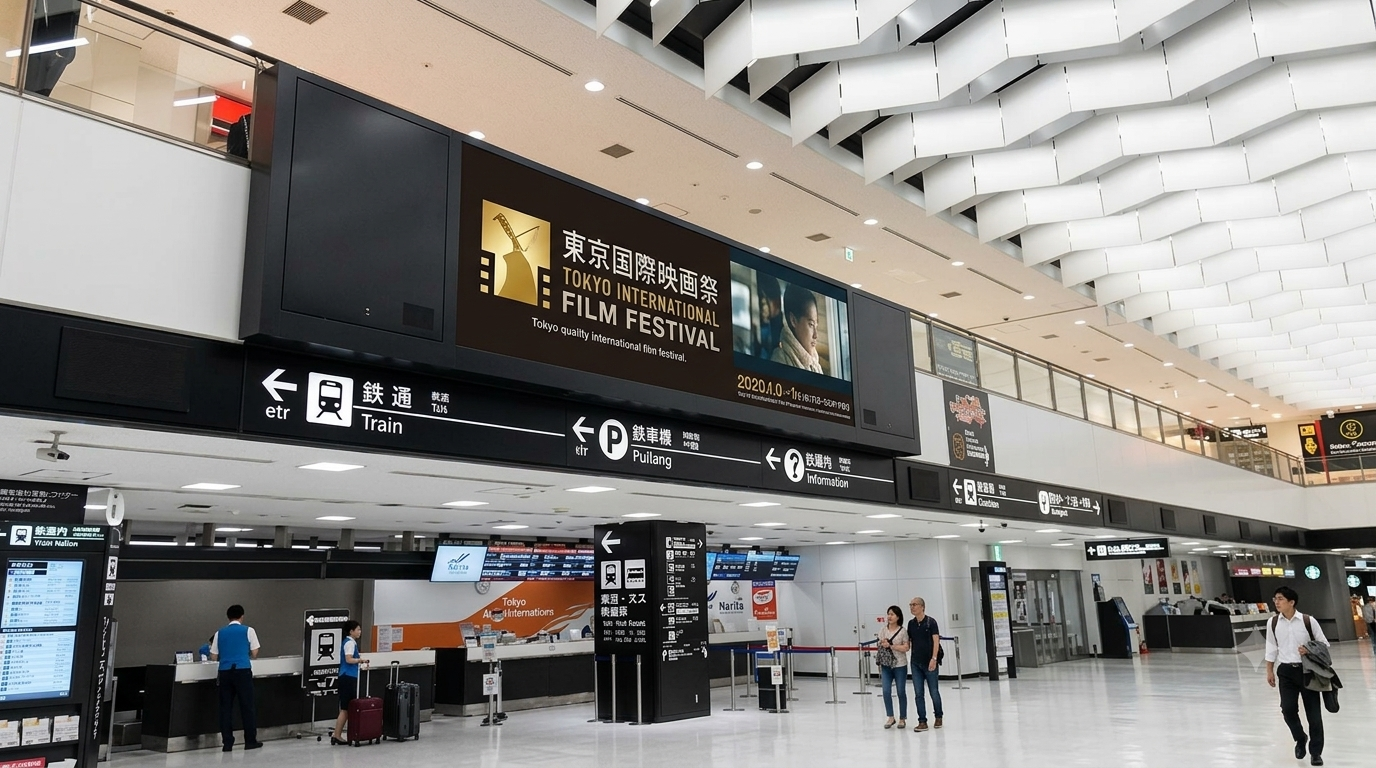
Narita handled approximately 32 million passengers in 2023 and is recovering towards a pre-pandemic peak in excess of 40 million annually. It remains Japan's principal long-haul gateway, and it has a characteristic that few large Asian airports share: Narita records among the longest average pre-departure terminal dwell periods of any major Asian international airport. For advertisers, long dwell is not a footnote: it is the difference between a logo and a message.
Inventory Highlights
- Terminal 1: Star Alliance and unaligned international carriers, covering a broad long-haul premium mix
- Terminal 2: Japan Airlines and SkyTeam operations, including the transpacific and European premium flows
- Terminal 3: low-cost carrier operations, reaching regional Asian leisure volume
- Arrivals, immigration and reclaim positions along the international arrival sequence
- Departure concourse and pre-boarding environments, where Narita's exceptional dwell supports detailed, considered creative
- Placements against Narita's principal corridors: New York (JFK/EWR), Los Angeles, London Heathrow, Paris, Frankfurt, Hong Kong, Singapore, Sydney, Seoul, Beijing, Shanghai, Bangkok and Honolulu
Advantages for Advertisers
- Long-haul intercept. International festival delegates, press and talent arriving from North America and Europe are disproportionately concentrated at Narita rather than Haneda.
- Dwell advantage. The longest pre-departure dwell of any major Asian international airport means placements are read, not glimpsed: well suited to wealth management, residency advisory and considered-purchase categories.
- Regional catchment depth. Narita draws from a 150 km feeder area covering Tokyo, Yokohama, Kawasaki, Saitama, Chiba City, Tsukuba, Mito, Utsunomiya, Funabashi and Kashiwa.
- Terminal-level targeting. Because alliance groupings are split cleanly across the three terminals, a buy can be weighted towards a specific national or cabin-class audience.
 Wealth in motion intelligence.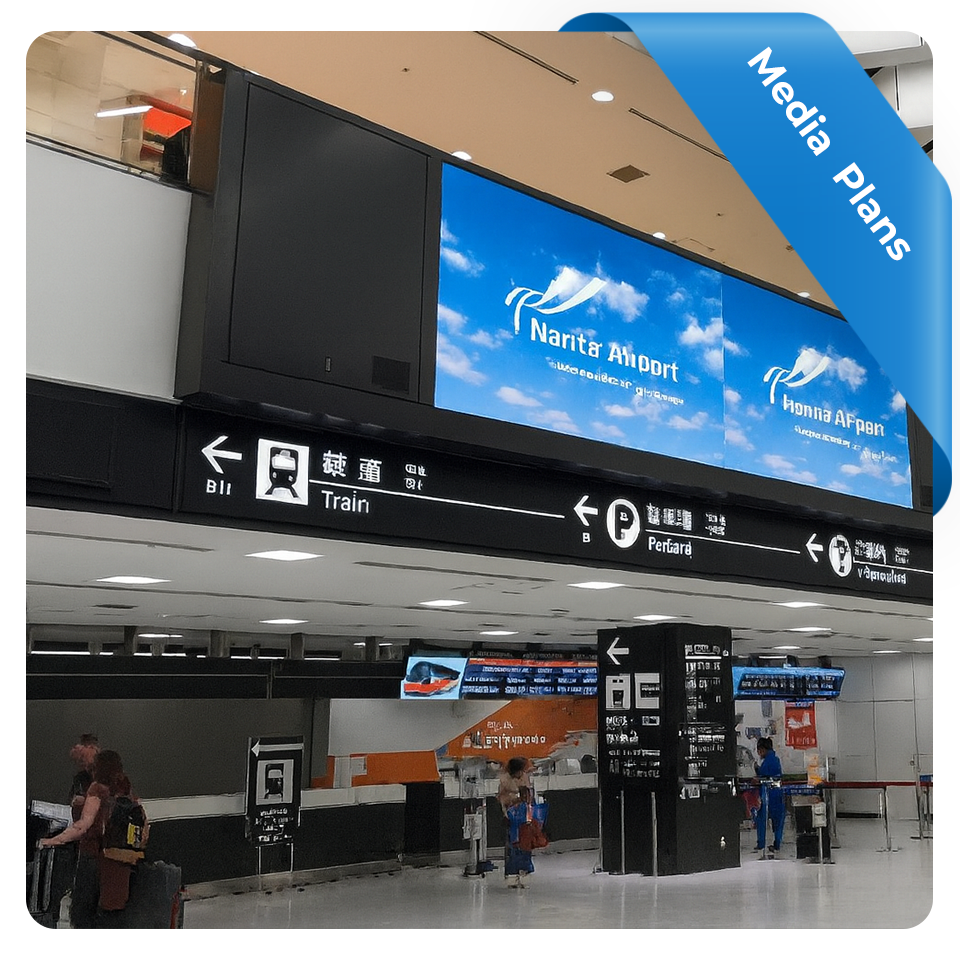
Destination Tokyo: Full Visitor Journey Coverage
Tokyo's festival geography is unusually tight. TIFF is deliberately staged as a district event across Hibiya, Yurakucho, Marunouchi and Ginza: four adjoining areas that a visitor crosses on foot. Marunouchi is the corporate core; Ginza is the flagship luxury retail spine; Hibiya and Yurakucho hold the cinemas and the ceremonial venues. A delegate or premium visitor spends their entire festival inside a few square kilometres and passes the same sightlines repeatedly.
That makes an Airport → City → Venue sequence the efficient shape for a Tokyo buy: intercept at Haneda and Narita on arrival, hold presence across the Marunouchi and Ginza commercial core and the premium hotel environments serving festival guests, then concentrate on the Hibiya and Yurakucho approaches to the screening venues themselves. Transit interchanges (Tokyo Station, Yurakucho and Ginza) link the three stages and carry the same audience between them.
Three effects follow from sequencing rather than scattering spend:
- Increased brand recall: repeated exposure at arrival, in the district where the audience works and shops, and on the approach to the venue
- Consistent presence: the brand becomes part of the festival's visual environment rather than an interruption to it
- Enhanced campaign effectiveness: a coordinated Tokyo sequence outperforms the same budget dispersed across unconnected markets, because every impression falls on the same qualified pool
Why Brands Choose Airport & City Advertising for Tokyo International Film Festival
Exclusive audience access. The window combines international film industry delegates, record-level inbound premium leisure traffic, and a resident base of 298,300 millionaires and 6,445 UHNWIs in a single district.
A prestigious environment. Haneda's 5-Star record and the Marunouchi–Ginza corridor's standing as Japan's premier commercial address give premium creative the setting it needs.
End-to-end campaign support. Masscom Global plans, negotiates and executes across both Tokyo gateways and city inventory under one brief, with a single point of accountability.
Strategic planning assistance. Our planners advise on the Haneda–Narita split, terminal selection by source market, and how to phase weight against the 26 October opening, the 28–30 October TIFFCOM market and the 4 November close.
The Masscom Global Standard Behind Every Tokyo International Film Festival Placement
- Verified inventory and audience data: screen counts and passenger figures across Haneda and Narita come from live operator data at proposal stage, not published estimates.
- Transparent delivery reporting: campaign monitoring and reporting across both airports and the Ginza district, so you see exactly where your creative ran.
- Benchmarked recommendations: terminal selection and format mix set against comparable campaigns across our network.
- We absorb the complexity: one point of accountability from negotiation through execution.
Request Your Customised Tokyo International Film Festival Advertising Plan
Tell us your audience, category and budget. Our planners will return a costed plan across airport and prime city inventory, with availability confirmed.
Book NowFrequently Asked Questions
When exactly is the Tokyo International Film Festival in 2026?
The 39th edition runs 26 October to 4 November 2026 across the Hibiya–Yurakucho–Marunouchi–Ginza area of central Tokyo. TIFFCOM, the associated content market, runs 28–30 October 2026 at the Tokyo Metropolitan Industrial Trade Center Hamamatsucho-Kan.
Who attends the Tokyo International Film Festival?
International and Japanese filmmakers, talent and press; distributors, streamers, financiers and rights buyers attending TIFFCOM; and a large public audience drawn from Tokyo's resident affluent population and from inbound autumn travellers, with South Korea, China and Taiwan the largest source markets for Japan overall.
Can I reach visitors across their whole journey, not just at the venues?
Yes. A combined Haneda, Narita and city campaign covers international and domestic arrival, the Marunouchi and Ginza commercial core, premium hotel districts and the Hibiya and Yurakucho venue approaches, so the same audience encounters the brand several times across the ten days.
How far in advance should a festival-window campaign be booked?
Late October and early November is Japan's autumn peak, and Haneda, Narita and Ginza-district premium inventory commits well ahead of it. We recommend confirming availability several months in advance; later requests can often still be served, but with reduced format choice.
Which brand categories perform best in this window?
Luxury goods, watches and jewellery, premium spirits, luxury automotive, international hospitality and airlines, wealth management and private banking, prime real estate and residency advisory, and technology and consumer electronics brands using a cultural platform to reach a premium Japanese audience.
Related Airport Advertising Guides
Detailed inventory, audience and planning notes for the airports covered above:
Wealth in motion intelligence.Wealth in motion intelligence.Tokyo International Film Festival Won't Wait. Neither Should You.
- Once a year, then gone: late October and early November is Japan's autumn peak, and Haneda, Narita and Ginza-district premium inventory commits well ahead of it.
- Competitors are already moving: every week without a plan is a week a luxury goods, spirits or automotive brand gets closer to locking the same positions.
- The window is exact, not approximate: a campaign that isn't live for the festival misses the delegation and press who define it.
- The alternative can't buy this credibility: straight commercial media cannot purchase the cultural authority a major film festival confers.
Get Free Expert Assistance Now
Share your category, target audience and budget, and our Japan planners will return a costed Tokyo International Film Festival media plan across Haneda, Narita and prime city inventory.
Request Availability
Haneda, Narita and Ginza-district positions for the 26 October – 4 November window commit early. Ask us what remains open.
TIFF's advertising case rests on overlap: a resident base of 298,300 millionaires and 6,445 UHNWIs, a record 36.9 million annual inbound visitor flow at its autumn peak, and an international festival delegation, all moving through two gateways into the same Hibiya–Ginza core. Haneda's proximity and Narita's long-haul dwell let a single campaign weight for domestic executives and international arrivals at once. Masscom Global plans and executes across both airports and the Marunouchi–Ginza city network under one brief, so a brand stays present from arrival through TIFFCOM and the festival's ten days.