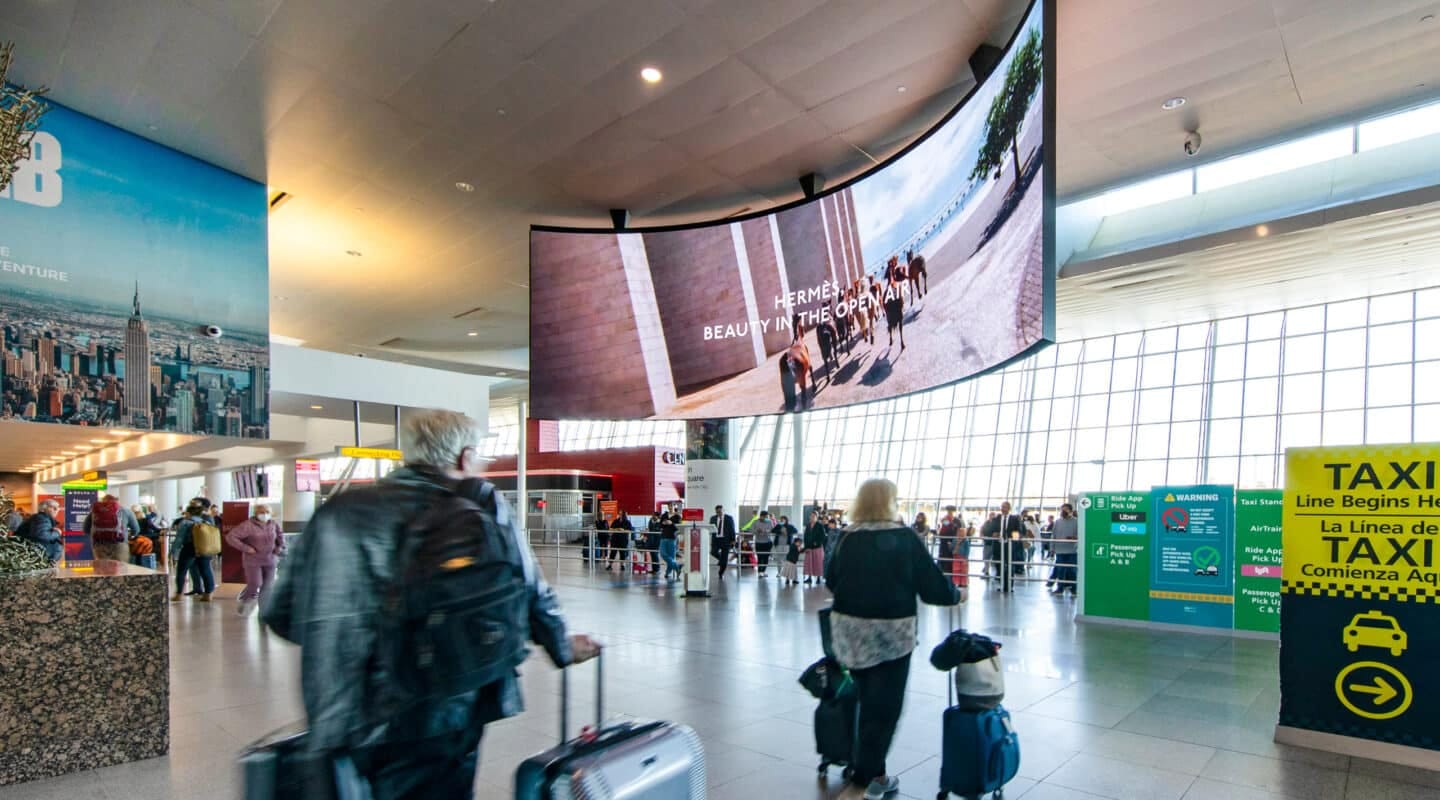
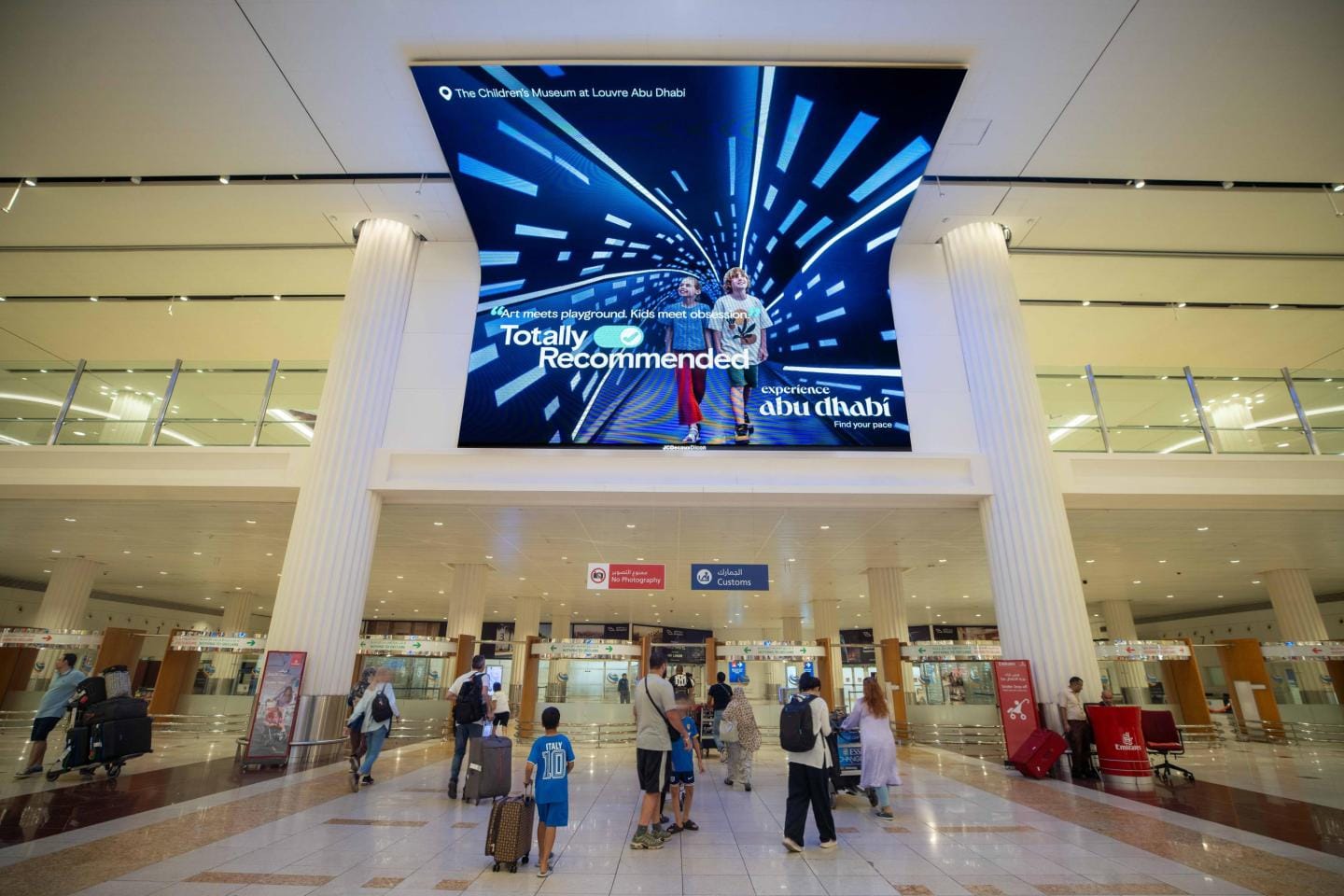
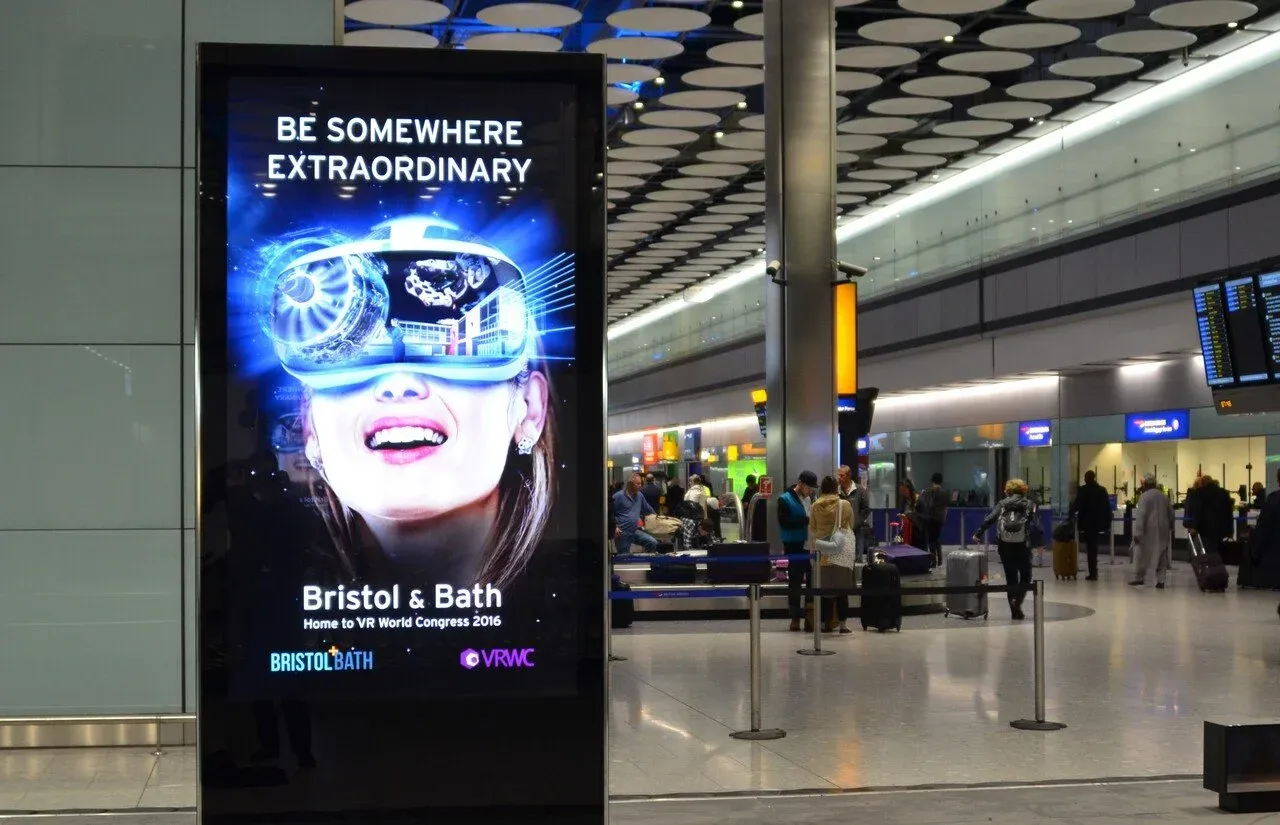


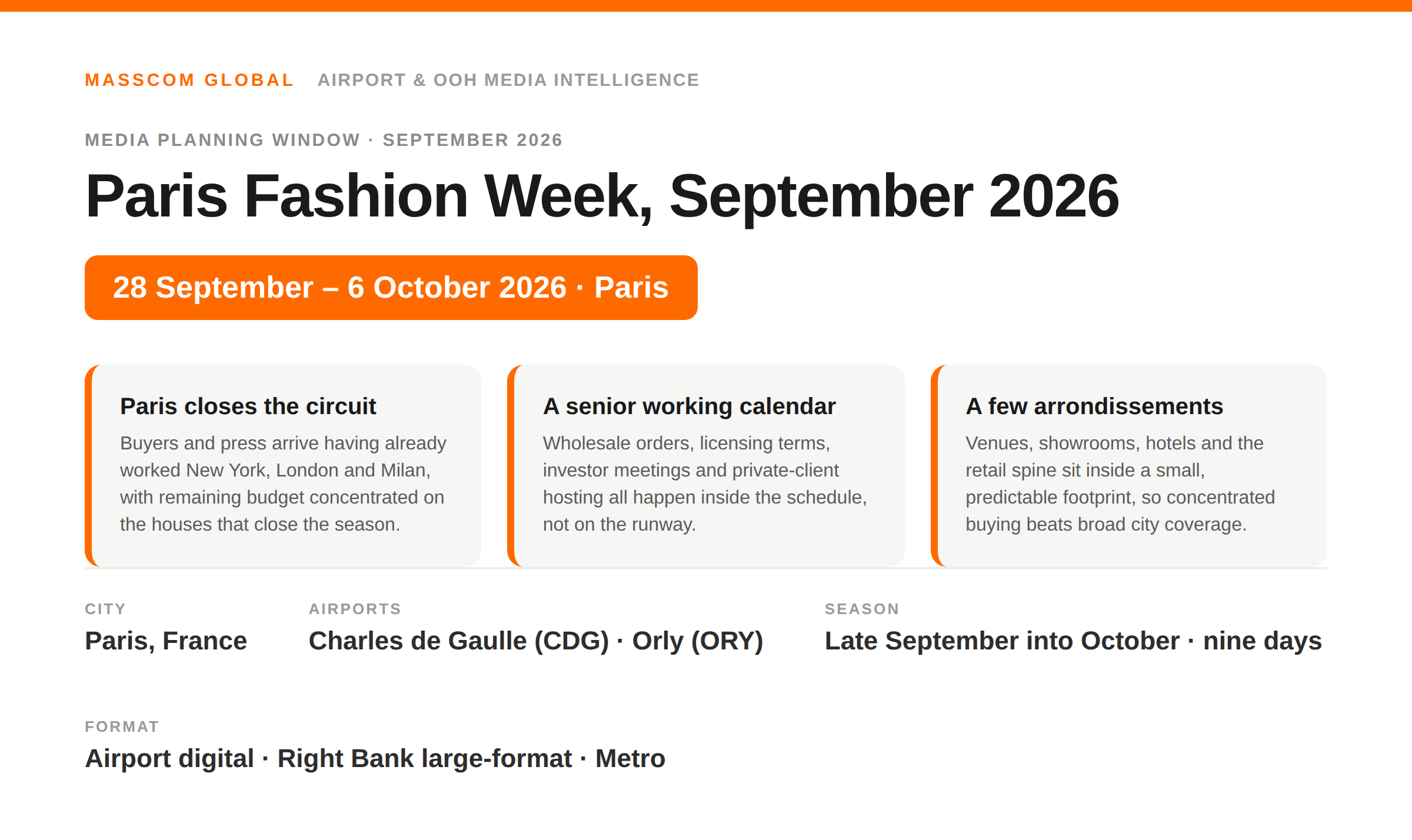
Paris sits at the end of the fashion month circuit: buyers, press and clients arrive having already worked New York, London and Milan, with remaining budget concentrated on the houses that close the season, which makes it the most commercially decisive week in the global fashion calendar. Paris Fashion Week's womenswear ready-to-wear season for Spring/Summer 2027 runs from Monday 28 September to Tuesday 6 October 2026, nine days, the longest of the four fashion capitals' schedules, as confirmed by the Fédération de la Haute Couture et de la Mode. The SPHERE showroom programme, which presents emerging designers to the international buying community, runs alongside it from Wednesday 30 September to Tuesday 6 October at the Palais de Tokyo.
For advertisers, the opportunity is not the runway. It is the nine days across which wholesale buyers, editors, stylists, conglomerate executives, investors and private clients move through Charles de Gaulle and Orly, occupy the Right Bank luxury core, and travel repeatedly between venues, showrooms, hotels and the Avenue Montaigne and Place Vendôme retail spine.
Why Airport & City Advertising Works During Paris Fashion Week


The audience composition is exceptionally senior: the full international wholesale buying community, the global fashion and luxury press corps, creative directors and house leadership, the executive tiers of the luxury conglomerates headquartered in the city, sector investors and analysts, and a substantial private-client cohort: much of it arriving by private aviation.
The market context is what makes the week worth buying against. Paris Charles de Gaulle handled 67.8 million international passengers in 2023–24 and is Europe's second-largest international airport. Paris Orly carried approximately 33 million passengers in 2023 and ranks as Europe's sixth-busiest airport. Between them they hold effectively all of the season's inbound air traffic.
The city itself is the world's densest luxury retail environment. The Greater Paris economy is worth approximately EUR 750 billion annually. Place Vendôme concentrates the world's greatest jewellery houses within a single historic square, and Avenue Montaigne is the city's primary luxury fashion corridor. Both sit inside the area the fashion week audience occupies for the duration of the schedule.
Timing works in the advertiser's favour. CDG's peak advertising seasons run October to January (the autumn fashion and festive window) April to June for the spring fashion and art season, and July to August for the summer peak, with December the single highest-revenue luxury goods advertising window of the year. A late-September launch places a campaign at the opening of the strongest cycle, ahead of December's competitive peak, with better availability and format choice than a festive-window buy.
Key Benefits of Airport & City Advertising During Paris Fashion Week
Reach a qualified, high-spend audience
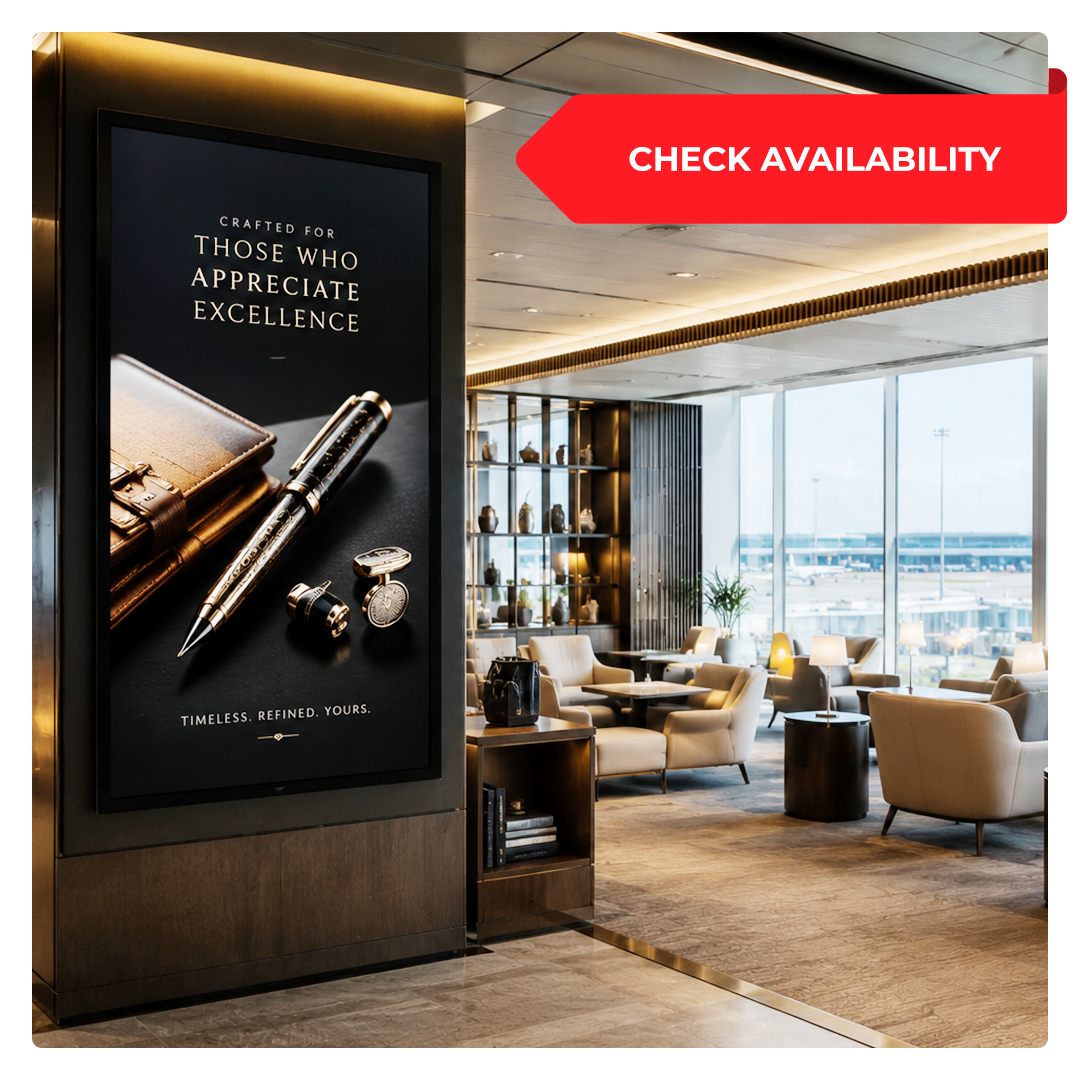
Season arrivals skew heavily toward premium-cabin and private-aviation travellers and toward professionals who control wholesale and marketing budgets. Airport media reaches them during unavoidable, high-dwell moments (check-in, lounge access, boarding, immigration and reclaim) with no competing screen for attention.
Elevate your brand positioning
Appearing across the arrival journey and the Right Bank luxury core associates your brand with the same tier of visibility as the houses closing the season, without requiring a show, a sponsorship or a flagship.
Generate real business opportunity
The nine days are a working commercial calendar: wholesale orders are placed, licensing and distribution terms agreed, investors meet management and private clients are hosted. Sustained visibility keeps a brand present through the period in which those commitments are made.
Get Free Expert Assistance from Our Global Media Planning Team
Receive strategic recommendations, media planning support, campaign monitoring and reporting to maximise your visibility throughout Paris Fashion Week (Sept).
Book Expert ConsultationParis Charles de Gaulle Airport (CDG): The Long-Haul Luxury Gateway
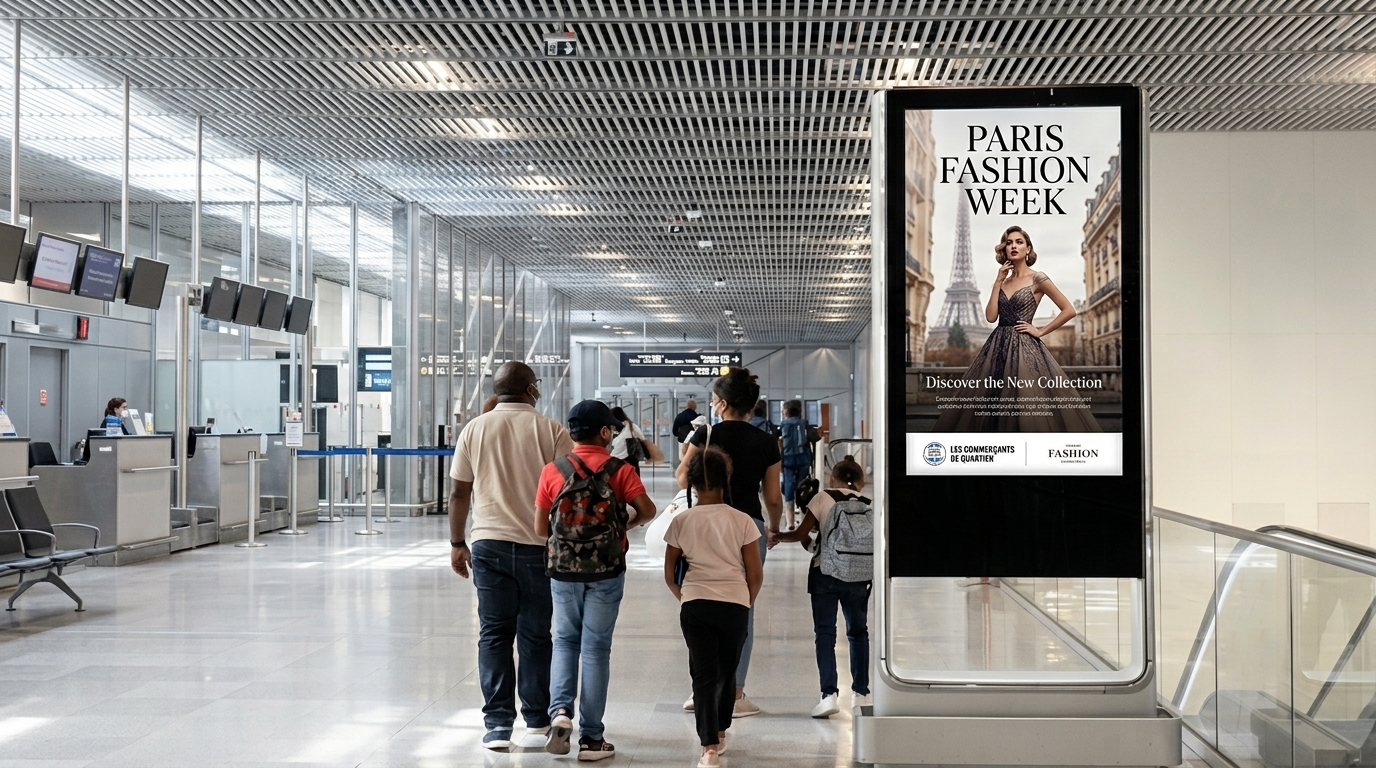
CDG is the arrival point for essentially all intercontinental fashion week traffic. It handled 67.8 million international passengers in 2023–24 across a complex terminal estate: Terminal 1 for non-Air France international carriers; Terminal 2, the Air France and SkyTeam hub, built as a six-hall complex from T2A through T2G, with T2E and T2F handling long-haul departures; and Terminal 3 for charter and low-cost carriers. Premium-cabin traffic on transatlantic, Asian and African routes is concentrated in T2E and T2F, where Air France's La Première first class lounge with private suites sits.
Inventory Highlights
- Arrivals and immigration approach positions: the first branded surface an inbound buyer, editor or client encounters in France
- Digital networks along T2E and T2F long-haul departure concourses, reaching premium-cabin passengers
- Placements on the La Première and premium lounge approach paths
- Transit and connecting-passenger placements on CDG's principal long-haul corridors: New York JFK and Newark, Dubai, Singapore, Tokyo Narita and Haneda, Hong Kong, Beijing and Shanghai Pudong, plus high-frequency services to Casablanca, Algiers and Tunis
Advantages for Advertisers
- Europe's second-largest international airport by passenger volume: unmatched scale for a single-airport buy on the continent
- Premium-cabin concentration in T2E and T2F allows precise targeting of the senior professional and UHNWI cohort rather than blanket coverage
- Campaigns launched for the September–October window carry naturally into CDG's strongest advertising season, October to January
 Wealth in motion intelligence.
Paris Orly Airport (ORY): Scale, Diaspora Reach and City Proximity
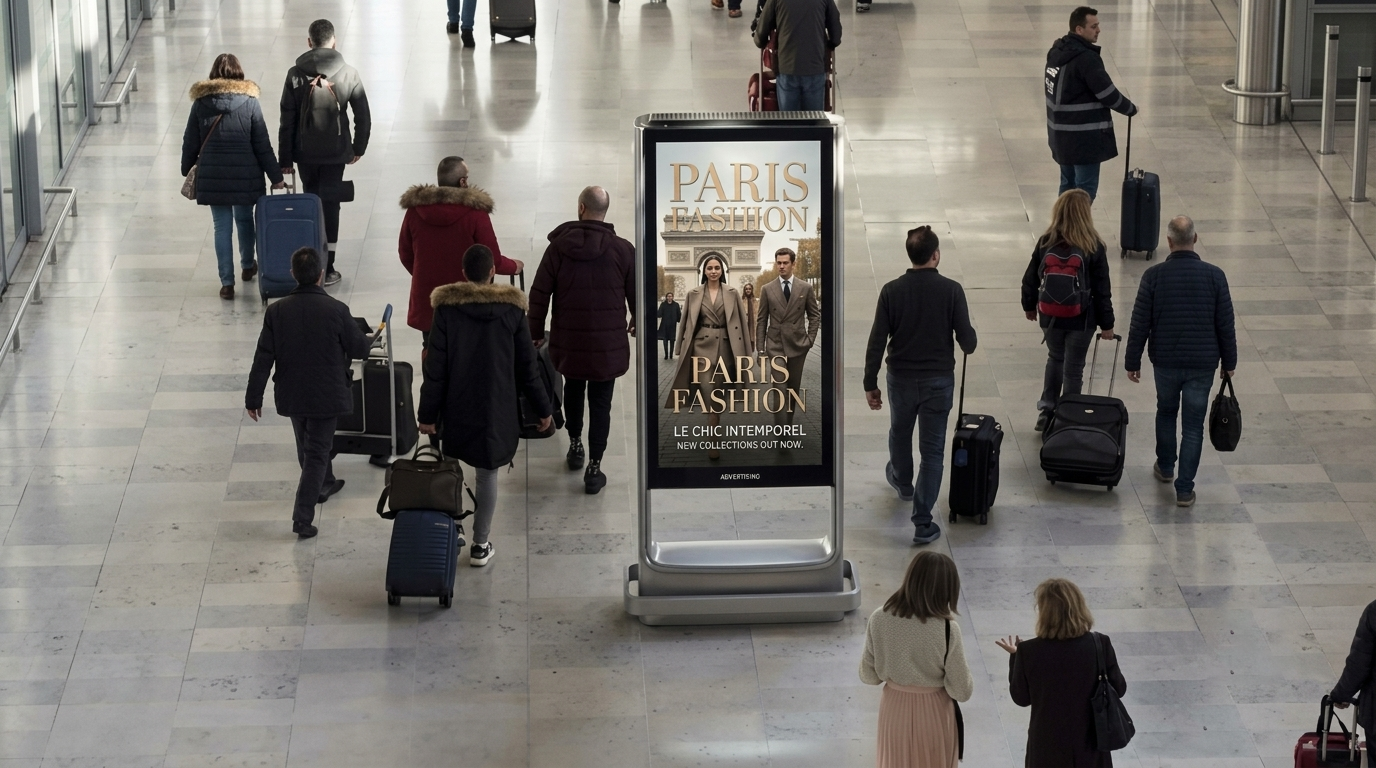
Orly is the closer of the two airports to central Paris and carried approximately 33 million passengers in 2023, on a recovery trajectory approaching pre-pandemic levels and ranking as Europe's sixth-busiest airport. It operates through Orly 1, 2 and 3 in the western complex and Orly 4 to the south, following a major redevelopment completed by Groupe ADP that added premium retail partnerships and improved digital advertising networks.
Orly's audience is distinct from CDG's rather than duplicative. Its passenger base combines French domestic professionals and leisure travellers, the Maghreb diaspora returnee cohort estimated at 6 million individuals, residents of the overseas France territories, and European short-haul leisure traffic. Its top international routes run to Algiers, Casablanca, Marrakech and Tunis on multiple daily frequencies, with services to Dakar and Abidjan, and Caribbean and Indian Ocean routes to Guadeloupe, Martinique, Réunion and French Guiana.
Inventory Highlights
- Departure and arrival positions across the Orly 1–3 western complex and the Orly 4 southern terminal
- Digital advertising networks upgraded in the Groupe ADP redevelopment
- Placements adjacent to the terminal's premium retail partnerships
Advantages for Advertisers
- Adds genuine incremental reach rather than duplicating CDG's audience: different routes, different passenger composition
- Efficient access to the French domestic professional audience that CDG under-delivers
- Strong route position for brands targeting Maghreb, West African and overseas-territory affluence, a significant segment of Paris luxury spend
- City proximity allows airport and Paris OOH to be planned as one continuous environment
 Wealth in motion intelligence.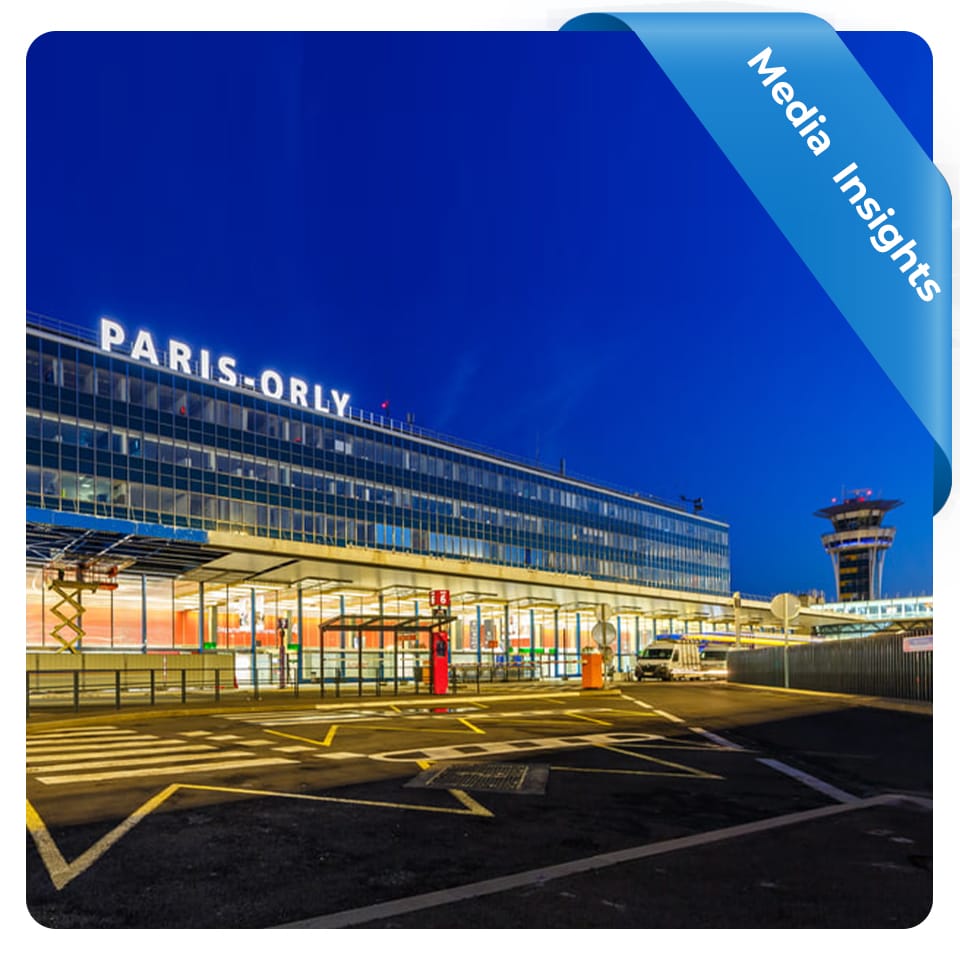
Destination Paris: Full Visitor Journey Coverage
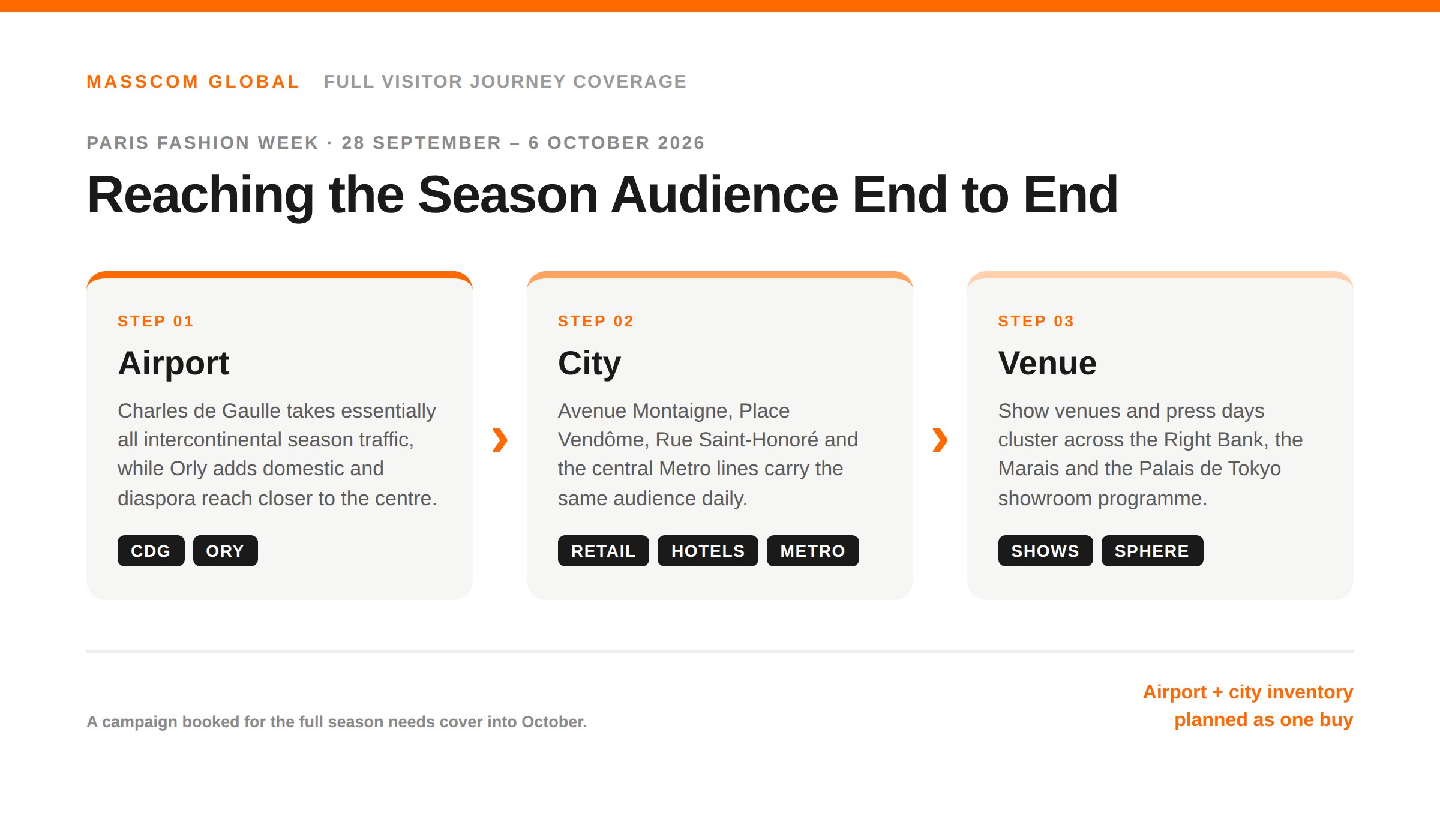
Paris rewards sequenced media because the fashion week audience occupies a small and highly predictable footprint. Show venues, showrooms and press days cluster across the Right Bank, the Marais and the Palais de Tokyo area (the SPHERE showroom sits at the Palais de Tokyo for the second half of the schedule) while the retail and client-hosting spine runs along Avenue Montaigne, Place Vendôme, Rue Saint-Honoré and Avenue des Champs-Élysées. A visitor's entire nine days happen inside a few arrondissements.
That makes an Airport → City → Venue sequence unusually efficient. Digital and large-format opportunities across the Right Bank luxury corridors, the business districts, premium hotel environments, Metro networks on the central lines and the approach routes to the principal venues let a brand appear repeatedly to the same audience without paying for geographies that audience never enters. Within a EUR 750 billion regional economy, the fashion week catchment is a fraction of the map, which is what makes concentrated buying viable.
Three effects follow from sequencing rather than scattering:
- Increased brand recall: repeated exposure at arrival, in the city and near the venues
- Consistent presence: your brand becomes part of the season's visual environment, not an interruption to it
- Enhanced campaign effectiveness: coordinated placements outperform equivalent spend split across disconnected markets
Why Brands Choose Airport & City Advertising for Paris Fashion Week
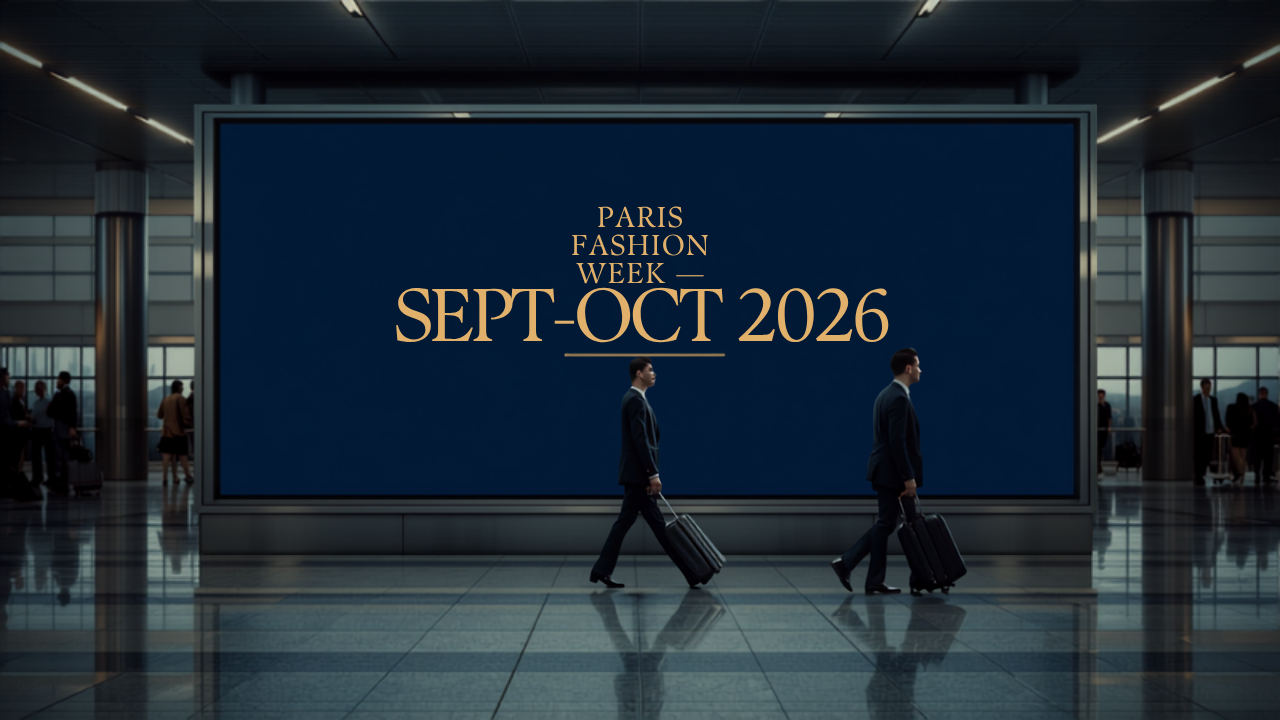
Exclusive audience access. No other nine days concentrate the global luxury industry's buying, editorial and executive leadership into one city, arriving through Europe's second-largest international airport.
A prestigious environment. Place Vendôme and Avenue Montaigne are the reference points for luxury worldwide. Brands present in that environment during the season inherit its register.
End-to-end campaign support. Masscom Global plans, negotiates and executes across CDG, Orly and Paris city inventory in a single brief, with one point of accountability.
Strategic planning assistance. Our team advises on terminal and hall selection, format mix and flight timing so that budget lands where your audience actually moves across the nine days.
The Masscom Global Standard Behind Every Paris Fashion Week Placement
- Verified inventory and audience data: screen counts and passenger figures across CDG and Orly come from live operator data at proposal stage, not published estimates.
- Transparent delivery reporting: campaign monitoring and reporting across CDG, Orly and Paris city inventory, so you see exactly where your creative ran.
- Benchmarked recommendations: terminal and hall selection and format mix set against comparable campaigns across our network.
- We absorb the complexity: one point of accountability across both airports and city inventory.
Request Your Customised Paris Fashion Week (Sept) Advertising Plan
Tell us your audience, category and budget. Our planners will return a costed plan across airport and prime city inventory, with availability confirmed.
Book NowFrequently Asked Questions
When exactly is Paris Fashion Week in September 2026?
The womenswear ready-to-wear season for Spring/Summer 2027 runs 28 September to 6 October 2026, per the Fédération de la Haute Couture et de la Mode. The SPHERE showroom programme runs 30 September to 6 October at the Palais de Tokyo. Note that the schedule spans two calendar months, so a campaign booked for the full season needs cover into October.
Who attends Paris Fashion Week?
International wholesale buyers, the global fashion and luxury press corps, stylists and creative directors, house and conglomerate leadership, sector investors and analysts, and private clients: alongside a significant volume of private-aviation arrivals and Paris's own resident luxury and financial community. Orly separately brings in an estimated 6 million-strong Maghreb diaspora returnee audience with its own distinct luxury spending power.
Can I reach visitors across their whole journey, not just at the shows?
Yes. A combined CDG and Orly campaign paired with Right Bank, business district and transit OOH covers arrival, hotel and retail districts and the venue approaches, so the same audience encounters your brand several times across the nine days.
How far in advance should a Paris Fashion Week campaign be booked?
CDG premium positions and central Paris digital sites for the season are among Europe's most contested inventory, and demand escalates into the October-to-January peak that follows immediately. We recommend confirming availability several months ahead; later requests can often still be served, but with reduced format choice.
Which brand categories perform best in this window?
Luxury fashion and accessories, jewellery and watches, beauty and fragrance, luxury automotive, private aviation, wealth management and private banking, real estate and residency advisory, premium champagne and spirits, and international luxury hospitality.
Related Airport Advertising Guides
Detailed inventory, audience and planning notes for the airports covered above:
Wealth in motion intelligence.Wealth in motion intelligence.Paris Fashion Week Won't Wait. Neither Should You.
- Once a year, then gone: CDG premium positions and central Paris digital sites are already among Europe's most contested inventory, and demand only escalates into the peak season that follows.
- Competitors are already moving: every week without a plan is a week a fashion, jewellery or beauty brand gets closer to locking the same positions.
- The window is exact, not approximate: a campaign that isn't live for the nine-day season misses the buyers and press who close the year's most decisive fashion week.
- The alternative reaches the wrong tier: broadcast and programmatic can't isolate the wholesale buyers who control season budgets the way CDG arrival and Right Bank city media can.
Get Free Expert Assistance Now
Tell us your audience, your category and your budget, and our planners will come back with a costed Paris Fashion Week media plan across airport and city inventory.
Request Availability
CDG premium-cabin positions and Right Bank city sites for the September–October 2026 window move quickly. Ask us what is still open.
Paris Fashion Week is nine days, the longest of the four fashion capitals' seasons, and the one where remaining budget from New York, London and Milan concentrates on the houses that close the year's most decisive week. An Airport → City → Venue plan across CDG, Orly and the Right Bank puts a brand in front of that same audience at arrival and repeatedly across Avenue Montaigne and Place Vendôme. CDG premium positions and central Paris digital sites are among Europe's most contested inventory, and demand only escalates into the October to January peak that follows.