

Airport at a Glance
| Field | Detail |
|---|---|
| Airport | Aeropuerto Internacional Licenciado Adolfo López Mateos (Toluca International Airport) |
| IATA Code | TLC |
| Country | Mexico |
| City | Toluca de Lerdo, Estado de México |
| Annual Passengers | 1,704,011 (2024); 1,927,498 (2025) — sustained growth trajectory |
| Primary Audience | HNWI private aviation users, corporate and industrial executives, low-cost domestic travellers from western CDMX metro, automotive and manufacturing professionals |
| Peak Advertising Season | October to December (post-rainy season travel peak); March to May (spring corporate and leisure travel) |
| Audience Tier | Tier 2 |
| Best Fit Categories | Private banking and wealth management, premium automotive, luxury real estate, industrial B2B services, luxury lifestyle, sun destination tourism |
Toluca International Airport occupies a commercially distinct position in the Mexico City metro airport system that no volume metric fully captures. While CDMX's Benito Juárez and Felipe Ángeles airports compete for commercial aviation supremacy, TLC has quietly consolidated a different kind of dominance: it is Mexico's primary hub for executive and private aviation, operating 8 full-service FBOs, hosting over 50 hangar positions for private and corporate jets, and ranking fifth nationally in total aircraft movements. The Mexico City region's senior executives, high-net-worth individuals, and multinational corporate leadership do not exclusively fly commercial — and when they fly private, they fly through Toluca. For advertisers targeting the apex of Mexican consumer wealth, TLC's general aviation infrastructure creates a concentration of HNWI travellers in a compact, low-clutter terminal environment that the capital's congested commercial airports cannot replicate.
The commercial passenger dimension at TLC adds a second, complementary audience layer. After a period of decline following major carrier relocations to CDMX, the airport has staged a significant recovery — carrying 1.7 million passengers in 2024 and nearly 1.9 million in 2025 — driven by Volaris, Viva Aerobus, and TAR Aerolíneas reconnecting Toluca to Mexico's major domestic leisure and business hubs. This recovery is built on TLC's structural advantage: it sits 30 kilometres west of Santa Fe — Mexico City's premier financial and corporate district — and at the centre of Estado de México's industrial corridor, which is the second-largest state economy in Mexico and the country's most concentrated manufacturing geography. The passenger travelling through TLC is not drawn here by convenience alone. They live, work, or do business in one of the most economically productive corridors on the continent.
Advertising Value Snapshot
- Passenger scale: 1,704,011 commercial passengers (2024); 1,927,498 (2025); sustained recovery trajectory; additionally Mexico's busiest executive aviation facility, fifth nationally for total aircraft movements
- Traveller type: HNWI private aviation users, multinational corporate executives, automotive and manufacturing industry professionals, leisure travellers from western CDMX metro
- Airport classification: Tier 2 — dual-audience airport combining Mexico's premier private aviation hub with a recovering commercial base serving one of the country's most industrially and economically dense metropolitan corridors
- Commercial positioning: Mexico City's western gateway and the CDMX metro area's undisputed private and executive aviation capital
- Wealth corridor signal: TLC sits at the intersection of the Santa Fe financial district, the Valley of Toluca's automotive manufacturing cluster, and the broader Estado de México industrial economy that contributes 9.1% of Mexico's national GDP
- Advertising opportunity: Masscom Global's presence at TLC enables brands to reach the full spectrum of Mexico's HNWI and corporate audience — from private jet arrivals at world-class FBO facilities to the domestic commercial traveller base connecting to Mexico's leisure and business hubs
Airport Advertising is Complex to Get Right
We help you execute faster, with proven results and local insight most planners lack starting now.
Talk to an ExpertCatchment Area and Economic Drivers
Top 10 Cities within 150 km — Marketer Intelligence:
- Metepec (~8 km south of Toluca): One of the most affluent municipalities in Estado de México and the preferred residential address for Toluca's professional and business-owner class — a high-income suburban community of architects, lawyers, executives, and entrepreneurs whose premium consumer spending on automotive, real estate, and financial services is among the highest in the state
- Lerma (~20 km east of Toluca): The beating industrial heart of the Valley of Toluca's automotive cluster, hosting GM's Toluca manufacturing plant and a dense network of Tier 1, 2, and 3 automotive suppliers — the management and engineering class of this zone forms a large, consistently travelling B2B audience for corporate financial services, automotive lifestyle brands, and premium business tools
- Santa Fe (Mexico City) (~35 km east): Mexico City's premier financial and corporate district, home to the headquarters of Cemex, Televisa, HSBC Mexico, Grupo Financiero Banorte, Bimbo, and dozens of multinational regional offices — the senior executive class of Santa Fe uses TLC's private aviation infrastructure as their primary business air gateway, and their proximity makes TLC the closest major aviation facility to Mexico's wealthiest business concentration
- Naucalpan (~55 km northeast): A densely industrialised municipality hosting major consumer goods and pharmaceutical manufacturing operations including Kimberly-Clark, Nestlé, and Unilever regional plants — senior management and procurement executives from this zone represent a stable B2B travel audience with above-average corporate spending profiles
- Cuernavaca (~100 km south): The preferred weekend retreat and second-home destination for Mexico City's wealthiest families, Morelos' state capital combines luxury residential real estate with a well-established HNI leisure culture — the wealthy Mexico City residents who own or rent in Cuernavaca represent an aspirational luxury audience that travels through TLC for personal and business air access
- Valle de Bravo (~100 km southwest): Mexico City's most exclusive weekend destination, where HNWI and ultra-HNW families maintain lakeside second homes and private estates — the Valle de Bravo community flies private through TLC more than any other CDMX metro airport, making it a concentrated source of ultra-premium advertising audience
- Querétaro (~145 km northwest): One of Mexico's fastest-growing industrial and technology cities, hosting aerospace, automotive, and advanced manufacturing clusters that generate a high-mobility executive and engineer class — Querétaro's corporate leaders travelling west toward the CDMX metro corridor often use TLC as their preferred private aviation gateway
- Tlalnepantla (~55 km northeast): A major industrial hub adjacent to Naucalpan, housing chemical, pharmaceutical, and manufacturing operations that generate a large corporate management class — senior professionals from Tlalnepantla use TLC's efficient processing and proximate location as an alternative to the congested Benito Juárez corridor
- Puebla (~135 km east): Mexico's fourth-largest city and a major Volkswagen manufacturing hub, generating significant executive travel between the Puebla-Tlaxcala industrial corridor and the CDMX metro area — VW corporate management, tier supplier executives, and Puebla's growing business class increasingly route business travel through TLC
- Taxco (~130 km south): Mexico's UNESCO-designated silver capital and a heritage tourism destination drawing wealthy domestic and international visitors — tourism operators and heritage travel agents from the Taxco corridor represent a leisure-luxury audience segment using TLC for connections to Cancún, Los Cabos, and Puerto Vallarta
NRI and Diaspora Intelligence:
Toluca and Estado de México are not traditional diaspora-driven markets in the remittance corridor sense. The audience at TLC is anchored in the domestic Mexican corporate and HNWI class rather than international diaspora return travel. However, the airport's proximity to Santa Fe's multinational headquarters generates a consistent inbound international executive audience — regional directors, board members, and foreign investors connected to the vast multinational corporate presence in the greater CDMX metro area. Companies operating in the Valley of Toluca automotive cluster, including General Motors and its supplier network, regularly move international executives through TLC's private aviation facilities. This inbound corporate international audience — arriving in private jets from Houston, Miami, Detroit, and European financial centres — represents a premium commercial target for luxury lifestyle, premium automotive, and international real estate brands.
Economic Importance:
Estado de México is Mexico's second-largest state economy, contributing 9.1% of national GDP with 17.7 million residents, 703,920 registered business units, 219 industrial parks, and the country's largest formal workforce of 8.2 million employed individuals. The Valley of Toluca is the industrial core of this powerhouse — a consolidated automotive supply chain serving General Motors' Toluca assembly operations, a pharmaceutical and chemical manufacturing cluster, and a diversified consumer goods production base that includes operations for Nestlé, Danone, Kimberly-Clark, Bimbo, and hundreds of national and multinational companies. The senior management class generated by this industrial concentration represents one of Mexico's largest pools of corporate B2B travel, and TLC is their airport of proximity. For advertisers, Toluca is not a niche regional market — it is the aviation access point for the operational heart of Latin America's second-largest economy.
Business and Industrial Ecosystem
- Automotive manufacturing — General Motors and the Tier supply chain: The GM Toluca Assembly Plant, producing Chevy Blazer and Equinox models for export to North America, anchors a deep and mature automotive supply cluster that employs over 30,000 people in the Valley of Toluca — the management, engineering, and procurement class of this cluster represents TLC's single largest and most commercially active B2B travel audience
- Pharmaceutical and chemical industry: Naucalpan and Tlalnepantla's pharmaceutical manufacturing operations — home to regional facilities for AstraZeneca, Pfizer, Boehringer Ingelheim, and domestic producers — generate a scientific and executive management class whose travel demands connect the CDMX western corridor to national and international pharmaceutical hubs via TLC
- Consumer goods multinationals: Nestlé, Danone, Kimberly-Clark, Bimbo, and Grupo Modelo all operate significant production and management infrastructure within the TLC catchment — the senior leadership of these operations represents a large, high-income B2B audience whose business travel skews toward premium services and whose personal travel skews toward the leisure destinations TLC now serves
- Financial services and technology — Santa Fe district: Santa Fe's concentration of Mexican and international bank headquarters, insurance companies, technology firms, and professional services firms generates Mexico City's most commercially elite corporate travel class — a HNWI audience that uses TLC's FBO infrastructure precisely because it avoids the congestion and inefficiency of Benito Juárez
Passenger Intent — Business Segment:
Business travellers at TLC divide between two commercially distinct groups. The private aviation user — arriving from Monterrey, Guadalajara, Houston, or Miami in an Embraer Phenom, Legacy, or Falcon — is a founder, C-suite executive, or HNWI deploying capital or attending board meetings in Mexico's industrial and financial heartland. The commercial aviation business traveller is the upper-middle management and professional class of the CDMX western corridor — connecting to Monterrey for banking meetings, to Cancún for incentive events, or to Guadalajara for supply chain engagements. The advertiser categories that most effectively intercept both groups include premium banking and wealth management, executive insurance, premium automotive, luxury hotel and resort brands, and B2B technology solutions.
Strategic Insight:
The private aviation infrastructure at TLC creates an advertising environment with no direct equivalent at Mexico's commercial airports. When an HNWI individual arrives through one of TLC's eight FBOs — moving from a private jet into a dedicated VIP terminal — they enter a contained, premium environment where brand messaging is seen without competitive noise and without the dilution of a mass-market commercial terminal. For luxury, wealth management, and premium lifestyle brands seeking the top 1% of the Mexican consumer economy, TLC's FBO and executive aviation ecosystem is among the most commercially targeted advertising environments in the country.
Tourism and Premium Travel Drivers
- Valle de Bravo: Mexico City's most celebrated mountain lakeside retreat, hosting luxury second homes of the capital's wealthiest families, world-class sailing events, and an outdoor lifestyle economy — the Valle de Bravo-Toluca air corridor drives consistent private aviation movements through TLC from the HNWI community, making the airport the literal gateway to Mexico's most exclusive domestic leisure destination
- Nevado de Toluca (Xinantécatl): A dormant volcano and national park standing at 4,680 metres — one of Mexico's premier high-altitude outdoor adventure destinations, drawing trekking and mountain tourism visitors who access the Valley of Toluca via TLC before travelling to the crater lake summit
- Cuernavaca — City of Eternal Spring: Just 100 km south, Cuernavaca's colonial heritage, luxury hotel spa culture, and status as the preferred retreat address of Mexico City's power class generates a consistent leisure travel audience that connects through TLC for onward commercial and private aviation
- Taxco — Silver Heritage Tourism: Mexico's most distinctive silver-craft heritage city and a UNESCO World Heritage designation candidate draws domestic and international cultural tourists who route through the TLC catchment for leisure travel connections to beach destinations
Passenger Intent — Tourism Segment:
The leisure traveller departing TLC for Cancún, Los Cabos, or Puerto Vallarta is a western CDMX metro resident — a dual-income professional or business-owner household that has committed to a premium domestic holiday spend. These are not budget travellers using Toluca reluctantly; they are informed consumers who have chosen TLC for its convenience to their homes and offices in Metepec, Santa Fe, and the Valley of Toluca industrial corridor. Their spend profile at resort destinations is above the national leisure travel average, and their in-airport receptivity to travel accessories, premium hospitality, financial products, and consumer lifestyle advertising is high.
Travel Patterns and Seasonality
Peak seasons:
- October to December (Post-rainy season travel peak): Mexico's domestic holiday and year-end travel surge drives TLC's highest commercial volume of the year. Semana Santa and December Fiestas generate concentrated family leisure departures to beach destinations. Corporate year-end incentive travel and executive movements peak simultaneously, creating the highest combined commercial-and-private aviation audience of the year.
- March to May (Spring corporate and leisure peak): Semana Santa — Mexico's most important domestic travel period — drives significant leisure departures from TLC to Cancún, Los Cabos, and Puerto Vallarta. Spring corporate travel season activates the B2B audience with supplier engagements, trade shows, and inter-city executive meetings.
- June to August (Summer family travel): School holiday domestic travel generates consistent family leisure volume from Toluca and western CDMX through TLC's commercial services — a high-family-spend demographic whose receptivity to holiday packages, consumer lifestyle, and financial products is strong.
- Year-round (private aviation baseline): The executive and private aviation audience at TLC maintains a year-round baseline that is uncorrelated with commercial seasonal patterns — corporate meetings, board travel, and HNWI personal travel produce a consistent premium advertising audience at TLC regardless of commercial season.
Event-Driven Movement:
- Semana Santa (March/April): Mexico's largest single domestic travel mobilisation drives TLC's peak leisure departure volumes — families from Metepec, Lerma, and western CDMX boarding flights to Cancún and Los Cabos represent the highest-concentration, highest-value consumer advertising window of the calendar year for tourism, resort, financial services, and lifestyle brands
- Día de Muertos / November holiday bridge (late October-early November): Mexico's most culturally significant holiday period generates family reunion travel through TLC — domestic arrivals and departures in concentrated volume, with a strong family demographic whose cultural celebrations carry significant consumer spending on food, gifts, and experiences
- Mexican Grand Prix (Mexico City, October/November): The Formula 1 Mexico Grand Prix at the Autódromo Hermanos Rodríguez is one of the highest-profile HNWI events in Latin America annually, drawing Formula 1 teams, sponsors, ultra-wealthy Mexican and international fans, and corporate hospitality groups — private jet movements through TLC surge markedly during Grand Prix week, concentrating an ultra-premium audience at TLC's FBO facilities
- State of Mexico industrial expos and procurement events (year-round): The Valley of Toluca's automotive and industrial cluster hosts regular supplier summits, procurement days, and B2B manufacturing expos that drive corporate executive travel through TLC — a recurring B2B audience concentration tied to the industrial calendar
- Feria de Metepec and Feria de San Isidro (June): Toluca's major regional cultural festivals draw domestic visitors from across the CDMX metro and generate a peak in leisure arrivals at TLC — culturally engaged family audiences with above-average regional consumer spending profiles
It’s Not Just Where You Advertise - It’s How Fast You Execute
We combine local insight with fast rollout to deliver results for you, now.
Talk to an ExpertAudience and Cultural Intelligence
Top 2 Languages:
- Spanish: The universal language of TLC's full commercial and executive aviation audience. Spanish-language advertising at TLC reaches 100% of the passenger base without segmentation — the dominant language for commercial creative, signage, and airport media across the facility. Campaign creative that speaks to Mexican professional aspiration, family values, and domestic pride resonates most powerfully with the western CDMX metro audience.
- English: The operational language of TLC's multinational executive aviation users and the preferred communication medium of the Santa Fe corporate class — English-language elements in B2B and premium luxury advertising amplify brand credibility with the international corporate audience using TLC's FBO infrastructure for executive travel.
Major Traveller Nationalities:
The commercial passenger base at TLC is overwhelmingly Mexican — drawn from Toluca, Metepec, the Valley of Toluca industrial corridor, and the western municipalities of Mexico City. The private and executive aviation audience adds a significant international dimension: American corporate executives connected to the automotive, pharmaceutical, and consumer goods industries maintain regular private aviation movements through TLC, joined by European and Asian business leaders visiting multinational plant operations in Estado de México. The Formula 1 Grand Prix and similar HNWI events also bring a Latin American and European ultra-premium audience through TLC's FBO facilities in concentrated windows.
Religion — Advertiser Intelligence:
- Roman Catholic (~83%): The dominant faith tradition of the Mexican catchment shapes the most commercially significant travel calendar at TLC. Semana Santa is the single most important advertising and travel event of the year — a week-long family and leisure travel surge that drives the highest domestic passenger volumes TLC sees annually. Christmas, Día de Muertos, and the December Guadalupe pilgrimage season (December 12) all generate distinct travel waves with strong family and community spending associations. Brands aligning creative with these cultural-religious events achieve significantly elevated resonance with TLC's domestic passenger base.
- Evangelical and other Protestant Christian (~10%): A growing Evangelical Christian community, particularly concentrated in working-class and middle-income communities of Estado de México, maintains its own distinct holiday calendar and family travel pattern. This segment is increasingly represented in TLC's low-cost domestic commercial passenger base and responds strongly to family-values messaging and value-premium consumer positioning.
- Secular and non-religious (~7%): The multinational executive and Santa Fe financial district class that forms TLC's private aviation audience skews more secular in consumer orientation — responsive to international prestige signals, performance-led brand messaging, and global standard luxury positioning rather than culturally-rooted domestic brand narratives.
Behavioral Insight:
The Mexican professional traveller from the Toluca-Santa Fe corridor operates within a consumer culture that values status signalling, family legacy, and institutional confidence in ways that differ from both the US and broader Latin American profiles. The automotive executive from Lerma, the HNWI family from Metepec, and the Santa Fe banker are all deeply brand-literate — aware of international luxury tiers, responsive to premium quality signals, and motivated by the aspiration to align their lifestyle and professional identity with global standards. At the same time, family obligation, Mexican national pride, and community reputation remain powerful motivators. Advertising at TLC that threads together international prestige and Mexican cultural identity — rather than choosing between them — generates the strongest commercial response with this audience.
Outbound Wealth and Investment Intelligence
The outbound traveller from TLC's private aviation infrastructure represents one of Mexico's most commercially distinct HNWI populations. These are not aspirational consumers — they are Mexico's actual wealth holders: automotive industry founders, Santa Fe financial executives, consumer goods dynasty members, and real estate developers whose capital deployment is active, international, and often transacted within the airports and financial centres their private jets connect them to.
Outbound Real Estate Investment:
Mexico's HNWI community using TLC's private aviation facilities is among the most active domestic real estate investors in the country, deploying capital into Mexico City's Santa Fe and Lomas de Chapultepec luxury residential markets, into Valle de Bravo lakeside estate developments, and into Cuernavaca's luxury hotel and wellness resort corridor. International real estate activity channels toward Miami, Houston, and the US Sun Belt through the commercial aviation connections TLC provides to Monterrey — Mexico's primary US investment corridor city. Luxury resort real estate in Cancún, Los Cabos, and Riviera Maya is a consistent investment category for the TLC HNWI audience, as confirmed by the strong demand on TLC's beach destination routes. International real estate developers advertising at TLC targeting the Mexican HNW real estate buyer will find a pre-qualified, actively investing audience.
Outbound Education Investment:
The professional class of Toluca and Santa Fe deploys significant education capital toward private schools within Mexico City and toward international universities in the United States, Canada, and Spain. Institutions with strong engineering, business, and industrial design programmes — aligned with the automotive and manufacturing identity of the TLC catchment — find a receptive parent audience at this airport. MBA programmes, US university undergraduate recruitment, and private bilingual school advertising all find a commercially active audience among the TLC professional family demographic.
Outbound Wealth Migration and Residency:
The Mexican HNWI community using TLC is increasingly exploring international residency options — Portugal's Golden Visa, Spain's non-habitual resident scheme, and US EB-5 investment visa programmes attract interest from Estado de México's business owner class as a combination of asset diversification, tax planning, and educational platform for children. Miami and Houston residential real estate with US permanent residency pathways are the most commercially active international mobility products for this audience. Wealth advisory firms, US and European immigration consultancies, and family office services serving Mexican HNWIs will find TLC's private aviation environment among the most commercially appropriate channels for this messaging in all of Mexico.
Strategic Implication for Advertisers:
TLC creates a rare dual-channel opportunity for international brands. The private aviation side delivers Mexico's apex wealth holders in a contained, premium environment where there is minimal competitive advertising noise and maximum audience receptivity. The commercial aviation side delivers the upper-middle professional and management class of one of Mexico's most economically productive corridors. Brands that can speak to both audiences — adapting message depth and creative register between the FBO environment and the commercial terminal — can execute comprehensive Mexican HNW and aspirational premium campaigns from a single airport investment. Masscom Global structures TLC campaigns to leverage both channels simultaneously, ensuring brand presence spans the full value spectrum of TLC's uniquely layered audience.
Airport Infrastructure and Premium Indicators
Terminals:
- TLC operates a single terminal divided into domestic and international processing zones, providing a compact and operationally efficient environment where all commercial passengers concentrate in one building. Domestic processing is notably faster than Mexico City's main airport — a tangible passenger experience advantage that generates elevated dwell satisfaction and above-average advertising environment receptivity.
- The terminal's two-level layout — arrivals and immigration on the ground floor, departures and security on the first floor — creates distinct advertising environment windows on both the arrival and departure journey. International arrivals, in particular, face a defined and unhurried processing zone that is commercially valuable for luxury, financial services, and destination experience advertising.
Premium Indicators:
- Eight full-service FBOs at TLC — including ICCS's 2024 addition of a 17,000 sq ft dedicated terminal with hangars — represent Mexico's most extensive executive aviation ground support infrastructure. The scale of this FBO ecosystem signals the depth of the HNWI private aviation audience at TLC: this is not a secondary facility with a single corporate terminal; it is the acknowledged premier private aviation destination for the CDMX metro area's wealthiest individuals and corporations.
- Over 50 hangar positions for private and corporate aircraft, including capacity for Falcon F20, Embraer Phenom, Praetor, and Legacy series jets, confirm TLC as the parking and operations base for Mexico City's corporate jet fleet — a permanent community of HNWI aviation users who cycle through the airport daily for departures, arrivals, and aircraft-related services.
- TLC's 4,310-metre runway — among the longest commercial runways in Latin America, equipped with ILS CAT II/IIIA — is capable of accommodating Boeing 747s and the widest-body business jets without restriction, confirming a facility built for the most demanding private aviation requirements.
- The Fiesta Inn Toluca Aeropuerto, directly adjacent to the terminal, provides immediate post-arrival accommodation for executive travellers, further anchoring TLC's premium business travel ecosystem within a convenient operational footprint.
Forward-Looking Signal:
The México-Toluca Insurgente interurban train — partially operational since 2023 and now extended to Santa Fe — represents the most significant infrastructure development affecting TLC's commercial future. Once the planned shuttle service connecting TLC directly to the Metepec railway station is operational, Toluca Airport will be linked to Santa Fe and Mexico City's western commercial districts via rail for the first time in its history, dramatically expanding its commercial aviation catchment and making TLC a genuine third commercial option for the 22 million residents of the greater CDMX metro area. With passenger traffic already growing from 134,000 in 2021 to nearly 1.9 million in 2025 — a 13-fold increase in four years — TLC is at the steepest part of its commercial ascent. Masscom Global advises brands to establish advertising presence at TLC now, as the combination of rail connectivity, growing route network, and expanding private aviation infrastructure will accelerate both audience quality and advertising competition within the next 24 months.
Airline and Route Intelligence
Top Airlines:
Volaris, Viva Aerobus, TAR Aerolíneas, FedEx Express (cargo)
Key Domestic Routes:
- Toluca to Monterrey (MTY) — multiple daily; highest frequency route
- Toluca to Cancún (CUN) — multiple daily; primary beach leisure route
- Toluca to Guadalajara (GDL) — daily; Mexico's second-largest city connection
- Toluca to Puerto Vallarta (PVR) — seasonal and regular; Pacific resort corridor
- Toluca to Los Cabos (SJD) — regular; Baja premium resort connection
- Toluca to Tijuana (TIJ) — regular; US border and Baja California connection
- Toluca to Mérida (MID) — regular; Yucatán Peninsula gateway
International Routes:
- Toluca to US destinations — Volaris and Viva Aerobus; specific US border and secondary market connections
Wealth Corridor Signal:
The TLC route network reveals the precise economic geography of its audience. The Monterrey route — the busiest at TLC — connects Mexico's two largest industrial cities: both automotive manufacturing hubs, both home to Mexico's largest private sector companies, both generating high-frequency executive travel between boards and operations. The Cancún, Los Cabos, and Puerto Vallarta routes confirm a leisure demographic that has committed to Mexico's premium domestic beach economy. And the private aviation network that runs parallel to all of this — connecting TLC to Houston, Dallas, Miami, and Monterrey's private terminals — maps the actual capital corridors of Mexico's wealthiest business class.
Media Environment at the Airport
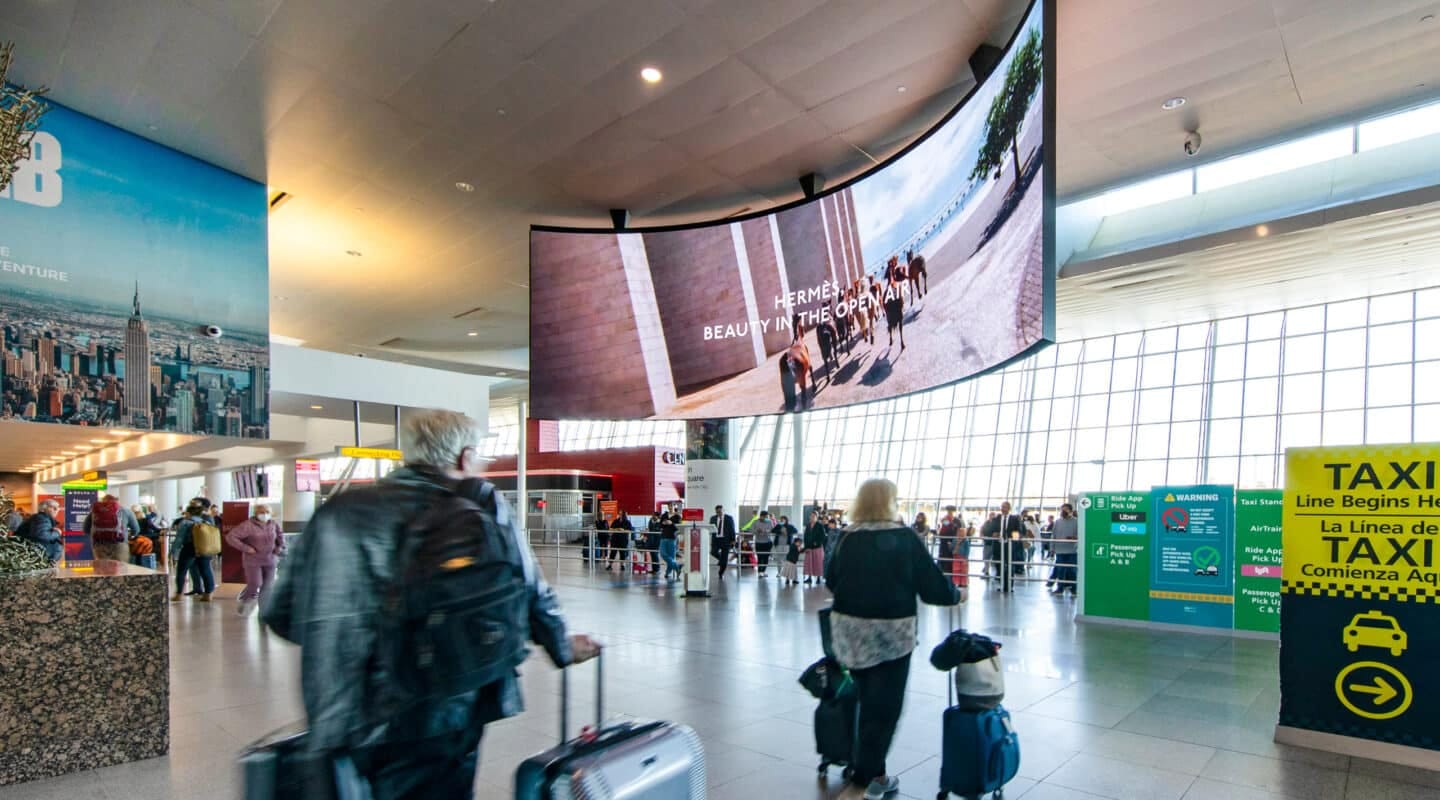
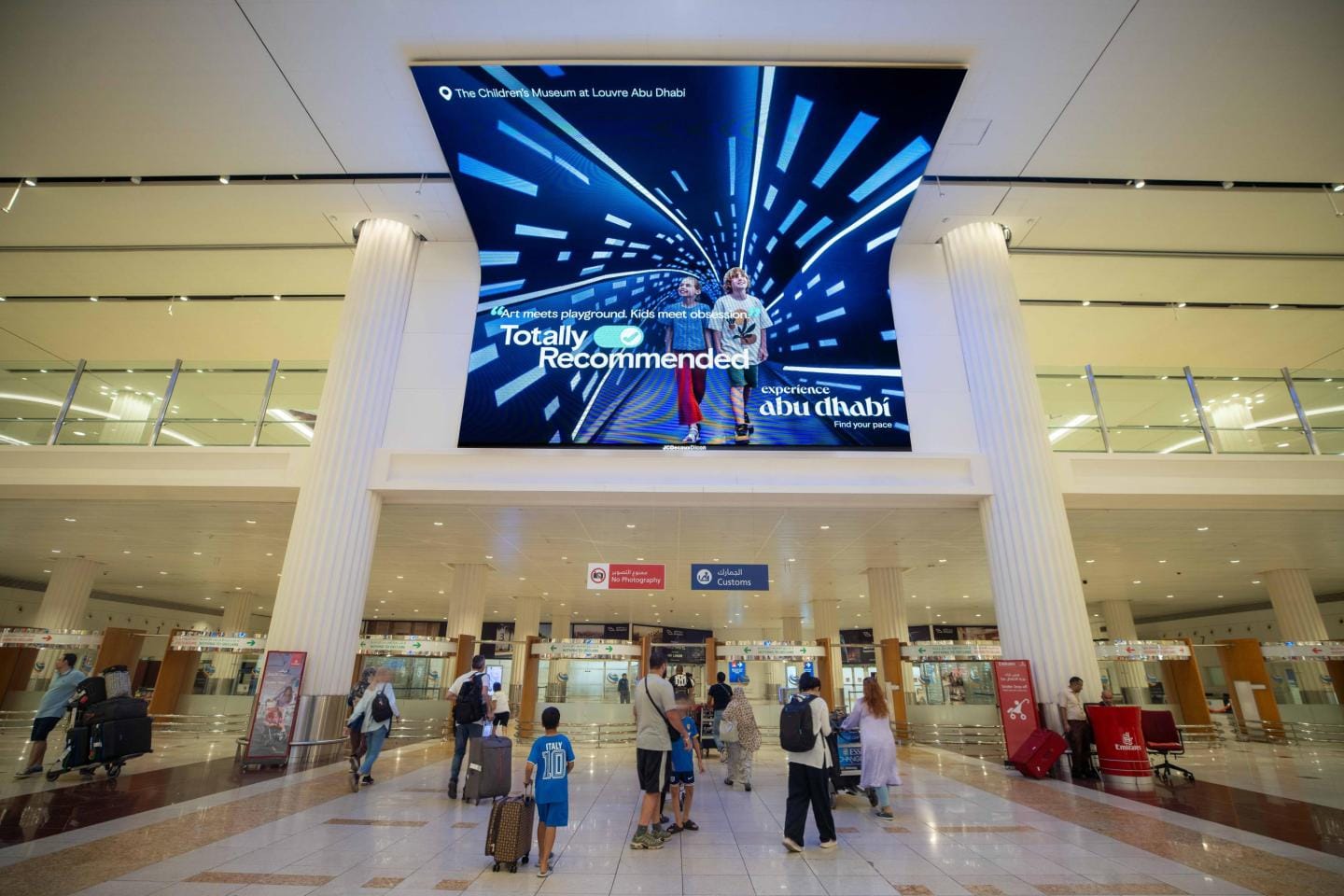
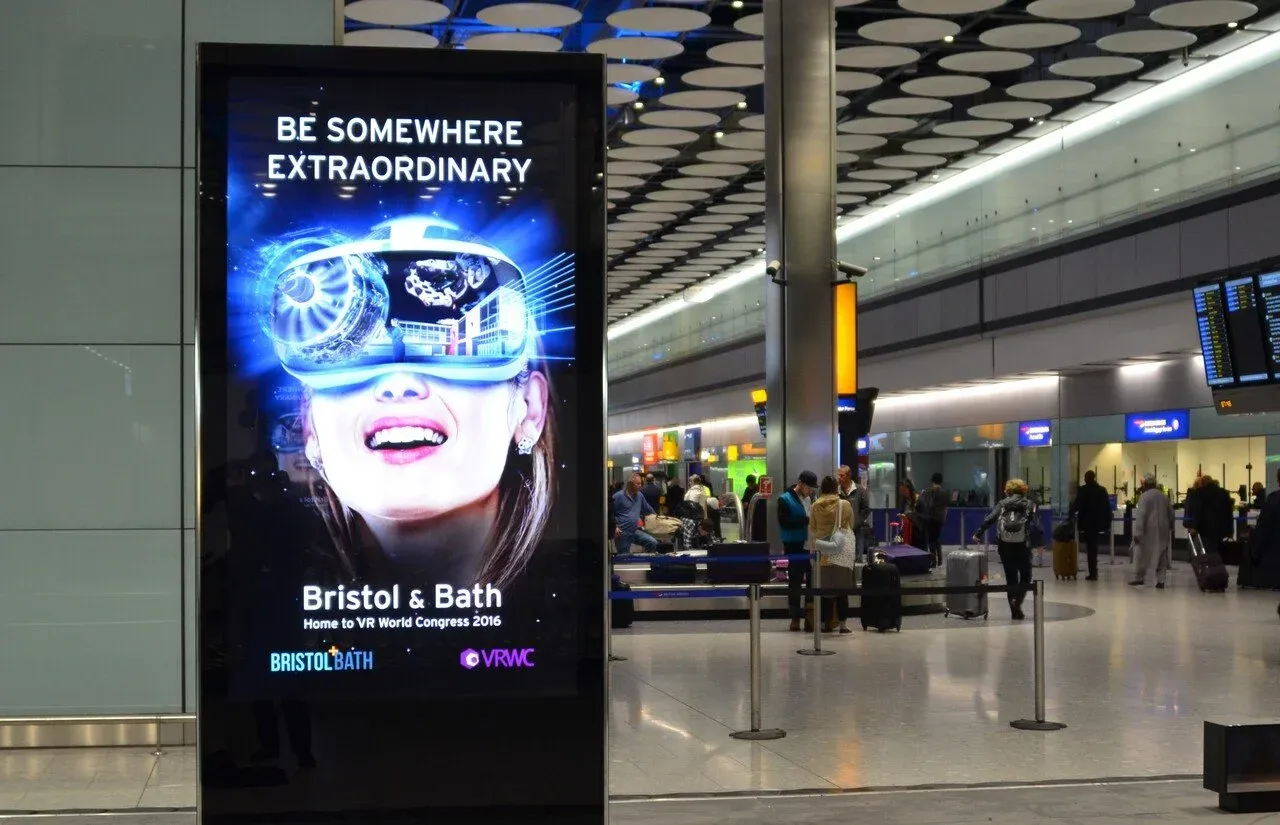
- TLC's single-terminal structure ensures that every commercial passenger — regardless of airline or destination — moves through the same physical advertising environment. There is no multi-concourse dispersal and no terminal segmentation: a brand present at TLC is present in the full commercial passenger field.
- The private aviation FBO zone at TLC creates an advertising environment with no direct equivalent at Mexico's commercial airports. Executive travellers moving through the FBO terminals dwell in a dedicated, premium, low-traffic space where advertising brand association is elevated by the premium context — luxury, financial services, and high-end automotive brands placed in or adjacent to the FBO corridor reach Mexico's wealth apex without the noise of a mass-market commercial terminal.
- TLC's notably faster processing times compared to Benito Juárez International create a different dwell psychology: passengers arrive in a better mood, with less time pressure, and in a more relaxed and receptive mindset. Advertising engagement rates at smaller, well-operated airports consistently outperform comparable formats at congested hub environments — TLC's operational efficiency is a direct commercial benefit for brand advertiser recall.
- Masscom Global's access to TLC's full media inventory spans both the commercial terminal and the premium private aviation environment, enabling coordinated campaigns that reach TLC's full audience spectrum — from the HNWI arriving in a Gulfstream G650 to the Metepec professional family departing to Cancún on Volaris — with creatively differentiated formats calibrated for each audience tier.
Strategic Advertising Fit
Best Fit:
- Private banking, wealth management, and family office services: TLC's FBO and private aviation ecosystem concentrates Mexico's HNWI and ultra-HNWI travellers in a premium, low-clutter environment where complex financial product advertising achieves its highest possible conversion alignment — this is the right audience, in the right mindset, with the right financial decision-making capacity
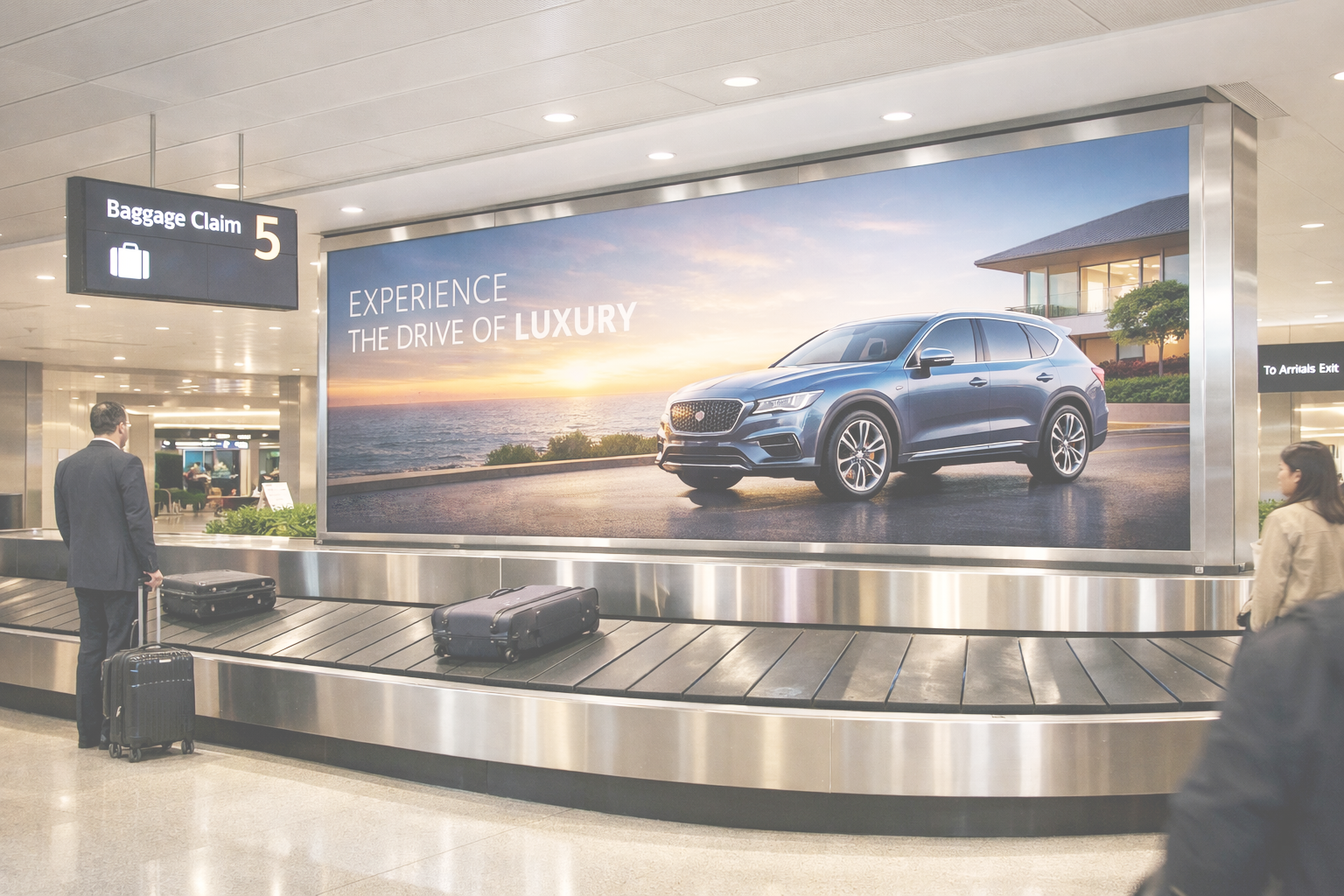
- Premium and luxury automotive: The automotive industry professionals of the Valley of Toluca and the HNWI leisure travellers of Metepec and Santa Fe are among Mexico's most brand-active automotive buyers — premium SUVs, executive sedans, and luxury European and US brands find a pre-qualified, high-engagement audience whose professional context reinforces automotive aspiration
- Luxury residential real estate — Valle de Bravo, Santa Fe, Mexico City premium: The HNWI community at TLC is actively investing in Mexican premium residential and investment property — Valle de Bravo estate developers, Santa Fe luxury condominium projects, and Cuernavaca resort properties find a captive, financially capable audience
- International real estate and residency — USA, Europe, Caribbean: Mexico's corporate and HNWI class is a globally active real estate buyer, with Miami, Houston, Spain, and Portugal as primary investment destinations — international developers and residency programme promoters find their exact target demographic at TLC's private aviation facilities
- Luxury hospitality and resort brands: Cancún, Los Cabos, and Puerto Vallarta's premium resorts — as well as international luxury hotel groups — find a pre-committed leisure spend audience among TLC's commercial passenger base, with the beach destination routes confirming consumer intent
- Premium travel accessories, leather goods, and lifestyle brands: The HNWI and upper-professional consumer at TLC maintains an aspirational lifestyle positioning that is served by premium travel accessories, luggage, fashion accessories, and lifestyle brand advertising at a premium airport environment
- B2B industrial and technology services: The automotive, pharmaceutical, and consumer goods management class from the Valley of Toluca represents a large, commercially active B2B audience for ERP software, supply chain technology, industrial equipment, and professional services advertising
Brand Alignment at a Glance:
| Category | Fit |
|---|---|
| Private banking and wealth management | Exceptional |
| Premium and luxury automotive | Exceptional |
| Luxury domestic real estate | Exceptional |
| International real estate and residency | Strong |
| Luxury resort and hospitality brands | Strong |
| B2B industrial and technology services | Strong |
| Premium lifestyle and travel accessories | Strong |
| Mass-market consumer goods | Moderate |
| Budget financial products | Poor fit |
Who Should Not Advertise Here:
- Budget and value-led retail brands: The dominant HNWI and upper-professional audience at TLC — particularly the private aviation segment — is contextually misaligned with value-positioning, price-competition, and budget-brand advertising; campaigns built around cost-savings messaging will find minimal resonance in Mexico's premier executive aviation environment
- Mass-market FMCG with no premium positioning: Standard consumer packaged goods advertising without a premium or lifestyle tier will be outcompeted for attention in a terminal where the audience's financial sophistication and brand awareness is among the highest in the Mexican consumer market
- Entry-level financial products and mass-banking services: The financial sophistication of TLC's private aviation audience makes basic banking product advertising both contextually inappropriate and commercially inefficient — this channel is reserved for wealth management, private banking, and premium financial services, not mass-market retail banking
Event and Seasonality Analysis
- Event Strength: High
- Seasonality Strength: Medium-High
- Traffic Pattern: Dual-Peak (Semana Santa leisure surge; October-December year-end and holiday travel peak) with strong year-round private aviation baseline
Strategic Implication:
Advertisers at TLC should structure campaigns around two commercial peaks and one permanent premium baseline. The Semana Santa window in March-April delivers the highest-volume leisure departures and the most concentrated family consumer audience of the year — optimal for resort hospitality, travel accessories, financial services, and premium lifestyle brands. The October-to-December window delivers the year-end executive and holiday travel peak, with Formula 1 Grand Prix week creating an exceptional HNWI concentration in the private aviation zone. The year-round private aviation baseline at TLC's FBO facilities creates a permanent premium advertising channel for wealth management, luxury automotive, and premium real estate brands that is not subject to seasonal fluctuation. Masscom structures TLC campaigns to activate across all three of these audience rhythms, ensuring brand presence is calibrated to the correct message for each audience segment at the correct time.

Poor Placement and Delays Affect Airport Campaigns
We help you move faster, access better inventory, and get it right now.
Talk to an ExpertFinal Strategic Verdict
Toluca International Airport is Mexico's most commercially underrated advertising environment. It serves a catchment that contributes nearly 10% of Mexico's national GDP, sits 30 kilometres from the country's most concentrated corporate and financial district, operates the nation's largest and most sophisticated private aviation infrastructure, and is recovering commercial passenger volumes at a pace — from 134,000 in 2021 to nearly 1.9 million in 2025 — that no other Mexican airport has matched in the same period. The private aviation dimension alone positions TLC as an HNWI advertising channel without peer in the CDMX metro area: eight FBOs, 50-plus hangar positions, and the proximity of Valle de Bravo's ultra-wealthy second-home community guarantee a year-round premium audience concentration that the capital's overcrowded commercial airports cannot deliver. For premium financial services, luxury automotive, international real estate, and wealth management brands whose Mexican target is Mexico's actual wealth-holding class rather than its aspiring middle market, TLC is not a secondary option — it is the primary one. Masscom Global's access to both TLC's commercial terminal inventory and its executive aviation environment enables brands to reach Mexico's full HNWI spectrum from a single strategic investment, coordinated with complementary corridor placements at Monterrey, Cancún, and Los Cabos to follow the same audience wherever they fly.
About Masscom Global
Masscom Global is a premium international airport advertising and media buying agency operating across 140 countries. With deep expertise in airport OOH, premium publications, and high-net-worth audience targeting, Masscom helps brands reach the world's most valuable travellers at the moments that matter most. For advertising packages, media rates, and campaign planning at Toluca International Airport and airports across the globe, contact Masscom Global today.
Frequently Asked Questions
How much does airport advertising cost at Toluca International Airport? Advertising costs at Toluca International Airport vary based on format type, placement position within the commercial terminal or executive aviation zones, campaign duration, and seasonal demand. The Semana Santa and December holiday peaks command premium rates for commercial terminal placements, while the private aviation and FBO environment commands year-round premium pricing reflecting the ultra-high value of the audience it delivers. Masscom Global provides current rate cards, format availability, and campaign cost modelling for both the commercial and executive aviation environments — contact our team for a tailored media plan aligned with your brand's specific audience objectives.
Who are the passengers at Toluca International Airport? TLC serves two distinct passenger populations simultaneously. The commercial aviation audience is primarily Mexican upper-middle and professional households from Toluca, Metepec, and the Valley of Toluca industrial corridor — automotive and manufacturing management, pharmaceutical executives, consumer goods professionals, and Santa Fe corporate staff — connecting to Monterrey, Cancún, Guadalajara, and Mexico's major leisure destinations. The private and executive aviation audience includes Mexico City's HNWI and ultra-HNWI class, multinational automotive and industrial corporate executives, international board members, and Formula 1 Grand Prix-calibre luxury event travellers who use TLC's eight FBOs as their preferred CDMX metro private aviation base.
Is Toluca International Airport good for luxury brand advertising? TLC is an exceptional environment for luxury brand advertising — particularly for brands whose target is the Mexican HNWI and corporate executive class rather than aspirational mass-market consumers. The private aviation FBO environment at TLC is arguably the best contained luxury advertising space in the CDMX metro area, reaching Mexico's actual wealth holders in a premium, low-clutter setting. Commercial terminal luxury advertising reaches the upper-professional class of Estado de México — a high-income, brand-aware audience whose consumer aspirations align strongly with accessible and premium luxury positioning.
What is the best airport in Mexico to reach HNWI and private aviation audiences in the Mexico City metro? For the private and executive aviation HNWI audience specifically, Toluca International Airport is Mexico's premier channel — operating 8 FBOs and over 50 hangar positions, it is the designated private aviation hub for the entire Greater Mexico City metropolitan area. Mexico City Benito Juárez International Airport handles higher commercial passenger volume, but for ultra-premium audience concentration in the executive aviation segment, TLC has no competitor in the CDMX metro system. Masscom Global recommends a coordinated TLC plus MEX strategy for brands seeking both peak volume and peak wealth concentration in the Mexico City market.
What is the best time to advertise at Toluca International Airport? The Semana Santa window in March and April is TLC's highest-volume commercial leisure peak — the optimal window for resort hospitality, travel accessories, and premium consumer lifestyle brands. The October-to-December period is the premium B2B and year-end travel peak, with the Formula 1 Grand Prix week creating an exceptional short-burst HNWI concentration in October or November depending on the race calendar. The private aviation FBO environment carries no seasonal peak dependency — it delivers Mexico's HNWI class year-round and should be treated as a permanent strategic placement rather than a seasonal campaign.
Can international real estate developers advertise at Toluca International Airport? Yes, and TLC is among the most effective channels in Mexico for this purpose. The HNWI and corporate executive audience using TLC's private aviation infrastructure is actively investing in international real estate — particularly in the United States (Miami, Houston, Texas), Spain, Portugal, and Mexico's own premium resort markets. International real estate developers offering US EB-5 investment pathways, European Golden Visa-linked properties, or luxury Caribbean resort real estate will find a financially qualified, internationally mobile, and actively investing audience at TLC's private aviation environment. Masscom Global can structure these campaigns for placement in the FBO and executive aviation zones for maximum alignment with the HNWI target.
Which brands should not advertise at Toluca International Airport? Value-retail, budget banking, mass-market fast food, and economy travel product brands will find a misaligned audience at TLC. The dominant commercial and executive aviation audience at this airport is characterised by high income, brand sophistication, and premium consumer orientation — budget-led, value-framed, or mass-market advertising campaigns will generate minimal conversion against an audience whose consumer priorities are defined by quality, status, and lifestyle aspiration rather than price. These categories are better deployed at Mexico's higher-volume, more demographically diverse airports.
How does Masscom Global help brands advertise at Toluca International Airport? Masscom Global provides complete end-to-end advertising execution at Toluca International Airport, spanning strategic media planning across both the commercial terminal and executive aviation environments, inventory access to all format positions including premium placements adjacent to TLC's FBO facilities, creative guidance for bilingual Spanish-English campaigns calibrated to both the domestic Mexican professional and the international corporate executive audience, and coordinated multi-airport corridor campaigns that follow TLC's commercial passengers to their leisure and business destination airports in Monterrey, Cancún, Los Cabos, and Guadalajara. Our expertise in HNWI-focused airport advertising and Mexico's premium media environment ensures that campaigns at TLC work at the level of precision that this exceptional audience demands. Contact Masscom Global today to begin planning your Mexico City western corridor strategy.