

Airport at a Glance
| Field | Detail |
|---|---|
| Airport | Takamatsu Airport |
| IATA Code | TAK |
| Country | Japan |
| City | Takamatsu |
| Annual Passengers | Approx. 1.7 million (recent operational year) |
| Primary Audience | Regional business executives, premium domestic tourists, inbound East Asian leisure HNIs |
| Peak Advertising Season | March to May, October to November, December holidays |
| Audience Tier | Tier 2 |
| Best Fit Categories | Luxury automotive, premium real estate, financial services, international education, premium hospitality |
Takamatsu Airport is the largest airport on the island of Shikoku, handling approximately 1.7 million passengers annually across domestic and a focused set of international routes. The catchment combines Kagawa Prefecture's industrial and professional services wealth with inbound premium tourism into the Setouchi region, particularly the art islands of Naoshima, Teshima, and Inujima. The audience profile skews older, affluent, and decision-heavy, with a meaningful inbound layer of culturally curated international travellers from South Korea, Taiwan, Hong Kong, and mainland China.
What makes Takamatsu commercially distinct is the density of regional wealth concentrated in a small geographic footprint. Kagawa is Japan's smallest prefecture by area, but it carries one of the country's highest per-capita disposable income profiles among regional populations, supported by financial services in Takamatsu City, manufacturing across Marugame and Sakaide, and a generational agricultural and food export economy. This is a quiet wealth catchment with high category receptivity for premium and international brands.
Advertising Value Snapshot
- Passenger scale: Approximately 1.7 million annual passengers, with steady recovery and growth across post-pandemic operational years
- Traveller type: Regional business executives, premium domestic leisure travellers, inbound East Asian art and heritage tourists
- Airport classification: Tier 2, a regional gateway with concentrated wealth signal and low ad clutter
- Commercial positioning: Shikoku's primary international and domestic gateway, anchoring Setouchi inbound tourism and outbound regional business flow
- Wealth corridor signal: Sits on the Tokyo and Setouchi capital corridor, with HNI flow into Seoul, Taipei, Shanghai, Hong Kong, and Singapore
- Advertising opportunity: Masscom Global activates inventory at TAK for brands seeking precision reach into a concentrated, high-disposable-income audience that larger Japanese hubs dilute. The environment carries strong premium signal with significantly lower competitive clutter than Tokyo, Osaka, or Fukuoka.
Airport Advertising is Complex to Get Right
We help you execute faster, with proven results and local insight most planners lack starting now.
Talk to an ExpertCatchment Area and Economic Drivers
Top 10 Cities within 150 km, Marketer Intelligence:
- Takamatsu: Prefectural capital and Shikoku's financial and administrative hub, anchoring regional banking, professional services, and government salaries that produce a stable upper-middle premium spending audience.
- Marugame: Manufacturing and traditional craft economy including the global Marugame paper fan industry, generating concentrated industrial executive households with strong outbound travel patterns.
- Sakaide: Petrochemical and shipbuilding base linked across the Seto Ohashi corridor, technical executive households with disposable income for premium automotive and international education.
- Tokushima City: Reached via expressway connectivity, a chemical and pharmaceutical industrial base anchored by Otsuka Pharmaceutical, producing a senior corporate decision-maker audience.
- Okayama City: Across the Seto Ohashi bridge, a high-frequency cross-traffic catchment combining industrial and professional services wealth that overlaps strongly with TAK passenger flow.
- Kurashiki: Bikan tourism wealth and Mizushima industrial executive households, an additional layer of premium cross-prefectural traffic.
- Kannonji: Smaller manufacturing and agricultural base with concentrated generational wealth tied to food export operations.
- Mitoyo: Tourism economy lifted by Chichibugahama beach and premium domestic leisure traffic, supporting a small but growing high-margin hospitality operator audience.
- Naruto: Agricultural and aquaculture export economy, plus tourism wealth from the Naruto whirlpools, generating an entrepreneur-class audience.
- Niihama: Sumitomo Group industrial base on the Ehime side, senior engineering and management households, a strong audience for international real estate and education categories.
NRI and Diaspora Intelligence:
Japan does not produce a traditional outbound diaspora, but the dominant HNI movement at TAK is corporate and generational. Senior executives travel between Shikoku and Asian financial centres including Seoul, Shanghai, Taipei, Hong Kong, and Singapore for business, supplier engagement, and increasingly for offshore wealth structuring. Next-generation heirs of family manufacturing and agricultural businesses are driving a rising outbound flow tied to international education and second-residency planning. This is a quiet, brand-loyal, premium audience that responds to credibility and heritage messaging.
Economic Importance:
The catchment economy is powered by financial and professional services in Takamatsu, manufacturing across Marugame and Sakaide, the Sumitomo industrial complex in Niihama, pharmaceutical operations in Tokushima, and a generational food export economy that includes Sanuki udon, olive oil from Shodoshima, and premium agricultural produce. This produces three commercially distinct advertiser audiences: senior corporate decision-makers, export-oriented entrepreneurs, and inherited-wealth household heads.
Business and Industrial Ecosystem
- Sumitomo Industrial Complex (Niihama): Mining, chemicals, electronics, and metals, generating a senior executive flow with high outbound international travel frequency.
- Otsuka Pharmaceutical (Tokushima): Headquarters of one of Japan's largest pharmaceutical groups, producing a senior R&D and corporate leadership audience.
- Shikoku Regional Banking and Professional Services: Centred in Takamatsu, responsible for commercial lending, wealth management, and corporate advisory across the island.
- Premium Food and Agricultural Exports: Sanuki udon, Shodoshima olive oil, Setouchi olives and lemon, generationally wealthy export entrepreneur households.
Passenger Intent, Business Segment:
Business travellers at TAK are typically senior, often in their 50s and 60s, travelling to Tokyo, Osaka, or Asian hubs for board meetings, supplier negotiations, and corporate functions. They are receptive to premium financial services, luxury automotive, business class travel, international real estate, and wealth structuring categories. This is a budget-authority audience, not a junior business pool.
Strategic Insight:
The B2B value at TAK is concentrated. Advertisers measuring success by reach into specific high-net-worth decision-maker pools find this environment far more efficient than competing for share-of-voice at saturated metropolitan hubs. The audience is harder to reach digitally because of conservative media consumption habits, which makes the airport environment one of the few high-impact physical channels still effective.
Tourism and Premium Travel Drivers
- Naoshima, Teshima, and Inujima Art Islands: The Benesse Art Site, Chichu Art Museum, and Lee Ufan Museum draw a globally affluent contemporary art audience, particularly during Setouchi Triennale years.
- Ritsurin Garden: A national special place of scenic beauty, drawing premium domestic and international heritage tourism with high spending profiles.
- Shodoshima Island: Olive groves, soy sauce heritage, and luxury ryokan inventory, anchoring high-margin tourism flow.
- Kotohira Shrine (Konpira-san): A historic pilgrimage destination drawing affluent domestic religious and cultural tourism.
Passenger Intent, Tourism Segment:
Tourists arriving at TAK have already committed to a premium itinerary. Setouchi tourism is curated, slow, and expensive. The inbound audience books ryokan stays, art museum tickets, and culinary experiences priced well above mass-market Japan tourism. They are receptive to luxury hospitality, international banking, premium automotive, and concierge service categories. Departing domestic tourists are similarly upscale, often retired or semi-retired, heading to Tokyo, Sapporo, and Naha for premium leisure.
Travel Patterns and Seasonality
- Peak seasons: Cherry blossom (late March to early April), autumn foliage (October to November), Golden Week (late April to early May), and the New Year holiday period (late December to early January).
- Traffic volume: Triennale years produce a measurable inbound spike across spring, summer, and autumn art festival sessions, materially lifting international passenger share.
Event-Driven Movement:
- Setouchi Triennale (Spring, Summer, Autumn of Triennial Years): International contemporary art audience, globally affluent and culturally curated, the single highest-value advertiser window for international luxury and lifestyle categories.
- Cherry Blossom Season (Late March to Early April): Premium domestic and inbound Asian HNI tourism peak.
- Golden Week (Late April to Early May): Domestic family premium travel peak, strong fit for retail, automotive, and consumer brands.
- Autumn Foliage (October to November): Second-largest premium tourism inflow window, strong inbound Asian HNI presence.
- New Year Holiday (Late December to Early January): Domestic leisure and gifting peak, strong category fit for premium retail and hospitality.
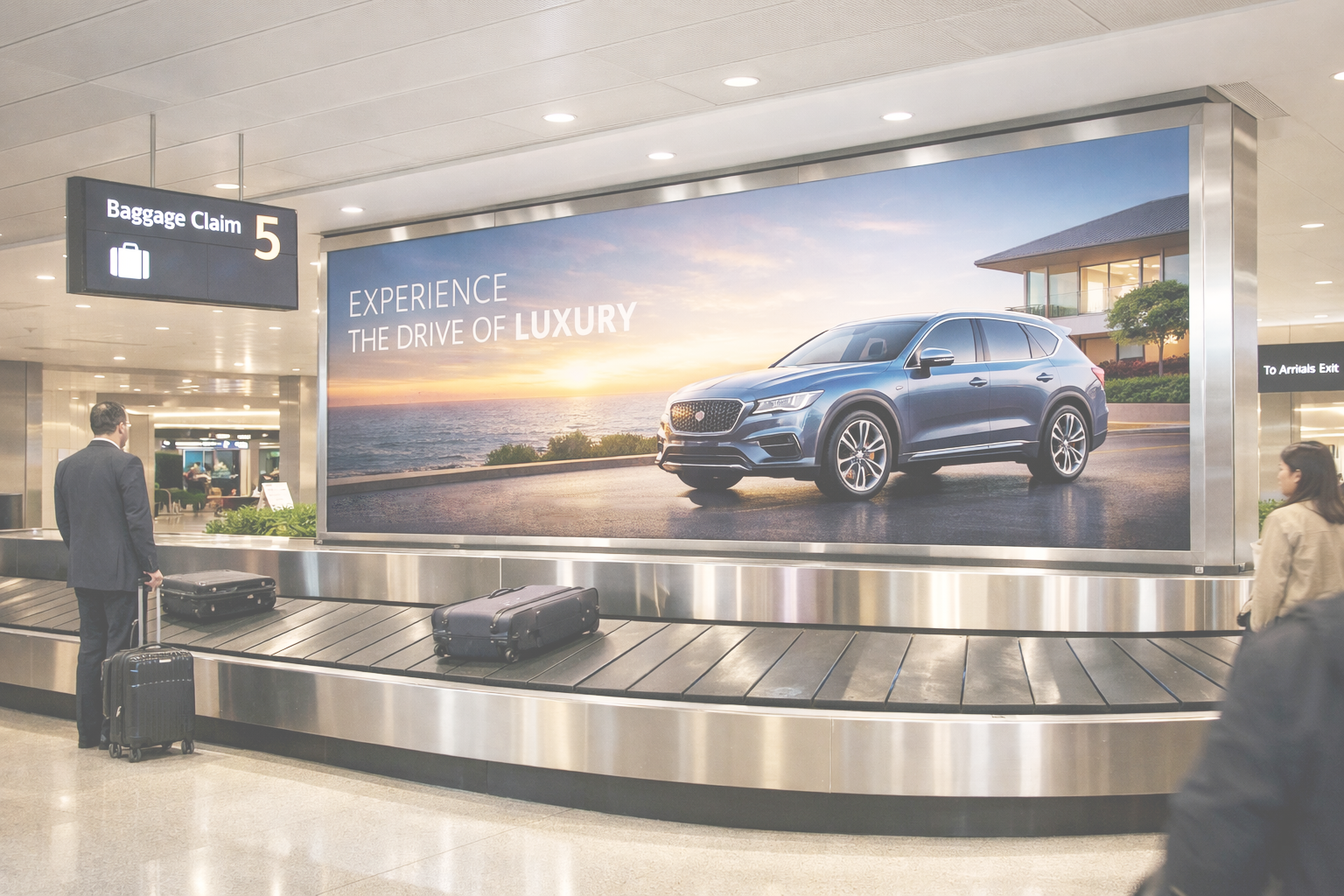
It’s Not Just Where You Advertise - It’s How Fast You Execute
We combine local insight with fast rollout to deliver results for you, now.
Talk to an ExpertAudience and Cultural Intelligence
Top 2 Languages:
- Japanese: The primary language of nearly all departing passengers and the dominant creative language for any campaign targeting the domestic affluent audience. Brand-heritage messaging in Japanese significantly outperforms translated global creative.
- English: A secondary but rising language tied to inbound international tourism and outbound business travel, suitable for international real estate, education, and premium financial services categories.
Major Traveller Nationalities:
The dominant nationality is Japanese, with concentrated presence from Kagawa, Tokushima, Ehime, Kochi, and Okayama prefectures. Inbound international flow is led by South Korean, Taiwanese, mainland Chinese, and Hong Kong travellers, generally affluent leisure visitors arriving for Setouchi tourism. Western traveller share is smaller but skews highly affluent, particularly during Triennale years, including European, North American, and Australian art collectors and cultural travellers.
Religion, Advertiser Intelligence:
- Shinto and Buddhism (combined, near universal cultural overlay): Most Japanese identify with both traditions in a syncretic framework. Festivals including Setsubun, Obon, and the New Year period drive predictable domestic travel spikes and gift-giving categories. Premium gifting, luxury food, and traditional craft categories perform exceptionally during these windows. The 88-temple Shikoku pilgrimage circuit also drives a steady cultural tourism audience year-round.
- Christianity (less than 2%): Minor in scale, but Christmas has been adopted as a commercial gifting and dining occasion, particularly in urban areas, creating a December retail and hospitality opportunity.
Behavioral Insight:
The Takamatsu audience is conservative in financial decisions, brand-loyal once trust is established, and responsive to heritage, craftsmanship, and quality cues rather than aspirational disruption. Aggressive performance advertising tends to underperform here. The audience rewards patience, repeated exposure, and brand storytelling that respects tradition while signalling international relevance. Premium real estate, wealth management, luxury automotive, and international education brands consistently outperform impulse-led categories.
Outbound Wealth and Investment Intelligence
The outbound passenger at TAK is commercially distinct because the wealth here is generational, regionally rooted, and increasingly looking offshore for diversification, succession planning, and next-generation education. This is quiet capital deployment, not new-money flash, and that profile shapes which categories will resonate.
Outbound Real Estate Investment:
Takamatsu HNI capital flows primarily into Tokyo central wards for domestic diversification, and increasingly into Singapore, Australia (Gold Coast, Brisbane, and Melbourne), Hawaii, and Vancouver for international holdings. Yield-driven investment into Bangkok, Ho Chi Minh City, and Kuala Lumpur is a growing pattern among next-generation heirs. International developers offering branded residences, generational structuring, and stable democracy jurisdictions find a high-receptivity audience here.
Outbound Education Investment:
Students from this catchment migrate primarily to the United States (East and West Coast Ivy and equivalent universities), the United Kingdom (Oxbridge and London), Australia, and increasingly Singapore for both undergraduate and postgraduate study. Family budgets routinely exceed 200,000 USD across a four-year programme. International boarding schools, university recruitment offices, and education consultancies advertising at TAK reach a small but high-conversion audience.
Outbound Wealth Migration and Residency:
Japanese HNIs are increasingly active in Portugal Golden Visa, Malta, and Caribbean second-passport programmes, driven primarily by succession tax planning rather than relocation intent. Australia and Singapore investor visa programmes also see consistent demand. Residency advisory firms, citizenship-by-investment platforms, and offshore wealth structuring services find a discreet but capital-rich audience at TAK.
Strategic Implication for Advertisers:
International brands operating on both sides of the wealth corridor should treat TAK as a priority Tier 2 buy precisely because the audience is quieter, less digitally saturated, and more responsive to physical premium environments than equivalent buyers at major Tokyo and Osaka hubs. Masscom Global activates campaigns at TAK alongside the corresponding inbound markets in Singapore, Sydney, London, and New York to capture both ends of the capital flow simultaneously.
Airport Infrastructure and Premium Indicators
Terminals:
- Single integrated terminal: Handles both domestic and international operations in an efficient, modernised footprint that maximises dwell-time exposure for advertisers.
- Premium passenger flow design: Concentrated retail, dining, and lounge zones produce strong recall conditions for brand creative.
Premium Indicators:
- Lounge infrastructure: Domestic carrier lounges and a focused international lounge presence cater to status-tier business travellers, a curated HNI access point.
- Private aviation: Limited but operational general aviation activity, primarily corporate and executive movement.
- Adjacent premium hospitality: Premium hotel inventory in Takamatsu City, plus luxury ryokan inventory on Shodoshima and across Setouchi accessible within an hour.
- Brand environment: The terminal carries strong heritage and regional design cues, lifting perceived premium of brand creative placed in the space.
Forward-Looking Signal:
Kagawa Prefecture is investing in expanded inbound tourism infrastructure tied to the Setouchi Triennale legacy, route development with Asian carriers, and broader regional connectivity. As inbound traffic recovers and grows, advertising rates at TAK will move upward to reflect the audience quality concentration. Masscom Global advises clients to secure positioning at current rates ahead of the next Triennale cycle and the corresponding inbound spike.
Airline and Route Intelligence
Top Airlines:
ANA, Japan Airlines, and Jetstar Japan dominate domestic operations, with international service from Asian carriers including Asiana Airlines, China Eastern, and Tigerair Taiwan depending on the route year and season.
Key International Routes:
Seoul Incheon, Shanghai Pudong, Hong Kong, and Taipei Taoyuan have been the principal international corridors, with frequencies that fluctuate seasonally and by carrier.
Domestic Connectivity:
Tokyo Haneda is the dominant domestic route by frequency and yield, followed by Tokyo Narita, Sapporo Chitose, and Naha Okinawa, the latter two leisure-led routes carrying premium domestic tourists.
Wealth Corridor Signal:
The route network reveals a clear wealth signature. The Tokyo Haneda corridor is a pure business and capital flow route, the Seoul, Taipei, Shanghai, and Hong Kong routes are a mix of corporate travel and inbound luxury tourism, and the domestic leisure routes carry an affluent, retired-or-near-retired audience with disposable income and time. This is not a budget leisure airport. The route map itself acts as the wealth filter.
Media Environment at the Airport
- Terminal scale and standout potential: A compact, efficient single-terminal environment with low ad clutter compared to major Japanese hubs, producing higher recall per impression for brand creative.
- Dwell time drivers: Strong domestic retail and dining offer, plus the cultural design environment, encourages longer voluntary dwell among premium passengers.
- Premium environment signals: Heritage-led design language and sustained terminal modernisation create a brand association lift for luxury and international categories.
- Masscom inventory access: Masscom Global delivers placement precision, planning intelligence, and execution speed at TAK that planners working without deep local knowledge struggle to match.
Strategic Advertising Fit
Best Fit:
- International luxury real estate: A capital-deploying audience actively investing in Singapore, Australia, and North America.
- Premium wealth management and private banking: Generational wealth requiring succession and offshore structuring.
- Luxury automotive: Brand-loyal, premium-comfortable, particularly German and British marques.
- International education and boarding schools: Family budgets that comfortably support overseas tuition at the highest tier.
- Premium travel and hospitality: Luxury cruises, branded resorts, and curated travel experiences.
- High-end consumer goods: Watches, jewellery, premium spirits, with strong heritage and craftsmanship narratives.
- Citizenship and residency by investment: Discreet HNI audience receptive to succession planning solutions.
- Premium healthcare and wellness: International medical tourism, longevity clinics, and elite wellness retreats.
Brand Alignment at a Glance:
| Category | Fit |
|---|---|
| International real estate | Exceptional |
| Wealth management and private banking | Exceptional |
| Luxury automotive | Strong |
| International education | Strong |
| Premium watches and jewellery | Strong |
| Mass-market FMCG | Moderate |
| Budget travel and discount retail | Poor fit |
Who Should Not Advertise Here:
- Budget airline and discount travel brands: The audience profile and route mix do not align with a value-led leisure proposition.
- Mass-market youth fashion: The traveller profile skews older and quality-driven rather than trend-driven.
- Crypto and high-risk speculative finance: Conservative wealth attitudes and regulatory caution make this a misaligned category.
Event and Seasonality Analysis
- Event Strength: High in Triennale years, Medium in non-Triennale years
- Seasonality Strength: High
- Traffic Pattern: Seasonal with cultural and tourism-driven peaks, with a strong Triennale-year lift
Strategic Implication:
Advertisers should structure TAK campaigns around the cherry blossom and autumn foliage windows, with secondary intensification across Golden Week and the New Year travel block. Triennale years carry an additional high-value layer for international luxury and lifestyle categories that justifies a meaningful budget concentration across spring, summer, and autumn sessions. Masscom Global structures campaigns to align inventory weight with these peaks, ensuring budget concentration delivers maximum ROI rather than diluted year-round presence.
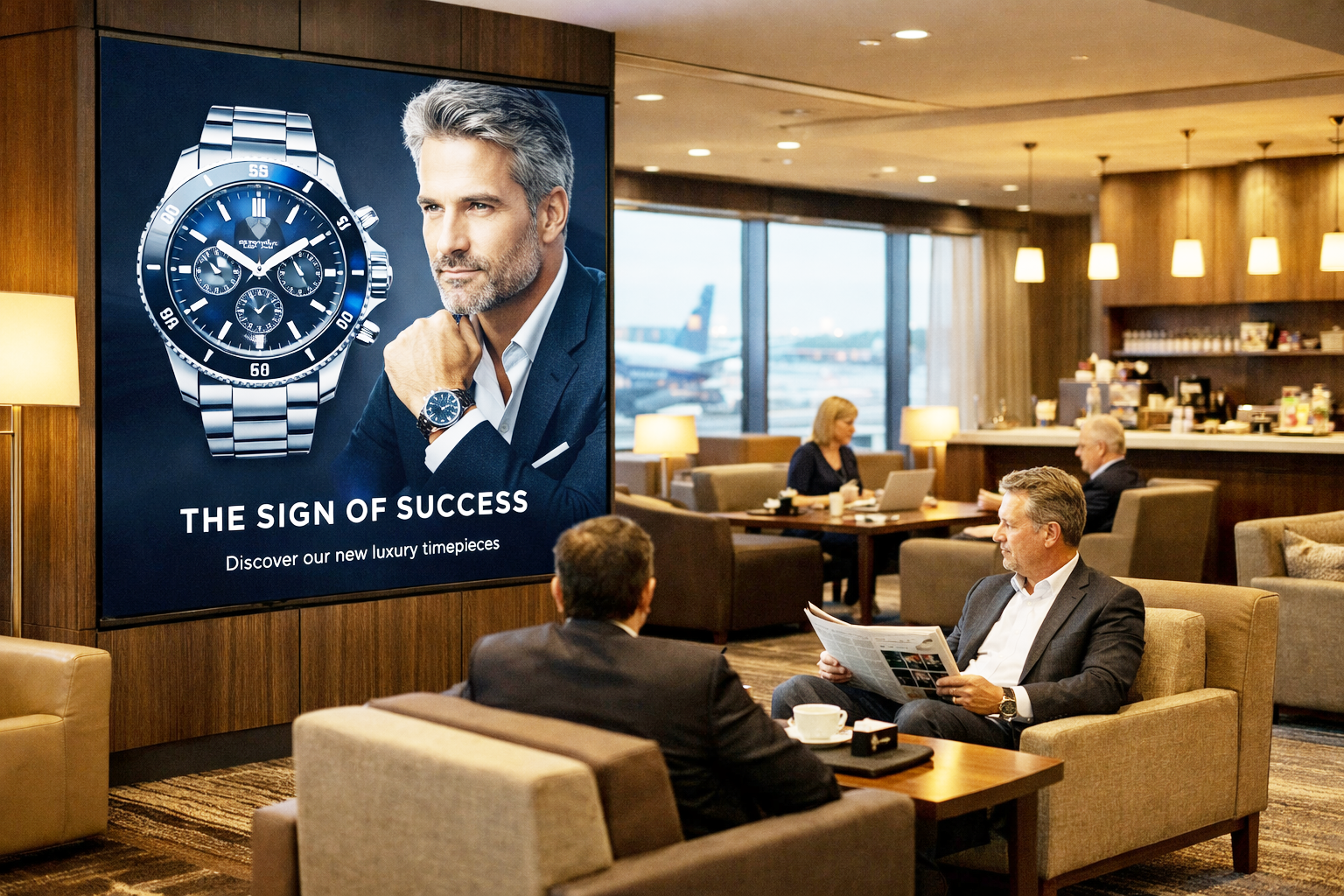
Poor Placement and Delays Affect Airport Campaigns
We help you move faster, access better inventory, and get it right now.
Talk to an ExpertFinal Strategic Verdict
Takamatsu Airport is a precision buy with rare commercial depth for a Tier 2 environment. It is the only true gateway to Shikoku, the natural arrival point for the globally curated Setouchi art and heritage circuit, and the corporate flight hub for one of Japan's quietest but capital-richest regional economies. International real estate developers, wealth management firms, luxury automotive brands, and premium education providers gain disproportionate value here because the audience is quieter, deeper-pocketed, and harder to reach digitally. Masscom Global is the right partner to activate at TAK because we plan, place, and execute with the local intelligence and global reach this audience demands.
About Masscom Global
Masscom Global is a premium international airport advertising and media buying agency operating across 140 countries. With deep expertise in airport OOH, premium publications, and high-net-worth audience targeting, Masscom helps brands reach the world's most valuable travellers at the moments that matter most. For advertising packages, media rates, and campaign planning at Takamatsu Airport and airports across the globe, contact Masscom Global today.
Frequently Asked Questions
How much does airport advertising cost at Takamatsu Airport? Costs at TAK vary by format, position, campaign duration, and seasonal demand, with significant rate movement around cherry blossom, Golden Week, autumn foliage, and Triennale-year tourism peaks. Masscom Global provides current rate cards, package options, and inventory availability on request, including bundled pricing across multiple Asian regional airports.
Who are the passengers at Takamatsu Airport? The passenger mix is dominated by senior Japanese business travellers tied to the Sumitomo, Otsuka Pharmaceutical, and Shikoku regional manufacturing economies, premium domestic leisure travellers heading to Tokyo, Sapporo, and Naha, and inbound affluent tourists from South Korea, Taiwan, Hong Kong, and mainland China visiting Setouchi heritage and art destinations.
Is Takamatsu Airport good for luxury brand advertising? Yes. The audience profile concentrates generational regional wealth, food and craft export entrepreneurs, and globally affluent inbound art tourists, all categories that respond strongly to luxury automotive, premium watches, international real estate, and wealth management messaging.
What is the best airport in Shikoku to reach HNWI audiences? Takamatsu is the largest and most efficient buy in Shikoku for advertisers seeking concentrated reach into the island's industrial old money and inbound premium tourism wealth, ahead of Matsuyama, Tokushima, and Kochi for international category alignment.
What is the best time to advertise at Takamatsu Airport? The strongest windows are late March through early April for cherry blossom tourism, late April through early May for Golden Week, October through November for autumn foliage, and the late December to early January New Year holiday period. Triennale years add a high-value premium layer across spring, summer, and autumn art sessions.
Can international real estate developers advertise at Takamatsu Airport? Yes, and the audience fit is strong. Takamatsu HNIs are active buyers in Singapore, Australia, Hawaii, Vancouver, and select Southeast Asian markets, deploying capital for diversification, succession planning, and next-generation residency. International developers reach a high-conversion audience here.
Which brands should not advertise at Takamatsu Airport? Budget airlines, discount travel brands, mass-market youth fashion, and high-risk speculative finance categories misalign with the conservative, premium, heritage-oriented audience profile. The buy works best for brands with quality and craftsmanship narratives.
How does Masscom Global help brands advertise at Takamatsu Airport? Masscom Global delivers full-service airport campaign capability at TAK, including audience intelligence, inventory access, creative localisation guidance, placement strategy, execution, and post-campaign performance analysis. We plan TAK alongside the corresponding inbound HNI markets to capture both ends of the wealth corridor.