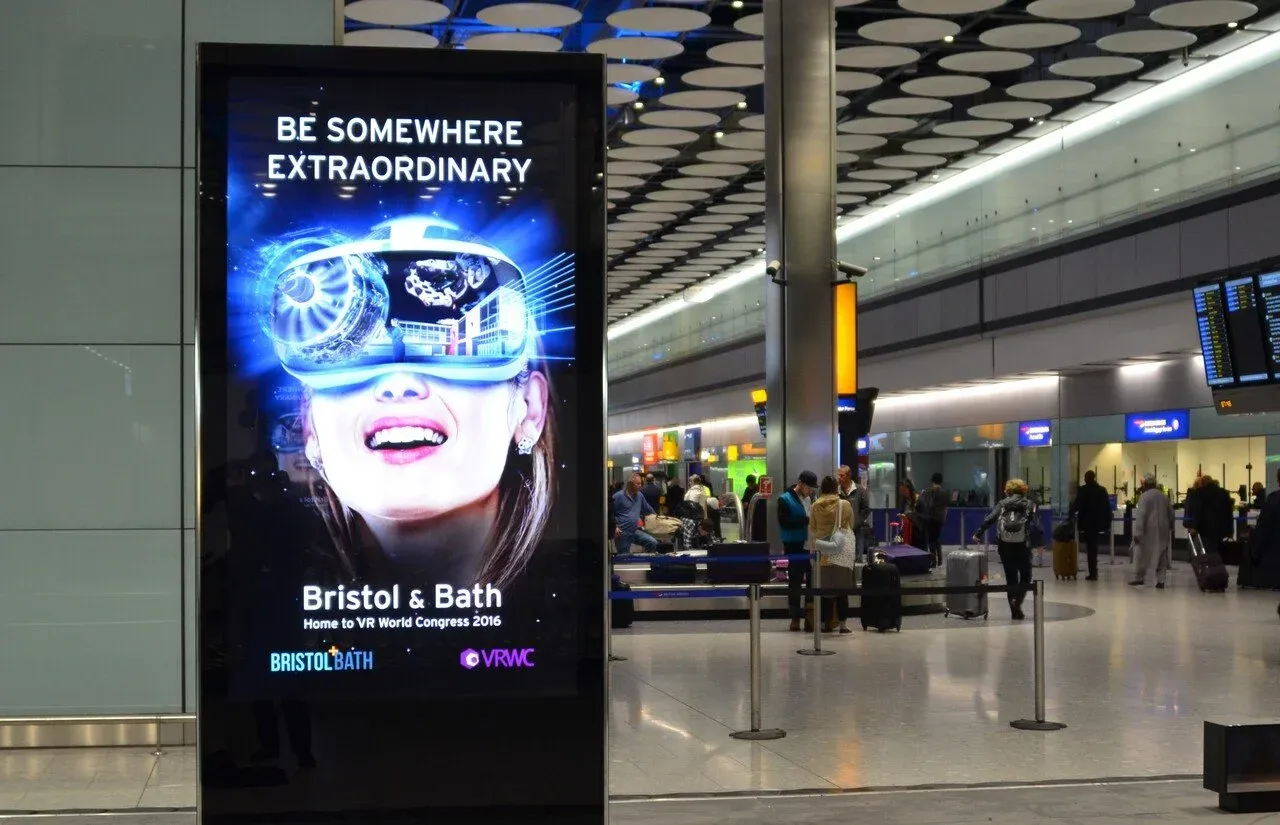


Airport at a Glance
| Field | Detail |
|---|---|
| Airport | Redmond Municipal Airport — Roberts Field |
| IATA Code | RDM |
| Country | United States of America |
| City | Redmond, Oregon (serving Bend metro) |
| Annual Passengers | Approximately 800,000 (2023) |
| Primary Audience | Silicon Valley and Seattle tech executive relocatees, premium outdoor recreation HNWI consumers, second-home owners, remote-income professional class |
| Peak Advertising Season | December to March (ski season), June to September (outdoor summer peak) |
| Audience Tier | Tier 2 Premium |
| Best Fit Categories | Premium outdoor lifestyle brands, luxury real estate, financial advisory services, premium automotive, health and wellness, tech sector B2B |
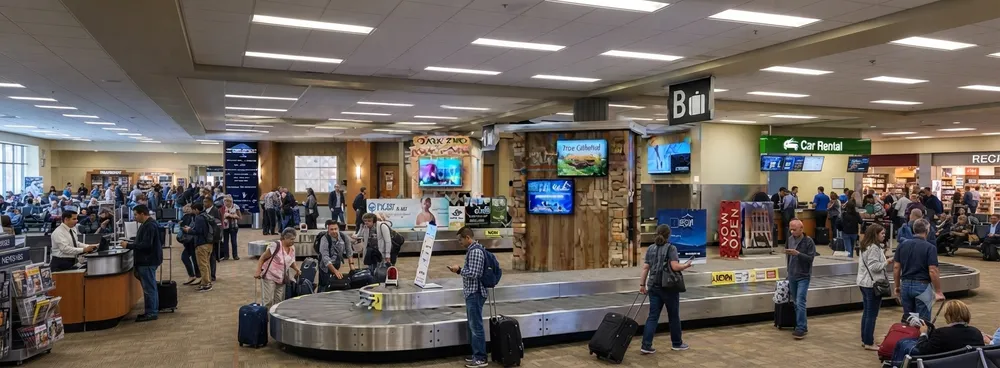
Redmond Municipal Airport is the Pacific Northwest's most commercially compelling small-city aviation gateway and one of America's most underestimated regional airports by audience quality relative to its passenger volume. RDM serves Bend, Oregon — a city of approximately 100,000 residents that has become the relocation destination of choice for tech executives departing San Francisco, Seattle, and Portland in search of outdoor access, lifestyle quality, and a lower cost of living whose comparison point is the Bay Area rather than the national average. The result is a city whose median household income, educational attainment, and per-capita HNWI concentration are profoundly misrepresented by its population size alone — a community where the neighbour shovelling snow is as likely to be a former Google VP or a retired Amazon director as a local contractor, and where the premium outdoor lifestyle economy generates spending profiles that rival resort destination airports many times RDM's size.
For advertisers, RDM delivers what no other Oregon airport outside Portland replicates: concentrated access to America's most commercially active outdoor lifestyle consumer — the tech-economy professional who has relocated to Bend not for financial reasons but for the mountain, the trail, and the river, and who brings with them the income, the investment portfolio, and the brand sophistication of a Silicon Valley career compressed into a small-city airport terminal. The passengers moving through this terminal between Los Angeles, San Francisco, Seattle, Denver, and Phoenix are not typical regional Oregon travelers. They are remote-income earners managing tech equity positions from Bend's Old Town coffee shops, second-home owners whose primary residence is in San Francisco but whose emotional home is a Sunriver vacation house, and premium outdoor enthusiasts whose annual recreation budget exceeds the median US household income. Masscom Global activates across RDM's full inventory environment with the American West market intelligence and premium outdoor HNWI audience expertise that this extraordinary Central Oregon gateway demands.
Advertising Value Snapshot
- Passenger scale: Approximately 800,000 annually (2023), recovering strongly from COVID disruption and reaching record levels as Bend's extraordinary population and income growth converts directly into expanding airport utilisation across Alaska Airlines, American Airlines, United Airlines, and Delta's growing RDM route network
- Traveller type: Silicon Valley and Seattle tech executive relocatees managing remote income from Bend, premium outdoor recreation HNWI consumers traveling for ski, climb, and fly-fish itineraries, second-home owners commuting between Bend and West Coast metropolitan markets, Sunriver resort community members, and business travelers connecting to national corporate hubs
- Airport classification: Tier 2 Premium — Central Oregon's sole commercial gateway with exceptional per-capita audience income and HNWI concentration driven by one of America's most extraordinary tech-economy relocation dynamics and a premium outdoor lifestyle consumer base whose spending profiles far exceed regional small-city norms
- Commercial positioning: The sole commercial aviation gateway to Bend — one of America's fastest-growing affluent cities, the Pacific Northwest's premier outdoor recreation destination, and the relocation capital of the American West's tech executive class — whose per-capita HNWI audience concentration makes it the most commercially capable small-market airport in the Pacific Northwest
- Wealth corridor signal: Positioned at the intersection of the Silicon Valley-to-Bend tech executive relocation corridor, the Los Angeles and Seattle premium leisure travel route serving Bend's world-class outdoor recreation economy, and the San Francisco Bay Area second-home ownership channel connecting California's HNWI class to Central Oregon's rapidly appreciating real estate market
- Advertising opportunity: Masscom Global provides RDM inventory access, campaign strategy, and execution management with the American West market intelligence, outdoor HNWI audience expertise, and tech-economy relocation cultural intelligence that brands targeting America's most commercially capable small-city airport audience require
Airport Advertising is Complex to Get Right
We help you execute faster, with proven results and local insight most planners lack starting now.
Talk to an ExpertCatchment Area and Economic Drivers
Top 10 Cities within 150 km — Marketer Intelligence:
- Bend, OR: The economic, cultural, and commercial heart of Central Oregon and one of America's most remarkable small-city success stories — a former timber economy town that has been transformed by tech executive relocation, outdoor tourism, and remote-work migration into a community whose median household income, startup ecosystem density, and premium retail consumption standards increasingly resemble a Pacific Northwest version of Boulder, Colorado, with a brewery count that rivals Portland and a mountain biking trail network that draws visitors from across the Western hemisphere.
- Sunriver, OR: Oregon's most prestigious planned resort community, 25 kilometres south of Bend on the Deschutes River, whose vacation and second-home properties house a seasonal population of San Francisco, Los Angeles, and Seattle HNWI families whose investment in Sunriver real estate represents the Pacific Northwest's most concentrated single-community vacation property market — residents and visitors here travel through RDM carrying premium resort spending intent, active second-home management decisions, and personal investment portfolios that reflect Bay Area and Puget Sound wealth accumulation.
- Redmond, OR: The airport's host city and a rapidly growing tech-adjacent community whose proximity to Bend's economy, affordable land for data centre development, and improving commercial infrastructure are attracting distribution centre operations, light manufacturing, and a growing residential professional class whose integration into the Bend economic ecosystem creates consistent demand for financial services, premium consumer goods, and real estate investment products as incomes rise with the broader Central Oregon technology economy.
- Sisters, OR: A carefully preserved Western-themed small town 35 kilometres west of Bend at the foot of the Three Sisters volcanic peaks, whose quilt festival, outdoor arts market, and gateway position to the Cascades backcountry draws a premium domestic tourism audience from across the Pacific Northwest and California whose trip profiles emphasise boutique accommodation, artisan goods purchasing, and premium food and beverage spending in one of Oregon's most photogenic small-town environments.
- Prineville, OR: The seat of Crook County and one of America's most extraordinary data centre corridors, housing Apple's largest US data centre campus, Meta's (Facebook's) most significant Oregon infrastructure, and Amazon Web Services facilities whose operational and management workforce commutes to Prineville from Bend and travels through RDM for national corporate engagements — a commercially active B2B technology infrastructure audience whose institutional tech company incomes and regular West Coast and national corporate travel create consistent demand for premium business travel, financial services, and professional development products.
- Madras, OR: Jefferson County's agricultural and commercial hub, positioned at the junction of the Deschutes River canyon and the Columbia Plateau's wheat and mint farming economy, whose annual solar eclipse tourism surge — Madras is within the totality path of recurring Pacific Northwest solar eclipses — has generated a growing premium science tourism economy alongside its traditional agricultural commercial base, creating a catchment with growing demand for rural banking, agribusiness finance, and tourism infrastructure products.
- La Pine, OR: A high-desert community south of Bend whose proximity to the Cascades Lakes recreational corridor, Newberry National Volcanic Monument, and an expanding retiree residential market creates a commercially active catchment of retired HNWI professionals relocating from Portland, Seattle, and California who seek affordable high-desert living alongside premium outdoor recreation access — a long-cycle but commercially relevant audience for retirement financial planning, health and wellness, and premium outdoor goods products.
- Warm Springs, OR: The administrative centre of the Confederated Tribes of Warm Springs, whose Kah-Nee-Ta resort complex, tribal governance operations, and significant renewable energy development portfolio create a commercially distinctive catchment combining tribal enterprise authority with a growing professional class managing one of Oregon's most economically sophisticated Native American governance systems — a commercially relevant audience for B2B professional services, tribal enterprise banking, and premium hospitality brands with authentic Pacific Northwest cultural identity positioning.
- Maupin, OR: Oregon's whitewater rafting capital on the Deschutes River, drawing premium adventure tourism groups from across the Pacific Northwest whose guided rafting and fishing itineraries anchor a growing premium outdoor hospitality economy — a commercially active catchment for premium adventure travel, outdoor equipment, and lifestyle brands targeting the adventure tourism professional and enthusiast audience whose spending profiles reflect the Bay Area and Seattle incomes of the visitors rather than the local Maupin economy.
- Klamath Falls, OR: Southern Oregon's commercial centre, approximately 140 kilometres south of Redmond, whose Crater Lake adjacency, Oregon Institute of Technology campus, and agricultural and timber economy create a commercially active catchment with above-average institutional educational employer incomes and a growing outdoor and heritage tourism economy — a relevant extended catchment for financial services, educational products, and outdoor lifestyle brands targeting the broader Central Oregon and Southern Oregon regional professional class.
NRI and Diaspora Intelligence:
The Bend relocatee community is among the most commercially distinctive domestic migration phenomena in contemporary American economic geography — a sustained, decade-long influx of tech industry professionals departing the San Francisco Bay Area, Seattle, and Portland who have relocated to Central Oregon in search of outdoor access, quality of life, and remote-work freedom while retaining Bay Area and Puget Sound income levels. Bend's population has grown approximately 30 percent over the past decade, and demographic analysis consistently shows that the incoming relocatee cohort skews toward age 35 to 55, above $150,000 household income, and high-technology or knowledge-economy sector employment — a domestic migration profile whose commercial significance for premium brands is extraordinary relative to the city's total population. These are not retirees or lower-income domestic migrants. They are peak-earning professionals who have chosen Bend over San Francisco or Seattle, who carry equity compensation packages, investment portfolios, and premium consumer brand conditioning from America's two most affluent metropolitan markets, and who now transit through RDM multiple times annually managing the remote work, investment, and lifestyle commitments of a dual-geography economic life between Central Oregon and the coastal metropolitan centres. For premium brands, financial advisors, luxury real estate developers, and premium outdoor lifestyle companies, the RDM relocatee audience represents a domestic migration cohort whose commercial profile — Bay Area income in a small Oregon city — is arguably the most commercially productive per-capita domestic airport audience in the Pacific Northwest outside of the private aviation terminals of the nation's wealthiest resort communities.
Economic Importance:
Bend's economy has undergone a structural transformation over the past two decades from timber-dependent single-industry fragility to a diversified knowledge economy anchored by three converging commercial forces. The tech economy — expressed through the Prineville data centre corridor, the Bend startup ecosystem, and the thousands of remote tech workers managing Bay Area and Seattle employment from Central Oregon addresses — generates income flows into Deschutes County that are calibrated to San Francisco and Seattle salary benchmarks rather than Oregon regional norms, producing a local tax base, retail spending profile, and real estate demand curve that structurally elevates the commercial environment for premium brands beyond what Bend's population size alone would suggest. The outdoor recreation economy — anchored by Mt. Bachelor ski resort, Smith Rock State Park, the Cascade Lakes corridor, the Deschutes River fly-fishing system, and a mountain biking trail network that has won national recognition — generates a premium tourism and recreation spending economy whose visitors bring West Coast HNWI income levels to Central Oregon's hospitality, equipment, and experience market. The real estate and development economy, fuelled by the extraordinary demand-supply imbalance created when Bay Area purchasing power meets Central Oregon land prices, has produced one of America's most commercially active small-city construction, development, and investment markets, making Bend's real estate sector a commercial force whose transaction volumes and professional services demand significantly exceed a city of 100,000's historical baseline.
Business and Industrial Ecosystem
- The Prineville data centre corridor — housing Apple, Meta, and Amazon Web Services facilities — generates a technology infrastructure management class whose institutional tech company compensation, regular flights to Silicon Valley, Seattle, and national corporate hubs through RDM, and personal income profiles at the apex of the American technology industry's compensation range make them one of RDM's most commercially capable domestic business traveler segments for premium financial services, technology B2B products, and luxury goods advertising
- Bend's startup and entrepreneurship ecosystem — anchored by the Economic Development for Central Oregon (EDCO) infrastructure, the COCC and OSU-Cascades university research base, and a growing community of tech founders who relocated from San Francisco and built companies from Bend — produces a business owner and entrepreneur class whose equity compensation, venture capital relationships, and national commercial travel through RDM creates consistent demand for premium financial advisory, business travel, and professional services calibrated to the technology startup's funding and exit cycle
- St. Charles Health System — Central Oregon's dominant healthcare employer, whose Bend Regional Medical Center anchors a growing medical services economy serving the rapidly expanding Deschutes County population — generates a senior medical professional class of physicians, surgeons, and healthcare executives whose institutional incomes, national conference travel through RDM, and personal wealth accumulation from medical practice ownership create active demand for premium financial planning, real estate investment, and luxury consumer goods advertising
- The outdoor recreation industry's commercial infrastructure — encompassing Mt. Bachelor Ski Resort's operational and management team, Sunriver Resort's hospitality management, Central Oregon's growing guided adventure tourism operator community, and the regional headquarters of outdoor equipment retailers — generates a professional class whose industry insider access to premium outdoor gear, lifestyle brand relationships, and national trade show travel creates a commercially distinctive B2B and consumer audience with above-average brand literacy in the outdoor lifestyle category
Passenger Intent — Business Segment:
Business travelers at RDM are drawn primarily from the Prineville data centre technology management community, Bend's startup and entrepreneurial ecosystem, the St. Charles Health System medical professional leadership, outdoor industry commercial operations, financial and professional services firms serving the high-growth Deschutes County market, and regional government and education sector professionals. They travel to San Francisco, Seattle, and Los Angeles for technology industry corporate engagements and investor meetings, to Denver and Phoenix for regional business connections, to Portland for Oregon state regulatory and institutional engagements, and to national hub cities for conference attendance and commercial partnership management. Advertiser categories that intercept them most effectively include premium business travel, financial advisory services, technology B2B platforms, premium consumer goods, real estate investment, and health and wellness products targeting the tech-economy professional's lifestyle priorities.
Strategic Insight:
The business audience at RDM contains a commercially exceptional characteristic that is unique among Pacific Northwest regional airports: a disproportionate share of its highest-income travelers are not employees of local Bend businesses but remote workers and founders whose employment relationship, income level, and commercial brand conditioning are calibrated to Bay Area and Seattle markets rather than Oregon regional norms. These are individuals whose professional context is San Francisco or Seattle but whose personal and financial life is increasingly anchored in Bend — managing equity vesting schedules, tech startup board memberships, and national venture capital relationships from a city where the morning commute is a mountain bike trail and the afternoon meeting is a Zoom call from a coffee shop at 3,500 feet elevation. For premium financial advisory, luxury goods, real estate, and technology B2B brands, this audience represents one of America's most commercially capable small-market airport segments, concentrated in a terminal where the mismatch between passenger volume and audience purchasing power is among the most commercially significant in domestic US regional aviation.
Tourism and Premium Travel Drivers
- Mt. Bachelor Ski Resort — one of the Pacific Northwest's premier ski destinations, with 4,318 feet of vertical drop, 360-degree skiing across a symmetrical volcanic cone, and a snow season extending from November to May — anchors Central Oregon's most commercially significant inbound tourism economy, drawing premium ski travelers from across the Western United States, Canada, and internationally whose trip profiles emphasise luxury slope-side accommodation, premium ski equipment and apparel, fine dining, and the particular category of high-spending leisure that North American ski culture consistently generates at every gateway airport serving a world-class mountain
- Smith Rock State Park — internationally recognised as one of America's premier rock climbing destinations and the birthplace of American sport climbing — draws elite climbers, outdoor adventure enthusiasts, and premium nature photographers from across the United States, Canada, Europe, and Asia whose trip profiles combine technical gear purchasing, premium outdoor accommodation, and the particularly high-income profile of the international rock climbing community whose participants skew toward upper-professional backgrounds with significant disposable income dedicated to climbing travel
- The Cascade Lakes Scenic Byway — connecting Bend to a chain of alpine lakes, volcanic peaks, and wilderness campsites at elevations above 5,000 feet — anchors a premium summer outdoor recreation economy drawing fly-fishers, kayakers, mountain bikers, and hikers from across the Pacific Northwest and California whose combined accommodation, equipment, and experience spending represents one of Oregon's most commercially significant domestic tourism corridors
- Newberry National Volcanic Monument — a vast shield volcano with obsidian flows, lava tubes, and two crater lakes — offers a premium geological and wilderness tourism experience whose scientific tourism appeal draws educated, upper-income domestic and international visitors interested in volcanology and wilderness recreation, adding a distinctive premium cultural tourism dimension to the broader Central Oregon adventure tourism economy
Passenger Intent — Tourism Segment:
Inbound tourism travelers at RDM are among the highest per-capita spending visitor profiles of any Pacific Northwest regional airport. They have pre-committed to premium ski packages at Mt. Bachelor, guided climbing and adventure sport experiences at Smith Rock, luxury resort stays at Sunriver, and Cascade Lakes outdoor itineraries whose aggregate trip cost reflects the Bay Area and Seattle income profiles of the visitors rather than the local Oregon pricing baseline. The departure hall at RDM is commercially productive for this audience — ski tourists and outdoor adventurers departing after a Central Oregon experience are emotionally elevated, carry residual trip budget for premium outdoor gear and local artisan food and beverage purchasing, and are highly receptive to future destination advertising, premium outdoor brand associations, and luxury accommodation products that extend their Central Oregon experience into their next booking decision.
Travel Patterns and Seasonality
Peak seasons:
- December to March: RDM's most commercially iconic season, driven by Mt. Bachelor's ski season drawing premium ski travelers from across the Western United States — California, Washington, Nevada, and Arizona markets sending their highest-income ski-oriented households through RDM for Thanksgiving ski breaks, Christmas holiday packages, Presidents' Day weekend ski trips, and the extended spring skiing that Bachelor's late-season elevation provides; this window delivers the year's highest concentration of premium leisure spending intent combined with the Bend tech community's holiday travel to Bay Area and Seattle family destinations
- June to September: The Pacific Northwest's outdoor recreation summer season drives RDM's highest absolute passenger volume as mountain biking, hiking, fly-fishing, whitewater rafting, and the Cascade Lakes swimming and kayaking economy reach annual peak, combined with the Sunriver family vacation community's highest occupancy period and the Bend tech community's family summer travel to coastal and international destinations
- November (Thanksgiving): America's largest domestic travel event creates RDM's single-highest-volume travel weekend, combining the Bend tech community's Bay Area and Seattle family visits with the first significant Mt. Bachelor snow arrivals that mark the opening of ski season and begin attracting the first wave of inbound premium ski travelers
- March to April (Spring ski and shoulder season): A growing secondary peak driven by late-season Mt. Bachelor skiing — whose spring conditions and extended season attract a premium skiing audience seeking lighter crowds and corn snow — combined with the beginning of outdoor recreation season as Central Oregon's lower elevation trails become accessible and the climbing season at Smith Rock reaches its peak spring conditions
Event-Driven Movement:
- Mt. Bachelor Ski Season Opening (Typically November, date varies by snow conditions): The ski resort's opening weekend creates RDM's first significant inbound premium leisure travel concentration of the winter season, drawing California and Nevada ski-oriented households in the first wave of a sustained six-month premium leisure travel period whose cumulative commercial value for ski gear, outdoor apparel, premium accommodation, and luxury consumer brand advertising is extraordinary relative to RDM's modest terminal size
- Pole Pedal Paddle (May — Bend's multi-sport race event): One of the Pacific Northwest's most beloved multi-sport events combining skiing, cycling, running, and paddling in a single-day challenge, drawing several thousand participants and their families through Bend from across the Western United States — a concentrated premium outdoor sports audience whose spending profiles and brand engagement reflect the disposable income and brand loyalty of the Pacific Northwest's most active recreational class
- Bend Brewfest (July — Old Town Bend): One of the Pacific Northwest's most celebrated craft beer events, drawing premium food and beverage consumers, hospitality industry professionals, and craft beverage enthusiasts from across Oregon, Washington, and California through RDM in a concentrated summer window with strong brand alignment for premium food, beverage, and outdoor lifestyle products
- Sisters Outdoor Quilt Show (July — Sisters, OR): The world's largest outdoor quilt show, drawing over 10,000 visitors from across America and internationally to the small town of Sisters for a culturally distinctive arts and crafts event whose premium artisan goods, boutique accommodation, and upscale retail spending profile makes it one of Central Oregon's most commercially distinctive single-event tourism peaks
- Oregon Solar Eclipse Events (Recurring — Madras, OR): Central Oregon's position within recurring solar eclipse totality paths has established the region as America's premier eclipse viewing destination, drawing tens of thousands of premium science tourism visitors from across the United States and internationally in concentrated event windows that create extraordinary short-duration commercial audience density at RDM and across Central Oregon's hospitality and retail infrastructure
It’s Not Just Where You Advertise - It’s How Fast You Execute
We combine local insight with fast rollout to deliver results for you, now.
Talk to an ExpertAudience and Cultural Intelligence
Top 2 Languages:
- English: The universal commercial and cultural medium of RDM's entire passenger base — English-language creative is the foundation for all campaigns targeting the airport's tech executive, outdoor recreation, and premium leisure audience, and it is the language through which every commercial and investment decision is made across the entire catchment without exception
- Spanish: The most commercially relevant secondary language at RDM given Oregon's significant Hispanic and Latino community across Deschutes and adjacent counties, concentrated in the agricultural, construction, and hospitality workforce that supports Central Oregon's rapid growth economy — Spanish-language creative reaches a commercially active audience of small business owners, skilled trade entrepreneurs, and hospitality professionals whose growing incomes and purchasing ambitions are an underserved commercial opportunity in Central Oregon's rapidly diversifying consumer economy
Major Traveller Nationalities:
American nationals form the overwhelming majority of RDM's passenger base, internally diverse across the technology executive relocatee class from San Francisco and Seattle, the premium outdoor recreation enthusiast community from California, Washington, Nevada, and Arizona, the Sunriver second-home owner community with primary residences across the West Coast, the Bend domestic professional and business owner class, and the seasonal ski traveler segment from Southern California and the broader Western United States. International travelers include Canadian outdoor recreation and ski tourists from British Columbia and Alberta, European rock climbing and outdoor adventure tourists arriving for Smith Rock and Central Oregon wilderness experiences, Asian-American tech company professionals visiting Bend's growing tech community from Bay Area and Seattle origins, and a modest but growing international premium tourism flow from the United Kingdom, Germany, and Australia whose media exposure to Bend's outdoor reputation is generating new direct inbound leisure travel through connecting West Coast gateways.
Religion — Advertiser Intelligence:
- Christianity (approximately 45 to 50%, predominantly Protestant with Catholic minority): The most numerically significant faith community in Central Oregon, with Christmas driving RDM's largest domestic travel and consumer spending peak of the year — the combination of Bend tech community holiday travel to Bay Area and Seattle family gatherings, ski season opening, and Christmas gifting purchasing creates the most commercially activated consumer window in the airport's annual calendar; Easter drives a secondary leisure travel and family reunion domestic peak relevant for outdoor recreation, travel, and premium consumer goods advertising
- Non-religious and secular (approximately 40 to 45%, significantly above national average): The dominant lifestyle orientation of Bend's tech executive relocatee community and the Pacific Northwest's broader professional class, whose secular values, environmentally conscious consumption patterns, and premium outdoor lifestyle identity create the most commercially distinctive audience profile at RDM — this segment drives the strongest demand for sustainably positioned brands, outdoor recreation products, craft food and beverage, health and wellness services, and premium experiences whose authenticity credentials matter more than religious alignment
- Other faiths (approximately 5 to 10%, including a growing Buddhist meditation community, small Jewish professional community, and various Pacific Northwest spiritual practices): Commercially relevant primarily as indicators of the cosmopolitan, educated, and globally experienced character of Bend's tech relocatee population whose diverse spiritual and philosophical backgrounds reflect the international career histories and Pacific Rim business relationships of the Bay Area and Seattle professional class
Behavioral Insight:
The RDM audience makes major purchasing decisions through a combination of peer community trust networks — the Bend tech relocatee community is tightly networked through shared outdoor activity groups, local startup events, and the social architecture of a small city where everyone who moved here for similar reasons eventually knows everyone else — authentic experience values that consistently outweigh pure brand prestige signals, and a deep environmental and sustainability consciousness that positions green and responsibly produced products as premium rather than niche. These are consumers who researched every outdoor gear purchase with the same rigor they applied to evaluating their last startup investment, who treat brand authenticity as the primary quality signal rather than price alone, and who respond with extraordinary loyalty to brands that demonstrate genuine outdoor and environmental credibility rather than lifestyle aspirational positioning. For premium outdoor brands, financial advisors, real estate developers, and health and wellness companies, advertising at RDM must lead with substance, outdoor relevance, and authentic Pacific Northwest identity to convert with an audience that is simultaneously the most commercially capable and the most brand-sophisticated in the Pacific Northwest's small-city airport landscape.
Outbound Wealth and Investment Intelligence
The outbound passenger at Redmond Municipal Airport represents one of the Pacific Northwest's most commercially active domestic wealth deployment profiles — an audience whose technology equity compensation, remote-work income streams, and startup founder liquidity events are simultaneously seeking real estate diversification, financial portfolio optimization, premium outdoor lifestyle investment, and the international education access that the Bay Area professional parenting culture consistently demands for the next generation. The structural orientation of RDM's HNWI outbound capital reflects the tech economy professional's disciplined diversification approach: Central Oregon real estate as the primary hard asset, financial equity management in San Francisco and Seattle markets, second-home investment in regional premium leisure destinations, and educational investment in elite American universities that is funded by technology compensation packages whose scale makes private university tuition a planned rather than aspirational expenditure.
Outbound Real Estate Investment:
Bend itself is the primary real estate investment market for RDM's Bay Area and Seattle-origin audience, whose property purchases in the Bend West Side, Northeast Bend, and the Broken Top and Tetherow golf community corridors represent the asset stabilisation of tech equity gains in a physically limited, recreationally premium Oregon city whose land supply constraints and population growth trajectory create a structural capital appreciation case that Bay Area-trained investors understand intuitively. Sunriver's vacation property market is the secondary Central Oregon real estate investment vehicle, with second-home purchases in this planned resort community serving both personal lifestyle use and Airbnb and VRBO rental income generation for RDM's tech investor audience. The Pacific Northwest's broader premium leisure real estate market — Bend's immediate competitive set including Whitefish, Montana, Sun Valley, Idaho, and Jackson Hole, Wyoming — attracts portfolio diversification investment from the same Bay Area and Seattle audience whose appetite for premium mountain lifestyle real estate is well documented. California coastal markets — Santa Barbara, Carmel, and Lake Tahoe — remain active investment targets for the Bay Area-origin component of RDM's passenger base whose California real estate familiarity and network make coastal California property a natural complement to Central Oregon holdings. For real estate developers and investment platforms advertising at RDM, the audience is sophisticated, research-driven, and accustomed to evaluating real estate as both lifestyle and financial instrument simultaneously.
Outbound Education Investment:
The University of Oregon, Oregon State University, and Reed College serve as the primary in-state higher education destinations for Bend's professional families, with the U of O's law and business programs and OSU-Cascades' Bend campus attracting increasing local enrollment. Stanford University, University of California campuses, and the University of Washington receive the highest volume of Bend tech community children whose parents' Bay Area and Puget Sound educational conditioning makes these institutions the default aspirational targets for a generation growing up in Central Oregon with Silicon Valley household incomes. Nationally, MIT, Carnegie Mellon, and the Ivy League institutions attract the children of Bend's most academically ambitious tech executive families whose educational investment reflects the tech industry's credential culture and the particular emphasis on STEM excellence that characterises the Bay Area professional parenting approach. For college preparation services, private tutoring platforms, financial aid planning consultancies, and premium university brand communication, RDM's tech executive parent audience is among the most educationally investment-motivated and financially capable of any regional American airport audience.
Outbound Wealth Migration and Residency:
Bend's tech community is not actively pursuing international residency options at the scale of international HNWI airports, but the mobility dimension of their wealth planning focuses primarily on US domestic geographic diversification — managing potential future relocations between Central Oregon, coastal California, and the Pacific Northwest metropolitan markets — alongside the financial planning infrastructure required to manage multi-state tax implications from remote work arrangements, startup equity vesting events, and the complex compensation structures of dual-geography tech career management. The most commercially relevant financial advisory services at RDM are those addressing the specific tax complexity of California remote workers relocated to Oregon, startup equity liquidity event management, charitable giving strategies that align with the environmental values of Bend's tech community, and the multi-state real estate portfolio management that the relocatee lifestyle generates by design.
Strategic Implication for Advertisers:
Premium brands targeting America's most commercially capable small-city airport audience should treat RDM as a dual-directional channel — inbound premium leisure brands accessing the Bay Area and Seattle-origin tourists arriving for outdoor experiences, and outbound financial, real estate, and lifestyle brands intercepting the Bend tech community at their most commercially receptive moment of travel between their Oregon life and their West Coast professional engagements. Masscom Global activates campaigns targeting both flows with the American West cultural intelligence, tech economy audience expertise, and Pacific Northwest outdoor lifestyle commercial register that this extraordinary small-city gateway demands.
Airport Infrastructure and Premium Indicators
Terminals:
- Redmond Municipal Airport operates through a single modern terminal building that was significantly expanded and modernised in recent years to accommodate Bend's extraordinary passenger growth, providing improved check-in, security, retail, and gate infrastructure whose commercial environment supports premium brand placement in a clean, mountain-modern aesthetic that reflects the Central Oregon outdoor lifestyle identity rather than the generic regional airport environment
- The terminal's compact single-building structure creates a concentrated commercial environment where RDM's complete passenger spectrum — from a Bay Area tech executive catching an Alaska Airlines morning departure to San Francisco to a premium ski tourist heading home to Los Angeles after a Bachelor weekend — moves through a single sequential dwell corridor enabling total audience reach within a focused placement strategy
Premium Indicators:
- RDM's modern terminal refresh, aligned with Bend's broader urban investment in high-quality commercial infrastructure, delivers a premium physical environment whose mountain-modern architectural aesthetic, natural material finishes, and outdoor-lifestyle brand alignment gives premium advertisers a brand adjacency premium that generic airport environments cannot provide — this terminal looks like it belongs in Bend, and that authenticity elevates every brand placed within it
- The airport's proximity to Mt. Bachelor, Smith Rock, the Cascade Lakes, and the Sunriver Resort community means that virtually every inbound premium tourism arrival moves from this terminal directly into a multi-thousand-dollar premium outdoor or resort experience, positioning RDM as the literal threshold between the everyday world and one of America's most aspirational leisure environments — a brand adjacency context with no equivalent at comparable Pacific Northwest regional airports
- Alaska Airlines' Bend route investment — reflecting the carrier's understanding of the RDM audience's Bay Area and Seattle origin profile — and the growing presence of American, United, and Delta routes to Los Angeles, Denver, and Phoenix respectively signals the national carrier community's commercial recognition of Bend's extraordinary demographic evolution and the RDM audience's premium travel frequency and spending profile
- The terminal's retail and food and beverage environment increasingly reflects Bend's premium culinary and craft beverage identity, with local Oregon craft beer, Deschutes Brewery representation, and Oregon artisan food brand presence creating a commercial environment that reinforces premium local brand associations and positions RDM as a genuine expression of the Central Oregon lifestyle identity for inbound and outbound passengers simultaneously
Forward-Looking Signal:
Deschutes County's airport authority has committed to ongoing terminal capacity investment aligned with Bend's continued population and passenger growth, with expanded gate infrastructure, improved commercial concourse facilities, and new airline route development all advancing as the national carrier community increasingly recognises RDM's extraordinary demographic profile and growing route yield potential. New direct routes to Chicago, New York, and Dallas — bringing Bend's tech community direct connections to national business hubs without West Coast layovers — are in various stages of negotiation and would materially expand the airport's passenger volume and international business audience diversity. The continued influx of Bay Area and Seattle tech professionals to Bend — driven by sustained remote work adoption, California cost-of-living pressure, and Bend's growing reputation as the Pacific Northwest's most liveable outdoor city — will maintain and amplify the demographic premium that makes RDM one of America's most commercially compelling small-market airport advertising environments. Masscom Global advises brands planning Pacific Northwest and American outdoor lifestyle campaigns to establish RDM advertising positions now, before the route network expansion and terminal growth that Bend's continued demographic trajectory will inevitably bring compresses available inventory and raises rates commensurate with the audience's full commercial value.
Airline and Route Intelligence
Top Airlines:
Alaska Airlines, American Airlines, United Airlines, Delta Air Lines
Key Routes:
- Los Angeles International (Alaska Airlines, American Airlines, United Airlines) — multiple daily, the primary Southern California corridor encoding both the Bay Area-to-Bend relocatee community's LA layover travel and the Southern California premium ski and outdoor tourism market's direct access to Mt. Bachelor
- San Francisco International (Alaska Airlines, United Airlines) — multiple daily, the most commercially consequential single route in RDM's network — the direct channel through which Silicon Valley's tech executive community manages the Bend relocatee lifestyle, returning for investor meetings, board sessions, and Bay Area family engagement while maintaining Central Oregon as their primary residence
- Seattle-Tacoma International (Alaska Airlines) — multiple daily, the Puget Sound tech corridor connecting Microsoft, Amazon, and Boeing professional communities to Bend's outdoor recreation economy and the growing population of Seattle-origin relocatees managing remote Washington employment from Central Oregon addresses
- Denver International (United Airlines) — multiple daily, the Rocky Mountain hub connection enabling Bend travelers to access national and international routes beyond the West Coast network and connecting Colorado's outdoor recreation community to Central Oregon's parallel mountain culture
- Phoenix Sky Harbor (American Airlines) — multiple weekly to daily, the Arizona leisure corridor connecting Phoenix and Scottsdale's HNWI second-home and ski travel market to Bend's outdoor recreation offering and the reverse flow of Bend residents seeking Arizona winter sun alternatives to Oregon's ski season
- Portland International (Alaska Airlines, various) — multiple daily, Oregon's primary domestic state connection linking Bend to the state capital, the Port of Portland's international connections, and the broader Willamette Valley commercial and cultural economy
- San Jose Mineta (Alaska Airlines, seasonal) — several times weekly, the direct Silicon Valley corridor connecting Bend to the South Bay's tech company headquarters belt
- Salt Lake City International (Delta Air Lines) — multiple weekly, the Utah hub connection enabling Bend travelers to access Delta's national network and connecting Utah's Mormon family vacation and outdoor recreation market to Central Oregon
Domestic Connectivity:
The domestic network at RDM is structured around the West Coast hub connectivity that serves Bend's tech-relocated professional class — San Francisco, Seattle, and Los Angeles functioning as the primary professional management corridors, Denver and Phoenix serving as leisure and secondary business connections, and Portland maintaining the Oregon state commercial integration route. The absence of direct transcontinental routes to New York, Chicago, or Dallas is the most commercially significant gap in RDM's current network, requiring Bend's nationally mobile tech executive class to connect through West Coast hubs for East Coast and Midwest engagements — a structural gap that new route additions in the coming years will progressively close.
Wealth Corridor Signal:
The RDM route network is a precise commercial map of Bend's demographic transformation. The San Francisco and Seattle routes are not simply travel connections — they are the management infrastructure of a dual-geography professional life in which the income is earned in Silicon Valley or Puget Sound and the life is lived in Central Oregon, with RDM's terminal being the literal physical threshold of that transition. Every San Francisco-bound departure carries a Bend tech executive returning to manage a startup board, a quarterly investor review, or an equity vesting event whose financial outcome will flow back through RDM into Central Oregon real estate, premium gear, and the Bend lifestyle economy on the return. The Los Angeles route carries the Southern California premium leisure market's ski and outdoor recreation intent in both directions simultaneously. The Denver connection enables access to the national venture capital and technology conference circuit. For advertisers, every significant RDM route is simultaneously an audience intelligence signal and a commercial targeting precision asset.
Media Environment at the Airport
- RDM's single-terminal structure creates a concentrated advertising environment where the complete leisure, business, and relocatee audience moves through a defined sequential commercial corridor from check-in through security to gate areas, enabling campaigns to achieve near-complete audience penetration within a focused placement strategy that captures every significant passenger segment within a single terminal footprint — a commercial efficiency unique among airports of this size in the Pacific Northwest
- Dwell times at RDM are extended by the cultural travel behaviour of the tech executive and outdoor recreation audience, who arrive prepared and treat the terminal's commercial environment as a genuine commercial access point — purchasing premium food, outdoor gear, and Oregon artisan products before departure with the same intentional consumption behaviour they bring to Bend's Old Town retail environment
- The departure environment at RDM is commercially distinctive in the way that all mountain gateway airports share: passengers departing after a ski weekend, a climbing trip, or a Cascade Lakes summer adventure carry the emotional elevation of exceptional outdoor experiences and the residual purchasing capacity of a premium leisure budget not fully deployed — creating a departure hall commercial receptivity that is amplified by positive emotional activation rather than the generic transit neutrality of urban hub airports
- Masscom Global provides comprehensive RDM inventory access, placement strategy, Pacific Northwest outdoor HNWI creative execution guidance, campaign implementation management, and performance intelligence, giving premium and national brands the full-service capability to plan and activate in America's most commercially capable small-city gateway with the cultural intelligence, audience precision, and execution speed that Central Oregon's extraordinary demographic demands
Strategic Advertising Fit
Best Fit:
- Premium outdoor recreation and lifestyle brands (ski, climbing, mountain biking, fly-fishing, trail running):RDM's inbound and outbound passenger base is the most self-selected premium outdoor lifestyle consumer audience of any Pacific Northwest regional airport — every passenger through this terminal has either just completed or is about to pursue a Central Oregon outdoor experience whose brand alignment context is maximally receptive for outdoor gear, apparel, and lifestyle product advertising whose authentic mountain credentials match the airport's destination identity
- Luxury real estate (Bend area, Pacific Northwest mountain communities, Sun Valley, Jackson Hole, Tahoe):The Bay Area and Seattle-origin tech executive audience traveling through RDM is America's most active domestic premium mountain real estate investor community — people who have already made one life-altering relocation decision to Bend and who think about real estate in terms of portfolio, lifestyle, and yield simultaneously; the departure hall intercepts this audience between their Central Oregon life and their West Coast financial management engagements at maximum investment consideration readiness
- Financial advisory and wealth management services (tech equity, retirement planning, startup founder liquidity): The concentration of tech industry professionals managing stock option portfolios, startup equity vesting schedules, and the complex multi-state tax implications of California-to-Oregon relocation creates one of America's most commercially motivated and financially sophisticated wealth management audiences at a single small-market regional airport — an audience that is dramatically underserved by current financial advisory advertising investment in this market
- Premium automotive (overlanding and adventure-capable SUVs, luxury crossovers, electric vehicles): The Bend tech community's vehicle preferences — Subaru Outback with a roof tent, Land Rover Defender with Yakima gear, Tesla with a ski box, and Ford Bronco as the weekend adventure vehicle — reflect a premium automotive audience whose brand preferences combine outdoor capability, environmental consciousness, and the status signalling of successful Pacific Northwest professional identity; RDM is the single most concentrated point to intercept this commercially active premium automotive consumer
- Health, wellness, and biohacking brands: Bend's tech executive population over-indexes dramatically for health optimisation behaviour — Whoop bands, continuous glucose monitors, high-altitude sleep science products, functional nutrition, yoga studios, cold plunge facilities, and the entire spectrum of Silicon Valley's quantified-self consumer culture; advertising these categories at RDM reaches an audience who both understands and purchases at the premium end of the health and wellness market with a brand sophistication calibrated to San Francisco and Seattle consumer intelligence
- Craft food, beverage, and premium Oregon artisan brands: Oregon's craft food and beverage identity — Deschutes Brewery, Bend Distillery, Oregon wine, artisan cheese, wild-caught Pacific seafood — finds an audience at RDM that is among the most receptive in American regional airports to premium local provenance brand storytelling, whose culinary sophistication reflects the Bay Area food culture that many relocatees brought with them to Central Oregon
- Premium travel and destination brands (adventure travel, international fly-fishing, heli-ski, Costa Rica surf retreats): The Bend outdoor recreation community's appetite for premium international adventure travel — international heli-skiing in Alaska, British Columbia, or Chile, fly-fishing in Patagonia or New Zealand, surf retreats in Central America — creates an audience at RDM for high-ticket adventure travel whose purchasing profiles reflect tech income levels applied to adventure travel budgets with the same intentional quality standard that characterises their domestic recreation spending
- Technology B2B services (cloud infrastructure, startup tools, enterprise software): The Prineville data centre management community and Bend's startup ecosystem create a commercially accessible B2B technology services audience at RDM whose institutional purchasing authority and regular West Coast corporate travel concentration in the terminal creates genuinely productive B2B advertising windows for cloud, enterprise, and startup technology service brands targeting the Pacific Northwest tech sector's operational leadership
Brand Alignment at a Glance:
| Category | Fit |
|---|---|
| Premium outdoor recreation and lifestyle brands | Exceptional |
| Luxury real estate (mountain and Pacific Northwest) | Exceptional |
| Financial advisory and tech equity wealth management | Exceptional |
| Premium automotive (adventure-capable SUV, EV) | Strong |
| Health, wellness and biohacking brands | Strong |
| Craft food, beverage and Oregon artisan brands | Strong |
| Premium international adventure travel | Strong |
| Technology B2B services | Strong |
| Mass-market discount retail | Poor fit |
Who Should Not Advertise Here:
- Mass-market discount retail and value brands: RDM's audience is calibrated to Bay Area and Seattle consumption standards — budget and discount brand positioning actively conflicts with the self-image of a community that relocated to Oregon for lifestyle quality rather than cost savings, and will produce poor engagement and recall among an audience whose reference point for premium is San Francisco rather than regional Oregon norms
- Brands with no authentic outdoor or Pacific Northwest cultural relevance: Generic national consumer brands with no genuine connection to the outdoor recreation, environmental, or Pacific Northwest cultural identity that defines RDM's audience psychology will find engagement rates significantly below what culturally aligned brands achieve in the same placement — authenticity is the non-negotiable entry criterion for commercial engagement with this audience
- Highly specialised industrial B2B brands with no tech sector or outdoor industry relevance: Narrow industrial procurement-focused B2B categories whose target audience has no representation in RDM's tech executive, outdoor professional, and healthcare-dominant passenger profile will find the terminal's commercially specific demographic poorly matched to their institutional targeting requirements
Event and Seasonality Analysis
Event Strength: High Seasonality Strength: Very High Traffic Pattern: Dual-Peak Ski-and-Summer with Tech Commute Backbone
Strategic Implication:
The commercial calendar at RDM is defined by two dominant seasonal peaks — the ski and winter mountain season (December to March) and the outdoor summer recreation peak (June to September) — that together account for the majority of the airport's premium leisure audience concentration, separated by a spring and fall shoulder season that delivers the year's most concentrated professional business traveler audience as the tech commuter backbone operates without the seasonal overlay of peak leisure traffic. Advertisers in outdoor lifestyle, luxury real estate, premium travel, and financial advisory should treat December to March as the mandatory ski-season maximum investment window and June to September as the mandatory summer outdoor recreation presence period — brands absent from either peak miss the highest-value audience concentration the airport delivers. The tech commute backbone — operating year-round on the San Francisco, Seattle, and LA routes — provides a sustained professional and HNWI audience concentration for financial services, technology B2B, and premium consumer goods advertising across all 12 months. Masscom Global builds RDM campaigns specifically calibrated to this dual-peak, tech-commute-anchored rhythm, ensuring brands are present with authentic Pacific Northwest creative register during the moments when America's most commercially capable small-city airport audience is at maximum concentration and commercial motivation.
Poor Placement and Delays Affect Airport Campaigns
We help you move faster, access better inventory, and get it right now.
Talk to an ExpertFinal Strategic Verdict
Redmond Municipal Airport is America's most commercially underestimated small-market regional gateway — a terminal whose 800,000 annual passengers serve as the access point to one of the most extraordinary demographic concentrations in Pacific Northwest aviation, where Silicon Valley equity compensation, Seattle tech salaries, and Bay Area real estate profits have relocated into a small Oregon city whose outdoor recreation premium, real estate supply constraints, and lifestyle quality have made it the aspirational destination address of the American West's most commercially capable mobile professional class. The terminal concentrates Bay Area-income tech executives managing remote Zoom careers from Bend's high desert, premium ski tourists whose Mt. Bachelor weekends are funded by San Francisco venture capital salaries, second-home owners whose Sunriver investment decisions are made at Bay Area sophistication levels, and a startup ecosystem whose Prineville data centre corridor is serviced by the same companies whose logos define American technology. No other Pacific Northwest regional airport outside of resort-exclusive private terminals combines this concentration of tech equity income, outdoor lifestyle premium consumer conditioning, authentic mountain gateway brand identity, and the structural demographic driver of America's most powerful tech-relocation migration wave within a single small-city commercial terminal. For brands in premium outdoor recreation, luxury mountain real estate, tech equity wealth management, premium automotive, health and wellness, and Pacific Northwest artisan goods, RDM is not a supplementary Oregon buy — it is the only advertising channel through which the Bend tech economy's HNWI class is reachable in the concentrated dwell environment where their Silicon Valley income, Central Oregon lifestyle aspiration, and outbound professional management travel converge at their most commercially activated. Masscom Global brings the American West cultural intelligence, tech-economy audience expertise, and Pacific Northwest outdoor lifestyle commercial precision that premium brands need to activate at Redmond with the authenticity, credibility, and commercial confidence that America's most extraordinary small-city demographic transformation demands.
About Masscom Global
Masscom Global is a premium international airport advertising and media buying agency operating across 140 countries. With deep expertise in airport OOH, premium publications, and high-net-worth audience targeting, Masscom helps brands reach the world's most valuable travellers at the moments that matter most. For advertising packages, media rates, and campaign planning at Redmond Municipal Airport and airports across the globe, contact Masscom Global today.
Frequently Asked Questions
How much does airport advertising cost at Redmond Municipal Airport? Advertising costs at RDM vary based on format, placement position, campaign duration, and seasonal demand. The December to March ski season peak and the June to September summer outdoor recreation window command the highest inventory demand and corresponding rate premiums as premium leisure audience concentration reaches its annual highs. The sustained tech commute backbone on San Francisco and Seattle routes provides year-round professional audience concentration whose value supports consistent investment outside seasonal peaks. Masscom Global provides current rate cards, placement strategy tailored to the Pacific Northwest outdoor HNWI audience, and campaign packages aligned to your objectives and budget. Contact Masscom for a detailed proposal.
Who are the passengers at Redmond Municipal Airport? RDM serves a commercially extraordinary audience combining Silicon Valley and Seattle tech executives managing remote-work careers from Bend, premium ski and outdoor recreation tourists from Southern California and the Pacific Northwest arriving for Mt. Bachelor and Smith Rock experiences, Sunriver second-home owners traveling between Central Oregon and their West Coast primary residences, Prineville data centre technology management professionals, Bend startup founders and entrepreneurs, St. Charles Health System medical professionals, and the broader Deschutes County upper-professional class whose Bay Area and Seattle-origin relocation has elevated the airport's per-capita income profile far beyond what a city of 100,000 would typically generate.
Is Redmond Municipal Airport good for premium brand advertising? Yes — RDM offers one of America's strongest small-market cases for premium brand advertising. The tech executive relocatee community earns at Bay Area and Seattle salary benchmarks with Oregon cost-of-living advantages, creating extraordinary personal purchasing power for premium goods, real estate, and financial services. The premium outdoor recreation tourist audience has pre-committed to high-cost ski and adventure experiences that confirm premium spending behaviour. The departing ski and outdoor enthusiast is in an emotionally elevated post-experience state with residual leisure budget and maximum brand receptivity. The combination makes RDM one of America's most commercially productive small-market airport advertising environments measured by audience purchasing capability per thousand passengers.
What is the best airport in Oregon to reach HNWI audiences? Portland International Airport delivers Oregon's highest passenger volume and access to the state's most diversified metropolitan economy. Bend's Redmond Municipal Airport delivers a qualitatively distinct HNWI profile — Silicon Valley tech executive income in a small Oregon city, premium outdoor recreation consumer concentration, and the Bay Area real estate portfolio mindset applied to Central Oregon market analysis — that Portland's more generalist metropolitan mix cannot replicate with the same income-concentration precision. For brands specifically targeting America's tech-economy outdoor lifestyle consumer, the Bay Area-to-Bend relocation wealth corridor, and the Pacific Northwest's most commercially capable small-city professional class, RDM is Oregon's most commercially specific premium gateway. Masscom Global advises on multi-airport Pacific Northwest strategies combining RDM and PDX for maximum Oregon reach.
What is the best time to advertise at Redmond Municipal Airport? The highest-value advertising windows at RDM are the December to March ski season peak, which concentrates the year's highest density of premium leisure tourists alongside the Bend tech community's holiday travel to Bay Area and Seattle, and the June to September summer outdoor recreation peak, which delivers the highest absolute passenger volume as mountain biking, hiking, fly-fishing, and Cascade Lakes recreation draw the Pacific Northwest's premium outdoor audience simultaneously. The year-round San Francisco and Seattle tech commute baseline provides sustained professional audience concentration for financial services and B2B technology advertising across all 12 months. Masscom structures RDM campaigns to maximise commercial return during each seasonal window with outdoor-lifestyle-authentic creative register.
Can luxury real estate developers advertise at Redmond Municipal Airport? RDM is one of America's most commercially productive small-market airports for luxury real estate advertising given the specific demographic of its primary audience. The Bay Area and Seattle tech executive relocatee community is America's most active domestic premium mountain real estate buyer segment — people who have already proven their willingness to make a major real estate-driven lifestyle decision and who think about property in terms of portfolio, lifestyle, and yield simultaneously. Developers with inventory in Bend, Sunriver, Pacific Northwest mountain communities, Sun Valley, Jackson Hole, Tahoe, and premium Southwest markets will find RDM's departure hall a concentrated access point for an audience whose purchasing behaviour is financially capable, research-oriented, and directionally active. Contact Masscom Global to structure a real estate advertising campaign targeting Central Oregon's extraordinary HNWI audience.
Which brands should not advertise at Redmond Municipal Airport? Mass-market discount retail brands and value-positioned consumer categories will not justify premium airport inventory investment at RDM given the audience's Bay Area and Seattle consumption calibration and the premium outdoor lifestyle identity that defines this community's self-image. Brands with no authentic outdoor, environmental, or Pacific Northwest cultural relevance will find engagement rates significantly below what culturally aligned brands achieve — authenticity is the non-negotiable entry criterion for this audience's commercial engagement. Highly specialised industrial B2B brands with no tech sector, healthcare, or outdoor industry relevance will find RDM's commercially specific demographic profile unsuitable for narrow institutional targeting.
How does Masscom Global help brands advertise at Redmond Municipal Airport? Masscom Global delivers end-to-end airport advertising capability at RDM — spanning audience intelligence, Pacific Northwest outdoor HNWI campaign strategy, inventory access and placement negotiation, creative execution guidance calibrated to the tech executive relocatee and premium outdoor recreation audience registers, implementation oversight, and post-campaign performance reporting. With operations across 140 countries and specific American West market expertise and outdoor lifestyle audience intelligence, Masscom provides the cultural knowledge, creative precision, and execution speed that brands need to activate effectively in America's most commercially compelling small-city airport demographic. For brands entering the Pacific Northwest premium consumer market, targeting the Bay Area-to-Bend relocation wealth corridor, or expanding existing Oregon and American West campaigns to Central Oregon's HNWI gateway, Masscom eliminates complexity and ensures placement precision that maximises commercial return at the extraordinary airport that serves America's most aspirational outdoor lifestyle city. Contact Masscom Global today.