


Airport at a Glance
| Field | Detail |
|---|---|
| Airport | Muscat International Airport |
| IATA Code | MCT |
| Country | Sultanate of Oman |
| City | Muscat |
| Annual Passengers | Approximately 14 million (2023, recovering toward pre-pandemic peak of 15+ million) |
| Primary Audience | Omani HNWI nationals, Gulf Arab business and leisure travellers, South Asian professional expat community, inbound premium tourism, outbound education and investment families |
| Peak Advertising Season | October to April (cooler season), summer outbound peak (June to August), Ramadan and Eid windows |
| Audience Tier | Tier 1 Premium |
| Best Fit Categories | International luxury real estate, premium automotive, private banking and wealth management, international education, ultra-luxury hospitality and tourism, premium lifestyle and fashion |
Muscat International Airport is not simply a transit point. It is the defining physical expression of Oman's national identity in motion: a purpose-built, architecturally celebrated facility whose soaring interiors draw directly from traditional Omani geometric design, frankincense culture, and the maritime heritage of a civilisation that once commanded trade routes from the Gulf to East Africa and the Indian subcontinent. The airport opened its award-winning main terminal in 2018 with a capacity of 20 million passengers, positioning Muscat alongside the Gulf's most premium aviation environments while retaining a cultural distinctiveness that no other airport in the region can replicate. For advertisers, this is not background architecture. It is audience signalling of the most direct kind: the passengers here have chosen Oman deliberately, and the Omanis departing have been raised in a culture that combines genuine sovereign wealth with a depth of heritage awareness that produces one of the most sophisticated and brand-discerning premium consumer audiences in the Arab world.
Oman occupies a commercially distinct position within the Gulf Cooperation Council that most international advertisers systematically underestimate. It is not the volume play of Dubai, the sovereign spending scale of Kuwait, or the tournament-driven visibility of Qatar. It is a nation of approximately 4.5 million people, roughly 43 percent of whom are Omani nationals, whose combination of oil-funded government investment, rapidly diversifying Vision 2040 economy, and a cultural self-confidence that has never required external validation creates a consumer class whose premium purchasing behaviour is driven by quality conviction rather than social display. This distinction matters enormously for brand positioning, and Muscat International Airport is the single point where that audience is most concentrated, most accessible, and most commercially engaged.


Advertising Value Snapshot
- Passenger scale: Approximately 14 million annual passengers in 2023, recovering toward a pre-pandemic peak exceeding 15 million, with growth driven by Oman's expanding inbound tourism sector, Vision 2040 economic diversification investment, and deepening Gulf and international route connectivity
- Traveller type: Omani HNWI and upper-income nationals, Gulf Arab business and leisure visitors, South Asian professional expat community, inbound premium heritage and adventure tourists, and outbound Omani families investing in education and international property
- Airport classification: Tier 1 Premium regional gateway, with an audience quality index anchored by Oman's oil-funded sovereign wealth base and a rapidly expanding private sector generating new HNWI wealth across logistics, tourism, and professional services
- Commercial positioning: Oman's sole major international aviation gateway and the defining access point to a Gulf nation whose premium consumer base, outbound investment appetite, and inbound luxury tourism growth trajectory make it one of the most commercially underserved premium airport environments in the Middle East
- Wealth corridor signal: MCT sits at the convergence of the Gulf's traditional oil wealth corridor, the Indian Ocean's historic trade and diaspora networks, and the emerging East Africa to Gulf investment corridor that positions Muscat as a capital hub connecting three of the world's fastest-growing wealth creation regions simultaneously
- Advertising opportunity: Masscom Global provides structured access to the MCT media environment, delivering campaigns calibrated to the cultural intelligence standards, premium audience profile, and outbound investment behaviour that define one of the Gulf's most commercially precise and most underutilised airport advertising opportunities.
Airport Advertising is Complex to Get Right
We help you execute faster, with proven results and local insight most planners lack starting now.
Talk to an ExpertCatchment Area and Economic Drivers
Top 10 Cities within 150 km — Marketer Intelligence:
- Muscat (Muttrah, Qurum, Al Khuwair, Madinat Sultan Qaboos): The capital city and its integrated urban districts constitute the commercial, governmental, and cultural epicentre of Oman. The Muscat metropolitan area houses the headquarters of Bank Muscat, Oman Arab Bank, the Central Bank of Oman, the Ministry of Finance, and the primary offices of the country's oil and gas institutional leadership. The professional and business community radiating from these institutions represents Oman's highest concentration of active premium consumers, whose spending behaviour across automotive, financial services, real estate, and lifestyle categories anchors the commercial case for advertising at MCT.
- Al Seeb: The residential and commercial district immediately adjacent to the airport and the address of a substantial upper-income Omani national and Arab expat professional community. Al Seeb residents are frequent MCT users with above-average travel frequency and confirmed premium consumer profiles in retail, automotive, and financial services categories, making them a high-contact-frequency audience for sustained airport advertising campaigns.
- Barka: A coastal industrial and residential town approximately 70 km west of Muscat, Barka is home to a growing Special Economic Zone and an expanding professional community of engineers, project managers, and business executives serving Oman's industrial diversification sector. This audience is upwardly mobile, above-average income, and actively engaging with financial planning, real estate, and premium lifestyle categories as their professional earnings grow with Oman's expanding non-oil economy.
- As Suwayq: A coastal agricultural and commercial town approximately 80 km northwest of Muscat, As Suwayq is known for its fishing industry, date palm production, and a community of established Omani trading families whose generational business wealth and active engagement with Gulf commercial networks make them a productive audience for business financial services, premium automotive, and investment property advertising.
- Nakhal: A heritage town approximately 100 km west of Muscat, known for its spectacular aflaj irrigation system and mountain fort, Nakhal produces a community of traditional Omani families with strong land and property holdings, active regional business networks, and a cultural orientation toward quality and heritage that aligns naturally with premium brand positioning. Its residents travel through MCT for both regional and international business and leisure.
- Rustaq: Approximately 140 km northwest and historically one of Oman's most significant inland cities, Rustaq houses a substantial community of established Omani families with deep tribal heritage, significant agricultural and livestock wealth, and growing professional class representation in government and business. This audience is a consistent premium automotive and financial planning consumer whose travel frequency through MCT is increasing with Oman's expanding road and economic infrastructure.
- Bidbid: An inland agricultural and residential community approximately 50 km south of Muscat, Bidbid houses a predominantly Omani national population with strong community ties to the capital's professional and government sector. Residents are consistent users of MCT for domestic and international travel and represent a mid-to-upper-income audience with strong responsiveness to family lifestyle, financial services, and premium real estate advertising.
- Izki: An inland oasis city approximately 130 km southwest of Muscat, Izki is known for its date palm groves, traditional falconry culture, and a community of Omani families with established land wealth and active agricultural business networks. This audience carries genuine generational capital and is receptive to wealth management, real estate, and premium lifestyle advertising framed within the cultural vocabulary of Omani national identity and heritage.
- Quriyat: A coastal fishing town approximately 80 km southeast of Muscat, Quriyat is experiencing growing residential and tourism development as Muscat's urban expansion extends along the coast. Its emerging community of Omani national families and urban professionals who have chosen coastal living represents an aspirational premium audience with growing disposable income and strong responsiveness to real estate, automotive, and lifestyle advertising.
- Al Amerat: A rapidly growing suburban governorate east of Muscat city, Al Amerat is one of the fastest-developing residential areas in Oman, attracting young Omani professional families relocating from the capital's more congested districts. This community represents the next generation of Omani premium consumers: educated, government-employed or private sector professional, and actively building the financial and lifestyle foundations that will define their purchasing behaviour for the next two decades. Financial planning, first-property investment, premium automotive, and family education brands find a directly relevant growth audience here.
NRI and Diaspora Intelligence:
Oman's expatriate community, representing approximately 57 percent of the total resident population, produces one of the most commercially significant airport diaspora audiences in the Gulf. The Indian community in Oman, numbering well over 600,000 individuals, is the largest single expat nationality and is concentrated across a wide professional spectrum from senior engineers and doctors to retail and hospitality professionals, generating remittance flows to Kerala, Tamil Nadu, Andhra Pradesh, and Maharashtra that rank among the most significant bilateral financial transfers in the Indian Ocean economy. The Keralite community in particular holds a structurally important position in Oman's healthcare, education, and professional services sectors, with above-average income levels and strong engagement with real estate investment in Kerala and financial services advertising targeting the NRI community. The Pakistani and Bangladeshi communities contribute further depth to the South Asian remittance and investment economy, with upper-income segments actively engaging with gold, property, and financial products. The East African diaspora, particularly Omani-origin families with historical Zanzibar and coastal East African connections, represents a commercially unique secondary audience whose cross-continental investment activity links MCT to one of the world's fastest-growing regional economies. For advertisers in NRI financial services, South Asian real estate, international education, and premium remittance products, MCT is among the most productive Gulf airports for reaching the professional expat community at the point of confirmed international financial engagement.
Economic Importance:
Oman's economy is undergoing one of the most commercially significant transformations in the Gulf, driven by Vision 2040's explicit strategy of reducing oil dependency and building competitive non-oil sectors across tourism, logistics, manufacturing, and financial services. The Muscat catchment economy is anchored by the oil and gas sector's institutional leadership, the government and civil service, and a rapidly expanding private sector that is creating new HNWI wealth outside the traditional oil economy for the first time in Oman's modern history. The Port of Sohar's growing logistics hub status, the Duqm Special Economic Zone's industrial expansion, and Muscat's own emerging financial services and technology sector are each producing a new generation of Omani professionals and business owners whose income trajectory is strongly upward and whose premium consumer behaviour is accelerating accordingly. For advertisers, this means the MCT audience is not static. It is a premium consumer base in active expansion, with the next five years expected to deliver significantly higher HNWI wealth concentration across the Omani national community than the current snapshot suggests.
Business and Industrial Ecosystem
- Oil, gas, and energy sector: Petroleum Development Oman, OQ (formerly Oman Oil Company), and the broader energy sector generate Oman's most senior and highest-compensated technical and managerial workforce. Energy executives, senior engineers, and international oil company personnel transiting MCT represent a confirmed premium business traveller audience with strong engagement in financial advisory, premium automotive, and executive lifestyle brand advertising.
- Logistics, port operations, and maritime trade: Oman's strategic position on the Indian Ocean trade route, anchored by the Port of Sohar, Port Sultan Qaboos in Muscat, and the Duqm Port, is generating a rapidly expanding logistics and maritime trade executive community whose international travel frequency and professional income profile create strong demand for premium business services, financial planning, and executive lifestyle advertising.
- Tourism, hospitality, and heritage economy: Oman's fastest-growing non-oil sector produces a growing community of hospitality entrepreneurs, heritage tourism operators, luxury lodge developers, and cultural programme managers whose professional and personal travel through MCT is increasing rapidly as the sector attracts international investment and domestic talent. This audience is strongly aligned with premium lifestyle, experiential travel, and luxury brand advertising.
- Banking, financial services, and Islamic finance: Bank Muscat, National Bank of Oman, Oman Arab Bank, Meethaq Islamic Banking, and a growing network of regional and international financial institutions operating in Muscat generate a senior financial services professional community whose travel frequency, income level, and institutional authority make them a priority audience for private banking, wealth management, and investment product advertising.
Passenger Intent — Business Segment:
The business travellers transiting MCT represent two commercially complementary audiences operating at different but equally valuable levels. The institutional tier, encompassing senior oil executives, government officials, sovereign fund managers, and investment banking professionals, travels primarily to London, Dubai, Frankfurt, Singapore, and New York for capital allocation, partnership development, and institutional engagement. The entrepreneurial and commercial tier, encompassing Vision 2040-driven business owners, logistics executives, tourism developers, and professional services leaders, travels across the Gulf, South Asia, and East Africa for market development, procurement, and client management. Advertiser categories that intercept both tiers most effectively include private banking, international real estate, premium automotive, executive health, and premium technology, with Islamic finance, trade finance, and business aviation services finding particular resonance with the institutional tier.
Strategic Insight:
Oman's business audience at MCT carries a characteristic that distinguishes it from every other Gulf airport's professional community: a cultural orientation toward considered, quality-driven decision-making that produces brand loyalty of unusual depth once earned. The Omani business leader does not make rapid purchase decisions under social pressure. They make deliberate ones under their own counsel, and once a brand has been selected, that relationship is maintained with a consistency that most other consumer cultures do not replicate. For premium brands seeking long-term Gulf market positioning rather than short-cycle conversion, the Omani national business audience at MCT represents one of the most valuable sustained relationship-building environments in the region.
Tourism and Premium Travel Drivers
- Oman's UNESCO-recognised heritage sites and ancient forts: Bahla Fort, Nizwa Souq, the Aflaj irrigation systems, and the Al Baleed Archaeological Park represent a depth of authenticated cultural heritage that draws an intellectually sophisticated and culturally motivated inbound tourism audience from Europe, North America, and East Asia. These visitors are confirmed premium spenders who have selected Oman precisely because it offers what commercialised destinations cannot: genuine historical depth in an undisturbed natural and social landscape.
- Wahiba Sands, Wadi Shab, and adventure tourism: Oman's extraordinary natural geography, including the Hajar Mountains, the Wahiba desert, Wadi Shab, and the pristine coastline from Musandam to Salalah, attracts a premium adventure and eco-tourism segment from Western markets whose per-night spending, equipment investment, and guided experience purchasing behaviour position them at the upper tier of the inbound tourism spending hierarchy.
- Musandam peninsula diving and marine tourism: One of the world's most celebrated diving and marine wildlife environments, Musandam's fjords and the surrounding waters draw an international specialist diving and yachting community whose premium lifestyle orientation and equipment investment patterns make them a productive target for outdoor luxury, marine, and premium travel advertising.
- Salalah and the Khareef monsoon season: Oman's southern city of Salalah transforms during the summer Khareef monsoon season into a lush green landscape unique in the Arabian Peninsula, drawing hundreds of thousands of Gulf Arab tourists who use MCT as their primary gateway to this distinctive seasonal destination. The Salalah-bound Gulf Arab leisure audience is a direct and confirmed premium consumer making MCT one of the Gulf's most important domestic and regional leisure tourism hubs during the June to September window.
- Luxury wellness and private retreat tourism: Oman's growing portfolio of ultra-luxury desert camps, mountain lodges, and coastal retreats, including the Alila Jabal Akhdar, Six Senses Zighy Bay, and The Chedi Muscat, attracts an inbound ultra-HNWI wellness and private retreat audience from the UK, Europe, and the GCC whose spending profile and lifestyle orientation are directly aligned with the highest tier of premium brand advertising.
Passenger Intent — Tourism Segment:
The inbound premium tourists arriving at Muscat International Airport have made a considered and informed choice to visit Oman at a time when every other Gulf destination is more accessible, more marketed, and more commercially developed. That choice is itself the most powerful audience signal available. These are not package tourists, not first-time Gulf visitors, and not travellers attracted by promotional pricing. They are discerning, well-travelled, and specifically seeking the authentic, uncrowded, and culturally substantive experience that Oman offers as its primary tourism proposition. They arrive with confirmed premium accommodation bookings, active engagement with cultural itinerary planning, and spending behaviour across experiential travel, premium food and beverage, outdoor luxury, and artisan crafts that places them at the top of the inbound tourism spending distribution for any Middle Eastern airport.
Travel Patterns and Seasonality
Peak seasons:
- October to April cooler season: The primary inbound tourism peak when Oman's climate draws international visitors, Gulf Arab leisure travellers, and business conference participants. Temperatures during this window are among the most pleasant in the Gulf region, making Muscat a genuinely comfortable destination for Western visitors and creating the conditions for extended stay tourism that drives per-visitor spending above the Gulf average.
- Summer outbound season (June to August): Oman's summer heat drives a significant outbound leisure travel surge as Omani national families and upper-income expat communities depart for the UK, Europe, Southeast Asia, and East Africa. This window delivers the MCT audience in its highest outbound spending motivation, with confirmed international property, luxury hospitality, and retail purchases being made during the travel period.
- Ramadan and Eid windows (date varies by Islamic lunar calendar): Pre-Ramadan retail and travel surges, the Eid Al-Fitr departure peak, and the Eid Al-Adha family travel window create three distinct premium audience concentration moments that collectively represent the Islamic calendar's highest commercial value windows at MCT.
- Khareef season inbound (June to September): The Salalah monsoon tourism peak generates a significant secondary inbound surge from Gulf Arab markets, with Omani domestic aviation and road travel supplementing the MCT international flow with a confirmed leisure spending audience making multiple-trip seasonal commitments.
Event-Driven Movement:
- Eid Al-Fitr travel surge (end of Ramadan, date varies): The single highest departure volume moment at MCT, generating simultaneous outbound movement across the Omani national and expat community toward international leisure destinations. Premium advertising placements during the pre-Eid departure window reach a maximum-density audience at the peak of holiday spending motivation across every relevant luxury and lifestyle category.
- Muscat Festival (January to February): One of Oman's largest cultural and entertainment events, drawing regional and international visitors to Muscat for a month-long programme of cultural performances, traditional crafts, and food exhibitions. The festival generates significant inbound visitor traffic through MCT and creates a window of elevated audience density that rewards inbound tourism, luxury retail, and premium lifestyle brand advertising.
- Muscat International Book Fair (February): One of the most significant literary and cultural events in the Arab world, attracting publishers, academics, government officials, and culturally engaged visitors from across the region. This event brings a particularly intellectually sophisticated audience through MCT, creating a high-quality window for education, premium publishing, cultural tourism, and professional development brand advertising.
- Oman Across Ages national events: Oman's expanding programme of heritage and cultural events celebrating the nation's history and Vision 2040 achievement draws both domestic and international participants through MCT, creating periodic concentrations of the most engaged and culturally invested segment of the Omani national audience.
- National Day (November 18): Oman's National Day holiday generates outbound travel among upper-income Omani families seeking short international breaks and creates a domestic celebration atmosphere that rewards brand advertising aligned with Omani national pride, heritage, and the Vision 2040 aspirational narrative.
- Salalah Tourism Festival (July to August): Oman's most attended annual tourism event, drawing Gulf Arab visitors specifically to the Khareef destination through MCT and Salalah Airport, creating a confirmed leisure spending audience whose regional travel is driven by a uniquely Omani natural phenomenon with no equivalent in the Gulf tourism calendar.
It’s Not Just Where You Advertise - It’s How Fast You Execute
We combine local insight with fast rollout to deliver results for you, now.
Talk to an ExpertAudience and Cultural Intelligence
Top 2 Languages:
- Arabic: The official language of Oman and the primary communication register for all Omani national and Arab expatriate audiences at MCT. Omani Arabic carries its own distinctive dialect character shaped by the country's Ibadi Islamic tradition, its historical maritime trade connections, and its East African cultural heritage, and campaign creative that demonstrates awareness of this cultural specificity will outperform generic Gulf Arabic advertising. Modern Standard Arabic in written formats provides the formal authority the Omani national audience expects from premium brands, while creative that incorporates the warmth and directness of Omani cultural values builds a relationship quality that generic Gulf Arabic creative cannot achieve.
- English: The dominant language of business, professional services, and expat community communication at MCT, English serves as the primary language for campaigns targeting the professional expat community, inbound Western and Asian tourists, and the internationally educated tier of the Omani national audience whose children attend English-medium schools and universities. Oman's high English literacy among its educated professional and national class, a legacy of the country's close historical relationship with Britain, makes English-language creative broadly accessible and effective across multiple audience segments simultaneously.
Major Traveller Nationalities:
The MCT passenger mix reflects Oman's position as both a Gulf state with a substantial national population and a historically open trading nation with deep connections to South Asia, East Africa, and Southeast Asia. Omani nationals, representing approximately 43 percent of the resident population, are the primary premium leisure and investment travel segment. Indian nationals, representing the largest single expat nationality, contribute the highest absolute commercial volume on South Asian routes and include a substantial professional tier whose purchasing behaviour is above-average for the expat community. Pakistani and Bangladeshi nationals add further South Asian volume. Filipino nationals, concentrated in healthcare and hospitality sectors, contribute consistent route volume. British, German, and French nationals form the primary Western visitor community, drawn by Oman's heritage tourism, adventure landscape, and luxury resort sector. Gulf Arab visitors from the UAE and Saudi Arabia contribute a significant regional tourism audience, particularly for the Salalah Khareef season. East African visitors from Kenya, Tanzania, and Zanzibar, many with Omani-origin family heritage, represent a historically and commercially significant secondary audience whose Gulf-Africa cross-continental investment activity is accelerating.
Religion — Advertiser Intelligence:
- Islam, Ibadi tradition (approximately 75% of Omani nationals, with Sunni and Shia minorities among expat communities): Oman's Ibadi Islamic identity is the country's most distinctive cultural characteristic and the foundation of a national value system that prizes moderation, tolerance, and considered quality over excess and display. This religious and cultural orientation has direct commercial implications: Omani national consumers respond to advertising that signals substance over spectacle, quality over ostentation, and authenticity over performance. Ramadan is the primary religious advertising window, requiring creative that embodies the genuine values of the season rather than simply adopting its visual vocabulary. Eid Al-Fitr and Eid Al-Adha create the most commercially significant spending surges of the year, particularly in luxury gifting, family hospitality, travel, and gold and jewellery categories.
- Hinduism (approximately 15%): A commercially significant Hindu community concentrated among the Indian professional and skilled worker population, with the upper-income tier exhibiting strong premium consumption patterns and active engagement with real estate investment, gold purchasing, and financial services advertising. Diwali in October and November creates a distinct premium gifting and family lifestyle spending window that rewards brands with culturally aware creative and Diwali-specific positioning at MCT.
- Christianity (approximately 6%): A community concentrated among Filipino, Indian, and Western expat populations, with Christmas in December as the primary faith spending window driving premium gifting, international travel, and family lifestyle brand engagement at a period when MCT's cooler season tourism peak aligns with maximum audience density.
Behavioral Insight:
The Omani national consumer is defined by a cultural value system that rewards brands demonstrating genuine quality, authentic heritage, and respect for the traditions that Oman has chosen to preserve in the face of the Gulf's commercial development pressure. Unlike some Gulf markets where brand recognition and social signalling drive purchase decisions, the Omani premium consumer is evaluating the intrinsic quality and cultural integrity of what is being offered. This creates a specific creative requirement: advertising at MCT must earn its position through substantive brand storytelling, not through volume or visibility alone. The expat professional community compounds this dynamic by adding a segment whose spending decisions are driven by family advancement, financial security, and career reinvestment priorities that reward advertising addressing real outcomes rather than aspirational imagery. The combination produces an audience that is sophisticated, deliberate, and exceptionally loyal once a brand relationship is established on terms of genuine mutual respect.
Outbound Wealth and Investment Intelligence
The outbound passenger at Muscat International Airport represents a commercially significant and rapidly expanding pool of Gulf outbound capital that is systematically underserved by international advertisers who have concentrated their Gulf advertising budgets on Dubai and Kuwait. Omani HNWI and upper-income nationals are active international investors in real estate, education, and alternative assets, operating from a structural wealth base that combines government-backed financial security with growing private sector wealth generated by Oman's Vision 2040 economic expansion. Their investment decisions are shaped by the same Gulf HNWI motivations of capital protection, family advancement, and lifestyle diversification that drive their Kuwaiti and Emirati peers, but with a cultural preference for considered and private investment that makes the airport environment an unusually productive first-contact point. For international brands seeking Gulf outbound capital beyond the established Dubai and Kuwait channels, Muscat International Airport offers access to an audience whose investment activity is growing, whose competitive advertising environment is substantially less saturated, and whose cultural orientation rewards the quality of brand relationship over the volume of advertising presence.
Outbound Real Estate Investment:
Omani HNWI nationals are active international property investors with a portfolio approach shaped by capital protection, education access, and lifestyle diversification priorities. The United Kingdom, specifically London and the English Home Counties, is the primary and most historically established destination, driven by the depth of the Omani-British relationship, elite school proximity for children enrolled in British boarding schools, and the sterling-denominated capital security that London prime residential property has represented for Gulf investors across multiple decades. Turkey, particularly Istanbul, has emerged as one of the most rapidly growing destinations for Omani real estate investment, combining citizenship-by-investment accessibility, a culturally familiar Islamic environment, strong rental yield potential, and a currency depreciation dynamic that has created significant value acquisition opportunities for Gulf buyers. Dubai continues to attract Omani investment through its structural tax advantages, Arabic linguistic alignment, and established Omani community presence in communities including International City and Dubai Marina. Portugal's coastal real estate market, particularly the Algarve and Lisbon, draws a growing segment of Omani investors seeking European capital exposure with Atlantic lifestyle alignment and NHR tax residency advantages. East Africa, specifically Nairobi's premium residential market and Zanzibar's rapidly developing luxury resort real estate, is an emerging and commercially underserved destination for Omani investment, reflecting the historical and family ties that connect Oman's merchant community to the East African coastal economy.
Outbound Education Investment:
Education investment is among the strongest and most culturally motivated outbound spending categories for the Omani HNWI and upper-middle-income community, reflecting a national culture that has placed educational achievement at the centre of family advancement strategy across generations. The United Kingdom is the primary destination, with British boarding schools receiving Omani students from across the national and professional expat community, and Omani government scholarship programmes funding postgraduate study at British universities including Oxford, Cambridge, Exeter, and the University of Edinburgh. The United States follows as the second-strongest destination, with American universities in business, engineering, and medicine drawing Omani students whose family investment per academic year in tuition, accommodation, travel, and living costs is among the highest in the Gulf student community. Australia, particularly the University of Melbourne, Monash, and the University of Western Australia, draws a growing Pacific-oriented student cohort seeking research-intensive academic environments with strong post-graduation employment pathways. Malaysia's premium international universities attract a cost-effective Muslim-majority alternative for families seeking Islamic environment alignment with Western academic credentialling. International universities and education consultancies advertising at MCT reach families whose education investment decisions have a 12 to 24 month planning horizon and whose per-student annual expenditure is consistently above Gulf regional average.
Outbound Wealth Migration and Residency:
Second residency interest among Oman's HNWI community is growing steadily, driven primarily by family education access, asset protection diversification, and the lifestyle flexibility that a second European or Commonwealth residency provides. The United Kingdom's various investor and skilled worker visa pathways attract the segment managing UK property portfolios and seeking formal British residency for children in British boarding schools. Portugal's Golden Visa programme, despite its evolution, continues to attract Omani interest as a gateway to European property investment with residency pathway access and NHR tax advantages for passive income. Turkey's citizenship-by-investment programme is the most actively used by Omani nationals due to cultural familiarity, cost accessibility, and the established Omani community in Istanbul. Greece's Golden Visa programme is attracting accelerating Omani interest given its lower threshold, Mediterranean lifestyle resonance, and EU travel and residency benefits for the next generation. Residency planning firms, international tax advisers, and citizenship-by-investment platforms find a receptive and financially capable audience at MCT whose decision cycle is typically longer than the Gulf average but whose conversion once engaged represents a substantial transaction value.
Strategic Implication for Advertisers:
International brands at the intersection of luxury real estate, private wealth management, education investment, and residency planning should treat Muscat International Airport as a high-priority Gulf advertising channel that currently offers significantly better value for money than its more commercially competitive Gulf counterparts. The Omani HNWI audience's outbound investment activity is growing with Vision 2040 wealth generation, its cultural orientation rewards quality brand engagement over volume advertising, and the competitive advertising environment at MCT remains substantially less saturated than Dubai or Kuwait, meaning premium placements here reach their target audience with far less competitive noise per impression. Masscom Global positions international advertisers at MCT and simultaneously at the destination airports where Omani capital is being deployed, creating compounding brand exposure across the full investment journey from the Arabian Gulf to global destination markets.
Airport Infrastructure and Premium Indicators
Terminals:
- The main terminal of Muscat International Airport, inaugurated in 2018, is one of the most architecturally distinguished airport facilities in the Arab world. Designed with direct reference to traditional Omani geometric patterns, arabesque motifs, and the frankincense and rose water cultural heritage of the Sultanate, the terminal's 580,000 square metre interior creates an advertising environment of extraordinary visual distinction whose premium aesthetic context elevates every brand impression delivered within it. No other Gulf airport has integrated national cultural identity into its architectural language with the same depth and commercial relevance as MCT's main terminal.
- The terminal's 20 million passenger capacity confirms Oman's long-term commitment to establishing Muscat as a premium Gulf hub with international connectivity competitive with Dubai and Abu Dhabi. The scale of the facility, combined with its current passenger volumes below design capacity, creates an advertising environment with above-average dwell comfort, below-average clutter, and a premium physical atmosphere that is not yet contested by the volume of competing brand presence found at the Gulf's busier airports.
Premium Indicators:
- Oman Air's premium lounge facilities at MCT serve business class and first class passengers on the national carrier's international network, creating a defined ultra-HNWI touchpoint within the terminal where the most commercially valuable passengers spend confirmed dwell time in a premium environment accessible to appropriate advertising formats.
- The terminal's duty-free and luxury retail environment, anchored by a growing portfolio of international luxury brands, reflects the confirmed purchasing behaviour of Omani national travellers and Gulf Arab visitors whose luxury retail spending at the airport supplements their in-destination shopping across London, Dubai, and Istanbul.
- The architectural quality of the main terminal, its award-winning design credentials, and its deliberate integration of Omani cultural heritage create a brand association context that is inherently premium and culturally authoritative. Advertising placed here is associated by environmental context with the values of heritage, quality, and considered excellence that define both the building and the national audience it serves.
- The Six Senses Zighy Bay, The Chedi Muscat, Anantara Al Jabal Al Akhdar, and Alila Jabal Akhdar represent an inbound luxury hospitality ecosystem whose visitor base confirms the premium quality of the international tourism audience arriving through MCT. These properties attract international ultra-HNWI guests whose spending profiles place them at the apex of the inbound tourism advertising audience.
Forward-Looking Signal:
Muscat International Airport is positioned at the intersection of Oman's most significant national investment priorities. Vision 2040's explicit tourism growth targets, including an ambition to increase visitor numbers to 11 million annually by 2040, are driving accelerating investment in luxury hospitality, adventure tourism infrastructure, and cultural heritage programming that will systematically increase the premium quality and international awareness of the MCT inbound tourism audience. New direct route development is actively underway, with Oman Air and international carriers evaluating additional non-stop services from key European, Asian, and African origin markets as Oman's connectivity gap relative to Dubai narrows. The Muscat airport's position below its designed capacity provides a structural opportunity for advertisers to establish premium brand presence in a high-quality environment before the audience volume growth driven by Vision 2040 tourism investment significantly increases competitive advertising demand. Masscom Global advises brands to act on the current inventory opportunity at MCT before the combined effect of new routes, growing inbound tourism volumes, and rising Omani private sector HNWI wealth generation creates the demand-driven advertising premium that this airport's quality already justifies.
Airline and Route Intelligence
Top Airlines:
- Oman Air (national carrier, full-service international network)
- SalamAir (Omani low-cost carrier, Gulf and regional routes)
- Emirates
- flydubai
- Qatar Airways
- Air Arabia
- Turkish Airlines
- British Airways
- Lufthansa
- Air India
- IndiGo
- SpiceJet
- Pakistan International Airlines
- Philippine Airlines
- EgyptAir
- Kenya Airways
- Ethiopian Airlines
Key International Routes:
- Dubai International Airport (DXB): Multiple daily frequencies, highest volume regional route
- London Heathrow (LHR): Oman Air direct, key premium leisure and education investment corridor
- Doha (DOH): Gulf hub connection, Qatar Airways and Oman Air
- Mumbai (BOM) and Delhi (DEL): Dominant South Asian expat and family visit corridors
- Istanbul (IST): Growing premium real estate and leisure travel corridor
- Cairo (CAI): Arab world connection and transit hub
- Kuala Lumpur (KUL): Southeast Asian leisure and student corridor
- Bangkok (BKK): Premium leisure and medical tourism destination
- Nairobi (NBO) and Dar es Salaam (DAR): East African historical diaspora and investment corridors
- Frankfurt (FRA) and Paris (CDG): European business and investment travel routes
- Manila (MNL): Filipino expat community connection
Domestic Connectivity:
Oman Air and SalamAir operate domestic services connecting Muscat to Salalah, Duqm, Sohar, Khasab, and Sur, with the Salalah route carrying the highest domestic volume due to the Khareef seasonal tourism peak. The domestic network creates an advertising environment at MCT where the same Omani national and Gulf Arab leisure audience transits the main terminal both for international departures and domestic connections, compounding advertising contact frequency across a single campaign placement.
Wealth Corridor Signal:
The MCT route network is a direct map of Oman's commercial, cultural, and investment geography, and each corridor carries a distinct and commercially actionable audience signal. The London corridor is the premier outbound investment and education route, carrying Omani HNWI families making confirmed property and school decisions in the UK. The Istanbul corridor is the fastest-growing premium real estate investment route, carrying an audience whose Omani-Turkish property transaction activity is accelerating. The East African corridors, particularly Nairobi and Dar es Salaam, carry a unique cross-continental wealth audience whose Omani-origin family heritage and active Gulf-Africa investment activity makes MCT one of the only airports in the world where this specific capital flow is accessible. The South Asian routes carry the largest volume and the most commercially significant expat financial services and remittance audience. The European routes carry the most diversified international business and investment audience. For advertisers, the MCT route map is not simply a connectivity chart. It is a portfolio of distinct outbound wealth movements, each requiring a different advertising calibration that Masscom Global structures as a precision campaign architecture.
Media Environment at the Airport
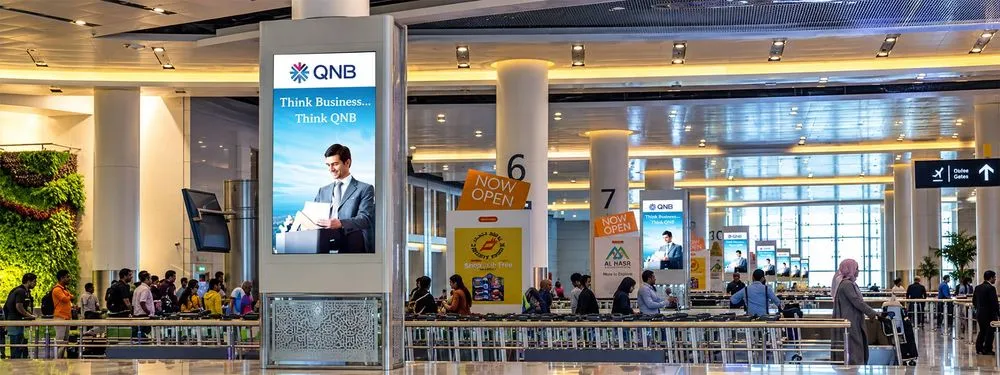
- The main terminal of Muscat International Airport provides an advertising environment of unusual physical quality, combining the scale necessary for high-impact campaign formats with an architectural aesthetic that elevates every brand impression beyond the functional environment of comparable Gulf airports. The terminal's soaring ceilings, geometric light patterns, and cultural design language create a canvas for premium brand communication that is genuinely distinctive in the Middle East airport advertising landscape.
- Dwell time at MCT is elevated by Oman Air's connection-dependent schedule, the prayer time orientation of the Omani national audience, and the cultural preference for unhurried departure preparation that characterises Gulf Arab travel behaviour. Extended dwell windows create multiple format exposure opportunities per passenger journey, compounding brand recall across the terminal's advertising inventory in a way that rushed hub airports cannot replicate.
- The premium retail and duty-free environment at MCT, combined with Oman's growing portfolio of international luxury brand representation within the terminal, creates a commercial context in which premium brand advertising is experienced as a natural component of the passenger's engagement with quality rather than an interruption of it. Brands advertising alongside the terminal's premium retail partners benefit from the category endorsement that shared environment creates.
- Masscom Global approaches MCT placements with cultural intelligence as the operational foundation, ensuring that every campaign deployed at this airport meets the content standards, religious sensitivity requirements, and premium brand positioning expectations of an Omani national audience that evaluates advertising with a cultural sophistication and a standards consciousness that is among the most demanding in the Gulf. This cultural execution precision is not a compliance requirement. It is the commercial prerequisite for campaign performance in a market where cultural missteps produce measurable audience rejection.
Strategic Advertising Fit
Best Fit:
- International luxury real estate: Developers offering UK, Turkish, Portuguese, Greek, and East African properties to Omani HNWI buyers find a directly validated and financially active audience at MCT whose existing investment behaviour across these exact markets, combined with a Vision 2040-driven private wealth expansion trajectory, creates an advertising environment of growing commercial depth and accelerating conversion potential.
- Private banking, family office, and wealth management: Private banks and wealth management platforms seeking Gulf HNWI client relationships find at MCT an audience whose wealth scale, institutional investment awareness, and active portfolio management orientation are directly aligned with premium financial services positioning. The Omani national preference for sustained and trusted financial relationships over transactional banking makes first-contact advertising at this airport disproportionately valuable for brands committed to the market long-term.
- Premium and ultra-luxury automotive: The Omani automotive culture at the HNWI level is brand-loyal and consistent, with European luxury marques commanding strong household penetration in Muscat's most affluent districts. New model launches, limited edition announcements, and brand heritage storytelling all find a directly receptive and purchase-ready audience at MCT.
- International education: British boarding schools, American universities, Australian institutions, and premium international education consultancies find at MCT a parent and family audience whose education investment commitment per child is among the most sustained in the Gulf and whose decision cycle length rewards brands maintaining a consistent advertising presence across the school and university selection window.
- Inbound premium tourism and luxury hospitality: International luxury resort brands, ultra-premium adventure travel operators, and private wellness retreat platforms advertising inbound Oman experiences to the premium Gulf Arab and Western tourist audience find MCT a productive inbound tourism priming environment where the terminal's own Omani heritage aesthetic creates the strongest possible contextual endorsement of what the destination delivers.
- Premium Islamic finance: Oman's Ibadi Islamic orientation and the country's growing Islamic banking sector, including Meethaq, Bank Nizwa, and the Islamic windows of major commercial banks, create strong structural demand for Sharia-compliant investment products and banking services. Premium Islamic finance brands find a directly aligned primary audience among Omani nationals and the Gulf Arab visitor community.
- East African investment and frontier market financial services: The unique MCT audience characteristic of an active Omani-East African investment and diaspora corridor creates a specifically relevant environment for East African real estate developers, regional investment funds, and frontier market financial product advertisers whose audience in any other Gulf airport exists only in diluted form.
- Luxury wellness, private healthcare, and medical concierge: The growing Omani affluent retiree and senior professional community, combined with the inbound medical tourism corridor from East Africa and the Gulf, creates a productive dual audience for premium health, wellness resort, and private medical service brands at MCT across both outbound intent and inbound referral dimensions.
Brand Alignment at a Glance:
| Category | Fit |
|---|---|
| International luxury real estate | Exceptional |
| Private banking and wealth management | Exceptional |
| International education | Exceptional |
| Premium automotive | Strong |
| Inbound premium tourism and luxury hospitality | Strong |
| Premium Islamic finance | Strong |
| East African investment and financial services | Strong |
| Executive wellness and private healthcare | Strong |
| Mass-market retail | Poor fit |
Who Should Not Advertise Here:
- Alcohol and conventional spirits brands: Oman's Islamic cultural values and legal framework make alcohol advertising at MCT culturally inappropriate and commercially ineffective. Any brand whose core identity or campaign creative involves alcohol will generate audience rejection regardless of brand quality or format placement.
- Mass-market consumer goods and commodity retail brands: Brands designed for broad demographic reach at price-competitive positioning levels find no relevant primary audience among MCT's premium national and professional expat traveller base and will not generate commercial returns from airport advertising investment at this facility.
- Budget and price-led travel brands: Cost-led travel messaging is fundamentally misaligned with an audience whose travel behaviour is driven by destination quality, family advancement priorities, and confirmed premium spending. Low-cost carrier promotion and discount travel advertising finds no commercially relevant audience among MCT's core premium traveller segments.
Event and Seasonality Analysis
- Event Strength: High (Islamic calendar-driven and growing cultural event programme)
- Seasonality Strength: Very High
- Traffic Pattern: Dual-Peak (Summer Outbound June to August and Winter Inbound October to April) with Ramadan and Eid surge layers and a distinct Salalah Khareef domestic peak
Strategic Implication:
The MCT advertising calendar is structured around two primary strategic windows that together provide approximately eight months of high-value audience access across complementary audience types. The winter inbound season from October to April delivers the premium international tourism audience, Gulf Arab regional visitors, and the institutional business travel community at their most commercially active and most receptive to destination experiences, investment opportunities, and premium lifestyle brand engagement. The summer outbound season from June to August delivers the Omani national and upper-income expat audience at its highest annual outbound spending motivation, making it the most productive window for international real estate, luxury hospitality, and international education brand campaigns. Masscom Global structures MCT campaign schedules around these dual peaks while building Ramadan and Eid Al-Fitr specific activations that capture the highest single-week audience densities of the year with culturally calibrated creative that performs within the sanctity of the religious season and delivers maximum commercial impact at the Eid gifting and travel window. The Muscat Festival in January and February provides a distinct supplementary audience concentration moment within the winter peak that rewards brands seeking cultural alignment with the most engaged and patriotically motivated segment of the Omani national audience.

Poor Placement and Delays Affect Airport Campaigns
We help you move faster, access better inventory, and get it right now.
Talk to an ExpertFinal Strategic Verdict
Muscat International Airport is the most commercially underserved premium airport advertising opportunity in the Gulf, and that undervaluation is itself the strategic case for acting now. The combination of an Omani national audience whose per capita wealth, international investment activity, and premium consumption behaviour place them firmly at the Gulf HNWI tier, an architectural terminal of genuine distinction that elevates every brand impression through cultural and aesthetic association, a Vision 2040 economic transformation that is systematically expanding the private sector HNWI community beyond its traditional oil sector base, a growing inbound luxury tourism audience that has self-selected into one of the world's most authentically premium destinations, and a competitive advertising environment that remains substantially less contested than Dubai, Abu Dhabi, or Kuwait creates a combination of audience quality, environmental premium, and commercial accessibility that no other Gulf airport currently offers simultaneously. International luxury real estate developers whose Omani buyer pipeline is growing with Vision 2040 wealth generation, private banks whose Gulf growth strategy requires deeper relationships beyond the established UAE and Kuwait markets, international universities whose Omani student recruitment is expanding with the country's education investment commitment, and premium brands seeking Gulf market depth beyond Dubai all find at MCT an access point to a sovereign-heritage, quality-oriented, and loyalty-producing audience whose commercial value will only increase as Oman's non-oil economy accelerates and its airport's international connectivity expands. Masscom Global delivers the cultural intelligence, regional network, and execution precision to convert this exceptional opportunity into sustained brand performance before the market catches up with what this airport already represents.
About Masscom Global
Masscom Global is a premium international airport advertising and media buying agency operating across 140 countries. With deep expertise in airport OOH, premium publications, and high-net-worth audience targeting, Masscom helps brands reach the world's most valuable travellers at the moments that matter most. For advertising packages, media rates, and campaign planning at Muscat International Airport and airports across the globe, contact Masscom Global today.
Frequently Asked Questions
How much does airport advertising cost at Muscat International Airport?
Advertising costs at Muscat International Airport vary by format type, terminal zone placement, campaign duration, and seasonal demand. The winter inbound tourism peak from October to April and the summer outbound peak from June to August command higher rates reflecting elevated audience density and confirmed outbound spending motivation. Ramadan and Eid window placements require culturally calibrated creative and deliver the year's highest single-period audience concentration for the Omani national and Gulf Arab premium community. Muscat Festival placements in January and February offer a secondary high-value window with strong national audience engagement. For current media rates, available formats, and tailored campaign packages at MCT, contact Masscom Global directly for a proposal aligned to your brand category, target audience segment, and campaign objectives.
Who are the passengers at Muscat International Airport?
Passengers at Muscat International Airport encompass several distinct commercial audience tiers. Omani nationals, representing approximately 43 percent of Kuwait's resident population and the dominant premium leisure and investment travel cohort, combine oil-funded government wealth with rapidly growing private sector HNWI wealth generated by Vision 2040's economic diversification. The South Asian expatriate community, led by Indian nationals and encompassing Pakistani, Bangladeshi, and Sri Lankan professionals, contributes the highest absolute passenger volume and is the primary audience for financial services, remittance, and education advertising. Gulf Arab visitors from the UAE and Saudi Arabia contribute a significant regional leisure audience, particularly for Salalah's Khareef season. British, German, and French nationals form the primary Western inbound tourism community. East African visitors with Omani-origin heritage connections represent a unique cross-continental audience found at no other Gulf airport at comparable density.
Is Muscat International Airport good for luxury brand advertising?
Muscat International Airport is among the strongest luxury brand advertising environments in the Gulf for brands targeting Omani national and Gulf Arab audiences whose purchasing behaviour is driven by quality conviction, heritage appreciation, and sustained brand loyalty rather than social signalling or price sensitivity. The terminal's architectural distinction, the cultural sophistication of the Omani national audience, and the confirmed luxury spending behaviour of Kuwaiti and Gulf Arab visitors at international destinations create a brand contact context that rewards premium positioning with a depth of audience engagement that higher-volume Gulf airports frequently dilute through competitive advertising clutter and audience heterogeneity.
What is the best airport in the Gulf to reach Omani HNWI audiences?
Muscat International Airport is the only airport at which the Omani HNWI audience is accessible in concentrated form. As Oman's sole major international aviation gateway, MCT consolidates the entire Omani national and professional expat outbound travel flow within a single facility, creating a complete audience capture environment unavailable through any other regional airport. For brands seeking broader Gulf HNWI coverage, a coordinated multi-airport programme combining MCT with Dubai International and Kuwait International Airport creates a regional platform that reaches the full GCC premium audience across its primary travel corridors, with Masscom Global managing budget allocation and creative adaptation across all three environments.
What is the best time to advertise at Muscat International Airport?
The highest-value advertising windows at MCT are the winter inbound tourism and business season from October through April, the summer outbound peak from June through August, and the Eid Al-Fitr departure window at the end of Ramadan, which generates the year's most concentrated premium audience departure volume. The Muscat Festival in January and February provides a strong supplementary window for brands seeking alignment with the most engaged Omani national cultural audience. The Salalah Khareef domestic and regional tourism peak from July through September creates a secondary high-volume Gulf Arab leisure audience concentration within the summer window. Masscom Global recommends campaign timing aligned to the specific outbound intent of the target audience category, with international real estate, education, and luxury brand campaigns structured around the summer outbound peak and inbound tourism and experiential brands anchored in the winter season.
Can international real estate developers advertise at Muscat International Airport?
International real estate developers targeting Omani HNWI buyers should consider Muscat International Airport a high-priority and currently underserved Gulf advertising channel. Omani investment in UK, Turkish, Portuguese, Greek, and East African residential and commercial real estate is confirmed and growing with Vision 2040 private sector wealth generation. Developers offering properties in London and the English Home Counties, Istanbul, the Algarve, Greek island and coastal markets, Nairobi, and Zanzibar find the most directly validated purchasing intent audience at MCT, whose investment behaviour in these exact markets is documented and active. Masscom Global can structure campaigns that reach this audience at MCT during the summer outbound peak and simultaneously at destination airports in London, Istanbul, and Lisbon where Omani investors are arriving to view properties, creating compounding brand exposure across the complete acquisition decision journey.
Which brands should not advertise at Muscat International Airport?
Alcohol and conventional spirits brands are categorically excluded from Muscat International Airport advertising by Omani law and cultural standards, and any creative incorporating alcohol imagery or messaging will generate audience rejection regardless of brand quality or format size. Budget and low-cost travel brands find no commercially relevant audience among MCT's confirmed premium national and professional expat traveller base. Mass-market consumer goods and commodity financial products are structurally misaligned with an audience whose consumer and financial service needs are served at a premium level that retail category advertising cannot address. Any brand whose creative relies on content or imagery incompatible with Islamic values or Omani cultural standards should not advertise at MCT without comprehensive cultural review. For category alignment guidance and creative compliance standards specific to the MCT environment, Masscom Global provides strategic cultural assessment as a standard component of every campaign briefing.
How does Masscom Global help brands advertise at Muscat International Airport?
Masscom Global provides complete airport advertising services at Muscat International Airport, from initial audience intelligence and cultural strategy development through to inventory access, Arabic and English creative adaptation, Ramadan and Eid calendar planning, Vision 2040 economic context integration, campaign deployment, and performance review. Our regional expertise in Gulf Arab cultural intelligence, and our specific knowledge of Oman's distinct Ibadi cultural orientation and its commercial implications, ensures that every campaign placed at MCT meets the content, language, and contextual standards that the Omani national audience expects and that the airport's operational environment requires. With a global network spanning 140 countries and established relationships across the Gulf aviation media ecosystem, Masscom Global delivers campaigns that perform at MCT and coordinate seamlessly with brand activity at the international destination airports where Oman's outbound capital, education, and leisure flows are most concentrated.