

Airport at a Glance
| Field | Detail |
|---|---|
| Airport | Miami International Airport |
| IATA Code | MIA |
| Country | United States |
| City | Miami |
| Annual Passengers | 50.6 million (2023) |
| Primary Audience | Ultra-HNWI Latin American investors and family office principals, South Florida luxury real estate buyers, affluent Caribbean and European leisure travellers |
| Peak Advertising Season | November to April, June to August |
| Audience Tier | Tier 1 |
| Best Fit Categories | International real estate, ultra-luxury goods, private banking, premium automotive, luxury hospitality |
Miami International Airport is the undisputed gateway between North America and Latin America, handling more flights to the Caribbean and South America than any other airport in the United States. Its commercial identity is unlike any other American airport — it is not defined by a single industry sector or a dominant cultural community but by the convergence of multiple Latin American wealth corridors, a booming South Florida luxury real estate market, and an internationally mobile HNWI population that treats Miami as both a primary residence and a global investment hub. For advertisers seeking concentrated access to Latin American family office principals, Venezuelan and Colombian wealth migrants, Brazilian luxury consumers, and the European ultra-HNWI leisure travellers who have made South Florida their premium winter destination, MIA offers a targeting precision and audience quality that no alternative media channel in the Americas can replicate.
What separates MIA from every other Tier 1 North American airport is the bilateral character of its commercial opportunity. The wealthy Latin American flying into MIA is simultaneously a luxury real estate buyer, a premium retail consumer, a private banking client prospect, and a potential residency programme participant — while the affluent North American or European departing through MIA has already demonstrated premium spending behaviour across South Florida's exceptional hospitality, dining, and retail ecosystem and is receptive to high-quality brand messaging that extends their luxury relationship beyond the visit itself. This dual commercial flow — wealthy Latin America arriving with capital to deploy, and premium North America and Europe departing with elevated spending in recent memory — creates an advertising environment with exceptional commercial energy on both sides of the terminal experience. For brands operating across the Americas or seeking to intercept Latin American wealth in motion, MIA is the single most commercially productive airport advertising environment in the Western Hemisphere south of New York.
Advertising Value Snapshot
- Passenger scale: 50.6 million annual passengers (2023), with international traffic representing approximately 45% of total volume and Latin America and the Caribbean accounting for the dominant share of international movement — the highest concentration of Americas-corridor international traffic at any single United States airport
- Traveller type: Ultra-HNWI Latin American investors and family office principals, South Florida luxury real estate buyers and seasonal residents, affluent Caribbean and European leisure travellers
- Airport classification: Tier 1 — the primary gateway between the United States and Latin America and the Caribbean, serving a catchment economy defined by international wealth migration, luxury real estate concentration, and the highest per-capita HNWI density in Florida
- Commercial positioning: The Americas' financial crossroads, where Latin American investment capital, South Florida luxury consumption, and European premium leisure converge in a single high-dwell international terminal environment
- Wealth corridor signal: MIA anchors the primary wealth migration corridor between Venezuela, Colombia, Brazil, Argentina, and Mexico and the United States, carrying some of the highest per-passenger wealth transfer volumes of any bilateral route pair in North American aviation
- Advertising opportunity: Masscom Global provides strategic access to MIA's full advertising estate, enabling brands to intercept the Americas' most commercially active wealth movement at its primary physical chokepoint. With a global network spanning 140 countries and deep intelligence across Latin American, European, and North American premium audience behaviour, Masscom structures MIA campaigns that deliver measurable brand impact among the investors, real estate buyers, and luxury consumers who define this airport's exceptional commercial profile.
Airport Advertising is Complex to Get Right
We help you execute faster, with proven results and local insight most planners lack starting now.
Talk to an ExpertCatchment Area and Economic Drivers
Top 10 Cities within 150 km — Marketer Intelligence:
- Miami: The financial capital of the Americas and one of the fastest-growing ultra-HNWI residential markets in the world, Miami's Brickell, Coconut Grove, Coral Gables, and Miami Beach neighbourhoods house a concentration of Latin American family office principals, hedge fund managers, international real estate developers, and wealth migrants whose purchasing behaviour across luxury goods, private banking, and premium hospitality is commercially extraordinary by any global benchmark.
- Fort Lauderdale: One of the world's leading superyacht and luxury marine markets, Fort Lauderdale's concentration of premium marina infrastructure, private aviation operations, and affluent seasonal residents produces a traveller base whose leisure spending profile is driven by ownership of significant assets and a lifestyle vocabulary expressed through premium travel, luxury goods, and exclusive membership categories.
- Boca Raton: A high-income residential community with a strong concentration of retired financial professionals, medical specialists, and successful entrepreneurs whose household wealth profiles and international travel frequency create consistent demand for premium financial services, luxury hospitality, and high-value real estate advertising at MIA.
- West Palm Beach: The anchor of Palm Beach County's extraordinary wealth corridor — home to Mar-a-Lago and one of the most concentrated populations of ultra-HNWI seasonal residents in North America — West Palm Beach contributes a traveller base with exceptional luxury spending credentials, strong international investment activity, and deep receptivity to premium brand messaging across real estate, private banking, and lifestyle categories.
- Coral Gables: The operational headquarters of Miami's Latin American banking and international finance community, Coral Gables houses regional offices for dozens of major Latin American banks, international law firms, and private equity operations whose senior professional workforce produces a high-frequency, high-income business traveller cohort with strong alignment for financial services, premium travel, and luxury corporate services advertising.
- Doral: The commercial and logistics hub for Miami's Latin American trade corridor, Doral's concentration of international companies using Miami as their Latin American headquarters generates a continuous flow of senior regional executives whose bilateral travel between Miami and major Latin American business centres makes them a high-frequency audience for B2B technology, financial services, and premium travel advertising.
- Homestead and Florida City: Gateway communities to Everglades National Park and the Florida Keys, these cities contribute a growing premium eco-tourism and leisure traveller segment as well as significant agricultural sector commercial traffic, producing a mixed audience relevant for regional tourism, outdoor luxury, and agriculture-related B2B advertising categories.
- Hialeah: One of Florida's largest Cuban-American communities and a major commercial hub for small and medium-sized Latin American import-export businesses, Hialeah contributes a high-volume bilateral travel audience with strong brand loyalty across consumer goods, remittance services, and Latin American market-oriented product categories.
- Hollywood, Florida: A mid-size Broward County city with a substantial Jewish-American retiree and professional community, Hollywood generates premium leisure and family travel through MIA with strong receptivity to luxury hospitality, cruise travel, and international real estate advertising — particularly for Israeli and European destination properties.
- Pompano Beach: A rapidly growing affluent residential and marina community between Fort Lauderdale and Boca Raton, Pompano Beach contributes a high-income leisure and boating lifestyle traveller segment with demonstrated premium spending behaviour across luxury hospitality, marine lifestyle, and high-value experiential categories.
NRI and Diaspora Intelligence:
Miami's diaspora communities are not simply cultural groups maintaining origin ties — they are active bilateral capital allocators whose investment and consumption decisions move significant wealth between the United States and Latin America, the Caribbean, and Europe on a continuous basis. The Venezuelan community across greater Miami, which has grown substantially over the past decade through wealth migration driven by political and economic instability, represents one of the most commercially significant HNWI diaspora concentrations in North America — individuals who arrived with substantial capital, have established successful businesses in South Florida, and maintain active real estate and investment portfolios spanning the United States, Europe, and Latin American recovery markets. The Colombian community across Miami-Dade County, anchored by a large professional and entrepreneurial middle and upper-middle class, generates substantial bilateral travel and commercial activity between Miami and Bogota, Medellin, and Cartagena — with a premium upper segment of Colombian family office principals and real estate developers whose wealth profiles align precisely with MIA's highest-value advertising categories. The Cuban-American community, which has defined Miami's cultural identity for over six decades, contributes a large and commercially active traveller base whose bilateral travel patterns — increasingly active as commercial relationships between the United States and Cuba evolve — create a long-standing and loyal advertising audience for financial services, consumer goods, and Latin American market-oriented brands. The Brazilian community across South Florida generates high-value transborder consumer activity, with Brazilian travellers consistently ranking among the highest per-trip spenders of any international nationality transiting through MIA. The Argentine and Uruguayan communities, swelled by wealth migration seeking stable offshore domicile, contribute a highly educated, professionally accomplished, and internationally mobile HNWI segment with strong appetite for residency advisory, private banking, and international real estate advertising.
Economic Importance:
Greater Miami's economy has undergone a structural transformation over the past decade from a tourism and real estate-dependent regional market to a genuine international financial centre. The migration of major hedge funds, family offices, private equity firms, and technology companies from New York and California to Miami — accelerated by Florida's zero state income tax environment and dramatically elevated by post-pandemic remote work dynamics — has created a new layer of ultra-HNWI professional and entrepreneurial wealth that coexists with Miami's established Latin American finance infrastructure and luxury real estate economy. Brickell, now widely referred to as the Manhattan of the South, houses regional headquarters for dozens of major international banks, asset managers, and financial institutions whose senior workforce is among the most internationally mobile and commercially affluent in Florida. The Port of Miami, the largest passenger cruise port in the world, generates substantial premium leisure travel through MIA's terminals from a global leisure audience that has committed to significant discretionary travel spending. For advertisers, the combined effect of these economic dynamics is a catchment that generates an exceptionally high density of commercially active HNWI and ultra-HNWI travellers relative to total passenger volume — making MIA one of the most cost-efficient airport advertising markets in North America for brands targeting premium audience segments.
Business and Industrial Ecosystem
- International finance and asset management: Miami's emergence as a leading Americas financial centre has brought regional headquarters for major Latin American banks, global private equity firms, and family offices to Brickell and Coral Gables, generating a high-frequency business traveller cohort of financial professionals whose bilateral travel between Miami and Latin American markets creates an audience of exceptional quality for private banking, wealth management, and premium financial services advertising.
- International trade and Latin American commercial operations: Miami functions as the de facto commercial capital of Latin America, with over 1,400 multinational companies maintaining Latin American headquarters in the greater Miami area — each generating senior executive travel through MIA that represents a concentrated B2B audience for enterprise technology, professional services, and premium corporate travel brands.
- Real estate and construction: South Florida's extraordinary real estate development cycle, anchored by a global luxury residential market and powered by continuous inbound capital from Latin America, Europe, and the northeast United States, generates a substantial professional ecosystem of developers, architects, investment bankers, and real estate attorneys whose international travel frequency and professional purchasing profiles create strong alignment for construction technology, premium real estate services, and financial advisory advertising.
- Healthcare and medical tourism: Miami's globally recognised network of premium hospitals and specialised medical facilities draws medical tourists from across Latin America and the Caribbean, with patients and accompanying family members contributing a high-income, medically motivated travel segment with strong receptivity for premium health insurance, wellness, and pharmaceutical brand advertising at MIA.
Passenger Intent — Business Segment:
MIA's business traveller is defined above all by their role in connecting the Latin American and North American commercial ecosystems. Regional managing directors of multinational corporations travel through MIA to oversee operations in Bogota, São Paulo, Mexico City, and Buenos Aires. Investment bankers close Latin American transactions from Miami's Brickell hub and fly to capital markets in New York, London, and Zurich via MIA's extensive connecting network. Real estate developers present projects to Latin American investor audiences at MIA-adjacent luxury showrooms before departing through the same terminals. These passengers are operationally sophisticated, time-conscious, and commercially active in ways that make premium business services, financial products, and investment-oriented advertising highly relevant during extended dwell periods in MIA's international terminals. For B2B brands serving the Americas corridor, MIA's business traveller base is not simply a high-frequency flying audience — it is the decision-making layer of the Americas' most commercially dynamic bilateral trade and investment relationship.
Strategic Insight:
MIA's unique value for B2B advertisers lies in its function as the physical nerve centre of the United States-Latin America commercial relationship. No digital channel — regardless of targeting precision — can replicate the quality of brand exposure delivered to a senior Latin American regional executive during ninety minutes of international departure dwell time at MIA. The combination of a commercially motivated mindset, premium lounge penetration, and the specific psychological state of international travel — which research consistently shows increases openness to new information and brand receptivity — creates a B2B advertising environment where message landing rates significantly outperform equivalent digital campaign metrics for the same audience segment.
Tourism and Premium Travel Drivers
- Miami Beach and South Beach: The global icon of luxury leisure, nightlife, and Art Deco culture, Miami Beach draws an international premium tourist cohort from Europe, Latin America, and North America whose accommodation, dining, and entertainment spending profiles are among the highest of any domestic leisure destination in the United States — and whose advertising receptivity at MIA is concentrated at the outbound moment when the emotional impact of their South Florida experience is at its peak.
- The Florida Keys and Key West: The Keys' unique combination of premium diving, sportfishing, and exclusive island resort experiences draws a high-income leisure audience through MIA whose trip investment profiles — spanning private charter boats, luxury boutique accommodations, and premium marine activities — create strong alignment for luxury hospitality, lifestyle, and marine industry advertising.
- Art Basel Miami Beach: One of the world's three premier contemporary art fairs, Art Basel Miami Beach in December draws ultra-HNWI collectors, gallerists, and art world luminaries from across Europe, Asia, and Latin America in one of the most commercially concentrated HNWI travel events of the global calendar — generating a brief but exceptionally high-value advertising window at MIA with no equivalent in the Florida market.
- Everglades and eco-luxury tourism: The premium eco-tourism ecosystem around Everglades National Park and the Ten Thousand Islands corridor draws a high-income adventure and nature luxury traveller segment with demonstrated willingness to pay premium prices for exclusive access, private guided experiences, and luxury lodge accommodation — a spending profile that extends naturally to premium travel accessories, outdoor luxury, and premium conservation brand advertising.
Passenger Intent — Tourism Segment:
International leisure travellers arriving through MIA from Latin America, Europe, and the Caribbean have committed substantial discretionary budgets to their South Florida experience before departure and are in a high-anticipation mindset that makes luxury retail, premium hospitality, and experiential service advertising particularly resonant in arrivals environments. European winter sun seekers — particularly from the United Kingdom, Germany, and Scandinavia — are among the most consistent premium leisure travellers at MIA, arriving with confirmed hotel bookings at Bal Harbour, Fisher Island, and The Setai and demonstrating purchasing behaviour across luxury fashion, jewellery, and fine dining that places them in MIA's highest advertiser-value passenger segment during the November to April peak season. Outbound premium tourists departing through MIA, following Art Basel attendance or a South Beach luxury leisure stay, represent an advertising audience at its highest emotional peak of brand receptivity — primed by recent exposure to premium content, luxury retail environments, and high-value art market transactions.
Travel Patterns and Seasonality
Peak seasons:
- November to April (Winter Season Peak): MIA's dominant commercial window is driven by South Florida's status as North America and Europe's premier winter sun destination. From Thanksgiving through Easter, South Beach, Palm Beach, and the Keys receive the highest concentration of HNWI seasonal residents and premium international leisure visitors of any winter destination in the Western Hemisphere, generating exceptional departures and arrivals advertising value across the full six-month peak.
- June to August (Latin American Summer Peak): Brazilian, Colombian, Venezuelan, and broader Latin American family travel to South Florida during Northern Hemisphere summer school holidays creates MIA's second major volume and premium audience peak, with Latin American families making significant retail, real estate, and experiential purchases during extended South Florida summer stays.
- December (Art Basel and Holiday Convergence): The first week of December delivers the single most concentrated ultra-HNWI travel event in Florida's annual calendar, as Art Basel Miami Beach coincides with the beginning of the winter season's peak leisure traffic, creating an extraordinary overlap of global collectors, European winter sun seekers, and Latin American holiday travellers through MIA simultaneously.
Event-Driven Movement:
- Art Basel Miami Beach (December): The Western Hemisphere's most significant contemporary art market event draws ultra-HNWI collectors, art dealers, gallery directors, and cultural philanthropists from across Europe, Asia, Latin America, and North America through MIA in the first week of December — delivering a genuinely once-a-year concentration of individuals whose financial profiles represent the absolute premium of the global advertising landscape.
- Miami Open — Tennis (March and April): One of the most prestigious tennis tournaments outside the four Grand Slams, the Miami Open draws international tennis professionals, their support entourages, corporate hospitality groups, and a premium sport-lifestyle audience through MIA across a two-week window with strong alignment for luxury lifestyle, sports premium, and affluent leisure brand categories.
- Miami Grand Prix — Formula 1 (May): The Formula 1 Miami Grand Prix has rapidly established itself as one of the circuit's most commercially glamorous events, drawing ultra-HNWI motorsport enthusiasts, corporate hospitality groups, and international celebrity audiences through MIA in a concentrated May window with exceptional alignment for premium automotive, luxury watch, and ultra-luxury hospitality brand categories.
- Calle Ocho Festival — Carnival Miami (March): The largest Hispanic cultural festival in the United States draws over one million participants to Miami's Little Havana, generating a substantial Latin American community travel surge through MIA with strong relevance for consumer brands targeting Spanish-language and Latin American market-oriented advertising in a high-engagement cultural context.
- South Beach Wine and Food Festival (February): One of North America's most prestigious food and beverage culture events, the South Beach Wine and Food Festival draws a premium culinary tourism audience — food media professionals, restaurant investors, hospitality executives, and affluent food culture enthusiasts — whose spending behaviour and cultural sophistication create strong alignment for premium food and beverage, luxury hospitality, and lifestyle brand advertising.
- Ultra Music Festival (March): One of the world's premier electronic music festivals, Ultra draws an internationally significant young affluent audience through MIA — with a global attendee base spanning Europe, Latin America, and Asia whose brand engagement behaviour, disposable income profiles, and premium technology and fashion consumption patterns create specific advertising windows for brands targeting the affluent millennial and Gen Z premium consumer segment.
It’s Not Just Where You Advertise - It’s How Fast You Execute
We combine local insight with fast rollout to deliver results for you, now.
Talk to an ExpertAudience and Cultural Intelligence
Top 2 Languages:
- Spanish: Miami is unique among major American cities in that Spanish functions as a co-equal commercial language rather than a secondary community dialect — Brickell's financial community conducts business in Spanish, Coral Gables' law firms produce documentation in Spanish, and a substantial portion of MIA's international premium traveller base experiences the airport entirely in Spanish from signage through to lounge communication. Spanish-language advertising at MIA reaches not only the airport's Latin American international travellers but also a large domestic premium audience for whom Spanish is the primary commercial and personal language of daily life.
- English: The dominant language of MIA's North American and European traveller base, English-language advertising operates at maximum reach across the airport's substantial domestic business travel cohort, its European winter leisure segment, and the significant proportion of Latin American premium travellers who are bilingual and whose commercial decision-making — particularly for investment, education, and financial services — operates in English as the global language of premium commerce.
Major Traveller Nationalities:
MIA's international passenger mix is the most Latin American-concentrated of any major United States airport, with Colombian, Brazilian, Venezuelan, Peruvian, Argentine, Dominican, Jamaican, and Mexican travellers collectively accounting for the majority of international departures and arrivals. Colombian travellers represent the highest single nationality by volume in several route corridors, driven by strong bilateral ties between Miami and Bogota and Medellin and a large Colombian-American community in South Florida with active family and business connections. Brazilian travellers are consistently among the highest per-trip spenders of any international nationality at MIA, with a demonstrated premium retail and real estate purchasing pattern that makes them one of the most commercially valuable bilateral traveller segments in the airport. Venezuelan wealth migrants, now a substantial and economically significant community within South Florida, generate high-frequency travel between Miami and their remaining personal and business connections in Venezuela, Colombia, and Panama — as well as international travel to European wealth management destinations. European travellers — primarily British, German, French, and Scandinavian — represent the dominant inbound leisure segment during the November to April winter season peak, with per-night accommodation and leisure spending profiles that rank among the highest of any international visitor nationality in the Florida market. Canadian snowbirds, particularly from Ontario and Quebec, add a large-volume premium leisure segment to MIA's winter season traffic whose real estate purchasing activity across South Florida is commercially substantial and well-documented.
Religion — Advertiser Intelligence:
- Christianity (approximately 70%): The dominant religious tradition across Miami's diverse Latin American, Caribbean, and European communities, Christian holiday periods drive the most commercially significant travel and consumer spending windows at MIA. The Easter travel surge through Miami is among the largest in the United States, driven by Latin American Catholic family travel patterns, while Christmas and Epiphany (Three Kings Day) create a dual gifting and travel spending window from mid-December through January 6 that is uniquely important for advertisers at MIA relative to other American airports.
- Judaism (approximately 10%): South Florida hosts one of the largest and most affluent Jewish communities in the United States, with major concentrations in Aventura, Boca Raton, Bal Harbour, and North Miami Beach. This community's household income and investment profile is exceptional by national standards, and its high-frequency travel to Israel, Europe, and Caribbean destinations through MIA creates multiple commercially valuable advertising windows — particularly during High Holiday season in September and October, Passover in March and April, and the general premium leisure travel patterns of an affluent, internationally mobile community. Luxury real estate, private banking, premium travel, and international education advertisers all find strong alignment with this segment at MIA.
- Islam (approximately 4%): Miami's Muslim community, drawn from Pakistani, Arab, and North African backgrounds alongside significant Gulf state inbound tourist traffic, generates Ramadan and Eid travel windows with strong alignment for premium fashion, family hospitality, and halal travel advertising. The growing volume of Gulf state leisure visitors to Miami during winter months — attracted by South Florida's luxury hospitality ecosystem and direct flight connectivity from Dubai and Doha — contributes a high-spending inbound Muslim traveller segment with per-trip expenditure profiles among the highest of any international visitor nationality.
- Santeria and Afro-Caribbean traditions (community presence): Miami's Cuban, Puerto Rican, and Haitian communities sustain Afro-Caribbean religious and cultural traditions whose calendar events — including significant feast days and community celebrations — drive travel patterns and consumer spending windows that are commercially relevant for brands with strong cultural fluency and genuine community engagement strategies in the Caribbean and Latin American market.
Behavioral Insight:
The MIA audience's commercial psychology is shaped by a distinctive combination of Latin American cultural values and North American purchasing infrastructure. For the Latin American HNWI traveller, brand trust is built through personal relationship, visible endorsement, and evidence of standing in their specific community — which means that advertising at MIA which speaks directly to the cultural codes and aspirations of Colombian, Venezuelan, Brazilian, or Argentine wealth creates disproportionately strong brand preference compared to generic luxury positioning. The South Florida resident premium traveller — whether a retired New York finance professional in Boca Raton, a Colombian family office principal in Coral Gables, or a technology founder who relocated from San Francisco to Brickell — has chosen Miami partly as an expression of a financial and lifestyle philosophy that values warmth, access, and tax efficiency over institutional prestige. Brands that communicate within that framework — combining premium quality signals with accessibility, warmth, and a sense of active life optimisation — significantly outperform more formal luxury positioning in this specific advertising environment.
Outbound Wealth and Investment Intelligence
The outbound passenger at MIA is arguably the most concentrated wealth-deploying traveller in the Americas corridor. South Florida's extraordinary concentration of wealth migrants from Venezuela, Colombia, Argentina, and Brazil — combined with the domestic HNWI population drawn to Florida by its tax environment and lifestyle premium — produces an outbound investor audience whose real estate, residency, and education capital deployment spans multiple continents simultaneously. These are not aspirational investors — they are individuals who have already demonstrated the capability and willingness to move substantial capital across borders, and who are doing so actively from Miami as their operational base. For brands and institutions serving internationally mobile wealth, MIA's outbound passenger environment is the single most commercially productive Americas-corridor advertising location available.
Outbound Real Estate Investment:
MIA's HNWI outbound passenger base invests internationally with a geographic diversity that reflects the cultural breadth of South Florida's wealth migrant population. European real estate — particularly in Portugal, Spain, and Italy — attracts substantial investment from Latin American family office principals seeking lifestyle assets with EU residency credentials. Portugal's Algarve and Lisbon markets have become primary destinations for Venezuelan and Colombian wealth based in Miami, driven by cultural affinity, Golden Visa residency pathways, and the combination of lifestyle quality and yield profile that compares favourably to overheated South Florida prices. Spain's Barcelona and Madrid prime residential markets attract Brazilian and Argentine buyers with strong cultural connections to Iberian lifestyle assets and EU access motivations. The Dominican Republic, Turks and Caicos, and broader Caribbean luxury real estate markets draw significant outbound investment from MIA's Latin American premium traveller base, with lifestyle assets that complement rather than compete with South Florida primary residences. Within the United States, MIA's outbound HNWI base is a significant acquirer of New York, Los Angeles, and Northeast resort real estate — using Florida residency as a tax base while maintaining investment property positions in the country's other major wealth corridors.
Outbound Education Investment:
Miami's HNWI families — particularly across the Latin American wealth migrant community — allocate exceptional education budgets, treating international schooling as a primary wealth deployment decision rather than simply an academic preference. The United Kingdom dominates Latin American education migration from Miami, with schools including Eton, Harrow, Cheltenham Ladies' College, and the London School of Economics drawing the children of Venezuelan, Colombian, and Brazilian family office principals who specifically seek British educational credentials as a signal of international standing. The United States' own Ivy League institutions draw significant student travel through MIA from Latin American families resident in South Florida. Switzerland's international boarding school network — centred on Leysin, Le Rosey, and Lausanne — attracts ultra-HNWI Latin American families for whom European multilingual education represents both academic and social investment of the highest order. Spanish universities, particularly IE Business School and IESE, attract Latin American students from MIA's catchment for MBA programmes that combine academic quality with cultural proximity and European career pathways. International education consultancies, elite secondary schools, and MBA programmes targeting family household incomes above $500,000 will find MIA's terminal advertising environment among the most commercially productive channels in the Americas.
Outbound Wealth Migration and Residency:
Second residency and citizenship-by-investment activity at MIA reflects the specific anxieties and ambitions of a Latin American wealth community that has already made one successful migration to the United States and is now diversifying its political and financial risk exposure across multiple jurisdictions. Portugal's Golden Visa investment fund pathway — now closed to direct real estate investment but active through approved fund structures — draws substantial interest from Venezuelan, Argentine, and Brazilian HNWI individuals at MIA who seek EU residency as their primary geopolitical diversification strategy. Greece's Golden Visa programme at its revised investment thresholds remains one of the most actively pursued by Miami's Latin American community, combining accessible entry pricing with EU citizenship pathway credentials and Mediterranean lifestyle appeal. Malta's citizenship-by-investment programme serves the ultra-HNWI tier of MIA's outbound passenger base seeking genuine EU citizenship with full European freedom of movement. Panama, Uruguay, and Paraguay's residency programmes draw interest from Latin American wealth based in Miami who seek intra-Americas diversification without the cultural dislocation of a European move. Caribbean citizenship-by-investment programmes — particularly St Kitts and Nevis, Grenada, and St Lucia — attract MIA's Latin American HNWI base for their speed, accessibility, and US visa-free travel credentials. Residency advisory firms, international legal practices, and citizenship programme operators will find MIA one of the highest-return North American airports for outbound wealth migration advertising, with an audience whose personal history of successful cross-border capital movement makes them exceptionally receptive to second-residency propositions.
Strategic Implication for Advertisers:
MIA's outbound passenger base is uniquely positioned as both a target audience and a commercial multiplier for international brands. A luxury real estate developer with inventory in Lisbon, London, and the Turks and Caicos can reach the relevant investor community from all three markets through a single MIA campaign. A citizenship advisory firm can intercept the entire spectrum of Latin American residency demand — from Portugal's Golden Visa through to Caribbean citizenship — within a single terminal advertising environment. Masscom Global's capacity to coordinate campaigns at MIA and across destination airports — Lisbon Humberto Delgado, London Heathrow, Madrid Barajas, and Panama's Tocumen International — enables brands to deploy end-to-end Americas wealth corridor campaigns through a single expert partner with proven access on every leg of the investment and lifestyle journey.
Airport Infrastructure and Premium Indicators
Terminals:
- MIA operates across three concourses — D, E, and F — arranged around a central terminal building, with Concourse D serving as the primary international hub for Latin American and Caribbean routes operated by American Airlines, LATAM, Avianca, and Copa, delivering the highest concentration of Latin American premium passenger traffic in a single concourse environment available at any United States airport.
- Concourse E handles international long-haul traffic from Europe and the Middle East, including British Airways, Lufthansa, Air France, Emirates, and Iberia, creating a concentrated European and Gulf premium travel environment within immediate adjacency to the Latin American concourse — enabling advertising strategies that intercept both inbound and outbound premium audiences across the full international terminal complex.
Premium Indicators:
- MIA's lounge infrastructure signals a consistently premium international transit population, encompassing the American Airlines Flagship Lounge — one of the airline's most significant international flagship lounge investments — the British Airways Galleries Club Lounge, the LAN Premier Business Lounge, and the Emirates Business Lounge, collectively creating premium dwell-time environments where advertising is encountered by confirmed business and first class passengers.
- Signature Flight Support operates a dedicated Fixed Base Operation at MIA's general aviation facilities, handling private jet movements that represent the ultra-high end of South Florida's extraordinary wealth concentration — with a private aviation volume that reflects Miami's position as the departure point of choice for Latin American ultra-HNWI individuals maintaining private aircraft for bilateral family and business travel.
- The Miami Airport Marriott and the adjacent Hyatt Regency Miami provide luxury accommodation infrastructure that supports MIA's role as a genuine international business gateway, with overnight stay patterns among Latin American business travellers reinforcing extended dwell-time advertising opportunities beyond standard terminal exposure windows.
- MIA has received ongoing investment in terminal improvement and passenger experience enhancement, with the airport consistently ranked among the top international gateways in the Americas for commercial infrastructure quality and international route breadth relative to its catchment size.
Forward-Looking Signal:
MIA's commercial trajectory is powerfully shaped by Miami's structural transformation from a regional leisure destination into a genuine global financial and technology centre. The continued migration of hedge funds, family offices, and technology companies from New York and California to Brickell and the Miami urban core is adding new layers of ultra-HNWI professional wealth to MIA's catchment on a continuous basis, progressively elevating the quality of the airport's domestic premium passenger base. Ongoing terminal improvement investment across Concourses D and E is enhancing the physical advertising environment simultaneously. American Airlines' position as MIA's dominant carrier — and its ongoing transatlantic and Latin American route expansion through MIA — is deepening the airport's international connectivity in the routes most commercially relevant for premium advertiser categories. Masscom Global advises clients to establish MIA advertising positions now, as the combination of Miami's expanding financial centre status and American Airlines' route growth is creating a structurally increasing demand environment for premium MIA inventory that will compress available supply and elevate competitive rates progressively over the next three to five years.
Airline and Route Intelligence
Top Airlines: American Airlines, LATAM Airlines, Avianca, Copa Airlines, Aeromexico, British Airways, Lufthansa, Air France, Iberia, Emirates, Air Canada, JetBlue Airways, Spirit Airlines, Silver Airways, Bahamasair, Caribbean Airlines, Cayman Airways
Key International Routes:
- Bogota: Multiple daily American Airlines and Avianca services — MIA's highest-volume bilateral international route by frequency
- São Paulo and Rio de Janeiro: Daily LATAM and American Airlines service with strong business and leisure demand
- Lima: Daily LATAM and American Airlines service
- Buenos Aires: Daily American Airlines and LATAM service
- Caracas: Regular American Airlines service serving the Venezuelan diaspora bilateral travel corridor
- Mexico City: Daily Aeromexico and American Airlines service
- London Heathrow: Daily British Airways and American Airlines service
- Frankfurt: Daily Lufthansa service
- Paris Charles de Gaulle: Daily Air France service
- Madrid: Daily Iberia and American Airlines service
- Dubai: Daily Emirates service — MIA's primary Middle East connectivity
- Panama City: Multiple daily Copa Airlines services functioning as MIA's primary Central America hub connection
- Toronto: Daily Air Canada service serving the Canadian snowbird bilateral corridor
- Santo Domingo and San Juan: Multiple daily services reflecting the large Caribbean diaspora bilateral travel demand
Domestic Connectivity: Extensive domestic network through American Airlines, JetBlue, and Spirit covering New York, Chicago, Boston, Washington D.C., Los Angeles, Dallas, Atlanta, Philadelphia, and Charlotte — with the New York and Boston routes functioning as particularly high-value HNWI business travel corridors connecting Miami's finance community to the Northeast's institutional financial centres.
Wealth Corridor Signal:
MIA's route network is a precise commercial map of the Americas' wealth migration and investment corridors. The Bogota, Lima, Buenos Aires, and São Paulo routes carry the bilateral investment and family travel flows of Latin America's most commercially active family office and HNWI communities — individuals moving capital, family members, and business activity between South Florida and their origin markets with regularity and purpose. The London, Frankfurt, Paris, and Madrid routes connect MIA's European investment community to South Florida's luxury residential market, completing the inbound wealth investment flow that makes Miami one of the world's most actively bid real estate markets. The Dubai route adds a Gulf wealth corridor that is growing in commercial significance as Emirati and Saudi investors increase their exposure to Miami's luxury property market. For advertisers whose brand proposition operates across the Americas or between Latin America and Europe, MIA's route network delivers a bilateral audience alignment that is structurally impossible to replicate through any alternative single advertising environment.
Media Environment at the Airport
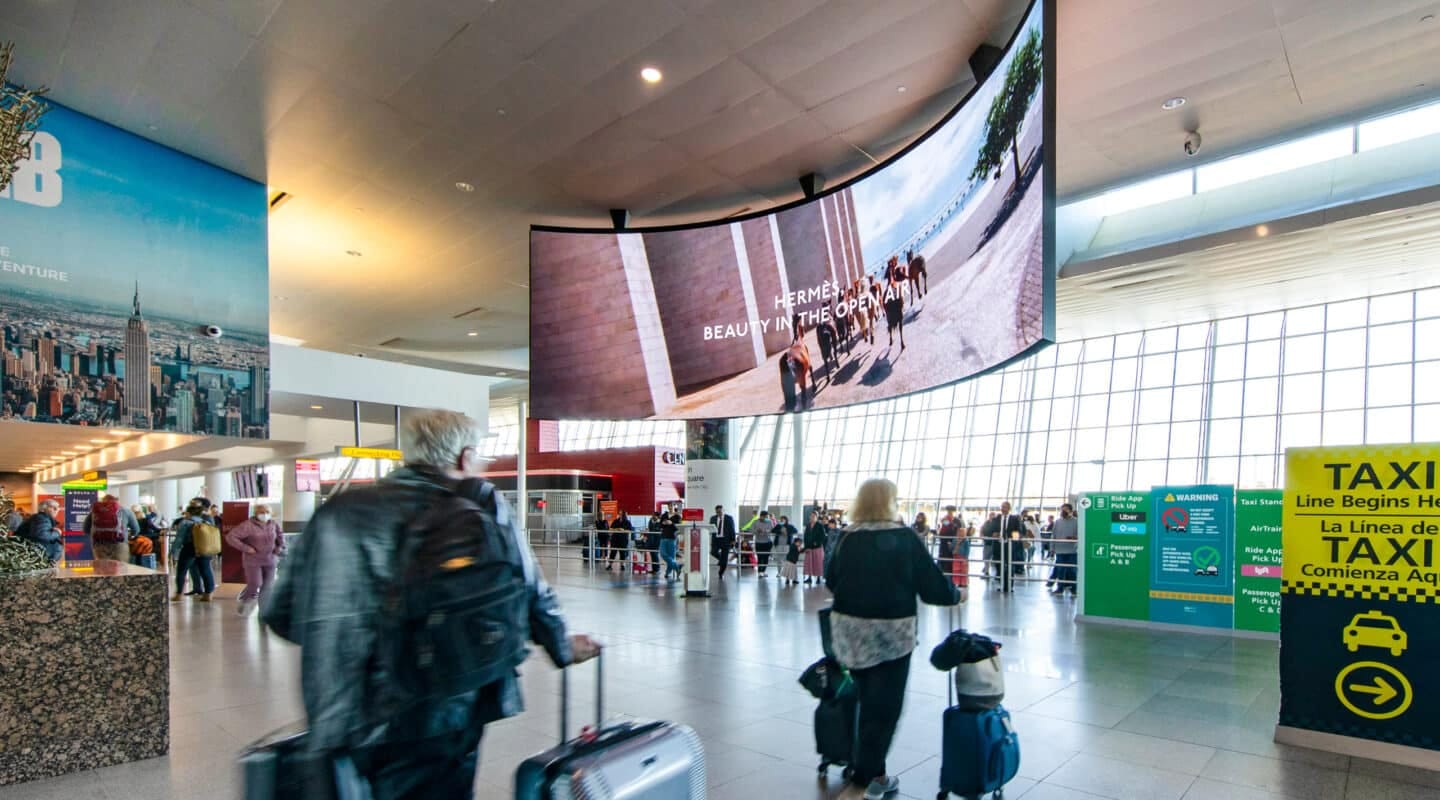
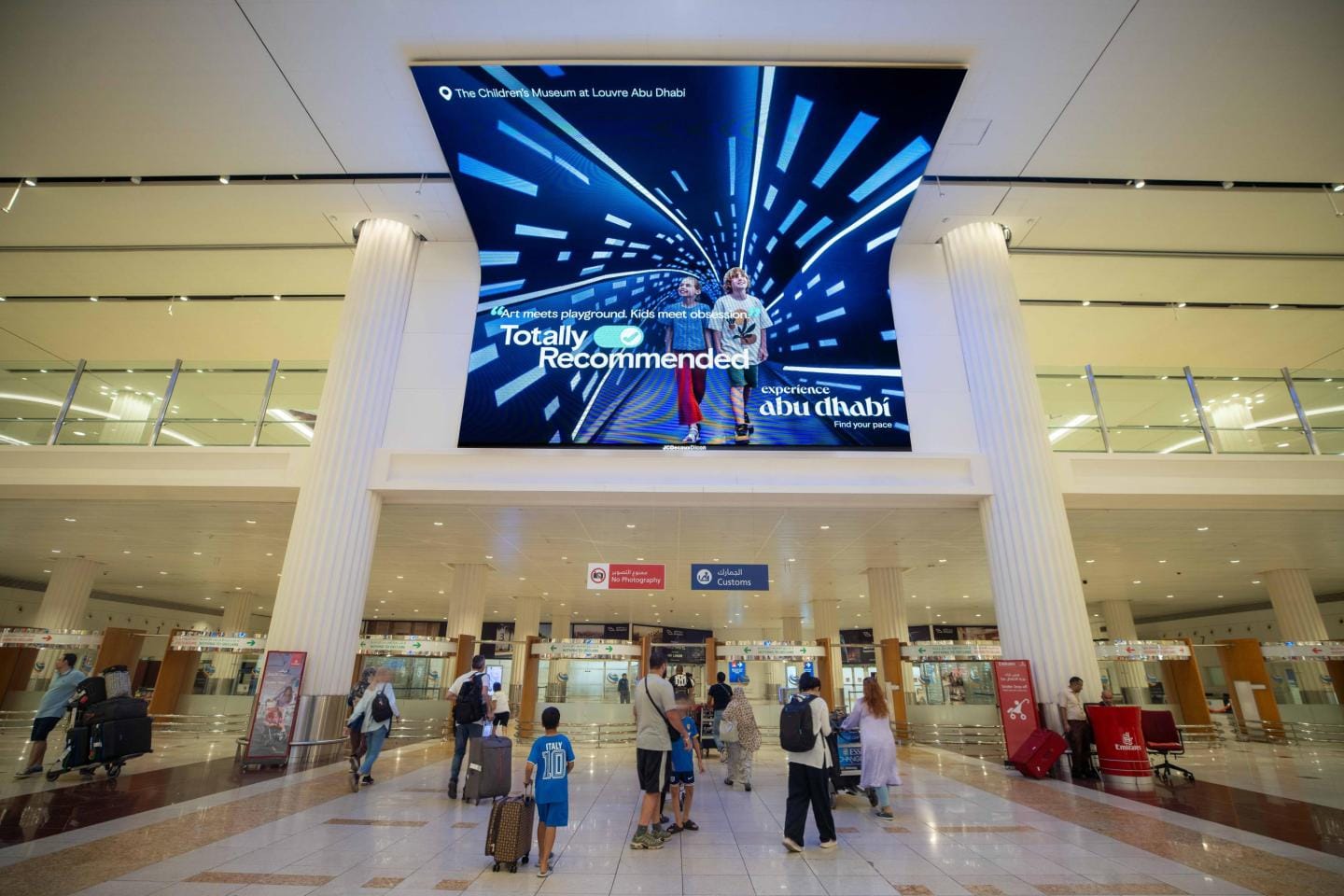
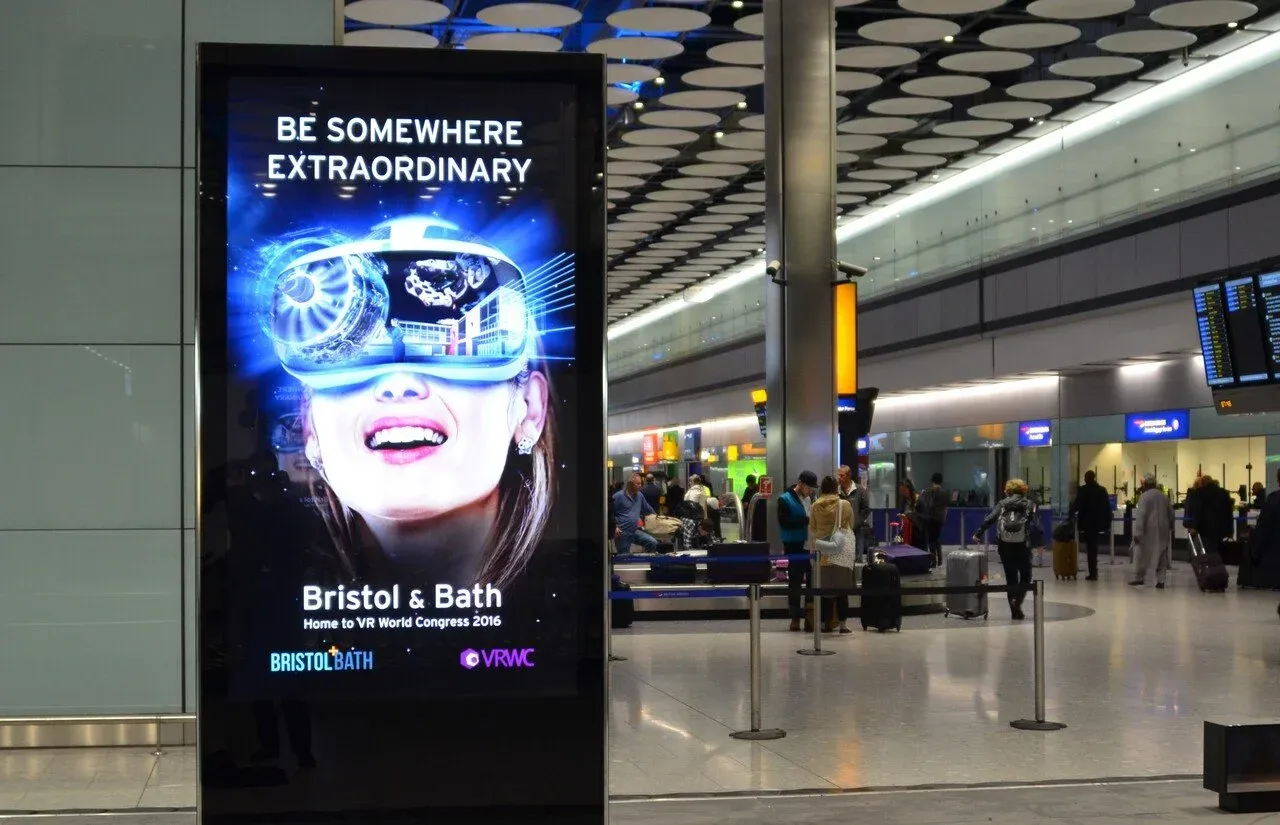
- MIA's Concourse D and E international terminal environments create advertising contexts where Latin American and European premium travellers experience extended dwell periods of ninety minutes or more in a relatively contained physical space, delivering sustained brand exposure across digital and static formats that builds genuine brand memory rather than simply generating brief awareness impressions.
- The airport's Latin American passenger community exhibits particularly high advertising receptivity in the departure experience — research consistently demonstrates that Latin American travellers engage with airport advertising at above-average rates relative to other international traveller nationalities, a dynamic that makes creative quality and cultural fluency in advertising execution a commercially material variable at MIA.
- MIA's premium lounge infrastructure concentrates the airport's highest-value travellers in defined physical spaces with above-average dwell times and minimal commercial distraction — creating advertising environments within the broader terminal context where brand messaging lands with the highest-income, highest-purchase-authority segment of the passenger base during the most engaged phase of their airport experience.
- Masscom Global provides access to MIA's full advertising estate — Concourses D and E international premium environments, domestic terminal business travel zones, and arrivals corridor placements targeting inbound Latin American and European premium travellers — with the planning intelligence and Americas corridor expertise to select formats, positions, and timing windows that maximise brand impact for each specific client objective.
Strategic Advertising Fit
Best Fit:
- International real estate: Developers with premium inventory in Portugal, Spain, the Dominican Republic, Turks and Caicos, London, and other HNWI-favoured markets will find MIA's outbound Latin American and European premium passenger base the highest-quality investor audience available at any single point in the Americas advertising landscape — a channel where qualified buyer impressions are generated at a cost per contact that would require substantial digital investment to approach through alternative targeting methods.
- Private banking and wealth management: The extraordinary concentration of Latin American family office principals, wealth migrants, and high-income bilateral business professionals at MIA makes it the highest-priority airport advertising environment in the Americas for private banking, family office services, and sophisticated wealth management brand building — particularly for institutions with Latin American client acquisition mandates.
- Ultra-luxury goods and watches: MIA's combination of Latin American inbound luxury retail tourists, South Florida's domestic HNWI consumer base, and European winter leisure visitors whose premium spending is activated by the South Beach and Art Basel context creates advertising conditions where luxury brand recall and purchase intent consistently perform at the premium end of airport advertising benchmarks.
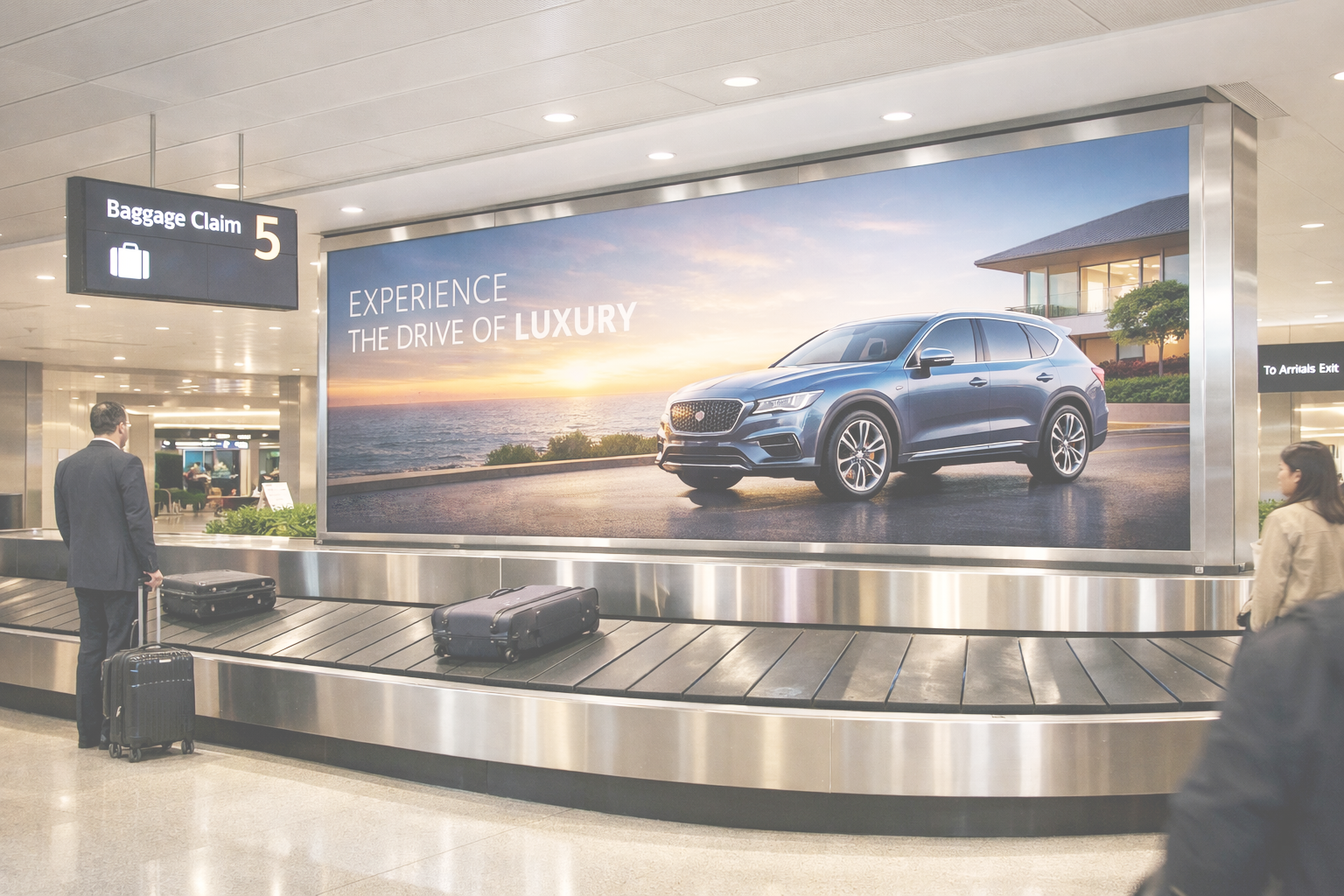
- Premium and ultra-luxury automotive: South Florida's extraordinary premium vehicle ownership culture — visible across Brickell, Coral Gables, and Palm Beach — combined with Latin American inbound visitors' demonstrated appetite for luxury automotive brand engagement makes MIA a productive environment for premium vehicle advertising targeting both purchase and aspirational brand-building objectives.
- Residency and citizenship advisory: No airport in the Americas concentrates more qualified potential clients for Golden Visa, citizenship-by-investment, and international residency advisory services than MIA — the combination of Latin American wealth migration history, Florida's domestic tax-driven second-residency market, and an internationally mobile HNWI passenger base actively diversifying their political and financial risk exposure creates a uniquely high-density client pipeline environment.
- Luxury hospitality and cruise travel: The world's largest cruise port adjacent to MIA's terminal complex, combined with South Florida's premium resort and hotel ecosystem, makes luxury hospitality and cruise operator advertising exceptionally well aligned with both arriving premium leisure travellers anticipating their South Florida experience and departing cruise passengers who have committed to significant onboard and destination spending.
- International education: Miami's Latin American wealth migrant community and South Florida's broader HNWI family base allocate premium education budgets across international boarding schools, elite universities, and language programmes — making MIA a high-productivity advertising channel for British, Swiss, and American education institutions targeting family household incomes above $500,000.
- Premium healthcare and medical tourism: Miami's role as the premier medical destination for Latin American patients seeking specialist treatment creates strong advertising alignment for premium health insurance, internationally recognised hospital groups, and specialised wellness and preventive health brands targeting a health-conscious, financially capable, and internationally mobile audience.
Brand Alignment at a Glance:
| Category | Fit |
|---|---|
| International real estate | Exceptional |
| Private banking and wealth management | Exceptional |
| Ultra-luxury goods and watches | Exceptional |
| Premium and ultra-luxury automotive | Strong |
| Residency and citizenship advisory | Exceptional |
| Luxury hospitality and cruise travel | Strong |
| International education | Strong |
| Premium healthcare and wellness | Strong |
| Mass market FMCG | Poor fit |
| Budget travel and accommodation | Poor fit |
Who Should Not Advertise Here:
- Mass market FMCG brands: The premium cost structure of MIA's international advertising inventory is not commercially justified for brands whose success depends on volume reach among price-sensitive consumers — the audience profile misalignment produces structural underperformance relative to broadcast and digital alternatives that deliver mass-market reach at lower cost per contact.
- Budget travel and accommodation platforms: Price-led travel brands find no audience alignment in MIA's premium international terminal environment, where the dominant passenger segments travel on business class, first class, or premium economy and make booking decisions based on airline programme loyalty, comfort, and route convenience rather than price comparison.
- Entry-level financial products: Basic retail banking products, prepaid card services, and entry-level insurance offerings designed for the mass market are misaligned with an audience that maintains investment portfolios, manages family office capital, and engages with financial institutions at the private banking and sophisticated wealth management tier.
Event and Seasonality Analysis
- Event Strength: High
- Seasonality Strength: High
- Traffic Pattern: Dual-Peak with Strong Winter Dominance
Strategic Implication:
MIA operates on a commercially distinct seasonality pattern that differs from every other major North American airport — its winter peak (November to April) is the dominant commercial window by a substantial margin, driven by the convergence of South Florida's seasonal HNWI resident population, European winter sun seekers, Latin American summer-equivalent leisure travel, and the Art Basel ultra-HNWI event concentration in early December. Advertisers should weight annual MIA budgets heavily toward the November to April window, with particular emphasis on December for ultra-luxury and investment categories where the Art Basel audience convergence delivers unmatched audience quality. The June to August Latin American summer travel peak provides a strong secondary weight window. Masscom Global structures MIA campaigns around this seasonal rhythm and event calendar, ensuring clients achieve maximum impact during the premium audience concentration windows that define MIA's exceptional commercial character. Brands that commit to year-round presence benefit from the airport's consistent Latin American bilateral business travel base, which operates at high frequency across all twelve months irrespective of leisure seasonality.

Poor Placement and Delays Affect Airport Campaigns
We help you move faster, access better inventory, and get it right now.
Talk to an ExpertFinal Strategic Verdict
Miami International Airport is the only advertising environment in the Americas that functions simultaneously as the gateway to Latin American investment capital, the departure point of South Florida's extraordinary domestic HNWI consumer base, and the arrival point for European and North American premium leisure travellers whose spending in South Florida consistently registers among the highest of any domestic destination in the United States. The combination of an ultra-HNWI Latin American investor audience actively deploying capital into real estate, residency, and education across multiple continents, a South Florida catchment that is structurally increasing in wealth concentration as financial and technology firms continue migrating from higher-tax states, and a world-class event calendar anchored by Art Basel and the Formula 1 Grand Prix makes MIA not one option among several Americas-corridor airports but a structurally irreplaceable advertising investment for any brand whose commercial growth depends on reaching the Americas' most active wealth-deploying audience. Masscom Global brings the Americas corridor intelligence, the inventory access, and the execution capability to position brands at MIA with the precision and cultural fluency this market demands — across every relevant audience segment, on every commercially significant bilateral route, and at every scale of campaign ambition from targeted seasonal activations to year-round premium presence strategies.
About Masscom Global
Masscom Global is a premium international airport advertising and media buying agency operating across 140 countries. With deep expertise in airport OOH, premium publications, and high-net-worth audience targeting, Masscom helps brands reach the world's most valuable travellers at the moments that matter most. For advertising packages, media rates, and campaign planning at Miami International Airport and airports across the globe, contact Masscom Global today.
Frequently Asked Questions
How much does airport advertising cost at Miami International Airport?
Airport advertising costs at Miami International Airport vary significantly based on format type, concourse placement, campaign duration, and seasonal demand — with Concourse D and E international premium environments commanding the highest rates, particularly during the November to April winter peak and the Art Basel December window. Premium digital large-format placements in international departures represent the highest cost tier, while standard static formats in domestic and regional departure areas offer more accessible entry points for brands building MIA presence incrementally. Given the airport's increasing commercial prominence and Miami's accelerating HNWI population growth, premium inventory competition is intensifying. Contact Masscom Global for current rate cards and available inventory specific to your campaign brief and budget.
Who are the passengers at Miami International Airport?
MIA's passenger base is the most Latin American-concentrated of any major United States airport, encompassing Colombian, Brazilian, Venezuelan, Peruvian, Argentine, and Mexican travellers whose bilateral travel represents active commercial and family connections between South Florida and their origin markets. European winter leisure visitors — primarily British, German, and Scandinavian — represent the dominant inbound premium leisure segment from October through April. South Florida's domestic catchment contributes ultra-HNWI residents from Brickell, Coral Gables, Bal Harbour, and Palm Beach whose household wealth profiles are exceptional by national standards. The combined effect is a passenger base defined by Latin American investment capital in motion, European premium leisure spending, and one of the highest-density domestic HNWI professional communities in the United States.
Is Miami International Airport good for luxury brand advertising?
MIA is among the top five luxury brand advertising environments in North America. The combination of Latin American inbound luxury retail tourists who consistently rank among the highest per-trip spenders of any international nationality, South Florida's exceptional domestic HNWI consumer base, European premium leisure visitors whose spending is activated by the South Beach and Art Basel cultural context, and a December Art Basel window that delivers genuinely ultra-HNWI collector audience at concentrations unmatched at any other Florida venue makes MIA a premium luxury advertising environment with measurable commercial impact for brands positioned at the top of their categories.
What is the best airport in Florida to reach HNWI audiences?
MIA stands as Florida's definitive HNWI airport advertising market, combining the state's highest international passenger volume, the most commercially concentrated Latin American investment audience, and a domestic catchment HNWI density that reflects both Miami's domestic wealth migration and its long-established status as Florida's financial capital. Fort Lauderdale-Hollywood International serves its own Broward County premium market, and Orlando International handles significant family premium leisure volume, but neither approaches MIA's combination of Latin American bilateral investor traffic, European premium leisure penetration, and South Florida ultra-HNWI domestic professional base.
What is the best time to advertise at Miami International Airport?
The highest-value windows for MIA campaigns are November through April (the winter season peak when South Florida's HNWI seasonal resident population is at full occupancy and European and Latin American premium leisure visitors are at maximum volume), early December specifically (the Art Basel convergence window delivering ultra-HNWI collector audience concentration), and June through August (the Latin American summer leisure peak). The Formula 1 Grand Prix in May delivers a concentrated premium automotive and lifestyle audience window. Masscom Global recommends year-round presence for brands targeting MIA's consistent Latin American bilateral business travel base, with budget weighted decisively toward the November to April window for categories where leisure and real estate purchasing intent is highest.
What is the best time to advertise at Miami International Airport?
The highest-value windows for MIA campaigns are November through April (the winter season peak when South Florida's HNWI seasonal resident population is at full occupancy and European and Latin American premium leisure visitors are at maximum volume), early December specifically (the Art Basel convergence window delivering ultra-HNWI collector audience concentration), and June through August (the Latin American summer leisure peak). The Formula 1 Grand Prix in May delivers a concentrated premium automotive and lifestyle audience window. Masscom Global recommends year-round presence for brands targeting MIA's consistent Latin American bilateral business travel base, with budget weighted decisively toward the November to April window for categories where leisure and real estate purchasing intent is highest.
Can international real estate developers advertise at Miami International Airport?
MIA is one of the highest-return airports in the world for international real estate advertising. The airport's outbound HNWI passenger base — particularly Latin American family office principals, Venezuelan and Colombian wealth migrants, and South Florida's domestic investment-oriented professional community — actively invests in real estate across Portugal, Spain, the Dominican Republic, Turks and Caicos, London, and beyond. The combination of a culture in which international real estate is a primary wealth deployment strategy and a passenger population with the financial credentials and decision-making authority to act makes MIA a lead generation and brand building channel of exceptional commercial productivity for developers with inventory in any of these markets. Contact Masscom Global to structure a campaign aligned with the specific investor nationality and route corridor most relevant to your development's profile.
Which brands should not advertise at Miami International Airport?
Mass market FMCG brands targeting price-sensitive consumers, budget travel and accommodation platforms, and entry-level financial products designed for the mass retail market are misaligned with MIA's premium audience profile and international terminal cost environment. The airport's commercial value derives from the concentration of Latin American investment capital, South Florida HNWI purchasing power, and European premium leisure spending — a profile that structurally underperforms for campaigns designed around price-led messaging or broad demographic volume reach.
How does Masscom Global help brands advertise at Miami International Airport?
Masscom Global provides end-to-end airport advertising capability at MIA covering campaign intelligence, inventory access, creative placement strategy, execution management, and performance reporting. With a global network spanning 140 countries and deep expertise in Latin American, European, and North American HNWI audience targeting, Masscom identifies the precise concourse environments, formats, and timing windows that deliver maximum impact for each client's specific objectives — whether that means intercepting Colombian investors during the winter peak, reaching Brazilian luxury retail audiences during the summer, or positioning financial services brands in front of Brickell's professional traveller base year-round. For international brands coordinating campaigns across MIA and destination airports on the same bilateral routes — Lisbon, Madrid, London Heathrow, Bogota El Dorado, and São Paulo Guarulhos — Masscom provides unified campaign planning and execution across all markets through a single expert partner. Contact Masscom Global today to begin planning your MIA campaign.