

Airport at a Glance
| Field | Detail |
|---|---|
| Airport | Makhachkala Uytash Airport (Amet-Khan Sultan International Airport) |
| IATA Code | MCX |
| Country | Russia |
| City | Makhachkala, Republic of Dagestan |
| Annual Passengers | Approximately 1.5 million (2024); +4.3% growth Jan–Nov 2024; ranked 16th busiest airport in Russia 2024 |
| Primary Audience | Muslim-majority domestic travellers, outbound Gulf-bound passengers, regional business travellers |
| Peak Advertising Season | May to September; Ramadan and Eid windows |
| Audience Tier | Tier 2 |
| Best Fit Categories | Islamic finance and banking, Halal food and hospitality, Umrah and religious travel, Real estate in UAE and Turkey, Consumer electronics, Telecom |
Makhachkala Uytash Airport is the sole international gateway for the Republic of Dagestan, Russia's most ethnically diverse and most populous Muslim-majority republic. Serving over 1.5 million passengers annually and ranked 16th busiest airport in the Russian Federation, MCX sits at the intersection of the North Caucasus, the Caspian corridor, and an expanding international route network. For advertisers targeting a concentrated, faith-driven, and commercially active audience that moves regularly between Russia, the UAE, and Central Asia, this airport delivers a captive passenger base with very few alternative ad environments. The terminal environment is contained and dwell-time is high, which means brand exposure at MCX lands with precision.
What makes MCX commercially distinctive is not just its size but its audience composition. The passenger base is overwhelmingly Russian Muslim, predominantly from Dagestan's Avar, Dargin, Kumyk, and Lezgian communities, many of whom maintain active commercial and family ties with the UAE and Uzbekistan. The year-round Flydubai service to Dubai is the airport's signature wealth-corridor route, carrying entrepreneurs, traders, and real estate investors who regard Dubai as their preferred offshore destination. Advertisers in financial services, outbound property, Umrah travel, and premium lifestyle categories will find MCX an underutilised but commercially precise channel.
Advertising Value Snapshot
- Passenger scale: Approximately 1.5 million annual passengers (2024); 4.3% year-on-year growth recorded Jan–Nov 2024; ranked 16th in Russia by passenger traffic
- Traveller type: Domestic Russian Muslim travellers, Gulf-bound entrepreneurs and traders, outbound Hajj and Umrah pilgrims
- Airport classification: Tier 2 — regional hub with growing international significance in the Russia–Gulf–Central Asia axis
- Commercial positioning: MCX is the exclusive air access point for Dagestan's 3.1 million population and functions as the primary departure point for the republic's outbound Muslim traveller base
- Wealth corridor signal: The MCX–Dubai route operated by Flydubai anchors the airport firmly in the Russia-Gulf wealth transfer corridor, connecting a growing class of Dagestani traders, construction magnates, and property investors to the UAE's financial and real estate ecosystem
- Advertising opportunity: Masscom Global provides end-to-end access to MCX's advertising inventory, with placement precision that ensures brand messages reach this concentrated, faith-driven, and high-intent audience at the exact moments before international and Gulf-bound departure. For brands seeking to build presence in Russia's North Caucasus market, Masscom's intelligence and activation capability at MCX is unmatched.
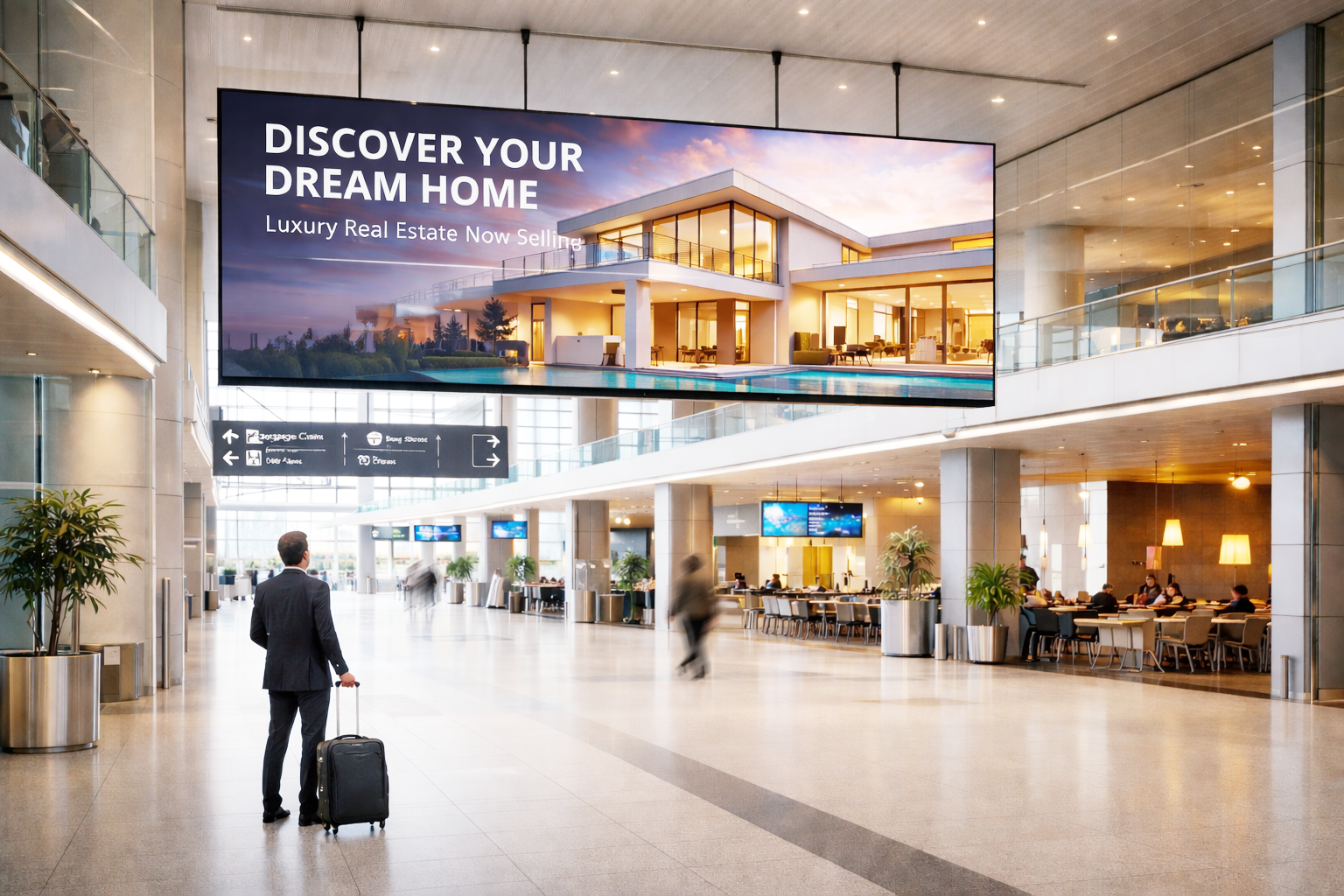
Airport Advertising is Complex to Get Right
We help you execute faster, with proven results and local insight most planners lack starting now.
Talk to an ExpertCatchment Area and Economic Drivers
Top 10 Cities within 150 km — Marketer Intelligence
- Kaspiysk (4.5 km): Immediately adjacent to the airport, this industrial and former defence-industry city houses a dense working population with reliable disposable income; strong captive market for FMCG, telecom, and financial services brands
- Buynaksk (~50 km): A historically significant mountain-foothills city functioning as a regional administrative and trade centre; its population has high brand awareness for construction materials, home goods, and local consumer categories
- Izberbash (~65 km): Oil refining and industrial machinery base; produces an engineering and technical workforce with stable salaries and appetite for consumer electronics, automotive accessories, and banking products
- Kizilyurt (~65 km): A key agro-industrial transit town positioned on the plains between the Caspian coast and northern Dagestan; strong market for food, logistics services, and construction brands
- Khasavyurt (~100 km): The second-largest commercial city in Dagestan and a major inter-regional trading hub with routes connecting to Chechnya and Ingushetia; a high-turnover retail and wholesale market with strong appetite for premium consumer goods and financial products
- Derbent (~120 km): Russia's oldest city (over 2,000 years) and a UNESCO World Heritage destination experiencing rapid tourism investment; generates an audience of hospitality entrepreneurs, tourism operators, and wine producers with growing disposable income
- Gudermes (~130 km, Chechnya): A key transit and logistics city in neighbouring Chechnya whose business population regularly uses MCX; adds a Chechen Muslim audience layer that shares similar outbound travel behaviour and Gulf investment interest
- Karabudakhkent (~35 km): Agricultural heartland producing Dagestan's wine and cognac exports; home to a farming and agro-business community with seasonal spending patterns and strong demand for agricultural inputs and machinery
- Sulak (~75 km): Gateway village to the Sulak Canyon, one of the world's deepest; a rapidly developing adventure tourism corridor whose operators and seasonal visitor flow are growing year on year and represent a niche premium outdoor-travel audience
- Manas (~50 km): A Caspian coastal settlement with established beach resort infrastructure drawing summer leisure traffic from across the North Caucasus; a seasonal high-footfall corridor for hospitality, food, and lifestyle advertising
NRI and Diaspora Intelligence
Dagestan does not generate a traditional non-resident investor diaspora in the Western sense, but it has a significant and commercially active outbound community concentrated primarily in Dubai, Istanbul, and Moscow. Dagestani business owners, construction contractors, and traders have established a notable commercial presence in the UAE, with Dubai functioning as both a second-home market and an offshore financial hub for the republic's wealthiest families. The Moscow-based Dagestani community is among the largest North Caucasus diaspora populations in the Russian capital, maintaining regular return travel through MCX, particularly during Ramadan, Eid, and summer months. This outbound-and-return flow creates a dual-direction advertising window: brands on both the MCX departure side and the Dubai/Moscow arrival side can intercept the same audience at different points of their commercial journey.
Economic Importance
Dagestan's economy is structured around agro-industrial production, food processing, construction, oil and gas extraction, and a rapidly expanding trade and services sector. The republic accounts for approximately 156 billion rubles (approximately $1.65 billion) in annual government revenue, with gross regional product growing at a projected 3.3% annually. The Makhachkala Sea Trade Port and the airport together function as the twin pillars of the republic's external trade infrastructure, with Dagestan holding a strategic transit corridor position between Russia, the South Caucasus, Central Asia, and the Middle East. This economic structure produces an audience of construction business owners, agro-industrial entrepreneurs, government-linked contractors, and trade operators who travel regularly and spend at a tier above the average Russian regional consumer. For advertisers, this translates into a commercially serious audience with strong appetite for financial services, property investment, and business-class travel categories.
Business and Industrial Ecosystem
- Oil refining and energy sector: Concentrated around Izberbash and the Caspian coastal plain; produces a technically skilled workforce with above-average salaries and appetite for banking, insurance, and automotive categories
- Food processing and beverages: Dagestan produces approximately a quarter of Russia's brandy and 14% of its wine; the Derbent Cognac Plant, Kizlyar Cognac Company, and Deneb Group represent an entrepreneurial agro-food business class with outbound investment behaviour
- Construction and real estate development: The fastest-growing sector in the republic, driven by federal infrastructure investment; construction magnates represent the wealthiest private business class at MCX and are active buyers of Dubai and Turkish real estate
- Trade and logistics: Dagestan's Caspian Sea access and its shared border with Azerbaijan make it a natural transit hub for goods moving between Russia, Iran, Kazakhstan, and Turkey; the trading community is commercially sophisticated and financially mobile
Passenger Intent — Business Segment
Business travellers at MCX are primarily construction contractors, agro-food exporters, and traders who use the airport for quarterly trips to Moscow, Dubai, and Tashkent. They travel to close supplier and buyer relationships, meet government counterparts, and manage cross-border business operations. Advertiser categories that intercept them most effectively include international banks and Islamic finance products, outbound real estate developers targeting UAE and Turkey, B2B software and logistics, and premium telecommunications.
Strategic Insight
The business audience at MCX is concentrated, commercially ambitious, and operating in a relatively low-advertising-pressure environment. Unlike airports in Moscow or St. Petersburg where sophisticated, advertising-saturated travellers have developed near-complete ad avoidance habits, MCX passengers encounter brand messages in a context where premium advertising still carries novelty and authority. A well-placed luxury brand or financial services campaign at MCX commands attention at a fraction of the cost of comparable Moscow placements, with an audience that has meaningful propensity to act.
Tourism and Premium Travel Drivers
- Sulak Canyon (75 km from airport): At nearly 2,000 metres deep, one of the deepest canyons in the world and Dagestan's defining natural spectacle; draws adventure tourists, domestic Russian travellers, and international visitors whose pre- and post-trip airport dwell time creates a receptive window for outdoor and travel brand advertising
- Derbent Fortress and UNESCO Old City (120 km): The oldest surviving city in Russia, with over 2,000 years of continuous habitation and an UNESCO World Heritage designation; drives a distinct heritage tourism segment willing to spend on quality accommodation, dining, and cultural experiences
- Sarykum Sand Dune (18 km): The largest sand dune in Europe and a Dagestan State Nature Reserve; a unique natural anomaly adjacent to the airport that anchors a growing ecotourism and photography tourism segment
- Caspian Sea coastline: 350 km of coast including established beach resorts at Izberbash, Kaspiysk, and Derbent; seasonal summer leisure tourism that brings in visitors from across the North Caucasus and southern Russia with accumulated holiday spending power
Passenger Intent — Tourism Segment
Tourism passengers at MCX are primarily domestic Russian travellers, predominantly from across the North Caucasus and southern Russia, who have already committed to accommodation, transport, and activity spend on arrival. At the airport they are in a relaxed pre-departure or post-arrival mindset and are receptive to Dagestan-branded food and beverage products, adventure and leisure gear, and digital travel services. Internationally, the inbound tourism segment is growing as Dagestan's natural landscapes gain recognition among European and Middle Eastern adventure travellers, which creates an emerging opportunity for international lifestyle and gear brands.
Travel Patterns and Seasonality
Peak seasons:
- May to September: Primary domestic tourism season driven by Caspian beach resorts, Sulak Canyon, and mountain village tourism; the bulk of leisure passenger volume flows through this window
- Ramadan and Eid al-Fitr (dates shift annually with Islamic calendar): The most commercially significant period at MCX; outbound Umrah travellers and family return visits generate exceptional dwell-time and spending receptivity; brands in food, travel, gifting, and financial services see elevated response during this window
- Eid al-Adha: Second major Eid generates a secondary outbound and return peak, particularly for the Jeddah and Medina routes
- Winter (November to March): Significantly reduced leisure tourism volume; the airport functions primarily as a domestic transit hub during this period, with a stable base of business travellers to Moscow and Siberian cities
Event-Driven Movement
- Ramadan (March/April annually): Month-long period of elevated communal activity; pre-Eid travel builds sharply in the final two weeks; food, gifting, and family brands should weight campaigns into this window
- Eid al-Adha (June/July annually): Generates outbound movement to Saudi Arabia for Hajj pilgrimage via Jeddah; airline seat demand is high and passengers are in a spiritually motivated, community-focused mindset receptive to halal lifestyle and banking messaging
- Dagestani Republic Day (July 26): A significant local holiday driving domestic travel; hospitality and consumer brands benefit from a compressed short-break travel window
- Russian summer school holidays (June to August): Drives a secondary family travel peak alongside the Caspian beach season; family-oriented FMCG and entertainment brands should be active in this window
- Mawlid al-Nabi (Prophet's Birthday, October/November annually): A widely observed occasion in Dagestan with community gatherings and increased mosque attendance; brands targeting Dagestan's faith community should note this as a period of heightened audience receptivity
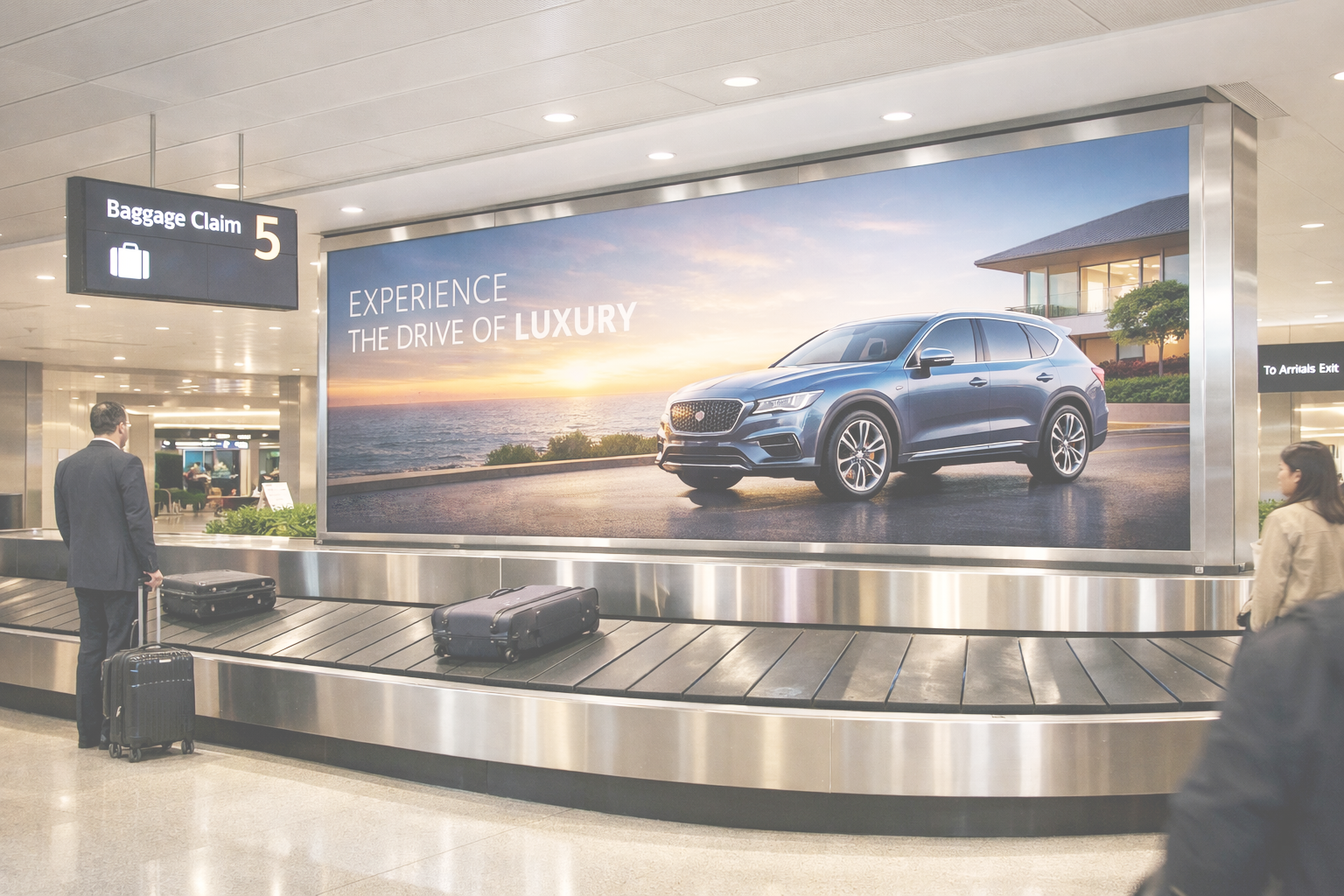
It’s Not Just Where You Advertise - It’s How Fast You Execute
We combine local insight with fast rollout to deliver results for you, now.
Talk to an ExpertAudience and Cultural Intelligence
Top 2 Languages
- Russian: The official administrative and commercial language of Dagestan; used across all business, government, and media contexts; all advertising at MCX operates in Russian, and it is the baseline language for reaching the cross-ethnic airport audience effectively
- Avar: The most widely spoken native language in Dagestan, used by approximately 29% of the population and understood broadly across the republic's mountain communities; brands creating culturally resonant campaigns in Avar signal deep community respect and significantly elevate engagement with the dominant ethnic audience
Major Traveller Nationalities
The overwhelming majority of passengers at MCX are Russian nationals of Dagestani origin, with the largest ethnic groups being Avars, Dargins, Kumyks, and Lezgians. Outbound international traffic is dominated by Dagestani-Russian nationals travelling to the UAE, Uzbekistan, and Saudi Arabia. Inbound international traffic brings Gulf Arab and Central Asian business visitors transiting Dagestan for trade and logistics purposes. There is a modest but growing European adventure tourism segment, primarily from Germany, France, and the UK, attracted by Dagestan's natural landscapes. For advertisers, campaign creative should reflect the Muslim cultural identity of the dominant audience while also being legible to a secondary Russian-secular traveller segment.
Religion — Advertiser Intelligence
- Sunni Islam (approximately 90%+): The defining religious and cultural context of the MCX audience; Eid al-Fitr, Eid al-Adha, Ramadan, and Mawlid al-Nabi are the primary calendar anchors driving travel spikes and elevated spending receptivity; Umrah and Hajj travel generate two concentrated high-intent windows per year where religious tourism, Saudi-route airlines, Islamic finance, and modest fashion brands are especially well-positioned; food brands should hold halal certification visibly in all airport communications
- Russian Orthodox Christianity (approximately 5-7%): A small but present segment primarily among ethnic Russians in Makhachkala's administrative class; Christmas and Easter generate minor domestic travel activity; this segment is less commercially dominant at MCX but relevant for advertisers seeking pan-Russian brand positioning
- Traditional and Sufi practices (overlapping with Sunni majority): Dagestan's Sufi Muslim tradition integrates local cultural celebrations and heritage observances alongside standard Islamic calendar events; heritage tourism brands, artisan crafts, and local food products are well-aligned with this audience's cultural spending preferences
Behavioral Insight
The MCX audience makes purchase decisions through community trust networks and extended family validation rather than purely individual impulse. Dagestani consumers are relationship-driven, brand loyalty runs deep once established, and premium positioning carries strong social signalling value within tight-knit ethnic communities. Financial products and real estate brands that approach this audience through culturally literate messaging and halal-compliant structures will outperform generic luxury or mainstream finance campaigns. The audience is mobile, increasingly digitally connected, and aspirationally oriented toward Gulf-level consumption standards, which creates a clear receptivity window for international brands that position themselves authentically within this value framework.
Outbound Wealth and Investment Intelligence
The outbound passenger at MCX represents a commercially distinct profile that sits outside the typical Russian airport wealth narrative. This is not a European luxury consumer and not a Westernised tech professional. This is a Caspian-corridor entrepreneur: a construction contractor who has built equity through federal infrastructure contracts, a trader who moves goods between Russia, Azerbaijan, and Uzbekistan, or a food industry operator whose family business spans two generations and two countries. These individuals do not publicise their wealth but deploy it with intent, and the Dubai route is the most direct evidence of where that capital flows.
Outbound Real Estate Investment
Dubai is the primary international real estate destination for MCX's outbound HNI audience. The year-round Flydubai service is the commercial infrastructure that supports this flow, and Dagestani buyers are a recognised segment within Dubai's Russian-speaking property investor community. UAE freehold property offers Dagestani investors a politically neutral, currency-diversified asset in a Sunni-majority environment that also aligns culturally. Istanbul and Antalya in Turkey represent a secondary real estate and second-home market; Turkish properties are accessible by price point and benefit from visa-free movement for Russian nationals during previous travel periods. For international real estate developers and agencies operating in Dubai, Abu Dhabi, and Istanbul, MCX is a direct channel to the outbound buyer community with minimal competitive noise in the current advertising environment.
Outbound Education Investment
Students from Dagestan are increasingly pursuing higher education in Moscow, St. Petersburg, and other major Russian cities, which drives regular family travel through MCX to accompany, visit, and support university-enrolled children. A smaller but growing segment of upper-income Dagestani families is beginning to explore international education options in the UAE, Turkey, and Malaysia, all of which offer Muslim-majority academic environments aligned with the family's cultural preferences. International universities and education consultancies operating in these markets should treat MCX as a gateway to a family-driven, education-aspirational audience that is just beginning to engage with international higher education channels.
Outbound Wealth Migration and Residency
Golden Visa demand from the MCX catchment is primarily directed toward the UAE, which offers a straightforward residency-by-investment pathway that appeals strongly to Dagestani business owners seeking a stable second domicile. The UAE Golden Visa requires no permanent residency obligation, allows continued Russia-based business operations, and provides a tax-neutral environment, all of which align with the practical priorities of a Dagestani entrepreneur managing cross-border commercial relationships. Turkey's citizenship-by-investment programme has also seen interest from the North Caucasus investor base, driven by cultural proximity, competitive real estate pricing, and the programme's relatively accessible investment threshold.
Strategic Implication for Advertisers
International brands operating on the Russia-Gulf-Central Asia corridor, whether in real estate, financial services, Islamic lifestyle, or education, should treat MCX as a high-precision insertion point into a geographically concentrated but financially active outbound audience. The airport's low advertising clutter relative to Moscow-tier airports means that premium placements achieve standout at highly competitive rates. Masscom Global operates across both sides of the key MCX corridors, enabling brands to run coordinated campaigns that intercept the same Dagestani HNI passenger at departure in Makhachkala and at arrival in Dubai or Tashkent simultaneously.
Airport Infrastructure and Premium Indicators
Terminals
- MCX operates a single modern terminal building located approximately 16 kilometres southeast of Makhachkala city centre, with a formal capacity of over 1.5 million passengers annually following recent infrastructure upgrades; the terminal serves both domestic and international departures from a unified processing environment, which concentrates all audience types in a single advertising zone and maximises cross-audience brand exposure
- The terminal has undergone modernisation including upgraded security screening, digital passenger information systems, and energy-efficient facility management, signalling a trajectory toward a more premium airport environment; the infrastructure investment backdrop supports the argument for brands to establish early presence before the facility reaches greater commercial maturity
Premium Indicators
- The airport features standard domestic-market lounge access for premium-class passengers on major carriers including Aeroflot and S7, signalling a business traveller segment that self-selects into a higher spend bracket
- A small but active general aviation handling operation exists at the facility supporting the oil and gas sector, government, and private charter movements that pass through the Republic of Dagestan
- The Flydubai year-round connection to Dubai International Airport positions MCX within the global premium aviation ecosystem and validates the airport as a wealth-corridor node; this route alone defines the quality ceiling of the outbound passenger and signals to luxury, finance, and property advertisers that a commercially valuable audience is present and active
- Adjacent hotel and hospitality infrastructure in Makhachkala and Kaspiysk serves the airport's business traveller base, with growing investment in branded hospitality as Dagestan's tourism economy matures
Forward-Looking Signal
Dagestan's government has identified transport infrastructure as a central pillar of its growth strategy, with federal backing for expanded logistics capacity, tourism infrastructure, and Caspian Sea trade routes. The republic's gross regional product is forecast to grow at 3.3% annually, driven by construction, trade, and services. Passenger traffic at MCX grew 4.3% in the first eleven months of 2024 and continued a multi-year growth trajectory consistent with the republic's economic trajectory. As Dagestan's profile as both a domestic tourism destination and a Caspian transit hub continues to rise, advertising inventory at MCX will increase in demand and cost accordingly. Masscom Global advises clients to activate at MCX now, while rates reflect a Tier 2 regional environment and before competitive pressure drives premium placements to Moscow-equivalent pricing levels.
Airline and Route Intelligence
Top Airlines
Aeroflot, Pobeda, Red Wings, S7 Airlines, Nordwind Airlines, UTair, Ural Airlines, Smartavia, NordStar, flydubai, Jazeera Airways, Uzbekistan Airways, Belavia, Azimuth, Severstal Avia
Key International Routes
- Dubai (DXB): Flydubai, year-round, 4 flights per week — the airport's defining wealth-corridor route
- Tashkent (TAS): Red Wings and Uzbekistan Airways, year-round — primary Central Asian trade and diaspora connection
- Bukhara (BHK) and Namangan (NMA): Red Wings, seasonal (April to October) — extending the Uzbek trade corridor
- Urgench (UGC) and Bishkek (BSZ): Red Wings, seasonal — Central Asia connectivity for traders and migrant worker return traffic
- Jeddah (JED) and Medina (MED): Jazeera Airways and Azimuth, seasonal — the Hajj and Umrah pilgrimage routes with the highest per-passenger faith-driven spend of any route at MCX
- Minsk (MSQ): Belavia, seasonal (May to September) — CIS business and diaspora connection
Domestic Connectivity
Moscow Sheremetyevo (SVO) and Moscow Domodedovo (DME) together account for approximately 48% of all monthly arrivals at MCX, confirming the capital as the dominant domestic axis. Additional domestic routes serve Krasnoyarsk, Kazan, Chelyabinsk, Cherepovets, Cheboksary, and other major Russian cities, with seasonally adjusted schedules across 27 domestic airport connections.
Wealth Corridor Signal
The MCX route network maps precisely to the three audiences that matter most for advertisers: Moscow-oriented domestic travellers who carry metropolitan spending habits back to Dagestan, Gulf-bound entrepreneurs and traders on the Dubai axis who are active in UAE property and Islamic finance markets, and Hajj/Umrah pilgrims on the Jeddah-Medina routes who represent the highest per-trip expenditure profile at the airport. The Central Asian routes to Uzbekistan layer in a trade and logistics business audience that has strong demand for B2B services, banking, and telecommunications. Collectively, the route network confirms MCX as a Caspian-corridor hub with a commercially active, faith-driven, outbound-oriented audience that is underserved by the current advertising market.
Media Environment at the Airport
- MCX's single-terminal layout concentrates all departing and arriving passengers through a unified footprint, eliminating the audience fragmentation typical of multi-terminal airports; every advertising placement reaches the full passenger base without requiring multi-site buying strategies
- Dwell time at MCX is extended by domestic flight schedules, check-in procedures, and the relative scarcity of retail and entertainment options that would otherwise distract passengers; this environment creates sustained brand exposure windows that outperform the attention economics of busier, more distracted airport environments
- The airport's modernised facilities and recent infrastructure investment create a cleaner, more premium visual environment than older North Caucasus airports, which elevates brand association quality for advertisers seeking to be positioned alongside a rising rather than declining asset
- Masscom Global holds access to MCX's full out-of-home advertising inventory and provides end-to-end campaign management from site selection and creative specification through to live placement monitoring and performance reporting; our local market intelligence in Russia's North Caucasus region ensures placements are compliant, well-positioned, and activated at the optimal audience timing windows
Strategic Advertising Fit
Best Fit
- Islamic finance and banking products: Halal-compliant financial services products find a pre-qualified audience at MCX; virtually every passenger is a practising Muslim with cultural orientation toward Sharia-compliant banking, investment, and insurance products
- Umrah and Hajj travel services: The Jeddah and Medina routes create a high-intent pilgrimage travel audience with enormous spending commitment already made; related services — travel insurance, Islamic travel packages, airport transfer services, modest fashion and luggage — are perfectly positioned for capture at MCX
- UAE and Turkish real estate developers: The Dubai route is the commercial infrastructure that supports property advertising at MCX; Dagestani buyers are active in the UAE freehold market and represent a concentrated, high-intent audience for developer campaigns targeting the Russia-Gulf corridor
- Consumer electronics and mobile telecommunications: A digitally connected but underserved market in which leading handset and network brands have genuine penetration opportunity among MCX's younger and business passenger segments
- Halal food and beverage brands: Halal certification is a baseline consumer requirement at MCX; food brands with strong halal positioning gain immediate credibility and purchase intent among a 90%+ Muslim passenger base that actively reads product credentials before purchase
- International education and study abroad: A growing family aspiration for Dagestani parents sending children to Moscow and, increasingly, to UAE and Turkish universities; institutions and education consultancies should position at MCX during peak family travel windows
- Domestic Russian tourism and adventure travel: Dagestan is one of Russia's fastest-growing domestic tourism destinations; brands in outdoor gear, travel tech, and domestic hospitality have a direct audience of travellers entering and exiting Dagestan's adventure tourism corridor
Brand Alignment at a Glance
| Category | Fit |
|---|---|
| Islamic finance and banking | Exceptional |
| Umrah and Hajj travel | Exceptional |
| UAE and Turkish real estate | Exceptional |
| Halal food and beverage | Strong |
| Consumer electronics and telecom | Strong |
| International education | Strong |
| Domestic tourism and outdoor gear | Strong |
| Mass market luxury (European heritage brands) | Moderate |
| Alcohol and non-halal food brands | Poor fit |
Who Should Not Advertise Here
- Alcohol and spirits brands: MCX serves an overwhelmingly Muslim-majority audience for whom alcohol advertising carries zero purchase intent and creates cultural dissonance that actively damages brand perception; this category has no audience alignment at this airport
- Non-halal food service and restaurant chains: Brands without halal certification cannot convert purchase intent in this environment regardless of creative quality; the absence of halal credentials is a disqualifying signal for the vast majority of MCX passengers
- Western luxury fashion brands with no regional brand recognition: Premium European fashion houses without an established footprint in the Russian Muslim market will find MCX a low-return environment; the audience here is aspirational but its luxury reference points are culturally distinct from those of a Westernised metropolitan consumer
Event and Seasonality Analysis
- Event Strength: High
- Seasonality Strength: High
- Traffic Pattern: Dual-Peak (Islamic calendar-driven + summer Caspian tourism season)
Strategic Implication
MCX operates on two distinct and highly predictable traffic cycles: the Islamic festival calendar, which drives Ramadan, Eid, and Hajj-season peaks, and the May-to-September Caspian summer tourism window. Advertisers should allocate the majority of their budget into these two windows rather than attempting year-round low-intensity presence, as the off-peak winter period delivers significantly lower passenger volumes with a more functionally oriented audience. Masscom Global structures MCX campaigns around these dual rhythms, ensuring clients capture maximum audience concentration at the Eid windows and benefit from the sustained summer leisure traffic surge simultaneously. The highest-performing advertising window at MCX is the two weeks immediately preceding Eid al-Fitr, when outbound travellers are in an elevated purchasing mindset and dwell time is extended by departure congestion.
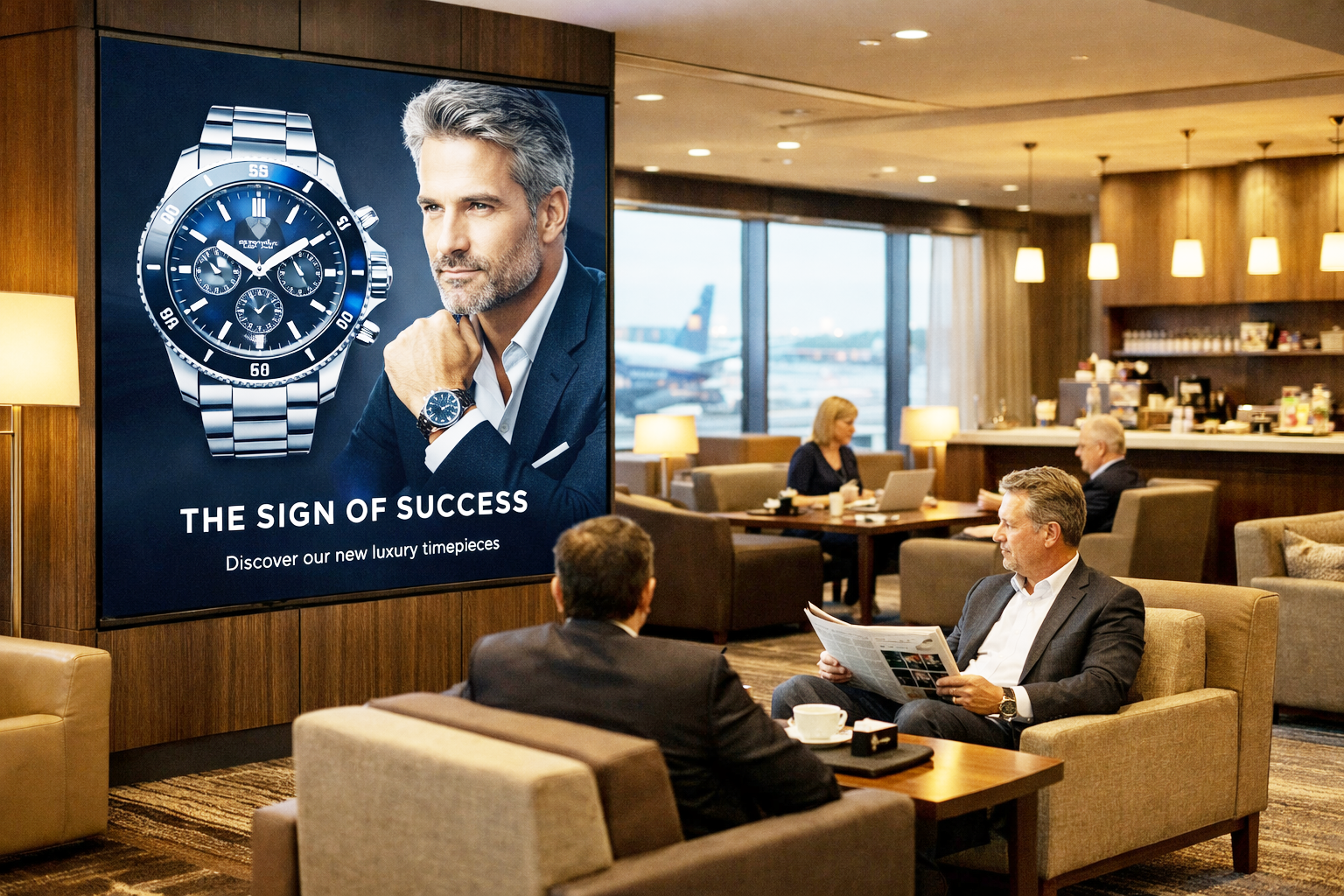
Poor Placement and Delays Affect Airport Campaigns
We help you move faster, access better inventory, and get it right now.
Talk to an ExpertFinal Strategic Verdict
Makhachkala Uytash Airport is the most commercially concentrated Muslim-majority airport in the Russian Federation, serving a 3.1 million-strong republic with a growing trade economy, a year-round direct link to Dubai, and a Hajj and Umrah route network that brings the highest-intent pilgrimage travel audience in Russia through a single terminal. For advertisers in Islamic finance, UAE real estate, Umrah travel, halal lifestyle, and premium telecommunications, MCX is a precision channel with very low competitive noise, extended audience dwell time, and a passenger profile that is commercially active, faith-motivated, and insufficiently served by the current advertising market.
Brands that establish presence at MCX now will do so at rates that reflect a Tier 2 regional environment while accessing an audience whose outbound spending behaviour and Gulf market connections deliver returns comparable to a much larger airport. Masscom Global's access to MCX's full advertising inventory, combined with deep expertise in Russia's North Caucasus market and the Russia-Gulf corridor, gives clients the local intelligence, execution speed, and placement precision to activate immediately and at scale.
About Masscom Global
Masscom Global is a premium international airport advertising and media buying agency operating across 140 countries. With deep expertise in airport OOH, premium publications, and high-net-worth audience targeting, Masscom helps brands reach the world's most valuable travellers at the moments that matter most. For advertising packages, media rates, and campaign planning at Makhachkala Uytash Airport and airports across the globe, contact Masscom Global today.
Frequently Asked Questions
How much does airport advertising cost at Makhachkala Uytash Airport? Airport advertising costs at MCX vary based on format, placement zone, campaign duration, and seasonal demand — particularly around Ramadan, Eid, and the summer tourism peak when inventory is at its most competitive. Digital screens, static large-format placements, and branded experiential zones each carry distinct pricing structures. Masscom Global provides current rate cards and media planning guidance specific to MCX; contact us directly to receive a tailored proposal.
Who are the passengers at Makhachkala Uytash Airport? The MCX passenger base is predominantly Russian Muslim nationals of Dagestani origin, representing more than 30 ethnic groups including Avars, Dargins, Kumyks, and Lezgians. The airport serves a mix of domestic travellers on the Moscow axis, outbound Gulf-bound entrepreneurs and traders on the year-round Dubai route, Hajj and Umrah pilgrims on the seasonal Saudi Arabia routes, and Central Asia-bound traders on the Uzbekistan corridor. Business owners in construction, food processing, oil services, and trade dominate the premium traveller segment.
Is Makhachkala Uytash Airport good for luxury brand advertising? MCX is well-suited for luxury brands that are culturally calibrated to a Muslim-majority, Gulf-oriented audience. UAE and Turkish real estate developers, Islamic finance providers, and premium halal lifestyle brands will find a concentrated, high-intent audience with meaningful purchasing power. European heritage luxury brands without an established Russian Muslim market footprint will find the audience here commercially distinct from a Westernised metropolitan luxury consumer and should plan campaigns accordingly.
What is the best airport in Russia to reach Muslim-majority audiences? Makhachkala Uytash Airport (MCX) is the single highest-concentration Muslim-majority airport in the Russian Federation, serving Dagestan — the country's largest and most populous Muslim-majority republic. While Kazan and Ufa airports also serve significant Muslim audiences in Tatarstan and Bashkortostan, MCX's audience is more uniformly faith-oriented, more commercially tied to the Gulf market, and more concentrated in a single terminal environment, making it the highest-precision Muslim audience advertising environment in the Russian market.
What is the best time to advertise at Makhachkala Uytash Airport? The two highest-priority windows are the Ramadan and Eid al-Fitr period (dates shift annually with the Islamic calendar, falling in spring through early summer in current years) and the May to September Caspian summer tourism season. Within the Ramadan window, the final two weeks immediately preceding Eid al-Fitr deliver peak audience concentration with maximum spending receptivity. Hajj season, concentrated in the weeks before and after Eid al-Adha, generates a second high-intent window specifically for Saudi-route and Islamic travel category advertisers.
Can international real estate developers advertise at Makhachkala Uytash Airport? MCX is one of the most compelling airports in Russia for international real estate advertising, specifically for UAE and Turkish market developers. The year-round Flydubai service to Dubai creates a direct physical corridor between MCX and the UAE property market, and the Dagestani buyer community is an active, recognised segment within Dubai's Russian-speaking investor base. International developers launching or expanding campaigns in the Russia-Gulf corridor should treat MCX as a priority placement alongside Dubai International and Sheremetyevo.
Which brands should not advertise at Makhachkala Uytash Airport? Alcohol and spirits brands have zero purchase intent alignment at MCX and will generate cultural dissonance among an overwhelmingly Muslim-majority passenger base. Non-halal food service brands without halal certification will face an immediate credibility barrier with virtually every passenger. European luxury fashion houses without an established Russian Muslim market presence will find the audience's luxury reference points and spending triggers do not align with campaigns built for a Western metropolitan consumer.
How does Masscom Global help brands advertise at Makhachkala Uytash Airport? Masscom Global provides full-service airport advertising capability at MCX, covering audience intelligence, inventory access, creative specification, placement execution, and campaign performance monitoring. Our team understands the specific cultural, religious, and commercial dynamics of the North Caucasus market and the Russia-Gulf corridor, which means clients benefit from local insight that most international media planners lack. From site selection to live campaign management, Masscom ensures brands activate at MCX with speed, precision, and the strategic intelligence that turns airport presence into measurable commercial results. Contact us today to begin planning.