


Airport at a Glance
| Field | Detail |
|---|---|
| Airport | Aeropuerto Internacional Jorge Chavez |
| IATA Code | LIM |
| Country | Peru |
| City | Lima (Callao) |
| Annual Passengers | 27.4 million (2025), projected 28.4 million in 2026, an 11.3 percent year on year increase |
| Primary Audience | Peru's national and regional business travel community, luxury tourism travellers transiting to Cusco, Machu Picchu and the Sacred Valley, gastronomy tourism visitors drawn by Lima's World's 50 Best Restaurants recognition, MICE and conference delegates |
| Peak Advertising Season | May through October (dry season, peak inbound tourism), with a secondary peak around Lima's World's 50 Best Restaurants season and year end holiday travel |
| Audience Tier | Tier 1, Very High: Peru's principal air gateway and busiest airport by a wide margin |
| Best Fit Categories | Financial services and banking, luxury hospitality and heritage tourism, gastronomy and culinary tourism, business aviation and corporate travel, real estate and investment, premium retail |
Jorge Chavez International Airport occupies a commercial position that almost no other airport in South America can claim: it is simultaneously Peru's principal international gateway, its busiest domestic hub, and the mandatory transit point for the great majority of international visitors heading onward to Cusco and Machu Picchu. In 2025 the airport handled 27.4 million passengers, and 2026 traffic is on pace for 28.4 million, an 11.3 percent increase. That scale, combined with a brand new terminal and a 92.67 percent on time departure rate that earned it recognition as the world's most punctual large airport from aviation analytics firm Cirium in June 2026, makes LIM one of the most operationally credible and commercially significant airport advertising environments in Latin America.
Airport Advertising is Complex to Get Right
Getting an advertising campaign right at a hub airport the size of Jorge Chavez means understanding three things at once: who is actually moving through the terminal, when they are moving through it, and what physical inventory is available to reach them at the moment their attention is highest. Lima's airport advertising market is more complex than a single-audience heritage gateway because LIM serves several genuinely different traveller populations in the same terminal at the same time: domestic business travellers connecting between Peru's regional cities, international business travellers arriving into Lima's financial and corporate districts, and leisure travellers arriving specifically to connect onward to Cusco and the Sacred Valley. A campaign built for one of these audiences without accounting for the others under-performs even when the raw passenger numbers look strong.
Lima's Status as Peru's Air Gateway and Commercial Context
Jorge Chavez sits in Callao, roughly 11 kilometres from Lima's historic centre and about 17 kilometres from Miraflores, the city's principal upscale commercial and hospitality district. Lima itself is Peru's political and financial capital, home to the country's banking sector, its largest corporate headquarters, and a rapidly growing luxury hospitality and gastronomy scene: Lima was named host city for the World's 50 Best Restaurants 2026 awards, cementing its status as South America's culinary capital. For a brand deciding whether Lima airport advertising belongs in a Peru or Andean region media plan, the answer is straightforward: LIM is not one of several options, it is the default first and last impression for almost every visitor to the country, business or leisure.
Tourism and Premium Travel Drivers
Three distinct travel drivers move premium audiences through Jorge Chavez. The first is heritage and adventure tourism: the great majority of international visitors bound for Cusco, Machu Picchu and the Sacred Valley connect through Lima first, meaning LIM effectively captures the same luxury heritage tourism audience that a Cusco-only campaign would reach, plus the domestic and business travellers a Cusco campaign never sees. The second driver is gastronomy tourism, now a globally recognised category in its own right following Lima's repeated presence among the World's 50 Best Restaurants and its selection to host the 2026 awards ceremony. The third driver is business and investment travel tied to Lima's role as Peru's financial and corporate centre, drawing corporate travellers, MICE delegates and investment decision makers who fly in and out of LIM as a matter of routine.
Travel Patterns and Seasonality
Peru's dry season, running roughly May through October, is the peak period for inbound leisure and heritage tourism, since it offers the clearest conditions for Cusco, Machu Picchu and Sacred Valley travel. Business and domestic travel volumes at LIM stay comparatively stable across the year, reflecting Lima's role as a year round commercial hub rather than a seasonal destination. A secondary tourism and hospitality peak builds around Lima's gastronomy calendar and the year end holiday period. For advertisers, this means LIM offers a rare combination: a strong, predictable baseline of business and domestic traffic that a campaign can plan against with confidence, plus seasonal leisure peaks that reward a well timed push.
It's Not Just Where You Advertise, It's How Fast You Execute
LIM's brand new terminal, which began operations in June 2025 and is already handling more than 27 million passengers a year against a design capacity of up to 40 million, means premium advertising inventory in the new facility is still being allocated and is not yet as heavily contested as inventory at older, established hub airports. Brands that move early secure placements in the highest visibility zones of a terminal built for the next two decades of growth. Brands that wait are choosing from what is left after competitors have already claimed the strongest positions.
Audience and Cultural Intelligence
Roughly 60 percent of LIM's traffic is domestic and 40 percent international, a split that reflects Lima's dual role as Peru's internal transport backbone and its international front door. The domestic share includes business travellers moving between Lima and Peru's regional economic centres. The international share splits between the heritage and adventure tourism audience heading to Cusco, a growing gastronomy tourism segment drawn by Lima's culinary reputation, and corporate and investment travellers tied to Lima's financial sector. Any campaign built for LIM should account for this mixed audience rather than assuming a single traveller profile, which is the mistake advertisers most often make when transplanting a strategy built for a single-destination gateway like Cusco onto Lima's more complex hub environment.
Outbound Wealth and Investment Intelligence
Lima Airport Partners, the concessionaire that operates Jorge Chavez under Fraport ownership, has invested more than 2.574 billion US dollars in airport infrastructure since the concession began and has transferred more than 3.853 billion US dollars to the Peruvian state over the same period, figures that reflect both the scale of the airport's economic footprint and the depth of institutional capital committed to Lima as a long term aviation hub. The airport ecosystem now supports more than 35,000 jobs. For financial services, real estate and investment brands, LIM's passenger base of Lima based and visiting business decision makers represents a concentrated, repeat-exposure audience that is difficult to reach as efficiently through any other single channel in Peru.
Airport Infrastructure and Premium Indicators
The new Jorge Chavez terminal, roughly three times the size of the facility it replaced, opened on 1 June 2025 and reached full operational maturity within its first year, processing more than 27 million passengers since inauguration. A second runway and new control tower came into service in April 2023, ahead of the terminal itself, giving the airport dual-runway capacity to match its expanded terminal. The airport's 92.67 percent on time departure rate in the first half of 2026 and its recognition as the world's most punctual large airport by Cirium are strong indicators of an operationally premium environment, one where passengers spend predictable, plannable time in the terminal rather than being disrupted by delays, which directly benefits the reliability of any in-terminal media exposure.
Airline and Route Intelligence
Jorge Chavez functions as the principal hub for LATAM Peru, alongside JetSmart Peru, Sky Airline Peru, Star Peru and ATSA Airlines, and maintains direct connections across North America, South America, Central America, the Caribbean and Europe. LATAM has committed to a new VIP lounge in the new terminal, and airlines operating at LIM have signalled plans to add new routes and increase frequencies as the terminal's capacity comes fully online. This expanding route network steadily widens the pool of premium and business class travellers passing through the airport each year.
Media Environment at the Airport
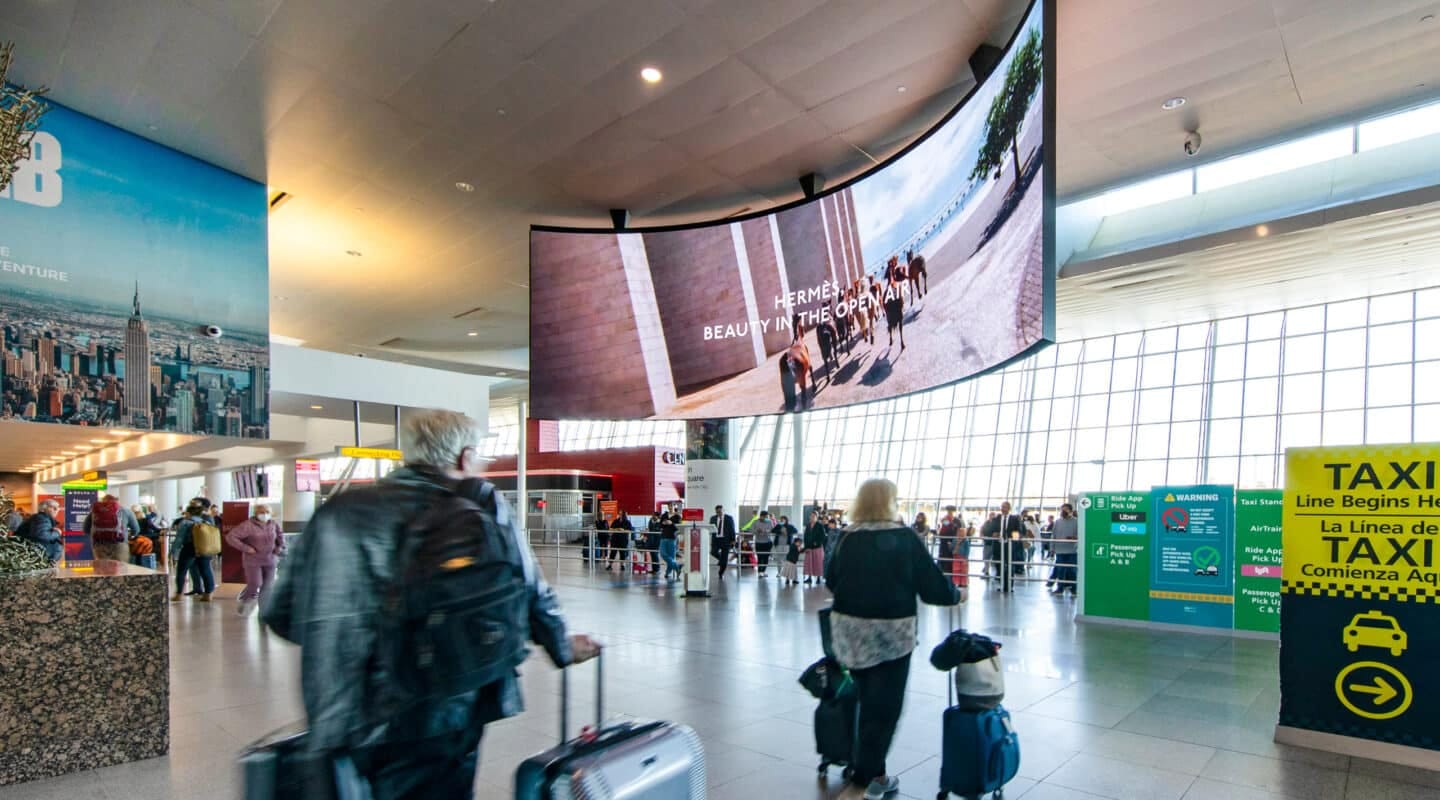
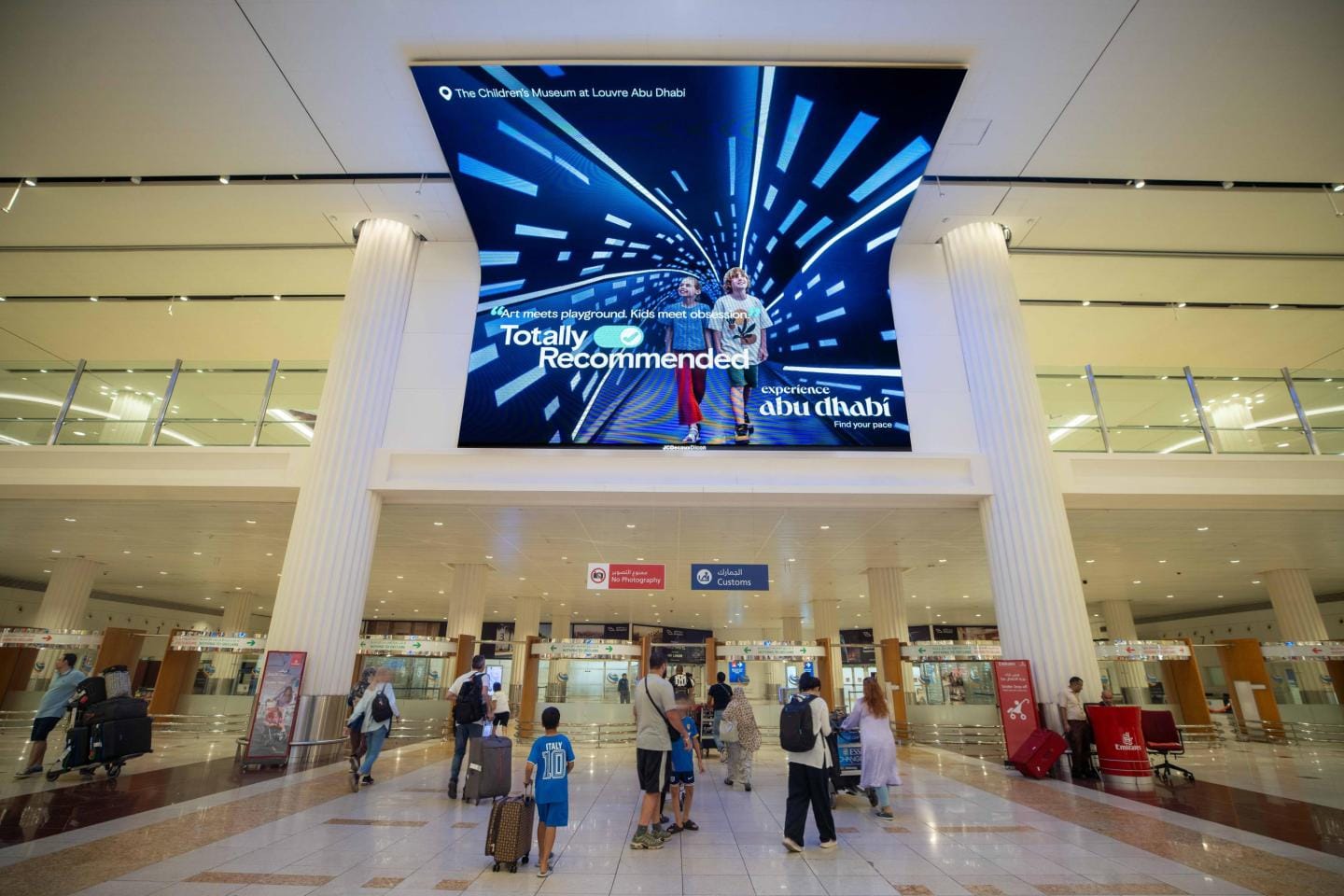
The new terminal's scale, three times the footprint of its predecessor and built for up to 40 million annual passengers, has created substantially more physical space for premium media placements than existed at the old Jorge Chavez terminal, spanning arrivals, departures, connecting corridors and the newly built lounge areas. Because the facility is still relatively new, terminal media positions are still being finalised, giving early advertisers a genuine opportunity to secure primary sightlines before the inventory map fully matures.
Strategic Advertising Fit
LIM suits brands in financial services and banking, luxury hospitality and heritage tourism, gastronomy and culinary tourism, business aviation, real estate and investment, and premium retail. It is a poor fit for brands seeking a narrow, single-destination heritage audience only, since Lima's traveller base is intentionally broader and more commercially mixed than a pure heritage gateway like Cusco. Brands that want both business reach and heritage tourism exposure in one campaign will find LIM more efficient than running separate campaigns in Lima and Cusco independently.
Event and Seasonality Analysis
Lima's hosting of the World's 50 Best Restaurants 2026 awards creates a defined, high-visibility window for gastronomy and hospitality brands to align a campaign with global media attention on the city. Outside of that event window, the dry season from May through October remains the strongest period for heritage and adventure tourism volume, while business and domestic travel patterns stay comparatively stable year round, giving advertisers a dependable baseline audience regardless of season.
Poor Placement and Delays Affect Airport Campaigns
An airport's operational reliability directly affects how much genuine attention a placement receives. Jorge Chavez's 92.67 percent on time departure rate and its ranking as the world's most punctual large airport mean passengers spend less time in a disrupted, frustrated state and more time in the predictable pre-flight window where terminal advertising is most effective. Campaigns placed in poorly trafficked corners of the old terminal, or timed without regard for the domestic versus international passenger split, under-perform regardless of the airport's overall passenger volume.
Final Strategic Verdict
Jorge Chavez International Airport is Peru's single most important airport advertising environment: the busiest airport in the country, the mandatory gateway for the great majority of Cusco and Machu Picchu bound travellers, and a rapidly modernising facility whose new terminal and improving on time performance are actively expanding its premium advertising inventory. Brands with an interest in Peru, whether financial services, luxury hospitality, gastronomy tourism or investment, should treat LIM as a foundational placement rather than an optional add-on to a Cusco or Sacred Valley campaign.
About Masscom Global
Masscom Global is a Dubai headquartered premium media planning, buying and advertising intelligence company operating across 140 plus countries, specialising in reaching high-net-worth and ultra-high-net-worth audiences through airport media, out-of-home and digital out-of-home, inflight, programmatic and digital channels. Our team maps the highest value inventory at airports like Jorge Chavez International against the specific audience a brand needs to reach, so that campaigns are placed for genuine commercial fit rather than simple passenger volume.
Frequently Asked Questions
How many passengers does Jorge Chavez International Airport handle each year?
The airport handled 27.4 million passengers in 2025, with 2026 traffic on pace for 28.4 million, an 11.3 percent increase.
Is Lima airport the gateway for Machu Picchu travel?
Yes. The great majority of international visitors travelling to Cusco and Machu Picchu connect through Jorge Chavez International Airport first, making it the effective first and last impression for Peru's heritage tourism audience as well as its business travellers.
When did the new terminal at Jorge Chavez open?
The new terminal began operations on 1 June 2025 and is roughly three times the size of the previous facility, with a design capacity of up to 40 million passengers annually.
What is the best time of year to advertise at Lima airport?
The dry season from May through October is the peak period for heritage and adventure tourism travel, while business and domestic travel remain comparatively stable year round. Lima's hosting of the World's 50 Best Restaurants 2026 awards creates an additional high-visibility window for gastronomy and hospitality brands.
Which airlines operate hubs at Jorge Chavez International Airport?
LATAM Peru, JetSmart Peru, Sky Airline Peru, Star Peru and ATSA Airlines all operate hub or base operations at LIM, with connections across North America, South America, Central America, the Caribbean and Europe.