

Airport at a Glance
| Field | Detail |
|---|---|
| Airport | Jeju International Airport |
| IATA Code | CJU |
| Country | South Korea |
| City | Jeju City, Jeju Island |
| Annual Passengers | 16.7 million (2023) |
| Primary Audience | Korean HNWI leisure travellers, premium domestic honeymooners and family tourists, Chinese and Southeast Asian resort visitors, Korean corporate MICE travellers |
| Peak Advertising Season | January to February (New Year winter tourism), April to May (spring blossoms), July to August (summer peak), October (autumn foliage) |
| Audience Tier | Tier 1 |
| Best Fit Categories | Luxury hospitality, premium cosmetics and K-beauty, luxury goods, premium automotive, Korean cultural lifestyle brands |
Jeju International Airport is the commercial gateway to South Korea's most commercially concentrated leisure destination and the country's single most visited domestic aviation route by passenger volume. At 16.7 million passengers and a HNWI Score of High, CJU operates the Seoul-Jeju corridor that is routinely ranked among the world's highest-frequency short-haul aviation routes, connecting the spending power of the Korean peninsula's most affluent consumer class to an island economy whose entire commercial infrastructure has been calibrated to serve premium visitors seeking nature, gastronomy, wellness, and the distinctive luxury Korean island experience. The audience at this airport is not merely traveling. They have specifically allocated leisure time, emotional investment, and premium spending budget to a destination that Korean culture treats as the country's most aspirationally significant domestic travel choice.
Jeju Island's commercial identity within Korean society is layered and commercially productive in ways that are specific to the Korean cultural context. As a UNESCO Triple Crown site, a winter honeymoon and summer family destination of national prestige, a MICE conference and corporate retreat location for Korea's chaebols and professional service firms, and a duty-free shopping island whose tax advantages create structured consumer luxury purchasing intent, Jeju is simultaneously every premium consumer category at once. The audience flowing through CJU spans Korean newlyweds with luxury hospitality budgets, chaebol executives at corporate retreats, Chinese and Southeast Asian tourists drawn by K-culture's global rise, and the upper-middle class families whose annual Jeju trip is both a leisure commitment and a social status signal within the Korean premium consumer hierarchy.
Advertising Value Snapshot
- Passenger scale: 16.7 million passengers (2023), with the Seoul-Jeju route historically among the world's top five busiest short-haul routes by frequency and passenger volume, and a recovery trajectory aligned to the full restoration of domestic Korean travel patterns post-COVID
- Traveller type: Korean HNWI leisure travellers, premium honeymooners and anniversary couples, Korean corporate MICE delegates, Chinese and Southeast Asian K-culture and resort tourists
- Airport classification: Tier 1 as Korea's domestic leisure hub, serving the most commercially productive per-passenger domestic leisure aviation market in Northeast Asia
- Commercial positioning: Korea's premier island leisure gateway, whose combination of UNESCO natural heritage, duty-free shopping advantages, K-culture tourism, and corporate retreat economy creates the highest concentration of pre-committed premium leisure spending of any domestic Korean airport
- Wealth corridor signal: CJU sits at the convergence of Korean domestic HNWI leisure wealth, the China-Korea cultural tourism recovery corridor, and the Southeast Asian K-culture travel economy whose premium visitors bring internationally calibrated spending standards to a Korean island destination that has been positioned as the ultimate Korean luxury experience
- Advertising opportunity: Masscom Global provides inventory access and campaign execution capability at Jeju International Airport, enabling premium brands to intercept Korea's most relaxation-minded, pre-committed leisure spending audience at the exact moment of maximum brand receptiveness, within the only Korean domestic airport where every passenger has specifically chosen premium leisure as their journey purpose.
Airport Advertising is Complex to Get Right
We help you execute faster, with proven results and local insight most planners lack starting now.
Talk to an ExpertCatchment Area and Economic Drivers
Top 10 Cities within 150 km — Marketer Intelligence
- Jeju City: The island's commercial, administrative, and tourism services capital; home of the island's largest duty-free retail ecosystem, premium hotel concentration, and the commercial services economy supporting millions of annual visitors; the resident professional class managing Jeju's tourism, hospitality, and duty-free retail sectors represents a commercially active service economy audience, and the city's own consumer standards are calibrated to the premium visitor expectations it perpetually serves, creating an aspirational resident consumption culture that is elevated above comparable Korean provincial city norms.
- Seogwipo: Approximately 40 km south across the Hallasan volcanic plateau; Jeju's second city and the gateway to the island's southern coast resorts, Cheonjeyeon waterfalls, Jeongbang waterfall, and the Olle Hiking Trail network; home of Jeju's premium resort and boutique accommodation cluster including Shilla Stay, Lotte Hotel, and internationally branded wellness resorts; the Seogwipo hospitality management and tourism services professional class creates a B2B and premium consumer commercial audience whose daily interactions with high-spending Korean and international visitors calibrate their own brand expectations to premium standards.
- Aewol-eup: Approximately 20 km west; the gateway to Jeju's most photographed natural landmark, the Hyeopjae Beach and Hallim Park area, and the beloved Cafe Street that has become one of Korea's most Instagram-famous commercial tourism corridors; the specialty coffee culture, artisan bakery, and premium food experience economy of Aewol represents one of Jeju's fastest-growing commercial tourism sectors, drawing premium domestic tourists specifically for the curated food and lifestyle experience and generating brand commercial activity in premium F&B, lifestyle, and artisan product categories.
- Hallim-eup: Approximately 35 km west; home of the Hallim Park complex, Hyeopjae Cave system, and the Jeju Horse Racing Park; an agricultural and fishing community supplemented by growing tourism services; the horse culture that Jeju's volcanic plateau grasslands have sustained for centuries is progressively generating a premium equestrian tourism and lifestyle brand commercial dimension that attracts affluent Korean and Chinese horse culture enthusiasts through CJU.
- Jocheon-eup: Approximately 20 km east of Jeju City; gateway to the Manjanggul lava tube (UNESCO Natural Heritage), Hamdeok Beach, and the growing east coast artisan village tourism circuit; a rapidly developing premium accommodation and specialty experience tourism corridor whose boutique resort and gallery operators form a growing commercial B2B audience; the area's growing popularity with Korean creative industry professionals, designers, and lifestyle entrepreneurs who have relocated from Seoul to Jeju's east coast is creating a creative professional consumer audience with premium brand alignment.
- Gujwa-eup: Approximately 45 km east; home of the Seongsan Ilchulbong sunrise peak (UNESCO Natural Heritage) gateway access and the Udo Island ferry terminal; the Seongsan area generates concentrated premium tourism inflows whose visitors represent the most culturally and aesthetically engaged segment of Jeju's domestic tourism market; the artisan food, specialty Jeju tangerine, and maritime cultural commercial economy of this area creates premium food and natural product brand commercial activity.
- Daejeong-eup: Approximately 60 km west; gateway to the Mara Island, Songaksan volcanic crater, and Jeju's dramatic southwestern coastal scenery; a growing premium eco-tourism and slow travel destination attracting creative industry professionals and independent travellers whose consumer profile is deliberately anti-mainstream and oriented toward artisan, sustainable, and premium natural product brand categories.
- Namwon-eup: Approximately 25 km east of Seogwipo; home of Soesokkak estuary and one of Jeju's most serene natural areas; growing premium small-scale accommodation and natural wellness tourism; the area's proximity to both Seogwipo's resort cluster and Hallasan National Park's eastern trails creates a premium hiking and wellness tourism commercial economy whose visitors represent outdoor premium lifestyle brand audiences.
- Jeju Second Airport Development Zone (Seongsan area): The approved site of Jeju's second international airport, currently in planning and environmental review stages; the development zone's existence signals the central and provincial government's commitment to Jeju's long-term tourism and economic expansion capacity, with the second airport expected to significantly increase international visitor access to the island once operational.
- Chuja Island (Jeju Province): A remote island approximately 90 km north of Jeju, administratively part of Jeju Province and accessible by ferry or small aircraft; a growing premium slow travel and marine eco-tourism destination attracting Korean urban professionals seeking off-grid natural experiences; the Chuja community's fishing economy and the growing boutique accommodation sector represent early-stage premium travel infrastructure whose commercial trajectory is upward with each year of Korean domestic slow travel trend growth.
Korean HNWI Domestic Leisure Intelligence
Jeju's commercial audience is defined not by diaspora or international investment flows but by the structural leisure motivations of the Korean domestic HNWI class, whose relationship with Jeju as a destination is among the most commercially predictable and purchasing-intent-rich of any domestic travel pattern in Northeast Asia. The Korean HNWI consumer's Jeju journey is socially ritualised: honeymoon or anniversary visits for couples, family summer holiday for premium family units, corporate MICE retreat for professional organisations, and the seasonal natural beauty pilgrimage for the cherry blossom, hydrangea, and autumn foliage circuits. Each ritual creates a specific and predictable purchasing intent that compounds across categories. The honeymoon couple is purchasing luxury accommodation, fine dining, premium skincare, jewelry, and gift items. The corporate retreater is purchasing team experience packages, business hospitality gifts, and personal luxury goods enabled by the corporate travel context. The family tourist is purchasing children's activity experiences, premium food and specialty products, and family gift items for absent relatives. The natural beauty tourist is purchasing premium outdoor gear, artisan food, and Jeju-branded specialty products whose authenticity value is high within Korean premium consumption culture.
Economic Importance
Jeju Island's economy is almost entirely structured around tourism and its supporting service economy, creating a commercial environment whose entire infrastructure has been optimised for the premium visitor experience over decades of sustained investment. The duty-free retail economy, whose policy framework allows international visitors and Korean residents who have spent at least 24 hours abroad to purchase at lower-tariff rates, generates significant per-passenger luxury goods, cosmetics, and premium FMCG retail volumes. The hospitality sector, anchored by major Korean luxury hotel brands including Shilla, Lotte, Hyatt, and Marriott alongside international resort operators and growing boutique accommodation, creates a significant corporate hospitality and MICE economic layer. Jeju's agricultural specialty economy, particularly the Hallabong tangerine, black pork, abalone, and horse beef specialties, generates a premium food commercial sector whose export reach extends nationally and internationally, creating agribusiness commercial activity supplementing the pure tourism base.
Business and Industrial Ecosystem
- Tourism and hospitality management: Jeju's massive tourism infrastructure sustains a professional class of hotel general managers, resort directors, tour operation executives, and F&B operators whose B2B procurement authority spans global hospitality technology, luxury amenity supply, and premium F&B sourcing; the MICE segment specifically generates significant B2B hospitality procurement for the Korean corporate retreat market
- Duty-free retail and luxury brand distribution: The duty-free retail economy has created a professional commercial ecosystem of luxury brand representatives, duty-free retail management, logistics operators, and customs compliance professionals whose purchasing and operational decisions connect Jeju's commercial retail environment to the global luxury goods supply chain
- Premium food and agricultural production: Hallabong tangerine cultivation, black pig farming, abalone aquaculture, and Jeju green tea production create an agricultural and food production class whose premium brand development ambitions are connecting Jeju specialty products to national and international premium food markets; the agribusiness management and marketing professional audience is a growing commercial B2B layer at CJU
- Real estate development and investment: Jeju's sustained appeal as a second-home market for Korean mainland HNWI families and historically significant Chinese investor community has created a significant property development and management professional class whose commercial activity generates B2B demand for construction, interior design, property management technology, and investment advisory services
- Korean Wave content production: Jeju's spectacular natural landscape has made it one of Korea's most frequently used film, drama, and variety show production locations; the growing content production economy attracts creative industry professionals from Seoul whose regular commuting through CJU creates a commercially sophisticated, brand-connected professional audience with strong lifestyle and premium consumer brand alignment
Passenger Intent — Business Segment
The business traveller at CJU is operating within one of the most specific commercial contexts in Korean aviation: the corporate retreat and MICE economy. Korea's chaebols, major professional service firms, technology companies, and public sector organisations regularly use Jeju as their preferred corporate retreat destination, combining team building, strategic planning sessions, and executive reward travel within a format that Korean corporate culture has optimised over decades. The MICE delegate arrives at CJU with corporate hospitality spending pre-approved, personal gift purchasing intent for family at home, and a professional networking mindset whose receptiveness to premium B2B and lifestyle brand advertising is elevated by the leisure context. The Jeju-based hospitality professional traveling to Seoul for procurement, training, or industry events represents a B2B commercial audience with purchasing authority for the global luxury hospitality supply chain.
Strategic Insight
CJU's business audience is commercially valuable precisely because it is embedded within Jeju's leisure premium brand environment rather than existing alongside it. The MICE executive at Jeju is not a distracted business traveller managing deadlines. They are a professionally senior Korean consumer in a deliberately relaxed, socially positive environment whose brand receptiveness is structurally enhanced by the leisure context. This is the specific commercial advantage that Jeju offers business-oriented advertisers that no Korean business destination airport can replicate: the same decision-maker whose Seoul office mind-set is closed to lifestyle brand advertising becomes significantly more brand-open in the Jeju environment. Masscom's intelligence on this MICE-leisure crossover audience and how to target it at CJU is structured to give brands the creative and placement strategy that exploits this specific Korean corporate cultural behaviour.
Tourism and Premium Travel Drivers
- Hallasan National Park and UNESCO Triple Crown: Hallasan, Korea's highest peak and a UNESCO World Natural Heritage site, is Jeju's most internationally recognised natural asset; the hiking and nature tourism economy it anchors draws millions of premium domestic and international visitors annually whose outdoor lifestyle and premium wellness brand alignment is among the strongest of any Korean domestic tourism audience
- Cherry Blossom and Seasonal Natural Beauty Tourism: Jeju's king cherry blossoms bloom two to three weeks before the mainland's, making the island Korea's national first blossom destination every March and April; the spring tourism surge this creates is one of Korea's most commercially significant domestic aviation demand spikes, bringing a culturally engaged, emotionally elevated, premium gift and experience-purchasing audience through CJU in the year's highest social media sharing moment
- Olle Trail Walking Tourism: Jeju's internationally celebrated Olle Trail network, comprising 26 coastal walking routes encircling the island, has created a premium slow tourism and wellness economy whose domestic audience of urban Korean professionals seeking physical and mental restoration represents a significant premium outdoor lifestyle, wellness, and specialty food brand commercial audience
- Jeju Duty-Free and Luxury Shopping: The duty-free complex on Jeju and the island's developed luxury retail infrastructure create a structured luxury purchasing economy whose Korean and international visitors arrive with pre-allocated duty-free quotas and luxury spending budgets; the departing duty-free shopper at CJU carries the maximum per-passenger gift and luxury goods retail basket of any Korean domestic airport
- K-Culture and Hallyu Tourism: Jeju's filming locations for beloved Korean dramas including "My Love from the Star," "Boys Over Flowers," and dozens of Netflix-era K-dramas have made the island a global K-culture tourism pilgrimage site; Chinese, Southeast Asian, and global fans arriving through CJU represent an internationally sourced premium tourism audience whose K-culture brand alignment extends naturally to Korean luxury cosmetics, fashion, and lifestyle product categories
Passenger Intent — Tourism Segment
The leisure tourist departing through CJU is in the most commercially receptive mindset of the entire Korean domestic aviation network. They have completed a premium leisure experience — honeymoon, family holiday, corporate retreat, or seasonal nature pilgrimage — whose emotional satisfaction creates maximum gift-purchasing intent and brand loyalty receptiveness at the point of departure. The gift-giving obligations of Korean culture, combined with the Jeju-specific specialty products whose authenticity and provenance make them highly desirable homecoming gifts, create a departures retail environment at CJU whose per-passenger spending on specialty food, premium cosmetics, and luxury goods is the highest of any Korean domestic airport. Arriving tourists are equally commercially active: the anticipation of the Jeju experience creates strong advance purchasing intent for premium outdoor gear, wellness products, and the specific experiential accessories that their Jeju itinerary requires.
Travel Patterns and Seasonality
Peak seasons:
- Cherry Blossom Season (late March to early April): Jeju's earliest mainland cherry blossoms create Korea's most nationally anticipated annual tourism event at a single domestic destination; the two-week peak is one of the most commercially intense single-event tourism surges at any Korean airport, drawing a premium domestic audience of culturally engaged, photography-motivated, premium lifestyle brand consumers in a state of maximum seasonal joy
- Summer family holiday (July to August): Korea's largest family leisure travel period drives CJU's highest single sustained volume window as families access Jeju's beaches, water parks, and summer resort economy; the premium family tourist has allocated significant per-party leisure spending that encompasses accommodation, experiences, dining, and specialty product purchases across a typical four to five day visit
- Autumn foliage season (October to November): Hallasan's autumn colour transformation creates a secondary nature tourism peak whose hiking, photography, and slow travel audience is among Jeju's most culturally and aesthetically sophisticated; the autumn tourist's premium outdoor, gourmet food, and specialty product purchasing intent is strong
- Winter honeymoon and New Year season (December to February): Jeju's mild winter relative to the Korean mainland and its romantic cultural identity make it Korea's preferred winter honeymoon destination; the concentrated January and February honeymoon and anniversary travel creates CJU's most commercially productive luxury and premium lifestyle brand window of the non-peak calendar
Event-Driven Movement
- Jeju King Cherry Blossom Festival (late March to early April): Korea's most anticipated single seasonal natural event at a domestic destination; the festival creates a nationally coordinated tourism surge whose social media amplification reaches every Korean with leisure aspiration; premium lifestyle, specialty food, and experiential brand advertising achieves its annual peak CJU conversion during this window
- Jeju International Film Festival (November): A growing cultural event drawing Korean and international film industry professionals, artists, and premium cultural tourism audiences; the festival creates a creative industry professional audience at CJU whose lifestyle brand alignment and premium consumer standards are among the strongest of any event-driven commercial window at the airport
- Chuseok Harvest Festival (September to October): Korea's most significant family holiday generates a major inbound and outbound tourism and family travel surge through CJU as Korean families from across the peninsula visit Jeju for ancestral rites and leisure; the pre-Chuseok gift purchasing wave and the post-Chuseok return departure creates peak specialty food, premium giftware, and luxury goods purchasing at the airport
- Seollal (Korean Lunar New Year, January to February): The Korean New Year travel surge brings a major honeymoon and family leisure wave through CJU in the year's first concentrated holiday period; the post-New Year departure creates significant specialty food and premium gift retail activity as visitors carry Jeju specialty products home for family sharing
- Korean School Holiday Summer Camps and Youth Tourism (July to August): The school holiday season generates additional institutional tourism through CJU as Korean educational organisations and corporate employee family benefit programmes direct youth and family groups to Jeju's educational tourism infrastructure; the institutional travel segment creates a B2B MICE and group hospitality commercial audience that supplements the premium individual leisure traveller baseline
It’s Not Just Where You Advertise - It’s How Fast You Execute
We combine local insight with fast rollout to deliver results for you, now.
Talk to an ExpertAudience and Cultural Intelligence
Top 2 Languages
- Korean: The sole commercial and social language of CJU's dominant domestic passenger base; Korean-language advertising at this airport must be calibrated to the specific emotional registers of the Jeju travel experience — romantic for honeymoon travellers, adventurous for outdoor tourists, nostalgic for family reunions, prestigious for corporate MICE delegates — and creative that taps into the emotional textures of the Korean domestic Jeju journey consistently outperforms campaign templates that treat CJU as a generic domestic Korean airport rather than the leisure destination whose emotional significance is built into every passenger's reason for being at the terminal
- Mandarin Chinese and English: Jointly significant as the primary international audience bridge languages at CJU; Chinese-speaking visitors from mainland China, Taiwan, and Southeast Asia represent the largest international tourist segment, and Mandarin-language creative within internationally targeted campaigns reaches the K-culture tourism audience with full communicative effectiveness; English serves the global K-culture tourism audience from Southeast Asia, Europe, and North America whose K-drama and K-pop influenced travel motivations make them receptive to Korean heritage lifestyle brand messaging in international brand languages
Major Traveller Nationalities
Korean nationals form the dominant passenger base, with the Seoul (Gimpo and Incheon) origin market representing by far the highest-volume single domestic corridor. Domestic travellers from Busan, Daegu, Gwangju, and other Korean regional cities form a secondary domestic origin base whose commercial profile reflects each city's specific industry and income characteristics. International passengers include Chinese nationals whose Jeju tourism has historically represented one of the island's most commercially significant international markets and whose recovery post-COVID is accelerating alongside broader China-Korea tourism normalisation. Southeast Asian tourists from Thailand, Singapore, Vietnam, and Malaysia, motivated by K-culture tourism and Hallyu's global reach, represent the fastest-growing international segment at CJU. Japanese tourists, historically among Jeju's most frequent international visitors, maintain a consistent leisure tourism presence on the CJU-Osaka and CJU-Tokyo routes.
Religion — Advertiser Intelligence
- Buddhism (approximately 15 to 20%, active practice): Korea's Buddhist tradition creates commercially significant observance patterns including the Lantern Festival parade preceding Buddha's Birthday in April and May, which generates temple tourism and cultural event attendance that adds a Buddhist cultural tourism layer to the spring cherry blossom peak at CJU; premium craft, cultural heritage, and specialty food brands find natural alignment with the Buddhist cultural tourism audience's aesthetic consciousness and artisan product appreciation
- Christianity (approximately 27 to 30%, Protestant and Catholic): Korea's substantial Christian community creates Christmas and Easter commercial spending peaks that generate premium gift, hospitality, and leisure travel demand; Jeju's status as a honeymoon destination is historically associated with Christmas and New Year romantic travel, and the Christian cultural calendar reinforces the winter leisure tourism peak whose luxury hospitality and premium gift categories benefit from religious observance spending alignment
- Confucian cultural values (pervasive across all faiths): While not a formal religion, Confucian cultural values of filial piety, hierarchical social relationships, and gift-giving obligation create the most commercially persistent purchasing behaviour pattern at CJU; the obligation to return from Jeju with appropriately selected gifts (jeju specialty products, premium Korean cosmetics, luxury goods) for parents, colleagues, and family is structurally embedded in the Korean social contract and generates per-passenger retail spending at CJU that is higher than comparable leisure airports globally because it is culturally non-optional
Behavioral Insight
The Korean leisure consumer at Jeju operates in a consumer psychology that combines intense social performance awareness with genuine emotional investment in the quality of their experience. Jeju travel is not merely a holiday for the Korean HNWI professional. It is a statement of lifestyle attainment, romantic investment, and cultural sophistication whose social media documentation and gift-giving aftermath are structurally built into the travel's purpose. This creates a purchasing mindset at CJU that is simultaneously experience-seeking and socially productive: every premium purchase reinforces the narrative of a well-chosen, well-spent Jeju journey. Brands that align with this emotional architecture — that position their products as enhancing the Jeju experience rather than merely being available there — achieve brand integration into the Korean leisure consumer's most powerful personal narrative. The K-beauty category's extraordinary success at Jeju is the most commercially visible proof of this consumer psychology: the Korean skincare purchase at CJU is simultaneously a personal luxury, a gift, and a social signal, creating triple commercial motivation within a single transaction.
Outbound Wealth and Investment Intelligence
The outbound HNWI passenger at Jeju International Airport is primarily deploying capital within the domestic Korean premium consumption economy rather than in international investment markets, reflecting Jeju's identity as a domestic leisure destination rather than an international travel hub. However, the corporate executives, chaebol professionals, and real estate developers who use Jeju for MICE retreats and second-home investment create commercially significant outbound international investment behaviour that global financial services, real estate, and wealth management brands can access at CJU.
Outbound Real Estate Investment
Korean HNWI families who own or are considering Jeju second-home properties are simultaneously evaluating international lifestyle real estate across a narrow and specific set of markets whose cultural familiarity and geographic accessibility define the Korean HNWI property buyer's international investment aperture. Japan, specifically Hokkaido and Kyushu coastal markets, attracts Korean HNWI buyers with a natural lifestyle and climate alignment that extends the Jeju island living concept to an international Pacific setting. Thailand, specifically Phuket and Koh Samui, draws Korean HNWI leisure property buyers whose warm-climate second home aspiration is stronger than average given the Korean peninsula's cold winters. Australia's Gold Coast and Melbourne premium residential markets attract Korean professional families investing in education-linked property alongside children's international school or university placements. The United States, specifically Hawaii and the West Coast, represents the prestige international real estate aspiration for Korea's upper-tier HNWI whose lifestyle aspirations include Pacific Rim island living equivalent to Jeju's domestic appeal.
Outbound Education Investment
The Korean HNWI and professional class's international education investment is channelled through a well-established national preference hierarchy: the United States (Ivy League and top research universities) for the most prestigious and highest-investment tier, the United Kingdom (Russell Group, particularly London, Oxford, and Edinburgh) as the premier European alternative, Australia (Group of Eight universities in Melbourne and Sydney) as the highest-volume English-medium destination, and Singapore (NUS and NTU) as the regional near-shore option for families seeking English-medium education with Asian market career proximity. International schools in Singapore and Hong Kong attract Korean families with internationally mobile professional lifestyles. The corporate MICE delegate at CJU who is simultaneously a parent is in a consumer mindset that combines professional productivity, leisure experience, and family legacy investment simultaneously, making the airport departure environment at CJU a commercially productive context for international education brand advertising that reaches decision-making parents in their most emotionally open professional moment.
Outbound Wealth Migration and Residency
Korean HNWI second residency interest is growing in proportion to Korea's globally competitive professional class's desire for portfolio diversification and international professional mobility. Singapore's global investor programme and long-term visit pass attract Korean financial and technology sector professionals seeking ASEAN financial hub residency. The United States EB-5 investor visa category remains relevant for Korean HNWI families with children in the US university system seeking family residency infrastructure aligned with education commitments. Portugal's Golden Visa, while facing programme modifications, has historically attracted Korean interest as the most accessible EU residency pathway. The motivation for Korean HNWI residency diversification is primarily professional mobility and family optionality rather than capital protection, reflecting a commercially confident consumer whose international ambition is shaped by career aspiration rather than domestic market anxiety.
Strategic Implication for Advertisers
International brands serving Korea's outbound real estate, education, and wealth management market should treat CJU's corporate MICE executive and HNWI leisure traveller audience as a commercially motivated and emotionally open target whose Jeju experience context makes them more receptive to considered premium investment brand engagement than the same audience would be at Gimpo or Incheon in their daily professional commuting mindset. The leisure environment's positive emotional charge makes the CJU departure context one of Korea's most commercially productive single-airport placements for premium financial services, lifestyle real estate, and international education brands whose conversion depends on the emotional openness that professional daily routine systematically suppresses.
Airport Infrastructure and Premium Indicators
Terminals
- Jeju International Airport operates a single integrated terminal building handling both domestic and international operations, whose design reflects the airport's identity as Korea's most visited domestic leisure destination; the terminal's commercial retail zone is extensively developed with duty-free, specialty Jeju product retail, K-beauty brand flagships, and premium F&B anchors whose commercial calibration reflects the sustained investment of a management team fully aware that per-passenger retail spending at CJU is among Korea's highest domestic airport benchmarks
- A second airport (Jeju Second Airport) is in planning for the eastern coast of the island, approved by the Korean government to expand Jeju's total aviation capacity significantly beyond current infrastructure limits; the second airport's eventual operation will expand the island's commercial audience reach while CJU remains the primary commercial advertising environment for the near to medium term
Premium Indicators
- The duty-free retail complex at CJU is one of Korea's most commercially productive domestic airport duty-free environments, whose per-square-metre luxury and cosmetics sales rival the international departures duty-free performance at Incheon; the Korean domestic traveller's duty-free purchasing motivation at CJU is structurally maintained by the island's offshore policy advantages and the cultural obligation to return with premium gifts
- Korean Air and Asiana Airlines' domestic business class lounge facilities at CJU confirm a consistent premium cabin passenger concentration from the corporate MICE and HNWI leisure segment that the Seoul-Jeju route's frequency and demand level sustains year-round
- The airport's F&B premium zone, anchored by specialty Jeju black pork, Hallabong tangerine product retail, and premium Korean green tea brand flagships, creates a specialty food commercial retail environment whose per-passenger transaction values reflect the strong gift-purchasing culture of the departing Korean leisure tourist
- Jeju's status as a UNESCO Triple Crown natural heritage site elevates the premium brand association environment of all commercial activity on the island, creating an advertiser context where brand adjacency to UNESCO-recognised natural beauty quality inherently elevates product quality perception
Forward-Looking Signal
The Jeju Second Airport development, once operational, will approximately double the island's aviation capacity and create a second commercial advertising environment to complement CJU, significantly expanding the total addressable HNWI leisure audience for brands investing in Jeju airport advertising. The Korean government's continued investment in Jeju's tourism and MICE infrastructure, including new convention centre development, premium hotel openings by international luxury chains, and eco-tourism infrastructure expansion, is progressively elevating the commercial quality of Jeju's visitor economy. The recovery and growth of Chinese tourism to Jeju, as China-Korea tourism normalisation proceeds, will progressively restore and exceed the pre-COVID Chinese visitor commercial contribution to CJU's international terminal revenue. New Southeast Asian direct route additions, particularly to Singapore, Bangkok, and Ho Chi Minh City, reflecting the K-culture tourism market's rapid growth, are expanding CJU's international audience base with internationally calibrated premium consumers. Masscom advises clients to establish advertising positions at CJU now, ahead of the competitive intensification that Second Airport planning and tourism recovery will bring to the island's premium inventory landscape.
Airline and Route Intelligence
Top Airlines
Korean Air, Asiana Airlines, Jeju Air, Jin Air, T'way Air, Air Busan, Eastar Jet, Aero K, Air Seoul, Air China, China Eastern, China Southern, Japan Airlines, All Nippon Airways, Peach Aviation, Thai Airways, Singapore Airlines, Vietnam Airlines
Key Domestic Routes
- Seoul Gimpo (GMP): By volume and frequency, the most commercially significant single route at CJU and one of the world's highest-frequency short-haul routes; the GMP-CJU corridor carries the Korean peninsula's most commercially active HNWI and professional leisure audience at a cadence that makes it structurally the most important bilateral domestic route in Korean aviation
- Seoul Incheon (ICN): Complementary to Gimpo, serving internationally connecting passengers who use Incheon as their transit point to Jeju, adding an internationally calibrated passenger layer to the Seoul-Jeju corridor's commercial audience
- Busan (PUS): Regular daily services connecting Korea's second city and industrial capital; the Busan professional and HNWI class represents a premium leisure consumer whose commercial profile reflects Busan's shipbuilding, automotive, and port industry wealth
- Daegu (TAE), Gwangju (KWJ), Cheongju (CJJ): Regular services connecting Korea's regional cities to Jeju, whose seasonal tourism demand consistently sustains year-round route viability across every Korean regional gateway
Key International Routes
- Beijing (PEK), Shanghai (PVG), Guangzhou (CAN): Multiple weekly services connecting Jeju to China's primary HNWI leisure consumer markets; the Chinese tourism corridor historically represented one of Jeju's most commercially significant international segments and is progressively recovering
- Tokyo (NRT/HND) and Osaka (KIX): Regular services connecting Jeju to Japan's premium leisure tourism market; Japanese tourists attracted by Jeju's natural scenery and Korean cuisine culture maintain a consistent bilateral leisure tourism flow
- Bangkok (BKK): Growing services reflecting Thailand's large and commercially active K-culture tourism market whose Hallyu-motivated travellers bring Southeast Asian premium consumer standards to Jeju's leisure economy
- Singapore (SIN) and Ho Chi Minh City (SGN): Regular services reflecting the rapidly growing Southeast Asian K-culture tourism demand and the commercially sophisticated Southeast Asian premium consumer audience
Wealth Corridor Signal
CJU's route network reveals the commercial architecture of Jeju's specific bilateral tourism relationships with unusual commercial precision. The Seoul corridors carry the most concentrated domestic Korean HNWI leisure audience of any single domestic aviation pair in Northeast Asia. The Chinese mainland routes carry the international luxury shopping, K-culture, and premium resort tourism audience whose recovery is the single most commercially significant international route trajectory for Jeju's duty-free and luxury retail economy. The Southeast Asian routes carry the globally fastest-growing K-culture tourism audience whose per-trip spending in Korean luxury cosmetics, fashion, and specialty food categories already rivals established Korean tourism markets. For advertisers, CJU's route map is a commercial atlas of Korea's most premium leisure spending corridors, concentrated in a single island terminal whose entire commercial infrastructure is optimised for maximum per-passenger retail and brand engagement.
Media Environment at the Airport
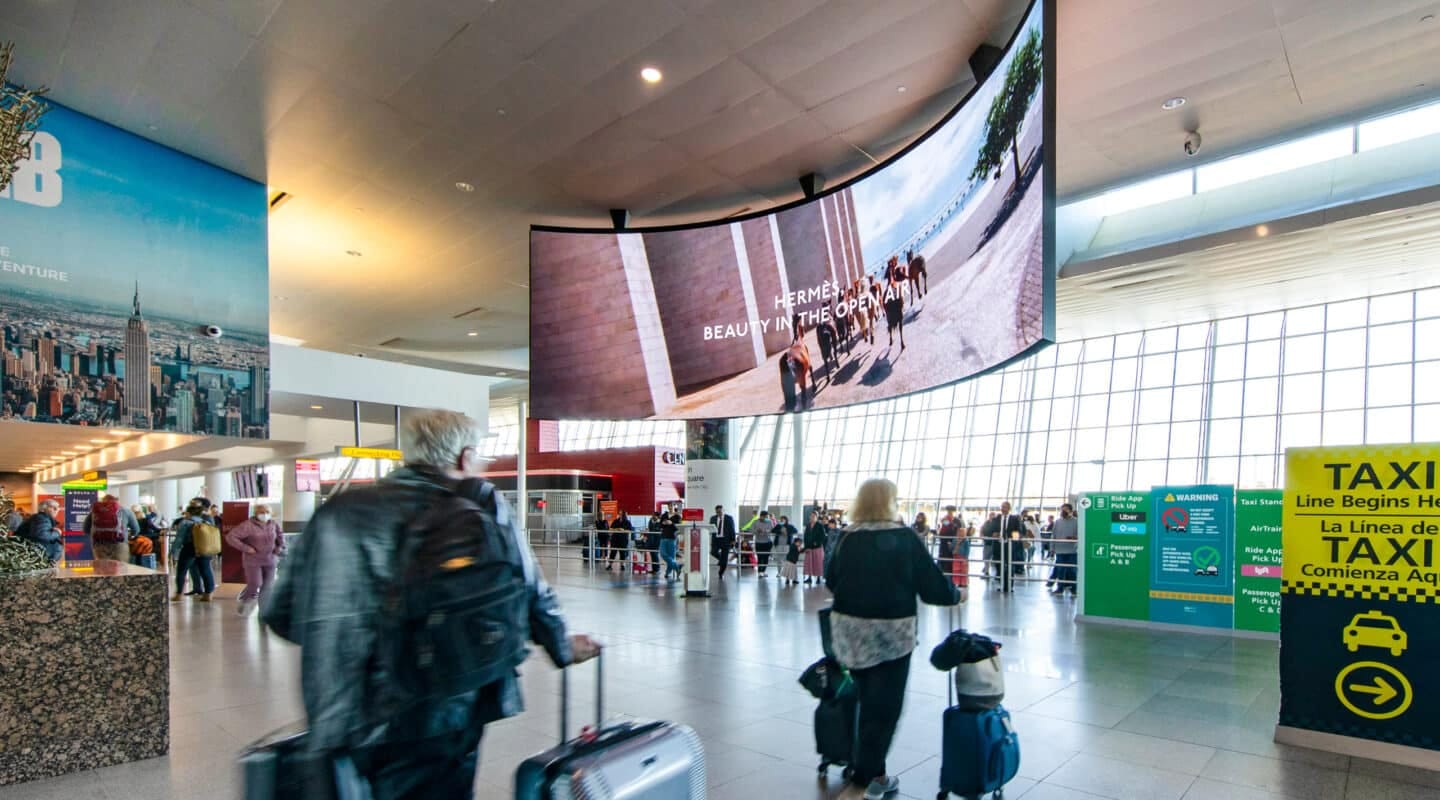
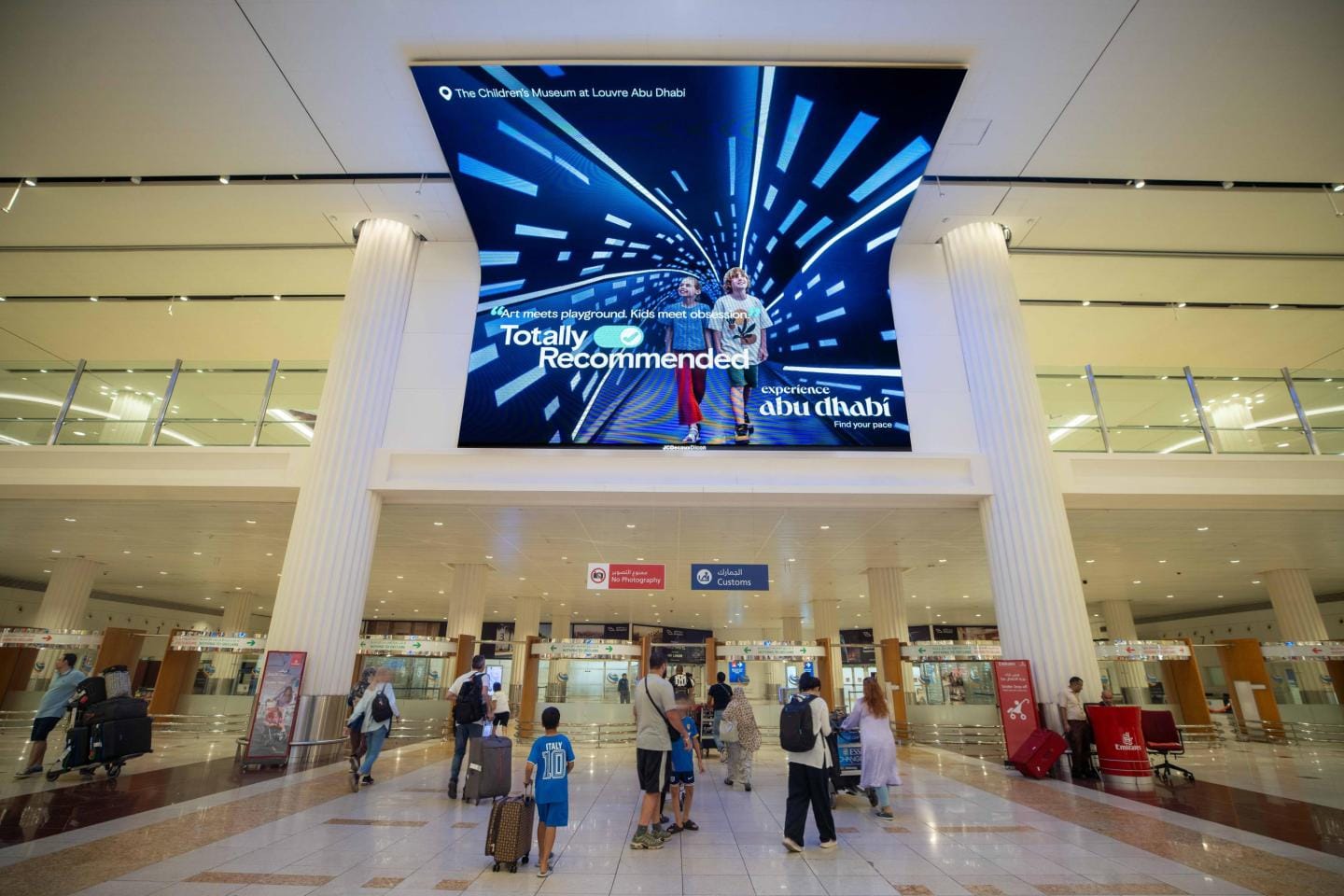
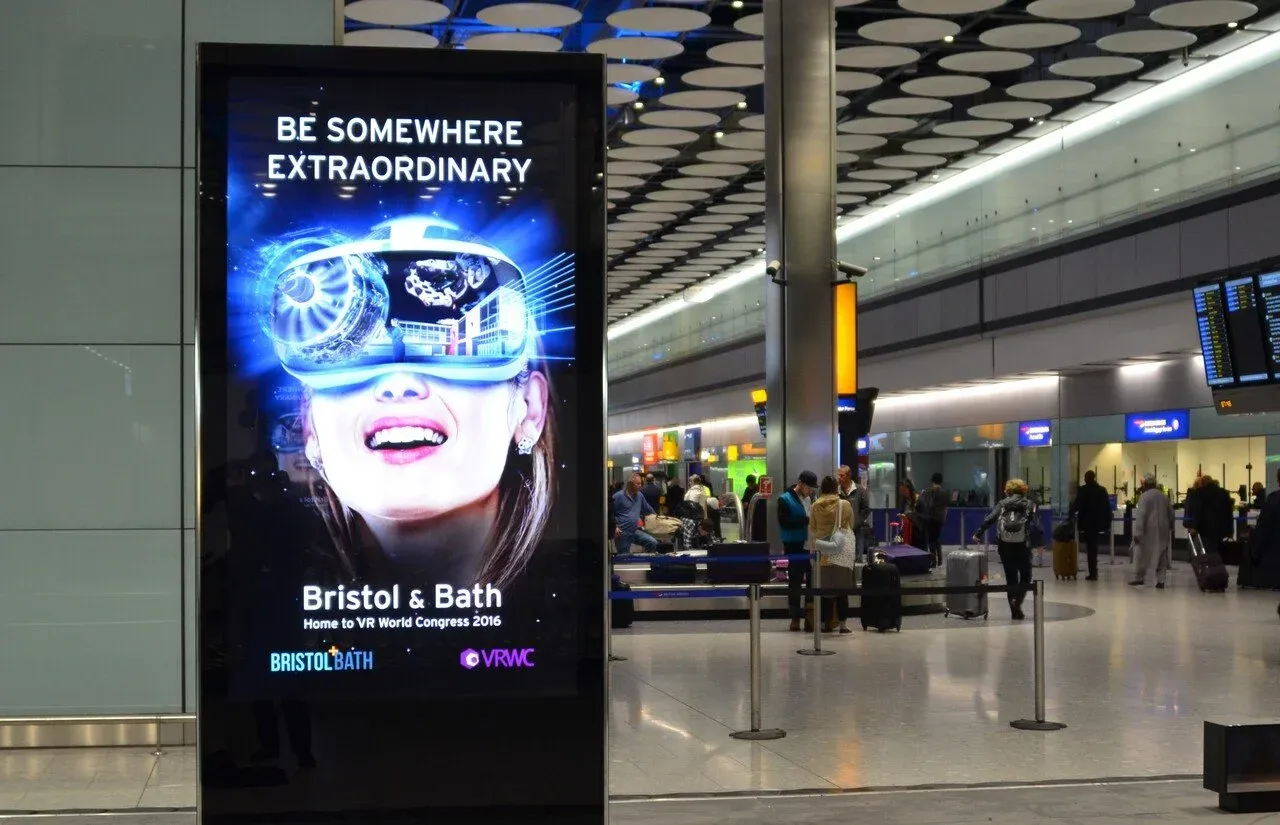
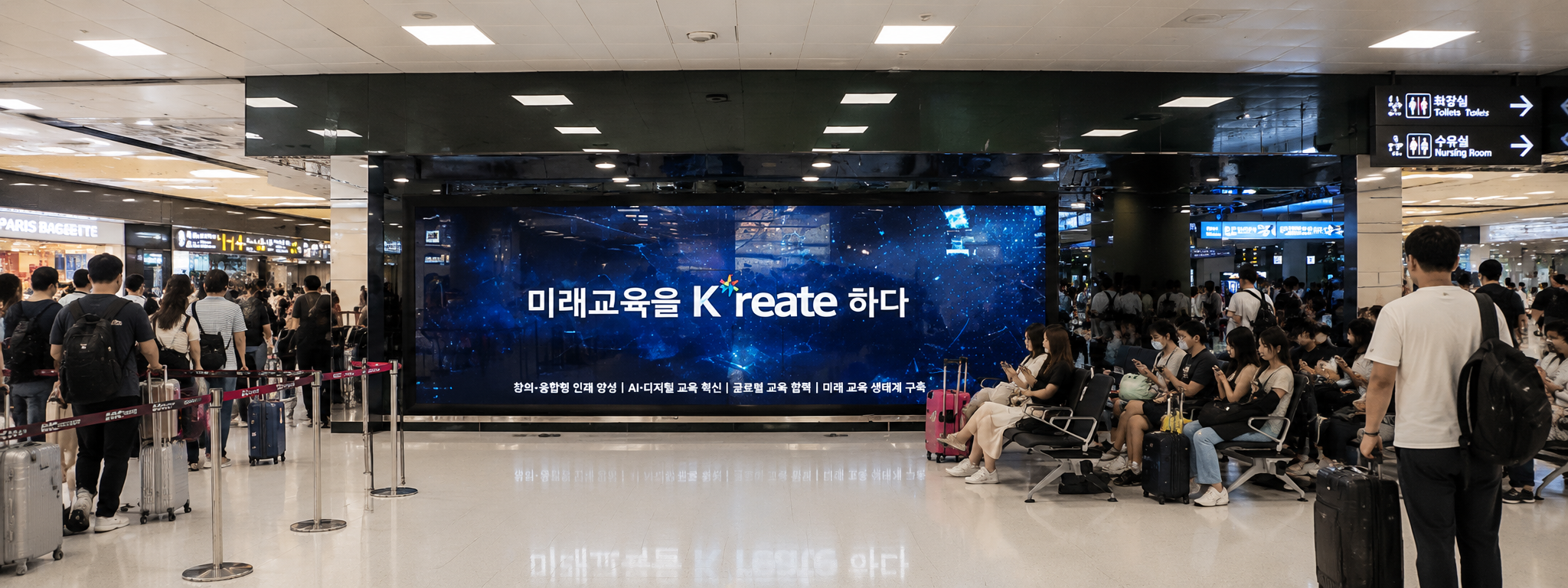
- CJU's single terminal structure concentrates all domestic and international passenger flows through a unified commercial media environment whose compact design relative to Incheon's mega-terminal scale allows brand campaigns to achieve strong visual dominance and passenger attention capture within defined sequential zones from check-in through retail to departure gates
- The leisure tourism context that defines every passenger's reason for being at CJU creates a media engagement environment whose emotional openness and relaxed pace dramatically increases advertising attention quality relative to commercial business hub airports; the passenger departing CJU has just completed a premium leisure experience and is in the most positive emotional state of their entire Korean domestic travel cycle, creating a brand recall environment whose emotional charge exceeds any other Korean domestic airport context
- The duty-free and specialty retail corridor's commercial intensity at CJU creates an advertising environment where brand presence within or adjacent to the retail zone achieves direct purchase facilitation rather than mere brand awareness building; the CJU shopper is in active purchasing mode, and advertising in the retail corridor influences specific product selection within categories the passenger has already committed to purchasing
- Masscom Global has established inventory access and campaign execution capability at Jeju International Airport, with local market knowledge of the terminal's commercial flow patterns, the seasonal tourism peak intensity variations, and the Korean cultural context that distinguishes effective Jeju market advertising from generic Korean domestic campaign templates
Strategic Advertising Fit
Best Fit
- Korean luxury cosmetics, K-beauty, and premium skincare brands: The most naturally aligned category at CJU; the K-beauty purchase is simultaneously a personal luxury, a culturally obligatory homecoming gift, and a social signal whose triple commercial motivation creates the highest per-passenger category conversion rate at this airport; both domestic Korean brands and international brands with Korean market positioning find exceptional return at CJU
- Luxury goods, fashion, and premium accessories: Jeju's duty-free environment and the Korean HNWI tourist's gift and luxury purchasing commitment create the strongest per-passenger luxury goods conversion context of any Korean domestic airport; departing tourists with unfilled duty-free quotas represent a captive luxury purchasing audience whose decision is practical rather than aspirational
- Premium food, specialty beverages, and Korean gastronomy brands: Jeju's extraordinary specialty food culture — Hallabong tangerine, black pork, Jeju green tea, honey, and premium agricultural products — creates a specialty food commercial ecosystem at CJU whose product authenticity and gifting value generate strong per-passenger retail spending; national premium food brands and international premium beverage brands find a gifting-motivated purchasing audience at CJU whose transaction values are consistent and high
- Luxury hospitality and premium travel brands: The MICE executive and HNWI honeymoon couple at CJU are already premium hospitality consumers in the process of completing one experience and planning their next; luxury resort brands, premium airline products, cruise lines, and international hotel chains find a commercially motivated, experience-seeking audience at CJU whose next premium travel decision is actively forming in the departure hall
- Premium outdoor and active lifestyle brands: Hallasan hiking culture, Olle Trail walking tourism, and Jeju's natural heritage outdoor experience create a premium outdoor lifestyle brand audience whose purchasing for future natural experiences is motivated by the current island experience; Gore-Tex, premium hiking gear, outdoor photography, and wellness lifestyle brands achieve strong brand-experience alignment at CJU
- Korean cultural lifestyle brands and home décor: The K-culture wave's global commercial extension into home lifestyle, ceramics, premium stationery, and cultural design products finds its most concentrated culturally receptive audience at CJU, where the island's artisan economy and UNESCO heritage aesthetic create a consumer mindset specifically aligned with premium Korean cultural design categories
- Premium automotive brands: The corporate MICE executive and Seoul HNWI professional at CJU represent Korea's premium automotive purchasing class; luxury German, premium Korean domestic, and aspirational Japanese automotive brands find a commercially productive target audience in the frequent Seoul-Jeju corporate traveller whose vehicle decisions reflect the highest income tier of the Korean professional middle class
- International real estate in Japan, Thailand, and Australia: Korean HNWI leisure travellers at Jeju are in the most emotionally relaxed and lifestyle-investment-receptive mindset of their domestic travel cycle; international resort and lifestyle real estate brands whose product proposition extends the Jeju island living experience to international locations find an unusually receptive CJU audience
Brand Alignment at a Glance
| Category | Fit |
|---|---|
| K-Beauty and Premium Cosmetics | Exceptional |
| Luxury Goods and Duty-Free | Exceptional |
| Specialty Food and Premium Beverages | Exceptional |
| Luxury Hospitality and Travel | Strong |
| Premium Outdoor Lifestyle | Strong |
| Korean Cultural Lifestyle Brands | Strong |
| Premium Automotive | Strong |
| International Lifestyle Real Estate | Strong |
| Industrial B2B Brands | Poor fit |
Who Should Not Advertise Here
- Industrial B2B and heavy manufacturing brands: CJU's passenger base is almost entirely leisure travellers and MICE delegates in a deliberately relaxed professional context; industrial equipment, construction materials, petrochemical technology, and heavy industrial services have no viable audience at an airport whose commercial identity is built entirely on leisure, gastronomy, natural beauty, and premium Korean cultural experience
- Budget and price-led consumer brands: The Korean leisure consumer at Jeju has specifically chosen a premium destination and arrived with a premium spending commitment; budget positioning is not merely ineffective at CJU but actively undermines brand quality perception with an audience whose Jeju journey is itself a premium social signal; every purchasing decision at CJU is made within a framework of social quality consciousness that makes price-led messaging commercially counterproductive
- Non-Korean-relevant international B2B services: Legal, financial, and consulting services designed for non-Korean commercial contexts with no relevance to Korean domestic or Korean-international market activity will find no viable conversion audience among CJU's leisure and MICE-dominated passenger base
Event and Seasonality Analysis
| Factor | Rating |
|---|---|
| Event Strength | High |
| Seasonality Strength | High |
| Traffic Pattern | Quad-Peak Seasonal with Year-Round Domestic Leisure Baseline |
Strategic Implication
Advertisers at CJU should structure campaigns around four seasonally distinct investment windows, each with a specific audience profile and purchasing intent character. The cherry blossom season from late March to early April delivers Korea's most emotionally elevated domestic tourism audience at maximum social media engagement intensity and is the optimal window for premium lifestyle, cosmetics, and specialty food brand activation. The summer holiday peak from July through August delivers the year's highest volume domestic family tourism audience with maximum per-party leisure and specialty product spending. The autumn foliage season in October delivers the most aesthetically sophisticated and premium outdoor lifestyle-oriented audience of the four seasonal peaks. The winter honeymoon and New Year window from December through February delivers the year's most concentrated luxury hospitality, jewelry, and romantic brand purchasing intent. Masscom structures CJU campaigns to layer brand presence across all four seasonal peaks within an integrated annual strategy that exploits both the sustained domestic leisure baseline and the specific purchasing intent characteristics of each seasonal wave, delivering the combination of year-round brand recall and seasonal conversion maximisation that Korea's most commercially productive domestic leisure airport uniquely enables.

Poor Placement and Delays Affect Airport Campaigns
We help you move faster, access better inventory, and get it right now.
Talk to an ExpertFinal Strategic Verdict
Jeju International Airport is the most commercially distinctive leisure aviation gateway in Northeast Asia and the only Korean airport where every passenger has specifically chosen a premium island experience as their journey purpose, arriving and departing in the most emotionally open, purchasing-committed, and brand-receptive mindset of their entire Korean domestic travel cycle. With 16.7 million passengers, a HNWI Score of High, and a commercial infrastructure that has been optimised over decades for the specific purchasing behaviour of Korea's most aspirational domestic tourists, CJU offers premium brands — from K-beauty to luxury hospitality to international lifestyle real estate — access to a consumer audience whose purchasing motivation is not aspirational but committed, not spontaneous but culturally obligated, and not diminishing but structurally growing as Jeju's international profile expands through K-culture tourism, Chinese visitor recovery, and Southeast Asian Hallyu wave travel. The cherry blossom tourist, the honeymooning couple, the chaebol corporate retreater, and the Chinese K-culture pilgrim all pass through a single terminal whose entire commercial geometry is designed for the kind of premium leisure purchasing that every brand targeting Korea's HNWI class needs to intercept. Masscom Global provides the local intelligence, Korean market expertise, and campaign execution precision to make that interception commercially decisive for your brand, starting now.
About Masscom Global
Masscom Global is a premium international airport advertising and media buying agency operating across 140 countries. With deep expertise in airport OOH, premium publications, and high-net-worth audience targeting, Masscom helps brands reach the world's most valuable travellers at the moments that matter most. For advertising packages, media rates, and campaign planning at Jeju International Airport and airports across the globe, contact Masscom Global today.
Frequently Asked Questions
How much does airport advertising cost at Jeju International Airport? Advertising costs at Jeju International Airport vary based on format type, placement zone within the terminal, campaign duration, and seasonal demand. The cherry blossom season from late March to early April, the summer holiday peak from July through August, and the winter honeymoon season from December through February represent the highest competitive demand windows whose premium inventory should be secured well in advance. Duty-free corridor adjacencies, arrivals hall placements, and the specialty retail zone command premium positioning rates that reflect the extraordinary per-passenger retail spending conversion value of CJU's leisure tourism context. Contact Masscom Global for current rate cards, available inventory, and campaign packages calibrated to your budget and seasonal objectives.
Who are the passengers at Jeju International Airport? CJU's 16.7 million annual passengers are overwhelmingly Korean nationals from the Seoul metropolitan area, with significant secondary domestic origin bases in Busan, Daegu, and other Korean regional cities. The dominant travel purpose is premium leisure including honeymoon and anniversary travel, family summer holiday, corporate MICE retreat, and seasonal nature tourism. International passengers include Chinese tourists returning to Jeju as China-Korea tourism normalises, Japanese leisure tourists, and rapidly growing Southeast Asian K-culture tourists from Thailand, Singapore, and Vietnam. The Korean domestic HNWI professional and upper-middle-class leisure consumer represents the highest commercial value passenger segment.
Is Jeju International Airport good for luxury brand advertising? It is Korea's most commercially productive domestic airport for luxury brand conversion, specifically because the combination of duty-free purchasing motivation, Korean cultural gift-giving obligation, and the premium leisure context that makes every CJU passenger a pre-committed spender creates conversion conditions that no other Korean domestic airport replicates. K-beauty, luxury goods, premium specialty food, and high-end lifestyle brands all achieve stronger per-passenger retail conversion rates at CJU than at equivalent Korean commercial airports because the purchase motivation is simultaneously personal luxury, social gift obligation, and emotional experience enhancement rather than any single consumer trigger alone.
What is the best airport in South Korea to reach the leisure HNWI and premium tourism audience? Jeju International Airport is the definitive answer for leisure HNWI and premium domestic tourism. Incheon International Airport serves a larger international passenger volume and the premium business travel and outbound tourism audience, making it the complementary buy for brands targeting both domestic leisure and international outbound Korean travellers. For brands specifically targeting the Korean domestic premium leisure consumer in their most emotionally receptive and purchasing-committed mindset, CJU delivers audience quality that Incheon's more commercially diverse international hub context cannot replicate.
What is the best time to advertise at Jeju International Airport? Four seasonally distinct peak windows each deliver specific high-return advertising opportunities. The cherry blossom window from late March to early April delivers maximum emotional intensity and premium lifestyle brand receptiveness. The summer family holiday from July through August delivers the year's highest volume premium family consumer audience. The autumn foliage season in October delivers the most culturally sophisticated premium outdoor and food brand audience. The winter honeymoon and New Year window from December through February delivers the year's most concentrated luxury hospitality and romantic brand purchasing intent. Masscom recommends a year-round presence strategy with peak-specific creative and format variations across all four seasonal windows.
Can international real estate developers advertise at Jeju International Airport? International lifestyle real estate advertising at CJU performs most effectively for markets whose product proposition extends or enhances the premium island living experience that the Jeju journey represents. Japan's Hokkaido and coastal properties, Thailand's Phuket resort market, and Australia's Gold Coast residential market all find a Korean HNWI audience at CJU whose leisure mindset makes international lifestyle real estate advertising more emotionally accessible than in the professional daily commuting context of Seoul's urban airports. The CJU departure environment's positive emotional charge creates the specific consumer openness to lifestyle investment brand engagement that international real estate requires for meaningful conversion discussion initiation.
Which brands should not advertise at Jeju International Airport? Industrial B2B and heavy manufacturing brands have no viable audience at an airport whose entire passenger base is leisure-motivated and whose commercial environment is calibrated entirely to premium tourism, gastronomy, and K-lifestyle experiences. Budget and price-led consumer brands are fundamentally misaligned with a premium leisure consumer whose Jeju journey is itself a social prestige signal and whose purchasing decisions are made within a quality consciousness framework that makes low-price positioning commercially counterproductive. Non-Korean-relevant international B2B services with no connection to Korean domestic or Korean-international commercial contexts will find zero viable conversion among CJU's leisure-dominated passenger community.
How does Masscom Global help brands advertise at Jeju International Airport? Masscom Global provides the Korean market intelligence, Jeju leisure economy commercial expertise, seasonal calendar precision, inventory access, and campaign execution capability that brands need to perform effectively at Korea's most commercially productive and emotionally distinctive domestic leisure airport. We understand the four-peak seasonal commercial character of CJU's calendar, the Korean cultural purchasing psychology that creates the gift-giving and duty-free spending intensity unique to this terminal, the MICE corporate retreat audience's specific commercial receptiveness, and the creative calibration standards that distinguish effective Jeju market advertising from generic Korean domestic campaign templates. We execute campaigns with the cultural precision and local knowledge that Korea's competitive advertising market demands and deliver the placement quality that CJU's premium leisure audience specifically rewards. Contact Masscom Global today to begin planning your campaign at Jeju International Airport.