




Airport at a Glance
| Field | Detail |
|---|---|
| Airport | New Islamabad International Airport |
| IATA Code | ISB |
| Country | Pakistan |
| City | Islamabad |
| Annual Passengers | Approximately 6 million (2022-23) |
| Primary Audience | Government and diplomatic travelers, Gulf diaspora, HNW business executives |
| Peak Advertising Season | May to September, November to January |
| Audience Tier | Tier 1 |
| Best Fit Categories | International real estate, financial services, luxury goods, education abroad, travel and hospitality |
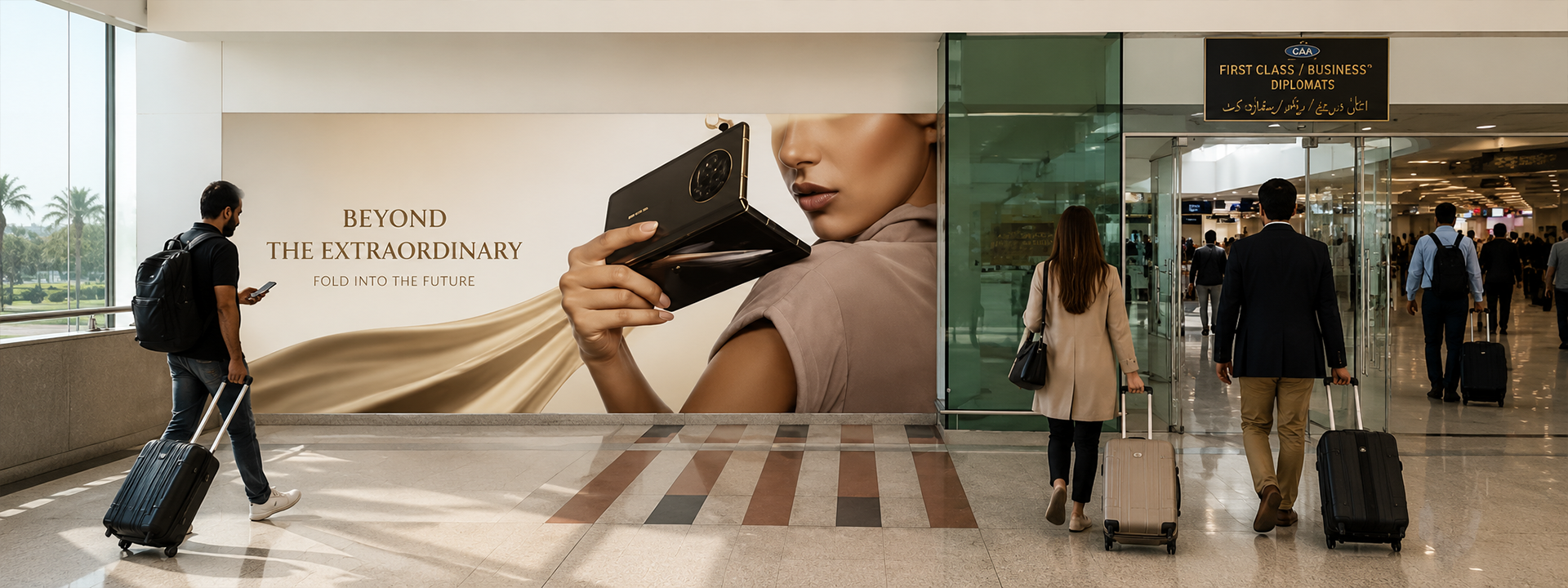
New Islamabad International Airport is not simply Pakistan's third-largest airport by volume. It is the country's most strategically positioned aviation asset, serving the federal capital, the seat of military command, the full diplomatic corps, and a catchment region that generates some of the highest outbound wealth flows in South Asia. For advertisers targeting decision-makers, internationally mobile consumers, and families with direct financial ties to the Gulf and the United Kingdom, ISB represents an access point that no other airport in Pakistan can replicate. The audience here is defined not just by where they are going, but by what they control and what they spend.
The Rawalpindi-Islamabad twin city corridor anchors one of Pakistan's most economically dense urban formations, combining federal government headquarters, the Pakistan Army's General Headquarters, a mature commercial real estate market, and a rapidly expanding technology and services sector. The catchment extends into Azad Kashmir, the Punjab heartland, and the Khyber Pakhtunkhwa frontier, pulling together populations with deep ties to the Gulf labour economy, British diaspora networks, and an increasingly affluent urban professional class. For brands seeking reach into Pakistan's most powerful audience segment, ISB is the entry point.


Advertising Value Snapshot
- Passenger scale: Approximately 6 million annually (2022-23), with capacity headroom of 9 million as the airport continues to mature post-COVID
- Traveller type: Government officials and diplomats, Gulf-bound migrant workers and their families, HNWI business executives, British Pakistani diaspora, inbound corporate and tourism visitors
- Airport classification: Tier 1 — national capital airport with diplomatic primacy, premium dwell environment, and concentrated high-value audience
- Commercial positioning: Pakistan's federal capital hub, anchoring the country's most powerful institutional and political audience alongside one of its most remittance-intensive catchment regions
- Wealth corridor signal: Positioned at the intersection of the Islamabad-Rawalpindi growth corridor, the Azad Kashmir diaspora remittance belt, and the Pakistan-Gulf labour and wealth transfer channel
- Advertising opportunity: Masscom Global holds access to ISB's full inventory environment and brings the campaign intelligence, local execution capability, and audience-mapping precision that international advertisers need to maximise return in Pakistan's capital market
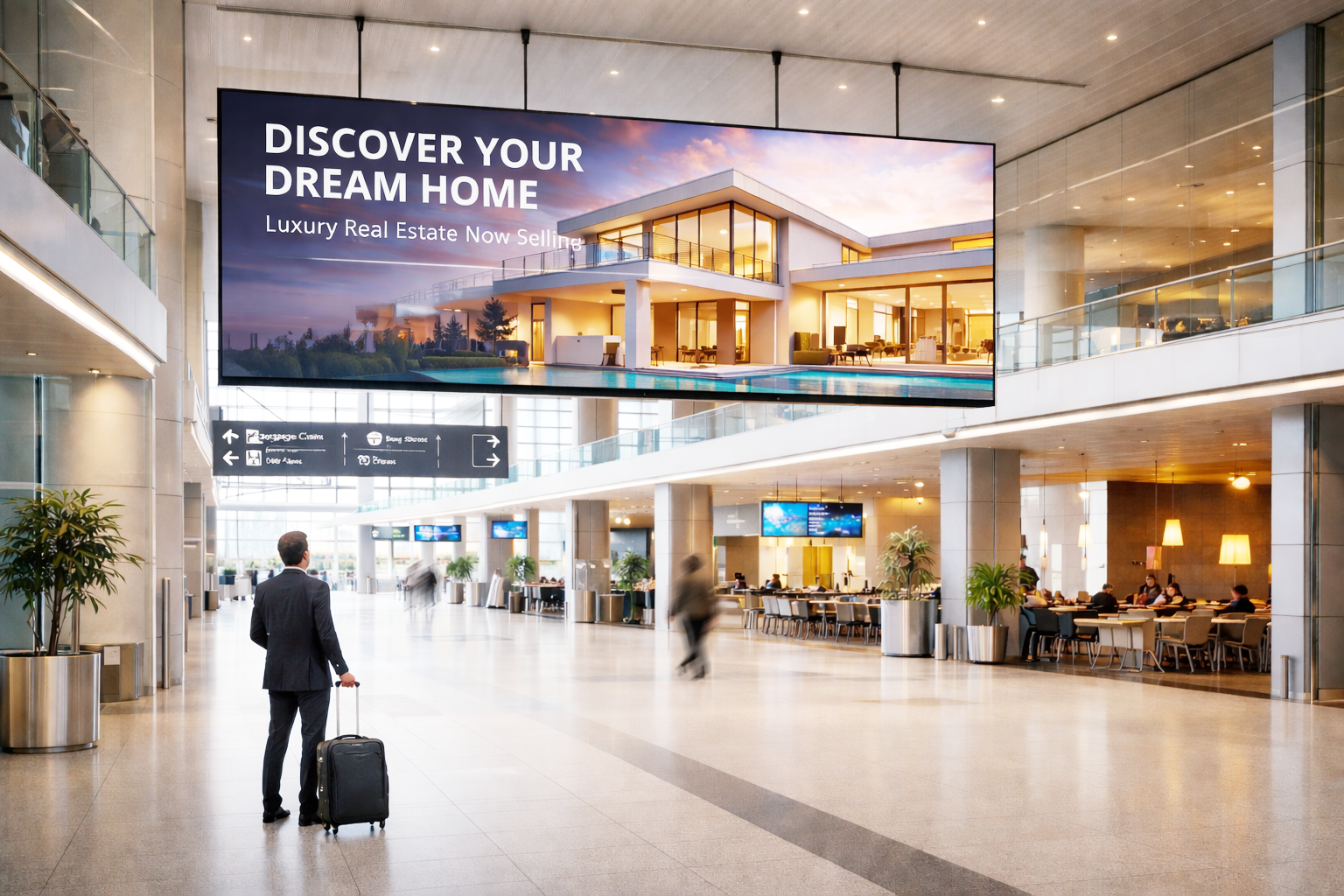
Airport Advertising is Complex to Get Right
We help you execute faster, with proven results and local insight most planners lack starting now.
Talk to an ExpertCatchment Area and Economic Drivers
Top 10 Cities within 150 km — Marketer Intelligence:
- Rawalpindi: The commercial engine of the twin city, home to Pakistan Army GHQ, a major wholesale and retail bazaar economy, and a dense middle-to-upper-income residential population with strong Gulf remittance inflows and consistent spending on electronics, apparel, and financial products.
- Taxila: A UNESCO World Heritage site city with a parallel industrial identity — home to Heavy Industries Taxila and a significant defence manufacturing workforce whose families represent a stable, government-salary consumer base with predictable spending on insurance, education, and household durables.
- Wah Cantonment: Anchored by the Pakistan Ordnance Factories, Wah produces a concentrated population of defence-sector professionals and their families — salaried, urbanising, and increasingly aspirational, with demand for banking services, automobiles, and consumer electronics.
- Murree: Pakistan's most visited hill resort, drawing upper-middle and premium domestic tourists from across Punjab and Islamabad, with high spending on leisure, hospitality, and real estate investment in second-home properties.
- Attock: A refinery city at the strategic junction of the Grand Trunk Road and the Indus River, producing a blend of petroleum-sector employees and agricultural landowners with accumulated wealth and strong interest in property and financial products.
- Chakwal: One of Pakistan's most remittance-dense districts, with a significant overseas Pakistani population in Gulf countries and a domestic audience with above-average disposable income from repatriated earnings — particularly receptive to real estate, gold, and investment products.
- Haripur: A rapidly industrialising city on the CPEC corridor with an active Special Economic Zone, generating a growing business-owner class and industrial workforce with increasing consumption of financial services, branded goods, and education.
- Jhelum: A classic overseas Pakistani origin district with large populations working in Gulf countries and the UK, resulting in high remittance flows, a strong housing investment culture, and receptiveness to premium home furnishing, auto, and banking brands.
- Abbottabad: A garrison and university city combining a large military officer community, a significant student population from across KPK and beyond, and a growing residential real estate market — high relevance for education, healthcare, and financial services advertisers.
- Mirpur (AJK): Nicknamed "Little England" for its extraordinary concentration of British Pakistani returnees and dual nationals, Mirpur generates disproportionate outbound travel through ISB, delivering an audience with UK-scale purchasing power and strong demand for luxury goods, international education, and cross-border real estate products.
NRI and Diaspora Intelligence:
The overseas Pakistani community is one of the world's largest diaspora populations, estimated at over 9 million, with the heaviest concentrations in Saudi Arabia, the UAE, the United Kingdom, Canada, and the United States. The ISB catchment is uniquely positioned within this global network because the Rawalpindi, Jhelum, Chakwal, and Mirpur populations account for a disproportionate share of British and Gulf-based Pakistanis. Remittance inflows to this catchment are among the highest per-capita in the country, and returning diaspora members travel through ISB with purchasing power that reflects income earned in sterling, dirhams, and dollars rather than rupees. This audience is actively shopping for international real estate, second residency programmes, private education, and luxury consumer goods — and they are most commercially receptive at the airport, at the precise moment of transit.
Economic Importance:
The Islamabad-Rawalpindi corridor is the nerve centre of Pakistan's federal administration, defence industry, diplomatic community, and a rapidly expanding information technology sector. The concentration of government institutions, military commands, regulatory bodies, and foreign missions creates a permanent, high-income professional class that does not fluctuate with economic cycles the way that private-sector cities do. This structural stability translates into a dependable premium audience for advertisers — one that commands salaries, allowances, and institutional budgets that are insulated from rupee depreciation and inflation pressures affecting broader consumer markets.
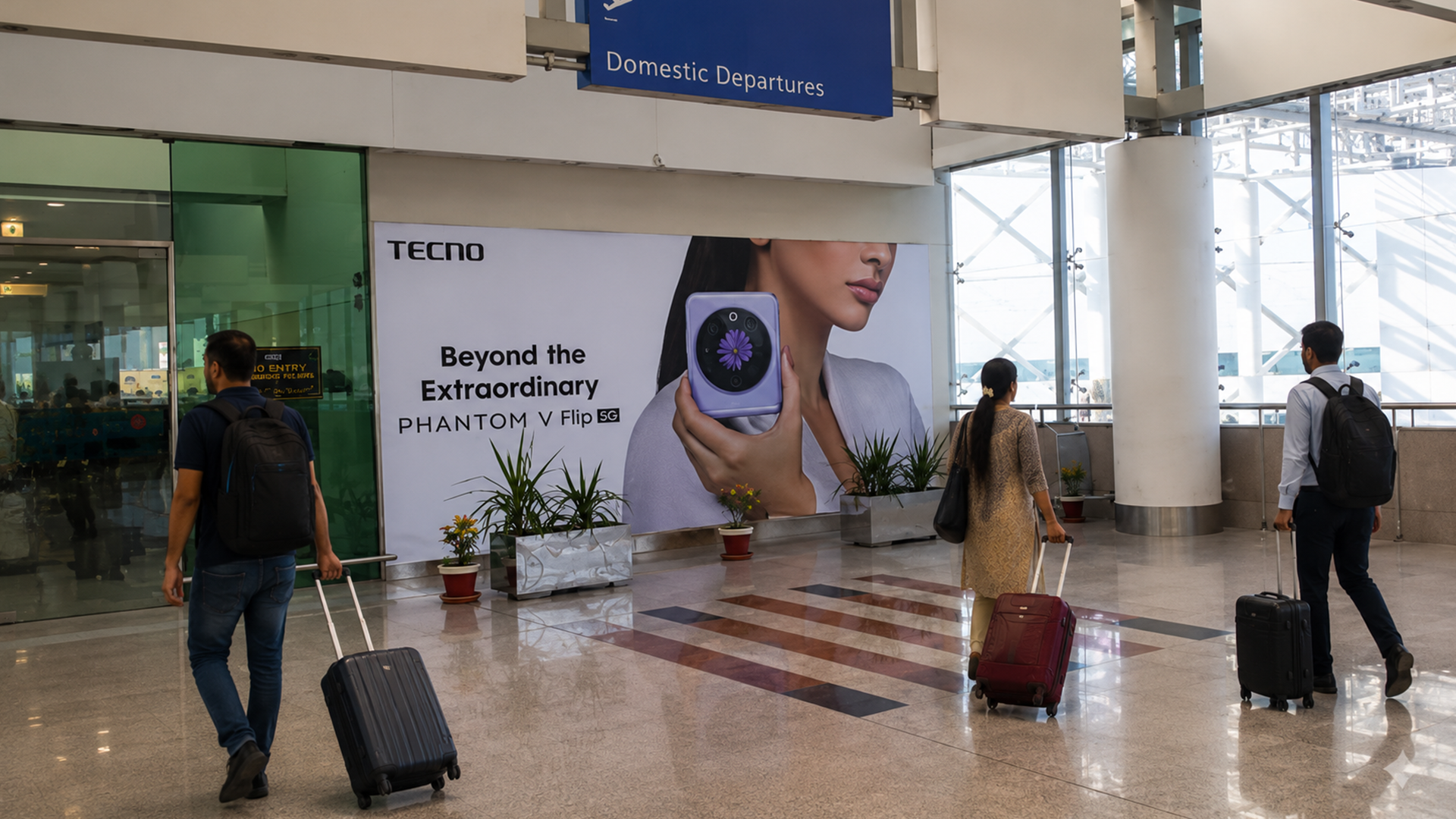
Business and Industrial Ecosystem
- Federal government ministries and regulatory agencies concentrated in Islamabad produce a senior civil service audience with institutional buying power and premium personal consumption habits
- Pakistan Army General Headquarters in Rawalpindi generates a large population of serving and retired senior officers — a community with structured pension income, strong real estate investment behaviour, and loyalty to premium brands
- The Islamabad Software Technology Park and emerging technology corridors are producing a new generation of tech entrepreneurs and remote-income earners with international consumption patterns and strong demand for global financial products
- Pakistan Ordnance Factories (Wah) and Heavy Industries Taxila create a stable defence-industrial workforce catchment with consistent demand for housing finance, insurance, and consumer durables
Passenger Intent — Business Segment:
Business travelers at ISB are overwhelmingly drawn from the federal government, defence services, diplomatic missions, private consultancies, and the technology and real estate sectors. They travel to Gulf financial hubs, European capitals, and Asian markets for policy meetings, investment negotiations, and bilateral engagements. Advertiser categories that intercept them most effectively include international banking and wealth management, premium hospitality, B2B financial technology, business travel services, and luxury goods positioned around professional status and global connectivity.
Strategic Insight:
The business audience at ISB carries institutional authority that is uncommon at airports of comparable passenger volume. These are not simply corporate professionals — they are individuals whose decisions influence national procurement, regulatory frameworks, international agreements, and investment policy. For B2B brands, international financial institutions, and high-value service providers, the ability to reach this audience in a premium dwell environment before international departure is an opportunity with no equivalent channel in Pakistan.
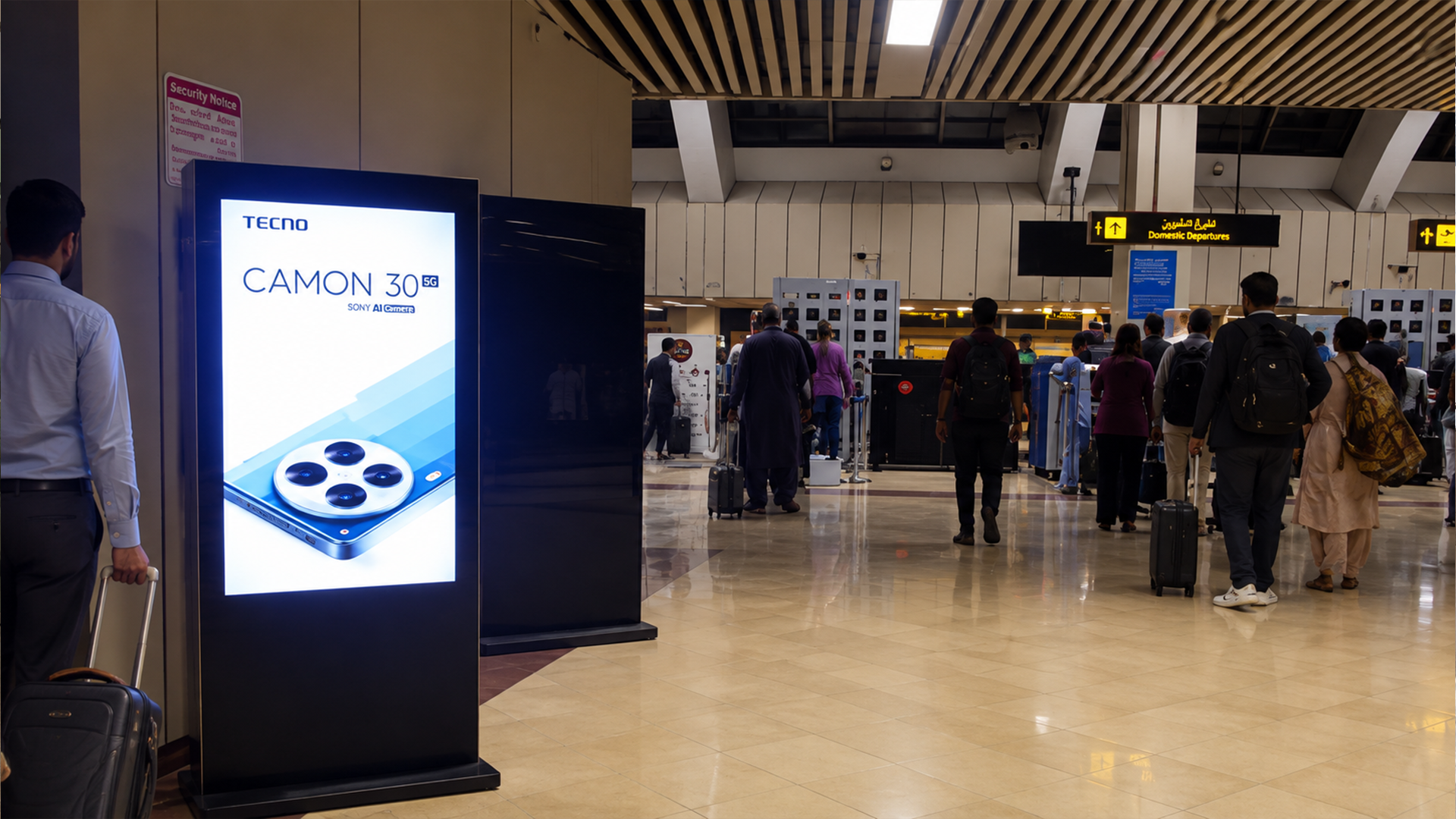
Tourism and Premium Travel Drivers
- Murree Hills and the Galiyat region draw Pakistan's most affluent domestic leisure travellers, concentrated particularly in summer months, with high spending on hospitality, real estate, and recreational goods
- Taxila's Buddhist archaeological complex is a UNESCO World Heritage Site attracting high-value heritage tourists from Japan, South Korea, Sri Lanka, and European countries — an internationally mobile, culturally sophisticated visitor segment
- Margalla Hills National Park and Faisal Mosque, among the world's largest mosques, drive both domestic religious tourism and significant inbound visitors from the Islamic world, particularly Gulf nationals and Central Asian travelers
- Khewra Salt Mine and Rohtas Fort (a UNESCO World Heritage Site near Jhelum) contribute to a growing heritage and adventure tourism corridor, attracting premium domestic and international visitors who have committed meaningful leisure expenditure
Passenger Intent — Tourism Segment:
Tourism-oriented travelers using ISB are disproportionately concentrated in the upper-income domestic leisure segment and inbound visitors from Gulf countries and the Pakistani diaspora. They have pre-committed to accommodation, transport, and leisure spending, and arrive at the airport in a high-receptivity state for luxury retail, travel accessories, premium food and beverage, and destination-branded experiences. International advertisers targeting leisure-motivated high-net-worth consumers — including resort hospitality brands, cruise operators, premium auto brands, and jewellery retailers — will find this audience meaningfully sized and commercially accessible.
Travel Patterns and Seasonality
Peak seasons:
- May to September: Domestic summer travel to hill stations (Murree, Nathia Gali, Shogran) peaks sharply as Islamabad's intense heat drives leisure departures and inbound arrivals from Gulf-based diaspora returning for family visits
- November to January: Cooler months trigger outbound leisure travel to UAE, Turkey, Malaysia, and Southeast Asia, with strong Gulf diaspora return traffic and the December holiday period generating family and leisure-oriented spikes
- Eid ul Fitr (date varies annually — Lunar calendar): The single largest passenger event of the year, generating intense congestion across domestic and international routes as overseas Pakistanis return home and families travel for reunion
- Eid ul Adha (date varies annually — Lunar calendar): A second major passenger peak driven by family travel, outbound Hajj pilgrims, and livestock-related domestic movement among the agricultural catchment
- Ramadan to Eid window: Pre-Ramadan outbound spikes for Umrah pilgrims are followed by post-Ramadan Eid travel, creating a compressed, commercially intense seasonal corridor lasting 6 to 8 weeks
Event-Driven Movement:
- Hajj Season (Dhul Hijjah — June to July approximately): ISB handles significant Hajj pilgrim traffic, generating a concentrated audience of deeply engaged Muslim consumers at peak religious motivation — strong fit for Islamic banking, luxury Islamic wear, premium dates and food brands, and real estate marketed with proximity to Mecca
- Pakistan Independence Day (August 14): National celebrations drive domestic travel, government events, and a strong nationalist sentiment window with heightened receptiveness to financial, real estate, and consumer brands with Pakistan-pride positioning
- Urs and Shrine Festivals (Multiple dates — particularly at Data Darbar, Bari Imam): Regional shrine festivals within the catchment generate significant inbound travel from across Pakistan and parts of the diaspora, delivering a volume-intensive but devotionally motivated audience segment
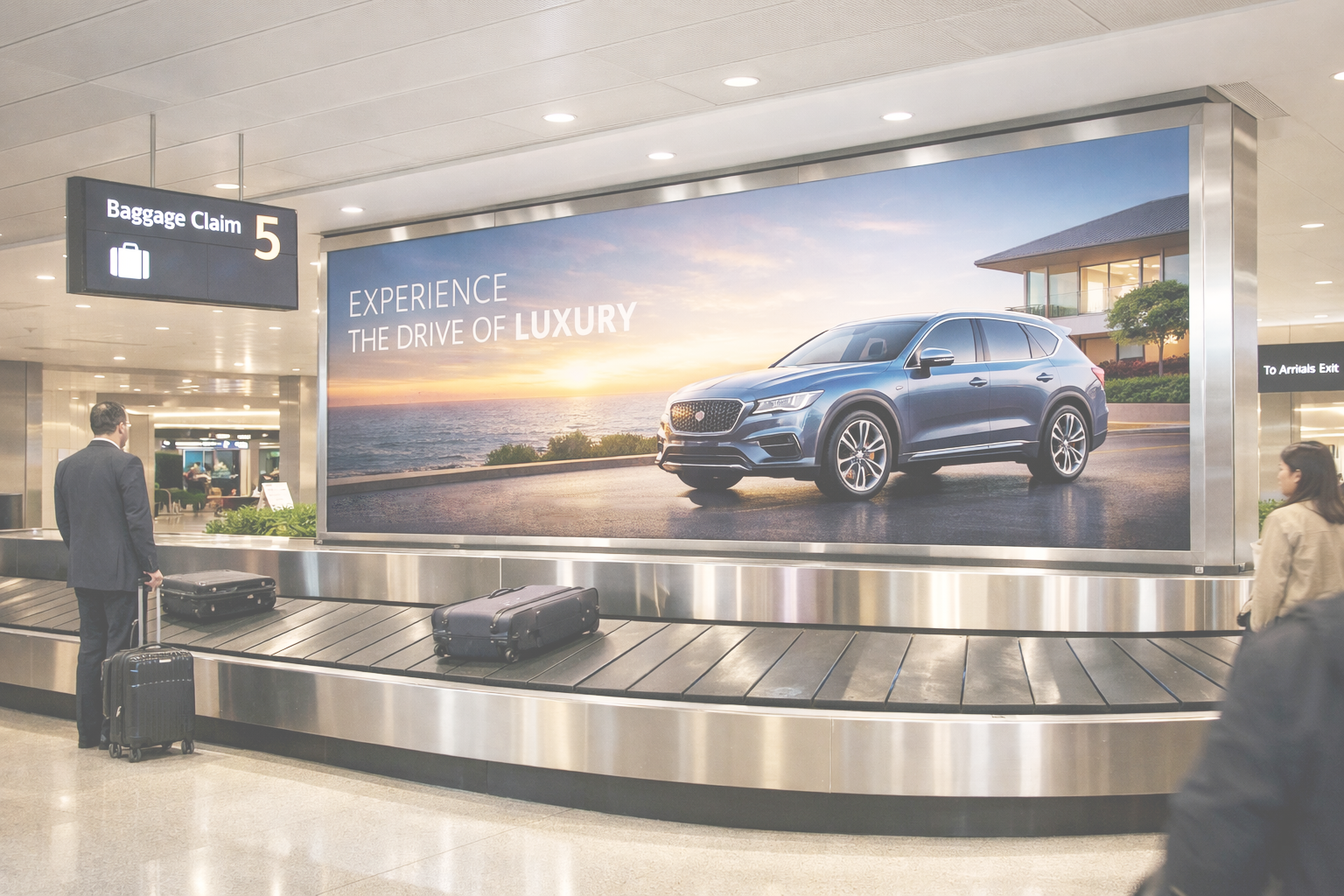
It’s Not Just Where You Advertise - It’s How Fast You Execute
We combine local insight with fast rollout to deliver results for you, now.
Talk to an ExpertAudience and Cultural Intelligence
Top 2 Languages:
- Urdu: Pakistan's national language and the universal medium of commercial communication across ISB's full catchment — campaigns in Urdu achieve maximum reach across all income levels, age groups, and regional backgrounds, making it the non-negotiable primary language for any brand seeking broad penetration
- Punjabi: The dominant mother tongue of the Rawalpindi, Chakwal, Jhelum, and Attock populations, and strongly embedded in the cultural identity of the British Pakistani diaspora community — brands that incorporate Punjabi cultural cues in creative build authenticity and trust signals that Urdu alone cannot deliver
Major Traveller Nationalities:
The dominant traveller nationality at ISB is Pakistani nationals, subdivided into a federal capital professional class, Gulf-based diaspora returnees, British Pakistani dual nationals with roots in the Rawalpindi and Mirpur belts, and a growing domestic leisure segment from across the Punjab and KPK. Inbound international travelers include Gulf nationals (particularly Saudi, Emirati, and Qatari visitors for business and religious tourism), Central Asian delegations, Chinese nationals associated with CPEC-linked projects, and Western diplomatic and NGO personnel based in the capital. For campaign creative and targeting, the Pakistani-diaspora segment requires a dual register — messaging that bridges the emotional connection to Pakistan with the purchasing norms and premium expectations of Western and Gulf consumer markets.
Religion — Advertiser Intelligence:
- Islam (approximately 97%): The dominant faith across the entire catchment, structuring the annual calendar around Eid ul Fitr, Eid ul Adha, Ramadan, and the Hajj-Umrah cycle — Ramadan creates a powerful consumer activation window with elevated spending on food, gifting, apparel, and charitable financial products; Eid periods drive the single highest passenger volumes of the year alongside peak retail spending; Hajj and Umrah seasons drive premium spending on travel, religious wear, food from the holy cities, and real estate in Saudi Arabia from the devout HNWI segment
- Christianity (approximately 3%): A small but commercially significant minority concentrated in urban Islamabad and Rawalpindi, with above-average professional incomes in NGO, diplomatic mission, and private-sector roles — relevant for December holiday and Easter period campaigns targeting premium urban consumers
- Ahmadiyya and Shia minorities (small percentages, exact data not available): Economically active urban minorities with professional and business-owner profiles, relevant to financial services, education, and technology advertisers targeting Islamabad's cosmopolitan professional class
Behavioral Insight:
The ISB audience makes purchasing decisions through a combination of social proof, status alignment, and family consensus — individual high-net-worth spending is strongly influenced by peer community norms, particularly within the defence officer, senior civil servant, and overseas Pakistani returnee segments. Messaging that emphasises prestige, security, and legacy resonates significantly more than price-led or value-driven creative. International brands that demonstrate commitment to Pakistan through localised creative, Urdu communication, and visible cultural respect consistently outperform those that deploy generic global campaigns without adaptation.
Outbound Wealth and Investment Intelligence
The outbound passenger at ISB represents one of South Asia's most commercially compelling wealth deployment profiles. Unlike airports where outbound traffic is primarily leisure-driven, ISB sends a significant share of its high-net-worth passengers on journeys with active capital objectives — property acquisition, business expansion, education investment, and residency planning in markets that offer tax efficiency, political stability, or citizenship pathways. The combination of government-income stability, Gulf remittance inflows, and growing technology-sector wealth creates a multi-layered audience that international brands and investment platforms can access at the precise moment of international mobility.
Outbound Real Estate Investment:
Dubai remains the dominant outbound real estate market for ISB's HNWI audience, driven by the UAE's tax-free environment, strong rental yields, and the comfort of an established Pakistani-Gulf community. Properties in Dubai Marina, Business Bay, and Jumeirah Village Circle are actively marketed to Islamabad's professional and business class. Istanbul has emerged as a strong second destination, particularly following the Turkish government's citizenship-by-investment programme, which attracted significant Pakistani HNW capital with a $400,000 property investment threshold. London properties — particularly in boroughs with established Pakistani communities — remain active targets for British Pakistani returnees traveling through ISB who are managing UK-based assets and family housing alongside Pakistan-based primary residences. International real estate developers advertising at ISB are reaching an audience with active buying intent, verified liquidity, and established investment behaviour in cross-border property markets.
Outbound Education Investment:
The United Kingdom is the primary higher education destination for ISB catchment families, driven by the deep cultural familiarity of the British Pakistani diaspora, the prestige of UK university brands, and the post-study work visa changes that have improved UK's attractiveness for Pakistani students. Canada has grown significantly as a second destination, with Pakistani students now among the top source nationalities for Canadian universities and college programs, driven by clear post-study immigration pathways. Australia, Malaysia (particularly for Islamic-finance and business programs), and the United States represent active secondary destinations. For international universities and education consultancies, ISB's pre-departure environment delivers families in active decision-making mode regarding six-figure education investments.
Outbound Wealth Migration and Residency:
Pakistan's HNWI segment has demonstrated significant demand for second residency and citizenship-by-investment programmes over recent years, driven by both wealth protection and international mobility objectives. Turkey's citizenship-by-investment programme has seen substantial Pakistani uptake. Portugal's Golden Visa programme attracted strong interest before its residential property restriction, with commercial and fund-based routes remaining active. Greece's Golden Visa programme, offering European residency from a lower threshold, has become an increasingly discussed option among Islamabad's professional class. The UAE's long-term residency visa and the Cayman Islands, Singapore, and Malta programmes are discussed within the senior government and business communities as wealth planning tools. Firms offering residency planning, citizenship-by-investment advisory, and offshore financial structuring services will find ISB's first-class and business lounge environment a concentrated access point for Pakistan's most motivated HNWI prospects.
Strategic Implication for Advertisers:
International brands on both sides of the wealth corridor — those selling into Pakistan's aspirational premium market and those offering investment, education, and residency products to Pakistan's outbound capital — should treat ISB as a simultaneous two-directional channel. The same terminal handles inbound decision-makers and outbound wealth-deployers within the same dwell window. Masscom Global is positioned to activate campaigns targeting both flows with precision, ensuring international brands access Pakistan's most commercially significant airport environment with the speed and local intelligence that direct media buying cannot deliver.
Airport Infrastructure and Premium Indicators
Terminals:
- New Islamabad International Airport operates a single, purpose-built terminal spanning approximately 157,000 square metres, designed to accommodate up to 9 million passengers annually — significantly larger and more premium in finish than the Benazir Bhutto International Airport it replaced in 2018, offering extended dwell corridors, high-visibility retail zones, and well-configured advertising placements across arrival and departure flows
- The terminal's domestic and international wings share infrastructure but operate distinct passenger flows, with the international departure hall delivering the highest concentration of premium and outbound HNWI traffic in the most commercially activated zone of the building
Premium Indicators:
- The airport hosts multiple business and premium class lounges operated by PIA and international carriers, with access concentrated among business-class passengers, elite frequent flyers, and diplomatic travelers — the highest-income 10 to 15 percent of ISB's audience transiting through a controlled premium environment
- Private aviation and VIP facilities at ISB serve the political, military, and diplomatic elite traveling on government and charter aircraft — a segment invisible to standard OOH metrics but materially present in the terminal ecosystem
- Adjacent to the airport, the Islamabad premium hospitality corridor includes internationally branded hotels, positioning ISB as a business travel hub where transit passengers with extended layovers or same-day arrivals remain within a commercially accessible radius
- The terminal's modern architecture and international retail environment deliver a brand association premium that is meaningfully elevated compared with Pakistan's older airport infrastructure, providing international luxury brands with an environment that supports premium positioning rather than undermining it
Forward-Looking Signal:
ISB was designed with a second terminal phase in its master plan to increase total capacity significantly as traffic grows with Pakistan's aviation sector liberalisation and new bilateral air service agreements. New international routes, including connections to African markets, Central Asian capitals, and additional European destinations, are in various stages of negotiation, which will expand the nationality diversity of the airport's catchment and introduce new high-spending audience segments into the terminal environment. Masscom Global advises brands planning Pakistan campaigns to enter ISB's advertising environment now, before route expansion and increased competition for premium inventory positions drive both demand and rates upward.
Airline and Route Intelligence
Top Airlines:
Pakistan International Airlines (PIA), AirBlue, Serene Air, Emirates, Qatar Airways, Turkish Airlines, Etihad Airways, flydubai, Air Arabia, Saudi Arabian Airlines, Oman Air, Gulf Air, Air China, Malaysia Airlines, British Airways
Key International Routes:
- Dubai (Emirates, flydubai, PIA) — multiple daily departures, highest frequency international route
- Doha (Qatar Airways, PIA) — daily
- Istanbul (Turkish Airlines, PIA) — daily
- Abu Dhabi (Etihad, PIA) — daily
- Riyadh (Saudia, PIA) — multiple weekly
- Jeddah (Saudia, PIA) — multiple weekly, intensifying during Hajj and Umrah seasons
- Muscat (Oman Air, PIA) — multiple weekly
- London Heathrow and Manchester (PIA, British Airways) — multiple weekly
- Kuala Lumpur (Malaysia Airlines, PIA) — several times weekly
- Beijing (Air China, PIA) — several times weekly
- Sharjah (Air Arabia) — multiple weekly
Domestic Connectivity:
Karachi (KHI), Lahore (LHE), Peshawar (PEW), Quetta (UET), Multan (MUX), Sialkot (SKT) — with Karachi and Lahore commanding the highest domestic frequency and serving both business and diaspora transit flows
Wealth Corridor Signal:
The ISB route network encodes the precise geography of Pakistan's wealth flows. The Gulf corridor — Dubai, Doha, Riyadh, Jeddah, Muscat, Abu Dhabi — is not primarily a leisure route at this airport. It is the arterial channel through which remittances flow, labour contracts are managed, and family wealth is deployed across two continents. The London and Manchester routes deliver and collect Pakistan's most economically integrated Western diaspora. The Istanbul route reflects active citizenship and investment interest in Turkey. The Beijing and Kuala Lumpur routes carry CPEC-linked business and Islamic finance connections. For advertisers, every major route at ISB is simultaneously a wealth transfer channel and an audience intelligence signal.
Media Environment at the Airport
- ISB's single modern terminal concentrates advertising exposure within a defined, manageable dwell environment that avoids the diffusion problem of multi-terminal airports — brands placed in key positions at departure, security, retail, and lounge approaches achieve near-total audience penetration without duplication waste
- Dwell times at ISB are extended by the airport's routing pattern — Gulf-bound flights and international departures require early check-in due to peak-hour congestion and security queuing, regularly pushing effective dwell times to 90 to 150 minutes in the international departure hall
- The terminal's modern retail and food and beverage infrastructure creates a consumer mindset corridor in which passengers move from check-in through security into a commercial environment — advertising positioned within this zone reaches audiences in an active spending state, not merely a transit state
- Masscom Global provides ISB inventory access, placement strategy, creative execution management, and campaign performance intelligence, giving international brands the full-service capability needed to plan and activate in Pakistan's capital airport market with confidence and speed
Strategic Advertising Fit
Best Fit:
- International real estate developers (UAE, UK, Turkey, Portugal, Greece): ISB's HNWI and diaspora-returnee audience is actively buying property in these markets, with purchasing intent that peaks at departure — the airport is the single highest-concentration point to intercept this audience at maximum commercial motivation
- International financial services and wealth management: Senior government officials, military officers, tech entrepreneurs, and Gulf returnees represent a concentrated high-net-worth audience with active demand for investment advisory, offshore banking, portfolio management, and structured financial products
- Islamic banking and financial products: The deeply Islamic character of ISB's catchment, combined with the heightened financial sensitivity of Ramadan and Hajj periods, creates a highly receptive environment for Shariah-compliant banking, sukuk products, and takaful insurance
- International education (UK, Canada, Australia, USA): Families with children approaching higher education age travel through ISB with active research processes underway — the airport intercepts both students and parents simultaneously in a decision-relevant mindset
- Luxury goods (watches, jewellery, leather goods, premium fashion): The Gulf corridor at ISB produces a duty-free-oriented luxury purchasing audience — returning travelers familiar with Dubai Mall and Abu Dhabi's retail environment are receptive to premium brand messaging aligned with their international consumption habits
- Premium automobiles: Pakistan's growing urban professional class and defence-sector senior officers represent the core automotive premium segment — ISB provides access ahead of key purchasing decision windows
- Travel, hospitality, and destination marketing: Hotels, airlines, cruise operators, and tourism boards reach ISB's outbound leisure segment in a high-receptivity pre-departure state with confirmed international travel intent
- Health, wellness, and medical tourism (Thailand, Malaysia, UAE): Pakistan's medical tourism outbound flow, driven by affordable private healthcare abroad and trusted clinical reputation, makes health-focused advertising relevant for international hospital groups and wellness destinations
Brand Alignment at a Glance:
| Category | Fit |
|---|---|
| International real estate | Exceptional |
| Financial services and wealth management | Exceptional |
| Islamic banking and financial products | Exceptional |
| International education | Strong |
| Luxury goods | Strong |
| Premium automotive | Strong |
| Travel and destination marketing | Strong |
| Mass-market FMCG | Poor fit |
Who Should Not Advertise Here:
- Mass-market FMCG brands (low unit value): The cost of premium airport inventory at ISB cannot be justified by categories with sub-Rs 500 transaction values and no direct connection to the travel or high-net-worth context
- Budget and discount retail brands: ISB's audience identity is aspirational and premium — budget positioning actively undermines brand equity in this environment and will produce poor recall among the target audience
- Hyper-local service brands without national or international scale: Services relevant only to a single neighbourhood or city-level catchment do not benefit from airport OOH placement, which distributes exposure across a geographically dispersed and internationally mobile audience
Event and Seasonality Analysis
Event Strength: High Seasonality Strength: High Traffic Pattern: Dual-Peak with Event-Driven Surges
Strategic Implication:
Advertisers at ISB should structure their annual media investment around two primary windows — the summer peak (May to September) driven by diaspora returns and domestic leisure, and the winter and early-year peak (November to January) driven by outbound leisure and Gulf corridor traffic — and layer onto these the Eid periods, Hajj season, and Ramadan window, which each produce discrete audience surges with specific purchasing motivations. Masscom Global builds campaign schedules specifically calibrated to ISB's dual-peak, event-layered rhythm, ensuring brands are present at maximum-intensity audience moments rather than across uniform year-round placements. The Eid and Ramadan corridors in particular deliver the highest value per impression for categories with Islamic finance, gifting, luxury, and family-decision orientation.
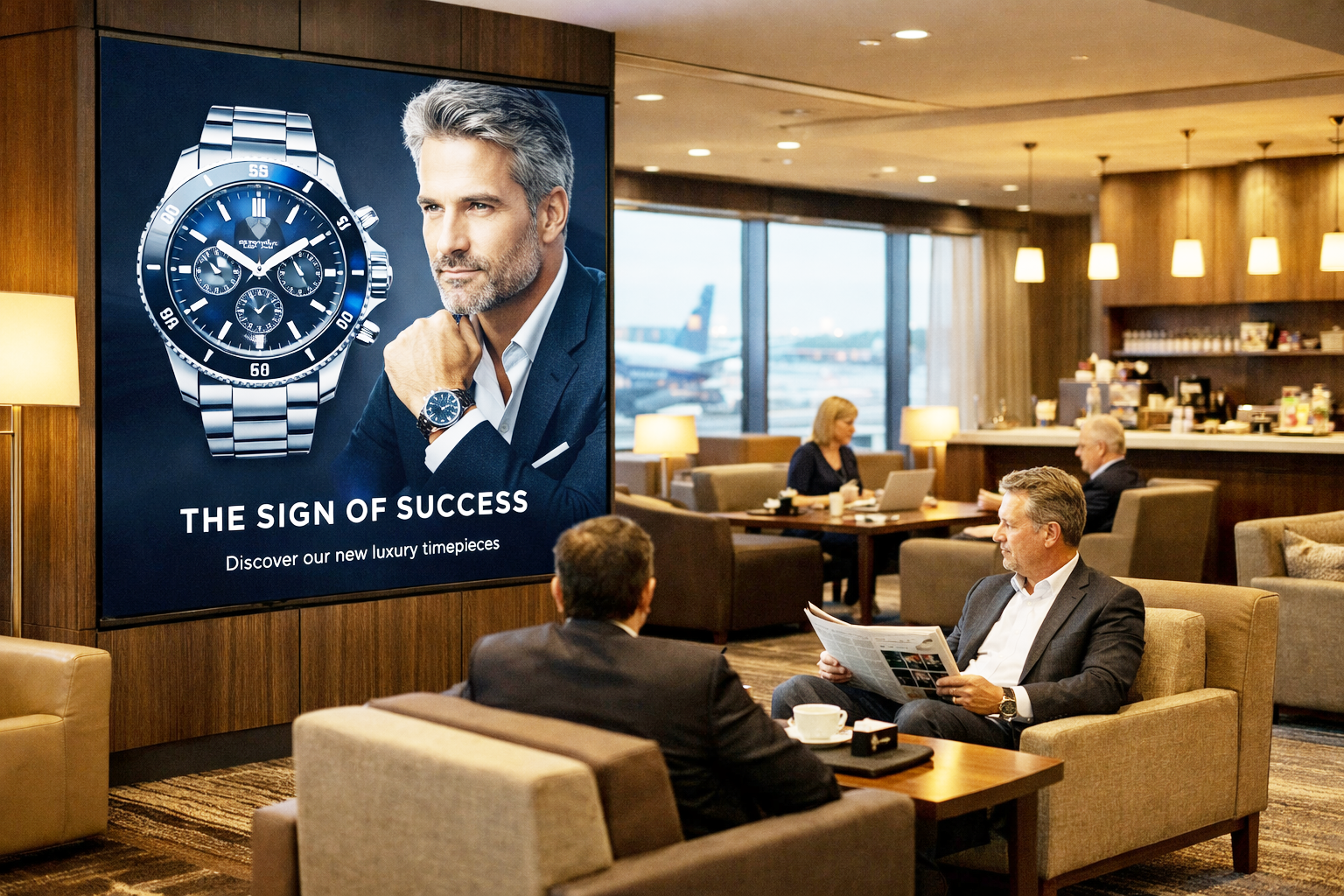
Poor Placement and Delays Affect Airport Campaigns
We help you move faster, access better inventory, and get it right now.
Talk to an ExpertFinal Strategic Verdict
New Islamabad International Airport is Pakistan's most politically and economically concentrated aviation asset, and for international advertisers, that distinction translates directly into commercial advantage. This is the airport where government ministers board flights with active procurement mandates, where Gulf returnees arrive carrying remittance liquidity looking for the next investment, where British Pakistani families transit with dual-currency spending power and active property and education plans, and where Turkey and UAE-bound HNWI travelers are making citizenship and residency decisions mid-journey. No other airport in Pakistan delivers this combination of institutional authority, diaspora wealth density, and outbound capital intent within a single, modern terminal environment. Brands in international real estate, financial services, luxury goods, education, and premium hospitality should treat ISB not as a supplementary Pakistan buy, but as the primary channel to the country's most influential and internationally mobile audience. Masscom Global provides the market intelligence, inventory access, and local execution capability to activate at ISB with precision — contact us now to plan your campaign before the next peak window closes.
About Masscom Global
Masscom Global is a premium international airport advertising and media buying agency operating across 140 countries. With deep expertise in airport OOH, premium publications, and high-net-worth audience targeting, Masscom helps brands reach the world's most valuable travellers at the moments that matter most. For advertising packages, media rates, and campaign planning at New Islamabad International Airport and airports across the globe, contact Masscom Global today.
Frequently Asked Questions
How much does airport advertising cost at New Islamabad International Airport? Advertising costs at ISB vary significantly based on format (digital screens, static lightboxes, branded zones, transit corridors), placement position (departure hall, security approaches, baggage reclaim, lounge access), campaign duration, and seasonal demand — Eid, Hajj season, and summer peak periods attract higher inventory demand and rate premiums. Masscom Global provides current rate cards, placement recommendations, and campaign package options tailored to your budget and objectives. Contact Masscom for a detailed proposal.
Who are the passengers at New Islamabad International Airport? ISB serves a distinct audience of federal government officials and senior civil servants, Pakistan Army and defence-sector professionals, diplomatic mission staff, Gulf-based diaspora returnees (particularly British Pakistani dual nationals with roots in Rawalpindi, Jhelum, Chakwal, and Mirpur AJK), technology entrepreneurs, corporate business travelers, Hajj and Umrah pilgrims, and inbound visitors from Gulf countries, China, Central Asia, and Europe. It is one of Pakistan's highest-concentration HNWI airport environments.
Is New Islamabad International Airport good for luxury brand advertising? Yes, with strong justification. ISB's audience includes Pakistan's political and military elite, returning Gulf-based diaspora with dirhams and sterling purchasing power, senior government officials traveling on international routes, and a growing technology entrepreneur class — all segments with established luxury consumption behaviour. The airport's modern terminal infrastructure supports premium brand positioning, and the Gulf corridor routes deliver an audience with direct familiarity with Dubai Mall and Abu Dhabi's luxury retail environment, making them receptive to luxury messaging in a pre-departure context.
What is the best airport in Pakistan to reach HNWI audiences? Karachi's Jinnah International Airport offers the largest passenger volume and access to Pakistan's business and financial capital audience. Lahore's Allama Iqbal International Airport delivers Pakistan's cultural and commercial Punjab heartland. New Islamabad International Airport delivers a qualitatively distinct HNWI profile — government authority, military seniority, diplomatic access, and British Pakistani diaspora wealth — that neither Karachi nor Lahore can replicate. For brands targeting institutional decision-makers and internationally connected HNWI consumers, ISB is Pakistan's highest-quality single-terminal audience environment. Masscom Global can advise on multi-airport Pakistan strategies that maximise reach across all three simultaneously.
What is the best time to advertise at New Islamabad International Airport? The highest-value advertising windows at ISB are the summer peak (May to September, particularly June and July when Gulf diaspora returns peak), the Eid ul Fitr window (date varies by lunar calendar), the Eid ul Adha and Hajj corridor (date varies, typically June to August), and the November to January winter outbound leisure window. The Ramadan period, running approximately 30 days before Eid ul Fitr, creates a high-intensity commercial environment with elevated consumer engagement and spending intent across Islamic finance, gifting, and premium goods categories. Masscom structures campaigns to maximise exposure across these windows.
Can international real estate developers advertise at New Islamabad International Airport? ISB is among the strongest airport channels in South Asia for international real estate advertising. The airport's HNWI and diaspora audience is actively buying property in Dubai, Istanbul, London, and increasingly in European Golden Visa markets including Portugal and Greece. Returning British Pakistani travelers are managing active UK property portfolios and simultaneously evaluating Pakistan-based investment, making ISB a dual-flow real estate audience point. Gulf returnees with accumulated savings are actively seeking property investment vehicles that offer yield, capital appreciation, and visa benefits. Masscom Global has placed international real estate campaigns across Pakistan's airport network and understands how to position property products for maximum resonance with this audience.
Which brands should not advertise at New Islamabad International Airport? Mass-market FMCG brands with low unit values and no premium or aspirational positioning will not achieve sufficient return on premium airport inventory investment at ISB. Budget retail and discount-led brands are misaligned with the audience's identity and spending behaviour, and risk brand equity damage in a premium environment. Hyper-local service businesses without national or international scale will find ISB's geographically dispersed and internationally mobile audience poorly matched to their catchment-dependent service model.
How does Masscom Global help brands advertise at New Islamabad International Airport? Masscom Global provides end-to-end airport advertising capability at ISB — from audience intelligence and campaign strategy through inventory access, creative production guidance, placement negotiation, implementation management, and post-campaign performance reporting. With operations across 140 countries and deep familiarity with Pakistan's airport media environment, Masscom brings international execution standards and local market knowledge that most global media buyers cannot access independently. For brands entering Pakistan for the first time or expanding existing Pakistan campaigns, Masscom eliminates the complexity, reduces execution time, and ensures placement precision that maximises commercial impact. Contact Masscom Global today to plan your ISB campaign.







