

Airport at a Glance
| Field | Detail |
|---|---|
| Airport | Salalah International Airport |
| IATA Code | SLL |
| Country | Oman |
| City | Salalah, Dhofar Governorate |
| Annual Passengers | Approximately 2.3 million (2023) |
| Primary Audience | GCC leisure travellers, business executives, South Asian diaspora |
| Peak Advertising Season | June to September (Khareef), December to January |
| Audience Tier | Tier 2 with Tier 1 HNWI concentration during peak season |
| Best Fit Categories | Hospitality, Real Estate, Automotive, Financial Services |
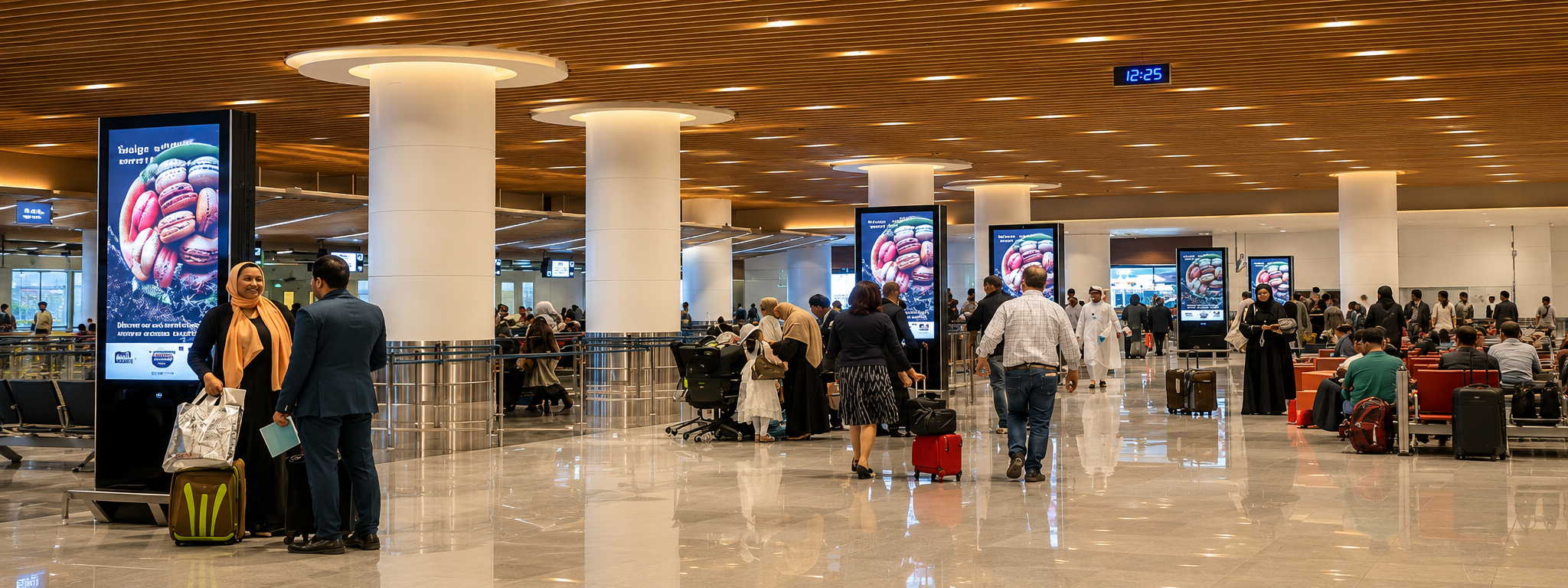
Salalah International Airport is one of the most commercially distinctive airports in the Arab world. It is not defined merely by passenger volume but by the extraordinary quality and spending intent of its peak-season audience. Every summer, the airport transforms into the primary gateway for affluent Gulf families escaping to the only greening monsoon landscape on the Arabian Peninsula, creating a captive high-net-worth audience found nowhere else in the region. Outside of peak season, Salalah functions as the logistics and commercial spine of southern Oman, drawing executives connected to one of the most strategically positioned container ports in the Indian Ocean basin.
What makes Salalah uniquely valuable to advertisers is the predictability of its audience. The Khareef season delivers a concentrated, time-bound window of GCC family wealth that spends generously on accommodation, dining, vehicles, experiences, and aspirational goods. The same families return year after year, creating a loyal audience segment that responds to brand-building campaigns as much as transactional ones. For advertisers targeting Gulf nationals and GCC residents with high disposable incomes, this airport offers a rare combination of audience quality and scheduling precision.


Advertising Value Snapshot
- Passenger scale: Approximately 2.3 million passengers annually, with strong seasonal concentration during the June to September Khareef window
- Traveller type: Affluent GCC families, business executives linked to the Port of Salalah and Salalah Free Zone, regional diaspora travellers
- Airport classification: Tier 2 with Tier 1 HNWI concentration during peak season — the seasonal audience quality rivals larger Gulf airports for luxury-relevant advertising
- Commercial positioning: The gateway to the GCC's most sought-after summer escape destination and southern Oman's trade and logistics hub
- Wealth corridor signal: Salalah sits at the intersection of GCC family wealth migration, Indian Ocean trade logistics, and Oman's growing tourism economy
- Advertising opportunity: Masscom Global delivers targeted campaign activations at Salalah Airport timed to the Khareef window and the year-round business traveller flow, with placement intelligence across terminal zones to intercept both audience segments at maximum receptivity
Airport Advertising is Complex to Get Right
We help you execute faster, with proven results and local insight most planners lack starting now.
Talk to an ExpertCatchment Area and Economic Drivers
Top 10 Cities within 150 km — Marketer Intelligence
- Salalah (city core): The commercial, administrative, and tourism centre of Dhofar; home to senior government officials, free zone executives, and established merchant families whose purchasing behaviour mirrors GCC upper-income households
- Raysut: Oman's primary industrial and port district, producing a steady audience of logistics executives, shipping professionals, and multinational supply chain decision-makers who are high-value targets for B2B financial and technology advertising
- Al Dahariz: A rapidly developing residential suburb of Salalah that houses the emerging professional class and mid-to-senior management workforce of the free zone and port economy, an audience actively upgrading household spending
- Taqah: A historic coastal town approximately 35 kilometres east of Salalah, with a deeply rooted local population connected to Omani government and military service; a loyal domestic traveller segment with stable household income
- Mirbat: A historic frankincense port town approximately 75 kilometres east of Salalah, now primarily a premium eco-tourism and diving destination drawing international and GCC visitors with strong outdoor leisure spending profiles
- Mughsayl: A Khareef-season anchor point approximately 42 kilometres west of Salalah, famous for its blowholes and coastal scenery; heavily visited during peak season by the same Gulf families passing through the airport, extending brand reach beyond the terminal
- Thumrait: An inland town approximately 80 kilometres north of Salalah, serving as a service hub for Oman's southern oil and gas operations; produces engineering and energy sector professionals who are consistent business-class travellers
- Sadah: A coastal fishing community approximately 100 kilometres east of Salalah, part of the broader Dhofar fishing economy that feeds Salalah's hospitality sector and connects to Omani heritage tourism audiences
- Salalah Free Zone: The designated industrial and commercial zone adjacent to the port, housing over 250 companies from logistics, petrochemicals, and manufacturing; the primary source of year-round corporate traveller traffic at the airport
- Dhalkut: A border town near the Yemen frontier approximately 160 kilometres west of Salalah, historically significant as a frankincense trade node and increasingly relevant as a frontier tourism point connecting to the catchment's heritage travel audience
NRI and Diaspora Intelligence:
Salalah has a substantial South Asian resident population, primarily from India, Pakistan, Bangladesh, and Sri Lanka, concentrated in the port, free zone, and construction sectors. This community generates consistent outbound travel to home countries for family visits, festivals, and investment purposes. Indian expatriates in Dhofar are particularly noteworthy, as a significant segment occupies mid-to-senior management and entrepreneurial positions rather than purely labour roles. These travellers are receptive to financial products, remittance services, education brands, and aspirational lifestyle categories. Their remittance volume into South Asian markets, particularly the Indian states of Kerala, Tamil Nadu, and Andhra Pradesh, is commercially meaningful and positions banks, fintech brands, and Indian real estate developers as natural advertisers at this airport.
Economic Importance:
Salalah's economy is anchored by three engines that matter directly to advertisers. The Port of Salalah, one of the largest container transshipment hubs in the Indian Ocean, generates a continuous flow of shipping, logistics, and trade finance executives. The Salalah Free Zone hosts more than 250 companies across petrochemicals, manufacturing, and logistics, producing a corporate traveller audience whose purchasing authority spans fleet vehicles, enterprise technology, financial services, and travel management. The Khareef tourism economy, estimated to draw over one million visitors during the peak season alone, creates the third and highest-spending audience segment. Together, these three engines produce a year-round audience that is wealthier, more decision-empowered, and more brand-responsive than the raw passenger count would suggest.
Business and Industrial Ecosystem
- Port of Salalah: One of the top container ports in the Indian Ocean basin, drawing shipping company executives, freight forwarders, and global logistics directors who are premium targets for business services, hospitality, and financial product advertising
- Salalah Free Zone: A government-designated zone hosting more than 250 companies from Oman and abroad, producing a concentrated audience of C-suite and senior management travellers making regular regional and international trips
- Oil and Gas Operations: Southern Oman's hydrocarbon sector, serviced from Thumrait and Dhofar, generates a steady flow of energy sector professionals who are consistent business-class travellers with premium category spending profiles
- Frankincense and Heritage Trade: Dhofar's designation as a UNESCO World Heritage frankincense region supports a growing luxury tourism and artisanal product economy that attracts culturally engaged, high-spending international visitors
Passenger Intent — Business Segment:
The business traveller at Salalah Airport is primarily motivated by the port, the free zone, and the energy sector. These are decision-makers travelling for procurement, partnership, and investment purposes, not routine corporate administration. They travel on regional routes to Dubai, Muscat, Doha, and Bahrain, placing them on corridors well-served by premium class offerings. Advertiser categories that intercept them most effectively include financial services, business banking, fleet and premium automotive, hotel loyalty programmes, and enterprise technology. Their dwell time at the airport is productive and receptive to structured, information-rich brand messaging.
Strategic Insight:
What distinguishes the business audience at Salalah from comparable secondary airports in the Gulf is the concentration of trade infrastructure decision-makers in a single catchment. The port and free zone together host the regional offices of global logistics firms, petrochemical producers, and manufacturing companies. These are not locally oriented professionals; they are operating in international supply chains and making purchasing decisions that span continents. For B2B brands seeking to reach Indian Ocean trade corridor decision-makers outside the noise of Dubai or Abu Dhabi, Salalah Airport offers uncommon precision and a far less competitive media environment.
Tourism and Premium Travel Drivers
- The Khareef (Monsoon Season): From late June through September, Salalah is the only destination in the Arabian Peninsula to receive the Indian Ocean monsoon, turning the Dhofar hills green and temperate; this draws over one million visitors, predominantly affluent GCC families, creating the highest-density luxury audience window at this airport
- Al Baleed Archaeological Park (UNESCO World Heritage Site): The ancient port city of Sumhuram and the Land of Frankincense are UNESCO-recognised heritage sites that attract international cultural tourism with strong academic, luxury travel, and experiential spending profiles
- Wadi Darbat and Ayn Athum Waterfalls: Seasonal waterfalls and lush green wadis during Khareef that are central to the Gulf family leisure itinerary, driving accommodation, F&B, and vehicle hire spending across the region
- Mughsayl Blowholes and Coastal Scenery: A signature Salalah natural attraction positioned as a premium coastal experience, relevant to both luxury travel brands and outdoor lifestyle advertisers
Passenger Intent — Tourism Segment:
The Khareef tourist arriving at Salalah Airport is, by the time of arrival, already committed to significant discretionary spending. They have pre-booked hotels, hired vehicles, and planned dining and leisure experiences. Their receptivity at the airport is therefore oriented toward brand discovery, aspirational lifestyle categories, and impulse premium purchases rather than functional information. Luxury hospitality, premium automotive, jewellery, fashion, gourmet food, and experiential travel advertisers benefit most from intercepting this audience in transit. The fact that many Khareef tourists are repeat visitors builds brand recall across seasons, meaning airport advertising here compounds in value over multi-year campaigns.
Travel Patterns and Seasonality
Peak seasons:
- Khareef Season (June to September): The dominant traffic peak, driven entirely by the monsoon tourism phenomenon unique to Dhofar; predominantly Gulf nationals and GCC residents; the highest HNWI density window of the year
- Eid al-Fitr and Eid al-Adha (Variable): Both Eid periods generate strong outbound and inbound family travel; dates shift annually by the Islamic calendar; combined these windows deliver some of the highest single-week traffic volumes at the airport
- December to January: The winter cooler season brings a secondary tourism peak from international visitors and GCC residents seeking a mild climate alternative; hotel rates peak and premium accommodation demand rises
- National Day (November 18): Oman's National Day generates domestic travel, celebratory spending, and patriotic brand engagement opportunities
Event-Driven Movement:
- Khareef Festival (July to August): A month-long government-organised cultural and entertainment festival timed to the monsoon peak; draws hundreds of thousands of visitors and generates substantial retail, F&B, and hospitality spending; the most commercially powerful single advertising window in the Salalah calendar
- Eid al-Adha (Variable, typically June to July): Frequently overlaps with the Khareef season, doubling the travel concentration; families travelling for Eid plus Khareef produce the longest average dwell time and the highest average trip spend of any window
- National Day Long Weekend (November): A domestic travel and hospitality peak that draws Omani families back to Salalah and provides a secondary advertising window for homewares, family dining, and leisure brands
- Frankincense and Heritage Festivals (October to November): Growing international cultural tourism events linked to the UNESCO frankincense sites; attract educated, high-income international visitors who are responsive to premium brand messaging
- Fishing and Outdoor Season (October to March): The post-Khareef period draws outdoor, adventure, and eco-tourism visitors whose spending profiles centre on equipment, apparel, premium hospitality, and activity brands
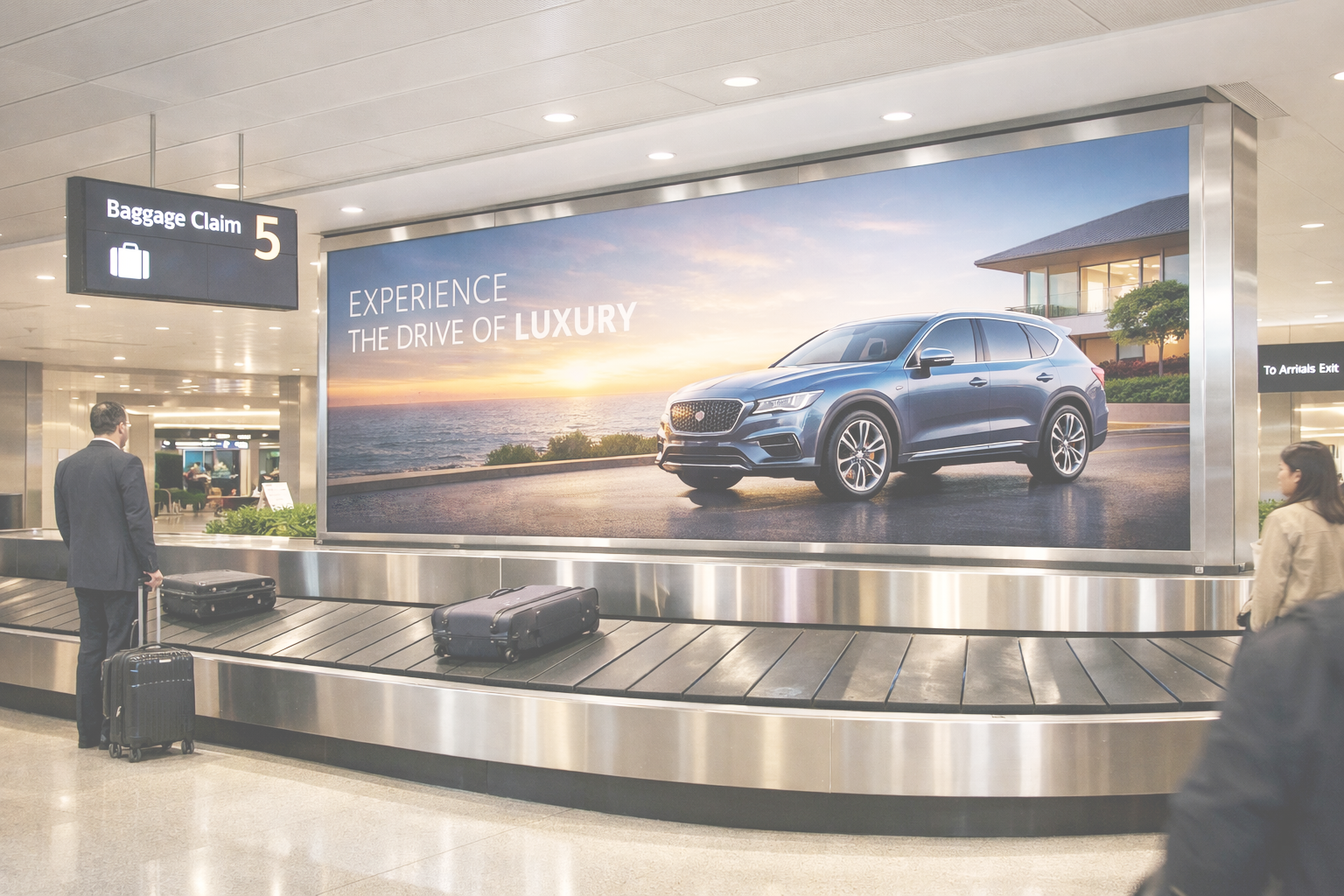
It’s Not Just Where You Advertise - It’s How Fast You Execute
We combine local insight with fast rollout to deliver results for you, now.
Talk to an ExpertAudience and Cultural Intelligence
Top 2 Languages:
- Arabic: The primary language of Omani nationals, GCC tourists, and the airport's dominant audience; campaigns in Arabic signal cultural respect and unlock the full spending authority of the Gulf national segment, which drives the majority of Khareef revenue
- Hindi and Urdu: The combined South Asian expatriate population, particularly the Indian and Pakistani communities in the free zone and port sectors, forms a commercially significant secondary audience; brands in remittances, South Asian real estate, education consultancy, and consumer electronics benefit directly from Hindi and Urdu presence
Major Traveller Nationalities:
The dominant traveller nationality at Salalah Airport is Omani nationals, both from Dhofar and from Muscat and the northern governorates travelling inbound for the Khareef. The second most significant group is GCC nationals, primarily Saudi, Emirati, Kuwaiti, and Bahraini families who treat Salalah as their preferred Gulf summer destination. Indian nationals represent the third pillar, combining expatriate worker travel with an emerging Indian tourist segment drawn by the heritage and natural attractions of Dhofar. The campaign implication is a trilingual and culturally layered audience where Arabic-language creative drives Gulf national conversion and English-language creative captures international premium visitors.
Religion — Advertiser Intelligence:
- Islam (approximately 87%): The Muslim majority defines the travel and spending calendar at this airport; Ramadan moderates discretionary travel but the pre-Ramadan window sees a spending surge; Eid al-Fitr and Eid al-Adha are the two highest-volume gifting and travel trigger events in the calendar; the Hajj season generates strong outbound travel from Dhofar to Saudi Arabia; fashion, jewellery, confectionery, luxury gifting, and family hospitality brands align directly with the Eid spending cycle
- Hinduism (approximately 10%): The Hindu South Asian community observes Diwali, Navratri, and Onam, each of which triggers remittance surges, gift purchases, and outbound travel to India; financial services, gold jewellery, and electronics brands benefit from timing campaigns to these windows; Diwali in particular produces a measurable uplift in consumer electronics and jewellery purchases in the weeks prior to the festival
- Christianity and Other Faiths (approximately 3%): A small but economically active community of Western and South Asian Christians concentrated in the free zone and port workforce; responsive to Christmas-season retail, travel, and lifestyle advertising in the November to January window
Behavioral Insight:
The Salalah traveller makes decisions that are deeply relationship-driven and family-oriented. Gulf national families travelling for Khareef make collective purchasing decisions across large multigenerational groups, meaning a single advertising impression at the airport may influence four to six simultaneous purchasing authorities. The Omani national audience carries significant brand loyalty to established regional names but is actively receptive to premium international brands that demonstrate understanding of local values. The business traveller segment, conditioned by the formality of port and free zone commercial culture, responds to authority signals, global credibility markers, and professional endorsement in advertising creative rather than lifestyle aspiration.
Outbound Wealth and Investment Intelligence
The outbound passenger at Salalah Airport represents a profile that is frequently underestimated by international advertisers who focus their Gulf allocation entirely on Dubai and Abu Dhabi. Dhofari merchant families and Omani government officials travelling through this airport carry generational wealth accumulated through trade, frankincense commerce, livestock, and more recently through positions in the port and energy sectors. This audience is not a secondary Gulf audience; it is a distinct wealth segment that holds assets across real estate, equities, and offshore accounts and is actively deploying capital into property markets in the UAE, the United Kingdom, and increasingly Southeast Asia.
Outbound Real Estate Investment:
Dubai remains the primary outbound real estate market for Salalah's HNWI audience. Dhofari families have historically purchased second homes, investment apartments, and commercial units in Dubai's established zones. The combination of zero capital gains tax, freehold ownership rights, and the emirate's proximity via a two-hour flight makes it the default first international property for this segment. The United Kingdom, particularly London and cities such as Manchester and Birmingham with established Omani and Gulf diaspora communities, is the second preferred market for asset diversification and generational education planning. International real estate developers with product in these markets should treat Salalah Airport advertising as a direct channel to motivated buyers.
Outbound Education Investment:
The Salalah and broader Dhofar family audience invests significantly in overseas education, with the United Kingdom, Australia, Malaysia, and Canada as the top destination markets. Omani families planning for university enrollment for children aged 15 to 18 are among the most consistent users of the airport's outbound routes to Muscat, which connects onwards to international destinations. Education consultancies, international university recruitment campaigns, and student accommodation brands targeting Gulf families should specifically consider the Khareef season window at Salalah Airport, as families in extended summer holiday mode are in the exact mindset to discuss long-term education investment with children present.
Outbound Wealth Migration and Residency:
Golden Visa programmes in Portugal, Greece, and the UAE have seen strong uptake among Omani HNWIs over the past five years. The UAE's Golden Visa, in particular, is widely held among Oman's entrepreneurial class as a business facilitation tool rather than a primary residency change. The Portuguese NHR (Non-Habitual Resident) tax regime and the Greek Golden Visa programme are gaining traction among Dhofar's more internationally mobile merchant families. Immigration consultancies and wealth management firms offering residency-by-investment advisory should treat this airport's HNWI audience as an active and investment-ready segment.
Strategic Implication for Advertisers:
International brands seeking to capture GCC wealth on both the inbound tourism side and the outbound investment side should treat Salalah Airport as a dual-direction channel. The same affluent family arriving for leisure and the same executive departing for a European investment trip are both interceptable at this airport with campaigns that speak to their aspiration and their capital deployment. Masscom Global is positioned to activate on both sides of this corridor simultaneously, with placement intelligence across arrival and departure zones.
Airport Infrastructure and Premium Indicators
Terminals:
- Salalah International Airport operates a modern, purpose-built passenger terminal with a handling capacity designed to manage the sharp seasonal surge of the Khareef period alongside year-round scheduled traffic; the terminal infrastructure was significantly upgraded to support growing international connectivity
- A dedicated VIP and Royal Flight terminal services Oman's government and senior official travellers, as well as high-net-worth private travellers, signalling a premium operational environment consistent with Oman's positioning as a luxury and heritage tourism destination
Premium Indicators:
- Oman Air and SalamAir operate dedicated lounge facilities at Salalah, serving business class and premium frequent flyer travellers on Gulf and regional routes; lounge adjacency placements intercept the highest-value audience at maximum dwell time
- The airport's proximity to Salalah's growing luxury hotel corridor, including internationally branded five-star properties in the city, reinforces the premium character of the inbound audience and sustains brand association for luxury advertisers across the entire destination experience
- Salalah's operational role as a diversion and refuelling airport for Indian Ocean long-haul routes adds an international traveller layer beyond the scheduled network, broadening the potential audience for transit-facing brand campaigns
- The airport operates within Oman's nationally managed airports infrastructure, which maintains international safety and operational standards consistent with premium brand alignment
Forward-Looking Signal:
Oman's national tourism strategy targets a significant increase in international arrivals through 2040, with Salalah identified as a flagship destination for nature, heritage, and wellness tourism. Route expansion from Asian markets, particularly India and Southeast Asia, is underway, with new direct connectivity progressively bringing higher-spending international audiences through this terminal. The Salalah Free Zone continues to attract new industrial and logistics tenants, growing the year-round executive traveller base. Masscom Global advises clients to plan campaigns at Salalah now, while the competitive media environment remains less saturated than the northern Oman and UAE airport markets, and while placement rates reflect a growth airport rather than a mature one.
Airline and Route Intelligence
Top Airlines:
- Oman Air
- SalamAir
- flydubai
- Air Arabia
- Air Arabia Abu Dhabi
- Ethiopian Airlines
- IndiGo
- Air India Express
Key International Routes:
- Dubai (DXB / DWC) — Multiple daily frequencies, the dominant outbound corridor for business and connecting travel
- Muscat (MCT) — High-frequency domestic trunk route connecting Salalah to Oman's capital and international hub
- Doha (DOH) — Regular service serving the Qatar corridor for Gulf family and business travel
- Bahrain (BAH) — Serving the Bahraini tourism and business segment
- Kuwait (KWI) — Serving the Kuwaiti Khareef tourism audience directly
- Abu Dhabi (AUH) — UAE secondary corridor connecting Emirati business and leisure travellers
- Addis Ababa (ADD) — Ethiopian Airlines connectivity providing indirect African routing
- Mumbai (BOM) and Indian metropolitan routes — Serving South Asian diaspora and Indian tourism
Domestic Connectivity:
- Muscat (MCT) remains the primary domestic route, functioning as both a standalone destination and a connection point for all intercontinental onward flights
Wealth Corridor Signal:
The Salalah route network is architecturally designed around two dominant corridors: the Gulf family leisure corridor to Kuwait, Bahrain, Saudi Arabia, and the UAE, which represents the highest HNWI volume; and the Indian Ocean trade corridor through Dubai and Muscat to Asia and East Africa, which represents the most concentrated executive traveller flow. Indian routes overlay both with a diaspora and emerging tourism dimension. Together, these corridors reveal an audience whose wealth is distributed across Gulf investment, Indian family remittance, and global trade logistics — three separate spending triggers that favour very different but equally premium advertising categories.
Media Environment at the Airport
- Salalah Airport's terminal scale creates a focused, low-clutter advertising environment compared to the major Gulf mega-hubs; brands receive significantly greater share of visual space and audience attention than comparable spend would achieve in Dubai or Doha
- The airport's strong seasonal concentration during Khareef produces exceptional dwell time metrics: Gulf families arriving for week-long or multi-week stays are unhurried, group-oriented, and in discovery mode rather than transit urgency, increasing brand engagement with physical and digital OOH formats
- The presence of VIP terminal infrastructure, business lounge facilities, and Oman's nationally managed airport standards ensures that the advertising environment carries brand-safety credentials appropriate for luxury, financial, and premium lifestyle categories
- Masscom Global holds placement intelligence across the Salalah terminal, including arrival, departure, baggage, and landside zones, enabling precision targeting of the Khareef leisure audience, the port and free zone business traveller, and the South Asian diaspora in three distinct campaign environments
Strategic Advertising Fit
Best Fit:
- Luxury Hospitality and Resorts: GCC families travelling for Khareef are in active holiday planning mode and highly receptive to premium accommodation, resort, and destination messaging across the Gulf and Indian Ocean regions
- Premium Automotive: Gulf national and Omani HNWI audiences at this airport are consistent buyers of premium and luxury vehicles; automotive campaigns timed to Khareef and Eid windows align with the highest purchasing intent periods
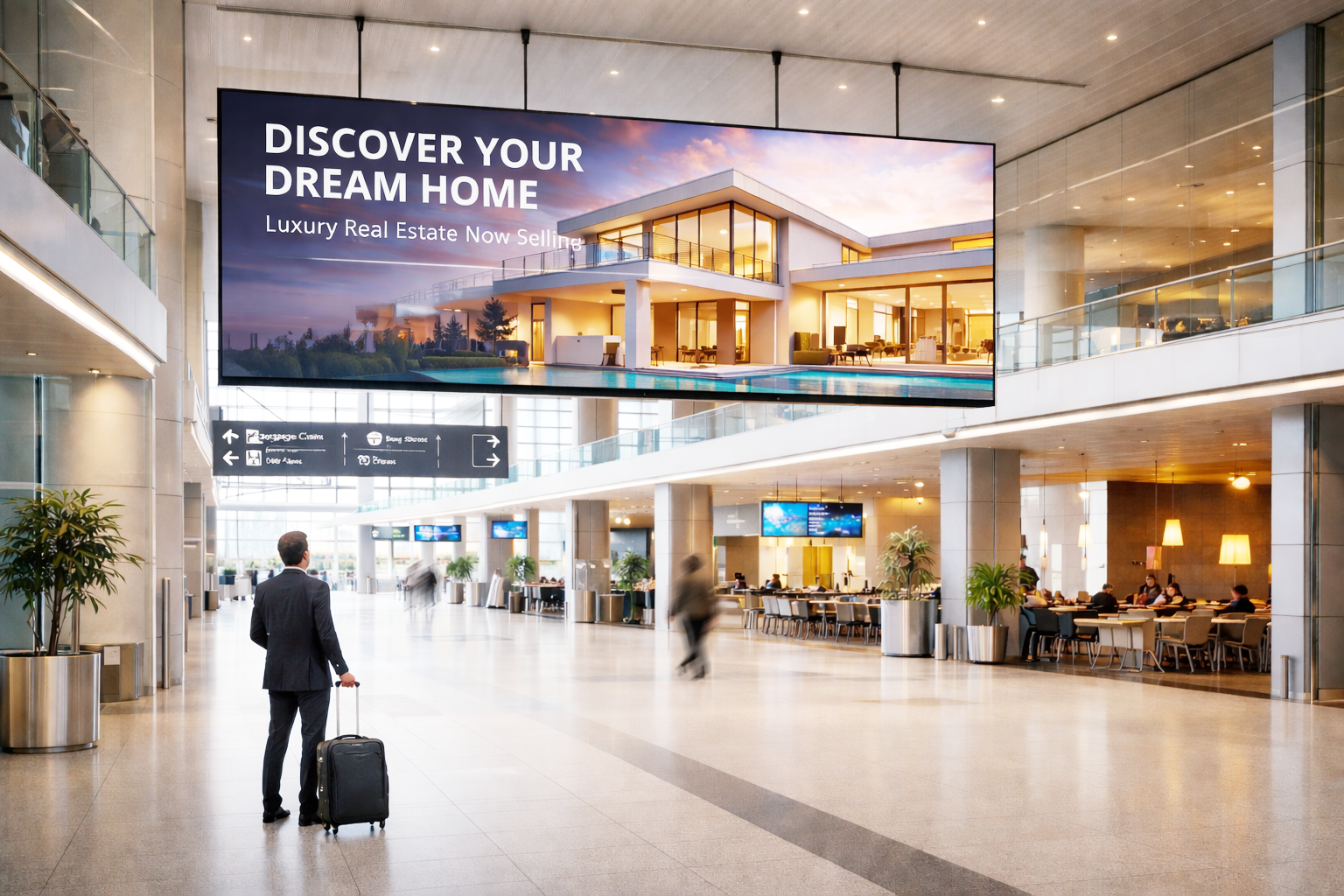
- International Real Estate: Dubai, UK, and Southeast Asian property developers have a motivated, pre-qualified audience of Dhofari and Gulf family investors at this airport who are actively seeking diversified real estate assets
- Financial Services and Wealth Management: Outbound wealth flows from this airport into global markets are consistent and growing; private banking, investment advisory, and offshore financial product brands have a captive HNWI audience with documented cross-border asset behaviour
- Education Consultancy and International Universities: Gulf families with school-age children travelling during Khareef are in exactly the mindset to engage with UK, Australian, and Canadian university advertising campaigns
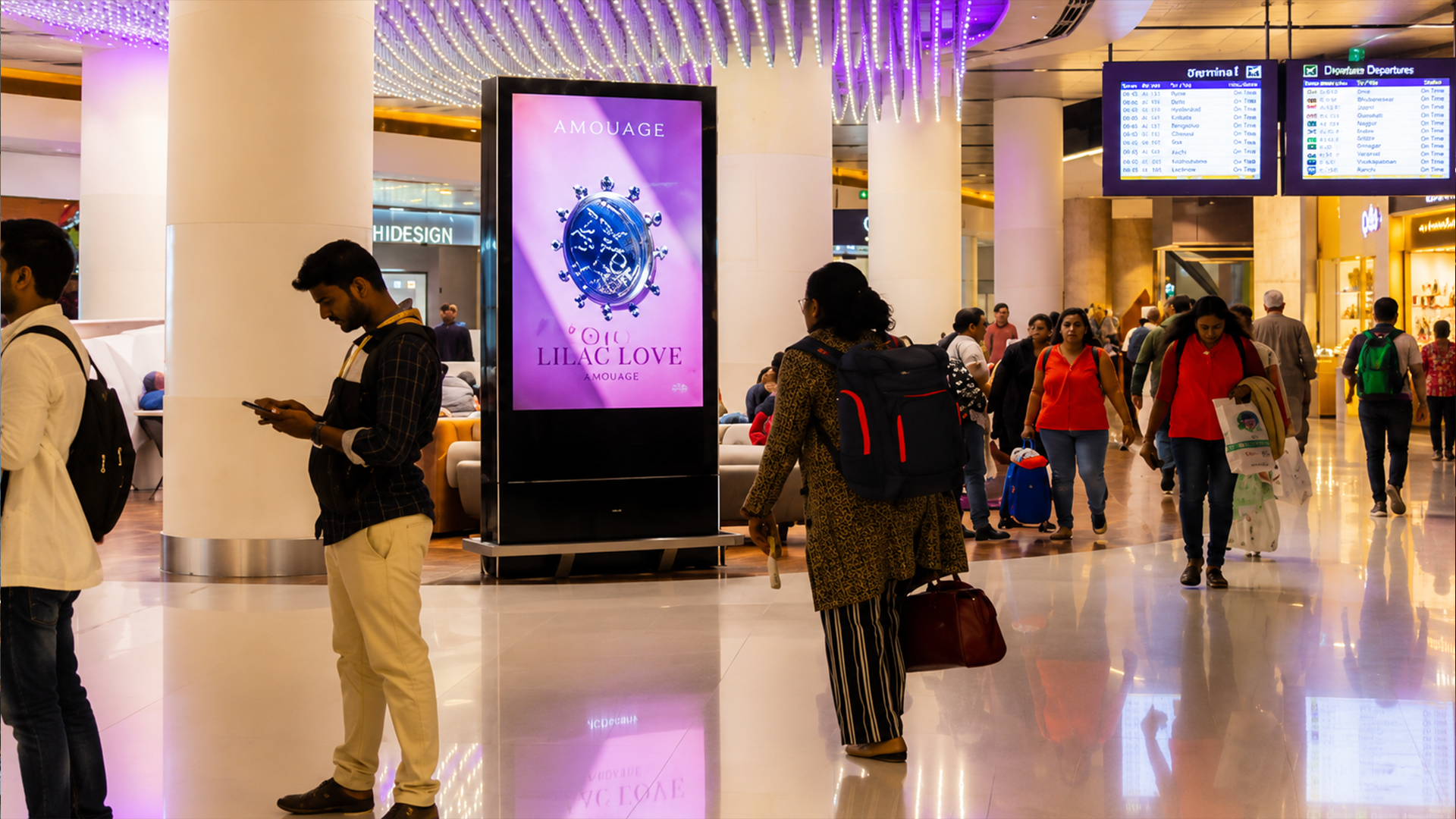
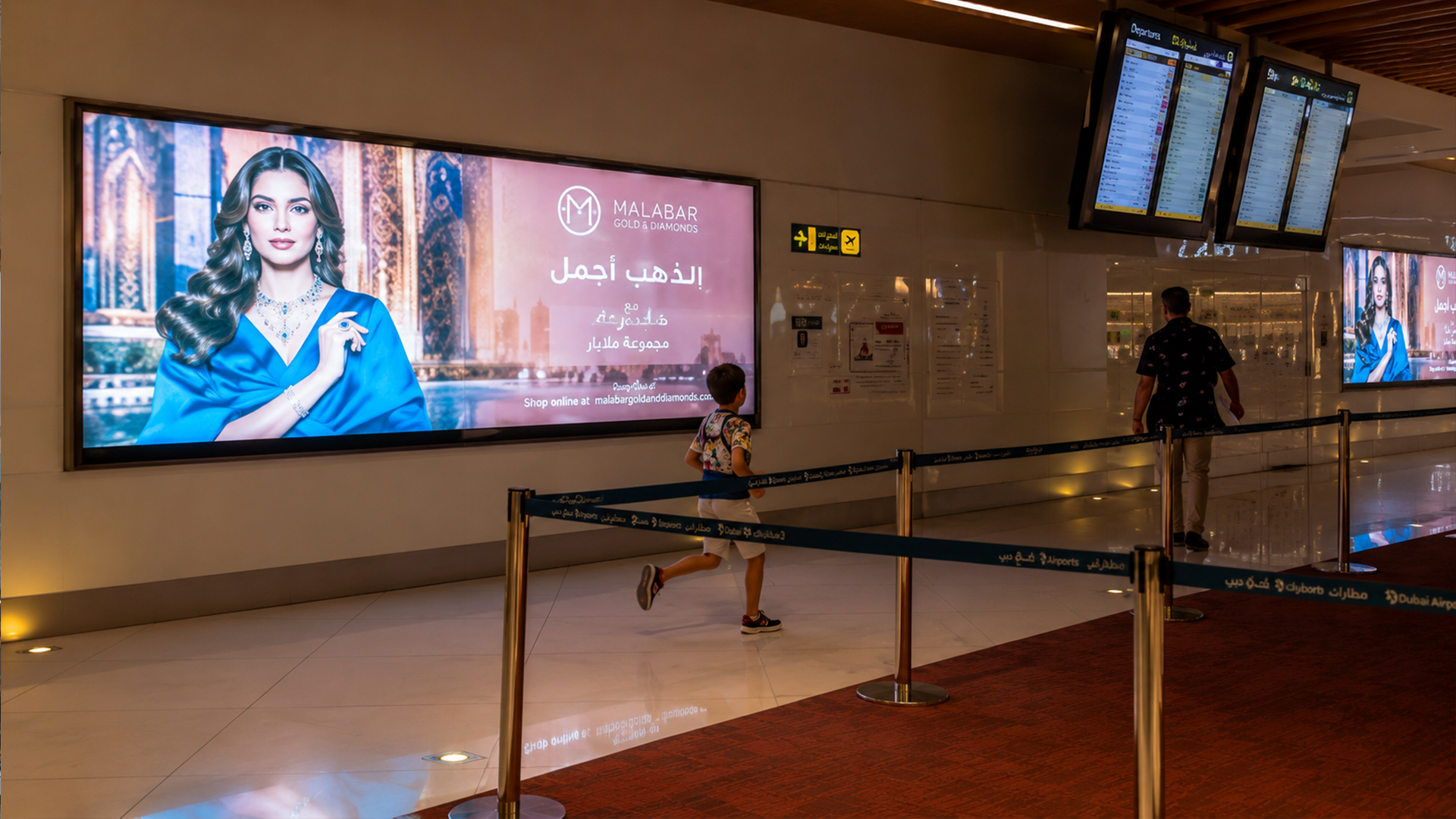
- Jewellery and Luxury Goods: Eid and Khareef season spending on jewellery, watches, and premium gifts is culturally embedded in the Gulf national audience; airport retail and brand advertising capitalises on this spending trigger
- Remittance and Fintech: South Asian professionals in the port and free zone workforce are consistent users of remittance services and are actively comparing providers; fintech and banking brands targeting this segment have a cost-efficient acquisition environment at this airport
- Premium Food and Beverage: Salalah's food culture and the Khareef dining scene create strong audience receptivity for gourmet, organic, and premium F&B brands during the peak season window
Brand Alignment at a Glance:
| Category | Fit |
|---|---|
| Luxury Hospitality and Resorts | Exceptional |
| Premium Automotive | Exceptional |
| International Real Estate | Exceptional |
| Financial Services and Wealth Management | Strong |
| Education Consultancy and Universities | Strong |
| Jewellery and Luxury Goods | Strong |
| Remittance and Fintech | Moderate |
| Mass Retail FMCG | Poor fit |
Who Should Not Advertise Here:
- Mass retail FMCG brands: The airport audience's wealth profile and the premium OOH environment are misaligned with everyday consumer goods that compete on price rather than aspiration; spend is inefficient relative to high-street retail or digital channels
- Budget travel brands and low-cost carrier promotions: The dominant audience is travelling for quality leisure and business purposes, not price-driven route decisions; low-cost positioning conflicts with the audience's self-image and the airport's premium environment
- Hyper-local and single-market service providers: Salalah's route network and audience draw from multiple Gulf states and South Asia; brands with no operational presence beyond Oman or with no mechanism to serve inbound international visitors generate awareness without conversion
Event and Seasonality Analysis
| Metric | Rating |
|---|---|
| Event Strength | High |
| Seasonality Strength | High |
| Traffic Pattern | Dual-Peak (Khareef Summer + Winter Shoulder) |
Strategic Implication:
The Khareef window from June to September is the single most commercially important advertising period in the Salalah calendar and demands premium placement booking well in advance, as this is when the airport's HNWI concentration peaks and audience dwell time is at its longest. The secondary December to January winter peak delivers a different but equally high-value audience of international cultural and eco-tourists who respond to heritage and premium experience advertising. Masscom Global structures Salalah campaigns around these two peaks with tailored creative and zone-specific placements, maximising ROI by aligning brand messages with the specific intent state of each audience window rather than running static year-round campaigns that underperform in off-peak periods.

Poor Placement and Delays Affect Airport Campaigns
We help you move faster, access better inventory, and get it right now.
Talk to an ExpertFinal Strategic Verdict
Salalah International Airport is one of the most undervalued advertising environments in the Gulf region. Its passenger volume alone does not reveal its commercial significance; it is the combination of a uniquely loyal and high-spending Gulf family audience during the Khareef season, a port and free zone economy that produces year-round executive travellers, and an outbound wealth profile actively deploying capital into global real estate and residency markets that makes this airport extraordinary. For luxury hospitality brands, international real estate developers, premium automotive advertisers, and financial services firms targeting Gulf HNWI audiences, Salalah offers what the mega-hubs cannot: concentrated, unhurried, seasonally predictable access to a high-quality audience in a low-clutter media environment where every campaign impression delivers outsized impact. Masscom Global has the placement intelligence, the market knowledge, and the regional execution capability to make every advertising dirham work harder at Salalah Airport than anywhere else in southern Oman.
About Masscom Global
Masscom Global is a premium international airport advertising and media buying agency operating across 140 countries. With deep expertise in airport OOH, premium publications, and high-net-worth audience targeting, Masscom helps brands reach the world's most valuable travellers at the moments that matter most. For advertising packages, media rates, and campaign planning at Salalah International Airport and airports across the globe, contact Masscom Global today.
Frequently Asked Questions
How much does airport advertising cost at Salalah International Airport?
Advertising costs at Salalah International Airport vary based on format type, placement zone, campaign duration, and seasonal demand windows. The Khareef season from June to September commands premium rates due to the concentrated HNWI audience; bookings during this window should be secured well in advance. Masscom Global provides current rate cards, format options, and full campaign planning support tailored to your budget and objectives. Contact Masscom for a detailed proposal.
Who are the passengers at Salalah International Airport?
Salalah Airport serves three primary audience segments. During the Khareef season, the dominant audience is affluent Gulf national and GCC resident families from Saudi Arabia, Kuwait, the UAE, Bahrain, and Qatar travelling for the monsoon leisure experience. The year-round base includes Omani nationals from Dhofar and northern Oman, South Asian expatriates employed in the port and free zone sectors, and business executives connected to the Port of Salalah and the Salalah Free Zone. International tourists, particularly from India and European markets, form a growing fourth layer during the winter heritage season.
Is Salalah International Airport good for luxury brand advertising?
Salalah Airport is highly effective for luxury brand advertising, particularly during the Khareef season when its audience composition rivals the quality of travellers passing through the Gulf's major premium terminals. Gulf national families travelling for Khareef are active consumers of luxury hospitality, premium automotive, jewellery, and aspirational lifestyle products. The low-clutter media environment means luxury brand campaigns achieve a share of visual attention that is difficult to replicate in the crowded terminals of Dubai, Doha, or Abu Dhabi.
What is the best airport in Oman to reach HNWI audiences?
Muscat International Airport handles Oman's largest overall passenger volume and is the primary hub for international route connectivity. Salalah International Airport, however, offers a seasonally superior HNWI concentration during the Khareef window. For brands whose campaign timing can align with the June to September peak, Salalah delivers a higher percentage of high-net-worth Gulf nationals per impression than any other Omani airport. A dual-airport campaign covering both Muscat and Salalah, structured by Masscom Global, represents the full-coverage Oman HNWI advertising solution.
What is the best time to advertise at Salalah International Airport?
The Khareef season from late June through September is the highest-value advertising window, driven by the peak Gulf family tourism flow. Within this window, the overlap with Eid al-Adha, which frequently falls in June or July, creates the single most commercially powerful week in the airport's calendar. The December to January winter shoulder is the second recommended window for international brands targeting cultural and eco-tourism audiences. Masscom Global structures campaign phasing to capture both peaks within a single annual budget.
Can international real estate developers advertise at Salalah International Airport?
Salalah Airport is one of the most effective channels in southern Oman for international real estate advertising. The airport's HNWI audience, particularly Dhofari merchant families and Gulf nationals transiting through the terminal, are active buyers of investment property in Dubai, London, and Southeast Asian markets. International developers targeting buyers who are motivated by yield, residency rights, or asset diversification have a pre-qualified audience within the terminal. Masscom Global can structure campaigns to reach this audience at the departure zone when investment mindset is highest.
Which brands should not advertise at Salalah International Airport?
Mass retail FMCG brands competing on price are misaligned with the airport's premium audience profile and will generate low-quality impressions relative to the investment. Budget travel brands and low-cost airline promotions conflict with the spending intent and self-image of the dominant Gulf family and executive audience. Hyper-local single-market service providers without Gulf-wide or international operations will generate awareness among an audience they cannot practically serve, reducing campaign efficiency.
How does Masscom Global help brands advertise at Salalah International Airport?
Masscom Global provides end-to-end airport advertising services at Salalah International Airport, from audience intelligence and campaign strategy through to format selection, placement booking, creative compliance, and performance reporting. With active operations across 140 countries and specific expertise in the Gulf airport advertising market, Masscom brings both global reach and local precision to every campaign it activates. Whether your objective is luxury brand building during the Khareef peak or year-round B2B positioning in the port and free zone corridor, Masscom structures campaigns to deliver measurable results. Contact Masscom Global to begin your Salalah Airport campaign today.