


Airport at a Glance
| Field | Detail |
|---|---|
| Airport | Mactan-Cebu International Airport |
| IATA Code | CEB |
| Country | Philippines |
| City | Cebu City, Cebu |
| Annual Passengers | 10.8 million international |
| Primary Audience | Premium leisure tourists, OFW returnees and families, Visayas regional business executives, MICE delegates |
| Peak Advertising Season | December to January, March to May, July to August |
| Audience Tier | Tier 2 |
| Best Fit Categories | Tourism and hospitality, financial services and remittance, real estate, luxury consumer brands, international education |
Mactan-Cebu International Airport is the commercial gateway to the Philippines' most commercially significant region outside Metro Manila. Cebu is not simply the country's second-largest city — it is an independent economic capital whose shipping industry, business process outsourcing sector, real estate development economy, and resort tourism infrastructure have created a commercially sophisticated, internationally connected consumer and business class that consistently surprises media planners who underestimate the Visayas region's aggregate purchasing power. The passengers moving through CEB's Terminal 2 — one of the most architecturally celebrated airport terminal buildings in Southeast Asia — are a commercially layered audience that spans Korean, Japanese, and Chinese luxury leisure tourists arriving for the white sand beaches of Mactan, Bohol, and Moalboal; Overseas Filipino Workers returning from the Middle East, Hong Kong, Singapore, and the United States carrying remittance savings that collectively make the Philippine OFW economy one of the world's largest; Cebu's own Chinese-Filipino business dynasty families managing conglomerates that span shipping, property, retail, and financial services across the Visayas; and a growing professional class whose brand aspirations and spending capacity are rising faster than any standard Philippine market analysis accounts for.
The commercial argument for advertising at Cebu Mactan Airport rests on a fundamental insight about Philippine wealth geography that most international brands have missed: the Philippines' consumer economy is not Manila. Cebu alone contributes approximately 10 percent of Philippine national GDP, and the broader Visayas-Mindanao corridor that CEB serves generates a combined economic output that rivals many Southeast Asian countries of comparable population. The OFW remittance channel — which routes over USD 36 billion annually into the Philippine economy with a disproportionate share flowing into Visayas families — creates a consumption-ready, brand-aspirational middle class that uses Cebu as its aviation hub. For advertisers in financial services, real estate, tourism, hospitality, and premium consumer categories building Philippine market presence beyond Manila, CEB is the single most commercially efficient next buy after NAIA — and for categories specifically aligned to remittance economics, beach luxury tourism, and the Visayas business elite, it may be the primary buy.
Advertising Value Snapshot
- Passenger scale: 10.8 million international passengers annually, with total throughput exceeding 12 million — making CEB the Philippines' second-largest aviation market and the primary gateway for a regional economy generating approximately USD 30 billion in annual output
- Traveller type: East Asian luxury leisure tourists, OFW returnees and remittance-funded families, Visayas Chinese-Filipino business dynasty executives, MICE delegates, premium beach and diving tourism visitors
- Airport classification: Tier 2 — a commercially significant regional capital hub whose OFW remittance audience, tourism HNWI concentration, and Visayas business elite collectively produce per-passenger commercial value that significantly outperforms comparable volume airports in the Southeast Asian market
- Commercial positioning: The Philippines' premier tourism and OFW gateway outside Manila — processing Asia's largest concentration of Korea, Japan, and China leisure tourism to the Philippine island resort circuit alongside one of Southeast Asia's most commercially significant remittance-economy consumer audiences
- Wealth corridor signal: CEB sits at the intersection of the East Asian luxury leisure corridor — connecting Seoul, Tokyo, Osaka, Shanghai, and Hong Kong to the Philippines' most internationally marketed beach and dive resort destinations — and the OFW remittance wealth corridor linking the Philippines' largest overseas worker communities in the Middle East, Hong Kong, Singapore, and the United States to Visayas family consumption economies
- Advertising opportunity: Masscom Global's inventory access at Mactan-Cebu International Airport positions brands at the convergence of three commercially distinct high-value audience streams — luxury tourism, OFW remittance wealth, and Visayas business dynasty capital — within Terminal 2's internationally acclaimed airport environment, where advertising standout is structurally higher and competitive pressure is materially lower than at Manila's NAIA.
Airport Advertising is Complex to Get Right
We help you execute faster, with proven results and local insight most planners lack starting now.
Talk to an ExpertCatchment Area and Economic Drivers
Top 10 Cities within 150 km — Marketer Intelligence:
- Cebu City: The Philippines' second-largest city and the commercial, educational, and cultural capital of the Visayas — home to major Philippine business conglomerates including Aboitiz Equity Ventures, SM Prime Holdings' Cebu operations, and Robinsons Land's Visayas development portfolio; the city's business district generates a commercially sophisticated, brand-aspirational professional class whose purchasing behaviour and income levels are systematically underestimated in media plans that equate Philippine consumer quality with Metro Manila alone
- Mandaue City: Immediately north of Cebu City, Mandaue is the Philippines' furniture manufacturing capital and a major industrial hub — home to hundreds of furniture export factories serving the US, European, and Japanese markets; its business owner and factory management community represents a commercially active, regular-travelling SME class with strong brand awareness and above-average household income for the Visayas region
- Lapu-Lapu City (Mactan Island): The airport's host city, Mactan Island is simultaneously the Philippines' guitar manufacturing capital, a major electronics and garments export processing zone, and the site of Cebu's premium beach resort strip — the Shangri-La Mactan, Crimson Resort, and Plantation Bay all located within the island's resort corridor; the Lapu-Lapu business community represents a direct adjacency audience whose commercial profile spans resort hospitality, export manufacturing, and the small business services ecosystem that supports the island's tourism economy
- Talisay City: An expanding industrial and residential satellite city south of Cebu City, Talisay hosts growing manufacturing and commercial estate development and contributes a rising mass-affluent professional and business owner audience to CEB's domestic traveller base — commercially relevant for financial services, consumer lifestyle, and telecommunications brands building Visayas market scale
- Danao City: Approximately 30 km north of Cebu City, Danao is known as the Philippines' arms manufacturing city — a culturally distinctive manufacturing economy with a community of skilled craftspeople and small business owners whose commercial travel pattern contributes a specialised industrial and trading audience to CEB's domestic mix
- Toledo City: On Cebu's western coast approximately 50 km from the airport, Toledo hosts the Philippines' largest copper mining operation — Atlas Consolidated Mining — and contributes a mining industry executive and engineering management audience whose professional travel frequency and household income align with premium financial services, automotive, and lifestyle brand categories
- Bohol (Tagbilaran City): Accessible from CEB by short flight or ferry, Bohol is one of the Philippines' most visited international tourism destinations — home to the Chocolate Hills, tarsier sanctuaries, and the rapidly developing Panglao Island beach resort corridor; international tourists arriving at CEB and connecting to Bohol add a premium nature and beach tourism audience dimension whose per-trip expenditure profile is among the highest in the Philippine island tourism market
- Dumaguete City (Negros Oriental): Approximately 130 km southwest of Cebu, Dumaguete is the Philippines' most liveable city and a major medical tourism, retirement, and dive tourism destination — its educated, internationally connected professional and expatriate community generates a regular CEB traveller flow with above-average income and premium lifestyle brand receptivity
- Ormoc City (Leyte): A significant agricultural and industrial city in Leyte approximately 100 km northeast of Cebu by ferry, Ormoc is a commercial hub for the Eastern Visayas that routes international and domestic travel through CEB — contributing a trading and SME business audience with strong connections to Cebu's wholesale distribution network
- Surigao City (Mindanao gateway): While technically in Mindanao, Surigao's business and tourism community uses CEB as its primary international aviation access point for connections to the broader Philippine and international network — adding a Mindanao business and mining community dimension to CEB's catchment that extends the airport's effective commercial reach well beyond Cebu island itself
NRI and Diaspora Intelligence:
The Overseas Filipino Worker community connected to Mactan-Cebu International Airport is one of the most commercially consequential diaspora audiences in Southeast Asia. Approximately 2.3 million OFWs from the Visayas region — predominantly from Cebu, Bohol, Leyte, and Samar — are deployed overseas at any given time, concentrated in Saudi Arabia, UAE, Qatar, Kuwait, Hong Kong, Singapore, the United States, and Japan. Their combined annual remittances flowing into Visayas families exceed USD 5 billion, making the OFW remittance economy the single most significant external wealth injection into the Cebu catchment economy. OFW returnees arriving at CEB are among the most commercially active consumer audiences in the Philippine airport system — carrying accumulated savings, deferred consumption intent, and a specific urgency to spend on family investments, real estate, insurance, education, and consumer goods that makes the arrivals hall at CEB a documented high-conversion environment for financial services, real estate, and premium consumer brand advertising. Equally important is the OFW family economy — the wives, parents, and children of deployed workers who manage remittance funds and make household financial decisions are a year-round consumer audience at CEB whose brand loyalty and financial product adoption rates are among the highest in the Philippine market.
Economic Importance:
Cebu's economy is structured around four intersecting wealth pillars that produce the airport's commercially diverse passenger base. The shipping and logistics industry — with Cebu hosting the Philippines' largest domestic shipping companies including 2GO and Starlite Ferries alongside the port infrastructure that connects the Visayas archipelago — has created a class of shipping conglomerate owners and logistics executives whose multigenerational wealth is among the oldest private capital in the Philippines. The business process outsourcing sector — Cebu is the Philippines' second-largest BPO hub after Manila, employing over 100,000 in contact centres, IT services, and shared services operations — has created a large, young, above-average income professional class whose consumer aspirations are shaped by daily exposure to global brands and international work culture. The real estate and construction economy — driven by SM, Robinsons, Ayala Land, and local developers building the Cebu IT Park, Mactan Newtown, and SRP (South Road Properties) development corridors — generates consistent executive and investor travel through CEB. Tourism — Cebu's fastest-growing economic sector — has attracted international hotel brands, dive resort operators, and the growing MICE infrastructure that is positioning the city as Southeast Asia's premium island conference destination.
Business and Industrial Ecosystem
- Shipping and logistics conglomerates: Cebu is the Philippines' undisputed maritime capital — home to the country's largest domestic shipping companies, port logistics operators, and the regional headquarters of international shipping lines serving the Visayas and Mindanao corridor; the shipping dynasty families of Cebu represent some of the oldest and most capitalised private wealth in the Philippines, generating a senior executive and business owner traveller class whose commercial authority and personal net worth justify premium financial, real estate, and luxury brand advertising investment
- Business process outsourcing sector: Cebu's 100,000-plus BPO workforce — concentrated in the Cebu IT Park, Asiatown IT Park, and expanding provincial BPO zones — generates a large young professional audience with above-average income, strong brand awareness shaped by international work culture, and rapidly growing premium consumption capacity; this audience is the primary driver of Cebu's real estate presale market, premium retail expansion, and dining and lifestyle sector growth — making CEB an important intercept point for brands building the next generation of Philippine HNWI client relationships
- Export manufacturing sector: Cebu's furniture, garments, electronics, and guitar manufacturing industries — collectively generating over USD 1 billion in annual export revenue — produce a business owner and management class of export traders and factory operators who travel regularly through CEB for Manila business meetings, regional trade events, and international buyer visits; this commercially active SME traveller base is a productive audience for financial services, digital payments, and B2B technology brands
- Tourism, MICE, and hospitality industry: Cebu's emergence as Southeast Asia's premium island MICE destination — anchored by the Bohol Beach Club Conference Centre, the Shangri-La Mactan's incentive travel infrastructure, and Cebu City's growing convention facilities — generates consistent high-value corporate delegate and incentive travel audiences through CEB whose per-trip expenditure and brand receptivity are among the highest of any business tourism category in the Philippines
Passenger Intent — Business Segment:
Business travellers at Mactan-Cebu International Airport span a wider commercial spectrum than most Southeast Asian Tier 2 airport profiles. At the senior level, Cebu's shipping dynasty families and BPO conglomerate leadership represent HNWI business principals whose corporate travel frequency and personal purchasing profiles justify premium brand advertising investment comparable to equivalent audiences at Manila's NAIA. The BPO and technology professional class — predominantly young, internationally oriented, and earning at salary premiums relative to Philippine average income — represents a mass-affluent consumer audience whose brand adoption and financial product uptake rates are among the fastest-growing in the Philippine market. The SME export manufacturing community contributes a commercially pragmatic, high-transaction-frequency business audience whose financial services and digital product adoption is accelerating with Cebu's ongoing economic modernisation. Advertiser categories that intercept across this business spectrum most effectively include digital financial services, real estate investment products, premium automotive, enterprise technology, and international travel hospitality brands.
Strategic Insight:
The business audience at Mactan-Cebu International Airport is commercially underestimated in precisely the same structural way that Cebu itself is underestimated relative to Manila in most Philippine market analyses. The city's shipping industry wealth is multigenerational and substantial; its BPO sector has created the largest concentration of internationally exposed, globally brand-aware young professionals outside Metro Manila; and its export manufacturing community represents an SME business owner class whose aggregate commercial purchasing power is rarely captured in Manila-focused media plans. For brands that have exhausted the efficiency available in NAIA and are seeking the next highest-yield Philippine airport investment, CEB delivers a compelling combination of audience quality, volume scale, and competitive advertising pressure that is structurally lower than any comparable Philippines market opportunity.
Tourism and Premium Travel Drivers
- Mactan Island beach and resort circuit: Cebu's Mactan Island hosts the Philippines' most internationally marketed luxury beach resort strip — Shangri-La Mactan Resort and Spa, Crimson Resort and Spa, Plantation Bay Resort, and the Movenpick Resort among others — drawing East Asian HNWI leisure tourists who arrive with pre-committed premium resort budgets and represent the highest average accommodation spend-per-night of any Philippine tourism destination outside Boracay
- Bohol's Chocolate Hills and Panglao beach: One of the Philippines' most internationally recognised natural tourism attractions, Bohol generates a premium eco-tourism and beach resort audience that transits through CEB — with Panglao Island's rapidly developing luxury resort corridor attracting a growing high-end beach tourism market from Korea, China, and Australia
- Visayas dive tourism circuit: Moalboal, Malapascua, Pescador Island, and the Tubbataha Reef access point via Palawan all attract the Philippines' most dedicated international dive tourism audience — a specialist, high-commitment, above-average spending travel segment whose per-trip investment rivals any leisure tourism category in the Philippine market
- Cebu heritage and cultural tourism: Cebu City's Magellan's Cross, Basilica Minore del Santo Niño, and Fort San Pedro form the Philippines' most historically significant Spanish colonial tourism circuit — drawing culturally motivated international visitors who combine heritage tourism with Cebu's world-famous lechon food experience and sinulog cultural festival, creating a multi-category spending tourism audience with strong retail and premium food conversion at the airport
Passenger Intent — Tourism Segment:
Tourism travellers at Mactan-Cebu International Airport are defined by an unusually high degree of destination specificity — whether arriving for a Shangri-La Mactan resort stay, a Bohol nature itinerary, a Moalboal diving expedition, or the Sinulog festival cultural experience, CEB's leisure tourists have made deliberate, research-driven decisions that involve significant advance financial commitment. Korean tourists — the largest single international leisure tourist group at CEB — arrive in high-volume, well-organised travel groups with structured itineraries and concentrated resort, dining, and retail spending budgets. Japanese tourists, drawn by Cebu's longstanding language school and resort reputation, represent a high-dwell, premium-spending leisure audience with strong brand loyalty and premium product receptivity. Chinese tourists, growing rapidly in the post-pandemic period, arrive with luxury accommodation expectations and above-average daily retail and dining expenditure. For premium hospitality, resort services, water sports and lifestyle equipment, beauty and skincare, and luxury retail brands, CEB's international tourism audience is one of Southeast Asia's most motivated, pre-funded, and commercially concentrated leisure consumer groups.
Travel Patterns and Seasonality
Peak seasons:
- Christmas and New Year — Pasko season (December to January): The Philippines' most commercially and culturally significant holiday period generates the single highest OFW return wave of the year — tens of thousands of Visayas OFWs arrive home simultaneously, creating the highest combined consumer spending intent, remittance conversion, and family purchase commitment window of the Philippine calendar; simultaneously, international leisure tourism peaks as the dry season begins and resort bookings for the Christmas-New Year period represent some of the highest-priced resort packages in the Philippine market
- Holy Week and Easter (March to April): One of the Philippines' most travel-intensive domestic holiday periods — Visayas families travel for religious pilgrimage, beach holiday, and family reunions; CEB processes a significant domestic surge while international leisure tourism also peaks with the dry season's optimal beach and diving conditions
- Summer school holiday (April to June): The Philippines' domestic summer holiday period generates peak family leisure travel through CEB — Boracay, Bohol, and Mactan beach resort bookings are at annual high points, and the BPO professional class takes annual leave creating a concentrated consumer leisure travel audience
- Sinulog Festival (third Sunday of January): One of the Philippines' largest and most internationally recognised Catholic festivals — drawing over a million participants to Cebu City — generates the highest single-event domestic and international travel surge through CEB of any annual festival in the Visayas calendar
- Korean and Japanese summer holiday (July to August): The summer school holiday peaks of CEB's two largest international leisure tourism source markets — South Korea and Japan — generate a concentrated inbound wave of family and leisure tourist arrivals that sustains the airport's highest international passenger volume window of the mid-year period
Event-Driven Movement:
- Sinulog Festival (third Sunday of January): The Philippines' most celebrated Catholic cultural festival, held annually in Cebu City with attendance regularly exceeding one million participants — generating the highest single-event domestic travel surge through CEB of the year and a growing international cultural tourism audience from Asian and Western markets; for brands targeting Filipino cultural identity, family values, and Catholic consumer behaviour, the Sinulog window is the highest-resonance creative period at CEB
- IT and Business Process Association of the Philippines — IBPAP Outsourcing Summit (variable, Cebu hosting): The Philippine BPO industry's primary conference event generates concentrated corporate delegate travel through CEB when hosted in Cebu — the highest-value B2B advertising window for technology, financial services, and professional services brands targeting the BPO industry's senior leadership community
- Cebu Business Month (May): An annual Cebu Chamber of Commerce-led business promotion event that concentrates domestic corporate travel and investment forum activity through CEB — generating a peak window for B2B and financial services brand advertising targeting Cebu's business owner and executive community
- IRONMAN 70.3 Cebu (August): One of the Philippines' most internationally participated triathlon events, drawing over 2,000 athletes from 50 countries through CEB — generating a premium sports tourism audience of internationally mobile, health-oriented, high-income professional athletes whose brand receptivity and premium product purchasing behaviour make them a commercially distinctive summer audience window
- Christmas OFW homecoming waves (November to December): The extended OFW pre-Christmas return wave — beginning in early November and peaking through mid-December — represents a multi-week window of the highest consumer spending intent at CEB as returning workers arrive with year-end savings, remittance transfers, and deferred family purchase commitments; the highest-conversion period for financial services, real estate, insurance, and premium consumer brand advertising at this airport
It’s Not Just Where You Advertise - It’s How Fast You Execute
We combine local insight with fast rollout to deliver results for you, now.
Talk to an ExpertAudience and Cultural Intelligence
Top 2 Languages:
- Cebuano (Bisaya): The mother tongue of the Visayas region and the native language of approximately 20 million Filipinos — the most widely spoken Philippine regional language after Filipino and the primary emotional and cultural language of CEB's dominant domestic audience; Cebuano-language creative and messaging that acknowledges Bisaya cultural identity, family values, and Cebu's distinct regional pride achieves materially stronger brand engagement and emotional resonance with the domestic traveller and OFW returnee audience than Filipino or English-language alternatives; brands that invest in culturally specific Cebuano campaign elements at CEB signal a market commitment that Bisaya consumers recognise and reward with brand loyalty
- Korean: The language of CEB's single largest international leisure tourist group — South Korean visitors have been arriving at Cebu in significant numbers for over three decades, with the Cebuano-Korean cultural relationship one of the most established bilateral tourism partnerships in Southeast Asia; Korean-language creative for tourism, hospitality, beauty, skincare, and lifestyle brands achieves exceptionally high engagement with an audience whose cultural familiarity with Cebu as a destination means they arrive in an active discovery and premium purchase mindset rather than a cautious first-time visitor mode
Major Traveller Nationalities:
South Korean nationals are the single largest international traveller group at Mactan-Cebu International Airport — driven by a combination of resort leisure tourism, English language school enrollment, Cebu-based Korean business community connections, and one of the most established bilateral tourism relationships in the Philippine aviation market. Japanese nationals represent the second-largest international segment — a culturally distinctive, high-spending, brand-loyal leisure tourism audience with a long history of Cebu resort, language school, and honeymoon destination travel. Chinese nationals — from mainland China, Hong Kong, and Taiwan — represent a rapidly growing tourism and investment segment, motivated by Cebu's beach resort quality, relatively accessible pricing, and the cultural curiosity generated by the Philippines' Chinese-Filipino (Tsinoy) heritage. American nationals, including a significant Filipino-American diaspora component alongside leisure tourists and retirees, form a premium long-haul segment whose per-trip expenditure and English-language brand engagement profile adds a distinctively high-value dimension to CEB's international audience. Japanese, Australians, and Europeans — primarily German, French, and British — complete the international leisure tourism picture with a concentrated dive tourism and cultural heritage travel motivation.
Religion — Advertiser Intelligence:
- Roman Catholicism (approximately 90 percent of Cebu's population, dominant across all Filipino domestic traveller segments): Cebu is the Philippines' most historically and emotionally significant Catholic city — the site of the country's first Mass in 1521 and home to the Santo Niño de Cebu, the Philippines' most venerated religious icon; the Sinulog Festival's million-plus attendance is the most visible commercial expression of this religious devotion, and the consumer behaviour patterns it generates — gifting, pilgrimage spending, family reunions, and premium food purchases — are among the most commercially concentrated short-window consumption events in the Philippine calendar; Holy Week generates a sustained domestic travel and devotional spending wave; Christmas is the Philippines' most commercially intensive consumer season and the highest OFW return and spending window; Catholic cultural values — family above all, community generosity, and celebration through shared food and gifts — create a structurally high gifting and premium food economy that benefits premium consumer and food brands year-round at CEB
- Islam (approximately 5 percent, concentrated among Mindanao-origin Muslim community in Cebu and in transit Mindanao travellers using CEB): The Muslim community using CEB — primarily from Mindanao provinces including Lanao del Norte, Zamboanga, and the Bangsamoro Autonomous Region — generates specific Islamic financial services, halal food, and Eid seasonal brand relevance at the airport; Ramadan and Eid al-Fitr create concentrated Muslim consumer behaviour peaks among this community whose CEB transit adds a modest but commercially distinct Islamic lifestyle brand opportunity to the airport's predominantly Catholic consumer landscape
- Cebuano folk Catholic tradition: Beyond formal Catholic practice, Cebu's deep folk Catholic identity — expressed through fiesta culture, saint veneration, and community celebration — creates a year-round calendar of local religious festivals that generate domestic travel and community spending waves whose commercial significance for food, retail, and hospitality brands is substantial; the Filipino cultural disposition toward utang na loob (debt of gratitude), pakikisama (community solidarity), and hiya (social dignity) creates specific and commercially predictable gifting, family investment, and status-signalling purchase triggers that premium brands that understand these values can activate with exceptional effectiveness at CEB
Behavioral Insight:
The Cebu Mactan traveller is defined by three commercially distinctive behavioural characteristics that create a unique advertising environment. The OFW returnee arrives at CEB in a state of concentrated consumption readiness — having deferred purchases for months or years of overseas deployment, arriving with accumulated savings and a family expectation of gifts, investments, and lifestyle upgrades that must be delivered; this creates a high-urgency, high-conversion purchase mindset that makes the arrivals and departures terminal at CEB one of the Philippines' highest-intent consumer environments. The Korean and Japanese leisure tourist arrives with a Cebu-specific brand familiarity — having visited or researched Cebu's resort and lifestyle offering in detail — and is in an active premium experience and product discovery mode whose conversion rate for brands that match their Cebu-specific quality expectation is above the regional average. The Cebuano domestic business traveller and professional is defined by the distinct regional pride and commercial confidence of a city that views itself as the Philippines' real economic capital — a consumer whose brand choices are increasingly premium, internationally oriented, and resistant to Manila-centric brand positioning that ignores the Visayas market's independent commercial identity.
Outbound Wealth and Investment Intelligence
The outbound passenger at Mactan-Cebu International Airport represents a commercially distinct wealth profile from Manila's NAIA — shaped by the specific sources of Visayas capital accumulation rather than the corporate and government wealth of the national capital. Cebu's shipping dynasty families, BPO industry wealth creators, and the growing cohort of young professionals whose incomes have been elevated by the city's BPO and technology sector growth are all deploying outbound capital at an accelerating rate — into Singapore real estate, Australian education, Gulf banking relationships, and international residency programmes whose value proposition aligns directly to the Visayas professional community's international ambitions.
Outbound Real Estate Investment:
Cebu's HNWI and upper-professional community is directing outbound real estate investment primarily toward Singapore — condominiums in Districts 9 and 15 and executive apartments in the Tanjong Pagar corridor are actively acquired by Cebu's shipping and BPO executive class for their combination of investment security, lifestyle quality, and business operating proximity. Australia — particularly Sydney and Melbourne — attracts education-linked property purchases from Cebu's growing university family community, with Melbourne's established Filipino-Australian diaspora providing social infrastructure for new property investors. Japan's Osaka and Tokyo residential markets are attracting growing interest from Cebu's Korean-connected business community — built through decades of Korean business investment in Cebu's BPO and tourism sectors — whose personal relationships with Japanese peers have generated Japanese real estate market awareness and purchase activity. Canada — particularly Toronto's Filipino community anchored in Scarborough — represents an education and lifestyle migration destination with associated property acquisition activity for CEB's most internationally mobile professional families.
Outbound Education Investment:
Cebu's education investment culture is among the most intense in the Philippines — driven by a Filipino cultural value system that treats children's education as the primary family wealth investment and by the BPO sector's demonstration that internationally credentialed education translates directly into premium employment outcomes. Australia leads as the international education destination of choice — with University of Queensland, Monash, and RMIT among the most actively enrolled institutions for Cebuano students pursuing business, nursing, and engineering degrees. Canada — the destination of choice for Filipino nursing and healthcare professionals — is a rapidly growing education corridor from CEB given the consistent demand for Philippine-trained healthcare workers in Canadian provinces. The United Kingdom attracts the most academically ambitious Cebuano students targeting Russell Group business and law programmes. The United States — particularly institutions in California with established Filipino-American community infrastructure — represents the aspirational long-distance education market for Cebu's highest-achieving families. International universities and education consultancies advertising at CEB intercept families who are not passive — they are actively researching, comparing, and preparing for overseas education investments that will define their family's next generation.
Outbound Wealth Migration and Residency:
The OFW dimension of CEB's outbound passenger profile creates a specific and commercially important wealth migration pattern that is distinct from most Southeast Asian airport HNWI residency demand. OFWs who have accumulated significant savings over long deployment periods in the Gulf, Hong Kong, and Singapore are increasingly converting that wealth from remittance economy into structured residency and migration pathways — Canada's immigration programme for skilled workers, Australia's skilled migration pathway, and the UK's health and care visa are all actively pursued by Cebu's OFW professional class as graduation pathways from temporary overseas employment to permanent international residency. For the HNWI tier — Cebu's shipping and BPO conglomerate owners — Portugal's Golden Visa and the UAE Golden Visa are the most actively considered second residency options. Residency and immigration advisory brands find a commercially receptive, multi-tier audience at CEB whose motivations range from permanent migration aspiration among OFW families to investment residency optionality among the city's HNWI business community.
Strategic Implication for Advertisers:
International brands operating across real estate, education, financial services, and migration advisory categories should treat Mactan-Cebu International Airport as a commercial priority within the Philippine market — a gateway to a consumer and HNWI audience whose aggregate capital deployment intent rivals Manila's NAIA audience for specific categories while carrying significantly lower competitive advertising pressure from international brands. The OFW remittance economy alone — USD 5 billion-plus flowing annually into Visayas families who route through CEB — justifies sustained financial services brand presence at this airport independently of the leisure tourism and business dynasty audience layers. Masscom Global's dual Philippines capability — NAIA and CEB — enables brands to coordinate campaigns that capture the full Philippine premium audience arc simultaneously.
Airport Infrastructure and Premium Indicators
Terminals:
- Mactan-Cebu International Airport operates two terminal buildings. Terminal 1 (T1), the original terminal, handles domestic operations for the Philippine domestic network — processing the high-volume domestic traveller flow including OFW returnees on domestic connections, Visayas business travellers, and leisure tourists arriving from Manila for onward island connections. Terminal 2 (T2), opened in 2018 and designed by Integrated Architecture Bureau to international award standards, is the dedicated international terminal and one of the most architecturally distinguished airport terminal buildings in Southeast Asia — winning multiple international design awards for its open, light-flooded concourse inspired by Philippine weaving patterns and natural landscape motifs; T2 is the primary premium advertising environment at CEB, providing a brand association context of exceptional quality for advertisers targeting the international leisure, HNWI, and OFW returnee audiences that define CEB's most commercially valuable traveller segments
- The terminal complex's integrated domestic-international structure — with seamless connection between T1 and T2 — ensures that the advertising canvas spans the full passenger journey from domestic arrival connections through to international departures, enabling brands to build frequency across multiple touchpoints within a single airport investment
Premium Indicators:
- Terminal 2's architectural distinction — recognised internationally for its innovative use of Philippine cultural design references — creates a brand association environment that is genuinely premium and globally distinctive; being advertised in this terminal communicates a quality of market engagement that resonates specifically with the internationally travelled, design-aware leisure and business audience that uses CEB's international terminal
- Airline lounge infrastructure at CEB includes dedicated lounges operated by Philippine Airlines and Cebu Pacific, alongside international carrier lounges for Korean Air, Cathay Pacific, and Singapore Airlines — confirming the above-average proportion of premium-fare and frequent-flyer travellers within the international terminal's audience mix and providing a premium dwell environment for brands seeking the highest-quality audience concentration at the airport
- The airport's duty-free and commercial zone — operated by International Duty Free Philippines — hosts international luxury brand representatives, premium Filipino handicraft and food flagships, and a curated retail environment that generates structured pre-departure spending behaviour among CEB's international leisure tourist and OFW returnee audiences alike
- Mactan-Cebu International Airport Authority's ongoing investment in terminal quality, passenger experience, and commercial infrastructure — part of the GMR-Megawide Airport Corporation's concession development programme — is progressively elevating the terminal environment's premium character and expanding the commercial advertising inventory available to brands seeking to establish CEB presence
Forward-Looking Signal:
The GMR-Megawide concession development programme for Mactan-Cebu International Airport includes plans for expanded terminal capacity, new international route development, and enhanced airside commercial infrastructure that will materially increase both passenger volume and advertising inventory quality over the next five years. The Philippine government's tourism growth agenda — targeting 12 million international tourist arrivals nationally by 2028 — specifically identifies Cebu as a priority destination for increased international route development, with direct route additions from additional Chinese, Korean, Japanese, and Middle Eastern markets in active planning across multiple carriers. Cebu's continued BPO sector expansion — with new IT parks and special economic zone developments underway in Mandaue and the Metro Cebu south corridor — will drive consistent growth in the young professional domestic traveller segment whose consumer aspirations are accelerating with income growth. Masscom Global advises clients to establish CEB media presence now, ahead of the terminal expansion and new international route introductions that will bring increased passenger volumes and competitive advertising intensity to one of Southeast Asia's most commercially compelling underinvested airport advertising environments.
Airline and Route Intelligence
Top Airlines:
Cebu Pacific, Philippine Airlines, AirAsia Philippines, PAL Express, Korean Air, Asiana Airlines, Jin Air, Jeju Air, Eastar Jet, Air Busan, Japan Airlines, ANA, Cathay Pacific, Singapore Airlines / SilkAir, AirAsia, China Southern Airlines, China Eastern Airlines, Hong Kong Airlines, Qatar Airways, Royal Brunei Airlines, Emirates
Key International Routes:
- Seoul Incheon and Gimpo (South Korea): Highest-frequency international routes at CEB, multiple daily services — the dominant leisure tourism, language school, and Korean-Filipino business community corridor
- Tokyo Narita and Osaka Kansai (Japan): High-frequency routes serving Japan's established Cebu resort, language school, and cultural tourism audience
- Hong Kong: Premium leisure, OFW return, and investment corridor serving Greater China tourism and diaspora connections
- Singapore Changi: ASEAN business and OFW return corridor — significant Philippine professional diaspora and Singapore-based OFW community return flows
- Guangzhou and Shanghai (China): Growing Chinese tourism corridors reflecting China's rapidly expanding Cebu resort and island tourism market
- Taipei Taoyuan (Taiwan): Significant Taiwanese leisure tourism and Taiwanese-Filipino business community corridor
- Doha Hamad and Dubai: Gulf hub connections enabling OFW returns from the Middle East — the Philippines' largest OFW deployment region — and serving Cebu's Saudi Arabia and UAE-deployed worker community homecoming waves
- Kuala Lumpur KLIA and KLIA2: ASEAN leisure and OFW connectivity corridor
- Osaka Kansai: Premium Japanese resort tourism and language school corridor
Domestic Connectivity:
Manila NAIA and Clark, Davao, Iloilo, Puerto Princesa (Palawan), Zamboanga, Cagayan de Oro, General Santos, Bacolod, Dumaguete, Tagbilaran (Bohol), Kalibo (Boracay), Siargao, Butuan, Legazpi
Wealth Corridor Signal:
CEB's route network maps the two defining commercial axes of Cebu's wealth economy with precision. The East Asian leisure corridor — anchored by the Seoul, Tokyo, and Hong Kong routes — traces the luxury tourism capital flowing from Northeast Asia's wealthiest leisure travellers into Cebu's resort economy. The OFW return corridor — served by the Gulf hub connections to Doha and Dubai, the Hong Kong route, and the Singapore connection — traces the remittance wealth flowing from the Philippines' overseas worker diaspora back into Visayas family consumption economies. For advertisers, these two axes represent entirely distinct and equally commercially valuable audience targeting opportunities within the same terminal — the leisure tourist arriving with pre-committed resort budgets and the OFW returnee arriving with accumulated savings and deferred family investment intent are both in an active purchase state, but for entirely different product categories and with entirely different motivational drivers.
Media Environment at the Airport
- Terminal 2's architectural distinction — open concourse, abundant natural light, Philippine cultural design motifs in the ceiling structure and material palette — creates an advertising canvas of exceptional visual quality; brands achieving standout placement in T2's international departure hall are seen against one of Southeast Asia's most photographed and internationally praised airport terminal environments, creating a brand association premium that extends beyond the immediate impression into the social media documentation behaviour of international tourists who regularly photograph the terminal as a destination experience in itself
- Dwell time at CEB's international terminal is structurally elevated by Korean and Japanese group tourism processing requirements, OFW returnee family meet-and-greet behaviours in the arrivals hall that extend the airport social dwell period, and the terminal's retail and food and beverage depth that encourages extended pre-departure commercial engagement; average international departure dwell times at T2 consistently exceed 90 minutes and often approach two hours for the Korean and Japanese group tourism segment
- The domestic terminal's high-frequency OFW return and connection traffic creates a parallel advertising canvas that reaches the remittance economy consumer audience at the precise moment of their arrival in the Philippines — when consumption intent is highest and the family spending decisions that have been planned for months begin to be executed
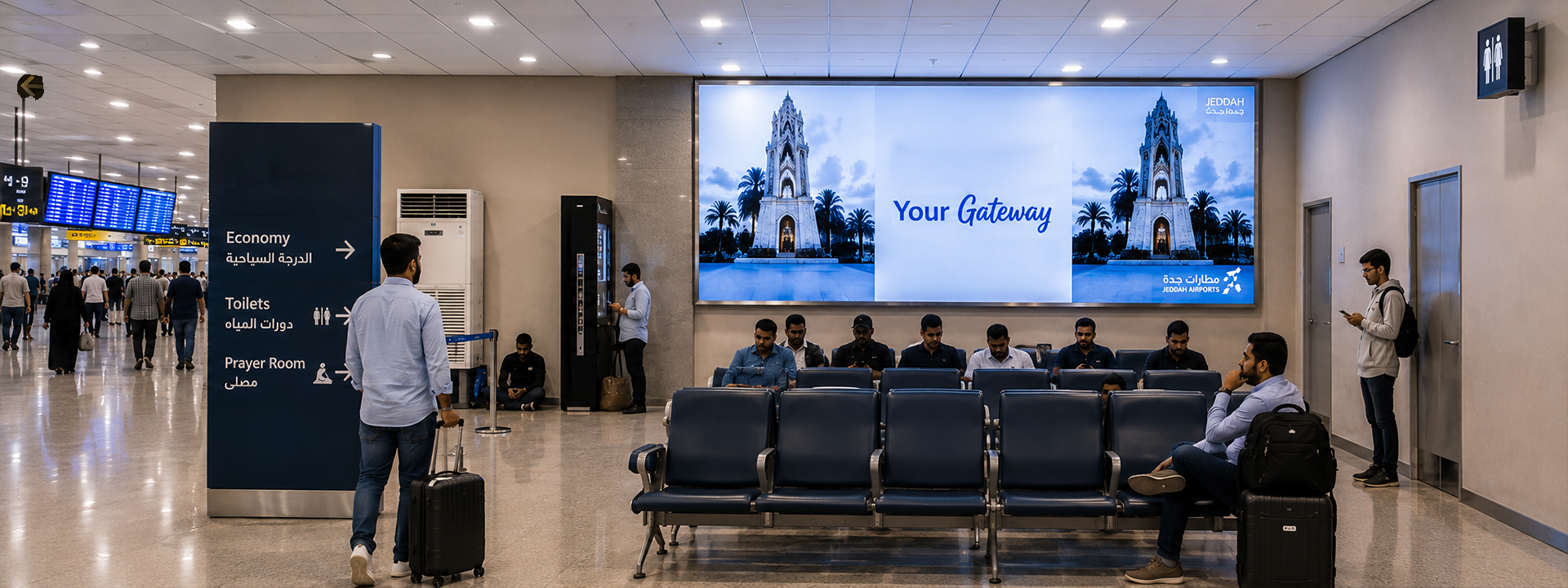
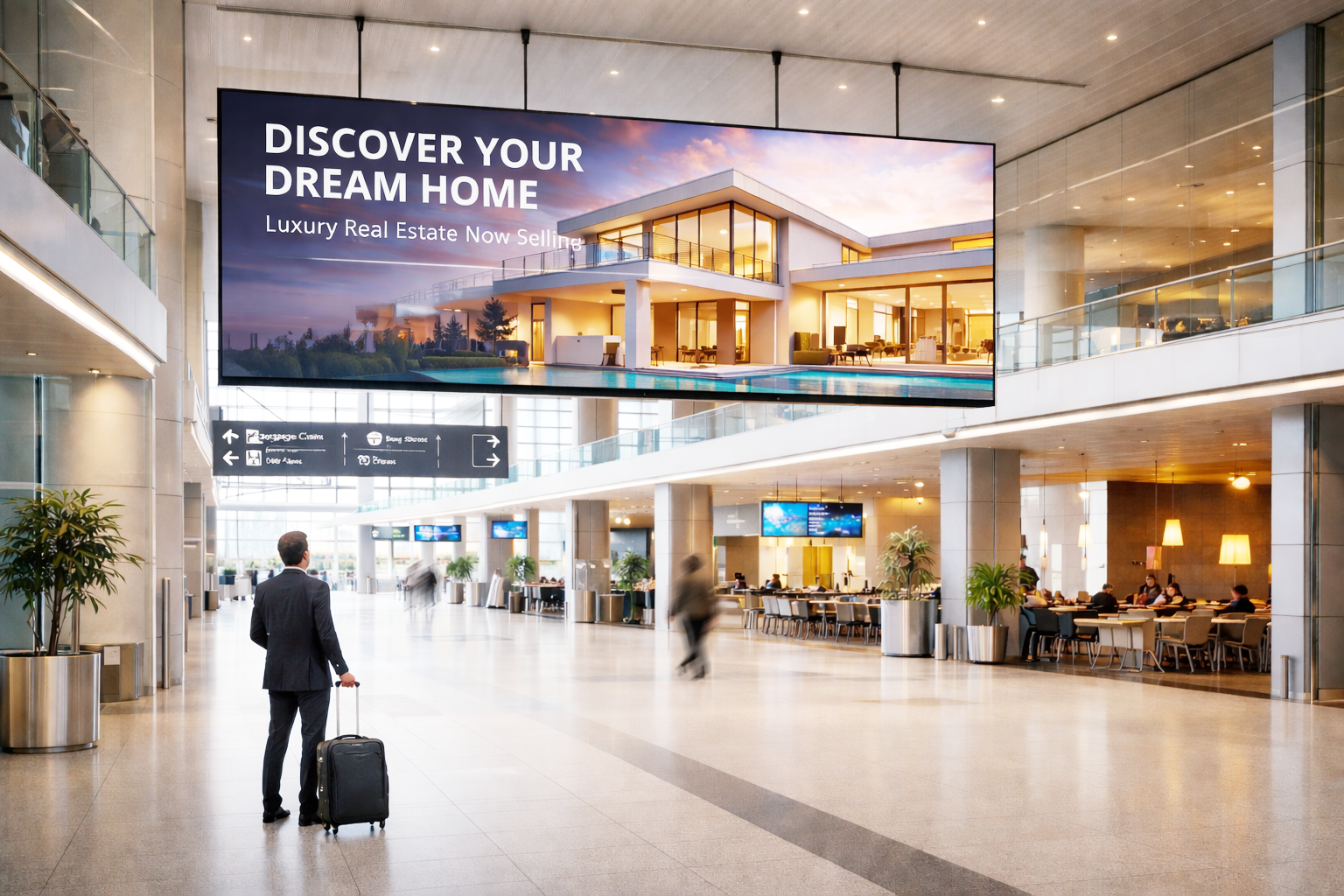
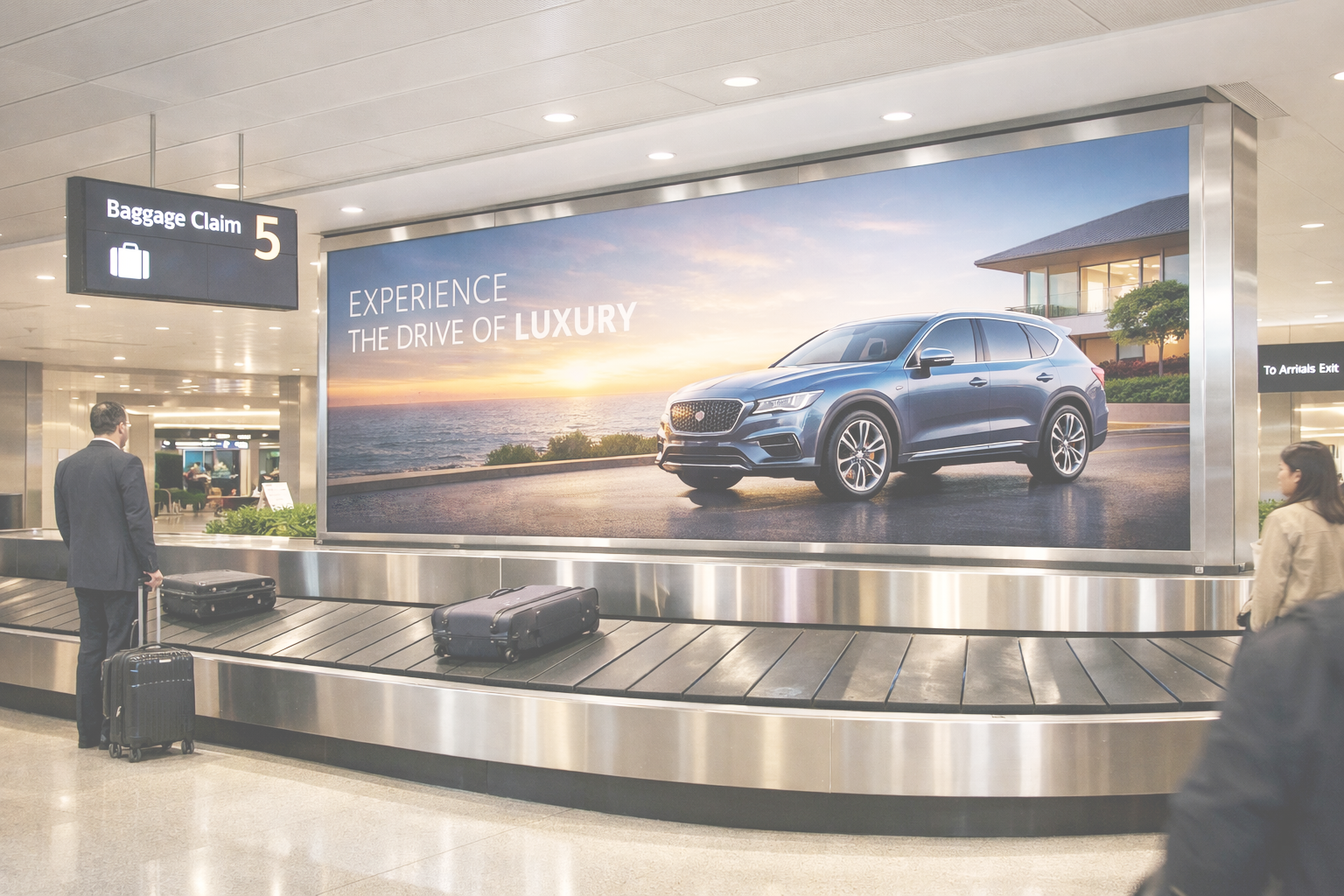
- Masscom Global's inventory access at Mactan-Cebu International Airport covers premium placements in T2's international departure zone, domestic T1 premium corridors targeting OFW and domestic business travellers, and arrivals brand introduction positions where OFW returnees and international tourists alike encounter brands at the highest possible engagement moment — the beginning of their Philippine stay and spending commitment
Strategic Advertising Fit
Best Fit:
- Financial services, remittance, and insurance brands: The OFW returnee and family economy at CEB creates one of Southeast Asia's most commercially concentrated financial services advertising environments — remittance platform brands, OFW-specific insurance products, cooperative banking, real estate investment schemes, and educational savings plans all find a highly motivated, savings-ready, financially active audience at this airport whose product adoption rates and brand loyalty, once established, are among the highest in the Philippine market
- Tourism and hospitality brands: Both inbound international resort and hotel brands targeting Korean, Japanese, and Chinese leisure tourists and outbound travel and hospitality brands targeting the Philippines' growing outbound leisure traveller class find strong audience alignment and high purchase intent at CEB — the airport's dual tourism and OFW identity creates a year-round hospitality brand advertising relevance that few Southeast Asian airports of this volume can match
- Real estate — domestic and international: Cebu's own rapidly developing premium real estate market and the outbound HNWI community's Singapore, Australian, and Japanese property investment activity make CEB a dual-direction real estate advertising opportunity whose combined audience reach justifies premium placement investment for both Philippine and international real estate brands
- International education: The Philippines' structurally high education investment culture, combined with CEB's concentration of BPO professional families whose children are actively pursuing overseas university pathways in Australia, Canada, and the UK, makes this airport one of the Philippines' most productive intercept environments for international education brand advertising
- Luxury and premium consumer brands entering the Philippines: For international luxury and premium consumer brands building Philippine market presence beyond Manila, CEB's shipping dynasty HNWI audience and its internationally exposed BPO professional class represent the most commercially sophisticated provincial Philippine consumer audience — a market that is chronically underserved by international luxury brand distribution and advertising relative to its purchasing capacity
- Korean and Japanese-aligned lifestyle and beauty brands: The extraordinary Korean cultural affinity built through decades of Korean tourism to Cebu — combined with the Cebuano consumer's genuine enthusiasm for Korean beauty, fashion, and lifestyle brands — creates an unusually high conversion environment for K-beauty, Korean fashion, and Korean-origin lifestyle brands at CEB that rivals the brand receptivity of dedicated Korean market airports
- Premium automotive brands: Cebu's BPO professional class, shipping industry executives, and HNWI business owners collectively represent one of the Philippines' most active premium automotive markets outside Metro Manila — a commercially qualified audience for luxury German automotive, Japanese premium brands, and emerging electric vehicle categories whose CEB-specific presence is systematically underdeveloped relative to purchasing capacity
Brand Alignment at a Glance:
| Category | Fit |
|---|---|
| Financial services and OFW products | Exceptional |
| Tourism and hospitality | Exceptional |
| Real estate — domestic and international | Exceptional |
| International education | Strong |
| Luxury and premium consumer brands | Strong |
| Korean and Japanese lifestyle and beauty | Strong |
| Premium automotive | Strong |
| Heavy industrial B2B | Poor fit |
Who Should Not Advertise Here:
- Heavy industrial and energy sector B2B brands: CEB's passenger base is overwhelmingly oriented toward leisure tourism, OFW consumer economics, and retail and services business categories — the airport's audience composition does not generate meaningful concentration of heavy industrial, upstream energy, or engineering procurement decision-makers; these categories are better served through Manila's NAIA or specialised industrial media channels
- Ultra-luxury brands requiring exclusively ultra-HNWI audiences: While CEB serves a commercially significant HNWI tier among Cebu's shipping and BPO conglomerate families, the airport's dominant audience character — balanced across mass-affluent OFW consumer, leisure tourist, and emerging professional categories — does not concentrate the ultra-HNWI majority audience that categories like super-premium jewellery or private aviation require for campaign efficiency; a combined NAIA and CEB Philippine strategy captures the full spectrum more effectively than CEB alone for these ultra-luxury categories
- Non-Catholic or religiously insensitive brands during peak Catholic festival windows: The Sinulog Festival, Holy Week, and Christmas periods generate an audience whose Catholic cultural identity is at maximum activation — brands whose messaging is tonally misaligned with Filipino Catholic values during these windows risk community brand perception damage that counteracts any awareness generated by airport placement
Event and Seasonality Analysis
| Factor | Rating |
|---|---|
| Event Strength | Very High |
| Seasonality Strength | Very High |
| Traffic Pattern | Catholic Calendar Dominant with OFW Homecoming Overlay |
Strategic Implication:
Mactan-Cebu International Airport's traffic calendar is structured around a Catholic cultural calendar that is commercially more defining than any other airport in Southeast Asia — with the Christmas-New Year OFW homecoming peak, the Sinulog Festival January surge, and the Holy Week domestic travel wave collectively representing the three highest-ROI advertising windows of the year. Masscom structures CEB campaigns around these three Catholic calendar peaks with differentiated creative strategies: Christmas and Sinulog windows demand culturally resonant Catholic Filipino family and celebration messaging for financial services and consumer brands; Holy Week requires spiritually respectful tone with emphasis on family, pilgrimage, and premium food gifting categories. Overlaid on the Catholic calendar, the Korean and Japanese summer leisure peak from July to August justifies a separate creative investment in East Asian tourist-oriented hospitality, beauty, and lifestyle brand advertising. Clients who differentiate their CEB creative and investment strategy between the Catholic calendar peaks and the East Asian tourism windows consistently outperform those running undifferentiated annual campaigns at this airport.

Poor Placement and Delays Affect Airport Campaigns
We help you move faster, access better inventory, and get it right now.
Talk to an ExpertFinal Strategic Verdict
Mactan-Cebu International Airport is the Philippines' most commercially underinvested premium airport advertising environment and one of Southeast Asia's most structurally compelling cases for audience-first media planning over volume-first planning. Its 10.8 million international passengers move through one of the region's most architecturally distinguished terminal buildings carrying three simultaneously high-value commercial identities — the OFW returnee with accumulated savings and family investment intent, the Korean or Japanese leisure tourist with pre-committed luxury resort budget and active brand discovery mindset, and the Cebuano business executive or shipping dynasty principal managing multigenerational commercial capital from the Philippines' most commercially self-sufficient regional city. None of these audiences is adequately served by the international advertising community that has concentrated its Philippine airport investment in Manila, and none of them is accessible at equivalent audience quality in any other Philippine market outside NAIA. Cebu's economic trajectory — driven by BPO sector expansion, real estate development, resort tourism growth, and the OFW remittance engine — is producing a consumer and business elite whose purchasing capacity is rising faster than their visibility in most media plans. Masscom Global's intelligence, inventory access, and Philippines market expertise enable clients to establish presence at Cebu Mactan Airport now — before the new international routes, before the terminal expansion, and before the competitive advertising intensity that Cebu's commercial ascent will inevitably attract.
About Masscom Global
Masscom Global is a premium international airport advertising and media buying agency operating across 140 countries. With deep expertise in airport OOH, premium publications, and high-net-worth audience targeting, Masscom helps brands reach the world's most valuable travellers at the moments that matter most. For advertising packages, media rates, and campaign planning at Mactan-Cebu International Airport and airports across the globe, contact Masscom Global today.
Frequently Asked Questions
How much does airport advertising cost at Mactan-Cebu International Airport?
Advertising costs at Mactan-Cebu International Airport vary based on format — digital versus static placements — terminal selection between the international T2 and domestic T1 buildings, specific placement zone within the passenger journey, campaign duration, and seasonal demand. The Christmas-New Year OFW homecoming window from November to January, the Sinulog Festival period in January, and the Korean-Japanese summer leisure peak from July to August all command premium rates reflecting peak passenger volume and maximum consumer spending intent. T2 international terminal placements command a premium over domestic positions reflecting the higher concentration of international leisure tourist and OFW returnee audiences whose individual commercial value is above the domestic passenger average. Masscom Global provides current CEB rate cards and audience-matched placement strategy tailored to your brand objectives. Contact our team for a comprehensive media plan and pricing.
Who are the passengers at Mactan-Cebu International Airport?
Mactan-Cebu International Airport serves a commercially layered passenger base defined by three primary audience streams. South Korean and Japanese leisure tourists — the dominant international groups — arrive with pre-committed luxury resort and island tourism budgets and represent the highest international per-trip expenditure categories at the airport. OFW returnees from the Middle East, Hong Kong, Singapore, and the United States arrive with accumulated savings, deferred family investment intent, and a concentrated consumption readiness that makes them one of the Philippines' highest-conversion consumer audiences. Cebuano domestic travellers — ranging from shipping industry conglomerate executives and BPO professional-class consumers to SME business owners and family leisure travellers — represent the passenger majority and a commercially sophisticated home-market audience whose purchasing capacity is systematically underestimated in Manila-centric Philippine media analyses.
Is Mactan-Cebu International Airport good for luxury brand advertising?
Mactan-Cebu International Airport is a strong environment for luxury and premium consumer brand advertising in categories aligned to resort lifestyle, Korean and Japanese tourist preferences, and the Visayas HNWI business community's purchasing behaviour. Cebu's shipping dynasty families and BPO conglomerate executives represent established luxury consumers with purchasing profiles that justify premium watch, luxury automotive, fine jewellery, and premium hospitality brand investment at this airport. The Korean and Japanese leisure tourist segment — whose cultural affinity for premium beauty, fashion, and lifestyle products is among the highest of any East Asian tourist nationality — creates a specific luxury and accessible premium brand conversion environment in the international terminal. For ultra-luxury brands requiring an exclusively ultra-HNWI majority audience, a combined CEB and NAIA campaign strategy captures the full Philippine luxury consumer spectrum. Masscom Global can advise on the optimal luxury category placement strategy for CEB specifically.
What is the best airport in the Philippines to reach OFW audiences?
Mactan-Cebu International Airport is one of the Philippines' two most commercially productive airports for OFW audience advertising — alongside Manila NAIA. The Visayas region contributes one of the largest OFW deployment communities in the Philippines, with over 2.3 million workers overseas and remittance flows exceeding USD 5 billion annually returning to Cebu and the broader Visayas catchment. CEB's direct international connections to the Gulf hub airports — Doha and Dubai — and to the primary OFW destination cities of Hong Kong and Singapore make it the primary return gateway for Visayas OFWs across the full deployment spectrum. For financial services, insurance, real estate, and consumer brands targeting the OFW economy's family consumption and investment behaviour, CEB's arrivals terminal during the November to January homecoming wave and the pre-Eid period is one of the highest-intent consumer advertising environments in the Philippine market.
What is the best time to advertise at Mactan-Cebu International Airport?
The highest-value advertising windows at Mactan-Cebu International Airport are structured around the Philippine Catholic calendar. The Christmas to New Year period from November to January — which combines the year's largest OFW homecoming wave with peak international leisure tourism and the Sinulog Festival preparation traffic — represents the single highest combined consumer spending intent and audience volume window of the year. Holy Week in March to April is the second-highest domestic travel and consumer spending peak, particularly relevant for family, food, pilgrimage, and premium gifting brand categories. The Korean and Japanese summer leisure peak from July to August is the highest international tourist volume window and the primary period for East Asian tourism-oriented brand advertising. Masscom Global provides seasonal planning intelligence that maps each window to specific category investment and creative strategy recommendations.
Can international real estate developers advertise at Mactan-Cebu International Airport?
Mactan-Cebu International Airport is commercially productive for international real estate advertising on two simultaneous fronts. For international developers targeting outbound Filipino HNWI investors, CEB's shipping and BPO executive community is actively acquiring property in Singapore, Australia, and Japan — making the airport a viable intercept for international real estate platforms targeting Philippine buyers beyond Manila. The OFW returnee community at CEB also represents a specific and commercially significant real estate buyer audience — OFWs who have accumulated overseas savings and returned home with property acquisition as their primary investment priority are one of the most financially motivated real estate purchasing audiences in the Philippine market. Domestically, Cebu's own rapidly appreciating real estate market — from Mactan Newtown to the SRP development corridor — creates strong local property developer advertising relevance for the BPO professional and business owner audiences travelling through CEB's domestic terminal.
Which brands should not advertise at Mactan-Cebu International Airport?
Heavy industrial and upstream energy sector B2B brands, ultra-luxury categories requiring exclusively ultra-HNWI audiences without a broader premium consumer component, and brands whose messaging is tonally misaligned with Filipino Catholic cultural values during peak festival windows will find structural misalignment at CEB. Non-halal food brands should approach CEB advertising with cultural sensitivity given the Sinulog Festival and Catholic calendar's centrality to the audience's identity — not as a categorical exclusion but as a creative tone requirement. Brands with no Philippine market distribution, service infrastructure, or retail presence will find conversion limited from airport advertising, as the discovery-to-purchase pathway requires accessible market presence to translate airport awareness into sales.
How does Masscom Global help brands advertise at Mactan-Cebu International Airport?
Masscom Global brings three capabilities to airport advertising at Mactan-Cebu International Airport that independent media planners approaching the Philippines from Manila cannot replicate. First, Masscom's CEB-specific audience intelligence distinguishes between the OFW homecoming consumer peaks, the Catholic festival calendar's brand engagement windows, and the East Asian leisure tourism season — allowing clients to invest in the specific seasonal and cultural moments where their category audience is most concentrated and most commercially receptive with creative tailored to each community's motivational triggers. Second, Masscom's inventory access at CEB covers premium placements in T2's internationally acclaimed international departure environment, domestic T1 premium corridors targeting OFW and business travellers, and arrivals hall brand introduction positions where the conversion intent of both tourist and OFW returnee audiences is at its highest. Third, for brands building a comprehensive Philippine airport strategy, Masscom can coordinate CEB campaigns with NAIA placements — creating a coordinated dual-airport approach that captures the full Philippine premium audience spectrum across both the capital and the Visayas simultaneously. Contact Masscom Global to begin your Cebu campaign strategy today.